Category: Article

  • DevOps for Enterprises: A Comprehensive Guide to Scaling Successfully 

    DevOps for Enterprises: A Comprehensive Guide to Scaling Successfully 

    With the increased pace of technological advancement in the digital world, businesses must keep up, or risk falling behind. The stakes are high, and so is the pressure to deliver innovative software development services. To meet this challenge, savvy companies are turning to more practical methods, such as DevOps, to stay ahead of the curve. DevOps makes scaling development teams workable among other perks.   

    Did you know that enterprises that embrace DevOps witness a 200-fold increase in deployment frequency and a 24-fold improvement in recovery time from failures? This article aims to provide valuable insights and strategies to help enterprises successfully scale their DevOps practices and reap the numerous benefits, including enhanced software quality, reliability, and security. 

    What is DevOps?

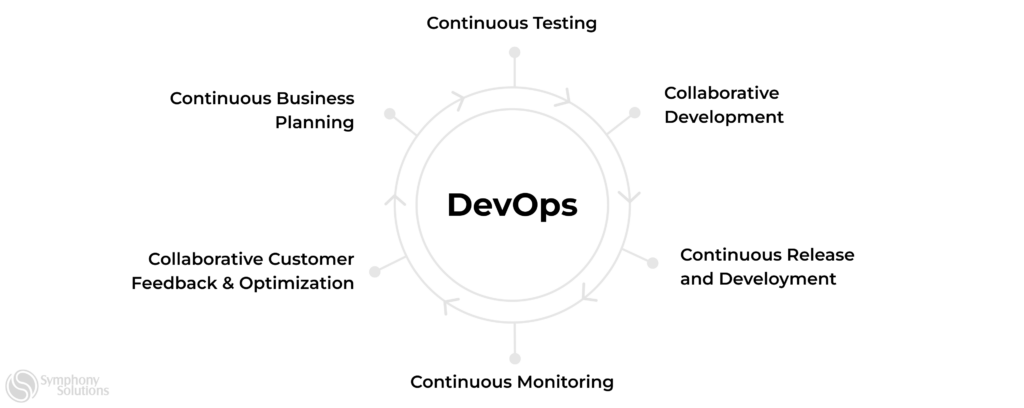
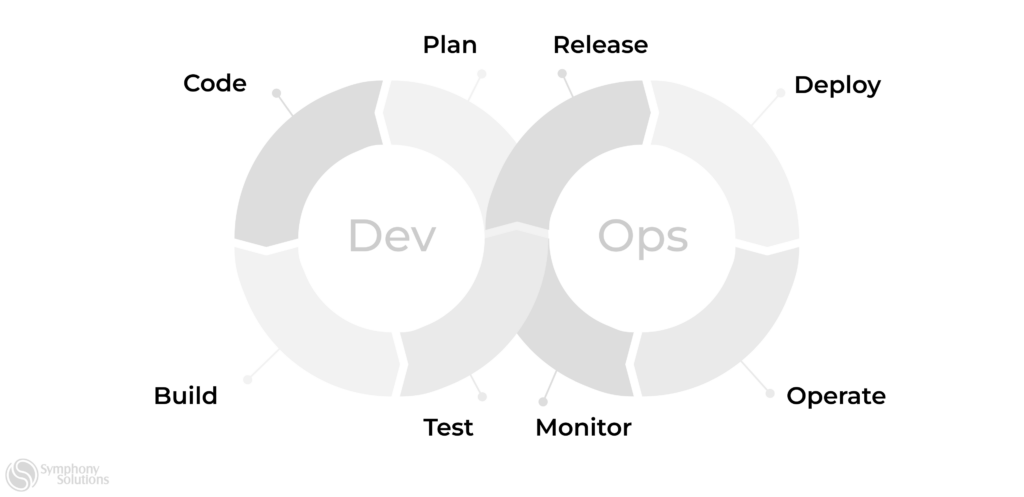
    DevOps is a methodology that fosters efficient collaboration between development and operations teams. It encourages a holistic view of the IT process, with teams continuously refining their roles and responsibilities to meet the needs of the business. 

    DevOps is all about bringing development and operations teams together. It’s about breaking down the walls and getting everyone on the same page. Developers get involved in infrastructure decisions and deployment, and operations teams get a seat at the table from the early stages of development. The result? More reliable software, faster delivery times, and a better ability to respond to market changes. 

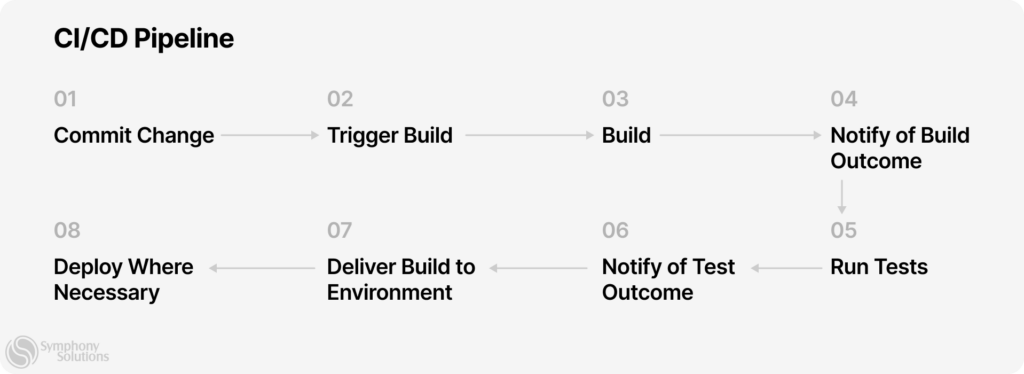
    But DevOps isn’t just about collaboration. It’s also about automation and continuous improvement. Tools for continuous integration and continuous delivery (CI/CD) are key here, automating the testing and deployment of code. This cuts down on human error and speeds up the development cycle. And with regular feedback and performance metrics, teams can keep improving their processes and tools. 

    What does scaling in DevOps mean for an enterprise? 
    Devops-for-enterprise-article

    Scaling in DevOps is the ability of enterprises to create strategies that allow flexibility to adjust for different demand seasons. So, when there is high demand, your teams can grow to meet the pressure and then scale back when demand reduces, thanks to DevOps automation-driven background. 

    With its specific methods, DevOps is the ideal environment for scalability, as it lets team members interact, focus, and create innovative alternatives for faster software deployment. 

    Use cases for DevOps in enterprise 

    Here are some typical use cases for DevOps explained 

    Speed up new releases with DevOps 

    Software Company Accelerates Product Launches 

    Problem 

    The client was struggling with slow release cycles due to a traditional development approach. The lack of integration between the development and operations teams often led to last-minute issues, causing delays in product releases. 

    Solution 

    Recognizing their need for a more efficient process, the client approached us at Symphony Solutions with a challenge. We proposed the adoption of DevOps practices. Our team implemented continuous integration and continuous delivery (CI/CD) pipelines, automating the testing and deployment of their code. This not only reduced the risk of errors but also significantly sped up their development cycle. 

    The adoption of DevOps practices led to a 50% reduction in the client’s time-to-market. They were able to launch new products much faster, improving their competitive position in the market. The smoother and more reliable releases also enhanced their customer satisfaction. This case study demonstrates how Symphony Solutions can help companies speed up software releases using DevOps practices. 

    Optimize your processes with DevOps 

    Creating Secure AWS VPN Connection with Complex Hybrid Cloud Authentication for SAP Solution 

    Problem 

    SAP required a custom solution to run cloud services with all cloud-native benefits, like pay-as-you-go for cost efficiency, high scalability and flexibility, on the client’s on-premises infrastructure for maximum data confidentiality and security. 

    They needed an Agile and reliable partner to work closely, efficiently, and intuitively with their in-house engineering team and subcontractors. The aim was to allow the client to focus more on their business initiatives and less on IT infrastructure management. 

     Solution 

    Symphony Solutions offered remarkable DevOps models to implement a solution to set up the AWS infrastructure and issue custom HP certificates required to establish an AWS VPN connection between the customer’s on-premises infrastructure and an external managerial system in AWS public cloud.  

    Symphony Solutions’ team implemented private keys infrastructure (PKI) inside of AWS to issue HP-affiliated certificates. This ensured secure and reliable connectivity between on-premises infrastructure running SAP HANA services and VMware-hosted applications. 

    Get to the bottom of incidents with DevOps 

    Cloud Solution Extends Portfolio 

    Problem 

    The client had already been in production (Compliance 1.0), developed by another vendor and relied on third-party libraries for most of its features. The unavoidable dependency was cost-intensive for the client, plus the original solution had significant issues with maintainability and scalability. Eventually, the client decided to implement version 2.0 of this product to replace the third-party service with their modern, scalable, secure, easy-to-maintain implementation. 

    Solution 

    Although the client first came to Symphony Solutions seeking help with Version 1.0 Continuous Compliance tool maintenance, the team’s excellent performance and contribution convinced the client that they actually needed a new solution to start and scale DevOps in the enterprise. 

    So, they decided to eliminate dependence on the 3rd party vendor and work exclusively with Symphony Solutions on developing an entirely new Version 2.0 architecture. 

    The teams at Symphony Solutions worked with the client to determine a staged process to: 

    • Conduct a set of automated tests to assess the current state of the product. 
    • Develop a new solution for cost-effective, timely and secure development. 
    • Plan and develop Version 2.0 architecture. 
    • Research to determine the best ways to implement necessary functionality. 

    In 2020 Symphony Solutions was chosen to substitute another vendor in delivering one more service to HPE GreenLake: Continuous Cost Control. Having shown great diligence and high delivery quality, they were again chosen to take over the project replacing the other vendor’s team. 

    Cloud Engineering Powers Business 

    Problem 

    Vivino was a small online wine marketplace start-up with an original idea from Danish founders Heini Zachariassen and Theis Sondergaard in 2010. Unfortunately, they did not have the technical expertise to build a prototype for their product. They needed quick turn-around from engineers to cover the entire product development cycle. 

    Solution 

    Vivino came to Symphony Solutions in 2013. The Symphony Solutions extended team provided Vivino with Cloud engineers who developed a process to go from idea to product and then created services for the new wine app. They: 

    • Designed the architecture and infrastructure to accommodate the growing database of wines, users, ratings, and prices 
    • Migrated the codebase from PHP to GoLang 
    • Developed new backend and UI features 
    • Worked on database modelling and integration with new services 
    • Supported and maintained data pipelines and processes 

    Once developed, the solutions need to be tested to minimize risks of broken software, and Symphony Solutions managed the QA process of manual and automation testing. 

    Retail Banking Powered by Salesforce 

    Problem 

    The client needed to modernize the outdated version of the client portal to keep up with the ever-growing demand and high industry standards. As one of the largest commercial banks on the market, they needed a fast and steady solution, maintaining high security and providing customers with a full spectrum of services while implementing new features and functionality. 

    Solution 

    Symphony Solutions opted for building an entirely new portal from the ground up after thorough examination. Here’s what they did:  

    • Designed a highly configurable portal that’s easy to maintain from an Admin perspective. 
    • Lightning, Aura and Web components were used to implement UI in Salesforce, creating a custom theme and content layouts for easy navigation and enhanced functionality. 
    • Single Sign-on configurations for 3rd-parties via Onegini Identity Provider. 
    • Implemented High Assurance functionality and features that require multi-factor authentication, enabling the user to perform high-security financial transactions. 

    As an Agile company, Symphony Solutions simultaneously conducted different stages of the development process, maintaining good cooperation with other teams and bringing the project to completion in record time.  
    Devops-for-enterprise-article

    Steps to Scaling DevOps in the Enterprise 

    You can follow these steps for scaling development teams in your business 

    Define what DevOps means for your enterprise 

    Companies view DevOps differently on what they need from the agile practice. So it would be best to determine the benefits the system can offer your enterprise. 

    Do you want to: 

    • Improve your app code’s quality? 
    • Create a self-sufficient work culture? 
    • Encourage seamless communication and streamline collaboration? 

    Your answer will guide you on what metrics to track as you scale DevOps. 

    Acquire top talent 

    The increase in demand for DevOps teams has resulted in high demand for jobs in the field, and most top talent want to work with flexible and innovative companies. 

    So, consider hiring a DevOps enthusiast to incorporate DevOps processes in your organization. The evangelists collaborate with architects and industry experts to change new technologies, and business needs to company-specific software designs. 

    Perform an initial stock-take 

    Identify the existing features in your company that support a DevOps culture, like DevOps-trained staff. Then, document, highlight, and improve these existing deployment channels to serve as launch pads for your team to find efficiencies and deliver more substantial business results. 

    Track Dev-Ops metrics 

    As you scale your business process, there should be metrics that you monitor to track your DevOps performance. Select the relevant metrics that align with your definition of DevOps in the enterprise. These are some of the standard metrics to look out for: 

    • Deployment frequency 
    • Deployment time 
    • Lead time 
    • Customer tickets 
    • Automated test pass % 
    • Defect escape rate 
    • Error rates 
    • Application usage and traffic 
    • Application performance 
    • Mean time to detection (MTTD) 
    • Mean time to recovery (MTTR), etc. 

    Pre-empt the culture shift 

    Growing enterprises often boast large, independently structured teams. So the business department may need help understanding the intricacies of DevOps practices. Anticipating and preparing for a culture shift will help business leaders understand the emphasis on collaboration across teams to develop and support innovative software. 

    Best Practices for Scaling DevOps in enterprise specifically 

    DevOps can pose a challenge, especially for larger companies, due to the complex siloes that should be simplified between different IT departments. But regardless of your enterprise’s status in DevOps implementation, these best practices for scaling will come in handy. 

    Develop Standardized Project Templates and Policies 

    DevOps teams should emphasize standardization for all DevOps projects, as that is the most integral practice for creating long-term efficiencies in development. 

    You can achieve enterprise DevOps standardization by building and sticking to project templates and policies. Most DevOps tools offer these built-in templates that automate the seamless accessibility of process data and promote ease of interpretation so successful projects can be repeated and scaled. 

    Policy standardization is also essential as it guides projects and associated tools, ensuring they adhere to appropriate security and regulatory requirements throughout development. 

    Create Interdepartmental Goals to Bust Silos 

    Most enterprises that can afford to have dedicated tech-driven teams like IT, security, or operations often notice these teams have unique roles and different workflows. This also means that they work independently even if they receive shared projects. 

    Even though the siloed approach may be practical for specific projects, there may be underlying expenses, mistakes, and time lost. So, for efficient DevOps implementation, you can create interdepartmental goals with tasks and metrics that encourage them to collaborate for better, holistic results. 

    Use DevOps Tools to Support Team Goals 

    You can employ dedicated tools like the DevOps tools to automate, collect, document, and highlight individual DevOps projects. Consider getting these additional tools and resources for solutions in these categories to support your objectives: 

    • Application performance monitoring 
    • Container management 
    • Configuration management 
    • Data cleansing and data quality management 
    • Project management 
    • CI/CD and workflow automation 
    • Collaboration and communication 
    • Version control 

    Rely on Continuous Integration and Continuous Delivery (CI/CD) 

    The most fundamental principles of DevOps for enterprises are reducing the delivery lifecycle and releasing iterations of a product regularly to improve agility. This continuous integration and continuous delivery (CI/CD) approach ensures quick processes and instant feedback to improve existing features and streamline processes for a pivot or change in a project plan. 

    You do not have to release the “perfect product” with a truckload of features at a go. It could cause issues for your development team and users like: 

    • Users will not get updates quickly and may have to wait for batch releases. 
    • Users can’t test and give feedback on new features due to the prolonged launch. 
    • Having a ton of features at once increases the project’s scope, so it may be more challenging if developers need to fix any bugs or issues after launch. 

    Pay Attention to User Experience (UX) 

    User experience (UX) is essential in any DevOps project development, especially since UX feedback informs the project iteration plans. You can get genuine UX needs from non-technical team members (third eyes) that could also be a part of the team. 

    You can try surveys, ticketing systems, user experience discussion forums, or interdepartmental meetings to get the relevant feedback you need to proceed with the perfect user design. 

    Incorporate Change Management into All DevOps Projects 

    Integrate the best practices of change management into new development and release cycles so the teams utilize the tools properly and efficiently, especially for security and regulatory compliance needs. 

    A solid change management support strategy can ensure successful DevOps releases, like offering a Q&A forum or ticketing system for new users, creating documentation and extra training, and retaining a DevOps task force to can assess the tool integration. 

    End Note 

    DevOps implementation will continue to evolve, even as your enterprise grows. However, to keep enjoying the maximum value for your business, you must continuously experiment with new processes, skills, and tools to identify those that can produce the highest potential integration across the whole DevOps toolchain. 

    Now, that level of flexibility for DevOps can pose a challenge for any enterprise scaling development teams with other business tasks to juggle. That’s where Symphony comes in! 

    We provide top-notch DevOps services to enterprises worldwide. So contact us today and let our professional DevOps teams build, test, and launch reliable products in record time.    

  • BetHarmony: Transforming the Sports Betting and Casino Experience with Innovative AI Assistant 

    BetHarmony: Transforming the Sports Betting and Casino Experience with Innovative AI Assistant 

    The world of sports betting and online casinos is evolving rapidly, driven by technological advancements and the increasing demand for personalized user experiences. Recognizing the need for a groundbreaking solution, Symphony Solutions, a prominent player in the iGaming industry, has introduced a revolutionary iGaming AI assistant to elevate the experience on sports betting websites.  It enhances the entire flow from customer onboarding, through to bet placement, gameplay and customer support. 

    bet haromny

    Recognizing the opportunity 

    The sports betting and casino landscape can often seem a maze of similar websites, each featuring complex hierarchies of betting opportunities and a huge amount of curated game inventory. Many sites offer a user experience that could be intimidating and hard to navigate. Identifying the need for a revolution in user engagement that would transform this landscape, Symphony Solutions leveraged artificial intelligence to build an AI assistant that takes traditional chat bots to a whole new level. One that addressees the main pain points of both customers and operators. 

    Introducing BetHarmony 

    bet haromny

    BetHarmony, an innovative product by Symphony Solutions, is designed to cater to the evolving demands of sports betting and casino enthusiasts by functioning as an AI-driven assistant powered by OpenAI’s ChatGPT and Opti-X technologies. It offers swift and tailored personalized betting assistance to users, simultaneously providing operators with a powerful solution that elevates user engagement, boosts betting revenues, and ensures scalable customer support, all while delivering exceptional user experiences. 

    Key Benefits of AI-powered Assistance for Sports Betting Customers: 

    BetHarmony, offers several advantages to operators: 

    • Enhancing Customer Acquisition, Engagement, and Retention  

    With BetHarmony, you can provide your customers with fast, personalized assistance. This means they can effortlessly navigate your services, find answers to their account queries, and explore and choose and place desirable betting options—all of which translates to fewer abandoned bets placed and stronger customer loyalty. 

    • Provide support anytime, and keep it simple 

    Treat all your players like a VIP with the utmost in customer service 24/7 with a simple and intuitive interface and resolve urgent issues quickly. 

    • Enable self service and drive customer satisfaction 

    Make it incredibly simple for customers to be onboarded, to take make enquiries, to facilitate everything from account access to deposits and even bet placement. 

    • Driving User Engagement 

    Build a loyal customer base by providing them with an automated betting assistance that offers an interactive and intuitive interface to keep your users engaged and excited about their betting experience. 

    • Automating Common Tasks 

    BetHarmony takes care of routine tasks, freeing up your time and resources for more strategic initiatives. Streamline and optimize your customer service operations and ensure seamless interactions with every user. 

    • Boosting Betting Rates and Revenue 

    Expand your revenue streams by introducing users to new and alternative betting markets. Your users will appreciate the fresh opportunities AI sports betting assistant brings to the table. 

    • Reducing Operational Costs 

    Improve cost-effectiveness in scaling your customer support. BetHarmony offers an efficient solution that not only automates common tasks but also reduces helpdesk operational costs, allowing you to maximize your resources. 

    Some of the unique features BetHarmony is capable of assisting the customers include: 

    • Account Information: BetHarmony can provide users with information about their current account balance. 
    • Winnings Confirmation: It can confirm whether a user’s winnings from previous bets have been credited to their account. 
    • Betting Options: BetHarmony offers users the option to place bets on upcoming sports events, based on their past bets and interests. 
    • Odds Information: It provides users with information about the odds for different outcomes in a sports event. 
    • Bet Placement: Users can place bets through BetHarmony, specifying the type of bet they want to make (e.g., betting on a specific team to win) and the amount they want to wager. 
    • Payout Calculation: BetHarmony calculates potential winnings based on the user’s chosen bet amount and the provided odds. It also calculates the total payout, including the initial stake. 
    • Additional Assistance: It offers further assistance by asking if the user would like to bet on anything else or if they need additional help. 

    Behind the Scenes: How BetHarmony Works 

    bet haromny

    Symphony Solutions adopted a multi-faceted approach to bring the product to life. At the heart of the strategy was a language chain, seamlessly integrating with the OpenAI SDK, which brought the sophisticated capabilities of GPT models into the system. The user interface was built around Gradio, a toolkit known for facilitating smooth user interactions with Machine Learning models. 

    Here is how the process works: When a user inputs a request, it is passed to OpenAI for pre-processing. Utilizing a technique known as “prompting,” key phrases and words are extracted from the request and sent to the semantic search engine with vector database. The API’s response is then transformed and sent back to OpenAI, which generates a summary. This summary is relayed back to the user via the ChatGPT alike interface with the great help of Gradio framework. 

    If the response is ambiguous or unavailable, OpenAI GPT model formulates specific clarifying questions to gather more information from the user, ensuring the accuracy of understanding. 

    Symphony Solutions approached this challenge with a combination of cutting-edge technologies and expertise in AI.  

    To design the AI-powered assistant the Symphony team broke down the process into identifiable stages: 

    • Defining requirements and key interaction points 
    • Designing the solution 
    • Setting up the infrastructure 
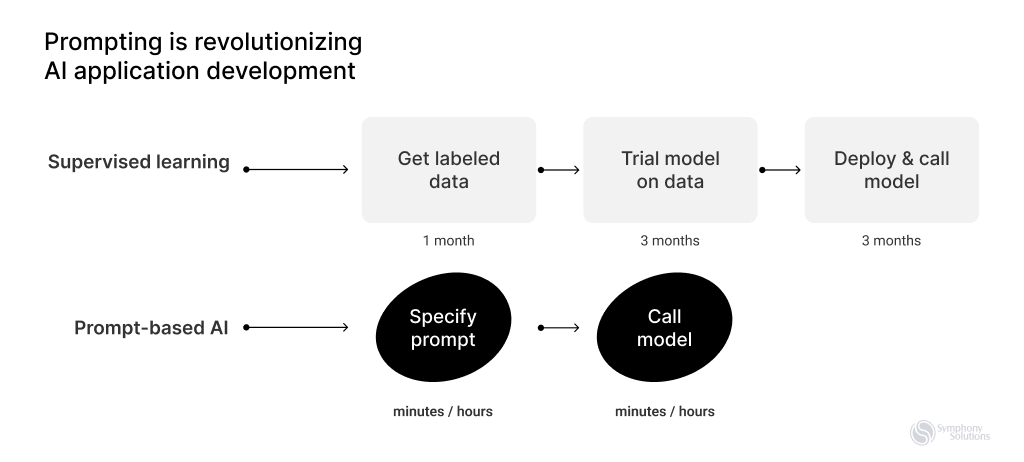
    • Quick prototyping thanks to Prompt-based AI: Prompt Engineering and Evaluation 
    • OpenAI integration with Search Engine through Chain of Thought and Prompt Chaining techniques 
    • Frontend development using Gradio for a user-friendly interface 
    • Integration with client web and mobile applications and CRM (Customer Relationship Management) system 
    ai application development

    A Glimpse into the Future 

    BetHarmony’s upcoming release is just the beginning of Symphony Solutions’ mission to transform the sports betting and casino industry. With a commitment to continuous innovation, the company is dedicated to advancing the capabilities of their AI-driven assistant and introducing further enhancements. BetHarmony is set to redefine the standards of user engagement, operator efficiency, and overall user satisfaction in the iGaming landscape. 

    Once integrated with operator sportsbook website, the solution is capable of: 

    • Driving user engagement thanks to the interactive and intuitive interface. 
    • Improving the conversion rate for new users as the betting process became more straightforward. 
    • Decreasing support and helpdesk operational costs due to automation of common tasks. 
    • Growing revenue from alternative betting markets as the AI assistant introduced users to new opportunities. 

    Symphony Solutions’ expertise in AI chatbot development 

    Developing the AI-powered assistant involved a meticulous process, from defining requirements and key interaction points to infrastructure setup and quick prototyping. In building this product Symphony Solutions showcased its expertise in harnessing the latest advancements in AI assistant development and applying them to the iGaming business. The solution’s success stands as a testament to Symphony Solutions’ ability to deliver transformative ideas in the iGaming industry. Discover further Symphony’s AI development services.  

  • Improving Patient Care With Data Analytics in Healthcare 

    Improving Patient Care With Data Analytics in Healthcare 

    Analytics in healthcare refers to the use of data, statistical methods, and quantitative analysis to gain valuable insights and thus facilitate and improve the decision-making process. It involves collecting and analyzing data from various sources, such as electronic health records (EHRs), clinical research studies, data generated from medical claims etc.  

    As organizations and industries grow to be more reliant on data when it comes to making a decision, the role of data analytics in healthcare becomes quite prominent. In fact, in pre-COVID-19 times a survey showed that 84% of healthcare executives predicted it to play a key role in their organization’s business strategy in the nearest future. But when the world was hit with the global pandemic, it truly showed how impactful it can be in healthcare.  

    When push came to shove during the COVID-19 pandemic, healthcare providers had to quickly adapt to the changing circumstances and find new ways to optimize patient care. Data analytics stepped in in numerous ways, such as developing predictive models to forecast the spread of the virus and predicting the demand for healthcare services, allowing providers to plan and allocate resources accordingly. Analytics was also used to monitor patient outcomes and identify risk factors for severe illness, enabling providers to intervene early and improve patient outcomes. It has also played a key role in the development and distribution of vaccines.  

    COVID-19 aside, importance of data analytics in healthcare manifests in various other ways. It can help predict patient outcomes, monitor progress, as well as improve health outcomes, reduce healthcare costs or improve operational facilities and much more.  

    importance-of-analytics

    With all that it has to offer to the improved patient care, let’s take a closer look on how data analytics can be leveraged in healthcare. 

    The Main Types of Analytics in Healthcare  

    There are three main types of analytics used in healthcare: descriptive analytics, predictive analytics, and prescriptive analytics. 

    • Descriptive Analytics: Descriptive analytics involves analyzing past data to understand what has happened. This type of analytics is often used to identify patterns or trends in large datasets. For instance, it can help medical providers identify the most common medical conditions among patients or to track patient outcomes over time. 
    • Predictive Analytics: Predictive analytics involves using past data to make predictions about future events. Predictive analytics in healthcare is often used to identify patients who are at risk of developing certain medical conditions or to forecast healthcare resource needs. For example, healthcare providers may use predictive analytics to identify patients who are at risk of developing diabetes. According to American Hospital Assocation research, he use of predictive analytics can reduce hospital readmissions by up to 50% 
    • Prescriptive Analytics: Prescriptive analytics involves using data to make recommendations about future actions. This type of analytics is often used to help healthcare providers make decisions about treatment options or to optimize resource allocation. For example, prescriptive analytics can help healthcare providers determine the most effective treatment plan for individual patients or allocate resources to hospitals based on predicted demand. 

    Each of these three types use different analytics tools but together they are capable of helping healthcare providers make data-driven decisions and improve patient outcomes. 

    The Roadmap to Becoming More Analytically Mature 

    To better analyze vast amounts of data healthcare organizations have on their hands and consequently improve patient care, identify areas of improvement, or reduce healthcare costs and work on patient safety, they should strive to become more analytically mature. This can be achieved by following a framework such as the HAAM framework.  

    publicly cohort and metric definition

    The Healthcare Analytics Adoption Framework was created back in 2002 by Dale Sanders, Chief Technology Officer at Health Catalyst. Its goal is to guide health systems through the process of becoming analytically mature. It comprises the following five steps:  

    • The first step is focused on complying with regulatory and compliance measures, such as following regulations set by government agencies. This step is important to ensure that the health system is meeting basic standards. 
    • The second step involves accreditation, which means meeting the standards set by professional societies, such as the Joint Commission, which is an organization that accredits healthcare organizations. 
    • The third step is about meeting financial incentives set by payers, such as insurance companies. This step is important because it helps the health system remain financially viable. 
    • The fourth step is where healthcare organizations focus on using analytics to meet financial incentives offered by payers, such as insurance companies or government programs. 
    • The final step is focused on making evidence-based medicine a routine practice throughout the organization, which means that everyone in the health system is consistently following best practices. 

    By following the steps in the framework, healthcare organizations can ensure that they are meeting regulatory and compliance measures, implementing evidence-based medicine, and making it a routine practice throughout the organization. This can help to improve patient safety, reduce healthcare costs, and increase efficiency.  

    Benefits of Data Analytics for Healthcare Organizations and Patient Care 

    As healthcare systems continue to face a range of challenges, the use of data analytics in healthcare has proven to be a powerful tool that can result in: 

    • Improved Patient Outcomes 

    By using data analytics, healthcare organizations can identify patterns and trends in patient data to inform clinical decision-making and improve patient outcomes. A study revealed that using predictive analytics to identify patients at high risk for sepsis reduced sepsis-related mortality rates by 53%. 

    • Disease Risk Assessment 

    Data analytics can help healthcare organizations predict a patient’s vulnerability to a particular medical condition by analyzing data from various sources, such as medical records, patient demographics, lab results, and lifestyle factors. By identifying patterns and trends in this data, machine learning algorithms can generate predictive models that can be used to assess a patient’s risk for developing a particular medical condition. 

    • Improved Health Insurance Rates and Outcomes 

    Similarly, for health insurance companies it can help analyze data, identify patterns, and set more accurate rates. Insurers can adjust rates based on healthcare service needs of individuals with chronic conditions. By identifying high-risk individuals, insurers can provide interventions that prevent hospitalizations and reduce healthcare costs for both patients and insurers. 

    • Enhanced Scheduling Efficiency 

    By analyzing historical data on patient volumes and staff availability, data analytics can improve scheduling for both patients and staff and predict future demand. With accurate forecasting of patient demand, healthcare organizations can optimize staffing levels and reduce wait times for patients. Additionally, the use of data analytics in healthcare can identify patterns in patient scheduling, such as frequent cancellations or no-shows, and suggest solutions to reduce these issues.  

    • Optimized Resource Allocation 

    Using data analytics to identify patterns and trends in data can inform decisions about staffing, equipment, and supplies, optimizing resource allocation in the healthcare sector. For example, it can be used to predict patient demand for certain procedures or services, allowing healthcare organizations to allocate staff and resources accordingly. Analytics can also help identify areas where resources are being underutilized, allowing healthcare organizations to make necessary adjustments to improve efficiency and reduce costs.  

    • Improved Decision-Making 

    And finally, it can help healthcare organizations make more efficient decisions by providing them with accurate and timely insights. For example, data analytics can help hospitals and clinics monitor patient wait times, identify bottlenecks, and allocate resources more effectively to reduce wait times. At the business level, data analytics can help identify areas for cost savings, such as by optimizing supply chain management or reducing readmission rates. 

    For patient care using analytics in healthcare translates into:  

    • Streamlining operations: Healthcare analytics can help streamline operations by identifying inefficiencies and areas for improvement. For example, data analytics can help identify bottlenecks in patient flow, enabling healthcare organizations to optimize staffing and improve patient throughput. 
    • Using predictive analytics to reduce hospitalizations: By analyzing patient data, healthcare organizations can identify individuals at high risk for hospitalization and provide targeted interventions to prevent hospitalization. For example, predictive analytics can be used to identify patients with chronic conditions who are at risk for complications, allowing healthcare providers to intervene early and prevent hospitalization. 
    • Improving care while reducing costs: Data analytics can help healthcare organizations provide high-quality care while reducing costs. For instance, analytics can be used to identify opportunities to reduce waste and improve efficiency, such as by optimizing staffing levels or reducing unnecessary testing. 
    • Limiting intensive care stays: By using analytics to identify patients at high risk for ICU stays, healthcare organizations can intervene early and provide targeted interventions to prevent the need for intensive care. This can help reduce healthcare costs and improve patient outcomes. 
    • Improving collaborative data exchanges: Healthcare analytics can help facilitate data exchanges between different healthcare providers, enabling more collaborative care. For example, by sharing patient data between primary care providers and specialists, healthcare organizations can provide more coordinated and effective care. 
    • Enhancing cross-functional cooperation: By breaking down data silos and promoting cross-functional cooperation, healthcare analytics can help improve patient care. For instance, by sharing data between clinical and administrative departments, healthcare organizations can identify areas for improvement and implement more effective interventions. 

    Challenges of Using Patient Data in Healthcare Analytics 

    Data analytics has the potential to revolutionize patient care in the healthcare industry, but there are several challenges associated with using patient data for analytics. These challenges must be addressed to ensure that patient data is used effectively and ethically to improve healthcare outcomes.  

    • Data privacy and security: Healthcare organizations need to ensure that patient data is protected and secure, and that they comply with relevant privacy regulations, such as HIPAA. The challenge is to balance data security with the need for accessibility and usability. Organizations can address this challenge by implementing robust data security measures, such as data encryption, multi-factor authentication, and access controls, and ensuring that all staff members are trained in data security protocols. 
    • Data quality: Healthcare data is often incomplete, inconsistent, and fragmented across different systems, which can make it challenging to extract meaningful insights. To address this challenge, healthcare organizations can implement data quality improvement processes, such as data standardization, data cleansing, and data normalization, to ensure that data is accurate and complete. 
    • Data integration: Healthcare data is often stored in disparate systems, which can make it difficult to integrate and analyze. To address this challenge, healthcare organizations can invest in data integration technologies, such as enterprise data warehouses, to bring together data from different sources and make it more accessible for analysis. 
    • Data interpretation: Analyzing healthcare data requires expertise in both data analysis and clinical practices, and there is often a need to involve both clinical and data analytics experts in the process. To address this challenge, healthcare organizations can create cross-functional teams with a combination of clinical and data analytics expertise to ensure that data is analyzed effectively and that insights are translated into actionable interventions. 
    • Data governance: There is a need for clear policies and processes for managing and using patient data, including consent and data sharing agreements. Healthcare organizations can address this challenge by implementing strong data governance frameworks that outline policies, processes, and roles and responsibilities related to data management and use. 
    • Resistance to change: Implementing data analytics in healthcare organizations often requires changes to existing processes and workflows, which can be met with resistance from staff and clinicians who are accustomed to traditional methods. Healthcare organizations can address this challenge by involving staff and clinicians in the design and implementation of data analytics initiatives and providing training and support to help them adapt to new processes. 
    • Fragmented patient care refers to the fact that patient data is often siloed in different systems and not easily shared across providers, which can make it difficult to get a complete picture of a patient’s health history. To address this challenge, healthcare organizations can invest in interoperability technologies that allow for the sharing of patient data across different systems and providers. 
    • Capturing accurate data can be a challenge due to errors in data entry, incomplete or outdated records, and variations in how data is collected and recorded across different providers and systems. To address this challenge, healthcare organizations can implement data validation processes, such as real-time data checks, to ensure that data is accurate and complete. 
    • Document processing and analysis refer to the challenge of extracting meaningful information from unstructured data sources, such as doctors’ notes and medical reports, which can be time-consuming and require advanced natural language processing (NLP) tools. Healthcare organizations can address this challenge by investing in NLP technologies and creating processes to ensure that unstructured data is captured and processed effectively. 
    • Data visualization is the challenge of presenting complex healthcare data in a way that is easy to understand and interpret, which requires skill and expertise in data visualization techniques and tools. To address this challenge, healthcare organizations can invest in data visualization technologies and tools, and work with data visualization experts to ensure that data is presented in a clear and meaningful way. 

    Applications of Data Analytics in Healthcare 

    To further stress it’s importance, let’s explore some real-life examples of data analytics in healthcare and how it’s shaping and impacting the industry today:  

    Predictive Analytics for Patient Monitoring 

    A great example of predictive analytics in healthcare is utilizing data analytics to monitor patients and predict health complications. For example, the healthcare researchers developed an algorithm that analyzes electronic health records (EHRs) to identify patients at risk of developing sepsis hours before symptoms appear, allowing for early intervention. 

    Targeted Therapies With Data Analytics 

    Similarly, data analytics is aiding in the advancement of precision medicine, which tailors medical treatments to individual patients based on their genetic makeup, lifestyle, and environmental factors. For example, the Precision Medicine Initiative by the National Institutes of Health (NIH) collects vast amounts of genomic and clinical data to develop targeted therapies for various diseases, including cancer. 

    Real-time Disease Surveillance 

    Another important application of data analytics in healthcare is for monitoring and tracking the spread of infectious diseases. For instance, during the COVID-19 pandemic, data analytics tools were employed to analyze and visualize real-time data on infection rates, hospitalizations, and mortality, aiding in decision-making and resource allocation. 

    Wearable Devices and Remote Monitoring 

    The rise of wearable devices, such as fitness trackers and smartwatches, has enabled the collection of real-time health data. This data can hold answers to numerous questions and thus enhance patient treatment. The information can be analyzed to provide insights into individuals’ health conditions and allowing for remote monitoring of chronic diseases. Research on remote health monitoring through wearable sensors suggests a cost-effective solution to provide healthcare services to the elderly, allowing them to stay at home and improving accessibility to healthcare 

    The integration of data analytics, Artificial Intelligence, and Machine Learning in healthcare heralds a promising future where personalized medicine, improved remote monitoring, insightful clinical decision support, streamlined operations, advanced diagnostic capabilities, and accelerated drug discovery become the norm. These technologies, while not without challenges such as data privacy and the need for regulatory frameworks, have the potential to revolutionize healthcare, making it more efficient and patient-centric. The future of healthcare, thus, appears to be increasingly digital and data-driven, and we stand on the cusp of significant transformation towards enhanced patient outcomes. 

    The transformative impact of data analytics in healthcare has the vast potential to improve patient outcomes and reduce healthcare costs. Combined with Artificial Intelligence, and Machine Learning, it heralds a promising future where personalized medicine, improved remote monitoring, insightful clinical decision support, streamlined operations, advanced diagnostic capabilities, and accelerated drug discovery become the norm. These technologies, while not without challenges such as data privacy and the need for regulatory frameworks, have the potential to truly revolutionize healthcare, making it more efficient and patient-centric. The future of healthcare, thus, appears to be increasingly digital and data-driven, and we stand on the cusp of significant transformation towards enhanced patient outcomes. 

    If you are interested in learning more about how data and analytics can help your healthcare organization, check our data and analytics services. With our expertise in healthcare analytics and data management, Symphony Solutions can help you unlock the full potential of your healthcare data and drive better patient outcomes. 

  • How Data Warehousing Can Benefit a Data-Driven Organization 

    How Data Warehousing Can Benefit a Data-Driven Organization 

    Data warehousing in data and analytics is becoming widely adopted and increasingly important. According to Allied Market Research, the global data warehousing market is poised to grow at a compound annual growth rate of 10.7% and reach $51.18 billion by 2028. But why exactly are businesses flocking toward data warehouses? The answer lies in the transformational power they possess. 

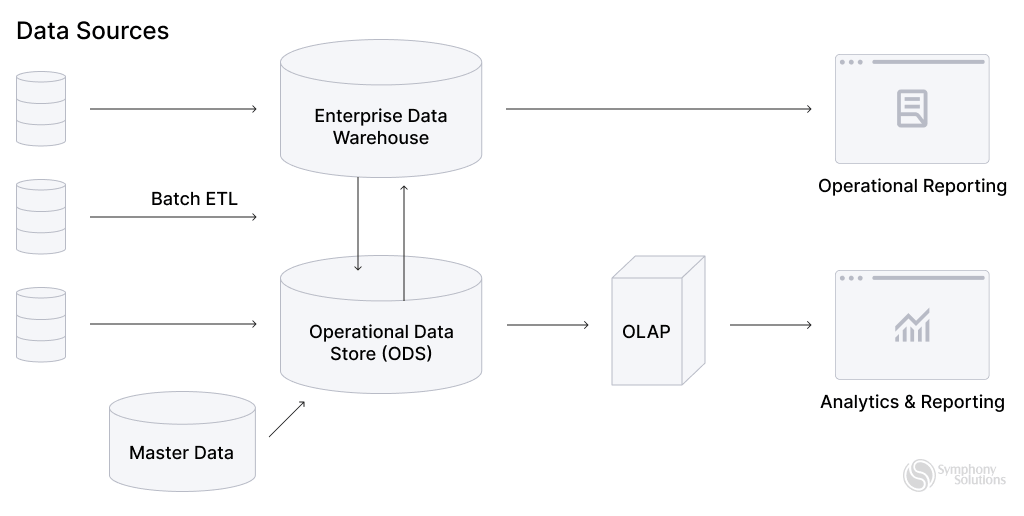
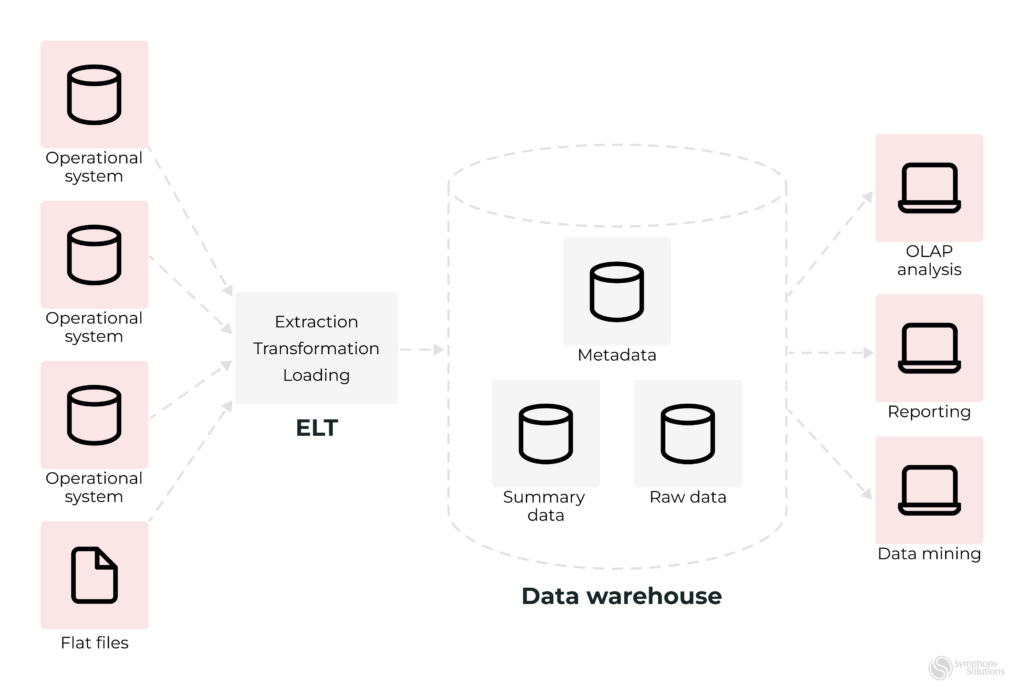
    As a centralized and consolidated data management concept, data warehousing redefines how businesses collect, store, and leverage large data sets from internal and external sources. It encompasses data extraction from multiple operating systems and transformation into standard, structured formats. The transformed data is then loaded into a centralized repository known as a data warehouse, which is technically specialized integrated storage for querying and analyzing the information using dimensional models, such as star or snowflake schema.  

    With a data warehouse, business leaders can have a clearer view of their organization’s data, providing a foundation for advanced integrations, analytics, business intelligence, and prudent decision-making processes. This article highlights the concept of real-time data warehousing for business intelligence in detail and how it can add value to your organization. Keep reading to learn more.  

    Role of Data Warehousing in Business Intelligence 

    Data warehousing (DW) is a core component of business intelligence (BI) architecture that enhances various data management processes, including:  

    Organization 

    Data warehousing extends to the extraction, transformation, and loading (ETL) process for extracting, integrating, and harmonizing data from multiple source systems. This process organizes diverse data sets to remediate inconsistencies and standardize them for further business analysis.   

    Cleaning  

    Data warehousing involves various data quality improvement steps during the ETL process, such as cleansing, validation, and enrichment. This allows your team to identify and resolve erroneous, incomplete, or inconsistent data sets for accurate insights and decision-making processes.  

    Storage  

    As noted earlier, DW solutions serve as a centralized repository for consolidating an organization’s data from multiple internal sources. Technically, a data warehouse integrates business information from CRM systems, transactional databases, sales reports, or any other data source into a single database.   

    Extraction of Useful Business Information  

    Data warehouses are inherently built to optimize data analysis through aggregation, complex queries, or multidimensional analysis. With these approaches, businesses can expedite the process of ad-hoc querying to explore and analyze voluminous data sets and extract useful information based on patterns, trends, and insights.  

    What Are the Components of BI and DW?  

    BI and DW are broad terms that refer to the overall process of storing an organization’s data in external or external sources. This process focuses on analyzing the data using BI tools to generate actionable insights.  

    components of WH

    There are various data engineering components that make BI and DW serve business goals better, including:  

    Data Collection 

    As the name suggests, this component involves collecting business information from various sources, whether internal or external. Organizations can capture valuable data for future analysis and decision-making from web analytics, transactional operating systems, surveys, social media, and customer interactions, among other sources. This process can be achieved using APIs and web scraping tools.  

    Data Integration and Storage 

    After collection, the data is integrated and stored in a centralized database, in this case, a data warehouse. Data engineers can use various integration tools, such as Oracle Data Integrator (ODI), to combine information from diverse sources and transform it into a standardized format for quality consistency.  

    Data Analysis 

    Another BI and DW component is data analysis, which entails applying a range of analytical tools and techniques to extract meaningful insights from structured data. Prevalent practices for this component include forecasting, statistical analysis, and trend identification using reporting tools that reveal patterns and correlations in data.  

    Data Distribution 

    The data analysis won’t be beneficial business-wise unless the findings are passed on and disseminated to key stakeholders within the company. The data distribution component leverages various techniques, such as dashboard reporting and data visualization tools, to supply managers and other decision-makers with real-time insights and reports.  

    Business Decisions 

    The ultimate goal of real-time data warehousing for business intelligence is to facilitate data-driven decision-making processes across the organization. This BI and DW component involves leveraging the insights and analysis derived at the analytics stage to drive prudent business decisions. For instance, the insights can be used to solve current challenges, optimize operational processes, identify new opportunities, allocate company resources, or set strategic goals.   

    Why You Need to Implement Data Warehousing into BI Architecture  

    Business Intelligence (BI) architecture refers to the standards, structure, policies, and predefined design principles that oversee the implementation of a BI system in an organization. It’s worth noting that BI architecture wouldn’t serve desired business goals effectively without data warehousing, and vice versa. That said, here are reasons why you need to implement data warehousing into BI architecture:  

    Task Automation 

    DW enhances the automation of data collection, integration, transformation, and storage, eliminating the need for manual data management tasks. This saves time and effort while minimizing the risks of human errors.  

    Increased Efficiency 

    The concept of DW includes a centralized, optimized repository for streamlined data access, analysis, and reporting. This means data teams can extract both integrated and pre-processed business information from the database swiftly and with greater efficiency without the need for querying multiple disparate sources. With this approach, organizations can enhance overall operational efficiency and decision-making processes.  

    Accuracy of Data Use 

    Data warehousing helps organizations enhance the reliability and accuracy of the data they pump into Business Intelligence. This is because the concept integrates and transforms data from multiple sources into consistent quality, standard, and structure to eliminate discrepancies. Moreover, consolidating information in a healthcare data warehouse enhances a unified view of the data across the board for improved accuracy during analysis and reporting.  

    Cost Savings 

    Implementing data warehousing for business intelligence specialization means organizations can save hardware, software, and maintenance costs associated with managing multiple storage solutions or setting up separate data marts. And on top of that, DW enhances efficient data analysis, which can translate to cost savings in terms of informed operational decision-making or optimized resource allocation.  

    The Benefits of Data Warehousing for Business 

    benefits of WH

    Owing to the more unpredictable than ever business climate and customer demand, business leaders need actionable data that can shift the course of their organizations on a dime. Cloud data warehousing can match you with aspiration and result in a ton of other business benefits:  

    Better Data Quality 

    The fact the US economy loses up to $3.1 trillion per year due to bad data underscores the implicating ramifications of inconsistent data quality within organizations. The data warehousing concept extends to standardized data integration and transformation processes that ensure quality and structure consistency, regardless of the source. The result is a reliable and trustworthy centralized repository for real-time analytics and optimized decision-making.  

    Better Business Perspectives 

    DW links data management programs to business priorities, offering a unified enterprise view of the entire operations. This approach enables cross-functional analysis of financial indicators, market trends, and consumer behavior to give business leaders a broader perspective of their organization’s operational performance. Besides strengthening business acumen, better perspectives will point the organization to new opportunities.  

    Increased Operational Efficiency 

    According to 53% of IT leaders, hybrid and multi-cloud data warehouse solutions are among the most important trends to implement in today’s business landscape—for several reasons, among them increased operational efficiency. DW includes centralized storage for faster and optimized access to pre-processed and integrated data. This means a swift retrieval for enhanced efficiency in data analysis and reporting, as well as broader decision-making.  

    Informed Decision Making 

    Data warehousing gives organizations access to reliable, accurate, and up-to-date business data for faster and data-driven decision-making processes. For instance, business intelligence and data warehousing is used for comparing current data against historical information to identify trends, patterns, or correlations that can improve a company’s overall approach to decision-making.  

    Increased Client Satisfaction 

    With a well-implemented data warehousing strategy, organizations can collect and analyze customer data from all touchpoints to better understand their behaviors, tastes, preferences, and needs. These insights are handy in personalizing offers or improving products and services, translating to enhanced client satisfaction and loyalty.  

    Enhanced Business Intelligence 

    As a core component of BI systems, data warehousing facilitates the overall top three business intelligence trends—in-depth data analysis, reporting, and visualization, empowering business leaders to draw meaningful insights from voluminous data sets. Valuable insights extracted from the BI system can be deployed for strategic planning and performance monitoring to fortify overall business intelligence.  

    Saves Time 

    One of the top business benefits of data warehousing is the automation of core data handling tasks, such as integration, transformation, and storage, saving organizations the time and effort of manual management. Insights from Forbes reveal that in the conventional 40-hour work week, automation can save employees up to 6 weeks of time annually. Your employees can reinvest this time into career development or use it to pursue personal growth opportunities.  

    Generate a High ROI 

    The first-ever and most referenced study on the ROI of data warehousing conducted among 62 organizations reveals a return on investment of 401% over a three-year timeframe. Implementing DW enables organizations to leverage their data assets more efficiently for optimized operational efficiency and decision-making, leading to better business outcomes and a high ROI.  

    Cost Effectiveness 

    While setting up a data warehouse, whether cloud or on-premise, can demand a significant upfront investment, DW consolidated business data to cut the costs of acquiring and maintaining multiple storage solutions. This also means reduced hardware costs, translating to an overall cost-effective administrative overhead in the long haul. Remember, there are various types of cloud data warehouses to choose from—you should get an option that matches your budget.  

    Competitive Advantage 

    The concept of data warehousing empowers organizations to leverage big data for an overall competitive edge in their respective industries. Recent industry insights reveal that 83% of companies acknowledge pursuing big data to leap-frog the competition. This is because big data implementation enhances business intelligence and the utility of external data assets for improved decision-making and faster response to market changes.  

    When Does Your Organization Need Data Warehousing? 

    Although data warehousing should be a go-to strategy for any organization that wants to augment agility and competes favorably, there are scenarios where implementing the solution results in instant business benefits. For example, you’ll need data warehousing for business intelligence: 

    • As information volume rises: expanding data volume comes with management and analytics challenges. DW offers a scalable solution that can efficiently organize, manage, and analyze growing data for future analytics.  
    • When workflows require querying data from disparate sources: data warehousing integrated data from different sources before transforming and consolidating it in a centralized repository, this makes it easier to query and analyze the information, source notwithstanding.  
    • When data exists in different formats: DW is essential if your business is dealing with data stored in different formats. For instance, an organization with structured data stored in databases and unstructured data stored in spreadsheets should implement DW to transform and standardize these diverse formats into one schema for improved analysis and reporting.  

    Types of Businesses That Can Leverage Data Warehousing for Their Operations  

    With the growth of data and internet access, any organization can tap into real-time analytics for insight-driven decisions and business processes. Industries that can benefit immensely from DWH include:  

    • Retailers: retail businesses can leverage DWH to analyze customer trends and behavior, customize marketing campaigns, segment target audiences, and streamline inventory management.  
    • Distributors: distributors can use a data warehouse to connect procurement, logistics, and distribution data for optimized supply chain management.  
    • Manufacturers: manufacturing companies can tap into DWH to modernize supply chain management, manage quality control data effectively, monitor equipment performance, and streamline production processes.  
    • Pharmaceutical developers: safety is a critical concern for pharmaceutical developers, and data warehousing can assist with product traceability by integrating data at different stages of development.  
    • Food producers: a DW combines data from different databases to help food producers analyze structured information for better consumer insights and demand planning.  
    • Federal government: with a data warehouse, federal governments can integrate data from a range of domains, sectors, and policy-making bodies to unravel trends and predict future outcomes.  
    • State government: state governments can leverage DWH to collect and integrate vast data sets from multiple agencies and departments, a consolidation that will drive comprehensive analysis and reporting.  
    • Local government: local government solutions can use a data warehouse to integrate data from security and surveillance systems to take proactive actions and deter crime before they happen.  
    • IT developers: A data warehouse can be a handy testing and development environment for IT companies as it offers a controlled and isolated architecture for maximizing data integrity.  
    • Hotels: hotel companies can use a data warehouse to integrate customer data from reservation operating systems or online review forums for further analysis.  
    • Casinos: casinos can implement DWH to integrate data from various revenue sources, whether slot games, gaming tables, or restaurant venues, for optimized revenue management.  
    • E-commerce: eCommerce business owners can use data warehousing to better understand the needs and preferences of their customers for personalized shopping experiences.  

    Factors to Consider When Designing a Data Warehouse 

    Designing the architecture of a data warehouse can be a complex, lengthy, and dynamic process that varies with the varying needs of different organizations. However, some factors cut across all projects and are key to consider: 

    Business Requirement 

    Among the foremost factors to consider when designing a data warehouse are the business requirements and objectives that the solution intends to address. This means specifying the type of data needed, as well as the analysis and reporting objectives. It is also imperative to have the input of all key stakeholders while assessing the business requirements to ensure that the data warehouse meets mutual needs and goals.  

    Cost Estimation 

    It’s important to consider the expenses of various phases of data warehousing, including designing, implementation, and maintenance. Other cost factors to have in mind are personnel resources, hardware and software expenses, and potential future expansion expenses. However, while estimating DW cost, it’s important to balance cost and value by prioritizing functionalities that add more value to your organization in terms of current needs.   

    Capability 

    This factor entails evaluating the technical capabilities of the data warehouse to gauge whether they match the business requirements. For instance, you can assess the solution to determine if its capabilities meet your organization’s data integration, transformation, and modeling needs. Some of the factors to consider while doing this evaluation include the demand for real-time or batch processing, as well as data volume and complexity.  

    Accessibility & Speed 

    In a recent survey, 52% of IT leaders identify swift accessibility and faster analytics as the key items in their data warehousing strategies. It is crucial to design a data warehouse that supports faster and more efficient information retrieval and analysis. With this in mind, it will help if you make allowances for a range of factors that impact accessibility and speed, such as caching mechanisms, indexing strategies, and query optimization techniques. Balancing these factors, among others, such as portioning methods, will balance the need for swift access to the data warehouse, providing a responsive user experience.  

    Scalability 

    Setting up a scalable data warehouse is essential as this enhances the organization’s ability to accommodate future growth needs and expand data volumes. For enhanced adaptability, take into account the potential growth rate of user demand and the need for integrating new data sources. It will also help if you consider scalability in terms of processing speed, storage costs, and hardware infrastructure for greater flexibility in handling growing data volumes without sacrificing performance.  

    Data Warehouse Use Cases That Can Add Value to Your Business 

    DWH enables organizations to leverage their data assets effectively, opening up endless opportunities and possibilities for driving growth, streamlining operational efficiency, and enhancing customer experiences. Here are examples of data warehouse use cases that can add value to your business:  

    Understanding Customer Behavior  

    By running real-time analytics on large data sets stored in their data warehouses, organizations can access valuable insights that reveal the behavior of their target audience in terms of needs, preferences, and trends. Other insights that can be drawn from data analysis to understand customer behavior better include demographics, interactions, and purchase history for personalized product offerings, optimized marketing campaigns, and improved customer segmentation.  

    Sales Pattern Analysis 

    A data warehouse unifies sales data from multiple sources for in-depth sales performance analysis across varying product groups or customer segments. With a 360° view of sales patterns around different products across all markets, your organization can streamline inventory management and seize cross-selling or upselling opportunities to stimulate overall sales. This also enhances data-driven decision-making when it comes to promotional and pricing strategies.  

    Market Research and Analysis  

    Data warehousing integrates external market data in your organization’s centralized repository for in-depth analysis and research. Examples of external data sources that can be integrated into a data warehouse include customer surveys, industry reports, or even social media trends. By analyzing this market information, your business can draw comprehensive insights into market expectations, target audience preferences, and competitor analysis for more informed decisions and greater agility.  

    Conclusion  

    Business leaders rely on real-time insights drawn from reports, dashboards, or analytic tools for ongoing business performance monitoring, marketing, enhancing customer experience, and prudent decision-making. However, in the wake of a flattering economy coupled with heightened technology and dynamic macro factors, data-driven organizations must rethink their approach to data management. Data warehousing consolidates data sources to gather, integrate, and organize information for quick retrieval and real-time analysis. This enhances decision-making processes for faster time-to-market and response to market changes, giving your organization an upper hand over the competition.  

  • Perfecting Automated Testing: Key Strategies for Success 

    Perfecting Automated Testing: Key Strategies for Success 

    With the rise of rapid deployment needs, seamless collaboration, and uncompromising quality requirements in software development, automated testing is gaining a crucial role. Automated testing provides a solution to these demands, making it a key player in the evolution of software development practices. 

    Automated testing is a driving force that allows organizations to reach optimal efficiency, reliability, and innovation in their software development ventures. Notably, automated testing diminishes the burdensome task of consistently testing code and bug fixes, making it not only achievable but also remarkably efficient, even with the high-speed nature of deployments. According to Forrester, automated testing cuts down testing efforts by a significant 75% and expedites time-to-market by an impressive 20%

    In this insight-packed article, we will explore automated testing in software development, revealing its full potential. We will delve into its transformative benefits, navigate through the challenges it presents, and share best practices that will equip your organization to harness the full power of automation. Gear up to embrace automation as we explore how it propels efficiency, elevates software quality, and lays the foundation for continuous enhancement in the dynamic realm of software development. 

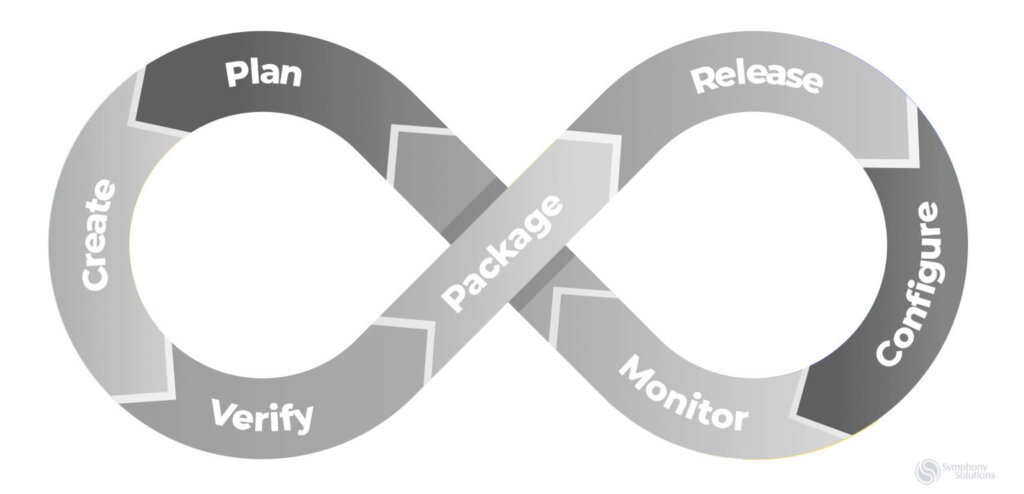
    devOps circle article

    Reasons why DevOps need Automated Testing 

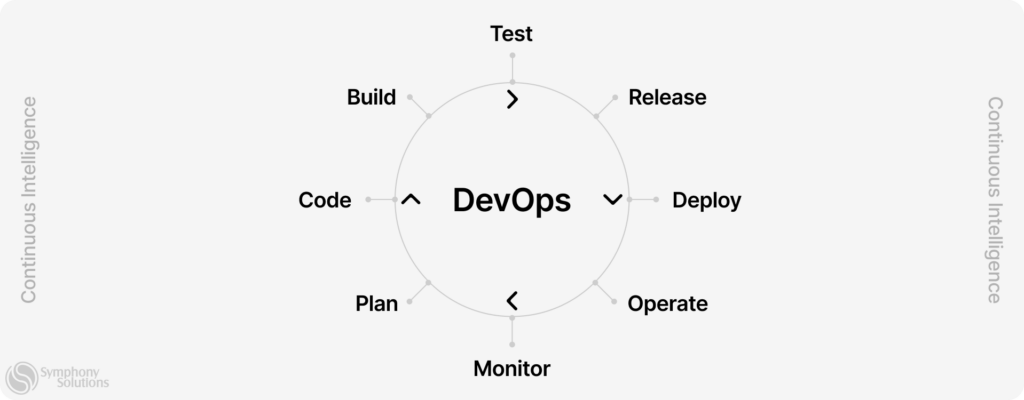
    Test automation, which replaces more than 50% of manual testing efforts, is a crucial component of DevOps. The following reasons, complete with relevant examples, underline the importance of automated testing in DevOps: 

    1. Testing Challenges at High Deployment Rates 

    Continuous testing is a requirement in the continuous delivery and deployment environment of DevOps. Each code commit could potentially be shipped to production and needs to be of deployable quality. It’s challenging, if not nearly impossible, to continuously test code and code fixes at the high rate of deployment seen in DevOps. 

    Automated testing efficiently addresses this challenge. It executes a large number of complex tests in every build cycle, and can even parallelize test execution across different systems or environments. This enhances the overall test coverage and ensures each code iteration is tested comprehensively before it advances in the delivery pipeline. 

    Consider a microservices architecture where each service is developed, updated, and deployed independently. Manual testing in this scenario would significantly delay deployment. However, automated tests can verify each service’s functionality in real-time and efficiently handle the load of inter-service communication checks. 

    2. QA Teams Lagging in Delivery Chain 

    The concept of “shifting left,” integrating testing early and often in the development lifecycle, has gained prominence with the advent of CI/CD. Traditional QA practices, however, may struggle to keep up with this rapid integration and delivery rhythm. Automated testing can bring QA teams up to speed within the DevOps process, reducing the risk of a lag in the pipeline. 

    For instance, when working on a new feature that requires frequent codebase updates, QA teams relying on manual testing might constantly trail behind. By automating tests, the QA team can seamlessly integrate into the development process. Tests can be triggered with every commit, instantly verifying each change’s functionality and alerting the team to any potential issues. 

    3. Inconsistent Practices & Temporary QA Teams 

    Ensuring the stability and reliability of software requires consistency in testing. Ad-hoc QA teams may lack a standardized approach, leading to variability in testing practices and potential gaps in the test coverage. Automating tests with the best QA approach guarantees that every test follows a specific, predefined procedure, thereby ensuring repeatability and consistency. 

    Take the case of a multinational organization developing an application across different locations. Manual testing practices might differ from one team to another, leading to inconsistent results. An automated testing framework ensures uniformity in testing procedures across all teams, which helps maintain consistent quality standards. 

    4. Long Feedback Cycles Hurting Speed 

    One of the major advantages of DevOps is the faster feedback loop. However, manual testing, due to its time-consuming nature, can delay this feedback cycle. Automated testing addresses this issue by providing immediate feedback. Tests are triggered automatically whenever code is committed or changes are integrated, enabling a “fail fast” approach. 

    Consider a team working on an e-commerce application that needs rapid feature updates to stay competitive. Manual testing could delay the feedback, causing developers to push less-tested code into production to meet deadlines. Automated testing drastically shortens the feedback loop, enabling developers to find and fix bugs before they reach the production environment, thus ensuring high-quality, reliable updates. 

    Key Components of Automated Testing 

    key components of devOps

    1. Test Automation Framework 

    A Test Automation Framework is the set of guidelines or rules used to produce beneficial results from automated testing activity. It includes practices, test-data handling methods, object repositories, coding standards, and procedures to follow while crafting and executing test scripts. 

    Frameworks such as Data-Driven Testing, Keyword-Driven Testing, and Hybrid Testing Framework offer different approaches based on the requirements of the software and the testing team. Choosing the right framework not only increases test speed and efficiency but also reduces maintenance costs and allows for better reusability of test cases. 

    2. Test Scripts 

    Test scripts are the sequences of instructions that an automated test will follow. Written in a scripting or programming language like Python, Ruby, Java, or a specialized language like Selenium’s Selenese, these scripts define what actions the test should take on the application. 

    A well-structured test script includes setup procedures, actions to perform during testing, assertions or checkpoints to verify the outcomes against expected results, and cleanup procedures. They should be easy to read, modular, and maintainable to ensure long-term usefulness. 

    3. Automation Tools 

    Automation tools, also known as Test Automation Software, are applications that automate the process of testing in software development. They manage and conduct test cases, compare the results with the expected outcomes, and generate reports. 

    The choice of automation tool largely depends on the nature of the project, the programming language used, budget constraints, and specific needs of the project. Tools like Selenium, Appium, JMeter, and Cucumber are widely used for different types of automated testing like functional testing, performance testing, or acceptance testing. 

    4. Test Data 

    Test Data forms an integral part of automated testing. It’s the data that the automated tests use to input into the software under test. Creating and managing test data is a critical aspect of a robust automation strategy. 

    Effective test data management includes identifying the type and amount of data needed for each test case, creating a mechanism for data setup and teardown, and implementing strategies to handle data variability between different test environments. For certain tests, test data management tools might be used to generate, mask, or subset data. 

    5. Reporting and Analytics 

    Reporting and analytics wrap up the automated testing process. They provide a comprehensive view of software quality, test coverage, and areas that need attention. 

    Reports generated after test execution include the number of tests passed, failed, or skipped, along with detailed error logs for failed tests. Modern testing tools often provide visual analytics, giving teams a better understanding of the testing process and helping them make informed decisions. 

    Benefits of Automation in DevOps Testing 

    benefits of automation

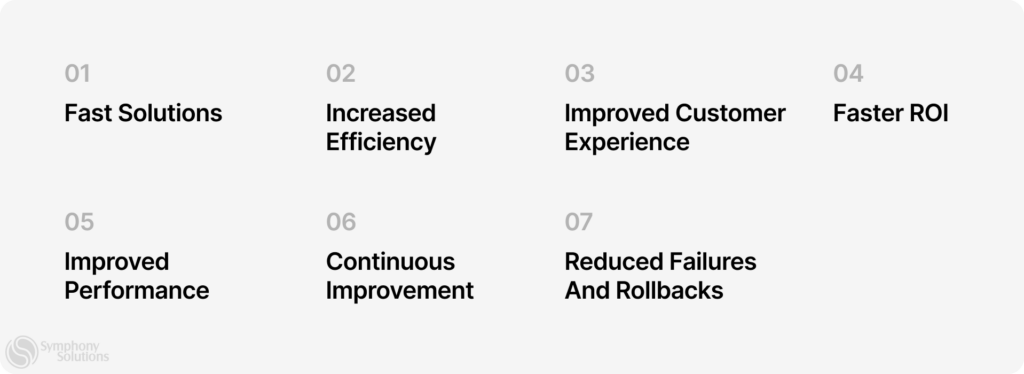
    According to a recent study, 85% of DevOps teams report “improving product quality” and “time to market” as the top benefits of test automation. Below, we explore these and other benefits of automated DevOps testing services. 

    Streamlining Processes for Greater Efficiency 

    In the rapidly evolving technological landscape, test automation refines the testing process by eliminating manual, repetitive tasks. Test scripts are crafted to handle a wide array of scenarios and executed in parallel, significantly saving time and effort. This bolstered efficiency allows development and QA teams to focus on critical aspects of testing, such as complex scenarios and exploratory testing. For instance, automated regression tests can be scheduled to run overnight, resulting in a set of results ready for analysis and action by morning. 

    Accelerating Development Cycle Times 

    Automated testing plays a pivotal role in reducing testing cycles and providing rapid feedback on code changes. By spotting issues early, these automated processes allow for quicker bug fixes and prevent potential delays in deployment. Such rapid responsiveness lets organizations deliver updates and new features at a much faster pace. An e-commerce company, for example, can swiftly test and deploy new payment gateways using automated tests, enhancing customer experience. 

    Reducing Human Error with Automation 

    Manual testing, while necessary, is susceptible to human error, and the monotony of repetitive tasks can lead to oversight. In contrast, automated testing ensures consistent and accurate test execution, significantly reducing the chance of human-induced errors. This can help identify and report defects that might go unnoticed during manual testing, thus leading to a higher software quality. For instance, complex algorithms in a financial application can be automatically tested, thereby reducing the risk of calculation errors. 

    Enhancing Teamwork Through Shared Understanding 

    Automated testing fosters improved collaboration and communication among developers, testers, and other project stakeholders. A common framework and test suite encourages a shared understanding of test cases, expected outcomes, and requirements, facilitating more effective communication. Such shared understanding can lead to quicker bug resolution and alignment of expectations. For example, tools providing detailed test reports and logging can improve team communication, making the debugging process more efficient. 

    Assuring Consistent Performance Under Diverse Conditions 

    Automated testing confirms software performance across various configurations, platforms, and environments. By conducting tests under diverse conditions, organizations can identify compatibility issues, thereby ensuring the software behaves as expected under different conditions. This is particularly crucial for applications serving large user bases or expected to handle high volumes of traffic. Automated load testing, for example, can simulate thousands of concurrent users accessing a web application, enabling organizations to pinpoint and address performance bottlenecks before they impact the end-users. 

    Best Practices for Embracing Automation in DevOps Testing 

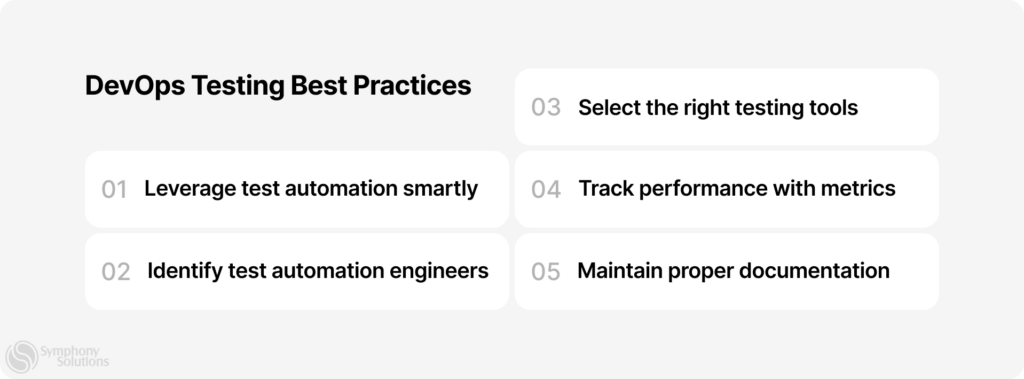
    devOps testing best practice

    Here are the DevOps testing best practices to achieveoptimal testing efficiency:  

    Choosing the Right Tools and Technologies 

    Selecting the appropriate automation tools and technologies is crucial for successful DevOps testing. Different tools excel in specific areas, such as functional testing, performance testing, or API testing. It’s important to evaluate and choose tools that align with the project’s requirements and team expertise. For instance, tools like Selenium WebDriver and Cypress are popular for web application testing, while tools like JMeter and Gatling are widely used for performance testing. 

    Integrating cutting-edge technologies like containerization and virtualization can further enhance the efficiency of automated testing. For example, utilizing Docker containers can help create isolated and reproducible testing environments, enabling parallel test execution across multiple configurations. 

    Creating a Robust Testing Framework 

    A well-designed testing framework provides a foundation for efficient and maintainable automated testing. It should offer flexibility, scalability, and reusability. A modular approach allows for building reusable components and libraries that can be easily combined to create comprehensive test suites. By following the principles of separation of concerns, tests become more maintainable and adaptable to changes. 

    Additionally, incorporating design patterns like Page Object Model (POM) or Behavior-Driven Development (BDD) helps in creating clear and readable test scripts. These patterns enhance collaboration between developers and testers, enabling a shared understanding of the application’s behavior. 

    Implementing Effective Test Automation Strategies 

    Successful test automation requires careful planning and strategizing. It’s crucial to identify the most critical and frequently executed test cases to prioritize automation efforts. Start by automating core functionality, critical workflows, and areas prone to regression bugs. This ensures that essential aspects of the application are thoroughly tested and validated with each release. 

    However, it’s important to strike a balance and avoid excessive test automation. Not all tests are suitable for automation, such as exploratory or usability tests that require human judgment. A thoughtful combination of automated tests and manual testing helps achieve comprehensive coverage and ensures optimal quality. 

    Ensuring Proper Integration with the DevOps Pipeline 

    Integrating automated testing seamlessly into the DevOps pipeline enhances the efficiency and reliability of the overall software delivery process. Automated tests should be integrated at various stages, including continuous integration, continuous delivery, and continuous deployment. This ensures that every code change undergoes automated testing and receives immediate feedback. 

    For instance, using continuous integration tools like Jenkins or GitLab CI/CD, automated tests can be triggered upon every code commit, preventing the integration of faulty code into the main branch. Integration with the deployment pipeline ensures that only thoroughly tested and validated code gets deployed to production. 

    Leveraging Metrics and Analytics to Optimize Testing 

    Metrics and analytics provide valuable insights into the effectiveness of the testing process and help optimize test suites. By collecting and analyzing data from automated test runs, teams can identify patterns, trends, and bottlenecks. This information guides decision-making in improving test coverage, identifying flaky tests, and enhancing overall test efficiency. 

    For example, tracking metrics like test execution time, test failure rates, and defect detection rates allows teams to identify areas that require attention or optimization. It enables them to prioritize efforts, allocate resources effectively, and continuously improve the testing process. 

    List of DevOps testing tools 

    list of devOps tools

    Finding the right DevOps testing tools is one of the most significant challenges DevOps teams face. In fact, 71% search for new tools several times per year. Hereare some of the commonly used DevOps testing tools, 

    Jenkins 

    Jenkins is a popular open-source automation server that supports continuous integration and delivery. It allows developers to automate the building, testing, and deployment of their software projects. For example, Jenkins can be configured to trigger automated tests whenever changes are pushed to the code repository, providing rapid feedback on code quality. 

    GitLab CI/CD 

    GitLab CI/CD is a robust continuous integration and delivery platform integrated with the GitLab version control system. It allows teams to automate the software development lifecycle, including testing, building, and deploying applications. With GitLab CI/CD, developers can define pipelines that automatically execute tests, ensuring that code changes are thoroughly validated before being deployed. 

    Selenium 

    Selenium is a widely-used open-source testing framework for web applications. It provides a suite of tools and APIs that enable automated browser testing across different platforms and browsers. For instance, teams can use Selenium to create test scripts that simulate user interactions and validate the functionality and responsiveness of web applications across multiple browsers. 

    JMeter 

    JMeter is an Apache open-source tool for load testing and performance measurement of applications. It allows developers and testers to simulate high loads on web servers, databases, and other resources, measuring the application’s performance under different scenarios. With JMeter, teams can identify performance bottlenecks and ensure that their applications can handle expected user traffic. 

    Docker 

    Docker is a popular containerization platform that simplifies the deployment and management of applications. It provides a lightweight and isolated environment for running applications and their dependencies. In the context of testing, Docker allows teams to create reproducible testing environments, ensuring consistency across different stages of the development process. 

    Ansible 

    Ansible is an open-source automation tool that allows teams to define and manage infrastructure as code. It simplifies the deployment and configuration of applications across multiple servers and environments. In testing, Ansible can be used to automate the provisioning of test environments, making it easier to set up and tear down testing environments as needed. 

    Puppet 

    Puppet is a configuration management tool that automates the provisioning and management of infrastructure resources. It allows teams to define infrastructure configurations as code, making it easier to maintain consistency across different environments. In testing, Puppet can help ensure that the testing environments are properly configured and ready for executing automated tests. 

    Chef 

    Chef is another popular configuration management tool that enables teams to define infrastructure configurations as code. It provides a way to automate the deployment and management of applications and infrastructure resources. In testing, Chef can be used to ensure that the required software dependencies and configurations are in place for running automated tests consistently. 

    Nagios 

    Nagios is an open-source monitoring tool that helps teams monitor the health and performance of their systems. It provides alerts and notifications for any issues or abnormalities detected in the infrastructure. In testing, Nagios can be used to monitor the test environment, ensuring its stability and availability during test execution. 

    ELK Stack 

    The ELK Stack is a combination of three open-source tools: Elasticsearch, Logstash, and Kibana. Elasticsearch is a powerful search and analytics engine, Logstash is a log data processing tool, and Kibana is a data visualization and reporting platform. Together, they form a comprehensive solution for collecting, analyzing, and visualizing logs and other data. In testing, the ELK Stack can be used to aggregate and analyze test logs, helping teams gain insights into test results and identify potential issues. 

    Graylog 

    Graylog is an open-source log management platform that allows teams to collect, index, and analyze log data. It provides centralized log management capabilities, making it easier to search and correlate logs from different systems. In testing, Graylog can help aggregate and analyze test logs, enabling teams to identify patterns, 

    Challenges and Limitations of Automation in DevOps Testing 

    Let’s see some DevOps testing challenges below: 

    Overcoming Resistance to Change 

    Implementing automated testing in a DevOps environment can face resistance from team members who are accustomed to traditional manual testing methods. For example, some testers might be concerned that automated testing will render their skills obsolete or reduce the importance of human intervention. Overcoming this resistance requires a shift in mindset and demonstrating the value of automation. By showcasing how automated Devops testing solutionsimprove efficiency, enable faster feedback cycles, and allow testers to focus on more complex scenarios, teams can embrace automation as a valuable addition to their skill set. 

    Ensuring Proper Training and Skills Development 

    Effective implementation of automated testing requires the development of new skills and knowledge within the team. Providing comprehensive training programs and workshops can empower team members to embrace automation. For instance, conducting hands-on sessions on popular test automation frameworks like Selenium or Cypress, or providing training on scripting languages such as Python or JavaScript, equips testers with the necessary skills to create and maintain automated test scripts. Encouraging collaboration and knowledge sharing within the team can also foster skill development and ensure a smooth transition to automated testing. 

    Managing Complex Testing Environments 

    DevOps environments often involve complex architectures and multiple interconnected systems, making test environment management challenging. To address this, teams can leverage containerization technologies like Docker or Kubernetes. By encapsulating the application and its dependencies within containers, it becomes easier to create consistent and isolated testing environments. For example, using Docker containers, each service in a microservices architecture can be tested in an independent, reproducible environment. This ensures that automated tests run consistently regardless of the underlying mature DevOps infrastructure or system configurations. 

    Addressing Security and Compliance Concerns 

    Automation should not overlook security and compliance requirements. Ensuring the security of the test environment and protecting sensitive data used in tests are critical considerations. For instance, implementing encryption and anonymization techniques can help protect sensitive information during testing. Furthermore, compliance with industry regulations and standards should be incorporated into the automated testing process. Test scenarios can be designed to validate security measures, such as authentication, authorization, and secure data transmission, ensuring that the software meets the required security and compliance standards. 

    The Takeaway 

    Embracing automation in the DevOps testing process represents not only a technical paradigm shift but also a transformative mindset change that empowers teams to continuously deliver high-quality software. By investing in automation, organizations can achieve faster time-to-market, improved software quality, optimized resource utilization, and gain a competitive edge in the market. Ultimately, it is through the seamless integration of automation into the DevOps testing process that businesses can realize their full potential and thrive in the ever-evolving realm of software development. 

  • Reasons Why Quality Assurance is Important and the Business Benefits It Brings to Your Business 

    Reasons Why Quality Assurance is Important and the Business Benefits It Brings to Your Business 

    Gartner’s recent eye-opening research revealed that 88% of service leaders are failing to meet customer expectations when it comes to product quality – with the poor-quality assurance processes being the main culprit. But what exactly is quality assurance, and why should you care?  

    At its core, quality assurance in software testing is a systematic process that ensures a software product meets the predetermined quality standards and user expectations. This proactive discipline is integrated into every stage of the software development lifecycle, with the goal of identifying and addressing potential issues before they become problems.  

    From the initial design phase to the final deployment, QA in software testing involves meticulous planning, execution, and reporting of tests to verify the software’s functionality, performance, and usability. It’s not just about finding and fixing bugs, but also about enhancing the overall user experience and ensuring the software delivers the intended value to its users. The ultimate objective of QA in software testing is to instill confidence in the software, assure its reliability, and improve customer satisfaction. 

    In this article, we’ll take an even closer look at the importance and benefits of quality assurance to your business. But before we begin, let’s clarify the difference between QA and quality control (QC) 

    Quality Assurance vs. Quality Control: What’s the Difference?  

    Quality control (QC) and  quality assurance are strategies for launching high-quality digital products and services, but their methodologies and focus are different.  

    QA takes a proactive approach that broadly translates to ongoing and consistent improvement of software development processes. Software quality control, on the other hand, is reactive and focuses on the product. QC further extends to monitoring, evaluating, and testing a software solution to single out errors and correct them for premium quality standards.  

    From a business perspective, QA is a preventive strategy that drives the desired quality standards in a digital solution to enhance customer satisfaction, retention, and quality. On the other hand, quality control is a corrective strategy that aims to lower customer churn rates, complaints, or even refunds due to unmatched expectations.  

    Quality assurance vs quality control

    The Typical Quality Assurance Process for Any Project 

    The process of QA can vary accordingly, depending on the software, business, or industry in question. Nonetheless, it typically involves several key steps for any product, including the following:  

    Requirement Analysis  

    The team begins with a thorough analysis of the project’s requirements to determine the testable expectations and the types of tests needed. This stage also involves preparation of the Requirement Traceability Matrix (RTM) and feasibility analysis automation.  

    Test Planning  

    Any quality assurance operation includes careful test planning, highlighting the steps needed and how the testing strategy will be executed. Technically, this stage involves creating a viable test plan, defining the testing goals, and researching the tools and resources needed for QA testing.  

    Test Case Development  

    After planning, QA experts proceed to design test cases for different scenarios based on the technical requirements and specifications of the IT solution in hand. This technically entails creating test cases and automation scripts, generating test data, as well as reviewing and baselining test cases. 

    Test Environment Setup  

    Test environment setup is a crucial stage in a typical testing process, which defines the optimum hardware and software conditions for running tests on a work product. The deliverables for this phase include a testing-ready environment with complete data setup and smoke test results to assess the readiness of the environment.  

    Test Execution  

    This stage involves executing the test cases designed in the step above for verification purposes to ensure that the software system functions as intended. Ideally, your QA expert will run several high-level tests, document the results, and map defects to test cases. Retesting also happens at this stage, where a regression test is performed to verify that the raised issues have been addressed accordingly.  

    Test Cycle Closure   

    The QA testing team finally ends the process with a test cycle closure, which technically reviews the overall effectiveness of the approach taken. Prevalent activities that happen in this phase include test results evaluation, defect reporting, test metrics preparation, and generation of the test cycle closure report.  

    Depending on the organization’s policy, the QA process can be done internally by in-house staff or externally by third-party companies. Either way, the QA and software development teams should jointly propose how the issues are remediated.  

    Importance of Quality Assurance  

    QA is a crucial process in software engineering. It helps development teams identify potential defects at an early stage, reducing the risk of such defects being overlooked and affecting the end-users after release and in production. If neglected, high chances are that the organization’s product will be unreliable, defective, or unfit for the intended function. This can translate to a tainted business reputation, wide-scale dissatisfaction, or lost revenues in the long haul.   

    Benefits of Quality Assurance for Project Success 

    As noted earlier, QA is a critical step that ascertains whether every component in a software system follows a specific predefined standard. Internally, quality assurance tests various attributes, including structure, complexity, scalability, and flexibility. From the user’s perspective, the process evaluates efficiency and reliability.  

    That said, here are the benefits of quality assurance in driving project success:  

    Drives Greater Efficiency  

    Any organization’s goal is to foster efficiency at all business levels, from production to usage. Best QA practices can help your software development team identify coding patterns that may lead to potential errors or bugs. This ensures that your team works with clean, high-quality code for greater efficiency.  

    Enhances User Experience 

    One of the key benefits of quality assurance in software development is that it enhances user experience by driving a consistent and high-quality output. Such an experience meets the average consumer’s expectations, promoting greater satisfaction and loyalty.  

    Saves Time and Money  

    Integrating quality assurance with software development can help your team reduce the time spent debugging or rectifying defects. This means more speed and agility during the process to accelerate the time-to-market when the demand is still hot. Eventually, faster deployment translates to more saved time and money.  

    Security  

    Quality assurance in software testing can help enhance the security of your software products. The process aims to identify any security blind spots and/or vulnerabilities during development and preventing hackers from attacking the released product. In turn, this reduces the likelihood of security incidences for better regulatory compliance and safe operation.  

    Maintain Regulatory Compliance  

    QA ensures that your software solution follows all the standards and requirements set by established regulatory bodies, such as the International Standardization Organization (ISO), among others. For example, QA promotes careful documentation development process documentation to ensure compliance with ISO documentation standards. It also facilitates internal audits for continuous improvement and all-around compliance.   

    Competitive Product  

    Another benefit of QA is it allows scalability testing, allowing development teams to build highly scalable digital solutions that can handle dynamic demands depending on traffic or usage. This gives you a competitive edge with a product that can penetrate any market and expand its user base over time.  

    Protects Brand Image and Reputation  

    Besides meeting consumer expectations by fostering a consistent experience, quality assurance also plays an integral role in guaranteeing product quality to protect the brand image and reputation.  

    For instance, the process mitigates potential risks that can cause outages or failure after deployment. It also enhances swift response to issues, demonstrating an organization’s unwavering commitment to quality standards and customer experience.   

    Mitigates Failure  

    The primary function of quality assurance in any software development is to mitigate potential failures and guarantee the product’s functionality. In other words, taking this approach means verifying that the solution meets user needs and rectifying any errors that can lead to limited functionality.  

    Ensures Long-Term Profits  

    Organizations with high-quality products are likely to experience more purchases than their counterparts with inferior products. A thorough QA evaluation ensures that your software solution meets expectations to please users at the initial experience. These users will likely remain loyal to your digital solution and drive repeat business, direct referrals, and long-term profits.  

    Why Your Business Needs to Implement a QA Role  

    Establishing a QA role in your business comes with various benefits, including fostering a positive work environment where employees can thrive. Besides creating a channel for ongoing feedback and improvement, implementing quality assurance processes exposes your team to new tools, technologies, and techniques. Ultimately, this leads to higher job satisfaction.  

    On top of that, quality assurance processes entrench an organization’s commitment to quality standards. In such a setting, employees tend to develop a result-driven mindset instead of a job-driven one. In other words, the whole team will embrace QA as a principle and not a routine checkmark.  

    QA is also important as it drives customers’ loyalty. Prioritizing quality and users’ feedback means your business is grounded on keeping promises, a culture that puts your brand ahead of the competition.  

    What to Focus on During QA Evaluation  

    A typical quality assurance program should be tailored to complement an organization’s goals. Here are some tips highlighting what you should focus on for a successful quality assurance process. 

    quality assurance checklist

    Determining the Cause of the Problem  

    Develop a systematic approach to isolate the problem. You can do this by gathering as much information as possible and analyzing data before forming hypotheses. After that, test the hypotheses to reveal the root cause of the problem.  

    Analyzing the amount of engagement and effort needed to fix the problem  

    Examine the scope of the problem by breaking it down into manageable parts. This should be followed by complexity estimation and consideration of the expertise level required. Lastly, calculate how long each problem takes to fix and gauge the total effort required.  

    Defining the most effective way of fixing it 

    You might wonder, what is the role of formal documentation in quality assurance? Well, this gives you a roadmap for fixing everything effectively. Moreover, this approach organizes the testing process to optimize it.  

    Considering possible backfires upon making changes 

    The best way to identify possible backfires after making changes is by testing the changes. This helps you understand whether the remediation measures can potentially break the existing functionality or user experience.  

    Quality Assurance Methods  

    Now that you understand what is the role of quality assurance, which techniques can you employ to ensure that your project follows a fault-free software development process? Here are popular methods to get you started:  

    Failure Testing  

    Also known as fault injection testing, this QA method introduces defects to the software solution to ascertain whether it can handle the vulnerabilities. The benefit of this method is it allows testers to design various testing scenarios and simulate them at both small and large scales.  

    After the tests are complete, developers can analyze the results to reveal areas where the system failed to handle the injected faults and implement remediation measures as much as needed. Finally, the method ends in other rounds of iterating and retesting to ensure effective remediation measures.  

    Statistical Process Control 

    As the name suggests, this method drives quality assurance by gathering and analyzing data to monitor and control the overall software development process. Technically, the method involves establishing control limits on historical data, current user needs, or industry standards for a consistent output.  

    The QA team then performs data analysis within the control limit boundaries to identify any defects that may pose a challenge in the future. If the analysis falls beyond the control limits, your development team may need to implement corrective measures before another round of monitoring to refine the process.   

    Total Quality Management  

    Total Quality Management (TQM) is a QA approach that includes inculcating a culture of quality standards that every aspect of the organization must meet. To achieve long-term product success, this method emphasizes the inclusion of various key aspects, including teamwork, customer focus, and ongoing improvements.  

    The method also extends to software development process management, where various techniques, such as Lean or Six Sigma, can be incorporated to identify areas of improvement.  

    Models and Standards  

    Organizations can also leverage international models and standards to ascertain whether their software solution’s structure, security features, and data control permissions are consistent for compliance. Prevalent models employed to drive QA in software development include waterfall, agile, spiral, RAD, and prototype.  

    Standards can be categorized into quality and testing guidelines. Industry-recognized quality standards include ISO/IEC 15504, ISO/IEC 12207, IEEE 829, IEEE 29119 and ISO/IEC 25010:2011.  

    Company Quality 

    Organizations can also implement quality assurance as a strategy to meet dynamic consumer needs and expectations. In this method, an organization defines its quality standards by setting performance, user experience, compliance, security, and durability parameters.  

    This is followed by developing a plan that outlines QA best practices and processes to be followed to ensure that all software products are consistent with the set standards. Moreover, this method can also include ongoing employee training and inspections by external auditors.  

    Wrapping It Up 

    It is the goal of any organization to launch stable and reliable digital solutions. Implementing quality assurance as a crucial set of processes can assist your project in accomplishing its objectives and satisfying customers’ needs. Most importantly, QA is associated with greater efficiency, productivity, and reduced cost. That said, a well-implemented QA process in software development can always ensure that you consistently meet or exceed your customers’ expectations.  

  • Using ChatGPT for Software Testing and Test Automation 

    Using ChatGPT for Software Testing and Test Automation 

    Following its successful launch on November 30, 2022, ChatGPT shattered industry benchmarks, amassing an impressive user base of over one million within its inaugural week. This generative AI technology has since showcased its robust potential across a broad array of technical and creative tasks. From developing meticulously curated articles, devising intricate machine learning algorithms, to automating data analysis workflows, it has made significant strides. 

    The question thus arises: does artificial intelligence extend its capabilities to encompass software testing and test automation as well? For starters, it is essential to lay down a solid foundation of the concept of software testing before we delve into its potential intersection with artificial intelligence.  

    What is Software Testing 

    Software testing entails using manual procedures or automated tools to verify if software, a product, or its components meet the expected requirements and operate as intended. While software testing encompasses a diverse array of types, the two most prevalent ones are manual and automated testing. However, for the purpose of our discussion today, we will focus on automated software testing. 

    Within the Software Development Life Cycle, test automation or automated testing implies conducting tests, controlling test data, and using the derived results to boost software quality, all while decreasing human involvement. This methodology substantially fortifies the quality assurance process. Nonetheless, it’s worth mentioning that a comprehensive and robust quality assurance procedure requires the concerted oversight of the production team, regardless of the robustness of automated testing. 

    What is ChatGPT and How Will it Help With Test Automation 

    ChatGPT, a product of OpenAI’s ingenuity, is an advanced conversational artificial intelligence model that utilizes the architecture of the Generative Pre-Trained Transformer (GPT). Rooted in the realm of natural language processing (NLP), it employs sophisticated deep learning techniques to decipher and comprehend the intricacies of natural language. 

    To truly appreciate its potential role in software testing, it’s essential to delve into its applications, merits, constraints, and prospective influence within this domain. This exploration will provide a comprehensive understanding of how this cutting-edge AI model could revolutionize the landscape of software testing. So, without further ado, let’s dive deep into this fascinating topic. 

    functional-non-functional-testing

    Benefits of Using ChatGPT for Software Testing Process and Test Automation 

    Here are some benefits of using ChatGPT for software testing and test automation 

    It has enabled testers and developers to create test cases and test data without manual intervention.  

    ChatGPT leverages its natural language processing capabilities so that testers and developers can generate test cases and data using natural, easy-to-understand language commands. 

    The test cases and data are tailored to your specific needs since ChatGPT understands the requirements of the software it’s testing. This has helped reduce the time and effort required to create cases manually and ensure they cover all necessary scenarios. 

    Additionally, ChatGPT generates easy-to-understand test scripts to automate the testing process. The clear instructions and step-by-step guides from the artificial intelligence testing tutorial ensures that the testing process is streamlined and efficient and that the scripts remain accurate and effective. 

    Low risk of error, less time and effort  

    With ChatGPT, you can automate test cases using natural language commands to reduce the risk of errors compared to manual cases. This is because natural language commands are easier to understand and interpret than complex programming code and are less prone to errors. 

    Also, ChatGPT automatically executes test cases based on natural language commands, which saves time and effort that would otherwise be required for manual execution. This automation process also ensures that test cases are executed consistently and accurately, with minimal errors or oversights. 

    Since ChatGPT generates clear reports based on the results of the automated test cases, testers, and developers quickly identify any bugs in the software and take corrective action. 

    Identify potential issues and defects earlier 

    By analyzing results with natural language processing, ChatGPT detects patterns and trends that may reveal fundamental issues in an application. For example, if a specific feature consistently fails, ChatGPT analyzes the data and identifies potential causes of the problem, like a bug in the code or a problem with the foundational framework. 

    ChatGPT’s machine learning capabilities can learn from past results and identify patterns that indicate potential issues or defects after a thorough result analysis. This allows ChatGPT to become increasingly accurate and effective at identifying potential problems over time. 

    chatgpt-401-error

    ChatGPT can be a valuable tool for software testing, particularly in natural language processing (NLP). Testers can interact with ChatGPT to evaluate its responses and identify areas for improvement. 

    Did you know testers can use ChatGPT to generate automated test cases based on specific requirements? They also interact with ChatGPT to refine cases and ensure all possible scenarios are covered. Then, ChatGPT analyzes the results and generates reports that are easy to understand, highlighting any issues that require further attention. 

    ChatGPT also identifies gaps in test coverage by analyzing the natural language used in requirements and identifying areas where you may need additional testing. This information will then be used to adjust the testing strategy to ensure all possible cases are covered. 

    Moreover, this artificial intelligence (AI) in software testing can assist in data generation to ensure that the data is accurate and relevant. So, by interacting with ChatGPT and evaluating its responses, testers identify areas where the NLP model requires improvement. This feedback informs the model modification to improve its accuracy and effectiveness over time. 

    Generate realistic test data for software products that require a vast amount of data for performance testing. 

    ChatGPT’s natural language processing abilities benefit software products that require a large amount of data, including addresses, names, contact information, for performance testing. It employs natural language requirements to create test data that simulate user behaviors. This ensures that the performance testing covers all possible scenarios. 

    The generated data mimics real-world scenarios and covers all possible cases, including those that might cause the system to malfunction or break down, which will be challenging to create manually. 

    Also, the generated data may be customized to include specific data types, ranges, and formats to ensure it is accurate and relevant to the software product’s requirements. 

    For example, if you want to format the test plan to input data and track bug like Jira or Github, you may leverage ChatGPT by prompting further in the same message thread for this scenario: 

    Prompt: “Prepare a test case table to enter into Jira tickets.” 

    ChatGPT

    chatgpr-jira-tickets

    Train Chat GPT to create test cases 

    Suppose a software product requires multiple test cases to cover different features, functionalities, inputs, outputs, and error handling. In that case, Chat GPT will create these relevant cases by understanding the natural language requirements. 

    The generated test cases cover the edge cases and error scenarios that are hard to create manually, so the system is thoroughly tested, and every case is covered. 

    The testers also interact with Chat GPT to analyze its responses and identify the areas that require improvement. This enhances the system’s accuracy and relevance in generating cases that meet all requirements over time. 

    test-automation-process

    Possible Use Cases of ChatGPT in Automation Testing: 

    Here are some ways ChatGPT can be employed in automation testing:  

    Building automation test cases for different scenarios 

    Chat GPT helps the testers create test cases and write scripts that include all ranges of scenarios and edge cases based on the user stories. It analyzes the natural language input to generate a human-like response so even non-technical stakeholders can participate in the testing process. 

    You can now describe the scenario in English, and ChatGPT will automatically give corresponding test cases and scripts. For example, you can create cases for different requests, like ideas for testing a banking transaction. 

    Test Data Generation 

    ChatGPT excels in generating synthetic test data that encompasses various scenarios and edge cases. Leveraging its language understanding capabilities, it can simulate user inputs, API responses, or database records with diverse data combinations. This feature enables testers to create comprehensive test data sets for more thorough and effective testing. By automating the generation of test data, ChatGPT reduces the reliance on manual data creation, increases the efficiency of test execution, and ensures a broader coverage of test scenarios. Testers can benefit from the ability to quickly generate large volumes of realistic test data, which aids in identifying potential issues and uncovering hidden defects. 

    regression-testing

    Delivering easy-to-understand code and clear instructions on how to use the developed code. 

    When developers write codes using natural language commands, ChatGPT employs its natural language processing capabilities to translate into actual programming code that is easy to understand. In addition to this, ChatGPT can offer insightful comments about potential problems with code snippets. It has been trained on a broad spectrum of coding problems and solutions, which enables it to identify potential issues and suggest improvements.  

    Whether it’s a logic error, an inefficient approach, or a potential security risk, ChatGPT can provide valuable feedback to help users refine their code. It analyzes the code from multiple perspectives, mimicking the code review process conducted by experienced developers. This feature, coupled with its ability to generate documentation and write unit tests, makes ChatGPT an excellent coding assistant, helping developers write better, more reliable code. 

    Also, ChatGPT provides real-time feedback to developers as they write code, allowing them to understand what they are doing and make any necessary corrections before the code is deployed.  

    In addition to providing feedback to developers, ChatGPT assists in the software testing for AI based mobile software apps by generating test cases and scripts that are easy to understand and follow. 

    Limitations of Using ChatGPT for Software Testing and Test Automation 

    Unfortunately, there are limits to the functions of ChatGPT for software testing and test automation. Here are some limitations:

    Potential bias and limitations in understanding certain contexts 

    ChatGPT cannot recognize the context or purpose of software applications. As a result, incorrect responses may arise during software testing. 

     One of the biggest challenges of ChatGPT as one of the artificial intelligence testing tools is that it is heavily dependent on statistical patterns. This learning model employs statistical models to generate the next words based on the information consumed. However, there is no fundamental understanding of those words. 

    This means that ChatGPT’s responses can’t be trusted when the user’s questions or statements require understanding a context that has not yet been explained. 

    Limited Generation of Test Cases 

    ChatGPT’s output may not always be comprehensive or relevant to build those edge tests and cases for the corner scenarios during software testing. 

    The GPT-3.5 language model, established several years ago, is a deep-learning language model that was trained on a multitude of human-generated content datasets. Due to the time and data constraints during its training period, there may be scenarios it hasn’t encountered, leading to responses that could be inaccurate or outdated. 

    On the other hand, ChatGPT-4, the latest iteration, brings a significant leap in efficiency and relevance. Leveraging more recent and diverse data, it provides a more accurate understanding of newer contexts and concepts. This advanced model has been fine-tuned to ensure more precise, up-to-date, and insightful responses, making it a powerful tool in today’s rapidly evolving digital landscape. 

    Inability to Understand Code 

    While it is true that ChatGPT, like many automated testing tools, doesn’t “understand” code in the human sense, it is capable of analyzing and interpreting the code within a given context. Coding is indeed an integral part of software testing, and while ChatGPT’s analysis might not replace a human developer’s comprehensive understanding, it provides valuable insights that help identify potential defects or bugs. 

    When it comes to generating code, ChatGPT might produce incomplete snippets. That means, depending on ChatGPT alone for complete code development could pose challenges. As a developer, it is crucial to comprehend the generated code, customize it to meet specific requirements, and complete it where necessary. 

    Despite these limitations, it’s important to note that ChatGPT provides a significant value-add in code analysis. It can scrutinize the code and recommend users on potential problems and issues. This ability to examine and provide constructive feedback makes it a valuable tool in the development process, contributing to the creation of more robust and reliable software. 

    Lack of Execution power 

    ChatGPT can provide particular test suggestions for execution. But since this artificial intelligence for software testing doesn’t understand code structures, it cannot execute the tests.  

    Software testers still have to implement and evaluate the tests manually to spot these hidden factors that could cause an app to fail and subsequently find solutions. 

    How ChatGPT Can be a Game Changer for Software Testing 

    chatgpt-for-automation-testing

    Here are some ways ChatGPT can transform software testing :

    Automation of Repetitive Tasks 

    It’s not automation in the traditional sense of controlling hardware or software directly, but rather, it’s about automating the intellectual work involved in software testing. 

    Take data entry and verification, for instance. ChatGPT can be programmed to generate and verify vast amounts of test data based on given parameters, thereby significantly reducing the time and effort required for these tasks. Similarly, for test data generation, ChatGPT can quickly produce a variety of test cases based on the software requirements and scenarios provided to it. 

    The automation here relates to ChatGPT taking over tasks which are repetitive in nature but require a degree of intellectual work – tasks that would otherwise be performed by human testers. The AI’s ability to handle these tasks not only improves efficiency but also allows human testers to direct their focus on more complex and creative aspects of testing. 

    Reducing Human Error 

    By automating these tasks, ChatGPT also plays a critical role in lowering the chances of human error. Manual handling of repetitive tasks can sometimes lead to oversights or inaccuracies, particularly when dealing with large volumes of data or complex test cases. The use of ChatGPT in these scenarios minimizes the risk of such errors, leading to more accurate and reliable testing outcomes. 

    Boost test execution speed  

    Unlike manual testing, where testers may take a considerable amount of time to execute test cases, artificial intelligence methods in software testing can manage multiple test cases simultaneously, saving time and cost and increasing efficiency. 

    ChatGPT also analyzes test results in real-time, providing immediate feedback to testers and helping them to identify potential issues and defects as soon as they occur. This allows testers to take corrective action quickly and avoid significant problems later in the testing process, saving time and resources. 

    With the help of ChatGPT, some tasks will be automated, thus accelerating the test execution process. It generates test cases automatically by analyzing the software requirements and creating a comprehensive suite of cases that cover all requirements. 

    ChatGPT can generate test cases for various requests, including: 

    • Sample data for a website login form 
    • Testing ideas for an eCommerce transaction 
    • Test data to reset password 

    Prompt: “Generate some test cases for a feature that allows users to reset their password.” 

    ChatGPT

    chatgpt-test-cases

    Along with that, it will reduce the requirement of manual testing, which will encourage testers to give time to complicated tasks.  

    With ChatGPT handling mundane testing tasks, testers devote their time to more complicated testing activities that require critical thinking and human intelligence. 

    Manual testing is time-consuming and tedious, and errors are inevitable due to human fallibility. But with ChatGPT, you can automatically generate cases by analyzing software requirements, ensuring that test cases cover all requirements. This significantly reduces the risk of human error and ensures that the most critical aspects of the software are thoroughly tested. 

    ChatGPT can provide accuracy and consistency in smoothly running the test cases. 

    Once test cases are integrated into the system, the testing process becomes more precise, reliable, and repeatable. 

    This feature is particularly useful in identifying inconsistencies in the software’s behavior and addressing them promptly. Consequently, this helps to save time, as cases can be executed quickly and repeatedly. This speed and accuracy allow for the prompt detection of bugs and other issues, enabling developers to take corrective action early in the development cycle. 

    End Note 

    ChatGPT has many benefits that help development teams improve their software product quality. By automating repetitive tasks and reducing the risk of human error, artificial intelligence for software testing can provide faster and more accurate test results. 

    However, its significant limitations suggest a need for an alternate approach for test automation like Symphony! Symphony increases the speed of software testing without compromising its best practices on quality assurance, accuracy, and efficiency approaches. Don’t hesitate to reach out to our QA consultants today for our expert advice on how to effectively use AI-powered QA automation tools in the delivery of your new product. 

  • Theo Schnitfink on Forbes:  Exploring the Business Competitive Advantage of Amazon’s RedShift and Google’s BigQuery  

    Theo Schnitfink on Forbes:  Exploring the Business Competitive Advantage of Amazon’s RedShift and Google’s BigQuery  

    In his Forbes Technology Council column, Theo Schnitfink, Founder and chairman at Symphony Solutions, evaluates the strengths and weaknesses of RedShift and BigQuery in the race to unify enterprise data using cloud DWHs. Find out which comes out on top! 

    The growing need for data-driven insights in every business process will boost the global data warehousing market to $51.18 billion by 2028. With cloud-based data warehouse solutions, organizations can tap into transformative business benefits that extend to enhanced customer segmentation, increased collaboration, and efficiency between departments, informed decision-making processes, and streamlined HR management.  

    To mitigate security concerns, which hinder 57% of organizations from adopting cloud-based data warehouses, business leaders often turn to robust and proven platforms like RedShift and BigQuery. These powerhouses boast robust data encryption, access controls, and auditing functionalities, as well as incident response and recovery measures and comprehensive compliance. 

    But don’t think that these cloud-based platforms are all the same. Far from it. RedShift and BigQuery both offer unique and specific competitive advantages. BigQuery is the king of real-time and interactive queries, while RedShift’s user-friendly interface is second to none when it comes to seamless adoption. Both platforms require a solid investment in training and support, and establishing stringent data governance is essential for comprehensive data security. 

    Want to stay ahead of the curve and learn more about the RedShift vs. BigQuery comparison? Dive into Theo Schnitfink’s article for expert insights and best practices. Here is a short article recap:  

    • BigQuery leads in real-time and interactive queries  
    • RedShift offers a more user-friendly interface for seamless adoption  
    • Investing in training and support is necessary for both RedShift and BigQuery  
    • Establishing data governance is key to guaranteeing all-around data security  

    Get the full story, visit Theo’s article on RedShift vs. BigQuery comparison to stay updated and make informed decisions.  

  • Everything You Need to Know About Cloud Vulnerability Scanning  

    Everything You Need to Know About Cloud Vulnerability Scanning  

    Businesses of all sizes are moving to the cloud to escape the high risks and costs associated with physical data storage solutions. However, 68% of organizations note that cloud account breaches still present huge security risks, especially when sensitive company data is involved. That’s why cloud vulnerability scanning is imperative, especially if you’re going to mitigate threats before they actually happen. 

    This article takes an in-depth look into vulnerability scanning, prevalent cloud risks, tips on choosing the best cloud vulnerability scanner, and ideal options in the market. Take a deep dive to learn more.   

    What is Cloud Vulnerability Scanning? 

    This entails the process of using vulnerability scanning tools to identify, report, and mediate prevalent security risks in your cloud platform. Regular cloud scanning for vulnerabilities and proactive management minimizes the risks of cyber breaches on your data or application.  

    Most Common Cloud-Based Vulnerabilities 

    Cloud platforms face various vulnerabilities that expose them to cybersecurity risks when neglected. Prevalent vulnerabilities that can be identified by a scanner and subsequently addressed and managed include:  

    Vulnerable APIs 

    Cybercriminals are increasingly targeting outdated APIs to gain access to valuable business information. In most cases, a vulnerable API lacks proper authentication or authorization protocol, granting access to anyone on the internet.   

    Weak Access Control 

    Improper access management means that unauthorized users can access your cloud data effortlessly. Failing to disable access to past employees or inactive users (employees on leave or with reassigned roles) can also expose your storage solution to vulnerabilities.  

    Misconfigurations  

    A cloud vulnerability example that often culminates in big data breaches is a misconfiguration. Technically, a misconfiguration happens when there is a glitch in one or multiple of the security measures implemented to safeguard the cloud. Misconfigurations can either be internal or external, especially if you have third-party integrations.   

    Data Loss or Theft 

    Data loss in terms of deletion or alteration can jeopardize your storage and other applications that connect to cloud servers. Stolen data might also reveal sensitive information, such as access credentials, which can be exploited to paralyze your operations in the cloud.  

    Distributed Denial-of-Service Attacks and Outages 

    Distributed denial-of-service (DDoS) attacks are malicious efforts to take down a web service such as a website. It works by flooding the server with requests from different sources (hence distributed) and overcharging it. The goal is to make the server unresponsive to requests from legitimate users. 

    Cloud infrastructures are enormous, but they occasionally fail — usually in spectacular fashion. Such incidents are caused by hardware malfunctions and configuration mistakes, which are the same issues that plague conventional on-premises data centres. 

    Account Hijacking 

    Account hijacking, also known as session riding, occurs when users’ account credentials are stolen from their computer or device. Phishing is one of the most common reasons for successful account hijacking. When clicking online and email links and receiving requests to change passwords, exercise caution. 

    Non-Compliance and Data Privacy 

    Online-driven businesses are required to comply with a specific industry or standard regulations when it comes to cloud data security. Non-compliance with these standards— ISO 27001, HIPAA, SOC 2, GDPR, PCI-DSS, BSI, Financial regulations, etc.—can create a loophole for cybersecurity exploitation.

    Tips on How to Select the Right Vulnerability Scanner 

    Here are some factors to consider when selecting a cloud vulnerability scanner.  

    Select a vulnerability scanner that: 

    • Scans complex web applications 
    • Monitors critical systems and defenсes 
    • Recommends remediation for vulnerabilities  
    • Complies with regulations and industry standards  
    • Has an intuitive dashboard that displays risk scores across the point cloud scan  
    steps-in-cloud-vulnerability-management

    Cloud vulnerability management includes monitoring your cloud environment around the clock to detect and remediate security vulnerabilities on time. Here are the 5 steps of doing this efficiently.  

    Identification  

    A comprehensive cloud vulnerability scanner is used at the initial stage of management to detect vulnerabilities based on current cybersecurity trends and loopholes named in prevalent frameworks, such as SAN 25, CWE Top 25, Mitre CVE, and the OWASP Top 10.  

    Security testing is often broken out, somewhat arbitrarily, according to either the type of vulnerability being tested, or the type of testing being done. A common breakout is: 

    • Vulnerability Assessment – The system is scanned and analysed for security issues. 
    • Penetration Testing – The system undergoes analysis and attack from simulated malicious attackers. 
    • Runtime Testing – The system undergoes analysis and security testing from an end-user. 
    • Code Review – The system code undergoes a detailed review and analysis looking specifically for security vulnerabilities. 

    Risk Assessment 

    The exposed vulnerabilities are then assessed further to reveal the extent of their potential damage if exploited. This management stage also helps your team determine which vulnerabilities to prioritize based on their threat levels.  

    Note that risk assessment, which is commonly listed as part of security testing, is not included in identification phase. That is because a risk assessment is not actually a test but rather the analysis of the perceived severity of different risks (software security, personnel security, hardware security, etc.) and any mitigation steps for those risks. 

    Remediation  

    Remediation entails responding to and fixing flaws that make your cloud environment vulnerable. Prevalent remediation measures taken on cloud vulnerabilities include patching to resolve the issue, mitigating risk, and no action if the exposure shows extremely low CVSS scores.   

    Vulnerability Assessment Report 

    Cloud vulnerability scanning tools generate detailed reports highlighting the patched, mitigated, or unresolved flaws. The report also lists the exposed vulnerabilities alongside their corresponding CVSS scores and ideal remediation measures.  

    Re-Scan and VAPT  

    After generating the vulnerability assessment report, the last step is re-scanning to ensure that all the exposed loopholes are fixed. Closing with this step is an extra measure to ensure that your sensitive information stored in the cloud is given the maximum security.  

    Cloud Vulnerability Scanning -image-article

    Before we look into the best options, what is the main difference between vulnerability scanning and penetration testing? Well, vulnerability scanning involves high-level automated tests, while penetration testing extends to hands-on examination by software engineers.  

    That said, here are the best vulnerability scanning tools for a cloud environment.  

    Rapid7 InsightVM (Nexpose) 

    InsightVM scanner gives complete visibility to expose flaws in virtual machines like E2C instances, containers, and remote endpoints that can be exploited for unauthorized access. Besides detecting misconfigurations in AWS, InsightVM comes with a Rapid7 library of vulnerability research and analytics on global attacker behavior.  

    Qualys Vulnerability Management 

    Qualys VMDR 2.0 is a vulnerability management solution for cloud-based environments that allow businesses to discover, examine, prioritize, and patch critical flaws in real-time. The solution integrates with configuration management databases (CMDB) and popular ITSM solutions like ServiceNow for end-to-end cloud vulnerability management.  

    AT&T Cybersecurity  

    AT&T offers an automated, user-centric vulnerability scanner for AWS cloud environments. It features an AWS-native sensor that detects and exposes flaws across your entire cloud environment. On top of that, the scanner comes with an intuitive dashboard for displaying remediation suggestions step by step.  

    Tenable Nessus 

    Tenable Nessus is a top cloud vulnerability scanning tool for detecting flaws in systems, web applications, containers, and IT assets, such as data. It offers 24/7 continuous monitoring for over 73,000 vulnerabilities and sends instant notifications when critical issues are flagged.   

    GCP Web Security Scanner   

    Web Security Scanner identifies security vulnerabilities in your App Engine, Google Kubernetes Engine (GKE), and Compute Engine web applications. Web Security Scanner is designed to complement your existing secure design and development processes. To avoid distracting you with false positives, Web Security Scanner errs on the side of under reporting and doesn’t display low confidence alerts. 

    Azure Security Control 

    Microsoft has found that using security benchmarks can help you quickly secure cloud deployments. A comprehensive security best practice framework from cloud service providers can give you a starting point for selecting specific security configuration settings in your cloud environment, across multiple service providers and allow you to monitor these configurations using a single pane of glass. 

    Netsparker  

    Netsparker Cloud is a relatively affordable, maintenance-free cloud vulnerability scanning tool for web-based applications. It is scalable and comes with a host of enterprise-grade workflow tools that can support the scanning and management of up to 1000 websites. It also features a web service-based REST API for triggering new vulnerability scans remotely.  

    Amazon Inspector  

    Amazon Inspector offers automated and continual vulnerability management solution for cloud environments at scale. Besides identifying risks, the solution displays risk scores to help you prioritize critical remediation. It also features AWS Security Hub integrations and Amazon EventBridge for streamlined workflows.  

    Burp Suite 

    Burp Suite web vulnerability scanner leverages PortSwigger’s research to help you identify cybersecurity flaws in your cloud environment. The tool has an embedded Chromium browser for crawling complex JavaScript-based applications.  

    Acunetix Vulnerability Scanner 

    Acunetix comes with OpenVAS open-source tool integration for scanning vulnerabilities in both complex and standalone environments. The platform includes in-built vulnerability assessment and management features that allow you to automate tests as part of your SecDevOps process. It also supports integration with multiple third-party tools.  

    Intruder 

    Intruder is among the most loved, user-friendly cloud vulnerability tools that allow small businesses to enjoy the same security levels as large organizations. It is an all-around tool that scans both public and private cloud-based servers, systems, endpoint devices, and systems. Intruder exposes misconfigurations, application bugs, and missing patches, among other vulnerabilities.  

    IBM Security QRadar  

    QRadar Vulnerability Management is IBM’s solution for scanning and detecting vulnerabilities in cloud-based applications, systems, and devices. The tool has an intelligent security feature that allows users to correlate vulnerability assessment reports with cloud network log data, flows, and firewall.  

    FortiNET security testing tool 

    FortiDAST performs automated black-box dynamic application security testing of web applications to identify vulnerabilities that bad actors may exploit. FortiDAST combines advanced crawling technology with FortiGuard Labs’ extensive threat research and knowledge base to test target applications against OWASP Top 10 and other vulnerabilities. Designed for Development, DevOps and Security teams, FortiDAST generates full details on vulnerabilities found – prioritized by threat scores computed from CVSS values – and provides guidance for their effective remediation. 

    Free and open-source tools: 

    Greenbone OpenVAS 

    OpenVAS is a full-featured vulnerability scanner. Its capabilities include unauthenticated and authenticated testing, various high-level and low-level internet and industrial protocols, performance tuning for large-scale scans and a powerful internal programming language to implement any type of vulnerability test. The scanner obtains the tests for detecting vulnerabilities from a feed that has a long history and daily updates. 

    OpenVAS has been developed and driven forward by the company Greenbone since 2006. As part of the commercial vulnerability management product family Greenbone Enterprise Appliance, the scanner forms the Greenbone Community Edition together with other open-source modules. 

    OWASP Zed Attack Proxy (ZAP) 

    The OWASP Zed Attack Proxy (ZAP) is one of the world’s most popular free security tools and is actively maintained by a dedicated international team of volunteers. It can help you automatically find security vulnerabilities in your web applications while you are developing and testing your applications. It’s also a great tool for experienced pentesters to use for manual security testing. 

    Wrapping It Up 

    All the current and future risks that your cloud environment is exposed to can be identified and remediated with a reliable cloud vulnerability scanning tool. Leverage this guide to pick a tool that meets your specific business needs and matches the best practices for cloud vulnerability management.  

    FAQs

  • Insights From Birkir A. Barkarson, Ex-CTO of Vivino: Event Overview

    Insights From Birkir A. Barkarson, Ex-CTO of Vivino: Event Overview

    This year Symphony Solutions is celebrating a decade of partnership with Vivino, the world’s largest online wine marketplace and most downloaded wine app, with 63,3 million users. 

    We invited Birkir A. Barkarson, ex-CTO of Vivino, to explore Vivino’s unique wine culture, their partnership with Symphony Solutions, and the challenges and opportunities they faced while scaling the Vivino project. Birkir shared how they built high-performance teams, the impact of COVID-19, and business insights. 

    About Birkir A. Barkarson: 

    • 5+ years as CTO of Vivino, Worlds #1 Wine App; 
    • 12+ years of experience as a Technical Leader and Manager; 
    • 20+ years as a Software Developer, using languages such as Go, Ruby, Java, C#/C++; 
    • Managed 80+ people across multiple groups and teams. 

    Vivino Origins and 10 Years of Partnership With Symphony Solutions 

    Vivino is like an on-hand worldwide encyclopedia of wine, that can give you comprehensive information about a particular wine – from composition to manufacturer. What’s more, it’s like a gateway to an online community of wine aficionados who engage with one another, rate and review wines, which is later aggregated into data points on any given wine, the most popular feature being the label scan that helps recognize any wine from a picture. It’s an online marketplace where you can find personalized recommendations to buy wine online through the app or website. Vivino promotes wine culture by providing a personalized experience and an online space for a large user base that makes up a happy and positive community, which in turn helps build a positive vibe in the company as the teams can see their impact. 

    qoute-Birkir-article

    Vivino’s partnership with Symphony Solutions started a few months before Birkir started 10 years ago in 2013.In many ways, it was a way to bring in existing talent into an outsourced company structure, a company that could be a trusted partner with access to a good pool of talented software engineers at competitive rates. Through Symphony Solutions, they were able to quickly establish a QA system. As time went on, the partnership changed and became all about finding the right people and talent no matter the location. 

    Vivino Project Scaling: Challenges and Success Story 

    vivno-article-image

    A crucial part of the project development was scaling in the beginning. The Vivino team would set the foundations for better systems, put in logging and monitoring, and hire full-time DevOps and infrastructure people to help set up robust continuous integration and deployment pipelines. Stability and security issues were addressed by adopting the Go language for the backend and leveraging that to build for scale. Things needed to be restructured and reinvented purely for the scale at which they were starting to operate. 

    QA was added to help address the issues with mobile apps and help deliver faster with fewer regression bugs. Vivino was focused on increasing quality and building in-house teams since getting the right quality from some of the outsourced teams was a challenge in the first few years. Later, Vivino started building a Marketplace for selling wine, which was a whole new adventure in itself, with a lot of different complexities in different markets. 

    The journey of this decade at Vivino has been one of coming in as a lead engineer and being focused on putting out fires and getting things working. Becoming VP of Engineering the focus was really on building for quality and scale as well as hiring and expanding the teams. Then in the role of a CTO, it started to be more about structuring and organizing teams and setting up processes and policies to guide large groups of people. Although those were hectic times, it was a lot of fun. 

    Vivino Management Approach for Building High-Performing Teams 

    Management of Vivino for Birkir at first was more of a leadership role, that shifted into technical leadership, where he determined the steps to his management approach as follows: 

    • Coaching developers, helping them grow and explore different and unfamiliar ways to building the application; 
    • Working with design and other teams on finding the right direction for further growth; 
    • Building teams and hiring people; 
    • Helping your team become independent and trusting the process; 
    • Focusing on server leadership model. Remove obstacles for your teams, set them in the right direction and empower to set their own milestones and find solutions. 
    key-element-article-vivino

    Metrics That Matter: How CTOs Can Measure and Enhance Team Performance

    vivino-article-image-team-in-office
    • Motivation through Purpose: Connecting Your Team with the Company Mission 

    Motivation often comes from a sense of purpose, so it’s important to connect your team with the company mission. They should have a clear understanding of how their work contributes to the larger goals of the organization. 

    • Cultivating Motivating Behaviors: Establishing Ground Rules and Providing Context 

    To cultivate motivating behaviors, you must establish ground rules and provide context to your team. This includes giving them trust and autonomy, explaining the company vision and goals, and encouraging collaboration. 

    • Avoiding Demotivating Behaviors: Micromanagement and Blame Culture 

    Demotivating behaviors can harm team morale and productivity. To avoid this, it’s important to avoid micromanagement and blame culture, instead promoting collaboration and trust. 

    • Keeping Your Team on Track: Providing Space to Focus and Collaborate 

    To keep your team on track, it’s important to provide space for them to focus and work on the right things. Collaboration is also key, and pair programming can be an effective way to ensure everyone is working on the same problem in unison. 

    • Using Metrics to Track Progress: Measuring Success and Identifying Areas for Improvement 

    Metrics can help you understand if your strategies are working or hindering progress. Use them to measure success and identify areas for improvement. 

    • Interviewing for the Role: Demonstrating Interest in the Company and the App 

    Candidates should research the company and the app to demonstrate their interest and suitability for the role. This includes understanding the company mission, goals, and the role of the app. 

    • Summary: Motivating Your Team Requires Purpose, Behaviors, and Tracking Progress 

    In summary, motivating your team requires connecting them to the company mission, establishing ground rules, avoiding demotivating behaviors, providing space for focus and collaboration, using metrics to track progress, and demonstrating interest in the company and the app. By following these guidelines, you can cultivate a motivated and high-performing team. 

    Vivino in the Time of Covid-19 

    At the start of the Covid crisis, Vivino withheld recruiting and other efforts until they could understand the situation better. Once the commercial impact became clear, it kicked them into gear – sales were going up and they were getting a lot of traction. This led to some operational issues before Vivino could adjust to the massive jump in sales and make the delivery process smooth. So Vivino tried to catch up and improve things as much as possible to capitalize on all the new traffic coming in. The commercial success triggered interest from investors and eventually new funding. Vivino invested in its own growth, although it proved to be not entirely sustainable since Vivino was riding a high that, like many companies found out, unfortunately flattened out once the pandemic was over. 

    Transitioning to remote work was quite challenging. Vivino’s product development has always been quite local and focused on key decision-makers. While still being a very open environment, the teams were able to be very flexible as long as they got the work done. However, for those people working at home, it was at times very hard to understand what was happening in those rooms where the decisions were being made, they wouldn’t have the context, or it wasn’t always communicated. This was also true for distributed teams where communication was separated by many hours of time zones. Going full remote solved some of those issues, since no one was contained to a room and so the decisions had to be documented and clearly communicated. Even after the pandemic, as people are going back to the office, you enter hybrid mode. Now, you have to expect remote, and you have to build for it and be set up for it.  

    The Future of the Tech Industry as Seen by Birkir A. Barkarson 

    the-future of -tech-vivino

    Advice from Birkir A. Barkarson for aspiring entrepreneurs and leaders looking to build successful companies in the tech industry: 

    • Get experienced technical people in as early as possible. 

     If you’re a founder and you’re building a technology-focused product, then getting those people in early will save you years of work in the future. You’re not going to be fighting legacy. You’re fighting poor decisions made by inexperienced developers earlier. At the same time, those experienced people need to understand that the goal is to make a successful business, not to build a beautiful code Cathedral. You’re looking for a good foundation rather than perhaps making it look or work perfectly but the experience of a good developer or technical person can put that Foundation that structure in at an earlier point. 

    • Beware of the latest technology trends.  

    It’s so popular for developers to want to be on The Cutting Edge of the latest technology or framework. Those are always worth consideration but it’s very important to use the right tool for the right job. Don’t just try them for the sake of trying them out but make sure it’s really solving a particular problem that you have. 

    • Focus on collaboration in your teams. 

     Understand how product design and engineering work together at a scale. This tends to come naturally in the beginning for startup companies who already have some of their talents in place, but it gets lost when things grow. It could be that the mindset doesn’t carry to scaling your teams or the particular talents are locked in certain individuals that are in those roles and get carried on into the teams or scales with the teams. 

    • Don’t make anyone on the team subservient to each other.  

    You need to interplay between product engineering and even design to get to the right solution. It’s very important that they can work together on that level. 

    The Future of Tech Leadership: Key Trends and Challenges Leaders Should Prepare For 

    AI as a Major Trend in the Tech Industry 

    Artificial intelligence (AI) is becoming an increasingly significant trend that everyone is talking about. Its potential for disruption is vast, but the impact and applications are still being explored. As a leader in the tech industry, it’s essential to keep an eye on AI’s development and its potential implications for your business. 

    Leveraging AI Internally for Efficiency 

    Companies can harness the power of AI by creating their own internal versions of chat GPT to ingest corporate documentation. This enables employees to ask complex, company-specific questions and receive accurate answers, effectively increasing the speed and efficiency of teams across various aspects of the company’s operations. 

    Determining the Best Applications for AI 

    The challenge now is to determine how best to leverage AI for new technologies or services, which is still not entirely clear. As a tech industry leader, it’s crucial to continuously evaluate AI’s potential applications and assess whether they align with your company’s strategic goals and objectives. 

    Convincing Non-Technical Board Members to Support Lesser-Known Technologies 

    It can be difficult to convince non-technical board members to support lesser-known technologies, as they may be more inclined to follow popular trends. Communicating the reasons behind adopting or not adopting certain technologies, and weighing the pros and cons based on the company’s unique needs, is essential for gaining their support. 

    Educating Stakeholders on Practical Implications and Potential Benefits 

    In some cases, the opposite problem occurs, with board members pushing for popular technologies without understanding their purpose or relevance to the company. In these situations, it’s essential to communicate the reasons behind adopting or not adopting certain technologies, weighing the pros and cons based on the company’s unique needs and goals.  

    Ultimately, whether it’s AI or another emerging technology, the key is to educate stakeholders on the practical implications and potential benefits while considering the company’s specific circumstances and objectives. 

    Becoming a CTO: Expert Tips and the Hard-Earned Tuths of the Corporate World 

    vivno image- how to became a cto

    The journey to becoming a CTO can be challenging, but there are various paths you can take to get there. Birkir’s personal path involved working as a software developer, focusing mainly on back-end development. Other equally valid routes include being a technically-minded product manager. It’s essential to understand that throughout your career, you’ll need to reinvent yourself and adapt to new roles and responsibilities. 

    Transitioning from a programmer to a manager requires a shift in mindset. While programming involves solving problems and building solutions, managing is about providing direction, supporting others, and building strong teams. This learning experience is a crucial part of your growth as a CTO. 

    As a CTO, you’ll need to collaborate not only with your team members but also with your peers on the executive level. It’s important to understand the broader business context and actively engage in discussions about the company’s direction. Balancing your technical expertise with a solid understanding of other business aspects will enable you to challenge and guide the organization in leveraging technology effectively. 

    One of the significant decisions Birkir made as a CTO was to change coding languages to improve our legacy system. Our PHP codebase was massive and had been patched together by various developers, resulting in a poorly structured and insecure system. To address these issues, Birkir decided to transition to a typed language that offered a simpler syntax and procedural approach, making it easier for our existing developers to adapt quickly. This decision allowed us to build a more robust and secure platform for our business, ultimately contributing to the company’s overall success. 

    The Power of the 20/80 Rule: How 20% Effort Generated 80% of our Company’s Growth 

    There might not be a single factor that led to the company’s success, but if we had to identify the most crucial contributor – the 20% effort that resulted in nearly 80% of the triumph – it’s undoubtedly the solid foundation. The founding team’s ingenuity in building the wine database from scratch played a pivotal role. They employed creative strategies, such as hosting label photo competitions with enticing prizes like corkscrews, to gather a vast number of images. Bootstrapping the business was indeed challenging, but constructing a robust database and crafting a remarkable experience around it became the cornerstone from which everything else blossomed.

    Overcoming Decision-Making Hurdles as Vivino’s CTO: Birkir’s Method and Takeaways 

    For Birkir, one of the notably challenging decisions was whether to re-platform, as it demanded a thorough understanding of its objectives. Birkir was certain that he had compelling reasons for this change, and their approach ensured that the business remained uninterrupted. They didn’t rewrite just for the sake of it; they initially adopted the new language as a proof of concept for an innovative feature. Gradually, they moved simple components and assessed their implementation and functionality. Eventually, Birkir and his team addressed larger-scale elements that required improvement. Over nine years, they balanced the migration with delivering new features for our users and the business, always seizing opportunities to adopt the new language and updated methodologies. 

    In case you missed the live event or don’t have time to read the entire text, we’ve got you!
    Tune in to the Symphony YouTube channel.  

    The Journey Continues: Together, Creating a Legacy of Innovation and Excellence 

    Collaboration is at the heart of everything we do at Symphony, and we are thrilled to have Vivino as a partner on this journey. Our shared commitment to excellence has enabled us to achieve remarkable success together, and we are excited about what the future holds. As we continue to work together, we remain focused on driving innovation and creating transformative solutions for the wine industry. 

    We are grateful for the trust and support that Vivino has shown us, and we look forward to building upon our successes. Together, we can create a better future for the wine industry and beyond!

    vivino image-team-building

    To learn more about our expertise, check out our services portfolio or contact us to discuss how we can help you with your solution.  

  • The DevOps Way: A Strategic Approach to Building a Thriving Startup 

    The DevOps Way: A Strategic Approach to Building a Thriving Startup 

    DevOps is no longer just another IT buzzword. For more than a decade, leading businesses, including major companies like Amazon, Netflix and Adobe and many others have been adopting the methodology to become more agile in their software development projects. In fact, 83% of IT decision-makers are already implementing the DevOps approach to unlock higher business value. And for upcoming tech businesses, DevOps for startups can be a game-changer. Over 10% of successful ones attribute their triumph to this powerful methodology. But what is DevOps for startups?  

    DevOps is an approach that shortens the life cycle of your software development process by integrating and deploying code changes automatically — without affecting code quality. It is a vital ingredient for success which also helps to save money, time, and resources. If you are keen on learning how this methodology can help your startup business, continue reading. In this blog, we’ll provide insights on how to scale your operations using DevOps for small teams!  

    article image devops

    Let’s get started! 

    The Role of DevOps in a Startup 

    DevOps for startups enhances business efficiency of startups. For example, it ensures that new products are developed in a timely manner and that these new products and features can get out of the door into the market quickly and efficiently. It also encourages improved collaboration between development and operations teams. All new products/ features will be of high quality, meeting the needs of users. 

    Benefits of Adopting the DevOps Approach in Startup 

    The DevOps approach can offer several benefits to startups. The primary benefits of DevOps adoption in projects include:

    Accelerated Innovation 

    The traditional approach to software development can be very slow and cumbersome, especially for small ventures who are trying to move as quickly as possible. However, DevOps, enables small teams to work collaboratively. It also automates cumbersome tasks, and speeds up the production process, resulting in faster time to market and competitive advantage. 

    Saves Time 

    DevOps adoption can help organizations save time by eliminating bottlenecks in the flow of information between developers, testers, and operations engineers. This streamlined process can significantly shorten development times. 

    Improve Collaboration 

    DevOps for startups can also improve collaboration between teams – developers (DEV) and operations (OPs). By breaking down silos and improving communication, it’s easier for these teams to work together effectively. This can lead to better products and improved delivery. 

    Better Product Understanding 

    Another vital benefit of DevOps for business is that it helps to create a better understanding of the product. This is because this approach takes a more holistic view of the product development process, and everyone involved is encouraged to collaborate and share knowledge, which means fewer problems with the finished product. 

    Employee Satisfaction 

    The collaborative work style in a DevOps environment can also translate into better interactions between team members. As a result, team members tend to be happier, which can translate into job satisfaction and better productivity. 

    Improved Customer Satisfaction 

    Apart from automation and collaboration, scaling your development team using DevOps for startups also involves bringing the customer into the loop. Getting and implementing customer feedback can do a lot for your customer engagement program. 

    Reduced Failure 

    In a traditional development setting, code failures are only found during testing, which happens late in the process. But in a DevOps startup environment, continuous iteration means that issues can be detected and fixed quickly before it has a chance to cause major issues. 

    Team Flexibility 

    DevOps adoption gives startup teams the flexibility to quickly adapt to changes. This means that they can quickly adapt to changes in the market or feedback from customers and easily make changes that can be implemented faster and with fewer errors. 

    Automation 

    Another important benefit of DevOps is automation. This can be a huge benefit for startups, who often don’t have the manpower to do everything manually. By automating the software development process, startups can not only save time and money but also reduce the chances of human error, which can be costly in the startup world. 

    Continuous Integration 

    With DevOps for startups, there’s no need to wait for large, infrequent releases. Instead, new code/ code changes can be integrated into the main codebase on a continuous basis – where automated builds and tests run – boosting the pace of production. 

    Continuous Monitoring 

    This helps in identifying issues as they occur so that they can be fixed on time, ensuring that the applications are always up and running. 

    Continuous Deployment 

    DevOps culture encourages continuous deployment. Startup teams can automatically deploy code changes to the production environment once it has passed the test stage. This way, they can get new features and fixes to users as quickly as possible. 

    Continuous Improvement 

    The DevOps culture also encourages the system of feedback so that teams can continually improve their process and practices. By constantly trying to improve things, you can ensure that your startup is always moving in the right direction. 

    Automated Backup 

    Finally, at the core of DevOps for startups is the ease of setting up automated backups of your code and data, so you can rest assured that your valuable information is always safe. 

    DevOps vs. IT Ops or Traditional Software Development Method 

    devops-centered-software-engineering

    The DevOps approach differs greatly from a traditional approach IT ops in many ways. Some of the differences between these two methods are. 

    DevOps IT Ops / Traditional Software Development 
    1Places emphasis on continuous delivery and deployment based on iterative, incremental, and evolutionary development.Follows the sequential development approach, e.g, Waterfall model. 
    2All departments are responsible for the final release. Separate departments are individually responsible for developing, testing, and delivering. 
    3Engenders a collaborative environment between developers, operations, and other stakeholders. Teams may work in silos with limited interaction. 
    4Changes are automatically submitted, tested, and deployed. Tests and deployment processes are mostly manual. 
    5Values customer feedback and incorporates it into the development process. Customer feedback may be gathered less frequently or not at all. 
    6Results in better products and faster time to market. It takes a longer time to release a final product, with fewer updates and features. 

    Challenges DevOps Solves for Startups   

    Every business has challenges, and startups, with their small teams and large expectations, are not left out. This is where DevOps for startups can help. Some of the solutions this model can deliver to startups include: 

    Providing Value to Customers with Faster Production 

    Delivering products on time without compromising quality is a problem many tech firms face. DevOps helps with this by bridging the gap between two formerly separate teams and automating many of the tasks that are involved in the software development process. This results in a faster production cycle, improved efficiency, and better value to end-users. 

    Improved Quality by Automating Tests 

    Startups are typically made up of small teams, with a lot of people wearing multiple hats. In this kind of environment, mistakes can happen, and bugs fall through the crack. But with DevOps automating many of the tasks involved in testing, mistakes are minimized, and testing improved.  

    Higher Customer Satisfaction 

    DevOps adoption by startups can also lead to higher customer satisfaction. Remember, DevOps also encourage collaboration with customers. This culture of collecting and implementing customer feedback can boost the production process, leading to products that meet user expectations. 

    Cost Savings 

    About 44% of startups fail because they run out of money, but the DevOps for startups approach can help here too. By automating repetitive tasks and streamlining the software delivery process, startups can simultaneously reduce operations costs and development times. This can be a huge advantage in the startup world, where every dollar counts. 

    Improved Problem Resolution 

    Organizational friction is one of the challenges small teams face because everyone is in everyone’s space. But DevOps for startups can be the solution to this. By collaborating more closely, developers and IT professionals can identify and fix problems more quickly. 

    How to Implement DevOps Strategy in Startups? 

    Implementing DevOps for startups requires a strategic approach tailored to the specific needs and challenges of these young and dynamic businesses. Here are key considerations for devising a successful DevOps strategy: 

    • Assessment of Current Processes: Start by assessing the existing development, operations, and deployment processes within the startup. Identify bottlenecks, inefficiencies, and areas for improvement. 
    • Cultural Transformation: DevOps isn’t just about tools and processes; it’s a cultural shift. Foster a culture of collaboration, transparency, and continuous improvement across development and operations teams. Encourage open communication and shared responsibilities. 
    • Tool Selection: Choose DevOps tools that align with the startup’s goals, size, and technical requirements. These may include version control systems, continuous integration/continuous deployment (CI/CD) pipelines, automated testing frameworks, infrastructure as code (IaC) tools, and monitoring solutions. 
    • Automation: Automation is at the heart of DevOps for startups. Automate repetitive tasks such as code builds, testing, deployment, and infrastructure provisioning to streamline the development lifecycle and reduce manual errors. 
    • Scalability: Startups often experience rapid growth, making scalability a crucial aspect of DevOps implementation. Design your DevOps processes and infrastructure to scale seamlessly as the startup expands, ensuring agility and efficiency at every stage. 
    • Security Integration: Security should be integrated into every stage of the DevOps pipeline. Implement security best practices such as code scanning, vulnerability assessments, access controls, and encryption to safeguard sensitive data and applications. 
    • Continuous Integration and Continuous Deployment (CI/CD): Embrace CI/CD practices to enable frequent and automated code deployments. Establish automated testing suites to ensure the reliability and quality of code changes before they are deployed into production environments. 
    • Monitoring and Feedback: Implement robust monitoring and logging mechanisms to track application performance, infrastructure health, and user experience in real-time. Use feedback from monitoring tools to drive continuous improvement and address issues proactively. 
    • Cross-Functional Teams: Encourage collaboration and knowledge-sharing among cross-functional teams comprising developers, operations engineers, QA testers, and other stakeholders. Break down silos to foster a cohesive and agile working environment. 
    • Continuous Learning: DevOps for startups is an evolving field with new tools and practices emerging regularly. Encourage a culture of continuous learning and skill development among team members to stay abreast of industry trends and innovations. 

    DevOps Tips to Help Your Startup Succeed 

    Running a startup can be difficult; however, there are a few ways to use DevOps to increase the chances of success. 

    Embrace Cloud Technology 

    Cloud-based infrastructure delivers the latency and scalability DevOps processes need. It is also easier to set up and manage, and it’s often more cost-effective than on-premises infrastructure. 

    Use DevOps as a Service 

    For startups, using a 3rd party DevOps as a Service (DaaS) provider will mean faster time to market and reduced costs. This is because DaaS can deliver the comprehensive set of DevOps services startups need to get up and running quickly and efficiently. 

    Use CoE Methodology   

    The Center of Excellence (CoE) methodology is a great way for scaling DevOps by startups. CoE can help you define your DevOps goals, build the necessary infrastructure, and establish best practices. You can use it to develop a framework for your startup to use DevOps in a more structured and coordinated way. 

    Invest in Security 

    Security is a critical part of any DevOps implementation. Startups should Invest in security from the very beginning to help ensure their applications and data are safe and secure. 

    Have Strong Back-End Operations 

    Strong back-end operations are essential for any startup that wants to succeed with DevOps for startups. Without strong back-end operations, your startup will likely struggle to keep up with the pace of change that DevOps requires. 

    Drivers for DevOps Adoption 

    driver for devops adoption

    These days, more and more tech firms are adopting the DevOps methodology, and with good reason too. Some of the factors that drive this trend include: 

    Enhanced Collaboration Between DEV and OPs Teams 

    The collaborative nature of the DevOps model can help to improve relations between development and ops teams. This will help accelerate application development and delivery. 

    Meet Quality Software Requirements 

    Customers have certain expectations for the software product they buy and use. This puts pressure on startups to be able to continuously deliver software that is of the highest quality, and adopting the DevOps for startups. model is one of the best ways to deliver. 

    Multi-Platform Software Deployment 

    According to Statista, mobile devices are expected to hit 18.2 billion by 2025. Startups need to be able to deploy their software across a variety of platforms, including iOS, Android, and Windows, to take advantage of this increase in mobile technology. The DevOps approach can help them achieve this. 

    Meet the Demand for Faster Product Release 

    In today’s fast-paced world; startups need to be able to quickly adapt to new market trends and release software that meets the demands of their customers. This pressure to release products and leverage new markets quickly is another of the drivers of DevOps adoption. 

    Developing and Deploying Cloud Applications 

    DevOps makes it easy for startup teams to automate the entire software delivery pipeline, from building and testing to deployment and monitoring. This can help them meet the increasing need ensuring of cloud-based applications that are reliable and scalable. 

    Faster Time to Market and Shorter Release Cycles 

    Running a startup can be very competitive. It is all about who delivers first. DevOps reduces the time between development and deployment so that teams can hold a competitive advantage by delivering software updates and features more frequently,  

    Cutting IT Costs 

    One common denominator of all startups is limited resources; thankfully, DevOps for startups. can help them reduce operating costs by automating manual tasks and improving collaboration between the DEV and OPs team. 

    Outsourcing DevOps Services to Save Cost 

    One of the quickest ways startups can get started with DevOps adoption is by outsourcing. There are several benefits to outsourcing DevOps tasks, including. 

    Reducing Training and Hiring Costs 

    Finding and training DevOps staff can be difficult and expensive. By outsourcing DevOps tasks, you can save the money you will use to manage an in-house team full-time and channel it into other parts of your project. 

    Access to a Global Talent Pool 

    When startups outsource DevOps tasks, they can pick and choose team members from a global pool of qualified talents instead of struggling to work with the limited local talents. 

    Finding Consultants with Hard-To-Find Skills 

    Sometimes, the specifics of your project will require programmers with a specialized skill set. Unfortunately, these individuals are not always available locally. Outsourcing makes it easy to find someone with experience in the specific technology or toolset you need for your project. 

    Over to You 

    There’s no question that for startups whose success depends on how quickly they can iterate and release new features, DevOps has become a game changer. 

    DevOps for startups practices have become a cornerstone for enhancing organizational efficiency and accelerating product delivery. Symphony Solutions stands at the forefront of this transformative journey, boasting years of expertise in offering top-notch DevOps development services.

    FAQ’s

  • Software Development For Forex and iGaming: Similarities, Common Issues, and Their Solutions 

    Software Development For Forex and iGaming: Similarities, Common Issues, and Their Solutions 

    Investing in the Forex or iGaming industries has become a hot topic. And for good reason! The forex market is worth nearly 30 times the size of the US stock and bond markets put together, and iGaming is set to reach a record $947.118 billion by 2030. 

    Before you jump in headfirst, it’s important to understand that the success of the Forex and iGaming industries hinges on the technology that powers them. From high-stakes financial transactions to online gaming, software development plays a vital role in these two industries. 

    In this blog post, we delve into the various ways that software development is critical to the success of the Forex, and iGaming industry. We explore the similarities between software development for these industries and the common issues that arise during the development process. 

    Whether you are a software developer in one of these industries or a business owner looking to develop software for your Forex, or iGaming business, this article will provide valuable insights that can help you dodge the common pitfalls and navigate the software development process like a pro. Read on! 

    Similarities Between Forex and iGaming Software Development 

    Forex and iGaming software development may seem like two completely different industries at first glance, but they share many similarities in terms of software development. Let’s look at some of the top areas where they intersect.  The graphic below shows a typical online gambling (iGaming) platform and its key modules and integrations. 

    similarities between Forex and iGaming software development

    Integration with KYC and AML Systems 

    Across the globe, forex and iGaming platforms have  to comply with Know Your Customer (KYC) and Anti-Money Laundering (AML) regulations. Based on the USA’s Bank Secrecy Act (BSA) of 1970, money-service businesses like currency traders and brokers are compelled to verify customer identity. As of 2009, AML requirements now extend to online casinos as well. Hence, both platforms need to integrate with third-party KYC and AML systems to verify user identities and prevent financial crimes. 

    Continuous Integration and Continuous Deployment (CI/CD) 

    CI/CD processes allow developers to make changes to the software without disrupting the platform’s availability. This approach automates tasks like testing and application release. Both industries benefit from using CI/CD processes to ensure that software updates and releases are deployed quickly and efficiently. 

    Use of Machine Learning 

    With new technology advancements, both industries now can take advantage of machine learning to improve their services and keep up with the stiff competition. Forex platforms use machine learning to identify market trends and automate trading decisions, while in iGaming platforms machine learning works to personalize user experiences and detect fraudulent activity. 

    API Integration 

    Building a seamless user experience on either of the platforms often requires integrating third-party APIs. This effort includes payment gateways, market data providers, and game developers. Infact, 70% of developers expected to increase API usage in 2023 to meet business needs according to RapidAI’s recent report. Naturally, careful planning, testing, and documentation will be neccesary to ensure seamless integration and to minimize downtime. 

    Big Data Analytics 

    It’s a no-brainer that Forex and iGaming platforms generate vast amounts of data that need to be processed and analyzed. Forex platforms use big data, analytics tools and dashboards to understand market trends and user behavior, while iGaming platforms use big data, analtycs and dashboards to optimize gameplay and user engagement. It is critical to get the analytics strategy and execution right as Gartner estimates the cost of poor applications to average 15 million annually. 

    High Availability Requirements 

    This one is non-negotiable. Both Forex and iGaming platforms require high availability, and it’s critical that the systems are up and running 24/7 without any downtime. Any downtime in either industry can result in significant financial losses for the users and the platform. 

    High Security Standards 

    Security is a top priority in Forex and iGaming. A report by IBM recently put the cost data breaches involving lost or stolen credentials $150,000 higher than the average data breach. Both industries require a robust security system that can detect and prevent fraud, hacking attempts, and other security breaches. 

    Leveraging Complex Algorithms 

    Forex platforms use algorithms to predict market trends and make trading decisions, while iGaming platforms use algorithms to ensure fair gameplay and random outcomes. In each case, these platforms need complex algorithms to power their systems and stay ahead of the curve. 

    Real-Time Data Processing 

    Real-time data processing is critical to keep up with the fast-paced nature of Forex and iGaming platforms. Forex platforms process market data in real-time to execute trades, and in iGaming user actions and game outcomes are also implemented in real-time. 

    Regulatory Compliance 

    The two industries are heavily regulated, with strict rules and guidelines that must be followed. For example, forex platforms may be regulated by entities such as the Financial Conduct Authority (FCA) in the UK and the Commodity Futures Trading Commission (CFTC) in the US. On the other hand, iGaming platforms may be regulated by bodies such as the United Kingdom Gambling Commission (UKGC), the Malta Gaming Authority (MGA), or the New Jersey Division of Gaming Enforcement (DGE) in the US. 

    Multilingual Support 

    To accommodate their huge customer base, multilingual support is critical for Forex and iGaming platforms. They need to cater to users from different countries and regions.  Its neccesary for forex platforms to provide support in multiple languages to accommodate traders from around the world. In iGaming too platforms must offer games and support in different languages to attract users from different regions

    High Traffic Volumes 

    The expectation is for forex and iGaming platformsto handle high volumes of traffic without sacrificing performance or user experience. 5.3 trillion dollars per are traded every day in the forex market. On the other hand, 10% of online gamblers place bets at least once per week. With such significantly huge traffic volumes, especially during peak trading and igaming hours powerful software is needed. 

    Integration with Payment Gateways 

    Integration with payment gateways to enable users to deposit and withdraw funds is prerequisite for Forex and iGaming platforms. Forex platforms often integrate with banks and financial institutions to facilitate transactions. As for iGaming platforms, they too integrate with payment gateways that support a wide range of payment methods. 

    Leveraging Cloud Computing 

    Gartner predicts $200 billion will be spent on SaaS in 2023. Unlinw with this trend, forex and iGaming platforms are increasingly relying on cloud computing to enable scalability and flexibility. Cloud computing allows these applications  to scale up or down based on traffic demands and provides a cost-effective solution for managing backend infrastructure. 

    Emphasis on User Experience 

    The user experience can make or break a Forex or iGaming platform’s chance at success. Both industries place a significant emphasis on the user experience. Forex platforms must provide a user-friendly interface that allows traders to perform more analysis. 

    Common Challenges During the Software Development of Forex and iGaming Software (With Solutions) 

    Challenges Solutions 
    Complexity Developing software for Forex and iGaming requires handling large volumes of data and complex algorithms. Both industries require real-time updates and fast processing times, which can be challenging for developers. Hire experienced developers who specialize in financial and igaming software development. They should have experience working with complex algorithms and real-time data processing. 
    Security Concerns Forex and iGaming software development require high levels of security to protect user data and prevent hacking and fraud. Security breaches can cause significant damage to the company’s reputation. Implement advanced security measures such as data encryption, two-factor authentication, and regular security audits. Developers should also stay up-to-date with the latest security threats and best practices to ensure that the software remains secure. 
    Regulations and regulatory changes Both industries face stringent regulations that vary by country and state. The software must comply with these regulations, which can make the development process complex and time-consumingHire legal experts who specialize in the regulations of the target markets. The experts should help navigate the complex regulations and ensure that the software meets all legal requirements. It’s also important that the legal experts stay up-to-date with the latest regulations and ensure that the software remains compliant. Use compliance software that can automate compliance tasks and provide real-time compliance monitoring. 
    Scalability Forex and iGaming platforms must handle high volumes of users and transactions simultaneously. The software must be able to handle a large number of users, high-frequency trading, and real-time updates. Use cloud-based servers that can scale up and down depending on demand. This approach ensures that the software can handle a large number of users and can scale up quickly when necessary. 
    CompetitionBoth industries are highly competitive, and companies need to stay ahead of the competition to succeedConduct market research and stay up-to-date with the latest trends and technologies. Provide regular updates and improvements to the software to stay ahead of the competition. 
    Technical Support Both industries require technical support to help users with any issues they may encounter when using the platform. Provide comprehensive technical support through multiple channels such as email, phone, and chat. Hire a dedicated technical support team that can respond to user inquiries quickly and provide solutions to their problems. 
    PerformanceSoftware performance is crucial for both Forex and iGaming platforms. Users expect fast and reliable performance when using the platform. Conduct regular performance testing to identify and address bottlenecks. Use load balancers and content delivery networks (CDNs) to distribute traffic across servers and improve performance. 

    How We Can Help With Forex and iGaming Software Development 

    features_of_forex_article

    The forex and iGaming sectors are too hot and big to ignore. At Symphony Solutions, we offer top-tier forex, as well as iGaming design and software development services to help you branch out into this foray with a product that matches users’ expectations from all angles. With over 6 years of experience working with reputable companies in the gambling, forex, and casino sectors, you can rest assured that you’re partnering with the industry’s best.  

    Complimentary services for forex and iGaming solutions include:  

    • AI-driven personalization 
    • Integration Services 
    • Mobile App Development Services 
    • Design Services 
    • QA and Testing. 
    • Custom software development 
    • Application modernization 
    • Cloud and devops services 

    Whether you need help to create an  iGaming solution or to add engaging features to a forex trading platform we can help. Get in touch with our expert team today to get a free quote.  

    Wrapping Up 

    In conclusion, there are many similarities between forex and igaming software development.  As we come to the end of this guide, it’s clear that developing software for the Forex and iGaming industries is no easy feat. It requires expertise, innovation, and a willingness to overcome challenges. But fear not, because at Symphony Solutions, we thrive on challenges and are passionate about delivering exceptional software solutions. Contact us today to discuss how you can get started with us!  

  • Health Data Integration: The Ultimate Guide for Your Business 

    Health Data Integration: The Ultimate Guide for Your Business 

    The rapidly growing healthcare sector creates an abundance of personal user data that gets recorded every time a patient crosses paths with the healthcare system during doctor checkups and running tests, and now this includes also data that is collected from wearable medical devices. According to a research article published in Internal Medicine Journal, the amount of health data is expected to increase by 36% by the year 2025. The rise of telehealth calls for an urgent need to incorporate data integration solutions to help manage the growing data ‘Everest’ and facilitate better health-related decision-making, both on an individual and global level.  

    health_data_integration_article

    What is Data Integration? Importance of Data Integration in Healthcare 

    So, what is Data Integration in healthcare? All the information regarding patient health and wellbeing, diagnostics, treatment, procedures, and much more – medical records are created on many touchpoints when the patient is interacting with the healthcare system.

    Data integration in the healthcare industry is a matter of gathering all the dispersed health records coming from different sources and transforming them in a way to make them more useable. This makes it so that the data follows the patient – whether they switch between healthcare providers, file for insurance, or seek out a second opinion – all the data is available and ready to use for informed decision-making. On a larger scale, data integration draws a vivid picture of population health, which becomes crucial in addressing critical situations, e.g., monitoring disease prevalence in the population or dealing with the Covid-19 health crisis.

    With technological advancements changing the way health facilities work and inevitably leading to the globalization of healthcare, data integration becomes more and more important in making the data accessible to decision-makers in the strive for better health outcomes for all. 

    what_is_data_integration_article


    Benefits of Healthcare Data Integration and Interoperability 

    The importance of data integration in healthcare is undeniable when talking about a person’s life and well-being and understanding how much of it relies on collecting accurate and exhaustive data on the condition, treatment plans, and outcomes. But that’s just the first self-evident benefit. 

    benefits_of_healthcare_data_integration

    Improved Unification of Systems

    Data integration stands for the unification of systems where the data is recorded and preserved. Unified data is easier to transfer and use regardless of when and how the original records were created, and whether it was collected by a healthcare professional or through a wearable device. 

    Consolidated Population Health Data 

    With consolidated data on disease prevalence and patterns, healthcare professionals are able to track and observe fluctuations in population health, which can be especially useful when talking about disease control and prevention, life expectancy and public health, vulnerable populations, etc. 

    Improved Collaboration Across Departments 

    Taking care of a patient is always a team effort. Medical cases often require getting multiple departments on board, starting from admitting the patient, testing and diagnosis, treatment plan and prescriptions, and down to insurance and billing. Data integration helps create a continuous information flow and makes interactions within and around the healthcare system more time efficient and supports better patient care. 

    Boost in Efficiency and Productivity 

    If the data is always available, it makes it easier for the healthcare provider to be on top of the patient’s case, offer the appropriate treatment, and hope for positive outcomes. Efficient patient care from the very beginning helps reduce redundancy and cut expenses. On a larger scale, when healthcare facilities improve their efficiency, more patients can be seen and treated, and there is a better grasp of public health overall. 

    Improved Data Quality 

    Data integration helps reduce the number of integration errors, as well as the time spent correcting said errors. High-quality, accurate, up-to-date data is collected and stored in data lakes or data warehouses. 

    Actionable Insights for Better Decision-Making 

    Sufficient high-quality data available during treatment helps improve patient care long-term. Furthermore, actionable insights can be used for efficient business decision-making in the context of public health, drive innovations and healthcare industry transformation. 

    Data Integration Challenges in Healthcare 

    Industry-specific challenges may arise when introducing data integration for healthcare.  

    health_data_integration_challenges

    Lack of Standardization 

    This challenge stems from the need to work with a lot of historical data, that is being collected continuously and requires it to be consolidated to make it easier to access and use. In order to address this challenge, some level of standardization has to be introduced with standardized data formats and data handling processes. 

    Data Privacy and Confidentiality 

    Healthcare data is more often than not personal and sensitive, which means that high levels of security are a must. Healthcare providers need to abide by the laws and regulations that protect an individual’s right to privacy and dignity, i.e., HIPPA. This needs to be accounted for when handling large amounts of health data to provide secure data storage and prevent data leaks or unauthorized access. 

    Ever-Growing Pool of Data Sources 

    Data inconsistency becomes a challenge of its own when we work with multiple data sources across applications and devices. 

    Healthcare providers face these challenges daily as public health isn’t something that can be postponed until we have better solutions or more advanced technologies. Therefore, health organizations make the most of the innovations and solutions that are already available and stay alert to the always changing and evolving state of modern technology. 

    Healthcare Data Integration Best Practices 

    health_data_integration_best_practice

    Invest in Cloud Computing 

    Leveraging cloud technologies helps healthcare organizations manage the vast amounts of sensitive data that are generated daily. Cloud computing in healthcare helps reduce costs while maintaining high security and regulatory standards, as well as improves collaboration through efficient data integration. Patients receive a better experience in the course of diagnostics and treatment as the cloud makes medical services more widely accessible, reduces waiting time, and decreases the need for in-person consultations with the imminent spread of telehealth. 

    Leverage Data Lakes and Data Warehouses 

    Consider the benefits of data lakes and data warehouses for storing, managing, and processing data in healthcare. Data lakes are a cost-effective and scalable solution for working with large amounts of unstructured data. For a more hands-on approach, data warehouses can provide more control over data integration and analysis, as well as eliminate data silos and bottlenecks. Leveraging data warehouses in the cloud can support efficient decision-making and improve business performance. 

    Consider the Types of Data Worth Collecting

    Healthcare professionals should be mindful of what data is being collected and processed. This will help us better understand where the data comes from, how it may be used, and how it should be maintained and updated. This approach may help avoid hoarding more data than necessary, improve data integration practices, and provide better healthcare services to the patients. 

    Stay Up to Date With the Latest Compliance Regulations

    The healthcare industry required medical institutions and organizations to maintain a high standard of data security. Compliance with regulations is required for patient protection and maintaining best practices. 

    Summing Up 

    Data integration is essential to help streamline and consolidate healthcare data in all its abundance and find optimal solutions for secure data storage and usage. Unified health data facilitates better business decision-making in the healthcare sector and leads to better patient outcomes. 

    Having garnered solid experience working with healthcare projects, Symphony Solutions can provide you with expert Data Analytics services to help you achieve your business objectives.

    FAQs

  • Leveraging a Data Warehouse in Healthcare: Architecture, Features, Benefits, and Implementation Challenges   

    Leveraging a Data Warehouse in Healthcare: Architecture, Features, Benefits, and Implementation Challenges   

    The healthcare industry is experiencing a digital revolution, with professionals handling up to 19 terabytes of clinical data every year. While this trend has the potential to fuel a remarkable transformation, it presents some challenges, too, especially when it comes to storage and management. For instance, this data is often stored across a variety of legacy systems that don’t communicate with each other seamlessly.  

    To fend off healthcare data disparities, medical organizations have long been turning to data management and data analytics service providers. The aim? Bring siloed data together into single, consolidated storage—a healthcare data warehouse—and use it to draw insights. This article takes an in-depth look into enterprise healthcare data warehousing, market opportunities, architecture, benefits, and implementation challenges. Keep reading to stay updated.   

    Healthcare Data Warehouse Market Opportunity  

    global healthcare data storage market

    Source 

    The global healthcare data warehousing market is expanding at an impressive annual growth rate of 10.7%, and experts project it to reach $6.12 billion by the end of 2027. Some of the factors that will drive this steady growth rate include: 

    • The need for healthcare organizations around the world to upgrade their storage IT infrastructure to meet the needs of a bulging industry  
    • The rising volume of digital data generated in healthcare institutions 
    • The popularity of innovative cloud data storage solutions that integrate seamlessly with electronic health records (EHR) and computerized provider order entries (CPOE)  
    • The gradual acceptance of hybrid data storage solutions in the healthcare industry  
    • The implementation of disruptive technologies, such as artificial intelligence (AI), big data, and the Internet of Things (IoT) 

    Healthcare Data Warehouse Solution Architecture  

    Before looking into the architecture of a typical data warehouse for healthcare, it’s worth noting that ideal solutions for organizations vary depending on several factors. This includes the size of the organization, specialization, or even specific business goals. Nonetheless, organizations often opt for enterprise-wide solutions with the following data warehouse architecture:  

    leverraging_data

    Source 

    Data Source Layer 

    The layer that handles incoming information from multiple internal and external data sources. This might include clinical, research, admin, or even patient-generated information from EHR, content management systems (CMS), claim management systems, or pharmacy management systems, among other sources.  

    Staging Area 

    The staging area of a healthcare warehousing solution offers intermediate temporary storage for incoming data sets from multiple sources before they undergo the ETL (extract, transform, load) or ELT (extract, load, transform) processes. The ETL or ELT process then combines the information into a single, consistent data set.  

    Data Storage Layer  

    This layer of a healthcare DWH solution serves as a centralized storage for structured data. Structured data includes information relating to multiple subject matters or a set of departmental subsets known as data marts. A data mart is a stand-alone repository of information dedicated to a single healthcare domain or department.  

    Small-scale healthcare facilities that want to improve certain operations over a short duration can also employ data marts. For instance, the model can help healthcare professionals feed and analyze specific chronic diseases or insurance claims when targeting critical cases.  

    Analytics and BI 

    The data analytics and business intelligence functions come with a host of intuitive features, such as reporting, dashboarding, and visualization, that drive predictive, prescriptive, or descriptive analytics.   

    The Main Features of a Healthcare Data Warehouse Solution  

    Healthcare information is sensitive by nature, calling for proper handling at all stages, whether gathering, viewing, or processing for analytics by data engineers. For this primary reason, any solution for data warehousing in healthcare should come with certain core features, including:  

    Data Integrity  

    Any data set, whether stored in a warehouse or any other solution, is only valuable to an organization if it’s correct, clear, unambiguous, and transformed under established healthcare data modeling (tech). Healthcare data warehouse solutions foster data integrity through ELT or ETL processes. An organization chooses to implement ELT or ETL, depending on the type of healthcare solutions they run on top of a data warehouse.  

    In the ELT approach, data sets are transformed after reaching the DWH. On the other hand, the ETL process transforms a data set before it reaches a target system. However, it’s worth noting that ETL processes are more time-intensive, and the processing speed might decline with increasing data volume, as opposed to ELT.  

    Data Security & Compliance  

    State, federal, and industry-specific regulations require healthcare facilities to take certain measures in a bid to safeguard personally identifiable medical data from unauthorized access or use. An innovative healthcare enterprise data warehouse can help foster data security and compliance in many ways, including:  

    • Implementing raw-level permissions by account or user clearance to ensure that specific data entries are only accessible to certain levels of users 
    • Setting up permissions at the business intelligence and data analytics level to ensure that sensitive medical information isn’t displayed on the dashboard carelessly  
    • Implementing all-around data management strategies and governance policies, such as pre-defined access rights, deter unauthorized viewing or use of sensitive patient information   

    Data Storage  

    Healthcare data warehouse solutions offer storage for historical, integrated, or summarized medical information. Besides offering on-premise, cloud, or hybrid storage environment options, a DWH also features metadata and Protected Health Information (PHI) storage.  

    Database Performance and Reliability  

    Healthcare information requires glitch-free manipulation processes, especially if it’s coming from linked medical devices, such as wearables. An innovative healthcare DWH solution comes with a host of performance and reliability features that facilitates seamless data querying, transmission, and retrieval. They include:  

    • Bitmap indexing for reducing the response time of ad hoc queries and enhancing performance  
    • Elastic cloud resources for scaling storage and computation power dynamically, depending on the foregoing workload demands  
    • Automated data backups to facilitate seamless recovery in the event of unforeseen calamities  

    The Benefits of Healthcare Data Warehouse  

    Now that you understand what is a data warehouse, how beneficial is this solution when it comes to healthcare services provision? What is the ultimate outcome of a data warehouse? Especially when implemented the right way? Well, for starters, having this solution in your healthcare facility will drive the following:  

    Data-Driven Labor Management 

    If there is one hard lesson that the healthcare industry learned from the Covid-19 pandemic is the importance of preparing for a foreseen calamity. Cloud data warehouse solutions enable predictive analytics for data-driven decision-making when it comes to current and future labor management. For instance, you can get insights into historical labor patterns within your organization or area of specialization to understand the patterns that are likely to remain steady or change in the near future. With this approach, you can enhance hiring efficiency.  

    Decreased Healthcare Operation Cost  

    A recent study estimates that about one-third of the US population can hardly meet their healthcare costs, not to mention out-of-pocket expenses. Fortunately, an innovative data repository such as a data warehouse solution can facilitate seamless information sharing across the board, enabling institutions to provide accurate care, which can help patients minimize hospital visits.  

    Similarly, DWH solutions for healthcare enhance the use of disruptive concepts, such as machine learning models that can help practitioners provide preventive care and ultimately mitigate unnecessary admissions.    

    Improved Patient Experience and Health Outcome  

    One of the key benefits of enterprise data warehouse in healthcare is that the solution can help improve patient experiences and health outcomes. For instance, doctors and nurses can access historical and real-time information simultaneously thanks to the solution’s prompt and accurate reporting. Quick access to relevant patient information via the BI dashboarding tool, such as missed medication or re-admission, can help providers enhance patient experience and improve long-term outcomes.     

    Improved Healthcare Resource Management  

    Actionable data insights from a data warehouse solution reveal individual departments or programs with the highest business impact in your organization. With this information, healthcare facility managers can accurately discern where to allocate sizeable capital or human resources.  

    Important Data Warehouse Integrations to Implement  

    It’s imperative to consider and implement various integrations for data warehousing in healthcare, especially if you’re going to maximize the solution’s value and cost-efficiency. That said, it will help if you integrate the following:  

    Data Lake  

    leveranging_data_warehouse

    Source  

    A data lake is a relatively affordable repository that provides storage for unstructured and semi-structured data sets before they are queried in the data warehouse. Moreover, data lakes can also provide raw data for training multiple machine learning models. Typical information stored in a data lake might include video recordings, images, or real-time data from medical wearables.  

    Machine Learning  

    The data lake gives users raw data for training machine learning (ML) models. To complement this, you’ll need to integrate ML software with your medical data warehousing solution for clinical information. Training ML models for real-time data analytics can facilitate the delivery of personalized healthcare, in-depth analysis of medical images, or even the prediction of clinical outcomes.  

    BI Software  

    As noted earlier, data is more valuable when it provides actionable insights. Integrating a self-service business intelligence (BI) software helps healthcare organizations to perform descriptive analytics on clean and unstructured data stored in the DWH for prudent decision-making. BI software also enables visualization, automated reporting, and interactive dashboarding to power various healthcare information functions.  

    Challenges of Implementing Data Warehouse in Hospitals  

    Now that you’re accustomed to the benefits of various data warehouse healthcare examples, it’s ideal to understand the challenges that come with implementation as well. Here are some of the concerns that you need to pay attention to.  

    Data Storage and Quality in Hospitals  

    Traditional storage solutions, such as relational databases, can hardly facilitate the storage of massive healthcare information unless you employ other storage and calculation technologies, such as supercomputers. For instance, a digital medical image or omics data set can fulfill the criterion of volumetry but not that of variability.   

    Structure and Interoperability of Hospital Health Data 

    The concept of data science has proven to be instrumental in helping the industry structure and standardize healthcare information. Unfortunately, the concept isn’t enough to attain uniform heterogeneity, structure, and interoperability, given that it requires wide-scale mobilization of data producers to analyze the same and draw actionable insights. In other words, transforming data from multiple sources or producers to meet a specific standard is incredibly taxing.  

    With that in mind, it will help if you build a reliable ELT or ETL pipeline that seamlessly integrates with third-party tools. Alternatively, you can partner with healthcare data warehouse vendors who support HL7 compatibility when migrating data.  

    Regulatory and Ethical Requirements for Hospital DWH 

    Although the exploitation of actionable and relevant health data plays a key role in driving industry progress and medical innovation, it raises legitimate ethical and regulatory concerns. Like other examples of data warehouse in healthcare, your solution must comply with stringent rules that regulate the processing of patients’ personal health information. For instance, the General Data Protection Regulation (GDPR) specifies the following legal framework for hospital data warehouse solutions:  

    • Ensure governance 
    • Describe the nature of the data contained in the DWH  
    • Assumes the obligation to inform patients about the gathering and use of their personal information  
    • Provide arrangements for patients to exercise their rights of access and opposition  

    In the US, organizations must comply with the Health Insurance Portability and Accountability Act (HIPAA when implementing a data warehouse solution, especially when their business models necessitate sharing patient information with third parties and other stakeholders. Nonetheless, the risks of non-compliance can be minimized by working with a technology partner who leverages the right tech stack alongside best practices to deliver a fully-functional data warehouse solution.   

    Wrapping It Up  

    All over the world, healthcare organizations and research institutions are aiming to build a big data exchange ecosystem that links all players in the care continuum with reliable, real-time, and actionable information. Implementing a data warehouse solution at the organization or facility level eases the journey to achieving this overarching vision.  

    The rising popularity of innovative tools like Fast Healthcare Interoperability Resource (FHIR) and public Application Programming Interfaces (APIs) also make it easier for technology partners like Symphony Solutions to share data seamlessly and securely. Contact us today for a free consultation on cloud data warehouse implementation.  

  • Best ETL Tools in 2023 

    Best ETL Tools in 2023 

    According to big data statistics, data creation, capturing, copying, and consumption increased from 1.2 trillion gigabytes to almost 60 trillion gigabytes (about 5000%) between 2010 and 2020. 

    For organizations, this data includes a wide range of information covering customers, employees, products, and services, which must be standardized and shared among various teams and systems. Partners and vendors may even have access to this data. 

    As the volume of data uses continues to grow, ETL tools (Extract, Transform, Load) have become an increasingly popular method for organizations looking to keep up with the demand for more timely and accurate insights.  

    In this article, we’ve compiled a list of the best ETL tools for 2022 so that you can choose the one that best suits your business needs. 

    What Are ETL Tools? 

    datasourse_article_best_etl_tools

    ETL is the process of extracting data from multiple sources, transforming it into a new format, and loading it into a data warehouse or other storage. Data can be extracted from different types of databases, files, and applications. 

    An ETL tool helps to automate this process via three core functions:  

    • Extraction of data from underlying data sources.  
    • Data transformation to meet the criteria for enterprise repositories like data warehouses.  
    • Data loading into target destination. 

    These tools help to transform, cleanse and consolidate data from multiple sources, but can also be used in other scenarios where complex data transformation is required. 

    Types of ETL Tools 

    There are a few different types of ETL tools available on the market, each with its own set of features and benefits. Here is a brief overview of some of the most popular types of ETL tools: 

    Open Source ETL Tools 

    These tools are typically community-developed and supported, free to download and use, and offer a wide range of features. There are several open-source ETL tools available, such as Talend, Pentaho, and Jaspersoft ETL.  

    Apache Airflow is also worthy of mention. While not an ETL tool per se, Apache Airflow can assist you in automating the extract, transform, and load (ETL) process. This open source platform enables the development, scheduling, and monitoring of batch-oriented workflows in ETL pipelines using Directed Acyclic Graphs (DAGs). 

    One of the main benefits of using an open-source ETL tool is that you have the freedom to customize the tool to suit your specific needs. 

    Enterprise Software ETL Tools 

    Enterprise software ETL tools are commercial products that are typically developed and supported by a vendor. They are usually more feature-rich and comprehensive than open-source ETL tools, but they can also be more expensive. One of the most popular enterprise ETL tools is Informatica PowerCenter.  

    Cloud-Based ETL Tools 

    Cloud ETL tools are tools that are hosted in the cloud. They are typically pay-as-you-go services, so you only pay for the resources you use. One of the most popular cloud-based ETL tools is Amazon Glue.  

    Custom ETL Tools 

    Custom ETL tools are designed to meet the specific needs of a business. They are often more complex and require more technical expertise to use. However, they can be customized to exactly match a business’s needs, which can make them well worth the investment. 

    Best ETL Tools in the Market 

    best_etl_tools_in_the_market

    Here are some of the popular ETL tools you can use to make a difference in your organization. 

    Google Cloud Dataflow 

    Google Dataflow is a serverless ETL solution that allows pipelines to be executed within the Google Cloud Platform environment. It transforms and enhances data in both batch (historical) and stream (real-time) modes. 

    Apache Beam is at the heart of Dataflow. An open-source pipeline definition tool for batch and streaming data, Apache Beam provides all the essential components for defining pipelines, executing them locally, and deploying on Cloud Dataflow. 

    Amazon Kinesis, Apache Storm, Apache Spark, and Facebook Flux are among the software frameworks and services supported by Google Cloud Dataflow. 

    If you are looking for a tool to complement dataflow, then you should look at Cloud Data Fusion framework by Google. Based on the open source pipeline development tool CDAP, data fusion provides a simple drag and drop user interface to design data pipelines. Google cloud data fusion boasts additional features like metadata management and data lineage. 

    AWS Glue 

    AWS Glue is a serverless ETL solution that simplifies the discovery, preparation, movement, and integration of data from many sources. It has applications in analytics, machine learning, and app development. 

    AWS Glue facilitates your ETL jobs by leveraging other AWS services. It invokes API operations to transform your data, generate runtime logs, save your job logic, and generate notifications to assist you in monitoring your job runs. 

    According to PeerSpot, AWS Glue is the second-best option for cloud data integration technologies. 

    Azure Data Factory 

    Azure Data Factory is a cloud-based data integration service that allows you to create data-driven workflows to orchestrate and automate data movement and data transformation.  

    It supports a wide range of data sources, including on-premises sources such as SQL Server and Oracle, as well as cloud-based sources such as Azure SQL Database and Azure Blob storage. It also includes a built-in visual monitor that makes it easy to create and monitor ETL pipelines. 

    Azure Data Factory was ranked #1 for top Data Integration Tools and #2 for top Cloud Data Warehouse Tools according to PeerSpot. 

    Stitch 

    Stitch is a cloud-based ETL tool that offers a simple, powerful, and easy-to-use web interface. It includes a data warehouse integrator that allows you to quickly and easily connect to your data sources and a transformation engine that lets you easily transform and manipulate your data in a way that is useful and compatible with your destination.  

    Stitch also offers a variety of features, including support for SQL and MongoDB, transparent data pipelines, and a flexible pricing model.  

    The G2 community has given Stitch generally positive reviews

    Oracle Data Integrator 

    Oracle Data Integrator is a powerful, enterprise-grade ETL tool that offers a wide range of features and capabilities. It includes a drag-and-drop interface that makes it easy to create and edit data transformations, and a wide range of connectors to connect to data sources.  

    Oracle Data Integrator is one of the best ETL tools for big data. It also offers support for data masking (for data residing in flat files, XML files, or RDBMS). Oracle Data Integrator also has an active integration platform that supports three types of data integration: data-based, event-based, and service-based. 

    Oracle Data Integrator (ODI) has an overall score of 8.2 out of 10 and is the fourth-ranked product among Data Integration Tools on PeerSpot. 

    IBM DataStage 

    IBM DataStage is a high-performance ETL tool that helps to move data from one source to another. It can also be used for data integration, data warehousing, and business intelligence.  

    It has a very powerful GUI, which allows users to design their job steps that move data from source systems to target systems and easily manage the entire process. The tool is available in two versions: on-premise and cloud. 

    There are about 13,087 companies using Datastage including the Bank of America. 

    SAS Data Management 

    SAS Data Management is another popular ETL tool that can be used for data integration between multiple sources such as databases, spreadsheets, and web services. It allows users to create and modify data management processes using a visual, end-to-end event designer.  

    This tool also provides several user-friendly features including drag-and-drop functionality and the ability to practically link any source or target data repository and to distribute data integration tasks across any ecosystem. 

    On PeerSpot’s list of the top Data Integration Tools, SAS Data Management is placed as the #19 solution

    Singer 

    Singer is a free and open-source data extraction tool that enables users to extract data from a variety of sources called taps, including relational databases, MySQL, Amazon S3, and Facebook.  

    Singer provides a more straightforward solution to unifying your data operations, eliminating the need to write your software to handle data sources. 

    Hadoop 

    Hadoop is an open-source framework that is used for data processing and storage in big data applications. Not many people believe it belongs on an ETL tool list, but it can help with the ETL process. Hadoop provides tools for extracting data from source systems like log files, machine data, or online databases and loading it into Hadoop on time.  

    Studies show that before the end of 2022, 8% of organizations will have deployed at least one Hadoop initiative. 

    Dataddo 

    Using Dataddo, you can integrate and manage cloud applications, dashboarding tools, data warehouses, and data lakes without needing to write code.  

    Dataddo comes in three variants:  

    • Data to Dashboards, which enables users to send data from online sources straight to dashboarding apps like Tableau, Power BI, and Google Data Studio. 
    • Data anywhere, which allows users to transfer data from one location to another, including from applications to warehouses, from warehouses back into apps, and from one warehouse to another. 
    • Headless Data Integration, which allows enterprises to create their data products via the Dataddo API. 

    Dataddo experienced a 20% increase in 2021 and currently supports over 17,000 businesses and people, including Twitter and Uber Eats. 

    Informatica PowerCenter 

    Informatica PowerCenter is an ETL solution used to extract, transform, and load data from several heterogeneous sources. 

    It delivers a rich range of functionality such as data operations at the row level, data integration from various structured, semi-structured, or unstructured platforms, and data operation scheduling. It also includes metadata, which preserves information about the data operations. 

    One of the most popular ETL tools in the world, Informatica PowerCenter is ranked #2 by PeerSpot in both the top data integration tools and the top data visualization tools categories. 

    Fivetran 

    Fivetran delivers automated data integration and ready-to-use connections that automatically detect when schemas and APIs change, delivering consistent, dependable data access.  

    Fivetran optimizes the quality of data-driven insights by continually syncing data from various sources to any destination so that people can work with the most up-to-date information available. Fivetran supports in-warehouse transformations and provides source-specific analytics templates to expedite analytics. 

    Gartner recognizes Fivetran as a Niche Player in its Magic Quadrant for Data Integration. 

    Pentaho Data Integration 

    Pentaho Data Integration (PDI) provides robust Extraction, Transformation, and Loading (ETL) functionality using a revolutionary, metadata-driven methodology. 

    PDI incorporates Kitchen, a task and transformation runner, and Spoon, a graphical user interface for designing such jobs and transformations. 

    This intuitive, graphical, drag-and-drop design environment is easy to use and requires less time to master. Pentaho Data Integration is increasingly being chosen by enterprises over conventional, bespoke ETL or data integration products. 

    According to Enlyft, there are 13,030 brands using PDI including Red Hat and California State University. 

    Use Cases For Top ETL Tools 

    As we have already established, in the world of data, Extract, Transform, Load (ETL) tools play a vital role. However, because no two solutions are the same, it is important that you fully understand your business needs, goals, and priorities in other to identify the one that works for you.  

    Considering the ETL tool comparison above, this next section covers 8 top solutions and the kind of user groups that will be interested in each one.  

    • IBM DataStage: Enterprise organizations with 1,000 workers or more, as well as businesses in the financial services sector. This platform is especially useful for businesses that deal with large data sets and have several data rules in place. 
    • Talend: Companies of any size that prefer an open-source solution. It is also perfect for companies looking for a simple-to-use tool, thanks to its user-friendly GUI and built-in integration. 
    • Azure Data Factory: Enterprises with more than 1,000 workers are the most likely to adopt Azure ETL tools. These businesses naturally handle a lot of data and employ huge employees. It is ideal for organizations looking for a solution to load data from several ERP systems into Azure Synapse for reporting. 
    • Stitch: Organizations that favor open-source software that enables simple integration with a variety of sources. It is also ideal for businesses that want a straightforward ELT approach and don’t need sophisticated transformations. 
    • AWS Glue: For organizations that predominantly use ETL and prefer to execute their processes on a serverless Apache Spark-based infrastructure 
    • Informatica PowerCenter: For organizations looking to process semi-structured and structured files for data warehouse loading and reporting. For the most part, these are usually big businesses with sizable expenditures and strict performance requirements. However, it works for small companies too. 
    • Oracle Data Integrator: Companies that specialize in data warehousing, data migration, big data integration, master data management, and application integration. Perfect for businesses searching for a solution that effortlessly connects to several databases such as MySql, SQL Server, and others. 
    • Fivetran: Any organization that needs dependable and timely data through a secure pipeline. Companies who want to supplement their existing contemporary data stacks and ETL procedures. Ideal for enterprises wishing to replicate existing apps, workflows, and databases into a cloud data warehouse in a seamless manner. 

    Concluding Remarks 

    There you have it. The best ETL tools for 2022.  

    These solutions are available in several flavors to satisfy the demands of both large and small businesses but the best one for you will depend on factors unique to your organization including data needs, company size, number of features, and budget.  

    If you are looking for a solution that is tailor-made for your company alone, then you should consider investing in a custom tool. This is where we can help. 

    Symphony Solutions provide custom enterprise software development. With more than 10 years of serving growth-oriented clients, we have the skills, expertise, and resources to deliver the solution you need. 

    To have an idea of what we can do, check out this case study: Enabling Business to Make the Right Decisions on Time by Building a Centralized Data Management Solution.  

    Get in touch today for a no-obligation quote. We would be happy to help you find the right solution for your needs. 

    FAQs

  • Top 10 Big Data Solutions in Healthcare 

    Top 10 Big Data Solutions in Healthcare 

    The healthcare industry has seen a lot of technological advancements in recent years—from telemedicine to medical imagery, nanotechnology, 3D printing, artificial intelligence, and lots more. Now big data solutions are revolutionizing the industry. 

    The evidence can be found in the numbers. For instance, as of 2021, approximately 78% and 96% of all office-based physicians and non-federal acute care hospitals respectively implemented a certified EHR ( a significant source of big data in the healthcare sector). 

    But what is big data in healthcare? 

    Big data is any large amount of data that has been collated digitally and can be analyzed to provide insights and improve decision-making.  

    top_big_data_solutions_in_healthcare_image

    In the healthcare industry, this data is collated from a variety of medical sources, including electronic health records, clinical trials, genomic data, wearable devices, and patient portals. This data can be analyzed to help in hospital administration and improving patient care. 

    Big data analytics is so important in providing improved care delivery and long-term solutions that global spending in this area is expected to reach $105.73 billion by 2030 – an increase of 13.85% from 2022 figures.  

    In this article, we will explain the use of big data in healthcare and the role these applications play in improving the quality of life for patients. 

    An Implementation Process of How Big Data is Used in Healthcare 

    dw_analyst_articles

    Seeing how big data is increasingly becoming a key part of healthcare, how do you go about implementing a big data strategy in your organization? 

    There are a few key steps you need to take: 

    • Define your goals. What do you want to achieve with big data? 
    • Collect the right data. You need to have the right data sets to achieve your goals. 

    Note that you also need to have the proper infrastructure in place to collate and support big data. This means having the hardware, software, and personnel necessary to store, process, and analyze large data sets.  

    • Analyze the data. This is where you start to see the patterns and trends in the data. 
    • Next, you need to have data-driven decision-making processes in place. This means using data to inform decisions about everything from patient care to business operations.  
    • And finally, you need to have a plan for how you will implement the changes you’ve decided on thanks to the insight gained from big data analysis. 

    Big data is a big opportunity for healthcare. But it’s also a big challenge. Implementing a strategy for the use of big data in healthcare is not something that can be done overnight. You will likely need the services of a healthcare software development company to get things done right. 

    What are the Benefits of Big Data Analytics in Healthcare? 

    The benefits of big data analytics in healthcare are many. Some of the top ones are: 

    Reduced Cost 

    The biggest benefit of big data analytics in healthcare is that it can reduce the cost of healthcare by a large margin. One study estimates $300 billion per year. 

    Big data analytics can help hospitals identify patterns in patient information that can be used to predict which patients will need more treatment or are at risk for medical error – which could also lower costs.  

    This type of predictive analysis would also allow hospitals to adjust their staffing levels so resources aren’t wasted on unnecessary tests or procedures. 

    Reduced Medical Error 

    Big data solutions can reduce medical errors by identifying potential issues with treatments or treatments themselves before they occur. Machine learning algorithms help identify potential risks associated with prescribed medications so that doctors can make informed decisions about prescribing them or not in certain cases. 

    This type of analysis could prevent additional trauma from being caused by poor treatment decisions — and could even save lives in the process. 

    Informed Decision Making Around Diagnosis and Treatment 

    Big data analytics can also benefit patients by informing physicians about how best to treat their conditions based on the information they have available through their patient records — including genetic testing results and other health history information — allowing them to make more informed decisions about treatment options based on their patient’s individual needs 

    Advancement in the Health Sector.  

    Big data analytics leads to advancements in medicine and health that were never possible before such as precision medicine, personalized medicine, and telemedicine/ telehealth services. 

    Some of the Big Data Solutions/ Applications in Healthcare  

    The impact of big data in healthcare is far-reaching. It helps to solve a lot of problems that would have been impossible in the past. Some of these solutions and applications are: 

    some_of_the_big_data_solutions

    Patient Prediction for Improved Staffing 

    One major problem hospital administrators/ shift managers face is determining how many people should be on duty at a given period or risk running up unnecessary labor costs.  

    Big data analytics solves this problem by using predictive modeling to identify patients who are at risk of falling and being injured.  

    According to an Intel study, four hospitals in the Assistance Publique-Hôpitaux de Paris are predicting how many patients will be at each facility on a daily and hourly basis based on a variety of data sources including years’ worth of hospital admission records. 

    This information can help hospital administrators better assess staffing requirements during peak times. 

    Improved Drug Prescription Process 

    The application of big data analytics in healthcare can improve the efficiency of drug prescription processes by identifying potential adverse events that may occur during a patient’s treatment with a particular medication or combination of medications.  

    This information can be used by doctors to make more informed decisions about which drugs are best suited for their patients as well as to predict the possibility of drug addiction or misuse. 

    Self-Harm & Suicide Prevention 

    According to WHO data, one person commits suicide every forty seconds in different parts of the world. Additionally, 17% of people will self-harm at some point in their lives. While these numbers are alarming, big data analytics can help in these areas.  

    Healthcare organizations can use big data analysis to help identify patients at risk of suicide and self-harm and create the necessary personalized intervention to help.  

    One big data in healthcare case study in the area of suicide prevention was conducted by Mental Health Research Network and led by Kaiser Permanente researchers. Using EHR information and questionnaire data, they can accurately identify individuals with an elevated risk of suicide attempts. 

    Supply Chain Management 

    One of the largest challenges facing healthcare organizations is managing their supply chain, which involves managing multiple suppliers, and the flow of materials throughout the supply chain.  

    The ability to track all these elements and integrate them into a single database helps organizations optimize their supply chain processes. 

    In addition, it is possible to use big data analytics to predict demand for certain products based on historical patterns, allowing organizations to plan for shortages or surpluses. 

    Improve Telemedicine 

    Telemedicine saves patients and their family members time and money by eliminating unnecessary travel. But for telemedicine to work, it relies on health informatics, which involves data acquisition, data storage, data display, and processing, as well as data transfer. Not surprisingly, the basis of health informatics can be found in technologies such as big data and cloud computing. 

    Risk & Disease Management 

    Traditionally, healthcare management has been a reactive process — one that responds to the occurrence of a disease or injury. Big data solutions now make it possible to proactively manage risks and prevent future adverse events using predictive models.  

    Healthcare institutions can provide accurate preventative care by analyzing information such as symptoms, frequency of medical visits, and medication type, among others. This ultimately reduces the number of hospital admissions. 

    Enhanced Medical Imaging 

    One of the best application of big data analytics in healthcare example is in the area of medical imaging. Big data allows physicians to make more informed decisions about patient care in less time. 

    By applying advanced analytics techniques such as machine learning algorithms and neural networks to medical imaging, converting millions of images and pixels to data radiologists can use, it is possible to improve diagnosis and treatment options for patients with a wide range of conditions leading to better outcomes 

    Predictive Analytics in Healthcare 

    Predictive analytics is becoming an integral component of modern healthcare due to its ability to identify patterns in patient behaviors and data. 

    Thanks to big data application in healthcare, organizations are now able to use predictive analytics to deliver improved clinical prediction, resource acquisition, and allocation, patient engagement, more tailored and effective patient care, early medical interventions, seamless hospital administration, and lower healthcare costs.  

    Reduce Fraud and Enhance Security 

    Analytics tools can help to reduce fraud in healthcare, including in the processing of insurance claims. This will lead to a decrease in healthcare budget waste, lower healthcare costs, and better patient outcomes.  

    Another application of big data in healthcare is in the area of security as it helps organizations identify threats and vulnerabilities earlier than they would otherwise be able to do on their own. Healthcare organizations that can detect a cyber-attack in real-time and respond quickly enough to stop it can prevent a financial loss of about $10.1 million

    To Manage and Track Diseases 

    Data analytics can be very instrumental in tracking and managing diseases. For example, data analytics tremendously helped health in tracking the spread of COVID in real-time. Data from medical records and individual human behaviors were able to show how fast it evolved under different situations, as well as the impact it had on different world economies. 

    The insight from the data gotten played a huge role in helping to subdue the spread of the virus and create vaccines to help mitigate its effects.  

    End Note 

    There you have it. The top 10 big data solutions for healthcare. 

    As you can see from the examples of big data in healthcare covered in this article, there is so much big data analytics can do to improve healthcare service delivery. If you are looking to make big data work for your organization, you are on the right page. 

    Symphony Solutions has a proven track record of helping the healthcare sector with solutions optimized for big data.  

    Contact us today to see how we can help you. 

  • Best Cloud Data Warehouse Comparison – Top Solutions for 2023 

    Best Cloud Data Warehouse Comparison – Top Solutions for 2023 

    Data warehouses are increasingly becoming a necessity for businesses that want to make insight-driven decisions. A 2021 study by Flexera found that 54% of organizations now employ data warehouses as their preferred data solution. And out of that figure, over 30% of businesses witness exponential growth. 

    Are you looking for the best cloud data warehouse in 2023?  

    In this comprehensive cloud data warehouse comparison, we’ll compare and provide pros and cons for main data warehouses solutions – looking at Snowflake vs Redshift vs Bigquery, as well as Microsoft Azure, YellowBrick Data, and a few others. We’ll also cover their features, pricing, and performance to help you choose the best one for your needs. 

    What is a Data Warehouse? 

    top_solutions_for_2023_image

    Data warehouse cloud solutions are a central repository for all the data that an organization collects, processes, and analyzes. The key features of data warehouse applications include the ability to store multiple types of data in one place and the ability to create customised analytics or visualisation based on the stored data. 

    Cloud vs Data Warehouse Platforms 

    On-premise data warehouse platforms are still a very popular choice for many organizations. They allow you to keep your data in-house, and protected from external threats, and you can integrate new tools as they become available. 

    On the other hand, cloud-based data warehouse services are convenient, and scalable, provide access to a wider range of resources and are often more cost-effective than on-premise data warehouses.  

    But that’s not all. Studies have shown that cloud data warehouses perform so well and have a 99.99% data availability and fault tolerance at any given time. 

    Best Cloud Data Warehouse Platforms for 2023 Compared 

    extraction_transformation_loading

    Snowflake Cloud Data Warehouse 

    Snowflake is a fully managed Cloud Data Warehouse that is available to customers as either Software-as-a-Service (SaaS) or Database-as-a-Service (DaaS). 

    With Snowflake, businesses can deploy computing resources from several cloud suppliers simultaneously without impacting the performance of the data warehouse. 

    Features

    • Provides real-time, available data that can be shared across business units and stakeholders without having to copy or move existing data. 
    • Apps like Tableau can be connected using ODBC, JDBC,.NET, PHP, and Node.js drivers. 
    • 3rd-party connections for BI and ETL tools. 
    • It is compatible with a wide range of third-party solutions, including those related to data management and analytics. 
    • The “Time Travel” feature allows users to access historical data, useful for restoring a deleted file. 

    Price

    The cost of a snowflake is determined by how much data is stored and compute time. It starts at $2.00 per credit. 

    Ease of Use

    A key feature of Snowflake is its intuitive and easy-to-use user interface. The service allows you to quickly set up compute clusters of any size and spin them up and down automatically without impacting other tasks. 

    Execution Speed

    Snowflake has the ability to handle up to 60 million rows of data within 2 to 10 seconds

    Popularity:  

    Snowflake has a market share of 20.11% in the data-warehousing sector and is used by over 6,800 customers. It was named number one in Forbes’ “Cloud 100” rankings in 2020 and was recognized as a significant provider in 2021 Cloud Data Warehouse

    AWS Redshift 

    Redshift is a data warehouse service from Amazon Web Services (AWS). It’s a fully managed, petabyte-scale, fully relational database with many features for data warehousing and analytics. Redshift helps you to analyze large-scale data faster and works well when it comes to migrating data to the cloud in bulk. 

    Features

    • Limitless concurrency. 
    • Flexible querying of data with SQL (including big data). 
    • Near-unlimited agile scalability. 
    • Accommodates big data workloads with the Advanced Query Accelerator, result caching, materialized views, and ML-based workload management. 
    • Possibility to pay separately for compute and managed storage (RA3 node type). 

    Price

    AWS Redshift lets you start small at $0.25 per hour and scale up based on the amount of data and the number of concurrent users you have. 

    Ease of Use

    Redshift has one of the easiest ecosystems on the market. Additionally, the AWS Management Console allows users to easily add, remove, or scale the Amazon Redshift clusters up or down with the click of a button. 

    Execution Speed

    According to Amazon, AWS Redshift is faster than Azure, taking 25 minutes to run the same set of queries that Azure did in 6.4 hours. 

    Popularity:  

    Amazon Redshift is a popular cloud data warehouse architecture used by at least 10,496 companies daily to analyze exabytes of data.  

    Google Cloud Data Warehouse (BigQuery Data Warehouse) 

    BigQuery is a scalable, serverless cloud data warehouse solution made available via the Google cloud platform.  

    It includes an efficient in-memory data analysis engine, machine learning built-in, and robust streaming ingestion that takes and analyzes data in real time. With BigQuery, you can perform SQL queries on petabytes of data and receive results with the least amount of delay 

    Features

    • Apache Big Data ecosystem integration. 
    • Data analysis across multiple cloud platforms. 
    • Built-in ML Integration. 
    • In-memory analysis. 
    • Automated Data Transfer. 
    • Support for Java, Python, T-SQL, C#, Go, PHP, Node.js, and Ruby. 

    Price

    BigQuery presently charges a fixed monthly fee of $0.02 per GB of stored data. Streaming inserts cost $0.01/200 MB, whereas query performance costs $5/TB, with the first TB/month free (pay-as-you-go). 

    Ease of Use

    BigQuery is relatively easy to use. With CSV, ORC, Avro, Parquet, or JSON as inputs, you can be up and running quickly. 

    Execution Speed

    Google BigQuery is one of the fastest analytics databases available. Using its SQL query engine, you can run queries on terabytes and petabytes of data almost instantly. 

    Popularity:  

    BigQuery is a well-known solution for large enterprises and is currently recognized as the eighth-best Cloud Data Warehouse solution by Peerspot. Enlyft estimates that 7,928 businesses use Google BigQuery as part of their IT stacks. In 2021, BigQuery was named a Leader in The Forrester WaveTM: Cloud Data Warehouse

    Azure Cloud Data Warehouse (Azure Synapse) 

    Azure Synapse is an unlimited analytics solution that combines Big Data analytics and business data warehousing. Serverless or provisioned resources can be used, allowing you to query data according to your needs. 

    Features

    • Always-on encryption 
    • Azure Active Directory authentication 
    • Incorporates cloud data warehousing, dashboards, and machine learning analytics in one workspace. 
    • Supports many scripting languages, including Java, Python, Scala, .Net, R, SQL, T-SQL, and Spark SQL. 
    • Allows for simple connectivity with Microsoft and Azure technologies. 

    Price

    On-demand price ranges from $1.20/hour (DW100c) to $360/hour (DW30000c). However, reserved instances can save up to 65%. (in a 3-year term). 

    Ease of Use

    Synapse, like SQL Server, is straightforward to understand and use, according to a user review on Gartner. Performance tuning remains a problem. 

    Execution Speed

    Azure Synapse Analytics is said to be 14 times quicker and 94% cheaper than other cloud providers. 

    Popularity:  

    Microsoft Azure Synapse Analytics is frequently compared to Snowflake and is ranked third among the best cloud data warehouse services. It is also popular with major enterprises, with over 5349 customers worldwide. 

    IBM 

    With IBM Db2 Warehouse on Cloud, you’ll receive a fully managed, elastic cloud data warehouse that provides storage and compute scalability. You can boost your analytics and machine learning workloads by using its efficient columnar data store, adaptive compression, and in-memory processing. 

    Features

    • Lightning-fast speed 
    • Compatibility with existing Oracle apps 
    • Scale computing and storage independently. 
    • Fine-grained access control 
    • Highly available architecture with geo-replicated backups built-in 
    • Compatible with on-premises data warehouses  

    Price

    IBM Db2 Warehouse on Cloud comes in different tiers or plans, with the smallest Flex one starting at USD 898/month and the biggest Flex Performance for AWS at  USD 13,651/month. 

    Ease of Use

    According to a user review on Gartner, IBM Db2 Warehouse on Cloud is easy to use and has an incredible support team. 

    Execution Speed

    IBM Db2 Warehouse on Cloud is fast, safe, and reliable. In fact, machine learning capabilities mean that users can speed up and improve analytics seamlessly. 

    Popularity:  

    IBM Db2 is one of the best solutions for data warehousing according to the Summer 2022 Grid Report. TrustRadius also rate it as the top cloud data warehouse for DBaaS, relational databases, data warehousing, and cloud data warehousing. 

    SAP Data Warehouse Cloud 

    SAP Data combines data and analytics in a multi-cloud solution comprising data integration, database, data warehouse, and advanced analytics for the data-driven organization. This software as a service (SaaS) enables you to have a better understanding of your company data and make informed decisions based on the latest information. 

    Features

    • Customized space management for your company’s requirements. 
    • Access data from on-premises and cloud sources, including SAP and non-SAP. 
    • Flexibility while using data builder to change data models. 
    • Use your preferred SQL tool or BI clients, or connect your self-contained SAP Analytics Cloud solution. 

    Price

    SAP Data Warehouse Cloud starts at $1 per Capacity Unit / Month 

    Ease of Use

    SAP Data Warehouse Cloud is easy to use and can be quickly incorporated into an existing ecosystem. Integration is simple for both cloud and on-premise systems.  

    Execution Speed

    SAP HANA Cloud powers SAP Data Warehouse Cloud. As a result, the processing time is cut, from hours to only seconds. 

    Popularity:  

    According to Slintel, the number of companies currently using SAP Data Warehouse Cloud is estimated at 1677. SAP Data Warehouse Cloud has also earned the TrustRadius Awards for Best Value in the Cloud Data Warehouse, Best Feature Set, and Best Relationship categories. 

    Teradata 

    Teradata Vantage is a multi-cloud data platform that connects and analyzes all kinds of enterprise data – from lakes to warehouses to analytics. Vantage provides unlimited intelligence for your business supported by hybrid multi-cloud environments and flexible pricing.  

    Features

    • Ability to work with the Teradata SQL Engine. 
    • Massive Parallel Processing architecture. 
    • Excellent business intelligence and machine learning analytics. 
    • Extremely scalable 
    • Excellent dependability for data backup and recovery. 

    Price

    Teradata VantageCloud has several cloud pricing options. 

    Pay only for what you require and receive the lowest possible cost at scale. It has a free trial so you can try it before you buy. 

    Ease of Use

    Based on user reviews on Capterra, Vantage scored 4.1 stars on ease of use. 

    Execution Speed

    According to a Capterra user review, no alternative can compete with Teradata’s parallel processing and speed. 

    Popularity:  

    In the 2021 Gartner Critical Capabilities for Cloud Database Management Systems for Analytical Use Cases, Teradata Vantage ranked first across all four use cases. 

    In the 2021 Gartner® Magic Quadrant for Cloud Database Management Systems, it was also recognized as a Cloud Database Management Leader

    Yellowbrick Data 

    Yellowbrick Data Warehouse is a contemporary, elastic data warehouse that works on-premises and in the cloud, with independent storage and computing. It provides simplicity, reliability, and scalability wherever you need it, whether in public or private clouds, or edge networks. 

    Features

    • Available on-premises as well as on AWS, Azure, and Google Cloud. 
    • Can ensure sub-second response times when running complicated queries at a petabyte scale. 
    • Able to offer business-critical services with thousands of concurrent users at an enterprise level. 
    • Backups for data preservation and asynchronous replication for disaster recovery. 

    Price

    Standard Service Plan starts at $10,000/month for on-premise deployment or in the cloud. 

    Ease of Use

    Yellowbrick scored 9.7 on G2 for its ease of use. 

    Execution Speed

    Yellowbrick is extremely fast. It delivers parallel processing, columnar storage, and high-speed data transfers from disk directly to your CPU.  

    Popularity:  

    Yellowbrick has a net promoter score (NPS) of 91 and was awarded a “Contender” in the Forrester Wave for Cloud Data Warehouses in the first quarter of 2021. It was also recognized as an “Outperformer” by GigaOm in its 2021 Radar Report for Data Warehouses. 

    Panoply 

    Panoply is a cloud-based data management platform that combines data warehousing with AI-powered data processing to deliver a user-friendly data analysis infrastructure. It allows users to explore data using search query language, then analyzes and visualize it. 

    Features

    • Automates data analysis. 
    • Manages all areas of data collecting and data warehouse management. 
    • Its user-friendly interface allows you to analyze data without writing any code. 
    • Its ETL partner network allows for integration with 200+ data sources. 

    Price

    You can choose between a monthly contract and an annual contract. The monthly contract starts at $399 per month for the lite plan. 

    Ease of Use

    Panoply is simple to set up and requires no technical knowledge. In fact, one user claims that Panoply is simpler than Redshift

    Execution Speed

    Panoply is known to be quite fast. It enhances query times by automating data-engineering maintenance operations and automatically optimizes data storage based on use statistics. 

    Popularity:  

    G2Crowd recognized panoply as a High Performer (the sole business in this category), and it also received top marks for “Fastest Implementation,” “Easiest Setup,” and “Most Implementable”, all in 2019. 

    Oracle Cloud Data Warehouse (ADW) 

    Oracle’s Autonomous Data Warehouse (ADW) is a cloud data warehouse that manages all data warehousing operations. Oracle ADW offers extensive automation of functions such as data security, administration, provisioning, scalability, and backups. 

    Features

    • Designed to load massive volumes of data and conduct sophisticated queries without the need for human intervention 
    • Can be scaled automatically or manually 
    • Delivers real-time statistic updates and automatic index management 
    • Oracle REST Data Services (ORDS), Oracle Application Express (APEX), and Oracle Database Actions are among the built-in technologies. 
    • Can be adjusted to include various user types and query numerous workloads. 

    Price

    The infrastructure you choose will affect the price of Oracle ADW. But the starting price is $1.3441 per unit. 

    Ease of Use

    Oracle ADW offers a number of unique characteristics that have significant advantages in terms of usability. Managing it takes a lot less time. 

    Execution Speed

    Exadata is used to run Autonomous Databases. This speeds things up considerably. Exadata improves database workloads without requiring any human intervention or modification of SQL queries.  

    Popularity:  

    Oracle products are well-known and trusted all over the world, and Oracle ADW is no exception. 

    It was named by Wikibon as the most effective Tier-1 Cloud Database Platform

    In the 2020 Gartner “Critical Capabilities for Cloud Database Management Systems for Operational Use Cases” study, it received the top scores across all four Use Cases. 

    Conclusion 

    As you can see, there are many excellent cloud data warehouse solutions available for businesses in 2023. It is therefore important to carefully consider the specific needs and requirements of your organization before making a decision. 

    Some top options to consider include Amazon Redshift, Google BigQuery, and Snowflake. Each of these platforms offers a unique set of features and benefits, but your choice will depend on a variety of factors, including your budget, data volume and complexity, and desired level of performance and scalability. 

    Confused about your options? Symphony Solutions can help.  

    Not only can we help you determine the right solution that ticks all the boxes for your business needs, We will also deploy it, train your team and constantly check to ensure everything checks out.  

    But thats not all. We can also help you transfer from one tech to another. This is a very important move when you have outgrown your current solution. 

    Get in touch today for more information and a no-obligation quote. 

    FAQs

  • Graphyte Success Story: Supporting Startup from Idea to Exit

    Graphyte Success Story: Supporting Startup from Idea to Exit

    Graphyte is a leading SaaS provider of personalization tools for betting operators, having introduced unique AI solutions to the iGaming industry. The London-based startup was founded in 2018 and, after starting its partnership with Symphony Solutions, went on to introduce a lineup of AI-powered products that positively transform the experience of a bettor and drive betting operators to enhance user experience through personalization. 

    Graphyte and Symphony Solutions: Start of a Partnership 

    Graphyte startup came to Symphony Solutions as a startup in October 2018, having developed the MVP of their product and catching the interest of their first client. Seeking to bring it forth and take up its place in the iGaming market, Graphyte required expert technical support in order to bring the idea to the point where it could go into production and start generating revenue. 

    How did Graphyte come to know that Symphony Solutions was just what they needed to get started on their journey? In a way, this was a ‘rite of passage’. Rob Davis, CTO of Graphyte, previously worked as Ladbrokes Coral CTO with Symphony Solutions, having established a strong professional relationship during that time. When selecting their vendor, Graphyte reached out to Theo Schnitfink, Founder and CEO of Symphony Solutions, seeking startup consultancy for something that was about to become an industry disruptor. Starting in November 2018, the partnership was set to sail toward the great achievements to come. 

    graphye_team_work

    AI Approach to iGaming: Unique Product Proposition

    Symphony Solutions team provided Graphyte with end-to-end development of a SaaS product that operates as an AI-powered personalization engine to be used by betting operators. 

    Graphyte products utilize the power of AI to take real-time gameplay and transform it into an interactive experience with smart recommendations and personalization. What makes Graphyte’s product line-up stand out in the market though, is that the flexible solutions can be easily deployed without any heavy-duty coding or changes to the core CMS of the betting operator’s website or mobile app. Just like that, a new client can start benefiting from the products in a matter of a few business days. 

    optimove_acquisition

    Graphyte Recommend

    The first in the industry, Graphyte Recommend was the idea that started the client’s partnership with Symphony Solutions and became a viable product by February 2019. Bringing together AI and iGaming, the product was a personalization engine with the purpose to generate real-time recommendations for bettors. The only recommendation platform to exist for the iGaming industry that can be easily integrated into betting platforms, it became a game changer. Symphony Solutions together with Graphyte entered an entirely new realm of iGaming, where AI would lead the way. 

    Momentum 

    Momentum brings the social element to the bettor’s experience with trends and popular content. The AI tool tracks in real time what games, events, or markets are on the rise in popularity and utilizes social proof to optimize content. 

    Intelligent Layouts 

    Intelligent Layouts were introduced in 2019 and are by design an AI-powered smart lobby for online casinos that creates a personalized environment for bettors, all with homepages, dashboards, and navigation. It’s the virtual casino environment that has everything in place to satisfy the needs of the bettor, introduce them to new content, and keep them coming back for more. 

    Engage 

    Engage tool alerts the users to engage with content they might find interesting, through sending push notifications, email, and text messages. It’s the ultimate engagement tool, hence the name, that applying precise user targeting algorithms and campaigns, personalized to each user’s needs and interests. Engage triggers the users to interact with relevant content and derive true satisfaction from using the application. 

    Retarget 

    Retarget tool is aimed at grasping the interest of potential new users by showing them personalized ads while they may be browsing third-party websites. Created with the goal to qualitatively target the end user and bring them to the bettor operator. 

    Site search 

    AI-powered instant search through channels and the product overall with a keen focus on sports betting and casino. The tool helps the bettors to get time-sensitive, accurate, and personalized results, optimized for the bettor’s preferences and previous search history. 

    Symphony Solutions Team Composition and Contribution 

    Symphony Solutions is involved in the full-cycle software development of Graphyte products, overtaking the entire SDLC – the end-to-end services follow the product from the idea inception to maintenance. 

    The Graphyte team started out with a small team of engineers and testers headed up by a Service Delivery Manager, and gradually grew to two engineering teams. Symphony Solutions worked on creating the initial product and continued making integrations once the system successfully went into production and new clients were onboarded. Gradually, the team developed new products that added to Graphyte’s unique proposition of AI-powered solutions for betting operators. 

    Symphony Solutions expert team took over the process of creating Graphyte products, which included: 

    • Applying the original research to create an MVP that can be used by Graphyte clients. 
    • Developing backend and frontend of the product. 
    • Continuing the work to develop new unique solutions and expand on Graphyte’s product proposition. 

    From the very beginning of the project, Symphony Solutions team were in for a handful of exciting projects with the full-scope omnichannel strategy entailing QA services, DevOps, website development, and marketing.  

    team_composition_and_contribution_graphyte

    In 2020, an entirely separate project took off with the aim of optimizing the cost of infrastructure to help Graphyte’s further growth. What at the time was still a small team, managed to deliver quality solutions, respond to any technical challenges, and fully satisfy the business needs of the client. Infrastructure optimization helped take the accomplishments of the team to a new level – the team implemented process automation and introduced solutions for easy scaling and new client integration, mitigating any scaling issues, and allowing Graphyte to grow rapidly. The created environment provided the tools and resources that laid out the foundation for a successful launch of the product to new markets in a matter of weeks. 

    Over the course of cooperation, six independent projects were developed with dozens of new clients integrated. Gradually, this required growing to two engineering teams, which supported the full lifecycle of the project. Essentially, what Symphony Solutions did was an omnichannel solution provided with a full scope of services, from development to marketing. 

    2022 New Perspectives: Optimove Acquires Graphyte 

    At the start of 2022, Optimove being a leading CRM marketing platform leveraging AI-powered solutions, expressed an interest in acquiring Graphyte. The company saw the benefit of leveraging Graphyte’s offer of an innovative AI-powered recommendation engine with no similar alternatives in the market. Leveraging their own work in AI solutions, Optimove saw the potential of integrating Graphyte’s product line-up with their own capabilities and extensive database, aiming at a solution that would deliver a holistic user journey for iGaming clients as well as enable Graphyte to explore new non-gaming verticals. 

    graphye_optimove

    Preparing for Growth: Graphyte Agile Transformation 

    Starting in September 2022, Symphony Solutions set out on a new adventure in our partnership with Graphyte, now determined to see them through their Agile Transformation as an important part of preparing for future growth. With the foundation laid out for achieving technical excellence, we needed to make sure that Graphyte team was ready to fully embrace the Agile way of working and empower its teams to strive for excellence in both product quality and process efficiency. 

    Agile at heart and in work practices, Symphony Solutions has helped many clients achieve Business Agility, so we were excited to now move in that direction with our trusted client Graphyte. Starting out with a team of six or seven and growing to two development teams over the course of our collaboration, and now going through Optimove acquisition, Graphyte expects to see further growth. To assist with that, Symphony Solutions started off helping Graphyte teams apply the principles of Agile in order to clearly understand their team composition, roles and responsibilities, optimize work processes, improve transparency, and take ownership of the project execution from the position of a Scrum team. 

    Start of Another Great Journey 

    Working alongside Graphyte from the very beginning, and seeing them grow and transform, we are now excited to help them enter a new phase in their journey as a company. This is the beginning of something new and exciting. 

    Symphony Solutions took on the project, one brilliant idea, and worked alongside Graphyte to see the company develop into an established player on the market with a unique proposition that carries itself and has the potential to transform iGaming for years to come. 

  • Managing Remote Teams in 2023: Event Overview

    Managing Remote Teams in 2023: Event Overview

    The Covid-19 pandemic opened businesses to a new-found concept of remote work that created opportunities for hiring beyond the borders and shifting the corporate world to a virtual company model. Symphony Solutions eagerly embraced the remote mode having previously established delivery centers and teammates worldwide. We investigated new approaches to management with remote teams, learned from our mistakes, and celebrated success stories. And now we can share a few insights on what it entails to manage remote teams in an international company. Symphony Solutions invited our international clients and colleagues to an online event Managing Remote Teams in 2023. Specializing in different areas, they shared their knowledge and expertise in virtual management.

    Event experts:

    • Amanda Beloy, Chief Executive Officer at Avantage Entertainment, experienced in working with cross-functional teams to deliver quality software satisfying customer needs, worked in different industries such as IT Services & Consulting, Financial Services, Heath Care, iGaming.
    • Rodrigo Vega M., Corporate HR Manager at PayPerHead, experienced in HR within manufacturing industries, hospitality during the pandemic, and software development with a focus on iGaming.
    • Gordana Andonovska, Service Delivery Manager at Symphony Solutions North Macedonia, experienced in Service Delivery, Project Management, Team Leadership, People Management, and Business Client Relationships; managing multilingual and multinational teams onsite and remotely in different locations worldwide.

    What Challenges can You Face while Managing Remote Teams? How do You Handle Them?

    • Establishing a core schedule helps align distributed teams and helps them collaborate beyond borders and time zones.
    • Sharing responsibilities and assigning meeting roles helps improve remote communication and mitigate the lack of attention and participation.
    • Patience and flexibility are key in accommodating people and their different life situations.
    • Track productivity and make sure that people are accomplishing their tasks and achieving goals. Have regular check-ins so that people have a way to communicate, and discuss progress, obstacles, and concerns.
    • Make sure to unplug at the end of the day and keep a healthy work-life balance.
    • Develop skills and competencies regarding acting listening and achieving communication balance. Know how communication is flowing within the team without the risk of micro-managing.
    • Tackle the sense of isolation and promote informal communication on a more personal level and make sure everyone feels like part of the team.
    • Help people deal with the mental and psychological burden of remote work, and preemptively detect any issues, either individual or interpersonal.
    • Build reliability, commitment, and expectations of delivering results to prevent people from abusing the excessive freedom that comes from working from home.
    • Engage the IT team to help team members have a reliable work setup at home, resolve any technical issues, and stay connected even when working remotely.
    amanda_beloy_quote

    How to Ensure Alignment when Establishing Expectations?

    • Alignment should be done on multiple levels, that of company values, project goals, team goals, sprint goals, etc.
    • Remove obstacles and set clear expectations for the team.
    • Provide training to the team in areas where they are lacking knowledge or require help.
    • Encourage the team to be proactive and reach out and ask for help when needed.
    • Establish a culture of open communication within the team, and make it acceptable to ask for and provide feedback.
    • Onboarding and induction are key to helping people understand their goals and contribution within the team, making them aware of possible challenges and cultural differences, and setting expectations.
    • Listen and observe. Have interactions with team members to get a sense of what they are feeling and thinking, and follow up to ensure alignment.
    rodrigo_vega_quote

    How do You Build an Environment of Trust?

    • Delivering on time helps build the trust. The outcomes are the evidence that the company has that you are doing your work.
    • Provide flexibility to allow employees to work how they fit within a basic framework.
    • Accountability helps build trust. Make sure that middle management is accountable for their teams’ outcomes and the results delivered.
    • Timely communication is key in the culture.
    • Honesty helps build trust within the team and the company. Allow the team to have that outlet to talk and assume that they have good intentions.
    • Improve the work environment. Get information from the team to know what works for them.
    • It takes time with remote teams to build trust. Keep inventing new approaches, apply continuous constructive feedback from the team, and celebrate achievements.
    amanda_beloy_quote

    Focusing on Outcomes, Activities, or Both?

    • Focus on desirable outcomes and agreed upon timeframes. Let the team be empowered and take ownership of how to achieve that.
    • Set your team up for success. Give the team the freedom to set their own schedule, solve the problems in the way they think is best.
    • Too much focus on the activities may cause “blindness panic” on the part of the supervisor. Guide and provide general criteria, but ultimately, it’s up to the team to decide how they solve the challenges in their work.

    How to Bring Creativity and Fun to Remote Teams?

    • Be open to figuring out how to be creative and bring fun to your daily work.
    • Ask for feedback and suggestions. Let every team member bring their unique perspective.
    • Schedule time to socialize. Get together in person.
    • Find any reason you can to add fun to your routine. Put some social aspect into your work-related activities.
    • Organize online team buildings and theme parties.
    • Virtual communities bring an element of fun, socialization, and inclusivity for the teams. Introduce virtual happy hours, coffee breaks, and games.

    Micromanaging of Remote Teams. Yes, or No?

    • Micromanaging goes against the openness within the company. Allow the team to work as they see fit.
    • Micromanagement leads to lower engagement and zaps morale. You are unable to get creativity and innovation.
    • Have self-awareness and be cognizant of if you are crossing the line.
    • Get peer feedback. Find other ways to address your concerns that may lead you to micromanage. Work in the best interest of your team.
    • Micromanagement is the opposite of being Agile. It should be “individuals and interactions over processes and tools.”
    rodrigo_vega_quote

    Top 3 Expert Tips for Managing Remote Teams in 2023.

    Gordana Andonovska:

    • Embrace open door policy. Focus on coaching and empowering people, involve them in different initiatives and be an active listener.
    • Encourage peer-to-peer support.
    • Have one single communication tool to make it easier for everybody.

    Rodrigo Vega:

    • Prove to everybody that you are reliable and transparent. It’s okay to say “I don’t know.”
    • Important issues shouldn’t be discussed in chat or emails. Have a live meeting with the camera on to have a face-to-face interaction.
    • Promote open communication. Ask for opinions, comments, and feedbacks, opinions. Everything is valued and we are listening to it.

    Amanda Beloy:

    • Set boundaries and establish a routine. Have a dedicated work space that you can leave at the end of the day. Have the right equipment to be effective and efficient.
    • Schedule time to socialize. Compensate for the social benefits of an office that you miss out on when working remotely.
    • Communicate. Make sure that you are reaching out and checking in so that you aren’t left on an island.
    gordana_quote

    Chat Question. How to Fight Fatigue as a Remote Worker?

    • Take the time to disconnect and recharge. Make time for yourself.
    • Set aside time for your health. Invest in your wellbeing.
    • Have a set routine and be more aware of what you are doing, for how long, and how that impacts your wellbeing.

    Watch the full-length video recording of the event to get more insights and all the expert takes on remote team management on our YouTube channel. Want to join Symphony Solutions? Check out the open vacancies.

  • BigQuery vs Redshift: Comparing Cloud Data Warehouse Solutions 

    BigQuery vs Redshift: Comparing Cloud Data Warehouse Solutions 

    Data is arguably the digital gold when it comes to running a modern business, given that nearly 60% of companies in the world leverage data analytics to drive processes and optimize costs. Rising trends over the past few years, such as the AWS redshift database have culminated in next-level storage and computation solutions that can help businesses harness the opportunities of big data.

    Talking of storage, businesses often turn to a cloud data warehouse solution, which serves as a central repository for all information collected from various sources, both internally and externally. Some of the prevalently used cloud data warehouse solutions include Amazon Redshift and Google BigQuery. But which solution is the best for your scenario? Here is an in-depth look into google BigQuery vs RedShift. Keep reading to stay updated.

    What is AWS RedShift?

    Redshift is part of Amazon’s cloud architecture service—Amazon Web Services (AWS) which serves as a cloud warehouse solution for businesses that leverage insights from both structured and semi-structured data sets. The primary source code for RedShift was acquired by Amazon from ParAccel, a company that was building ParAccel Analytic Database, based on PostgreSQL. And for that reason, AWS RedShift is technically massively parallel processing (MPP) data warehouse built on a PostgreSQL fork. 

    However, before we compare BigQuery vs RedShift, it’s important to note that inasmuch as RedShift has a primary commonality with PostgreSQL, it features a unique column structure that leverages distribution styles and keys instead of support indexes to organize data. Moreover, this cloud warehouse solution is a unique query execution engine that deviates from PostgreSQL. 

    A typical AWS RedShift infrastructure features a cluster, which can include one or multiple computer nodes. To work, a user partitions the computer nodes into slices, which are then allocated a part of the node’s disk space or memory. A user might also need a leader node to coordinate extra nodes, as well as external communication, especially if the cluster is provisioned with multiple nodes. 

    What is Google Big Query?

    BigQuery is an extension of the larger Google Cloud Platform (GCP) infrastructure and serves as a cloud warehouse solution for businesses. Built on top of Dremel technology, this cloud storage is among the pioneering solutions in the market, after Monet DB and C-store. Technically, Dremel serves as a query service for running SQL-like queries for faster, accurate results against large data sets.

    google_big_query

    Although BigQuery originally kept Dremel’s hybrid SQL language, the solution has since been upgraded to support standard SQL language. GCP BigQuery works alongside other unique systems and technologies to facilitate a typical task execution, including:

    • Borg: includes an enterprise cluster management system that assigns resources to Dremel jobs, which are typically computed over Goggle’s REST.
    • Colossus: includes a planet-scale storage solution that feeds in data to individual Dremel jobs.
    • Juniper: includes an inner data network that facilitates translation and reading of data, as far as Dremel jobs are concerned.
    • Capacitor: consists of a columnar storage format for organizing and compressing Dremel job data.

    Cloud Data Warehouse Comparison: AWS RedShift vs. Big Query

    When comparing BigQuery vs RedShift, it’s important to understand that both are cloud warehouse solutions as a service. However, there is a great difference between redshift and big query, especially when it comes to features, operations, as well as infrastructure. Here is a summarized comparison of cloud data warehouse platform in the two scenarios. 

    feature_cloud_data_warehouse

    Performance: RedShift vs. BigQuery

    Performance is relative in any type of data warehouse solution, the comparison between gcpbigquery vs aws redshift notwithstanding. Typically, performance depends on schema complexity, the size of the user’s data tables, and the number of incoming simultaneous queries, among other factors. Nonetheless, a user might need greater manual configuration to ensure high availability in RedShift than BigQuery. In matters of speed, BigQuery can outperform RedShift, especially if you are leveraging a single dc2. large node.

    Pricing Model: Big Query vs. RedShift AWS Pricing / AWS Redshift Costs

    Aws RedShift pricing is popular in the market because it covers both storage and computation costs. There are various client options to choose from, including an in-built AWS Nitro System known as RA3, Dense Storage, or even Dense Compute node types.

    Although the cheapest node dc2.large features a 160GB storage capacity cost up to $0.25 per hour, clients are advised to estimate their costs for this cloud warehouse solution using the AWS Redshift Pricing Calculator.

    On the other hand, Google big query pricing model is pretty complex when compared to the AWS redshift database solution, given that the storage and query costs are separate. Clients can choose from different pricing models, including streaming inserts vs. queries vs. storage API, active vs. long-term, as well as flat-rate vs. on-demand. Users pay up to $0.020 per GB every month for storage and $5 per TB for query. Here is the GCP Pricing Calculator to help you estimate accurate costs.

    Some of the Top Companies That Use AWS RedShift

    Amazon RedShift serves more than 1500 users, including the following top companies:

    • Amazon
    • Coinbase
    • Phillips
    • Yelp
    • Liberty Mutual Insurance

    Top Companies That Use Google BigQuery

    Google BigQuery has over 453 companies using the service, including:

    • Spotify
    • The New York Times
    • Trustpilot
    • Stack
    • Mollie

    Wrap Up: Pros and Cons of RedShift & BigQuery

    When comparing BigQuery vs RedShift, it’s right to say that both cloud warehouse solutions are highly scalable on demand and allows businesses of all services to benefit from real-time data analytics at unmatched price-performance. At the same time, the service providers for both these solutions assume the responsibility of managing the database, as well as the infrastructure, allowing clients to focus on core business needs using familiar, or user-friendly SQL. 

    Running queries on ASW RedShift is also easier, as opposed to Google’s BigQuery, thanks to Amazon’s Spectrum concept that borrows heavily from Oracle external tables. Typically. Users can retrieve and query structure, as well as semi-structured data sets from AWS S3, without necessarily loading the data into RedShift. Moreover, AWS RedShift supports standard SQL queries for the management and execution of machine learning models.

    amazon_resdshift_biq_query

    And BigQuery vs RedShift prices, how do they compare? Google big query, pricing is complicated, especially when it comes to query operations, while RedShift’s is straightforward, predictable, and enhances concurrent data usage and analytics. Nonetheless, this shortcoming is probably addressed by the higher level of data warehouse setting and performance control that RedShift offers to users. You can leverage free first-month subscriptions to benchmark the two solutions and determine which one is suitable for your business needs and use cases. You can also contact us for designing a cloud data warehouse solutions

    FAQ on Cloud Data Warehouse Solutions 

  • Benefits of Cloud Data Warehouse for Your Business

    Benefits of Cloud Data Warehouse for Your Business

    According to Cision, the cloud data warehouse market share is expected to grow by $10.42bn in 5 years—between 2021 and 2026. These statistics paint a clear picture of the exponential growth of cloud-based solutions, which are fast displacing their on-premise counterparts that were the hottest thing in tech just a couple of years ago.

    Businesses moving towards cloud data warehouse solutions isn’t a mere coincidence. What entrepreneurs find attractive is the technology’s ability to support business intelligence as well as its efficiency. It’s also designed for aggressive data growth, making it the perfect choice for enterprises looking to scale in the future.

    This article focuses on traditional data warehouse vs cloud data warehouse, digging deeper into the benefits of the latter and sharing insights as to why your company should consider migrating to a cloud-based solution.

    But first…

    What is a Cloud Data Warehouse? 

    A cloud data warehouse is a system in the public cloud that gathers, stores, and manages crucial business data. It’s a centralized repository for information collected from various disparate systems that entrepreneurs can leverage to gain invaluable insights into business processes.

    what_is_a_cloud_data_warehouse

    With organizations generating huge amounts of data, entrepreneurs are increasingly turning to cloud-based data warehouse services to address their data storage and analytics needs. Furthermore, these systems undergo regular upgrades to facilitate the storage of big data as well as faster processing, making them a perfect fit for SMEs and established brands. Thanks to data engineering, companies also enjoy easier access to disparate data, improving their analytical capabilities which translates to informed business intelligence insights and ultimately, an increase in net earnings.

    Major Differences Between Cloud Data Warehouses and On-premises

    Since data warehouse solutions are a mainstream technology and essential for business growth, entrepreneurs will often ponder whether to create it on-premises or in the cloud.

    Below we are going to look at their differentiating factors, helping you decide which is the best approach.

    Let’s delve into the specifics.

    On-premises Data Warehouses

    • Complete control over the tech stack

    On-premises data warehouses allow organizations to use their desired tech stacks. That means that a company can use software applications and hardware of their choice, and give access to whoever they deem fit.

    For instance, if the system suffers downtime, the relevant in-house IT specialists will handle the issue quickly and will not need the help of third parties as is the case with cloud-based systems.

    • Local speed and performance

    Since on-premises warehouse systems work locally, they rarely experience network latency – even if the server is off-site. However, note that impeccable performance (in this case) is not always guaranteed.

    Even with minimal delays in network communication, the company may experience subpar system performance as a result of low memory mediums, improperly working hardware and misconfigured servers.

    • Governance and regulatory compliance

    Entrepreneurs who choose on-premises solutions are responsible for all or a significantly large portion of the system’s governance and regulatory compliance. As such, they will not have any problems, for instance, identifying data location which is among the GDPR requirements.

    This also means that these companies will need to single-handedly monitor security performance which requires substantial resources and can be overwhelming especially for enterprises.

    Cloud-based Data Warehouse Solutions

    • On-demand scalability

    The exploding popularity of cloud data warehouse platforms is a result of the ability to grow and shrink data management to meet the changing business demands. Such elasticity is vital for growing businesses as it allows them to efficiently handle their growing workload.

    • Cost efficiency

    Cloud data warehouses reduce the need for hardware and other expenses related to setting up servers – meaning lower initial capital investments. It also has fewer labor and maintenance demands, allowing the company to enjoy extensive financial savings.

    • Bundled capabilities such as IAM and analytics

    With a cloud-based data warehouse, people in business can harness the power of other robust cloud services, including but not limited to data analytics, virtual computing, identity, and access management services, VPNs, CDNs, and auto-scaling services.

    • Security

    Since data security is a top business concern, top cloud data warehouse providers leverage tech solutions, and implement policies and procedures to protect these systems and their associated data. They actively stay true to the core principles of information security and governance as well as support regulatory compliance to provide best-in-class security.

    • System uptime and availability

    When signing up for cloud services, users expect impressive system uptime with minimal network interruptions, and this is what they get. Generally, reputable cloud data warehouse providers guarantee clients service level agreements of not less than 99.9% availability for their services. Meaning, the total hours of system downtime in a year should be 9 hours or less.

    To facilitate reliable services, cloud providers will go a notch higher to implement the right tools and resources, as well as engage the help of professional cloud developers to ensure data accessibility during unprecedented disruptions. That way, authorized users can access company data remotely 24/7.

    Benefits of Cloud Data Warehouse for Your Business 

    As illustrated above there are numerous benefits of a data warehouse set up in the cloud.

    • Scalability and Elasticity

    Generally, cloud computing leverages IT resources and infrastructure that can be expanded or decreased to address company needs. And the data warehouse cloud architecture is not any different as it will handle increased workloads without crashing or experiencing performance issues.

    The cloud DWH system is also elastic. This means entrepreneurs can increase or decrease data storage and management resources in line with business demands. And this is done without affecting cloud operations.

    Such elasticity allows the system to seamlessly adapt to the organization’s changing workloads throughout the year, boosting and lessening resources as needed. Seasonal businesses particularly appreciate this feature as they do not pay for the unused capacity.

    • Accessibility

    Cloud systems were built for universal accessibility. As long as you have an internet connection, you can access data at any time and from across the globe.

    • And the best thing?

    Providers put security protocols in place that allowed only authorized persons to access this data. The system maintains data integrity even with multiple people working on the same data simultaneously.

    • Integration

    Since data warehouses gather data from various sources, improving connectivity between these systems is imperative. Cloud-based data warehouse solutions harness the power of modern-day technologies and tools to integrate with third-party applications. The applications you choose depend on your business needs and existing infrastructure.

    As a result, companies enjoy the flexibility that comes with robust data management solutions, which optimize business processes – ultimately translating to workplace efficiency and an increased competitive edge.

    what_is_a_cloud_data_warehouse
    • Data Storage

    Data storage is one of the major challenges companies face as they expand business operations. Many companies will need to purchase high-tech servers to serve as additional storage, which can be expensive.

    As such, many companies are choosing cloud-based data warehouse systems as they offer a variety of remote storage options to suit your organization’s storage needs. They are also cheaper compared to buying physical storage infrastructure. Furthermore, businesses can manage storage capacities, adjusting to their current workload which, in turn, ensures long-term savings.

    • Performance

    Cloud DWH platforms outperform their on-premises counterparts in that they have better network performance. They can easily process large volumes of data without delay and boast impressive system uptimes.

    To ensure customer satisfaction, cloud DWH providers perform regular automatic performance upgrades. Meaning, you will always enjoy optimal services with minimal to no lag times.

    Besides, DWH set up on the cloud offers automatic scaling, a feature many enterprises find appealing. During times when operations are at peak level, the business can scale as high as it can, boosting performance.

    • Effective Disaster Recovery

    Human error, malware, software corruption, and hackers might cause data loss, bringing business operations to its knees. Luckily, cloud DWH platforms offer regular backups that keep company information secure without the need. Besides, recovery is fast and easy, ensuring business continuity.

    Why Your Company Should Consider Migrating to a Cloud Data Warehouse

    Switching to cloud data warehouses is a strategic move as it uses information that would otherwise be stuck in silos. The company’s marketing, finance, sales, and logistics department can then leverage information from the different data points to create reports and for other analytical purposes.

    Furthermore, having a data warehouse in the cloud boosts business performance and allows faster data processing, which effectively minimizes bottlenecks. Providers also invest in multi-layered security protocols that keep information secure. Additionally, it is more cost-effective than on-premises solutions and supports scalability, whether your data needs dip or rise.

    End Note

    From the above insights about on premise and cloud-based solutions data warehouse, we can unanimously conclude that the latter carries the day. They are beneficial for business intelligence automatically giving you a competitive advantage.

    When your business is ready to take this bold yet essential move, Symphony will hold your hand.

    We are a reliable partner, offering robust cloud data warehouse consulting services to scale your business to the next level. As full-cycle DWH development experts, we will build an effective strategy customized to your company’s needs. Our agile IT professionals will migrate your data in minutes, help you scale as needed, and optimize system performance.

    Contact us for more information.

  • How We Implement Agile Methodology in Our Marketing Team

    How We Implement Agile Methodology in Our Marketing Team

    Agile ways of working are quickly becoming a trend and making rounds across companies, having now seeped into departments and industry sectors that aren’t even directly related to software development. Have you been asking yourself, can Agile be used for non-software projects? Definitely, yes. In fact, it proves to be equally beneficial for non-IT teams, since Agile principles and processes can be just as efficiently applied to marketing, finance, legal, and a variety of other teams and departments within a company. Teams that act in support and are often viewed as supplementary to product development teams within an organization, can greatly benefit from adopting the same principles in work management as their more techy counterparts.

    Manifest Agile Marketing

    The perks of adopting Agile as your workplace philosophy is in its flexibility and versatile assortment of ideas and concepts. It always comes back to making the most of your time and efforts in order to work as a team and push for the result. Marketers saw these benefits as desirable and so in 2012, an event took place that has since been known as Sprint Zero, where marketers came together to align their vision of Agile in the context of marketing. They have come up with values and principles that were put together in the Agile Marketing Manifesto. Agile ways of working pull you out of a tangent, help you keep the focus on the goal, and know where you are standing in your progress at any given moment. What’s more, it connects the dots between all the diverse parts of a team and makes you operate as a single mechanism, where one gear connects to the other and everything moves in unison.

    hybrid-agile-analytics

    Marketing teams are now so comfortable with Agile that, according to the 4th Annual State of Agile Marketing Report published by AgileSherpas, in 2021 as many as 51% of marketers were using Agile in their daily work, and out of those over one-half were using a hybrid Agile framework rather than strictly sticking to just one, Scrum or Kanban. This indicates that Agile has already ‘entered the building’ and non-IT teams don’t hesitate to take it as it is and adjust Agile basics to the specifics of their line of work.

    Symphony Solutions Does Agile: Our Story

    Agile Marketing Genesis: Zero to Hero

    Agile is typically used within software development teams as a way to streamline their processes and aim for continuous delivery of updates and new features. That’s what it was initially designed for, so using it as a way of managing non-IT teams requires a creative approach. Having said that, it definitely comes with its benefits and is worth giving a try. The Agile approach can introduce a more efficient and transparent way of working, boost teamwork, and help the team keep their eyes on the goal. Approaching a non-technical team with the intention of introducing Agile, you may expect to run into issues that will be specific to the team, its composition and the practices they have settled in due to the nature of their work and interactions within the team or other departments. In fact, one may come to a curious realization, as was the case with Symphony Solutions Digital Marketing team when they decided to take the leap and go Agile:

    agile_marketing_team

    Setting Up the Experiment: Initial Steps. Essential Changes

    Case in point, we found ourselves with a Digital Marketing cross-functional team that possessed all the skillsets required to deliver the final result, Scrum framework.

    • One-week sprints. These are the standard practice in Agile, so it was the expected way to go. What was important though, introducing sprints helped manage the initial existing chaos that was coming from the lack of strictly set expectations and a limit on just how many “fires” exactly a team can deal with realistically. Introducing sprints as a limited chunk of time where the team was expected to deliver tangible results helped tone down the constant sense of urgency and reset with a focus on a realistic goal.
    • JIRA Scrum board and backlog can greatly contribute to improving the workflows and setting goals for the sprints. Defining the scope of work for the upcoming sprints and allocating some time for preparations allowed the team to have a wide backlog of tasks ready for pick-up in case any current tasks are blocked or extra capacity opens up at any point during the sprint.
    • All ceremonies except refinement were introduced in the team. Agile ceremonies are necessary for the team to be able to follow the principles of this way of working, so the team started right off with daily stand-up meetings, sprint demo, and planning.
    • No estimation in the beginning. A good idea is to let the team get familiar with their capabilities, and get a sense of their own capacity for the sprint. Eventually, the team will understand what they can accomplish within the sprint realistically and layer it with the concept of task estimation in Agile.
    • Full-time Scrum Master took on the role of helping the team get on with the new practices, and follow the Agile ceremonies.
    agile_implementation_how_we_do_it

    Early Wins and A-ha Moments

    As the Marketing team settled into the new way of working, it soon became evident what works, and what else needs to be introduced or changed. These are some of the observations and conclusions that helped them navigate the changes successfully:

    • Stable delivery, even when PO was absent, was a strong argument for the benefits of the ongoing Agile transformation. It became evident that Agile can and does work for non-IT teams and greatly improves their efficiency and output.
    • Visibility and constant delivery for all stakeholders is the first and foremost benefit that comes with introducing Agile within a team, be it tech or non-tech.
    • Estimation in story points was added as the team eased into its newly established Agile practices.
    • Data-driven planning proved to be efficient in setting better estimates and planning the scope of work.
    • Monday-Friday work span is hard and can result in work over the weekend.
    • Quarterly PI Plannings have been introduced as per the SAFe framework including System Demo and Inspect&Adapt sessions.
    • Team growth and other departments were involved in PI plannings, such as Design, Recruitment, People Partners, Sales, and SDO. Coming from the nature of marketing work, it was necessary to establish a strong collaborative workflow with other departments, and show how marketing efforts have a positive impact across the company.
    agile-process

    Agile Marketing Level-Up: Do It Harder, Make It Better

    After the initial introduction of the Agile way of working and once the team got comfortable with it, it soon became apparent that Agile can and should be adjusted to meet the immediate needs of the team. Setting out on an Agile transformation journey, it was important to understand what it can potentially bring ‘to the table’ of a non-technical team, and that not all ‘gifts’ will be as readily accepted by the team and the established workflow. So, as the marketing team got more comfortable with the Scrum processes and ceremonies, they started introducing little changes to make it more efficient and responsive to the team’s requirements or grievances.

    agile_marketing_team

    Adjusted Sprint Length: Improved Task Completion Rate

    A sprint typically lasts for one to four weeks which is the optimal time sufficient for the team to complete and deliver a part of a bigger project. Depending on the line of work and overall workload, team size and composition, and other factors, it may be beneficial to decide on the length of the sprint, longer or shorter, that allows the team to have deliverables ready by the end of the allocated time period, without being caught off guard with a big chunk of an incomplete task at the end of the sprint.

    What we did: Two-week sprints

    Agile project management for marketing shows proven efficiency as it gives the team a lot of much-needed flexibility in its work. In this case, Symphony Solutions marketing team started out working in one-week sprints but as the team was growing and expanding its scope of work with new projects and milestones, it soon became noticeable that short sprints with the ever-growing workload lead to a disbalance. It was proving to be increasingly difficult to try and keep up with Agile ceremonies and actually get all the work done with so much time going to meetings and sync-ups. So, the team decided to shift to two-week iterations which allowed for better managing of the workload and dependencies, both inside the team and with other departments, thus allowing to properly focus on priority tasks and improving the overall task completion rate.

    agile-board-activities

    Agile Meetings for the Win

    The Agile way of working comes with its set of procedures and ceremonies that help the teams power through the backlog of tasks, be on top of their work, and know the status of the tasks at any given time.

    What we did: Introducing shorter but more focused meetings

    The marketing team decided on making retrospective meetings shorter but focusing on at least one enhancement for the next sprint and their workflow. Sprint retrospectives are conducted every so often, but properly implemented they foster the team to ‘snap back’ to the initial goals and objectives set for the team. The team analyzes the way they work and understand why they were running into the same issues throughout the sprint. Having the layout for the processes and seeing where the team is falling short helps brainstorm new ways to address the team’s shortcomings. Formulating SMART retrospective enhancements is crucial for showcasing the value of this meeting both to the Scrum Team and stakeholders.

    Other improvements were deciding to keep stand-ups short and to the point, discuss all dependencies and set goals for the day, so that the team members can continue discussing tasks in detail as the day goes on and work towards accomplishing common goals.

    Trust the Experts: Getting an Agile Expert on Board

    Agile introduces various frameworks to work with, each having its peculiar characteristics. If Kanban can be pretty straightforward with minimal requirements for adhering to ceremonies or strict role establishment, Scrum is way more structured and depends on efficient planning for each iteration. One works great for mature teams, the other can be taught to teams of any composition and relation to the IT sector. Whatever way you choose to pursue, it’s a good idea to invite an Agile expert to help you get on board with the new way of working.

    What we did: Scrum activities Power-up

    At some point along the way, the marketing team invited an expert Agile Coach to work alongside the team Scrum Master and join us for standups, sprint demo and planning meetings. The ‘grey cardinal’ observed the team from the inside and helped us coordinate and further improve our Agile processes. Under his guidance, a retrospective meeting was conducted where the team agreed on further steps to take in improving the way they work. This experience helped bring more order into the already established processes, make the meetings more efficient, better understand each one’s capacity when committing to tasks, and align the work in a way to stop starting and instead focus on finishing tasks.

    When the World Goes Remote: Adjust and Evolve

    The two years spent in Covid-19 lockdown weren’t easy on anyone, and it was definitely the case for collocated Agile teams who, until recently, heavily relied on touch-base and in-person collaboration. As the world embraced remote work and fully shifted to WFH, Symphony Solutions followed suit and with some experience behind our belts nonetheless. Even before the pandemic caught the world in its grip, we had successful experience conducting an online PI planning for distributed teams. Taking that experience and translating it to the realities of the world in lockdown was just a matter of time.

    What we did: Remote PI planning

    The marketing team has been working with Scrum for quite some time and had established processes with regular PI plannings. However, with the onset of the global health crisis, it was no longer a feasible option. Remote PI planning has been prepared and held instead. The team connected to an online event and used online tools as an equivalent to a physical board typically used. The experience was deemed an overall success and the new practices have been carried on to all the consecutive planning events and meetings. It has been a fairly easy transition for the team since they were already used to working with many of the tools. The change was in making it consistent and a set practice.

    agile_implementation_how_we_do_it

    In Conclusion

    Symphony Solutions has been successfully applying Agile for non-software teams ever since it first initiated its own Agile transformation a few years back. Over the years, it has proven to be a driver for results and a way for different departments (e.g., marketing and design, marketing and recruitment, etc.) to collaborate and manage dependencies more efficiently.

    What could be better proof than the testimonials of our Digital Marketing team specialists and their reflections on working with Agile in mind and at heart? For as long as you set your mind to it and commit to change, a job done in Agile is a job well done.

  • Challenges of Managing Big Data Opportunities

    Challenges of Managing Big Data Opportunities

    Although many people might be new to the concept of big data, the world of business is not. Recent figures show that the big data analytics market will peak at $103 billion by 2023, given that 97.2% of organizations are already investing in big data, alongside artificial intelligence (AI). What’s more, giant data-driven companies, such as Netflix reportedly save up to $1 billion per year on customer retention, thanks to big data analytics.

    However, as profitable and insightful as big data seems, it doesn’t come without drawbacks. This article highlights everything that you need to know about this trend, including the challenges of big data and how to overcome them as an organization. Keep reading to learn more.

    What is Big Data?

    Simply put, big data refers to voluminous amounts of data that increase exponentially with time, hence difficult or nigh impossible to process with traditional methods. For this reason, the benefits of big data are unrivalled when it comes to generating real-time business insights for marketing campaigns, machine learning based on big dataset, predictive modeling, or any function that requires a better understanding of dynamic consumer behaviors.

    major_data_sources

    The 5 Vs of Big Data

    Although big data mimics various characteristics, there are 5 prevalent traits, dubbed the 5 Vs, that make this concept stand out from standard data sets. It is some of these traits, such as volume and velocity that create issues in big data. That said, let’s explore each trait in detail:

    Volume

    The concept itself is primarily known as big data, thanks to the massive amounts of data volume involved. It is the volume of data that classifies a particular set of information as “big data” or not. Online businesses started dealing with big data when the number of internet users surpassed the 1-billion mark in 2005. To put it into better perspective, experts project that the amount of created and replicated data on the internet will likely grow beyond 180 zettabytes over the next five years.

    Velocity

    Velocity translates to the high speed at which big data is collected from various sources. For some organizations, focusing on velocity gives them a greater competitive edge in terms of real-time analytics to understand and meet the prevailing demand. Typically, big data should be available at the right time to help organizations draw the right business insights from it. Take a time-bound event and a food restaurant as an example. Consumer data with regard to the event will only be useful during the function. After that, the data might not be that important, unless for promoting upcoming event sales.

    the_5_vs_big_data

    Variety

    The variety trait depicts the heterogeneous nature of big data sources, which can be structured, semi-structured, or unstructured altogether. Regardless of the type of data, their sources can emanate from either within the enterprises (in-house systems and devices), or external collection points, such as IoT devices and social networks. The data source can have varying layers that offer different values to the underlying organization. As noted, variety can be segmented into:

    • Structured Data: This data is organized in predefined length, volume, as well as format.
    • Semi-structured Data: This data is semi-organized and doesn’t conform fully to the predefined formal data format. A great example of this type of data includes information on work logs.
    • Unstructured Data: This is unorganized data, probably collected for the first time. Examples include images, texts, and videos.

    Veracity

    Veracity can loosely be translated to quality. The organization has collected voluminous data from multiple sources at high speeds, but is it accurate enough to draw insights from? Veracity creates both big data opportunities and challenges in many ways. For instance, inasmuch as big data is beneficial, too much of it can create confusion. At the same time, less amount of data means businesses can’t draw full insights from it. Big data veracity can be credited to several disparate data types and sources associated with the whole concept.

    Value

    All the above four Vs boil down to the ultimate V of big data, which stays on top of the concept’s pyramid—value. Businesses can spend considerable resources at the above stages, but the ultimate goal is to draw value, by leveraging insights to offer customers what they need, at the right time. That said, businesses should convert big data into something that adds value to their operations, whether it’s insights, patterns, or trends.

    Prevalent Big Data Challenges and How to Solve Them

    Challenges of big data engineering and analytics tend to center around how businesses can establish and extract value from the same. Once that is defined, big data issues can be converted into opportunities that businesses can explore for growth and greater customer satisfaction. Here is an overview of the challenges of utilizing big data in the public sector and how to overcome them.

    Insufficient Awareness, Understanding, and Education

    Change is often scary, but inevitable and beneficial along the way of its implementation. A good number of organizations cannot benefit from the opportunities and challenges presented by big data, simply because they don’t understand how the concept works and applies in business scenarios. For instance, when employees don’t understand data storage and how to use databases, retrieving big data and drawing insights from the same will be nigh impossible.

    Solution

    Organizations should embrace big data conferences and seminars and make it the initiative for everyone on their teams to participate. Most importantly, big data training should be inculcated in all levels of the company, from the bottom to the top, especially in departments that regularly deal with data, such as marketing, product innovation, and sales.

    Big Data Challenges in Healthcare

    The benefits of big data cannot be overemphasized in the healthcare industry. Thanks to real-time analytics from big data, medical providers can offer optimum healthcare, expand the in-depth of their research, as well as manage chronic conditions, such as cancer easily. However, these functions are typically plagued by various challenges with big data, such as aggregation and data cleaning, given that the medical industry relies on accuracy.

    Solution

    Healthcare centers and service providers alike should devise better methods of aggregating and cleaning patient records from multiple sources such as session notes, wearables, and medical history databases. For cleaning, service providers should turn to both manual and automated processes that follow logic rules to enhance quality consistency. They can also leverage medical imaging technologies for better aggregation and storage.

    big_data_challenges

    Hiring and Retaining Workers with Big Data Skills

    Leveraging big data analytics on an enterprise scale requires various professionals, such as data engineers, data scientists, as well as data analysts. However, finding, hiring, and retaining these professionals can be challenging due to the growing talent shortage in specialist IT roles. At the same time, the readily available professionals may demand steep compensation, especially if they are going to work on long-term projects.

    Solution

    Businesses are opting for new recruitment models, such as outstaffing and dedicated teams to hire big data professionals, without spending significant time and resources. Alternately, some organizations are also resorting to custom AI-powered big data analytics tools to automate some IT roles that are hard to fill due to acute talent shortages.

    Dealing with Data Integration and Preparation Complexities

    Businesses collect mind-boggling amounts of data every day, which extend beyond 2.5 quintillion bytes. This data is collected from all online and offline sources that you can think about, including ERP applications, email systems, customer and employee logs, presentations, and even business reports. Combining and preparing data from these sources for big data applications can be pretty daunting for many businesses.

    Solution

    These challenges in big data can be addressed by employing various data integration and preparation tools, such as:

    • Centerprise Data Integrator
    • IBM InfoSphere
    • Microsoft SQL QlikView
    • ArcESB
    • Informatica PowerCenter
    • Symphony Solutions

    Storage and Data Security

    Among the top big data risks and challenges that businesses have to deal with, daily include storage and security. The amount of information that organizations store in databases and data centers is growing exponentially, making them challenging to handle. At the same time, businesses that leverage big data insights are growing, which translates to rapidly increasing unstructured data sources. A data storage solution that is challenging to handle also implicates various cybersecurity threats.

    Solution

    Businesses can turn to modern data handling techniques to significantly reduce the size of big data before storage. These techniques include compression for reducing the number of bits in a data set, deduplication to eliminate duplicates from a knowledge set, or even tiering for data storage on multiple tiers. After that, an organization can leverage real-time data analytics to reveal cybersecurity risks and mitigate them before they manifest. Alternatively, businesses can expand their cybersecurity teams to enhance the safety of their big data.

    Case Studies of Big Data Challenges and Opportunities

    Businesses are already using big data to optimize their operations and speed up the time to market for their innovative products, especially in the healthcare industry. Here are some use cases of how Symphony Solutions helps businesses overcome the challenges of big data:

    Use Case 1: Improving Accuracy in Big Data

    Our client Goat Interactive uses Google Tag Manager for tracking data and conversations associated with its third-party affiliate partners. However, the growing amount of data in the African sports industry called for an upgrade in the client’s existing solutions for web data and analytics. Another challenge was data loss or data inaccuracy, thanks to the growing number of multiple affiliate parties that complicated tagging in the over 20 GTM containers.

    The experts at Symphony Solutions solved these challenges by adopting GTM server-side implementations and successfully migrating the entire data within three months. This was followed by GTM container configuration and front-end development to enable server-side tagging implementation, which increased the client’s dimension for measuring performance without compromising user experience.

    Use Case 2: Data Segregation and Storage in a Big Data Environment

    A global pharmaceutical and biotech process research reaches out to us, seeking to replace its outmoded practices tied to email information transfers, as well as network sharing of files stored in multiple independent systems. Our experts started the job by creating an agreed-on Managed Product Development engagement model, before designing a cloud-native solution that:

    • Organized information to make it easily retrievable
    • Enhances the migration of files via a web-based solution
    • Facilitates the designing of the best product prototype

    Sum Up: Big Data is Valuable, Not Challenging

    The current business landscape is highly digitized, from the consumer to the top levels of management in organizations. This means newer data sources will keep emerging, creating more big data opportunities and challenges. Leverage this guide to know how to overcome the challenges in big data by conducting staff training, hiring the right people, implementing cybersecurity risks, and aggregating your information for easier retrieval and analytics. Contact us today to get insider insights into big data engineering services and associated applications, such as data lakes and data warehouses.

    FAQ on Managing Big Data

  • Top DevOps Benefits for Business Efficiency

    Top DevOps Benefits for Business Efficiency

    We are observing a surge in DevOps popularity as more businesses switch their mindset to that of streamlining development and operations, as they wish to enjoy DevOps benefits that come with implementing continuous improvement, automation, innovation, etc. According to Atlassian, a 2020 DevOps Trends Survey showed that responders almost unanimously agreed that DevOps has positively contributed to their organization. With that in mind, it’s easy to see that such a surge in interest is driven by the many benefits of following a DevOps approach, so businesses have a natural inclination to give their Dev and Ops teams a makeover.

    What is DevOps? What is DevOps culture?

    DevOps can be defined as a workplace culture, prevalent in the software development industry, which is characterized by bringing together development and operations, having the teams work alongside and have a grasp of their entire process from inception to maintenance. Such an approach triggers many beneficial changes in the team’s way of working and approach to product development and delivery, as the focus can be shifted back to the customer and generating maximum value. DevOps dismantles silos and fights dated practices, which were or still are the norm in some industries (e.g., waterfall for healthcare or government projects).

    what_is_devops_article_devops_benefits

    With the adoption of new work culture and philosophy, your transformed DevOps team generates business benefits, such as decreased time to market, efficient business metrics monitoring, cost reduction via automation, increased stability of the product, and more.

    Why DevOps is important and its main benefits

    The benefits of DevOps can be recognized by what it “brings to the table” in terms of improving development practices and outcomes, as well as how it contributes to your immediate business success. Let’s go over these in more detail.

    why_devops_its_important_top_devops_benefits_article

    For the business

    These are the benefits that will place you on top of the market competition, having a positive impact on your profitability and customer satisfaction.

    • Faster time to market is made possible with DevOps working unanimously on product development and deployment, meaning that the actual time it takes to release the product or each new update is drastically reduced. Your teams work in shorter increments with the main objective to create real and immediate value for the client, as opposed to chasing some grandiose vision of a large-scale project. You are shifting the focus to maintaining a more holistic approach to work processes, where Dev and Ops are parts of a whole. Another positive of fast time to market is that you can keep up and overrun competition, and stay on top of innovations and market trends.
    • Business metrics monitoring means that your DevOps team is always ready to jump in and fix issues in your system or application as they pop out. This is important to keep the app running and avoiding downtime which otherwise can be harmful as it disrupts the workflow, leads to bad user experience, possible loss of data or expected revenue for business.
    • Cost reduction via automation is an integral part of DevOps as you strive to minimize wasteful practices in your workflow. Automation helps establish consistent processes, enables efficient monitoring, continuous improvement, and immediate disaster response.
    • Increased product stability is one of the benefits of continuous delivery in DevOps. The uninterrupted cycle of “build-test-deploy” allows your teams to keep their hand on the ‘pulse’ of your product, catch and fix bugs, improve your product and deliver updates regularly.

    For tech and innovation

    When it comes to improvements on the tech side of things, it’s all about how fast you are able to move on once you get into the DevOps stream of mind.

    • Faster software delivery is made possible by working in increments, aligning Dev and Ops parts of software development, deployment, and beyond. Your DevOps team is working toward the goal of delivering a usable product to the client as soon as possible.
    • Faster bug fixing comes with the established CI/CD practice. With the aim of continuously providing value, when you deliver the results of your work to the client, it doesn’t mean that you pull to a full stop. DevOps continue improving and adding to the product, deploying new features and updates, thus creating even more value.
    • Faster recovery is an essential part of what makes up DevOps. It is possible due to extensive backups and having your team always on the ready. With efficient data monitoring and established procedures for immediate disaster response, your DevOps team can quickly act upon any system inconsistencies.
    • Faster features delivery is again the courtesy of CI/CD. Your DevOps team is focused on delivering value to your client fast and then adding to it. Any fixes or updates may be deployed as often as once a day or every few weeks, depending on your established process and how your DevOps team performs.

    So, what makes DevOps your winning approach for software delivery?

    Where do all these benefits come from exactly? This would be the accumulation of practices implemented within your team that stir them toward the main goal of delivering value, such as continuously integrated operations, CI/CD, consistent communication among different teams, automated management of the infrastructure. This and more helps assess the level of your DevOps maturity and determine how far you have come in your DevOps implementation journey.

    DevOps case study for SpoedTestCorona

    Symphony Solutions offers to set you up with an expert team to deliver automation of your software operations, deploy higher quality products fast, make it scalable and secure, all the while you can free up costs and time to focus on innovation, brainstorming new features, or exploring ways to disrupt the market. We embrace Agile ways of working, thrive on automation and maxing out your team efficiency.

    When SpoedTestCorona partnered up with Symphony Solutions, they were looking for a way to quickly release an innovative healthcare product that would help provide valuable services to people and medical personnel in the wake of the Covid-19 crisis. Symphony Solutions set them up with a DevOps team that got right to it. In just two business days, the team set up a development and production infrastructure, automate it, and within two weeks they were able to launch a cross-platform web application on the market. The extremely tight go-to-market deadline was dictated by the rapidly rising cases and the need to have a reliable and affordable solution for 15-minute testing with results delivered to the user in the app. The DevOps team launched the MVP within the set timeframe, and the website attracted its first clients in the first few days.

    Following the success of the SpoedTestCorona project, the client went on to collaborate with the Dutch govenrment on delivering antigen tests for schools in the Netherlands. Symphony Solutions team delivered the B2G solution in record time.
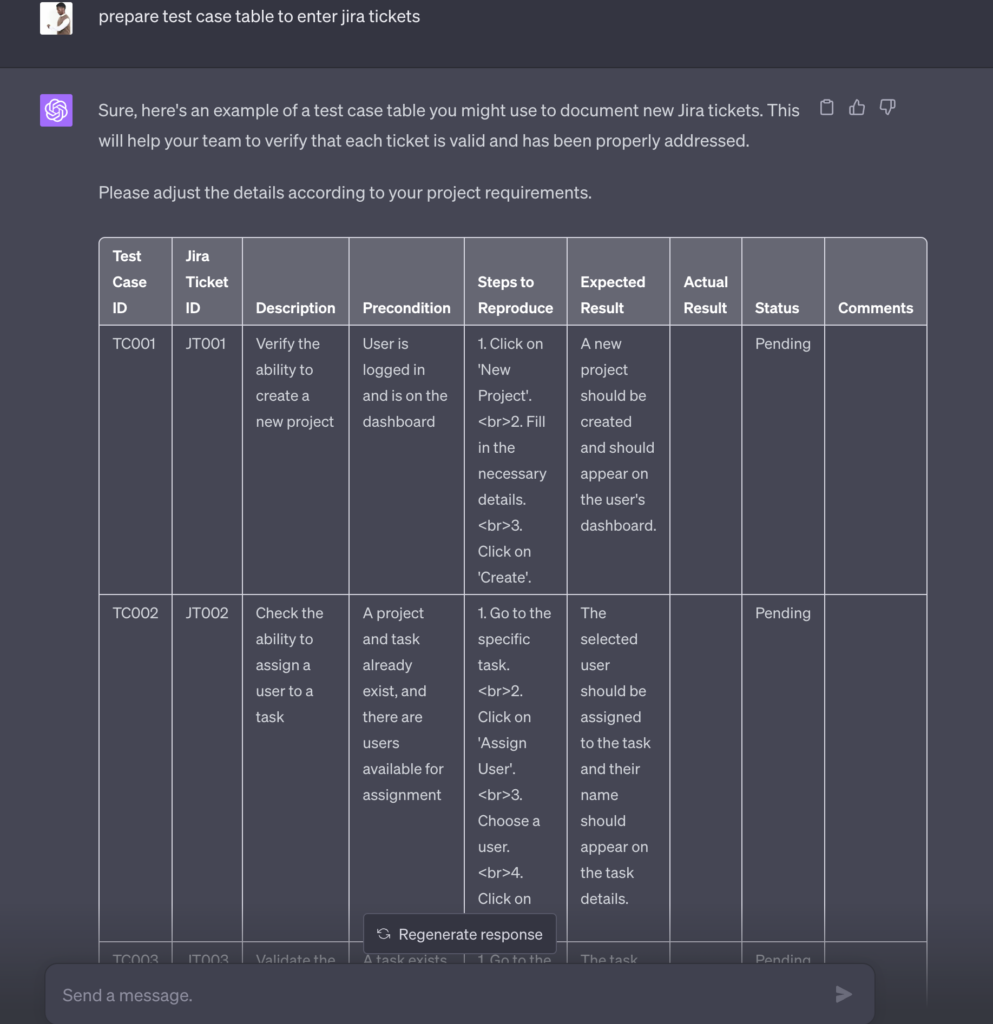
    Do you need a DevOps team on your case? Why it’s better to have an established DevOps team

    If you are still asking whether or not a DevOps team is something that you need to run a successful business and create unique value for your clients, consider some of the following:

    • DevOps is a continuous process of improvement. Dev and Ops work in a fine balance that is required to quickly release functional software or application and continue adding on to it with new features and updates. This requires having an established process and a team that works well together and can collaborate efficiently with other departments. Once you start moving, you can’t trip yourself over because your team is not properly aligned and still finding their footing in DevOps.
    • DevOps needs to be an established practice. It’s a pretty straightforward model of communication and cooperation within the team, where everyone needs to be on board. It’s not the case of hiring a person not familiar with DevOps and presenting them with the fact that “that’s what we’re doing around here”. It requires a certain level of commitment and understanding of the DevOps culture.
    • The cost of DevOps experts is rapidly growing. And if you’re reading this, then you can have a good guess why – the demand is high, and experts are few. With the current DevOps trends, an expert DevOps engineer is not easy to come by, making them a very valuable asset to the team. Because of this, trying to build your own DevOps team may not be a viable option. That’s why it may be much preferred to opt for DevOps aaS in terms of cost and availability.

    In conclusion

    If you are looking to optimize your software development life cycle and bring the spotlight back to the customer and creating value for them, you may want to consider DevOps automation. Once you are set with an experienced team, you will soon enough see the benefits of following a DevOps approach. Keep your customers happy by delivering a high-quality product that gets updated and improved upon regularly. Get out of the loop of silos and insufficient team communication, instead opting for streamlined processes and highly efficient collaboration between teams.

    Are you considering getting started on your DevOps journey? Symphony Solutions provides DevOps services to set you up with an efficient and experienced team of DevOps engineers who are working within established processes and will carry your business to the top of competition, help you keep up with industry trends and demands, and foster innovation.

  • Understanding Secure Software Development Lifecycle (Secure SDLC)? Everything Explained!   

    Understanding Secure Software Development Lifecycle (Secure SDLC)? Everything Explained!   

    Today, IT-driven companies face a lot of pressure to modernise their applications, automate workflows, migrate to the cloud, and enhance customer experience. However, achieving a smooth, successful and secure application development remains an immovable milestone for many. 

    secure-softwares-development-lifecycle

    In fact, a recent survey suggests that only 36% of businesses can rate their security testing program at 9 on a scale of 10. And, 48% don’t entirely rely on their set secure development processes, often they end up including vulnerable codes in production. 

    Fortunately, businesses can implement the secure software development lifecycle (secure SDLC) policy to mitigate these risks.  

    Secure software development lifecycle or SSDL entails integrating real-time security testing tools alongside other practices with the actual development process. 

    For example, your product engineers can write various security requirements together with functional requirements and perform a simultaneous architecture risk analysis during the design phase. Alternatively, look at it as a ready-made approach that can be implemented at any software development or maintenance stage for enhanced security, as well as compliance. 

    Secure Software Development Framework Practices 

    Understanding Secure Software Development Lifecycle (SSDL) and its integral role in building secure software is crucial. SSDL, often referred to as a subset of Secure SDLC (Software Development Lifecycle), combines security testing and other activities at each stage of software development, from design to deployment and beyond. Secure SDLC, in turn, is a comprehensive approach to software development that prioritizes security at every step, ensuring that security testing, risk analysis, and compliance are seamlessly integrated into the broader SDLC. 

    The framework for secure software development maps out all the different stages involved. The organization can plan, design, build, release, and conduct maintenance while paying special attention to risk and security issues. It sets up a solid foundation for robust policies through: 

    • Embracing DevSecOps 
    • Observing current security requirements, 
    • Leveraging threat modeling, 
    • Establishing secure design requirements 
    • Implementing code reviews 
    • Performing pen testing 
    • Actively managing potential vulnerabilities 

    How SDLC Can Be Connected? 

    Secure software development is what many developers refer to as a “shift-left” initiative that entails implementing security checks in a software product as early as possible. With this approach, development teams can plan deployments efficiently because they can address the security risks that might disrupt the planned release timeline earlier. While connecting SDLC might seem like rocket science, or even expensive, it’s non-negotiable. For a start, you can take advantage of automation tools.   

    What Are the Strategic Benefits of Implementing a Security SDLC phases for Your Business Products? 

    A recent study by Wabbi estimates that businesses that adopt security in software development for continuous security can decrease vulnerabilities in their software systems by up to 50%. Besides this, there are other various benefits of implementing a secure software development lifecycle for your business products, including: 

    Better security 

    A framework for security in software development ensures that businesses continuously monitor their software systems to reveal possible vulnerabilities and security lapses. You can then mitigate these risks before they happen to improve the overall security of the software product.  

    Regulatory Compliance 

    Various jurisdictions have laws and regulations that depict how software products should operate, to ensure that sensitive data doesn’t get into the hands of the wrong people. A sound software development security policy ensures that you stay on top of these regulatory requirements to avoid fines and penalties in the event of a lapse. 

    Reduced Costs 

    Taking a secure application development approach in your business allows you to pinpoint flaws at the early development stages. Fixing these flaws when developing can be less costly as opposed to mitigating them when the application is already deployed. 

    Adopting security SDLC phases in your software products also comes with several other side benefits, such as: 

    • Ongoing training for development teams on secure coding culture 
    • Better in-house security when leveraging customized, internal system tools 
    • Better customer retention due to improved security in your software products 
    • Consistent security awareness among team members 
    cost of fixing flaw at different stages of SDLC

    Although a secure development workflow might differ from one organization to another, a typical one consists of the same building blocks at different product development stages. To put it into better perspective, let’s look into a typical development cycle. 

    Planning & Requirements 

    Defining the application’s concept and its feasibility happens at this stage. Besides coming up with a formidable plan for the project, you can also write down its requirements, as well as allocate human resources at this stage. Most importantly, you should conduct basic security awareness training for all employees to inculcate a security mindset across the entire team. Typically, this stage involves: 

    • SDL discovery, which defined the security and compliance goals of the software product project at hand 
    • Security requirements at both technical and regulatory levels 
    • Security awareness training for all team members 

    Architecture and Design 

    You already have the project requirements and insights into the skills needed to implement the application design. The next stage involves modeling the application’s design, as well as its structure in different consumption scenarios. You can source any third-party components that can speed up the overall development process at this stage. However, it’s imperative to countercheck any security vulnerabilities in your go-to third-party component and make the necessary patches before they weaken the entire software product at a later stage. 

    The basis of this secure software development life cycle includes: 

    • Threat modelling to simulate various attack scenarios and their possible countermeasures 
    • Secure design, where you validate subsequent updates to ensure that they are in line with the set security requirements 
    • Third-party software tracking to seal any security loopholes that the bad guys can exploit 

    Software programming 

    The actual creation process of the software product happens at this stage. For instance, you can write the software product’s code and debug it before taking it to actual testing. Secure code development practices implemented at this stage include: 

    • Secure coding, where the talent team can follow an agreed naming conventions or checklist to avoid erroneous mistakes that can be costly, security-wise 
    • Static scanning uses code analysis tools to reveal any weakness in the code without necessarily running the application 
    • Code review, which is usually manual to flag any security vulnerabilities 

    Testing and Bug Fixing 

    SSDL vs. SDLC

    You already have a solid code for the application and the design is also ready. You can proceed to test it both manually and automatically to find any bugs and fix them. Security-proof development includes various practices at this stage, such as: 

    • Dynamic scanning using software tools that simulate hacker attacks when running the application 
    • Following CICD best practices such as continuous integration, continuous delivery, and continuous deployment 
    • Penetration testing using a third-party service provider to iron out any issues that your in-house team might have missed 

    Release and Continuous Maintenance 

    The application is ready to go live and you can now release it for usage in different use cases and environments. New patches and versions can also be made available during maintenance. Customers may choose to switch to the upgraded versions or maintain the original ones. Nonetheless, the recommended SDL practices at this stage include: 

    • Deployment- you can take the continuous integration (CI) or continuous delivery (CD) approach to release your application at a greater speed and frequency by isolating faults and resolving them swiftly. CICD approach also maximizes faster mean time to resolution during ongoing maintenance.  
    • Environment management 
    • Incident response plan to give a procedure that your in-house team should follow in the event of a security breach 
    • Ongoing security checks to shield the application from newly designed hacks and vulnerabilities 

    Secure Development Best Practices 

    As the name suggests, secure development methodologies prioritize security over everything during the overall application development process. Prevalent methodologies employed by both established and upcoming software product companies include: 

    Implement an agile approach 

    agile methodology

    This development methodology involves building a software product or application in small iterations, known as product cycles to enhance rapid production and constant revision. Typically, this approach prioritizes teams’ interactions over tools and processes and working application over endless planning and documentation. 

    Continuous development and improvement 

    This methodology consists of a closed development loop that focuses on improving work output throughout the building cycle. The end goal of this methodology is to optimize value from ideation to end-user application. Numerous steps are involved in the DevOps methodology, including palling, coding, building, testing, release, deployment, operation, and monitoring. 

    Well-defined responsibilities 

    This methodology vests the responsibility of IT security on every member involved in the application development. Typically, the approach entails fostering the organization’s security practices in the DevOps pipeline. The shared responsibility ensures that the team builds a security-proof application. 

    How to Implement Security in SDLC  

    Given how beneficial a secure software development policy is for your organization, adopting one makes business sense. The only thing between you and success is setting the appropriate foundations. You can get started with this development approach in the following stages:  

    • Review your options for a secure development lifecycle and choose the one that works best for your application scenario. 
    • Conduct an architecture risk analysis to close any vulnerabilities as recommended by the provisions of the secure development methodology. 
    • Extend your research to other projects similar to your methodology and learn from action analysis to get it right the first time. 

    • Create a list of coding standards to follow.  
    • Conduct a full training on your in-house team and third-party software development partners to increase awareness about possible security vulnerabilities 
    • Leverage various software tools to automate as much of the development cycle as possible, such as static code analytics or dynamic testing tools to develop a stable build. 
    • Validate processes for security activities within your software security initiatives (SSI). 

    Over to you 

    Leverage this guide to get an in-depth overview of what secure SDLC is and implement the strategy in your next software development project. This approach will help you prioritize security concerns on an ongoing basis, as well as reduce unnecessary costs associated with unexpected security downtimes. At Symphony solutions, we help clients build premier digital solutions with all-around protection against cybersecurity vulnerabilities. Check out our projects and reach out for secure software development services and consultation.  

  • Preparing Your Dataset for Machine Learning on Data Warehouse 

    Preparing Your Dataset for Machine Learning on Data Warehouse 

    Data preparation for machine learning is non-negotiable, especially in today’s world where virtually all business operations are data-driven. According to a recent IDC market research report, the volume of data collected in the next three years will be more than what businesses collected in the last three decades!
    With massive amounts of data generated today, maintaining data quality is no easy task. However, it doesn’t have to be. In this eye-opening guide, we will walk you through how to prepare data for machine learning, as early as now before your data sets become overwhelming. Read on!

    What is Data Preparation for Machine Learning?

    Data preparation or data pre-processing is the process of gathering and combining raw data before structuring and organizing it for business analysts to run it through machine learning algorithms. Data preparation is the most basic step when a business is trying to solve real-world challenges faced by consumers through data engineering and machine learning applications.

    plan of data analysis


    Preparing data for machine learning is important because:

    ML Algorithms Work with Numbers
    A typical data set is usually presented in numerous tables featuring rows and columns, although every type of data might have different variables. For instance, some data types may have numeric variables, such as integers, percentages, rates, or even ranks. Other prevalent variables used in data presentation include names and categories, or binary options such as true or false.

    However, machine learning algorithms only work with numeric data. Technically, these algorithms take numerical inputs and give predictions (output) in numbers. That’s why data scientists usually view ML data as vectors and matrices.

    Businesses Must Meet the Requirements of ML Algorithms
    Businesses have a plethora of options when it comes to choosing a machine learning algorithm, depending on the foregoing predictive modeling project. That said, these algorithms have distinct requirements, as well as expectations when it comes to data input.

    For instance, an algorithm, such as a linear machine model might require a specific probability distribution (Gaussian) for each input and target variable. In that case, machine learning data preparation will help change the input variables to match Gaussian probability distribution, or change the ML algorithm altogether to reconfigure data input expectations.

    Machine Learning Definition, Goals, and Types

    Machine learning, popularly abbreviated as ML is a special artificial intelligence (AI) tech that empowers software applications to give nearly accurate predictive outcomes, without necessarily programming them. The goal of this tech is to optimize computer systems to become smarter and more intelligent with little to zero human interference. Typically, this entails building programs that can handle specific practical learning tasks. Another goal for ML is to come up with elaborate computations of human learning processes and perform programmed simulations based on them.

    machine-learning-types

    There are three types of machine learning, including:

    Supervised Learning

    According to Gartner, supervised learning will probably be the most prevalent machine learning among enterprise IT leaders throughout 2022 and beyond. As the name suggests, the machine is supervised while learning as the data scientists feed in the algorithm information.

    Supervised learning works by feeding pairs of historical input and output data to ML algorithms, which creates an output that is nearly as accurate as the desired outcome. Prevalent algorithms used in supervised learning ML include neural networks and linear regression.

    This type of ML is used in various real-world use cases, such as:

    • Determination of low-risk and high-risk loan applicants
    • Prediction of future real estate prices
    • Determination of disease risk factors
    • Prediction of failures in a system’s mechanical parts
    • Revealing fraudulent bank transactions
    Unsupervised Learning

    Unsupervised learning is common in ML applications that seek to identify various data patterns in a set and draw conclusive insights from them. Unlike supervised learning, this ML doesn’t require constant human intervention to learn. Instead, it automatically detects less obvious patterns in a data set using a host of algorithms, such as Hidden Markov models, hierarchical clustering, or even k-means.

    Unsupervised learning ML is instrumental in creating predictive models. Examples of its uses cases in real-world scenarios include:

    • Inventory clustering based on manufacturing or sales metrics
    • Customer grouping based on purchase history and trends
    • Segmenting correlations in customer data
    Reinforced Learning

    Reinforced learning is probably the closest ML that mimics how humans learn. Typically, the leveraged algorithm learns through direct interactions with the environment in question, to give a positive or negative reward. Prevalent algorithms used in reinforced learning include Q-learning, temporal difference, or even deep adversarial networks.

    However, reinforced learning isn’t a go-to ML application for many organizations because it requires enormous computation power to execute. But at the same time reinforced learning requires less human supervision, making it ideal when working on unlabeled data sets.

    Although real-world use cases for reinforced learning are still a work in progress, some examples include:

    • Teaching cars to drive or park autonomously
    • Dynamic traffic lights control to ease jam congestion
    • Robotics training using raw video images for systems to simulate what they see

    How to Prepare Data for Machine Learning – Best Practices

    Data preparation for machine learning can be an in-house DIY task or an outsourced data engineering service, depending on the company policy and the amount of data that you are dealing with. Nonetheless, you can prepare data for machine learning in the following simple steps:

    Problem Formulation
    Which problem is your business trying to solve? Getting an answer to this question will not only help you prepare data the right way but also build a successful ML model by understanding what and how to do it.

    You can do this by going back to the basics, away from data. Spend quality time with the professionals within the domain in question to get a better understanding of the problems being solved. After that, use your findings to formulate a hypothesis of the factors and forces in play to determine which type of data you are going to capture or focus on. This will help you come up with a practical machine learning problem to be solved.

    Data Collection and Discovery
    Your data science team will proceed to collect and discover various data sets after establishing the real problem to be solved. This phase includes capturing various data sources from within the enterprise and third parties as well. An important factor, this process shouldn’t only focus on what the data ought to represent. Instead, it should also extend to reveal what the data might mean, especially when leveraged in different contexts. This is not to forget any factor that might have biased the data.

    Determining any bias, and its extent at data collection points will help mitigate biases in the ML in the long haul. Let’s assume you want to create a machine learning model that predicts consumer behavior. In that case, you can investigate bias by establishing whether the data was collected from diverse customer bases, perspectives, as well as geographical locations.

    Data Cleansing and Validation
    After investigating bias, it’s time to determine whether you have clean data that will give you the highest quality information to drive key decisions in your organization. Innovative data cleansing and validation tools, as well as techniques, can help you spot outliers, anomalies, inconsistencies, or even missing sets of data altogether. This will in turn help you to factor in missing values as neutrals or mitigate their impact on the final ML model.

    Raw Uncompressed Data Backup
    Raw uncompressed data is just as important as structured data since it might contain vital information about your brand. In that case, you would want to back it up before sorting and structuring. Moreover, raw data is the foundation of any downstream analysis when it comes to implementing machine learning models in your organization.

    Also, it’s worth noting that some variables in raw uncompressed data such as time points in interviews are unique and nigh impossible to reproduce. With this in mind, you’d want to back it up as well.

    Data Structuring
    Once you are satisfied with the type and volume of data, it will now help if you structure it before employing preferred ML algorithms. Typically any ML algorithm will work better and effectively if your data is structured into various categories, as opposed to simply uploading it in raw numbers. Prevalent effective practices, but often overlooked when preparing data for machine learning are data smoothing and binning continuous features.

    Smoothing as a continuous feature enhances denoising raw data by imposing casual assumptions in data extractions processes. This practice points out relationships in ordered data sets to give an easy-to-follow and understand order among data sets. Binning on the other hand structures data sets into bins using equi-statistical methods.

    Other practices for data structuring in preparation for ML application include:

    • Data reduction
    • Data normalization
    • Data segmentation, based on training and testing ML models

    Feature Engineering and Selection
    This is the last stage in data preprocessing before delving deeper into building an effective machine learning model. Feature engineering entails creating or topping up new variables to enhance the ML model’s output. For instance, a data scientist may extract, aggregate, or even decompose various variables from a data set before transforming the features depending on probability distributions.

    Feature selection in this case entails pinpointing the relevant features to focus on and doing away with the non-essential ones. Inasmuch as a feature might look promising, it’s your responsibility to ensure that it doesn’t bring model training and over-lifting challenges when analyzing new data.

    Sum Up

    Machine learning data preparation will help you build a successful ML model to drive key decisions in your organization. This guide explains the practices in a basic, layman’s language However, in the real sense, it takes an experienced data scientist or even a team of experts to do it effectively. That said, never hesitate to seek professional help when preparing data for machine learning. Contact us today and find out how our data experts can be of help.

    FAQs on Dataset for Machine Learning on Data Warehouse

    Cross Industry Standard Process for Data Mining (CRISP-DM)

    The CRISP-DM process serves as the foundation for nearly all data science processes, and comprises of six sequential steps, including:

    Business understanding
    This phase entails understanding particular business objectives before determining and setting up data mining goals. You’ll also determine whether the needed resources are available to meet the set project requirements, as well as perform a cost-benefit analysis on the whole project plan.

    business understanding to deployment

    Data understanding
    After understanding the business needs, you’ll need to determine and analyze the data sets to be mined, in line with the project goals. This would mean describing data in terms of format and field identities, exploring data through visualization, and verifying the same to enhance quality consistency.

    Data preparation
    Data preparation, also known as data munging in the CRISP-DM process follows these steps:

    • Data selection
    • Data cleaning
    • Data construction
    • Data integration
    • Data formatting

    Modeling
    This phase entails building and assessing multiple data models. It include four steps:

    • Model technique selection based on neural net or regression algorithms
    • Test design generation by splitting data into training, test, and validation sets
    • Model development using a preferred code language
    • Model assessment based on domain knowledge

    Evaluation
    This phase evaluates whether the constructed model is in line with the forgoing business needs and requirements. Besides evaluating the results in the previous phase, you’ll also need to review the entire process and ensure that they were correctly executed. After that, you’ll be in a better position to determine which next steps to follow, whether its deployment, further iteration or even start an entirely new project altogether.

    Deployment
    Deployment depends on the prevailing business requirements. It can be as simple as coming up with a generalized report or as complex as initiating multiple data mining processes. Either way, you’ll need to plan, monitor, review, and offer ongoing maintenance.

  • DevOps Maturity Assessment: Level Up Your DevOps Processes

    DevOps Maturity Assessment: Level Up Your DevOps Processes

    DevOps is the product-oriented approach to software development and support that is the current ‘it’ of the industry as it shows high change management effectiveness and perpetuates the culture of constant learning and improvement. Dev and Ops should strive to work as a single organism with a maximized effort and all processes aimed at a common goal – continuously delivering value.

    According to the 2021 State of DevOps Report by Puppet, as many as 78% of DevOps practitioners find themselves stuck somewhere in the middle of their DevOps evolution. This shows just how many organizations still have a way to go in reaching the full potential of their DevOps maturity. Still, they get to enjoy the benefits that come along the way:

    • easier adaptability to changes,
    • improved efficiency,
    • easier scalability,
    • faster time-to-market,
    • enhanced quality,
    • and more.

    Inevitably, more opportunities for business growth come along the way. If you want your business to reap all the benefits of having mature DevOps processes, it starts with understanding where you are in your DevOps journey so far. And that’s where DevOps maturity model comes into play.

    What is DevSecOps Maturity Model? 

    DevOps maturity model determines how far along you are in your DevOps implementation and lets you map out your further route to perpetuate growth. Essentially, it should tell you how mature your processes are right now, what needs improvement, and how you can get to the next checkpoint in your DevOps maturity journey.

    levels-of-devops-maturity

    DevOps requires a continuous effort on the part of your team, and you have to understand that this is an ongoing process without a set end-point. An organization can’t just implement it as a one-time action and be done with it. What’s important to understand is that you are setting out on an adventure with your priorities set to delivering value and progressing over time in your processes and output. Therefore, you will want to eventually assess your organization’s DevOps maturity to determine what are your successes, what pitfalls and setbacks you should be aware of, what issues may pop up further along the way, and how you can prepare for them right now.

    DevOps is all about embracing that philosophy and changing your mindset to one of continuous growth and evolution of your processes. Understanding your DevOps maturity helps estimate where you are standing and adjust for the future challenges and successes.

    Where are you in your DevOps journey?

    How to know if you have successfully taken down the barrier between development and operations? Has your company established mature DevOps processes or are you still struggling to get it off the ground? Knowing the level of your organization’s DevOps maturity is a necessary step in the process that you will have to take. Every organization will eventually find itself at a point where it needs to determine where it’s standing and how to proceed. DevOps maturity is more about getting the right tools. It starts with adopting a culture of continuous change and striving for excellence.

    So, how mature is your DevOps team? These are the general cues to tell you your level of DevOps maturity.

    DevOps maturity levels

    • Level 1. Initial. Dev and Ops teams work in silos.
    • Level 2. Managed. Change of mindset with introduction of Agile. Initial automation. Collaboration is encouraged.
    • Level 3. Defined and measured. DevOps team is established. Processes and tools for monitoring and automation.
    • Level 4. Automated. Consistent processes and monitoring. Continuous improvement.
    • Level 5. Optimized. DevOps team is mature in its processes and practices continuous value delivery.

    How to measure DevOps maturity

    Since you already have an idea of what maturity stands for when it comes to establishing and running DevOps processes, let’s talk about what to look at exactly in terms of processes and procedures, if you need to know where you are standing with your DevOps maturity. Consider what is your state of the art for the following points in our DevOps maturity checklist? How many can you tick off?

    DevOps maturity checklist

    Automation (CI/CD). To what extent have you embraced automation in your testing, build and deployment operations? Automating the routine tasks allows for optimizing all your processes and minimizing the risk of human error. This helps your team be more efficient and direct their time and efforts towards more complex tasks. Automation is what helps establish a culture of continuous integration (CI) and delivery (CD) and promotes Business Agility.

    devops implementation stats

    Documentation. Are you consistent with your documentation upkeep? Is it accessible for all team members to use and contribute? Documentation is the gene sequence of your application. Creating sufficient quality documentation of your processes and keeping it up-to-date can be a dealbreaker for your operational efficiency and continuity long term.

    Disaster recovery. How ready is your DevOps team, really? What is your established process of disaster recovery and how prepared are your Devs to act upon any signs of system inconsistencies? Do they have an efficient and up-to-date disaster recovery plan? How fast can they apply it in case an incident occurs? Another important point you may want to address is redundancy planning or having all your system components duplicated for easy recovery in case of system failure.

    benefits-of-achieving-devops-maturity

    Business metrics monitoring. Another one of those checkpoints that can never be overlooked in DevOps is keeping track of your business metrics and immediately responding to issues just as they occur. After all, the sooner you investigate and get it fixed, the better it is for business continuity and providing good-quality service. In the case with our client Goat Interactive, Symphony Solutions team worked on setting rules for data monitoring and incident response criteria to ensure that the cloud managed services team is able to fix the issues and avoid escalation if possible.

    Security. How secure is your software development lifecycle? As you are caught up in the race with competition, it’s easy to swerve off the tracks and leave gaps in your security. DevOps is meant to prevent that with one of its main objectives being setting and following strict security standards at all stages of software development. DevSecOps maturity assessment implementation is a viable option to consider.

    DevOps maturity assessment tools

    An essential step in your DevOps maturity journey is equipping your team with the right toolset to achieve efficiency and high quality of output. Depending on what task you need to accomplish, you can find the software tools that work best for you and your team.

    DevOps tools list & maturity assessment tools

    There are no inherently right or wrong tools. There is just what works for you. 

    Summing up

    Sufficient DevOps maturity will allow a company to gain momentum to continuously improve its product and bring software to the market by having solidly established processes with the one goal of delivering value to the customer.

    DevOps should be considered separately as its own entity, so you don’t necessarily need to set up your own in-house team in order to benefit from what they can bring to the table. In fact, many would argue that it’s more convenient and hassle-free if you set yourself up with a DevOps managed services team and have them manage your infrastructure. In the long run, you want to have a solid process going for continuous value delivery and know that your DevOps is up to standard compared with what your competitors have to brag about. Where upskilling, team education and consultancy are handled by your service provider.

    That’s what is so excellent about setting up your DevOps processes, that you can put your trust into a reliable DevOps services provider and free up your time and brain power to come up with new features for your product, knowing that the process is set and running without a hitch. Symphony Solutions can set you up with an expert team to provide DevOps services – all to put your application delivery on a fast track, up your quality standards, and not blow out a hole in your budget as you’re at it. Carry on delivering value to your clients and know that an expert team of DevOps has got your back when it comes to orchestrating an efficient DevOps strategy for your product development and delivery – from improvements throughout the process to reliable automation of the mundane activities prone to human error.

    FAQs

  • Theo Schnitfink for Forbes: Cloud Transformation in the Face of Market Recession: Consider Hiring Services Rather than People

    Theo Schnitfink for Forbes: Cloud Transformation in the Face of Market Recession: Consider Hiring Services Rather than People

    In his Forbes Technology Council column our CEO Theo Schnitfink shares his thoughts on the business prospects in the face of the nearing market recession.

    The imminent recession we are slipping into is undeniably on every executive’s mind today. All the macroeconomic signals are indicating that downturn is inevitable. Inflation has spiked to 40-year heights, which caused interest rate expectations to rise suddenly. The more growth-oriented the companies were the more they’ve gone down over the last 6 months. Even the absolute best SaaS companies are experiencing turbulent times.

    As a result, the outflow of venture capital funding the startups, including late-stage companies with 100+ and 1000+ employees. There is so much uncertainty, one being the recession, that a lot of venture capital firms are choosing not to invest right and instead wait for more clarity on where the new evaluation levels are going to land.

    Considering the situation, hiring new people might not be a good idea for some companies, as it entails a long-term commitment. So instead of hiring people, companies should consider hiring services for a specific problem.

    A short article recap:

    • Services are more predictable for businesses
    • In terms of business continuity, they minimize the impact
    • They are more problem-focused and flexible
    • They can help speed up the delivery
    • Transitioning to a service model is essentially about choosing the engagement model that works the best for your company.

    Get the full story, visit Theo’s article on cloud transformation in the face of market recession.

  • Caring for your customer: The importance of Data Science 

    Caring for your customer: The importance of Data Science 

    The iGaming industry is experiencing accelerated growth and is expected to reach $158 billion by 2028, according to recent market research by Fortune Business Insights. Data Science and Analytics play an important role in achieving this projected growth. The collection, analysis and insights gained from player behaviour are important enablers in the ability to provide data-driven decisions that positively impact the end-user experience. Positive user experiences will drive engagement and retention.

    How Symphony Solutions puts customers first 

    At Symphony Solutions we put people first. We understand that everyone is unique and individual in their experiences and preferences. This should follow through to data and the mindset employed when designing a data strategy in iGaming.  

    Finding the balance between value-based segmentation and truly knowing and catering to your customer´s needs is key. It wasn´t long ago that terms like ´how to hook a customer´ or how can we ´push a customer´ were used.

    Why an iGaming company should need a data analytics strategy  

    Collecting and analyzing data allows the betting operator to understand the reasoning behind user behavior and what may help the bettor experience the games in a safe and entertaining environment, keeping the right balance of engagement while protecting the user from exhibiting harmful patterns in behavior and getting ‘hooked’. This way the bettor has positive experience playing, trying out new games or betting on different kinds of sports.

    Whilst we do of course provide you with typical stats such as daily active users, number of bets, total stakes, the key here is focusing on your customers, who are they and what do they need, whilst keeping them safe.

    The current tendency is to pay close attention to customer behavior when engaging in potentially harmful activities. Bearing the social responsibility of a betting operator, you want to create an entertaining yet safe environment for your users. At Symphony Solutions we can use customer standard behavior as a marker to see if they display any problematic changes. Different gambling jurisdictions have different markers as to what player harm might look like. Keeping a track of these all and encouraging your analysts to look for new markers of harm based on customers who have self-excluded can truly help how limits of harm can be indicated and go the extra mile to help the customer. This way you can know exactly:

    • What is appealing to the bettor?
    • If you should interest users in exploring a new kind of game?
    • What is the right timing for ad placements?
    • Is the player engaging with the games in a healthy way?

    At the end of the day, all the operator wants is to deliver the best player experience and have a safe and satisfied customer who spends some entertaining time playing their games. A happy player makes for a busy business. So if you know how to use the data just right, you will create the kind of environment that will be beneficial to the player and keep the business profitable.

    big data analytics importance for business

    Types of Big Data analytics in iGaming

    There are different types of big data that can be tracked, analyzed and used in iGaming but they can be put into categories based on whether you are observing general tendencies across your betting or gambling app, or if you are following a single user in order to understand their behavioral patterns and draw conclusions from that to customize and improve their playing experience.

    In-game analytics

    A lot of data can be tracked from how the game app is being used daily, from real-time data to long-term statistics that is collected and consolidated for further analysis.

    • Real-time data monitoring is a way to deliver relevant and time-sensitive reports that can be important for efficient decision making for achieving business objectives.
    • Behavioral analytics show the way a bettor interacts with the platform, what kind of games they play and how often, how their playing patterns change throughout the months, are they likely to click on recommended games or stick to what they know.

    Predictive analytics in iGaming  

    In online gambling and sports betting, players often like to access data on previous games and analyze it so that they can predict the outcomes of future games or sports matches. Using predictive analytics has already shown a proven track record in winning casino games, lotteries, and even jackpots. The right way to achieve positive results is to leverage machine learning and neural networks to build data-driven betting and gaming strategies. Powered by AI, such predictions can achieve a high level of accuracy and help punters increase their wins.

    how predictive analytics works

    How iGaming companies can apply data analytics 

    If a company wants to start using data, firstly it must have a data warehouse solutions suited to the desired business needs and then the data brings the business benefits. We can design and build this for you based on your needs! But the trick is defining what are the needs?  For example: 

    • Product-related Key Performance Indicators
    • Behavioral modeling
    • Predictive modeling and forecasting
    • Up-selling and cross-selling through personalized recommendations
    • Optimized gamer experience across game platforms
    • Fraud detection
    • Preventing harmful gaming behavior with responsible gambling
    • And many more options that we can help you with.

    Building software solutions for gambling and sports betting requires having a good grip on the technologies and an eye for innovation. Symphony Solutions has over six years of relevant experience working with leading names in the industry. Our expert teams build custom iGaming solutions with the goal of creating a seamless experience with excellent customer engagement. Behind all that we apply our solid data warehousing experience and our expert data scientist to the tasks.  

  • Legacy Application Modernization Strategies for Your Business Transformation

    Legacy Application Modernization Strategies for Your Business Transformation

    As companies strive to keep up with the perpetual churn of the market, they may run into issues with maintaining legacy applications or systems. One thing that you definitely wouldn’t want as a business owner is to drag behind the competition because you heavily rely on using an old system that has seen the highlights of its existence back in the 80s. That’s what legacy applications can be roughly described as.  

    It may not be obvious, but according to Dell’s market research, an estimated 80% of what companies spend goes to the upkeep of legacy applications. More often than not, this isn’t really justified. 

    spending to upkeep of legacy applications
    80% of what companies spend goes to the upkeep of legacy applications 
    Source: Dell’s market research 

    Companies rely on legacy applications for running operations with no alternative tech solutions. The price that they have to pay for it, apart from the literal cost of maintaining legacy applications, among other things, is lack of security, non-compliance, risk of losing important data, and overspending on maintaining a system that no longer carries its own weight. What’s even more concerning, the company may begin to stagnate as the limitations of a legacy system render it unable to deliver new features within a reasonable time and budget. 

    What is legacy application modernization? And what is the goal of it? 

    Legacy modernization is the process of bringing your business systems up to standard with the latest technological and market demands. As a result, you get a system or an application that is more efficient and compliant with industry regulations. It is able to perform on par with the more technologically advanced competition and deliver on customer expectations. 

    The ultimate goal of application modernization is to bring forth your digital transformation journey and create a system infrastructure that helps you thrive in the turbulent market. When you take your legacy application through the modernization process, what you achieve is the following: 

    • Establishing a standard. As the market is changing, so is the understanding of what is “up to standard”.  
    • Staying competitive is one pursuit of any business that always stays relevant as you operate in a market rather than a vacuum. 
    • Meeting customer expectations. What value you bring to the customer can rely on you utilizing the latest technologies and making your delivery faster, more reliable, and of the highest quality. 
    • Utilizing modern technologies to the max. New technologies emerge and change the way business works. Leveraging the advances of modern technologies such as AI, cloud transformation, etc., is good for your competitive advantage. 

    Why you need legacy system modernization: Benefits for business 

    Although the old saying goes “don’t fix it if it’s not broken”, it may as well be that this piece of wisdom needs a bit of a shakeup itself. Legacy software modernization benefits the business and introduces a higher standard for the products or services that you provide. Having a sound technological solution comes with its own set of perks. 

    Security. If you are working with personal data, a legacy system will put you at risk of non-compliance with GDPR, as the security standard and requirement for processing personal data in the EU implemented since May of 2018.  

    Cost of maintenance. Legacy applications may become a budget burden with overwhelming costs for maintenance that are not reflected in the value that you’re getting out of the application. With modernization you can greatly cut expenses and end up getting more of your money’s worth. 

    Cost of new feature delivery is incompatible for when you are working with a legacy application or a modern software solution. You may run into issues with finding experts qualified to work with the legacy system and the scarcity of the skill set inevitably drives up the cost. 

    Addressing technical debt is crucial for maintaining a healthy system. As time goes on, a legacy system will reveal more and more gaps in functionality compared to a modern solution. 

    Legacy system modernization approaches 

    When upgrading legacy systems, there are two main routes to take – revolutionary or evolutionary modernization – which differ in scale but should be seen as alternatives rather than the opposite. What approach you choose largely depends on the current state of your legacy system and what goal you pursue in your legacy modernization journey. 

    Revolutionary modernization 

    Revolutionary modernization needs to be applied in cases if the system is no longer being supported by the vendor or updated and hence is posing a risk of security breaches or incompliance. These and other reasons lead to your legacy application becoming a risk and further hesitation with modernization can lead to significant loss or damage to your regular business operations. This approach means building ‘from scratch’ a new system that is compliant and relevant to your current tech and business needs. 

    Pros: Holistic approach, prevents system damage and data loss. 
    Cons: Expensive, presents risks to business continuity. 

    Evolutionary modernization 

    The evolutionary approach to legacy modernization is a more gradual process that unfolds over time, giving the organization a chance to weigh all risks and routes, and see to it that your system architecture doesn’t collapse while you’re at it and interrupts regular business processes. For instance, this can mean moving your application to the cloud in “chunks” or individual functional segments. 

    Pros: Helps avert risks, gradual spending over time. 

    Cons: Slow, multi-step process. 

    Legacy application modernization strategies 

    We can define the “five Rs” of legacy application modernization that are the strategies a business can follow on its modernization journey. 

    legacy application modernization
    • Replace your old legacy application with a new one, that corresponds to your current requirements and business needs. For example, you may want to update and optimize the infrastructure, or migrate an outdated on-premise system to the cloud. This is a fast yet probably the most expensive strategy for legacy application modernization. It runs a risk of losing data or disrupting usual business operations. Smooth replacement can be done with appropriate system assessment and getting on board with a DevOps team that would provide a full scale of services, from cloud native development to cloud managed services.  
    • Rearchitect and change the code to improve its structure and address existing technical debt. This is a more involved strategy that implies using new technologies and changing parts of the code, mainly on the backend, to enhance system performance. However, it’s not as disruptive and carries less risk than completely rewriting the code or replacing the system altogether. The difficulties that come with this strategy are that there may be limits to what you can do with the existing code. 
    • Replatform your system in those cases if it’s still able to perform and doesn’t require substantial changes to its structure, functions or features. In this case, you can make the shift to a new platform with minimal changes to the code and preserve the integrity of your legacy system yet benefit from having it run in a new environment (e.g., improved performance and enhanced security with cloud infrastructure). This approach to upgrading legacy systems allows for improving the overall performance with minimal costs and effort. 
    • Retain your legacy system in case there is no immediate need for a drastic upgrade. However, this strategy is only a short-term solution meaning that there should be a plan further down the line for retirement of the system or merger with a modern solution for your infrastructure. If the latter is the case, you may need to build ‘bridges’ for easier integration down the line. 
    • Retire the system if you discover that it’s no longer of any benefit to you and it would be better to move your data and users to a system that is already set up with sufficient functionality to carry on business operations as required. You may need a redesign to streamline the data and optimize business processes. 

    Tips & considerations when choosing a legacy modernization approach 

    Some things to factor in when deciding on your approach to legacy modernization would be the following: 

    • Assess your workloads. What is the state of cloud-readiness of your legacy application? Audit your system and determine the excess and business value of your workflows to understand how to approach modernization without business disruptions.  
    • Architecture. Analyzing your system architecture can help find performance shortcomings and weak points that would benefit from an upgrade. 
    • Financial load. Is your budget already stretched thin with supporting an outdated and burdensome legacy system? Address your overspending by optimizing resources and investing in future improvements that will alleviate the budget burden and improve ROI. 
    • What are the migration risks? Are you running into compliance and security risks with your current legacy system? Does it require immediate intervention or if you can approach its modernization more gradually over an extended period of time? 
    • Operations. Optimize your business operations. Support your teams in acquiring new important skill sets and invest in their training. Improve and modernize business processes. 
    • Take care of security. How secure is your legacy system and what is the best way to secure it going forward? A system audit may help you assess its current state and find gaps in security. Also, when proceeding with system modernization, see to it that you avoid data loss and exposing your system to possible attacks. 
    tips and considerations legasy modernization approach

    Conclusion 

    If you’re a long-time runner in the market, you may find yourself using applications or systems that have been serving you for many years but are no longer able to uphold current day industry standards. The best way to make your business compatible in the ever-changing market is to pursue a modernization journey that would help you bring your standards up to par and provide the best quality services for your clients. If you know your business needs and objectives and are aware of risks that come with any drastic changes, or lack thereof, to your business ecosystem, you will be able to pick just the right legacy system modernisation strategy and remain eligible for the ‘race’. 

  • Symphony Solutions supports Ukraine. “We will keep going for as long as it’s possible” 

    Symphony Solutions supports Ukraine. “We will keep going for as long as it’s possible” 

    By Magdalena Lemanska, Forbes Poland, 06 March 2022 

    Forbes-Theo

    Forbes: Is it possible to run a business as usual in Ukraine? How is your company doing? 

    We are now living a reality that otherwise would’ve only been found in movies. Lviv, where we have our main delivery center, remains one of the safest places in Ukraine. However, even there people are regularly stuttered by emergency alerts that prompt them to run down to bomb shelters and basements. They live in constant fear. We regularly conduct remote meetings with our people, however, it happens so that they have to stop in the middle of a call because they can hear the alert and need to go seek shelter in a safe space. We also have a team in Kharkiv and the situation there is a lot more serious. Several Symphonians have already been drafted into the army and are fighting in the war. A lot of volunteers joined local territorial defence forces. Thankfully, they are all okay for now. Because it’s pretty much impossible to find an apartment for rent in Lviv right now, we have also launched initiatives to help refugees that are flooding into the city. 

    What are the initiatives? 

    Part of our office has now been transformed into a shelter for refugees. We purchased blankets, pillows, and other necessities. In the office, we have a shower, so people can clean themselves up, and in the office cafe, we provide food for the refugees. The initial idea was to make this a place for our own people and their families. We expected them to come en masse to Lviv from the East of Ukraine. Now we take in all refugees since the situation has gotten so dire. Some come only for a few hours, to eat and wash up, some stay for a day or two before they can take off for the border and leave the country. Of course, this is only in regard to women, since men aren’t allowed to leave Ukraine under these circumstances. I’m afraid, that in time our office will become a place of permanent stay for many of these people. And eventually, we will no longer be able to accept anyone new coming in. 

    Are the teams working as usual? 

    Yes, we are trying to work and manage the company as normal, at the same time, we continue to function in a state of crisis. Every morning there is a crisis team meeting. My managers touch base with their teams daily, wherever people may be scattered around Ukraine, and that is over 200 people that you have to stay in touch and talk to personally to know what is the situation on their side and how they’re doing. We ask if they plan on relocating and if yes, where to. 

    We have also split our daily meetings into two parts. At first, people in meetings would mainly talk about how they feel in the current situation and about safety. So we’ve taken that into account. Now, we start off briefly reporting on the situation and our people’s safety, then we talk about work – that’s what it means to work in crisis mode. 

    We have a lot of people in Kyiv and many other places around the country. Since the times of pandemic that made it a “thing” to work remotely – a lot of people are in other countries, such as Azerbaijan and Nigeria. Many of our Ukrainian teammates don’t want to leave their homes. These are very brave people. 

    What are your clients doing in this situation? 

    Almost all are contacting us asking if there is any way they can help and how we are doing. We have even started sending out a special newsletter biweekly with a general update on what is going on. Our latest issue was on the topic of what are various ways they could help us since we see this question pop up most frequently. I suggested donating to the Ukrainian army, which now has a dedicated bank account set up by the National Bank of Ukraine. We have made available a bank account where we are accepting donations that later go to our charity initiatives. Moreover, I have appealed to our clients to consider completely cutting ties with contractors and suppliers in Russia. The majority of our clients react very positively to all of the initiatives. Many offered Symphonians who work for their projects relocation to their offices abroad so that they could work from there. For the time being, of course, this is all in regard to women only. In Lviv, many people are opening up their doors to their entire families and friends who are escaping the war-ridden areas. I’m truly impressed by his unity and the will to support others. 

    In Poland, it’s all the same. 
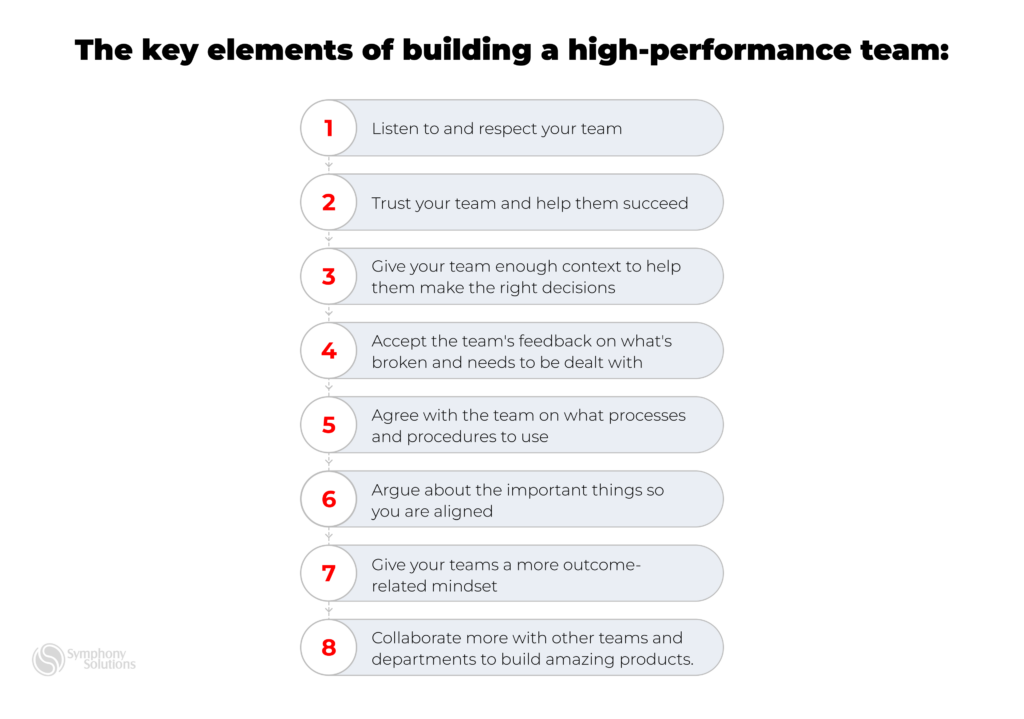
    From what I know from my Ukrainian friends, they are really impressed by how they are treated on the Polish border. People bring food, provide care and transportation to any place in Poland. I’m really touched by this. We are also helping our Symphonians who want to move to a different country and continue working – we help them leave the country and find a place to stay once they are on the other side of the border. We also spend our own funds on purchasing any equipment that we can get for the army right now. After a hard pandemic time, the company was suffering financial losses, but it’s been turning out profit again since December. Right now, I have to make sure that the company is functioning at the current level since the entire profit that we generate is donated back to support Ukrainians. We ask our people to try and work, regardless of the stress of their everyday life right now, because it is very important to keep the economy running. 

    That is our fight – some fight on the battlefield, others work so that they have the means to help those suffering in this war. 

    In a situation like this, work can probably give you some sense of ‘normal’. 

    Yes, however, the most important thing right now is the safety of our people – only once that is secured, we can care about the company being able to function as normal. Our people can work from home, everyone has VPN, so they can do it from any country in the world. The key factor for us is good internet access. We know that Elon Musk is doing a lot of good in this regard, however, the first Starlink antennas are only accessible to the military and government for now. Internet access systems are the key for us today. 

    If the situation gets any worse, are your delivery centers in Poland and Macedonia ready to take in people from those other offices? 

    Yes, some of them have already taken up this decision. I’ve personally talked to people convincing them to consider moving, even before the war broke out. They could go work in our Polish office or in any of our clients’ offices. However, for the most part, people didn’t want to take up the opportunity, even though I argued that once they decide to make the move, they may find themselves in a 40-kilometre queue to the border. I’m not glad to admit that I was right. Now, many people want to get out but for a number of reasons they can’t. Part of our people made the move just in time, although that’s the minority. 

    For how long are you ready to go on in this mode? 

    It could’ve been longer if it weren’t for COVID-19, which exhausted all of our reserves and profits. But I intend to keep up this mode of work for as long as possible. For as long as people can work and complete their tasks, the business will keep going. Under the circumstances that we have today, I think, I could go on indefinitely. However, a lot depends on how many Symphonians will have to get drafted into the army. For now, it’s just a few people, but if it’s a hundred, I won’t be able to afford their regular salaries the way I can do it right now. Then, I will probably have to convince the team to give up a part of their salaries across the entire company. There are decent salaries in the IT field right now, so the question will be whether or not people will cling to them at any cost, or if they will choose employment security that would allow everyone to maintain the livelihoods of their families. And I would like you to stress one more thing on my behalf. 


    What is it? 

    I’m calling on everyone involved to stop collaborating with Russian companies. We only had one such client, a Russian-American company, which with time transferred to the US but kept its Russian management. We have terminated our contract with them. Shell, Disney, Mastercard, Visa and many other big companies stopped providing their services to Russians. That’s as much as we can do to completely isolate that country. Of course, there are many people amongst Russians who had no say in this situation but unfortunately, these are the consequences of mutual responsibility. We need to send a very clear message to Vladimir Putin that what is happening now in Ukraine needs to be stopped as soon as possible. 

  • Symphonians volunteer for Ukraine: Our stories

    Symphonians volunteer for Ukraine: Our stories

    As Ukraine is being devastated by the Russian enemy, we stand together as a united front and reach out our hearts and helping hands to people in need. In this regard, Symphonians are amazing people who never give up in the direst of circumstances. They not only stay on top of their projects but are actively involved in the life of the community.

    Everyone’s fight is different. While our brave warriors are keeping a stronghold on all fronts, we can secure them from the back and take care of one another. Every soul is precious, every life is sacred. It is our duty and mission to find our place in the turmoil and make a personal contribution, however big or small. Little strokes fell great oaks.

    Let’s hear from our Symphony Heroes in the Rear, doing their part on the rear front for the sake of Ukrainians and the Ukrainian Armed Forces.

    The long drive to war

    The unprovoked and senseless war was something that we never wanted to expect, we couldn’t let ourselves believe that this is a possibility until the early morning of February 24th. Yet Russia’s aggression must have felt different for the many military families of Ukraine. Maryna Shulga, Release Manager at Symphony Solutions, shares her perspective:

    Maryna Shulga volunteer - child and adult photo

    Defending Ukraine in the rear

    While some Symphonians joined the military or were drafted into the army, many didn’t lag behind and became part of the local territorial defence forces. Oleksii Tretiak, Service Delivery Manager at Symphony Solutions, is one of such heroes in the rear:

    It’s our part to save our home

    The theme of unity is what helps many get by and have the strength to face another day. Everyone’s contribution counts towards victory. Everyone helps in their own way. Tetyana Slezinska, Service Delivery Manager at Symphony Solutions, tells her story:

    Supporting the Armed Forces of Ukraine

    While we take care of the people displaced by the war, we never forget about our brave warriors who are fighting off the vicious attacks of the Russian army. In whichever way we can support them, whatever equipment or aid we can find and provide. Oleksandr Vilchynskyy, Lead DevOps Engineer at Symphony Solutions, tells how helped his friends set off for the front:

    Symphonians volunteer by Oleksandr Vilchynskyy

    Not everyone can pick up a rifle though. Yet there are so many other ways we can help without necessarily launching into battle. Oleksandr’s fight continued on the information front:

    Still, the job of a volunteer never ends. From evaluating people to purchasing equipment and weaving masking nets – all this is done alongside regular work. Is it hard? Of course! But Oleksandr finds the time and resources to do what he needs to do:

    While Ukrainian warriors are fighting off the intruder, they maintain their high spirits and a good sense of humour, Oleksandr shares:

    While the fight is continuing on the frontlines, all we have left to do is to keep a strong and secured rear for our army. And then again we can think about supporting the economy and our life after the victory:

    Family is all that really matters

    There is so much that Symphonians are doing right now, and still, so much more we can do. But at the end of the day, we all think about reuniting with our families and going back to the time when we can once again live under the peaceful blue sky of Ukraine. Dmytro Gaviuk, Senior Go Software Engineer at Symphony Solutions, is brief and precise in his words, but we can all agree with his sentiment:

    Friends in need

    Symphonians’ stories are truly inspirational in showing how everyone can find their calling and be an important part of our community, of this battle for the good. And all this goes way beyond Ukraine, as we have friends and family from around the globe responding to our urgent calls for help and just being there for us. Marta Khoma, Training Management/Onboarding Specialist at Symphony Solutions, found her own way to volunteer and contribute to Ukraine’s fight for freedom and she has some good friends helping along the way:

    Marta Khoma volunteer

    These are just some of the stories of our amazing volunteers here at Symphony Solutions. The bottom line is that we stay united and do whatever we can, whether it’s staying close to our families and friends, helping out strangers who have found themselves in difficult circumstances, being the mediators for our foreign friends who want to send help, or providing for the needs of the Ukrainian Armed Forces. There is so much that we do or still have yet to do. Together we are strong and persistent! Stay tuned for more stories from Symphonians.

  • State of Mobile gambling in Africa for 2022

    State of Mobile gambling in Africa for 2022

    African countries are becoming desirable destinations for betting and gaming operators to aim for in 2021 and going forward. Mobile gambling in Africa has already occupied a large share of the market and it continues to grow its presence in the region. According to Statista, as of September 2021, the residents of the African continent cumulatively accounted for around 11% of the internet users worldwide, predominantly accessing the web on their phones or smart devices. The tendency is expected to grow as phones and cheap broadband internet is becoming more accessible to the wider public. 

    Africa is the second-largest and second-most populated continent with roughly 54 countries with no two countries exactly the same. When talking about a rapidly expanding African market for betting operators, it makes sense to concentrate on the sub-Saharan regions, and even more specifically South Africa, Nigeria, Kenya, which are the largest gaming markets, with the players having spent $290mln, $185mln, and $38mln respectively on mobile games, according to PocketGamer’s overview for 2021. The sub-Saharan region thus shows a lot of promise for potential market opportunities. 
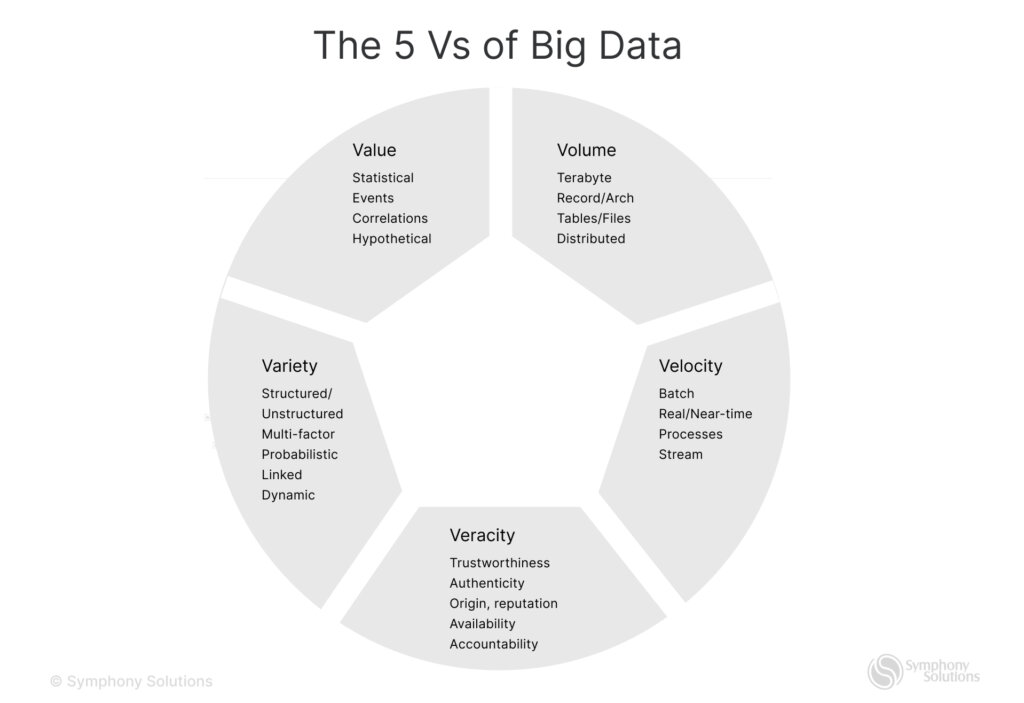
    African gaming markets spending 2021

    Reasons for African gambling market growth 

    Gambling and sports betting in Africa has long become intrinsic to the everyday life of Africans, both as entertainment and a source of income. Africans love to bet on sports. When looking at various surveys and censuses, 50% of South Africans  place bets on a regular basis and others play occasionally. An estimated 30% of Nigerians actively engage in sports betting, typically these are young people aged 18 to 40 years old. The gambling market in Africa is young and numerous, and gaming operators have all the reasons to expect it to grow in the future. Let’s go over just some of the reason: 
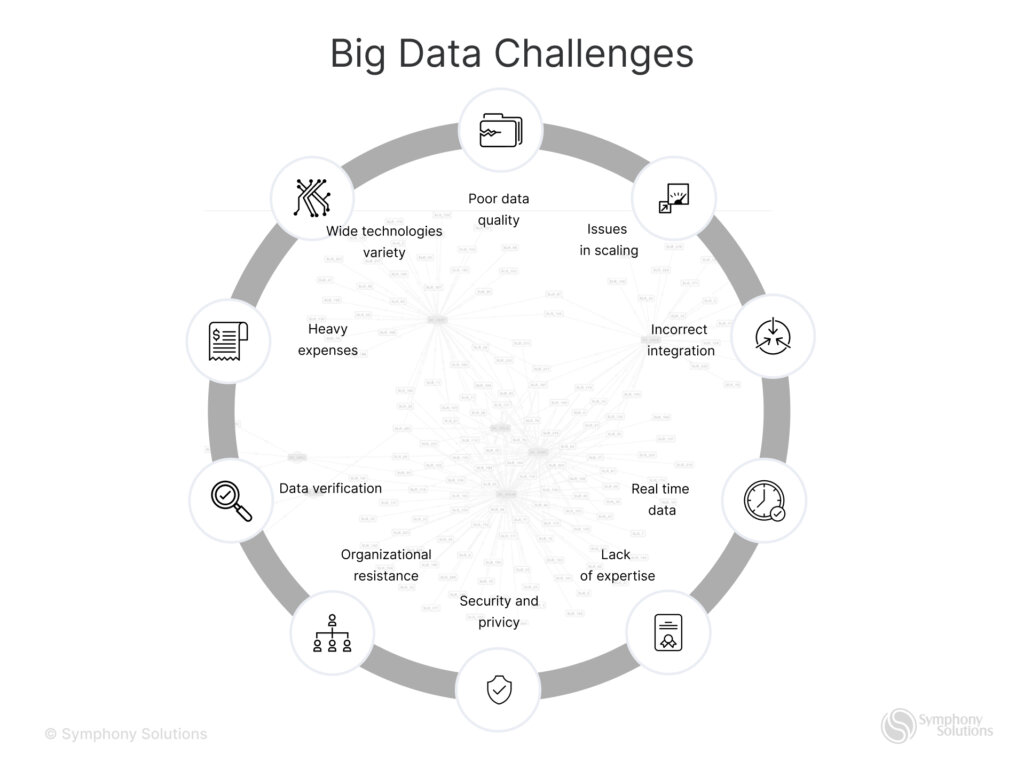
    Covid changing the marketplace 

    Since the start of lockdowns in 2019, the world has been shaken up and facing obstacles in the way people interact and go about their lives. The market was forced to shift and adapt which in many instances resulted in mass layoffs and growing unemployment. When the offline world seemed to be cut off, people had to rely on the web as a way to keep some resemblance of normalcy. 

    Pre-pandemic Africa was already concerned with its high unemployment rate due to lack of economic opportunities in its many regions, especially for the youth that, even if employed, were settled in low-wage jobs or working in the informal sectors. Under these pressing circumstances, online gambling is a valid option for the African youth to make a living. Confined to their homes, people have more incentive to play online. They also have more time to study the game and its algorithms, predict all the possible outcomes and learn how to play to win. 

    The gambling market continues to grow, both online and offline, more betting retail shops pop up across many countries and help create jobs for Africans. As the world eventually comes out of the pandemic, the tendency will remain and show a positive dynamic in the employment market. 

    History of betting in Africa 

    Africans are avid sports fans and actively follow sporting events in the world. Some of the sports most popular on the African betting market are football, horse racing, cricket, rugby, golf, with football garnering the most attention from bettors. The affection for football has its roots back in the 1800s when it was first introduced, and to this day it remains the most popular sport in Africa. It’s common to see large groups of people gather around a sports bar to watch a single match. 

    Nowadays, sports betting has become a part of everyday life for many residents of the African continent, both as entertainment and as an opportunity to quickly earn some cash by placing microbets and turning as little as a hundred shillings into a few dollars. Seemingly a small win in the scale of the gaming industry, it’s still good money to help African bettors support themselves and their families. 

    History of betting in Africa

    Legislations specialties 

    Sports betting has now become a part of the culture and everyday life in Africa, which is supported by the governments’ interest in the sector. On the state level, countries like South Africa and Nigeria attempt to regulate and turn it into a steady revenue source. Depending on the region, some kinds of betting and gambling are still not well-regulated or even tipping into the illegal territory. However, the dynamic growth of the sports betting market can’t leave the state indifferent as they are well aware of the potential merit coming from it. They put in place legislations to regulate the market and through licensing and taxation direct a new stream of revenue into the state budget. 

    Challenges for sportsbook operators in Africa 

    The market outlook for gaming operators in many African countries looks promising and as practice shows it’s worth stepping into. However, an operator considering entering the African market should understand its specifics, know what they are signing up for and plan accordingly. 

    Slow networks and Mobile phones 

    Internet use in Africa is steady on the rise, yet the majority of the users are still accessing the web with their mobile phones, and sometimes older versions – Android mobile phones using Edge, 2G and 3G networks – which means the speed is much slower when compared to European customers. Betting operators need to account for this if they still want to deliver a good user experience and improve engagement. This was the case with GOAT Interactive when our team set out to develop a betting platform optimized for low-end devices and slow networks. They successfully launched the MVP in September and have it operating live in four countries with plans to expand the application’s functionality and deliver it to over 20 African countries by 2023. 

    Cultural differences 

    It’s important to remember that Africa is a diverse continent with different cultural and religious backgrounds. If talking about sports betting, the cultural heritage of sports in Africa roots centuries back to when European sports, namely football, were first introduced. This explains the extreme popularity of these sports and makes for comfortable market prospects for sports betting. On the contrary, there’s a different stance when it comes to gambling which, through the lens of religion and culture, is perceived a lot more critically. 

    Jurisdictions aspects of sports betting and gambling in Africa 

    In the past gambling has been in and out of the legal status, and regulations largely differ country to country. Each country may have different laws as to what games are legal or require a license, how these activities are licensed or taxed: 

    • In Nigeria non-skilled card games, roulette, and dice games are illegal, slot machines are regulated and only allowed for licensed operators. Lottery, land-based casino, and sports betting are legal. 
    • In South Africa online gambling through servers outside the country has been banned since 2010. Gambling sites need to obtain a license from a gambling and betting board in one of the South African provinces. Province licensed horse racing and online sports betting are legal. 
    • In Kenya online gambling is legal and regulated by the Gaming Bill of 2019. However, foreign investors were discouraged to expand to this market due to high taxes. Kenyan government is going back and forth on whether to keep the tax high or scrape it altogether, leaving the betting operators in uncertainty. 

    These are just some of the examples of what obstacles may stay in the way of betting operators entering new markets in Africa. This calls for a meticulous and careful approach when choosing the direction in establishing their presence in the market. 

    gambling legislations in Africa

    Opportunities for gambling businesses in Africa & Predictions for gambling market 

    Gambling in Africa is a growing part of the market that has the potential to become a valuable revenue source making the governments of certain countries more lenient in their regulations and invested in creating a welcoming environment for betting operators. Analyzing the state of the market, we can observe some tendencies that are likely to stay well into the future and continue having an impact on the growth of the gambling market: 

    • Online mobile gambling as the main direction. Mobile devices will remain the primary access point for African bettors to online betting websites and apps for the foreseeable future. 
    • Overall growth of technologies in iGaming makes gaming and betting more accessible through cheaper devices and faster connections. 
    • Expansion of other types of betting and gambling. The gambling market is constantly shifting and changing. As the governments become more lenient with restrictions, more types of gambling may be expected to emerge on the market. 

    How Symphony Solutions is expanding to the Africa market 

    Symphony Solutions has its proven track record for delivering high-quality sports betting solutions and building excellent online experiences in the iGaming market. Since recently, we have expanded our reach to the African market when approached by a client who needed a flexible solution that would meet the needs specific to the sector and deliver an engaging customer experience, and that could be adapted for different countries and any future changes in the business needs of the client. 

    Wrapping up 

    Betting operators and providers can expect to find a solid ground for investment into the gaming and betting sector in sub-Saharan Africa. The specifics of the market and the demographics dictates what kind of products would have most prospects in turning in revenue. What would help providers to ease the “growing pains” when entering or expanding their reach on the market is understanding the needs of an African bettor and keeping the focus on delivering the best possible user experience.