Category: Article

  • AI in Power BI: Transforming Business Intelligence with Advanced Analytics 

    AI in Power BI: Transforming Business Intelligence with Advanced Analytics 

    Studies reveal that 80% of executives expect AI to have a big impact on their businesses, but less than half believe they have the necessary capabilities to harness its benefits. This gap shows a clear need for better tools such as Power BI.  

    ceo analytics in ai

    Power BI, one of the top business intelligence tools, now includes AI capabilities to uncover insights and guide business decisions. This integration helps organizations use AI effectively and stay competitive in a fast-changing market. 

    Learn more about AI in Power BI in this guide to better find hidden patterns and make confident data-driven choices. 

    What is AI in Business Intelligence? 

    AI in business intelligence integrates artificial intelligence with BI tools to improve data analysis and decision-making. It automates data processing, predicts trends, and uses natural language for easy interaction. Moreover, it enhances data visualization and offers personalized insights based on user roles. This integration helps organizations quickly uncover valuable information, make informed decisions, and stay competitive in the market. 

    The Role of AI in Power BI 
    AI-in-Power-BI

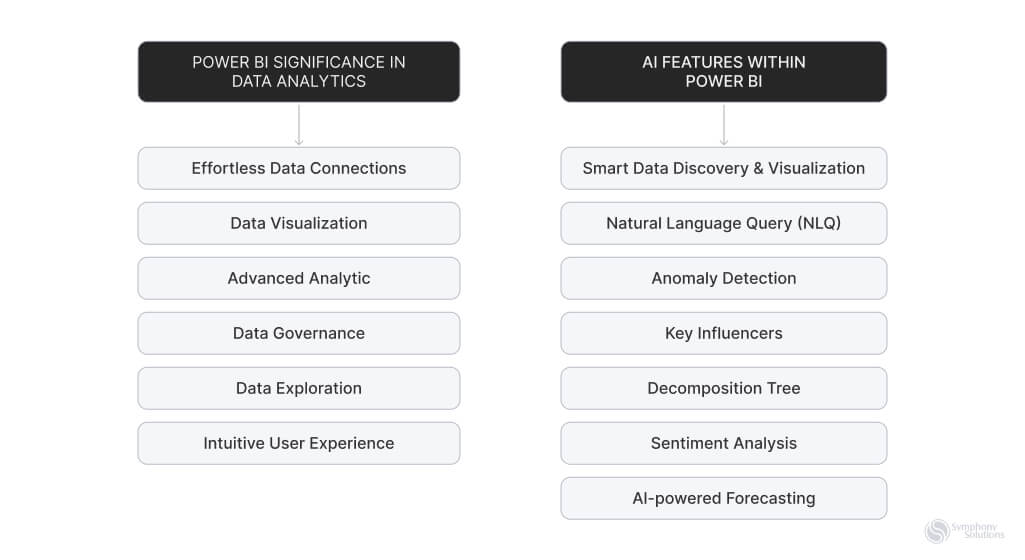
    Power BI, recognized as a premier platform in Gartner’s 2023 Magic Quadrant for Analytic and Business Intelligence (ABI), is a set of business intelligence (BI) tools created by Microsoft. This tool enables users to turn raw data into clear, actionable insights, and plays a huge role in modern data analytics. Here’s how: 

    • Data Connections. Power BI seamlessly connects to various data sources, streamlining data import and export for reports and dashboards. This ensures users have access to the most up-to-date information. 
    • Data Visualization. Power BI boasts a rich library of customizable visuals, allowing users to create clear and engaging narratives from their data. Custom visuals and tools like Zebra BI further extend its creative potential. 
    • Advanced Analytics. Power BI goes beyond visualization. It enriches data through transformation and integration with other Microsoft suite tools. This means even more  advanced analytics and data-driven decision-making. 
    • Data Governance. Robust data control and management features ensure data security, compliance, and authorized access, maintaining data integrity. 
    • Data Exploration. Extensive data exploration options and automated queries empower users to uncover hidden patterns and conduct thorough analyses, fostering a deeper understanding of their data. 
    • Intuitive User Experience. Power BI’s user-friendly interface allows users of all technical backgrounds to navigate effortlessly, create reports, and derive valuable insights with minimal training. 

    Now, while Power BI offers incredible data visualizations and robust analytical capabilities; AI offers deeper insights into customer behaviors, operational efficiencies, and emerging market opportunities. Integrating these two technologies, Power BI AI, enhances data analytics in numerous areas, including: 

    • Smart Data Discovery and Visualization. Gone are the days of manual data exploration. AI can now automatically discover hidden patterns and trends within your data and even suggest relevant visualizations to represent the insights best. 
    • Natural Language Query (NLQ). Ditch the complex queries! Ask your questions in plain English, and Power BI’s AI will instantly retrieve the answers and insights you seek from your data. 
    • Anomaly Detection. AI acts as a vigilant watchdog, automatically identifying unusual data points or patterns that might require further investigation. This proactive approach empowers you to address potential issues before they escalate. 
    • Key Influencers. Understanding what drives your metrics is crucial. AI in Power BI surfaces the key factors influencing specific metrics within your visualizations, providing valuable context and enabling data-driven decisions. 
    • Decomposition Tree. This AI-powered visualization tool facilitates root cause analysis. It allows you to drill down into complex data sets and uncover the underlying factors contributing to specific outcomes. 
    • Sentiment Analysis. Power BI’s synergy with AI can improve customer experience. Analyze the sentiment within your text data (like customer reviews) – without writing a single line of code! Power BI’s AI handles the heavy-lifting, providing valuable insights into customer sentiment. 
    • AI-powered Forecasting. Leverage the power of AI to generate forecasts directly within Power BI. This functionality empowers you to plan for the future with greater confidence based on data-driven insights. 

    Integrating AI into Power BI 

    Incorporating AI into Power BI enhances its capabilities, allowing users to leverage machine learning models to gain deeper insights and make more informed decisions. Here’s a detailed guide on how to get this done. 

    Use Text Analytics and Vision 

    Text Analytics and Vision features from Azure Cognitive Services can be used to enrich your data in Power Query. These features include. 

    • Sentiment Analysis. This function evaluates text input and returns a sentiment score for each document, ranging from 0 (negative) to 1 (positive). It is useful for detecting sentiment in social media, customer reviews, and discussion forums. 
    • Key Phrase Extraction. This function evaluates unstructured text and returns a list of key phrases. It works best with larger chunks of text. 
    • Language Detection. This function detects the language of the text input and returns the language name and ISO identifier. 
    • Image Tagging. This function tags images based on recognizable objects, living beings, scenery, and actions. It requires an image URL or a base-64 field as input. 

    These transformations run on the Power BI service and require Power BI Premium. The execution of these functions does not need a separate Azure Cognitive Services subscription. 

    Enable AI Workloads 

    To use Text Analytics and Vision features, you need to enable AI workloads in Power BI Premium capacities. Follow these steps. 

    • Go to the admin portal and select the capacity you want to configure. 
    • In the capacity settings, enable the AI workload in the workloads section. 
    • Define the maximum amount of memory for the AI workload (recommended limit is 20%). 

    Enabling AI workloads ensures that the necessary resources are allocated for running Cognitive Services. 

    Invoke AI Functions in Power Query Editor 

    To apply AI functions in Power Query Editor. 

    • Open Power Query Editor in Power BI Desktop. 
    • Select the Text Analytics or Vision button from the Home or Add Column tabs. 
    • Choose the desired function (e.g., Sentiment Analysis, Key Phrase Extraction) and specify the data column you want to transform. 
    • Apply the function to add the results as a new column in your dataset. 

    For example, to perform sentiment analysis. 

    • Select the “Score Sentiment” function. 
    • Choose the text column to analyze. 
    • Specify the language if required. 
    • Click “Apply” to add the sentiment scores as a new column. 

    Use Azure Machine Learning Models 

    To further enhance data analysis, integrate custom machine learning models from Azure Machine Learning. 

    • Grant Access. Get access to the Azure Machine Learning model via the Azure portal. Ensure you have Read access to the Azure subscription and the specific Machine Learning workspace. 
    • Invoke Models. In Power Query Editor, select the Azure Machine Learning button from the Home or Add Column tabs. All accessible models will be listed as Power Query functions. You can specify any data column as an input for these models. 

    For example, to use an Azure Machine Learning model. 

    • Select the Azure Machine Learning button. 
    • Choose the model and specify the input columns. 
    • Click “OK” to preview the model’s output as a new column. 

    Power BI automatically batches access requests to the Azure Machine Learning model for better performance. 

    Manage Premium Capacity 

    To ensure optimal performance, monitor and manage the impact of AI workloads on your Premium capacity. 

    • Select Capacity. Report authors can choose the Premium capacity on which to run AI Insights. By default, Power BI selects the first created capacity accessible to the user. 
    • Monitor with Capacity Metrics App. Use the Microsoft Fabric Capacity Metrics app to monitor memory consumption by AI workloads. If memory usage reaches the limit, consider increasing the limit or moving some workspaces to different capacities. 

    Using Artificial Intelligence with Power BI allows you to revolutionize your data analytics by employing powerful machine learning models and algorithms. Used properly, the current options available for AI in Power BI—Text Analytics, Vision functions, and Azure Machine Learning models—can help you improve your data preparation, analysis, and visualization operations. 

    The Future of AI in Data Analytics 

    Artificial intelligence and data analytics are a perfect pair. Currently, 48% of businesses use AI to enhance data analytics for insights and decision-making. The future promises even greater transformative potential for AI in data analytics and Power BI, such as: 

    • AI-Powered Automation. AI will automate more data preparation tasks, making data analysis accessible to a wider range of users, including those without extensive technical expertise. 
    • Explainable AI (XAI). Advancements in XAI will make AI models more transparent and trustworthy, allowing users to understand how AI arrives at its conclusions. This will foster wider adoption and trust in AI-driven insights. 
    • Causal AI. AI will move beyond correlation to understand causation, helping us not only identify what’s happening but also why it’s happening. This will enable more effective decision-making. 
    • Cognitive Analytics. This emerging field combines AI and machine learning techniques with cognitive science to understand information in a way similar to how humans do. Cognitive analytics can analyze vast amounts of data, including text, images, and audio, to extract meaning and context, leading to a more comprehensive understanding of the information. 

    There’s more, though. Power BI and similar data visualization tools can expect a significant transformation with the advancement of AI. Some possible trends are: 

    • Conversational Analytics. AI will revolutionize how we interact with data. Imagine chatting within Power BI, asking and getting answers to your questions in natural language and dynamically generating reports based on your conversation. This will make data analysis accessible to a wider audience and foster deeper exploration of data insights. 
    • Data Storytelling. Power BI will leverage AI to automate data storytelling, generating clear and concise narratives from complex datasets. AI will identify key insights, trends, and relationships within the data and translate them into a compelling story, aiding communication and understanding for non-technical audiences. 
    • Gamification of Data Analysis. Power Bi gamification may soon become a popular activity. Imagine earning points, badges, and rewards for completing data analysis tasks or achieving specific goals. This will make data analysis more engaging, especially for younger generations or those who find traditional data exploration tedious. 
    • Integrating VR and VR. We may very well see the integration of VR/ AR with Power BI. Imagine stepping into a virtual environment where you can interact with your data in 3D visualizations. This immersive experience can provide deeper understanding and uncover hidden patterns within complex datasets. 

    Conclusion 

    Many organizations already use AI for business process automation, which is why using it for business intelligence is such a great idea.  

    AI in Power BI opens new frontiers in business intelligence, empowering organizations to glean deeper insights from their data. From automating tasks to generating insightful narratives and facilitating natural language conversations with your data, this synergy unlocks a whole new level of analytical power. Imagine the efficiency gains and deeper insights you could achieve! 

    At Symphony Solutions, we can help you achieve this with our AI services and BI expertise. We deliver tailored solutions and have a proven track record of empowering clients to leverage data for growth through our data analytics services. Let’s work together to enhance your BI processes with AI and unlock your data’s true potential. 

    FAQs

  • How to Build a Data Warehouse: Steps, Components, and Considerations 

    How to Build a Data Warehouse: Steps, Components, and Considerations 

    The ability to efficiently manage and analyze vast amounts of information has become a cornerstone of modern business success. At the heart of this capability is the data warehouse — a centralized repository designed to store, manage, and analyze large datasets. This resource has become so integral to today’s businesses that its global market is projected to grow from US$10.01 billion in 2024 to US$16.94 billion by 2029. 

    global-market-for-data-warehouse

    Considering the many benefits of data warehousing driving this growth, it’s essential to know how to leverage this powerful solution. In this article, we’ll look at how to build a data warehouse, focusing on the processes, tools, and best practices for creating a robust, scalable, and efficient solution. 

    Read on! 

    What Is a Data Warehouse, and Why Build One? 

    A data warehouse is a centralized repository designed to store structured data from multiple sources. It helps organizations gather, organize, and analyze huge amounts of data so they can make smart decisions. 

    Companies typically invest in designing a data warehouse for: 

    • Enhanced Business Intelligence. Data warehouses centralize data, empowering businesses to conduct advanced queries and glean deeper insights through analytics. 
    • Historical Insights. Using historical data allows businesses to make educated decisions, learn from previous experiences, and uncover trends that are critical for strategic planning. 
    • Competitive Edge. Data warehouses enable faster and more comprehensive data analysis, giving businesses a competitive advantage in making timely decisions and adapting to market dynamics. 
    • Agility and Innovation. Data warehouses promote agility and innovation by giving rapid access to reliable data, allowing businesses to respond quickly to challenges and opportunities. 
    • Cost Efficiency and Compliance. Data warehouses help ensure regulatory compliance through accurate and auditable data. 
    • Enhanced Efficiency. Workers can find information more rapidly thanks to data warehouses’ streamlined data access and retrieval, which boosts corporate productivity overall. 

    Some people tend to confuse data warehouses and data lakes. This is understandable, considering that they are both data storage options. However, they serve different functions and have distinct characteristics. 

    Let’s differentiate between them. 

    Feature Data Warehouse Data Lake 
    Structure Stores structured data that has been cleaned and processed, ready for analysis based on established business needs. Stores raw data in its native format (structured, semi-structured, and unstructured) 
    Use Case Business intelligence, data visualization, analytics, and reporting. Big data processing, machine learning, predictive, and advanced analytics. 
    Performance Optimized for read-heavy operations and complex queries. Optimized for large-scale storage, requires more processing for queries
    Storage Cost Typically more expensive due to structured data storage. Generally more cost-effective for large volumes of diverse data. 
    Data Processing ETL (Extract, Transform, Load). ELT (Extract, Load, Transform). 

    The table above highlights the fundamental distinctions between data warehouses and data lakes, allowing you to better appreciate their relative capabilities and optimal use cases. 

    Core Components of Data Warehouse Architecture 

    Knowing how to implement a data warehouse starts with understanding its components. A typical data warehouse consists of four major components: a central database, ETL tools, metadata, and access tools. Together, these components allow you to find data and analyze results quickly. 

    A Central Database 

    The central database serves as a data warehouse’s primary storage component. This is where data from various sources—structured, semi-structured, and unstructured data, such as text documents and images—is integrated and stored. 

    It is important to point out that while a database and a data warehouse are both essential in business information management, they are not the same. Read our comparative review of databases vs. data warehouses to understand the distinctions between these two technologies. 

    ETL (Extract, Transform, Load) Tools 

    ETL tools are data integration tools used to extract data from diverse source systems, convert it to a standardized format, and load it into the central database. These tools perform operations such as extraction, data cleansing, data normalization, and data mapping, ensuring that the content in the data warehouse is correct and consistent. 

    Metadata 

    This refers to data about your data. It defines the structure, quality, and provenance of data kept in a warehouse. This covers data definitions, attributes, quality rules, and relationships. There are two types: business metadata, which provides context to the data, and technical metadata, which explains how to access and locate data. Understanding metadata is critical to successful data governance, discovery, and integration. 

    Access Tools 

    These are tools that enable authorized users to interact with the contents of the data warehouse. Access tools, which include query and reporting tools, application development tools, data mining tools, and OLAP tools, allow users to obtain data, generate reports, and create visualizations. 

    Approaches to Building a Data Warehouse 

    Knowing how to build a data warehouse starts with knowing the approaches used. Let’s look at the top options. 

    Inmon’s Approach 

    Bill Inmon invented the Enterprise Warehouse, a comprehensive method for creating data warehouses. This technique delivers a centralized, integrated repository for all your organizational data. 

    Features 

    • Emphasizes a highly standardized structure in order to reduce redundant information and improve data consistency. 
    • Involves thorough transformation and integration of data from various sources before loading it into the warehouse. 
    • Suited for large organizations with complex data requirements. 
    • Due to its complexity, extract, Transform, and Load (ETL) processes require significant investment. 

    Kimball’s Approach 

    Kimball’s approach, by Ralph Kimball, is a model that focuses on smaller, subject-specific data marts, which are tailored for specific business areas or user groups. 

    Features 

    • Uses denormalized schemas designed to be intuitive for business users to query and analyze. 
    • Focuses on creating data marts for distinct business functions or departments. It allows for faster development and easier maintenance. 
    • Aligns closely with business requirements, ensuring the data warehouse serves practical needs. 

    Data Vault Model 

    The Data Vault model, created by Dan Linstedt, comprises parts of both the Inmon and Kimball techniques, providing a flexible and scalable solution for today’s data warehousing requirements. 

    Features 

    • Uses a hub-and-spoke architecture to store business keys in hubs, relationships in links, and descriptive attributes in satellites. 
    • Celebrated for its flexibility and scalability, the data vault model is suitable for dynamic data requirements. 
    • Stores raw data with minimal transformation, enhancing traceability and auditability. 
    • Simplifies the integration of new data sources with minimal disruption to source systems. 

    Choosing the right approach depends on your organization’s specific needs related to data complexity, agility, and scalability. 

    Inmon’s approach is ideal for complicated reporting that requires a centralized source of truth and the ability to handle large ETL procedures. 

    Kimball’s method is perfect if you value rapid deployment, easy data access, and alignment with specific business requirements. 

    The Data Vault method is excellent if you need a highly scalable and adaptive solution for raw data storage and integration in a constantly changing environment. 

    Build the Data Warehouse Step-by-Step 

    So, what process is used to create a data warehouse? When building a data warehouse, it’s essential to follow a structured approach that meets business needs and supports informed decision-making. Here’s what to know. 

    steps-to-build-data-warehouse

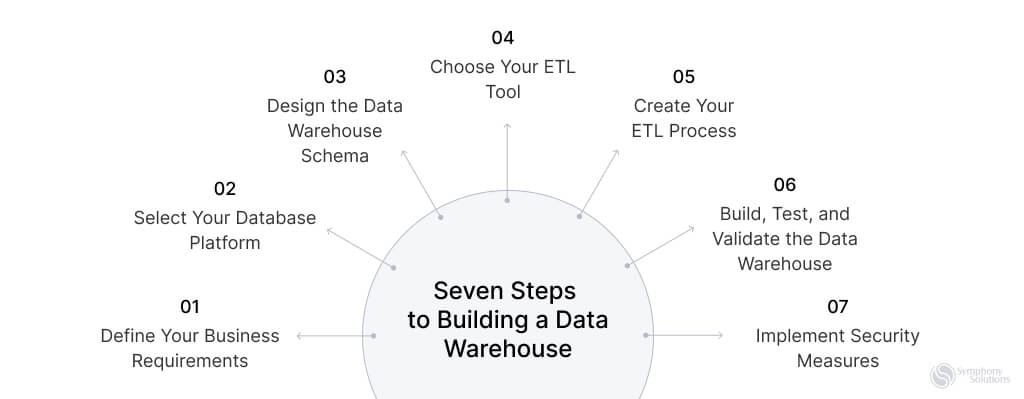
    Define Your Business Requirements 

    Outlining your business requirements and goals clearly is an important first step when it comes to how to create a data warehouse. This step ensures that the data warehouse is custom-tailored to suit your precise requirements. 

    Select Your Database Platform 

    Selecting the appropriate database platform is crucial for scalability, performance, and security. Explore options like SQL Server, Oracle, MongoDB, PostgreSQL, and Cloud SQL. Factors like data volume, query speed, integration capabilities, and costs should all be taken into account. 

    Design the Data Warehouse Schema 

    Next is designing the schema of your data warehouse. Organize your data to facilitate easy retrieval and analysis. Consider data types, relationships between entities, and the amount of information in your dataset. A well-designed schema allows for the simple integration of new information, quick queries, strong governance, and security mechanisms. 

    Choose Your ETL Tool 

    The Extract, Transform, Load (ETL) processes play a crucial role in loading and transforming data effectively. This is why, when choosing, you must look for the option that aligns with your requirements. Some of the best ETL tools include Informatica and Talend, or cloud-based tools like AWS Glue. Evaluate factors like user-friendliness, scalability, and compatibility with various data sources. 

    Create Your ETL Process 

    Define connections from source systems along with mapping out data flows and transformation rules. It’s imperative that the ETL process maintains accuracy and reliability in handling information. 

    Build, Test, and Validate the Data Warehouse 

    By now, you must have decided whether to go for an on-premise system or a cloud-based warehouse. If you’re leaning towards cloud-based options, it’s worth conducting a BigQuery vs. Redshift comparison, two top choices, to aid your decision-making process. This stage also involves establishing server infrastructure, organizing storage solutions, and loading data into the target database. Be sure to validate the warehouse against business requirements to ensure that it delivers the expected results. 

    We recommend reading our article on the best cloud data warehouse comparison for a more comprehensive overview of the different cloud data warehouses available. 

    Implement Security Measures 

    Protect sensitive information using encryption techniques and access controls. Also, implement regular monitoring to stay updated on potential threats.  

    Building a data warehouse from scratch is a multi-stage process that needs meticulous planning and execution. It is also critical to collaborate with a reputable technical partner. This is the most effective method for ensuring the success of your project. 

    Best Practices in Data Warehouse Construction 

    best-practices-in-data-warehouse-constructions

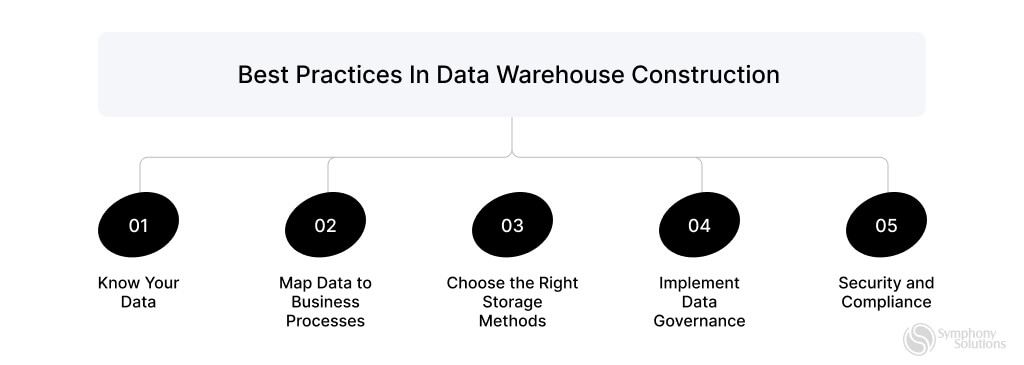
    To maintain data accuracy and build a warehouse that effectively supports your business needs, it is important to follow some best practices. Here’s what to know. 

    Know Your Data 

    Begin by thoroughly understanding your data — its sources, structure, and potential accuracy issues. Detailed metadata provides clarity on each data piece’s meaning and context. 

    Map Data to Business Processes 

    In collaboration with stakeholders, map data to business processes. This alignment ensures that collected data directly supports business objectives, enhancing its relevance and usability. 

    Choose the Right Storage Methods 

    Choose databases and storage solutions based on speed, cost, and scalability. Organize data for easy access and usability to improve retrieval efficiency. 

    Implement Data Governance 

    Establish robust data governance frameworks that align with organizational goals and regulatory requirements. Monitor data quality, implement cleansing processes, and maintain high standards of accuracy and reliability. 

    Security and Compliance 

    Prioritize security with stringent access controls and data encryption (in transit and at rest). Regularly audit access logs to detect and respond to security incidents promptly, ensuring compliance with regulations like GDPR or CCPA. 

    By following these practices, you enhance data accuracy, warehouse efficiency, and compliance with industry standards. 

    Our Expertise 

    Symphony Solutions boast a team of skilled professionals who can make your data warehouse project a resounding success. Our team have successfully implemented data warehouse solutions across various industries, leveraging the latest technologies and best practices. 

    Recently, a leading casino gaming developer partnered with Symphony Solutions to develop a data warehouse solution with a scalable data Ingestion process. The primary challenge was designing a solution for a product still in development. Other challenges included integrating data from various vendors and creating a scalable batch data ingestion process that ensures scalability for future near real-time data. 

    We successfully addressed these challenges by leveraging technologies like EventBridge, Kinesis Firehose, and Redshift COPY to streamline data ingestion. The result was a powerful tool that enabled the client to gain insights into its business and drive growth. 

    We can bring this same expertise to your data warehouse setup, creating a robust, scalable, and high-performing data warehouse that drives informed decision-making and strategic success. 

    Get in touch today. 

    Conclusion 

    Building a modern data warehouse is a strategic endeavor that empowers businesses to harness their data for insightful decision-making and competitive advantage. This process involves careful planning, selecting the right architectural approach, and integrating key components such as a central database, ETL tools, metadata, and access tools.  

    Whether adopting Inmon’s top-down method for a comprehensive, enterprise-wide solution, Kimball’s bottom-up approach for quicker, department-focused results, or the Data Vault model for agility and scalability, the importance of best practices and ongoing management cannot be overstated. 

    It is also important to work with an expert team that knows how to build a data warehouse successfully. This is where Symphony Solutions excels. 

    Our cloud data warehouse engineering services start from requirement analysis and design to implementation and ongoing support, ensuring our clients achieve their data management and analytical goals efficiently and effectively. 

    Discuss your data needs with us! 

    FAQs 

  • How Digital Transformation is Changing the Airline Industry 

    How Digital Transformation is Changing the Airline Industry 

    The airline industry is deeply integrated with technology. In 2023, airports and airlines invested heavily in IT, spending an estimated $10.8 billion and $34.5 billion, respectively. This investment highlights the sector’s dedication to digital transformation.  

    airports spending on it in 2023

    Key technologies driving this shift include Machine Learning and Artificial Intelligence, Biometric systems, Internet of Things (IoT), AR/VR, and big data analytics for decision making. These tools not only streamline operations but also enhance customer interactions. Embracing these technologies is important for airlines to remain competitive in the industry. 

    In this article, we’ll discuss more of these trends and technologies and how they are impacting the airline industry. 

    Read on! 

    What Is Digital Transformation? 

    Digital transformation is the process of integrating digital technology into every aspect of a business, fundamentally changing operations and customer value delivery. It demands a cultural change where organizations continuously experiment with new technologies and adapt to evolving market conditions. According to IATA, digital transformation signifies the industry’s move away from outdated processes and technologies. 

    Why Is Digital Transformation Important for Airlines? 

    Digital transformation is vital for airlines because it helps streamline tasks, automate processes, and optimize costs throughout their operations. By making operations more efficient, airlines can cut costs significantly, which is crucial in an industry with narrow profit margins. 

    In addition, digital transformation overcomes airlines’ limitations in offering more personalized and customer-centric products and experiences. This is increasingly important as passengers expect tailored services and seamless travel experiences from booking to arrival. According to Muhammad Albakri, IATA’s senior vice president for financial settlement and distribution services, this is being achieved by modernizing outdated processes and technology. 

    Digital transformation is also vital for business continuity. Outdated legacy systems can lead to security risks and operational disruptions. Modern digital solutions enhance resilience and ensure consistent, reliable operations. 

    Also, for large airline groups, digital transformation supports better consolidation and enables more effective centralized control and governance. This centralization streamlines operations and enhances decision-making processes across the entire group. 

    Ultimately, it offers airlines, airports, and other operators in the aviation industry opportunities to improve their services and operations. 

    digital-technologies-trends-in airline-industry

    Now that we understand digital transformation and its importance for the aviation sector, let’s examine key trends in this niche. 

    Artificial Intelligence (AI) and Machine Learning (ML) 

    AI and ML are gaining traction in aviation. They help operators enhance operational efficiency and safety by enabling predictive maintenance (PdM), which also minimizes new equipment costs by about 3% to 5%. For example, Delta Air Line uses AI-driven PdM to analyze data from aircraft sensors, predicting potential mechanical issues before they become serious problems. This approach reduces unplanned downtime and maintenance costs. 

    In addition to PdM, AI in aviation can power chatbots and virtual assistants. These tools can streamline customer service, handling up to 70% of passenger inquiries. The results are improved customer satisfaction and reduced operational costs. 

    AI-Powered Virtual Assistants in Internal Processes 

    Chatbots and virtual assistants also enhance: 

    Operational Efficiency 

    They optimize internal processes across various departments, including Flight Operations (FlightOps), Training, Maintenance Control Center (MCC), Operations Control Center (OCC), and Ground Operations (GroundOPS). For example: 

    • In FlightOps, staff can inquire about and quickly access information on flight planning, scheduling, and weather conditions, which helps streamline pre-flight preparations. 
    • For training and the MCC, engineers and technicians can inquire about maintenance procedures and checklists, learn new procedures, and ensure compliance with safety regulations. This complements traditional training methods. 
    • Operations Control Center managers can use chatbots to gather operational data, facilitating quick decision-making during critical operations to ensure smooth and safe processes. 
    • Ground crew members can inquire about operational procedures and receive immediate, accurate responses, boosting efficiency, minimizing mistakes, and improving the passenger experience. 

    Commercial Optimization 

    Integrating generative AI with CRM and financial systems can enhance sales and customer service in commercial departments. This integration allows chatbots to personalize responses based on customers’ past interactions, providing quicker responses to queries and improving customer relationships. 

    Finance Automation 

    AI-powered chatbots also streamline internal financial processes for airlines. 

    • They verify contractor payments against contracts and completed work, ensuring accuracy and reducing errors. 
    • Once verified, chatbots automatically generate invoices and send them via email, accelerating payments and enhancing cash flow management. 

    Automation 

    Automation in aviation is transforming airline and airport operations, boosting efficiency and minimizing human error. Automated check-in kiosks, baggage handling systems, and biometric security checks streamline passenger flow and cut wait times. By combining Robotic Process Automation (RPA) with AI and ML, airlines can optimize internal processes, reducing employee workloads and increasing job satisfaction. Furthermore, RPA in back-office operations automates and simplifies administrative tasks, allowing staff to concentrate on more complex issues. 

    NDC (New Distribution Capability) 

    NDC is another trend gaining traction in the aviation industry. It facilitates direct, API-based connections between airlines and travel agencies, offering customized product features, such as seat selection and baggage preferences, tailored to each traveler’s needs. This direct connection allows for instant updates, dynamic pricing (based on market conditions), and personalized deals. Currently, over 60 airlines are NDC certified, a testament to its rapid adoption in the industry. 

    Internet of Things (IoT) Connectivity 

    IoT connectivity in aviation is projected to reach $1.941bn by 2025, revolutionizing operational efficiency and passenger experience through interconnected devices that gather and exchange data. For airlines, IoT-enabled sensors provide real-time aircraft health monitoring, leading to more efficient maintenance and reduced downtime. 

    In airports, IoT adoption addresses common issues like lost baggage, flight delays, and customer service problems. Virgin Atlantic, for example, uses IoT technology in its Boeing and cargo planes, reducing delays by 20% and cutting working hours by two hours. 

    Predictive maintenance powered by IoT and AI can foresee potential aircraft issues before they occur, resulting in improved operational efficiency and cost management

    Augmented Reality (AR) And Virtual Reality (VR) 

    AR and VR are two airline industry digital transformation trends making things better in the aviation sector. VR offers immersive pilot and crew training simulations that enhance skill acquisition and retention. In maintenance, AR overlays technical information on equipment, speeding up repairs and reducing errors. VR also enhances the passenger experience by offering virtual tours of aircraft cabins and destinations. This technology is integral to aviation’s future, with the market expected to reach $1,372 million by 2025. 

    Qatar Airways and British Airways offer VR to select passengers—first and business class—as part of their in-flight entertainment experience. 

    Quantum Computing 

    Quantum computing, while still in its early stages, shows great promise for tackling complex aerospace challenges. These advanced computers can handle vast amounts of data, offering potential benefits, including optimized route planning, accurate weather forecasting, and better air traffic management. 

    Airbus is currently studying quantum computing and how it can optimize flight trajectories in real-time. By integrating data from weather conditions, airspace restrictions, cargo weights, fuel simulations, and fluid dynamics, this technology aims to reduce fuel consumption and enhance overall air traffic efficiency. 

    Blockchain Technology 

    Blockchain tech is poised to revolutionize the aerospace industry. It enhances data security in passenger systems and streamlines ticketing processes by reducing fraud and enabling secure transactions. Blockchain also enables efficient tracking of high-frequency asset custody changes, such as passenger bags, cargo, spare parts, and aircraft, particularly useful in scenarios involving trust issues among parties.  

    Heathrow Airport’s adoption of blockchain saw productivity rise by 7%, loading times drop by 28%, and human errors decrease by up to 90%. Thanks to blockchain adoption, airports worldwide could see similar results. 

    Big Data and Analytics 

    Big data and analytics is another of the positive disruptors in the aviation sector. These techs play a crucial role in aviation by guiding smart decisions and boosting efficiency. Airlines gather vast data from flights, passenger behavior, and maintenance logs. Analyzing this data can help operators optimize flight schedules, fuel use, and customer service. For instance, according to ResearchGate,  using big data improves on-time flights by pinpointing and resolving operational issues. 

    Insights from data and analytics services also help in dynamic pricing strategies. Airlines deploy AI-driven systems to adjust fares based on demand, season, and competition. This ensures optimal revenue and competitive pricing, benefiting both airlines and passengers. 

    Airlines can also leverage data analytics and artificial intelligence to influence customer journey upgrades and offer personalized services, from tailored travel recommendations to targeted upselling opportunities. 

    Mobile and Cloud Technology 

    Mobile and cloud technology have completely changed how airlines operate and connect with passengers. Mobile apps make booking, check-in, and boarding seamless for travelers. Meanwhile, cloud-based systems help airlines expand their IT capabilities efficiently. Cloud technology facilitates instant data sharing and teamwork across airline departments, making operations more flexible and responsive.  

    It’s fair to say that cloud computing forms the backbone of digital advancement in aviation, powering modern technologies. Little wonder that the adoption of cloud services in the aviation industry is expected to reach $12.9bn by 2029, highlighting its pivotal role in transforming the sector. 

    Challenges in Aviation Solved by Digital Transformation 

    challenges solved by digital transformation

    Like every industry, aviation faces numerous challenges that digital transformation is uniquely positioned to address. Let’s explore these challenges and how digital solutions reshape the aviation landscape. 

    Operational Inefficiencies 

    One of the biggest challenges in aviation that digital transformation addresses is operational inefficiencies. This challenge typically stems from paper-based communications, manual processes and fragmented systems (isolated software solutions). This leads to delayed information flow, human errors in data processing, and a lack of real-time visibility into operations. 

    Implementing an integrated digital ecosystem will address these challenges. This system enables automated workflows, centralized data management, and proactive decision-making via real-time data and automatic notifications. It improves operational efficiency by reducing mistakes, accelerating operations, and providing stakeholders with timely access to reliable information. 

    Flight Scheduling and Fleet Management 

    Coordination of flight schedules and fleet management can be challenging. It can result in underutilized aircraft and increased expenses if not done efficiently. Again, digital transformation can help here. AI and machine learning can create adaptive flight schedules, while advanced fleet management software optimizes aircraft usage, maintenance schedules, and route planning for more streamlined operations. 

    Maintenance 

    Unforeseen maintenance issues that ground aircraft can lead to delays and cancellations. Predictive maintenance tools driven by AI can help anticipate potential issues before they escalate. Data analytics can be used to stay on top of aircraft health and streamline maintenance schedules, decreasing downtime and costs while ensuring more dependable operations. 

    Logistics & Ground Operations 

    Inefficient logistics practices like baggage handling can trigger delays, lost baggage incidents, and higher operational costs. Thanks to investment in digital transformation, IoT-enabled baggage handling systems alone or paired with automated RFID tagging can efficiently sort and track baggage movements. Real-time tracking systems enhance coordination in ground operations, cutting down delays for overall operational efficiency. 

    Customer Experience 

    Meeting diverse customer demands is crucial for providing top-notch services tailored to their needs. AI improves customer service by offering personalized services such as custom travel recommendations and exclusive offers. Chatbots and AI-driven virtual assistants deliver round-the-clock customer support by handling inquiries efficiently and managing bookings, leading to enhanced customer satisfaction. 

    Safety & Security 

    Maintaining high safety standards is a priority in the aviation industry. However, this requires substantial resources. The good news is that Blockchain technology can be leveraged in this area to enhance data security, ensure transparency, and prevent fraud. Advanced surveillance powered by AI can detect security threats instantly, with real-time responses that effectively uphold safety protocols. 

    Cost and Revenue Management 

    Effective cost control is pivotal for profitability. However, the aviation sector is highly competitive, so extra help is needed. Again, investing in digital aviation transformation can help here. For example, data analytics can pinpoint areas of inefficiencies so that expenses can be optimized. Additionally, AI services can refine flight paths, boosting fuel efficiency, while predictive maintenance strategies curb maintenance expenses, contributing to better cost control measures. On the revenue side, operators can leverage the benefits of machine learning in the cloud to analyze market trends and demand patterns, optimizing pricing strategies for effective revenue maximization. 

    Environmental Responsibility 

    The aviation sector is one of the biggest culprits concerning carbon footprint. Addressing this significant greenhouse gas emission requires innovative solutions. Again, AI-powered analytics can be used to optimize flight paths, enhancing fuel efficiency and significantly reducing emissions. This tech can also monitor environmental performance and benchmarks, helping airlines meet regulatory obligations and align business goals responsibly. 

    Airline Digital Transformation Roadmap 

    Wondering how to kickstart digital transformation in aviation? This roadmap guides you through the process effectively. 

    Initial Assessment and Vision Setting 

    • Evaluate current tech capabilities, operational inefficiencies, and customer pain points. 
    • Define clear digital goals aligned with business strategy. Craft a vision statement for the airline’s future digital capabilities. 

    Strategic Planning for Digital Initiatives 

    1. Prioritize initiatives based on impact and alignment with strategy. 
    2. Allocate budget and resources, considering tech needs and ROI. 
    3. Collaborate with tech providers or consultants for solution implementation. 

    Implementation Steps and Pilot Projects 

    • Roll out solutions in phases, starting with pilot projects. For example, utilize cloud technology to enhance collaboration, or integrate AI and ML for analyzing and processing regulatory documents, safety reports, and compliance paperwork. 
    • Monitor pilot outcomes, gather data, and adjust strategies before implementing other techs. 

    Change Management and Training 

    • Secure buy-in from stakeholders to drive cultural shifts and foster innovation. 
    • Develop a strategy to inform stakeholders about benefits and impacts. 
    • Train employees for tech changes through workshops. 

    Continuous Improvement and Adapting to Trends 

    • Establish feedback loops for ongoing improvement. 
    • Stay flexible to adopt new tech trends and industry changes. 
    • Foster a culture of innovation to sustain transformation efforts. 

    Following this roadmap, you can systematically implement digital initiatives and stay competitive in a fast-changing industry. 

    How Symphony Solutions Can Help with Digital Transformation for Airlines 

    In any digital transformation journey, partnering with the right tech team is crucial for successful solution implementation. At Symphony Solutions, we excel in supporting airlines through robust digital transformation. 

    As experts in aviation digital transformation, we can help you harness digital tools and technologies to optimize your airline operations. Whether your goal is to improve customer experiences with AI-driven assistants, enhance order management, provide personalized offers, increase upselling, or leverage cloud technology, we can partner with you on your journey toward digital excellence.  

    Furthermore, we ensure compliance with IATA regulations and provide data and analytics services to help improve your decision-making process. 

    Our Case Studies  

    1. Boosting Travel Retail Leader’s Platform Development & Customer Service 

    In one of our recent projects, Datalex, a travel retail software company, partnered with us for travel retail platform development and customer service. Facing challenges like integrating complex systems, the Symphony Solutions team applied their expertise in agile methodologies and aviation regulations to sort things out. We revitalized the platform, moving the business logic from older systems to the advanced DLX platform.  

    The project also included implementing New Distribution Capability (NDC) technology to improve how the airline delivers products and services, emphasizing personalized options and flexibility. This collaboration empowered Datalex to deliver personalized customer experiences, leveraging secure systems and efficient operations. 

    2. Reimagining Air Travel Booking with Redesign & Rebranding 

    In another project, a leader in all-in-one booking solutions for multimodal travel partnered with Symphony Solutions for the redesign and rebranding of a multimodal travel booking platform. Faced with the challenge of seamlessly integrating diverse travel services, we initiated a comprehensive rebranding and UI/UX redesign.  

    Leveraging Agile methodologies and stakeholder insights, we transformed their booking system into a unified, intuitive platform. The result? Enhanced user experience across web and mobile, effortlessly connecting travelers with flights, ground transport, and accommodations. 

    Improve decision-making with data-backed insights. Request our data analytics as a service. 

    Conclusion 

    Digital transformation is revolutionizing the aviation industry. Technologies like AI, IoT, and big data analytics boost efficiency, safety, and customer satisfaction. But there’s more to it. These technologies are actually shaping a future of smarter, more efficient, and sustainable air travel. As an operator in the industry, it’s important to embrace these changes and consider aviation software development to stay competitive. 

    FAQs 

  • The Future is Here: Analyzing the Latest Trends in the iGaming Market 

    The Future is Here: Analyzing the Latest Trends in the iGaming Market 

    The iGaming industry has experienced significant growth in recent years, evolving from a niche hobby into a major global sector. Analysts forecast that by 2030, the industry’s value will reach approximately US$153.57 billion. This expansion is largely driven by technological advancements such as virtual reality (VR), blockchain, artificial intelligence (AI), and more.  

    global-online-gambling-market

    For any business operating or interested in this sector, staying abreast of these trends is important. This will allow you to understand and meet the changing preferences of your technologically adept clientele. 

    Read on as we uncover more iGaming trends in this article. 

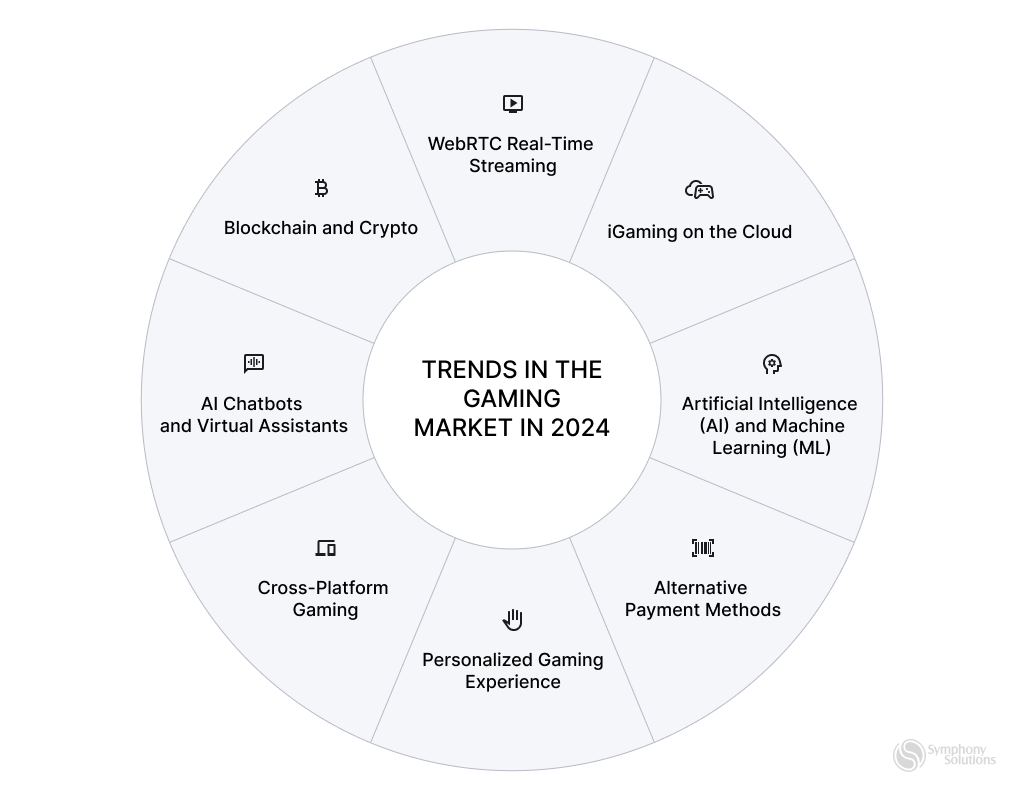
    Here are the key trends that will influence iGaming in the coming months and years. 

    Conversational Commerce:  AI Chatbots and Virtual Assistants 

    Today, operators are increasingly taking advantage of AI chatbots and virtual assistants to transform customer support and enhance user experiences. These advanced technologies facilitate interactive, personalized communication that provides immediate assistance, efficiently reducing the need for human intervention. Research indicates that AI chatbots can diminish customer support expenses by as much as 25%

    trends-in-the-gaming-market

    Conversational commerce represents a groundbreaking trend in iGaming, merging the capabilities of messaging apps with the sophisticated analytics of AI chatbots to create a seamless betting and shopping experience. This innovative approach enables players to place bets, discover new games, and receive customized recommendations through AI-enhanced dialogues, significantly enriching user engagement and streamlining the interaction process. 

    The benefits of this trend are manifold and impactful within the iGaming industry: 

    • Enhanced Customer Support: AI-driven platforms deliver instant responses to common inquiries and swiftly resolve issues, thereby elevating the player experience and substantially reducing the burden on human support teams. 
    • Elevated Player Interaction: Virtual assistants and chatbots assist players in navigating the gaming environment, exploring new features, providing guided tutorials, and offering personalized betting advice and promotions, thereby deepening user engagement. 
    • Insightful Data Analytics: By collecting and analyzing user interactions, iGaming operators gain invaluable insights that allow them to tailor their services more effectively, boosting player retention and fostering loyalty. 

    By integrating conversational commerce, iGaming businesses are not only optimizing operational efficiency but also setting new benchmarks in personalized customer service, positioning themselves at the forefront of the digital entertainment industry. BetHarmony, an AI-powered assistant for iGaming by Symphony Solutions, is a good example of this technology in action. It assists with onboarding, helps new players find relevant sports matches or casino games, and boosts acquisition, engagement, and retention. 

    Artificial Intelligence (AI) and Machine Learning (ML) in iGaming 

    AI and machine learning also play a vital role in game development, enriching immersion and engagement for players. They dive deep into player actions to fine-tune game complexities and mechanics, crafting more individualized and thrilling iGaming journeys. These innovations breathe life into non-playable characters, fostering interaction within the game world. 

    At the same time, AI and machine learning boost security measures by identifying and thwarting fraudulent behaviors using pattern scrutiny and anomaly detection techniques.  

    Moreover, AI and machine learning empower tailored gaming experiences by examining player information to provide customized offerings like game suggestions and in-game adventures. This personalized strategy amplifies player engagement and propels retention rates and revenue growth. For instance, online casinos harness AI capabilities to deliver personalized bonuses and deals, enhancing player loyalty and engagement.  

    Looking forward, the global market for AI in gaming is anticipated to soar to US$10.93 billion by 2032, underscoring their pivotal role in shaping the future landscape of the gaming industry as a whole. 

    Personalized Gaming Experience 

    AI-driven content personalization is another key iGaming trend to watch. It involves creating intelligent layouts, offering tailored bonuses, suggesting pre-event and in-play bet recommendations, setting notification triggers, and more, all powered by artificial intelligence and machine learning. This amplifies the fun by making the gaming experience more relevant and enjoyable for players. 

    According to the AI Journal, personalized gaming keeps players engaged and returning for more. However, like any innovation, it has its pros and cons. 

    Benefits 

    • Boosted Engagement. Personalized gaming keeps players interested and loyal by catering to their preferences. 
    • Improved User Experience. Tailored recommendations and offers enhance satisfaction and encourage return visits. 
    • Informed Decisions. Data from personalized gaming helps operators make smart choices about game design and marketing. 

    Challenges 

    • Privacy Worries. Some players may be uneasy about sharing personal data for targeted ads or content. 
    • Over Personalization. Going too far with personalization can turn off players who prefer a more standard experience. 
    • Tech Complexity. Setting up personalized gaming requires a lot of technical know-how and resources, making it costly for operators. 

    Use of Blockchain and Crypto in iGaming 

    Blockchain technology and cryptocurrencies are two online gambling trends transforming the industry. These innovations enhance transparency, security, and payment options. Blockchain’s secure ledger system ensures fair play and reduces fraud, while crypto offers faster, potentially cheaper payments. Together, they create a more trustworthy and inclusive iGaming environment. 

    The impact of these trends on the industry will be profound. Experts predict that the market for blockchain-based gaming will hit US$435 billion by 2028. 

    Key players in iGaming, such as Bitcasino.io and FortuneJack, are already using crypto for transactions, and platforms like FunFair leverage smart contracts for automated fairness. 

    The Rise of 5G Mobile Gaming and Progressive Web Apps 

    The rise of 5G is transforming iGaming. With stunning graphics and real-time play, the experience is indistinguishable from in-person casinos. Plus, 5G ensures smooth connectivity, so there is no more lag or interruptions. No wonder up to 60% of frequent smartphone gamers are eager to upgrade to 5G. 

    To elevate mobile gaming, iGaming operators are turning to progressive web apps (PWAs). These combine app features with website accessibility, delivering reliable betting and gaming solutions across diverse markets without compromising on performance. 

    PWAs are less expensive to construct since there is no need for separate platforms. Updates are simple, and gamers enjoy a consistent experience on every platform – phone, tablet, or laptop. 

    WebRTC Real-Time Streaming and Industry Standards 

    Another of the top iGaming trends to watch is the rise of WebRTC. Also known as Web Real-Time Communication, this tech is transforming the iGaming niche, especially in live dealer games, delivering real-time streaming that rivals the experience of a physical casino. Little wonder that WebRTC adoption is projected to rise 35.5% by 2032 as more industries, particularly iGaming, embrace its many benefits. 

    These benefits include: 

    • Ultra-Low Latency. WebRTC ensures sub-second playback, perfect for live events and interactive gaming. 
    • Cross-Platform Compatibility. It works seamlessly across web browsers and platforms. 
    • End-to-End Encryption. WebRTC provides robust security for private and secure communications. 
    • Open Source. This tech is supported by a vibrant developer community that drives continuous innovation and improvement. 

    iGaming on the Cloud 

    We cannot discuss casino trends without discussing cloud computing. This technology allows players to access games and place bets from anywhere without needing powerful hardware, democratizing high-quality gaming experiences. The global cloud gaming market is expected to reach US$25.30 billion by 2029, showing how important cloud computing is to this niche. iGaming will play a significant role in this growth. 

    Let’s look at some benefits of cloud technology to iGaming. 

    • Scalability. One major benefit is its scalability. By hosting on the cloud, operators can easily scale their services to handle peak traffic.  
    • Accessibility. Cloud technology enables players to enjoy their favorite games and betting options from any location with an internet connection. This flexibility expands the potential customer base to include users without traditional gaming hardware. 
    • Enhanced Performance. Last, but not least, cloud-based platforms improve performance, offering faster loading times and reduced lag for a smoother gaming and betting experience. 

    Cross-Platform Gaming 

    The rise of cross-platform gaming is reshaping iGaming. Players now expect seamless experiences across smartphones, tablets, and desktops. This flexibility lets them enjoy their favorite games and sportsbooks anytime, anywhere. For online casinos and game developers, this trend is a win-win. 

    However, implementing cross-platform gaming presents challenges. Developers must address technical complexities and compatibility issues, such as screen resolution, input methods, and graphics optimization, to ensure a smooth experience. 

    Despite these hurdles, cross-platform gaming has immense potential. It enables operators to reach a larger audience while increasing income through mobile gaming. As technology progresses, more efficient and seamless cross-platform solutions will emerge. 
    Rise of Alternative Payment Methods 

    Alternative payment methods have become popular in the iGaming industry in recent years. Players now expect a variety of payment options for easier transactions. While credit cards and bank transfers remain common, digital wallets, cryptos, and other new methods are rising. 

    Cryptocurrencies give cheaper fees and privacy, while digital wallets allow for speedier and more secure transactions. As platforms adapt new technologies to cater to player preferences, it is anticipated that 40 to 50% of transactions at online casinos will employ alternative payment methods by 2027. 

    Embracing alternative payments helps operators attract more customers who value security and convenience. These methods offer faster transactions and lower fees, boosting customer satisfaction and loyalty. 

    Staying on top of these top casino trends is crucial for remaining competitive in the industry, reaching a wider audience, and boosting revenue. 

    iGaming Market Forecasts 

    As the industry evolves, new iGaming markets are emerging, offering great potential for operators and players. Let’s look at the opportunities and challenges in these markets. 

    global-igaming-market

    Latin America 

    • Opportunities. With an internet penetration rate of 78%, Latin America is experiencing significant growth in internet usage. This, combined with effective government regulations in some countries and a sizable young population, makes online gaming a promising market in the region. According to Statista, the number of online gambling users in South America alone is expected to reach 12.3 million by 2029. 
    • Challenges. Online gambling regulations vary throughout the region. Additionally, there are issues with limited payment options and a lower average disposable income compared to more established markets. 

    Asia 

    • Opportunities. Asia’s massive population results in a large number of smartphone users. The region boasts more than 2.5 billion smartphone users. This, along with the growing acceptability of online gaming across much of the continent, makes it a perfect market for iGaming companies. According to Statista, the number of online gambling users in this region is expected to reach 33.9 million by 2029. 
    • Challenges. There are strict laws against gambling in nations like China and India. The region’s cultural differences and complex legal systems might also make it difficult to enter this market. 

    Africa 

    • Opportunities. Africa is experiencing rapid growth in internet accessibility, which is expected to exceed 51% by 2029. With a youthful demographic and a surge in mobile phone usage, it is becoming an ideal market for online gambling. According to Statista, the number of online gambling users in this region is expected to reach 8.4 million by 2029. 
    • Challenges. Inconsistent internet infrastructure, diverse regulatory frameworks, and economic instability in certain regions present significant hurdles. 

    Eastern Europe 

    • Opportunities. Eastern Europe is experiencing an increase in disposable income. This, along with excellent internet connectivity in the region and evolving regulatory environments, makes it a promising market for the iGaming sector. According to Statista, the number of online gambling users in this region is expected to reach 1.4 million by 2029. 
    • Challenges. Recent political unrest leading to economic fluctuations can complicate entering this market. 

    Conclusion 

    Innovations like VR, AR, AI, ML, cloud tech, blockchain, crypto, and more will shape the future of iGaming. These developments will help improve game immersion, security, and convenience. Embracing them will empower iGaming operators to match changing audience needs, assuring growth and a competitive advantage. 

    Symphony Solutions can help operators leverage these iGaming trends. Our expertise in iGaming software development offers tailored solutions that integrate cutting-edge technologies, enhancing gaming platforms, user experience, and business success. 

    Partner with Symphony Solutions to stay ahead in the game. 

    FAQs 

  • Leveraging AI for Enhanced Customer Support in Online Gambling 

    Leveraging AI for Enhanced Customer Support in Online Gambling 

    Customer support is crucial in modern business, and this is especially true for the iGaming industry. As the online gambling sector continues to grow and is expected to reach 281 million users worldwide by 2029, there’s a growing demand for effective support systems. Artificial intelligence is poised to address this need effectively. 

    number-of-people-using-online-gambling-platforms

    AI-powered tools can equip customer support teams with 24/7 assistance, personalized interactions, and rapid issue resolution. iGaming operators can leverage this technology to autonomously manage approximately 70 to 80% of customer inquiries, thereby decreasing wait times and enhancing the overall user experience. 

    This article discusses the application of AI in iGaming and how it can enhance customer satisfaction levels while driving operational efficiency in this dynamic industry. 

    Read on! 

    The Challenges of Customer Service in Online Gambling 

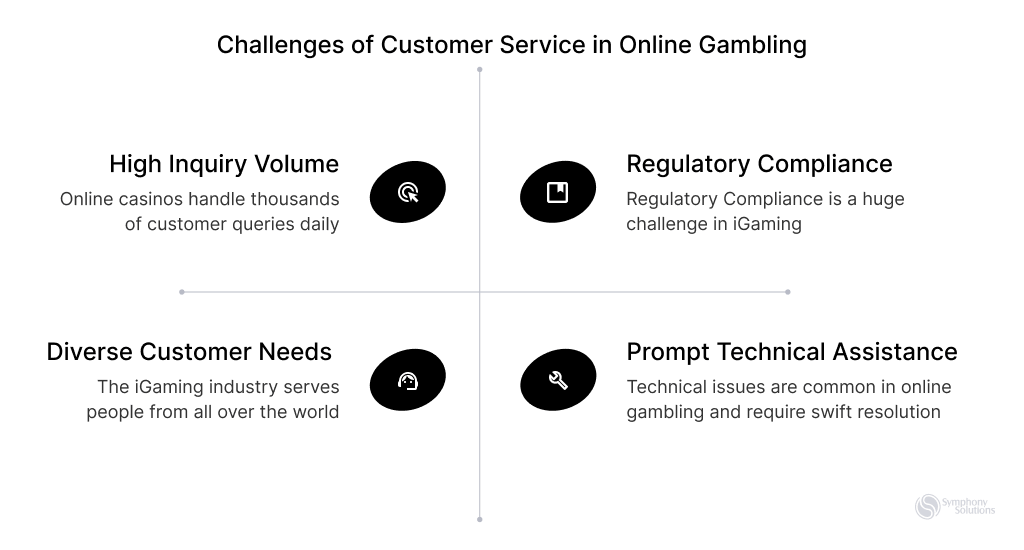
    Like any other industry, customer service in iGaming is tough. Here’s why. 

    challenges-of-costumer-service-in-online-gambling

    High Inquiry Volume 

    Online casinos handle thousands of customer queries daily, covering account issues, payments, technical glitches, and game-related questions. This is demanding, especially during major events, considering that 28% of customers expect a response within an hour. There is usually immense pressure on CS teams to provide assistance timely. 

    Diverse Customer Needs 

    The iGaming industry serves people from all over the world, so multilingual help is critical. In fact, according to one source, 60% of customers say they expect assistance in their native language. 

    Regulatory Compliance 

    Teams handling customer support in gambling must negotiate varied regulatory requirements across jurisdictions while ensuring all interactions adhere to legal norms. This includes identification verification, self-exclusion requests, and the prevention of underage gaming and money laundering. Noncompliance can result in hefty fines, such as Australia’s Crown Casino’s $450 million fine in 2023 for AML violations. 

    Prompt Technical Assistance 

    Technical issues are common in online gambling. Swift resolution of connectivity problems and software bugs is essential for a seamless user experience. Efficient troubleshooting and coordination with IT are crucial, as 30% of online gamblers abandon sites with frequent technical issues. 

    24/7 Availability 

    One of the most critical aspects of customer support in the iGaming industry is having assistance available 24/7. AI assistants enable this round-the-clock support, ensuring that customer queries are addressed at any time of the day or night, enhancing user satisfaction and loyalty. 

    Scaling Customer Support 

    Scaling customer support operations is a significant challenge. As your customer base grows, so does the need for comprehensive and timely assistance. BetHarmony, an AI assistant for iGaming, can help scale support without requiring additional staff. It allows your existing CX team to focus on areas that require unique problem-solving and attention, while BetHarmony efficiently handles routine, repetitive tasks. 

    The Importance of Customer Service in the Gambling Industry 

    Customer service is exceptionally important in industries where clients are self-motivated, such as iGaming. High-quality support can differentiate a platform from competitors and significantly influence player engagement. 

    Impact of Customer Service 

    • Player Satisfaction. Good customer service boosts player satisfaction by addressing their needs quickly and effectively. Whether dealing with technical issues, game questions, or account inquiries, players expect prompt and helpful responses. A Salesforce survey shows that 88% of customers find good service crucial to their satisfaction. 
    • Retention. Satisfied customers tend to stay loyal to a gambling site, which is more cost-effective than acquiring new players. According to Zippia, when customer retention increases by just 5%, businesses can boost profits by 25% to 95%.  
    • Loyalty. Exceptional service builds trust and loyalty, encouraging players to recommend the platform and engage more frequently. Loyal customers are significantly more valuable over time, spending and participating 10 times more than new users. 

    What happens if your customer service is subpar? Low-quality customer service can seriously impact an online gaming firm. Players get frustrated and leave when they don’t receive prompt resolutions to their problems. In fact, bad service may cost companies globally up to $3.7 trillion in 2024 alone. In the context of iGaming, this can translate to significant revenue loss. 

    How AI Enhances Customer Support in Online Gambling 

    AI in iGaming is a game-changer for customer support. It speeds up assistance, tailors responses, and tackles challenges effectively. Let’s see how. 

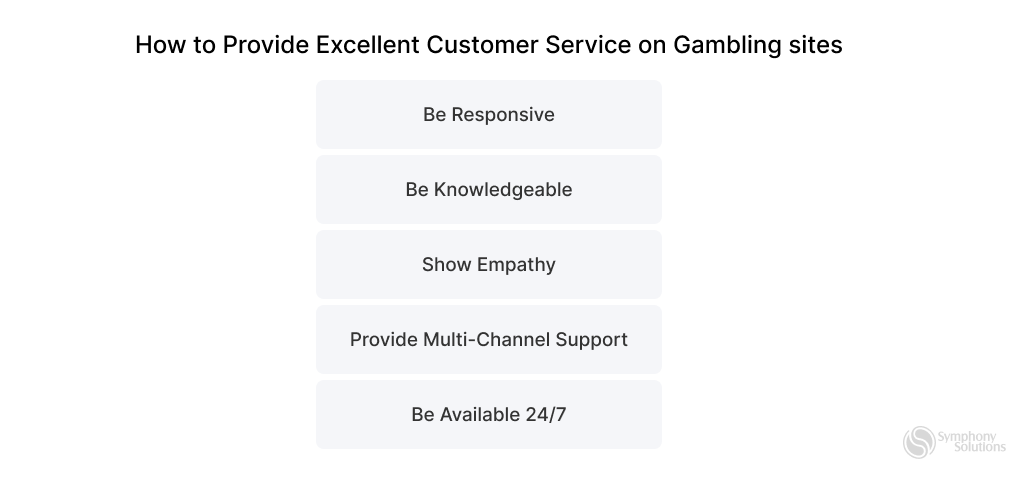
    how-to-provide-excellent-service

    Improving Response and Wait Times 

    One way AI can improve customer experience is by optimizing customer interactions. AI-driven support systems significantly enhance response times by automating replies to common questions.  

    These tools can instantly address inquiries related to account management, deposits and withdrawals, and game rules. This immediate response capability drastically reduces the wait times customers usually encounter. By managing up to 80% of routine inquiries, AI systems ensure players receive timely assistance, boosting user satisfaction and keeping them engaged. 

    Handling Routine Inquiries 

    AI can help CS teams to handle routine tasks efficiently. AI-powered chatbots can manage standard queries like password resets, account balance checks, and basic troubleshooting. This automation allows human agents to focus on more complex issues requiring empathy and nuanced understanding.  

    For example, while AI handles common questions, human agents can assist players with detailed game strategies or resolve technical problems needing human intervention. This efficient task allocation enhances the support system and improves the overall player experience. 

    Providing Continuous Customer Support 

    AI assistants offer round-the-clock customer support, ensuring help is always available, regardless of time zones or business hours. This 24/7 availability is crucial in the global online gambling market, where players worldwide may need assistance anytime.  

    BetHarmony, an AI-powered assistant for iGaming by Symphony Solutions, showcases this tech in action. It helps onboard new players and guides them to relevant sports matches or casino games. This smart tool provides real-time assistance through an interactive and intuitive interface, keeping users engaged and enhancing their iGaming experience.  

    This increases customer satisfaction, allowing users to find information and enjoy a seamless betting experience quickly. 

    Personalizing Customer Interactions Using Player Data 

    AI can analyze vast amounts of player data to create highly personalized customer interactions. By identifying patterns in player behavior, preferences, and gaming history, machine learning algorithms enable AI systems to tailor their responses and recommendations for each player.  

    For instance, if a player frequently plays slot games, the AI can prioritize related queries and offer personalized promotions and updates. This AI-driven content personalization enhances customer satisfaction, fosters loyalty, and promotes long-term engagement. Customized experiences help online gambling platforms build stronger relationships with their players, leading to increased retention and higher lifetime value. 

    AI in iGaming: Enhancing Customer Support 

    Artificial intelligence isn’t just about enhancing customer support; it also transforms gaming in various ways. 

    Game Recommendations 

    Modern recommendation systems powered by AI carefully examine players’ gaming habits, preferences, and history to suggest titles they’ll love. These systems pick up on subtle patterns and trends, offering personalized game recommendations that keep players engaged.  

    For example, fans of puzzle games can expect suggestions for similar titles to enhance their gaming journey and keep them coming back for more. Studies demonstrate that tailored recommendations can boost app engagement by a whopping 60%, showcasing the prowess of AI in enhancing user experiences. 

    Fraud Detection 

    AI systems can closely monitor transactions and gameplay as they happen. These smart tools can spot fraudulent activities, like money laundering, collusion, or cheating. By crunching big data with machine learning, these systems can find anomalies and raise red flags for further checking. This proactive approach keeps the gaming environment fair and secure and builds trust with players. This system has already worked successfully in other industries. In fact, PayPal saw a 50% drop in fraud losses due to its AI-powered fraud detection system. 

    Behavior Analysis 

    AI helps game developers understand how players interact with games to make them better and keep players interested. By studying player data, developers learn what parts of a game people like and where they lose interest. This helps them improve game mechanics, create more exciting content, and market the game to different types of players. AI also predicts when players might stop playing and suggests ways to keep them engaged, like offering special deals or rewards. 

    As you can see, AI-driven customer support systems are integral to the broader AI in the iGaming ecosystem, where insights from player behavior analysis can enhance customer support. For example, if AI detects a player struggling with a game feature, the support chatbot can proactively offer guidance. Additionally, insights from game recommendations can personalize customer support interactions, improving service quality. 

    The Future of AI in Enhancing Player Experience 

    Artificial intelligence promises a revolutionary future for iGaming. The AI assistant era is set to bring about sophisticated personalization, tailoring every aspect of the player’s journey to their preferences and behaviors. This means real-time adaptive gaming experiences where difficulty levels, themes, and rewards dynamically adjust based on player actions and feedback. 

    Additionally, AI will enhance immersive and interactive environments through augmented reality (AR) and virtual reality (VR). AI-driven characters and stories will offer more engaging, lifelike experiences, blurring the boundaries between virtual and real-world gaming. 

    Conclusion 

    Artificial intelligence is the future of online gambling. This tech is transforming not just customer service but entire facets of the industry in many ways, from enhancing response times to personalizing interactions, proactively resolving issues, and analyzing behavior.  

    Symphony AI stands at the forefront of this transformation. Our expertise in casino game development and iGaming platform development enables us to optimize your iGaming operation. We design cutting-edge solutions to optimize every aspect of the online gambling experience, from game innovation to customer service excellence. If you’re thinking of how to maintain a competitive edge in the industry, embracing AI in iGaming is essential. We are ready to deliver unparalleled player experiences. 

    Contact Symphony AI today to discover how our innovative AI solutions can transform your customer support and deliver unparalleled player experiences. 

    FAQs 

  • Optimizing Cloud Performance: The Role of Cloud Management Services 

    Optimizing Cloud Performance: The Role of Cloud Management Services 

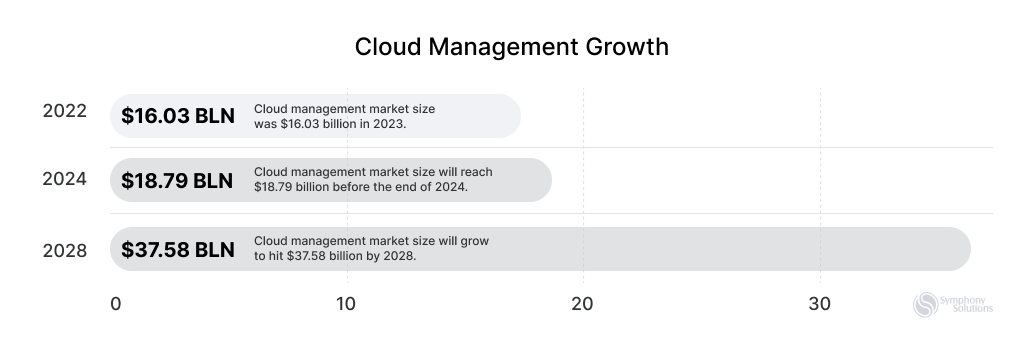
    By 2028, the cloud management services industry is expected to soar to $37.58 billion, indicating a significant rise in business cloud computing adoption. This growth highlights the growing necessity for effectively managing cloud setups. 

    Cloud-management-growth

    Cloud management services fill this need by providing businesses with the essential tools, expertise, and resources to efficiently navigate and optimize their cloud infrastructure. If you want to explore how cloud-managed services boost performance, address challenges, and maximize the benefits, keep reading. 

    What Is Cloud Management and Why Is It Important? 

    Cloud management involves monitoring and refining cloud computing resources and services. This includes setting up, automating, securing, and managing costs across different cloud setups—public, private, or a mix of both. Cloud management is important because it ensures that cloud resources are used effectively. 

    According to Gartner, spending on public cloud services worldwide is expected to hit $678.8 billion by the end of 2024. This huge expenditure underscores the increasing significance of effective cloud management in maximizing efficiency and ROI. 

    How Does Cloud Management Work? 

    Cloud management involves two main approaches: using cloud management platforms (CMP) or relying on managed service providers (MSP). 

    CMPs are software tools that help streamline and automate cloud operations. They centralize control, letting your IT team manage deployments, monitor performance, and cut costs through automation and policies. 

    MSPs, or cloud-managed services, are external firms specializing in cloud management. They handle tasks like infrastructure setup, maintenance, security, and optimization. By tapping into their expertise, you can keep your in-house team focused on core business goals while entrusting cloud management complexities to the pros. 

    What Are the Benefits of Cloud Management? 

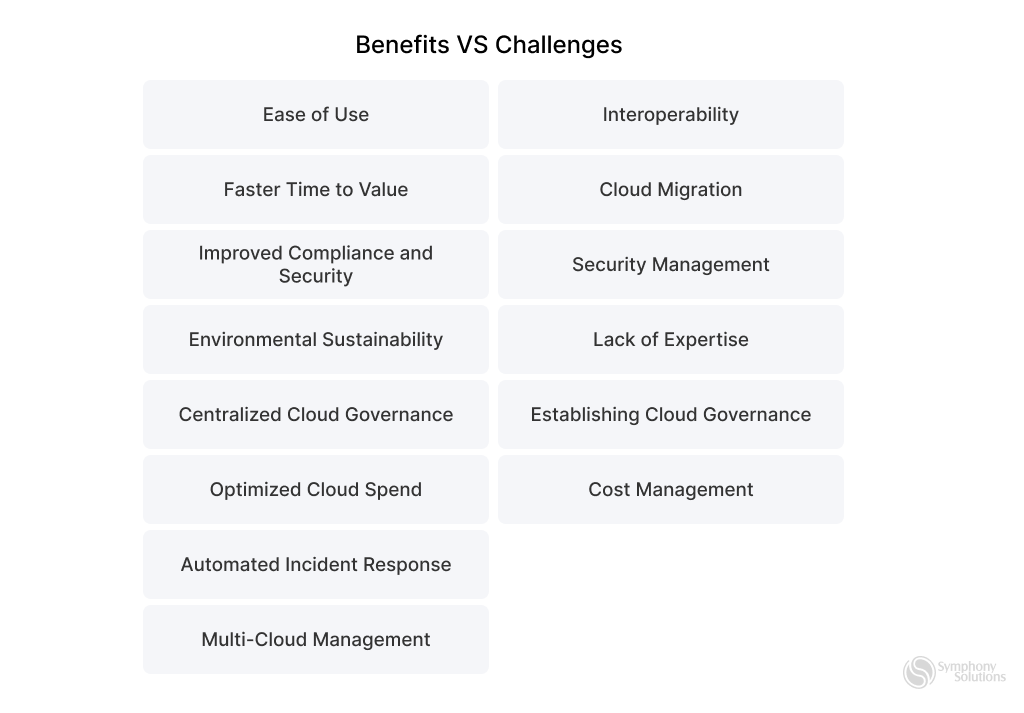
    benefits-vs-challenges-cloud-management

    Cloud management services can benefit businesses in different ways. Let’s look at some of them. 

    Ease of Use 

    Cloud management systems offer easy-to-use interfaces and dashboards, giving your IT team quick visibility and control over cloud resources. No need for tech wizards—anyone can manage resources effectively. 

    Faster Time to Value 

    Say goodbye to slow manual processes. Cloud management automates tasks like resource provisioning and scaling, speeding up your time to value and helping you meet business demands faster. 

    Improved Compliance and Security 

    Although cloud settings come with special security challenges, cloud management solutions can help mitigate some of them. These solutions boast robust features such as encryption and access controls, ensuring the safety and accessibility of your data. Additionally, they facilitate audits and compliance reporting, enhancing overall security measures. 

    Environmental Sustainability 

    By virtualizing resources, cloud computing reduces the need for physical hardware, reducing carbon emissions. Many cloud providers also invest in renewable energy sources, boosting environmental sustainability. 

    Centralized Cloud Governance 

    Managing multiple clouds can be a hassle, but cloud management systems offer a centralized platform to oversee everything. You’ll have full visibility and control over your resources, ensuring consistency, security, and compliance with policies and standards. 

    Optimized Cloud Spend 

    Cloud management’s cost optimization features keep your budget in check. This approach makes it easy to monitor spending, allocate budgets, and gain insights into usage patterns to make smarter resource decisions. 

    Automated Incident Response 

    Cloud incidents happen, but cloud management systems can detect and respond to them in real time, minimizing disruptions and data compromises with automated alerts and response workflows. 

    Multi-Cloud Management 

    If you’re using multiple cloud providers, cloud management systems provide a unified view across all environments. This integration lets you optimize costs, boost performance, and better understand your cloud setup. 

    What Are the Challenges of Cloud Management? 

    Cloud infrastructure management has its own set of challenges that can hamper its smooth operation and utility. Let’s examine some of these obstacles. 

    Interoperability 

    A major challenge in cloud management is getting cloud tech and older systems to work together. Since providers frequently employ diverse technologies and protocols, achieving seamless integration and data sharing can prove challenging, potentially disrupting business operations. 

    Cloud Migration 

    Another significant challenge in cloud management is the migration process. In fact, 66% of surveyed individuals find moving workloads and apps to the cloud challenging, as one wrong move could lead to major business disruptions. 

    Security Management 

    According to the Flexera 2023 State of the Cloud report, security is the second most important concern with cloud management at 79%. Yes, cloud providers have their security offerings. However, organizations need to enforce their security policies and might not have the expertise to do so. 

    Cost Management 

    According to Flexera’s 2023 State of the Cloud Report, managing cloud spend is the primary challenge for 82% of users. Although cloud services offer scalability and on-demand resources, optimizing cloud spend and achieving a reasonable ROI can pose significant difficulties for many. 

    Lack of Expertise 

    Running a cloud infrastructure demands specific know-how and abilities. However, despite support from cloud providers, as many as 98% of organizations lack the expertise they need internally. This is a big challenge with enterprise cloud management. 

    Establishing Cloud Governance 

    Cloud governance is essential for maintaining control over resources, ensuring accountability, and enforcing policies. Unfortunately, according to the PluralSIght State of Cloud 2023 report, only 20% of organizations have fully defined cloud policies. The rest are simply winging it. 

    What Are the Different Aspects of Cloud Management? 

    Cloud management offers features and tools to help you manage your resources effectively. Let’s explore some of these features. 

    Infrastructure Management 

    Infrastructure management is vital for effective cloud operations. It involves setting up, monitoring, and fine-tuning your cloud resources – virtual machines, storage, and networking. This helps you adjust your setup according to your business demands, ensuring you use your resources wisely. 

    Application Hosting and Management 

    Application hosting and management features simplify application deployment, ensuring scalability, reliability, and top-notch performance. It typically comes with application performance management (APM) tools for monitoring and analyzing application performance. 

    Provisioning and Orchestration 

    Provisioning and orchestration streamline cloud resource setup and management. They automate resource deployment while complying with respective policies and business requirements. Orchestration handles the entire lifecycle of applications, from resource allocation to scaling and disaster recovery. 

    Monitoring and Observability 

    Monitoring and observability are crucial aspects of cloud management as a service. They offer live insights into how well your cloud-based resources perform and their availability and health. By monitoring metrics like CPU usage, memory, and network activity, you can maintain peak performance and spot problems on time. 

    Configuration, Compliance, and Auditing 

    Cloud management handles configuration, compliance, and auditing for your cloud resources. It automatically ensures that your cloud infrastructure follows consistent configurations and policies by gathering audit-ready logs from all connected workloads. This helps you monitor workload activities, address noncompliance swiftly, and minimize the risk of security breaches and compliance issues. 

    Enterprise Governance and Control 

    It is crucial to ensure that businesses effectively manage and control their operations, especially when transitioning to cloud computing. With cloud management tools, you can set and enforce consistent rules and detailed controls over external services. This is key for safeguarding sensitive information, enforcing top-notch security measures, and securing your cloud systems. 

    Centralized Operations Management 

    Centralized operations management simplifies overseeing your cloud resources. It gives you a holistic view of your entire cloud setup, making managing, troubleshooting, and administering resources easier. This unified platform fosters better collaboration among your operations teams, boosts efficiency, and cuts costs. 

    Cloud Financial Management 

    Cloud financial management is key to keeping your cloud costs in check. It features tools to monitor and allocate resources efficiently. You can leverage this module to identify unused resources and optimize use, cutting off unnecessary spending. Plus, it offers analytics and reporting, empowering you to make informed decisions about your cloud expenses. 

    Backup and Disaster Recovery 

    Cloud management offers backup and disaster recovery, which are vital for maintaining business continuity in the cloud. These features ensure that your critical data is securely backed up and can be quickly restored in case of disruptions. 

    How to Create and Implement a Cloud Management Strategy 

    Crafting a solid cloud management strategy is crucial for taking advantage of cloud technology. With a clear strategy, you can take charge of your cloud environment, streamline operations, and maximize cloud adoption. 

    creating and implementing a cloud management strategy

    Here are some critical steps to follow. 

    • Assessment and Planning. Begin by drawing up a cloud readiness assessment plan. This involves evaluating your current infrastructure, setting goals, and understanding business needs. It also involves identifying which workloads are suitable for migration and prioritizing accordingly. 
    • Choosing the Right Cloud Provider. Select a provider that fits your organization’s requirements. Consider available services, pricing, compliance, and security features. 
    • Establishing Governance and Security Policies. Set up governance policies to maintain control over cloud usage. This includes compliance requirements and security measures to safeguard your data and applications. 
    • Investing in Training and Skill Development. Empower your team with training to manage cloud resources effectively. They must grasp cloud services, security protocols, and cost management techniques. 
    • Monitoring and Optimization. Use monitoring tools to track performance, usage, and costs. These insights will help with effective resource allocation. 

    What Are Some Cloud Management Strategies? 

    Now that we know how to create a cloud management strategy let’s look at some tips that can help accelerate your cloud innovation and digital transformation programs. 

    Encourage Cloud Visibility 

    It’s essential to have a clear view of your cloud environment. This clarity will help justify cloud spend. To achieve this, implement monitoring tools for tracking resource use, identifying changes, and managing risks. It is also important to work with a provider that offers transparent management and who can integrate third-party services seamlessly. 

    Simplify Cloud Migration 

    Moving to the cloud can be daunting, but a solid migration strategy can streamline the process and minimize disruptions. An effective cloud migration strategy will focus on safe and secure data migration, application compatibility, security, and stakeholder engagement. This well-planned approach ensures a smooth transition. 

    Enable Cloud-Business Integration 

    Maximize the value of cloud adoption by aligning cloud services with your business processes and goals. This involves setting clear goals for the business and ensuring they match up with how your organization uses cloud services. This way, you can make your work processes more efficient, manage your IT landscape better, and meet relevant compliance requirements. 

    Optimize Cloud Resource Usage 

    Optimizing cloud resource usage means maximizing your resources while ensuring they perform well and can scale as needed. There are many ways to do this, but a good first step involves assessing your computing requirements, comparing different providers and plans, and selecting the most cost-efficient infrastructure. 

    Summing Up 

    Cloud management services can help businesses optimize cloud performance, and this cannot be denied. As organizations increasingly rely on the cloud to drive innovation and scale operations, these services will help ensure optimal resource use, cost efficiency, and seamless operations. 

    One powerful approach to maximizing the advantages of cloud resources is adopting cloud-native applications. These applications capitalize on the scalability, flexibility, and resilience of cloud architectures to boost efficiency and agility. Symphony Solutions excels at this. 

    At Symphony Solutions, we’re renowned for our expertise in cutting-edge cloud-native application development. Whether you want to create a new application from scratch or modernize your existing one for the cloud environment, we possess the skills, knowledge, and tools to bring your vision to life. 

    In a recent project example, we leveraged AWS’s serverless capabilities to develop a mental health application for a client. We successfully delivered this solution tailored to the client’s requirements within two months. This case is merely one demonstration of our expertise in providing innovative cloud solutions for clients. 

    We also provide managed infrastructure services for your platform’s health and reliability. With round-the-clock system monitoring and expert incident response, your online business is safe. 

    Leverage Symphony Solutions’ expertise to unlock the efficient use of your cloud landscape and drive sustainable growth for your business. Get in touch today. 

    FAQs

  • Cloud Computing in Pharma: Impact, Benefits, & Success Stories 

    Cloud Computing in Pharma: Impact, Benefits, & Success Stories 

    Cloud computing is transforming the pharmaceutical industry significantly. A report from Straits Research forecasts that the market for pharmaceutical cloud computing will grow from $17.24 billion in 2021 to $59.37 billion by 2030. This growth highlights the increasing adoption of cloud computing in pharma — driven by benefits such as improved collaboration, agility, data security, and scalability. 

    Cloud-computing-in-farma-key-stats

    For indepth understanding of how cloud-led digital transformation is reshaping pharmaceutical operations, keep reading. In this article, we will share more benefits, use cases and some success stories highlighting its impact. 

    Let’s begin. 

    Impact & Use of Cloud Computing in the Pharmaceutical Industry 

    Here are some key areas where the impact of cloud computing in pharma is most prominent. 

    impact and use of cloud computing in the pharmaceutical industry 

    Regulatory Compliance 

    Cloud computing has impacted regulatory compliance in the pharmaceutical industry. Providers now use strong pharma cloud security measures like data encryption, access controls, and audit trails. This helps to align with FDA regulations on managing sensitive documentation and electronic records as outlined in FDA 21 CFR Part 11 standards. 

    Business Continuity 

    Another significant impact of pharma cloud computing is in business continuity. It ensures redundancy, disaster recovery, and high availability. In simple terms, if there’s a natural disaster, hardware glitch, or cyberattack, data stored in the cloud stays accessible from anywhere with the internet. 

    Cloud providers also spread data centers across different locations and use replication techniques to ensure data backup and reduce downtime. This means pharmaceutical companies can keep running smoothly, with uninterrupted access to vital systems and data, even during crises. 

    Data Storage and Management 

    The pharmaceutical industry deals with extensive data from trials, research, and patient records, leading to the limitations associated with traditional storage methods.  

    Cloud pharma offers a solution, utilizing scalable data warehouses and lakes. These centralized repositories store structured and unstructured data from diverse sources, allowing pharma companies to scale storage and processing as needed. 

    Supply Chain and Logistics 

    Cloud computing in pharma also impacts logistics and supply chains, especially cold chain monitoring and management. With cloud-powered apps, companies can remotely track temperature, humidity, and other vital product conditions during transportation and storage. This enables immediate alerts and interventions if conditions deviate, preventing costly spoilage and ensuring medication integrity. 

    Cloud-based solutions also streamline data collection and analysis throughout the cold chain. This approach provides actionable insights into equipment performance and logistics efficiency. Pharma companies can use the insights to spot trends, refine processes, and make informed decisions to improve their cold chain operations. 

    Easy Access to Information 

    Cloud computing also impacts how pharmaceuticals access crucial information regarding drug supply chains. The U.S. Drug Supply Chain Security Act (DSCSA) requires these firms to transmit and store specific data related to drug distribution electronically. Thanks to cloud computing, they can efficiently retrieve, access, and exchange this information in a standardized manner. This advancement enhances transparency, enabling regulatory authorities to oversee and regulate the supply chain more effectively. 

    Benefits of Cloud Computing in the Pharmaceutical Industry 

    There are many reasons why moving to the cloud holds a lot more appeal for pharmaceutical companies than using on-prem infrastructure. The pros of cloud adoption include. 

    benefits of cloud computing in the pharmaceutical industry 

    Accelerated Drug Discovery 

    One of the biggest pros of cloud computing in pharmaceutical industry is drug discovery. With cloud computing, pharmaceutical companies get access to strong computing power, speeding up drug discovery. Cloud platforms supported by data analytics and advanced algorithms can efficiently analyze vast datasets containing molecular structures, genetic information, and clinical trial results. This accelerates the discovery of new treatments. 

    Facilitated Collaboration 

    Cloud computing enhances collaboration within and between pharmaceutical companies, regardless of location. A prime example is a cloud-powered virtual workspace, where professionals instantly convene to share findings, exchange ideas, and collaborate on projects. This accelerates knowledge dissemination, fostering teamwork and expediting the transformation of scientific breakthroughs into tangible medical advancements. 

    Another example is production line management (PLM), for collaborative research and development. For instance, Neo PLM solution, specifically designed for Pharma, enhances seamless alignment between stakeholders, systems, and data throughout the entire product lifecycle — from research and development to manufacturing. 

    Secure Clinical Trial Data Sharing 

    One major benefit of cloud computing in pharma is security. Imagine a pharmaceutical company running multi-center clinical trials. By storing and accessing sensitive data on a cloud-based platform—known for top-notch security features—they can prevent data theft and ensure confidentiality, integrity, and accessibility.  

    This setup allows them to easily share anonymized trial data with regulatory bodies and research collaborators, meeting transparency requirements and data protection regulations. Plus, thanks to wearables and smartphone tech, researchers can gather data directly from trial participants, all powered by cloud technology. 

    Cloud computing also facilitates personalized or home-based healthcare. Take Easly.nl, for instance. It leverages cloud infrastructure to deliver self-testing solutions to individuals in the comfort of their homes, revolutionizing patient care delivery. 

    Enhanced Pharma Marketing 

    With cloud computing, pharmaceutical firms can supercharge their marketing. By tapping into data analytics and personalized strategies, they can better reach their audience. For example, a pharma company using cloud-based tools can segment its target market by age, behavior, or health history. By tailoring messages to different patient groups, they can boost engagement and help patients more effectively. Plus, with cloud marketing platforms, they can track campaigns in real time, modifying strategies for even better results. 

    Streamlined Clinical Trial Design 

    The clinical trial design process also benefits significantly from cloud adoption by pharmaceuticals. With this technology, pharmaceutical companies can access and analyze extensive data instantly. For example, companies can leverage cloud-based analytics to study real-world patient data, pinpointing the best trial protocols and recruitment plans. Patients can even join trials from home, thanks to remote data collection and monitoring. This approach, driven by data, makes clinical trials smoother, cheaper, and more likely to succeed. 

    Cost Efficiency 

    Cloud computing provides cost-saving benefits for pharmaceuticals. Instead of heavy investments in on-prem IT infrastructure and personnel, they can opt for the more reasonable pay-as-you-go cloud services. This means paying only for what they use. This approach allows them to allocate finances more effectively towards research, development, and innovation, rather than IT upkeep. For example, a startup with limited capital can prioritize drug development and clinical trials over building an expensive IT setup.  

    Established companies can also redirect funds from hardware maintenance to exploring new therapies or expanding their product range. 

    Scalable Computing 

    Pharmaceutical companies face varying workloads. Spikes typically happen during clinical trials, drug development, and regulatory submissions. Unfortunately, traditional systems may not be able to handle sudden spikes in data or workloads.  

    Cloud Computing, however, offers scalability, meaning companies can easily adjust their computing resources based on demand. They can handle peak workloads efficiently and scale back as occasion demands, optimizing resource use and cutting costs.  

    For example, during a big clinical trial recruitment drive, a pharma company can swiftly boost its cloud resources to handle the increased data load. Then, during the downtime between trials, they can scale down to save on expenses. Easy, efficient, and cost-effective. 

    Global Accessibility 

    Cloud technology means global accessibility for pharmaceutical companies regardless of location. Pharmaceutical companies can access their data and tools from anywhere with internet access, allowing seamless collaboration, communication, and faster decision-making. Whether it’s offices, labs, or partners spread across different regions, everyone can instantly tap into shared resources and data.  

    Take the pharmaceutical company conducting clinical trials in multiple locations, for example. This company can easily share real-time data and updates with researchers, doctors, and regulators worldwide, ensuring everyone remains on the same page and maintains transparency. 

    Unlocking Real-time Data Insights 

    Cloud-based platforms empower pharmaceutical companies with instant data reporting and analysis capabilities. By leveraging data engineering and warehouse resources, they can swiftly gather, process, and understand large amounts of data. This is invaluable for monitoring clinical trials closely. 

    These tools can also be leveraged to gauge drug effectiveness and safety and manage supply chains in real time. By tapping into cloud-based analytics tools, companies can make informed decisions quickly, spot trends, catch irregularities, and adapt to changes in the pharmaceutical landscape with agility. Take, for example, the post-market phase of a drug: cloud analytics can monitor reports of adverse effects from healthcare providers and patients non-stop, ensuring timely responses and compliance with regulations. 

    AI and ML Integration 

    AI and ML drive digital transformation in pharma and cloud computing offers a strong foundation for seamlessly integrating them into workflows. AI and ML help pharma companies with discovering drugs, designing clinical trials, predicting patient outcomes, and personalizing treatments.  

    They also play a key role in automating data analysis, image recognition, and natural language processing, diving into huge datasets from genomics, proteomics, and clinical trials to pinpoint potential drug targets or predict how patients will respond to treatments. It’s all about speeding up innovation, making operations smoother, and ultimately improving patient care. Imagine AI algorithms on cloud platforms. 

    How Pharma Giants Are Leveraging Cloud Computing 

    Let’s see how actual pharmaceutical companies are leveraging cloud computing to make the most of their processes. 

    Symphony Solutions Enhances QA Services for Neo PLM 

    Neo PLM, a top player in Product Lifecycle Management (PLM) for life sciences, encountered a major hurdle: syncing their solutions with Pfizer’s ERP and MES systems.  

    With over 230 pages of documentation and various integrations, maintaining seamless compatibility was vital. Symphony Solutions was approached to find a solution. 

    Our extensive framework, featuring 300 checklist items, was customized to Neo PLM‘s unique needs to assess crucial project areas without disrupting project timelines. We came up with crucial findings by conducting thorough analysis and stakeholder interviews. 

    • Detected defects were thoroughly analyzed and prioritized. 
    • Controlled management of defects in external environments. 
    • Confirmation that the processes are managed and improving. 

    Our approach earned us a stellar satisfaction rating of 8.3 out of 10 from stakeholders. 

    Easly Cloud-Powered Data Management System 

    Easly revolutionizes home self-testing, enabling individuals to monitor and manage their health easily, intuitively, and straightforwardly from the comfort of home. 

    The company faced challenges with outdated data transfer methods, hindering project efficiency. They wanted to switch from outdated email transfers to a streamlined cloud-based data management solution.  

    Symphony Solutions developed a bespoke software solution to revolutionize its operations. Focusing on accessibility, speed, and security, Symphony Solutions crafted a cloud-native solution with an intuitive user experience designed to optimize how Easly manages, stores, accesses, and shares information among various stakeholders.  

    The result? Enhanced collaboration, accelerated processes, and streamlined workflows. Today, APC continues to champion cutting-edge technology, ensuring swift medicine production unencumbered by outdated practices, thanks to cloud technology and Symphony Solutions’ cloud native development services

    AstraZeneca’s AWS Genomics Data Processing Solution 

    A global biopharmaceutical company, AstraZeneca, pioneers innovative medicines across various therapy areas. Leveraging AWS, the company built a cloud-based solution for swift and scalable processing of genomics sequencing data. This solution, powered by AWS Lambda, AWS Batch, and Amazon S3, automates data orchestration and task execution, enabling rapid analysis, and is capable of performing over 51 billion statistical tests in under 24 hours. 

    Thanks to this collaboration between AstraZeneca and AWS, the company has contributed genetic insights to over 40 drug discovery projects. This innovative approach drives the Centre for Genomics Research towards its ambitious goal of analyzing two million genomes by 2026. 

    Takeda’s Project Fuji Powered by AWS 

    Takeda, a global biopharmaceutical company, faced innovation challenges due to aging technology infrastructure. To overcome this, Takeda embarked on a cloud transformation journey with Amazon Web Services (AWS), giving birth to Project Fuji.  

    Project Fuji resulted in Takeda migrating 80% of its business apps to the cloud and closing data centers. By centralizing data and harnessing AWS’s extensive offerings, Takeda was able to successfully streamline operations, foster innovation, and reduce its carbon footprint by 1,918.5 metric tons. Thanks to that cloud-driven digital transformation, Takeda was able to swiftly respond to the COVID-19 crisis. Now, the company is looking towards future initiatives including telehealth and personalized treatment, which will be powered by AWS cloud.  

    The collaboration underscores Takeda’s commitment to leveraging technology for patient benefits, facilitated by AWS’s advanced capabilities. 

    APC Cloud-Powered Data Management System 

    APC revolutionizes drug development, partnering worldwide to accelerate bringing medicines to market, driven by a passion for science and research. 

    The company faced challenges with outdated data transfer methods which was hindering project efficiency. They wanted to switch from outdated email transfers to a streamlined cloud-based data management solution.  

    Symphony Solutions stepped in, developing a bespoke software solution to revolutionize their operations. With a focus on accessibility, speed, and security, Symphony Solutions crafted a cloud-native solution with an intuitive user experience designed to optimize how APC manages, stores, accesses, and shares information among various stakeholders.  

    The result? Enhanced collaboration, accelerated processes, and streamlined workflows. Today, APC continues to champion cutting-edge technology, ensuring swift medicine production unencumbered by outdated practices, thanks to cloud technology and Symphony Solutions’ cloud native development services

    Summing Up 

    Cloud computing is key for pharmaceutical companies. It cuts costs, offers real-time data, and fosters global collaboration. As cloud adoption this this industry increases, we expect to see more transformations for the sector, particularly powered by artificial intelligence, machine learning, and data analytics. But like any digital transformation, the key to leveraging cloud computing in pharma is working with a reliable IT partner. This is where we come in at Symphony Solutions. 

    Symphony Solutions specializes in software development for healthcare and pharmaceutical organizations, helping clients in these industries make the most of the cloud to drive innovation, boost efficiency, and improve outcomes. 

    Recently, we worked with a mental health client, building a scalable platform in just two months using AWS. We also partnered with a COVID-19 screening service, creating a web app on AWS for high-scale testing. You can read up on these case studies here. 

    These successes showcase our expertise in cloud computing in healthcare, which can be leveraged to tackle the unique challenges and opportunities in the pharmaceutical sector. 

    FAQs 

  • Navigating Cloud Solutions for Healthcare Industry: Real-Life Applications 

    Navigating Cloud Solutions for Healthcare Industry: Real-Life Applications 

    The healthcare industry is getting a major digital upgrade, transforming everything from safety to costs. Leading this revolution are cutting-edge technologies like virtual doctor visits, digital health records, artificial intelligence, and smart devices, all supported by the power of cloud computing. 

    healthcare cloud devices

    Cloud computing is driving these changes by securely managing and analyzing vast health data. This is making it easier and faster for healthcare professionals to make decisions, leading to better care for patients. By 2025, it’s expected that 90% of healthcare organizations will have adopted this technology. 

    Now, as cloud computing becomes the standard, businesses must fully understand the applications and benefits of cloud solutions for healthcare industry. This will help them streamline their operations and spark innovation in healthcare services.  

    In this article, we’ll highlight the advantages and practical applications of cloud technology, providing insights to help you stay ahead. Continue reading to learn more. 

    Applications Of Cloud Solutions for the Healthcare Industry 

    applications-of-cloud-in-healthcare

    Cloud solutions have a wide range of applications in healthcare, helping to streamline processes, increase efficiency, and improve patient care. Some of these applications are: 

    E-health and Telemedicine 

    One of the biggest applications of cloud computing in healthcare is in the e-health and telemedicine niche, delivering healthcare services via teleconsultations, remote monitoring, and access to electronic health records (EHR). Recent research shows that around 80% of people have used teleconsultation services at least once. This shows how popular e-health and telemedicine are. 

    Cloud technology enhances this niche by providing a robust platform for securely storing and managing large amounts of healthcare data, facilitating real-time collaborations between the patient and health professionals in real-time, independent of geography. These secure platforms enable health professionals to carry out consultations, monitor patients, and manage and share medical records securely. 

    Cloud-based telemedicine enhances the availability of strategic health services to the remote and underserved, increases patient engagement, and makes efficient use of resources. 

    Drug Discovery 

    Drug discovery is a complex process where scientists identify, develop, and test new medications, requiring the analysis of vast amounts of data and collaboration across various fields. Cloud technology significantly enhances this journey by offering scalable computing resources that manage large volumes of genomic, chemical, and clinical data essential for discovery.  

    Research suggests that machine learning can reduce research expenses by up to 70%.  

    Drug discovery supports the secure storage, sharing, and analysis of data, and facilitates advanced techniques like machine learning, predictive modeling, and virtual screening. These capabilities not only speed up the discovery process but also help reduce research and development costs significantly, improve collaboration, increase scalability and flexibility of resources, and boost overall efficiency in identifying potential drugs. 

    Symphony Solutions has hands-on experience combining Cloud and DevOps technology for pharmaceutical clients. 

    A pharmaceutical client was struggling with outdated email transfers and disjointed file storage systems, which made managing data-intensive projects and facilitating stakeholder access challenging. Files of all sizes were causing delays and slowing things down. 

    So, Symphony Solutions stepped in to help. We embarked on a Managed Product Development journey to fix the client’s data setup. Even though we didn’t have all the details at first, Symphony Solutions developed a solid plan. We created custom software that made it much easier for information to flow smoothly, speeding up progress in pharmaceutical research. By getting rid of old methods, the client now works more efficiently and can speed up the release of life-changing medicine, solidifying their reputation as leaders in the industry. 

    Healthcare Information Systems 

    Cloud technology is revolutionizing Healthcare Information Systems (HIS) by offering a unified platform to manage a wide array of health technologies such as electronic health records and medical imaging systems. This integration allows healthcare organizations to efficiently update and monitor patient records, diagnostic images, and laboratory results in real-time.  

    Cloud-based HIS platforms ensure scalability, enhanced security with encryption and access controls, and improved data integration for better interoperability across various systems. The benefits are substantial, including better access to patient information, stronger data security, reduced costs, increased flexibility, streamlined operations, and improved connectivity with external providers. These advantages are driving the global shift towards cloud-based HIS, with the electronic health records market expected to hit $40 billion by the end of 2024. 

    Personal Health Records 

    Personal health records (PHRs) are digital tools that help individuals manage and track their own health information, including medical history, medications, and test results. The market for PHR software, which was valued at $8.40 billion in 2022, is projected to grow to $18.54 billion by 2030, largely fueled by advancements in cloud technology.  

    This technology not only secures and streamlines the storage of health data but also ensures that patients can access their information from any device, anywhere. Additionally, integrating these systems with other healthcare apps improves communication between patients and healthcare providers, enhances the continuity of care, reduces errors, and increases patient engagement and satisfaction.  

    Clinical Decision Support System (CDSS) 

    CDSS are designed to aid healthcare providers in clinical decisions by utilizing patient data, medical information, and sometimes artificial intelligence. By harnessing cloud technology, CDSS provides real-time, evidence-based recommendations to healthcare professionals.  

    Accessible through the cloud, these systems pull from extensive medical research, treatment guidelines, and patient records, enabling more informed patient care decisions. Cloud-based CDSS reduces medical errors and improves patient outcomes by offering predictive analytics to identify high-risk patients and suggest preventive measures. Additionally, it enhances collaboration among healthcare teams by facilitating the seamless sharing of insights and best practices. 

    Cloud-Based Digital Libraries 

    Libraries are vital for medical students, practitioners, and researchers. But with cloud technology, accessing information becomes even easier—anywhere, anytime, with just an internet connection. Cloud-based digital libraries in healthcare hold a wealth of medical literature, research papers, guidelines, and educational materials online. They offer perks like unlimited storage, scalability, and accessibility, helping healthcare pros stay current with the latest medical knowledge and practices. Plus, these libraries often come with handy features like search tools, personalized recommendations, and collaboration options, making medical research, education, and practice more efficient. 

    Moreover, they help minimize the risk of data loss or corruption, ensuring that medical records remain available and accurate at all times. 

    Medical Imaging 

    Medical imaging accounts for 90% of healthcare data. However, storing this huge amount of files on local machines or physical servers may no longer be possible due to increasing image sizes.  

    This is where medical imagery cloud solutions for healthcare industry come in. 

    Cloud solutions have completely transformed medical imaging. They provide a secure and efficient way to store, share, and analyze X-rays, MRIs, CT scans, and ultrasounds. With cloud solutions, healthcare providers can store huge amounts of imaging data in one place, access it remotely from anywhere with an internet connection, and easily scale up as needed.  

    These platforms often come with advanced features like image processing algorithms, machine learning models, and collaboration tools. These features make interpreting images easier, improve diagnostic accuracy, and promote better communication among radiologists, clinicians, and other professionals. 

    Healthcare Analytics 

    Although healthcare contributes about 30% of the world’s data, only approximately 60% of organizations access this data to drive smart decisions. Cloud technology is here to change this.  

    Cloud healthcare solutions democratize data analysis. They deliver scalable and cost-effective platforms for accumulating, processing, and analyzing the sheer quantities of diverse data types produced by modern healthcare organizations. Such platforms leverage big data analytics, machine learning, and predictive modeling to reveal trends, patterns, and connections buried in healthcare data. This, in turn, empowers evidence-based decision-making, optimizes resource allocation, and enables proactive interventions. 

    What’s more, cloud-based healthcare analytics solutions promote interoperability and data sharing among different healthcare systems and stakeholders. This fosters collaboration, sparks innovation, and drives ongoing enhancements in healthcare delivery and management. 

    Big Data Analytics. With healthcare churning out tons of information, big data analytics tools sort through it to spot trends and insights that traditional methods miss. These tools can help identify high-risk patients or disease outbreaks and customize individual treatments. 

    Machine Learning. These algorithms are trained to spot patterns and predict outcomes from data, no explicit programming is needed. In healthcare, they analyze patient info to forecast disease progression, flag potential drug clashes, and even help in medical image analysis for better diagnoses. These programs can also scan X-rays or MRIs for abnormalities, aiding radiologists in their interpretations. 

    Predictive Analytics. Using past data, machine learning predicts future events or outcomes. In healthcare, it can help predict things like patient readmissions, who might develop certain diseases, or what resources hospitals will need. This ability means that healthcare can step in early, improve patient outcomes, manage resources better, and cut costs. 

    Benefits of Cloud Solutions for the Healthcare Industry 

    Key Benefits of Cloud Computing

    Let’s explore why hospital administrators should consider transitioning from traditional on-prem systems to the cloud and how it can benefit their operations: 

    Cost Efficiency 

    Cloud solutions offer a flexible payment model, letting hospitals pay for exactly what they need. This move slashes unnecessary costs tied to hardware and maintenance. 

    Scalability 

    Healthcare organizations often deal with fluctuations in data and patient volumes. Cloud solutions offer practically limitless scalability, so hospitals can easily adjust resources to handle sudden surges in data or patient volumes. 

    Real-Time Data Processing 

    Having instant access to patient data is key for making well-informed decisions. Thanks to cloud-based systems, real-time data processing is possible. For hospital admins, this means faster clinical decisions and better patient outcomes. 

    Data Security and Compliance 

    Cloud solutions come with robust security measures and adhere to industry regulations. Transiting provides hospitals with peace of mind regarding the protection of patient data. 

    Disaster Recovery and Business Continuity 

    Disruptions can significantly impact healthcare operations. Cloud solutions offer disaster recovery capabilities that guarantee continuity of care even during emergencies by automatically backing up data in multiple secure locations. 

    Accessibility and Collaboration 

    With cloud solutions, health workers can tap into patient data remotely, fostering collaboration while enabling telemedicine for enhanced access to healthcare services. 

    For healthcare administrators, moving to the cloud can be the difference between staying ahead of the curve and lagging behind. 

    Strategies and Technologies for Seamless Data Integration in Healthcare Cloud Solutions 

    Integrating data from various sources into the healthcare cloud is crucial for delivering better outcomes. Here’s how to go about it. 

    Set Clear Integration Goals and Objectives 

    • Know what you want from data integration, like better patient care or smoother operations. 
    • Measure success with key indicators such as data accuracy or cost savings. 
    • Make sure integration goals match overall organizational goals. 

    Establish a Data Governance Framework 

    • Create rules for handling data from start to finish. 
    • Assign data stewards to maintain quality, security, and compliance. 
    • Set up data access, sharing, and privacy controls, meeting regulations like HIPAA. 

    Choose the Right Integration Technology 

    • Look at integration options based on scalability, security, and cost. 
    • Pick tools that support healthcare standards like HL7 and FHIR. 
    • Consider cloud-based integration platforms and APIs for flexibility and scalability. 

    Standardize Data Formats and Terms 

    • Use consistent formats and terms for better compatibility. 
    • Use standard coding systems like SNOMED CT and ICD-10. 
    • Industry standards – HL7 and FHIR support interoperability and data consistency. 
    • Transform data to match different formats and structures. 

    Ensure Strong Data Security 

    • Encrypt sensitive data both in transit and storage. 
    • Control access and authenticate users. 
    • Keep an eye on access logs for security issues. 

    Maintain Data Quality and Validation 

    • Set rules to ensure data accuracy and completeness. 
    • Clean and validate data to fix errors and duplicates. 
    • Monitor data quality and make adjustments as needed. 

    Following these steps helps healthcare organizations integrate data smoothly in the cloud while keeping it secure, reliable, and compliant with regulations. 

    Best Practices For Managing Costs of Cloud Resource Usage 

    Keeping healthcare cloud costs in check is crucial for managing budgets efficiently. Here are some top strategies to help healthcare organizations optimize their spending: 

    Pick the Right Provider 

    The first and possibly most important step is to pick the right cloud provider. Make you selection based on factors like cost, scalability, and service agreements. This ensures you’re not overspending and that your chosen service meets your organization’s requirements. 

    Optimize Your Data Storage 

    Optimizing how you manage data will also help. Implement data compression, deduplication, and scalable storage solutions to minimize costs while maintaining data integrity. These techniques help optimize storage resources efficiently. 

    Automate Data Processes 

    Automating data processes saves valuable time and effort. By tracking performance and identifying inefficiencies, you can streamline operations. Automation also helps reduce manual workload and potential errors in data handling. 

    Continuously Optimize 

    Regularly reviewing resource usage and adjusting allocations helps avoid unnecessary expenses. Leverage optimization tools and strategies to ensure efficient resource utilization. This way, you can prevent overpayment for underutilized resources. 

    Enforce Data Governance and Security 

    Strict security protocols and data governance are essential. They ensure compliance and protect sensitive data, lowering the possibility of breaches. Investing in intrusion detection systems, access restrictions, and strong encryption will also help reduce potential security threats and associated costs. 

    Foster a Cost-Conscious Culture 

    Foster a culture where employees are mindful of resource usage. Providing training and incentives for cost-conscious behavior encourages active participation in cost-saving initiatives. This approach will ultimately optimize budget allocation across the organization. 

    These practices ensure healthcare organizations can efficiently manage their cloud costs while maximizing their budgets. 

    Real-Life Example of Cloud Implementations For Data In Healthcare 

    Google Cloud and Mayo Clinic 

    Recently, Mayo Clinic and Google joined forces to advance healthcare innovation responsibly. Their groundbreaking collaboration introduced the Mayo Clinic Cloud and Platform, facilitating secure sharing and enhancement of de-identified clinical data. Dubbed “data under glass,” this approach prioritizes privacy by keeping data within Mayo while enabling advanced analytics and AI development. Beyond cybersecurity, it streamlines data management and promotes collaborative data usage. The Mayo-Google partnership illustrates how health systems and tech giants can collaborate to leverage cloud computing for improved privacy and cybersecurity, and lower data management costs. 

    Johns Hopkins Medicine (JHM) and Microsoft Azure 

    Johns Hopkins Medicine and Microsoft entered into a five-year agreement to leverage Azure cloud analytics within JHM’s inHealth initiative. This partnership aims to speed up medical advancements, improve disease management, and raise patient care standards by using Azure tools to analyze patients’ health data, medical history, and environmental factors. 

    JHM will also work with Microsoft to ensure ethical use of patient data and data regulation compliance. This is another example of healthcare leveraging cloud technology to pioneer future medical innovations, promising a healthier tomorrow. 

    Our Expertise 

    If you’re looking to leverage cloud technology effectively within your healthcare organization, partnering with a technical expert capable of tailoring solutions to your specific needs is essential. This is where Symphony Solutions excels. 

    At Symphony Solutions, we will guide you through each stage of cloud adoption, ensuring maximum benefits from your digital transformation. Whether it’s cloud-native application development, modernizing legacy systems, optimizing existing infrastructure, preparing for migration, implementing DevOps practices, or conducting performance testing, our expertise covers all aspects. 

    Our custom healthcare software development harnesses the power of cloud technology and data analytics while prioritizing security, compliance, and interoperability.  

    In recent projects, we’ve demonstrated our ability to deliver results quickly and efficiently. For example, we partnered with a mental health client to create a scalable digital platform using AWS serverless architecture, providing secure features like chat and payment systems within just two months. 

    In another project, we helped a COVID-19 screening service develop a cross-platform web application for accelerating MVP for COVID-19 testing using AWS Cloud Platform, integrating seamlessly with test lab software and handling high demand. 

    These successes underscore our expertise in building cloud solutions for healthcare industry. Let us guide you through your cloud journey and help you achieve your goals seamlessly. 

    FAQs  

  • Enterprise Data Management Best Practices for Success 

    Enterprise Data Management Best Practices for Success 

    Given that over 95% of organizations view data management as a major challenge and that poor data handling can cut operational efficiency by 21%, the need to adopt best practices is clear and urgent. 

    Best practices in enterprise data management help companies maintain accurate and secure data, enhancing operational efficiency. Moreover, by standardizing how data is collected, stored, and analyzed, businesses can ensure its reliability. This approach not only aids in making informed decisions but also ensures adherence to regulatory standards. 

    This article will take you through the ins and outs of Enterprise Data Management, covering its development, key components, advantages, and effective strategies. We’ll also show you how to put these practices into action to stay ahead in the competitive landscape. 

    global-business-market

    Understanding Enterprise Data Management 

    Enterprise Data Management is a strategic approach that helps businesses organize, manage, and use their data assets efficiently. It’s crucial for creating a unified and clear view of a company’s data. This exercise is fast becoming a key component of contemporary business intelligence and data visualization practices. 

    Evolution of EDM: 

    EDM has evolved alongside technology and the rising impact of Big Data solutions in healthcare, manufacturing, and many other sectors. What began as simple data storage and retrieval has expanded to include: 

    • Data Governance: Ensuring data is accurate and accessible. 
    • Quality Control: Keeping data reliable and intact. 
    • Integration: Merging data from different sources smoothly. 
    • Security: Safeguarding data from unauthorized access. 

    Analytics: Using data to make insightful decisions. 

    Today, businesses are using data as a strategic asset to get ahead of the competition. This approach is aiding them in navigating through digital transformation, enabling the use of data to: 

    • Improve operations,  
    • Drive innovation, 
    • Adapt to changes in the market. 

    What Are the Key Elements of Enterprise Data Management? 

    The key elements of enterprise data management form the foundation of a successful data strategy. Let’s take a closer look. 

    key-elements-of-enterprise-data-management

    Data Governance  

    What is the enterprise data management data governance? It involves setting policies and procedures that govern data management across the organization. Data across the enterprise is managed consistently and in compliance with both internal standards and external regulations.  

    Data governance provides a framework for data ownership, roles, responsibilities, and standards, ensuring accountability and proper management of data assets. Companies that implement a Data Governance program see a 2% quicker data analysis and a 31% boost in confidence regarding the quality of their data. 

    Data Quality  

    Focuses on the accuracy, completeness, and reliability of data. Ensuring data is accurate, complete, and reliable is crucial, especially since 54% of businesses see data quality as their top challenge in marketing. This involves using specific processes and tech to fix any data issues, making sure it’s ready for use in decision-making and operations. High-quality data is essential for reliable analytics and reporting, highlighting its importance in effective marketing strategies. 

    Data Integration 

    Refers to the process of combining data from different sources to provide a unified, consistent, and comprehensive view. This is essential for organizations that rely on various systems and applications, enabling them to aggregate and harmonize data for better analysis and insight.  

    Data integration is vital because 40% of projects fail due to the inability to effectively combine and utilize different data sets. 

    Data Security 

    Addresses the protection of data from unauthorized access, breaches, and theft. It involves implementing measures such as encryption, access controls, and audit trails to safeguard data privacy and compliance with data protection laws. These elements are interconnected, creating a cohesive data management ecosystem within an enterprise.  

    • Data governance sets the stage for quality, integration, and security practices, ensuring that data not only meets standards but also supports organizational objectives.
    • Data quality ensures that the integrated data is accurate and reliable.  
    • Data security protects all valuable information.  

    Together, these elements enable organizations to harness the full potential of their data, driving efficiency, innovation, and competitive advantage. 

    Benefits of Robust Enterprise Data Management Solution 

    benefits-of-enterprise-data-solution

    A robust enterprise data management system brings a multitude of benefits of enterprise data management. These include: 

    Strategic Benefits 

    Effective data management empowers informed decision-making and fosters agility and innovation within organizations. For instance, Netflix leverages its vast data on viewer habits to make informed decisions on content creation and acquisitions, leading to the production of popular shows and a strong competitive position in the streaming industry. 

    Operational Benefits 

    Today, over 41% of businesses extensively use automation across various functions. When data processes are automated, it enhances efficiency, productivity, and profitability across the board.  

    Case in point, in 2023, JPMorgan Chase leveraged its 500 petabytes of data across 300 use cases in production. This significantly boosted its business value. Streamlining processes reduces manual labor and errors. It significantly improves operational workflows and leads to smoother execution and higher customer satisfaction.  

    Financial Benefits 

    Financially, EDM contributes to both cost reduction and revenue growth. By optimizing data storage, retrieval, and processing, organizations can significantly cut costs. Moreover, accurate data management helps avoid penalties for non-compliance with regulations.  

    A prime example of financial gain through data management is Amazon’s recommendation engine, which accounts for 35% of its sales by offering tailored product suggestions to customers, thus directly impacting the company’s bottom line. 

    Components of Enterprise Data Management Strategy 

    An effective data management platform encompasses several key components that work together within the broader enterprise data management framework. These components include: 

    Data Architecture: Refers to the blueprint that outlines how data is managed across the organization. It defines the structure for collecting, storing, processing, and accessing data. This architecture ensures that data flows seamlessly between systems and processes, maintaining consistency and supporting scalability. It’s the foundation upon which data management practices are built, guiding the integration of data across diverse business environments. 

    Databases: These are the storage systems where data is held. They are crucial for organizing data in a structured way, making it easily retrievable and manageable. Databases support day-to-day operations by providing a reliable mechanism for data entry, storage, and retrieval, ensuring that data is accessible and secure. 

    Data Warehousing: There is a difference between Database Vs. Data Warehouse. Data Warehousing involves the consolidation of data from multiple sources into a single repository, designed for query and analysis. It supports decision-making processes by providing a centralized, consistent data source. Data warehousing enables complex analyses and reporting, making it easier for organizations to extract insights from their data, identify trends, and make strategic decisions. 

    Data Analytics: This is the process of examining data sets to conclude the information they contain. It involves applying statistical analysis and other analytical techniques to uncover patterns, correlations, and insights that can inform business strategies. Data analytics services turn raw data into valuable insights, driving innovation, optimizing operations, and enhancing customer experiences. 

    Data Management Best Practices for Enterprises 

    Here are 10 best practices for enterprise data management, along with their relevance and tips for implementation: 

    • Data Standardization: Establishing uniform formats for data ensures consistency across the organization, facilitating easier data integration and analysis. Implement by defining clear data entry standards and training staff on these guidelines. 
    • Regular Audits: Conducting periodic reviews of data and processes helps identify and rectify inconsistencies, outdated information, or security vulnerabilities. Schedule regular audits and use automated tools to streamline this process. 
    • Compliance Checks: Staying abreast of and complying with relevant data protection regulations (such as GDPR or HIPAA) protects the organization from legal penalties and enhances consumer trust. Implement compliance checks by continuously monitoring regulatory updates and assessing data practices against these standards. 
    • Advanced Tools for Data Analytics: Utilizing sophisticated analytics tools like AI tools for enterprise enables deeper insights into data, driving better business decisions. Choose tools that align with your business needs and ensure staff are adequately trained to use them. 
    • Data Governance Framework: Implementing a governance framework ensures clear policies and responsibilities around data management. Start by appointing a data governance team responsible for developing and enforcing data policies. 
    • Quality Control Measures: Ensuring data accuracy and cleanliness through regular quality checks prevents errors and improves reliability. Implement automated tools to detect and correct data anomalies. 
    • Data Integration Practices: Integrating data from various sources into a cohesive system enhances analysis capabilities. Use integration tools and platforms to ensure smooth data consolidation. 
    • Robust Data Security Measures: Protecting data from unauthorized access and breaches is critical. Implement strong encryption, access controls, and regular security training for employees. 
    • Employee Training and Awareness: Educating employees to understand the role of data science in healthcare or any industry involved. This allows them to learn about the importance of data management and security reducing risks of data mishandling. Eventually, it creates a culture of data awareness. 
    • Continuous Improvement Process: Data management strategies should evolve with changing business needs and technological advancements. Establish a process for ongoing evaluation and adaptation of data practices. 

    Roles and Responsibilities 

    Who’s in charge of enterprise data management and what do they do? 

    Data Managers are tasked with the day-to-day management of data, ensuring its accuracy, accessibility, and quality. They oversee data collection, storage, and retrieval processes, and work closely with IT to implement data policies and procedures. Their role also involves coordinating with different departments to ensure data consistency and compliance across the organization. 

    Chief Data Officers (CDOs) provide strategic leadership for enterprise data management and analytics. They are responsible for developing and executing data strategies that align with the organization’s goals. CDOs advocate for data as a strategic asset, driving data governance, and ensuring that data management practices support business objectives. They also play a key role in fostering a data-driven culture within the organization. 

    IT Personnel are crucial for the technical aspects of EDM, including the design, implementation, and maintenance of data systems and architecture. They ensure the security and integrity of data, manage data-related technologies and provide support for data analytics and reporting tools. 

    Skill Sets and Qualifications for Effective Data Management 

    Successful EDM leaders combine deep technical knowledge in data management and analytics with strategic thinking to align data practices with business goals. They excel in analyzing data for insights and are skilled communicators, able to explain complex data concepts in simple terms, and work well with teams.  

    They’re also adept at managing change within organizations. Typically, these leaders have advanced degrees in fields related to technology or data science, often supplemented by specific certifications in data management. 

    Implementing Data Management Best Practices 

    Implementing data management best practices within an enterprise setting requires a structured approach to ensure success and sustainability. Here’s a step-by-step guide to help you navigate this process, along with insights into common challenges and effective solutions. 

    1. Outline goals, and standards for data standardization, integration, security, and analytics. 
    2. Define roles and oversee strategy execution. 
    3. Enforce consistent formats and quality across the organization. 
    4. Implement encryption, access controls, and conduct regular audits. 
    5. Choose tools for analytics, quality control, and integration. 
    6. Provide ongoing training on data management and security. 
    7. Ensure standards are met and assess effectiveness. 
    8. Constantly evaluate and refine practices. 
    9. Keep a close watch and make necessary adjustments. 

    Common Challenges and Solutions 

    Common data management challenges include resistance to change, security risks, data quality issues, lack of expertise, and data silos. To address these, highlight the benefits and involve employees in new practices, strengthen security, and provide ongoing training. Additionally, use automated controls and audits to ensure data quality, invest in training or hire experts to fill knowledge gaps, and use integration tools while promoting teamwork to break down data silos. 

    Conclusion 

    Mastering an enterprise data management system is crucial for businesses aiming to use their data for strategic gains. To stay ahead of your competition, embrace best practices like data standardization, conducting regular audits, and utilizing advanced analytics tools. Moreover, understand the critical roles within data management, such as data managers and CDOs to achieve excellence in operations. 

    By staying adaptable and forward-thinking in managing data, you can enjoy new growth avenues and improved operational efficiency. 

    At Symphony Solutions, we specialize in the management of enterprise data analytics. We offer top tier data analytics services that equip businesses with the insights and tools needed to maximize their data’s value. Our expertise in the latest technologies and methodologies ensures your data management strategy is robust, effective, and ready for future advancements. If you have been considering data migration, partnering with us also means we can assist with planning and implementation to propel your business toward sustained success. 

    Frequently Asked Questions  

  • Cloud Computing in Healthcare: 9 Benefits of Cloud Computing 

    Cloud Computing in Healthcare: 9 Benefits of Cloud Computing 

    Cloud computing is making a big splash in healthcare. Already, 70% of health IT professionals say their organizations are using cloud solutions, and another 20% plan to join them within two years. This shows how fast cloud adoption is growing in healthcare. 

    The reason behind this shift is clear. Cloud computing can solve problems that are either impossible or too expensive to solve with traditional computing. It offers quick, efficient solutions on a scale we’ve never seen before. Thanks to these advantages, the value of cloud technology in healthcare is expected to hit $89 billion by 2027. 

    Continue reading to uncover the main advantages of cloud computing in healthcare. We’ll show how it’s revolutionizing the sector by establishing new benchmarks in efficiency, scalability, and innovation. 

    What is Cloud Computing in Healthcare? 

    Let’s start from the top, so what is cloud computing? In a word, it’s an on-demand delivery of computing resources, such as data storage, servers, databases, networking capabilities, and applications, over the Internet (“the cloud”) by a cloud services provider. This means, that instead of having to invest in the on-premises equipment, training special staff, and then dealing with maintenance, a healthcare organization can leave it to cloud providers to take care of it.    

    For a good reason, the applications are much easier to handle when based on serverless architecture. Paying a third party instead of investing in your own on-premises infrastructure sufficiently lowers the IT costs. At the same time, it allows scalability at a greater price, since the company won’t need to pay for the capacity they are not using and can easily scale up or down, as needed. Another competitive advantage of the cloud – is the speed of innovation (I.e., building prototypes or new product features faster).    

    The application of cloud computing in healthcare has been gaining a lot of traction recently. Whether it’s a part of the organization’s strategic vision of adopting digital transformation or a pressing need due to the changing environment. But if applied correctly, the role of cloud computing in the healthcare department can be quite prominent.

    Better-security-in-the-cloud

    But most importantly, what makes the cloud especially appealing today, is its security. Compared to on-premises, the cloud is considered a more secure option. A new McAfee report reveals that 52% of organizations experience better security in the cloud than on-premises IT environments. Gartner predicts that in the event of a security issue, 95% of them will be the customer’s fault. Thus, making the cloud also the safest choice. 

    Cloud Computing as a Catalyst for Digital Transformation 

    With all that cloud has to offer, it is no surprise that it’s at the forefront of digital transformation. And the global Covid pandemic has even further accelerated customer demand for cloud services.    

    By the end of 2019, many tech experts had already been placing their bets on the cloud to lead the tech trends in the following year. But no one could have predicted back then just how impactful it would become in 2020.    

    The agility and scalability that the cloud has to offer came especially in handy when organizations across various industries were faced with the new reality. In the first quarter of 2020, cloud spending reached $29 billion, which is 37% higher than over the same period in the previous year. And, of course, it was nowhere near slowing down, as the unexpected mass demand for virtual work had to be backed by secure, reliable, scalable, and naturally, cost-effective off-premises services. While overall, the IT spending in 2020 was on the decline, business was blooming more than ever for the cloud providers with a 19% projected growth, according to Gartner, among a total decline in other sectors of IT spending.    

    Of course, even before the pandemic, the strategic shift to more flexible pay-as-you-go solutions was on the table for many companies, the Covid-19 crisis only further facilitated this shift.    

    How Is Cloud Computing Enhancing Healthcare?  

    Like with many others, the application of cloud computing in the healthcare industry is driving a positive change in numerous ways. Whether it’s to reduce costs and to be able to focus on mission-critical activities by opting for off-premises infrastructure or to tap into highly flexible and customizable services by leveraging cloud storage and computing capabilities. 

    Market-Share-Of-Healthcare-Cloud-Computing

    According to a recent report, the market of healthcare cloud computing is projected to grow from $28.1 billion in 2020 to $64.7 billion by 2025, at 18.1% annually during the forecast period. This growth of the cloud in healthcare can be attributed to numerous factors, such as digitalization, technical upgrading, and improving the services and care process. But, of course, like with many other industries in 2020, mass cloud adoption is largely dictated by the Covid-19 crisis and the new reality.    

    Such features as seamless data storage and backup, as well as the ability to scale up or down, are especially valuable in these uncertain times. But perhaps one of the most valuable assets of cloud technology is in online medical consultations. Social distancing dictates its rules and patients with mild symptoms or trivial medical issues are advised against visiting hospitals and instead to opt for remote consultations via phone calls or video conferencing. This will also likely increase the medical cloud computing market.  

    Better-security-in-the-cloud-2

    But perhaps, not all healthcare providers are equally ready for mass cloud adoption. A new study, “FutureCare: Cloud, Big Data, Mobile, and Social Optimize the EMR”, reveals that while many providers plan to adopt these technologies in the next two years, at the moment about 96% of healthcare organizations admit that their infrastructure is not fully prepared for the evolution of their Electronic Medical Records (EMR). But on a brighter note, the adoption has been put into motion, with two-thirds of healthcare providers already using the cloud. The majority are running their EMR applications in private clouds (49%), followed by hybrid and public cloud models (35%). The application of cloud computing can help optimize EMR and improve patient care coordination. However, this is only one of the many benefits of cloud computing in healthcare. 

    The 9 Main Advantages of Cloud Computing for Healthcare 

    Cost-Effective Data Management   

    The volumes of digital data that healthcare providers are generating are growing each year. These include Electronic Medical Records, lab tests, prescriptions, and insurance claims. Cloud computing services can help effectively manage these large volumes of data. In this instance, choosing on-premises storage might not be a sound solution. It requires sufficient investments in IT infrastructure as the data load increases. Cloud computing provides larger storage as your data increases. Equally important, cloud-based analytical tools can make more use of data and turn it into actionable insights.    

    Accelerated Time-to-Market for Medical Services   

    2020 has been an unprecedented year in many respects. Time was a critical factor in battling the pandemic and building new hospitals, delivering the vaccine on the market, or arranging a safe way of mass testing. Cloud computing is something to be relied on to facilitate delivering important tech solutions on the market faster. For instance, When Spoedtestcorona, a chain of testing centers offering rapid screening tests for COVID-19, was working on providing safe and affordable testing in the Netherlands and Belgium, they were faced with a challenge to deliver a cross-platform web application on a tight schedule. The app was going to minimize human interaction and make testing safe for both patients and medical personnel. By choosing Amazon Web Application services, they were able to deploy the app in the record 2-week deadline, as well as meet high compliance requirements associated with handling personal and medical data.    

    Enhanced Accessibility through Telehealth   

    Telehealth is the use of telecommunications technologies to access healthcare services remotely and enhance and manage healthcare delivery and support.     

    Cloud computing solutions have numerous ways of positively impacting telehealth. The instantly scalable capabilities of the cloud come in handy in unprecedented situations, such as say a global pandemic. Presently, cloud-based telehealth is playing a crucial role in trying to keep the patient load under control by providing medical assistance to patients with mild or medium symptoms at a distance, instead of hospitals. And thus, once again reducing crowds in hospitals and infection rates.    

    Improving Patient Experience    

    With the help of cloud computing, doctors and hospitals now have the power to increase patient engagement and give them anywhere anytime access to their medical data, test results, and even doctor’s notes. This gives patients more power and control, as well as making them more educated about their medical conditions.    

    Additionally, it offers a new level of safety for patients and keeps them from being overprescribed or avoiding unnecessary testing, as doctors can access the history of medical records.   

    Boosting Collaboration in Healthcare    

    The implementation of cloud solutions sufficiently boosts collaboration. By storing Electronic Medical Records in the cloud, patients no longer need to have separate medical records at each doctor they visit. Instead, doctors can share information, see the results of previous interactions with other specialists, and even share information. This not only saves time for both patients and their doctors but also facilitates more accurate diagnosis and treatment.  

    Scalable Computing Resources 

    Cloud computing allows healthcare organizations to easily scale their IT resources up or down based on current needs. This flexibility means that during times of increased demand, such as a flu outbreak or pandemic, healthcare systems can quickly access additional computing power and storage. Conversely, during quieter periods, they can reduce resources to manage costs more effectively, ensuring they are only paying for what they use. 

    Advanced-Data Security and Compliance 

    With cyber threats becoming more sophisticated, cloud providers invest heavily in security technologies and protocols to protect sensitive healthcare data. These cloud platforms often offer higher levels of security and compliance with regulations such as HIPAA in the U.S., compared to what individual healthcare organizations could feasibly implement on their own. This includes encryption, network security, access controls, and regular security audits. 

    Innovative Health Informatics and Analytics 

    Cloud computing enables the aggregation and analysis of vast amounts of health data from disparate sources in real time. By leveraging artificial intelligence and machine learning algorithms, healthcare providers can gain insights into patient health trends, disease patterns, and treatment outcomes. This capability supports more informed decision-making and personalized care plans, potentially leading to better patient outcomes and more efficient use of healthcare resources. 

    Streamlining Administrative Operations 

    Cloud-based solutions can significantly reduce the administrative burden on healthcare staff by automating many routine tasks such as patient scheduling, billing, and record-keeping. This automation not only increases efficiency and reduces errors but also allows healthcare professionals to spend more time on patient care rather than administrative tasks. Additionally, cloud services can facilitate smoother communication and collaboration between departments and across care teams, further enhancing operational efficiency. 

    With all the benefits of cloud computing in healthcare, there are still some concerns. The biggest being security and privacy. Patient information is considered highly sensitive and there’s a belief that it is safer when stored on-premises compared to the cloud where it is susceptible to cyber-attacks. Additionally, patients are also concerned about the security of the data they share. Which all boils down to the necessity to maintain high-security standards. But all these relate to managed IT services for healthcare and can be solved with the right approach to that. 

    Another major concern – is vendor stability, and how reliable they are in the long run. If a vendor goes out of business or stops offering a particular service, this puts important data at risk of being lost.    

    The level of IT skills necessary to adopt cloud solutions is also on everyone’s mind. The lack of skilled IT professionals is often cited as one of the barriers to cloud adoption.    

    Luckily, these issues can be solved by carefully examining and choosing infrastracture managed services as well as skilled cloud native development service providers that have solid experience and good track records of implementing cloud solutions in the healthcare industry.    

    Accelerated Adoption of AI and Machine Learning 

    The healthcare cloud computing market is set to soar from $39.0 billion in 2022 to $91.3 billion by 2028, marking a Compound Annual Growth Rate (CAGR) of 15.23% between 2023 and 2028. This significant growth is fueled by advancements that facilitate more accurate diagnoses, efficient treatment plans, and overall improved patient outcomes. 

    Emphasis on Cybersecurity Investments 

    In the last few years, ransomware has become a major threat to the healthcare sector, involved in 54% of incidents. Patient data, including electronic health records, were the most targeted assets, and nearly half of all incidents (46%) aimed to steal or leak health organizations’ data. This worrying trend is expected to persist. To counteract these growing cyber threats, cloud providers are planning to boost their investment in cybersecurity. This means stronger security measures and stricter compliance standards to protect healthcare data more effectively. 

    Focus on Data Security  

    Blockchain technology has been increasingly used in healthcare cloud computing. It offers a more secure and efficient way to store patient data by creating an immutable record of transactions. This approach enhances data integrity, prevents unauthorized access, and allows for real-time updates, ensuring the accuracy and completeness of patient data. 

    Advances in Interoperability and Data Sharing 

    The use of cloud medical software has significantly enhanced interoperability among different healthcare systems. This advancement makes it easier to integrate third-party medical applications and access electronic health records, medical histories, appointment schedules and accounts with ease. 

    The Rise of Edge Computing in Healthcare 

    According to Polaris Market Research, Edge Computing in healthcare is set to grow at a CAGR of 26.30% until 2032. This will enable real-time data processing at the care delivery site for improved patient monitoring and outcomes. This approach complements cloud computing by facilitating low-latency, high-speed data analysis. 

    Telehealth and Remote Monitoring’s Next Leap 

    Telehealth, powered by cloud technology, is set to break boundaries, making healthcare accessible everywhere. The synergy of wearable technology and cloud computing will enable real-time health data streaming, making proactive patient care a reality. This could cut hospital readmissions by up to 7.6%, marking a new era in managing chronic diseases. 

    Revolutionizing Patient Data Analytics 

    The future of patient care is personalized, thanks to advanced analytics powered by cloud computing. This will usher in a new age of precision medicine, with treatment plans tailored to individual patient profiles, improving outcomes for chronic diseases and enabling early disease detection like never before. 

    5G: The New Frontier in Healthcare 

    With 5G, healthcare cloud computing will achieve unprecedented speed and reliability, erasing physical distances in care delivery. By 2030, expect groundbreaking applications such as remote surgeries and instant emergency responses, thanks to 5G’s capacity to handle bandwidth-intensive services effortlessly. 

    Augmented Reality: A New Dimension in Healthcare Training 

    Recently, the University of California, San Francisco study revealed a 20% reduction in surgical complications when surgeons used AR to visualize complex vascular structures during brain surgery. This shows that cloud-supported AR can revolutionize healthcare training, offering immersive experiences that mimic real-life scenarios. This will significantly reduce training costs and improve learning outcomes, making it an indispensable tool in medical education. 

    Wearable Technology: The Future of Preventive Care 

    Wearable devices will become even smarter, monitoring health in ways we can barely imagine today. Supported by cloud computing, these devices will offer real-time health insights, fundamentally changing preventive healthcare. The market for these devices is expected to soar, reaching over $428.92 billion by 2030. 

    Incorporating these updates will provide a more current and comprehensive view of the role and advantages of cloud computing for healthcare.  

    Conclusion 

    The application of cloud computing for healthcare can positively impact the industry in numerous ways. From cutting down costs or reducing the time spent to offering organizations much-needed flexibility, scalability, and empowering collaboration between healthcare researchers. The latest reports on the topic show that adopting cloud solutions is something clearly on the table for medical organizations with the main obstacles being either security concerns or a lack of internal technical resources. Choosing the right cloud and healthcare development partner can easily overcome both issues.    

    FAQs

  • Mastering Customer Data Platform Architecture: Marketing Success Guide 

    Mastering Customer Data Platform Architecture: Marketing Success Guide 

    The Customer Data Platform (CDP) market, which stood at $4.8 billion, could grow to $19.7 billion by 2027 at 32.4% CAGR. This growth is driven by the shift in digital marketing towards using first-party data. With the rising need to efficiently handle huge volumes of data from various sources, businesses are turning to CDPs and understanding the customer data platform architecture than ever before.

    platform-CDP-market

    A Customer Data Platform (CDP) is a software system that collects and combines customer data from many sources into one detailed database. This database is very important for various systems and activities related to marketing. The core of a CDP is its architecture – the technical structure and blueprint that guide how it’s built and works. This architecture is crucial for making sure the CDP connects well with other systems and manages data effectively 

    Read on for valuable insights. 

    Understanding the Customer Data Platform Architecture 

    The CDP architecture typically comprises six key components. These components work together to provide a single customer perspective, enabling businesses to get insights and provide individualized experiences. Let’s look at these components one after another. 

    • Logical Ingestion: This is where data enters the CDP, collated from diverse sources like cloud, on-premises, streaming data, file stores, SaaS connectors, and APIs. 
    • Logical Storage: This is responsible for structuring and storing the ingested data in three areas – Raw Zone (original, immutable data), Clean Zone (transformed data with basic validations), and Curated Zone (organized, ready-for-use data). 
    • Logical Cataloging: This component indexes and categorizes data for efficient use, facilitating marketers and analysts in finding relevant information. 
    • Logical Processing: Transforms raw data for analytics and marketing. This stage or process involves validation, identity resolution, segmentation, normalization, profile aggregation, and cloud machine learning
    • Logical Consumption: This element focuses on making insights from processed data available for various use cases, such as marketing campaigns, personalization, and analytics. 
    • Logical Security and Governance: Ensures the security, compliance, and authorized access of customer data, in line with available regulations. 

    Comparative Analysis: CDP vs. DMP vs. CRM 

    CDP, DMP, and CRM all deal with customer data, so it’s important to understand how they differ. The table below highlights the distinction between these different platforms, so you discover which one might be the perfect fit for your business needs. 

    Customer Data Platform (CDP) Data Management Platform (DMP) Customer Relationship Management (CRM) 
    Scope and Functionality Unifies customer data for comprehensive profiles Collects and manages third-party data for ads Manages customer relationships and interactions 
    Goal/ Use Case Connecting digital behaviors to in-person CX Efficient targeted advertising Manage and nurture existing customers and leads 
    Data Source  Primarily first-party data Anonymous, third-party data First-, second-, and third-party data 
    Data Integration Integrates data from various sources (website, app visits, CRM) for a comprehensive customer profile Focuses on third-party data integration for targeted advertising Handles internal customer data such as purchase history and customer interactions with limited integration 
    Data Governance and Security Emphasizes data governance and security Prioritizes data security, may have limitations Provides security measures, focuses on internal data 
    Why Choose Best for improving internal processes and customer experience Best for improving digital advertising efforts Best for managing and nurturing customer relationships 

    Building a Customer Data Platform 

    Building data platform for customers is crucial in today’s marketing landscape. Follow this step-by-step guide to ensure a seamless process. 

    Benefits-of-Integrating-AI-into-Customer-Experience

    Define Your Objectives 

    Establish clear, quantifiable objectives from the get-go. Are you looking to increase revenue, boost customer involvement, or increase marketing efficiency? Your CDP’s general functionality and design will be determined by these objectives. 

    Audit Your Existing Data 

    Next, inventory all the data sources, including website analytics tools, marketing automation platforms, and CRM systems. Determine the essential data elements that will help you shape your CDP. 

    Data Integration and Organization 

    Decide next on the data organization and storage within the CDP. Whether it’s data replication, data orchestration, or point-to-point integration, select the right data integration strategy. This step is crucial for smooth data management. 

    Choose the Right CDP for Your Business 

    Selecting the right Customer Data Platform (CDP) is a crucial step in enhancing your data management strategy. However, generic CDPs may only partially meet your specific needs. That’s where partnering with a trusted custom software development company like Symphony Solutions for customer data platform development becomes essential.  

    Here’s why custom software development is pivotal for unlocking the complete potential of your CDP: 

    • Integration: A CDP that is designed for you, in line with your unique requirements is easy to seamlessly integrate with your existing infrastructure. All the relevant aspects will be considered during the audit stage, ensuring a smooth workflow without disruptions. 
    • Scalability: As your business expands, so do your data engineering needs. Applying data engineering best practices allows a custom-developed CDP to efficiently scale with your growing business needs without sacrificing performance. 
    • Security: Protecting sensitive customer data is paramount. Your CDP built by the Symphony team comes with robust security measures, ensuring compliance with industry standards and regulations while safeguarding against potential threats. 
    • Usability: Off-the-shelf solutions may not align perfectly with your team’s workflow or user experience expectations. A Symphony Solution-developed CDP will be tailored to meet your specific usability requirements, enhancing efficiency and user satisfaction. 
    • Support: A dedicated support system is vital for the ongoing success of your CDP implementation. Custom software developers offer personalized support, promptly addressing any issues and ensuring optimal CDP functionality, minimizing downtime and disruptions. 

    Implementing the CDP 

    Once you’ve selected and tailored your CDP, seamlessly integrate it into your business infrastructure. Ensure all functionalities work smoothly. If your in-house team cannot handle this, then a reliable partner like Symphony Solutions can help out 

    Establishing Data Governance Framework 

    Develop a structured framework for managing and governing data within the CDP. Define roles, set data quality standards, and establish processes for data handling and compliance. 

    Train Your Team 

    Educate your team on how to properly use the customer data platform architecture and framework, including interpreting the platform architecture diagram (visual representation), accessing and interpreting customer insights, utilizing platform features, and following data governance protocols. Again, a reliable tech partner can work with you to ensure that your in-house team is trained and equipped to properly use the system. 

    Data Activation and Personalization 

    Activate your data by integrating the CDP with operational tools like ad platforms, lifecycle marketing tools, or CRMs. Define data points to sync with your destination effortlessly. 

    Continuous Monitoring and Optimization 

    Implement ongoing monitoring to track CDP performance and optimize processes based on insights, technological advancements, and changing business requirements. 

    Achieving Effective Identity Resolution 

    In CDPs, identity resolution links various identifiers and data points to create unified customer profiles. This overcomes challenges related to fragmented data and multiple touchpoints, ensuring a seamless understanding of individual customer journeys. 

    For example, when a customer engages with the brand through different channels—website, in-store purchases, and mobile app interactions—the CDP gathers and organizes data from these interactions, ensuring a unified customer identity across all touchpoints. This integration enhances the overall customer experience. 

    CDPs leverage specialized algorithms to match and link customer data from different sources—email addresses, phone numbers, or device IDs—creating comprehensive customer profiles.  

    By following these steps, you’ll know how to build a customer data platform aligning with your business needs, maximizing big data opportunities, and contributing to strategic objectives. As you can see, constructing the CDP itself can be challenging, and buying ready-made may not work for your business, emphasizing the importance of working with a reliable software company like Symphony Solutions. 

    Partnering with Symphony Solutions for data platform development means selecting a trusted collaborator dedicated to crafting software that meets and exceeds your expectations.  

    Benefits and Use Cases of Customer Data Platforms 

    Integrating a Customer Data Platform (CDP) can bring numerous benefits to businesses. Some of these benefits are explained below. 

    Get-Your-Data-Migration-Plan-Right-the-First-Time

    Unified Customer View 

    A CDP streamlines customer data from diverse touchpoints, providing a centralized hub for a comprehensive overview of each customer’s interactions and preferences. This consolidated view not only deepens understanding but also amplifies personalization. Studies reveal that businesses leveraging centralized customer data witness efficiency gains of 64% and a robust 57% boost in business growth. 

    Elevated Customer Engagement 

    According to recent research, CDPs significantly improve the customer experience by 73%. Businesses use this tool to closely monitor client behavior and preferences, fine-tuning their communication and marketing strategies. This accuracy leads to more focused and individualized interactions, improving consumer engagement and satisfaction. 

    Data Precision and Quality 

    CDPs serve an important role in maintaining clean and correct customer data, resolving identity issues, and reducing duplication. This ensures that organizations have access to reliable information, reducing the chance of mistakes in decision-making. A significant 56% of C-Suite executives underline the crucial relevance of data in decision-making, with 82% saying that high-quality data provides a competitive advantage. 

    Agility in Decision-Making 

    Access to real-time data enables organizations to make quick and educated choices. Whether responding to market changes or modifying marketing strategies, the timely insights supplied by a CDP help to improve overall business agility. According to a worldwide survey of marketing experts, 60% of respondents prefer to make decisions based on consumer data. 

    Compliance and Data Security 

    Gartner predicts that by the end of 2024, 75% of the world’s population will be subject to current privacy standards. Compliance is vital. CDPs, luckily, include extensive security and compliance capabilities, ensuring that companies handle consumer data following legislation. This increases confidence and helps prevent any legal entanglements. 

    Customer Retention and Loyalty 

    CDP’s personalized interactions help to dramatically boost client retention and loyalty. Understanding and addressing specific consumer demands foster long-term connections, transforming them into brand ambassadors. According to the CDP Institute, client retention makes up 61% of CDP’s use cases or goals. 

    Innovation and Future-Proofing 

    According to 59.5% of executives, data is the most important engine of corporate innovation. Staying on the cutting edge of data-driven technology is critical for future-proofing operations and remaining competitive in an ever-changing marketplace. CDPs provide a solid framework for using data to develop innovative consumer interaction strategies. 

    Customer-Centric Approach 

    With 61% of respondents emphasizing customer service when choosing a CDP, it is clear that a CDP places the consumer at the heart of corporate operations. This guarantees that choices and initiatives mirror customer requirements and preferences, resulting in better connections and greater customer satisfaction. 

    Conclusion 

    Harnessing customer data is crucial for today’s businesses striving to stand out in the competitive market. By unlocking the potential in a customer data platform, businesses gain the ability to make well-informed decisions and fuel their growth. To make the most of this tech, though, working with a reliable data platform architect is vital. This is where we come in at Symphony Solutions. 

    At Symphony Solutions, we boast a wealth of experience in cloud application development services, data and analytics, artificial intelligence, digital marketing, and the full software development lifecycle. We can create CDPs that seamlessly align with your unique needs by drawing on our extensive knowledge and skills in these domains. 

    Our comprehensive solutions seamlessly integrate into your existing systems, ensuring adaptability and scalability. Plus, our AI and data analytics services will significantly enhance the predictive capabilities of your customer data platform architecture and keep your business ahead of emerging customer trends. 

    FAQs 

  • A Comprehensive Guide to Business Intelligence and Data Visualization 

    A Comprehensive Guide to Business Intelligence and Data Visualization 

    The business intelligence (BI) and data visualization sectors are growing at an unprecedent rate. According to statistics, they could reach market values of $54.27 billion and $22.13 billion, respectively, by 2030. For businesses, this growth means interpreting complex datasets and uncovering essential insights will only become much easier. By using BI and data visualization tools, companies will be able to make more informed decisions to stay ahead of competition. 

    Global business intelligence market

    In this article, we’ll reveal the specific roles of enterprise business intelligence and data visualization. We will also highlight the reasons and methods for integrating them into your business strategy to maintain competitiveness. For those new to the field, familiarize yourself with essential terminology by clicking here for a glossary of terms. 

    Let’s begin. 

    Introduction to Business Intelligence 

    Let’s start by defining business intelligence. 

    Business intelligence (BI) is using technology and tools to analyze, process, and present raw data to support informed decision-making within an organization. 

    benefits of bi data visualization

    The origin of BI can be traced to the 1960s and 70s with Decision Support Systems (DSS) and Executive Information Systems (EIS). Then came data warehousing and online analytical processing (OLAP) in the 80s and 90s. These laid the foundation for modern BI. The 2000s introduced self-service BI data visualization tools and cloud-based analytics, democratizing access to data insights. 

    Now, let’s break down why BI matters for today’s businesses: 

    1. Data Integration. BI pulls data from different sources across a company—like databases, spreadsheets, and applications—and brings it together in one place for analysis. 
    2. Data Analysis. It makes it easier for organizations to sift through large amounts of data, and find trends, patterns, correlations, and anomalies that can guide decision-making. 
    3. Reporting and Visualization. BI platforms create reports, dashboards, and visualizations that make complex data easy to understand. This helps everyone involved quickly grasp insights and make informed choices. 
    4. Predictive Analytics. Organizations can harness the power of BI to use advanced analytics techniques, such as predictive modeling and data mining, forecasting future trends based on past data. 
    5. Performance Management. BI keeps track of key performance indicators (KPIs) and metrics, helping monitor progress toward company goals and objectives. 
    6. Decision Support. Decision-makers can leverage BI for timely, accurate, and relevant information to support strategic, tactical, and day-to-day decisions.

    Overall, BI is a game-changer for modern businesses. It’s all about using data to innovate, make better decisions, and stay ahead in today’s fast-paced business world. 

    The Role of Data in Business Intelligence 

    Data is possibly the most important component of any Business Intelligence (BI), serving as its foundation. It’s the raw material from which businesses derive insights for informed decision-making. Collected from sources like internal databases and real-time feeds, data undergoes processing, cleaning, and transformation before analytical tools uncover valuable insights. 

    There are two main types of data used in business intelligence. 

    structured vs unstructured data

    Structured Data 

    Structured data follows specific patterns and resides in databases or warehouses. Examples include customer records and financial metrics. Analyzing structured data involves traditional techniques like SQL queries. The distinction between databases vs data warehouses lies in their functionality and scope. The former is for transactional use while the later is for analytical purposes. 

    Unstructured Data 

    Unstructured data can be complex and need more organization. Examples include text documents, social media feeds, and multimedia files. Despite the complexity, it is increasingly popular, accounting for approximately 90% of global data generated. 

    Integration of Structured and Unstructured Data 

    These days, data extends beyond structured and unstructured. Combining both structured and unstructured in semi-structured data offers a comprehensive view of operations. This integration enables data-driven decisions across departments and functions. 

    Core Components of Business Intelligence Systems 

    Understanding the important components of BI systems is important for organizations that want to leverage data effectively. Let’s break them down. 

    core components of business intelligence system
    • Data Sources. This includes internal databases, spreadsheets, social media, and CRM platforms. BI systems collect and verify information from these sources. 
    • Data Warehouses. Data is stored and organized in a key repository for easy access and integration. Ensuring consistency across datasets is one of the benefits of data warehouses
    • Data Integration. Combining information from multiple sources directly into a single source of truth ensures compatibility and consistency. This is where data extraction, transformation, and loading (ETL) or real-time data integration happens. The good thing is that there are dozens of ETL tools to help. 
    • Data Analysis. This involves using statistical strategies and algorithms to examine records and uncover patterns and trends for informed decisions. This component covers descriptive, diagnostic, predictive, and prescriptive analytics. 
    • Reporting. This is a visual representation of analyzed data. They allow users to monitor key performance indicators (KPIs) and track progress towards business objectives. 
    • Data Governance. This component encompasses policies and procedures that govern the use of data to ensure security, compliance, and privacy. 
    • Data Mining. Here is where hidden patterns from datasets are extracted to reveal valuable insights using statistical techniques and predictive modeling. 
    • Data Visualization. Visualization helps translate complex data into easy-to-understand visual representations using charts, graphs, and infographics that enhance data comprehension. 
    • Data Security. This component involves implementing measures such as encryption, access controls, and audits to protect data from unauthorized access and breaches. 

    Data Visualization: Turning Numbers into Knowledge 

    Data visualization, an essential part of enterprise business intelligence, simplifies data and presents it visually to help businesses make informed decisions. Patterns and trends that might be overlooked in raw data will be revealed by converting data into charts, tables, graphs, and infographics. 

    Science is there to back it up. The brain processes visuals faster – about 60,000 times faster than textual content! We also remember 65% of what we see compared to just 10% of what we hear. So, presenting data visually engages the brain’s visual processing power, making information less difficult to recognize and recall. In this way, decision-making is faster and more certain. 

    Here are some key benefits. 

    1. Clear Insight. Visuals help spot patterns and trends easily, making data more understandable. 
    2. Interactivity. Data visualization allows users to play with the data, like filtering or sorting, improving analysis. 
    3. Sharing Insights. It enables easy sharing of insights, promoting collaboration and informed decisions. 
    4. User-Friendly. Visuals use colors, shapes, and sizes to convey information intuitively, making data more accessible. 

    Principles of Effective Data Visualization 

    Data visualization can be either effective or ineffective. 

    • Effective Visualization. A clear bar chart showing monthly sales trends, with labeled axes and a concise title, facilitating quick interpretation. 
    • Ineffective Visualization. A cluttered pie chart displaying multiple categories with similar colors, lacking clear labels and a legend. 

    It is crucial to ensure that your visualizations are effective to facilitate better decision-making. Here are 6 design principles that can help. 

    • Clarity. Keep things crystal clear. Cut out unnecessary clutter, use concise titles and labels, and arrange your data logically. This ensures your audience gets the point without any confusion. 
    • Simplicity. Make complex data easy to digest. Trim down the info, skip the jargon, and use straightforward visuals. The simpler, the better. 
    • Accuracy. Ensure that your data is represented truthfully and without distortion. Double-check your sources, validate your findings, and avoid misleading visualizations. 
    • Efficiency. Get to the point fast. Use suitable chart types, trim out unnecessary details, and offer quick summaries. Save time and get the message across ASAP. 
    • Aesthetics. Looks matter. Choose pleasing colors, clean typography, and maintain visual harmony. Good aesthetics make data more engaging and memorable. 
    • Accessibility. Make sure everyone can access and use the data. Use alt text, offer keyboard navigation, and consider color schemes for those with visual impairments. 

    Tools and Technologies in BI and Data Visualization 

    When looking to leverage BI and data visualization, there are dozens of tools to choose from. Here, we review some of the top options on the market. 

    Power BI 

    Microsoft Power BI is a top tool for business intelligence and data visualization. Easily connect, transform, and visualize data with its user-friendly interface. Generate charts, graphs, and dashboards effortlessly. 

    Key Features: 

    • Insights from Large Datasets 
    • Custom Visualizations with R and Python 
    • Data Transformation with Power Query 
    • Mobile App Access 
    • Integration with Microsoft Products 

    Tableau 

    Tableau is a powerful BI tool known for interactive analysis and stunning visualizations. It’s flexible with options for desktop, cloud, or on-site deployment. Tableau offers visualization options like Bar, Line, Area, Pie Charts, Treemaps, Scatter Plots, and more. 

    Key Features: 

    • Real-time Analytics 
    • Intuitive Dashboard Creation 
    • Versatile Data Source Connectivity 
    • Role-based Permissions 
    • Simple Sharing and Collaboration 
    • Mobile Accessibility 

    Zoho Analytics 

    Zoho Analytics is a comprehensive BI and data visualization tool. It offers drag-and-drop report generation functionality and AI-driven insights with smooth integration. Choose from a variety of data integration and robust collaborative features visualization options, such as pie charts, line charts, and bar graphs. 

    Key Features: 

    • Visual Analysis 
    • Augmented Analytics 
    • Collaborative Analytics 
    • Data Storytelling 
    • Mobility 

    Looker Studio 

    Looker Studio is an advanced analytics, customization, and real-time collaboration BI tool. Formerly Google Data Studio, Looker Studio provides a wide range of visualization options including Cartesian, Pie/Donut, Progression Charts, Text/Tables, Maps, and custom visualizations. 

    Key Features: 

    • Advanced Filtering 
    • LookML Modeling 
    • Google Services Integration 
    • Automated Scheduling 
    • Support for 50+ SQLs and Databases 
    • Looker Studio API 

    Integrating BI and Data Visualization in Business Strategy 

    Integrating business intelligence (BI) and data visualization into your enterprise strategy is essential. Here’s how to do it successfully. 

    • Align Objectives. Start by identifying your key strategic goals. Then, see how BI and data visualization can support these objectives. This ensures that your analytics efforts are targeted at addressing important business challenges and opportunities. 
    • Engage Stakeholders. Get various departments involved in the BI implementation process. Understanding their needs and requirements allows you to avoid unexpected issues and find practical solutions. According to a recent poll of almost 80% of CEOs, involving stakeholders in digital transformation helped them recognize issues and come up with workable solutions. Collaboration and communication are key. 
    • Promote User Adoption. Make sure your employees are comfortable using enterprise business intelligence solutions. Offer training programs, user-friendly interfaces, and ongoing support. Highlighting success stories and demonstrating the value of BI through tangible outcomes can encourage broader adoption throughout the organization. 
    Feature/ 
    Creteria 
    Power BI Tableu Zoho Analytics Looker Studio 
    Cost Affordable with free and premium plans. Higher cost with various licensing options. Competitive pricing with free and premium tiers. Free to use, with Google Cloud storage costs. 
    Ease of Use User-friendly interface suitable for beginners and professionals. Steep learning curve but powerful for data analysts. Intuitive for users with drag-and-drop functionality. User-friendly with seamless integration into Google ecosystem. 
    Feature Set -Insights from large datasets 
    – Custom visualizations 
    – Data transformation 
    – Mobile app access 
    -Integration with Microsoft products 
    – Real-time analytics 
    – Intuitive dashboard creation 
    – Versatile data source connectivity 
    – Role-based permissions 
    – Mobile accessibility 
    -Visual analysis 
    – Augmented analytics 
    – Collaborative analytics 
    – Data storytelling 
    – Mobility 
    – Advanced filtering 
    – LookML modeling 
    – Google services integration 
    – Automated scheduling 
    – Support for 50+ SQLs and databases 
    Typical Use Cases Best for businesses embedded in the Microsoft ecosystem looking for a comprehensive BI solution. Ideal for data-heavy organizations requiring deep analytics and complex visualizations. Suitable for small to medium businesses needing affordable, easy-to-use analytics solutions. Perfect for users heavily invested in Google’s ecosystem needing straightforward, collaborative data analysis. 

    Data Visualization Best Practices 

    Creating effective data visualizations is key in business intelligence (BI) platforms. These visuals help users understand complex data and make smart decisions. To make your visualizations impactful, follow these tips: 

    data visualization best practices
    • Choose the Right Chart. Pick the best chart type for your data. Line charts for trends, bar charts for comparisons, etc. 
    • Use Color Wisely. Make sure colors make sense and are clear, especially for color-blind users. 
    • Add Data Labels. Include labels for clarity, like names, values, or dates. 
    • Optimize Font. Use readable font sizes and styles, avoiding extremes. 
    • Be Consistent. Stick to the same formatting style for a cohesive look. 
    • Test Thoroughly. Make sure your visualization works well across different devices and accurately represents your data. 

    It is also important to consider your target audience when doing data visualization. 

    • Expert Users: Use advanced chart types for complex data. 
    • Non-Experts: Keep it simple with clear labels and familiar charts. 
    • Mobile Users: Optimize for smaller screens with larger fonts and simplified designs. 

    By following these tips and considering your audience, you’ll create data visualizations that drive informed decisions in BI platforms. 

    Conclusion 

    Business Intelligence (BI) and data visualization are vital in today’s data-focused world. They assist in uncovering valuable insights from data, improving efficiency, and customer experiences, and gaining a competitive advantage. 

    At Symphony Solutions, we know firsthand how powerful enterprise business intelligence and data visualization can be. Our data analytics services have empowered numerous clients to leverage their data for growth. Partner with us to unlock your data’s potential and make smart decisions for success.  

    Glossary of Key Technical Terms 

    BI (Business Intelligence) 

    BI is like a detective tool for businesses, analyzing data from sources like sales reports to answer questions such as “Why are sales dropping?” Example: A coffee shop uses BI to decide to add oat milk based on customer preference trends. 

    OLAP (Online Analytical Processing) 

    OLAP lets you analyze data from many perspectives quickly. Example: A principal uses OLAP to examine test scores by subject and teacher to identify areas for improvement. 

    SQL (Structured Query Language) 

    SQL is the language used to query databases. Example: A pizza shop owner uses SQL to find out which pizza toppings are most popular. 

    ETL (Extract, Transform, Load) 

    ETL moves and refines data from multiple sources into a single database. Example: A business combines online and in-store sales data to analyze total sales figures. 

    Data Warehouse 

    A data warehouse stores a company’s historical data in an organized manner for analysis. Example: A retailer stores years of purchase data to predict future trends. 

    Data Mining 

    Data mining finds hidden patterns in large data sets. Example: Netflix uses data mining to recommend shows based on viewing patterns. 

    Data Visualization 

    Data visualization makes complex data easy to understand through visuals like charts. Example: A fitness app uses graphs to show your exercise patterns. 

    Predictive Analytics 

    Predictive analytics uses past data to forecast future events. Example: A clothing brand predicts increased sweater sales in November and stocks up accordingly. 

    KPI (Key Performance Indicator) 

    KPIs measure how well a business is achieving its goals. Example: A blogger tracks monthly website visitors to gauge readership growth. 

    CRM (Customer Relationship Management) 

    CRM systems manage all customer interactions and data. Example: A real estate agent uses CRM to track client preferences and viewed properties. 

    FAQs

  • How to Maximize AI’s Potential with Data Analytics & Power BI 

    How to Maximize AI’s Potential with Data Analytics & Power BI 

    Data can be very powerful in business, but only if you can effectively analyze it. With the advent of AI services 2024, organizations now possess unprecedented capabilities to efficiently extract meaningful insights. In fact, 73% of data and analytics decision-makers are already building AI technologies to help unlock the full potential of their data and maintain a competitive edge. 

    the impact of ai on data and analyst

    In this article, we will explore AI in Data Analytics services and Power BI. We will highlight how this technology can improve data analysis for better business decisions. 

    Read on. 

    Understanding AI Analytics 

    AI analytics involves using AI techniques, data preparation for machine learning, and natural language processing to improve how we collect, organize, and understand large amounts of data. In the following sections, we will explore the key elements of AI in data analytics, providing a comprehensive overview of its components and their significance in the field. 

    Some of the key elements of AI in data analytics include: 

    • Machine Learning Algorithms: Core for learning and prediction. 
    • Natural Language Processing: Enables interaction with textual data. 
    • Data Preprocessing: Cleans and organizes raw data. 
    • Predictive Analytics: Forecasts trends based on historical and real-time data. 
    • Pattern Recognition: Identifies hidden insights in datasets. 
    • Big Data Processing: Handles large datasets efficiently. 
    • Real-time Analytics: Provides up-to-the-minute insights. 
    • Data Visualization: Transforms complex data into visuals. 
    • Continuous Learning: Adapts and improves over time. 

    AI in data analytics leverages these elements and algorithms to go beyond traditional data analytics methods. It helps reveal hidden patterns predict trends, and suggest actions based on analyzed data. This is particularly important where big data shapes business strategies and customer insights. 

    AI Analytics vs. Traditional Analytics 

    ai-analytics-vs-traditional-analytics

    To properly understand AI analytics, we need to look at where it stands in the context of traditional methods. The table below breaks things down succinctly: 

    Traditional Data Analytics AI Data Analytics 
    Data Handling Uses tools like SQL and Excel for structured data Employs machine learning to process both structured and unstructured data, identifying intricate patterns
    Automation and Learning Relies on manual processes and predefined queries Automates analysis and decision-making through continuous learning from data patterns 
    Predictive Capabilities Relies on past data, and may not predict future trends well Leverages machine learning for precise predictions using both historical and real-time data 
    Gathering Insights Relies on dashboards with visuals for human interpretation, making them inflexible Allows users to dynamically request and work with information without technical help; can interpret images, equations, graphs, and charts for diverse insights. For example ChatGPT Vision

    The Importance of AI in Uncovering Insights from Data 

    The Importance of AI in Uncovering Insights from Data 

    The role of AI in extracting insights from data cannot be denied. Here are key aspects highlighting this significance: 

    1. Automation: AI-powered tools can handle big data in real-time, automating tasks like data cleaning and processing. It reduces the need for intensive human labor and saves time and resources for data analysts and scientists. Furthermore, AI processes data quickly, allowing for faster results than traditional methods. This speed enhances decision-making, providing more time to act on insights and predictions.
    2. Competitive Edge: AI-driven analytics provides businesses with predictive insights and real-time data. This means swift decision-making and strategic planning that outpaces competitors. According to Harvard Business Review, companies leveraging AI to enhance predictions, improve efficiency, and optimize real-time pricing or stock control, thus maintaining a competitive edge.  
    3. Data-Driven Decision-Making: Leveraging AI-driven data insights empowers businesses to make improved choices supported by facts and not intuition—leading to success on multiple fronts. Research backs this up: Being data-driven gives companies a 5% boost in productivity and a 6% increase in profitability compared to their competitors. Also, organizations are 23 times more likely to gain customers and 19 times more likely to achieve profitability. 
    4. Anomaly Detection: Businesses can easily sift through vast amounts of data to identify fraud. However, as data continues to grow, it becomes too much to handle manually. That’s where AI comes in. AI can identify unusual patterns or deviations in data, indicating potential issues such as fraud or system glitches. Take Spotify as an example. They leverage AI to scrutinize uploaded songs to detect fraud or spot songwriter plagiarism. This proactive identification helps prevent potential risks and threats. 
    5. Effective Risk Management: AI analytics enhance risk management models and help formulate more intelligent strategies. By looking at past data and recognizing patterns, AI helps predict potential risks, allowing organizations to take timely and well-informed actions. This approach reduces the impact of unexpected events on business operations. When we integrate advanced predictive analytics into our risk management strategies, we create a stronger and more adaptable framework to tackle changing challenges. 
    6. Predictive Analytics: AI’s predictive analytics capabilities help organizations stay ahead by anticipating market movements, recognizing consumer preferences, identifying possible dangers, and projecting future trends and results. Take Bank of America, for example. They employ predictive analytics to increase equity capital market (ECM) transactions demand. The bank can identify the best investors for a transaction by assessing variables such as previous deal involvement, trading activity, and market data. This tailored strategy enhances decision-making and makes their proposals more successful. 
    7. Personalized Insights: AI data analytics lets organizations better understand their customers by evaluating data from several sources. This enables customized and targeted interactions depending on client behavior and preferences. In areas where tailored content is critical, such as e-commerce, entertainment, and social media, AI discovers patterns and trends to guarantee that businesses give what their consumers want most. This not only increases interaction but also improves overall consumer satisfaction. 
    8. Sentiment Analysis: Sentiment analysis and language processing are vital aspects of AI that boost data analysis. They examine social media posts, customer reviews, and other texts to understand feelings and opinions. AI algorithms can distinguish between different types of sentiments. It provides companies with insights into their brand and product perception. This enables organizations to measure customer satisfaction, spot emerging trends, and make decisions based on data. Netflix is a prime example of a company leveraging AI for sentiment analysis. They use it to understand viewer intentions and enhance the experience. 

    Common AI Techniques in Data Analysis 

    Here are some common techniques you can use to implement AI for data analytics. 

    Machine Learning 

    Machine learning (ML), a subset of AI, uses algorithms and statistical models to help computers learn from data. Instead of explicit programming, it enables systems to identify patterns and make predictions or decisions. By analyzing big datasets, ML uncovers hidden patterns, helping businesses make informed, data-driven decisions. 

    Neural Networks 

    Modeled after the human brain, neural networks learn and recognize patterns using interconnected artificial neurons. They excel in tasks like image recognition, speech processing, and recommendation systems, and do well in handling complex data for insightful results. 

    Predictive Analytics 

    This method uses past data and statistical algorithms to predict future events or behaviors. It forecasts trends, identifies risks, and optimizes business processes. Predictive analytics is also invaluable in detecting fraud. 

    Computer Vision 

    A subset of artificial intelligence, computer vision enables computers to understand visual details. It plays a vital role in data analysis, allowing machines to process images, videos, and 3D representations.  

    These are just a few examples. As technology advances, data analytics AI will play a bigger role in fostering innovation and transforming global industries. 

    AI Analytics in Action: Examples and Use Cases 

    AI in data analytics holds a lot of value for many industries. Here’s how AI data analytics is transforming decision-making in finance, retail, healthcare, supply chain, and many more. 

    Insurance 

    Insurance businesses use AI data analytics to boost efficiency and revenues. They use machine learning algorithms to analyze historical data, detect risk trends, anticipate claims, and fine-tune pricing tactics. Predictive analytics enables insurers to segment clients based on risk, preferences, and purchasing history. This enables individualized pricing and targeted marketing. 

    Financial Services 

    Financial institutions employ AI data to detect fraud, identify market trends, and forecast client behavior. This promotes proactive risk management and regulatory compliance. They also use AI algorithms to analyze a large amount of financial data, for valuable investment insights and trading strategies. 

    Manufacturing and Supply Chain 

    AI analytics predict demand, optimize inventory, and prevent stockouts in manufacturing and supply chains. This saves costs and makes customers happier. 

    These AI algorithms analyze data from sensors, IoT devices, and production systems. They find defects, identify patterns, and improve quality control, reducing product recalls and enhancing brand image. AI algorithms also study historical data, supplier performance, and market trends for better supply chain planning. This ensures efficient resource allocation and minimizes disruptions. 

    Retail and E-commerce 

    Retail and online stores use AI analytics to personalize customer experiences, boost engagement, and make better decisions. AI algorithms examine how customers behave, what they like, and what they’ve bought before, suggesting personalized product recommendations. This not only boosts conversion rates but also strengthens customer loyalty. 

    To improve pricing strategies, machine learning models examine competition prices, market trends, and customer behavior. Also, predictive analytics identifies high-value clients so that vendors may create customized offers and campaigns to increase their lifetime value. 

    Healthcare 

    AI and data analytics in healthcare have been helping providers offer personalized care, boost efficiency, and simplify processes. This tech extracts insights from medical records, aiding clinical decisions, research, and personalized treatment. Healthcare practitioners leverage machine learning to predict patient outcomes, spot complications, and suggest personalized treatment plans, making care safer and improving quality. 

    These are just a few ways AI data analytics innovate and transform industries. As AI evolves, we anticipate more exciting uses and applications, benefiting organizations in different sectors. 

    Conclusion 

    AI has changed the game in data analytics, making it better at analyzing loads of data and improving decision-making. It’s not just about numbers; AI brings fresh ideas and boosts business success, from predicting trends to personalized marketing. 

    In today’s data-driven business landscape, using AI for data analytics is essential for smart decision-making. The key is partnering with a reliable AI expert. 

    Symphony Solutions excels in artificial intelligence and data analytics. Our dedicated team specializes in advanced AI development, ensuring your organization achieves transformative results and stays ahead. 

    FAQs 

  • The Rise of Artificial Intelligence in Aviation: Transforming the Skies 

    The Rise of Artificial Intelligence in Aviation: Transforming the Skies 

    The aviation industry is witnessing major technological changes, thanks in large part to the integration of artificial intelligence. AI is now widely integrated into various aspects of airline industry solutions, from flight planning, crew management, and maintenance to customer service. This increasing adoption is reflected clearly in its market growth. The global artificial intelligence in aviation market size, which was valued at USD 728.05 million in 2022, is estimated to reach USD 23 billion by 2031.  

    As AI services continue to make inroads in the aviation industry, its impact extends beyond current operations. This article will highlight emerging trends and potential future developments in AI within the industry. 

    Read on. 

    The Main Applications of AI in the Airline Industry 

    application-of-ai-in-aviation-industry

    Let’s explore the many applications of AI in aviation, using real examples to understand its impact. 

    Revenue Management 

    AI algorithms analyze data, predict demand, and adjust ticket prices, boosting overall revenue. This technology considers historical data, booking patterns, and customer preferences to set optimal seat prices based on factors like day, season, and weather. Delta Airlines employs AI-powered revenue management systems to dynamically set fares.  

    Delta’s President Glen Hauenstein emphasizes AI’s role in determining consumer willingness to pay for premium products, describing a collaborative process where machines suggest actions and analysts refine recommendations. 

    Air Safety and Airplane Maintenance 

    Artificial intelligence is tackling the challenge of unplanned maintenance, which accounted for more than 7% of flight delays in 2023. Using AI capabilities, the aviation industry can enhance air safety through data analysis from diverse sources like aircraft sensors, flight data recorders, and weather inputs. This helps to identify potential safety concerns, raising overall safety standards. 

    AI-powered predictive maintenance solutions enable airlines to track aircraft components in real-time, forecast faults, and plan repairs before they become crucial. This proactiveness reduces downtime, cuts repair costs, and improves operational efficiency. General Electric’s AI system, “Predix,” is a real-world example of this. Predix empowers GE Aviation Fleet Support to handle a higher volume of engine data more swiftly and accurately, significantly boosting diagnostic capabilities. 

    Feedback Analysis 

    Customer feedback is crucial for airlines and now artificial intelligence can help the industry to understand it better. For example, AI-driven sentiment analysis tools, like PureStrategy leveraging Automated Neural Intelligence Engine (ANIE) can be used to sift through various feedback channels like social media, blog posts, comments, customer review sites, and surveys to detect patterns, sentiments, and recurring themes.  

    This proactive approach empowers airlines to gain valuable insights into customer experiences, allowing them to address issues promptly and continually enhance their services. 

    Messaging Automation 

    Messaging automation is becoming a key tool in the aviation industry, improving customer service. Airlines are using it to quickly answer questions and streamline their operations. Passengers now receive automatic updates about flight times, gate changes, and other important information, saving time and keeping them well-informed. 

    AI-powered solutions like chatbots are a good way to get started with messaging automation. AI chatbots adeptly handle diverse queries — flight bookings, baggage concerns, and real-time flight updates. A real-world example of this is KLM Royal Dutch Airlines’ “BlueBot” which was launched in 2017. This AI-powered chatbot has been assisting customers with flight bookings, reservation management, and travel information to date. 

    Crew Management 

    For airline passengers, the use of AI in crew scheduling means more reliable and efficient flights. AI helps airlines ensure that the right crew members, with the right skills and experience, are available for each flight. This reduces delays, improves safety, and enhances the overall travel experience. Malaysia Airlines Berhad (MAB) recently inked a five-year deal to transition its crew management systems to IBS Software’s iFlight Crew. According to their website, iFlight Crew is a modern cloud platform designed to optimize airline operations and crew management, leveraging AI and machine learning. 

    Fuel Efficiency Optimization 

    AI plays a key role in boosting fuel efficiency in the airline industry, given the substantial impact of fuel costs on overall expenses. By analyzing factors like weather, flight routes, aircraft performance, and passenger load, AI algorithms optimize fuel consumption. AirAsia, for example, uses OptiClimb, a fuel efficiency solution. This tool uses machine learning algorithms and advanced weather forecasts to predict fuel consumption. It suggests optimal climb speeds during takeoff, saving up to 3% of fuel per flight. 

    Selling Tickets 

    For travelers, AI-driven recommendation engines in ticketing mean a more personalized and convenient booking experience. These systems suggest tickets based on your past travel choices, preferences, and budget, making it easier to find flights that suit your needs. This technology not only helps with finding better deals but also simplifies the booking process.  

    A great example is the collaboration between Elemental Cognition and Oneworld Alliance, which developed an AI tool for planning and booking “Round the World” (RTW) tickets. This tool makes it simpler and more efficient for travelers to book complex trips with multiple destinations across Oneworld Alliance’s member airlines. 

    In-Flight Sales and Food Supply 

    Airlines can also use AI to personalize in-flight meals based on customers’ preferences and dietary restrictions, thanks to innovative algorithms predicting demand. AI is also applicable in reducing catering waste.  

    Airbus is developing such a program called Food Scanner. This AI-powered tool is equipped with a downward-looking camera and barcode scanner. It tracks and manages in-flight catering, capturing meal tray contents and monitoring beverage inventory before and after serving. The data processed through a cloud-hosted dashboard generates key performance indicators, enabling accurate catering planning and preflight meal ordering for passengers, ultimately reducing waste. 

    Fraud Detection 

    AI plays a crucial role in aviation fraud detection, minimizing risks associated with fraudulent activities. By analyzing extensive transaction data, AI algorithms swiftly pinpoint suspicious patterns and highlight potential fraud. A good example is the Airlines Reporting Corporation’s (ARC) Risk Check, which employs AI algorithms to scrutinize over 3 billion data elements, uncovering instances of fraudulent activity in travel bookings. 

    AI at the Airport: Innovation on the Ground 

    ai-in-airport

    Artificial intelligence in aviation is not just revolutionizing the skies but also making a big impact on the ground for airlines. Let’s dive into how it transforms the airport experience. 

    Enhanced Security 

    For passengers, using AI-driven biometrics and facial recognition in airlines means a smoother and more secure travel experience. These technologies speed up the identification process while enhancing security measures. AI accurately matches fingerprints or facial features with identities, minimizing the chances of fraud and enhancing safety. The expected 78% increase in biometric self-boarding gates by 2030 highlights the efficiency and security benefits of this technology. 

    Furthermore, AI’s real-time analysis of security footage helps in quickly identifying any suspicious activities, leading to faster responses to potential threats.  

    Logistics and Operations 

    The adoption of AI technologies in airports translates to a smoother and more efficient journey. Automated check-in systems speed up the process, reducing wait times while virtual assistants powered by AI provide passengers with flight updates and navigate them through the airport. 

    AI is also employed to track and manage baggage, minimizing errors and improving the accuracy of baggage delivery. Eindhoven Airport, for example, uses an innovative AI-powered luggage-handling system called “BagsID” — no tags are needed. Passengers snap a picture of their luggage, drop it off, and retrieve it hassle-free at their destination. This innovative AI system tracks bags using photo recognition. It’s a game-changer for efficient and error-free airport experiences. 

    Customer Service 

    Curious about how AI improves customer experience at airports? AI is integrated in Chatbots and virtual assistants, powered by natural language processing (which is a part of ML). They enable passengers to interact effortlessly with airport staff using voice or text commands, reducing wait times, and making the customer experience smoother. AI algorithms also enhance the travel experience by leveraging individual passenger preferences. Analyzing data like past travel patterns, preferences, and frequent flyer status allows these algorithms to offer personalized recommendations.  

    The Future of AI in Aviation 

    ai-in-aviation

    While AI will not be replacing pilots just yet, it will play a key role in the future of the aviation industry. Key aspects include: 

    Predictive Pricing 

    AI-powered predictive pricing is on the rise and will continue to grow. By crunching extensive data, including personal preferences and real-time market trends, AI algorithms enable airlines to provide personalized travel experiences and competitive fares for each passenger. Virgin Atlantic, in collaboration with Fetcherr, is already using this technology to dynamically adjust pricing based on predicted market variables, optimizing operations and revenue. Expect more airlines to embrace this “generative pricing engine” to maximize their revenue systems. 

    Sustainable Flights 

    Aviation contributes 2% to global energy-related CO2 emissions. The International Air Transport Association, however, is aiming for net-zero emissions by 2050, and artificial intelligence will make that possible. By leveraging advanced analytics and machine learning, airlines can make smart decisions on flight routes, fuel use, and operations. This data-driven approach minimizes carbon footprint, aligning with sustainability goals and fast-tracking the industry’s shift to a greener future. 

    Better Aircraft Health Systems 

    Smart aircraft health systems, powered by AI, will become increasingly popular. These systems analyze data from the onboard sensors of aircraft, spotting potential issues early on for proactive maintenance. This predictive approach will cut down on unscheduled maintenance, reduce aircraft downtime, and boost safety. According to Deloitte, this type of predictive maintenance could cut aircraft operational costs by as much as 25%, as well as prevent disruptions that could lead to fatal losses. 

    Optimized Flight Routes 

    According to Investopedia, fuel is the second biggest expenditure by airlines, accounting for 22% of operational expenses. This huge spending on aviation fuel can be attributed to route planning influenced by air traffic, and weather changes. In the coming months and years, airlines will increasingly leverage AI platforms and tools to change this narrative. 

    These platforms use historical data and predictions to provide quick insights, analyzing vast amounts of information like weather patterns, air traffic, and past flight data. The result? Optimized routes that not only save fuel but also cut down on delays. AI-based route planning adapts in real-time, dynamically adjusting to enhance efficiency and cut overall flight time. 

    As can be seen, artificial intelligence in the airline industry holds great promise. As technology continues to advance, this industry is likely to witness further transformative changes driven by AI applications. 

    Challenges and Risks of AI in Aviation 

    Adopting AI in aviation brings numerous benefits, but it also poses challenges. Here are a few of these risks and challenges. 

    1. Technical Hurdles: Integrating AI into aviation systems is not straightforward, there are technical challenges to be overcome. Ensuring it works well with different hardware and software across various aircraft models and manufacturers can be difficult.  
    2. Ethical Considerations: Determining the extent of autonomy for AI decision-making, especially in critical situations, triggers ethical questions that need careful consideration. 
    3. Workforce Challenges: AI needs a skilled team for development, maintenance, and operation. Bridging the skills gap by training aviation professionals is a big task. And the shift to AI might worry some about job security. Handling these concerns and offering retraining options is crucial for a smooth transition. 
    4. Regulatory Challenges: The aviation industry has strict rules and introducing AI means playing by those rules. Adapting regulations to tackle the new challenges posed by AI in the aviation industry can be demanding. 

    Case Studies of AI in Aircraft Maintenance 

    Airlines are leveraging AI and ML to enjoy a wide range of benefits. Here are two real-life use cases as examples.  

    Delta Airline 

    In 2021, Delta introduced facial recognition technology at airport touchpoints, optimizing the travel experience for passengers. Using just a passport number, the Fly Delta app, and TSA PreCheck membership, passengers can enjoy a seamless, touchless process—scanning their faces instead of presenting physical IDs and boarding passes. In October of the same year, Delta further expanded its AI adoption by introducing biometric-powered bag-drop technologies. 

    Southwest Airlines 

    Southwest Airlines, a major US carrier, leverages AI in key aspects of its operations. In sentiment analysis, advanced software tracks keywords on the web, allowing the airline to monitor social media mentions and analyze user sentiment. This insight aids in staying updated on trends and tailoring personalized offers for customers. 

    Additionally, Southwest uses a flight analytics system by GE Aviation to enhance fuel efficiency for its extensive Boeing 737 fleet. The platform helps them analyze flight data and optimize fuel consumption during each journey. 

    Future of AI in Aircraft Maintenance 

    Artificial intelligence aviation not only improves air service and ground operations but also shows great potential in aircraft maintenance. 

    As we have already discussed, a key future trend is predictive maintenance. But beyond that, AI will also transform inventory management by accurately predicting spare part demand through data analysis. This optimizes inventory, lowers costs, and prevents stockouts. Additionally, AI helps detect counterfeit parts, ensuring the safety and reliability of aircraft components. 

    Integration of sensors, IoT devices, and AI-equipped robotics will further enhance maintenance operations, providing accurate real-time data and performing complex tasks in challenging areas. 

    Conclusion 

    AI has revolutionized aviation, transforming operations, elevating passenger experiences, and enhancing safety. One can safely say that integrating artificial intelligence in aviation is now no longer a choice but a necessity. The key, however, is choosing the right technical partner for a seamless adoption. This is where we excel at Symphony Solutions. 

    Whether you want to improve customer experience, streamline booking, sell tickets, or analyze sentiments, our proven expertise in airline software development, advanced analytics, and machine learning is what your business needs to leverage the potential of artificial intelligence. 

    FAQs 

  • AI Roadmap for No-Stress AI Implementation 

    AI Roadmap for No-Stress AI Implementation 

    The recent advancements in generative AI, including tools like ChatGPT and Dall-E, have significantly impacted the corporate landscape. A 2023 survey by Rackspace Technology highlights this shift. Surveying over 1,400 IT decision-makers found that 69% now view AI and machine learning as a key priority, a notable 15% increase from the previous year.  

    AI-roadmap-for-no-stress

    This uptick underscores the growing recognition of AI’s benefits in business. By integrating AI, companies gain various advantages, aligning with the increasing focus on these technologies in their strategic planning. 

    In this article, we will delve into the transformative potential of AI and explore key considerations for a stress-free and effective AI implementation strategy. Let’s begin. 

    The Advantages of AI for Businesses

    Considering AI for your business? Here’s how AI technology can benefit you: 

    The Advantages of AI for Businesses

    Efficiency Improvement 

    AI simplifies tasks by automating processes and reducing manual workload. For instance, AI-powered chatbots in customer service handle routine queries, freeing up human agents for more complex issues. This results in faster response times and increased operational efficiency. According to a National Bureau of Economic Research study, AI-powered chatbots can boost productivity by up to 14%

    Scalability 

    AI, including machine learning algorithms and cloud services, easily manages large data volumes and tasks. AI infrastructure scales up as your business expands without requiring a proportional resource increase. Cloud-based AI services like AWS or Azure enable you to flexibly scale AI capabilities on demand, ensuring seamless operations during demand spikes without hefty infrastructure investments. 

    Data-Driven Decision-Making 

    AI gives you a competitive edge by analyzing vast data sets for valuable insights. These tools identify new opportunities and position your business ahead of competitors by better understanding market dynamics and customer behavior. 

    Improved Customer Experience 

    AI enhances customer interactions by providing personalized experiences. For example, Amazon’s recommendation engine uses AI to suggest products based on user behavior, contributing to a more satisfying and tailored shopping experience. This level of personalization strengthens customer engagement and loyalty. About 40% of Amazon’s sales come from AI product recommendations. 

    Cost Reduction 

    AI significantly reduces operational costs by automating tasks and optimizing resource allocation. In manufacturing, for example, AI-powered predictive maintenance can anticipate equipment failures, preventing costly downtime and maintenance expenses. This proactive AI strategy minimizes overall operational costs. 

    Innovation Acceleration 

    Generative AI boosts creativity by helping teams create fresh and unique content with little or no effort. Marketing tools like HubSpot and Jasper leverage this tool to plan, generate, and optimize creative content for teams. Additionally, AI-driven generative design can efficiently produce distinctive product designs, saving time and costs compared to traditional methods. 

    Safety and Risk Management 

    AI enhances business safety and risk management through real-time monitoring and data analysis. It identifies potential hazards, providing proactive risk mitigation. In finance, for example, AI tools detect fraud patterns and assess repayment risks, empowering stakeholders to make informed decisions. 

    The integration of AI in business operations marks a transformative shift, offering a spectrum of benefits that improve efficiency, scalability, and decision-making. AI-driven automation and data analysis enhance customer experiences and streamline operations, leading to significant cost reductions and higher productivity. This technological advancement also fosters innovation and strengthens safety and risk management, positioning AI as a critical driver for business growth, adaptability, and competitive advantage in various industries. 

    Pre-requisites for AI Implementation 

    Prerequisites for AI Implementation

    For a stress-free AI implementation strategy, you need to lay the groundwork for success. Here are key steps and considerations: 

    • Problem Identification: Clearly define the business problems or challenges AI will address, ensuring they align with your organizational goals. 
    • Organizational Readiness Assessment: Evaluate your organization’s readiness for AI adoption, considering cultural, structural, and change management aspects. 
    • Data Infrastructure Evaluation: Assess the quality and accessibility of your existing data infrastructure to ensure it can effectively support AI applications. 
    • Skill Requirement Assessment: Identify the skills needed for the implementation of artificial intelligence. Build or acquire a team with the necessary expertise, including data scientists and domain specialists. 
    • Use Case Identification: Pinpoint specific use cases where AI can deliver tangible benefits to your business, focusing on areas with a high impact. 
    • Legal and Ethical Considerations: Understand and address legal and ethical considerations related to AI implementation, ensuring compliance with regulations and establishing ethical guidelines. 

    10-Step AI Implementation Roadmap 

    10-Step AI Implementation Roadmap

    Interested in learning how to implement AI in your business? This step-by-step guide can help you get started: 

    1. Define Clear Goals and Objectives: Clearly outline the purpose and desired outcomes of implementing AI in your organization. Establish specific, measurable, achievable, relevant, and time-bound (SMART) goals to guide the AI implementation process. 
    2. Secure Stakeholder Buy-In: Ensure all relevant parties, from leadership to end-users, understand and support the AI initiative. Address concerns, communicate benefits, and foster a collaborative mindset among stakeholders. 
    3. Evaluate AI Solutions and Providers: Research and assess various AI solutions and providers to identify the ones that align with your goals and budget.  
      – Assess the provider’s experience and expertise in your specific industry. 
      – Evaluate the level of customization and flexibility offered by the AI solution. 
      – Ensure the provider implements robust data security measures and complies with relevant regulations. 
      – Analyze the AI solution’s overall cost and potential return on investment (ROI). 
    4. Build a Strong Cross-Functional Team: Assemble a diverse team with expertise in data science, engineering, business, and other relevant domains. Foster collaboration and ensure clear communication channels among team members.
    5. Establish a Data Strategy: Develop a comprehensive strategy for collecting, storing, and managing data. Ensure data quality, privacy, and security while aligning data practices with your artificial intelligence business plan and goals.
    6. Choose the Right AI Tools and Technologies: Select the appropriate tools and technologies that suit your AI requirements. Consider factors like the complexity of tasks, scalability, and compatibility with existing infrastructure.
    7. Develop and Train AI Models: Create and train AI models based on the selected algorithms and methodologies. Use relevant and high-quality data to ensure the models accurately represent the desired outcomes. 
    8. Pilot Test and Evaluate: Implement the AI solution on a small scale to assess its effectiveness and identify potential issues. Collect feedback from users and stakeholders to make necessary adjustments before full-scale deployment.
    9. Deploy and Integrate: Roll out the AI solution across the organization and integrate it into existing workflows and systems. Ensure a smooth transition and provide necessary training and support to users. 
    10. Optimize and Improve: Continuously monitor the performance of the AI system and gather insights for optimization. Implement improvements based on feedback, evolving business needs, and advancements in AI technology to maximize the solution’s value over time. 

    Choosing between off-the-shelf AI tools and custom AI solutions is a key decision in any AI implementation. While off-the-shelf options have certain benefits, opting for custom solutions offers enhanced flexibility, scalability, and customization – making this decision especially significant. 

    To leverage the benefits of custom AI tools, teaming up with a skilled and experienced technical team is crucial. At Symphony Solutions, we specialize in AI development services, providing transformative solutions specifically tailored to meet your business needs. 

    Common AI Implementation Mistakes to Avoid 

    Common AI Implementation Mistakes to Avoid

    According to some estimates, the AI implementation failure rate could be as high as 80%. Here are some mistakes that may contribute to this high rate of failure and best practices to avoid them. 

    1. Unclear Objectives: One common mistake in the implementation of artificial intelligence is failing to define clear and achievable objectives. This can lead to a lack of focus and difficulty in measuring success. To address this, ensure you engage stakeholders and get buy-in from the outset to align goals, outcomes, and success metrics with your organizational objectives. 
    2. Data Quality Issues: Many organizations are hurrying to start their AI journey and use just any data set. Using subpar datasets can result in accurate models and unreliable predictions, undermining the purpose of AI implementation. Data issues account for 24% of AI implementation challenges. Avoid inaccurate models by investing in diverse, high-quality datasets and implementing robust validation processes for reliable AI predictions.
    3. Implementation Overload: To catch up with the competition, many organizations must implement more AI tools simultaneously. This can result in fragmented systems and interoperability issues. A phased approach to AI adoption will allow for seamless integration and enhance your overall AI ecosystem effectiveness. 
    4. Lack of Staff Training: Many organizations must provide an in-house team to manage the AI-powered process. This can lead to reduced efficiency and underutilization of AI capabilities. Invest in comprehensive training programs and documentation processes to empower your staff and facilitate knowledge transfer, enabling effective use of AI technologies. 
    5. Over-inflated Expectations: Expecting too much too soon is another common mistake with AI implementation, which can lead to disappointment and reduced support. According to one source, 99% of AI project failures can be traced to unrealistic expectations.  

    Manage your expectations by setting realistic goals, communicating AI capabilities and limitations transparently, and emphasizing incremental improvements. Educate your stakeholders for a more realistic understanding of AI technology. 

    Tools and Platforms for AI Implementation 

    Tools and Platforms for AI Implementation

    Artificial intelligence offers a diverse range of solutions for various business applications. Some of the most popular AI options are: 

    1. GPT-4. OpenAI’s GPT-4 is a smart language model that mimics human-like text. It generates coherent and meaningful content for engaging interactions using AI. 
    2. TensorFlow. TensorFlow, by Google, is an open-source library for machine learning. It’s widely used in AI for tasks like computer vision, language processing, and reinforcement learning, providing a flexible and efficient platform for building and training models. 
    3. Fast.ai. Fast.ai, an open-source AI library, focuses on making deep learning accessible. It simplifies building and training deep learning models with high-level abstractions, catering especially to beginners with a practical, hands-on approach. 
    4. IBM Watson. IBM Watson, a cloud-based AI platform, offers natural language processing, machine learning, and data analytics services. It helps with artificial intelligence implementation in areas like data analysis, language understanding, and image recognition. 
    5. H2O.ai. H2O.ai is an open-source AI platform specializing in machine learning and data science. It offers tools and libraries for building AI models, including deep learning frameworks and feature engineering. 
    6. PredictionIO. PredictionIO is an open-source platform for building predictive AI applications. It offers a scalable infrastructure for machine learning models and real-time predictions, supporting various data sources and deployment options. 
    7. ManyChat. ManyChat is a no-code chatbot builder for messaging apps. Its user-friendly interface lets non-technical users create chatbots for automated and personalized customer interactions. 
    8. Microsoft Power Apps. Microsoft Power Apps is a cloud-based platform for app development. It enables non-technical users to build apps with low-code or no-code tools, incorporating AI functionality into business processes without advanced programming skills. 

    So, how can you determine the tool or platform to use? 

    • Define your AI goals in line with business objectives — automation, improved customer interactions, or enhanced data analysis. 
    • Evaluate your organization’s tech capabilities for compatibility, scalability, and seamless integration of the AI tool. 
    • Opt for tools with easy adoption across teams, ensuring smooth integration into your daily workflows. 
    • Choose AI tools that offer customization for your specific business processes, adapting to your evolving needs. 
    • Assess overall ownership costs, including licensing, implementation, and maintenance, while staying within your budget. 
    • Select tools with a proven track record for consistent and accurate results. 

    Considering these criteria, you can make informed decisions when choosing AI tools that align with your needs and technical capabilities. At Symphony Solutions, we can help you choose the right AI tools for your business and create a seamless implementation roadmap. 

    Real-Life Case Studies of AI Implementation 

    AI has diverse applications across industries and business functions. Here are three real-life use cases. 

    Coca-Cola AI Case Study 

    Coca-Cola introduced Albert, an AI-powered marketing platform to boost its digital advertising. Albert analyzes customer data in real-time, making adjustments based on behavior, preferences, and purchase history. This powerful AI marketing platform has helped Coca-Cola significantly improve ROI by optimizing ad spend and targeting profitable customer segments. 

    UPS AI Case Study 

    UPS implemented ORION, an AI-powered logistics platform, to boost supply chain management. To optimize real-time delivery routes, ORION uses machine learning to analyze customer information, traffic patterns, and weather conditions. The platform helps UPS reduce drivers’ travel distances by millions of miles annually, leading to substantial cost savings and environmental benefits. 

    JPMorgan Chase AI Case Study 

    JPMorgan Chase automated back-office operations with COiN, an AI-powered virtual assistant. COiN uses machine learning to analyze data from invoices, receipts, and financial documents, automating tasks like data entry and compliance checks. This has streamlined back-office processes, allowing human employees to focus on more complex tasks, resulting in improved efficiency, reduced errors, and enhanced compliance with regulatory requirements. 

    The Future of AI in Business: What’s Next? 

    According to Codeless, 65% of app development will use low-code/no-code tools by 2024. This prediction is already coming to pass with tools like Microsoft Power Apps that allow anyone to create and test applications in minutes. 

    As artificial intelligence evolves, we can expect better business processes, intelligent automation, personalized experiences, and improved decision-making across sectors. For example, AI and ML innovations like explainable AI, AI democratization, and computer vision will address complex challenges in logistics, customer service, medical diagnostics,  fraud detection, and more. 

    Businesses can position themselves at the forefront of AI adoption by staying informed about trends and being flexible. 

    Conclusion 

    PwC’s study predicts that AI could boost local economies by 26% and inject around $15.7 trillion into the global economy by 2030. Organizations looking to capitalize on this immense potential must consider the importance of a structured AI implementation strategy. 

    A structured approach is essential for successful and stress-free AI implementation. It mitigates risks, ensures alignment with business objectives, and fosters a smoother integration process. 

    Take the first step on your AI journey by leveraging Symphony Solutions’ extensive experience and expertise in artificial intelligence implementation. We have a proven track record of successful AI projects, and our team is dedicated to guiding businesses through each stage of the implementation process, ensuring optimal outcomes.  

    Contact Symphony Solutions today to navigate the complexities of AI adoption and drive tangible results for your organization. 

    AI Implementation checklist

    FAQs 

  • How to Test AI Chatbot Automation the Right Way 

    How to Test AI Chatbot Automation the Right Way 

    Chatbots, a part of the digital landscape since ELIZA‘s introduction in 1966, experienced a significant surge in popularity with the advent of OpenAI’s ChatGPT. This technology is reshaping business-customer interactions and will be the primary customer service channel in about 25% of businesses by 2027. This shift could lead to a reduction in support costs by as much as 30%. 

    Tools-For-Testing-Chatbot-Automation

    However, as organizations increasingly adopt chatbots to enhance customer interactions, the need for robust testing methods cannot be overemphasized. Chatbot testing is a pivotal step in the development lifecycle, ensuring seamless functionality and reliability of these automated conversational agents.  

    In this article, we’ll discuss how to test your AI chatbot, shedding light on essential tools and checklists for Testing Chatbot Automation. 

    Continue reading. 

    What Is Chatbot Testing? 

    Chatbot testing is the process of evaluating and verifying a chatbot’s functionality, performance, and reliability. It systematically evaluates the chatbot’s performance to identify and address potential issues before deployment. The goal is to ensure the chatbot can understand user input, provide accurate responses, and seamlessly integrate with other systems, delivering a smooth and user-friendly experience. 

    There are two primary types of chatbots: Rule-Based (Scripted) and AI-Powered (Machine Learning) chatbots, each requiring different testing approaches due to their unique technological underpinnings. 

    Ways to Test Rule-Based Chatbots: These operate on fixed rules and don’t learn from interactions. Testing ensures these rules are correctly implemented and the chatbot responds consistently to set scenarios. 

    How to Test a Chatbot Powered by AI: These AI chatbots improve through user interactions. Testing assesses their learning algorithms and adaptability, ensuring they accurately refine responses and adapt to evolving user behaviors. 

    The Importance of Chatbot Testing 

    Thorough testing is essential for chatbots to provide reliable, and secure experiences, proving crucial in modern digital interactions. This was evident with the launch of Microsoft’s Bing AI in February 2023, where, despite advanced technology, early adopters encountered issues like odd advice and inaccuracies. These challenges highlight why chatbot testing is important.  

    Additional reasons for Chatbot testing include: 

    Accuracy and Relevance: Untested chatbots may struggle to understand user input, leading to irrelevant or incorrect responses. This not only affects communication but can also harm a brand’s reputation. 

    Brand Reputation: Providing inaccurate or offensive information can significantly damage a brand’s image, affecting customer trust and loyalty. 

    Security Risks: Without proper testing, chatbots may pose security threats. For instance, despite ChatGPT’s reliability, 71% of IT professionals are concerned about its potential misuse for hacking and phishing. 

    Integration and Compatibility: Untested chatbots can face challenges when integrated with other systems, hindering smooth operations and user experience. 

    Legal and Regulatory Compliance: Unchecked chatbots risk violating laws and regulations, exposing organizations to compliance issues and potential legal consequences. 

    Adaptability and Evolution: Proper testing is crucial for chatbots to adapt to evolving user needs and changing business environments, ensuring long-term effectiveness. 

    Features to Test in an AI Chatbot 

    Now that we know the risks associated with deploying untested chatbots, here are some key areas to focus on when testing. 

    Features-to-Test-in-an-AI-Chatbot-

    Response Accuracy: Confirm the chatbot’s precision in correctly responding to user queries. 

    Understanding Ability: Evaluate how well the chatbot comprehends and interprets user input, ensuring accuracy in its responses. 

    Speed/Response Time: Measure the chatbot’s efficiency by assessing its response time to user interactions. 

    Fallback Capabilities: Test the chatbot’s ability to handle unexpected queries or errors, ensuring a seamless user experience. 

    Personality Alignment: Assess the chatbot’s tone and demeanor to ensure it aligns with the ongoing conversation or intended brand image. 

    Easy Navigation: Validate the chatbot’s user-friendliness and effectiveness in guiding users through conversations. 

    Intelligence: Evaluate the chatbot’s cognitive capabilities, including learning from interactions and adapting responses over time. 

    Device Compatibility: Ensure the chatbot operates seamlessly across various platforms and devices, maintaining a consistent user experience. 

    Explainability: The chatbot should be able to easily explain its decisions, making its processes transparent and building user trust. 

    Bias: It’s crucial to regularly test and correct the chatbot to avoid any biased responses, ensuring fairness for all users. 

    Scalability: As user numbers grow, the chatbot must remain fast and accurate, handling more interactions without a dip in performance. 

    Security: Enhance the chatbot’s security measures to safeguard against cyber threats, ensuring all user data is kept private and secure. 

    Types of Chatbot Testing 

    Initiating tests at different stages of AI chatbot development is crucial for ensuring a robust and effective conversational agent. Here are the key stages for running tests: 

    Pre-launch Chatbot Testing 

    General Testing: Assess basic functionality, like salutations, welcome messages, and questions, to ensure accurate understanding and responses across diverse scenarios. 

    Domain Testing: Evaluate proficiency in specific areas, e.g., customer support improvement, ensuring the chatbot handles queries within its domain effectively. 

    Limit Testing: Push the chatbot’s limits to determine its threshold for handling high volumes or complex conversations, ensuring stability during peak times. 

    Post-launch Chatbot Testing 

    A/B Testing: Compare versions to identify the most effective and user-friendly options, gathering insights to enhance overall performance. 

    Conversational Factors: Focus on improving the chatbot’s ability to engage in natural and empathetic conversations, refining tone, language, and context. 

    Visual Factors: Ensure an intuitive, visually appealing interface for a user-friendly experience, enhancing the overall post-launch user interaction. 

    RPA Testing (Robotic Process Automation): RPA testing evaluates the chatbot’s automation capabilities, ensuring seamless execution of routine tasks. This enhances efficiency and reliability, contributing to error-free chatbot services. 

    User Acceptance Testing (UAT): UAT involves end-users testing the chatbot in real-world scenarios to ensure alignment with their needs. It provides insights into user satisfaction, identifies usability issues, and ensures user-friendly and effective service.  

    Security Testing: Security testing assesses the chatbot’s resistance to vulnerabilities, safeguarding user data and ensuring compliance. This enhances overall security, instilling user trust and ensuring a robust and reliable service. 

    Adhoc Testing: Adhoc testing involves unplanned and exploratory testing to identify unforeseen issues. This comprehensive evaluation contributes to a more resilient and reliable chatbot service. 

    Effective Strategies for Chatbot Testing 

    Effective-Strategies-for-Chatbot-Testing

    Here are some effective testing strategies to ensure chatbots function properly, provide accurate responses, and deliver a positive user experience. 

    Step 1: Requirements Gathering 

    This process involves identifying and understanding the specific functionalities and user interactions the chatbot is expected to perform. It sets the foundation for creating a focused and relevant testing plan, ensuring that the chatbot meets its intended purposes and operates effectively in its designated environment. 

    Step 2: Comprehensive Planning 

    Begin with thorough planning, defining the scope of testing. Identify key features like responsiveness, speed, and accuracy to maximize the testing process. 

    Step 3: Test Case Design 

    Develop effective test cases covering various scenarios, accommodating user intent variations and potential errors. Comprehensive test cases identify and rectify chatbot functionality weaknesses. 

    Step 4: Integration with Real User Scenarios 

    Integrate the chatbot with real user scenarios to create a realistic testing environment. Putting the chatbot into live scenarios, such as an app or webpage, where users interact will uncover functional, non-functional, and integration issues, allowing focused resolution for a user-centric experience. 

    Step 5: Performance Testing 

    Conduct performance testing to ensure seamless chatbot performance. Assess responsiveness under different loads and stress conditions, gauging scalability and response times. 

    Step 6: Natural Language Processing (NLP) Evaluation 

    Evaluate the chatbot’s language comprehension abilities, especially in interpreting ambiguous or complex user queries. Verify multilingual capabilities for a smooth conversational experience worldwide. 

    Step 7: Continuous Testing and Feedback 

    Implement a continuous testing and feedback loop post-deployment—user and beta tester feedback guide constant improvements, addressing potential issues for ongoing chatbot evolution. 

    Utilizing Testing Tools 

    Testing tools are one of the best ways to verify that your chatbot is up to standard. These tools come built-in with special functionalities that allow you to check the effectiveness of your chatbot under multiple scenarios. Some of these tools are low code, allowing QA teams to test their chatbots without coding experience. 

    Features of testing tools 

    • Automated test script and case creation. 
    • Testing across multiple channels (web chat, messaging apps, voice). 
    • Support for testing across different browsers and devices. 
    • Scalability testing with simulated user loads. 
    • Detailed test reports and analytics generation. 
    • Integration with CI/CD pipelines. 
    • Security testing measures. 

    Benefits of using testing tools 

    • Saves time and effort. 
    • Identifies performance bottlenecks easily 
    • Can cover a wide range of scenarios. 
    • Provides performance insights for continuous improvement. 
    • Reduces chances of human error. 
    • Supports validation under different conditions. 
    • Accelerates time to market. 

    Running A/B Tests 

    Running A/B tests with multiple scenarios is another effective way to validate AI chatbots. 

    A/B testing allows developers to experiment with different versions of the chatbot to identify which performs better. This iterative testing process helps optimize the chatbot’s design, functionality, and overall user experience. 

    Here are some best practices for effective A/B testing

    • Clearly outline the goals of your A/B test. 
    • Test one variable at a time to accurately identify the impact of specific changes. This might include testing different greetings, response options, or conversation pathways. 
    • Ensure a fair comparison by randomly assigning users to different chatbot versions. This helps control for biases and external factors that could skew results. 
    • Gather a sufficiently large sample size to ensure statistical significance. A smaller sample may not provide reliable insights, leading to inaccurate conclusions. 
    • Track relevant metrics, such as activation rate, fallback rate, retention rate, self-service rate, confusion triggers, etc. This data will help assess the performance of each chatbot version against the defined objectives. 
    • Analyze the results, identify patterns, and iterate on the chatbot design accordingly.  

    Automation in Chatbot Testing 

    Understanding when to implement chatbot testing automation is essential for optimizing efficiency. Consider automating your testing process in the following scenarios: 

    Post-Manual Testing Stability: Automation after manual testing has confirmed the chatbot’s stability, particularly for repetitive tasks and systematic processes. 

    Efficiency in Repetitive Tasks: Implement automation to enhance efficiency and reduce human error, especially when dealing with repetitive scenarios or large data volumes. 

    Frequent Updates: When your chatbot undergoes regular updates, automate testing to validate new features while ensuring existing functionalities remain intact quickly. 

    Increasing Complexity: As your chatbot becomes more complex, automate testing for intricate dialogue flows and backend integrations where manual testing may need to be improved. 

    Cost-Benefit Analysis: Automate if the benefits – such as time savings, broader coverage, faster deployment, and improved software quality – outweigh the costs. 

    When deciding to automate, selecting the right tool is crucial. Use the following criteria for your selection: 

    • Compatibility: Choose a tool that aligns with your chatbot platform and tech stack. 
    • User-Friendly Interface: Opt for an easy tool for developers and testers. 
    • Integration Capabilities: Ensure the tool integrates well with your CI/CD pipeline and version control systems. 
    • Cross-Platform Testing: The tool should support consistent performance across various devices. 
    • Reporting and Analytics: Select a tool with robust reporting features for better decision-making. 
    • Budget Considerations: Make sure the cost of the tool fits within your project budget. 

    Conclusion 

    Testing your AI chatbot is crucial to ensure it functions accurately and reliably before deploying it. By rigorously evaluating response accuracy, understanding, and adaptability, you can iron out potential issues, enhance functionality, and instill confidence in end users. 

    While this guide has covered the nitty-gritty of how to test your AI chatbot, it is best to work with experts to ensure that you get the best results, unless you have a qualified in-house team. For top-tier professional assistance and access to advanced testing tools and methodologies, consider exploring Symphony Solutions’ Software testing and QA services to learn more about how we can elevate your chatbot’s performance to the highest standards. 

    FAQs

  • QA Process in Agile: Specifics, Implementing, and Getting Benefits 

    QA Process in Agile: Specifics, Implementing, and Getting Benefits 

    Quality Assurance is an integral part of the Software development life cycle, which aims to ensure the software meets the defined quality standards and satisfies customer expectations. As software development is embracing the Agile way of working, it is natural to expect QA to do the same. This is where the Agile QA process comes into play, as the type of software testing that is contained within Agile principles and values. Implementing Agile QA processes brings you such benefits as accelerated release times, flexibility, reducing costs, ensuring acceptable quality, and making shorter feedback loops. 

    QA-Process-in-Agile

    Why Merge Agile With QA? 

    Quality assurance proves to be the most beneficial in an Agile environment. This stems from the concept of ‘Agile”, which requires frequent product releases and going through all the steps of full-cycle software product development upon each iteration. This makes the work of a QA engineer most fruitful and rewarding – since testing is done continuously and bugs are caught early on, the development team lowers the risk of encountering critical issues in the final stages of the project where the fix could be too costly or nearly impossible. Hence, many IT companies are embracing Agile and adopting it throughout organizations.

    Agile-Team-structure

    The Agile QA Process 

    The Agile QA process is a systematic approach to software testing that ensures the efficient and effective delivery of high-quality products. This process involves several key steps designed to address different aspects of the SDLC. 

    Agile QA process

    The Agile QA process is iterative and collaborative, integrating testing activities to ensure the efficient and effective delivery of high-quality products. Here are the key aspects of the Agile QA process: 

    1. Backlog Refinement 

    QA involvement begins during backlog refinement sessions, where user stories and acceptance criteria are discussed. QA provides input on testability and potential testing scenarios. 

    2. Sprint Planning 

    QA collaborates with the Developers and Product Owner to define acceptance criteria for user stories. Testing efforts and priorities are discussed during sprint planning. 

    3. Test Case Design 

    QA engineers design test cases based on acceptance criteria and user stories. These test cases cover functional and non-functional aspects of the software. 

    4. Test Execution 

    Test cases are executed during the sprint, focusing on both new and existing functionalities. Automated tests, if available, are also run as part of continuous integration. 

    5. Continuous Integration/Continuous Deployment (CI/CD) 

    QA integrates testing into the CI/CD pipeline to ensure automated testing is conducted consistently with each code change. This facilitates rapid and reliable software releases. 

    6. Collaboration and Communication 

    Continuous collaboration between QA, developers, and other stakeholders is emphasized. Regular communication ensures a shared understanding of requirements and feedback on testing results.  

    Daily Scrum meetings play a vital role, bringing teams together to discuss progress, challenges, and plans, promoting transparency and quick issue detection for aligned goal pursuit.  

    7. Feedback and Retrospectives 

    QA participates in sprint reviews, providing feedback on the software’s functionality and quality. Retrospectives are conducted to reflect on the testing process and identify areas for improvement. 

    • Sprint Review. After each sprint, a review meeting showcases completed work to stakeholders, gathering feedback for continuous improvement, refining the approach, addressing issues, and enhancing software quality in subsequent sprints.  
    • Sprint Retrospective. The Sprint Retrospective concludes the Sprint, where the Scrum Team reflects on individuals, interactions, processes, tools, and their Definition of Done. The aim is to plan improvements for increased quality and effectiveness. 
    8. Regression Testing 

    Continuous regression testing is performed to ensure that new code changes do not introduce defects in existing functionalities. 

    9. Documentation 

    QA contributes to documentation, including test plans, test cases, and any relevant testing artifacts. 

    While these activities are ongoing and may overlap, they collectively represent the Agile QA process.  

    Benefits of the QA Process in Agile 

    The QA process in Agile offers numerous perks that impact both the development team and the end-users. With a well-established testing process and a cross-functional Agile team, you may expect to enjoy the benefits such as: 

    Benefits-of-the-QA-Process-in-Agile.
    • Increased Efficiency and Productivity. Implementing a structured QA process in Agile ensures that development teams work cohesively, avoiding bottlenecks and optimizing workflows. With clearly defined testing procedures and continuous feedback, tasks are streamlined, leading to increased efficiency and productivity. 
    • Enhanced Product Quality. One of the primary goals of QA in Agile is to maintain and enhance product quality. By conducting thorough testing at every iteration, QA teams can identify and fix issues early in the development cycle. This iterative approach results in a high-quality end product with fewer defects, providing a seamless user experience. 
    • Improved Team Collaboration and Communication. Agile QA promotes collaboration and open communication among team members. QA professionals work closely with developers, the product owner, and other stakeholders, fostering a collaborative environment. Regular meetings, such as daily stand-ups and sprint reviews, ensure that everyone is aligned, enhancing overall team synergy and efficiency. 
    • Early Identification of Defects and Quicker Resolution. QA in Agile allows for the early identification of defects due to continuous testing throughout the development process. This early detection is crucial, as it enables prompt issue resolution. Addressing defects in the early stages of development prevents them from accumulating and becoming more complex, ultimately saving time and resources. 
    • Increased Customer Satisfaction. A high-quality product that meets user expectations is essential for customer satisfaction. By implementing a robust QA process, Agile teams can deliver reliable and quality software. When customers receive a product that functions seamlessly and meets their needs, it enhances their satisfaction and builds trust in the development team and the organization as a whole. 
    • Reduced Technical Debt. Testing in Agile is done often and starts early on in the SDLC, which means bugs have less chance of lingering and causing issues in the future. The proactive approach leads to a more efficient codebase without shortcuts or quick fixes and ensures the long-term stability and maintainability of the software product. 
    • Uncovered Unforeseen Requirements.  QA processes contribute to predictable and consistent product delivery, which is achieved through continuous feedback loops and adaptive development practices that allow for the discovery and incorporation of unforeseen requirements. This iterative approach ensures that the product remains flexible, responsive to changing market demands, and capable of addressing evolving customer needs effectively. 
    • Quality Becomes a Shared Responsibility. Agile teams tend to be cross-functional, which for QA means that testability becomes a priority for each role. Product owner, developers, testers, and designers alike – all the people in these roles need to think about the product quality they are putting out and collaborate on improving the product in each step of the SDLC. Agile QA is an essential part of the process and not an afterthought. 

    Your expert Agile team will not only ensure the technical integrity of the software but also foster collaboration, efficiency, and customer satisfaction. These benefits contribute to the overall success of the project and the organization. 

    Best Practices for an Agile QA Process 

    Implementing an Agile QA process involves a set of best practices that enhance the efficiency and effectiveness of the development and testing cycles. Here are the best practices for an Agile QA process based on the provided outline: 

    • Risk Analysis. Conduct a thorough risk analysis at the beginning of each sprint. Identify potential risks and their impact on the project. Develop strategies to mitigate these risks and be prepared to adapt the testing approach accordingly. By proactively addressing risks, the team can minimize disruptions and maintain project momentum. 
    • Test Early and Test Often. In Agile, testing should start early in the development cycle and continue throughout the project. Encourage a “test-early” approach where test scenarios are created before the development begins. Additionally, conduct testing frequently during the sprint to identify issues promptly. Regular and continuous testing ensures that defects are caught early, reducing the likelihood of major setbacks later in the project. 
    • White-box vs Black-box Testing. Understand when to apply white-box (internal structure, code-driven) and black-box (functional, user-driven) testing techniques. Both approaches are valuable in different contexts. White-box testing is useful for verifying internal logic and code paths, while black-box testing validates the system’s functionality from an end-user perspective. Employing the right mix of these techniques ensures comprehensive test coverage. 
    • Automate, If Feasible. Automate repetitive and time-consuming test cases, especially those involving regression testing. Automation accelerates the testing process, increases test coverage, and allows the QA team to focus on more complex scenarios that require manual activities. However, it’s essential to evaluate the feasibility of automation based on the project’s requirements and priorities. 
    • Know Your Audience. Understand the end-users and their expectations. Tailor your testing efforts to match the user demographics and usage patterns. Knowing your audience helps in creating relevant test scenarios and ensures that the software meets user requirements, enhancing user satisfaction and product adoption. 
    • Teamwork. Promote collaboration and teamwork among developers, QA professionals, the product owner, and other stakeholders. Foster open communication channels, encourage knowledge sharing, and create a culture where feedback is valued. A collaborative environment facilitates quick issue resolution, efficient knowledge transfer, and a shared understanding of project goals, leading to a successful Agile QA process. 
    Agile-QA-Best-Practices

    These best practices are a sure way for Agile teams to establish robust QA processes that identify defects early but also foster collaboration and adaptability, align with user expectations and lead you to deliver high-quality software products. 

    How to Incorporate a QA Team Into an Agile Development Process 

    In an Agile environment, the QA team works closely with development. Depending on the scale of the project, QA engineers can be part of the development team, or form a sub-division of the team. Either way, they are very involved in every step of the SDLC. Testing early on in the development process also helps significantly reduce expenses and delivery time. Here are a few tips on how to seamlessly introduce QA specialists to your Agile team to get the most out of their expertise: 

    • Allow testers to participate in every stage of software development. An involved QA team ensures that your software product is thoroughly tested and debugged to ensure customer satisfaction and profit.  
    • Engage everyone in the quality assurance process. In an Agile team, everyone is responsible for the quality of the product or software you are delivering, while the QA team organizes and improves processes to ensure an acceptable level of quality. 
    • Establish efficient cooperation between teams. Working with other departments can be crucial in collecting and addressing client’s requirements,  
    • Automate everything that can be automated. Many tasks that are too time-consuming, repetitive, or tedious can and should be automated via scripts or with the use of AI tools. In some cases, automation is the only way to do it, i.e. performance testing, security testing, regression testing, etc. 
    QA and agile development

    Summing Up

    Having established QA processes in Agile teams contributes to higher product quality, faster delivery, improved team collaboration, and enhanced customer satisfaction, ultimately leading to the overall success of the project and the organization. 

    Symphony Solutions prioritizes creating a flexible work environment with an emphasis on effective communication, results-oriented project management and adaptability to change. This enables us to implement effective quality control practices within our Software Testing and quality assurance services and deliver the highest quality products and solutions

  • The Rise and Significance of Managed Team Augmentation 

    The Rise and Significance of Managed Team Augmentation 

    Acquiring top-tier talent remains a significant challenge in modern business, and the numbers reflect the struggle. According to Forbes, 36% of HR leaders report they don’t have the necessary resources to attract, let alone manage premier talent. This resource constraint underscores the need for a creative solution — Managed Team Augmentation

    But what is managed team augmentation, and how can it revolutionize your talent acquisition and management approach?  

    This article will delve deep into this innovative strategy, exploring its fundamental principles, benefits, and real-world applications. By the end, you’ll understand how Managed Team Augmentation can empower your organization to remain agile and competitive in a rapidly changing market. 

    Continue reading. 

    What is Team Augmentation? 

    stuff augmentation and project outsourcings

    Team augmentation is a method that allows businesses to strengthen their existing teams by adding skilled professionals from third-party providers. This strategy offers the flexibility to scale teams based on varying project needs and provides access to specialized expertise that might be challenging to find in-house.  

    …And managed team augmentation? 

    With Managed Team Augmentation, this process is streamlined, ensuring that these external professionals blend seamlessly with the existing team. Moreover, the third-party provider typically handles different responsibilities, such as payroll and HR, freeing clients to focus on other equally important aspects of their operations. 

    By adopting Managed Team Augmentation, companies can maintain a sharp focus on their core competencies. This approach minimizes administrative overhead and reduces the challenges associated with traditional hiring. Furthermore, it facilitates the rapid integration of skilled professionals, allowing the core team to zero in on strategic tasks and essential business operations. 

    Managed Team Augmentation vs. Staff Augmentation vs. IT Outsourcing 

    Initially, it might appear that managed team augmentation, staff augmentation, and IT outsourcing are interchangeable terms. However, they each offer distinct approaches to enhancing a company’s workforce with external expertise. 

    Managed Team Augmentation vs. Staff Augmentation vs. IT Outsourcing

    This table concisely compares the three approaches, making it easier to understand their key differences and select the most suitable one for a specific business situation:


    Managed Team Augmentation Staff Augmentation IT Outsourcing 
    Management and Oversight We oversee select team members; client and designated manager lead.  The client manages the team The external provider manages the team 
    Scope of Engagement Involves supplementing a project with a dedicated team that often focuses on end-to-end projects Focused on adding skills/resources to an existing team Contracts specific functions or projects to experts 
    Flexibility Highly adaptable to changing needs. The provider can adjust team size and composition Offers flexibility but may be less adaptable Adaptability depends on the outsourcing contract 
    Expertise and Skillsets  The external provider actively selects and manages the team The client selects individual team members Provider selects based on project type and specialized expertise 
    Cost Structure Pricing is often project-based or  milestone-based Pricing is typically hourly or monthly rates Offers various pricing models, including fixed contracts or outcome-based 
    Risk and Responsibility Team productivity is largely the client’s responsibility, especially regarding management and oversight. The client retains most project-related risks The provider is responsible for the team’s productivity 
    Communication and Collaboration  Communication is streamlined through the service provider Communication is more decentralized, with the client leading interactions Involves elaborate communication and collaboration due to geographic differences 

    The Current Need for Managed Team Augmentation 

    Managed team augmentation is becoming increasingly crucial for businesses for the following reasons: 

    Technological Advancements 

    Managed team augmentation empowers companies to quickly assimilate dedicated teams, perfectly aligning with their in-house workforce. By doing so, businesses ensure they are consistently ahead of technological trends and equipped with the agility to scale at pace. This adaptability is crucial in maintaining a competitive edge in our increasingly tech-driven business landscape. 

    Bridging Skill Deficits 

    In some instances, internal teams might lack the expertise required for a project. Managed team augmentation offers a pragmatic solution to this challenge. By leveraging this approach, companies can tap into a reservoir of external expertise tailored to their unique project needs. This assures project success and eliminates the logistical and financial challenges of extensive training or new permanent hires. 

    A Multi-faceted Approach to Benefits 

    Managed teams offer streamlined project management, risk-sharing, flexible pricing, simplified communication, and a hands-off or quasi-hands-off managerial system. These benefits align with the diverse needs of businesses seeking efficient and cost-effective talent acquisition and project execution. 

    Tapping into Specialized Talent Pool 

    Managed team augmentation is like having access to a vast talent pool. It allows organizations to hire technical experts with unique skills and perspectives to enhance complex projects. 

    Scalability and Adaptive Resourcing 

    One of the standout features of managed team augmentation is its inherent scalability. Projects often evolve, and with them, their requirements. The ability to swiftly and seamlessly adjust team sizes and competencies is no longer just a luxury — it’s a necessity. This scalability in hiring and adaptability keeps companies agile and ahead of the curve. 

    The Current Need for Managed Team Augmentation

    A Cost-Effective Approach to Talent Acquisition 

    Managed team augmentation offers a budget-friendly solution. Its flexible pricing options based on project goals or specific milestones are especially beneficial for startups and small businesses. This method also lets companies tap into top-notch talent without the long-term financial commitments of standard hiring practices. 

    Accelerating Project Delivery 

    Speed is the currency of today’s business realm. Managed team augmentation amplifies project pace by melding external specialists with internal teams, potentially operating around the clock. This synergy trims down project durations, fostering enhanced productivity — thus providing a time-to-market advantage, which is crucial in a competitive marketplace. 

    Explore the differences between traditional hiring and team augmentation to make informed decisions for your IT projects.

    Managed Team Augmentation vs. Staff Augmentation vs. IT Outsourcing

    Mechanics of Managed Team Augmentation 

    So, what does building a managed team entail? As already established, this process is entirely handled by the service provider. Here’s what to expect: 

    Evaluating Company Needs 

    This first step involves an initial assessment to identify the project requirements or areas where additional expertise is required. The process may include analyzing in-house teams, identifying skill gaps, and determining the scope and duration of the necessary augmentation. 

    staff augmentation desired key objectives

    Talent Matching 

    Once the company’s requirements have been defined, talent matchmaking is next. This phase involves sourcing individuals or teams with the essential skills and expertise to fill identified gaps. The service provider conducts interviews and evaluates qualifications and experience to determine the perfect match for the client. 

    Melding Augmented Teams with Existing Units 

    After talent matching, the focus shifts to team integration. This step entails defining clear roles and responsibilities, facilitating necessary training or onboarding, merging the augmented teams with the existing units within the organization, and fostering a collaborative work environment. The aim is to create a unified, cohesive team capable of working harmoniously towards the company’s objectives. 

    Tracking and Feedback 

    The final step involves tracking and feedback. Here, the service provider puts in place a system that helps to monitor and maintain the dedicated team’s efficiency. Regular team performance monitoring ensures they meet client expectations and deliver desired results. The goal is to sustain high efficiency and effectiveness throughout the project. 

    If you’re in the market for the perfect partner to assist you in building and managing an augmented team to complement your in-house talent, look no further.  

    Symphony Solutions boasts a proven track record of seamlessly building, integrating, and managing skilled professionals within organizations. You can rely on our team augmentation services to bridge gaps and elevate your team’s capabilities, ultimately ensuring success in your projects. 

    Choosing the Ideal Partner for Managed Team Augmentation 

    key considerations for choosing managed team augmentation partner

    Managed team augmentation can help your business grow, but choosing the right partner is crucial. Here are essential factors to consider when selecting a partner to enhance your in-house team. 

    Considerations for Choosing the Ideal Managed Team Augmentation Partner

    This chart shows critical considerations—Expertise, Communication, Cultural Fit, and Pricing—essential for selecting the ideal partner to enhance your team and project success. 

    The Power of Reviews and Case Studies: What to Look For 

    Reviews and case studies in hiring can also provide valuable insights into partner capabilities and client satisfaction. Here’s how to go about it: 

    • Read reviews from previous clients to understand their experiences working with the potential partner.  
    • Look for patterns or recurring themes in the feedback to gauge the partner’s strengths and weaknesses.  
    • Positive reviews highlighting excellent communication, technical expertise, and successful project outcomes indicate a reliable partner. 
    • Examine case studies that showcase the partner’s previous projects and achievements.  
    • Pay attention to projects similar to yours and assess their ability to deliver results within the desired timeframe and budget.  

    A partner with a strong track record of successful projects demonstrates their ability to meet client expectations and deliver high-quality work. 

    Challenges in Team Augmentation and Strategies to Overcome Them 

    Like most effective strategies, there are particular challenges with implementing IT team augmentation that organizations looking to leverage this model should be aware of. Here are some key challenges and their solutions. 

    Common Pitfalls and Solutions 

    Table showing the common challenges faced in technical team augmentation and the strategic solutions to solving them:

    Challenges Strategies to Overcome Them 
    Integration Difficulties Foster open communication 
    Provide cultural awareness training 
    Establish clear roles and responsibilities 
    Skill Mismatch Clearly define skill requirements 
    Collaborate with specialized staffing agencies 
    Remote Collaboration Implement robust collaboration tools 
    Establish regular communication protocols 
    Schedule frequent virtual meetings 
    Maintaining Motivation Conduct team-building activities 
    Recognize and reward achievements
    Align project goals with individual motivations
    Quality Assurance Implement quality control processes
    Conduct regular reviews and assessments
    Provide constructive feedback
    Legal and Compliance Issues Consult legal experts
    Establish clear contracts
    Stay updated on relevant regulations
    Scalability Challenges Maintain flexibility in contracts
    Work with agencies offering rapid scalability
    Security Concerns Establish robust data security protocols
    Conduct regular security audits
    Communication and Time Zone Differences Establish a clear communication plan
    Schedule overlapping working hours
    Use collaboration tools to bridge time zone gaps

    Case Study 

    Wondering whether managed team augmentation is the best option for your business? Discover how this company harnessed the power of team augmentation to overcome challenges and achieve remarkable success in their projects. 

    How KTO Group leveraged managed team augmentation to access niche skills 

    The KTO Group, a global gambling operator, focuses on delivering exceptional online gambling experiences using in-house built technology. 

    End Note: Reflecting on Managed Team Augmentation 

    Managed team augmentation represents the future of the modern workplace. According to Statista, hiring for highly specialized positions in big data/ analytics, cyber security, and DevOps may be challenging in the coming years. This flexible workforce strategy will allow organizations to access these specialized skills, scale resources, and reduce costs while prioritizing seamless team integration, collaboration, and quality assurance. 

    As more organizations adopt this model, we can expect to see the emergence of specialized talent marketplaces, increased reliance on AI and automation, data-driven decision-making, an enhanced focus on cybersecurity, the proliferation of hybrid work models, and a greater emphasis on multicultural teams. These trends will further improve the effectiveness of augmented teams in our ever-evolving work landscape. 

    Conclusion 

    The adaptability, cost-efficiency, and access to specialized skills of software team augmentation make it a cornerstone in modern business strategy.  

    As you explore this approach, remember that choosing the right partner is vital. Symphony Solutions is your top choice for managed team augmentation, offering tailored solutions to empower your success. Contact Symphony Solutions to elevate your projects and stay ahead in today’s competitive business landscape. 

    FAQs

  • How AI Can Improve Customer Experience 

    How AI Can Improve Customer Experience 

    Artificial Intelligence (AI) has become a trusted ally in modern business, fine-tuning product offerings, simplifying inventory processes, and boosting logistics operations. But, the real magic unfolds in enhancing the customer experience. Through intelligent virtual assistants, chatbots, and personalized recommendations, AI meets the growing demands for positive buyer journeys. It’s predicted that AI will drive 95% of all customer interactions by 2025, marking a significant shift in how businesses engage with customers. 

    ai-customer-experience-article

    For your business to stay competitive in this landscape, learn how AI can improve customer experience. This article will reveal how to leverage this technology to enhance customer interactions. We will also use real-world examples to show the positive impact this technology can have on your support service. 

    Let’s begin! 

    What is Customer Experience? 

    Customer Experience (CX) refers to customers’ overall perception and feelings about a brand or company based on their interactions, transactions, and engagements at various touchpoints. It involves every physical or digital interaction between the customer and the business, including product/service quality, customer service, marketing, and more. CX is a holistic concept that goes beyond individual transactions to encompass the entire customer journey. 

    AI-driven customer experience refers to integrating Artificial Intelligence technologies, such as machine learning, natural language processing, and data analytics, into customer-facing processes and interactions. The goal is to provide customers with more personalized, efficient, and contextually relevant experiences throughout their journey with a brand. 

    what-is-customer-experience

    Here are the key components that make AI for customer experience possible: 

    • Sentiment Analysis 

    Sentiment analysis uses artificial intelligence to determine a text’s sentiment or emotional tone. It classifies text as positive, negative, or neutral, helping businesses and organizations gauge public opinion. 

    • Predictive Analytics 

    Predictive analytics recognizes patterns and makes predictions about future events. It helps to anticipate customer behavior, forecast demand, optimize resources, and provide tailored recommendations. 

    • Machine Learning (ML) 

    Machine learning trains algorithms to learn from data and enhance their performance. It enables pattern recognition, predictions, and automated tasks without explicit programming. ML can extract insights from demographics, interests, and trends. 

    • Natural Language Processing (NLP) 

    NLP helps systems to understand, interpret, and generate human language. It’s used in chatbots, language translation, and text analysis. It helps with faster, more personalized, and more efficient interactions. 

    • Named Entity Recognition (NER) 

    NER identifies and classifies named entities, such as the names of people, places, organizations, and dates, in text. In business, it extracts relevant data from inquiry streamers processes and provides quicker, more accurate responses. 

    • Computer Vision 

    Computer vision enables machines to interpret and understand visual information. This technology includes tasks like image recognition for faster troubleshooting, optical character recognition (OCR), and facial recognition for personalized service. 

    Benefits of Integrating AI into Customer Experience 

    benefits of integrating AI

    So, exactly how is AI transforming customer experience? Here are some of the key benefits of integrating AI into customer experience: 

    Enhanced Efficiency in Customer Support 

    AI-powered chatbots and virtual assistants can handle a significant portion of support inquiries. These automated systems deliver rapid responses, resolve routine issues, and seamlessly escalate complex problems to human agents. No wonder 33% of consumers consider chatbot interactions in customer service as “highly effective.” By automating repetitive tasks, AI enhances the efficiency of support operations, cutting down on wait times and ensuring timely resolutions. 

    24/7 Accessibility 

    With AI-powered chatbots, clients can access assistance at any hour, irrespective of time zones or business hours. This constant accessibility elevates customer satisfaction and allows businesses to cater to a global client base. 

    Scalable Personalization 

    Artificial intelligence allows businesses to deliver personalized experiences at scale. AI-powered tools analyze customer data, gaining insights into individual preferences, behaviors, and purchase history. This empowers businesses to customize their offerings, recommendations, and promotions for each client, fostering loyalty and satisfaction. A SurveyMonkey survey indicates that 42% of customers value AI-powered product suggestions. 

    Seamless Multichannel Support 

    AI-powered systems smoothly integrate with various communication channels — websites, mobile apps, social media platforms, and messaging apps. This enables visitors to engage with businesses through their preferred channels, ensuring a seamless and consistent experience across multiple touchpoints. 

    Reduced Response Times 

    AI significantly reduces response times by swiftly addressing inquiries. Chatbots, for example,  supply immediate answers to frequently asked questions, reducing the need for visitors to wait for human agents. This not only boosts customer satisfaction but also enhances operational efficiency. 

    Enhanced Profitability through Cost Reduction 

    By automating routine customer interactions, AI lightens the load on human agents, enabling them to focus on more complex and value-added tasks. This results in cost savings by reducing the required support agents and improving overall productivity. Additionally, AI-powered systems can simultaneously handle more inquiries, further trimming operational costs. 

    Data-Driven Insights 

    Artificial intelligence can dissect vast customer data to discover invaluable insights and patterns. Not surprisingly, 62% of customers are open to AI using their data to enhance their experiences. These insights inform product development, marketing strategies, and service enhancements, propelling business growth. 

    Provision of Self-Service Tools 

    AI-powered self-service tools, including knowledge bases, interactive FAQs, and interactive virtual assistants, enable shoppers to locate what they need online independently. At least 55% of Gen-Z individuals love this feature as it empowers them to resolve their issues without assistance. 

    Streamlined Purchasing and Increased Sales 

    Artificial intelligence streamlines the purchasing process by delivering personalized product recommendations, aiding in product comparisons, and offering real-time inventory information. These capabilities elevate the buying experience and heighten the likelihood of conversion and upselling, ultimately boosting sales growth. 

    Incorporating artificial intelligence into your support service strategy empowers your business to provide exceptional customer experiences and foster enduring relationships in today’s competitive market. To explore more on how to use AI to improve customer experience and learn how to implement AI-powered tools in your business, check out our dedicated AI services page

    Real-world Examples of AI Enhancing Customer Experience 

    Real-world Examples of AI Enhancing Customer Experience 

    How can AI be used to enhance customer experience? Here are some examples of how artificial intelligence is applied in different industries to improve customer experiences: 

    E-Commerce Platforms Using AI for Product Recommendations 

    E-commerce websites like Amazon utilize AI algorithms to enhance user experience through product recommendations. When shoppers browse or make a purchase, AI analyzes their behaviour and preferences. This data is then used to suggest relevant products. This makes the shopping experience more personalized and increases sales by guiding buyers toward items they are likely interested in. 

    Banking Sector Using Virtual Assistants for Customer Queries 

    Many banks, including industry leaders like JPMorgan Chase, Wells Fargo, and Bank of America, have integrated AI-powered virtual assistants to aid clients with their inquiries and transactions. These intelligent virtual assistants can respond quickly to common questions, help with account balance inquiries, and even assist in processing transactions, only escalating to a human agent when necessary. This improves the efficiency of the support service and allows customers to get answers and support 24/7, enhancing their overall banking experience. 

    Retail Stores Using AI for Inventory Management and Personalized Marketing 

    Retailers employ artificial intelligence to manage inventory more efficiently. AI algorithms analyze sales data and inventory levels to ensure that products are in stock when buyers want them. Moreover, AI helps personalize marketing efforts. By studying buyer behavior and purchase history, retailers can tailor promotions and recommendations to individual preferences, making the shopping experience more relevant and engaging. 

    Gaming Platforms Using AI To Enhance Player Experience 

    In the gaming industry, artificial intelligence is increasingly used to improve the player experience in various ways. BetHarmony AI assistant, a bot crafted by Symphony Solutions, stands as a testament to the power of AI. This tool promptly supports users by answering routine questions, guiding through account details, presenting betting options and odds, assisting in bet placements, and delivering additional help when necessary. AI can also be taught to create more challenging and dynamic gameplay, keeping players engaged and entertained. 

    Now that you know how AI can improve customer experience, you can leverage it in your business to build long-lasting relationships with the people that matter and maintain a competitive edge in your industry.  

    Challenges and Considerations for Using AI in Customer Experience 

    Challenges and Considerations for Using AI in Customer Experience 

    Like every innovative tech, integrating AI and customer experience has its fair share of challenges. Here’s what to know when considering AI implementation for improving customer experience. 

    Data Privacy and Security 

    Statista states that cybersecurity is the primary concern for AI adoption in business. Unauthorized access or data breaches can result in substantial legal and reputational ramifications. However, by diligently implementing stringent data security measures in alignment with pertinent regulations (e.g., GDPR), you can ensure the transparency of data collection and usage and foster trust and confidence among your customers. 

    Balancing Human Interaction 

    While using AI to improve customer experience can enhance efficiency, it risks dehumanizing customer interactions. Striking the right balance between automated AI support and human interaction is crucial for maintaining a personal touch. To this end, use artificial intelligence to handle routine tasks but always offer the option for people to connect with human agents when necessary. 

    Algorithmic Bias 

    AI algorithms may inadvertently exhibit bias based on the data they are trained on, leading to unfair or discriminatory treatment of certain customer groups. To prevent this from happening, regularly audit and review AI algorithms, diversify training data, and employ fairness-aware techniques to mitigate bias. Ensure your AI models are ethical and inclusive. 

    Integration Challenges 

    Integrating AI systems into existing infrastructure can be complex and disruptive. Compatibility issues and resistance to change within an organization are two factors that can impede seamless integration. To avoid these problems, be sure to plan integration carefully. Involve relevant stakeholders and get their buy-in before making any commitment. Next, choose AI solutions compatible with your current systems or work with a tech partner who can tailor AI solutions to your needs. 

    Scalability and Cost 

    The cost of implementation is another significant challenge to AI customer service. Initial investments, ongoing maintenance, staff training, and data storage costs can add up. It is best to develop a clear roadmap for AI implementation for a cost-effective approach, considering long-term scalability and cost implications. Focus on solutions that offer flexibility and efficiency to manage expenses effectively. 

    Future Trends and Predictions for AI in Customer Experience 

    The future of AI customer experience holds great potential. We can expect innovations to help the customer journey as AI technologies advance. Here are some trends and predictions to look out for. 

    Evolving AI Technologies 

    • Sentiment Analysis and Predictive Problem-Solving: AI will better understand and analyze buyer sentiment through text and voice inputs. This will enable businesses to proactively address issues and predict customer problems, enhancing overall customer satisfaction. 
    • Personalization Engines: AI-powered personalization engines will get better at using customer data to tailor product recommendations, content, and marketing efforts. This level of personalization will boost customer engagement and conversions. 
    • Enhanced Self-Service Solutions: AI-driven self-service tools like virtual assistants and chatbots will evolve, empowering customers to resolve queries and issues independently and minimizing the reliance on human assistance. 
    • AI Integration with AR, VR, and IoT: AI will seamlessly merge with augmented reality (AR), virtual reality (VR), and IoT devices, delivering immersive and interactive customer experiences, especially in e-commerce and retail. 

    Future Predictions 

    • Increase Use of Chatbots: Chatbots will play a ubiquitous role in support service in the coming months, with the global chatbot market projected to reach $27,297.2 million by 2030. These tools increasingly handle routine inquiries, allowing human agents to focus on more complex issues. 
    • Enhanced AI Personalization: AI’s ability to analyze vast amounts of data will continue to improve, leading to highly personalized customer experiences. A HubSpot survey shows that 46% trust AI for personalization, including tailored product recommendations, content, and communication. This number will likely grow in the near future. 

    Conclusion 

    As the digital landscape continues to evolve, embracing artificial intelligence for customer experience becomes not just a choice but a necessity for any forward-thinking organization. However, working with the right tech partner is the key to leveraging this transformative technology. This is where we come in at Symphony Solutions. 

    With a proven track record in AI transformation and custom AI solutions integration, we can help your organization leverage artificial intelligence to provide exceptional, personalized customer experiences, harnessing the full potential of AI’s capabilities. 

    Connect with Symphony Solution today to find out how AI can improve customer experience in your business. 

    FAQs

  • How Data Science Plays a Role in Healthcare Advancement 

    How Data Science Plays a Role in Healthcare Advancement 

    The data science market is on the rise. From a value of USD 25.37 billion in 2020, it’s predicted to soar to USD 224.58 billion by 2028. Much of this growth is largely due to the adoption of advanced analytics and AI, especially in healthcare. 

    Data Science in healthcare analyzes large datasets to provide valuable insights. Using a mix of statistics, data tools, and computer science, it identifies patterns and forecasts trends. In healthcare, this means better early detection of diseases, more accurate diagnoses, and personalized treatments. It also improves hospital efficiency, leading to quicker patient care.  

    Data science in Healthcare

    This article will cover the role and impact of data science in healthcare. We’ll explore how analytics tools and artificial intelligence, changes healthcare for the better. By the end, you’ll see the importance of data analytics in improving patient care.  

    What’s the Role of a Data Scientist in Healthcare? 

    In healthcare, a data scientist manages and distributes data sourced from patients, healthcare providers, researchers, and government agencies. They play a vital role in transferring information, be it on an individual patient level, ensuring doctors have the right data, or on a global scale, sharing critical insights about new diseases. Let’s go deeper. 

    Data Collection from Patients 

    Healthcare data scientists play a pivotal role in collaborating with medical professionals. They gather a vast array of patient data, from comprehensive medical histories and vital signs to treatment records and genomic data. But their responsibility doesn’t stop at just collecting data.  

    They also ensure its accuracy, completeness, and integrity, understanding that high-quality data is the bedrock of reliable analysis. By integrating these datasets into a cloud data warehouse, businesses can benefit significantly. This system streamlines data storage and retrieval processes while offering enhanced scalability and security. 

    Structuring and Sorting Data 

    Once the data is collected, healthcare data scientists engage in data cleaning and transformation processes. This involves removing inconsistencies and structuring the data in a way that is conducive to further analysis. Properly structured data sets the stage for meaningful insights and effective decision-making. 

    Needs Analysis for Hospitals 

    Healthcare data scientists play an integral role in understanding the unique challenges faced by hospitals and healthcare institutions. By immersing themselves in the healthcare environment, they gain insights into the pain points and obstacles that could benefit from data-driven solutions. Importantly, they recognize that each hospital may have distinct needs, and they tailor data analytics strategies accordingly. This customized approach ensures that data-driven solutions are aligned with specific hospital requirements. 

    The State of Data Scientist

    Data Analytics Using Various Tools 

    One of the core competencies of healthcare data scientists lies in their ability to employ a wide range of analytical tools. These tools encompass statistical techniques, machine learning algorithms, and other data science methodologies. By leveraging these tools, data scientists extract valuable insights from complex healthcare data, helping healthcare organizations make informed decisions and drive improvements.  

    Implementing Algorithms for Insight Extraction 

    Healthcare data scientists are at the forefront of big data technology implementation in healthcare case study. They excel in algorithm development, crafting and implementing custom algorithms to analyze intricate healthcare datasets. These algorithms are meticulously designed to uncover hidden patterns, relationships, and trends within the data. The ultimate objective is to extract actionable insights that can inform decision-making and instigate positive transformations within the healthcare system. 

    Healthcare data scientists excel in algorithm development. They craft and implement custom algorithms to analyze intricate healthcare datasets. These algorithms are designed to uncover hidden patterns, relationships, and trends within the data. The goal is to extract actionable insights that can inform decision-making and drive positive changes within the healthcare system. 

    Building Predictive Models 

    In collaboration with development teams, healthcare data scientists embark on the creation of predictive models. These models are capable of forecasting critical healthcare outcomes, such as disease outbreaks, patient prognoses, and resource allocation needs.  

    Predictive analytics, a key component of their work, empowers healthcare organizations to proactively address healthcare challenges and enhance patient care. As of February 2022, 92%, 79%, 66%, and 66% of healthcare leaders surveyed in Singapore, China, Brazil, US respectively reported high adoption of predictive analytics, emphasizing its transformative role in healthcare management. 

    Adoption of predictive analytics in Healthcare

    Benefits of Data Science in Healthcare 

    Now that you understand role of data science in health care, let’s explore the benefits: 

    Efficiency in Workflow  

    Data Science streamlines the workflow of the healthcare system by optimizing various processes. For instance, predictive analytics can forecast patient admissions, helping hospitals allocate resources efficiently. This ensures that staff and facilities are available when needed, reducing bottlenecks and improving patient care. 

    Drug Development  

    Another importance of data science in healthcare is that it accelerates drug development by analyzing vast datasets to identify potential drug candidates and predict their efficacy. For instance, researchers can use machine learning algorithms to analyze genomic data and identify drug targets. This leads to faster drug discovery and the development of more effective treatments. 

    Top benefits of big data in healthcare

    Cost Reduction  

    Data Science plays a pivotal role in cost reduction. By analyzing patient data, healthcare providers can identify high-risk individuals and intervene early, preventing costly hospitalizations. Additionally, data-driven insights can optimize supply chain management, reducing wastage and expenses. 

    Risk Mitigation  

    Data Science helps reduce the risk of treatment failure. Machine learning models can analyze patient data to predict treatment outcomes, allowing healthcare providers to adjust treatment plans proactively. This minimizes the chances of adverse events and improves patient safety. 

    Timely and Precise Treatment 

    Data Science empowers healthcare professionals to provide timely and precise treatments. For example, wearable devices and real-time data analysis can monitor patients remotely, allowing doctors to intervene promptly if any health parameters deviate from normal ranges. 

    Enhanced Diagnostic Accuracy  

    Data-driven algorithms can enhance diagnostic accuracy. Radiology, for instance, benefits from deep learning models that assist radiologists in detecting abnormalities in medical images like X-rays and MRIs. This reduces the chances of misdiagnosis and ensures patients receive appropriate treatment. 

    Emergency Avoidance  

    Data Science helps avoid unnecessary emergencies due to the non-availability of doctors. Telemedicine platforms, supported by data analytics, enable remote consultations. Patients can receive timely medical advice without the need for physical presence, reducing the burden on emergency departments. 

    Reduced Patient Waiting Times 

    Data Science significantly improves patient care, optimizing patient schedules and appointment bookings. For instance, hospitals can use predictive analytics to forecast patient arrivals and allocate appointment slots accordingly. This minimizes patient waiting times, enhancing the overall patient experience. 

    Major Application and Use Cases of Data Science in Healthcare 

    Here are the data science applications in healthcare: 

    Medical Image Analysis  

    Medical imaging, like X-ray CT, PET, and MRI, lets doctors see inside our bodies without surgery. The application of data science in medicine is making this even better. It helps solve problems with image quality and size. Plus, with tools like supervised learning, images are processed faster and more clearly. By using data science in medicine, doctors can compare new and old images to make better decisions about our health. 

    Data Science in Genomics  

    Emerging technologies, like advanced genomic profiling, offer fresh insights into genomics. However, the speed at which we generate genetic data now outpaces our ability to organize it. This is partly because our data structuring hasn’t evolved as quickly as our collection methods. While healthcare data science holds promise, its true value lies in interpreting the data effectively.  

    Key challenges in genomics include understanding human genetic variations and their patient impact, and pinpointing genetic markers influencing drug reactions. The DNA Nanopore Sequencer is a game-changer in this space. It aids in early patient care, helping prevent conditions like septic shock. Additionally, it accelerates genetic sequencing, streamlines data processing, and offers advanced data management and algorithms. 

    Data Science in Healthcare

    Drug Research  

    Historically, drug development, involving millions of test cases, took over a decade. However, with the integration of data science in healthcare projects, this process has been significantly expedited. Advancements in Data Science now allow for the analysis of vast test case data in just weeks. This swift evaluation determines drug efficacy, facilitating the introduction of validated medicines or vaccines in less than a year. The pharmaceutical sector’s rapid progression is credited to breakthroughs in Data Science and Machine Learning 

    Virtual Assistance 

    Data Science-driven virtual assistance applications are revolutionizing healthcare. These platforms diagnose potential ailments based on patient-inputted symptoms and recommend tailored treatments. They also curate treatment plans and send medication reminders, ensuring adherence and reducing oversights. Such tools are especially valuable for patients with psychological conditions, offering structured routines from medication to exercise. An example is Woebot, a Stanford-developed chatbot, which aids in mental well-being. 

    Predictive Analytics in Healthcare 

    Predictive analytics is one of the game changing applications of data science in healthcare. Predictive analytics uses data science models to analyze historical patient data to forecast disease outbreaks, patient readmissions, and resource requirements. For example, predictive analytics can help hospitals allocate staff and resources more efficiently during flu seasons. 

    Data Management and Governance  

    Healthcare organizations handle vast amounts of sensitive patient data. Utilizing data science for healthcare methodologies and applications, these institutions can achieve secure data management and governance. Data Science ensures data integrity, compliance with regulations like HIPAA, and protects patient privacy. Moreover, it assists in creating data pipelines for efficient data flow within healthcare systems. 

    Data Science Application in the Future of Healthcare 

    According to Statista, the market share of analytics services is projected to exceed 42% by 2025. This shows that data science will continue to play a pivotal role in shaping the healthcare landscape. Understanding data science in healthcare benefits challenges and opportunities is crucial for stakeholders. Here is a glimpse into the future of data science in healthcare: 

    Collaborative Data Science for Healthcare

    Technological Advancements  

    With rapid advancements in technology, Data Science in healthcare will continue to push boundaries. The integration of healthcare data, artificial intelligence, machine learning, and quantum computing will lead to even more precise diagnostics, personalized treatments, and drug discoveries. For instance, AI-driven medical robots could perform surgeries with unparalleled precision, while predictive models will become more accurate in forecasting disease outbreaks. 

    Digitalization  

    The healthcare sector is undergoing a digital revolution. Electronic Health Records (EHRs), wearable devices, and telemedicine are becoming ubiquitous. Data Science will be instrumental in extracting insights from this vast pool of digital health data. It will enable continuous monitoring of patient health, early disease detection, and personalized wellness plans, all from the comfort of one’s smartphone. 

    Need for Reducing Treatment Costs and Duration  

    The rising cost of healthcare is a global concern. Data Science will be instrumental in cost containment by identifying inefficiencies in healthcare delivery, optimizing resource allocation, and reducing treatment costs. For instance, predictive models can help identify cost-effective treatment options, reducing the financial burden on patients and healthcare systems. 

    Handling Large Populations  

    Healthcare systems worldwide are grappling with the challenges posed by aging populations and the increasing prevalence of chronic diseases. Data Science will aid in population health management by predicting disease trends, designing targeted interventions, and improving preventative care. It will enable healthcare providers to proactively address the needs of large and diverse patient populations. 

    Conclusion 

    Data Science is revolutionizing healthcare by streamlining operations, enhancing diagnostics, and reducing costs. From in-depth medical image analysis to expediting drug discoveries, it stands as a pivotal force behind contemporary healthcare breakthroughs. Its prowess not only uplifts patient care but also forecasts disease patterns and expands healthcare reach.  

    Building on this momentum, Symphony Solutions, renowned for its expertise in app development and data analytics consulting, is leading the way in this transformative era. Partnering with Symphony provides healthcare organizations the leverage to harness critical insights, foster innovation, and confidently address the complexities of tomorrow’s healthcare landscape. 

  • Symphony Solutions’ Virtual Communities: Remote-First Transformation Journey

    Symphony Solutions’ Virtual Communities: Remote-First Transformation Journey

    As a response to this paradigm shift, Symphony Solutions took a bold step in 2022 by transitioning to a fully virtual company, although not without its fair share of challenges. Let’s explore how Virtual Communities came into being, where we are standing in our transformation today, and what the future may hold. 

    Pre-Virtual Community Era 

    Symphony Solutions is a Cloud and AI-driven IT company with headquarters in Amsterdam, the Netherlands, working with over 35 international clients and virtual teams of experts now present in over 20 locations. 

    The journey to a fully virtual mode of working started at Symphony Solutions way before the world health crisis of 2019 made it a necessity with the presentation of a Symphony Anywhere virtual office. For a while, we operated in this hybrid mode, where we had office locations in Ukraine, Macedonia, Poland, and even headquarters in Boston, USA to cover a wide geographic reach to service current and potential clients. Symphony Anywhere became the gateway to get onboard professionals from all around the world. 

    Operating in a virtual landscape necessitates a reimagining of corporate dynamics, including interpersonal and team interactions, as well as the integration of corporate culture, which now primarily revolves around project-based teams. 

    Moreover, cultivating a virtual culture demands fresh approaches to communication, team leadership, and fostering a sense of unity and belonging. Recognizing this need, Symphony Solutions has embraced the power of communities as a vital tool for running a virtual company and promoting engagement. These communities serve to connect like-minded individuals, providing an avenue for encouragement and support. 

    Virtual-First Company Transformation 

    To facilitate informal communication, we have introduced a groundbreaking platform Viva Engage which became our internal social network. The launch of this community-focused initiative was an intellectually stimulating endeavor. Our aim was to create something distinctive, capable of enticing a multitude of participants to embrace this new approach. We delved into ideation, tirelessly exploring concepts that would harmoniously align with our flagship brand: music. 

    Tetiana Soroka for virtual communities

    Ultimately, we conceived a vibrant system adorned with unique slogans and banners, ingeniously integrated into various events and activities. And since music is at the core of Symphony Solutions, it was a given that our internal communities were called bands, as if giving every Symphonian a place to reclaim their childhood dream of being in a rock band. 

    To invigorate the atmosphere and offer even more avenues for interaction, we have curated a series of exciting events, such as Symphony Persona Live, Symphonyzer, Spead Talks, and Banda News. 

    Symphony Persona

    discover and celebrate the talents of our remarkable Symphonians.

    Symphonyzer

    a fun and enlightening exploration of
    various cultures.

    Speed Talk

    rapid networking for teams to connect with new colleagues.

    Banda News

    concise and informative 20-minute podcast on the latest updates and news from diverse domains.  

    These meticulously crafted activities play a pivotal role in achieving our crucial objectives: 

    • fostering connectivity 
    • aligning with our core values of intimacy and innovation 
    • nurturing a harmonious virtual environment that transcends physical boundaries 

    Implementation of Symphony Bands 

    The intimacy built over the years continues thriving through our vibrant virtual communities. Our Symphony Bands encompass three distinct types: Corporate, Technical and Social Bands. Symphony Bands connect you with like-minded individuals across various tech and non-tech interest groups. Whether you’re passionate about coding, cooking, AI or creative writing, we’ve got a community for that.  

    • 10+ technology-focused communities  
    • 15+ social communities  
    • various projects and corporate bands 

    Bands introduce a spectrum of activities such as workshops, technical talks, discussions, and mentorship. Symphony Solutions’ virtual communities foster connectivity, align with our core values of intimacy and innovation, and nurture a harmonious environment that transcends physical boundaries. 

    Implementation of Symphony Bands 

    The Corporate Bands cater to technical fields and specializations, serving as a conduit for tech-savvy individuals to connect based on shared technologies and engaging in a spectrum of activities such as workshops, technical talks, discussions, and mentorship. This invaluable network enables Symphonians to seek and provide the necessary support and guidance, surrounded by skilled peers. 

    communities

    Conversely, Social Bands revolve around engagement and connection based on shared interests. These diverse communities cater to the varied passions of our esteemed workforce, boasting groups such as the English-speaking club, the band for music and literature aficionados, and numerous other personalized communities. Furthermore, any individual within our organization has the liberty to create their own band, encouraging an environment of inclusivity and self-expression. 

    symphony-bands-3

    Challenges in Implementing a Virtual Culture 

    Of course, implementing virtual bands and switching entirely to the hybrid mode was a considerable challenge to all of us. This process could be rightfully called a transformation, which required changing the work environment and the mindset. 

    Mindset shift. The main difficulty in implementing virtual communities was the need to facilitate a change in mindset. There are Symphonians who support Viva Engage platform and get excited at the prospect of building new bonds with their colleagues in a virtual setting. Then there are people still in the process of accepting it. The company events, both technical and engagement ones, have already proven to be quite a success. 

    Finding the right work environment. A lesser of two ‘evils’, figuring out the technical side of the solution was a challenge of its own. We had initially established online channels of communication for efficient collaboration within teams. However, those weren’t enough for a more radical solution. After juggling multiple channels of communication while in search of the right platform, we gradually shifted to Viva Engage and tied up all loose ends. 

    What Was Accomplished, What Comes Next 

    Symphony Solutions Virtual Communities have been a part of Symphonians’ lives for almost a year now. Recently, they have become the main hub of all non-project-related communication, offering a balanced mix of professional and leisurely conversations. Here are our accomplishments so far: 

    • 300+ active participants 
    • 10 Symphony Persona Live streams 
    • fully virtual parties 
    • episodes of Symphony Banda Podcast 
    • Symphonyzer events with up to 40 participants 

    Summer Jam Virtual party at Symphony Solutions 

     Unique activities presented in Viva Engage can always keep the conversation going: 

    • AI Challenge is an ongoing contest that’s found its place in the dedicated AI Band. Symphonians are encouraged to share their findings in AI tools and ways to apply them to their everyday work and life, and even get a prize for the best cases. 
    • United by Music is one of the favorite activities in the Music Lovers Band. Symphonians share their favorite songs and tracks, which are then compiled in themed Spotify playlists, such as Release Deadline OST, tunes for running, etc. 
    • Charity initiatives. For the time being, the main lot of our charity initiatives are concentrated in the Ukraine Band. Since the war in Ukraine has in a way affected most Symphonians, we are coming together to support friends, colleagues, and good acquaintances, currently protecting our peace in the frontlines. 

    Of course, we never forget what it really means to be a Symphonian, which is why the Music Lovers Band quickly became one of our favorite communities with over 250 messages posted since its beginning. 

    Since the launch of virtual communities, many of our internal fundraisers and charity activities found their place on Viva Engage. One of the sweetest fundraising campaigns we’ve recently held at Symphony Solutions was to support our colleague currently serving in the Armed Forces of Ukraine. 

    Today, we proudly present Symphony Bands, each epitomizing a safe haven for connecting and sharing thoughts with fellow enthusiasts who share a common passion or interest. Through this unity of purpose, these bands instill a profound sense of togetherness and intimacy. 

    The Next Steps for Virtual Communities 

    Now around 50% of Symphonians are using Viva Engage, and almost 75% participate in technical and engagement events and workshops. These are the results of 10 months’ work. Like now, people who are in the bands, they know more people, know the company better, feel more comfortable and have the vibe of Symphony Solutions. The bands help newcomers onboard easier.  

    To Sum Up 

    Symphony Solutions’ Virtual Communities continue to grow and welcome new professionals eager to jump right into a vigorous discussion on the latest trends in QA automation or AI solutions for business needs, read together the thought-provoking works of Khaled Hosseini, or chat up their colleagues in the English-speaking club. Would you like to become part of this exciting chapter in our virtual transformation? See if you’ve got the skill and wit to become a Symphonian, discover our latest vacancies or contact us right now. 

  • Embracing Digital Assurance Into Your Organization

    Embracing Digital Assurance Into Your Organization

    The desire for top-tier digital experiences is growing among businesses as the digital world progresses. A report from ReportLinker captures this momentum, revealing that the digital assurance market surged from $4.9 billion in 2022 to $5.79 billion in 2023 — an impressive year-on-year growth of 18.0%. This trend reveals how organizations are increasingly prioritizing digital quality and excellence. 

    But, what is digital assurance? Think of it as a promise — an organization’s commitment to delivering digital services that are reliable, user-friendly, and secure. Digital assurance goes beyond Quality Assurance by prioritizing user experience. It ensures seamless interactions within a digital ecosystem, integrating people, processes, and components across mobile platforms, analytics, cloud technologies, and data assurance, which safeguards data accuracy, completeness, and security. 

    Transforming QA to Digital Assurance

    Adding to the importance of digital quality assurance is the concept of transparency. What is digital assurance and transparency? It’s about instilling confidence in users, letting them know they’re in safe hands and that their data is treated with the utmost respect and integrity. Digital assurance and transparency go hand in hand. This article will explore the ins and outs of digital assurance, why it’s essential, and how organizations can embrace it effectively.  

    Benefits of Digital Assurance 

    digital assurance image - advantages

    Digital assurance brings a multitude of advantages to organizations, optimizing their operations and bolstering their success. Here are some of the benefits:  

    Optimal Utilization of Skills and Resources 

    Digital assurance allows organizations to leverage resources in the most cost-effective manner. For instance, a company might utilize cloud-based testing tools to ensure their mobile app functions seamlessly across different devices, saving both time and money. 

    Risk Identification and Mitigation 

    Through digital assurance testing services, potential pitfalls, such as security vulnerabilities in a new software release, can be identified early. Strategies, like penetration testing, can then be employed to counteract these risks, ensuring customer data remains secure. 

    Clear Accountability 

    With digital assurance, roles are distinct. For example, in a digital project, while developers focus on building features, quality assurance teams ensure these features meet the set standards, ensuring everyone knows their specific responsibilities. 

    Enhanced Workflow and Predictability 

    Digital assurance streamlines processes. A company launching a new website might use automated testing tools to quickly identify and fix bugs, leading to faster deployments and predictable launch dates. 

    Cost Efficiency 

    By employing digital assurance services, companies can avoid costly post-launch fixes. For example, catching a design flaw in the prototype stage of a product can save significant redesign costs later on. 

    Achieving Business Goals:  

    Digital assurance ensures alignment with objectives. An e-commerce platform, for instance, might prioritize a seamless checkout process to boost sales, ensuring that the digital strategy directly supports the business goal of increased revenue. 

    Consistent User Experience:  

    With digital assurance, companies can offer consistent experiences. For example, a banking app might use digital assurance to ensure that users have the same smooth experience whether they’re checking their balance or transferring funds. 

    Implementing Digital Assurance into Your Organization 

    Explore the following steps to effectively adopt digital assurance and enhance your digital initiatives: 

    Evaluating the Current Digital Assurance Capabilities of Your Company 

    Start by conducting a comprehensive audit of your existing digital platforms, applications, and services. This evaluation will provide a clear snapshot of your current capabilities. Additionally, gathering feedback from end-users, stakeholders, and internal teams can offer invaluable insights into their experiences and challenges.  

    Identifying Places That Need Work 

    Once you have a grasp on your current state, identify areas of improvement. Focus on addressing user feedback and auditing for pain points. Ensure your technology stack aligns with digital assurance goals and conduct thorough security assessments. Digital assurance testing is crucial for security and functionality. 

    Creating a Plan for Digital Assurance 

    With a clear understanding of where improvements are needed, it’s time to craft a strategic plan. Set clear, measurable objectives for what you aim to achieve with digital assurance. Whether your goal is to enhance user experience, bolster security, or expedite delivery times, having well-defined targets will guide your efforts. Given the areas that need work, prioritize tasks, ensuring that the most critical issues are addressed first. 

    Assembling a Squad for Digital Assurance 

    The success of your digital quality assurance efforts relies on the team behind it. Form a cross-functional team from development, testing, user experience, and security departments for a holistic approach. Invest in training, workshops, certifications, and sessions to equip them with the latest skills and knowledge. Digital quality assurance services are essential for success. 

    Utilizing Technologies and Instruments for Digital Assurance 

    Technology is the backbone of digital assurance. Embrace automation tools like Selenium for testing or JIRA for issue tracking to streamline processes. Performance monitoring is equally vital. Platforms like New Relic or Datadog can offer real-time insights into the performance of your digital assets, helping you identify and address issues promptly. On the security front, tools like OWASP ZAP can be invaluable for scanning vulnerabilities and ensuring robust protection. 

    Tracking and Measuring the Effectiveness of Digital Assurance Initiatives 

    As with any strategic initiative, measuring the effectiveness of your digital assurance efforts is paramount. Define key performance indicators (KPIs) that resonate with your objectives. These could range from reduced downtime and faster issue resolution to improved user satisfaction scores. Establishing a continuous feedback loop with users can offer insights into the impact of your initiatives.  

    Factors that Drive Organizational Adoption of Digital Assurance Initiatives 

    components of digital assurance

    Here are the factors that motivate organizations to embrace digital assurance initiatives: 

    Complexity of the Digital Landscape 

    Today’s digital ecosystem is vast and intricate, especially with the convergence of Social, Mobile, Analytics, and Cloud technologies. It’s essential that these elements align with organizational goals. Digital assurance ensures a cohesive and seamless interaction across all digital components. 

    Security Vulnerabilities in the Digital Space 

    In our interconnected era, the potential for security breaches is heightened. While interconnected ecosystems unlock numerous possibilities, they can also be vulnerable if not properly configured and tested. Digital assurance steps in to fortify security, protecting both organizational assets and user data. 

    Integration with Legacy Systems 

    For enterprises rooted in pre-digital times, transitioning isn’t just about technology—it’s about culture. As they integrate modern digital solutions, it’s crucial to ensure legacy systems are harmoniously incorporated. Digital assurance smoothens this transition, bridging the gap between the old and the new. 

    Impact of Digital on Customer Experience 

    Customer experience can be a make-or-break factor. As organizations deepen their digital footprints, maintaining consistent and optimal performance across all touchpoints becomes a challenge. Digital assurance focuses on refining these interactions, ensuring every digital touchpoint meets user expectations. 

    Agility in the Digital Era

    The ever-evolving digital world demands swift adaptability. Organizations must be prepared to quickly roll out updates or address issues. Digital assurance supports this agility, enabling businesses to adapt and evolve efficiently. 

    Digital Assurance Best Practices 

    steps to prepare your organisation for digital transformation

    Here are the key practices for effective digital assurance: 

    Integrate Digital Assurance Early in the Development Lifecycle 

    The earlier digital assurance is integrated into the development process, the better. By doing so, potential issues can be identified and addressed at the onset, reducing the likelihood of costly and time-consuming fixes later on. For instance, when developing a new mobile application, incorporating digital assurance during the design phase can help identify usability concerns, ensuring a smoother user experience upon launch. 

    Foster Collaboration Across Teams and Stakeholders 

    Digital assurance isn’t an isolated function; it requires collaboration across various departments, from development to marketing. Regular communication and feedback loops with all stakeholders ensure that everyone is aligned with the organization’s digital goals. For example, by collaborating with the marketing team, digital assurance professionals can better understand customer expectations and tailor their testing processes accordingly. 

    Stay Abreast of Emerging Technologies and Trends 

    The digital landscape is ever-evolving. To ensure that digital assurance practices remain effective, it’s crucial to stay informed about the latest technologies, tools, and industry trends. This might involve attending webinars, participating in workshops, or joining relevant online communities. By staying updated, organizations can leverage the latest tools and methodologies, ensuring that their digital assets are always at the forefront of innovation. 

    Continuously Review and Refine Digital Assurance Processes 

    The digital assurance journey doesn’t end once a system or application is launched. It’s a continuous process of review and refinement. Regular audits of digital assurance practices can help identify areas of improvement. This could involve revisiting testing protocols, exploring new automation tools, or seeking feedback from end-users. A commitment to ongoing improvement ensures that digital assurance practices remain robust and effective in delivering optimal digital experiences. 

    Conclusion 

    Adopting digital assurance empowers organizations to deliver reliable and superior digital experiences. With Symphony QA services, you can ensure reliability, meet user expectations, and elevate your brand’s reputation. Digital assurance is more than just a technical safeguard—it’s a strategic investment that boosts customer trust and drives organizational success in the digital age.  

  • AI For Business Process Automation: Opportunities & Benefits 

    AI For Business Process Automation: Opportunities & Benefits 

    History has a simple lesson — adapt or get left behind. Now, more than ever, this rings true in the business world. Companies that welcome new tech, especially AI for Business Process Automation (BPA), aren’t just keeping up; they’re leading. Little wonder over 35% of global companies are embracing this technology. 

    business process automation

    AI business process automation is turning heads due to its vast benefits, from streamlining processes to enhancing customer engagement. Beyond improving accuracy and revenue, it enables teams to zero in on broader strategic objectives.  

    Let’s begin. 

    What is Business Process Automation?  

    how to set up business process automation

    Ever imagined a world where routine tasks take care of themselves, giving you more time to focus on what truly matters? Welcome to the realm of Business Process Automation (BPA)! BPA is a game-changing strategy that harnesses the power of technology to optimize an organization’s regular, manual, and rule-based tasks. Through automated solutions, it endeavors to boost productivity, minimize errors, and refine operations, all while reducing or even replacing human intervention.  

    Intelligent business process automation tools go a step further. They utilize advanced technologies like data-driven process automation (DPA), robotic process automation (RPA), artificial intelligence (AI), and machine learning (ML). These tools and algorithms are designed to manage intricate decision-making processes, ensuring more sophisticated and efficient outcomes. 

    How to Leverage AI for BPA 

    key-benefits-of-bpa

    In the modern business landscape, AI for business automation isn’t just a flashy buzzword—it’s a powerful tool with the potential to revolutionize the way we approach tasks and strategies. Here’s how companies are using AI to supercharge their BPA efforts in various key areas: 

    Revenue 

    Businesses can gain valuable insights into customer behavior, preferences, and purchasing patterns by leveraging AI technologies. This allows companies to personalize their marketing efforts, optimize pricing strategies, and offer targeted product recommendations, ultimately leading to increased sales and revenue generation. 

    Example: 

    Identifying the rapid evolution in the sports betting and online casino industry driven by technological advancements, we, at Symphony Solutions, took a giant leap by introducing BetHarmony, a revolutionary iGaming AI assistant. This innovation significantly enhances user experience from onboarding, through bet placement, to customer support on sports betting platforms. Powered by OpenAI’s ChatGPT and Opti-X technologies, BetHarmony transcends traditional chat bots, addressing the core challenges faced by both customers and operators, thereby showcasing the immense potential of AI in enhancing customer engagement, boosting betting revenues, and substantially reducing operational costs through automation. 

    Customer Satisfaction 

    Customer satisfaction is key to a business’s success, leading to repeat business and good reviews. According to Daniel Newman in his 2020 Forbes article, 86% of customers are willing to pay more for better service. AI can help a lot here by taking care of routine tasks, so your team has more time for customers. Plus, AI can help offer personalized experiences, which 80% of customers value, according to Epsilon. If your business hasn’t explored AI yet, now is a good time, and Symphony Solutions can help. Reach out to us to learn how our AI solutions can help improve customer satisfaction and grow your business. 

    Example: 

    Our collaboration with Graphyte, a UK-based start-up SaaS company, led to the creation of ‘Graphyte Recommend,’ a platform aimed at providing ultra-personalized recommendations in the iGaming industry. By deploying Graphyte Recommend alongside Intelligent Layouts, we were able to tailor content to players’ preferences, including navigation, banners, and promotions, thus creating a 100% custom-generated lobby for each player. This AI-driven approach not only personalized the user experience but also automated common tasks, which is a key aspect in reducing operational costs. 

    Expedite Workflows and Improve Efficiency 

    Workflow efficiency is critical in optimizing business operations, enabling quicker task execution and diminishing operational bottlenecks. Utilizing AI for automating mundane tasks liberates your team to focus on higher-value activities, simultaneously expediting task completion and alleviating process bottlenecks. Moreover, AI’s capability to tailor customer experiences is commendable, aligning with the Epsilon statistic that 80% of customers favor personalized interactions. If your enterprise has yet to explore the AI frontier, the opportune moment is now, and Symphony Solutions is poised to assist. Engage with us to uncover how our AI-driven solutions can enhance workflow efficiency, augment customer satisfaction, and propel your business trajectory upward. 

    Example

    Graphyte Recommend remarkably accelerated the client’s workflow and enhanced operational efficiency. The automation of the personalization process led to a reduction in resources typically allocated for manual content curation and customer engagement management. Moreover, the smart lobby, crafted through Intelligent Layouts, streamlined the delivery of personalized content, promotions, and new game launches. This automation significantly reduced the need for manpower and slashed operational costs associated with these tasks, demonstrating a substantial improvement in efficiency. 

    Scale More Easily 

    scale business process image

    Using AI for business process automation, organizations can facilitate the automation of previously manual processes, allowing companies to handle increased workloads without a proportional resource increase. 

    Example: 

    The innovation of EMBRY, an AI application tailored to predict IVF outcomes, exemplifies how AI facilitates effortless scaling in healthcare. By meticulously analyzing the IVF process using extensive data including embryo images, EMBRY not only accelerates the predictive analysis of IVF outcomes but also fosters enhanced collaboration between clinics, research centers, and hospitals. The cloud-native development at its core allows for seamless scalability and resource optimization, enabling healthcare institutions to extend their research and diagnostic capabilities effortlessly.  

    Moreover, by refining the embryo selection stage through precise predictions, EMBRY contributes to an increased success rate of IVF procedures, which translates to fewer attempts, reduced financial burdens, and a decrease in the psychological toll on patients. This AI-driven approach, therefore, not only scales up the efficiency and success rate of IVF procedures but also broadens the horizon for clinical research, diagnostics, and educational ventures in reproductive healthcare. 

    Innovation 

    Using AI for business process automation, organizations can explore new areas of research and development, uncovering insights and possibilities that were previously inaccessible. AI-powered algorithms can analyze vast amounts of data, identify patterns, and make recommendations that lead to innovative ideas and solutions. 

    Example: 

    At Symphony Solutions, our collaboration with Graphyte ignited a spark of innovation in the Sports Betting and iGaming sector. Together, we crafted a unique tool that helps gaming platforms tailor suggestions to players, akin to how Netflix recommends shows. Starting from a mere idea, our journey led to the birth of a real, operational tool, enhancing the user-friendliness of gaming sites.  

    We navigated through tech challenges, optimizing the tool to function faster and at a lower cost, while ensuring it stays updated with new game additions in real-time. This endeavor exemplifies our commitment to leveraging smart tech solutions, ushering in exciting advancements in the gaming realm, enriching the experience for players and creating a win-win scenario for the gaming platforms. 

    Operating Costs 

    By automating repetitive and time-consuming tasks, companies can streamline their operations, reduce the need for manual labor, and free up resources to focus on more strategic initiatives. This enhances productivity and reduces the likelihood of human errors, minimizing associated costs. 

    Example: 

    A manufacturing company that traditionally relies on manual data entry and paper-based processes for inventory management can reduce operating costs by switching to an AI-powered inventory system. By implementing this automated system, they can track stock levels, reorder products when necessary, and even predict maintenance needs for machinery. AI-powered business tools can identify unnecessary expenses, cut costs, and optimize budgets. 

    Brand Recognition 

    Businesses can leverage intelligent business process automation tools to personalize customer experiences, offering products and services tailored to their needs and preferences. This personalization helps businesses create a deeper connection with their customers, leading to increased loyalty and advocacy 

    Example: 

    Maintaining a robust online presence is crucial for brand recognition, and social media automation is one way to make this work. Social media management tools like Hootsuite can automate social media posting and engagement. For example, a marketing team can schedule posts in advance, ensuring a consistent and engaging presence across various platforms. Automated responses to customer inquiries and comments also enhance brand responsiveness and reputation. 

    Market Share 

    AI algorithms can analyze customer data, market trends, and competitor activities, providing valuable insights that allow businesses to make informed decisions and take proactive actions. This data-driven approach will enable companies to stay ahead of the curve and position themselves effectively in the market. 

    Example: 

    A retail company can use machine learning algorithms for data analytics and customer insights, delivering better services and boosting its market share. The company can tailor marketing campaigns, product offerings, and pricing strategies by identifying trends and patterns to capture a larger market share. Data-driven insights enable businesses to make informed decisions to gain a competitive edge. 

    There’s a lot to gain from using AI to make everyday tasks easier. If your organization hasn’t stepped into this tech, it’s about time, and Symphony Solutions is here to help. Get in touch today to learn more about our AI-powered solutions for business transformation. 

    AI Tools For Business Process Automation 

    intelligent process automation

    Here are some categories of AI tools for Business Process Automation, along with some top examples: 

    Robotic Process Automation (RPA) 

    In an era where businesses need agility and efficiency, manual, repetitive tasks can hinder growth. That’s where RPA comes into play, offering a solution that not only speeds up processes but also minimizes errors. 

    RPA software revolutionizes business operations by employing software bots that emulate human actions and automate rule-based tasks. These bots handle monotonous and repetitive chores like data entry, invoice processing, and report generation. What sets RPA apart is its ability to seamlessly integrate with existing systems, effectively reducing the necessity for manual intervention while elevating precision. RPA is already being adopted by more than 78% of companies in their operations, making it a noteworthy contender in the age-long BPA vs. RPA discussion. 

    Examples are: 

    • UiPath 
    • Automation Anywhere 
    • Blue Prism 
    • IBM Robotic Process Automation 
    • Microsoft Power Automate 

    Chatbots 

    Incorporating AI-driven virtual assistants like chatbots is a pragmatic stride in Business Process Automation (BPA). These chatbots, powered by sophisticated machine learning and natural language processing, automate routine customer interactions, which frees up the human staff to tackle more complex issues. By being available on various platforms like websites, mobile apps, and messaging services, they provide immediate responses, aligning with today’s customer expectations for quick assistance.  

    This immediate response mechanism not only enhances customer satisfaction but also optimizes operational efficiency. The fact that 23% of customer service organizations are utilizing AI chatbots is a testament to their relevance in modernizing and enhancing BPA, thus contributing to a streamlined, customer-centric, and cost-effective business operation.  

    Examples: 

    • ChatGPT 
    • Bing Chat 
    • Appy Pie Chatbot 
    • Ada 
    • LivePerson 

    Predictive Analytics  

    Predictive analytics, fueled by artificial intelligence, holds substantial relevance in the realm of Business Process Automation (BPA) by enabling data-driven foresight. By scrutinizing historical data to forecast demand or optimize inventory, it significantly streamlines operations and decision-making processes.  

    The insights derived from predictive analytics pave the way for automated, intelligent responses to evolving business scenarios, thus embodying a core aspect of BPA. The fact that 95% of companies have embedded AI-powered predictive analytics into their marketing strategies underscores its pivotal role in modern business automation, aligning operations closer to real-time market dynamics and customer preferences. Today, AI-powered predictive analytics has been incorporated into the marketing strategies of 95% of companies. 

    Examples include:  

    • Microsoft Azure Machine Learning 
    • Sisense 
    • Power BI 
    • SAP Predictive Analytics 
    • IBM Watson Studio 

    Workflow Automation 

    Integrating AI-powered workflow automation is a significant stride towards achieving Business Process Automation (BPA). By defining rule-based triggers for complex workflows, organizations not only expedite routine tasks but also ensure accuracy and consistency in operations.  

    The seamless integration of workflow automation with various systems broadens the scope of collaboration across departments, ensuring real-time updates and quicker decision-making. This minimization of manual effort and enhanced collaboration contribute substantially to BPA, driving operational efficiency, reducing costs, and ultimately improving the bottom line. 75% of companies utilizing workflow automation report a significant competitive edge. 

    Examples: 

    • Zapier 
    • Integrify 
    • Integromat 
    • Microsoft Power Automate 
    • Flokzu 

     Virtual Assistants 

    Virtual assistants, empowered by AI algorithms, are becoming indispensable tools in Business Process Automation (BPA). By handling routine tasks such as setting reminders and managing calendars, they free up valuable time for professionals to focus on strategic business activities.  

    Furthermore, their ability to offer personalized recommendations and seamlessly integrate with various applications and devices enhances operational fluidity. This integration leads to a more cohesive and efficient workflow, which is central to achieving higher productivity and effectiveness in BPA. The ease in managing daily tasks and the personalized touch they bring, play a vital role in modernizing and streamlining business processes. 

    Common examples include:  

    • Amazon’s Alexa 
    • Google Assistant 
    • Microsoft Cortana 

    Sales and Marketing Automation 

    About 28% of top businesses use AI for marketing. By automating routine marketing tasks like lead scoring, email campaign management, and customer segmentation with AI, companies are not only streamlining their operations but are also elevating their marketing strategies.  

    This AI-driven automation facilitates a more targeted and efficient marketing approach, leading to better sales outcomes and enhanced customer engagement. Hence, AI’s role in BPA isn’t just about automation; it’s about intelligently augmenting the operational processes to drive superior business results and customer satisfaction. 

    Examples are: 

    • HubSpot 
    • Salesforce Einstein 
    • Marketo 
    • Outreach 

     HR and Recruitment Automation 

    Deploying AI in HR operations demonstrates a practical approach towards achieving enhanced efficiency and data-driven decision-making. By automating key HR tasks like candidate screening and performance evaluations, AI facilitates a faster and more accurate process, reducing the likelihood of human error. This streamlined approach not only saves time but also optimizes resources, which is central to BPA. Ultimately, integrating AI in HR practices contributes to a more efficient and effective business process, aligning with the overarching goal of BPA to drive operational excellence.. AI is already employed in some capacity for HR by 88% of companies worldwide. 

    Top examples: 

    • Workday 
    • SAP SuccessFactors 
    • PeopleGPT by Juicebox 
    • PeopleStrong 

    Real Success Stories 

    article image- real success stories

    Using AI for business process automation is not just a catchphrase. Already, many businesses are leveraging this tech to improve their operations. The following are real business process automation use case stories of four brands enjoying the benefits of AI for business process automation. 

     
    American Express 

    AI Implementation: American Express implemented machine learning algorithms to sift through vast amounts of transaction data to identify potentially fraudulent activities. 

    Outcome: This led to an enhanced fraud detection system that can spot unusual spending patterns more quickly and accurately, thereby safeguarding the financial assets of both the company and its cardholders. 

    Starbucks 

    AI Implementation: Starbucks uses Predictive Analytics through its My Starbucks Barista app, where customers can place orders via a chatbot or voice commands. They also have a Digital Flywheel program which employs AI to analyze customer preferences and provide personalized marketing. 

    Outcome: The personalized recommendations and ease of ordering have led to increased customer satisfaction and spending, enhancing the overall customer experience. 

    Amazon 

    AI Implementation: Amazon introduced Amazon Go, a chain of convenience stores that leverage ‘Just Walk Out Technology’, which combines computer vision, sensor fusion, and deep learning to eliminate the need for checkout lines. 

    Outcome: This not only streamlined the shopping experience for customers but also demonstrated a revolutionary retail concept that may set the pace for future retail operations. 

    Netflix 

    AI Implementation: Netflix employs machine learning algorithms to analyze viewing patterns, preferences, and behaviors of its subscribers. This data drives their content recommendations and also informs their decisions on content creation and acquisition. 

    Outcome: By investing in shows and movies that are tailored to the preferences of its audience, Netflix has been able to reduce investment risks and increase viewer engagement and satisfaction. 

    Conclusion 

    When harnessed thoughtfully, artificial intelligence can be a powerful tool for businesses, whether you are thinking of AI in IT operations or AI in customer service. However, companies must remain aware of challenges such as data security, initial implementation costs, and lack of technical expertise. The latter area is where we come in at Symphony Solutions. 

    Key Takeaways: 

    Operational Efficiency: AI-fueled BPA significantly streamlines operations, minimizes manual errors, and accelerates task completion, freeing up human resources for more strategic endeavors. 

    Enhanced Customer Satisfaction: The ability of AI to personalize customer experiences, respond swiftly to inquiries, and predict consumer behavior is a game-changer in fostering customer loyalty and satisfaction. 

    Cost Reduction and Revenue Augmentation: By automating routine tasks and analyzing consumer data, AI helps in reducing operational costs and identifying revenue-maximizing opportunities. 

    Innovation and Scalability: AI opens the doors to new realms of innovation, helping businesses to easily scale operations and explore new avenues of growth. 

    Competitive Edge: Early adopters of AI for BPA are not only staying ahead of the curve but are also carving a niche for themselves in the competitive market landscape. 

    If you are among the 25% of companies that lack the tools or platforms to develop AI models, you are on the right page. Symphony Solution excels in crafting cutting-edge AI solutions for streamlined business process automation. Our dedicated team of experts combines cutting-edge AI technologies with industry-specific insights to develop tailored automation solutions that cater to your unique needs. Whether enhancing workflow efficiency, automating routine tasks, discovering artificial intelligence business opportunities, or improving customer experiences, Symphony Solutions AI solutions drive results. 

    Ready to unlock the full potential of AI for business process automation? Contact us today to explore automation opportunities with Symphony Solutions. 

    Get in touch.  

    FAQs

  • Business Use of AI: Prompt Engineering & Its Application for Industries (ChatGPT and more) 

    Business Use of AI: Prompt Engineering & Its Application for Industries (ChatGPT and more) 

    The latest advancements in technology have uncovered before us a world of opportunities made possible with generative AI. The use of AI tools is growing rapidly and entering new industries, where their necessity wouldn’t have been expected prior to the launch of ChatGPT and other generative assistants that followed soon after, such as Microsoft’s Bing AI, Google Bard, etc. Now that companies rush to get in on the trend of generative AI application in their respective industries, a need for a new kind of expertise has become pressing. Efficient communication with the AI assistant, back-and-forth till you get the desired result, assessing and validating the quality of the generated results – all that is encompassed in prompt engineering. 

    AI impact on the global economy

    What Is Prompt Engineering? The Basics of Prompting 

    Truth is born in conversation. When it comes to the application of generative AI, the only way to get to your ‘truth’ is to craft just the right prompt for the AI virtual assistant, that would help it to connect the dots and generate a satisfactory reply. And that’s just the beginning of it. 

    Prompt engineering is a process of conversing with the AI tool, starting from initial request to refining generated results with further prompting, in order to achieve desired output. It’s a symbiotic relationship of a human and machine, where the prompt engineer gets to assess the quality and relevance of the output, and the AI chatbot continually learns and improves with each consecutive interaction.  

    How do Language Models work? 

    This seemingly futuristic interaction that we are now able to have with a generative AI tool, is now made possible as the next logical step in development of Natural Language Processing models, in the strive to breach the gaps between people and computers. 

    large-language-model

    Large Language Models are trained with the use of deep learning algorithms so that they can ‘understand’ human language. They are trained on large datasets consisting of articles, books, journals, web resources, etc. Depending on how the data is prepared and provided, the language model may have its ‘homework’ provided with all the right answers (supervised learning) or, on the contrary, allowed to build its own understanding and connect the dots (unsupervised learning). 

    Once it is properly trained, you can use the Language Model, such as ChatGPT, to generate content in response to your prompt. The AI language model often continues to learn and improve even as you are using it to generate a response to your request. Even with challenges remaining, the emergence of generative AI is a great leap towards understanding natural language. 

    What is the Prompt Engineering Process? 

    The process of prompt engineering starts with setting clear goals and metrics to help you determine if you have reached the desired result. In the beginning, you will have to go through trial and error to learn how the algorithms work and calibrate the AI tool to work with your requirements. Prompt engineering is an ongoing process where both the human and the AI assistant improve over time. 

    prompt-engineering-process

    What are Prompt Categories? 

    When you interact with an AI tool, you are driven by the desire to receive a certain result. This in turn determines how you formulate your prompt and iterate your further interaction with AI. Even though prompt engineering is a relatively new concept, it’s never quite too early to try and make sense of it. Here are some of the typical prompt categories which you may find useful in your work: 

    • Information-seeking prompts: Prompts designed to elicit factual or informative responses from AI models by asking questions or requesting specific details. 
    • Instruction-based prompts: Prompts that provide clear directives to AI models, guiding them to perform specific tasks or actions. 
    • Context-providing prompts: Prompts that furnish relevant background information to AI models to ensure they generate responses in the appropriate context. 
    • Comparative prompts: Prompts that ask AI models to compare two or more items, concepts, or options, typically seeking a preference or evaluation. 
    • Opinion-seeking prompts: Prompts designed to solicit the subjective viewpoints or preferences of AI models on various topics. 
    • Reflective prompts: Prompts that encourage AI models to contemplate, analyze, or offer thoughtful responses by asking questions that require introspection. 
    • Role-based prompts: Prompts that assign a specific role or persona to AI models, directing them to respond as if they were in a particular character or professional capacity. 
    use of ai article

    Principles of Effective Prompt Engineering 

    Before approaching your helpful AI assistant, follow the steps to efficient prompt engineering so that you can get the most out of each interaction. Here are some principles to keep in mind: 

    • Be clear. If we, as humans, have enough trouble understanding one another, don’t assume that AI is going to be any better at that. Be clear about what kind of information you want to get out of the AI generator. 
    • Provide context and examples. Sufficient information provided in the prompt will lead to better quality results and minimize the need for clarification. 
    • State your expectations. What kind of response are you looking for in terms of length, tone of voice, vocabulary? If you don’t set limitations and constraints from the get-go, the AI generator will make its best guess as to what you are looking for. Provide your metrics to minimize the need for clarification and reduce the number of further iterations. 
    • Break it down. Don’t rush to get all the answers on the first try. If you have a complex task, divide it into manageable pieces and work with the AI assistant on one at a time. 
    • Iterate and rephrase. If you didn’t get the perfect result on first try, analyze the response and determine what information or parameters would help AI generate a better result in the next iteration. In essence, this is part of AI’s learning process, so in some cases expect to run through a few iterations. 
    • Prioritize important information. Focus on what you want to achieve, let your prompt serve its purpose. 
    • Request step-by-step explanation. A good way to get a well-structured and concise answer is to ask AI to show its “thinking” and explain what information and logic lead to the generated result. 
    • Encourage critical thinking. Question the AI and inquire it to critically assess its own replies to try and eliminate any possible bias. 
    • Verify the generated response for accuracy. AI is operating within the limits of its training database, in no way is it an expert on its own. Always check the generated information and confirm that it is correct, factual, and unbiased. 

    ChatGPT Prompt Engineering 

    Since its launch, ChatGPT has become the go-to AI assistant for all your generative needs. What are the specifics of working with it in 2023? 

    • Use ChatGPT as your go-to personal AI assistant. While you can find AI tools for each specific task, the beauty of ChatGPT is that you can have many of the same functionality all contained in one chat interface. Use ChatGPT to generate content, brainstorm, outline, summarize and organize data, translate, transcribe, and research. 
    • Utilize plugins and extensions. Since the rise in popularity of ChatGPT, you may see developers and companies coming up with ways to improve its output and extend its limits with a myriad of plugins and extensions, such as WebChatGPT for easy web access, Promptheus for prompt optimization, Zapier for automating workflows and data transfers, and even Wolfram that provides mathematical, scientific, and factual answers  with computational power of its engine. 
    • Try the premium version. ChatGPT-4 has improved its language understanding and addressed many of the issues discovered in the initial launch. Operating within a larger knowledge base with better contextual understanding, it also offers features and support tailored for businesses, such as API access, scalability, faster response time, and more customization. 

    Why Is Prompt Engineering Essential for Your Organization’s Success? 

    The value of prompt engineering is evident in the increasingly AI-driven world. Getting on board with the latest of the tech trends helps your organization stay competitive, efficient, and innovative in the face of technological change.  

    • Future-Proof Your Organization: Equip your organization to thrive in an AI-centric world. Mastering prompt engineering today will empower you to harness the full potential of emerging AI advancements and stay ahead of competition. 
    • Boost efficiency and productivity: Utilize AI to streamline processes and enhance workflow efficiency. Free up valuable human resources to focus on more strategic tasks. 
    • Scale content creation: The digital world is shaped by content. Generative AI can help you create high-quality content at a scale. 
    • Save Costs Through Automation: Prompt engineering allows you to automate repetitive tasks and decision-making processes. Reducing the workload and the need for manual intervention helps achieve significant cost savings and increase operational efficiency. 

    Incorporating prompt engineering empowers you to harness the power of AI, ensures better decision-making, and future-proofs your operations in the future that is being shaped by AI. 

    AI Tools: Optimizing Tasks With Prompt Engineering 

    By now, you have probably heard of all the amazing things that AI can do. It’s not about to take over your work completely, but you can use a selection of AI tools to assist you in the daily grind. 

    • ChatGPT: ChatGPT is versatile and can assist with a wide range of natural language processing tasks, including answering questions, providing explanations, and generating text content. 
    • Bing AI: Bing AI offers various AI-powered services, including search capabilities, image recognition, and natural language understanding, making it suitable for information retrieval and processing. 
    • Reimagine Home: This AI tool provides interior design ideas, making it a valuable resource for homeowners and designers looking to visualize and plan their living spaces. 
    • DoNotPay: Often referred to as a “Robot Lawyer,” DoNotPay uses AI to assist with legal matters, such as generating legal documents, disputing parking tickets, and providing legal advice. 
    • Mixo: Mixo is a website designer powered by AI, enabling users to create and customize websites quickly and efficiently. 
    • Versy: Versy focuses on Text to Space AI, which can be relevant in the context of the metaverse and virtual environments, helping users translate text into spatial representations. 
    • Metabob: Metabob is a Generative AI tool designed for code analysis, debugging, and refactoring, making it a valuable asset for developers seeking to optimize their codebase. 
    • BetHarmony: This AI tool enhances the sports betting experience by using AI algorithms to provide insights, predictions, and recommendations for sports betting enthusiasts. 
    • Auphonic: Auphonic offers an AI sound engineering platform suitable for improving audio quality in podcasts, educational materials, videos, audiobooks, and other audio content. 
    • DeepL: DeepL is a popular AI-based language translator known for its accuracy and fluency in translation, making it an excellent choice for translating text across languages. 
    • Niko-Niko Calendar: The Niko-Niko Calendar is a tool for tracking team morale and happiness over time, which can be beneficial for project management and team dynamics. 
    • CallAnnie: CallAnnie likely offers AI-driven features for call management or assistance, though specific functionalities may vary. 

    With the right tools and skillfully written prompts, you can ease your workload, allowing AI to take over the repetitive and mentally straining tasks. Instead, use all the time that you free up for the kind of tasks that require a creative mind, expert touch, and personality. 

    ai-tools-image

    AI Pitfalls and Limitations 

    In the quest to harness the power of AI and discover all its applications for your work and productivity, you need to beware of limitations and challenges that come with this technology. This way you’ll be able to recognize the issues early on and mitigate them. At the end of the day, strive to use AI in a way that is effective, responsible, and ethical. 

    • False AI output. AI operates within the limits of data that is used for its training; it doesn’t have its own expertise. Therefore, all AI generated output needs to be validated for accuracy and relevance by subject matter experts. 
    • GDPR and Data Privacy. Privacy concerns are still very valid when it comes to using AI. Companies need to be careful to avoid data breaches, copyright infringement, and other violations. 
    • “Humanity” of AI. AI is not perfect in recognizing all the intricacies of a situation and applying morals to pass judgement. To a machine ‘mind’, what may seem like straightforward but aren’t applicable in the context of modern society. 

    These are just a few examples of what we have to deal with in order to use AI to our benefit, especially when it comes to AI shaping the future landscape of tech jobs. Your own expertise and good judgement should always be applied to make the final decision. AI tools are great to ease your workload, but they don’t come as complete replacement for a qualified professional. 

    In Conclusion 

    The transformative potential of artificial intelligence in business is undeniable as we are observing it unfold in real time. Prompt engineering seems to be the key that unlocks the true potential of generative AI. The better you structure your prompts, the more likely the AI model will be to provide an accurate and relevant response. Symphony Solutions stands in the forefront of AI advancements, and  your organization can benefit from it with our unique offer of robust AI solutions for your every business need. Embrace the possibilities and leverage the benefits of AI technology with the help of our expert team. 

    FAQs 

  • AI Tools For Enterprise: Driving Automation and Efficiency 

    AI Tools For Enterprise: Driving Automation and Efficiency 

    AI-powered automation is setting the stage for a transformative business era. As highlighted by the IBM Global AI Adoption Index, nearly half of enterprises are leveraging AI to enhance their IT, business, and networking capabilities. 

    The drive to adopt AI is motivated by its substantial benefits, thanks to cutting-edge AI tools that work efficiently behind the scenes. These advanced tools not only simplify complex processes, but also dive into data analytics, enhancing day-to-day operations, reducing manual efforts, and providing insights that truly matter. 

    Wondering which of these AI tools are becoming industry favorites? In the next sections, we’ll pull back the curtain, highlighting the AI tools that are taking center stage in driving automation efficiency. By the end, you’ll be well-versed in how they can elevate your business’s operations. 

     Let’s get started! 

    media-services-image-article

    What Is an Enterprise AI?

    Enterprise AI involves using artificial intelligence technologies within large organizations to automate tasks, analyze data for insights, enhance decision-making, and optimize processes across various departments like customer service, supply chain management, and more. It aims to improve efficiency, personalization, and risk management while requiring responsible AI practices and ethical considerations. 

    AI vs. enterprise AI 

    The key difference between AI and AI for enterprises lies in their application. While AI covers technologies and methods that mimick human cognitive functions, enterprise artificial intelligence involves the use of AI technologies within organizations to optimize processes, automate tasks, and enhance decision-making. 

    How AI is used in enterprises 

    percentage of brands-image-article

    Enterprise AI is used in a wide array of applications, including predictive analytics, natural language processing, process automation, and solution development. It can be employed in areas like customer service, finance, marketing, and supply chain management, significantly augmenting the process of decision-making, streamlining operations, and enhancing overall business performance. 

    Why Enterprises are adopting AI  

    Why Enterprises are adopting AI -image-article

    Benefits of AI in the enterprise 

    AI offers a wide range of advantages that optimize enterprise operations. Some of the top benefits are. 

    Personalized customer services and experiences 

    AI empowers businesses to offer personalized customer services by analyzing extensive data and understanding individual preferences. For example, marketing and product teams use intelligent systems to study customers’ purchasing patterns, and then tailor recommendations to suit their distinct styles, interests, and needs. This personalized approach enhances customer satisfaction and fosters loyalty, leading to higher sales and customer retention rates. 

    Improved monitoring 

    AI-powered monitoring systems swiftly analyze vast data volumes in real time, enabling prompt anomaly detection, pattern recognition, and recommending proactive interventions. This continuous oversight via AI boosts risk management, prevents potential disruptions, and ensures seamless business processes, bolstering operational efficiency and minimizing downtime. 

    Improved speed of business 

    AI automates various tasks and processes, significantly reducing the time required for manual execution. This technology can handle repetitive tasks with speed and precision, freeing up human resources to focus on more strategic and creative endeavors. This agility enables businesses to promptly respond to market dynamics, gain a competitive edge, and enhance profitability. 

    Better quality and reduction of human errors 

    AI for businesses proficiently analyzes intricate datasets, leading to improved accuracy and reduced errors. By reducing human errors and biases, AI reduces the risk of costly mistakes, ensuring high-quality outputs. For example, using AI tools in finance will consistently deliver error-free results, a feat that humans struggle to achieve. AI can consistently deliver reliable results, enhancing overall operational efficiency. 

    Better talent management 

    How AI is used in enterprises - image

    AI assists in talent management by automating recruitment, resume analysis, and candidate selection. AI-powered algorithms efficiently sift through applications, pinpoint exceptional candidates, and streamline hiring. AI can also provide valuable insights into workforce management, including employee engagement, performance evaluation, and training recommendations, leading to better talent development and retention. 

    Business model innovation and expansion 

    Enterprise AI applications empower businesses to uncover fresh market opportunities and forge new revenue streams by analyzing customer data, discerning trends, and project preferences. For instance, autonomous vehicle companies can exploit amassed data to unveil insurance-related revenue sources. Similarly, insurers can leverage AI to audit fleet management. By harnessing AI algorithms, enterprises foster inventive products and services tailored precisely to their clientele’s demands. 

    Industry-specific improvements 

    AI for businesses can be trained specifically to address industry-specific challenges. For example, in engineering, AI-driven robots adeptly execute intricate tasks, reducing the need for human involvement and errors. The financial industry can benefit from the ability of AI tools to dissect huge financial data, spot trends, and make precise recommendations empowering sound decision-making. 

    Better decisions 

    AI-powered algorithms can process vast amounts of data, identify patterns, and make predictions. This can help enterprises to make informed decisions guided by accurate insights, rather than relying on instinct or intuition. AI-powered predictive analytics can help enterprises identify potential risks, optimize resources, and allocate resources more efficiently. 

    Efficiency and productivity gains 

    AI-powered automation can streamline repetitive tasks, reducing the need for manual intervention and improving productivity. For example, AI chatbots can handle customer queries effectively, lowering service costs and boosting customer satisfaction. Algorithms can also optimize processes, identify bottlenecks, and recommend improvements, leading to greater efficiency and cost savings. 

    Improved service delivery 

    AI tools foster interactions with technology that are intuitive, precise, and superior. These tools enhance service quality by personalizing interactions and anticipating customer needs. A good example is Symphony’s BetHarmony AI chatbot which uses AI and NLP to deliver personalized experiences to enterprise customers in the gaming industry. Automated assistance, virtual assistants, and predictive solutions also foster seamless, round-the-clock service, improving customer satisfaction and loyalty. 

    To harness these advantages of machine learning in enterprise environments, take the proactive step of reaching out to Symphony Solutions. Our expert team can guide you in leveraging AI’s transformative influence, no matter your industry. 

    Risks associated with adopting enterprise AI

    Like any other cutting-edge technology, artificial intelligence for enterprise applications poses certain risks that organizations need to be aware of and address. They include: 

    • Unforeseen behavior: Deploying AI systems within complex business landscapes often results in unpredictable interactions with other systems, processes, and humans. AI algorithms can manifest unexpected behaviors causing disruptions, errors, and unintended consequences. A good example is Microsoft’s Bing AI incident, which cajoled misled users. Such behavior strains customer relations for brands employing such chatbots. 
    • Possibility of bias: AI algorithms trained on extensive data can inadvertently perpetuate biases present within that data. This potentially leads to prejudiced outcomes in areas like hiring and loan approvals. Companies must acknowledge and counteract bias risks through measures like data purification and algorithm audits
    • Privacy law violations: Stringent data privacy regulations demand that enterprise AI solutions handle customer data with care. Mishandling personal information in breach of data protection laws attracts severe penalties and reputational damage. To protect customer data while using enterprise artificial intelligence, organizations must enforce robust security measures and adhere to data protection protocols. 
    • Potential for errors: AI heavily relies on user input, and inaccuracies in these inputs can lead to erroneous decision-making. A Cornell University study revealed that developers with AI assistance produce less secure code than manual coding. Coding errors can cause software slowdowns or even compromise safety, triggering significant financial losses. 
    • Cyberattack vulnerability: As AI systems assume pivotal roles in organizational operations, they become prime targets for hackers. Vulnerable AI systems are prone to malicious attacks resulting in data breaches, system failures, and financial losses.

    Enterprise AI applications across industries 

    Enterprise AI applications across industries image-article

    According to IBM data, 35% of organizations have adopted Artificial intelligence in their operations. Here is how some of these enterprises use AI in different industries.  

    Banking 

    • Credit scoring: Using AI to assess an individual’s creditworthiness based on various data points, improving accuracy in lending decisions. 
    • Credit risk analysis: AI helps banks evaluate and manage credit risks by analyzing borrower data and market trends. 
    • Customer segmentation: AI segments customers based on behavior, demographics, and preferences, enabling personalized services. 
    • Personalized offers: AI analyzes customer data to create tailored product and service offerings, enhancing customer engagement. 
    • Fraud detection: AI identifies patterns and anomalies in transactions to detect fraudulent activities, enhancing security and trust. 

    E-commerce 

    • A/B testing: AI-driven experiments to compare different versions of a webpage, improving conversion rates and user experience. 
    • Chatbots and virtual assistants: AI-powered chatbots provide real-time customer support, guiding users and addressing queries. 
    • Product recommendations: AI suggests products based on user behavior, increasing cross-selling and upselling opportunities. 
    • Customer retargeting: AI optimizes ad targeting to re-engage users who have shown interest, boosting conversions. 
    • Demand forecasting: AI predicts product demand, aiding inventory management and supply chain optimization. 
    • Dynamic pricing: AI adjusts prices in real-time based on market conditions, maximizing revenue and competitiveness. 

    Finance 

    • Contract processing: AI automates contract review, extraction, and analysis, reducing manual workload and errors. 
    • Advanced analytics: AI analyzes vast financial datasets to extract insights and trends, aiding decision-making. 
    • Portfolio management: AI helps optimize investment portfolios by considering risk factors and market dynamics. 
    • Market and trading risk: AI models assess market risks, aiding traders and investors in making informed decisions. 

    Healthcare  

    • Disease detection and diagnosis: AI assists medical professionals in detecting diseases from medical images and diagnostic data. 
    • Telemedicine: AI enables remote consultations, diagnoses, and treatment recommendations. 
    • Clinical decision support: AI provides insights to healthcare providers, supporting treatment decisions and patient care. 
    • Data management: AI manages patient data, ensuring privacy, security, and compliance with regulations. 
    • Disease forecasting: AI models predict disease outbreaks and trends, aiding public health efforts. 
    • Disease research and treatment: AI accelerates drug discovery, genomics research, and treatment development. 

    Environment 

    • Pollution Monitoring: AI evaluates air and water quality in real-time, providing insights for corrective measures. 
    • Waste Management: AI predicts waste generation trends and optimizes waste collection routes. 
    • Biodiversity Protection: AI tracks endangered species and their habitats, aiding conservation efforts. 
    • Climate Modeling: AI helps in accurate predictions of climate changes, aiding in preparedness and mitigation. 
    • Renewable Energy: AI optimizes the production and consumption of renewable energy sources like solar and wind. 
    • Water Conservation: AI monitors and manages water resources, ensuring efficient use and distribution. 

    Insurance 

    • Underwriting assessments: AI assesses risk factors for insurance policies, streamlining underwriting processes. 
    • Claims adjustment: AI automates claims processing, verifying and expediting legitimate claims. 
    • Fraud detection: AI identifies suspicious claims patterns, reducing fraudulent claims and losses. 

    Manufacturing 

    • Quality control: AI inspects products using image recognition and data analysis, ensuring high-quality standards. 
    • Predictive maintenance: AI predicts equipment failures, enabling proactive maintenance and reducing downtime. 

    Retail 

    • Customer segmentation: AI categorizes customers for targeted marketing and personalized shopping experiences. 
    • Demand forecasting: AI predicts product demand based on historical and contextual data, optimizing inventory levels. 
    • Inventory optimization: AI optimizes stock levels to prevent shortages while minimizing excess inventory costs. 
    • Supply chain optimization: AI enhances supply chain efficiency by predicting demand, optimizing routes, and managing logistics. 
    • Customer services: AI-driven customer service tools offer personalized support, enhancing customer satisfaction. 

    These are just brief overviews of the AI use cases in various industries. The potential for AI’s impact is vast, with ongoing advancements and innovations continuing to shape each industry’s landscape. 

    AI Adoption in Enterprises

    Looking to harness the potential of artificial intelligence for your business? Here’s a concise roadmap: 

    1. Define strategy: Start by crafting a precise strategy. Understand how AI aligns with your objectives and spot areas for impactful integration. This ensures AI investments resonate with your goals, fostering long-term success. 
    2. Involve the experts: Engage adept AI professionals, like Symphony Solutions, to navigate AI complexities. We have the experience to assist in strategy formulation, use case identification, and value-driven implementation, ensuring your AI journey thrives. 
    3. Determine data source: Data underpins AI success. Prior to adoption, pinpoint and refine data sources for analysis. This entails gathering, refining, and structuring data, priming it for machine learning models. 
    4. Determine data source: Data underpins AI success. Prior to adoption, pinpoint and refine data sources for analysis. This entails gathering, refining, and structuring data, priming it for machine learning models. 
    5. Redesign operational models: Shift your organizational mindset and processes to embrace AI. Restructure operations to integrate AI capabilities, dismantling silos and encouraging cross-functional collaboration. This paves the way for innovation and maximizes AI’s potential. 

    6. Continuous performance tracking: Post-implementation, consistently monitor and evaluate AI performance. Set clear metrics, implement tracking mechanisms, and conduct routine assessments. This iterative process ensures AI investments meet expectations and continually enhance outcomes. 
    ai adoption rates around the globe

    The most important part of AI development for enterprises is working with a technical partner who has the skills, resources, and experience to deliver AI tools guaranteed to work for your business. This is where Symphony Solutions comes in.  

    AI Tools for Enterprises to Boost Efficiency and Productivity

    The AI for enterprise landscape is constantly evolving new tools are developed every day. Here are some of the top AI tools for businesses that can help boost efficiency and productivity across industries. 

    Brainstorming tools 

    • Mural: An AI-powered tool for collaboration, problem-solving, and brainstorming. It delivers AI-powered mind maps, idea clustering, and streamlined actions to support productive brainstorming sessions. 
    • MindMeister: Collaborative mind-mapping with AI assistance. Real-time collaboration, smart topic suggestions, and layout adjustments make idea generation and organization smoother. 

    Presentation tools 

    • Prezi: Dynamic presentation tool using AI to enhance visuals. AI suggests design templates, animations, and transitions, elevating the overall presentation quality. 
    • SlideAI: Automates text-to-slide conversion, generating professional presentations swiftly. 
    • Haiku Deck: AI-driven tool that suggests relevant images and layouts, enhancing presentation visuals and audience engagement.

    Communication and email tools 

    • Grammarly: AI-driven communication enhancer. Corrects grammar, spelling, and punctuation errors in real time. 
    • Crystal: Uses personality AI to adapt messages based on the recipient’s communication style, drawn from online profiles and patterns. 

    Productivity tools 

    • Trello: AI-powered project management, streamlining workflow. Automates tasks, assigns tasks based on preferences, and offers intelligent recommendations. 
    • Slack: SlackAI offers automated conversation summaries and built-in AI-assisted writing capabilities directly within its collaboration application. 
    • Zapier: AI-driven automation platform connecting apps and services, facilitating customized workflows. 

    Research tools 

    • Remesh: AI-powered tool that facilitates live, dynamic conversations between businesses and their customers or stakeholders. These real-time interactions can be used to gain instant, actionable insights, revolutionizing the enterprise decision-making process. 
    • CB Insights: AI-powered trend tracking. Monitors industry trends, investments, and emerging technologies for strategic decision-making. 

    The Future of Enterprise Artificial Intelligence

    AI adoption rates around the globe

    The future of enterprise AI holds exciting possibilities and potential transformations across various aspects of businesses. This tech is already being used to improve efficiency, productivity, and decision-making in businesses of all sizes. In the coming years, AI is expected to become even more ubiquitous in business, with applications in a wide range of areas, including IT automation and cybersecurity, as well as forecasting and marketing optimization. 

    According to McKinsey, AI could inject between $2.6 trillion to $4.4 trillion into the global economy annually. For enterprises looking to capitalize on this immense potential choosing the right path to adoption is important, and Symphony Solutions can help with this. 

    Contact us to learn more. 

    Conclusion 

    Undoubtedly, AI tools are ushering in a revolutionary transformation in the operational landscape of enterprises. These tools help enterprises reach new levels of productivity, foster innovation, and enhance overall efficiency. According to IBM, this tech is helping 37% of enterprises streamline business processes and refine day-to-day operations. This shows that by embracing more AI tools for enterprises, businesses can get more benefits which will help them secure a competitive advantage in today’s rapidly evolving market landscape. 

    The Symphony Expertise 

    At Symphony Solutions, we understand the transformative potential that AI tools hold for enterprises like yours. In today’s rapidly evolving business landscape, gaining a competitive edge is not just a goal; it’s a necessity. That’s where we come in at Symphony Solutions. We are a Cloud Transformation Company that can help enterprises unlock the true power of cloud engineering, artificial intelligence, and data-driven strategies. 

    With 10+ years of experience and 100s of IT experts, we are well poised to deliver cutting-edge enterprise AI solutions to organizations in iGaming, Healthcare, eLearning, and the Airline sectors. 

    Get in touch today, and let’s work with you to harness the power of artificial intelligence for your enterprise.  

    FAQs 

  • AI in the Workplace: A Journey of Growth and Innovation 

    AI in the Workplace: A Journey of Growth and Innovation 

    Today, we delve into the exciting world of Artificial Intelligence (AI) and its profound impact of AI in the workplace, among many domains it is reshaping today.  

    AI is a powerful tool that brings immense benefits to our work. However, it is equally important to get a deeper understanding of its impact, explore opportunities, and address challenges that come hand in hand with this transformative technology. 

    Unleashing the Potential of AI in the Workplace 

    From what it looks like, there are three key groups of individuals when it comes to AI usage: those who create AI, those who implement it in the workplaces, and the resistant. 

    Symphony Solutions is deeply rooted in a company culture that thrives on embracing innovation to enhance and refine our operations. With an unwavering commitment to continuous improvement, we proactively seek out novel technologies, methodologies, and process enhancements to elevate both our internal workings and the services extended to our valued clients. Our journey with AI has been a testament to this ethos, as we’ve dedicated considerable time and effort to understanding and harnessing its potential. 
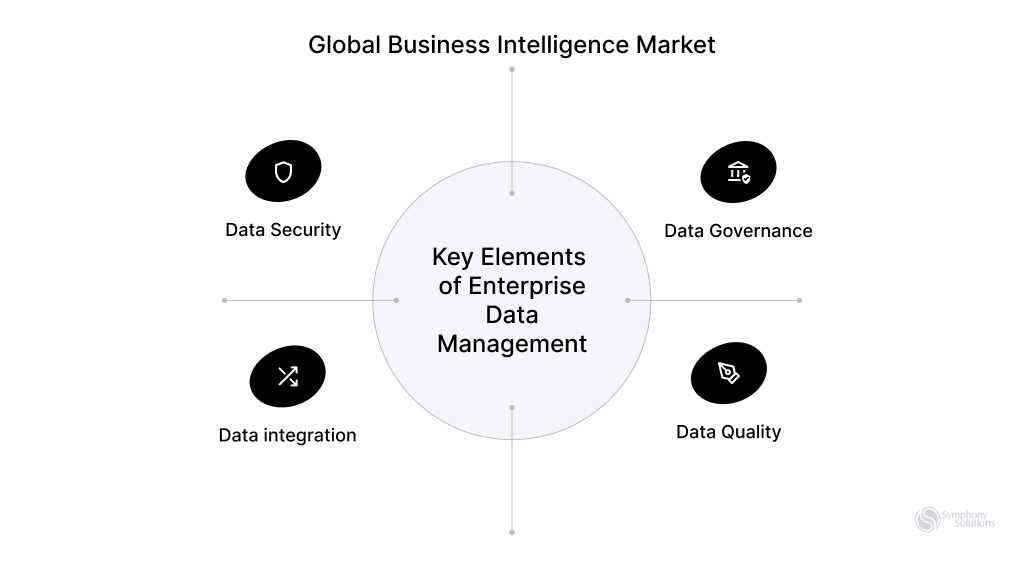
    After meticulous study and thorough analysis, we’ve adopted an AI-oriented approach. This approach encompasses a wide spectrum of AI integration levels, ranging from the introduction of AI services for our clients to the optimization of our delivery processes and the augmentation of our support team’s efficiency. The exploration of AI’s capabilities has unveiled a multitude of opportunities, reinforcing our conviction that embracing AI is a pivotal step toward driving innovation and excellence across all facets of our organization. 

    20 % boost AI

    The initial outcomes have been promising, with efficiency experiencing remarkable growth of at least 20%. The infusion of AI has led to groundbreaking innovations, astonishing our customers with the speed at which we adopt state-of-the-art technology.  

    While we enthusiastically embrace AI’s transformative potential, we also recognize that some of our customers may require more time and understanding before fully embracing this rapid pace of technological adoption. Our approach is rooted in tailoring AI solutions to cater to individual requirements, empowering our customers to leverage AI’s power at their own pace. 

    AI in HR: Empowering the Workforce 

    Modern human resources aren’t just about hiring and firing anymore. As AI becomes integral, it’s reshaping HR from a functional role to a strategic partner in businesses. AI for HR has been a key enabler in optimizing talent management processes. HR professionals are using the technology for recruiting and hiring purposes, as well as onboarding, employee monitoring, learning and much more.  

    From chatbots guiding candidates through job applications to predictive analytics forecasting employee turnovers, the integration of AI tools in HR processes has been transformative. AI-driven recruitment tools have revolutionized candidate sourcing, screening, and matching, significantly reducing the time and effort involved in the hiring process. Moreover, AI-powered analytics have provided invaluable insights into employee performance, engagement, and well-being, fostering a positive work culture and enhancing decision-making. 

    While it offers unprecedented opportunities, we firmly believe in the enduring importance of the human touch in business. Our people are the heart and soul of Symphony Solutions, and we strive to preserve and celebrate their domain expertise, creativity, and emotional intelligence. We understand that certain aspects of business, such as decision-making, empathy, and subtle context understanding, remain uniquely human qualities that AI cannot replace, thus we envision a future where AI collaborates seamlessly with our employees, augmenting their capabilities and leading to more informed, data-driven decisions. 

     Yuliya-Nosal-quote-3.png

    As we continue to unleash the potential of AI, we recognize the need to nurture a workforce that is proficient in understanding and leveraging AI. Upskilling and reskilling initiatives play a vital role in preparing our teams to embrace AI confidently. For instance, earlier this year we have launched AI challenge to encourage our colleagues to find new, creative and efficient ways of applying AI into their daily tasks, share their experience and finding with the rest and ultimately boost the AI engagement within our team and to make sure we address all the latest trends in an effective manner.  

    The Transformative Impact of AI in the Workplace  

    The influence of AI in the workplace extends beyond just automating tasks; it brings about a foundational shift in how businesses operate, perceive challenges, and evolve. Here are some key benefits of artificial intelligence in the workplace: 

    • Problem Solving Prowess: AI’s ability to process vast amounts of data and recognize patterns allows businesses to address issues they didn’t even know existed. It’s like having a supercharged troubleshooting assistant that can foresee and rectify problems. 
    • Eradication of Mundanity: Repetitive, mundane tasks often lead to employee burnout and decreased morale. AI takes over these tasks, ensuring that the workforce remains mentally fresh and motivated. 
    • Operational Stamina: Operational fatigue is a real concern for businesses, especially in sectors like customer support where 24/7 service is expected. With AI handling continuous operations, businesses can maintain peak efficiency round the clock without human exhaustion coming into play. 
    • Unlocking Creativity: With the more routine tasks managed by AI, employees find themselves with more time and mental bandwidth. This paves the way for brainstorming sessions, innovative projects, and the exploration of new avenues that would have previously been sidelined. 
    • Encouraging Continuous Learning: Rather than claiming dominance, AI gently nudges organizations towards a culture of perpetual learning and adaptation. As the technology evolves, it offers opportunities for the workforce to grow alongside, ensuring that the organization keeps pace with the changing landscape. 

    Navigating the AI Challenges 

    Embracing AI’s transformative power does require a level-headed understanding of its potential pitfalls. And it is equally important for the AI adopter to be aware of the challenges and concerns associated with adopting AI in the workplace: 

    • Inherent Biases: While AI is often seen as an unbiased mathematical model, its decisions and actions are only as neutral as the data fed into it. There have been unsettling instances where AI systems, perhaps unintentionally, perpetuated existing biases. The US health system scenario, where AI interventions led to preferential treatment for white individuals, serves as a stark reminder. Similarly, the incident where an AI transformed an Asian woman’s image to resemble a white woman when tasked with producing a ‘professional’ photo emphasizes the need for vigilance against such biases. 
    • GDPR and Data Privacy: With great power comes great responsibility. AI’s capability to process and analyze vast amounts of data makes GDPR compliance indispensable. Organizations need to ensure that they’re not only using AI responsibly but are also adhering to global data protection standards. A misstep here doesn’t just result in financial penalties; it can erode trust and tarnish the organization’s reputation. 
    • Lack of Explainability: One of the criticisms often levied against complex AI models is their “black box” nature. It’s not always clear how these models arrive at a specific decision, making it challenging to justify or correct their actions. 
    • Over-dependence: The ease and efficiency brought by AI can be seductive. However, over-reliance on automation without human oversight can lead to unexpected errors or blind spots. Striking a balance between AI and human intervention is crucial. 
    • Ethical Quandaries: Beyond the tangible challenges, AI often ventures into ethical grey areas. When an AI makes a decision, who is responsible for it? How do we ensure AI respects human rights? These are questions that don’t always have straightforward answers. 

    The Need for Critical Thinking and Responsible Use of AI 

    It is essential to understand that neither humans nor AI can guarantee a 100% accurate result. As we harness the potential of AI, critical thinking and responsible use of this technology become indispensable skills in today’s world. 

    While AI significantly enhances productivity and performance, it is vital to cherish domain expertise, as AI is still a tool and cannot replace human decision-making and empathy. Professions involving subtle contextual understanding, emotions, and human connections are challenging to automate through AI in the foreseeable future. 

    A Glimpse into the Future: Evolving Roles in the AI Landscape 

    The ongoing march of AI into various sectors, especially the workplace, is impossible to ignore. While discussions often veer towards the potential job losses due to AI, there’s a more optimistic side to this narrative. New roles are emerging, adapting to the demands of an AI-driven world. These roles reflect a future where AI and humans collaborate, optimizing processes while keeping ethical considerations at the forefront. 

    Future Capabilities of AI in HR and the Workplace 

    The future holds immense potential for AI. Continuous advancements promise more integrated and intuitive AI tools. Some of its most interesting potential capabilities include:  

    • Hyper-personalized Employee Experience: Future HR systems, powered by AI, will be able to cater to individual employees in an unprecedented manner. From tailor-made training modules based on an individual’s learning curve to understanding their well-being and stress levels, AI will revolutionize the employee experience. 
    • Proactive Problem-Solving: With AI’s predictive analytics capabilities, HR and other workplace departments will be able to anticipate challenges and address them proactively, be it in team dynamics, project management, or even financial forecasting. 
    • Augmented Decision Making: While decision-making has traditionally relied on experience and intuition, the future will see AI offering data-driven insights to augment these decisions, ensuring they are both intuitive and empirically sound. 

    Emerging Roles in the AI Ecosystem 

    The integration of AI into the workplace is leading to the evolution and introduction of roles that might have seemed like science fiction a decade ago. Here are some notable ones: 

    • Chief AI Officer: This C-suite role will be pivotal in integrating AI strategy with business objectives. They’ll oversee AI initiatives, ensuring alignment with the company’s vision and values. 
    • Prompt Engineer: As AI models become more sophisticated, crafting the right prompts will be crucial. These professionals will ensure that AI interactions are streamlined, effective, and optimized for desired outcomes. 
    • Bias Specialist: Bias in AI is a pressing concern, and this role will focus on identifying, addressing, and mitigating any biases in AI systems. They’ll ensure that AI applications are equitable and fair. 
    • AI Ethics Manager: Beyond just biases, AI poses a slew of ethical questions. An AI Ethics Manager will work to address these concerns, ensuring that the company’s AI initiatives remain within ethical boundaries. 
    • AI Trainer: As AI systems continue to learn and adapt, they’ll need guidance. AI Trainers will play a role in “teaching” these systems, refining their learning processes, and ensuring they align with human values. 

    The transformation triggered by AI is immense, yet it’s filled with opportunities. The development of these roles underscores an essential fact: the future isn’t about AI vs. humans; it’s about AI and humans. Together, they’ll forge a workplace that’s efficient, innovative, and conscientious. The dawn of this new era isn’t just about technological prowess but about harnessing that prowess in ways that respect and uplift humanity. 

    Conclusion 

    AI is revolutionizing the workplace, unlocking tremendous potential while presenting challenges that demand thoughtful consideration. Symphony Solutions’ journey into the world of AI is a testament to the positive impact it can have on productivity and innovation. Embracing AI responsibly and nurturing domain expertise will be key to ensuring a harmonious blend of human and AI capabilities. As we embrace the future with the power of AI, we should keep the standards of critical thinking and responsible use of AI in this fantastic landscape of possibilities. 

    FAQs

  • Database Vs. Data Warehouse: A Comparative Review 

    Database Vs. Data Warehouse: A Comparative Review 

    In 2020, we collectively created a mind-boggling 64.2 zettabytes of data, and by 2025, we’re looking at a number close to 180 zettabytes. That’s a lot of selfies, spreadsheets, and sensor readings! As you can imagine, sifting through this data mountain is a huge task for businesses today. Thankfully, we’ve got two trusty tools by our side: databases and data warehouses, which help keep our digital world organized and insightful.  

    Databases support daily operations, orchestrating nearly every business function. In contrast, data warehouses offer analytical capabilities to discern trends, forecast future developments, and extract valuable insights. Both are indispensable, but they serve different purposes and possess distinct features. 

    So, how is a data warehouse different from a database? How are they similar? Where do they diverge?  

    In this review of a data warehouse vs. database, we will delve into the intricacies of these two technologies, exploring their functions, structures, uses, and how they drive efficiency, innovation, and strategic growth. Let’s begin by looking at the importance of using these technologies. 

    Why Use a Database System?  

    A database system enables organizations to store, retrieve, and manipulate data in real-time, leading to enhanced business outcomes. Consider this storage solution for the following reasons: 

    • Ensures data security through regulated access. 
    • Supports concurrent data access by multiple users. 
    • Offers diverse techniques for data storage and retrieval based on business needs. 
    • Provides robust protection against unauthorized access. 

    Why Use a Data Warehouse?  

    why use a data warehouse article

    When comparing data mart vs data warehouse, the latter offers a more robust centralized repository for storing, managing, and analyzing voluminous historical data sets, as well as present business information to drive BI activities. Here’s why you should use a data warehouse:  

    • Centralizes critical business information from various sources. 
    • Separates transactional databases from analytics and reporting tools, enhancing the performance of both. 
    • Saves time when integrated with the cloud, granting business teams remote access to information. 
    • Stores vast historical data for detailed analysis and future predictions. 
    • Reduces turnaround time for BI analysis and reporting, allowing teams to focus on high-value tasks. 

    Functions of a Database vs Data Warehouse  

    If you’re new to data management, you might wonder, “Is a data warehouse a database?” Well, while both systems are essential in overall business information management, a subtle difference between DBMS and data warehouse lies in their primary functions and purposes:  

    Database  Data Warehouse  
    Concurrency: databases facilitate real-time transaction processing, allowing multiple users to access and modify business information at the same time.  Historical Analysis: stores historical events to aid in future trends analysis and period comparison.  
    Security: databases come with robust access control features to guarantee data safety and integrity.  Complex Queries: specifically designed for complex queries that extend to aggregating information from multiple dimensions.  
    Data Storage: a database can store and organize structured business information efficiently.  Data Integration: gathers and consolidates information from multiple sources into a centralized repository for future analysis.  
    Quick Retrieval: users can easily access and retrieve specific records using swift query languages, such as SQL.  Aggregated Summaries: breaks down voluminous data sets into operational transactions for BI reporting and analytic applications.  

    Differences Between a Database and Data Warehouse  

    While both databases and data warehouses offer centralized storage, they differ in terms of data sources, structure, usage, processing, performance, and maintenance. 

    Data Sources  

    Databases are mainly involved in gathering structured and unstructured information from the operational systems that power an organization’s day-to-day processes. This can be real-time transactional data from sources like financial transaction logs, customer relationship management software (CRM), sales records, or incoming inventory.  

    Conversely, data warehouses focus on integrating structured historical information from disparate sources, including flat files or databases used by different departments across the organization. The goal of virtual data warehousing is to harmonize and consolidate business information over time for future reporting and analysis.  

    Data Structure  

    Information structure in a database follows a predefined schema that enforces rules based on the relationships between tables and entities. To maintain integrity and normalized structures, databases use foreign keys. The foreign keys are also necessary in order to facilitate efficient querying during online transaction processing (OLTP).  

    On the other hand, data warehouses leverage denormalized schema, such as online analytical processing (OLAP), to aid analytical functions rather than transactional efficiency. Prevalent schema designs for data warehouses include a star or snowflake descriptive attributes surrounding fact tables with aggregated metrics. This schema allows quick and seamless complex queries over vast data sets.  

    Data Usage  

    Databases are designed to facilitate real-time access to operational data. This means that they allow businesses to access instant updates upon every interaction with the system. Whether it’s a customer making a purchase, an employee updating inventory, or a manager tracking sales, databases provide immediate access to the information as it changes. This real-time functionality is essential for managing day-to-day operations and ensuring that all parts of the business have access to the most current data. 

    In contrast, data warehouses are geared more toward decision-making and strategic analysis. Rather than focusing on real-time updates, they facilitate extensive analysis of past data or patterns. This can include information spanning years or even decades, consolidated from various sources across the company. Data warehouse users can access this information via dashboards or summarize it in aggregated reports. These reports can be generated through advanced analytics techniques, such as machine learning or data mining, allowing for in-depth insights into trends, forecasts, and opportunities. The focus here is on understanding the bigger picture and making informed decisions that align with long-term goals and strategies.  

    Data Processing  

    Databases support transactional processing, allowing multiple users to execute recurrent read and write operations simultaneously. For this reason, databases operate on the basis of fast response time while maintaining atomicity, consistency, isolation, and durability (ACID) to preserve data integrity as transactions run concurrently in the background.  

    On the other hand, data warehouses process transactions in batches, following an Extract-Transform-Load (ETL) process. This mechanism allows the storage system to extract operational data from multiple sources and transform it into the desired format based on predefined business rules before loading it into the warehouse. The data warehouse, in this case, features a dimensional model that facilitates querying of voluminous data sets on non-real-time occasions.  

    Performance  

    Databases leverage indexes and caching mechanisms to facilitate high-performance access to select subcategories of live operational data. This feature makes the systems ideal for executing transactional workloads that require swift and near-instant responses, say within seconds.  

    In opposition, data warehouses rely on custom indexing strategies to optimize query performance on aggregated data. This is often achieved in tandem with parallel execution plans that run on distributed computing power to guarantee acceptable results, regardless of the time taken, whether minutes or hours. Ultimately, the time taken will depend on the complexity of the historical aggregated data instead of sub-second expectations.   

    Maintenance 

    Databases are associated with routine maintenance tasks to guarantee continuous reliability and availability. This may include ongoing restorations, SQL statements tuning, schema upgrades, index optimizations, and multi-level security implementations. Additionally, thanks to their mission-critical posture, and the need for real-time applications, databases often require around-the-clock monitoring regimes under the supervision of professional database administrators.  

    On the other hand, data warehouses come with fewer maintenance needs, given that periodic updates are implemented alongside scheduled ETL jobs. This allows the administrator to implement iterative tweaks without interfering with the existing data partitions. Moreover, organizations that use data warehouses may not need to retain professional database administrators on a full-time basis unless during infrastructure scaling, which happens occasionally.  

    Comparison Between Database and Data Warehouse  

    While the difference between database system and data warehouse is evident in objectives, performance, and maintenance needs, both systems share a number of similarities, as well as unique features like service level agreements (SLAs). Here is an elaborate comparison between the analytics database vs data warehouse:  


    Database  Data Warehouse  
    Types  While the term database generally applies to OLTP storage applications, systems in this category can be classified into:  –Relational databases: traditional transactional systems that enable random read and write operations, e.g., Excel spreadsheets and CSV files.  –NoSQL databases: focus on providing flexible schema designs that can query both structured and semi-structured with greater efficiency.  Like databases, data warehouses also exist in two main categories, including:  Operational Data Store (ODS): integrates present business transactions for real-time operational applications or instant access.  Enterprise Data Warehouse (EDW): geared toward comprehensive analysis by harmonizing business data from multiple sources into a centralized repository.  
    Service Level Agreement (SLA) SLAs for databases are stringent, given that the systems must meet 99.99% uptime to ensure that data is available in the front-end application in real time.  SLAs are relatively scalable since occasional downtime is inevitable when voluminous data sets are involved. Moreover, data warehouses are separated from the front-end applications, allowing more room for scalability.  
    Optimization Optimized with indexing techniques to facilitate single-point read and write operations.  Optimized with partitioning techniques to break bigger data sets into smaller chunks and subsequently improve data retrieval speed.  
    Data Organization  Data is organized in highly complex tables and joins with meticulous structuring that eliminates duplication. With this relational setting, the system delivers optimal storage and greater processing efficiencies to facilitate sub-second response times.  A denormalized organization that focuses on reporting and analysis rather than quick-hitting transactional applications. This organization also leverages fewer tables and a simpler structure for more user-friendliness.  
    Reporting / Analysis  While databases can support minimal reporting capabilities, they are inherently designed for transactional processing.  Data warehouses feature advanced analytical features alongside built-in dedicated reporting tools to facilitate complex querying, ad-hoc analysis, and multi-dimensional reporting.  

    Similarities 

    • Both solutions offer scalable storage capacity to accommodate a growing volume of data over time.  
    • Both systems allow for the implementation of backup and recovery techniques to ensure the reliable availability of critical business digital assets.  
    • Both systems use SQL to query the data.  
    • Both solutions can store and manage data in the form of tables, columns, views, keys, and indexes.  

    Conclusion: The Importance of Choosing the Right Data Management Solution 

    Understanding the difference between data warehouse and data warehousing is critical for business owners who want to implement effective and future-proof data management solutions that will catapult their companies to unprecedented heights. While databases are geared toward facilitating real-time transactional processing with structured schemas, multiple sources, ongoing maintenance needs, and swift performance requirements, data warehousing enables in-depth analysis of historical aggregated data from multiple sources. The concept utilizes denormalized structures alongside prolonged batch-oriented ETL processes and optimal query performance. By taking all these factors into consideration, you can weigh the pros and cons of data warehouse vs relational database to determine the storage strategy that complements your overarching business goals, needs, or use cases.  

  • AI for Startups: Tapping into Limitless Potential 

    AI for Startups: Tapping into Limitless Potential 

    Artificial Intelligence (AI) has recently emerged as a game-changer for today’s startups. By replicating human reasoning and utilizing data-driven insights, it’s setting the stage for a fresh wave of business innovations and pioneering services. 

    Currently, around 35% of global companies are already using AI-powered tools, and an additional 42% are exploring future implementation. Notable startups already leveraging AI include Zest AI (formerly Zest Finance) in the financial sector, Casetify with its AI-driven phone case designs, and Babylon Health, a pioneer in digital health services. 

    As AI tools become more accessible and cost-effective, they’re unlocking vast potential for businesses in diverse sectors. In this piece, we’ll uncover the profound influence of AI on startups, highlighting its pivotal role in spurring innovation and propelling growth in the modern business arena. 

    Read on! 

    AI for Startups: How is AI used in Startups? 

    Here are some of the game-changing possibilities it brings to these budding enterprises. 

    Compete with Large Organizations 

    AI levels the playing field, enabling startups to rival established companies. Take the e-commerce sector: by harnessing AI and big data, startups can deeply understand their customers, offering tailored experiences akin to major retailers, enhancing both satisfaction and loyalty without the need for extensive resources. 

    Forbes research indicates that the fusion of AI and big data can automate a staggering 80% of manual tasks, 70% of data processing, and 64% of data collection. This automation not only reduces operational costs but also accelerates processes, allowing startups to operate at a scale and efficiency previously reserved for larger corporations. Additionally, armed with advanced AI tools, startups can extract valuable insights, positioning themselves for success in competitive markets. 

    Decision-Making with AI-Driven Analytics 

    AI-driven analytics are pivotal for startups, guiding them toward data-informed decisions. By sifting through extensive data to discern patterns and trends, AI tools equip startups with actionable insights and foresight. Such insights empower startups to strategize effectively, pinpointing market opportunities, fine-tuning pricing, and enhancing sales and demand predictions 

    AI-driven decision-making is also revolutionizing how startups approach marketing. By tapping into the advanced AI capabilities of tools like Semrush, Frase, and Market Muse, startups can make data-informed choices. They can ensure that their marketing strategies are not just intuitive but also rooted in data, giving them a distinct advantage in a competitive landscape. 

    Customer Service 

    AI offers a dynamic range of customer service tools, from chatbots and AI assistants to predictive analytics that curates personalized recommendations. These tools enable startups to foster deeper customer engagement. For instance, chatbots efficiently manage routine queries in real-time, allowing human staff to focus on more intricate issues. 

    Notable AI chatbots include: 

    • GPT-3 by OpenAI: Generates human-like text based on input, versatile for various tasks. 
    • Watson Assistant by IBM: Business-focused, understands context, and can switch languages. 
    • Mitsuku: Known for engaging conversations, multiple-time winner of the Loebner Prize. 
    • Replika: A “personal AI friend” designed for deep, meaningful chats. 

    While traditional chatbots follow preset rules and responses, advanced AI chatbots, such as Symphony’s BetHarmony, harness AI and Natural Language Processing (NLP) to offer a more human-centric interaction. These bots evolve with each interaction, refining their responses and adeptly navigating intricate dialogues. 

    Improve Productivity Levels in the Workplace 

    AI serves as a powerful ally for startups grappling with resource and manpower constraints, enhancing workplace efficiency. Take AI-powered virtual assistants, for instance: they manage administrative duties, set appointments, and conduct preliminary data analysis, lightening the load for human staff. 

    AI may also boost productivity for start-ups by enhancing collaboration and refining remote work dynamics. By streamlining communication and task management for distributed teams, AI tools ensure consistent efficiency regardless of geographical barriers. Additionally, the infusion of AI in creative processes, such as generative design software, accelerates ideation and innovation. In essence, the integration of AI not only streamlines operations but also propels startups to achieve more in less time. 

    To Stay Ahead of the Competition 

    AI is essential for startups seeking a competitive edge. It swiftly spots real-time trends, ensuring precise sales and demand predictions. With predictive financial modeling, businesses refine their strategies, positioning themselves to seize market opportunities. Moreover, AI tools proactively scan the digital realm, notifying businesses of competitors’ actions and emerging market trends. 

    Recruitment Activities 

    AI-driven recruitment tools empower startups to enhance their hiring by pinpointing top candidates, streamlining processes, and minimizing bias. They can sift through resumes, screen applicants, and even facilitate preliminary interviews, conserving both time and resources. Consider a few scenarios below: 

    • Advanced Matching Algorithms 

    AI tools go beyond keywords, analyzing the entire resume for a holistic match. 

    Example: A startup might find a “data storyteller” suitable for a “data analyst” role due to AI’s nuanced understanding. 

    • Bias Minimization 

    AI can ignore demographic details, focusing only on qualifications. 

    Example: John and Aisha are assessed solely on their tech skills, not their backgrounds. 

    • Behavioral Analysis 

    AI evaluates video interviews for verbal and non-verbal cues. 

    Example: Sarah’s problem-solving answers and confidence might lead AI to recommend her for a leadership role. 

    • Continuous Learning 

    These tools refine their algorithms with every hire. 

    Example: Phil, ZipRecruiter’s AI, might prioritize certain soft skills for customer roles after observing their importance in past hires. 

    Furthermore, AI chatbots can address common queries and offer initial screenings, elevating the recruitment experience. 

    Artificial Intelligence Tools for Analytics 

    AI-powered analytics tools can help startups leverage big data without committing huge resources. Crayon, for example, tracks competitors’ digital data, including product and marketing language, providing actionable insights. Google Analytics (GA4) offers SEO data and website performance insights. Mentionlytics tracks business mentions, competitors, and industry. Tellius automatically analyzes data and offers intelligent discoveries.  

    These tools provide startups with actionable information so that they can optimize operations, enhance customer experiences, and discover new business opportunities.  

    Programmatic Advertising with AI 

    AI-powered programmatic advertising is a game-changer for startups. It automates advertising campaigns, pinpoints specific audiences, and tweaks ad placements on-the-fly. By analyzing user behavior, preferences, and demographics, machine learning ensures ads are tailored to those most likely to engage. The result? More bang for your advertising buck, with enhanced campaign effectiveness, reduced costs, and a boosted ROI. For startups eager to dive in, many digital marketing platforms offer user-friendly interfaces and tutorials to set up and manage AI-driven programmatic advertising with ease. 

    AI for Pitch Decks and Presentations 

    AI-powered tools are also being used to enhance startups’ sales and marketing efforts. These tools can analyze data from multiple sources, generate insights, and create visually appealing pitch decks and presentations. Tools like Canva, and Haiku Deck can help startups create compelling narratives that resonate with investors, potential clients, and other stakeholders.  

    Natural Language Processing (NLP) algorithms can assist in creating compelling content by suggesting improvements, optimizing language, and ensuring clarity and coherence. 

    By leveraging AI in their pitch decks and presentations, startups can increase their chances of securing funding, partnerships, and business opportunities. 

    What Should You Look for in AI Tools for Startups? 

    When considering AI tools for startups, there are several key factors to keep in mind. They include: 

    Ease of Use: Opt for tools for startups with user-friendly interfaces and intuitive controls to facilitate quick adoption by non-technical users. 

    Training and Support: Ensure the provider offers comprehensive training and reliable customer support for effective implementation. 

    Integration: Choose tools that seamlessly integrate with existing systems and software to enable smooth data flow and analysis. 

    Scalability: Select tools that can handle increasing data volume and adapt to your startup’s growing needs. 

    Price: Evaluate cost structures, including upfront fees, subscriptions, and additional charges, to strike a balance between affordability and tool capabilities. 

    10 Best AI Tools for Startups and Entrepreneurs 

    image-article-ai-for-startups

    There are hundreds of tools startups can leverage to optimize their business. Here, we’ll look at some of the best AI tools for small business. 

    ChatGPT: Developed by OpenAI, ChatGPT, one of the top AI tools for business, is an advanced language model that excels in explaining complex topics. It can also help in marketing strategy, article creation, and text summarization. Plus, it can tackle interview questions and support app development, demonstrating its varied talents. 

    ClickUp: ClickUp is a project management tool that combines AI functionalities to streamline task management, collaboration, and time tracking. With features like intelligent alerts, smart suggestions, and automated processes, startups can identify task automation opportunities, boost productivity and stay organized.  

    DALL·E 2: This AI tool, also created by OpenAI, allows startups to generate unique images from textual descriptions. DALL·E 2 leverages deep learning models to create stunning visuals, making it ideal for businesses in creative industries.  

    Grammarly: Grammarly enhances written communication by detecting grammar, spelling, and punctuation errors. It ensures that startup content is error-free and presents a professional image to customers. 

    Jasper Chat: Jasper is an AI-driven tool that automates routine interactions and provides intelligent chat support. Startups can use Jasper AI to handle inquiries, resolve issues, and generate business ideas.  

    Lumen5: Lumen5 uses AI to transform text into engaging videos. Startups can convert blog posts or articles into visual content, catering to audiences that prefer video format. 

    Otter AI: Otter AI is an AI transcription tool that automatically transcribes and organizes audio recordings. This tool can be used to generate meeting transcripts, capture important ideas, and search audio content easily. 

    Tome: This tool uses AI to generate compelling presentations from text inputs quickly. It also integrates with DALL·E 2 to produce unique AI images to pitch ideas and make presentations. 

    Upmetrics: Upmetrics is an AI business planning tool that helps startups create comprehensive business plans, financial projections, and investor-ready pitch decks.  

    Zoho Zia: Zoho Zia is an AI-powered assistant that enhances Zoho’s suite of applications. It provides insights and suggestions and automates tasks across various business functions, aiding startups in managing their operations effectively. 

    How to Implement AI for Startups 

    Implementing AI for startups can be beneficial, but it can also be a complex undertaking. To achieve successful AI integration for businesses, follow these steps: 

    Identify AI Use Cases: Start by recognizing the aspects within the startup where AI can make a substantial impact. This may involve AI business process automation, personalized customer experiences, or resource optimization. Prioritize these cases based on their feasibility and potential value. 

    Research Solutions: After pinpointing the use cases, research artificial intelligence for startups catering to your specific requirements. Consider factors such as cost, scalability, integration ease, and compatibility with existing systems. Explore both off-the-shelf AI tools for businesses and tailor-made solutions. 

    Get Buy-In From All Stakeholders: Obtain support from all stakeholders, encompassing executives, managers, and employees. Communicate AI benefits and alignment with startup goals. Address concerns and misunderstandings to foster a positive outlook toward AI adoption. 

    Identify, Collect, and Clean the Required Data: AI works best with accurate, relevant data for training and decision-making. Identify essential data sources, such as customer data, sales records, or production data. Ensure data accuracy, completeness, and suitable formats for analysis. 

    Select Top AI Tools Based on Your Identified Use Cases: Opt for AI tools for businesses that align with your use cases and research findings. Consider capabilities, user-friendliness, compatibility, and technical expertise requirements. 

    Pilot Testing: Before full integration, conduct pilot tests to assess AI tools’ viability and effectiveness. Begin with a small-scale implementation, monitor results, and adapt based on feedback. 

    Integration: After successful pilots, proceed with integrating AI into startup operations. Collaborate with IT teams or consultants for seamless integration, either through existing systems or custom AI solutions for entrepreneurs. 

    Employee Training: Provide comprehensive training for employees to use AI tools effectively. Cover technical aspects, practical usage, and best practices. 

    Iterate and Improve: AI implementation is an ongoing process. Continuously refine AI systems based on user feedback, changing needs, and technological advancements. Assess impact regularly and adjust for maximum benefits. 

    By following these steps, startups can seamlessly implement AI, unlocking its potential to drive growth, efficiency, and innovation. While adding AI to a startup can feel challenging, the benefits are huge. Using AI can help startups lead in new ideas and give them what they need to do well in a tough market. It’s not just about keeping up with others; it’s about leading the way. 

    Ready to harness the game-changing potential of AI for your startup? Discover how Symphony Solutions can be your trusted partner in this AI journey. Dive into our AI services today! 

    Challenges and Risks in AI Implementation 

    image-article-ai-for-startups

    While it is true that artificial intelligence for startups can significantly improve business processes, it comes with its fair share of risks of challenges. Some of them are: 

    Data Privacy and Security Concerns 

    Data breaches, unauthorized access, and misuse of data are potential risks that can erode public confidence in AI technologies. To combat these issues, organizations must adopt stringent data protection protocols. Additionally, it’s crucial for startups to adhere to data protection regulations like GDPR or HIPAA, depending on their industry and location, to ensure they’re not only safeguarding user data but also operating within legal boundaries. 

    Ethical Considerations in AI Development and Deployment 

    Artificial intelligence is designed to mimic human intelligence, so it can make autonomous decisions that have an impact on individuals and society. Decisions like this raise ethical questions. Addressing these ethical challenges is crucial to ensuring responsible AI development. 

    Overcoming Implementation Challenges for Startups 

    Limited resources, lack of expertise, and high costs can make it challenging for startups to adopt AI technologies. Collaborating with other organizations, leveraging open-source AI tools for small businesses, and seeking government support can help startups overcome these hurdles and successfully implement AI solutions. 

    Ensuring AI Compliance with Regulations and Standard 

    As AI for entrepreneurs becomes more integrated into the business world, guidelines and frameworks are needed to govern its use. Regulations can help prevent misuse of AI, protect customer privacy, and ensure transparency and accountability. 

    Conclusion 

    In today’s rapidly evolving business ecosystem, Artificial Intelligence has proven to be an indispensable ally for startups. With its power to drive innovation, optimize operations, and deliver personalized customer experiences, AI is indeed the game-changer that many startups have been waiting for. However, harnessing its full potential requires a nuanced understanding and the right expertise. 

    Symphony Solutions stands at the forefront of this AI revolution, providing startups with the guidance, tools, and solutions they need to truly thrive in this AI-centric era. By partnering with us, startups can navigate the intricate landscape of AI with confidence, ensuring they leverage the technology effectively while adhering to ethical and regulatory standards. 

    Ready to transform your startup’s trajectory with AI? Symphony Solutions is here to guide you every step of the way. Reach out to us today and let’s explore the limitless possibilities that AI offers for your business. 

    FAQs

  • How to Choose the Right iGaming Software Development Company   

    How to Choose the Right iGaming Software Development Company   

    The iGaming industry is exploding, and it’s not hard to see why – its revenue surpassed $63.53 billion last year and projected growth is expected to reach a staggering $102.97 billion by 2025. No doubt, the iGaming industry is a massive money-making machine, and there’s never been a better time to invest. However, without the right iGaming software development company, your chances of success are slim.   

    In the iGaming industry, having the right software development partner can be the difference between raking in millions or falling flat. Don’t risk it all by choosing the wrong one. Our guide is packed with expert insights to help you make an informed decision and pick the perfect iGaming partner. Read on! 

    Market-Size-Outlook-USD-Billion

    Types of iGaming Services   

    As entrepreneurs and businesses aspire to make their mark in the lucrative iGaming domain, the choice of a software development partner becomes paramount. Here’s an enriched guide to aid you in this pivotal decision: 

    Custom Application Development 

    The ideal software development company should not only be proficient in crafting applications but should excel in creating custom solutions tailored for diverse platforms like iOS, Android, or hybrid systems. In the age of smartphones, a user-centric approach is non-negotiable. The company should emphasize creating a digital journey that’s optimized for performance, responsive across devices, and resonates deeply with the evolving preferences and expectations of contemporary gamers. 

    QA and Testing 

    In iGaming, a minor glitch can translate to significant revenue loss, the importance of rigorous Quality Assurance cannot be overstated. Your prospective partner should transcend basic functionality checks. They should be invested in delivering an impeccable, glitch-free user experience, employing a judicious blend of manual evaluations and cutting-edge automated tools. This ensures every game, transaction, and user interaction stands up to the highest standards of quality and security. 

    Cloud Integration and DevOps 

    The future of iGaming lies in the seamless integration of Cloud technologies with DevOps practices. A company that understands cloud application modernization and harnesses this synergy will ensure swift application deployment, unparalleled scalability, and robust security. Such an approach is vital to cater to the unpredictable demands of real-time gaming and to support a burgeoning global user base without hiccups. 

    Infrastructure Managed Services 

    The iGaming industry is rife with financial transactions, making platform integrity and security non-negotiable. A forward-thinking partner will prioritize relentless monitoring, employ sophisticated threat detection algorithms, and adopt preemptive mitigation strategies. This proactive approach ensures a secure, trustworthy gaming environment, which is essential to retain user trust and loyalty. 

    Data & Analytics 

    In the data-driven digital age, insights gleaned from analytics are the bedrock of strategic decision-making. The right software development company will not just collect data but will leverage advanced analytical tools to dissect user behavior, anticipate market shifts, and refine platform offerings. Such a data-centric approach ensures that your platform remains attuned to user preferences and market trends, positioning you several strides ahead of competitors. 

    Digital Marketing Orchestration 

    A stellar iGaming platform, without adequate visibility, is akin to a diamond buried deep underground. Your software development ally should possess expertise in orchestrating comprehensive digital marketing strategies. This includes mastery in SEO, innovative content marketing campaigns, and proactive social media outreach. The goal is to amplify your brand’s digital footprint, ensuring it captures the attention of potential customers and retains existing ones. 

    Agile Transformation & Adaptation 

    The iGaming industry is characterized by its rapid evolution. An ideal software partner will champion agile development methodologies,  This approach fosters a culture of continuous feedback, iterative refinement, and innovation, ensuring your products remain at the forefront of the iGaming revolution. 

    Innovative Design Services 

    User engagement in iGaming is significantly influenced by the right design services. The right partner will prioritize creating immersive digital landscapes that are not only visually appealing but also intuitively functional. From user-friendly interfaces to captivating game visuals, every design element should work in harmony to offer users an unparalleled gaming experience. 

    Pioneering AI & NLP-Driven Solutions 

    The integration of Artificial Intelligence and Natural Language Processing is reshaping the iGaming user experience. Your chosen software company should be at the forefront of this revolution. From NLP-infused chatbots that offer real-time, personalized user support to AI-powered tools that enhance gameplay and provide tailored recommendations, the aim is to craft a futuristic and immersive gambling ecosystem. 

    At Symphony Solutions, we recognize the intricate dynamics of the iGaming industry, a vibrant intersection of technology, entertainment, and business. As pioneers in this domain, we offer a comprehensive suite of all the above services, each tailored to help businesses stand out and thrive in this competitive landscape. 

    How to Choose the right Engagement Model 

    Different projects have varied requirements, and the choice of engagement model can significantly influence the project’s trajectory and outcome. Let’s delve deeper into these models to understand their unique offerings and benefits: 

    Managed Service 

    This SLA based model provides flexibility, ease of budgeting and peace of mind, ensuring you have Symphony as a partner to look after your product or platform, our services scale efficiently and allow you to focus on your core business. 24/7 Managed Infrastructure support is a great example of one of our service offerings. 

    Managed Team & Managed Augmentation 

    This model is tailored for ventures that already have a foundational framework in place but require specialized expertise to elevate their project. By integrating a dedicated team of specialists into the existing structure, businesses can harness collective knowledge and skills. It’s about creating a harmonious blend of in-house talent and external expertise, ensuring that the project benefits from diverse perspectives and specialized acumen. The synergy achieved through this model accelerates the development process, ensuring that the iGaming platform is both innovative and reliable. 

    Staff Augmentation 

    Imagine having a dedicated, highly skilled team that seamlessly integrates with your existing operations, working in your time zone, and understanding your business culture. That’s what we offer at Symphony Solutions. We specialize in team augmentation, providing top-tier talent from regions close to your business. Our services not only reduce the overhead costs associated with hiring and training but also eliminate the challenges of language barriers and time zone differences. We’re not just a service provider; we’re your strategic partner, committed to driving your business forward with efficiency, innovation, and agility. With Symphony Solutions you get the right talent, at the right time, in the right place   

    Factors to Consider When Choosing an iGaming Development Company   

    • Reputation: Prioritize companies with strong reputations. Check reviews on platforms like Google, Trustpilot, and Clutch. Positive feedback and resolved complaints highlight a dependable company. 
    • Company Portfolio: Examine their portfolio for industry recognition like EGR B2B Awards or Global Gaming Awards. Access their case studies to assess their technological prowess and impact in the iGaming sector. 
    • Scope of Service: Opt for a full-service agency that manages the entire project lifecycle. With the iGaming market growing rapidly, a comprehensive service offering ensures efficiency and streamlined management. 
    • Cost: Choose a company with transparent pricing and no hidden fees. Ensure they deliver high-quality products that are cost-effective in the long run. 
    • Fast Turnaround: Time-to-market is crucial. Select firms that guarantee quick delivery without sacrificing quality, leveraging methodologies like Agile or Scrum. 
    • Development Process: A structured development process is essential. Companies should emphasize swift prototyping, iterative design, and involve all stakeholders for optimal outcomes. 
    How to Choose the Right iGaming Software Development Company

    Custom iGaming applications Symphony Solutions Can Help You Create 

    At Symphony Solutions, we don’t just create iGaming applications; we set industry benchmarks. Our unparalleled expertise and innovative approach position us as the undisputed leaders in the iGaming domain. When you collaborate with us, you’re not just getting a service; you’re securing a competitive edge. Here’s a glimpse of the game-changing iGaming solutions we confidently deliver: 

    iGaming Platform Development 

    Your vision, our expertise. We collaborate closely with you to design iGaming platforms that are not just state-of-the-art but also resonate with your brand’s ethos and audience preferences. Every feature, every interface is meticulously crafted to ensure it aligns with your unique vision and objectives. 

    eSports Platform Development 

    eSports is a dynamic realm, and a one-size-fits-all approach simply won’t do. Our custom eSports platforms are the result of deep collaboration, understanding your target audience, and integrating features that offer an unparalleled user experience, setting your platform apart in a competitive landscape. 

    Fantasy Sports Applications 

    Dive into the world of fantasy sports with applications that are truly yours. From the design to the gameplay mechanics, every element is tailored to offer a unique experience that reflects your brand’s identity and appeals to your audience. 

    Sports Betting Software Development 

    Elevate the betting experience with custom solutions that cater to specific sports and audiences: 

    • Football Betting Software: Customized to cater to football enthusiasts globally, integrating real-time odds, diverse betting options, and a user interface that’s distinctly yours. 
    • Horse Racing Betting Apps: A bespoke experience for the elite horse racing aficionados, featuring tailored live streaming, betting avenues, and more. 
    • Cricket Betting Apps: Crafted for the passionate cricket community, our custom apps offer features, streaming options, and betting avenues that are truly one-of-a-kind. 

    Tournament Software Development 

    Organize tournaments that stand out. Our custom tournament software development, whether for football, horse racing, or cricket, are designed in collaboration with you, ensuring they offer unique features, real-time updates, and an integrated betting platform that’s distinctly tailored to your brand. 

    In essence, Symphony Solutions is not just a service provider; we’re your partners in innovation. Our commitment to crafting bespoke solutions ensures that your iGaming platform is not just unique but also a trailblazer in the industry.  

    iGaming and Casino Software Development Success Stories   

    Betting and casino companies looking for iGaming platform development services often turn to Symphony Solutions, thanks to the company’s agility and innovative approach toward projects. Over the last few years, we have delivered powerful, next-gen online gaming products that deliver immersive experiences to target audiences. Here are some of our iGaming platform development success stories.   

    Slot Game Application Development and Digital Experience Design   

    BetWinner approached Symphony Solutions, seeking to extend its desktop-based slot games to mobile applications. After carefully analyzing the project requirements, we agreed to deliver the game design and flow, animated visuals, and generic game templates.  

    Ultimately, we built a digital solution that allows BetWinner to integrate the slot game into Android and iOS applications. The newly designed digital experience is also the best in class and caters to custom user needs for a wider reach. Follow this link to read more about the iGaming development case study.   

    Betting Platform Performance Improvement   

    Another iGaming development case study by Symphony involved Ladbrokes Coral, a UK iGaming giant behind The Grand National—the country’s number one betting event. The client approached us to boost the front-end and back-end performance of an existing betting platform and implement agile transformation. The goal was to increase annual numbers for prominent betting sports betting events in the year.   

    Within three months, our iGaming software development company augmented the client’s team with dedicated performance engineers to perform several tests and optimize the front end for decreased page load time. To distribute the back-end load, the team deployed a scalable solution on AWS before implementing a monitoring system to watch over the platform’s performance and capacity. To date, the client’s platform can handle over 25,000 transactions per minute with no downtime.   

    What to do Before You Choose for an iGaming Software Development Company

    Here are the steps to follow before you approach an iGaming software development company:   

    Develop a Comprehensive Business Plan

    A well-structured business plan provides a clear roadmap for your project, ensuring your iGaming platform development partner aligns with your vision and goals. According to a study by Palo Alto Software, entrepreneurs with a formal business plan are 2.5 times more likely to obtain funding for their projects.  

    Identify Market Gaps and Opportunities  

    Understanding the iGaming landscape and identifying underserved niches enables you to create an outstanding iGaming software development company  with a unique and more attractive value proposition. The global online gambling market is projected to reach $127.3 billion by 2027, with a compound annual growth rate (CAGR) of 11.5% from 2020 to 2027, showcasing the vast opportunities in this growing industry.  

    Establish Key Performance Indicators (KPIs)  

     By identifying and discussing KPIs beforehand, you can streamline your selection process and ensure alignment with a potential iGaming software development company’s capabilities and objectives. KPIs such as project delivery timelines, software quality, user experience, innovation, and return on investment are non negotiable and will serve as benchmarks for assessing the progress and effectiveness of your partnership. In fact, studies have shown that companies that clearly define their expectations and performance metrics are 67% more likely to achieve their strategic goals.  

    Establish a Clear Budget  

    It’s essential to develop a detailed budget that encompasses all anticipated costs associated with the project, such as development expenses, ongoing maintenance, security measures, marketing, licensing, and other operational aspects. By thoroughly outlining your financial plan, you can assess potential partners’ ability to work within your budget constraints while still delivering a high-quality product. This consideration helps prevent unexpected costs, ensures the best value for your investment, and maintains a healthy financial outlook for your business.   

    software development cost estimation

    Assess Talent and Hiring Time

    The caliber of talent and the efficiency in onboarding them can make or break your project. Opt for a company that boasts a rich talent pool, ensuring they have specialists for every aspect of iGaming development. Additionally, gauge their hiring process. A streamlined hiring procedure indicates a company’s commitment to timelines and quality. It’s essential that they can swiftly bring onboard the right experts, whether it’s for game design, backend development, or user experience optimization, to keep the project on track. 

    Examine the Portfolio

    A company’s past projects are a testament to their expertise and capabilities. Dive deep into their portfolio, looking beyond just the number of projects. Assess the complexity of the platforms they’ve developed, the innovation they’ve brought to the table, and the feedback from their clients. A diverse and successful portfolio indicates a company’s adaptability to different project requirements and their ability to deliver tailored solutions that resonate with varied target audiences. 

    The Takeaway 

    With a legacy spanning over two decades, Symphony Solutions stands as a beacon in the iGaming software development landscape. Our expertise, fused with an agile methodology, guarantees a seamless development journey, resulting in a premier digital platforms that captivates global iGaming companies of all sizes. Reach out to discover how we can turbocharge your product, platform, iGaming development, or enhance your application support. Our diverse suite of services is tailored to captivate and expand your customer base. 

  • Considerations, Drivers, and Strategies of a Successful Data Migration Plan  

    Considerations, Drivers, and Strategies of a Successful Data Migration Plan  

    It’s no longer a debate as to whether businesses should migrate their data to the cloud. To date, over 60% of corporate data is stored in the cloud, a twofold increase over the last seven years. For many organizations, drafting and executing a data migration plan from on-premises to the cloud opens a new business world of increased flexibility, optimized operating costs, heightened security, and continuity in the event of a disaster.  

    A data migration plan is an all-around strategy with a clear roadmap on how to move business information from one environment to another. A typical plan highlights the approach and execution, and validates the overall data migration process to ensure a smooth transition. The primary role of creating the plan is to ensure the process of moving data is safe and secure without disrupting normal business operations. But even so,  trusted industry insights reveal that organizations are still struggling with making the transition more effective —only 36% of data migration projects are executed within the forecasted budget, and only 46% turn out to be successful within the set deadline.  

    While it’s commendable that some companies are able to conquer the last mile of data migration and drive desirable business outcomes, these numbers subtly show a dismal success rate. So, how do you create a successful data migration plan from the onset? Here is an in-depth guide on how to conduct a data migration with careful planning. We also highlight prevalent methodologies and the common mistakes to avoid. Let’s dive in.  

    Types of Data Migration  

    migration triggers

    There are three types of enterprise-wide data migration approaches, including:  

    On-Premises to Cloud Data Migration  

    On-premises to cloud data migration is the process of moving business information from the organization’s local infrastructure, such as in-house data centers and servers, to a cloud environment. Implementing cloud migration is a go-to option if your company wants to enhance business agility and flexibility. With your applications and corporate information in the cloud, employees can access important resources from anywhere, facilitating new engagement models, such as remote collaboration.  

    pros of cloud migration

    Moving business information from on-premise storage to the cloud is also a viable approach if you want to attain greater scalability and resource optimization. This is because cloud computing allows your company to scale or cut down storage and computing resources as much as required, depending on the prevailing market demand. Additionally, this translates to switching your business model from capital expenditure to operational expenditure, which can significantly cut operating costs in the long run.  

    Another benefit of migrating corporate data from on-premises storage to the cloud is assured disaster recovery and business continuity. Depending on your cloud partner, you can access robust backup and recovery solutions for mitigating cybersecurity concerns and downtime in the event of a disaster or complete system failure.  

    Cloud-to-Cloud Data Migration  

    While many businesses are in the race to migrate to the cloud for the first time, some companies have been there for years and might consider exploring the prospects of a new service provider. As the name suggests, a cloud-to-cloud data migration approach entails moving unstructured business data from one cloud storage to another. On a small scale, look at it as transferring business files from Google Drive to Dropbox or any other combination of cloud storage platforms.  

    cloud-data-migration

    Implementing a cloud-to-cloud data migration strategy is ideal:  

    • When diversifying or mitigating vendor risk: It makes sense to consider switching to another cloud platform if you want to negotiate better terms and mitigate vendor lock-in risks. Also, you would consider the move if the target service provider offers specialized services that give your business an upper hand over the competition.  
    • When optimizing operating costs or performance: The target service provider you’re eyeing might offer optimized performance features at relatively cost-friendly paid plans, prompting you to switch. Again, the need to negotiate better service-level agreements (SLAs) that are commensurate with the value of your money might also drive you to take this approach.  
    • When meeting regulatory or compliance requirements: You might want to migrate your business data from one region to another within the infrastructure of the same service provider to meet certain compliance and regulatory requirements. This approach is especially viable if your business branches out to a jurisdiction with stringent data governance and sovereignty laws.  

    Cloud to On-Premises Data Migration 

    Cloud to on-premises data migration entails transferring an organization’s digital assets, such as corporate data, business applications, and workloads, from a vendor-owned cloud platform to local infrastructure. While shifting from cloud to on-premises solutions is uncommon in the modern business landscape, you might find the approach to be a viable option in specific scenarios, such as:  

    • Changing business needs: Every business is unique and may undergo changes from time to time. In some cases, the foregoing business need might demand the organization to gain more control over corporate data or applications. And if you want to meet those requirements or customize the infrastructure, moving the data to on-premises might be the suitable approach.  
    • Regulatory compliance: In certain jurisdictions or highly regulated industries, governments and compliance bodies may require organizations to store sensitive customer data or applications on-premises. In that case, migrating from the cloud to local storage will ensure that you comply with these laws and provisions. 
    • Cost optimization: Although switching to a cloud environment offers immediate business benefits like flexibility and scalability, there are some cases where the long-term costs cut into the benefits. And if that’s your present situation, going back to the on-premises infrastructure might translate to cost-saving opportunities.  

    Prevalent Data Migration Methods  

    Another critical aspect of migration planning is choosing the right data migration methodology. While this ultimately depends on the intricate needs of your company and the goal you want to achieve in the long haul, there are basically two options when it comes to data migration techniques. They include:  

    Big Bang Migration 

    Also known as the cut-over approach, Big Bang migration entails moving all business data from the current storage to a new environment in a single process. Owing to the scope of work involved in this technique, it’s important to plan extensively and coordinate effectively for a smooth transition within the shortest time possible. In fact, doing it as fast as possible should be the goal, given that the technique involves shutting down the entire system and operations before implementation.  

    converted system

    Because of this risk, Big Bang migration should be implemented during off-peak hours, such as public holidays or weekends, when you least expect customers to use the system. The risk also makes the technique suitable for smaller organizations that serve a regional clientele base and relatively want to move smaller amounts of data. In other words, it’s not suitable if your business model cannot sustain a complete system downtime at any moment.  

    Trickle Migration 

    As the name suggests, the trickle technique is an approach involving phased or iterative data migration steps. Unlike the Big Bang technique, the trickle migration approach allows you to transfer data in small increments while the business system is still operating and running concurrently with the migration process. The same also applies to IT functionalities, allowing you to migrate gradually over time and make adjustments in the course as much as needed.  

    But while this technique reduces the impact on operations and enhances proactive risk mitigation, it has drawbacks as well. For instance, the costs of maintaining parallel operations in the source system and the target environment while moving data gradually can add up pretty quickly and overrun your budget. You might also have to deal with co-existence complexity when it comes to integration or managing data synchronization. For these reasons, the technique is suitable for enterprise organizations that can’t afford any system downtime.  

    A Step-by-step Process of Data Migration  

    Understanding the data migration process is another critical aspect of successful planning. While this may vary depending on the amount and type of data that you want to transfer, here is a typical process of data migration:  

    Step 1: Identify the Data Format, Location, and Sensitivity  

    The first step involves identifying the type of data that you want to migrate, as well as its current location and level of sensitivity. By having a clear understanding of this information, you can plan for the migration with robust security measures in mind and prevent critical errors from happening during the process.  

    Step 2: Define the Project’s Size and Scope  

    After establishing the properties of the data to be migrated, define the scope of the project, duration, and budget. Establishing clear goals around these parameters will help you plan and execute the migration effectively. It will also help explain the whole process to the non-technical C-level executive and business stakeholders. A data migration plan template can be used to organize these details 

    Step 3: Backup All Data  

    Ensure that you back up all data, preferably in multiple locations, including cloud storage. By doing so, you’ll be able to retrieve original files, especially if you encounter technical challenges during or after the migration. This may include missing, corrupted, or incomplete files. 

    Step 4: Assess the Requirements Needed for Successful Migration  

    A typical process of moving data from a target source to a new environment can be demanding. Assess whether you have all the necessary resources — personnel, tools, and technology – to complete the migration on the first attempt. At this stage, you should determine whether you need to hire experts or acquire third-party tools 

    Step 5: Execute the Data Migration Plan  

    Following your detailed data migration plan, start executing the process by allowing the right system permissions required to extract information from the source and export it to the preparation environment. This will allow you to clean the data and transform it into the required format. Then export the clean data to the target environment and monitor the process throughout to identify and resolve any technical glitches that may arise.  

    Step 6: Test 

    After executing the actual migration, it’s important to ensure that all data was moved from the source to the target environment without any loss of connectivity between the systems involved. To account for this, it will help if you conduct several high-level tests, from the system and unit to volume, batch, and web-based application evaluations.  

    Step 7: Audit, Validate, and Implement Maintenance  

    Even with successful testing results, it’s important to conclude the migration process with a thorough audit of the system to validate whether the project will truly yield the benefits of a cloud-first strategy, such as cloud native development. To validate this, watch out for any missing, incomplete, or corrupted data set and restore the respective files from your backup.  

    Best Practices for Data Migration Planning  

    Now that you understand the typical process of data migration, what are some of the best practices to have in mind before commencing the project? Best practices entail acceptable and industry-recognized guidelines, techniques, or methods developed on the basis of extensive research and proven experiences.  

    To ensure that the process is as seamless as possible, with the highest degree of success, it will help if you:  

    Set Up a Dedicated Team to Manage the Project 

    As noted earlier, data migration can be a complicated process, especially if you intend to move voluminous data sets from legacy system sources. Given the dedication and attention that this project requires, it’s prudent to set up a dedicated team to oversee it from the start to the end. The team can comprise your in-house data engineering experts and any other external specialist required for successful implementation. 

    Backup All Data Before Migration  

    Another best practice for data migration is backup. By backing up the data in multiple locations where you can easily retrieve it, you’ll be assured of business continuity in the event of a disaster or cyberattack. And on top of protecting your information from getting lost during the migration process, backing up the data gives you the luxury of rollback capabilities. This means you can always revert to the pre-migration state and fine-tune the plan in case the first attempt doesn’t go as intended.  

    Raise the Quality Standards of the Data  

    The main reason why you’re migrating from on-premises storage to a cloud environment is probably to enjoy the benefits of the cloud-first approach, such as scalability and advanced data analytics services. However, this won’t be possible if you migrate poor-quality data. With this in mind, it is crucial to identify and rectify any quality inconsistencies before moving the data. This will improve data integrity and overall decision-making processes to help you harness new business opportunities in the future.  

    Establish Data Governance  

    Establishing data governance practices to guide the project during, before, and after migration is important, especially if you’re going to maintain data quality assurance. Data governance enactment also establishes stewardship and agreed-upon responsibilities, ensuring 100% accountability when it comes to risk management and data protection. Moreover, establishing data governance puts you on the good side of regulatory compliance, especially in stringent provisions such as the General Data Protection Regulation (GDPR).  

    Conduct As Many Tests as Needed  

    Lastly, data migration isn’t a plug-and-play tech process, especially if you’re moving enterprise information in iterative phases. To ensure that everything goes as intended, test the migration process at every phase, from planning and design stages and execution and maintenance. The goal is to ensure that all risks are accounted for and the process runs as smoothly as possible.  

    Common Data Migration Planning Mistakes  

    Prevalent mistakes to avoid when creating a data migration plan include:  

    • Not involving business users from the start: Business users should be involved from the onset because they possess valuable insights into the type of data that is set to be migrated, its quality, structure, and level of importance to the organization. If you fail to involve business stakeholders, user acceptance and adoption rates will drop drastically after implementation.  
    • Not preparing your source data: Analyzing the source data for thorough cleaning and preparation streamlines the overall migration process and guarantees data quality in the target environment or system. Inconsistent data preparation will not only result in integrity issues but also extend timelines and increase costs.  
    • Not establishing sustainable governance: Data governance helps you establish the frameworks for overseeing data management, security, and compliance beyond migration. Neglecting sustainable data governance from the onset can result in long-term repercussions, such as security loopholes and data integrity concerns.   
    • Not testing and validating: Testing and validation are critical aspects of data migration planning as they help you identify any potential issues that may jeopardize desired results post-migration. Failure to test the plan, the migration will likely end in data loss, improper data mapping, or extensive database corrupting, ultimately bringing business operations to a standstill.  

    Wrapping Up  

    It’s important for organizations to consider their unique position in terms of data security, compliance, performance, and scalability before creating a comprehensive data migration plan and executing it. Additionally, it’s prudent to seek professional guidance from cloud migration experts, especially if you’re going to avoid common planning and migration mistakes in the first round.  

  • AI for Software Development: Ways It Impacts and What’s the Future  

    AI for Software Development: Ways It Impacts and What’s the Future  

    Artificial Intelligence (AI) is beyond a transformative technology – it is revolutionary. With its advanced capabilities to perfectly mimic and embody human intelligence, as well as perform repetitive tasks autonomously, AI in software development and nearly all other industries is poised to impact the global economy in many ways. Precedence Research forecasts the global AI market to expand at an annual growth rate (CAGR) of 19% between now and 2032, ultimately reaching $ 2,575.16 billion in size.  

    The steady growth and prevalence of AI are driven by the growth of associated technologies that make artificial intelligence potent, such as machine learning (ML). Machine Learning helps AI predict things by finding patterns in big amounts of data. A good example is self-driving cars that adjust to traffic on the go. Thanks to powerful cloud computing, AI can learn faster, like chatbots that instantly understand and reply to people. This is changing many industries in big ways. 

    However, AI isn’t only prevalent in building smarter applications with integrated AI capabilities; it’s a developer’s favorite technology for automating tedious manual processes when coding or testing applications. In this article, we take an in-depth look into the AI tools for software development, their impact on the industry, and the future outlook in terms of the software developer’s role. For instance, will it replace some jobs? Find out below.  

    What is AI Development Software?  

    AI driven software development

    AI development software is a collective name for tools and platforms that empower developers to build, train, and deploy AI-enabled models. Typically, the models built using AI development software can perform a range of high-level tasks, including solving complex problems, analyzing data, enhancing user experience, and making predictions autonomously.  

    Prevalent types of AI development software include:  

    AI Development Platforms 

    Think of AI development platforms as your all-in-one toolkit for AI. They’re software tools loaded with AI features, making it a breeze for teams to whip up AI models. With these platforms, you’ve got everything from AI algorithms to data management tools right at your fingertips. And the cherry on top? You can deploy your applications either in the cloud or on specific devices. It’s all about making the AI development process smooth and efficient. 

    Deep Learning 

    Now, deep learning is like machine learning’s younger, more specialized sibling. It dives deep (pun intended) into training neural networks that have multiple layers. So, instead of manually programming a network for every task, developers can feed it heaps of data and let it learn on its own. It’s a game-changer, especially in areas like Natural Language Processing (NLP) and computer vision. Think text analysis, speech recognition, and even creating images – that’s deep learning in action. 

    Machine Learning (ML) 

    Speaking of machine learning, it’s all about teaching computers to learn from data without us constantly holding their hand. These algorithms are like detectives, sifting through mountains of data to spot patterns and make decisions. There are a few ways ML does its magic: 

    • Supervised ML is like a guided tour, where the computer learns from clear examples. 
    • Unsupervised ML is more of an exploration, where the computer discovers hidden patterns in unmarked data. 
    • Semi-supervised ML is a blend of the two, using both labeled and unlabeled data. 
    • And then there’s Reinforcement ML. Picture it as learning by trial and error, kind of like how we learn from our mistakes. 

    Conversational AI 

    Lastly, let’s chat about conversational AI. It’s all about making computers talk like us. From chatbots to advanced language processing tools, these technologies are designed to mimic human conversation. They can understand emotions, recognize names, and even figure out what a user intends to do. It’s like having a chat with a machine that truly “gets” you. 

    The Impact of AI on Software Development  

    AI impact

    With the revolutionary capabilities of mimicking human thinking and intelligence, AI has had a huge impact on various aspects of a typical software development lifecycle. Here is an in-depth look into how far the impact of AI goes into software development projects:  

    Requirements 

    Typically, software development teams follow various guidelines and requirements in a bid to build a solution that solves specific problems. AI can be used to automate the process of collecting these requirements and guidelines, whether from the foregoing market trends, past user feedback, or multiple sources on the internet. By unraveling patterns and extracting meaningful insights from them, AI enables developers to base their projects on more accurate and user-centric requirements.  

    UI/ UX Design 

    UI/ UX designers can deploy AI-powered machine learning algorithms to vast data sets for in-depth analysis and pattern recognition., This allows them to extract valuable insights based on user behaviors and preferences, enabling the development of intuitive interfaces customized to match the unique needs of a target audience. Additionally, this approach minimizes or eliminates altogether the need for manual prototyping and user testing iterations.   

    Architecture Definition 

    Development teams can leverage artificial intelligence models with automated code generation capabilities to swiftly reproduce efficient frameworks with reliable and optimized structures based on previously successful structures. Through this process, developers can also identify or predict potential technical and performance glitches earlier enough before generating architectural designs.  

    Coding 

    With AI integrated into the software development lifecycle, developers can work alongside smart coding assistants to get insights into intelligent suggestions drawn from past or existing code repositories. Moreover, AI-enabled coding tools come with auto-completion features to heighten productivity rates, as well as detect bugs in real time. This approach doesn’t only save time but also enhances the overall developer experience, leading to improved outcomes in the long haul.   

    Testing and Quality Assurance 

    AI-enabled testing tools with machine learning capabilities can crawl over historical defect patterns within an application’s or system’s source code repository, allowing testing and quality assurance teams to know where to focus their efforts. Additionally, these tools can also identify defects as developers generate and optimize test cases, ensuring superior quality products are built and deployed faster.  

    Security 

    AI algorithms can be deployed at various stages of the software development lifecycle to help improve the security posture of the underlying system or application. For instance, these models can analyze vast data sets to pinpoint security loopholes during vulnerability scanning or threat modeling phases. With this approach, development teams can identify security lapses in the system early and proactively remediate them before deployment.  

    DevOps and Continuous Integration  

    AI has proven to be an inseparable part of modern DevOps and continuous integration processes, especially among development teams that want to implement continuous predictive analytics, monitoring, and auto-scaling. And by using ML models based on historical performance data, developers can leverage AI to automate high-value yet demanding tasks, such as code deployment and resource allocation. This ensures that the development team delivers rapidly, even with minimal human capital.  

    Deployment 

    Software development teams can leverage AI to automate the deployment processes of systems and applications. Moreover, artificial intelligence models can analyze various factors that influence a go-to deployment strategy for a particular case. This includes application or system characteristics, user behavior patterns, and environment requirements, enabling developers to significantly reduce the time-to-market for deployment without sacrificing reliability or scalability.   

    The Future of AI in Software Development: Will It Replace Developers?  

    ai-banner-article

    As the concept of AI continues to thrive and advance across various industries, there is an emerging concern as to whether the technology can replace human capital in the long haul. When it comes to software development, the debate is even more intimidating, given the enormous strides the technology has made in the fields of data analysis, machine learning, and natural language processing.  
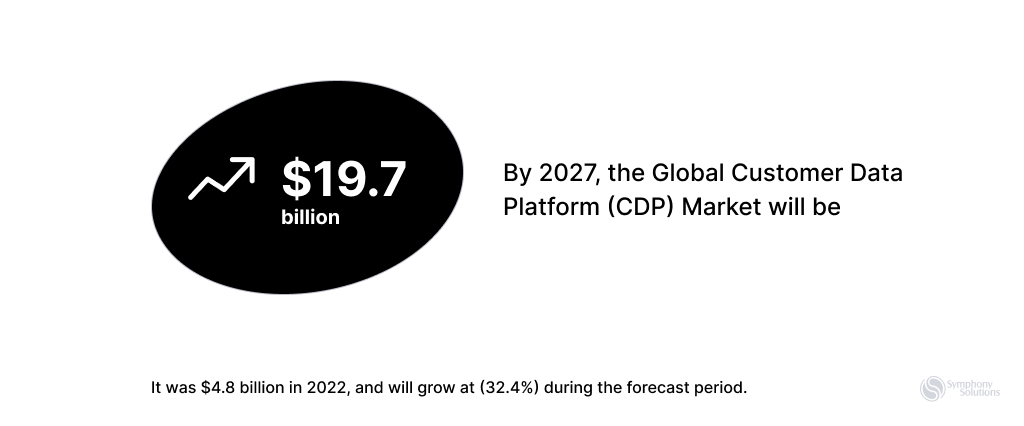
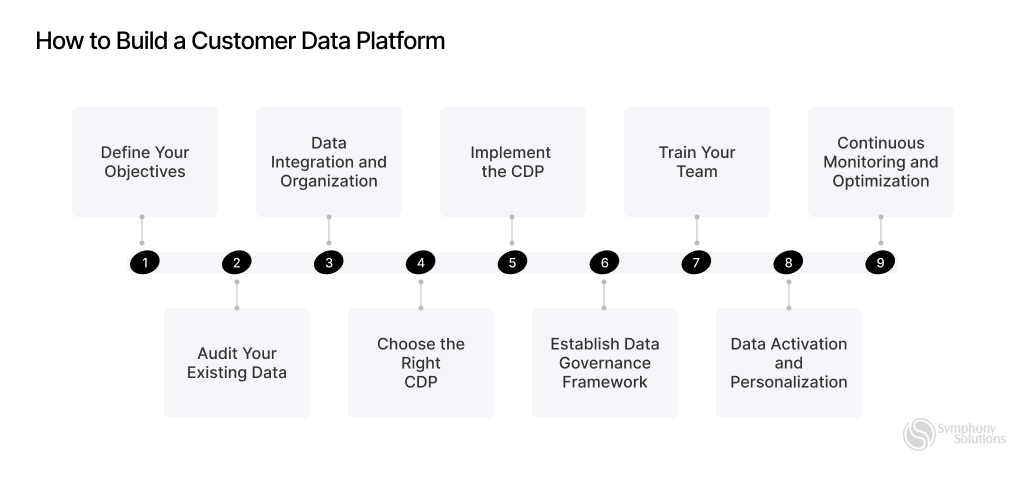
    While it’s true that AI has revolutionized various aspects of the software development lifecycle and improved efficiency & productivity, there are various factors that come into consideration when contemplating whether the tech can completely replace developers. Let’s explore them.  

    The Challenges for AI Adoption  

    Despite the numerous benefits and immense potential that AI holds, there are various challenges that hinder the technology from attaining mainstream adoption within the realm of software development, including:  

    • Interpretation complexity: AI models can hardly differentiate what users really want versus what they express, thanks to a range of factors, such as evolving user needs and context ambiguity.  
    • Limited creativity: AI algorithms can only go as far as solving solutions based on the rulesets provided by humans, a tendency that limits their creativity when it comes to solving problems.  
    • Ethical considerations: there are ethical concerns regarding whether AI can be trusted to make critical decisions autonomously without direct intervention or control by humans.  

    Complementary Roles Between AI Tools and Developers  

    Instead of replacing developers altogether, it’s more plausible that AI models will augment the capability and productivity of development teams. For instance, AI can handle low-value, repetitive tasks that often require endless hours of human intervention and perform them faster through automation. On the other hand, developers can take on higher-value tasks, such as critical thinking around business logic and algorithm optimization, to work alongside AI models and build faster.  

    How Developer Roles Will Change  

    The convergence of autonomous technologies, such as AI, and the daily routine of a developer necessitate the evolution of traditional roles. For instance, developers will have to learn and acquire new skills that would enable them to train AI models using data sets. Similarly, they’ll need to gain experience with AI tools management, deployment, and maintenance.  

    Additionally, developers will have to embrace new habits, such as ongoing learning and development, especially if they are going to keep up with the dynamic and rapidly evolving AI landscape.  

    The Transformative Advantages of AI in Software Development 

    Artificial intelligence is reshaping the landscape of software development, ushering in a new era of innovation and efficiency. While concerns about the creativity and ethics of AI models are valid, the potential benefits of integrating AI into the Software Development Life Cycle (SDLC) are too significant to overlook. 

    Error Detection and Correction 

    One of the standout benefits of AI in software development is its ability to detect and correct errors in real-time. Traditional debugging methods can be time-consuming, but AI-driven tools can swiftly identify anomalies, ensuring that the final product is of the highest quality. 

    Predictive Analysis 

    AI can predict potential system failures or vulnerabilities by analyzing patterns and trends. This proactive approach means developers can address issues before they become critical, ensuring smoother software operations. 

    Personalized User Experiences 

    AI algorithms can analyze user behavior and preferences, allowing developers to create more personalized and intuitive user interfaces. This level of customization enhances user engagement and satisfaction. 

    Automation of Repetitive Tasks 

    Tasks like code generation, testing, and documentation, which traditionally required manual intervention, can now be automated using AI. This not only speeds up the development process but also ensures consistency and reduces human error. 

    Enhanced Collaboration 

    AI-driven collaboration tools can streamline communication between teams, especially in a remote working environment. These tools can prioritize tasks, manage workflows, and even suggest optimal team structures based on project requirements. 

    Continuous Learning and Improvement 

    AI-driven development platforms can continuously learn from user feedback and system performance. This means that software can evolve and adapt over time, always staying aligned with user needs and industry standards. 

    End Note  

    Artificial intelligence in software development is a game-changer in many ways. While there are concerns about the creativity of AI models, as well as whether it’s ethical to deploy them at a large scale, it is more likely artificial intelligence is here to stay. The benefits and impact of the technology in SDLC are far-reaching in terms of improved security, reduced time-to-market, enhanced user experience, and a simplified software development process. Moreover, the technology is still pretty nascent in terms of evolution, and just like fine wine, it will get better with time.  

    Symphony’s AI Development Expertise  

    AI image article

    Symphony Solutions is a leading provider of AI development services, helping businesses transform and unlock the power of cutting-edge technologies. Whether you want to supercharge efficiency, delight your customers, or ensure consistent 24/7 availability, you can count on our agile and adaptable AI development services to get it done.  

    Other services that we offer in this category include:  

    • NLP-powered chat interfaces development  
    • Modern AI tools integration with the existing business ecosystem  
    • Swift engineering and lang chaining solutions development  
    • Prompt-based AI solutions designing and implementation  
    • Business agility and automation consulting  

    Here is an example of our successful use cases for AI software development:  

    Smart Product Recommendations and Personalization with AI 

    In this use case, we helped a SaaS startup company (Graphyte, now acquired by Optimove) build an AI-powered platform for providing ultra-personalized recommendations in the iGaming industry. The Graphyte Recommend Solution featured an intelligent layout design that allowed operators to customize content based on their client’s preferences, including promotions, banners, and navigations.  

    With the solution, players could now operate in a 100% custom-generated lobby that featured a fully tailored gaming inventory, including themes, game selection categories, and recommendations. The tool helped the operators understand player preferences and accurately determine the right target audience for game launches. In the long haul, the client company was able to increase game engagement consistently by over 26%, not to mention a 7% topline turnover increase.  

    Frequently Asked Questions (FAQs) 

  • Machine Learning in the Cloud: What Are the Benefits

    Machine Learning in the Cloud: What Are the Benefits

    In today’s fast-paced and data-driven business landscape, keeping up with technological evolution is a must. One significant shift we’re seeing is the integration of machine learning with cloud computing. In fact, the fear of missing out on these technologies is so high that some organizations are reporting a record-breaking timeline of less than a week for ML deployment.  

    Machine learning, a branch of artificial intelligence, enables computers to learn from past data and make predictions, all without specific programming. Cloud computing, on the other hand, lets businesses access a wide range of shared computing resources online. These resources can be used for everything from hosting business applications to developing cloud-native software and deploying machine learning. This includes servers, databases, and storage for cloud-native development, ML deployment, or hosting business applications.  

    The use of machine learning in cloud has given rise to a new era of unparalleled innovation and efficiency. And with the realization of this, alongside the increasing demand for cloud-based ML models, cloud service providers are customizing their offerings to match the needs of organizations of all sizes—from small startups and mid-sized businesses to enterprise corporations.  

    So, what is the role of cloud computing in machine learning? And what business benefits does the symbiotic relationship of these two technologies bring to your organization? Let’s find out more in this elaborate guide.  

    Role of Cloud Computing in Machine Learning  

    cloud-processor-article-image

    Businesses are increasingly seeking efficient and cost-effective intelligent technologies that can help them unlock new opportunities and ascend to unprecedented heights. The impact of cloud on machine learning demonstrates a seamless way of achieving this goal. While both technologies play an integral role in driving overall business success, they become more powerful when leveraged together.  

    The power of cloud computing enables organizations to overcome the limitations of on-premise IT infrastructures when adopting or scaling machine learning models. Here is the broader role of cloud computing in ML:  

    Resource Demand in Machine Learning  

    Among the primary connections between cloud computing and ML is the resource demand required by the latter’s algorithms. Typically, prevalent machine learning algorithms, such as K-Means, Linear Regression, Decision Tree, Random Forest, and Logistic Regression, thrive in environments that support complex computations and vast amounts of data.   

    This means the ideal environment for deploying these algorithms should feature extensive data storage, enormous processing power, and multi-server computation capabilities—a unique combination that’s hard to achieve with on-premises resources.  

    In a bid to meet these requirements, organizations are adopting a cloud-first strategy as part of machine learning deployment. With the cloud’s infrastructure, businesses can tap into a virtually unlimited pool of computational resources on demand. Cloud computing scalability implies greater flexibility for storage, processing power, and server capacity to match the needs of varying ML algorithms.  

    Storage and Accessibility  

    Another primary connection between ML and cloud computing lies in storage and accessibility. Data scientists require large datasets to train, validate, and test machine learning algorithms. And to ensure greater efficiency and smooth operation during these processes, the underlying data storage system should be highly secure and reliable.  

    Cloud computing solutions offer secure and robust storage solutions that can handle enormous data volumes with ease. With a cloud-first strategy, organizations can handle voluminous data sets in distributed storage systems, such as a data lake or data warehouse. Distributed storage systems are synonymous with high-security standards, durability, redundancy, and scalability, ensuring around-the-clock data availability and untampered integrity.  

    When it comes to accessibility, cloud-based storage solutions allow cross-functional teams to access and leverage business information from any location, anytime, and on any device. Additionally, data science teams can also leverage the capabilities of cloud computing to cleanse, transform, and pre-process voluminous data sets. This saves time and effort, freeing employees to focus on high-value tasks, such as researching new machine learning models.  

    Top Machine Learning Cloud Platforms  

    As the adoption of machine learning continues to surge, given that experts are projecting a $31.36 billion global market share by 2028, cloud computing platforms have proven to be indispensable tools for harnessing the power of AI and predictive analytics. With these platforms, organizations can easily access the resources, services, and infrastructure required for building, deploying, and scaling ML models efficiently.  

    Leading service providers for cloud managed services such as Amazon Web Services (AWS), Google Cloud Platform (GCP), and IBM Cloud are all key players in the tech world, each with their own strengths. The lineup below doesn’t denote any rank but is rather a random order, highlighting each platform’s unique advantages.  

    IBM Cloud  

    IBM Cloud has a solid reputation, and for good reason. It’s packed with services and tools designed for advanced machine learning and artificial intelligence operations. Take IBM Watson, for example. This platform provides users with cutting-edge tools and APIs, making the development and deployment of machine learning models a much smoother process. 

    Watson Studio is another highlight of IBM Cloud. It offers an intuitive environment for data scientists to create and train machine learning models. Then there’s Watson Machine Learning, which simplifies and automates the process of managing and deploying these models. 

    But that’s not all. IBM Cloud Pak for Data is another impressive feature. It provides a robust platform for data and AI that can help businesses uncover valuable insights and drive innovation. So, if you’re an organization looking for an extensive cloud computing environment that goes beyond just basic machine learning, IBM Cloud might be a good fit. 


    Google Cloud  

    Google Cloud is another platform with cutting-edge machine-learning capabilities. With a robust infrastructure backed by advanced AI research and development, Google Cloud offers one of the most user-friendly services that address a wide range of ML needs, regardless of how intricate they are. Whether your organization is in need of high-level deep learning frameworks or novice tools, the platform offers an ideal service to specifically meet that need.  

    For example, the platform’s AutoML service allows users with a beginner’s level of machine learning expertise to execute advanced commands with ease. This includes building custom models to fulfill a specific function, such as text or image recognition, without the need for extensive coding.  

    Similarly, highly experienced machine learning professionals on Google Cloud can leverage advanced frameworks, such as PyTorch, TensorFlow, and pre-trained models for high-level ML training and deployment.   

    Amazon Web Services  

    Amazon Web Services (AWS) is one of the pioneering platforms that ushered in the era of mainstream cloud computing, attracting over 1 million active users across 94 countries. In fact, it is believed that the platform arguably has five times more cloud infrastructure than its 14 competitors combined!   

    As a revolutionary cloud platform, AWS’s offerings include an end-to-end suite of services that support both basic and advanced machine learning workflows. This includes a range of user-friendly tools, frameworks, and plug-and-play managed services.  

    For instance, developers and data scientists can leverage Amazon SageMaker to build, train, and deploy ML models in a more simplified way. The comprehensive ML platform offers built-in algorithms, as well as automatic model tuning and distributed training functionalities to accelerate the development cycle of ML models and significantly reduce the time-to-market.  

    Other pre-trained ML & AI services that users can access on the AWS Cloud include Amazon Comprehend for natural language processing (NLP) and Amazon Rekognition for video and image analysis. With these capabilities, organizations can easily integrate AI & ML capabilities with their existing business applications.  

    Microsoft Azure  

    Microsoft Azure has gained an industry reputation as a leading cloud solution for cloud software development and deployment of machine learning models at scale. The platform offers a dedicated Azure Machine Learning Studio with a simple drag-and-drop interface. This feature allows junior data scientists and ML experts to build and deploy basic ML pipelines.  

    For more advanced applications, the service provider behind the platform offers Azure Machine Learning Service, which includes a developer-centric computing environment for building and training ML models using popular frameworks like PyTorch and TensorFlow.  

    In addition to that, users can access Azure Cognitive Services and leveraged APIs and pre-trained models to deploy algorithms that perform specific AI tasks, such as speech, vision, and language detection. And with a strong Microsoft enterprise ecosystem, the Azure Cloud platform is ideal for organizations that want to integrate ML with existing Microsoft business tools and services.   

    The Benefits of Machine Learning with Cloud Computing  

    Machine learning capabilities have revolutionized the modern business landscape in many ways. With ML-enabled models and processes, businesses can draw actionable insights from vast data sets and automate manual processes, ultimately driving business growth and innovation. And when combined with cloud computing, machine learning becomes more powerful.  

    cloud-computing-service-platform

    So, what are the benefits of machine learning in the cloud?  

    Cost Effectiveness: Pay-for-What You Need Model  

    One of the benefits of machine learning application in cloud computing is the cost-effectiveness that mainstream cloud-first strategies offer. Typically, organizations of all sizes can access advanced ML capabilities on the basis of “pay-for-what you need,” allowing businesses to tap into next-gen technologies without significant upfront investments.  

    Also known as the pay-per-use model, this pricing model allows you to only pay for the resources and services that your business utilizes. Void of large capital expenditures and associated financial risks, the pricing model democratizes access to predictive modeling and advanced analytics. This allows small and mid-sized businesses to optimize operational efficiency and compete favorably in their respective domains.  

    Greater Flexibility  

    ML in cloud gives businesses the flexibility to work around ML models and functionalities without the need to hire on-demand data science experts. A majority of cloud service providers, including IBM, Google Cloud, AWS, and Microsoft Azure offer pre-built models and user-friendly drag-and-drop interfaces.  

    These features don’t only mean greater flexibility but also simplified development and deployment processes for ML models. Additionally, this means that a range of professionals in the company, including business analysts and cross-functional teams, can tap into the power of machine learning for their specific use cases.  

    High Scalability and Experimentation  

    Cloud-based computing platforms offer greater flexibility and agility, features that become more vital when experimenting with multiple ML models or scaling projects from design into production. With machine learning in cloud computing, businesses can easily scale up resources and infrastructure to test and iterate on machine learning models simultaneously.  

    This allows development and data science teams to explore multiple approaches, algorithms, and parameters without being limited by infrastructure constraints. Cloud environments are inherently elastic and seamlessly provide additional computing power, storage, and data processing capabilities, allowing ML models to scale and evolve as much as needed.  

    High Accessibility and Ease of Use  

    All mainstream cloud computing environments, including AWS, Google Cloud, IBM, and Microsoft Azure, are highly accessible and offer a myriad of ML services that don’t require in-depth skills and expertise in data science. With these platforms, businesses can access ready-made ML services, including custom APIs and pre-trained models and simplify the overall approach toward integrating ML technology.   

    Application of Machine Learning Algorithms Using the Cloud 

    Since becoming popular, machine learning has established itself as a powerful technology for analyzing voluminous data sets and drawing meaningful insights from them. But with the cloud ML convergence, machine learning models have evolved into transformative technologies across many industries. Today, advanced machine learning algorithms in cloud computing frameworks power a range of use cases, including:  

    Cognitive Computing 

    ML algorithms that are deployed in the cloud allow organizations to harness the power of cognitive computing and build intelligent systems that can perform sentiment analysis or understand natural language from unstructured data sets, such as text or images, and videos. Cognitive systems are synonymous in the healthcare and customer service sectors.   

    Business Intelligence 

    Machine learning algorithms in cloud computing revolutionize Business Intelligence (BI), allowing organizations to build and deploy advanced models for complex use cases, such as fraud detection or cloud security.. If you’re wondering how machine learning can improve security in cloud computing, trained models can quickly learn and adapt to new business models.  Moreover, when combined with AI, ML models can automate access control and authorization to the cloud infrastructure.  

    raw log streams

    Internet-of-Things (IoT) 

    With approximately 16.7 billion devices connected in the global IoT network, businesses that embrace this technology are dealing with massive amounts of data that are churned daily. ML algorithms can be deployed in the cloud to analyze this data in real-time as it streams in and extract actionable insights from it. Besides enhancing real-time monitoring, this approach also enables anomaly detection and predictive maintenance.  

    AI-as-a-Service 

    AI-as-a-service offering is synonymous with leading cloud providers, such as IBM and Google. The service allows businesses to leverage big data and machine learning in cloud for a competitive edge. For instance, you can integrate ML models with image recognition, sentiment analysis, and language processing capabilities to get a more in-depth insight into customer behavior, ultimately delivering a superior customer experience and customized services.   

    Personal Virtual Assistants 

    Cloud-based ML algorithms can power advanced virtual assistants, such as Siri and Alexa. Personalized virtual assistants can not only recognize speech but also perform complex natural language processing tasks, as well as context-aware decision-making. These applications can be deployed for customer service, virtual healthcare, and smart home use.  

    Wrapping It Up 

    The convergence of machine learning with cloud computing presents a pivotal turning point in the business tech landscape. Machine learning in cloud computing enables the building, deployment, and management of more advanced, efficient, and scalable models. In return, high-performing ML models support intelligent decision-making processes, automation, and predictive analytics.  

  • AI in the Future of Work: SHE. Event Overview

    AI in the Future of Work: SHE. Event Overview

    Symphony Solutions together with SHE. community recently hosted a talk inviting our company experts to share their experience of using generative Artificial Intelligence that’s become accessible to the global public ever since the launch of ChatGPT. Our panelists discussed how AI is changing the landscape of work and shared their own experiences using AI for everyday work tasks. 

    Event experts: 

    • Yulia Nosal, Chief People Officer at Symphony Solutions (Ukraine)  
    • Oleg Chekan, Technical Director at Symphony Solutions (Poland) 
    • Tania Soroka, Director of Virtual Communities at Symphony Solutions (Ukraine) 

    Watch the video recording on YouTube or continue reading to get all the highlights from the event in this article. Here’s what we’ll talk about during the panel discussion:

    How is AI currently transforming the workplace, and what potential further advancements are coming in the future? 

    • AI itself is not a new concept, but what’s truly groundbreaking is the emergence of generative AI, which has made it accessible to the masses. This democratization has allowed anyone to use AI tools, whereas previously, they were limited to engineers or data scientists working on complex projects over extended periods. 
    • AI is becoming an integral tool for our everyday work and productivity, helping with brainstorming, content creation, presentation, development, etc.
    •  AI tools empower us to explore new ideas and implement them with their guidance. 
    • You can achieve more without being distracted by the need to coordinate meetings or find someone else’s availability for feedback. Tasks can be accomplished faster and more efficiently. 
    • If AI tools increase our sense of satisfaction, it’s already a good achievement. And if clients are getting more value that’s a win-win situation. 

    What are the opportunities and challenges of integrating AI technologies into various industries and job roles? 

    • There are three main categories of AI users: those who create and write AI algorithms; those who constantly search, explore, and implement AI in their business domain; and those who still resist the adoption of AI. 
    • Lately, there has been a significant rush to understand the latest developments in the market, how to apply AI, measure its efficiency, and bring that efficiency to the workplace. 
    • AI is a tool that should bring benefits. However, we must also be responsible in how we implement it. Being responsible means understanding all aspects of AI, including its challenges, opportunities, data boundaries, and reliability. We need to be knowledgeable to ensure responsible usage of AI. 
    • Understanding the limitations of the tools, you always have to revise what’s been generated, make sure you understand it, and it’s in line with your expectations. You can always iterate with those tools, point out mistakes, provide your feedback, and improve their results. 

    One of the key challenges is how confidently ChatGPT can be wrong. 

    • You have to be careful with what AI tools you select. Many of the new tools being released to the public are not quite ready or their quality is not meeting expectations. 
    • Beware of scam projects which may be used to steal data. 
    • Not all AI tools are ready for scaling yet. 
    • Open-source AI is not yet properly available for commercial use. You have to be really careful not to violate licenses. The open-source community is trying to address this issue and make something available for commercialization with the legal aspects covered. 
    • Another issue in the education area is having ready-to-use high quality training materials. How to use these tools. How to understand the limitations. What are the best practices. Educational materials are few and far between and they lack structure. 

    What skills and competencies will be most valuable to thrive in an AI-driven work environment? 

    • AI is a tool. The critical thing is to maintain your domain expertise and improve every day as the expert. AI cannot think instead of us at this point in time.  
    • Digital literacy is your number one competency. Follow the trends, apply and test, and make your critical conclusions.  
    • Companies should establish appropriate standards and make sure that people are educated to the kind of most useful sources of information. 
    • Mastering AI tools should be integrated into our personal development or onboarding processes. 
    • Make it a skill that is evolving and adjusted to the roles and seniorities of people.  
    • New tools and technologies appear every month produced by giants like Microsoft, Open AI, and Google and they are adopting quite quickly and making things possible which were not possible before. 
    • The better higher quality input you will make the prompt the better quality you will get on the output. 
    • It is crucial to have the ability to clearly formulate instructions in written form. Your fluency in English is very important. 

    What are some ethical considerations when implementing AI systems? Can AI be leveraged to enhance diversity and inclusion in the workplace? 

    • GDPR data leakage is a real risk with utilizing AI tools which are trained on scraped data. 
    • The question arises if AI will be able to show empathy and have an understanding of the subtle context around the situation. and the major question and we can all reflect it from our personal experiences. 
    • Is a rational data-driven decision always the best one in the long-term perspective? If we always rely on data analysis and let the data drive decisions, it might not work out in the long run. 
    • AI brings certain risks that stem from it being trained on the data that it can scrape from the sources available. This can create bias (racial, gender, etc.), which has already happened in recruitment, financial institutions, and healthcare. 

    How can AI and human collaboration create a symbiotic relationship for achieving optimal results? 

    • With the emergence of tools like ChatGPT, Midjourney, and others, you are enabled to implement your own small projects using a simple chat interface and benefit from it in real time. 
    • As people learn together and experiment, they find innovative applications that the original authors might not have anticipated. The learning process extends to incorporating AI into everyday work, where it plays a significant role. This widespread accessibility marks a crucial turning point in the AI landscape. 
    • By introducing AI to certain roles functions, we can take away fatigue that people sometimes have from routine mundane tasks that can be delegated to AI. 
    • With AI becoming an integral part of day-to-day work, we should expect new job roles to emerge, such as prompt engineer, Chief AI Officer, bias remover, etc. 

    Watch the full recording of the event to learn the answers to some fascinating questions from the audience: 

    • If you could create an AI-powered gadget or device or program to improve your daily life, what would it be? 
    • If you could design an AI assistant to have a unique personality trait, what would it be and how would it manifest in its behavior? 

    More of our inspiring tech talks are available on our YouTube channel. Keep an eye on upcoming event announcements on our social media. Follow and subscribe!