Category: Article

  • How Artificial Intelligence Is Redefining the Future of Sports Betting 

    How Artificial Intelligence Is Redefining the Future of Sports Betting 

    The global sports betting industry is rapidly evolving, with artificial intelligence (AI) at the forefront of innovation. AI sports betting apps and predictive algorithms are transforming betting strategies, odds calculation, fraud detection, and customer engagement, shifting the industry from intuition-based decision-making to data-driven models. In this post, we explore the latest AI-driven trends, statistics, and emerging technologies shaping the sports betting industry. 
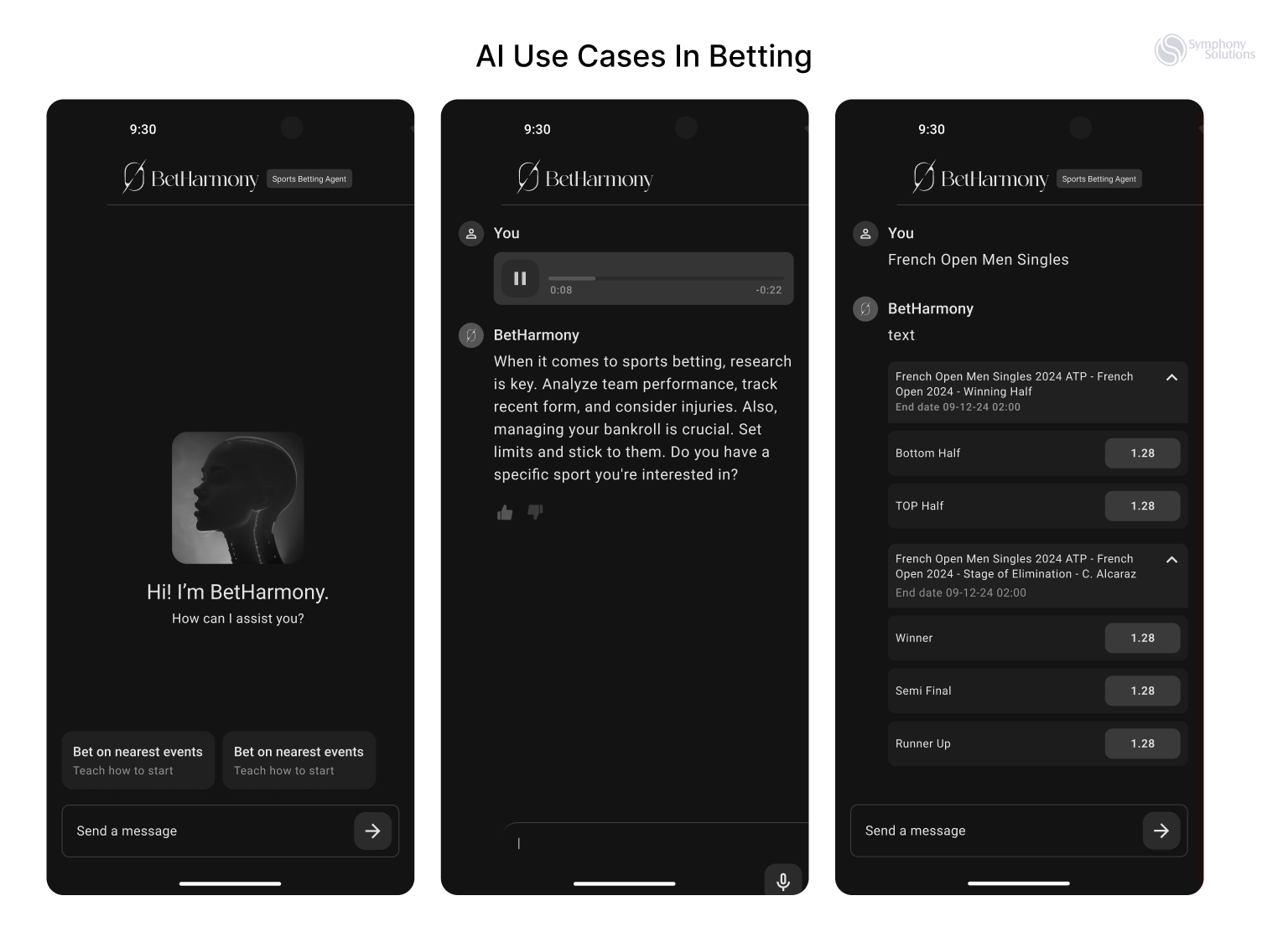
    ai use cases in betting

    AI in Sports Betting: Trends, Market Growth, and Accurate Sports Predictions 

    Market Growth & AI Adoption 

    AI is rapidly changing the sports betting industry, making sports predictions more accurate, automating betting strategies, and personalizing user experiences through AI-powered sports betting apps and services. 

    According to Grand View Research, the sports analytics market—a major driver of AI in betting—was valued at $854.5 million in 2023 and is projected to grow at a 27.7% CAGR, reaching $4.74 billion by 2030. 

    Key areas where AI is making an impact: 

    • Advanced Predictive Analytics – AI analyzes team history, player performance, and external factors like weather to improve accuracy. 
    • Real-Time Odds Adjustments – Algorithms instantly recalculate odds based on live events, such as player injuries or momentum shifts. 
    • Automated Betting Bots – AI-driven bots execute betting strategies with precision, reducing human error in arbitrage or value betting. 
    • Personalized Betting Experiences – AI customizes promotions and recommendations by analyzing user behavior. 

    AI in the World of Sports Betting: Use Cases 

    AI is reshaping sports betting models, enabling smarter predictions, automated strategies, and personalized user experiences. From AI-powered betting bots to fraud detection and risk management, its impact is evident across the industry. 

    AI Sports Betting Agents: How AI Can Offer the Best Betting Experience 

    AI-powered betting assistants are redefining user experience by streamlining onboarding, customer support, and real-time betting assistance. One notable example is BetHarmony, an AI-driven assistant developed by Symphony Solutions. Built on advanced natural language processing (NLP), BetHarmony helps bettors navigate sportsbook interfaces, answer account-related questions, and even suggest betting opportunities based on real-time data. 

    BetHarmony provides interactive, dialogue-based support. Instead of offering simple responses, it actively engages with users, clarifies ambiguous queries, and recommends bets based on their preferences. This not only enhances user engagement but also helps sportsbook operators reduce support costs and increase bettor retention rates. 

    AI Sports Betting Predictions: How AI Algorithms Help You Make Smarter Bets 

    AI-driven predictive models are revolutionizing sports betting picks by analyzing vast datasets – including historical data, real-time sports events, player stats, and external conditions – to provide more accurate sports predictions. These models don’t just forecast outcomes; they power dynamic odds adjustments that respond instantly to game developments. 

    Platforms like dfsPro.ai leverage machine learning to refine their models over time, increasing prediction accuracy while simultaneously recalculating odds based on live inputs. Beyond historical data, AI now factors in real-time elements like injury reports, player substitutions, referee decisions, penalty trends, and momentum shifts during live games, enabling a continuous optimization cycle where predictions inform odds adjustments which then refine subsequent predictions. 

    This dual capability allows bettors to make more informed decisions, particularly in live betting, where odds change dynamically. The most advanced systems can now process in-game events and adjust odds within milliseconds – a quarterback’s injury immediately affects point spreads, a basketball star fouling out triggers total adjustments, and sudden weather changes modify baseball prop odds. The integration of AI sports betting software into platforms is creating a feedback loop where predictive models improve odds accuracy while betting patterns themselves become valuable data for further model refinement, enabling increasingly tailored wagering recommendations. 

    AI Sports Betting Picks & Wagering 

    AI-powered tools assist bettors in sports betting picks, helping them identify the best-value bets by comparing odds across multiple sportsbooks. These AI sports picks help users make data-driven picks with precision. 

    DraftKings, for example, has integrated AI-driven insights into its platform, recommending wagers based on historical betting trends and user behavior. 

    AI for Personalized Betting Strategies & Notifications 

    AI isn’t just optimizing betting odds—it’s also transforming how sportsbooks engage users through AI sports betting software, delivering personalized betting strategies and notifications for upcoming sports events. 

    Through iGaming software development, operators can offer: 

    • Personalized betting suggestions based on past behavior
    • Customized promotional offers tailored to individual betting patterns
    • Automated notifications for relevant sports events or odds changes

    For example, we specialize in AI-powered sports betting software development, helping sportsbooks integrate personalized content and real-time analytics to enhance user retention. 

    AI in Fraud Detection 

    AI extends beyond user engagement and predictions into more complex operational areas: 

    Fraud Detection & Risk Management 

    AI is instrumental in detecting fraudulent betting activity, helping sportsbooks maintain fair play and regulatory compliance. Sportradar’s Fraud Detection System monitors approximately 850,000 sporting events across 70 sports per year, identifying over 1,000 suspicious matches annually. Their AI-powered risk management tools analyze vast amounts of betting data, flagging anomalies that may indicate match-fixing, money laundering, or coordinated betting patterns. 

    By integrating AI sports betting software, operators can implement fraud detection measures that analyze bettor behavior, flag unusual transactions, and ensure compliance with gambling regulations. 

    Automated Arbitrage Betting 

    AI-powered systems can scan multiple sportsbooks to detect price discrepancies, executing arbitrage bets automatically. This automation allows bettors to capitalize on differences in odds across platforms efficiently, maximizing potential returns with minimal manual intervention. 
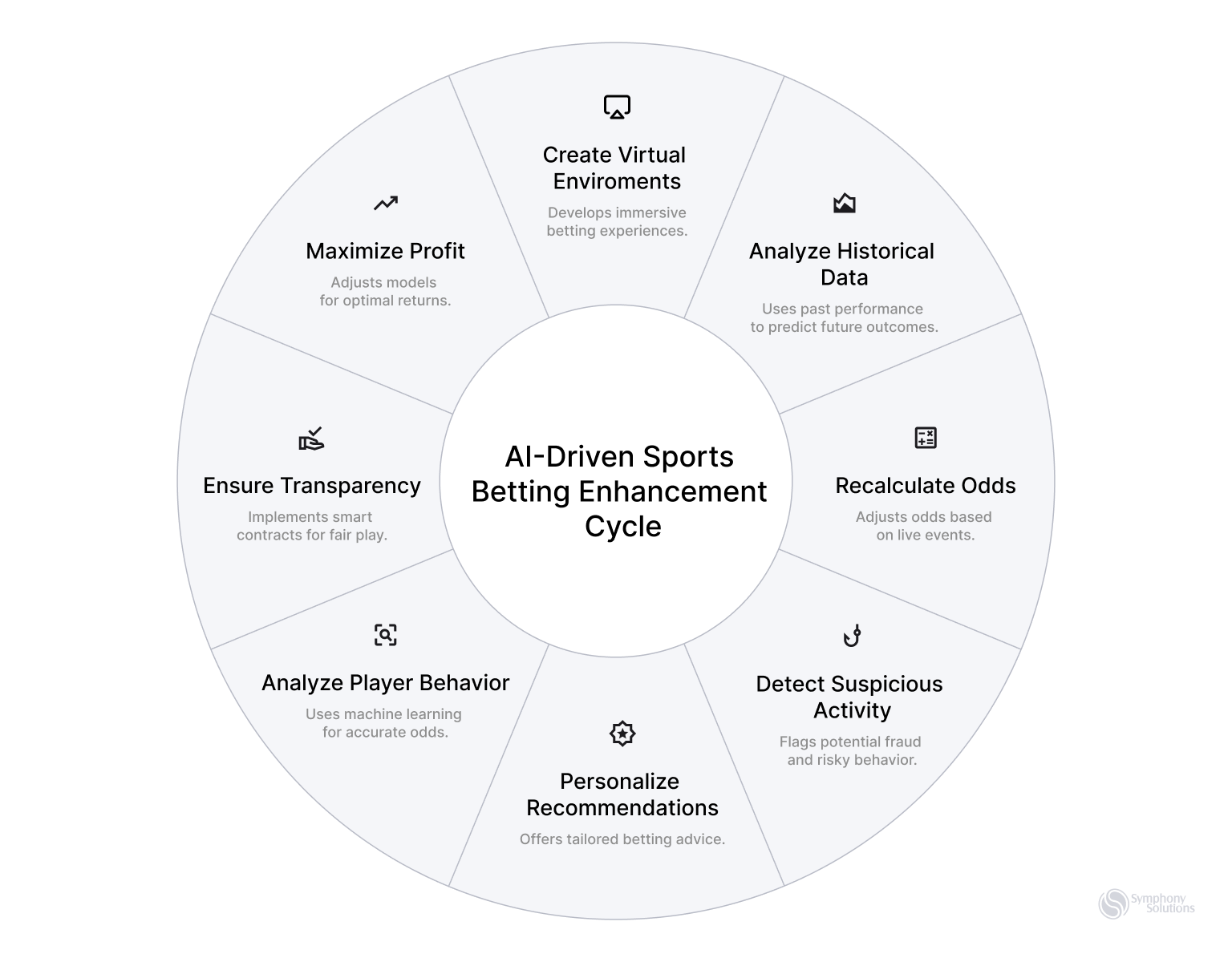
    ai driven sports betting cycle

    AI Sports Betting Risks: The Ethical Challenges of AI Algorithms in Betting 

    While AI brings major advantages—faster odds adjustments, predictive analytics, and automated betting—it also raises concerns about fairness, transparency, and responsible gambling. Sportsbooks and regulators must find a balance between innovation and ethical considerations, ensuring AI-driven tools enhance the experience without manipulating markets or encouraging excessive gambling. 

    One area of concern is AI-powered real-time odds recalculations. While these ensure sportsbooks stay competitive, they can also lead to aggressive odds shifting, making it harder for bettors to lock in favorable bets. Additionally, AI’s ability to track bettor behavior raises data privacy concerns, as sportsbooks use machine learning to predict and influence betting habits. Let’s take a closer look at the comparison of AI’s advantages and potential risks. 

    ? AI-Powered Innovation ⚡ How It Enhances Sports Betting ⚠️ Challenges & Risks 
    ? AI-Powered Predictive Analytics ? Uses historical performance data, team statistics, and external factors to improve betting accuracy. ❗ Overreliance on AI may cause bettors to neglect unpredictable elements (e.g., coaching decisions, injuries). 
    ⚡ Real-Time Odds Adjustments ⏳ Instantly recalculates odds based on in-game events, optimizing live betting strategies. ⚠️ AI-driven odds shifts could be seen as market manipulation if transparency is lacking. 
    ?️ Fraud Detection & Responsible Gambling ? AI flags suspicious activity (e.g., match-fixing, money laundering) and identifies risky bettor behavior for intervention. ?️ Ethical concerns arise over AI surveillance, personal data privacy, and potential biases in intervention mechanisms. 
    ? AI-Powered Mobile Betting ? Personalized recommendations and real-time insights enhance bettor engagement. ? AI collects extensive user data, raising privacy and cybersecurity concerns. 
    ? Sentiment Analysis for Betting ? AI scans news & social media to assess betting sentiment, adjusting odds accordingly. ? Misinformation or manipulated sentiment data could lead to unfair betting trends. 
    ? AI in Esports Betting ⚡Machine learning models analyze in-game player behavior for more accurate odds setting. ⚖️ Esports betting regulations are still evolving, creating legal uncertainty. 
    ? Blockchain & AI Integration ? Smart contracts and AI-powered audits improve odds transparency and fair play. ❌ AI-driven smart contract decisions may create disputes over liability and compliance. 
    ? Adaptive AI Betting Strategies ? AI continuously adjusts betting models to maximize profit in changing market conditions. ? Bookmakers may deploy countermeasures, leading to an AI vs. AI betting landscape. 
    ? AI + AR/VR in Betting ? Creates immersive virtual betting environments with AI-driven odds integration. ⚠️ Regulatory uncertainty surrounds AI-enhanced virtual betting experiences. 

    AI is increasingly integral to the sports betting industry, offering advancements in predictive analytics, personalized user experiences, and operational efficiency. However, its integration introduces significant challenges, particularly in regulatory compliance and fraud prevention. 

    The integration of cutting-edge AI technologies into sports betting introduces several legal and ethical considerations: 

    • Regulatory Compliance: Different jurisdictions have varying regulations concerning online gambling and the use of AI. AI-driven regulatory compliance tools are emerging, helping operators automate identity verification, detect fraudulent activity, and ensure responsible gambling practices. Operators must ensure that their AI-driven practices comply with local laws to avoid legal repercussions. 
    • Data Privacy: AI systems rely on vast amounts of user data to function effectively. Ensuring the privacy and security of this data is paramount to maintain user trust and comply with data protection regulations. 
    • Problem Gambling: While AI can enhance user engagement, there is a risk of promoting excessive gambling behavior. Implementing AI-driven customer support systems can help identify and assist at-risk individuals, promoting responsible gambling practices. However, the use of AI in tracking gambler behaviors also raises ethical concerns regarding surveillance and personal data privacy.  

    The Future of Sports Betting Technology 

    As AI continues to reshape sports betting, the future will see increased transparency, personalized user experiences, and operational efficiency. Blockchain integration is driving decentralized sportsbooks, enhancing trust through smart contracts, while AI-powered analytics process real-time data for better predictions and personalized recommendations. Virtual assistants like BetHarmony are evolving to offer seamless support for bettors, improving engagement. 

    However, these advancements also bring greater regulatory scrutiny. AI’s potential to manipulate markets or contribute to problem gambling underscores the need for balanced regulation that ensures fairness and responsible betting practices. 

    At Symphony Solutions, we are helping navigate this evolving landscape. Our iGaming software development and AI engineering expertise are designed to enhance your operations, promote ethical gaming, and deliver superior user experiences — all while maintaining transparency and accountability. 

  • How AI Agents Are Transforming the Future of Sports Betting  

    How AI Agents Are Transforming the Future of Sports Betting  

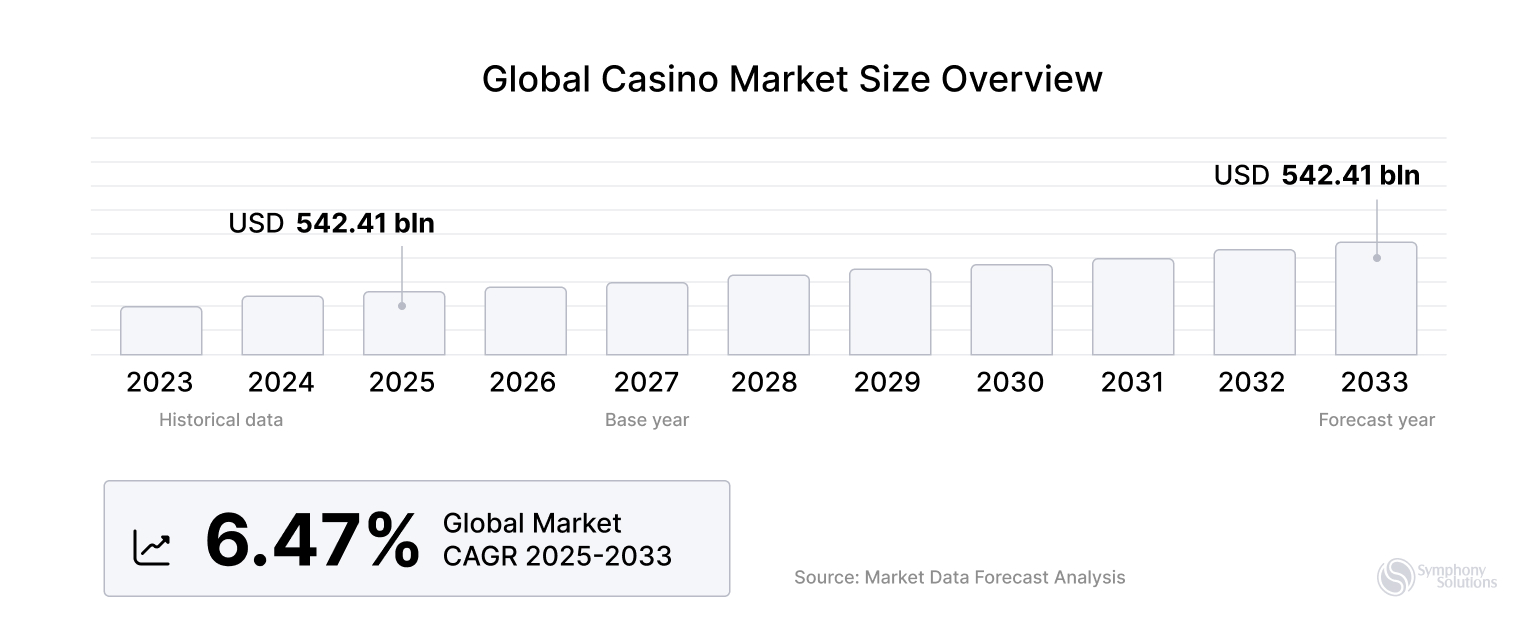
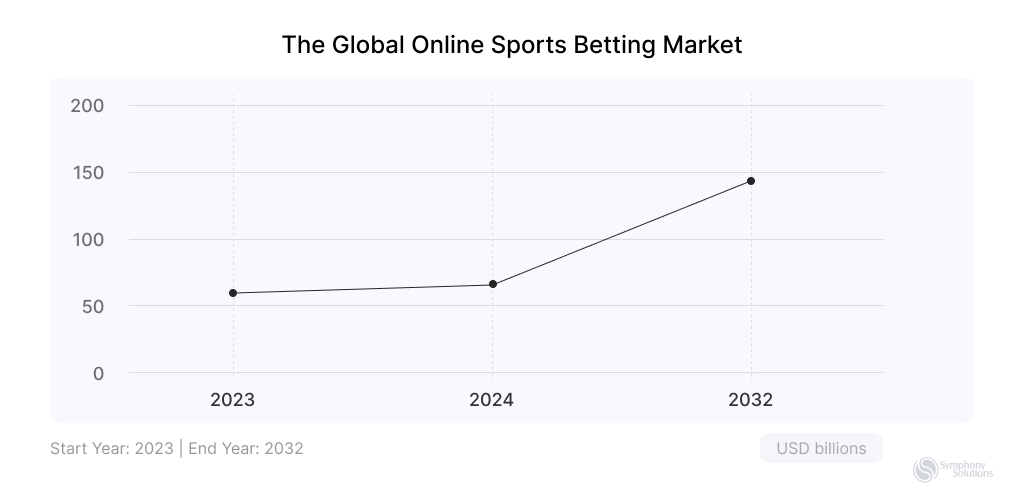
    The global sports betting market is projected to expand by USD 221.1 billion between 2025 and 2029, driven largely by the digital revolution and the integration of AI technologies. This explosive growth is not simply the result of market enthusiasm—it reflects a fundamental shift in how platforms engage players, optimize operations, and manage risk.  

    global casino market size

    At the heart of this transformation are AI agents: intelligent systems capable of learning from behavior, automating complex decisions, and boosting customer experience. Leading betting platforms are already integrating these tools to create smoother, intelligent interfaces between players and systems. This is setting new standards for interaction and operational excellence. 

    In this article, we explore AI agent architecture, their role in iGaming, and the technologies shaping the future of sports betting. Read on! 

    How AI Agents Work – Stages of Operation 

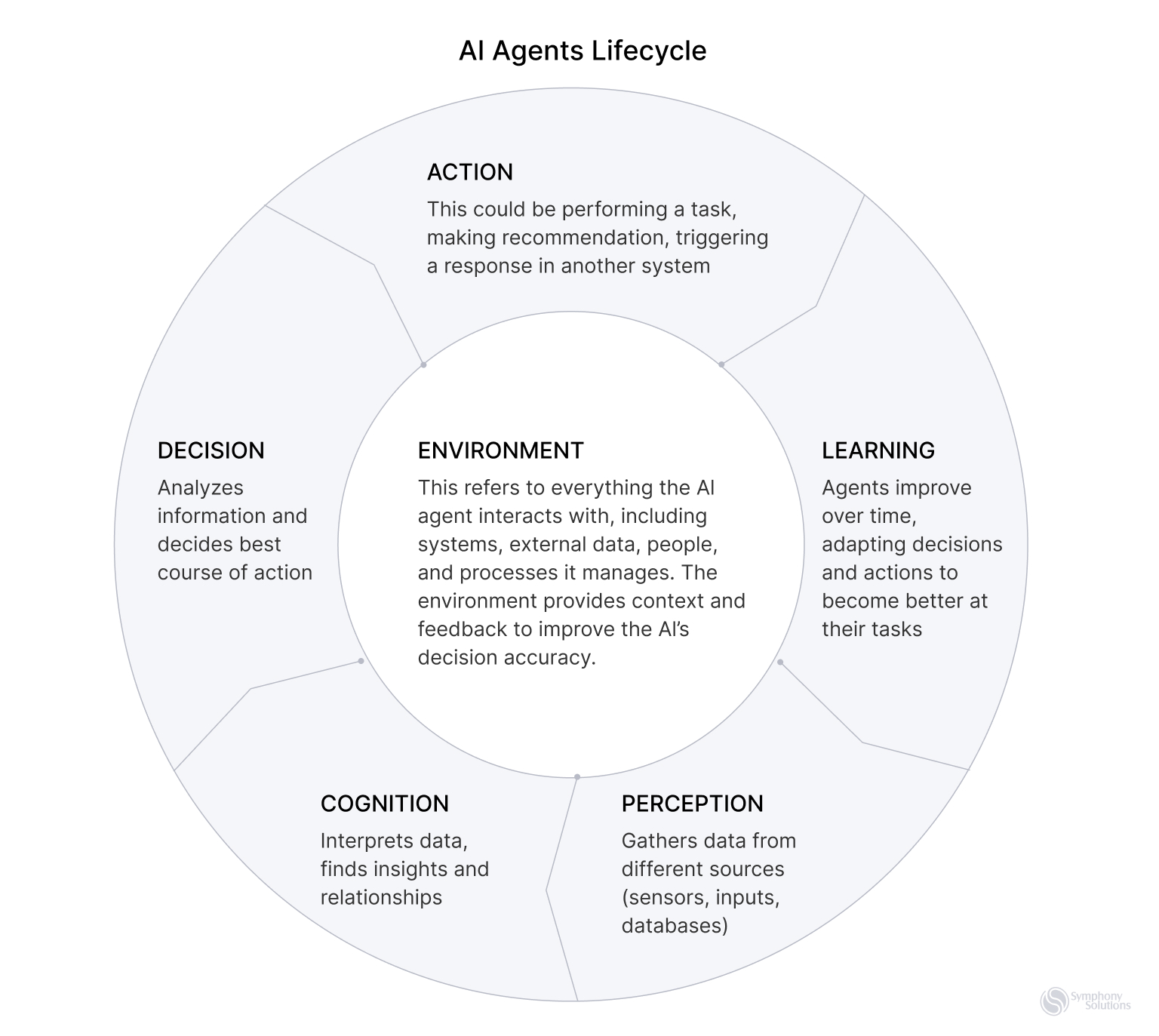
    AI agents operate through a structured four-stage process that distinguishes them from traditional software or basic chatbots. These stages enable them to interact intelligently with dynamic environments like sports betting platforms. 

    ai agents lifecycle
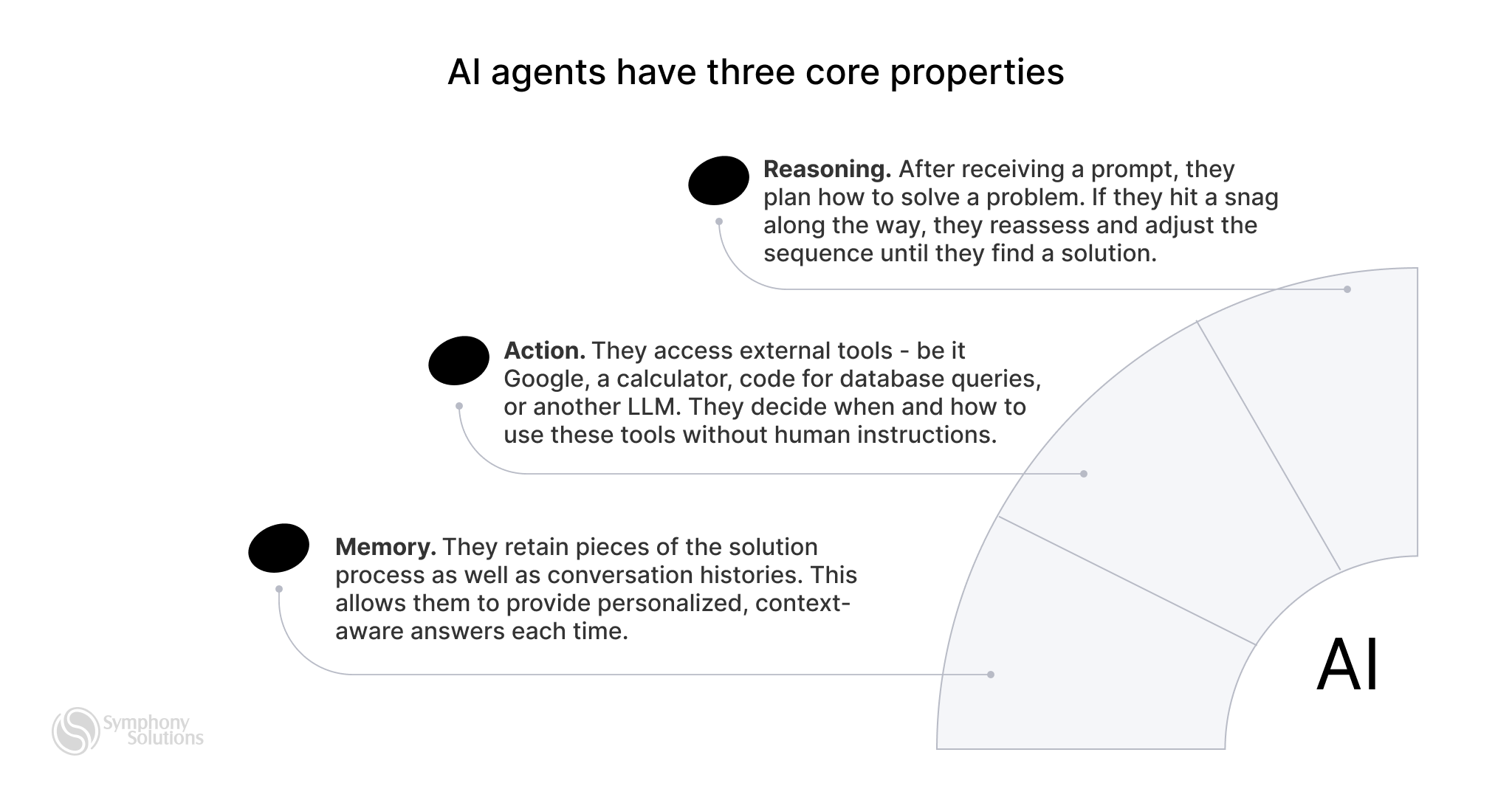
    • Perception: AI agents first perceive their environment by collecting data from multiple sources. In sports betting, this includes user behavior, betting history, market conditions, platform interactions, and vast streams of data and analytics that must be processed in real time. 
    • Reasoning: Once the data is gathered, agents apply advanced algorithms, predictive models, and contextual analysis to make informed decisions based on real-time conditions. 
    • Action: Based on their reasoning, AI agents act independently to assist players, adjust odds, personalize interfaces, or flag anomalies—without requiring constant human intervention. 
    • Learning: After acting, agents continuously assess the outcomes of their actions. Using reinforcement learning and data feedback loops, they refine their decision-making to improve future performance. 

    This cycle of perceiving, reasoning, acting, and learning allows AI agents to evolve over time. Unlike rule-based systems that follow pre-written scripts, these agents adapt dynamically to new data and user behaviors. In fact, they can process market data up to 1,000 times faster than human analysts, enabling real-time insights and decision-making on a scale traditional system cannot match. 

    Technical Foundations of Effective AI Agents 

    The most effective sports betting AI agents utilize the following key technologies: 

    • Natural Language Processing (NLP): Enables agents to understand and respond to player queries, comments, and voice inputs with contextual accuracy. 
    • Predictive Analytics: Anticipates player needs, betting patterns, and potential risks based on historical and real-time data. 
    • Computer Vision: Processes visual data streams, such as live match feeds, to enhance in-play betting decisions and experiences. 
    • Reinforcement Learning: Continuously improves agent decision-making by learning from outcomes and adjusting strategies over time. 
    • Knowledge Graphs: Maintain contextual memory across player interactions, ensuring coherent conversations and personalized recommendations. 

    These technologies work in concert to create agents that can assist players, support operations, and enhance the overall betting experience. For example, a voice AI agent might help a player place a complex bet while simultaneously analyzing the player’s betting patterns to ensure responsible gambling practices. 

    AI Agents in iGaming – Roles and Benefits 

    AI agents elevate the sports betting experience by creating highly personalized interactions. They analyze player behavior patterns to suggest relevant bets based on past preferences and current market conditions. For example, an AI agent might notice that a player typically bets on underdog teams in basketball games and proactively highlights upcoming matches with favorable odds for similar bets. 

    Beyond betting suggestions, these agents can customize the entire sportsbook UX based on individual preferences. A player who focuses on in-play betting might see more prominent live statistics, while someone who prefers pre-game analysis would receive enhanced analytical tools. This level of personalization creates a more engaging experience that keeps players returning to the platform. 

    Scaling Operations with Multilingual Support 

    One of the most significant operational challenges in global iGaming is language support. AI agents address this by providing real-time translation services for both written content and live dealer interactions. This capability allows operators to scale across markets without the extensive costs of hiring multilingual staff for every language. 

    In live dealer settings AI voice agents can translate dealer instructions and player questions seamlessly and create an inclusive environment for international players. This technology extends beyond simple translation to include cultural nuances and betting terminology specific to different regions. 

    Optimizing Business Operations Through Advanced Data Processing 

    Behind the scenes, AI agents transform business operations by handling complex data tasks that would otherwise require significant human resources. These agents can: 

    • Analyze massive datasets to identify market trends and player preferences 
    • Generate comprehensive reports on platform performance 
    • Monitor regulatory compliance across multiple jurisdictions 
    • Optimize promotional offers based on player behavior and ROI analysis 

    The operational efficiency gained through these capabilities allows iGaming companies to focus human resources on strategic initiatives rather than routine data processing tasks. For example, AI agents can continuously monitor thousands of betting markets and adjust those odds in real-time based on incoming data, something like that would be impossible for human traders to manage efficiently. 

    Enhancing Data Integration and Accuracy 

    The iGaming industry deals with vast amounts of data from multiple sources including sports events, player accounts, payment systems and other regulatory requirements. AI agents excel at integrating these different data streams while maintaining accuracy and consistency.  

    They can identify potential errors or inconsistencies in data before they affect players or operations. For instance, if there’s a discrepancy between a reported sports result and the settled bets an AI agent can flag this issue for review before it creates customer service problems. This proactive approach to data quality improves both operational efficiency and player trust. 

    Automating Third-Party Integrations 

    Modern iGaming platforms increasingly depend on a wide range of third-party services, from payment processors and identity verification systems to specialized game providers. To support this ecosystem, effective sports betting API integration is now a foundational requirement, enabling real-time data exchange, operational stability, and faster time-to-market for new services. AI agents simplify this process by: 

    • Automating API connectivity and data mapping 
    • Monitoring integration performance in real-time 
    • Troubleshooting connection issues without human intervention 
    • Adapting to API changes from third-party providers 

    This automation reduces development overhead and ensures more reliable connections between systems. When a payment provider updates their API, an AI agent can identify the changes and adjust the integration accordingly and minimize disruption to the betting experience. 

    Promoting Responsible Gambling Through Pattern Recognition 

    Perhaps the most socially valuable application of AI agents in sports betting is their role in responsible gambling initiatives. These agents can analyze betting patterns to identify potential problem gambling behaviors before they develop into serious issues. When concerning patterns emerge the agent can take graduated steps to promote healthier betting. 

    • Providing gentle reminders about time or money spent 
    • Suggesting setting or adjusting betting limits 
    • Offering resources for gambling awareness 
    • Alerting human support staff when intervention may be needed 

    This proactive approach benefits both players and operators by encouraging sustainable betting habits and fulfilling regulatory requirements for player protection. It also enhances customer support in online gambling by enabling early, targeted interventions, allowing human teams to focus where they are most needed. 

    BetHarmony: Symphony Solutions AI Agents  

    BetHarmony is Symphony Solutions’ flagship AI-driven platform designed specifically for the sports betting industry. Built on a foundation of generative AI, machine learning, and advanced automation, BetHarmony empowers operators to deliver personalized experiences, streamline backend operations, and meet evolving regulatory demands—at scale. 

    What sets BetHarmony apart is its ability to dynamically adapt to player behavior and operational needs in real time. The platform integrates: 

    • Natural Language Processing for intuitive player interactions 
    • Predictive analytics to tailor bet suggestions and content 
    • Reinforcement learning to improve accuracy with every action 
    • Multilingual and voice support for global audience reach 
    • Real-time compliance monitoring across jurisdictions 

    From customizing player journeys to automating complex data workflows, BetHarmony transforms how iGaming platforms operate, combining innovation with practical outcomes. 

    As AI agents become core business drivers in sports betting, success will increasingly depend not just on advanced platforms, but also on the quality of underlying AI services—spanning integration, optimization, and continuous adaptation to evolving player behaviors. BetHarmony positions operators to lead this shift with confidence, speed, and measurable ROI. 

    The Future of AI Agents in Sports Betting 

    The evolution of AI agents in iGaming continues at a rapid pace, with several emerging technologies poised to further transform the industry. These include: 

    • Emotional intelligence capabilities that recognize player frustration or excitement 
    • Augmented reality integration for immersive betting experiences 
    • Blockchain integration for transparent bet settlement and verification 
    • Advanced predictive models for more accurate odds calculation 
    • Cross-platform agents that maintain context across devices and sessions 

    These technologies will enable even more sophisticated agent behaviors and capabilities creating increasingly seamless and intuitive betting experiences. 

    Regulatory Considerations and Ethical Implementation 

    As AI agents become more powerful, the industry must address important regulatory and ethical considerations. One major priority is transparency, particularly around how AI agents personalize offers, calculate odds, and influence player behavior. Without clear explanations, platforms risk losing player trust and facing regulatory scrutiny. 

    In addition to transparency, responsible implementation is critical. Operators must carefully balance the business advantages of AI-driven personalization with the ethical obligation to protect vulnerable players. Over-personalization without safeguards could lead to exploitation rather than engagement. 

    Looking ahead, platforms must treat AI agents not merely as profit drivers but as tools for building sustainable, healthy betting environments. This starts with choosing the right iGaming software development partner—one that embeds ethical practices into AI design from the outset. By doing so, operators can strengthen player loyalty, maintain regulatory compliance, and future-proof their growth in an increasingly competitive and regulated market. 

    Conclusion 

    The value of AI agents now extends across the entire betting ecosystem. 
    By personalizing player journeys, promoting responsible gambling, optimizing multilingual support, and simplifying backend processes, intelligent agents have become critical drivers of sustainable growth. 

    Platforms that successfully implement and evolve these technologies will be better equipped to meet rising player expectations, comply with complex regulations, and outperform competitors in an increasingly dynamic market. 

    At Symphony Solutions, we help operators unlock the full potential of AI-driven technologies like BetHarmony—creating smarter, more resilient betting platforms built for the future. The future of sports betting belongs to those who act boldly today. 

  • Airline API Integration for Seamless Flight Operations and Beyond 

    Airline API Integration for Seamless Flight Operations and Beyond 

    When people talk about industries changed by data, they usually mean finance, insurance, and healthcare. But this list is incomplete. In today’s post, we’ll discuss a sector bloggers often overlook: air travel. We’ll focus on how airlines use data to improve performance and UX, and how API enable them to do so. 

    What Data Do Airlines Use? 

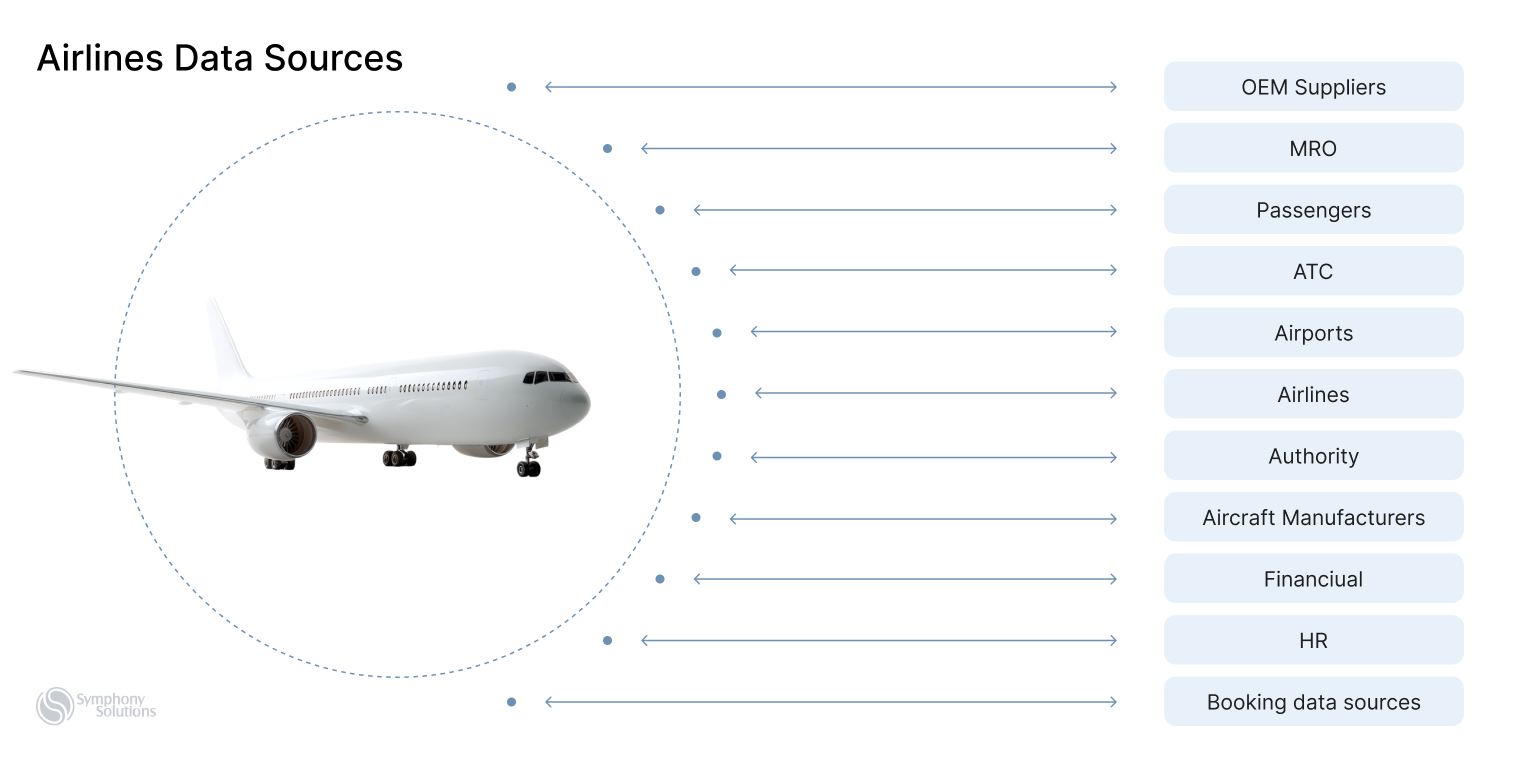
    Modern airline operations rely on constant streams of data. Aircraft talk through systems like ACARS, reporting airspeed, altitude, and finer things like engine power shifts, control surface movements, and turbine temperature changes. 

    This enables unprecedented levels of analytical precision. Airlines no longer wait for failure. They predict it. 

    Algorithms, trained on years of flight history and fed real-time telemetry, can forecast wear long before it becomes critical. So, a valve is swapped before it fails, and a drifting sensor is recalibrated before it corrupts data integrity. Disruption is stopped before it begins. 

    Location tracking has become more nuanced and data-based as well. Traditional radar is now paired with multilateration, giving precise positions even in blind spots. This allows for trajectory-based operations and 4D flight path optimization in crowded corridors. 

    Financial operations have also been transformed. Real-time decision engines are now at the heart of airline revenue management. They pull from past demand trends, fare data (scraped in milliseconds), detailed demographic profiles, no-show odds, and more to deliver dynamic pricing. 

    airlines data sources

    Finally, data is infused into HR activities, too. Every phase of the employee lifecycle is tracked – hiring, training, fatigue management, and retention.  

    • Airlines use performance history, training records, and behavioral assessments to judge qualifications and determine organizational fit. 
    • Simulator scores, evaluations, and test scores are taken into account to measure progress and flag weak areas.  
    • For retention, airlines analyze patterns in absenteeism, engagement, and feedback. This lets them act with role changes, support, and training – to keep people engaged and motivated. 
    • Finally, sentiment analysis of surveys and internal communication helps HR read morale and adjust the course. 

    There are just a few examples. 

    The Sources of Data Airlines Use 

    Let’s name the main ones. 

    As mentioned, ACARS is a biggie. Air traffic control networks also give continuous positional updates. And then there are airports, which run huge operational databases that handle baggage info, gate assignments, ticketing platforms, etc. 

    The sources and data are abundant, but the hard part is uniting them all, as that requires stitching together disparate systems. 

    This is where APIs come in – the unsung heroes of data-driven innovation. 

    What are Airline APIs? 

    Think of them as digital translators that define the rules for data exchange. They allow software systems to talk in real time. 

    A flight tracker app pulls data from air traffic control via an API. Revenue management tools use them to get real-time booking stats or competitor pricing. And for predictive maintenance platforms, APIs bring aircraft health data from ACARS. 

    Together, APIs form an intricate network of controlled portals, each accessing a specific dataset or function – but only if the rules are followed and the caller is trusted. They ease integration complexity and provide safety; they’re especially relevant when airlines need to bridge legacy systems. 

    APIs are why airlines can maintain a unified view of their complex operations, turning floods of raw data into insights that drive safer flights, better pricing, and smoother logistics.  

    A Deeper Look Into What APIs Do 

    APIs power many core functions. 

    They let airlines share flight schedules and seat availability with global travel platforms in milliseconds. This keeps inventory visible everywhere, all the time. They plug into global distribution systems (GDSs), so travel agents and booking engines worldwide can pull real-time data from the airline’s system. 

    They connect airline systems to airport systems, which is needed for gate assignments, baggage tracking, and passenger flow management. Without them, airlines wouldn’t be able to react to delays, reroutes, and congestion as effectively.  

    APIs are also elevating the passenger experience. The mobile app a passenger uses to check in, choose a seat, or track a bag runs on APIs. One for flight status. One for check-in. One for booking. Each call – the request from the user – draws live data and presents it cleanly. It feels simple, but only because APIs conceal the complexity. 

    APIs also unlock innovation. As airlines increasingly enhance their software systems and open slices of their datasets to third-party developers, new services emerge – travel recommendations tuned to people’s habits, loyalty programs that integrate with their digital life, in-flight perks tailored to their preferences, and so on. 

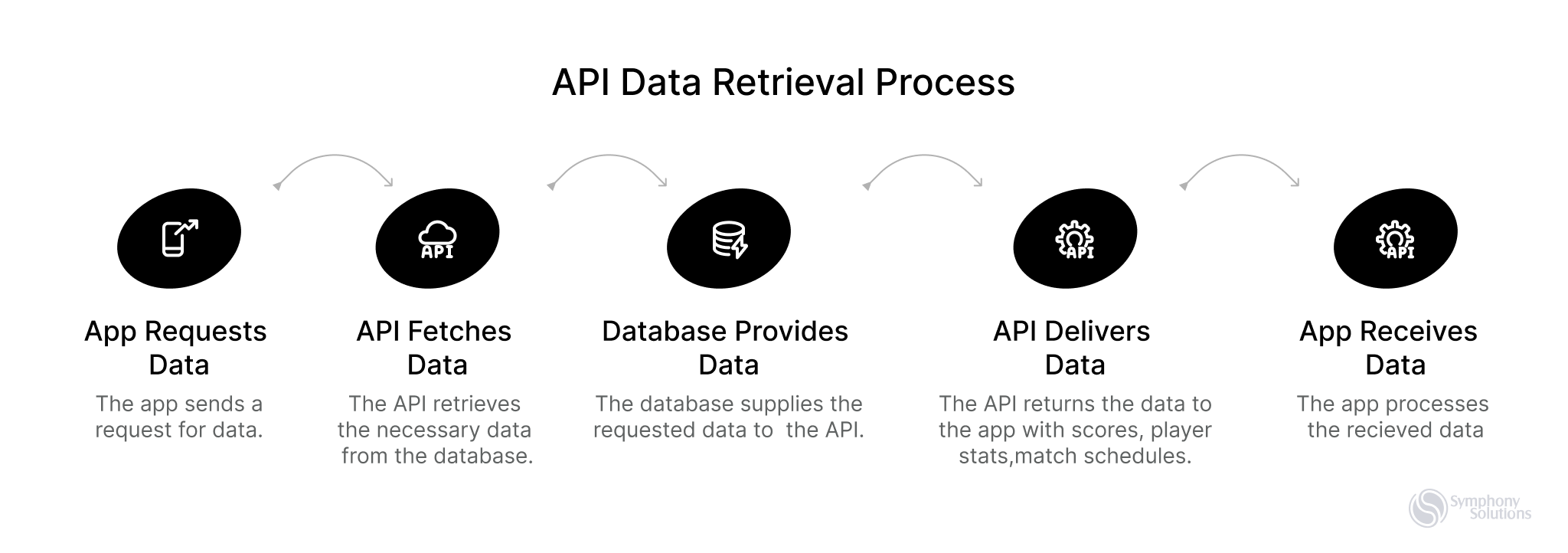
    Take something as simple as a flight-tracking app. When you check a flight, it sends a request to the airline’s API. The system returns a small packet: position, altitude, arrival estimate, delays. That response doesn’t come from radar, but from a structured, secure API. The app never reaches the airline’s core database – it only sees what the API is allowed to share. Security and convenience are combined. 

    what apis do

    APIs are also needed for modernization. Here’s a real-world example: One of our clients, an Irish airline operating 100+ routes, was struggling with its legacy Passenger Service System (PSS), which couldn’t handle modern business logic or align with IATA’s New Distribution Capability (NDC) standards. 

    We helped them launch a new, advanced Offer and Order Management System (OOMS). Our experts migrated the business logic and integrated NDC APIs. As a result, the client got enhanced performance and streamlined travel agent workflows.  

    Examples of API integration 

    APIs are changing every aspect of airline operations, from booking and baggage handling to crew scheduling and revenue management. Here’s how: 

    Airline booking APIs 

    Let’s talk about booking first. NDC has ushered in an industry-wide shift from static, inflexible fare filing systems to dynamic, personalized offers. Previously, airlines mainly relied on GDSs. These were massive distribution systems where prices, inventory, and offers were stripped of nuance, packaged generically, and sent to booking agents with little context or flexibility. With NDC, airlines’ core intelligence systems became linked to the transaction process, enabling them to respond in real-time and make informed decisions.  

    By deploying NDC APIs, airlines reshape how offers are built and sold. The implications go far beyond ticket sales. Ancillaries, bundles, and exclusive perks – all of this is now being pushed dynamically, based on data.  

    Operations APIs 

    APIs power critical operational touchpoints. Ground handling systems – siloed by default – can now plug into central operations dashboards. This way, a delay in baggage offload triggers a real-time update to the flight departure algorithm. The system calculates knock-on effects. New gate assignments are issued. Connecting flights are held or rerouted. The crew scheduling module is pinged as well. It’s a cascade of small systems, which APIs stitch into one. 

    Fuel management APIs 

    Take another example – fuel management. An API integration between the fuel provider’s dispatch system and the airline’s aircraft turnaround software means refueling data flows without delay. No more clipboard checks and miscommunication. The flight crew sees a green light the moment the tanks are full. Dispatch gets a timestamp. Analytics logs the exact burn rates and variations against the forecast. All of this happens in real-time. 

    HR and crew scheduling APIs  

    Or HR. API integrations sync the training management system with crew rostering and fatigue tracking platforms. When a pilot finishes simulator training, the certification is logged, and the scheduling engine sees it. They’re cleared for a new aircraft type or a new route automatically. Meanwhile, the fatigue API flags when that same pilot has been on a heavy rotation – two red-eyes in three days – and so the roster shifts.  

    Financial APIs 

    Financial operations become much more efficient with APIs as well. Revenue accounting platforms ingest data from every edge of the airline – ticketing, ancillaries, refunds, upgrades, even partner programs. The result is real-time revenue calculation. APIs connect the front line to the ledger. And when a loyalty member uses miles across partners – hotel, rental, ride-share – it’s an API that translates the transaction, reconciles the value, and settles the books. 

    Consumer and travel tech APIs 

    Then there’s the travel tech – internal and consumer-facing. Booking platforms like Amadeus, Sabre, and Skyscanner use APIs to request live fares, seat maps, baggage rules, and upgrade paths. Every time a customer clicks a button, an API call is fired off to the airline’s system. The response – personalized and immediate – is what powers the seamless booking experience. And it’s not just sales. APIs let weather platforms alert operations centers, let catering systems adjust for special meals based on last-minute booking changes, and let airport systems share real-time security wait times with the mobile app. 

    In every example – whether it’s a travel app, a fuel truck, a flight attendant’s scheduling dashboard, or an offer engine building a dynamic fare – the API acts as the switchboard and the bridge. It translates needs into calls, and systems into responses.  

    Another relevant case: a subsidiary of a major European airline, specializing in leisure routes to Europe, the Mediterranean, and the Americas, was looking for ways to enhance customer service and scale operations. It also relied on an outdated Passenger Service System (PSS), which hindered their performance. The legacy solution was an obstacle to meeting current industry demands for personalization and flexibility. 

    We assisted the client in moving to a sophisticated OOMS. We also integrated NDC APIs and established connections with multiple third-party services and payment providers.  This new, interconnected, and flexible solution enabled the airline to elevate capabilities and operations across insurance, booking, and payment functions. The new approach, with APIs playing a major role, enabled them to deliver a more versatile and seamless customer experience. 

    Challenges of API Integration 

    The journey to an API-driven airline ecosystem can be challenging, especially for organizaitons lacking in-house engineering expertise. Every such initiative needs expertise and a plan. 

    Integrating disparate systems is one of the toughest issues. Airlines, often the result of decades of mergers, acquisitions, and organic growth, often operate multiple legacy platforms. Their data is completely siloed. These systems were built in different eras with varying architectures and proprietary data formats. No one intended for them to communicate.  

    Bridging them through APIs requires complex mapping, transformation, unwrapping, and re-packaging data. Ensuring unity in how they talk, while avoiding latency and preserving data integrity, requires specialists. 

    Handling the volume and velocity of exchanged data presents another challenge. Millions of requests and responses flow through APIs each second, carrying info about bookings, flight status, passenger preferences, operational updates, and financial transactions. This necessitates a robust and scalable infrastructure. 

    Airlines must invest in sophisticated monitoring and analytics tools as well to track API performance, identify bottlenecks, and address potential issues before they impact operations or CX. Think of it as managing traffic in a major city. Without monitoring and control, the traffic congestion in Tokyo would plunge the roads into chaos within hours. 

    Data privacy regulations add another layer of complexity. Airlines that utilize APIs to collect granular customer data for personalization must be able to navigate complex local and international regulations such as GDPR and CCPA. They need robust security protocols and transparent data governance policies. Responsible data practices are crucial for long-term sustainability. 

    There is also the industry-wide adoption of NDC. IATA provides the foundational framework, but implementation still requires organizations to align on technical specifications, data exchange protocols, and business processes.  The lack of standardization can lead to inconsistencies and complexities in API integrations, and that, in turn, could disrupt the flow of information across the ecosystem. 

    Finally, the initial costs of upgrading legacy systems and developing new API capabilities can be high. More so, if the company lacks in-house skills or an experienced technology partner. 

    A lot goes into it. Replacing outdated infrastructure, building API-enabled platforms, establishing reliable integrations, and enforcing security as per laws – all this is impossible to accomplish without specialized talent and resources. So, before committing to such a project, make sure you have a strong business case and then create a clear and detailed roadmap and apply a phased approach, recalibrating, testing, and debugging systems along the way. 

    When done right, it’s worth it, though. As another of our cases demonstrates, modernizing core systems and implementing APIs is advantageous in numerous ways. Increased market reach, faster responsiveness to market changes, elevated user experience, and more revenue are just a few of the benefits. 

    APIs and the Future of Airline Operations 

    The rise of APIs is reshaping the airline industry from the ground up. Airlines are no longer bound by rigid legacy systems. Instead, they operate as open networks, where data moves freely and decisions happen faster and closer to the customer. 

    APIs work from the first search for a trip to the arrival. They link systems to help deliver cohesive, smooth experiences. They also enable airlines to future-proof. With modular, composable architectures, organizations can reach the level of agility needed to adapt to changing market needs and rising passenger expectations. APIs significantly contribute to innovation across commercial, operational, and administrative systems. 
     
    The challenging task is implementing them correctly. And Symphony Solutions has mastered that. Having worked with various clients within the industry, we understand their specific pain points and the challenges airlines face. We specialize in building and integrating APIs that drive real digital transformation. 

    Our teams bring deep industry knowledge and technical skill. We help airlines unlock data and connect all critical systems: passenger service, inventory, flight operations, loyalty, and more. We build secure, scalable solutions tailored to your unique requirements.  

    If you want to adopt NDC and APIs to create dynamic offers, enable real-time operational control, and deliver truly personalized passenger experiences, we can help you achieve that cost-efficiently. Contact us now to get the technical depth and practical experience needed to propel your business forward. 

  • Why Airline Marketing Needs a Digital Altitude Boost 

    Why Airline Marketing Needs a Digital Altitude Boost 

    In 2025, the aviation industry is experiencing unprecedented growth, with global revenues projected to surpass $1 trillion and passenger traffic expected to exceed 5.2 billion, IATA reports. Despite this surge, airlines face challenges such as geopolitical tensions, fluctuating demand, and evolving consumer behaviors. These factors necessitate a reevaluation of traditional airline marketing strategies. 

    To navigate this complex landscape, airlines must adopt innovative marketing approaches that leverage digital technologies, data analytics, and personalized customer experiences. This article explores effective airline marketing strategies for growth, focusing on digital transformation, personalization, and the integration of advanced technologies. 

    Challenges and Specifics in Airline Marketing Strategies 

    The air travel industry in 2025 is marked by both opportunities and challenges. While passenger demand continues to rise, airlines grapple with operational constraints and shifting consumer expectations. 

    challenges in airline marketing strategies

    Geopolitical Tensions 

    Trade policies and geopolitical developments have introduced uncertainties, affecting international travel demand. For instance, Air France-KLM has reduced economy-class fares to sustain passenger volume on transatlantic flights amidst a drop in demand. 

    Operational Constraints 

    Airlines face capacity limitations due to aircraft delivery delays and labor shortages. These challenges impact route planning and service offerings, necessitating agile marketing strategies to manage customer expectations. 

    Evolving Target Audience Behaviors 

    Modern travelers seek personalized experiences, seamless digital interactions, and transparency in services. Meeting these expectations requires airlines to invest in digital platforms and data-driven marketing initiatives. 

    What Modern Airline Marketing Looks Like 

    Contemporary travel market advertising has evolved beyond traditional advertising, focusing on creating holistic and personalized travel experiences. Key effective strategies include: 

    1. Personalized Marketing Based on Traveler Data 

    Airline companies are leveraging artificial intelligence (AI) and machine learning (ML) to analyze customer data, enabling them to offer tailored services and promotions. This approach attracts more new customers and enhances loyal customer satisfaction and allegiance. 

    • In December 2024, Air France-KLM partnered with Google Cloud to implement generative AI for analyzing passenger preferences, predicting maintenance needs, and optimizing operations. The technology reduces predictive maintenance analysis time from hours to minutes. 

    2. Omnichannel Experiences 

    Providing consistent and integrated experiences across various platforms—such as mobile apps, websites, social media, and in-flight services—is crucial. 

    • Delta’s omnichannel strategy integrates website, app, social media marketing, kiosks and service channels to deliver seamless travel experiences. Passengers receive consistent updates and personalized offers from booking through arrival at their destination. 
    • Singapore Airlines has perfected the customer experience through its mobile app that addresses every facet of travel, from ticket purchasing to in-flight meal management. Whether the customer contacts via the app, online, or in-person service, their omnichannel approach guarantees consistency. 

    3. Rise of Content and Storytelling 

    Airlines are increasingly utilizing storytelling and lifestyle content in their marketing tactic to inspire travel and build brand affinity. Engaging narratives and visually appealing content across digital channels can influence travelers’ decisions and foster emotional connections. 

    • British Airways launched a minimalist marketing campaign titled “Windows” in 2024, featuring images of passengers gazing out of airplane windows. The campaign focused on curiosity and wonder, capturing the emotions of passengers and accentuating the brand’s devotion to creating memorable experiences. 
    • Emirates introduced a virtual reality (VR) experience allowing passengers to preview its new A380 cabins from the comfort of their homes. By enabling users to tour first-class suites and check out onboard lounges, Emirates is building excitement around its products and strengthening its premium brand image. 

    4. Strategic Billboard Campaigns 

    In April 2025, United Airlines have launched a billboard campaign at Chicago’s O’Hare International Airport to reaffirm its commitment to the city amidst speculation about relocating its headquarters. The billboards, strategically placed across the airport, guide travelers to United’s terminal while subtly undermining competitors by labeling their terminals as “the rest.” 

    5. Alliance-Wide Branding Initiatives 

    In November 2024, oneworld® launched its first campaign in five years – Cleared for Take-off‘ – celebrating its 25th anniversary. Targeting 40M travelers, it featured digital ads at major airports (Heathrow, LAX, Sydney) and introduced aviation’s first alliance sound logo. 

    6. Purpose-Driven Digital Marketing Campaigns 

    Jetstar Airways’ 2023 “Make It Count” advertising campaign promoted meaningful travel through digital/social/OOH content, inspired by survey data showing 85% valued holidays but 60% hadn’t planned 2024 trips. 

    7. Augmented Reality In-Flight Entertainment 

    Hainan Airlines’ July 2024 AR system (with Rokid) offers 3D movies on virtual screens and interactive shopping via smart glasses, plus translated safety demos to attract and retain customers – driving 15% higher ancillary revenue. 

    These contemporary examples illustrate the diverse and innovative approaches airlines are adopting to enhance customer engagement and brand loyalty. As we explore these marketing strategies, it’s also essential to consider the technological advancements that support these initiatives, particularly in the realm of API development and integration. 

    Powering Marketing for Airlines with IT Services 

    At Symphony Solutions, we understand that in today’s fast-moving aviation market, marketing can no longer rely on traditional promotions alone. Real growth comes from deeply personalized, data-driven campaigns—supported by seamless IT systems that integrate customer behavior, automate offer creation, and adapt in real-time. Our expertise lies in exactly that intersection between digital transformation and industry marketing enablement. 

    Data Analytics: Turning Customer Data into Strategy 

    Customer-centric marketing starts with understanding the traveler. Customer Data Platforms (CDPs) and Customer Relationship Management (CRM) integrations enable organizations to consolidate data from across the customer journey, building unified profiles that support personalized offers and timely engagement. These services are part of Symphony Solutions’ broader data architecture and analytics capabilities—helping marketing teams activate insights in real time and drive revenue through smarter segmentation and targeting. 

    AI/ML and NLP for Sentiment-Driven Strategy 

    Airlines are increasingly using AI and Machine Learning (ML) not just to optimize operations but to understand passengers on an emotional level. Through Natural Language Processing (NLP), vast amounts of unstructured data—reviews, surveys, social posts—are analyzed across languages to detect sentiment and emerging trends. These AI-driven insights help fine-tune marketing tone, adapt customer service strategies, and identify recurring issues before they escalate. The result is smarter, more emotionally aware engagement—built on real-time data and powered by intelligent systems. 

    Internet of Things (IoT) for Operational and Experience Optimization 

    We implement IoT-based solutions that capture real-time traveler movement across airports, boarding gates, and aircraft cabins. This data helps optimize queue management, boarding times, and gate notifications—crucial for marketing teams looking to personalize in-airport offers or trigger last-minute upgrades based on passenger proximity or dwell times. 

    IoT also powers predictive maintenance and minimizes delays, enhancing brand reliability—an essential factor in campaign effectiveness. 

    Digital Marketing Strategies with Harmony: Our AI Agent 

    bet harmony

    Harmony, our AI-powered virtual assistant, transforms airline communication. Whether embedded in booking flows, apps, or chatbots, Harmony personalizes content, automates responses, and creates consistent multi-channel engagement. Airlines using Harmony can streamline bookings, boost loyalty engagement, and guide passengers toward high-converting actions without human intervention. 

    Case-in-Point: Airline Agility with Dynamic Offers and Strategic Partnerships 

    Symphony Solutions partnered with a European low-cost carrier, part of a major airline group, to launch a dynamic offer engine. The project enabled real-time personalized pricing, seamless integration with partner networks, and UX improvements. As a result, the airline saw increased ancillary revenue, broader market reach, and higher booking conversions. 

    Key Technologies in Airline Marketing – Use Cases & Business Impact 

    To visualize how various technologies like these create measurable marketing impact, here’s a quick breakdown of modern airline tech use cases — and the results they’re delivering industry-wide: 

    Technology Airline Use Case Business Impact 
    Customer Data Platforms (CDP) Unified traveler profiles for dynamic offers Higher conversion rates, better targeting 
    CRM + AI Assistants Personalized chat, automated service Boosted loyalty engagement, reduced support cost 
    NLP Sentiment Analysis Analyzing customer feedback from surveys/social Improved service quality, adaptive messaging 
    IoT Passenger flow tracking, gate-based notifications Reduced congestion, increased in-airport sales 
    Predictive Analytics (ML) Dynamic pricing, demand forecasting Optimized load factor, higher ancillary revenue 

    These tools don’t just support marketing — they shape how airlines connect, convert, and retain travelers in a world where every second and signal matters. 

    Benefits of Integrating Technology in Airline Marketing 

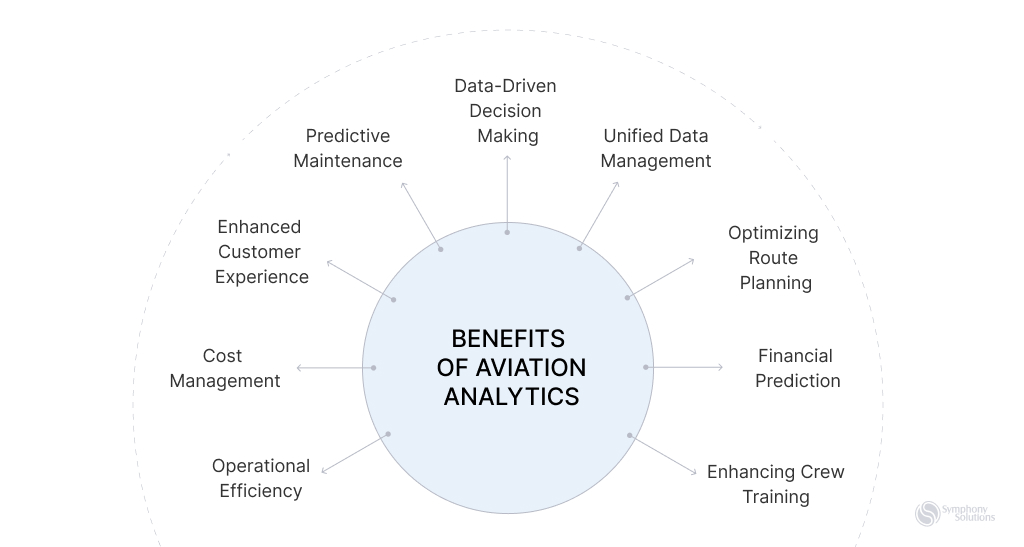
    benefits of integrating technology in airline marketing

    Beyond the specific implementations detailed above, integrating advanced technologies into airline marketing strategies yields several broader benefits: 

    • Enhanced Customer Experience: Personalized offers, seamless check-ins, and real-time updates lead to increased customer satisfaction and loyalty. Airlines focusing on personalization have observed significant revenue increases. 
    • Improved Operational Efficiency: Data-driven decision-making and automation streamline various aspects of airline operations. Implementing centralized data repositories ensures consistency and accuracy in decision-making. 
    • Increased Revenue Opportunities: Leveraging advanced analytics and AI enables airlines to unlock new revenue streams. Tailored ancillary services, such as seat upgrades and in-flight purchases, have been linked to notable increases in ancillary revenue. 
    • Regulatory Compliance and Safety: Advanced monitoring and reporting tools help airlines stay compliant with evolving regulations and safety standards, reducing the risk of penalties. 
    • Agility and Scalability: Digital transformation initiatives enhance agility and scalability, allowing airlines to respond swiftly to market dynamics, competitor actions, and regulatory requirements. 

    By integrating these technological advancements, airlines can not only enhance operational efficiency but also deliver personalized, seamless experiences that drive customer loyalty and revenue growth. 

    Conclusion: The Future of Airline Marketing Is Adaptive and Data-Driven 

    Airline marketing in 2025 is no longer about one-size-fits-all traditional marketing campaigns. It’s about real-time personalization, seamless omnichannel experiences, and data-driven strategies that align with evolving traveler expectations. 

    As digital transformation accelerates, marketing teams must evolve alongside it — integrating advanced technologies, adapting quickly to change, and focusing on long-term engagement rather than short-term promotions. 

    Ready to elevate your airline marketing with cutting-edge technology and data solutions? Explore Symphony Solutions’ aviation software development services and take the next step toward transforming your airline’s digital strategy. 

  • AI for Decision-Making: Make Better Decisions and Transform Business Strategy 

    AI for Decision-Making: Make Better Decisions and Transform Business Strategy 

    Risking sounding like a broken record, we won’t tire of stressing, again and again, that AI’s impact on analytics can change the game for any business. The models can handle the whole process, simplifying or automating everything from data collection to preparation, implementation, extracting insights, breaking them down, and incorporating them to improve KPIs. The market data is staggering, too. FedEx uses AI to cut logistics costs by 15% and improve delivery times by 20%. Amazon’s AI recommendations drive 35% of its sales. That’s billions generated annually. Countless examples, across every industry. Goldman Sachs estimates that global businesses will invest nearly $1 trillion in AI infrastructure in the next few years. 

    We’ll discuss decision intelligence and AI’s broader role in it. We’ll explain how AI-driven analytics differ from traditional tools and why it’s crucial to have seasoned expertise on your side to empower LoB users and businesses with AI-supported capabilities. Strap in. 

    AI in Decision Making: Key Principles 

    First off, when we say AI, we’re being general. There’s a range of models – supervised, unsupervised, reinforced, Bayesian, and more – that can be applied to different analytical contexts based on the setting’s dynamics, data dimensions, and other factors. The key is picking the right algorithm for the exact use case, where the company has – or can acquire – the necessary data.  

    Secondly, it’s also important to distinguish between terms often thrown out interchangeably but actually meaning different things: decision intelligence (DI) and AI-enabled support.  

    DI is about using technology – mainly AI, but also other tools and techniques – to improve decision-making at all levels. It focuses on a holistic approach, where modeling, design, automation, and continuous monitoring are all part of the decision process. It also incorporates feedback loops for ongoing refinement.  

    Take pricing optimization as an example. A company leveraging DI would likely use a whole stack of tools to predict demand (time-series analysis), assess supply chain constraints (optimization, simulation, and inventory platforms), analyze competitors’ pricing dynamics (agent-based and competitive analysis platforms), and measure the impact of marketing campaigns (A/B testing and attribution solutions). All of these systems would generate outputs that, pieced together, would serve as a basis for an AI recommendation engine suggesting optimal pricing strategies. And the accuracy of the latter will also be tracked to refine predictions over time.  

    That’s DI in a nutshell. As you can see, to truly benefit from it, companies need expertise not only in AI/ML, but also in engineering, data visualization, statistics, and even decision theory. Or they can just partner with a vendor that does. 

    AI-enabled support, on the other hand, is a part of the broader DI framework. It refers to enhancing human capabilities by providing AI insights and action suggestions within specific workflows. For example, an AI trained on medical data might help a healthcare professional by flagging potential abnormalities. The scope is limited, but the effect on how fast the professional works could be immense. 

    AI-powered analytics is another key element of DI. It is distinct from traditional analytics in that it uses ML and neural networks to extract meaning from data. And that, due to AI’s inherent properties, leads to differences in scope, mechanics, assumptions, adaptability, and application. Here’s what we mean: 

    Traditional analytics relies on established statistical methods – like linear regression – and operates on structured data, such as spreadsheets and databases. Rules and hypotheses are defined upfront and tested against historical data. It always assumes that past patterns predict the future and relies on human input to frame problems.  

    It’s rigid. When new variables appear – like a market shift or unexpected customer behavior – the models must be updated manually. This limits traditional analytics to variables and timeframes that were manually encoded, unless specific forecasting tools are added. But even then, it operates on the assumption of static conditions – steady demand, consistent seasonality, etc. 

    AI analytics, by contrast, bypass predefined rules. The models can learn patterns from datasets on their own, which allows them to handle messier, less-predictable problems (like customer churn or client feedback sentiment). They can also process unstructured data directly – CNNs classify images, and NLP models parse social media comments or tweets.  

    These algorithms can shift from historical to real-time data when needed, providing prescriptive and predictive insights. This makes the AI analytics tool vastly better suited for volatile environments. Of course, this depends on whether the training data is relevant to possible future states. 

    The Impact of AI on Business Decision-Making 

    Now that we’ve outlined the distinctions, let’s focus on how AI-empowered decision-making adds value. It would take a book to cover every benefit, so for brevity, we’ll focus on four key areas. 

    Accelerating Decisions 

    Models can process millions of data points – sales reports, client interactions, market signals, feedback – within seconds, comprehensively. A human analyst would spend hours combing through spreadsheets to find a single trend. And humans get tired. When faced with large amounts of data – reports, metrics, emails – it becomes extremely hard for them to separate actionable insights from noise. AI fights this information overload by filtering and prioritizing data, turning raw inputs into valuable insights. 

    Testing the What-Ifs 

    Models simulate possibilities, letting organizations experiment without risk. Tools like Monte Carlo or generative adversarial networks can, for example, measure the impact of a supply chain disruption or a new marketing campaign with various inputs – cost, timing, consumer response, and more. A financial institution might use AI to assess portfolio risks under different economic conditions, detecting vulnerabilities and blind spots. They can run thousands of scenarios without real stakes, quantify uncertainty, and mitigate vulnerabilities. The key is ensuring the training data isn’t too optimistic and that no important variables are left out. Done right, this lets companies plan proactively, with more nuance and precision than traditional tools could ever allow. 

    Increased Productivity 

    AI handles routine tasks, like flagging anomalies and parsing logs, freeing up human bandwidth and boosting operational responsiveness. Imagine running a warehouse. AI tools optimize picking routes and restocking schedules in real time, adapting to order spikes, while manual planning with static rules falls short. AI also allows for quick pivots – rerouting deliveries when a vital highway is blocked, for example. It’s easier to adapt when you aren’t relying on rigid processes. 

    Furthermore, the models prevent inconsistencies and delays caused by siloed teams and manual work and reduce burnout. When analytical experts make the same choices over and over, focus slips. AI takes over the routine decisions, giving staff more mental energy for high-stakes, complex issues. 

    Democratization 

    As we’ve covered in detail in our article on GenBI, AI models – especially generative ones – bring the analytical power to the Line-of-Business. With these tools, a clerk can forecast daily stock needs without knowing regression equations. All that’s required is to specify the insights and visualizations they want in a natural-language prompt. Afterward, AI can be prompted to explain how it reached a conclusion, and it will guide the LoB user through the entire process in understandable terms. This eliminates the “black-box” problem of traditional methods. 

    The Main Elements of Decision Intelligence 

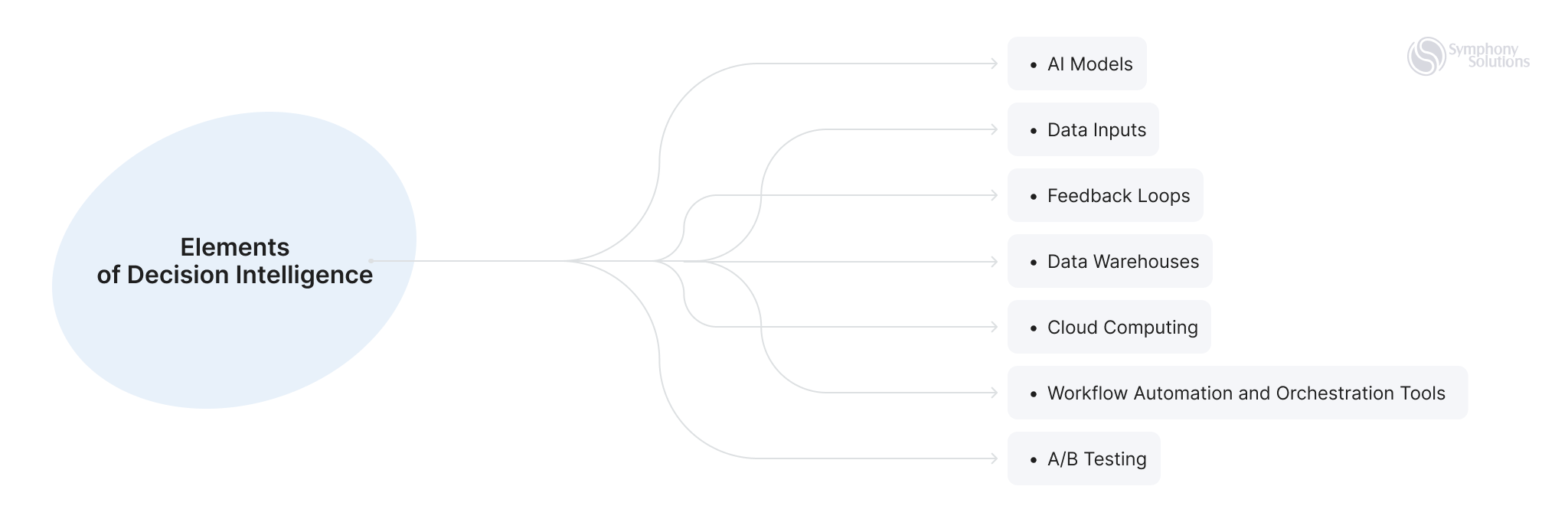
    elements of decision intelligence

    DI encompasses layered processes with many moving parts. Algorithms, data streams from DWHs and other sources, analytical techniques, and automation – all must align for a company to get valuable insights and, subsequently, high-impact outcomes. Let’s break down the main pieces: 

    • AI Models 
      Everything from decision trees to transformers. AI models are the engine of decision intelligence and companies typically use many at once, for different data and situations. Through their ability to learn and adapt, they are the core computational components that process data and generate insights. 
    • Data Inputs 
      As we’ve discussed, ML models can handle any data – from spreadsheets to unstructured sensor readings or customer emails. A retailer, for instance, can feed web clicks, transaction logs, and weather data into AI to predict product demand. Data inputs are the raw material that fuels the AI models, providing the necessary context and information for analysis. But this only works when data is plentiful and the architecture is selected properly. 
    • Feedback Loops 
      Sticking with the retailer example, after predictions are made, the model loops back real-world sales data, adjusting its parameters to improve the next round of predictions. Feedback loops are what power continuous improvement. It allows the AI to fix its mistakes and learn from them. 
    • Data Warehouses 
      These are the central stores from which models draw data. They hold terabytes of historical and real-time data, keeping models fresh and well-rounded. Without an up-to-date dataset, the model, even a highly advanced one, will become useless over time. That’s why DWS and data lakes, are often crucial for AI-powered analytics. This is often glossed over, but setting up, integrating, and migrating data to a sophisticated data storage system, like Symphony did for GOAT, is the central element of any data management or data science initiative. Without it, organizations will struggle with basic counting, let alone predictive analysis. 
    • Cloud Computing 
      Cloud platforms provide the infrastructure and resources to run, update, and scale AI analytics. 
    • Workflow Automation and Orchestration Tools 
      These solutions help embed automation into analytics processes – from data ingestion to model deployment to incorporating insights. When the workflows leading up to insights generation are uniform, streamlined, and optimized, there’s consistency and efficiency in the decision-making process. 
    • A/B Testing 
      Model outputs should be tested in a live environment. A/B testing tools help companies identify the best-performing algorithms for each case, making them essential to the DI projects as well. 

    The specific types of tools that will be selected for DI will vary for each organization, based on industry regulations, requirements, current level of data literacy, budget, and more. 

    In terms of popular approaches, though, in predictive analytics – statistical and ML methods are the go-tos. These methods find trends in data and project them forward. They’re typically used for tasks such as risk estimation (think patient readmissions based on medical history and vitals). 

    Prescriptive analytics will typically go a step further and throw in optimization, simulation, and decision modeling algorithms. These not only find trends but also determine the best actions to take. 

    We should also give a special mention to reinforcement learning. This is a technique of teaching the algorithm through trial and error, i.e., giving rewards for getting closer to the goal and penalizing it when it slips. Picture a tool that learns to balance energy use in a smart grid and a person, or another algorithm, guiding it with a carrot and a stick. 

    RL is typically deployed in dynamic analytics applications. While predictive and prescriptive analytics mine existing data to forecast and recommend, RL is about the AI getting better through continuous interaction with the issue and receiving feedback. It’s an ideal ML technique for situations needing real-time adaptation and optimization. 

    Use Cases and Common Applications 

    We’re seeing AI analytics being used in both broad and very industry-specific, niche applications, with equal success. The range of uses is truly large, and it will keep expanding as the models grow more powerful and accessible. However, here are a few common examples for reference. 

    General  

    Fraud Detection 

    The PayPals and Stripes of this world, as well as large banks, have long relied on AI to spot and flag suspicious transactions. Their anomaly detection models, exceptionally advanced at this point, can sniff out anything unusual within milliseconds. And then, they also cross-reference the questionable transactions with user norms and fraud patterns in real-time. 

    Content Recommendation 

    Even non-tech-savvy people are well aware that the recommendation engines on Netflix, Spotify, TikTok, and others are completely powered by AI. These models use collaborative filtering, and their neural networks determine exactly what features each user prefers, so they can provide compelling suggestions for what users should check out next. Currently, entertainment use cases are the most talked-about, but companies actively apply these algorithms to enhance upselling, support, and other functions and services across industries. 

    Industry-Specific  

    Healthcare 

    At the world-renowned Mayo Clinic, AI assists medical professionals with both diagnostic and treatment tasks. Namely, the tools analyze patient records, symptoms, and imaging data, also taking into account genetics and the latest research data to help doctors prioritize options. 

    Manufacturing 

    If you look at any forward-looking big-name manufacturer, they use AI-powered analytics in some form. General Electric, for instance, uses the models to run through machinery sensor data, historical data, and live metrics and help predict failures. This enables GE to schedule repairs proactively, which, in turn, leads to substantially reduced downtime. 

    Retail 

    As is the case with Netflix, Amazon’s inventive and slick use of AI has amazed people for years now. In every corner of the globe, marketplaces are trying to emulate their dynamic pricing. The company uses predictive algorithms to adjust prices on millions of items daily. While we can’t know all the parameters, the models certainly factor in competitor prices, inventory levels, and demand elasticity. According to reports, AI suggestions drive about 35% of Amazon’s sales, which amounts to billions of dollars a year. 

    Transportation 

    In the transportation world, notable uses include the AI implementation of UPS. It has a proprietary AI system – On-road Integrated Optimization and Navigation (ORION) – which mines data from customers, vehicles, drivers, as well as traffic, package priorities, and fuel costs to optimize each trip, shaving off miles and saving the company money. In UPS’s case, AI-enabled predictive analytics results in millions saved annually.  

    Energy 

    Grid management is exactly the type of dynamic setting where AI algorithms thrive. National Grid ESO uses AI to balance electricity loads. Specifically, the company applies an ML model to effectively forecast solar power generation, which is notoriously hard to predict. 

    Ins and Outs of AI Implementation

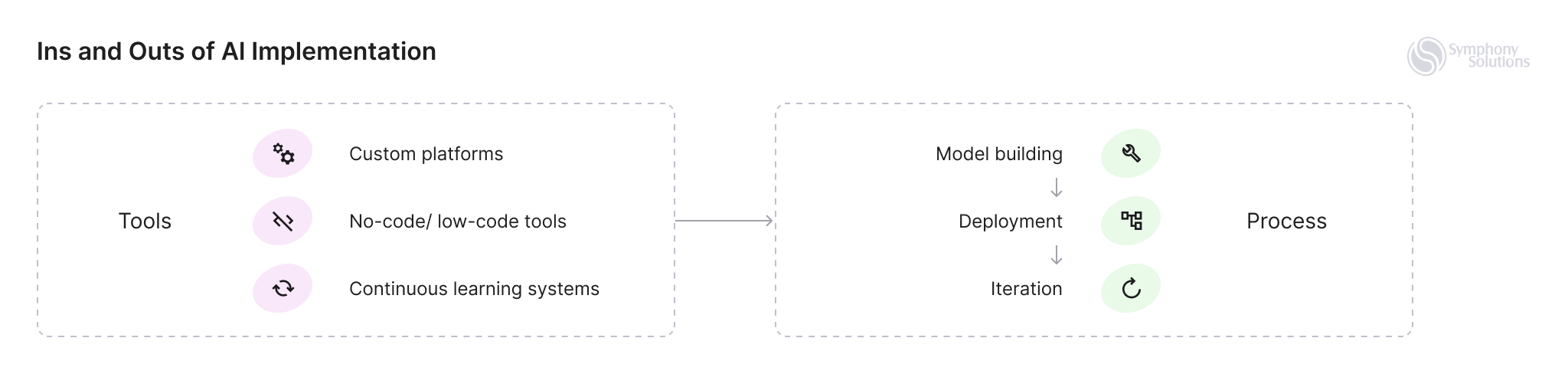
    Incorporating AI into processes isn’t easy. In fact, that’s where most companies fail. The integration requires both a phased, thought-out approach and proficiency in specialized tools. While different companies may approach it in their unique ways, we, at Symphony, have refined a meticulous procedure and rules that we adhere to. We’ve built it over years of delivering AI solutions. Here’s a condensed description of what’s involved. 

    ins and outs of ai implementation

    Tools

    Custom platforms. Tailored solutions, which we craft using languages like Python and frameworks like LangChain or PySpark, could offer analytical precision even for complex, industry-specific tasks. The end system could be designed to help retailers predict demand, or a tailored recommendation platform built specifically for iGaming, like our Opti X. Building the tool from scratch could be a winning strategic approach, but it requires expertise and data.

    No-code/low-code tools for decision modeling. These systems, as the name suggests, enable the average person to create and design decision support systems without any coding or analytical skills, just by using drag and drop. They might be a viable option when a small marketing team, for example, is looking for a basic solution to get a general idea of potential churn rates. But their accuracy will not be high. The accessibility comes at the cost of the absence of depth.

    Continuous learning systems. There is a range of solutions like Google Cloud AutoML or Azure Machine Learning, which can adapt and adjust as new data comes in. These tools improve their outputs over time. In dynamic environments (customer support, pricing, grid management), they could be of extreme value.

    Picking or building the tools is just the beginning, though. To help with analytics, they must also be properly integrated with a company’s ERPs, CRMs, and BPMs. This means AI must be able to access data from profiles, campaigns, inventory, etc., freely to then also send insights back. To achieve this, APIs or other integration methods can be leveraged, depending on the exact requirements.

    Our Process

    We kick things off with discovery. This is where consultations and thorough analysis happen to determine the explicit pain points and scope the project. We will determine the issue (accelerating approvals, reducing stock, etc.) and map the available data (sales logs, feedback, etc.) to define the next steps. Gaps, silos or incomplete data, if found, will be addressed too.

    Next is the model building. We will first craft a prototype solution or fine-tune a third-party model (e.g., OpenAI) on your data. For a custom platform, we may train a neural network; for a no-code solution, we can cleanse and augment data and set up a pre-built template. Then, we’ll test it with historical data to ensure the model outputs predictions with the needed degree of accuracy.

    Then, it’s time to deploy. We will roll out the AI solution and test it in production end-to-end. This is the step where AI gets embedded into your workflows, and we monitor its performance. We may incorporate automation logic here, too.

    Iteration. At the next – final stage – we will compare the predictions vs. actual results and loop the real data back into the model so it refines its weights and biases for subsequent inferences. Continuous learning systems can pretty much do this automatically, but classical models will require manual updates.

    Scalability and Flexibility

    Unlike static and rigid tools, AI decision platforms are adjustable; they can grow and change as your business needs evolve.

    • Scalability. A scalable AI-decision system can be initially used by and then gradually become an enterprise-wide system. An AI utilized at a single warehouse, for instance, can gradually expand to dozens of facilities – handling increasingly more data and users – and then migrate to other functions.
    • Flexibility. This implies that models can be adaptable by design, i.e., you can modify them to serve new needs without a substantial rebuild. Continuous learning systems can do it themselves as the market changes and new data comes in, while rigid tools may need some recoding/retraining.

    Challenges

    Finally, after we’ve discussed all the perks, let’s talk about challenges.

    Data quality. With AI, the main principle is garbage in garbage out. If your data is spotty, biased, unstructured, spanning multiple systems and formats, the model performance will be subpar at best. Or it will just spit out nonsense. This is why at Symphony Solutions we not only help clients with building models, but also augment and cleanse their datasets as well as set up collection infrastructure to avoid similar issues in the future.

    Expertise. You need experienced data science and AI development experts. No way around this. Even the no-code tools, whose features are already limited, won’t be of use without basic data literacy. So, if you’re looking to partner with a vendor, choose one that offers end-to-end assistance throughout the ML model-building and analytics embedding lifecycle.

    Integration. This is even more delicate. You want to be able to plug in your new model into existing solutions, which likely handle sensitive data, without interrupting or compromising any processes. Issues like mismatched formats and slow APIs should all be handled without risks, and that, again, calls for significant expertise.

    Cost overruns. If your in-house team isn’t experienced enough to accurately evaluate the scope, or you’re collaborating with inexperienced developers, miscalculations and incomplete prognoses are bound to happen. And they often result in ballooning costs, especially if the pilot or prototype stage doesn’t go as intended.

    Overcomplexity. Lastly, the tendency of some companies to chase after the latest, untested, and only theoretically beneficial architectures typically ends with them throwing huge amounts of money into an overengineered mess of a system that doesn’t bring any tangible value.

    A forecasting tool or an analytics engine doesn’t necessarily require a thousand-layered neural network architecture. It takes experience to know which type of model will fit the specific use case.

    Summing Up 

    AI models, if implemented and integrated properly, can automate a large chunk of work pertaining to discovering what’s meaningful in data. They can mine structured and unstructured data streams – public, proprietary, third-party, etc. – and turn them into comprehensible visualizations or simple and actionable responses. Thus, they can empower line-of-business users and elevate companies’ analytical capabilities overall. 

    The success of such projects depends on the experience of the team, however. There’s quite a bit of nuance in how to prepare the data, build or customize the architecture, train and test the model, integrate it with the existing stack, and refine it, so its inputs get better over time and change as the business evolves. Symphony Solutions’ AI and analytics services encompass all of these phases. 

    If you’d like to get more sophisticated, AI-enabled analytical capabilities for your organization, contact us right now for a free consultation. 

  • Airline Trends to Watch: What’s Next in 2025? 

    Airline Trends to Watch: What’s Next in 2025? 

    The era of cosmetic digitization is over. In 2025, airlines face a deeper reckoning: one where operational speed, system integration, and data-driven decisions are now baseline expectations. What was once peripheral is now existential. 

    This isn’t speculation. According to Amadeus, airlines are increasing tech investment by an average of 13% year-over-year—channeling spend into core modernization, not just customer-facing upgrades. This article unpacks the less obvious—but more consequential—shifts behind that transformation.  

    Read on to stay ahead of the curve. 

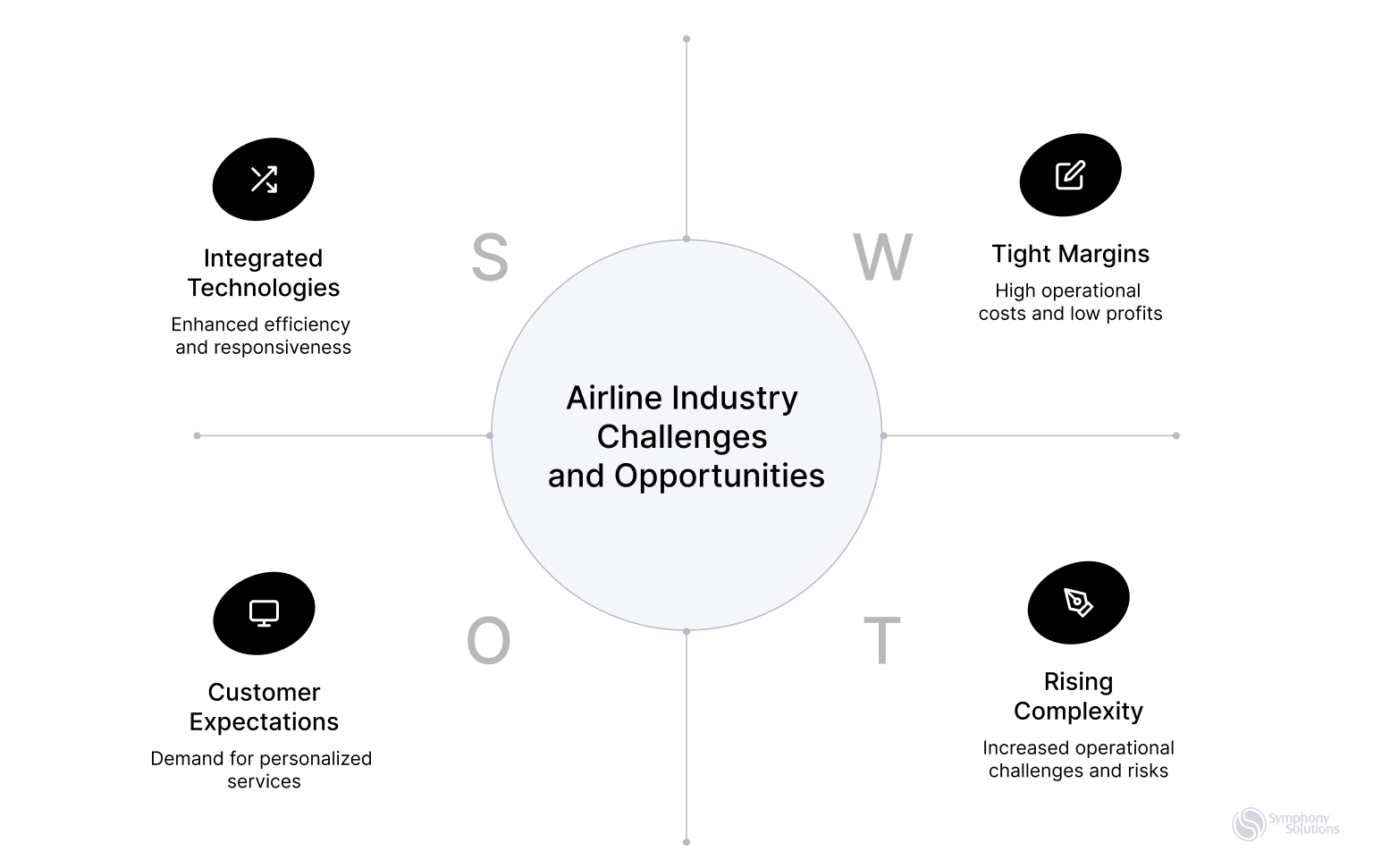
    airline industry challenges

    For years, many of the technologies now shaping aviation were stuck in pilot mode—AI, automation, data integration, even internal platforms. They were promising, but optional. That’s no longer the case. Here’s why: 

    • Disruption is constant. From weather events to workforce shortages, airlines now need systems that respond in real time—not hours later. For instance, the 2024 CrowdStrike IT outage led to widespread delays and operational challenges worldwide, underscoring the need for resilient, responsive systems.  
    • Customer expectations have leveled up. Passengers are expecting rebooking, refunds, and personalization to work like consumer apps—not legacy systems. Over 86% of airlines are partnering with innovators to integrate advanced technologies like AI and IoT to enhance customer experience and maintain a competitive edge. 
    • Margins are tight. In 2025, the airline industry is expected to cross $1 trillion in revenue for the first time. But with expenses reaching $940 billion and net profit margins holding at just 3.6%, inefficiency is no longer a line item—it’s a risk. 
    • Complexity is rising. Airlines are managing more routes, systems, and partnerships than ever before. The pressure from passenger demand, consumer expectations, and regulatory requirements necessitates modern infrastructure capable of handling increased complexity. 
    • Tech is no longer siloed. AI, data, automation, and architecture don’t sit in separate boxes—they now power each other. The integration of these technologies is now a necessity for more efficient and responsive systems. 

    This is no longer about staying ahead. It’s about staying functional. Now, let’s take a closer look at what’s powering the next phase of airline operations. 

    In 2025, the real transformation is happening deeper in the stack—where operations, data, and tech converge. Let’s explore. 

    AI-Driven Digitalization 

    AI is no longer a future play or an isolated pilot. In 2025, it’s becoming the connective tissue behind how airlines operate, decide, and adapt. 

    It’s showing up not in one breakthrough, but across everyday workflows. HR is forecasting crew constraints months ahead. Finance is flagging cost anomalies in real time. Compliance is scanning policy changes and surfacing what matters before it becomes risk. 

    But the deeper shift is in how decisions are made. Teams aren’t waiting for dashboards—they’re querying copilots. Ask “Which routes are bleeding margin this month?” and get not just raw data, but an answer in context. The interface may look like a chat box, but behind it is an integrated view of live operations. 

    JetBlue exemplifies this operational shift. In a single quarter, its use of generative AI in contact centers saved over 73,000 hours. But that’s not the headline. The real value came in how AI expanded agent bandwidth during disruptions, preserved customer retention, and elevated service without increasing headcount. 

    Beyond customer support, airlines are now using generative AI for data analytics—spotting margin bleed, forecasting crew constraints, and modeling operational scenarios in real time. 

    End-to-End Process Automation at Scale 

    AI may generate insights, but without automation, those insights sit idle. In 2025, leading carriers aren’t just automating tasks—they’re redesigning processes to act without delay. Automation is becoming the execution layer for AI-led decisions. 

    Disruption recovery clearly shows the shift. In the past, a single aircraft delay triggered a scramble—manual crew adjustments, passenger alerts, contract escalations. Today, those steps are linked. When a delay hits, systems execute rules in real time. No handoffs, no waiting. Recovery begins before ops teams even step in. 

    Air Canada’s rollout of an AI-driven recovery platform reflects this orchestration. What once took 12 hours—manual rebooking—now takes 10 minutes. The system handles 90% of disrupted itineraries autonomously, freeing staff to focus on the few cases where judgment, not speed, matters most. 

    The goal isn’t just to save time. It’s to remove latency from the business. And for that, systems need more than just automation—they need live interfaces that surface the right decisions in the right context. 

    UI/UX Rebuilds Anchored to Core Systems 

    For years, airlines focused on what passengers see—but not how those interfaces function under pressure. In 2025, that’s no longer sustainable. 

    Automation in aviation can execute decisions in milliseconds—but only if systems can surface accurate, real-time data. The bottleneck hasn’t been poor design—it’s been disconnection. Passenger apps looked sleek but pulled from outdated systems. Internal dashboards had clean UI but stale data underneath. The result: delays in action, not just in flights. 

    That’s now changing. Leading carriers are rebuilding UIs around live infrastructure. Staff dashboards are wired directly into ERP, PSS, and crew systems. Passenger apps offer dynamic rebooking, delay-aware upgrades, and live seat maps—because they’re connected to real operations, not mirrored snapshots. 

    This rebuild isn’t just cosmetic. It’s foundational—and it’s unlocking the next shift: custom-built, internal tools designed for how airlines really operate. 

    Internal Platforms for Operational Control 

    Once airlines rebuild interfaces around live systems, the next logical step is owning the systems themselves. 

    In 2025, the most agile carriers aren’t waiting for off-the-shelf vendors to catch up. They’re designing internal platforms that reflect their own logic—how their crews move, how they plan rotations, how disruptions ripple across the network. Commercial software may offer features. Internal platforms deliver fit. 

    These systems now power everything from crew logistics to real-time fleet tracking. Built in-house, they eliminate the delay and rigidity of generic enterprise software. More importantly, they’re adaptable. Need to reroute aircraft mid-rotation? Push updated SOPs across hubs? Recalculate turnaround staffing within minutes? Internal tools make it native—not patched in later. 

    And because they’re grounded in real operational data, they don’t just function better—they support faster, smarter decisions. 

    But building tools is only part of the equation. The real challenge comes next: connecting them. Without tight integration across the ecosystem, even the best internal platform becomes another isolated node. 

    System Integration as a Strategic Imperative 

    Most airlines don’t suffer from a lack of tools—they suffer from too many that don’t talk to each other. 

    Over the past decade, departments layered on specialized systems for reservations, loyalty, crew management, maintenance, ops, and passenger services. Each solved a problem. Together, they created new ones: duplication, delay, and decisions made with partial visibility. 

    That fragmentation is now a structural risk. In 2025, the shift is toward connected ecosystems where data flows across platforms—not through manual exports or one-off APIs, but through orchestration layers that unify how the airline operates. 

    Symphony Solutions supported one such transformation for an Irish airline, helping the transition from a legacy PSS to a modern Offer & Order Management System. By integrating third-party services and enabling IATA’s New Distribution Capability (NDC), the airline consolidated fragmented workflows into a single, extensible platform—improving personalization, speeding time-to-offer, and eliminating integration dead zones between customer systems and back-office logic. 

    But these wins only stick if the foundation is sound. Integration isn’t just about linking tools. It’s about aligning them to a shared architecture. And that’s where the next wave of change is happening. 

    Enterprise Data Architecture for Cross-Functional Intelligence 

    As data volume grows, so does operational friction. Airlines are shifting from siloed systems to enterprise-wide architectures for governance, real-time intelligence, and resilience. 

    That means rethinking where data lives and how it’s structured to deliver continuous insight. More carriers are adopting data fabric and mesh models—architectures that support localized control while maintaining global coherence. This is critical for multinationals managing privacy regulations, regional ops, and distributed partner ecosystems. 

    Lufthansa Technik reflects this shift. In partnership with Google Cloud, they rebuilt their AVIATAR analytics platform on a modern, event-driven architecture that unifies flight, customer, and operational data. The result: predictive maintenance, real-time fleet intelligence, and a 50% reduction in infrastructure costs. But the real impact was this—data became usable across teams without friction, unlocking decisions that previously got stuck in silos. 

    Still, even the best architecture depends on one often overlooked layer: storage. Where data lives—and how it moves—can make or break performance at scale. 

    Cloud Optimization for Scalable Airline Infrastructure 

    transitioning from static to dynamic storage

    Storage has moved from being a passive utility to an active lever in how airlines operate. 

    In 2025, the real question isn’t whether data is in the cloud—it’s how well storage aligns with the rhythm of the business. Real-time personalization, predictive ops, and scalable analytics all demand fast, flexible access to structured data. And that means the old model—static storage provisioned for peak load—is no longer viable. 

    Leading carriers are shifting to elastic, policy-driven models. Cloud-native platforms allow them to scale up during traffic spikes and scale down during quiet cycles. AI is being used to automate data tiering, archive what’s idle, and route high-priority workloads to low-latency environments. To support this shift, many are relying on managed IT cloud service providers to ensure performance, cost control, and round-the-clock availability. 

    One European airline made this shift with support from Symphony Solutions. By migrating from on-prem systems to a cloud-first architecture, they moved from fixed capacity to demand-based storage. That meant lower costs, yes—but more importantly, the infrastructure now flexes with flight volume, not against it. 

    Storage isn’t a backend decision anymore. It’s foundational to agility. And as systems evolve, airlines are asking a bigger question: can their architecture keep pace? 

    Modular Architecture for Agility and Speed 

    Modernization efforts—AI deployment, real-time personalization, integrated platforms—only succeed if the underlying architecture can support them. And that’s where many legacy systems fall apart. 

    Traditional airline IT was built for stability, not speed. Monolithic systems made coordination possible, but at the cost of flexibility. In 2025, that tradeoff is no longer sustainable. 

    The shift is toward modular, event-driven architectures built on microservices and containers. These systems separate core functions so that pricing engines, booking flows, maintenance tools, and crew ops can evolve independently—without full-stack redeployment or cross-system outages. 

    The benefits are operational. Updates roll out faster. Failure domains shrink. Systems scale in pieces, not all at once. And when disruptions happen—weather delays, demand surges, staffing changes—the architecture flexes rather than buckling under load. 

    However, these airline industry trends aren’t standalone plays. They only deliver value when they’re designed to work together. 

    How Symphony Solutions Can Help with Airline Industry Innovation  

    Airlines today need more than tools—they need tailored technology that fits the speed and complexity of modern operations. That’s where our team comes in.  

    We design and build custom software for the airline industry—whether it’s for passenger services, crew logistics, or internal operations. From AI-powered automation to cloud-ready infrastructure, our solutions are built for scale and performance. 

    We also enable intelligent automation through AI agents like Harmony, our conversational assistant that helps automate customer queries, assist in scheduling, and streamline documentation workflows—giving teams more time for strategic decision-making. 

    Already running legacy systems? We help integrate them with modern platforms, implement standards like IATA’s NDC, and ensure data flows smoothly across departments. With more than 15 years of experience in digital transformation and software development for the airline industry, Symphony Solutions helps airlines turn technology into a competitive advantage. 

    Conclusion 

    In 2025, the leading airlines are not defined by the number of tools they deploy, but by how well those tools align. The edge goes to carriers that build unified systems, drive real-time decisions, and operate with agility at scale. This is no longer a digital enhancement—it is a full-scale shift toward running aviation as a digital-first business. 

    Looking to future-proof your airline operations? Contact us to build the systems that will carry you forward. 

  • Sports Betting API Integration: Leveraging Real-Time Odds and Advanced Features Using APIs 

    Sports Betting API Integration: Leveraging Real-Time Odds and Advanced Features Using APIs 

    After the U.S. Supreme Court struck down the federal ban on sports betting in 2018, the industry’s rise has been out of control. In 2024, Americans wagered nearly $150 billion, with 95% of bets placed online. In Europe, where the practice is an age-old tradition, estimates for the year range from $250 billion to $300 billion. Combined, that’s $400 to $450 billion – roughly the GDP of Norway. As the market continues to explode, more companies pile in. To be competitive, they need to offer advanced online features and real-time, actionable info. This is where sports betting APIs come in. 

    What Are Sports Betting APIs? 

    APIs are gradually becoming the backbone of real-time data access in the world of online betting. Having access to them enables companies – even small ones – to integrate live stats, odds, and other key information into their platforms and websites. In this regard, APIs effectively level the playing field for sportsbook startups and big dogs. 

    api-data-retrieval-process

    To keep it simple, let’s think of them as digital waiters. They get an order (this is your app requesting data), go to the kitchen (this is the database or data provider platform), and then come back with the dish – scores, player stats, match schedules, and whatever else your platform asked for. All of this happens instantly, and it’s not just limited to information. APIs can bring in gaming and security features, interactive elements, and a whole lot more. 

    The reason APIs are taking over? Bettors crave real-time info. The more relevant data a sportsbook provides, especially for in-play betting, the more likely players are to stay. Conversely, If users have to check multiple sites for updates, they won’t be coming back. 

    Before APIs went mainstream, sportsbooks scraped data manually from multiple sources. Now, all it takes is a connection to a solid aggregator like Sportradar or a partnership with DraftKings or Bet365 to serve structured, instant info. Well, that’s how it is in principle. 

    And APIs aren’t just growing in importance – they’re expanding in scope. The variety of data they can handle has never been greater. A vendor offering proprietary odds or advanced analysis – say, factoring in weather conditions for outdoor matches – can help a sportsbook quickly carve out a niche in an increasingly crowded space.  

    How Do APIs in Sports Betting Work? 

    The mechanics of how information moves through an API to betting platforms aren’t complex, but there are nuances. 

    Not all APIs are created equal. Some pull data from aggregators. Some tap directly into sports league feeds. Others do both and layer on extra sources. These sources pull from stadium sensors, referee inputs, betting market shifts, and more. To get data fast – nearly instantaneously, as betting demands – sportsbooks use special low-latency networks. 

    The process starts when an app or website sends a request to a sportsbook API through an HTTP call. The latter, after interpreting the request, makes a query to its database, live feed, etc. The info is then packaged in a lightweight format – like JSON or XML – and sent back to the application. 

    API providers have rate limits. Some allow 100 requests per hour, while others – typically the premium ones – offer thousands. 

    We must also discuss speed. For in-play betting – say, Will Barcelona’s next attack end in a goal? – updates must come in seconds. Therefore, a constant connection must be established, for which WebSocket, Server-Sent Events (SSE), or similar technology must be used. When all is set up correctly, however, the odds in the book are updated in real-time without the player refreshing the page. 

    How a betting platform chooses to utilize API data also matters. Some show raw odds: Barcelona scoring – 1.95. Some calculate arbitrage chances. Others feed the data into AI models and offer custom predictions. The data is just the foundation. The way it’s capitalized on is what sets a sportsbook apart in the market. 

    Other important elements are live sync and data gaps. To stream changing odds – e.g., 1.8 to 2.0 – APIs rely on event-driven systems. But not all games have live feeds. In smaller leagues, they almost certainly don’t.  And when data is missing, the API returns an error. To prevent this, fallbacks such as cached data must also be implemented. 

    Let’s hammer all this in with a simplified, step-by-step example of a player using an app to bet on a soccer match. Here’s what happens: 

    • They log in and select the game Real Madrid vs. Barcelona
    • The app pings the API for the relevant odds. 
    • The data is retrieved from the live feed; it may look something like this: Barcelona: 2.10, Real Madrid: 1.75. 
    • Then, something unexpected happens – Lewandowski gets a red card. The API immediately pushes new odds: Barcelona 3.00, Real Madrid: 1.50
    • Seeing all this, the wagerer places a bet on Real to reduce risks.

    Why Do You Need a Sportsbook API? 

    Currently, APIs are an essential piece of infrastructure for any online sports betting provider looking to become or stay competitive. Apart from real-time data, these tools offer other important benefits like scalability, competitive edge, regulatory compliance, and cost efficiency. Let’s look at the key advantages: 

    Real-Time Odds and Updates 

    With an API, your app can deliver updates and change odds within milliseconds. That means you can offer advanced functionalities like in-play betting, which, in some markets, drives about 60-70% of betting revenue. Additionally, a good API can help prevent unethical bettors from doing what’s known as latency arbitrage – this is where a player with access to an ultra-low-latency feed places bets while your platform hasn’t updated the odds, thereby getting an unfair advantage.  

    A noteworthy example of a synchronized use of API data this way was during the 2022 FIFA World Cup when Argentina was playing France. After Messi scored, millions of people across the globe started wagering that Argentina would win, and operators had to instantly adjust their odds to protect themselves from heavy financial losses. Thanks to the law frequency APIs, though, they were able to react to the changes swiftly and kept their books balanced. 

    Better Market Coverage 

    With the right and properly integrated API, you get access to data from hundreds of sports events, leagues, and bookmakers. That means that even if you’re a startup sportsbook, you can massively expand betting options and cover niche markets, which even large companies might have missed. Apart from local favorites (NFL in the U.S.), you can, for instance, cover Australian rugby, the Indian cricket league, and Korean baseball. That way, your platform will not only attract diverse bettors but also offer interesting possibilities to the pros who view betting as a revenue stream. The only concern here is that the integration must be flawless, and you, especially as a smaller vendor, must have the infrastructure in place to handle a large influx of bettors should they suddenly flock to the app. 

    Efficiency 

    Connecting to APIs eliminates a ton of manual work for digital sportsbook operators. These tools can be integrated into systems so deeply that they can auto-update odds, settle bets, and track results without manual data entry or any human intervention whatsoever. Odds fluctuate – the system receives the notification and adjusts automatically within milliseconds, and the user sees the latest price. 

    manual process vs api automation

    When the event concludes, the platform also automatically processes the winning bets, and all payments are taken care of. This helps you save on staff and eliminates the chance of human error, such as mispriced odds that could cost you thousands. 

    UX 

    This is a no-brainer. An API provides a constant real-time stream of data, which empowers the user with instantaneous updates and helps digital sportsbooks prevent any type of app unresponsiveness. Studies consistently show that platform lag is extremely detrimental to the overall user experience. Even a 2-second delay in loading time can double the bounce rates. 

    But that’s not all. API data can also underpin visually engaging interface elements – live scoreboards, interactive charts, etc. – and facilitate the tailoring of content to each individual. Personalization, as everyone knows, is key to boosting user engagement.  

    Furthermore, APIs can facilitate cross-platform integration. For sportsbooks offering several tools across mobile and desktop, APIs help deliver a consistent experience where data is displayed and formatted correctly on every device. With the rise of mobile betting, this has become extremely important. 

    Risk Control and Profit Optimization 

    With APIs, sportsbooks get a strategic edge over the competition. The data helps them clearly see emerging market patterns – all the live betting trends – and quickly figure out the teams and outcomes people favor at the given moment. Are casual wagerers piling on a favorite while the pros see value in the underdog? Using data from APIs, sportsbooks can get granular, valuable insights into bettors’ preferences, identify the key market cues early, and analyze the odds their rivals are offering to adjust accordingly and maximize profits. 

    Moreover, there is also an element of protection to sportsbook API integration. When there’s a sudden influx of bets on one side – like when everyone was wagering on Argentina in our previous example – there’s a potential the book will take a major hit if the favorite does end up winning. With APIs, however, these trends can be spotted early, giving the operator time to make the opposing team more attractive by changing the odds.  

    If we’re talking about the newest sophisticated APIs, they can also offer predictive analytics features that can be incorporated into automatic line management. This automation is ultra-important since odds change quickly, and no human can react as efficiently as an intelligent system can. 

    Innovation Without Overspending 

    Finally, APIs can be viewed as platforms for innovation. By providing access to continuous streams of real-time data and insights, they enable sportsbooks to experiment with functionalities and quickly roll out features – bet-building, AI-driven predictive tools, cash-out options, etc. – that appeal to players and drive revenue.  

    Without API support, setting up and maintaining custom data infrastructure is a monumental effort that requires sizeable upfront investments as well as continuous operational expenses. On the other hand, even a mid-tier API can handle a huge number of data requests at a price that’s a fraction of a typical data analyst’s salary. These tools abstract many of the operational and maintenance challenges away, giving sportsbooks the insights they need to innovate. However, to realize this potential, technical expertise on the part of the sportsbook is still required. To make APIs work as intended, sportsbooks either build in-house teams of integration experts or hire established ones, with a refined Agile structure and processes

    API Types and Examples 

    Up until now, we’ve been talking about the API’s ability to deliver valuable and timely information to sportsbook operators – their key selling point. But APIs, as a technology, go far beyond that. To demonstrate just how valuable they can be for digital sportsbooks, let’s break down the types that exist: 

    • Sports odds APIs deliver real-time or pre-match betting odds. Notable examples: The Odds API, OpticOdds, and OddsMatrix. 
    • Sports data APIs provide scores, stats, and schedules – without odds. Big names: Sportradar, SportsDataIO, GoalServe. 
    • Betting management APIs let sportsbooks place bets and manage accounts programmatically. Examples: Betfair, Pinnacle, Bet365. 
    • Live score/in-play APIs offer sub-second updates for live games and odds. Providers: 365 Odds, Sportsmonks. 
    • Fantasy sports APIs supply player stats and fantasy points. Examples: FantasyData, BR Softech, SportsDataIO. 
    • Game provider APIs integrate various games – slots, live dealers – into sportsbooks. Top names: Evolution Gaming, Pragmatic Play. 
    • Payment gateway APIs handle secure deposits and withdrawals. PayPal and Stripe lead the market. The added bonus? Their reputation boosts player trust. 
    • User management APIs simplify logins, profiles, and compliance. Some specialize in KYC, MFA, RBAC, GDPR, or CCPA compliance. Notable providers: Auth0, Okta, Gigya. 
    • Affiliate tracking APIs let sportsbooks track referrals and commissions. Top providers: Impact, Affist, Post Affiliate Pro. 
    • Geolocation APIs verify user locations for legal compliance. Examples: GeoComply, MaxMind, IPinfo. 
    • Risk management APIs monitor bets and adjust odds to manage financial risk. Key players: Sportradar Integrity, Betgenius, Kambi. 

    How to Choose the Best Sports Betting API Provider 

    Selecting the right API for sports betting is a big decision. It can make or break a sportsbook. There are plenty of options available, and here are the main tips on how to choose the best one for your needs. 

    Define the Requirements 

    Are you building a live odds platform? A fantasy sports app? A casino-sportsbook mix? Whatever the goal, the book operator needs to do thorough due diligence and ensure that the API type – odds, payment options, data – matches the project’s requirements. 

    Check Data Quality 

    Look for depth and reach. Assess how fitting the provider is, given the sports and regions you want to target. A U.S.-focused API, like SportsDataIO, for instance, won’t be of much use if your platform is meant to cover South Korean Taekwondo tournaments. 

    It’s also extremely important to evaluate the accuracy and speed at which the data is delivered, especially for in-play betting. As a general rule, it’s best to aim for providers offering subsecond updates (you can test their capabilities with free trials during major events).  

    Integration Support 

    Aside from timely info, APIs can massively extend the functionality and usability of a digital sportsbook. For that to be possible, though, operators must possess solid engineering and integration expertise, while the provider should offer comprehensive integration features and support. This means clear API documentation, well-structured JSON/XML outputs, no downtime, and extensive security and backup technologies. 

    Compliance 

    Continuing on the security theme, it is, of course, crucial that the API you choose meets every global and regional industry regulation. You should only really only partner with providers who have sophisticated features around data encryption, advanced geolocation tools, and RNG certification. 

    Reliability 

    It goes without saying that untested vendors should be out of the question. In online betting, even a single outage can lead to disastrous financial losses, so checking the provider’s track record is as important as assessing the features. There is an argument to be made for partnering with up-and-coming vendors who offer strong tech and more affordable rates, but in that case, the testing should be even more rigorous and meticulous. 

    API Integration Challenges and How We Can Help 

    Integrating APIs is a highly nuanced procedure requiring specialized expertise. Each sportsbook has its own infrastructure, requirements, and resources, and they also face unique regional regulatory pressures. Therefore, if the analysis, selection, or integration of API tools isn’t done properly, an API could cause more problems than it solves. Symphony Solutions has over 15 years of experience helping iGaming companies bring advanced functionalities and experiences to the user. These are the types of integration challenges we help companies solve: 

    Data Inconsistency 

    To avoid being reliant on a single tool, which is risky, companies create data redundancy by diversifying. It’s a sound strategy overall, but not without challenges. The difficult part is ensuring consistency between all this data, especially given that different APIs speak different languages- JSON, XML, custom, standard endpoints, etc. Additionally, a wrong setup can lead to latency in data delivery. To battle this, Symphony implements robust adapter configurations and establishes highly efficient data pipelines. This involves rigorous performance testing and refinement until there’s complete API synchronization and the latency is reduced to the absolute minimum. 

    Performance Under Peak Load 

    Another issue is that sportsbooks are often overwhelmed with API data during major sporting events. A sluggish platform – even with just a one-second delay – will drive users away in droves. Reliable performance under all circumstances is crucial for sports betting, where every millisecond matters and odds change constantly. For that reason, API integration projects must also include infrastructure optimization. Symphony excels at setting up robust, secure, and scalable infrastructures using sophisticated tools like Terraform. We help sportsbooks handle massive spikes in traffic without downtime or performance hiccups.  

    Security and Compliance 

    Betting laws vary widely from one jurisdiction to another, and any security breach can lead to hefty penalties. Last year, for instance, Bet365 was fined almost a million dollars – the UK Gambling Commission found its customer risk assessments ineffective, its anti-money laundering checks inadequate, and its procedure documentation too vague. 

    To prevent scenarios like this and help companies navigate regulatory complexities, Symphony embeds compliance into every phase of our platform engineering and integration services. We also have experts specializing in secure wallet and payment system integration for the iGaming market. 

    Process Orchestration and User Experience 

    To stay competitive, a sportsbook must be feature-rich. However, integrating multiple APIs – handling data, security, and interactive features – can be a technical nightmare. Symphony Solutions helps sportsbooks and online casinos by expertly orchestrating the complex interplay of API tools, seamlessly unifying disparate systems into a cohesive operation. 

    Beyond ensuring that all processes run smoothly, we implement robust error resolution and failover mechanisms. Our solutions guarantee a seamless, uninterrupted user experience across different geographies. 

    Summing Up 

    Sports betting is growing exponentially each year, and the rise of API technologies is a key factor behind this boom. When implemented correctly, APIs can open up vast betting opportunities and untapped markets. But neglect them, and you risk losing bettors for good. 

    While sportsbooks can integrate nearly every crucial functionality into their platforms via APIs, they must have (I) the infrastructure to handle traffic spikes, (II) the expertise to orchestrate seamless data delivery and user experience, and (III) robust security and compliance procedures in place. 

    As seen with Bet365, security and compliance demand special attention. Laws vary, and operating in specific markets requires both the right APIs and understanding regional regulations to the T.

    Symphony Solutions knows by heart the importance of local knowledge in iGaming. When we worked with KTO to help expand their market presence, we tapped into a regional pool of talent, specifically Nigerian experts, to ensure a perfect match in culture, language, and technical fit.  

    Just as we helped KTO extend its reach, we assist sports betting platforms worldwide in achieving seamless API integration. So, whether you’re looking to enhance your betting  application, expand into new markets, or offer cutting-edge betting experiences, we have the expertise to get you there. Contact us today, and let’s leverage the power of APIs to transform your platform! 

  • Is Development Team Extension Still Relevant in the Age of AI? 

    Is Development Team Extension Still Relevant in the Age of AI? 

    In 2025, the rise of generative AI and large language models (LLMs) is reshaping how businesses operate, with companies increasingly integrating AI into hybrid teams of humans and machines. As AI systems mature, capable of planning and executing complex tasks, the demand for specialized skills like AI governance, quantum computing, and cybersecurity continues to grow. Enter development team extension—a proven strategy to bridge the gap between innovation and execution. This model isn’t just surviving; it’s thriving, offering businesses the agility to scale, innovate, and compete in fast-changing markets.

    In this article, we’ll explore: 

    • Why team extension remains essential in 2025. 
    • How it continues to outperform AI and low-code tools. 
    • Real-world examples of successful implementations. 
    • How  our Managed Team Augmentation is leading the way. 

    What is Development Team Extension? 

    Development team extension (or IT team augmentation) involves integrating external professionals—developers, data scientists, cybersecurity experts—into your existing workforce. These specialists work remotely but align with your workflows, goals, and culture, acting as an extension of your team. Unlike traditional outsourcing, this model emphasizes collaboration, flexibility, and long-term partnerships. 

    development team extension

    The concept dates back to the early 2000s when companies began outsourcing to reduce costs. Today, it has evolved into a strategic tool for accessing niche skills like AI ethics, machine learning, and quantum computing. According to the Pluralsight AI Skills Report 2024, 81% of executives had either deployed or planned to deploy AI tools, yet 90% of leaders lacked a clear understanding of their team’s AI skills. Fast forward to 2025, and this gap has only widened, with businesses increasingly relying on team extension to fill critical expertise gaps in AI governance, cybersecurity, and cloud development. 

    Key Trends of Development Team Extension in 2025  

    • Hybrid-first: Combines on-site leadership with global talent pools, enabling seamless collaboration across time zones. 
    • AI-ready roles: Focuses on advanced skills like MLOps, AI auditing, and blockchain development, which are now essential for staying competitive. 
    • Cost efficiency: Pays only for the expertise you need, avoiding long-term commitments while scaling teams dynamically. 

    For example, some companies use team augmentation to address skill shortages by integrating external specialists who provide daily time reporting, team member replacement when needed, and flexibility in scaling up and down. These features, as highlighted in our approach to engagement models, help businesses adapt quickly to changing requirements without the overhead of traditional hiring. 

    types of team extension

    Why Team Extension Outperforms AI and Low-Code Tools 

    1. AI Requires Human Architects 

    While AI automates tasks like code generation and data analysis, it lacks strategic judgment. Research shows that a significant percentage of AI projects fail due to inadequate human involvement. According to a 2022 report by Robovision, only about 10% of AI projects progress beyond the conceptual phase, with poor data quality and insufficient collaboration being major obstacles. Similarly, a 2024 study by Robert G. Cooper found that 87% of AI projects never reach production, often due to weak business practices and a lack of human oversight. Team extension bridges this gap by providing experts who translate AI outputs into actionable strategies. The following table outlines where AI automation excels and where human expertise remains essential. 

    Task AI Automation Human Developers 
    ? Code Generation ✅ High Efficiency ⚠️ Requires Review 
    ?️ Debugging ✅ Automated Fixes ✅ Manual Oversight 
    ? Strategic Planning ❌ Lacks Decision-Making ✅ Critical Thinking 
    ? Cybersecurity Compliance ❌ Cannot Ensure Compliance ✅ Expert Judgment 
    ? AI Model Training ⚠️ Partial Automation ✅ Requires Human Expertise 

    A 2022 report by the Association of Certified Fraud Examiners (ACFE) revealed that organizations lose approximately 5% of their annual revenue to fraud, with a median loss of $117,000 per case. Fraud detection is undergoing a seismic shift with the rise of machine learning (ML). From financial services to e-commerce, AI-driven tools are transforming security measures. Visa, for example, has leveraged AI and automation to detect and prevent over $350 million in fraudulent transactions in 2024. However, the complexity of AI models and potential risks highlight the necessity of human oversight. While AI enhances detection capabilities, integrating AI specialists ensures that insights translate into actionable fraud prevention strategies. 

    2. Hybrid Work is Here to Stay 

    Hybrid work models are no longer a trend—they’re the new normal. By 2023, about 28.2% of full-time employees were working in a hybrid setup, while another 12.7% were fully remote according to a Forbes article. With teams spread across different time zones, companies are increasingly relying on collaboration tools like Jira and Slack to keep projects on track. At the same time, Agile methodologies help ensure clear communication and accountability. 

    3. Low-Code Tools Need Technical Depth 

    Low-code platforms like Microsoft Power Apps have made it easier than ever to build applications quickly. They’re great for rapid prototyping, but when it comes to scaling up for enterprise use, things get tricky. Many businesses find that they need experienced developers to refine these low-code solutions, optimize performance, and integrate them seamlessly with other systems. 

    And demand for low-code isn’t slowing down. The market, currently worth $10.46 billion, is expected to skyrocket to $82.37 billion by 2034, growing at a 22.92% annual rate according to Low-Code Development Platform Market Size and Forecast 2024 to 2034 by Precedence Research. This growth makes it clear—while low-code tools simplify development, skilled professionals are still essential for making them work at scale. 

    4. Talent Shortages Demand Agility 

    The technology sector is facing a severe talent shortage. The demand for tech professionals in the U.S. alone is expected to grow from 6 million jobs in 2023 to 7.1 million by 2034, highlighting the increasing need for skilled workers. To stay competitive, companies are looking beyond traditional hiring cycles and leveraging team extension strategies to fill critical skill gaps quickly. 

    One example is Symphony Solutions’ long-term partnership with OMP, a leader in supply chain planning. OMP needed a technical upgrade of its current solution and a team to research and implement this change. By augmenting its workforce with specialized software engineers from Symphony Solutions, OMP accelerated the implementation of its hyper-scalable supply chain product, enhancing its ability to process complex supply chains.  

    5. Adaptability in Fast-Changing Markets 

    As industries evolve, sectors like fintech and cybersecurity face increasing pressure to adapt quickly. Team extension has become a vital strategy for scaling talent without traditional hiring delays, especially in addressing fast-evolving threats. 

    For example, European banks like AXA and Banco Santander have integrated AI tools for fraud detection and threat mitigation. According to a 2023 Global Finance report, these institutions also leverage external talent through team extension to strengthen their teams, and stay ahead of complex attacks. 

    By augmenting teams with cybersecurity experts, these banks have: 

    • Enhanced threat detection with AI and human expertise. 
    • Scaled quickly to respond to emerging threats. 
    • Maintained flexibility by adjusting team sizes as needed. 

    This hybrid approach—combining in-house leadership with external talent—ensures agility and compliance. For fintech, this is crucial in navigating regulatory demands and customer trust. 

    Team Extension vs. Dedicated Teams: Choosing the Right Model 

    Team extension and dedicated teams serve different purposes. The table below highlights the key differences between these models to help businesses determine the best approach based on their needs. 

    Factor Development Team Extension Dedicated Development Team 
    Team Structure Integrates into in-house team Operates independently 
    Management Control Managed by the client Managed by the provider 
    Flexibility Can scale up or down easily Requires a long-term commitment 
    Cost Efficiency Lower cost for short-term needs Higher but more efficient for large-scale projects 
    Best Use Case Businesses needing specialists for ongoing projects Companies outsourcing entire software development 

    For instance, a healthcare provider developed an AI-powered NLP system to streamline patient care during the pandemic. By integrating NLP capabilities, the provider reduced administrative workload and enhanced patient communication, ensuring more efficient service delivery. The team worked in close collaboration, with AI specialists providing the expertise needed for NLP integration. This approach allowed them to significantly speed up development and improve patient engagement. 

    Understanding these differences is key to deciding when team extension is the right choice.  

    When to Choose the Extended Team Model: Pros, Cons, and Industry Insights 

    Let’s explore the pros, cons, and industry-specific insights to help you make an informed decision. 

    Advantages: 

    • Speed: Reduces time-to-market by 30-50% (based on Symphony client data). 
    • Specialization: Accesses rare skills like AI auditing or IoT security. 
    • Cost savings: Saves up to 60% compared to in-house hires. 

    Challenges: 

    • Onboarding: Aligning external talent with company culture takes 2-4 weeks. 
    • Compliance: Data governance varies by region (opt for GDPR-compliant partners). 

    Industry Snapshots: 

    1. Healthcare: Augment teams with HIPAA-certified developers for telemedicine apps. 
    2. E-commerce: Hire AI specialists to optimize dynamic pricing algorithms. 
    3. Cybersecurity: Address zero-day threats with ethical hackers and incident responders. 
    4. Manufacturing: Integrate IoT engineers to monitor smart factories. 
    5. Education: Develop EdTech platforms with remote UX designers and AI tutors. 

    Emerging Industries: 

    • Green Tech: Startups in renewable energy use team extension to hire sustainability data analysts. 
    • Metaverse Development: Companies building virtual worlds augment teams with 3D modeling experts. 

    The Rise of AI Staff Augmentation in Team Extension Model 

    the rise of ai staff augmentation

    In 2025, AI staff augmentation has become a pivotal strategy for businesses aiming to seamlessly integrate artificial intelligence into their operations. This approach supplements existing teams with specialized expertise, accelerating AI adoption across various sectors. Below is an overview of key roles and trends shaping this landscape: 

    1. AI Trainers: Enhancing Model Precision 

    AI trainers are essential for refining models to ensure accuracy in specialized domains. Their expertise is particularly sought after in sectors like healthcare, finance, and retail. 

    • Industry Insight: The demand for AI-related skills has surged, with approximately 25% of U.S. tech job listings in 2025 requiring AI expertise, reflecting the increasing need for professionals to train and optimize models.  

    2. Automation Architects: Designing Synergistic Workflows 

    Automation architects play a crucial role in designing workflows that facilitate effective collaboration between humans and AI systems. This role is particularly vital in customer service, where AI-powered chatbots handle routine inquiries, and human agents address complex issues. AI-driven automation is projected to increase enterprise productivity by up to 50% in 2025, enabling businesses to reallocate resources to higher-value tasks. 

    3. AI Compliance Officers: Upholding Ethical Standards 

    As AI adoption accelerates, ensuring ethical standards and regulatory compliance becomes paramount. AI compliance officers are responsible for auditing AI systems to prevent biases and ensure fairness. By mid-2025, at least 60% of large European companies are expected to proactively invest in AI compliance, driven by upcoming regulations like the EU AI Act.  

    4. AI Tools Facilitating Integration 

    Several tools have emerged to support AI collaboration and integration: 

    1. GitHub Copilot: Assists developers by generating code snippets, reducing development time by up to 30%. 
    2. AWS SageMaker: Simplifies the process of building, training, and deploying AI models. 
    3. Microsoft Azure AI: Offers pre-built AI solutions tailored for various industries, including healthcare and retail.

    Team Extension Success Stories: Team Augmentation in the iGaming Industry 

    To support KTO Group’s expansion in the iGaming sector, Symphony Solutions leveraged team augmentation in Nigeria, benefiting from a short hiring time (2–4 weeks) and high-quality talent at competitive rates. By building dedicated ring-fenced teams, they assisted in selecting an optimal tech stack (JAVA/Hibernate/Postgres, ReactJS, WordPress) and provided pre-screened remote-ready professionals. This initiative enabled KTO to accelerate product development for sports betting, virtuals, and live casino offerings, ensuring a strong market presence. 

    How to Choose a Team Extension Partner 

    Selecting the right team extension partner is critical to the success of your project. Here’s a detailed framework to guide your decision-making process: 

    1. Industry Expertise 

    Verify the provider’s experience in your industry. For example, if you’re in healthcare, ensure they have worked on HIPAA-compliant projects. 

    2. Transparency  

    Demand clear breakdowns of fees, timelines, and deliverables. Avoid providers with vague contracts or hidden costs. Red Flag: A provider that refuses to provide detailed project estimates or timelines. 

    3. Communication 

    Ensure the provider uses tools like Slack, Zoom, or Microsoft Teams for seamless communication. Daily updates and regular progress reports are essential. 

    4. Talent Vetting 

    Ask about the provider’s talent vetting process. A rigorous screening process ensures you get top-tier professionals. 

    5. Cultural Fit 

    Assess the provider’s ability to align with your company’s culture and work ethic. Cultural misalignment can lead to friction and inefficiencies. 

    6. Compliance 

    Confirm the provider’s adherence to industry-specific regulations like GDPR, HIPAA, or PCI DSS. 

    7. Scalability 

    Test the provider’s ability to scale up or down quickly. This is particularly important for businesses in fast-changing markets. 

    Conclusion: Build Smarter, Not Harder 

    Development team extension isn’t just relevant—it’s revolutionary. By blending human creativity with AI’s efficiency, businesses achieve agility without sacrificing quality. Whether you’re a startup racing to launch or an enterprise modernizing legacy systems, the key lies in choosing a partner who aligns with your vision. 

    At Symphony Solutions, our Managed Engagement Models are tailored for the AI era. From AI engineers to cloud experts, we help you build teams that innovate faster, cost less, and scale effortlessly. 

  • How about Supercharge Business Growth with AI-Powered Dedicated Development Team

    How about Supercharge Business Growth with AI-Powered Dedicated Development Team

    Working with a dedicated development team is becoming a trend among both large and small businesses. Especially after Covid, they suddenly and urgently saw the need to diversify and speed up digital transformation, so they increasingly began engaging with wth seasoned tech partners.  Global revenue in the IT outsourcing segment of the IT services market is set to rise to 812.71 billion U.S. dollars by 2029.

    Nowadays, hiring teams from established, seasoned vendors is more of a long-term strategic move, not just a cost-cutting tactic. It’s about securing talent and skills that are scarce locally. 

    What Is The Dedicated Development Team Model and How Does AI Affect It?

    The tasks these crews perform go beyond code production and testing. They take a proactive problem-solving approach, meaning they come up with innovative and cost-effective solutions to the issues arising on the project. The level of ownership dedicated teams assume is almost unattainable with less integrated development models.

    But how does AI, which is being actively enhanced and refined to handle an increasing number of coding workflows autonomously, change outsourcing? Can this technology make dedicated teams redundant?

    Well, in short, no – the opposite, in fact. While AI streamlines certain parts of the development process, it also increases the demand for higher-level strategic thinking – and, consequently, for highly skilled people that orchestrate processes and integrate AI technologies.

    AI proliferation effectively shifts dedicated teams’ responsibilities; they are now more focused on architecting complex systems, leveraging AI-powered components, and integrating low-code solutions into existing enterprise architectures. So, beyond conventional development expertise, software companies must now also possess proficiency in AI algorithms, API integration, and low-code platform capabilities.

    How AI is Used by a Dedicated Software Development Team

    Code Generation

    AI capabilities far exceed the generation of basic code. These tools can vastly simplify the creation of complex algorithm implementations, domain-specific code patterns, and API integrations. The human specialists, of course, have to oversee the architectural integrity and, overall, ensure that the resulting solution’s code is contextually appropriate.

    ai integration in software development

    However, overreliance on AI can lead to “code homogenization,” meaning everyone will use the same tools and end up with code that’s potentially easy to exploit and not aligned – without a specific style – with the project’s requirements. To address this, the engineering staff must know how to critically evaluate and customize AI-generated code to meet specific needs and standards.

    Automated Testing

    AI can generate comprehensive test suites on its own. It’s quite effective and may cover a wide range of vulnerabilities, bottlenecks, and edge cases. That being said, there’s always a chance the algorithms will miss some details, complex UX issues and subtle bugs. So, when using it, human-driven exploratory testing will also be required.

    Code Review

    AI tools can analyze code too. They can spot, with decent accuracy, complex security flaws and any deviations from coding practices, and then provide actionable and highly context-aware suggestions. Yet, these proposals must be vetted by a human expert. It’s best when AI suggestions are discussed and approved by the team at each stage.

    AI Staff Augmentation

    AI can carry out a lot of mundane tasks on its own – those not requiring much in terms of interpretation. If teams delegate, at least partially, tasks like data preprocessing and environment setup to AI, it will free them up to focus on higher-level problem-solving and design issues. But AI-driven automation, in any shape or form, must align with project goals, and it’s the humans who must plan out and monitor AI’s activities on delegated tasks.

    Dedicated Development Team vs Fixed Price vs Other Engagement Models

    While outsourcing in general can be extremely beneficial, it can also backfire if the approach is wrong. Therefore, organizations must put a lot of effort not only into investigating candidate vendors but also into analyzing in detail the specifics of the engagement models they offer. This will absolutely play a critical role in the project’s success.

    Let’s run through the most common models.

    The fixed price model is where you have an upfront agreement on a total project cost. The main benefit of a fixed price is the predictable budgeting. The model may work well when projects are small and well-understood from the get-go, where changes are unlikely to occur.

    However, if there’s any element of uncertainty or the project evolves over time, the rigidity of this model – the set-in-stone scope, timelines, and deliverables – quickly becomes a burden rather than an advantage. Deviations from a predefined scope, which more flexible models would account for, will disrupt the process and likely result in costly and time-consuming change requests.

    Conversely, the dedicated development team model is more about adapting and making the project’s processes and workflows resilient to changing needs. It’s about partnership and long-term, strategic collaboration.

    This model implies the integration of a team into the client’s organization. Cost predictability may be less precise, but this is outweighed by the more valuable benefits of ongoing support, maintenance, and the ability to scale resources as needed. Any complex project is better suited for this model, and here are the key reasons:

    • Faster time-to-market. Acting as a strategic extension of a company, a dedicated development team becomes increasingly familiar with the client’s infrastructure and the systems used within the project. As a result, they can refine processes effectively, speed up development cycles, and react quickly should any changes arise. Unlike outside contractors, a development team is integrated and deeply accustomed to the client’s workflows, allowing them to start producing tangible progress from the start. 
    • Higher quality. As the team has complete knowledge of the product’s inner workings, they produce higher-quality code, and bugs occur less frequently. Feedback loops and continuous testing are always more streamlined within such integrated teams. 
    • Increased cost-efficiency. Continuing from the previous point, when the team completely understands the ins and outs of both the project and the client’s company, rework, errors, and bugs occur much less frequently. The team is also better equipped to conduct development analysis and gradually optimize processes, coming up with innovative solutions. Besides that, overhead costs are also reduced. Dedicated development teams can handle a large portion of day-to-day development tasks, freeing up the client’s internal resources to focus on strategic initiatives. 
    • Flexibility. With a dedicated development team from a reputable vendor, companies are prepared for any turn of events. They can scale up resources if the workload or demands grow, or if the project expands with new elements. Likewise, they can scale down when optimization is needed. 

    The third big model is time and materials (T&M). It offers total flexibility because clients are billed for the time and resources utilized on the project. However, it also comes with a high degree of cost unpredictability.

    This model is generally good for projects with undefined scopes and unclear direction – where pivots might happen often. If the goal is not a long-term commitment to a predefined objective but rather an opportunity to experiment and explore – potentially involving frequent changes in requirements and, consequently, resources and budgets – T&M could be a viable, pragmatic option. Typically, companies choose it for short-term engagements like proof-of-concept development and not when they’re seeking to build sustained capability with a consistent, embedded resource.

    A dedicated team, on the other hand, is a superior choice when the direction and goals are clear, but the tasks and challenges along the way may evolve.

    While these three models are the main ones, there are other notable configurations. For example, staff augmentation is when companies seek specific skills and want to fill gaps in existing projects with top-tier professionals. A good example of this is our work with KTO Group, a global gambling operator. They’re a client who urgently needed to build a ring-fenced team of experts to accelerate product development. For them, we meticulously pre-screened and tested candidates in Nigeria and quickly found specialists who met both the technological and cultural requirements of the positions. The result? Our engagement model is working seamlessly, and key roles are being sourced and filled without hiccups.

    And there are also various hybrid models, which can help businesses operating in unique circumstances – such as phased development requirements, compliance challenges, or the need for test markets – strike a deal tailored to their unique requirements.

    FeatureFixed PriceDedicated TeamT&M
    Cost PredictabilityHigh (fixed budget)Medium (usually comes down to monthly rate per team member)Low (always based on time and resources consumed)
    Flexibility (Scope)Low (rigid scope)High (the processes and workflows can be adapted to changes)High (the model is adaptable not only to process changes but to shifts in objectives as well)
    Time-to-MarketQuick for very simple projects; can be extremely slow if change requests occur.Fast (integrated team means streamlined processes, continuous innovation, and optimization)Variable depending on scope changes
    QualityVariable depending on initial specificationsHigh due to the team’s deep product knowledge, streamlined feedback loops, etc.Variable depending on the project’s resource management
    Cost-EffectivenessPotentially lower if scope changes are frequentHigh (reduced rework, optimized processes, freed internal resources)Potentially higher for short, well-managed projects; lower for long projects with many iterations.
    ControlLimited after initial agreementHigh (companies manage the dedicated team as their own integrated unit)High (granular control over task execution)
    PartnershipLimited level, focused on deliveryHigh because the model focuses on collaboration and integrationVariable, the nature of the partnership is transactional, meaning the level of partnership can be either deep or shallow
    RiskIf the scope changes, there’s usually a high risk of cost overrunsLow (there could be cost variations, but this is mitigated due to integrated partnership)High risk of cost unpredictability; proper management is paramount.
    Change ManagementDifficult, costly change requestsAgile, adapts to changesVery agile, adapts to changes
    Hybrid/AugmentationNot well-suitedVery well-suited for augmentation and hybrid modelsCan be part of hybrid models
    Best ForSimple, short-term projects with clear, unchanging requirementsLong-term product development, complex projects, strategic partnershipsExploratory projects, proof-of-concepts, short-term engagements

    Why Hire a Dedicated Development Team for Your Business?

    Now, let’s discuss in a more concrete manner what businesses can gain by working with a dedicated development team and point out some potential drawbacks.

    The pros:

    • You get tailored expertise because the teams are always hand-picked to match project requirements and needs. This translates into much faster development of industry-specific features, with risks -such as compliance errors – close to zero. This can significantly impact market entry, customer satisfaction, and trust. 
    • You get the option to ramp up resources when needed, such as for a product launch, and scale them down after a milestone has been achieved. And this is not just about changing the project’s headcount but rather about strategic asset allocation. If you’re launching, you may consider bringing in a few more QA and AQA engineers or performance specialists. After an engineering goal has been reached, your organization might need extra capabilities in UI/UX design or data analytics expertise. The nature of this type of partnership allows businesses to continuously optimize their resources based on changing business priorities or feedback, while reducing, as much as possible, any waste in efforts or spending. This helps maximize ROI. Case in point: when one of Symphony Solutions iGaming clients needed to quickly ramp up their resources, we went as far as opening a new delivery center, extended market presence, and quickly filled the project’s critical roles with top-notch local talent. 
    • The next is the fluidity benefit. Given that the team is integrated into workflows and, after a while, becomes an extension of your business, changes are adopted fluidly and efficiently. This means that issue resolution will be fast, collaboration and communication will be transparent and effective, and friction will be reduced. As a result, the project timelines will be quicker and operational costs will be significantly reduced. 
    • Finally, since the experts don’t overstretch and are solely focused on your project, they can innovate better – suggesting new features, AI-driven enhancements, and so on. This, in turn, can result in the company quickly achieving product differentiation and building a strong competitive edge, even in populated or heavily regulated sectors. 

    And now let’s talk about the cons:

    Number one would probably be the higher upfront investment, which could be a huge issue for startups and smaller companies operating on tight budgets. When businesses face lots of constraints with cash flow, T&M and staff augmentation are generally more feasible models.

    The next concern is the management overhead. Yes, dedicated teams take on a higher level of project ownership, but they cannot be fully autonomous. So, if a company lacks an internal management structure in the first place, it won’t be able to oversee this external team effectively, and the model’s benefits could be negated. Delays, misalignments, and overhead costs could ensue.

    Finally, a whole team of experts can just be overkill for simple projects. For small entertainment websites or e-commerce stores, companies might consider one-off fixed-price deals. Or, if they want minor ad hoc updates in the future, T&M could be more practical.

    Dedicated Team Model: Roles and Responsibilities

    As we’ve mentioned, the activities dedicated teams are responsible for vary from project to project. Usually, they include, to varying degrees, design, engineering, testing, deploying, analyzing, updating, and other activities. The classic roles are:

    Full-cycle development. Everything from architecture design and implementation to UI/UX. The experts build the product from scratch and ensure every layer is completely aligned with the client’s vision.

    Problem-solving. On any project, bottlenecks are bound to occur. On large projects, this will happen frequently. So, beyond coding and deploying, the team will be tasked with troubleshooting, continuous optimization, improvement, and searching for the most cost-efficient solutions.

    Collaboration and product maintenance. The ultimate goal of the team is to apply industry-specific expertise to bridge the stakeholders on the client side with the technical execution of the project. This includes refining requirements through feedback loops. Additionally, after a piece of software is launched, the team will keep it running smoothly, effectively addressing any bugs and implementing updates.

    With the advancement of AI, there are new responsibilietes emerging. These include:

    • AI supervisors. The team will monitor and guide tools like Copilot that generate code, ensuring everything the models produce aligns with the project’s architecture. 
    • AI engineers. In many cases, a dedicated team will also need to include experts who can design, train, and customize models for specific tasks like analytics, diagnostics, etc., as well as professionals who know how to integrate AI-driven insights into the company’s broader systems. 
    • Automation specialists. Besides designing and overseeing the work of AI models, teams need specialists who can identify the best candidate tasks for AI-driven automation and apply it effectively to streamline workflows, whether in testing and coding pipelines or environmental setup. 

    Dedicated Development Team Structure 

    To explain how versatile this model can be, we’ll describe how a dedicated team can function in both a large project setting and when working with a startup.

    dedicated development team structure

    Enterprise ERP Overhaul

    Suppose a large multinational retailer needs to upgrade its ERP system and hires a dedicated team from a reputable vendor. In this example, the team can comprise:

    • A solution architect responsible for designing the platform’s backbone.
    • A few (or many) backend developers integrating inventory and supply chain modules into the system.
    • Machine learning engineers building and training models for demand forecasting and integrating these features into the existing system.
      QA engineers ensuring the upgraded platform’s compliance with industry-specific standards.
    • An automation expert enhancing the existing ERP workflows.
    • A project manager overseeing the team’s efforts and ensuring the project stays aligned with the client’s vision.

    Startup Budgeting App

    Now, let’s look at how this model could work for a startup seeking to launch a simple budgeting app. The team they would need could consist of:

    • A full-stack developer handling both front-end and back-end development.
    • A UI/UX designer responsible for creating an intuitive interface and user experiences.
    • An AI specialist integrating a recommendation engine, perhaps using a pre-trained model, for a spending advice feature.

    How to Hire a Dedicated Software Development Team Correctly

    Know What You Need

    Are you building from scratch, revamping old systems, or integrating AI? Get clear on your goals – if you haven’t figured out the specifics in detail, finding the right match will be difficult.

    Test Their Skills

    The vendor you’re considering must offer more than dedicated developers with general coding expertise. Make sure they’re proficient in your tech stack and assess their capabilities in emerging areas like AI, cloud, and low-code platforms. Review their case studies and track record.

    Find a Cultural Fit

    A team that shares your values integrates faster. Also, always look for partners with established and refined communication procedures. Being in the same time zone helps to make collaboration way more efficient.

    Check for Flexibility

    Can they scale up when you need extra hands? Can they pivot if your roadmap shifts? Make sure they have the resources to keep up.

    Think Value, Not Just Cost

    Bargain rates usually mean junior talent, hidden delays, and inefficiencies. Focus on ROI. When you’re working with a team of experienced specialists,  things like rework will be reduced to a minimum while the delivery will be quick. This will offset the potentially higher upfront costs.

    Start Small, Then Commit

    Test them with a pilot project. It could be anything from a feature to a module. It’s a very low-risk way to assess their performance, the quality of the code they produce, their communication practices, and alignment. Then, you can commit for a long-term project.

    Do Your Homework

    Check reviews, talk to past clients, and scan their team’s LinkedIn for anything suspicious. Are they a stable company? Do they put efforts into retaining talent and clients? How high is their turnover?

    Pro Tip

    If you operate in a niche market – iGaming, fintech, etc. – look for a partner with domain-specific experience that fits your specific project. And last but not least – lock down the contract: make sure it covers IP, scalability, and exit terms.

    Summing up

    A dedicated development team can be an extremely valuable asset to large and small businesses operating in almost any industry. AI proliferation not only hasn’t lessened the demand for skilled experts but, on the contrary, it has made vendors with deep data science expertise to be vastly more sought after.

    Dedicated team is not the only option – T&M and fixed price can work too when projects are small and predictable – but it remains the most effective and cost-efficient model for companies with complex, evolving projects, who require a long-term reliable tech partner.

    Symphony Solutions has a long track record of assembling tailored and high-caliber teams. We always focus on providing expertise that completely aligns with our clients’ goals – whether it’s a smaller organization rushing to launch a new innovative tool or a large enterprise seeking to reshape its entire digital core. And if you want to get your vision implemented with precision and inventiveness, contact us right now. With Symphony Solutions, you’re not just outsourcing – we create partnerships to build the future together.

  • Sportsbook UX: Create Immersive Sports Betting App Experiences 

    Sportsbook UX: Create Immersive Sports Betting App Experiences 

    Less than a decade ago, sports betting was mostly illegal in the US. Now, it generates over 100 billion USD a year. In Europe, it has always been a crucial part of the sporting culture, and it’s expected to grow at 9.6% CARG during 2025-2033. Companies are flocking to this exploding market. And one of the things that could help them distinguish themselves is smooth and memorable sportsbook UX.  

    In this post, we’ll go through some of the key UX design rules that can help make a sports betting platform engaging and memorable, and also discuss the latest trend in the space – the proliferation of agentic AI – and how iGaming companies can get ready for it.  

    First, let’s say a few words about the importance of smooth UX. 

    Why UX Matters So Much in Sports Betting 

    Good UX isn’t just about standing out in a crowded market. It drives business gains. It’s been established that each dollar invested in UX improvement brings back a return of $100. 

    image-1-Sportsbook UX-article

    Why is that? Well, because satisfied users don’t leave. 

    When people describe great UX, they typically talk about companies that put extra effort into personalization, ensuring smooth navigation, and providing seamless flows on their platforms. All of these things have proven to keep user engagement high. 

    In the specific context of sportsbooks, this means 

    • The easier it is to find odds, place wagers, and track bets, the more players will do it. 
    • The simpler the sign-ups and the clearer the value proposition, the higher the conversion rates will be. 
    • The more frictionless and well-designed the betting experience, the longer bettors will stay on the platform. 

    Besides that, by making online sports betting as intuitive and easy as possible, the operators will likely reduce the number of received support tickets. And that results in lower operational costs and, again, more engagement. 

    In the next sections of this article, we’ll discuss how to use UX and UI design to make a sportsbook or any iGaming platform feel effortless.  

    The Basis of Great Sports Betting App User Experience: Personalization 

    While you don’t want to create a strange, overly atypical user experience, you don’t want to offer a basic one either. The rule of thumb – one that applies to nearly any industry, always – is that UX design is much more effective when it’s hyper-personalized. This is doubly true in a field to which hundreds of companies are now flocking. 

    image-2-Sportsbook UX-article

    So, how to go about establishing personalization? First and foremost, sportsbooks should tailor and expand the content they provide to cover the interests of as wide a variety of bettors as possible (and as is feasible). Let’s break this down. 

    Bettors are anything but a homogeneous group. Some are passionate about football, others love tennis, hockey, basketball, baseball – or, increasingly, esports. Some enjoy the simplicity of moneyline bets. Others prefer spreads, props, over/unders, or parlays. 

    There are risk-takers, chasing long-shot odds, hoping to score big. And there are careful wagerers, the scalpers of the betting world, placing small, safe bets for steady returns. 

    Some gamblers act on gut feeling alone. Others are ‘scientists,’ making moves only after crunching numbers, analyzing team performance, and calculating odds down to the decimal. 

    There are casual bettors, for whom this is just an occasional pastime. And there are professionals – those who see betting as a serious income stream.  

    Some players are novices, looking for fun without diving deep into strategy. Others are experts with a sharp understanding of betting markets. 

    We could go on. The point is, for a digital sportsbook to succeed, operators should determine exactly what kinds of bettors they want to target and strive to cater to all of them. 

    Some quick suggestions on what a good UX design can include: 

    Specific content for enthusiasts. This is a no-brainer. A wagerer who loves soccer should mostly get updates, news, stats, promotions, and betting recommendations that are related to soccer. 

    Bet type suggestions. If a user prefers prop betting, they should be shown prop bets for upcoming games. If they favor parlays, their suggestions should include parlay options and specific parlay bonuses. And so on. 

    Risk limits. Players who don’t like high risk should be presented with safer bet options with shorter odds. Conversely, adventurous gamblers should see more long-shot bets. An advanced AI-enabled platform could analyze betting history to determine the level of risk tolerance automatically. 

    Tailored info. When we’re talking about notifications and information access, analysts who like to delve in and interpret raw data should get plain stats, while casual bettors might just enjoy expert picks or concise summaries. The same goes for educational materials – players must receive information that fits their experience levels. Basic tutorials on different bet types for novices, and explanations of complex strategies, backed by statistical analysis, for the pros. 

    Customizability. The flexibility of the user interface could mean that players are allowed to personalize widgets, and layouts, and filter incoming information based on their preferences, changing sport, league, bet type, and other settings. The more control they’ve got over their experience, the more likely they are to keep coming back and engaging with the platform. 

    Personalized promotions. While this might be challenging to pull off, it’s a good idea for sportsbook operators to try and implement personalized and dynamic promotions – taking into account user betting history and preferences. For example, a bettor who likes to wager on a particular team and does so often could be given occasional enhanced odds or special promotions, such as payout bonuses, for that team’s games. 

    While personalization alone can yield massive returns in terms of reduced churn, more conversion, and engagement, it’s not the only tool of the trade. Here are some other things sportsbooks use to boost their UX strategies. 

    image-3-Sportsbook UX-article

    Omnichannel experience 

    Once we have an intuitive experience to offer, we must ensure it is equally effective everywhere –  on every device and every platform.  

    Firstly, branding and design must stay consistent. The same visual language, tone, and interface elements -device-adapted, of course – should appear across every touchpoint. A seamless look and feel on every device will create familiarity, and familiarity builds trust.  

    Next, every platform must sync. A user who starts building a bet slip on mobile, for instance, should be able to finish it on a desktop app – or even at a physical kiosk if the sportsbook has one. Whatever the flow, it must be fluid and uninterrupted. 

    The same goes for notifications. If the odds shift on a bet placed on a desktop app, users should be able to get the update on the mobile platform, and vice versa. And if the sportsbook has a physical location, it should be integrated, too. That means things like enabling users to check in and claim exclusive promotions for visiting, tying their online and offline play together, etc. 

    Finally, consistency doesn’t mean uniformity. The sportsbook should always feel like the same brand, but the experience must fit the device. As a general suggestion, a mobile app should focus on speed – quick bets, live updates, and instant action. And a desktop platform should lean into depth – detailed analysis, research tools, and broader insights.  

    Same quality, and tailored execution. 

    User Journey Simplification 

    A smooth, frictionless betting process keeps users engaged.  

    Firstly, registration and verification should be fast and hassle-free. Balancing speed with security is an art, but it is crucial, considering that 67% of users abandon forms forever if they encounter any complications. 

    KYC and AML compliance can’t be skipped, but it’s important that the number of required fields on the sign-up form is reduced to the essential minimum. If manual verification can’t be avoided (uploading an ID, for example), there should be clear instructions within the upload section of the registration flow on how to complete it fast. Also, ensure your platform supports multiple file formats. Additionally, look into applying automation (OCR, AI-powered document analysis) and streamlined biometric verification (facial recognition, fingerprint scanning) in areas where they could accelerate the registration and subsequent verification processes. 

    Navigation within the apps must be clear and intuitive. A logical structure, easy-to-reach menus, and a strong search function are essential.  

    The betting process itself should be seamless as well. That’s why many sportsbooks have one-tap betting and pre-filled slips features, and simplified bet confirmation. 

    Next is payment simplicity and flexibility. If a sportsbook doesn’t provide options in terms of payments and withdrawals, users will find one that does. To accommodate the bettors, ensure your platforms support credit and debit cards, e-wallets, and maybe even crypto payments. Again, try to strip the associated processes of any unnecessary steps.  

    The information you give the bettors must be crystal clear. Odds, stats, bet details, withdrawal times, tax info – it’s best to present it all in a natural language format that even newbies can understand. However, if experienced users want to read policies in full or get access to more granular analysis, they should have the option to do so.  

    Live Betting 

    Pay special attention to live betting features. Incorporate various graphical elements to simplify this dynamic and intense experience as much as possible. Here are some of the tools you can use: 

    • Real-time odds change. Flashing odds or other visual cues help display odd changes quickly, helping bettors react fast. 
    • In-play stats. Live scores, stats, and entire games can be represented with simplified graphics. Features like ball tracking and real-time player performance data can give bettors better insights on how to bet, making the experience even more immersive. 
    • Live streaming integration. Live betting can be massively improved when a sportsbook integrates live game streaming so that people can watch and place wagers at the same time. 

    Consider putting all these features in a separate section – the live-betting area of the app, through which in-play markets and all the relevant data are easily accessible. 

    Community and Competition 

    Another crucial part of UX design is adding elements of competition and social integration. They can deepen user involvement and give players a sense of belonging. These features turn betting into a form of group entertainment. Here’s what we mean: 

    • Challenges and missions. Give players personalized betting challenges and reward them with badges and bonuses. This makes betting more gaming-like. The tasks could be varied: wagering on specific markets, building winning streaks, taking part in tournaments, etc. 
    • Social betting features. This borrows from social media engagement principles. If a user can share bets with friends, make new acquaintances and talk about upcoming events on the platform, this makes the sportsbook experience that much more enjoyable for them. Furthermore, you can add the option to follow and copy-bet top players, so that users can learn and perfect their betting strategies.  
    • Competitions. Leaderboards, tournaments, and betting contests all contribute to improving user experience. Seeing their name moving up in the leaderboard, on top of taking profit, adds a whole entire dopamine rush for the bettor. On the other hand, if a wager doesn’t pan out, players can find consolation in knowing they’re still on a list of successful players.  

    Weaving Seamless Agent and Voice Betting Features into UX Design 

    We’ve been covering the transformational powers of AI agents for quite some time. And we speak from experience: Symphony Solutions’ BetHarmony is a perfect example of how sportsbook and online casino workflows can be completely reshaped and optimized by AI – to the point where traditional processes and operations that normally take hours to complete can be reduced to mere seconds. 

    traditional chatbot vs voice-first navigation

    As companies across industries prepare for AI agents becoming omnipresent and, subsequently, users becoming more demanding of UX simplicity, sportsbook operators should start working to make their platforms agent-optimized. One particular area we recommend they focus on is voice optimization. Here are some high-level suggestions. 

    Voice-First Navigation 

    This is the foundation of a good voice-controlled sportsbook experience. It’s about making betting as natural as talking to a friend. 

    • Implement the most advanced NLP tools to enable intuitive bet placements. The system needs to understand variations in how people phrase bets. Instead of requiring rigid syntax, it should recognize that “Bet fifty bucks on the Lakers,” “Put 50 dollars on the Lakers to win,” or “I want to bet $50 on the Lakers winning” all have exactly the same intent. The models or tools you use for this – custom or ready-made – should be advanced in NLP in general, as well as extensively trained on betting terminology. 
    • Enable quick voice commands. Users should be able to quickly and easily place common bets or request frequently needed info without navigating menus. Allow them to set voice-activated “speed dials,” such as “Place $50 on the Lakers to win” or “Show me NBA odds,” which would function as shortcuts to the most common actions triggered when the agent hears certain keywords. 
    • Support conversational bet modifications and confirmations. If a bettor suddenly changes their mind or wants to adjust stakes, they should be able to do that with simple voice commands like “Change that to $75” or “Hold on, I want to bet on the spread instead.” Additionally, the platform should provide confirmations to avoid accidental bets: “Okay, you’re placing $75 on the Lakers to win. Is that correct?” 
    • Provide fallback options like “Did you mean X or Y?” This is to prevent misinterpretation. If the agent is unsure of what the user said, it should offer suggestions. “Did you mean the Lakers or the Clippers?” This can prevent a lot of frustration. 

    Personalized AI Recommendations 

    AI agents can help bettors be more informed and hone their skills. Here’s how you facilitate this: 

    • Enable AI bet suggestions based on player habits and preferences. Analyzing past bets, favorite teams, and betting styles allows the AI to offer relevant suggestions, like this: “Based on your past wagers, you might be interested in the over/under for tonight’s game.” This adds value and can introduce users to new betting opportunities. 
    • Provide real-time odds updates via voice notifications. Odds fluctuate constantly. AI agents can proactively alert users about changes in odds for their favorite teams or upcoming events. “The odds on the Cowboys just shifted to -7.5.” 
    • Offer dynamic betting insights and AI-driven predictions. The platform can provide insights that might not be immediately obvious. “Our model suggests the highest probability bet for tonight’s game is…” These can be extremely valuable, as they enable even newbie bettors to apply detailed analysis and place bets more thoughtfully. 

    Hands-Free Multi-Tasking 

    One of the biggest advantages of voice interaction is the ability to do other things simultaneously. Sportsbooks should capitalize on this; supported voice commands should extend far beyond the betting process. 

    • Allow live updates and scores via voice responses. Users should be able to stay updated on games while cooking, driving, or doing other tasks. “What’s the score of the Lakers game?” should give back a quick and accurate response. 
    • Integrate with smart devices (Alexa, Google Assistant, Siri). This is how you expand the reach of voice betting and allow users to manage their bets from anywhere with a smart device. 
    • Support voice-activated bankroll tracking and bet history access. Bettors should also be able to easily check their account balance and review past bets using voice commands. “What’s my current balance?” or “Go through all my bets from last week” should be readily available. 

    Summing Up 

    As iGaming popularity continues to soar – the overall market value is projected to reach $125.6 billion by 2027 – the competition in the space also intensifies. Online casinos and sportsbooks should, therefore, focus on differentiating themselves and leveraging next-gen functionalities brought about by the latest tech. 

    Smooth UX design is one of the ways to stand out. If sportsbook operators implement the suggestions discussed in this article, they can already form the basis for a strong competitive edge. If they also optimize their platforms for broad AI adoption, their market position could become untouchable. 

    Symphony Solutions has vast expertise in both iGaming development and AI agent implementation, exemplified by our sophisticated Harmony and BetHarmony platforms, along with a plethora of other successful iGaming projects. 

    If you want your sportsbook UX to be irresistible, we’d gladly apply all our vast experience to help you. Contact us right now, and let’s create something memorable.

  • How Symphony Built an AI Culture That Employees Love 

    How Symphony Built an AI Culture That Employees Love 

    With artificial intelligence (AI) taking center stage and reshaping how we work, every company is asking: how do we implement AI tools in our processes? At Symphony Solutions, our approach is different. AI isn’t just a tool—it’s a fundamental part of who we are.  

    While others are still experimenting with AI, we’ve built a robust framework for harnessing its full potential across every facet of our business. For nearly a decade, AI has been the secret sauce behind our exponential growth, shaping how we approach everything from operational efficiency to customer experience. We’ve applied this technology not only to optimize internal workflows and reduce costs but also to create cutting-edge solutions, for instance BetHarmony and Harmony; AI Agents that significantly improve our clients’ success.  

    This year, we took our commitment a step further by hosting the AI Olympics, a company-wide event designed to showcase the true potential of AI through creativity, collaboration, and technical brilliance. The AI Olympics united Symphians from around the world, giving them the platform to explore new AI tools, solve complex challenges, and showcase their talents. Building on the success of previous AI initiatives like the AI Challenge 1.0 and 2.0, the AI Olympics was by far our most ambitious, impactful, and inspiring AI event to date. 

    This commitment to AI starts at the very top. Theo, our founder, has long championed the use of AI in employee engagement, creating initiatives like the AI Olympics to spark creativity, collaboration, and excitement among employees. He shared these challenges on the AI Band in Viva Engage, sparking excitement and healthy competition across the company. By offering significant prizes, Theo showed just how serious we are about AI—not as a passing trend, but as something that’s part of who we are. This focus has helped us create an AI-driven culture that sets Symphony apart and keeps us ahead of the curve. 

    While earlier events, such as AI Challenge, focused on integrating and experimenting with AI tools to improve workflows, the AI Olympics took this to a whole new level by combining competition, innovation, and global collaboration. As our COO, Kseniya Kobryn, highlighted, “The AI Olympics showed us that when we bring together diverse perspectives and harness the power of AI, we can achieve extraordinary results. AI is embedded in our culture and drives our innovation. It’s transforming the way we collaborate, solve problems, and shape our future at Symphony.” 

    AI Olympics Recap: Challenges, Teams, and Big Wins 

    With 10 dynamic teams, 5 expert judges, and 5 thrilling challenges, the stage was set for a true test of AI-driven problem-solving.  

    Teams from all across the globe— representing a mix of countries (and a few fictional ones!) like Harmony Japan, Tigers of Anatolia, and Team Macedonia.—competed for a €2,500 prize pool, all while pushing their creativity and teamwork to new heights. Together, they tackled five unique challenges, split into two rounds. 

    AI Olympics-article

    ROUND 1 
    The first round kicked off with excitement, bringing a mix of creativity, technical skill, and real-world problem-solving. Our Symphians were ready to tackle the challenges head-on, each showing their unique strengths across three events: 

    1. Symphony of Innovation: AI Music Contest 
      Our teams used AI to compose original music, blending technology and creativity to explore new possibilities in sound and composition. 
    2. AI for Good: Community Impact Challenge 
      Teams put AI to work solving real-world issues, crafting solutions designed to make a meaningful difference and create a lasting impact on society. 
    3. Real or Fake?: AI Photo Challenge 
      This challenge tested how far AI can go in generating lifelike images. Our teams created AI-driven photos so realistic, you’d have to look twice to tell the difference. 

    ROUND 2 
    As the competition moved into the second and final round, the challenges got tougher, but our Symphians didn’t back down. This round was all about pushing the limits of innovation, showcasing the depth of our talent and collaboration: 

    1. Innovation Showdown: Technical AI Challenge 
      Our teams took on advanced AI problems, using their technical expertise to develop cutting-edge solutions that went beyond what’s possible today. 
    2. Digital Showcase: Multicultural Presentation 
      In this final challenge, our teams highlighted their ideas through multicultural digital presentations, demonstrating how diverse perspectives fuel innovation and lead to game-changing solutions. 

    Winners of the AI Olympics 

    Harmony – Japan: Round 1 Winners of Digital Showcase 

    harmony-Japan

    In Round 1, Team Harmony Japan took home the victory for the Digital Showcase challenge. Their presentation highlighted the multicultural aspect of their idea, seamlessly blending technology with a global perspective. The team’s ability to communicate their innovative ideas with a multicultural touch demonstrated the true spirit of collaboration and creativity that Symphony champions. 

    Creators – Ukraine: Round 2 Winners of Innovation Showdown 

    Creators-Ukraine

    Team Creators Ukraine’s victory in the Symphony of Innovation AI Music Contest was nothing short of impressive, especially considering their team consisted mostly of designers rather than technical experts. Despite this, their creativity and ability to leverage AI for music composition set them apart, delivering a unique piece that captured the essence of both art and technology. Their win showcased the power of diverse skill sets working together, proving that innovation can come from unexpected places. You can check out the playlist here

    Macedonia – Round 1 Winner: Real or Fake? AI Photo Challenge 

    Macedonia

    Team Macedonia took home the win with their ability to create AI-generated images so lifelike, it was hard to tell them apart from real photographs. The team, composed of talented Symphians from various backgrounds, showcased their impressive skills in AI image manipulation. Their victory highlighted the power of AI to blur the lines between reality and virtual creation, proving that even non-technical teams could push the boundaries of AI-driven design and creativity. 

    Macedonia – Round 2 Winner: AI for Good: Community Impact Challenge 

    Macedonia 2

    Macedonia’s remarkable second win was a true testament to the team’s innovative thinking and dedication to using AI for positive change. In this round, the team focused on crafting AI solutions that not only pushed the boundaries of technology but also addressed real-world challenges. Their work was not just technical; it demonstrated how AI can be harnessed to make a meaningful impact in society, amplifying the culture of social responsibility that defines Symphony.  

    Creators – Ukraine: Round 2 Winner – Innovation Showdown: Technical AI Challenge 

    Ukraine 2

    Creators – Ukraine pulled off an impressive second win in the AI Olympics, and what’s even more remarkable is that they didn’t have any technical experts on the team. Made up mostly of designers and marketers, they showed just how much creativity and collaboration can push the limits of AI. Their ability to tackle a technical challenge and deliver strong solutions was a real standout, proving that you don’t always need a tech background to succeed in this space. This win highlighted the power of diverse skills and teamwork at Symphony, reinforcing how we bring out the best in each other. 

    Final AI Olympics Winners 

    Gold: Team Macedonia & Creators Ukraine

    gold-team-winners

    The Gold Medal was a well-deserved tie between Team Macedonia and Creators Ukraine, who both impressed with their outstanding creativity and innovation. Team Macedonia’s victory came from their exceptional skills in the AI Photo Challenge and their continued excellence in AI for Good, where they created impactful solutions for social causes. Meanwhile, Creators Ukraine stood out in the Technical AI Challenge, impressing judges with their ability to tackle complex AI problems and develop cutting-edge solutions. This shared victory not only highlighted their technical prowess but also their ability to collaborate across disciplines to produce exceptional results. 

    Silver: Harmony Japan

    Taking home the Silver Medal, Harmony Japan delivered an impressive performance across multiple challenges, including a standout win in the Digital Showcase: Multicultural Presentation. Their blend of technical skill and cultural creativity helped them create engaging, visually stunning presentations that celebrated diversity and innovation. Harmony Japan’s approach to integrating cultural perspectives into their solutions demonstrated the power of collaboration, making them a formidable team and a well-deserved silver medalist. 

    Bronze: ACWEEWDSBHT – A Country Where Everyone Wants To Do Something, But Doesn’t Have The Time For It 

    bronze-team-winner

    The Bronze Medal went to ACWEEWDSBHT, a team known for their humor and creativity. Despite the playful nature of their team name, they approached each challenge with a serious commitment to excellence, particularly excelling in the AI Photo Challenge. Their ability to create lifelike AI-generated images that left even the judges guessing between real and fake was a major highlight. The team’s blend of creativity, humor, and technical skill earned them a well-deserved place on the podium, proving that innovation can come from anywhere, even from a fictional country! 

    Voices from the Frontlines: Participant Perspectives 

    The heart of the AI Olympics was the participants—Symphonians who brought unique perspectives, creativity, and energy to every challenge. Here are some of their reflections: 

    Marta quote
    oleksandr-quote
    kateryna quote
    oleh-quote

    These voices capture what made the AI Olympics truly special—a mix of collaboration, creativity, and personal growth that left a lasting impact on everyone involved. 

    Behind the Scenes with the Judges of the AI Olympics 

    Our five judges weren’t just there to hand out awards; they were in the trenches, diving deep into each submission, unearthing brilliance (and occasionally scratching their heads over some truly wild ideas). 

    Iryna Gavryliuk, our Delivery Center Director, summed it up best when she said, “Some of the solutions weren’t just techy—they were downright transformative. The depth and relevance of what we saw showed how AI is tackling real-world problems in ways we never imagined.” Clearly, this was more than just an opportunity to show off some cool AI tricks—it was a moment for Symphonians to prove that creativity and AI could work together to solve some of the world’s trickiest challenges. 

    Meanwhile, Vitali Tymashkov, our resident tech genius and Head of QA, had this to say: “A few of these ideas were skating on the cutting edge of AI. Sure, they were prototypes, but some of the concepts were close enough to the real thing that I’d want to start using them tomorrow.” We’re not just talking about tinkering around with AI tools; these submissions were pushing the limits of what AI can do today—and maybe even tomorrow. 

    The judges weren’t just critiquing how “cool” the AI was—they were looking for solutions that could stand up in the real world. It wasn’t about showing off for the sake of showing off; it was about building something that could move the needle—whether that meant improving operational efficiency or solving social challenges. 

    Voices from Symphony’s Leaders 

    Symphony’s leadership was instrumental in driving the hackathon’s success. 

    Why We Host AI Events at Symphony 

    The AI Olympics highlighted what’s possible when innovation meets collaboration: 

    At our organization, we have an AI culture that’s deeply ingrained in our identity. Our commitment to integrating this technology into everything we do goes far beyond just implementation; it’s about encouraging continuous learning, experimentation, and collaboration. Here’s why hosting AI events like the AI Olympics is integral to our success: 

    Drive Innovation Through Collaboration 

    At Symphony Solutions, using AI for the culture means embedding it into every aspect of our work environment—encouraging creativity and collaboration. Events like the AI Olympics break down silos and bring together diverse perspectives to solve complex challenges, helping us generate groundbreaking ideas and solutions. 

    Foster a Culture of Continuous Learning 

    AI in the workplace is constantly evolving, and so are we. By hosting AI events, we create opportunities for Symphonians to explore new tools, stay on top of the latest trends, and continuously enhance their skills. This fosters a growth mindset and keeps us at the cutting edge of technology. 

    Improve Diversity and Inclusion 

    The AI Olympics proved that innovation thrives in diverse teams. With people from different backgrounds, skill sets, and locations coming together, we see firsthand how the mix of creativity and technical expertise leads to impressive results. Diversity isn’t just a value; it’s a catalyst for innovation. 

    Inspire Creativity and Experimentation 

    AI events give our teams the freedom to experiment and take risks, fostering a sense of adventure. It’s about creating a space where Symphonians feel encouraged to think outside the box, fail fast, and come up with ideas that challenge the status quo. 

    Strengthen AI Culture and Identity 

    Hosting these events reinforces AI as a core part of our DNA. It’s not just about solving problems; it’s about shaping who we are as a company. AI employee engagement events bring our people together, unify us around a common goal, and demonstrate how AI can drive both personal and professional growth at Symphony Solutions. 

    How Symphony Solutions Built an AI-Driven Culture 

    The AI Olympics was a huge step in embedding AI into Symphony’s culture, but it’s just one piece of a larger puzzle. We’re making sure AI is not just a one-time focus, but a core part of our daily operations. Here’s how we’re ensuring AI’s ongoing presence: 

    • Ongoing Learning: We’re building communities within Symphony where Symphonians can share AI tips, explore new tools, and collaborate across teams. By encouraging continuous learning, we’re helping everyone stay up-to-date with the latest AI developments and apply them in their work. 
    • Encouraging Experimentation: Events like the AI Olympics showcased the power of creative thinking. We want that same spirit of experimentation to be part of our everyday work. By giving teams the freedom to explore new ideas, we foster a culture of innovation that drives us forward. 
    • Fostering Inclusion: The diversity in our teams during the AI Olympics showed us just how powerful different perspectives can be. We’re committed to maintaining this inclusive spirit in all our AI initiatives, ensuring that diverse voices and ideas are integral to our success. 

    With these efforts, we’re embedding AI into Symphony’s DNA, ensuring it fuels innovation, collaboration, and continuous growth. 

    Looking Ahead: The Future of AI at Symphony Solutions 

    The AI Olympics marked a defining milestone in Symphony’s eight-year journey with AI. . It demonstrated that AI is not a side project or a passing trend here; it’s part of who we are and how we operate. From groundbreaking solutions to the way we work together, the event proved that when Symphonians come together, there’s no limit to what we can achieve.  

    Looking ahead, we’re building on the momentum from the AI Olympics. As we continue to expand AI training and foster innovation across every team, the future of Symphony Solutions is becoming clearer. AI will keep pushing us to new heights, and we’re not just following the wave—we’re leading it.  

    Theo Schnitfink, our Founder, put it perfectly: “The AI Olympics marked a turning point for us. It showed that we’re not just adopting AI—we’re using it to reshape the future of Symphony. It’s embedded in everything we do and drives us forward.” And that’s what we’re committed to—pushing the boundaries of what’s possible with AI, continuing to innovate, and setting the pace for what’s next. The future is ours to shape, and Symphony is leading the charge. 

    Stay tuned for what’s next in the AI journey at Symphony Solutions. The future is already here, and we’re ready to lead the way. 

    Curious about what’s next or want to be part of it? Explore our projects, connect with us, or join our growing team. 

  • Generative BI: Or How Generative AI Changes Business Intelligence

    Generative BI: Or How Generative AI Changes Business Intelligence

    GenAI democratizes tech and access to information. New open-source models, like DeepSeek R1, could democratize GenAI itself. What does this mean for companies? Their data science teams will finally run models locally. Even small firms will be able to afford it since there’s no longer a need to spend gazillions on GPUs. The impact on analytical functions – BI in particular – could be huge.

    Ai protentional impact in Global economy

    This article covers GenBI: the new, rapidly growing practice of using generative AI tools in business intelligence. We’ll also look at where AI tech is heading, the biggest trends to watch, and how it all plays into changing the work of analytics experts across industries.

    Let’s start with the sector overview.

    The Promise of Generative Artificial Intelligence

    The U.S.-China LLM drama has once again spiked global interest in generative AI. But it’s not like people were forgetting about it. Way before DeepSeek flooded the headlines, GenAI’s economic potential was pegged at 2.6 to 4.4 trillion annually. That’s a staggering 15-40% boost to AI and analytics value. Once companies operationalize the algorithms into their workflows, they’re expected to see 60-70% productivity gains.

    GenAI was and remains the key trend in the AI space. However, there are also quite a few emergent developments within the subsector that might become more or less mainstream in 2025. Here are some of them:

    Agentic AI, which we’ve covered in detail, keeps rising. People are on board with agents’ utility, and big names continue to throw their hats into the ring. Interest, advertising, and adoption continue to grow.

    Inference-time compute models are also gaining traction and showing promise. What are they? Inference-time compute just means giving the trained AI more time and energy to think before responding. It’s a shift in how models are made smarter.

    While the bulk of compute resources were traditionally allocated to the training phase, algorithms can now also be enhanced during inference – the stage when an LLM actually interacts with people. The logic is simple: giving the model the possibility to mull over problems and try different outputs before replying will make its predictions more accurate. Combined with traditional methods, this new approach could lead to significantly smarter models.

    Another logical trend: even bigger LLMs. This is a safe bet, given the history of transformer evolution. After the Stargate announcement, we’re waiting to see even crazier sums thrown into AI model training and expansion. If current frontier algorithms like GPT-4 have about 1-2 trillion parameters, we expect the next generation to have upwards of 50 or even 100 trillion – especially since the precedent has already been set.

    On the flip side, smaller, distilled algorithms are also likely to receive recognition. As seen with R1, they can quite consistently rival the big dogs in specialized tasks.

    The takeaway: generative AI models are getting better, and adoption will rise. For use cases like BI, this means even small companies that had little to no analytical capabilities will now have the chance to utilize data to the max and unlock AI-enabled, data-driven insights at a fraction of the cost and without substantial effort.

    Here’s where we come to something called GenBI.

    What is Generative Business Intelligence?

    While traditional BI focuses on analyzing existing data to understand the past and predict the future, GenBI uses LLMs’ power to create new content, insights, and even solutions. It goes beyond reporting and forecasting to actively produce things like:

    • Synthetic data. GenBI can create realistic artificial data objects and datasets that can be used for testing, training, and exploring “what-if” scenarios – without compromising sensitive real-world information.
    • Automated narratives and explanations. Instead of just presenting charts and graphs, GenBI can generate natural language explanations of the data, summarizing key findings and trends in an easy-to-understand way.
    • Personalized dashboards and reports. GenBI can tailor how information is presented to individual LOB users, emphasizing parts most relevant to their specific roles and needs.
    • Code generation for data analysis. While this use case still requires caution and careful supervision, GenBI can already help automate parts of the data analysis process by generating code (e.g., SQL queries, Python scripts) to perform specific tasks.

    GenBI Types

    Now, let’s discuss how, in general, these capabilities help elevate the descriptive, predictive, and prescriptive business intelligence processes.

    Gen-Bi-Types

    Descriptive BI

    This BI summarizes past and present data to show what happened and what’s currently happening. Reports, dashboards, and visualizations that track KPIs, identify trends, and compare performance. It answers “What happened?” and informs immediate actions. Here, generative AI can automatically create narratives and explanations of the data. So, instead of just seeing a chart showing, say, a sales dip, the LOB user gets a written summary explaining the details and likely reasons for the dip, all based on data.

    Predictive BI

    This is where statistical and ML models are used to forecast future outcomes. By analyzing patterns in historical data, the algorithms can predict potential events like customer churn or sales. They try to answer “What might happen?” and enable proactive decisions. In this case, GenBI can help by creating synthetic data (when the existing datasets aren’t sufficient to train an effective predictive model) and generating code (for preprocessing, training, or evaluations, etc.), significantly expediting the entire ML development lifecycle. 

    Prescriptive BI

    This is the most advanced type of BI, where tools are used to determine optimal actions to achieve desired outcomes. Using various types of simulations, models analyze scenarios and suggest the best course of action. They try to answer the question, “What should we do?” and GenBI can help by generating suggestions. For example, after a predictive model forecasts a sales drop, GenBI could produce several potential solutions, such as launching limited-time discounts or bundling several products together, along with explanations of their likely impact. It could even generate marketing copy for a new promotion designed to counteract the predicted sales decline.

    Most Common GenBI Use Cases

    Let’s now look at how GenBI is used across BI and analytics. We won’t try to cover every possible application – that would take an entire book – but we’ll talk about the main ones that can make the biggest impact.

    Data analysis and mining

    Data analysis and mining are definitely among the top use cases. According to research from Slalom, 52% of GenBI-using organizations implement these capabilities. Analysts can now use casual language to create queries, explore datasets, automate pattern detection, and generate insights. Then, in the same tone, they can ask follow-up questions based on initial findings until they get to the exact specific solutions they’re after.

    Suppose you’re running a retail company, and your BI experts use a model to understand why online sales of a product dropped last month. Instead of writing complex SQL queries for hours, they can simply ask the GenAI system, “Why were the sales of the ‘Red Funky Sweater’ so low last month?” The AI then scans sales data, traffic, social media sentiment, and competitor pricing and replies, “Sales dropped due to a competitor’s discount, negative reviews on sizing, and less website traffic from social media campaigns.” 

    Forecasting

    With GenBI, complex predictive models can be turned into plain language. This democratizes predictive analytics and allows LOB users to get insights without technical expertise.

    Imagine a restaurant that wants to predict demand for a new menu item. They turn to GenAI, which looks at historical sales, weather forecasts, and local events, then gives a plain-language forecast: “Demand for the ‘Supa-Dupa Spicy Sandwich’ could be very high this football weekend, especially Saturday afternoon. Afterward, it recommends increasing the typical stock by 20% and scheduling more staff.

    Automated reporting and visualization

    LOB users can now generate full dashboards with natural language prompts. And once the generative model gets to know them, it can even automatically recommend relevant reports based on their role.

    For instance, a sales manager needs a weekly report on regional performance. They type, “Generate a sales report for the Northeast region for the past week, showing sales by category and top-performing reps.” GenBI quickly creates a professional, slick-looking dashboard with charts, graphs, and key metrics.

    So, all in all, research suggests that generative AI is transforming BI through:

    • Accelerated insight generation
    • Increased accessibility for non-technical users
    • Automation of routine analytical tasks
    • Enhanced depth of analysis
    • Better integration of diverse data sources

    How Exactly Does Generative BI Work?

    Now that we understand the uses, at least on a high level, let’s talk about the inner workings of these tools and go through the entire process. It all starts with user input. Let’s say you ask a question or ask for a data visualization of some sort. No need to write SQL queries, of course, everything is in plain language. So, you go, “Show me a bar chart showing ROI for each of our recent campaigns, segmented by region.” 

    Then, the GenBI system activates its NLP capabilities to derive your intent from this sentence. It breaks the request down to identify its key components, such as entities and conditions. To be more precise, it applies something known as tokenization and entity recognition – tech speak for splitting the text into individual words and identifying named entities. And this enables the AI to understand your request in the context of available data.

    Then, the tool translates your prompt into a structured search or database query, depending on where the needed data is stored and its format. For structured environments, it might create an SQL query. If the data is unstructured, it may use vector search or NoSQL techniques. The tool can also pull and combine data from multiple sources, including custom internal reporting tools and enterprise platforms like SAP or Salesforce if that’s what the task requires.

    When that’s done, an AI-powered analytics engine has to process the retrieved data. This might include various calculations and statistical operations such as pattern recognition, predictive modeling, and causal inference. In the end, if the model is advanced enough, it can extract highly valuable insights from the dataset, including trends, anomalies, and even factor correlations that could significantly enhance a company’s business decisions.

    Finally, the data is visualized. Given the initial request, you’ll get a slick-looking bar chart showing ROI for each campaign, segmented by region. Besides that, some additional visualizations could be added, like a map showing performance by region, as well as natural language summaries: “ROI increased by 15% in Q3 compared to Q2.”

    But that’s not all. Beyond reporting, GenBI offers recommendations and decision support based on the visualized data. For instance, if the chart reveals low ROI in a specific region, it could suggest targeted marketing campaigns to enhance performance or even point out how to fix potential issues with local distribution. Furthermore, it enables scenario planning, allowing you to explore questions like, “How would ROI be affected if we doubled the marketing budget in region Z?

    So, in broad terms, a GenBI system could be comprised of large language models that do the NLP, knowledge graphs that enable business context understanding, and AutoML that facilitates the fast creation of forecasting and anomaly detection algorithms. In addition, there could be elements like semantic search and vector databases, which enhance retrieval from unstructured data. Finally, cloud technologies can be incorporated, too, as they simplify the integration with enterprise systems.

    The Challenges of Generative BI Implementation

    The adoption of the technology is nascent. So, despite all the promise, there are challenges as well. Data quality is one of the biggest. 

    As we’ve stressed before, AI models are only as good as the data they’ve been fed, and GenBI is no exception. Fragmented, inconsistent, or incomplete datasets can lead the tool to inaccurate, vague, and sometimes plain wrong conclusions. However, proper data governance is hard and requires specific skills, which many companies still lack.

    Another hurdle is integrating GenBI with existing systems. Many organizations still rely on a mix of legacy databases, cloud platforms, and third-party applications, which could severely complicate data extraction and synchronization for a generative BI tool. To fix this, extensive customization, API development, and ongoing infrastructure maintenance may be required.

    Security and compliance are also major concerns. If a GenBI system is entrusted with large amounts of sensitive information, the company must ensure strict access controls, encryption mechanisms, and audit trails are in place. Furthermore, output verification procedures need to be implemented so that potential misinformation – GenAI is notoriously prone to hallucinating – doesn’t lead to costly fines or damage to trust.

    Last but not least, scalability and performance bottlenecks could render GenBI tools ineffective if the infrastructure isn’t optimized. This is particularly true for enterprises handling massive datasets. Processing complex queries across distributed systems requires significant computational power. And, even if a company has the resources, the response times could be too long for the system to be useful. To be valuable, GenBI must evolve and be able to handle growing volumes of data without sacrificing speed.

    Final words

    GenBI tools open many possibilities but should be approached with caution, especially by organizations operating in heavily regulated industries. To fully realize their benefits – empowering every link of the analytics chain – organizations must establish robust data infrastructures, caching mechanisms, effective indexing strategies, and more.

    The preparation is thorough, but it is essential for both security and smooth performance as usage scales. At Symphony Solutions, we cover every facet of the AI/ML development lifecycle and have extensive experience building GenAI-based tools. If you’re looking to enhance your business intelligence with a more efficient, data-driven approach, contact us now – we’ll help you get there fast.

  • Generative AI for Data Analytics: Let’s Gauge the Impact

    Generative AI for Data Analytics: Let’s Gauge the Impact

    AI runs the gamut of practicality: utterly useless in some areas, bordering on magic in others. As a prominent software company, it’s our job to distinguish between the two. We also like to inform our audience – clients, prospects, readers, and those who’ve stumbled here looking for actual symphony concerts – about the latest, genuinely promising AI trends. One of these is using generative AI for data analytics (DA). These pre-trained models can finally make DA accessible to regular people, something organizations have grappled with for years. 

    gen ai usage in data analytics

    Before we explain how GenAI can give you better data insights, let’s rehash some general definitions. 

    What Even Is Data Analytics and BI? 

    In short, both terms refer to the processes companies use to collect, prepare, analyze, and transform data to enable information-driven decision-making. BI focuses on studying what is going on now, while DA explores why certain things are happening and uses stats from the past to predict what can happen next. 

    There are multiple personas involved in these proceses, but for simplicity’s sake, we’ll narrow them down to three here. 

    Data stewards and data engineers. These professionals take the first lap in this relay race. They collect, clean, transform, structure, and augment datasets, preparing them for analysis down the line. 

    Analysts. Next, the baton is handed to the analytics experts. On the DA side, their role mainly revolves around querying and interpreting datasets. Contextualizing the data at hand. In BI, the focus is on turning data into graphs and dashboards and answering specific ad hoc questions from line-of-business (LOB) users. Good DA and BI experts deeply understand the needs of the LOB users they work with and give them highly detailed yet comprehensible reports. 

    LOB users. Finally, we come to the line-of-business users, the consumers. They’re the ones for whom all the data work was done. They review reports and dashboards, figuring out how to apply new insights to improve operations. Sometimes, they may tinker with the data, adjust visualizations, tweak dashboards, add filters, slice and dice it, and so on. But mostly, they just interpret the insights that came pre-chewed for them. 

    Here’s the key point: despite years of vendors offering no-code, self-serve analytics tools, only 25–30% of business users actually use data analytics to improve decision-making, according to different estimations. This is true across industries. And this figure hasn’t changed in 7 years. 

    Why Has the Adoption of Data Analytics Tools Been So Slow? 

    One big barrier has always been the complexity of data prep. It’s tedious, manual, and demands skills many companies lack – and often don’t care enough to acquire. 

    Another challenge lies in the tools themselves, their unintuitiveness. While there are typically some solid features offered to simplify data analysis, users can’t really leverage them fully unless they have an intricate understanding of business logic, metric and KPI definitions, and other technical details of the task. Which kind of defeats the purpose. 

    Most users aren’t particularly interested in these things. What they want are clear recommendations or actionable insights – without needing to tweak dashboards or reshape data to draw conclusions. 

    Finally, there’s the gap. The space between raw data and real insights is just too wide. By the time data makes it to LOB users, its relevance is often gone. 

    The good news is that AI and GenAI have the potential to simplify and optimize analytics experiences for each of those roles. And that can happen fast. 

    Generative AI for Data Analytics 

    Let’s first cover how generative models specifically can streamline what is being done in each phase of the analytics process, role by role. 

    Engineering Phase 

    GenAI can massively simplify data preparation. It generates code – snippets or full scripts – for routine tasks like cleaning, transforming, and loading data. It optimizes pipelines by spotting bottlenecks and recommending fixes – advising where applying parallel processing, caching, or partitioning would make the most sense. 

    It also enables automated data profiling. Models can analyze datasets at lightning speed, and they can identify key data object characteristics like no human could.  As far as dataset augmentation goes, GenAI can pick up patterns in your data and generate as many realistic, tailored data variants as needed. 

    Analysis Phase 

    At the analysis stage, GenAI enhances report authoring. It creates SQL queries, dashboards, visualizations, and, again, code. Data analysts can, therefore, use it to automate hypothesis generation, for feature engineering, and even to get suggestions on the right statistical or ML models for the task. 

    BI engineers and those involved in descriptive and diagnostic analytics can gain from GenAI’s ability to automate report customization. Models can suggest narratives to improve data storytelling and uncover non-obvious, predictive insights that might otherwise go unnoticed. 

    Consumption Phase 

    End-users – the consumers of analysis – are arguably the biggest winners here. GenAI can empower them, finally, to interact with data in plain language. 

    Here’s how: 

    • With a simple prompt, GenAI can determine which data sources should be visited, which queries to perform, and even what type of statistical analysis fits the specific problem. It can do all that and then return a plain-language answer. 
    • If the output isn’t perfect on the first try, the user can refine it on the spot. And they can keep changing the answer till it’s completely tailored to their particular requirements and business role.  
       

    So, while there is going to be an impact on each part of the process, GenAI will likely change the game the most for LOB users. It is democratizing data analytics. 

    Types of AI Analytics 

    types of ai analytics

    Let’s zoom out from GenAI and talk about what AI does for different types of analytics in general. 

    Descriptive 

    This is about understanding past performance. Let’s suppose we run a manufacturing plant. We can feed many types of data to the AI: production data, sensor readings, employee feedback, client purchase records, and market trends. The AI will then help us figure out which production lines are the most effective during specific seasons. Then, we’ll be able to use the insights to effectively adjust inventory management, optimize schedules, and more. 

    Diagnostic 

    This type of analysis digs into causes. Why did a specific event occur? In our example, AI models can analyze sensor data – temperature, vibrations, pressure readings, etc. – and help us pinpoint the causes of machine failure: wear and tear, misalignment, overheating, or other issues. It does this way faster than traditional analytics methods. 

    Predictive 

    AI excels at spotting patterns and anomalies, and when fed with the right data, it can give us accurate predictions. 
    For instance, it can help us anticipate equipment failure before it happens by picking up subtle changes in vibration that typically precede a problem. That means downtime will be avoided, and repairs will happen proactively. AI also learns from historical trends. It might forecast long-term issues, like cyclical operational slowdowns, helping our plant prepare and adjust. 

    Prescriptive 

    This is where AI provides actionable advice. It can recommend the best course of action when there’s an increased likelihood of a machine performance issue. It might suggest when to schedule maintenance, which parts to order, and even which maintenance approach to take. The suggestions will be based on urgency, staff availability, and the impact on production schedules. 

    What Platforms Do We Use for AI in Analytics? 

    When it comes to platforms for AI analytics, organizations nowadays are spoiled for choice. Let’s take a quick look at the most popular options. 

    Microsoft Azure 

    Known for its strong hybrid cloud capabilities, Azure is versatile and connects seamlessly to your existing infrastructure. If your organization already relies on Microsoft services, this is a no-brainer. Notable tools include Azure Synapse Analytics for robust data warehousing and analytics capabilities and Azure OpenAI Service and Copilot in Power BI, which offer cutting-edge AI-powered data analysis and data visualization. 

    Google Cloud Platform (GCP) 

    Google excels in Big Data and machine learning. If your business already uses Google’s ecosystem, sticking with GCP for analytics and AI is probably the easiest choice. Standout tools include AutoML, which simplifies creating custom models, and BigQuery ML, which enables the creation of machine learning systems with basic SQL tools. There’s also the Generative AI App Builder, which makes chatbot and search application development straightforward.  

    Amazon Web Services (AWS) 

    AWS is the oldest and most established cloud provider and also holds the largest market share. In the area of advanced analytics, its notable tools include Amazon SageMaker and AWS Bedrock, which simplify building and deploying advanced generative AI models. Additionally, DA experts use Amazon Forecast, which uses machine learning and generative AI to enhance forecasting accuracy. 

    IBM Cloud 

    IBM is also a key player. IBM Watson Studio offers a collaborative environment for developing AI-driven applications. It combines rich data analysis, visualization, and machine learning capabilities. The properties of IBM analytics tools are particularly valuable in heavily regulated industries like healthcare.  

    So, what platform to choose? 

    While “it depends” might sound like a cop-out, that is the answer we’d give. And we’re really not trying to be fence-sitters here. It’s just that, when working with clients on AI and analytics projects, we’ve learned that we must always account for the company’s unique circumstances when determining the technology stack. You see, most cloud and AI analytics platform providers offer similar storage and processing capabilities. Yet the performance of their proprietary AI models can vary a lot depending on which type of data is used and the ecosystem they run in. And that’s what we have to evaluate before making a choice. 

    What Skills Are Needed to Use AI and Genai for Analytics? 

    On an organizational level, the main prerequisite for using AI in any capacity – and especially analytics – is data maturity. This means your data collection processes must be seamless. Data flow should be consistent, with reliable streams and efficient ETL. 

    While the platforms we discussed above can help abstract away many of the difficulties associated with enabling AI analytics, they still require clean, well-structured data to produce valuable insights. 

    On the level of individuals, being familiar with the basics of data science and having a general understanding of data visualization would, of course, be helpful. Therefore, even businesses that are currently using generative AI tools to make analytics more accessible should not neglect to upskill business users with training sessions, workshops, etc. This will help to truly shift the analytical power within organizations from DA experts to LOB users. 

    To Conclude 

    Data analytics and BI processes may start looking very different in the coming years. Simpler, more effective, more nuanced, and finally accessible without specialized knowledge. For this to happen, though, companies must know how to integrate their legacy systems with advanced AI and GenAI platforms.  

    At Symphony Solutions, we’ve worked extensively with organizations across various sectors, helping them incorporate AI and GenAI capabilities into complex systems and infrastructures – even when they still relied on outdated tech stacks and proprietary legacy tools that didn’t fit well with modern AI frameworks. 

    Beyond that, implementing AI brings a set of unique risks, particularly around security and compliance. This is especially relevant for organizations in healthcare, finance, and other highly regulated industries where firms handle sensitive data. 

    We help companies address all these challenges. We build custom platforms with sophisticated predictive capabilities and modernize existing ones. If you’d like to level up your analytics and BI with cutting-edge AI and GenAI capabilities, contact us today. Let’s turn your data into a key asset for business growth! 

  • LLMs Going Beyond the Chat Window: AI Agent Examples

    LLMs Going Beyond the Chat Window: AI Agent Examples

    More often than not, articles on AI trends are just noise. The same goes for discussions about AI’s supposed growing consciousness. But now and then, AI tech comes out with a bang, forever changing how we do things. LLMs and ChatGPT are prime examples. The next technology poised to do the same is agentic AI – also called AI agents, intelligent agents, or whatever name you’ve heard for them. They are the next stage in AI’s evolution. They don’t just sound good on paper but have massive, real-world utility. They’re the first predictive tools capable of genuine reasoning, able to handle a complex task on their own. 

    This post explores why AI agents will dominate the tech landscape in 2025. It also explains the shift in the AI space that brought them about. 

    Generative AI Shifts That Preceded AI Agents 

    Monolithic models have been giving way to compound AI systems. Why? Because the former – no matter how advanced (think ChatGPT) – are limited by their training data. This data defines what the model “knows” and what it can do. 

    Adapting these algorithms to your needs is a colossal challenge. While you can tune them with specific data, it’s costly and takes way too much time and resources. If you try explaining new contexts or familiarizing the AI with relevant details for each task –  you’ll get shoddy results most of the time. The model always defaults to its training and will frequently merge its core knowledge with new information, resulting in odd, inaccurate responses. Worse still, it won’t remember your explanations the next time you ask. It’s simply impractical. 

    Take this example: You want to bet on your favorite team but aren’t sure how much to stake. If you just ask a bot like Gemini for advice, its answer will be off—it doesn’t know you or how much you can afford to lose. 

    So, what can we do? 

    Well, we can add some good old programming to the mix. Let’s say you give the LLM access to a database with your balance details and instruct it to create a search query. Next time, after receiving the prompt, it will fetch the needed data, process it, and provide a useful, actionable answer. 

    This approach can be called using a system design. It aims to combine the powers of different elements – a modular architecture – to achieve the desired output. In our case, the modules are a pre-trained LLM with a database search as an auxiliary tool. This method is faster, cheaper, and more efficient than fine-tuning.  

    What tools can be used in such a compound system use besides an LLM? 

    • Other LLMs (fine-tuned or not) 
    • image generation models 
    • programmatic elements like output verifiers 
    • database searches 
    • APIs 
    • simple calculators 

    Or, basically, anything else. Whatever the issue calls for can be added to assist the LLM. 

    But there’s a catch. 

    If we prompt our LLM-search system with a different task – like asking whether it’s a good idea to bet on the team at all – it will return nonsense. This AI follows a pre-defined path. Its control logic can’t deviate from the rules we set. So, it will query the database again, won’t find relevant data this time, and, as a result, produce a useless response. 

    These are the limitations of programming the control logic in compound systems. The system can’t help but adhere to rigid instructions. It will act fast but will only be usable in narrow contexts. 

    What Is an AI Agent? 

    AI agents change the game by introducing varying degrees of AI reasoning to control logic. We know that when we ask ChatGPT a complex question, it breaks down the answer into steps. It creates a plan. This exact capability is what we want to harness in agentic AI – we want to leverage an LLM’s analytical powers and put it in charge of the process orchestration. 

    To reiterate: unlike programmed systems that simply follow instructions, this type of agent evaluates each problem to determine what needs to be done. It charts a path to resolution, handles each step or subtask independently, and calls on external tools when necessary. AI becomes both the brain and the executor of the entire process. 

    How Does an AI Agent Work and What Makes It Unique? 

    ai-agents-have-three-core-properties

    Let’s revisit the betting example. Suppose we ask an advanced AI agent: “Should I bet on Real Madrid’s next match given how they’ve been playing, and if so, how much?” This time, the system won’t provide a surface answer. Instead, it will plan its steps (reasoning), use tools to fetch and analyze data (action), and consider past interactions and expressed preferences (memory). Only then will it return a response. 

    To make it concrete, imagine this sequence of actions taking place after your prompt: 

    1. The LLM concludes it needs to Google whether Real Madrid has been on a winning streak and review analysts’ predictions for the upcoming match. 
    2. Next, it determines it needs to know your balance. It queries an appropriate database and then uses a calculator to figure out the percentage you can afford to lose. 
    3. Finally, it references your previous conversations to see how much you’ve bet in the past and delivers a reply with a reasonable suggestion aligned with your habits. 

    This is a simplistic example, but it clearly shows how these modular systems, unlike monolithic AI models, can be highly versatile and helpful across a wide range of tasks. 

    What Do We Mean When We Say a Type of AI Agent? 

    Now that we understand the principles, let’s explore the types of agents that exist. These systems vary in their degree of autonomy, the amount of knowledge they utilize, their decision-making paradigms, and how strictly they adhere to pre-programmed rules. Let’s go from simple to complex. 

    a-type-of-ai-agent

    Simple Reflex Agent 

    These are the most basic forms of AI agents. Their decisions are informed only by the current perception. They have no memory and don’t consider the future. They perceive their environment and react to it – on reflex, so to speak – without creating a model of the world or interacting with other systems. 

    For them to be effective, the current state of the environment must provide all the information needed to complete the task. Otherwise, they’ll fail. Unfamiliar situations leave them helpless. 

    How they work: 

    • Gather information about the current moment. 
    • Compare it against pre-programmed criteria. 
    • If a rule fits, act. 

    These agents are the easiest to configure and implement. They’re also the fastest. However, since they can’t learn or adapt, they can’t do much more than power simple systems like thermostats, traffic lights, etc. 

    Model-Based Reflex Agent 

    These systems can preserve memories and improve over time. They create a model of the world (hence the name) and update it as new data comes in. While they can perform reasonably well in partially observable and changing environments, they’re still limited by their adherence to predefined rules. 

    How they work: 

    • Collect info about the current state of the environment. 
    • Update the internal model based on perceived information and the effects of previous actions. 
    • Use the internal model to simulate potential actions and predict their likely outcomes. 
    • Select the action most likely to align with the pre-programmed objective. 

    Model-oriented agents are more sophisticated than the first type, but they also require more computational resources. 

    Goal-Based Agent 

    In addition to maintaining a model of the world, these agents are driven by specific goals. They create plans and search for sequences of actions that bring them closer to achieving those goals. 

    How they work: 

    • Explore action sequences that can lead to a predefined goal. 
    • Evaluate each path based on its likelihood of achieving the desired goal. 
    • Choose the sequence most likely to succeed. 

    The computational requirements for these agents depend heavily on the complexity of the search space and the chosen search algorithm. They can be modest or extremely compute hungry. 

    Utility-Based Agent 

    Utility-oriented agents not only aim to achieve goals but also maximize the utility of their actions. This means they evaluate sequences of actions based on additional criteria like speed, cost-efficiency, or risk reduction. These criteria are, of course, defined by humans beforehand. 

    How they work: 

    • Based on a utility function, assign numerical values to different states or outcomes, where higher values represent more desirable results. 
    • Select actions expected to maximize utility. 
    • Employ optimization techniques to learn the best actions for maximizing utility over time.

    Learning Agent 

    These are the most advanced. Learning agents combine the capabilities of all the previous types with a sophisticated mechanism for learning. They start with a foundational understanding of the world and autonomously gather new data to expand their knowledge base. This enables them to improve their effectiveness in unfamiliar environments over time. 

    What sets learning agents apart is that they’re comprised of four specialized components, each playing a unique role: 

    • Learning. Accumulate knowledge by interacting with the environment. 
    • Critic. Use predefined performance metrics to evaluate actions and provide feedback. 
    • Performance. Select actions based on what’s been learned. 
    • Problem Generator. Propose new sequences of actions, enabling exploration beyond standard behaviors. 

    Unlike lower-level agents, learning agents’ ability to adapt and improve makes them the most versatile and effective in complex, dynamic, and unobservable environments. 

    Real-World Examples of AI Agents’ Capabilities 

    E-commerce 

    AI agents can track customer browsing, purchases, and social media to learn preferences. Then, they’ll suggest products, personalize offers, optimize carts, and find discounts and complementary items.  

    Logistics 

    In logistics, companies can use AI agents to optimize routes, predict delivery times, and address disruptions like traffic or weather delays.  

    iGaming 

    In iGaming, AI agents offer personalized betting recommendations, quick onboarding, 24/7 support, and much more. They can suggest games, help adjust betting limits, and provide tailored predictions. Additionally, they help casino and sportsbook providers significantly simplify tasks like account setup and bet placement for their players. 

    Healthcare 

    In short, AI agents can make healthcare more accessible. They deliver information and perform services – drug recommendations, symptom analysis, lifestyle guidance, and more. They understand patient needs deeply. For customer service, the agent handles routine tasks like appointment scheduling with speed. 

    Airline 

    In the airline industry, AI can give real-time flight updates, manage frequent flyer programs, help passengers with travel documentation, and take many customer inquiries off carriers’ support staff. 

    As you can see, they can be useful across numerous industries and real-world scenarios. For more detailed examples, explore Harmony, our personalized assistant for healthcare, retail, airline, supply chain, finance, analytics, benchmarking, and BetHarmony—a tailored AI solution with integrated casino, sportsbook, and 24/7 customer support features, specifically for iGaming. 

    How Do We Build an AI Agent? 

    Building and training AI agents is tough. As we said, the tools included can range from deep learning models to something like a calculator. So, here at Symphony Solutions, the process always starts with defining the agent’s purpose and scope (use cases, tasks, target audience, etc.) 

    Data is key. The agent’s effectiveness depends on the quality of the data used to train it. This is true for any AI model. Therefore, we must gather everything -text, voice recordings, interaction logs, and so on – and ensure they are clean and well-structured. Data cleansing, transformation, and augmentation usually play a big role, too. 

    Though less exciting than AI training, data preparation largely determines the project’s success. 

    During training, we optimize the model’s parameters. We adjust them until the agent’s performance satisfies us. The model undergoes unit, user, and A/B testing. If we discover that the AI is only prepared for scenarios seen in training and too brittle for the unforeseen – this is called overfitting – we may need to revisit the training. Through thorough testing and validation, we get the AI agent to the desired level of accuracy. 

    Finally, we deploy the agent on platforms of the client’s choice – websites, apps, or voice systems – and monitor performance. We may use tools that provide real-time insights into response times, success rates, and user satisfaction to get a clearer picture. 

    Our proven approach ensures the agent does well from the outset and stays effective (and improves) over time. 

    Wrapping Everything Up  

    An agent is a program that combines artificial intelligence with other tools to perform a task. Its interface makes communication simple and clear. It operates with a degree of autonomy, deciding which tools to use and when, instead of relying on fixed human-set rules. This has vast implications across industries. The value of agentic AI for enterprises is clear and undeniable, something that’s rare in AI research. 

    Symphony Solutions offers full AI agent development services – training, engineering, monitoring, and refinement. If you want to harness the power of agentic solutions in your workflows, contact us here. Let’s start propelling your business to new heights today. 

  • AI Agent Assist: Boosting Customer Experience 

    AI Agent Assist: Boosting Customer Experience 

    The AI agent market is projected to grow from $5.1 billion in 2024 to $47.1 billion by 2030, and it’s no surprise why. Today, customers expect fast and personalized experiences — and AI agent assist tools, with their advanced reasoning capabilities and multimodal support, are redefining how businesses deliver value. 

    ai-agents-market

    What makes these tools truly transformative is their versatility across various touchpoints. Whether it’s recovering abandoned carts in e-commerce, ensuring on-time deliveries in logistics, or offering tailored recommendations in sales, they elevate customer experiences throughout the entire journey.  

    Want to dive deeper? This article explores how AI agent assist tools are transforming customer experience (CX), and the benefits of adopting this technology. Continue reading! 

    What Makes AI Agents Stand Out? 

    Unlike traditional chatbots, AI agents are not rule-bound systems. They dynamically create and execute workflows, reason through problems, and adapt to real-time inputs like text, audio, or images. Eduardo, a product specialist at Symphony, emphasizes that the difference lies in autonomy. “AI agents don’t just respond; they interpret, plan, and act, making them far more impactful.” 

    Stas, a systems architect, further notes that, “AI agents break away from predefined scenarios. They autonomously integrate with tools, APIs, and databases to decide and execute steps, eliminating the need for human intervention in many routine processes.” 

    The Role of Architecture in AI Agents 

    The foundation of AI agents lies in their architecture. Unlike chatbots, which rely on linear flows, AI agents are designed with: 

    • Modular Architectures: Microservices enable specialization in specific tasks while maintaining seamless communication across modules. 
    • Event-Driven Designs: These architectures allow real-time communication and dynamic task execution. 
    • APIs: Well-designed APIs facilitate smooth integration with databases and external systems, ensuring interoperability. 

    Types of AI Agent Assist Tools 

    AI agent assist tools are reshaping how businesses interact with customers, solving unique challenges and creating seamless experiences across industries. Here’s how each type of agent transforms customer journeys: 

    1. Shopping Basket Agents 

    AI agents have taken product recommendations to the next level. They can analyze uploaded images, understand voice queries like “Do you have this item in blue?”, and match results in real-time. This multimodal functionality creates a shopping experience that feels natural and intuitive. 

    2. Logistics and Supply Chain Agents 

    AI agent in logistics process large datasets, including traffic reports, GPS updates, and weather forecasts, to optimize delivery routes and flag potential delays. Their ability to autonomously adapt ensures customers receive real-time updates and accurate delivery estimates. 

    3. Customer Support Agents 

    Customer support agents with multimodal capabilities can analyze uploaded photos, interpret audio queries, and resolve issues instantly. For example, an AI agent can assist a customer troubleshooting a coffee machine by identifying the problem via a photo and providing actionable solutions.  

    This reduces handling times by 27% and allows human agents to focus on resolving complex issues. 

    4. Fraud Prevention Agents 

    Fraud prevention agents use AI models trained on vast datasets of transaction patterns to detect anomalies in real time. For example, if a customer’s purchase deviates significantly from their usual behavior—like an unusually large order from an unfamiliar location—the AI flags it as suspicious and either blocks the transaction or requests additional verification.  

    5. Sales and Retention Agents 

    Sales and retention agents utilize customer data—purchase history, browsing trends, and engagement patterns—to craft hyper-personalized outreach strategies. For example, if a customer frequently shops for travel gear, the AI might suggest a bundled offer on luggage and accessories. 

    It can also flag at-risk customers (e.g., those with declining activity) and trigger retention campaigns like loyalty discounts or personalized check-ins.  

    Business Advantages of AI Agents 

    business-advantages-of-ai-agents

    Faster Response Times 

    Consider an e-commerce site during Black Friday chaos, when customers are in a hurry and every second counts. AI agent assist tools make responses almost instantaneous. Instead of manually searching for answers, agents get real-time suggestions based on the customer’s request. Take Salesforce Einstein—it analyzes conversations as they happen and suggests responses, saving up to 30% off response times. 

    Faster answers mean fewer abandoned carts, happier customers, and a smoother shopping experience. 

    Enhanced Agent Productivity 

    Let’s face it: no one becomes a support agent because they love logging tickets or categorizing issues. These repetitive tasks waste time and drain energy, but AI takes them off the agent’s plate. In logistics for example, AI agent assist tools streamline delivery processes by optimizing routes, predicting delays, and providing real-time updates, ensuring better customer satisfaction and on-time service. 

    Personalized Customer Interactions 

    Customers don’t want to be just another number—they want to feel truly seen and understood. AI agents leverage multimodal capabilities to create highly personalized experiences. By combining inputs like text, images, and voice, they can better understand customer needs and preferences, fostering stronger loyalty and engagement. 

    Also, AI analyzes their history, preferences, and behaviors to deliver uniquely tailored interactions. For instance, an AI agent in airlines can analyze a passenger’s travel history and preferences to offer personalized upgrades. 

    Cost Efficiency 

    Scaling customer support often comes with the headache of rising costs, but AI agent assist tools flip the script. Instead of hiring more staff to keep up with demand, businesses can handle higher volumes while cutting expenses—without sacrificing quality. 

    Case in point: IBM Watsonx Assistant saved businesses an average of $5.50 per interaction, totaling over $13 million in three years. It also enabled self-service for everyday inquiries, reducing the need for 40 help desk agents and saving another $3.2 million. On top of that, it helped agents work smarter by cutting handle times by 10%, letting them focus on more complex and valuable cases. 

    Collaboration Across Workflows 

    Event-driven architectures allow AI agents to seamlessly coordinate between different workflows. For instance, one agent completing a delivery task can trigger another to update stock levels or notify the customer. This combination of AI services transforms how businesses meet growing customer expectations. 

    Use Cases of AI Agent Assist 

    Proactive Customer Service 

    Why wait for customers to call with problems when you can solve them before they notice? AI agent assist tools predict potential issues by analyzing data and trends, helping businesses like Bell Canada proactively notify customers about disruptions or maintenance needs. This approach enhanced customer satisfaction and saved the company a staggering $20 million in operational costs. 

    Real-Time Sentiment Analysis 

    Imagine being able to “read the room” during a customer call. AI analyzes a customer’s emotional tone and gives agents real-time suggestions to de-escalate frustration or show empathy. Companies like Definity Insurance have reduced call durations while creating more meaningful connections with customers, thanks to AI’s ability to turn tense situations into positive experiences. 

    Dynamic Workload Management 

    When support tickets pile up, it’s chaos. AI prioritizes and distributes tasks, ensuring urgent cases are tackled first while agents stay efficient and focused. It’s no wonder 92% of service teams report cost savings after integrating AI tools. Businesses can handle high volumes without breaking a sweat by ensuring no query is overlooked. 

    Hyper-Personalized Recommendations 

    Forget cookie-cutter recommendations—AI creates tailored sales experiences that truly connect with customers. For example, Symphony Solutions’ BetHarmony, an AI agent assist in iGaming transforms the industry by offering personalized betting recommendations based on user preferences, behaviors, and past activity. From suggesting odds for a favorite team to recommending themed games, BetHarmony creates a deeply engaging and customized experience. This level of personalization drives user engagement and loyalty. 

    Complex Multi-Agent Collaboration 

    Some customer issues are too big for one department to handle. AI simplifies collaboration by pulling records, coordinating with teams, and suggesting actionable steps to resolve complex problems. For example, AI acts as a central hub for customer support and finance teams during billing disputes, ensuring resolutions happen faster with fewer back-and-forths. 

    Fraud Prevention in Real Time 

    AI goes beyond assistance—it actively protects businesses and customers. By analyzing patterns and detecting anomalies, AI identifies potential fraud before it can cause damage. This proactive approach safeguards sensitive transactions, reduces financial losses, and minimizes reputational risks. 

    The value isn’t just in preventing fraud—it’s in building trust. Customers feel confident knowing their information and transactions are secure, enhancing loyalty and strengthening the brand’s reputation.  

    Customer Feedback Optimization 

    What if every piece of feedback could instantly improve your service? This is one of the AI use cases in ecommerce. AI analyzes customer surveys and comments to uncover trends and actionable insights. Instead of simply tracking satisfaction scores, businesses can see exactly where they’re falling short—and fix it. This ensures feedback doesn’t get lost in the noise but fuels continuous improvement. 

    Technical Challenges in Integrating AI Agents 

    Despite their benefits, integrating AI agents into existing workflows presents challenges: 

    Latency 

    For real-time systems, speed is everything. AI agents need to respond in milliseconds, which means your systems must be fast and efficient. But when workloads get complex—like managing dynamic customer queries—it can slow things down if the architecture isn’t optimized. 

    Scalability 

    AI agents need to keep up with sudden spikes in demand, like during Black Friday sales or other high-traffic events. Scaling to handle this without breaking the system requires a solid cloud setup and smart resource planning. 

    Data Integrity 

    AI-based decision-making relies on good data, but noisy or incomplete data can throw everything off. Ensuring accurate, consistent data streams is key, which means setting up processes to validate and clean data in real time. 

    Legacy System Compatibility 

    Many businesses still rely on older systems and getting them to work with AI isn’t always straightforward. Middleware can help bridge the gap, but it’s worth asking whether it’s time to upgrade the old systems entirely or keep patching them up. 

    Addressing Concerns Around Security and Privacy 

    When AI agents handle sensitive data, keeping it secure and private is critical. Here’s how businesses can address these concerns: 

    • Encrypt Data Everywhere 

    Encryption is more than a checkbox—it’s about securing data at every stage: in storage, during transfers, and while being processed. Using strong standards like AES-256 and managing encryption keys properly can help prevent breaches caused by weak configurations. 

    • Control Access Smartly 

    Access controls shouldn’t just restrict who can do what—they need to adapt in real time. Adding multi-factor authentication (MFA) and tracking access patterns can catch suspicious behavior early. Insider threats are a real risk, so combining strong policies with tech safeguards is essential. 

    • Stay Ahead of Compliance 

    Following rules like GDPR or HIPAA is the minimum. To truly protect data and build trust, businesses should go further—regularly testing systems for vulnerabilities, anonymizing sensitive data, and monitoring for any unusual activity in real time. 

    The Future of AI Agents 

    By 2028, 33% of enterprises are projected to adopt AI agents, marking a significant shift in how businesses operate and make decisions. This anticipated growth is driven by advancements in computing power, memory, and large language models, which are enabling AI systems to handle increasingly complex tasks. 

    The next wave of AI innovation will focus on scalability, transparency, and advanced multimodal capabilities. These agents will process text, images, audio, and video in real-time, requiring robust centralized data orchestration and scalable processing engines to manage these diverse inputs seamlessly. 

    Architectural improvements will emphasize modular frameworks, allowing AI agents to specialize in specific tasks while collaborating across workflows. For example, an AI agent in ecommerce might analyze a product image uploaded by a customer, check inventory via APIs, and provide tailored recommendations—all in a fluid, real-time interaction. 

    As these technologies evolve, the integration of AI agents into everyday business operations is expected to blur the line between human and machine interactions. 

    Are Jobs at Risk? 

    Looking at history, technological advancements often lead to changes in the kinds of jobs people do, rather than eliminating them entirely. While some roles may fade away, new ones will take their place. The key is adapting and learning new skills to stay relevant.  

    Today, jobs like designing, training, and managing AI systems are already in demand. At the same time, industries are shifting toward roles that focus on creativity, problem-solving, and strategic thinking—skills that AI can’t easily replicate. 

    Conclusion 

    AI agent assist tools are changing the way businesses connect with consumers, improving customer experience across logistics, e-commerce, airline, healthcare, and support. They handle complex tasks and deliver personalized experiences, transforming how businesses connect with customers and streamline their operations. 

    But it’s not all smooth sailing. For AI agents to truly succeed, businesses need to pair innovation with strong governance and security. Without this balance, all the cutting-edge features risk falling short. AI agents are the future of customer experience—smarter, faster, and more tailored—but getting there means building trust alongside technology. 

  • Generative AI in Healthcare: Key Use Cases and Applications 

    Generative AI in Healthcare: Key Use Cases and Applications 

    Generative AI is starting to make its mark in healthcare. According to the Deloitte Center for Health Solutions survey, 75% of leading healthcare companies are either exploring or expanding their use of this technology—and it’s easy to see why. Roughly 90% of healthcare leaders believe generative AI can make daily operations smoother, and 65% see it as a game-changer for speeding up decisions. 

    To give you a clearer view of its impact, this article will break down the key gen AI use cases in healthcare. We’ll also provide real-world examples of AI in healthcare to showcase how it’s being applied today. Continue reading! 

    Overview of Generative AI in Healthcare 

    Generative AI for healthcare leverages advanced models like large language models (LLMs) to create fresh, impactful content, such as clinical notes, treatment plans, and diagnostic data. It all started back in the early 2010s when AI was mostly crunching structured data like patient records. But the real breakthrough came in 2018 with GPT-2, which made handling unstructured data—like medical images and research—possible. 

    Then, in 2020, GPT-3 took things further, generating detailed medical summaries and even tackling health-related questions. Today, models like Google’s Med-PaLM and BioGPT, built specifically on massive medical datasets, are helping doctors craft tailored treatment plans and gain patient-specific insights. Generative AI in the healthcare industry is revolutionizing diagnostics, patient care, and interactions, making healthcare faster, smarter, and more personalized than ever. 

    Gen AI Use Cases in Healthcare 

    use cases of generative ai in healthcare

    In the future, doctors will no longer struggle with paperwork and diagnostics won’t be a guessing game anymore. This is precisely how technology is putting the ‘care’ back in healthcare. Gen AI in healthcare is bringing unprecedented efficiency to patient care, and it may just be the biggest advancement since antibiotics.  

    True, we must keep an eye on the negative impact of AI in healthcare as there are still issues like inaccuracies, lack of security, high cost, and regulations. But these challenges are being solved one step at a time without affecting progress. Want to know how to use AI in healthcare as well? Here are some healthcare AI use cases you should know: 

    1. Drug Discovery and Development 

    Generative AI is transforming the drug discovery process by designing entirely new molecular structures. For example, generative models can simulate millions of chemical interactions using computer models, helping researchers identify the most promising candidates before synthesizing them in a lab. This cuts down on costly trial-and-error experiments and accelerates the journey from concept to clinical trials. 

    2. Clinical Diagnosis Assistance 

    Doctors now have a powerful ally in diagnosing tough cases. Take Google’s AI-Powered Healthcare Search. This tool pulls together all the details from a patient’s records into one view, making it easy for doctors to find exactly what they need without the digital juggling act. And then another one of AI healthcare use cases is PANDA, an AI developed to detect pancreatic cancer. This isn’t just any diagnostic tool—it catches early signs of cancer with higher accuracy than many radiologists, potentially saving lives by spotting cancer before it spreads. 

    3. Virtual Health Assistants That Feel Human 

    Today, one of AI use cases in healthcare includes virtual health assistants that can answer patient questions, manage scheduling, or even handle simple triage. These can collect patient information and prioritize who needs immediate care. 

    Also, for many older adults, AI is stepping in as more than just a tool—it’s a companion. Take ElliQ, a robot piloted by New York State’s Office for the Aging. Initially powered by machine learning and rule-based systems, ElliQ has now integrated generative AI in its latest version to enhance conversational abilities. It goes beyond simple reminders and wellness check-ins to engage in natural, meaningful dialogues. For example, it can discuss broader topics, collaborate on creative activities like painting or poetry, and contribute to cognitive wellness. 

    4. Personalized Treatment and Cognitive Therapy 

    For people who’ve lost their ability to speak, AI is bridging the gap between mind and mouth. In Sydney, scientists created a cap that translates brainwaves into text. Imagine the life-changing impact for someone who’s had a stroke—they can “speak” again by simply thinking. And at Northwell Health’s Feinstein Institutes, a man with paralysis is moving his hands again, thanks to an AI-powered bridge that links his brain and spinal cord. It’s as close as we’ve come to reading minds and reconnecting the body in ways that were once science fiction. 

    5. Medical Training and Simulations 

    Medical students no longer have to wait for a real-life emergency to learn. Universities like Western Michigan use AI-driven simulations that mimic everything from heart attacks to complex surgeries. With apps like Touch Surgery, they practice virtual operations—complete with feedback—gaining confidence and skills before ever stepping into a real OR. This digital “hands-on” training is one of the most powerful AI in medicine examples. Doctors can now learn from mistakes without risking lives. 

    6. Automating Administrative Tasks 

    It’s no secret that healthcare is swamped with paperwork. That’s where AI comes in, handling much of the documentation so doctors can focus on patients. GE HealthCare’s partnership with Mass General is one of the perfect AI in healthcare examples worth highlighting. They created a scheduling system that optimizes radiology appointments, reducing wait times and giving doctors more time with patients.  

    Amazon’s HealthImaging tool, on the other hand, uses AI to help healthcare providers manage medical images at a lower cost, making data storage easier and freeing up resources for direct patient care. There are many more AI healthcare examples relating to task automation. 

    7. Predicting Outbreaks Before They Happen 

    Imagine an AI that tracks diseases in real time, warning us of potential outbreaks before they hit. That’s BlueDot in action. By analyzing data from various sources, it spots trends in infectious diseases and sounds the alarm to health authorities. This means faster responses and potentially preventing the next pandemic before it starts spreading. It’s like having a digital “weather forecast” but for health, allowing us to prepare and protect the public better than ever before. 

    Gen AI Challenges in Healthcare 

    Generative AI in medicine is bringing big changes, but it’s not all smooth sailing. Here’s a look at some of the toughest challenges it’s up against. 

    Privacy and Fairness 

    When it comes to personal health data, privacy is everything. AI handles data that’s highly sensitive. And the reality is data breaches are far too common—almost 70% of healthcare providers have dealt with one. So, this means strict privacy safeguards are essential to prevent any mishaps. On top of that, bias is a huge concern. Some studies show that over 67% of healthcare AI models have some level of racial bias. This can lead to unequal treatment across different groups, a serious problem that puts patient care at risk. 

    Complex Regulations 

    In an industry as highly regulated as healthcare, AI doesn’t fit neatly into the rules. With new innovations happening all the time, a few healthcare AI applications meet current regulatory standards. Developers say this regulatory maze slows things down, making it harder to launch AI solutions. However, some progress is underway—agencies like the FDA are working on creating AI-specific standards—but the industry needs clear guidelines to fully unlock AI’s potential in a safe and reliable way. 

    Validation and Clinical Reliability 

    AI tools need to be tested and proven safe before they’re ready for real patients. Right now, most healthcare AI models are still in testing, not quite ready for use in critical areas like diagnosis or treatment. Scaling these tools from labs to clinics takes rigorous testing across different types of patients and situations. It’s a bit like training a new doctor—you can’t put them in charge until you’re confident they can handle every scenario reliably. 

    Operational and Financial Costs 

    Advanced technology comes at a cost, and AI in healthcare industry is no exception. Healthcare AI projects, including Managed IT services to support implementation and upkeep, can run into millions of dollars, putting them out of reach for smaller clinics or hospitals. In fact, about 76% of corporate executives say budget constraints hold them back from using AI, even if it could help them offer better care. For AI to become widely accessible, cost-effective solutions are needed. 

    User Trust and Transparency 

    For patients, trust is huge. About 60% of people have concerns about AI’s role in their care, worried it might lead to mistakes or feel too impersonal. Building confidence means healthcare providers have to be transparent, explaining how AI used in healthcare can help. When patients understand the benefits and limitations of AI, it becomes easier for them to see it as part of their care team rather than a mysterious machine in the background. 

    The Future of AI in Healthcare 

    the future of ai in healthcare

    The healthcare AI market is experiencing a remarkable and significant surge in its growth and acceptance. According to research, after being valued at USD 20.9 billion in 2024, it is estimated to reach USD 148.4 billion by 2029. But what are the trends driving this growth, in addition to the uses of AI in healthcare mentioned previously?  

    Augmented Reality (AR) and Virtual Reality (VR) in Surgery 

    With AI, AR and VR are expected to revolutionize surgical precision and training. By 2030, we could see AR overlays guiding surgeons in real-time with pinpoint accuracy, displaying essential data directly within their field of view. Additionally, VR simulations powered by AI could provide advanced training for medical students, allowing them to practice high-risk surgeries in a controlled virtual environment. 

    AI-Driven Genomics and Predictive Genetics 

    AI is on track to redefine genetic research by helping decode complex genetic patterns and pinpoint markers associated with various diseases. Predictive models, using vast genomic data, are expected to offer more reliable insights into inherited conditions, improving preventative care plans tailored to genetic profiles. Companies like Deep Genomics are already leveraging AI for genetic research, and by 2030, we may see even more accurate AI predictions in genetic-based treatments. 

    Real-Time Health Monitoring and Virtual Health Coaches 

    AI-powered wearables and health monitors will move beyond tracking vitals to actively coaching patients through health routines. These devices could use data from millions of users. With expert health data integration, healthcare providers will predict potential health risks in real-time, offering personalized alerts and feedback on everything from nutrition to physical activity. This trend is expected to bridge healthcare access, especially in remote areas, reducing the dependency on in-person consultations. 

    Collaborative AI Systems for Healthcare Teams 

    The future of AI applications in healthcare also includes collaborative platforms that pool insights from diverse AI systems, creating a more cohesive environment for healthcare teams. For example, instead of operating in silos, AI platforms might integrate with EHRs, radiology, and laboratory systems, centralizing insights and delivering consolidated reports to care teams. This shift towards interoperability is aimed at reducing fragmented care and improving patient outcomes across departments. 

    Over To You 

    Generative AI has become an essential tool in delivering smarter, more personalized patient care. Though some negative effects of AI in healthcare, like biases, inaccuracy, and lack of privacy, are still an issue, the use of AI in healthcare industry is already transforming the sector.  

    For those looking beyond just learning about gen AI use cases in healthcare, at Symphony Solutions we offer custom healthcare software development, quality assurance, testing, DevOps, and security. Our services, powered by cloud computing and data analytics, are designed to innovate and improve healthcare delivery. They cover every step, from market research to cloud application modernization. This helps healthcare providers quickly launch or upgrade their digital services.  

  • Cloud Computing in Media and Entertainment Industry: A Guide for Producers and Users 

    Cloud Computing in Media and Entertainment Industry: A Guide for Producers and Users 

    Cloud computing has revolutionized business operations, and the media and entertainment (M&E) sector is no exception. According to studies, over 75% of M&E companies are leveraging private cloud, while 60% are using public cloud services. This is helping in handling various tasks such as storage, content protection, subscription management, performance analysis, and personalized experiences.  

    cloud-computing-in-media

    What’s more, cloud computing is reshaping content creation, distribution, and consumption. It’s also enabling the delivery of immersive gaming experiences, as exemplified by Symphony Solutions’ work in iGaming platform development.  

    If you would like to learn more and harness the full power of cloud technology for your M&E business, you’re in the right place. Keep reading as we dig deep into the role of cloud computing in media and entertainment industry, covering areas from OTT to streaming media and cloud-based audio streaming.  

    Understanding Cloud for Streaming Media 

    Traditional TV has become obsolete. Viewers now want the freedom to watch what they want, when they want it. This is possible thanks to smart TVs, media cloud processing, and streaming services. 

    What Is Media Streaming? 

    Media streaming is a way of delivering media over the internet in real time. Unlike downloads, where you wait for the whole file, cloud based streaming lets you start playing right away. No need to save anything to your device. You can pause, rewind, or fast-forward, just like with downloaded files. This instant access means you can enjoy seamless viewing without needing lots of storage space. 

    Types of Media Streaming 

    When it comes to media streaming, you have different options to choose from. The popular types are. 

    1. Live Streaming. Think sports games or concerts happening live, and allowing you to watch every single moment as it unfolds, adding to the excitement. In Q3 2023 alone, people watched 7.6 billion hours of live content. 
    2. On-Demand Streaming. This is about watching what you want, whenever you feel like it. A streaming cloud service like Amazon Prime is on-demand with tons of movies and shows ready to go. 
    3. Audio Streaming. Platforms like Spotify and Apple Music let you listen to music and podcasts whenever you want. One study suggests that as many as 78% of people listen to music through streaming services. 
    4. Video Streaming. YouTube, Vimeo, and Twitch are examples of cloud based video streaming services. These platforms offer a mix of user-generated and professional content. You can comment, like, and share, making it a social experience. In 2023, there were 1.8 billion subscriptions to online video streaming services worldwide. 

    Cloud Computing’s Role in OTT and Streaming Media 

    OTT streaming services and streaming media have changed how we watch TV, movies, and videos. These systems offer on-demand access to a wide range of content, leveraging cloud technology. Here are some benefits of integrating cloud computing into OTT platforms and streaming media. 

    • Scalability and Performance. Cloud infrastructure ensures high-quality streaming to a global audience by dynamically scaling to meet demand spikes, like during live events. This means smooth streaming without hefty upfront hardware investments. 
    • Flexibility and Innovation. Cloud solutions let OTT platforms quickly adapt to tech trends and user preferences. They can experiment with new features, optimize content delivery, and gather insights to improve the streaming experience without being limited by physical infrastructure. 
    • Optimized Content Delivery. Cloud computing helps OTT platforms optimize content delivery via Content Delivery Networks (CDNs) strategically placed around the globe. This technology reduces latency and speeds up content delivery, ensuring a seamless experience for users worldwide. 

    Examples Of Cloud-Driven OTT/ Streaming Successes 

    • Netflix. A pioneer of OTT streaming, Netflix leverages cloud tech to deliver its massive collection of movies and TV shows to its millions of subscribers across the world. With its AWS-powered cloud-based infrastructure, Netflix can smoothly scale its operations to meet rising demand while optimizing content delivery for better user experiences. 
    • Disney+. Disney’s streaming service also uses cloud computing to provide high-quality video to its subscribers. Like Netflix, this platform also uses AWS cloud-based resources. This infrastructure also makes it possible to offer customers a seamless streaming experience irrespective of location and device choice. 
    • HBO Max. HBO Max, another well-known OTT platform, leverages AWS Lambda to improve its streaming capabilities. In addition to providing subscribers with a broad choice of content options, the streaming service is able to optimize content distribution, customize recommendations, and integrate sophisticated features like offline viewing while adhering to the strictest security and reliability requirements, thanks to its cloud infrastructure. 

    Advantages of Cloud Hosting for Entertainment & OTT 

    Let’s explore the advantages of cloud computing in media and entertainment industry and how it impacts streaming media and over-the-top (OTT) platforms. 

    advantages of cloud hosting
    • Boundless Storage Capacities. Cloud hosting offers virtually unlimited storage, allowing entertainment companies and OTT platforms to store extensive multimedia content without physical limitations. This ensures diverse content libraries for users without storage concerns. 
    • Cost Reductions. Thanks to its innovative pay-as-you-go model, cloud hosting eliminates large upfront investments in hardware. This cost-effective approach reduces operational expenses. It also helps optimize resource use and ultimately increases profit margins while keeping competitive pricing for consumers. 
    • Data Protection. Cloud hosting providers offer robust security measures to safeguard multimedia content from unauthorized access, cyberattacks, and breaches. This cloud vulnerability scanning ensures the integrity and confidentiality of content, fostering user trust. 
    • Democratization of Content Creation. Cloud-based collaboration tools empower creators to collaborate globally. This democratization of content creation enriches creative landscapes, catering to diverse audience preferences. 
    • Disaster Recovery. Cloud hosting provides redundancy and disaster recovery capabilities, ensuring quick recovery from unforeseen events like hardware failures or cyberattacks. This minimizes downtime, enhancing user experience and brand reputation. 
    • Enhanced Performance. Leveraging advanced technologies like Content Delivery Networks (CDNs), cloud hosting optimizes content delivery, enhancing streaming performance. This results in smoother playback, and faster loading times. Both are factors that drive superior user experiences, engagement, and retention. 
    • Faster Time-To-Market. Cloud hosting enables rapid deployment of new features and content releases, reducing time-to-market for entertainment companies and OTT platforms. This agility allows quick responses to market trends, maintaining relevance in a fast-paced industry. 
    • Global Reach. Cloud hosting facilitates global distribution with instant availability. It makes it easy for content producers and streaming platforms to reach audiences worldwide. This expands audience bases, driving growth opportunities beyond traditional boundaries. 
    • Lower Latency. Strategically distributed infrastructure minimizes latency, ensuring high-quality streaming experiences across devices and network conditions. Reduced buffering times enhance user satisfaction. 
    • Scalability and Accessibility. Cloud hosting offers the ability to scale on demand, accommodating fluctuating demand seamlessly. Cloud computing scalability matters because it ensures consistent performance during peak usage periods, maintaining user satisfaction. 

    Overall, cloud hosting has a transformative impact on the entertainment sector and OTT platforms. It empowers them to innovate, expand, and provide captivating content globally, all while being cost-efficient, secure, and adaptable. 

    Cloud-Based Audio Streaming  

    Cloud-based audio streaming is all about tuning into music directly from the internet without the need to store audio files on your own device. This shift has revolutionized our music experience, making it incredibly convenient and offering us a plethora of choices. 

    Thanks to cloud computing, streaming services can maintain vast music collections and deliver songs at any time and from any location, regardless of the device. 

    Take Spotify for example. Since 2008, Spotify has been granting users access to millions of tracks through cloud technology. With a whopping 602 million users, including 236 million subscribers, Spotify is the most popular streaming platform globally. Spotify users have the freedom to play music whenever they desire, craft personalized playlists, and explore new tunes – all made possible by Google Cloud which powers Spotify’s infrastructure and its extensive user community for seamless music playback. 

    Then there’s Apple Music, introduced in 2015 as part of Apple’s ecosystem designed to seamlessly integrate with their devices and services. Boasting 88 million subscribers with numbers expected to soar up to 101 million by 2024 end, Apple Music offers an extensive music library, handpicked playlists, and exclusive content – all backed by Apple’s cloud framework. 

    However, it’s not just major corporations leveraging cloud-based audio streaming. Platforms like SoundCloud and Bandcamp empower independent musicians to share their creations with a global audience skipping traditional distribution channels. Artists upload their tracks to the cloud where fans worldwide can discover and listen to their tunes. 

    How Cloud Computing Supports the Future of Media & Entertainment 

    Cloud computing has the power to revolutionize various aspects of the M&E industry. Here’s how. 

    Crafting Enhanced Content 

    Cloud computing equips the media and entertainment sector with essential resources and computational prowess to create top-tier content. This influx of resources empowers filmmakers, music maestros, game designers, and other creators to explore uncharted territories of creativity. 

    Tailored Interactive Experiences 

    By harnessing cloud computing capabilities, companies can offer personalized and immersive encounters to their audience. Thanks to cloud-powered data analytics and machine learning algorithms, providers can customize cloud entertainment based on individual tastes. 

    Streamlined Content Delivery 

    Leveraging cloud technologies enables swift and efficient distribution of content across a broad spectrum of viewers. By tapping into the scalability and adaptability features offered by the cloud, companies can optimize their distribution networks while trimming down costs linked to storage and delivery. 

    AI & ML 

    Cloud-based tools powered by artificial intelligence and machine learning automate diverse creative processes like script development, audio engineering, and special effects. Additionally, AI implementation allows these technologies to sift through massive datasets, enabling artists and creators to make informed decisions while refining their craft. 

    Targeted Advertising 

    Through cloud-driven ad platforms, media outfits can precisely target their advertising campaigns with unparalleled accuracy. By analyzing user behavior patterns, demographics data points, and content consumption trends, marketers can tailor their ad strategies for enhanced engagement levels, leading to better returns on investment. 

    As you can see, cloud computing can help shape the future landscape of media and entertainment. If you’re thinking of getting into this vibrant industry, understanding how cloud technologies can be leveraged is paramount for success. 

    Summing Up   

    As technology evolves, cloud technology becomes increasingly crucial in driving innovation across industries, from aviation to healthcare, gaming, technology, and finance. The M&E industry also benefits greatly from this tech. In fact, cloud computing in media and entertainment industry will totally transform the landscape, enabling creators to deliver top-notch content and even invent new forms of entertainment.  

    But, as with any digital transformation, working with the right IT partner is vital for success. This is precisely where Symphony Solutions excels. 

    Symphony Solutions is an agile-driven company specializing in digital transformation across various fields. Our Cloud Native Development Services can create custom media and entertainment solutions to optimize your media and entertainment business. With our expertise, you can fully leverage cloud computing, enhance your offerings, and stay ahead in the dynamic media and entertainment landscape. 

    FAQs

  • Data Analytics and Big Data in the Pharmaceutical Industry 

    Data Analytics and Big Data in the Pharmaceutical Industry 

    In the realm of the pharmaceutical industry, the emergence of data analytics and big data has been nothing short of revolutionary. In general, these technologies have unlocked outstanding possibilities in managing large and vast arrays of data, bringing efficiency and innovation to the forefront of pharmaceutical research and business intelligence. 

    The integration of big data analytics in the pharmaceutical industry is not just about managing these large data sets; it’s about leveraging them to streamline complicated business procedures, enhancing drug discovery, and ultimately leading to more personalized patient care, to which end goal is a great benefit to both the company and the patients. 

    In this article, we will discuss, how advanced Real-World Evidence (RWE) analytics and analysis have transformed this sector. In general, these advanced analytics, if deployed and managed properly across the companies’ value chains as something like this could unlock significant annual benefits, for example: in cost savings in development or improved insights into the efficacy and safety of drugs. It fits toward applying integrative work of methodologies like generative adversarial networks and federated learning, positioned to be able to answer complex questions and enhance the transparency of data handling. 

    What is Data Integration?  

    what is data integration

    Data integration in this context involves collecting and merging data from diverse sources, including clinical trials, patient records, and research data, into a cohesive, accessible and workable format. It’s the critical process that enables pharmaceutical companies to harness the full potential of their data resources. 

    Examples of Real-World Data in Big Data  

    1. Notes from Physicians: Detailed observations and treatments. 
    2. Scan and Pathology Reports: Crucial for disease diagnosis and progression tracking. 
    3. Electronic Health Records (EHR): Comprehensive patient medical histories. 
    4. Pharma Clinical Trial Data Analytics: Data generated from clinical trials, providing insights into drug efficiency and safety. 
    5. Insurance Data: Patient insurance claims and coverage details. 
    6. Drug Testing Data: Outcomes of various drug testing phases. 

    Benefits of Data Analytics in Pharmaceutical Companies  

    benefits of data analytics

    In this section, we can discuss how recent technological advancements like AI, automation, and cloud services are reshaping various aspects of the industry, that includes aspects like drug development, clinical trials, etc. The increasing complexity and risk in the pharmaceutical industry require companies to adapt by improving their digital and operational capabilities. This includes addressing new ways of treatment, embracing smart machines, and integrating advanced analytics for improved decision-making and efficiency. 

    Accelerating Drug Discovery and Development 

    Data analytics plays an important role in shortening the drug development timeline. By efficiently analyzing data from previous research and trials, pharmaceutical companies can identify potential drug candidates faster, predict their efficacy, and streamline the development process. Using large amounts of data may pinpoint a pattern that is similar to previous iterations. 

    Enhancing Clinical Trials 

    With data analytics, companies can optimize the design and management of clinical trials. This includes selecting suitable candidates, monitoring real-time data, and adjusting protocols as needed for better outcomes. 

    Personalization of Medications 

    Big data enables the creation of targeted medications tailored to individual genetic profiles, revolutionizing treatment options and enhancing patient care. 

    Reducing Costs and Increasing Drug Utilization 

    By predicting market trends and patient needs, pharmaceutical companies can more efficiently allocate resources by reducing waste and increasing the utilization of developed drugs. 

    Insights into Marketing and Sales Performance 

    Analyzing sales data and market trends allows for generally more effective marketing strategies, ensuring that medications reach the right audience at the right time. 

    Improving Safety and Risk Management 

    Data analytics helps in identifying and preventing potential risks and side effects of drugs in the early development process, ensuring better patient safety. 

    Challenges of Big Data Faced by Pharmaceutical Companies  

    This part will focus on the industry’s evolving challenges, including geopolitical tensions, regulatory “scrutiny”, and the increasing need for strategic adaptation in response to competitive pressure. The industry faces a critical time period where companies must change their business models, incorporating AI and analytics to accelerate growth and maintain market relevance. This calls for a general model shift in innovation strategies, focusing more on white space areas and leveraging AI for new validated pathways  

    • Specialized Staff Shortage 

    The pharmaceutical industry faces a significant challenge in finding skilled professionals who can handle and analyze big data effectively. 

    • Transition to New Technologies 

    Moving from traditional data processing methods to advanced big data technologies requires generally substantial investment and organizational changes within the industry itself. 

    • Data Integration Issues 

    Integrating diverse data sources into a unified system presents both technical and regulatory challenges as large amounts of data are hard to integrate, collect and comprehend. 

    • Data Security 

    Ensuring the privacy and security of sensitive health data is a major concern, especially with the increasing volume of data. 

    • EHR Inconsistencies 

    Inconsistencies in Electronic Health Records can lead to data accuracy and reliability issues. 

    Use Cases for Data Analytics in Pharmaceutical Industry  

    Some of the latest marketing trends that are driven by data analytics in the pharmaceutical industry include the adoption of marketing automation and AI, telehealth, online patient care, online video engagement, and Google Featured Snippets to enhance visibility and patient engagement. The expanded use of RWE also a very crucial aspect, offering opportunities for more cost-effective as well as faster drug development and market strategies. 

    1. Increasing the Efficacy of Clinical Trials 

    Data analytics has changed the way clinical trials are conducted. By using patient data and previous research outcomes, pharmaceutical companies can design more effective clinical trials, choose the right candidates, and predict potential issues. Generally Advanced analytics can also help in real-time monitoring of trial progress and results, enabling quicker adjustments and decision-making. 

    2. Accelerating Drug Discovery and Development 

    The total integration of big data analytics accelerates the drug discovery process by a significant margin per say. By analysing vast datasets, researchers can identify promising medicine more quickly, predict their interactions, and understand potential side effects early in the development process. This not only speeds up the time to market but in general increases the chances of regulatory approval. 

    3. Improving Operations & Employee Training 

    Data analytics aids in optimizing operational efficiency in pharmaceutical companies. It can be used to streamline supply chain management and also importantly predict equipment maintenance needs, and even tailor employee training programs based on performance data for necessity. 

    4. Streamlining Compliance 

    Regulatory compliance is a major challenge in the pharmaceutical industry. Data analytics tools can help companies stay compliant by monitoring and managing data, ensuring all processes and products meet the required standards. 

    5. Driving Effective Sales & Marketing Operations 

    Analysing market trends as well as customer preferences, and sales data helps pharmaceutical companies to create more effective marketing strategies and sales operations. Generally, Data analytics enables personalized marketing, targeting specific demographics and geographic locations based on data-driven insights. 

    6. Social & Search Engine Listening to Capture Data of Interest 

    Companies can use data analytics to monitor social media and search engine trends by gaining insights into public perceptions, understandings and new arising needs related to pharmaceutical products. This helps in adjusting marketing strategies and identifying new market opportunities. 

    7. Reducing Cost and Increasing Drug Utilization 

    Through predictive analytics, companies can predict market demands, manage inventory more effectively and again reduce operational costs. This also ensures that drugs are utilized optimally, avoiding overproduction and wastage. 

    8. Personalizing & Creating Targeted Medications 

    With the advent of precision medicine, data analytics enables the creation of medications tailored to individual genetic “portfolio” per say. This not only improves the effectiveness of treatments but also reduces the likelihood of adverse drug reactions. 

    To Sum Up  

    In conclusion, data analytics and big data are playing an increasingly significant and vital role in the current state of the pharmaceutical industry. From accelerating drug discovery and development to personalizing care for patients, the impact of these technologies is profound and far-reaching. They offer solutions to longstanding challenges such as cost reduction, efficient drug utilization, and effective risk management. 

    Generally integrating data analytics into pharmaceutical business intelligence is not just about managing large amounts of data; it’s also about using this data to its fullest potential to make informed decisions, improve efficiency, and encourage innovation. Despite the challenges, such as the need for specialized staff and data integration issues, the opportunities and benefits presented by big data and analytics are immense. 

    The pharmaceutical industry stands at the brink of a new era, one where data-driven insights lead the way in improving healthcare outcomes and enhancing patient lives. As the industry continues to evolve, the role of data analytics and big data will only grow in significance, driving future breakthroughs and advancements.  

    Symphony Solutions can swiftly locate and combine your data across several digital marketing platforms and storage systems with our data architecture consultancy service. After doing a thorough analysis we will present you the best option. 

    We have a number of readily available architecture blueprints at our disposal in order to provide generally recognized best practices and instruments for building data lakes or cloud data warehouse engineering services. 

  • Effective Customer Retention Techniques for Online Casinos 

    Effective Customer Retention Techniques for Online Casinos 

    The highly competitive online gaming industry in the online casino space requires not just attracting new players but also keeping the existing ones through loyalty programs.

    gamified-elements-analytics

    In the context of online gaming customer retention refers to the tactics and procedures used to keep players on a casino platform rather than attracting them to a rival casino. Not only is it generally less expensive to keep existing players than to find new ones, but it also contributes to the development of a profitable and a long-lasting gaming community. 

    What is Retention in Gaming? 

    The ability to keep players coming back for more is known as customer retention in the gaming industry especially in terms of online casinos. Generally attracting new players is still important, but keeping existing players around is more crucial for developing a loyal user base. The percentage of players that quit or stop using the platform, or the churn rate is a clear indicator of how well a retention strategy is working. For online casinos, average session duration, frequency of logins, and above all, player lifetime value (LTV) are common examples of key performance indicators (KPIs). 

    Common Challenges in Retaining Online Casino Customers 

    • High Churn Rates – Because the online casino market is so competitive, it frequently sees high churn rates. Switching between platforms is simple for players, particularly when bonuses or promotions appear tempting on another platform. 
    • Lack of Personalization – Players who play online look for customized experiences, and when these aren’t provided, they may become dissatisfied. Today’s gamers demand experiences, messages, and offers that are specific to their individual playing tastes. 
    • Ineffective Customer Service – Gamers anticipate seamless transactions and prompt assistance from customer service when problems emerge. Dissatisfaction comes from any friction in the process, such as poor communication or delayed payments 

    6 Game Retention Strategies for Your Online Casino

    1. Tailoring Player Experiences with Segmentation

    Player segmentation is the process of breaking up your player base into different groups according to characteristics like game interests, purchasing patterns, and demographic information. With this strategy, casinos may provide individualized experiences and promos.

    Internet casinos have the ability to provide benefits that are specific to each group of players. For example, excessive spenders may be eligible for VIP promotions, while less frequent players may earn tiny, regular bonuses.

    Research has demonstrated that player retention can be greatly increased by offering individualized benefits. One online casino, for example, increased total engagement by 30% by implementing prizes that were tailored for distinct market segments, hence improving retention.

    2. The Power of Gamification

    Gamification incorporates aspects of games like leaderboards, achievements and rewards into non-gaming environments. It is employed by online casinos to make their environment more immersive and interesting for gamers.

    Popular strategies that keep players interested include leaderboards, weekly challenges and in game awards that provide incentives for reaching certain gameplay milestones.

    6-game-retention-strategies-for-online-casino

    Research generally shows that gamification can boost user engagement and retention rates by up to 20% and extend time spent on the website. Players are more likely to stick with a platform if they are given incentives to come back such as competition with other players or progress tracking.

    3. Ensuring Smooth Transactions

    The speed and reliability of transactions is one of the most important elements affecting client loyalty in online casinos. One of the biggest sources of annoyance is when transactions fail or payments are delayed.

    Limited payment options and withdrawal delays are two common transaction-related problems. Transactions may be made fast and secure by utilizing blockchain technology and implementing various payment gateways.

    Player trust is closely correlated with transaction efficiency. A player is more likely to stick with the platform if they can deposit and withdraw money more quickly.

    4. Building Trust and Credibility Through Customer Support

    In online gaming, having a dependable and user-friendly customer care system is essential. Gamers anticipate receiving round-the-clock support for any problems they may have with payments, gameplay, or technological difficulties.

    By giving players prompt responses, deploying AI assistant for immediate problem resolution—like BetHarmony—significantly increases customer happiness.

    BetHarmony is an AI-powered support assistant created by Symphony Solutions that offers prompt answers to player questions, greatly improving the user experience. By cutting down on customer service wait times, this support system keeps gamers happy and always involved. BetHarmony key features are human-like communication, advanced search capabilities for games, direct betting from the assistant itself (especially useful for customers to save time) and a lot of other features that this new-gen chatbot possesses.

    5. The Importance of Personalization for iGaming

    Sending tailored bonus offers and creating marketing messages based on the actions of certain players are just two examples of how online casinos can personalize their offerings.

    Personalized encounters increase player retention and give them a sense of worth. Casinos may guarantee greater retention rates by providing bespoke promotions or game recommendations based on previous activity.

    6. Targeted Engagement with Bonuses

    A targeted bonus system is essential for player retention. Casinos can provide individualized bonuses that appeal to certain players through studying player behavior and interests. These bonuses are cashback offers, free spins or special access to new games. This focused strategy improves the gaming experience but also promotes loyalty and ongoing engagement. Offering cashback during a losing streak or free spins on a customer’s preferred slot machine, for example can greatly increase player happiness and retention rates.

    Customer Retention Technology for Online Casinos 

    Technology is being used by online casinos more and more to improve retention. Advanced data analytics platforms and Customer Relationship Management (CRM) systems are important tools. CRM technologies assist casinos in monitoring player behaviour and providing individualized experiences, while data analytics facilitates the early detection of churn risks. 

    • Overview of CRM Systems and Retention Tools: By recording player data, modern CRM systems enable segmentation and tailored targeting. For example, casinos can recognize when a player is about to leave and provide them exclusive offers to keep them playing. 
    • Data analytics is crucial for retention strategies because it can identify players who are most likely to leave the platform and forecast churn tendencies. This allows casinos to target their players with loyalty benefits or targeted promotions to entice them back. Symphony Solutions has extensive experience in implementing custom data warehouses / BI systems specifically designed for the gambling industry. These solutions equip clients with fresh and reliable data and comprehensive data analytics, that enable effective retention strategies. 
    • Emerging Technologies and Their Impact on Retention: AI-powered gaming recommendations, machine learning algorithms, and blockchain are just a few examples of how new technologies are changing retention tactics. By streamlining the user experience, these advances improve its efficiency, personalization, and engagement. 

    Conclusion 

    In the world of online casinos, keeping customers is essential to growth and profitability. Online casinos may greatly increase player loyalty by implementing techniques like player segmentation, gamification, and customisation. By offering practical insights and customized experiences, technologies like CRM systems, AI-driven solutions, and data analytics support these initiatives even more. Discover our casino game development services to build a loyal and engaged community.  

    FAQs

  • Choosing a Managed IT Cloud Service Provider: Key Considerations 

    Choosing a Managed IT Cloud Service Provider: Key Considerations 

    The demand for cloud computing in Europe is expected to reach a new high by 2029, hitting a market size of €346.24 billion, according to Statista. This obviously means that an increasing number of businesses will shift to the cloud.  

    cloud computing in Europe

    But, even today, more businesses are migrating to the cloud. In fact, cloud computing is considered a critical component of IT infrastructure, with 85% of companies preferring a multi-cloud strategy, according to Deloitte. This heavy reliance on the cloud emphasizes the growing need for reliable managed IT cloud services. However, choosing the right one can be challenging since no two providers are the same. 

    To help you make an informed decision, this article will discuss key considerations for choosing a managed IT cloud service provider so that your IT infrastructure meets the demands of an ever-evolving digital landscape. 

    Read on! 

    What Is Cloud Managed Service Provider? 

    A Cloud Managed Service Provider (Cloud MSP) is an expert partner who partially or fully manages your company’s cloud environment — infrastructure, application, platform, and services. They can handle everything from migration to optimizing cloud performance, security, and continuous maintenance, ensuring that your systems work smoothly and without issues.  

    Today, many companies are partnering with cloud MSPs to replace or supplement their in-house cloud IT staff. This way, they can focus on their core business activities while benefiting from the extensive knowledge and cost-effective solutions of their cloud MSP partner. 

    Benefits of Using a Managed Cloud Services Provider 

    There are dozens of reasons why a reliable service provider should manage your IT cloud environment. Let’s discuss just a few of them here. 

    benefits of Cloud MSP

    Cost Efficiency 

    Maintaining an in-house IT support team full-time can be quite expensive. According to Euro Dev, the least you can expect to pay yearly for any new hire is €80,000. Imagine what an IT support team made up of five tech experts will cost. And we’re not just talking salaries. You’ll have to spend on training, office space, equipment, and more. All these expenses can quickly add up.  

    Partnering with a managed IT cloud service provider can eliminate this expenditure. Instead, you typically pay a fixed monthly fee (much less than hiring directly), which means greater cost certainty and predictability. 

    Improved Security and Compliance 

    The cloud is known for its reliable security. However, breaches still happen. Incidentally, 68% of these breaches happen as a result of misconfigured cloud infrastructure. While no one is above making mistakes, the chances of this happening can be minimized if you leave this job to the experts.  

    Cloud MSPs have dedicated security teams that can implement and maintain robust security measures, protecting your business from cyber threats and ensuring compliance with industry-specific regulations and standards. Plus, if a breach does happen, they offer a quick incident response to minimize damage and get you back on track. 

    Focus on Core Business 

    No one knows your business better than you; this is why you should focus your energies on business growth and let the experts handle technical details like cloud IT infrastructure and systems.  

    That’s exactly what we did for GOAT Interactive, a major player in the African iGaming market. They needed around-the-clock data monitoring and reporting without tying up their development team. We stepped in, set up a managed services team, and took over system management and issue resolution 24/7. With our team on top of monitoring and incident handling, GOAT Interactive’s developers can now concentrate on creating innovative products. 

    Expert Management and Round the Clock Support 

    Downtime can seriously impact businesses, with losses ranging from €40,000 to €200,000, depending on the industry. That’s why having a good infrastructure management service is so important. Managed IT services, the umbrella term that includes IT infrastructure management, cybersecurity, cloud services, and network management, provide around-the-clock management and support to keep systems running smoothly. According to Scoop Market, they ensure 99.99% uptime, which effectively removes the worry of downtime.  

    Continuous Innovation 

    Access to the latest technologies is one of the most significant benefits of partnering with a managed cloud service provider. Because they are always on top of the latest trends and technologies, working with this company means that your business will always leverage the latest cloud technologies and innovations, giving you a competitive edge. This also means the latest security patches, software updates, and feature enhancements. 

    Disaster Recovery and Business Continuity 

    The COVID-19 pandemic and the recent hurricanes affecting different parts of the world have once again shown that disaster recovery and business continuity should be emphasized. When things go south, your business may not be able to activate its business continuity plans (BCP) because you’re trying to save lives and properties.  

    This is another advantage of cloud MSPs: developing and implementing comprehensive disaster recovery plans to protect your business from data loss and downtime should situations like these arise. By regularly backing up critical data and applications, cloud MSPs can help you bounce back quickly when disaster strikes. 

    Key Considerations When Choosing a Managed Cloud Services Provider 

    Now that we know the benefits of working with a cloud managed services provider, let’s discuss how you can select the one that will best work for your organization. Remember, there are hundreds of them out there, so you have to be intentional about your choice. 

    considerations of choosing cloud MSP

    Customer Support 

    One key consideration is the quality of customer support. If customer support is poor, you can expect that your needs will not be met on time, and this can put your business in trouble. A good customer support system should be available 24/7, with quick response times and expert staff capable of resolving issues efficiently. 

    Pricing and Cost Structure 

    According to Statista, 84% of enterprises surveyed say that they struggle with managing cloud spend. This is one of the areas where managed IT cloud services help. However, you also have to play your part by ensuring that you choose a partner with a clear cost structure.  

    Your managed cloud services provider should offer transparent and flexible pricing so that you can enjoy the cost-effective benefits of this approach. In fact, look for providers with pay-as-you-go models, flat rates, or custom plans that you can tailor to your business requirements. 

    Hybrid and Multi-Cloud Capabilities 

    According to Flexera’s 2024 State of the Cloud Report, 89% of businesses currently have a multi-cloud strategy, while 73% use a hybrid cloud approach. This makes it critical to select an MCSP that can manage numerous cloud platforms seamlessly. In fact, even if you don’t currently have a hybrid or multi-cloud strategy in place, be sure the provider you pick is capable of efficiently managing such settings because you may implement these models in the future, and you want to be able to enjoy the benefits of both public and private cloud solutions or multiple cloud providers. 

    Service Level Agreement (SLA) 

    The SLA is an agreement between you and your service provider that defines the type of managed IT cloud solutions and the level of service they will provide to your organization. This document typically outlines performance guarantees, uptime commitments, and penalties for non-compliance. It makes sense to peruse this agreement properly and ask questions if you’re not sure about any section. A strong SLA is vital to ensuring reliability and accountability. 
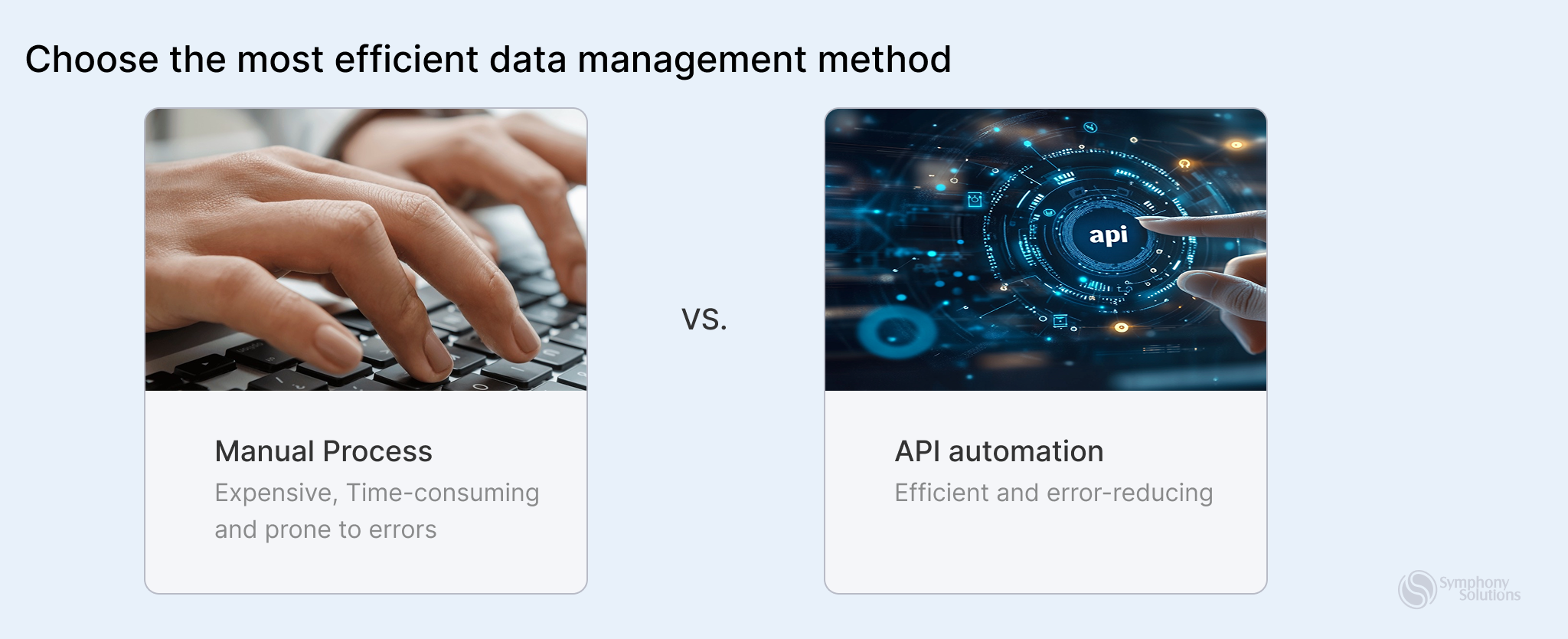
    Reputation and Experience 

    You also want to pay close attention to the provider’s reputation and track record. In particular, access their expertise across key areas like services offered, security compliance, data residency and sovereignty, and certifications. 

    1. Services and expertise. Does the provider have experience in your industry? Can they handle your unique business configurations? Remember to also check for AWS, Azure, or Google Cloud certifications. 
    2. Security compliance. Ensure that they adhere to regulatory regulations such as GDPR or SOC 2, depending on your industry. For example, if you intend to adopt cloud computing in healthcare for the US market, it’s essential to ensure that the provider is HIPAA compliant. 
    3. Data residency and sovereignty. Confirm where your data is stored and if it complies with regional data regulations. 
    4. Certifications. Look for ISO/IEC 27001 certifications, which indicate robust security standards for information security management systems (ISMS). 

    Migration/ Onboarding and Integration 

    If you’re yet to switch from on-prem infrastructure to the cloud, you should seriously factor in the ease with which the provider can transition your business without affecting operations. As much as possible, evaluate their migration and onboarding processes, as well as how smoothly they can integrate with existing systems, including legacy applications.  

    A bad migration could mean costly downtime and data loss. In fact, 93% of companies that lose their data centers for over ten days end up filing for bankruptcy within a year. That’s why a stress-free cloud migration is important when choosing a service provider. 

    Summing Up   

    While there is nothing wrong with managing your IT cloud infrastructure in-house, working with a service provider can be a game-changer for your business. You’ll save on the cost of maintaining a full-time IT staff, which can be rather expensive; plus, you and your team will be able to focus on creating market value while someone else manages the complexities of your IT infrastructure. It’s a win-win for everyone. Of course, at the end of the day, it all boils down to the provider you choose to work with. 

    When you choose Symphony Solutions for managed IT cloud services, you’re getting a partner who genuinely cares about your success. We take care of your entire cloud ecosystem, covering the initial setup, incident management, system monitoring, knowledge management, and more, providing a stable cloud environment while keeping a close eye on security and compliance. 

    Plus, if you need cloud-native application development, we can help with that, too! We want you to focus on what really matters—your business goals—while we handle all the technical details. With Symphony, you’ll enjoy a reliable service that allows you to transform your cloud journey with confidence. 

    FAQs  

  • The Rise of Cloud Database Services: Scalability, Performance, and Flexibility 

    The Rise of Cloud Database Services: Scalability, Performance, and Flexibility 

    Cloud database services are becoming a core part of how businesses manage their growing data. Companies are moving away from traditional systems and turning to cloud databases for flexibility, scalability, and cost-effectiveness.  

    cloud-infrastructure-spending

    This shift can be seen in the massive growth of cloud infrastructure spending, projected to reach $1.35 trillion by 2027. There is even more momentum in regions like Canada, Asia/Pacific, and Eastern Europe, where businesses are implementing shared, private, and hybrid cloud models. 

    This article will discuss the benefits of cloud database solutions fueling this surge in adoption. But, first things first, what are cloud database solutions, what are the types and how do they work? Dive in to find out! 

    What is a Cloud Database and How It Works 

    A cloud database is a system that stores and organizes data, which can then be accessed and managed over the Internet instead of being stored on a physical computer or server at a specific location. Think of it as a virtual filing cabinet. Just like a regular filing cabinet stores documents in folders, a database in the cloud stores information in a structured way, but instead of physical files, it holds digital data. 

    Cloud databases can be set up in different ways either public, private, or a mix of both (called hybrid). This gives businesses a lot of flexibility in storing and accessing their data. Companies like Amazon Web Services (AWS), Microsoft Azure, and Google Cloud provide the platforms that host these databases.  

    What’s great about cloud databases is that they can quickly scale up or down, depending on how much data a business needs to handle. The two commonly known methods are horizontal scaling, where additional servers are added to handle increased data traffic, and vertical scaling, which involves raising a single server’s resources (like CPU and memory). 

    Features of a Cloud Database 

    features of a cloud database

    1. Scalability 

    Cloud databases are designed to grow with you. If your business suddenly needs more power, the system automatically adjusts. For example, Amazon RDS lets you increase the power of your database (vertical scaling) or add more databases to share the workload (horizontal scaling). So, if you’re running an online store and get a spike in traffic during a sale, the system expands automatically to keep everything running smoothly.  

    2. High Availability and Redundancy 

    Cloud databases are built to stay online, even if something goes wrong. Google Cloud SQL, for instance, automatically makes copies of your data and spreads them across different locations. So, if one server goes down, another jumps in instantly. This keeps your business running without users noticing any disruptions.  

    3. Automated Backups and Recovery 

    No need to worry about losing data. With Azure SQL Database, backups happen automatically every day. They’re stored securely; if something ever goes wrong, you can restore your data anytime. This feature ensures your data is always safe and can be quickly recovered. 

    4. Security and Encryption 

    Security is a significant priority. Cloud databases like Amazon Aurora encrypt your data both when it’s stored and when it’s being sent. Google Cloud Spanner also provides strong encryption, ensuring that sensitive information is safe from hackers and breaches, whether used or stored. 

    5. Multi-Region Distribution 

    If your business operates globally, cloud databases are perfect. Google Cloud Spanner can store and access data across multiple regions, ensuring your customers worldwide can quickly access their needs. This also helps to meet local laws about where data needs to be stored. 

    6. Support for Multiple Database Engines 

    Cloud databases are flexible. AWS RDS, for example, lets you choose from various database engines like MySQL, PostgreSQL, or SQL Server, depending on what works best for your needs. On the other hand, Amazon DynamoDB (a NoSQL database) is a popular choice for apps that handle a lot of unstructured data. 

    7. Automated Patching and Updates 

    Keeping your database software updated is essential for security and performance. Azure SQL Database automatically applies updates and patches, so you don’t have to manage those tasks manually. This helps reduce downtime and ensures everything runs smoothly. 

    8. Elastic Storage 

    With cloud databases, storage expands, and contracts as needed. Amazon S3 enables you to store as much data as you need without worrying about hitting limits. It’s perfect for businesses with varying data storage needs, like an e-commerce site that sees spikes in sales during the holidays. 

    Types of Cloud Databases 

    Cloud databases come in different forms, each designed for specific needs. Here are the types of cloud databases you should know: 

    1. Relational Databases (SQL) 

    Relational databases, first introduced by Edgar F. Codd in 1970, work like organized filing systems, storing data in tables that are easy to link and manage. Today, they’re used everywhere, from tracking customer orders in e-commerce to handling patient records in healthcare. They help keep structured information accessible and connected in many industries. People can easily pull up, update, or organize data using SQL.  

    Examples include Amazon RDS, Google Cloud SQL, Azure SQL Database 

    2. NoSQL Databases 

    NoSQL databases handle the growing need for managing unstructured, changing data, like social media posts or product catalogs. Unlike traditional databases, they don’t require a rigid structure, which makes them super flexible. NoSQL databases can quickly scale to manage large amounts of data and are perfect for real-time applications like IoT devices. They are also adopted by big e-commerce sites where data is continually growing and evolving. 

    Examples include MongoDB Atlas, Amazon DynamoDB, Google Cloud Firestore 

    3. Data Warehouses 

    Data warehouses help businesses make sense of vast amounts of data by gathering it from different sources. They’re designed to quickly run complex queries, making them great for generating reports or uncovering trends. Whether analyzing sales performance, tracking customer behavior, or optimizing supply chains, they give companies the insights they need to make smarter decisions. By the way it’s actually possible to build a data warehouse given enough resources and the right partner. 

    Examples include Amazon Redshift, Google BigQuery, Azure Synapse Analytics 

    4. In-Memory Databases 

    In-memory databases, first developed in the 1990s, store data directly in RAM, making them incredibly fast. They are designed for real-time data processing, perfect for tasks like caching, gaming, or financial transactions. Keeping everything in memory ensures quick, low-latency performance, allowing instant responses in high-speed applications like IoT devices and real-time analytics.  

    Examples include Redis Enterprise, Amazon ElastiCache, SAP HANA 

    5. Graph Databases 

    Graph databases focus on relationships between data points, like mapping connections in a social network. They are great for analyzing complex data in real-time, making them useful for social media, product recommendations, and fraud detection. Unlike traditional databases, graph databases handle connections faster, so companies like LinkedIn, Amazon, and Google use them for features like friend suggestions and search recommendations. 

    Examples include Neo4j Aura, Amazon Neptune 

    Comparing Data Management Approaches 

    There are three models for managing and storing data. These involve: 

    Traditional Databases 

    You run these databases on your servers, meaning you’re in charge of everything — setup, maintenance, backups, and security. You get complete control but must also handle all the work to keep things running smoothly. 

    DBaaS (Database as a Service) 

    The provider handles everything in the cloud with DBaaS — updates, backups, and security. You just use the database without worrying about the behind-the-scenes stuff. 

    Managed Storage 

    A cloud managed service provider handles your storage needs, making storing and accessing your data easy. You don’t have to deal with the hardware or everyday management—it’s all handled. 

    Traditional Databases vs. DBaaS vs. Managed Storage 

    Feature Traditional Databases DBaaS (Database as a Service) Managed Storage 
    Control Complete control over hardware, software, and security. Limited control—provider handles setup, scaling, and updates. Control over data access, less control over infrastructure. 
    Customization High—can fully customize environment and security. Limited—depends on the provider’s service options. Limited customization, focused mainly on data storage. 
    Scalability Harder—requires manual upgrades and hardware additions. Automatic scaling based on workload, handled by the provider. Easily scalable storage for large datasets. 
    Maintenance Requires dedicated in-house teams for updates, backups, and scaling. Provider handles all updates, backups, and scaling. Minimal maintenance—provider ensures reliability and storage scaling. 
    Security Complete control over security protocols and physical security. Security is handled by the provider but with limited direct control. Provider handles encryption and data replication but has no advanced database security features. 
    Cost Structure High upfront costs for hardware and ongoing maintenance. Pay-as-you-go pricing, no upfront hardware investment. Pay only for storage used, highly cost-effective for large datasets. 
    Performance It can be tailored for high performance but is expensive to scale. Optimized by provider—automatic tuning based on workload. No database-specific performance focuses on reliable storage. 
    Use Case Best for highly regulated industries like banking or healthcare. Ideal for fast-scaling companies or fluctuating workloads (e.g., e-commerce). Perfect for storing large, unstructured data like media, logs, and backups. 
    Example Banks use Oracle/SQL for compliance-heavy data. Shopify uses Amazon RDS to auto-scale during peak times. Netflix uses Amazon S3 to store massive video files. 

    Benefits of a Cloud Database 

    Although cloud databases account for about 7-8% of global infrastructure usage, they can grow to 10 times their current size. Here is why:  

    1. Scalability 

    Cloud databases can grow (or shrink) based on your needs. Imagine your website suddenly getting a lot of traffic—cloud databases like Amazon RDS or Google Cloud SQL can quickly adjust, adding more resources so your site doesn’t slow down. When things quiet down, the database scales back. 

    A good example is when Symphony Solutions built a scalable cloud infrastructure for Vivino using AWS. This enabled them to handle peak traffic and grow its database to over 10.7 million wines and 36 million users, surpassing 1 billion wine label scans. You may also check how Symphony Solutions used the Google Cloud Platform to enable an airline’s solution to be scalable during an On-premise to-cloud migration project. 

    2. High Availability & Disaster Recovery 

    Cloud databases are designed to be available 24/7. They automatically copy (or “replicate”) your data to multiple locations. If one server goes down, another picks up the slack. Providers like Aurora or Azure SQL Database also have built-in backups, so you can recover your data quickly if something goes wrong. 

    A prime example of high availability in action is Spotify’s migration to Google Cloud Platform (GCP). By moving to GCP, Spotify ensured continuous music streaming for millions of users by leveraging cloud-based redundancy. Their services were replicated across multiple regions, meaning if one component failed, another instantly took over.  

    3. Security 

    Cloud security with providers like AWS RDS is designed to make your life easier while keeping your data safe. Features like encryption ensure your sensitive information is locked down, firewalls act like security guards, and multi-factor authentication adds an extra layer of protection by verifying who’s accessing your data. 

    This is a huge win for small businesses since implementing these security measures independently can be expensive and complicated. With cloud services, you get enterprise-level protection without breaking the bank, letting you focus on growing your business.

    4. Automatic Updates & Maintenance 

    With cloud databases, all the tedious tasks like updates, security patches, and backups are handled for you automatically. Services like Azure SQL Database take care of these critical maintenance activities in the background, so you don’t have to worry about downtime or technical oversight. This means fewer disruptions, lower operational risk, and more time for innovation.  

    A great example of automatic updates is Capital One. They leveraged AWS to manage automatic updates, ensuring their infrastructure stayed secure and up to date without manual intervention, which was key to maintaining high performance and security. 

    5. Enhanced Performance 

    Cloud databases help businesses run faster and smoother by reducing delays and boosting overall speed. Take Ladbrokes Coral, for example — Symphony Solutions optimized their cloud-based sportsbook betting platform , allowing them to handle huge surges in activity during big sports events. Even with a massive number of users placing bets at once, the platform stayed fast and responsive, making sure everything ran seamlessly during peak times . 

    6. Global Access 

    Cloud databases make it easy for you and your team to access data from anywhere in the world. As long as you have an internet connection, your database is at your fingertips. This is why, according to MarketsandMarkets, the global Cloud Database and DBaaS market size is continuously growing to reach USD 57.5 billion by 2028 from USD 21.3 billion in 2023. These technologies are super helpful for businesses with remote teams or global operations. 

    Challenges of Cloud Databases 

    While cloud databases offer a lot of great benefits, they do come with some challenges. Here’s a breakdown of the main issues you might face and how to handle them: 

    • Latency and Performance Issues 

    Because cloud databases rely on the internet, there can be delays (latency) in accessing data, especially if the servers are far from where your users are located. This can slow things down, which isn’t great for businesses that need fast, real-time access. 

    • Vendor Lock-In 

    Once you choose a cloud provider (like AWS or Google Cloud), moving to another provider can be tricky and costly. This is known as “vendor lock-in,” and it can make you feel stuck with your current provider, even if better options become available elsewhere. 

    • Data Security and Privacy 

    Although cloud providers offer strong security features, it’s still up to you to make sure your data is properly protected. You must have an idea about cloud vulnerability scanning and to follow some best practices for data management. Misconfigurations can leave data vulnerable to breaches. 

    • Compliance and Legal Issues 

    Different countries have different laws about where data can be stored. For example, GDPR requires that certain data from EU citizens must be stored within the EU. You could face legal issues if your cloud provider doesn’t have data centers in that region. 

    Cloud Database Management Choices 

    When managing a cloud database, you have a few different options, depending on how much control and responsibility you want. Here’s a simple breakdown of the main choices: 

    1. Self-Managed Cloud Databases 

    This option gives you the most control. You’re in charge of everything, from setting up the database to handling security, updates, and performance tuning. It’s like hosting the database yourself but in the cloud. Services like Amazon EC2 or Google Compute Engine let you run databases on virtual machines, but you manage the whole setup. 

    2. Managed Cloud Databases (DBaaS) 

    With Database as a Service (DBaaS), the cloud provider manages most of the management, like backups, scaling, and updates. Services like Amazon RDS, Google Cloud SQL, and Azure SQL Database handle the heavy lifting, so you can focus on using the database rather than maintaining it. 

    3. Automated Cloud Databases 

    These databases use AI to manage themselves. Oracle Autonomous Database, for example, can automatically tune performance, apply patches, and scale up or down as needed without human input. It’s like having a database that takes care of itself. 

    4. Hybrid Approaches 

    Some businesses prefer a mix of self-management and letting the cloud provider handle things. With hybrid approaches, you can manage certain aspects, like tuning performance, while leaving things like backups and security to the provider. Platforms like AWS Outposts and Azure Hybrid Cloud allow for this flexibility. 

    What to Look for When Selecting a Cloud Database 

    Choosing the right cloud database doesn’t have to be overwhelming if you know what to look for. Here’s a simple breakdown of key things to consider: 

    1. Performance 

    Your database needs to run smoothly, especially if your business depends on fast access to data, like for e-commerce or apps. The database should handle spikes in traffic and deliver data quickly.  

    2. Scalability 

    As your business grows, your database needs to grow with it. You don’t want a system that can’t handle more traffic or data. Look for databases that make scaling easy — adding more storage or power whenever you need it without crashing your system. 

    3. Security 

    Protecting your data is a must. Look for databases that offer strong security features like encryption, multi-factor authentication, and access control.  

    5. High Availability and Backup 

    You want your database to be available all the time, even if there’s a server failure. Look for databases that offer high availability through data replication (copying your data across multiple locations). This ensures that if something goes wrong, your system stays up.  

    6. Compatibility 

    Make sure the cloud database works well with your existing tools. For example, if you already use AWS for other services, sticking with Amazon RDS might make things easier. Look for databases that integrate smoothly with your current software. 

    Conclusion 

    Cloud database services offer an unparalleled combination of scalability, flexibility, and performance. As more businesses migrate their data to the cloud, the need for secure, reliable, and high-performing cloud databases will continue to grow.  

    Symphony Solutions provides a comprehensive range of cloud services designed to help businesses harness the power of cloud database solutions. Our expertise spans cloud-native development, cloud engineering, and Cloud & DevOps services. We ensure businesses can take full advantage of the flexibility, scalability, and performance cloud databases offer.  

    For businesses looking to scale, improve performance, or enhance security, Symphony Solutions offers tailored solutions to meet those needs. 

    FAQs

  • Airline Industry Trends Shaping the Future of Aviation 

    Airline Industry Trends Shaping the Future of Aviation 

    The airline industry had humble beginnings with the Wright Brothers’ first flight in 1903. Over a century later, it has grown into a global aviation network driven by continuous innovation.  

    Today, advanced technologies like machine learning, AI, and IoT are redefining air travel and customer experience. Over 86% of airlines are partnering with innovators to integrate these technologies and maintain their competitive edge, according to a SITA report. This shift is driven by trends like digital transformation, automation, smart data use, and customer journey upgrades. These are pushing airlines to become more efficient, sustainable, and focused on delivering a better passenger experience. 

    This article sheds more light on these key airline industry trends and what they also mean for your aviation operations. Read on to learn more. 

    Airline operators must stay on top of industry trends to remain competitive, improve efficiency, and meet evolving customer expectations. Here’s why: 

    why-airlines-should-abreast-of-industry-trends
    1. Competitive Advantage. The airline industry moves fast, and the competition is fierce, especially with low-cost carriers (LCCs) now making up 35% of global air travel. By being trend-conscious, airlines can adapt quickly and jump on new opportunities as the industry keeps changing. 
    2. Operational Efficiency. When airlines are only earning US$6.14 per passenger, finding ways to cut costs and boost efficiency isn’t just a nice-to-have—it’s a must. By staying ahead of technology trends in airline industry like aviation analytics, airlines can pinpoint inefficiencies and unlock some serious savings. It’s all about working smarter, not harder!  
    3. Customer Experience. Today, passengers today have more choices, and their expectations are constantly shifting. By staying on top of new trends, airlines can better understand and meet these needs. Take New Distribution Capability (NDC) technology, for example — 76 airlines are already using it to offer more flexible pricing, personalized options, and a smoother, more engaging customer experience. 
    4. Sustainability. More passengers care about the environment and expect airlines to go greener. Airlines are also working toward big goals, like net zero carbon emissions by 2050. By following sustainability trends, airlines can meet customer demands, stay on top of regulations, and stand out from the competition. 

    Here are the airline industry trends operators should stay in tune with to enjoy competitive advantage, improved efficiency, and better customer engagement. 

    technology-trends-airline-industry

    Digitalization and Digital Transformation 

    Digitalization and digital transformation are two key trends reshaping the airline industry. They may sound similar, but they mean very different things. 

    Digitalization is the simpler one — it involves converting paper processes into digital ones, like scanning documents or digitizing records. It’s important, especially for airlines that have relied on paper for years, but it doesn’t really change the way things are done. 

    Digital transformation, on the other hand, is a full-scale overhaul, using cutting-edge tech like AI, cloud computing, blockchain, and IoT to actually improve how airlines operate. It’s not just about going paperless — it’s about making everything more efficient and cost-effective.  

    Digital transformation is completely reshaping the customer journey. For example, British Airways recently launched a £7bn plan to enhance the customer experience with more personalization and convenience. This includes a new website, mobile app, free onboard messaging, and Wi-Fi, allowing passengers to stay connected and entertained during flights. Also, studies so that with digital transformation, artificial intelligence in aviation alone could save airlines up to US$15 billion by 2035. 

    But it’s not just about the passenger experience. Behind the scenes, digital transformation in the airline industry also improves ground operations, administrative and back-office functions. It streamlines tasks like data management, data entry, crew scheduling, and bookkeeping, making processes faster and reducing errors. 

    Automation 

    Automation is another important trend impacting the airline sector. It involves using advanced technology, often powered by AI, to make airline operations run more smoothly. The idea is to cut down on the need for human involvement in routine or complex tasks, which helps reduce errors and boosts efficiency, safety, and overall cost-effectiveness. 

    Automation in aviation cuts across virtually every part of airline operations — from the cockpit to ground services and customer support. 

    In the cockpit, we can use flight management systems (FMS) and autopilot as examples. These systems are handling important flight tasks automatically, reducing the workload for pilots and crew. Plus, they help with smoother navigation and better fuel management. 

    On the ground, automation helps airline operators solve issues like long queues and check-in lines — a major problem, according to 64% of passengers surveyed by SITA. Also, automated tools like check-in kiosks, biometric security checks, and smart baggage handling systems, automation are improving baggage handling and slow responses to customer inquiries. Emirates, for example, uses RFID technology to automate baggage tracking, scanning their A380 in just 11 minutes and a Boeing 777 in six — saving 97% and 98% of the time it previously took, respectively. 

    But that’s not all. Automation is also helping in the back office, automating crew and flight scheduling, and optimizing shifts and duties based on regulations and availability. This is all done while ensuring better compliance with labor laws. 

    On the customer side, chatbots and AI-powered assistants are increasingly used to automate customer services, regulatory and documentation, and finance and administrative support. Additionally, they assist with operational efficiency and safety, which includes training related FAQs, safety related procedures and providing support for operations and procedures. Without human intervention, these nifty tools manage complaints, and address frequently asked questions 24/7. 

    Analytics and Data-Driven Decision-Making 

    Every day, airlines create tons of data — from flight performance data down to passenger information, crew schedules, maintenance logs, etc. However, because all these data come from multiple sources, it’s often in different formats and carry conflicting information. Data analytics services is helping airlines aggregate this data, clean it up, and ensure that it provides a single source of truth. 

    With data centralized and cleansed, airlines are benefiting a clear and comprehensive view of their operations, from flight delays and fuel efficiency to passenger satisfaction, crew performance, and financial predictions. 

    Data analytics also helps operators predict trends and identify potential concerns before they turn into issues. For example, AI-powered predictive maintenance estimates when particular aircraft components will fail so airlines can act proactively to replace parts before a critical failure occurs. This can save businesses as much as 9% in repair costs. 

    Perhaps one of the greatest long-term benefits of this airline technology is encouraging a data-driven culture in the industry. This means no more missed opportunities for optimizing operations, whether customer experience, logistics, and supply chain, or maintenance. American Airlines is a good example of a carrier using aviation analytics. According to the airline, the goal here is to minimize disruptions and streamline operations. 

    Customer Journey Upgrade 

    Another major trend in the airline industry is the customer journey upgrade. This boils down to improving the passenger journey, ensuring customers receive excellent service, strategic upselling opportunities, and personalization thanks to sophisticated digital tools.  

    Successfully executing this strategy, however, requires an understanding that modern passengers — especially Gen Z — expect more than just transportation. They are looking for personalized services that suit their specific preferences and requirements. 

    Taking advantage of this trend starts with analyzing critical factors like booking history, travel behavior, and preferences. This allows airlines to deliver increasingly relevant and personalized offers during all stages of the customer journey — from pre-flight to post-flight. 

    Upselling is another key piece of the customer journey upgrade. This means leveraging data and digital tools to offer customers additional services, such as seat upgrades, in-flight meals, or priority boarding, at the right time. Take Air India for example, the airline is creatively upselling business class seats by inviting passengers to bid for them. 

    Let’s not overlook the importance of quality customer service, which covers the entire travel process. Whether it’s through self-service kiosks, user-friendly mobile apps, or AI-powered chatbots, the goal is to improve the passenger experience at every touchpoint. 

    Operational Efficiency and Cost Management 

    Cost management is a critical factor for success in the airline industry, where narrow profit margins and high costs are common. However, operators are finding ways to optimize processes, resources, and technology. The aim is to maximize operational efficiency while minimizing expenses.  

    To this end, airlines are investing in tools like flight path optimization algorithms for route optimization based on weather conditions and traffic patterns. This results in better fuel management, a very important point, seeing as fuel accounts for a significant 28.7% of the operating expenses, according to IATA. 

    Improved aircraft utilization is another key reason to pay attention to operational efficiency and cost management trends. For example, investing in predictive and preventive maintenance tools is helping airlines improve maintanance schedules and flight turnaround times. This means that they can increase the number of flights each aircraft can safely perform, which will not only increase revenue but also reduce the need for additional aircraft, helping carriers save money. 

    Airlines are also increasingly investing in crew management software. The market for these tools are expected to reach US$5.1 billion by 2030, showing just how important they are to helping airlines achieve operational efficiency, cut costs, and ensure regulatory compliance.  

    Distribution Upgrade 

    Airline operators are increasingly moving away from the traditional GDS reservation model in favor of a more direct, flexible, and efficient way of distributing their offers. This distribution upgrade is a new and different way airlines are marketing, selling, and merchandizing their products & services, and is fueled by the desire to enhance customer experience, reduce costs, and improve revenue. 

    With distribution upgrades, airlines are harnessing their data to enable personalized bundles for passengers. This ranges from personalized ticket prices to seat upgrades and travel add-ons. This approach enhances customer satisfaction and encourages customer retention, given that acquiring a new customer can be at least five times more costly than keeping an existing one. 

    One of, if not the most critical component of distribution upgrades today, is a standard called IATA’s New Distribution Capability (NDC). NDC empowers airlines to offer their content in smarter and more dynamic ways directly to travel agencies and other third-party platforms. This translates to improved pricing models, individual offers, and current availability of products. 

    This new distribution trend is also powering more sophisticated pricing schemes. Take Finnair, for example—they’re using NDC for continuous pricing to help travel agents offer smoother, more competitive fares. This means customers won’t face big price jumps between booking classes, leading to more competitive pricing across modern channels. Airlines are also taking advantage of dynamic and AI-based pricing to instantly update ticket prices in response to demand, competition, and more.  

    New Ways of Operations 

    Airlines often struggle with an inability to adapt quickly to new technologies, and even worse, a shortage of skilled workers, now counting to about a million shortages. Let’s not forget that as customers become more discerning, their expectations for service are changing. 

    To remain competitive and profitable, airlines are exploring new ways of operating that address these changes. These innovative operational strategies attract customers who are looking for something beyond the conventional flying experience.  

    Embracing new ways of operations is also helping carriers minimize the risks associated with fluctuating markets. In fact, this strategy opens up alternative revenue channels. It is also bringing about shorter wait times, improved communication, and more personalized services, all of which contribute to higher customer satisfaction and loyalty. 

    How Symphony Solutions Can Help with Airline Industry Innovation 

    Implementing the latest airline industry trends and technologies is a strategic move to optimize your operations. However, the key to success lies in partnering with an innovative company like Symphony Solutions. 

    Whether you’re looking to implement comprehensive airline IT solutions for booking, ticketing, and check-in — or for operational and administrative tasks like scheduling and data management, we can help you. 

    And if you already have an existing system, the Symphony team can also modernize it by integrating advanced payment systems powered by blockchain. Our AI-powered business assistant, Harmony, further enhances operations by automating customer service tasks, while also addressing regulatory and documentation support, operational efficiency and safety, and finance and administrative procedures. I 

    Additionally, Symphony Solutions offers data analytics services, which can consolidate disparate data sources, providing a single source of truth for informed decision-making. With over 15 years of expertise in providing airline digital solutions, we can help you leverage emerging technologies and processes to maximize your airline’s potential. 

    FAQs

  • Elevating the Journey: Strategies to Improve Airline Customer Experience 

    Elevating the Journey: Strategies to Improve Airline Customer Experience 

    Customer experience is one of the primary ways companies stand out in the competitive aviation industry. With a staggering 90% of travelers seeking personalized service, airlines are under immense pressure to deliver a seamless and enjoyable journey from booking to arrival. This requires a comprehensive approach that covers everything from personalized offers, pricing, and discounts to efficient check-in procedures, smooth boarding, quality in-flight service, and timely baggage handling. 

    airline-customer-experience

    This article explores strategies for achieving these goals and enhancing the airline customer experience, from identifying major pain points to leveraging digital solutions. Read on! 

    Why is it Important to Improve Customer Service in the Airline Industry? 

    Improving customer service in the airline industry is essential for several reasons.  

    First off, great customer service can make or break an airline’s reputation. With passengers able to share their experiences online in a flash, a positive interaction can do wonders for an airline’s image, while a negative one can cause serious damage. 

    Then there’s the competition. Today, the airline industry is fiercely competitive, and standing out is tough. Exceptional customer service is one way to make a lasting impression. It can lead to glowing reviews, word-of-mouth recommendations, and help attract more passengers in a crowded market. 

    And let’s not forget about today’s travelers—they have high expectations. They’re looking for smooth, personalized service and quick fixes to any problems that pop up. If an airline can meet these needs, they’ll keep customers coming back. If not, they risk losing them to someone who can. 

    Overview of the Current State of Customer Experience in Airlines  

    The airline industry has made strides in enhancing customer experience. Current industry standards often include digital innovations like mobile check-in, personalized in-flight entertainment, and loyalty programs. Airlines are also investing in technology to streamline processes and offer real-time updates. 

    current-state-of-customer-experience

    Let’s look at some key statistics highlighting airline customer experience: 

    • Passenger satisfaction rose slightly from 76% in 2023 to 77% in 2024.  
    • Aeroflot, Lufthansa, and IAG have NPS scores of 73, 57, and 43, respectively. (Net Promoter Score (NPS) is a simple way airlines measure customer satisfaction and loyalty.) 
    • 86% of passengers are more likely to recommend airlines that create positive, memorable experiences. 
    • Airlines could miss out on up to $1.4 billion annually by not enhancing their customer experience. 

    It’s important to point out that operators face many challenges in delivering top-notch service. One key challenge is flight delays and cancellations. According to studies, all European flights were delayed by 15 minutes on average by the first half of 2023. Also, in the second quarter of 2024, flight cancellations across Europe increased by 46%. Other challenges include efficiently handling complaints, managing overbooked flights, and maintaining consistent service across all touchpoints. Resolving these challenges is critical for improving the overall customer experience. 

    Analysis of Common Pain Points in the Airline Customer Journey  

    There are a few key pain points that can really affect how passengers feel about their journey. If airlines want to make things better, it’s important to address these areas. Let’s break them down: 

    1. Air Shopping: The journey begins here, with the customer visiting the app or website to look for flights to their destination. This might appear easy enough, but if the customers find it hard to compare flights or navigate through confusing options, it can make the whole experience frustrating before they even pick a flight. 
    2. Booking: Passengers expect the booking process to be smooth and straightforward. Complicated steps, unclear information, and hidden charges can turn things sour and turn away potential customers even before they’ve confirmed their flight. 
    3. Managing Booking: Customers often need to make changes after the booking has been made. Maybe they want to change seats, reschedule the flight, or even cancel it for one reason or another. A difficult or confusing management system can be frustrating. 
    4. Check-In: This is where the actual trip starts, and it can set the tone for everything that follows. Long lines, tech glitches, or baggage issues can cause stress right from the get-go, leaving passengers frustrated before they even board. 
    5. Security: Going through security can be one of the most stressful parts of the journey. Long waits, invasive screenings, and having to take things out of your bag can really take the fun out of traveling. 
    6. Boarding: Boarding can be chaotic, with delays, crowded gates, and the struggle to find overhead bin space. A smooth and organized boarding process can make a huge difference, helping passengers start their flight on the right foot. 
    7. In-Flight Experience: Comfort matters a lot during the flight. Whether it’s the seat, legroom, entertainment, food, or cabin temperature, anything that causes discomfort can quickly dampen the experience. 
    8. Baggage Claim: The journey doesn’t really end until you’ve got your luggage. Delayed or lost bags can ruin what was otherwise a great trip. Getting baggage handling right is crucial for leaving passengers with a positive final impression. 

    These pain points significantly impact on customer satisfaction. If these issues persist, even the best parts of the journey can be overshadowed, leading to lower loyalty and negative reviews. Addressing these areas will help improve airline customer journey and build long-term loyalty. 

    How Digital Solutions Are Changing the Customer Experience in the Airline Industry  

    The aviation industry is leaning more and more on airline IT solutions to improve the customer experience. According to SITA’s 2023 Air Transport IT Insights report, spending on IT by airports and airlines has skyrocketed — hitting $10.8 billion and $34.5 billion, respectively. And with over 66% of airline CIOs expecting this trend to keep growing, it’s clear that there’s a strong commitment to using digital solutions to enhance service and efficiency. 

    From booking to boarding, digital tools are streamlining processes, boosting convenience, personalizing travel, managing customer expectations of airline passengers and delivering improved operational efficiency. 

    Examples of Successful Digital Initiatives 

    Airlines have rolled out several digital initiatives for managing customer expectations of airline services, including: 

    • Mobile Apps 

    Airlines’ mobile apps are like a travel companion in your pocket. They can book flights, check in, pick passengers seats, and get updates on the trip—all from a mobile phone. Plus, they give passengers digital boarding passes and access to in-flight entertainment, so everything’s just a little more convenient. 

    • Self-Service Kiosks:  

    Self-service kiosks help passengers get through the check-in process faster. They enable them to handle it themselves—check-in, print boarding pass, and tag their luggage—without needing much help, which means less waiting around. 

    • Biometric Boarding:  

    Boarding is becoming less of a hassle thanks to facial recognition and other biometric tech. It speeds things up by cutting down on the ID checks and boarding pass scans, making it quicker and easier to get on the plane. 

    • Digital Baggage Tracking:  

    Many airlines now let passengers track their bags in real-time through their apps. It’s a small thing but knowing where their stuff is can really cut down on the stress. 

    • In-Flight Entertainment:  

    Whether it’s staying connected with Wi-Fi or enjoying movies and games, in-flight entertainment is getting better and more personal. Passengers can use their own devices or the screen in front of them to pass the time. 

    • Chatbots and AI-Driven Customer Service:  

    AI customer service tools are now common. For example, AI solutions for customer service like Harmony offer 24/7 support, handling inquiries and issues quickly and accurately. They make customer service faster and more efficient. 

    • Contactless Payments:  

    Paying for stuff on a flight has never been easier. With contactless payments, passengers can just tap to pay for things like upgrades or snacks, so they don’t have to mess with cash or cards. 

    Benefits of Digital Solutions for Airlines and Passengers 

    Digital solutions offer significant benefits for both airlines and passengers. 

    For Passengers.  

    These technologies provide convenience, speed, and a more personalized experience. Travelers can manage their journey from their smartphones, reducing stress and increasing satisfaction. Real-time updates and self-service options empower passengers to take control of their travel experience. 

    For Airlines.  

    Digital solutions enhance operational efficiency and cost savings. For instance, automating check-in, boarding, and customer service processes reduces staff workload, enabling airlines to use their resources more effectively. Furthermore, AI services facilitate improved data collection and analysis, helping airlines understand customer preferences and optimize their services accordingly. 

    6 Ways to Improve Customer Service in the Airline Industry 

    Let’s look at how to improve airline customer experience using digital solutions:

    improving-costumer-experience

    AI & Automation 

    Artificial Intelligence in aviation is transforming airline customer service, providing personalized and efficient interactions for customers, as well as helping aviators and operators work faster and more efficiently. These systems use passenger preferences, booking history, and travel patterns to engage with passengers, making interactions more relevant.  

    Automation further enhances service efficiency. Self-service kiosks and online check-in systems let passenger’s check-in and print boarding passes without human assistance, reducing wait times and speeding up the boarding process. With 82% of passengers willing to spend more for quicker check-ins, automation clearly impacts satisfaction.  

    Additionally, automated baggage tracking systems allow passengers to monitor their luggage in real-time via mobile apps, easing concerns about lost or delayed bags. 

    Integrations 

    Integrating various systems within a carrier is crucial for smooth airline customer experience management. Seamless data flow between booking, boarding, and beyond creates a unified passenger journey. For example, integrating Airline Customer Relationship Management (CRM) systems with Passenger Service Systems (PSS) provides a comprehensive view of each customer, enabling personalized service at every touchpoint. Such integrations streamline operations, reduce errors, and ensure a smooth, cohesive experience from booking to arrival. 

    Customer Journey Upgrade 

    Segmenting passengers based on their journey touchpoints allows airlines to offer targeted and personalized deals. For instance, airlines can provide relevant discounts or services like seat upgrades or early check-in options at different stages of the journey. Triggered campaigns, such as airport cab bookings shortly after landing, enhance the travel experience. Personalized offers can boost conversion rates by up to 30%, highlighting the effectiveness of targeted marketing.  

    Drive Smart Decisions Through Data 

    Data analytics is a key driver of digital transformation in the airline industry. It enables airlines to understand and predict customer behavior, leading to data-driven decisions that enhance service and satisfaction. Centralizing data from various sources into a single source of truth prevents conflicts and ensures clarity. Statistics show that 58% of businesses enjoy a tangible increase in customer retention and loyalty thanks to the power of aviation analytics

    Enhancing On-Board Experience 

    The on-board experience is a critical component of airline customer satisfaction. Innovations such as personalized content streaming, more comfortable seating, and improved Wi-Fi contribute to a better journey. Upgrading food and beverage services with diverse, high-quality options, especially on long-haul flights, also significantly boosts passenger satisfaction. 

    Personalized Offers and Dynamic Pricing 

    Thanks to IATA’s New Distribution Capability (NDC), airlines now have the opportunity to revolutionize how they present air products to their customers. NDC standardizes communication with, for example, booking platforms, aggregators, and agents across various channels. 

    It also enhances Offer and Order management processes, allowing airlines to deliver more personalized products and dynamic pricing through modern Passenger Service Systems (PSS). This innovative capability enables real-time fare adjustments and tailored offers, ultimately leading to a significantly improved booking experience for passengers. 

    By adopting these digital strategies, airlines can significantly improve personalization of offers in distribution, and increase passenger satisfaction, leading to greater loyalty and business success. 

    How Can Airport Customer Experience Be Improved?  

    The airport experience is a key part of a passenger’s journey, and enhancing it is crucial for a smooth and enjoyable trip. Here are some effective strategies: 

    Collaborate for a Seamless Experience 

    Airlines and airport services can work together to enhance passenger journeys. For example, by sharing data and insights, they can address common issues and create joint solutions. Synchronized check-in processes, timely flight delay updates, and coordinated baggage handling are just a few collaborative efforts that can greatly improve customer satisfaction. 

    Innovate Airport Services 

    Upgrading airport services can also make a big difference to fliers, especially when it comes to managing flight delays, layovers, luggages, and even navigation within the airport environment.  

    For instance, premium lounges can be upgraded to offer perks like spas and quiet work areas to elevate the travel experience. Just think of the Air France La Première lounge at Charles de Gaulle Airport, which has a Sisley spa and luxurious ‘layover’ suites with personal butlers. 

    In addition to that, airlines can make it easier to track luggage with RFID tagging. Also, they can use Automated Baggage Handling Systems (ABHS) to help speed up the process and reduce wait times. 

    What’s more, AI-powered tools such as interactive maps and real-time updates on wait times can be sent via push notifications or texts — significantly improving a passenger’s journey. Also, conveniences, like on-site luggage storage and charging stations, further increase comfort and ease while traveling. 

    Enhance Wayfinding and Accessibility 

    Making wayfinding and airport accessibility better is key to a smoother journey. This means clear, easy-to-follow signs and digital wayfinding tools help passengers get around with ease and locate airline counters. It’s also important to provide accessible facilities for travelers with disabilities, ensuring an inclusive environment. Airlines partnering with airport systems to provide real-time updates on flight statuses, gate changes, and security line lengths through digital displays and mobile apps can greatly improve the overall passenger experience. 

    By focusing on these areas, airlines and airports can collaborate to offer a smoother, more pleasant airport journey. 

    Conclusion  

    Exceptional customer experience is needed to succeed in today’s competitive market, and hopefully, this guide has taught you how to improve airline operations for optimum customer experience.  

    To quickly recap, key strategies for enhancing aviation customer service include adopting AI and automation, integrating systems for seamless operations, personalizing the customer journey, and working closely with airports to enhance the overall experience. 

    Looking ahead, the future of airline customer experience will be shaped by continued innovation and a strong focus on personalization. Airlines that proactively adopt these strategies will not only meet but exceed customer expectations, securing loyalty and driving long-term success. 

    Are you ready to invest in your airline’s digital transformation? Symphony Solutions can help. Contact us today to learn more. 

    FAQs

  • 24 Data Engineering Best Practices for Your Business 

    24 Data Engineering Best Practices for Your Business 

    Data is key to making informed decisions for businesses. It helps businesses answer some of the most burning questions about their customers, how much it costs to acquire a new customer, or how to improve their products or services. Furthermore, the amount of data produced today is growing exponentially. In fact, 90% of the data existing today has been created over the last two years. 

    As businesses rely more on their data at their fingertips, data engineering is becoming quite prominent. In this article we will review data engineering best practices worth considering today. But let’s start from the top. 

    What is data engineering and some of its main components

    Data engineering is the process of making sense of large amounts of data. It collects raw data from various sources and transforms it to make it accessible and usable to data scientists and other end users within the organization. 

     Hybrid architecture for common DWH solution

    Without this structuring, companies’ large amounts of data are useless as they can’t be used to drive conclusions or affect decisions. Data engineering concepts provide valuable insights into available data that can substantially impact a company’s growth, predict future trends, or understand network interactions. 

    Additionally, data engineering considers the end-to-end process as data pipelines that transform and transport data to present it in a form that can be analyzed and used to drive some insights. The pipelines take data from one or various sources and collect them in a single warehouse to consolidate one single source of truth. 

    front-back-room

    The common elements of the data pipeline are: 

    • Source(s) – one or various sources that data comes from, such as database management systems (e.g., MySQL), CRMs (e.g., Salesforce, HubSpot), ERPs, some SM management tools, or even IoT devices. 
    • Processing steps involve extracting data from the sources, transforming and manipulating it according to business needs, and then depositing it at its destination. 
    • Destination – is typically a data warehouse or data lake, a place where data arrives after being processed. 

    Building a data-first company starts with organizing your data and its various sources. Data engineers here play a strategic role, having the capability to harness the full potential of data and how it affects the entire organization. When it comes to making the most of your data, there are some best practices in data engineering to follow: 

    data engineering components

    24 best practices in data engineering 

    Data engineering involves creating and managing systems for collecting, storing, and analyzing large volumes of data. Here are the best practices to ensure data is accessible, reliable, and ready for analysis: 

    Make use of functional programming 

    Functional programming is a perfect choice when working with data. ETL (Extract, Transform, Load) is challenging, often time-consuming, and hard to operate, advance, and troubleshoot. Applying a functional programming paradigm brings a lot of clarity to the process, which is essential for large volumes of data. Additionally, it enables the creation of code that can be reused across multiple data engineering tasks. 

    Practice modularity 

    Building a data processing flow in small, modular steps is another best practice in data quality and quality engineering. Modularity means that each process step is focused on a specific problem, making code easier to read, reuse, and test. Modules can also be easily adapted independently, which is especially useful as the project grows. Modules built with a set of inputs and outputs suitable for numerous contexts will make data pipelines clean and easy to understand from the outside, and thus, they can be easily reused in the future. 

    Follow proper naming convention and proper documentation 

    Proper naming conventions and documentation are sound data engineering principles that can help a team be on the same page and collaborate more effectively. This is especially useful when the owner cannot make changes or modifications. Make it a rule inside the team to provide proper explanatory descriptions of pipelines, jobs, components, and use cases it might solve. 

    When it comes to naming, strive to name the objects in a way that makes it clear to a new person who might join the team and avoid confusing abbreviations. As for creating useful documentation, it should focus on explaining the intent behind what the code is doing rather than stating the obvious. 

    Select the right tool for data wrangling 

    With the large amounts of data and data sources that keep growing, it’s extremely important to keep the data clean and organized for easy access and analysis. A data wrangling tool can tackle any inconsistencies in data and transform distinct entities, for instance, fields, rows, or data values within a data set, making them easier to use. The clean is the data you feed, the data and more accurate insights you can expect. Data wrangling tools can help detect, drop and correct records prepared for the data engineering pipeline. 

    Strive for easy-to-maintain code 

    Being clear and concise are the principles that also apply when writing code. Making it readable and easy to follow is a good practice that will help everyone on the team to work with it in the future. Some of the best code development principles to follow here are: 

    • DRY (Don’t repeat yourself) aims to reduce the repetition of software patterns and code duplication by replacing them with abstractions to avoid redundancy. 
    • KISS (keep it simple, stupid) strives to keep the code clean and understandable. The principle suggests keeping the methods small, never more than 40-50 lines. Each method should only solve one problem. A method with many conditions should be broken down into smaller methods. Thus, it will be easier to read, maintain, and potentially debug faster. 

    Use common data design patterns 

    Data design patterns are repeatable solutions to common, occurring problems in software design. They provide a problem-solving template that could be used as a basis for designing a solution. Creating data design patterns provides techniques, tools, and processes that could speed up the development process. Patterns can help keep track of the existing types and counts of data pipelines and simplify communication between developers by using well-known and understood names. 

    Build scalable data pipeline architecture 

    Useful insights and analytics rely on efficient data pipelines. The ability to scale as data sources increase is detrimental here. That’s why building pipelines that can be easily modified and scaled is a good practice. This practice is called DevOps for data or “DataOps” and focuses on delivering value faster by using automation and sometimes AI to build continuous integration, delivery, and deployment in the data pipeline. Embracing DataOps will improve the usability and value of data and make it more reliable and accessible. 

    Ensure the reliability of your data pipeline 

    Ensure monitoring and alerting are built-in to get notified when your data pipeline fails. Focusing on the reliability of your data engineering pipeline by regularly checking error notifications ensures consistency and proactive security. This way, the quality of data can be easily identified and monitored. 

    Follow some general coding principles 

    Some general best coding practices can also be applied to data engineering, such as avoiding hard or dead code. To utilize the code base in different environments in the future, avoid hard coding values. Instead, make your pipelines configurable. Another good practice is avoiding keeping someone’s abandoned code. Removing it will help keep the code base clean and easy to understand for other developers in the future. 

    Set security policy for data 

    To prevent any potential security or regulatory issues, data owners or producers need to recognize and set data sensitivity and accessibility. How the data is used, who uses it, and where it’s shared should be clear. Some steps for setting the security policy for your data include classifying data sensitivity, developing a data usage policy, monitoring access to sensitive data, physical security of data, using endpoint security systems for protection, policy documentation, employee training, and multi-factor authentication.  

    Optimize Cloud Costs 

    Regularly review and optimize cloud resource usage to control costs and ensure you’re not overspending on unused or underutilized resources. This involves using cost-management tools provided by cloud platforms to monitor usage patterns and identify areas for savings. Additionally, implementing policies for efficient resource allocation and deallocation can help prevent unnecessary expenditures. 

    Implement Version Control 

    Use version control systems like Git to manage changes in your data engineering projects, ensuring you can track changes and collaborate effectively. Version control allows multiple team members to work on the same project without overwriting each other’s work. It also provides a history of changes, which is invaluable for debugging and understanding the evolution of the project. 

    Manage Incidents Efficiently 

    A robust incident management process is essential for quickly identifying, responding to, and resolving issues in your data pipelines. This includes setting up monitoring and alerting systems to detect failures and anomalies. A well-defined incident management plan ensures that issues are documented, prioritized, and resolved efficiently to minimize downtime and maintain data integrity. 

    Automate Data Pipelines and Monitoring 

    Implement automation for data pipelines and monitoring to improve efficiency and reduce the risk of human error. Automation tools can handle repetitive tasks, ensure data quality, and provide real-time monitoring. By automating these processes, you can achieve faster deployment times, consistent performance, and more reliable data management. 

    Focus on Business Value 

    Ensure that your data engineering efforts are aligned with business objectives to deliver maximum value to the organization. This involves understanding the business’s key metrics and goals and designing data solutions that provide actionable insights. Data engineers can help drive strategic decision-making and improve overall business performance by focusing on business value. 

    Avoid Data Duplicates with Idempotent Pipelines 

    Design your pipelines to be idempotent to prevent data duplication and ensure consistent results. An idempotent operation produces the same result even if executed multiple times. This approach helps maintain data integrity and simplifies error handling, making it easier to recover from failures without introducing duplicate data. 

    Track Pipeline Metadata for Easier Debugging 

    Keep detailed metadata about pipeline runs to make debugging and tracking easier. Metadata should include information about the timing, method, and data content processed in each run. This transparency helps identify issues quickly and provides a clear audit trail, essential for troubleshooting and compliance. 

    Use Airflow for Workflow Management 

    Apache Airflow is a powerful tool for orchestrating complex data workflows. It allows you to define, schedule, and monitor data pipelines through a user-friendly interface. Airflow helps manage dependencies, track progress, and handle failures effectively, ensuring smooth data pipeline operations. 

    Ensure Data Quality 

    Implement data quality checks to ensure that data is valid before it is exposed to end-users. High-quality data is crucial for reliable insights and decision-making. Use tools and processes to validate, cleanse, and monitor data quality continuously. 

    Implement Thorough Testing 

    Regular testing of data pipelines is essential to ensure they function as expected. Implement unit tests, integration tests, and performance tests to validate data transformation logic, check for errors, and ensure pipelines can handle expected loads. 

    Optimize Heavy Computational Tasks 

    Pay attention to where the heavy lifting occurs in your data pipeline. Ensure that computationally intensive tasks are optimized and placed appropriately, either in the cloud or on-premise, to balance cost and performance effectively. 

    Embrace DataOps 

    DataOps focuses on improving collaboration, integration, and automation of data workflows. By adopting DataOps practices, you can enhance the efficiency, reliability, and scalability of your data engineering processes, leading to better data management and faster delivery of insights. 

    Use Standard Data Transformation Patterns 

    Apply standard patterns for data transformation to ensure consistency and efficiency. These patterns help maintain a clear structure and logic in your data pipelines, making them easier to understand, maintain, and scale. 

    Leverage AI in Data Engineering 

    Artificial Intelligence (AI) can significantly enhance data engineering by automating data processing tasks, optimizing data pipelines, and providing advanced analytics. Incorporate AI tools and techniques to improve efficiency, accuracy, and scalability in your data workflows. 

    The Future of Data Engineering: AI, IoT, and Cloud Computing 

    The future of data engineering is being reshaped by Artificial Intelligence (AI), the Internet of Things (IoT), and Cloud Computing, promising significant advancements in efficiency and innovation. 

    Artificial Intelligence (AI) is set to automate and enhance data analysis, enabling faster and more accurate insights from vast datasets. It will play a crucial role in real-time analytics and predictive modeling, streamlining the data engineering process. 

    Internet of Things (IoT) integration is providing a constant stream of real-time data from connected devices. This surge in data will necessitate advanced data engineering techniques to manage and derive value from diverse information sources. 

    Cloud Computing offers scalable and efficient data storage and processing solutions. It’s evolving to integrate AI and machine learning, simplifying data engineering tasks and enabling sophisticated data analysis. 

    In essence, the combination of these technologies will transform data engineering, enabling businesses to handle complex data more efficiently and drive data-centric decision-making. 

    The Takeaway 

    Data engineering, significantly impacted by technologies such as cloud computing, IoT, and artificial intelligence, is evolving at an unprecedented speed. The decisions you make regarding your data pipeline can drastically influence your business’s profitability, growth, and potential for losses. Adhering to data engineering best practices is essential to avoid increased expenses and time spent on unnecessary tasks. If you are interested in building a reliable data pipeline that aligns with your business goals, our expert data engineers are here to assist you. Don’t hesitate to contact us with any questions you might have, or to get started on developing a data pipeline tailored to your needs. 

    Ready to transform your data management strategy? Visit our Data Analytics Services Page now to learn more about our solutions and take the first step towards efficient and impactful data engineering. 

    FAQs

  • Industry Solutions for Aviation Operations 

    Industry Solutions for Aviation Operations 

    The aviation industry has experienced significant growth in recent years, especially now that the COVID-19 global health emergency has ended. In fact, according to the International Air Transport Association (IATA), we should expect to see flights reaching 4 billion passengers by 2043, with air travel demand increasing by 3.8% annually.  

    analytics in passenger growth

    However, as air travel demand intensifies, so does the pressure on airlines to optimize operations and sustainability. Fuel costs alone account for 20-30% of airline expenses, according to Statista, emphasizing the pressing need for smart solutions. The good news is that there are industry solutions available that airline operators can leverage to boost efficiency, cut costs, and improve performance.  

    This article will explore these industry solutions for aviation operations and explain how they are driving change in the sector. 

    Read on! 

    Current Challenges in Aviation Operational Efficiency  

    Let’s begin by first discussing the factors that make achieving operational efficiency in aviation challenging. 

    challenges in aviation operational efficiency

    Paper-Based Communications 

    Relying on paper for communication is one of the major challenges to aviation efficiency. Manually filling out, transmitting, and processing paper forms slows down the flow of information, especially in the fast-paced world of airline operations. These delays can affect everything from flight scheduling and flight operations to maintenance and passenger services, ultimately reducing efficiency and operational effectiveness.  

    British Airways probably saw this and ditched paper in favor of digital maintenance logs. Their new digital system, called E-Logs, will save the airline almost a million pieces of paper every year and provide real-time data on aircraft performance. Of course, this translates into improved operational efficiency. 

    Ryanair is another airline that long ago saw the problem with paper communication and ditched it for a paperless cockpit system. They teamed up with Vodafone to roll out in-flight telecoms using iPads and handheld devices. This change helps in-flight staff rely less on paper and improves operations for ground crew and check-ins. 

    That’s not all, though; the partnership will enhance Ryanair’s point-of-sale terminals, making in-flight purchases quicker and easier for everyone. 

    Isolated Systems 

    It is no secret that the aviation sector relies heavily on legacy systems. Unfortunately, these systems may not be able to meet the needs of modern air travel. Additionally, these systems tend to be isolated, creating information silos that hinder real-time visibility across operations. This impacts aviation operations management, making it hard for managers to coordinate vital tasks like flight operations, ground handling, and crew management. 

    Thankfully, industry regulators are encouraging airlines to consider phasing out these systems. This was discussed at the Fourteenth Air Navigation Conference held in Montréal, Canada, in September 2024. 

    Lack of Skilled Professionals 

    Another critical challenge to aviation efficiency is the need for skilled workers, including pilots, mechanics, air traffic controllers, and ground crew. In January 2024 alone, the U.S. lost 1,159 aviation jobs, according to the US Bureau of Transport Statistics (BTS), with more shortages expected over the next decade. Of course, the talent shortage is not unique to the aviation industry, but the results are hard-felt — higher operational costs, more delays, increased safety risks, and more recruitment and training expenses. 

    Cybersecurity Issues 

    The aviation sector deals with a lot of sensitive data, ranging from flight routes to customer data and even financial information. This makes it a prime target for cyber-attacks and can compromise safety, disrupt operations, and lead to significant financial losses. According to a recent ICAO report, cyber-attacks in the industry increased by 24% worldwide in the first half of 2023. 

    Environmental Challenges 

    Our World in Data reveals that the aviation industry is responsible for approximately 2.5% of global carbon dioxide emissions. This can be a problem when meeting sustainability goals, especially as the industry has set a target to achieve net-zero carbon emissions by 2050. Meeting this target and balancing environmental goals with operational demands can be challenging for small and medium-scale airlines as it will likely require up to $5 trillion in investments, according to the International Council on Clean Transportation (ICCT).  

    6 Ways to Make Airline Operations More Efficient 

    So, how can airlines improve efficiency, considering the many challenges they face daily? Here are six solutions that can help. 

    making airline operations more efficient

    Cloud Computing 

    Cloud technology offers a powerful way to streamline operations and boost efficiency. For example, on-prem to cloud migration will make it easy for airlines to carry out the much-needed application modernization, where they upgrade their legacy systems to modern, cutting-edge solutions. These newer applications offer better performance and are easier to maintain and upgrade. 

    In addition to system upgrades, cloud migration takes away the siloed structure of aviation systems, replacing it with solutions that enable efficient data management and access. This optimization helps in managing large volumes of operational data more effectively. 

    Also, when airlines move to the cloud, they can easily implement cutting-edge tech like AI, blockchain, IoT, and more, all of which drive innovation and efficiency across various operational areas. These techs are typically incompatible with most on-prem systems. There’s also the advantage of built-in compliance features. These features can help airlines demonstrate compliance with relevant regulations such as the Federal Aviation Administration (FAA), the European Union Aviation Safety Agency (EASA), and the International Air Transport Association (IATA). 

    Data-Driven Analytics 

    Leveraging data and analytics services is another smart move for improving operational efficiency for airlines. This approach, which will first involve breaking down data silos and creating a single point of truth, will enable better decision-making and operational improvements.  

    Investing in advanced analytics will help airlines easily spot financial trends so that they can decide how best to allocate resources and where to invest. This implementation can also switch things up for the commercial departments, providing the insights needed to offer tailored services like dynamic pricing, upselling, and special offers, all of which will improve the passenger experience and boost revenue. 

    With insights from data analytics, airlines can take the guesswork out of critical activities like maintenance, as the system can predict with near-perfect accuracy when maintenance will be needed, based on time series historical and failure data. 

    It’s also important to point out that the power of aviation analytics can also be harnessed to predict demand on routes and passenger load, cutting down on fuel use and operational costs.  

    How does this work? Once an airline has a good idea of how full a particular flight would be on any given route, they can either schedule to fly less often with larger aircraft or switch over to smaller planes. That way, they do not have to fly empty aircraft or waste fuel nor overcrowd flights and risk extra charges. 

    This same solution can also make a big difference from an operations perspective by providing more efficient crew scheduling so that there’s always enough staff on hand, even with staffing challenges. 

    Automation 

    Automation is another approach that airlines can adopt to enhance efficiency. This simply means eliminating or reducing human/ manual intervention in certain processes.  

    For example, airlines can automate routine administrative tasks, such as HR and payroll. This will free up much-needed resources and, at the same time, reduce the errors associated with manual intervention. 

    On the finance side, airlines can automate transactional activities such as invoicing, expense tracking, and financial reporting. This solution can also be harnessed to automate ground operations, such as ticketing, baggage handling, check-in processes, etc. 

    Modern airports go a step further by offering automated check-in systems. These self-service kiosks let travelers check in for flights, print boarding passes, and even check their luggage without requiring human help. 

    AI and Machine Learning (ML) 

    AI and ML are critical components of digital transformation in the airline industry. AI and machine learning help airline operations in so many ways, including identifying cost-saving opportunities. For example, AI can analyze various aspects of an airline’s operations to identify areas where costs can be reduced without compromising safety or quality. 

    It doesn’t end there, though. Artificial intelligence can also help with customer support. For example, Delta Air uses an AI-powered chatbot called ‘Ask Delta’ to handle customer service, leveraging generative AI for customer service to help flyers with their challenges, whether checking in, tracking bags, or locating flights. Symphony Solutions’s Harmony is another tool that does this job perfectly, assisting businesses by providing quick and accurate responses without human intervention. 

    The rise of artificial intelligence in aviation also benefits back-office operations. For instance, generative AI can streamline financial tasks by automatically verifying contractor payments against contracts and generating precise invoices. Integrating it with CRM systems improves customer service, enabling chatbots to personalize responses based on past interactions. This results in faster and more effective communication. 

    Internet of Things 

    The Internet of Things (IoT) is a network of devices embedded with sensors, software, and other technologies so that they can be connected and exchange data over the Internet. For airline operations, the benefits are endless. 

    IoT sensors on aircraft components can be a game changer for airlines’ predictive maintenance. These nifty devices monitor aircraft performance in real-time and transmit the data to maintenance teams, allowing them to predict when parts might fail and schedule maintenance before a breakdown occurs. For example, Rolls-Royce combines AI and IoT to monitor engine health, reducing unplanned downtime and extending the life of aircraft engines. 

    IoT can also help improve airline operations by streamlining the baggage handling process. This means no more long waits or lost baggage, thanks to RFID (Radio-Frequency Identification) tags. These tags communicate with IoT-enabled readers throughout the airport, allowing airlines and passengers to track baggage in real-time. 

    Personalization Tools 

    Travelers today expect their travel experiences to be tailored to their individual preferences, and airlines are under increasing pressure to deliver. One prime example of this solution is Lufthansa’s Allegris. Allegris offers passengers a wide range of choices, from seats and meals to entertainment options, allowing users to create a travel experience that is truly personalized to their needs.  

    The goal of Allegris and many other airline personalization tools is to focus on tailoring services and interactions to meet individual passenger preferences, leading to a more efficient and satisfying travel experience. 

    At the end of the day, airlines can leverage personalization, whether dynamic pricing, upselling, promotions, or personalized discounts, to make their operations more efficient, enhance customer satisfaction, and ultimately achieve a competitive advantage in the market. 

    By implementing these strategies, airlines can address many of their operational challenges, improving efficiency, reducing costs, and enhancing the overall passenger experience. 

    Benefits of Improving Aviation Operational Efficiency 

    Investing in industry solutions for aviation operations can have numerous advantages for both airlines and passengers. Benefits include:  

    Cost Savings 

    One of the main benefits of improving aviation operation efficiency is cost savings. Streamlining processes, optimizing resource allocation, and adopting advanced technologies help airlines cut down on expenses like fuel, labor, and maintenance. These savings can be passed on to consumers through lower airfares, making air travel more affordable. 

    Improved Customer Satisfaction 

    Efficient operations lead to happier customers. When flights run on time, baggage handling is smooth, and the passenger experience is personalized, customers view the airline as reliable and professional. This boosts customer satisfaction, so that passengers are more willing to pay for additional services, a win for airlines, as this means more revenue. 

    Enhanced Safety 

    Improved operational efficiency also directly contributes to safety. By improving training programs and communication protocols and leveraging new technologies, airlines can enhance situational awareness, reduce human error, and strengthen overall safety. This builds trust and confidence among passengers and stakeholders. 

    Competitive Advantage 

    Airlines that operate more efficiently can offer better services at lower costs, attracting new customers and retaining existing ones. This translates into increased market share and profitability. 
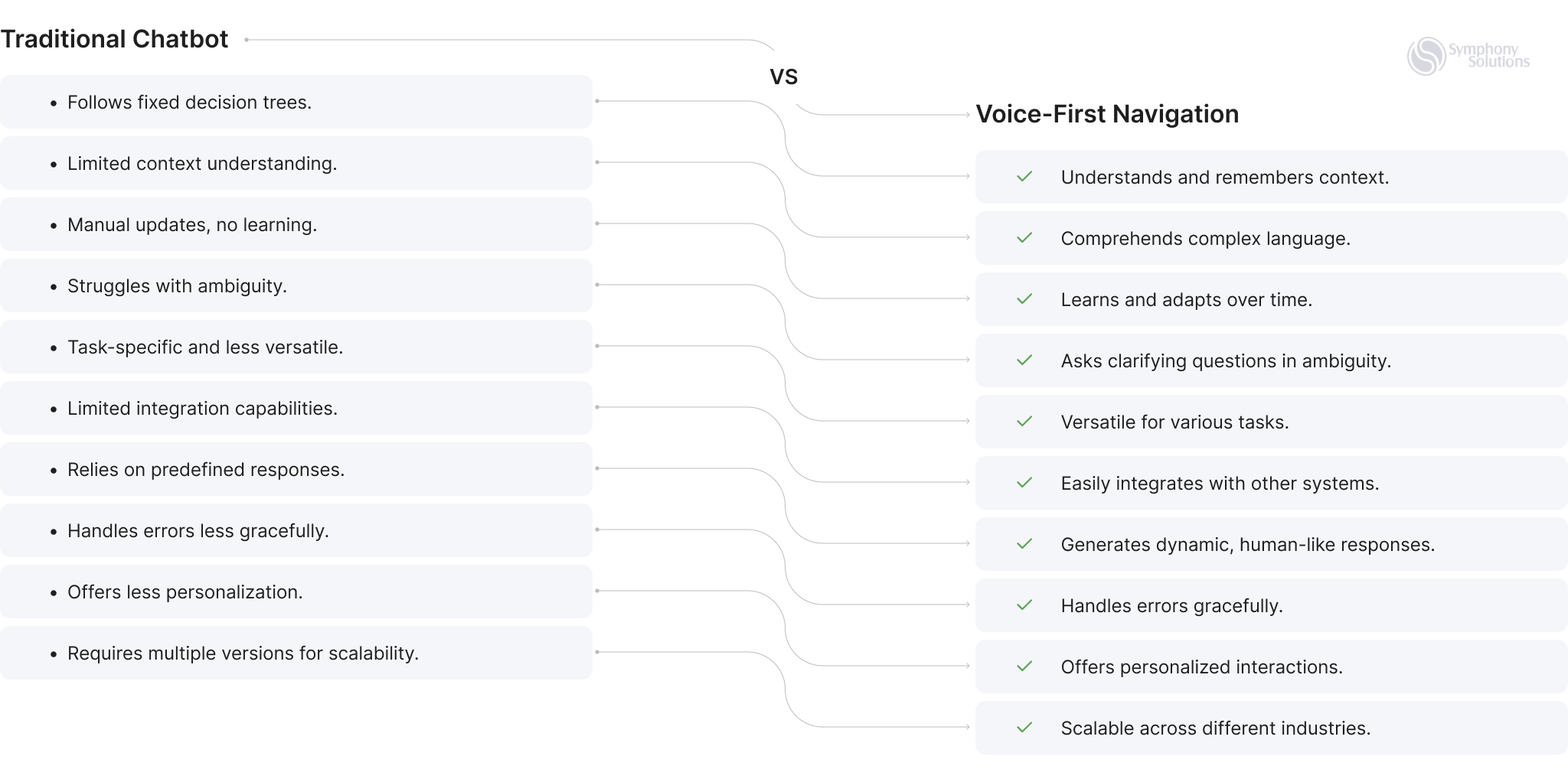
    Reduced Delays and Disruptions 

    Efficiency also means fewer delays and disruptions. Streamlined processes minimize passenger wait times, reduce baggage handling errors, and improve travel procedures. The result is a better travel experience for both passengers and airlines. 

    Use Cases 

    Let’s explore some use cases that show how to improve airline operations using advanced IT solutions and strategies such as cloud computing, automation, AI, and personalization 

    1. Cloud Computing. The cloud has really changed the game across many industries, and airlines are no different. They store tons of data about their planes, crew, and passenger schedules, all of which can be accessed instantly. This means they can gain valuable insights, scale their operations, and support other advanced technologies. As a result, they can work more efficiently, cut costs, and create a better experience for passengers. 
    2. Automation. Gone are the days when flights meant manual processes and instinct. Now, automation is driving a huge part of airline operations. This technology simplifies routine tasks, from booking to baggage handling to complex operations like crew scheduling, fleet maintenance, and revenue management. By automating these processes, airlines can reduce errors, speed up services, and free up human resources for more complex tasks. For example, the Italian airline Neos uses Lufthansa NetLine/Crew to manage their crew automatically. 
    3. Artificial Intelligence (AI). While human intelligence is still super important in the airline industry, AI is stepping in to help. AI tools assist operators with essential tasks like predicting demand, optimizing routes, and managing resources. There are countless ways AI is being used in aviation. For instance, Symphony Solution’s AI Assistant helps airlines keep track of flight info, baggage services, in-flight services, passenger loyalty, travel regulations, and customer service issues. 
    4. Personalization. Personalization is key to improving customer satisfaction, and the airline industry has been making the most of it. Using AI and data analytics, airlines can offer personalized recommendations, such as tailored flight deals, in-flight services, and travel itineraries based on a passenger’s preferences and history. 

    Delta SkyMiles is a good example of personalization by an airline, leveraging data to provide customized rewards and experiences for its customers. 

    Conclusion 

    As the aviation industry continues to evolve and face new challenges, achieving operational efficiency is more critical than ever. Hopefully, the industry solutions for aviation operations discussed in this article—from cloud computing and data-driven analytics to AI, automation, and enhanced collaboration—provide airlines with the tools they need to streamline operations, reduce costs, and enhance the passenger experience.  

    By embracing these innovative solutions, airlines can not only meet the growing demand for air travel but also build a more sustainable and competitive future. However, the key to success lies in partnering with a reliable IT expert to guide you through your digital transformation journey.  

    This is where Symphony Solutions comes in. 

    With over 15 years of experience offering airline industry solutions, Symphony Solutions is at the forefront of helping airlines navigate this transformation. Whether you’re looking to implement advanced aviation operations software or identify areas for operational improvement, our team is here to help you leverage digital tools and technologies. Our goal is to optimize your airline’s performance, ensuring your business thrives in today’s fast-evolving industry. 

    Get in touch today! 

    FAQs 

  • The Role of Personalization in Enhancing Customer Retention Rates in iGaming 

    The Role of Personalization in Enhancing Customer Retention Rates in iGaming 

    The iGaming industry is highly competitive, making player retention essential. One effective way to keep players coming back is by customizing the experience for each individual. According to ngrow, over 62% of business leaders say that personalized experiences greatly improve customer retention. This approach can strengthen player connections, boost engagement, and increase loyalty, especially for sportsbook operators. 

    personalization in customer retention

    This article explores personalization in customer retention and how it can help iGaming businesses. We’ll also look at the benefits, challenges, and practical steps to make it happen. 

    Read on! 

    What is Personalization?  

    Personalization in iGaming is all about customizing the gaming experience to match individual players’ preferences, behaviors, and demographics. By analyzing player data, operators can offer tailored content, promotions, and recommendations that enhance the gaming experience, boosting player satisfaction and loyalty.   

    Personalization in iGaming can be categorized into three primary levels: 

    Basic Personalization 

    This involves simple customizations like using a player’s name in emails or recommending games based on past preferences. While effective, it offers a general approach to iGaming personalization. 

    Advanced Personalization 

    Advanced personalization goes beyond the basics and analyzes detailed player behaviors, such as gaming patterns and betting habits. It allows for more targeted and real-time adjustments to the gaming experience. 

    Hyper-Personalization 

    This is the most sophisticated level, leveraging advanced analytics and AI for enhanced customer support, predicting player preferences, and delivering highly individualized experiences across all platforms. 

    By gradually implementing these levels, iGaming operators can enhance customer interactions, increase player lifetime value, and gain a competitive edge. 

    Why is Personalization So Important? 

    Personalization is essential for building strong, lasting relationships across industries, and iGaming is no exception. To gain better understanding of the power of iGaming personalization, check out these numbers:  

    • According to McKinsey, 71% of consumers expect personalized interactions. In iGaming, this expectation is even higher, with players seeking a personalized gaming journey that reflects their preferences. 
    • As highlighted by Sender, about 59% of customers say that personalized engagement based on past interactions is key to their patronage. This highlighting how personalization can significantly influence customer decisions. 
    • In the iGaming sector, ICE reveals that 80% of players actively seek personalized experiences. In fact, sportsbooks using AI-driven personalization have seen a 10-15% increase in player engagement. 

    And here is a quick comparison between personalized and non-personalized gaming experiences to see why it matters. 

    Why is Personalization So Important

    Personalized Gaming 

    • Fosters a Deeper Connection. Players feel valued and understood when operators cater to their unique preferences. 
    • Enhances Engagement. Relevant game recommendations, targeted promotions, and timely rewards keep players invested. 
    • Increases Satisfaction. When players find what they want easily and enjoy relevant content, satisfaction soars. 
    • Drives Loyalty. Players are more likely to become loyal advocates when they feel genuinely cared for. 

    Generic Gaming 

    • Poor Engagement. Players may feel overwhelmed by irrelevant offers and content. 
    • Dissatisfaction. A one-size-fits-all approach often falls short of player expectations. 
    • Higher Churn Rates. Players are more likely to seek out platforms that offer a more personalized experience. 

    How iGaming Companies Can Enhance Their Services with Personalization 

    how to use personalization in iGaming

    iGaming companies can greatly improve player experiences by using various personalization strategies. Here’s a breakdown of these methods: 

    Tailored Game Recommendations 

    Platforms can recommend games based on player data, such as previous game choices and betting patterns. This allows players to discover new favorites and extend their playtime. 

    Here’s how it works: 

    • Analyze player data (e.g., game choices, betting patterns). 
    • Enhance discovery and increase playtime by suggesting new or similar games that align with players betting pattern. 

    Personalized Bonuses and Promotions 

    Instead of generic offers, players receive bonuses and promotions based on their activity, which increases engagement and conversions. 

    Here’s how it works: 

    • Offer bonuses tailored to player activity and preferences. 
    • Target specific players with relevant promotions (e.g., poker tournaments). 
    • Encourage game trials with incentives (free stakes, bigger odds) for unplayed games. 

    Personalized Communication 

    Customized messages, notifications, and emails keep players informed and engaged, enhancing their overall experience. 

    Here’s how it works: 

    • Send tailored messages based on player login habits and preferences. 
    • Highlight trending games to occasional players to maintain interest. 
    • Use personalized details like the player’s name for a personal touch. 

    Behavioral Triggers and Notifications 

    Real-time alerts based on player actions or inactions help keep players engaged and reduce abandonment. 

    Here’s how it works: 

    • Monitor player behavior for actions or inactions. 
    • Trigger real-time alerts to keep players engaged (e.g., live events, special offers). 
    • Reduce abandonment by intercepting exit behaviors with attractive offers. 
    • Encourage re-engagement through timely and relevant notifications. 

    Loyalty Programs 

    Loyalty programs offer rewards that cater to individual preferences, deepening the connection between players and the platform and boosting user retention in the gambling industry. 

    Here’s how it works: 

    • Design rewards based on individual player preferences. 
    • Offer exclusive perks (e.g., personal account managers, faster withdrawals). 
    • Customize incentives like bonus spins or merchandise for loyalty program members. 

    Personalized Marketing Campaigns 

    These campaigns target players with ads and promotions tailored to their preferences and behaviors, ensuring that marketing is relevant and engaging, which boosts conversion rates. 

    Here’s how it works: 

    • Use player data, such as demographics, gaming preferences, and past behaviors, to create focused campaigns. 
    • Design promotions and bonuses that align with players’ favorite games and interests. 
    • Optimize when and how often marketing messages are sent based on player activity. 

    Customized User Interfaces 

    Customized user interfaces let players tailor their interaction with the platform, making their gaming experience more intuitive and enjoyable. The interface can automatically adjust to reflect individual preferences. 

    Here’s how it works: 

    • Allow players to organize their dashboards and choose their favorite game categories and themes. 
    • Automatically highlights frequently played games and relevant content. 
    • Provide options for players to customize settings like display preferences and notification alerts. 

    Tailored Game Content 

    Tailored game content modifies the gaming experience to match individual player preferences, skills, and behaviors. This customization boosts engagement and satisfaction by making gameplay more relevant and challenging. 

    Here’s how it works: 

    • Creating customized environments or dealer interactions based on player demographics or language. 
    • Presenting betting markets and odds tailored to specific sports or teams based on player interest. 

    Personalized Customer Support 

    Personalized customer support ensures players receive assistance tailored to their specific needs, enhancing their overall experience. By using player data and interaction history, support teams can offer more relevant and efficient solutions. 

    Here’s how it works: 

    • Anticipate and address issues using past interactions and player data. 
    • Provide support through the player’s preferred channels, such as live chat, email, or phone. 
    • Tailor support responses to reflect the player’s history and preferences. 

    By implementing these ‘personalization in customer retention’ techniques, iGaming companies can create more engaging and player-centric experiences, leading to higher retention and loyalty. 

    AI in iGaming and Personalized Gaming Experiences

    AI is transforming industries across the board, and the iGaming sector is not left out, especially in creating personalized player experiences. Here’s how AI-driven personalization is revolutionizing the iGaming industry: 

    Data Collection and Analysis 

    • AI systems collect data from various sources, including player demographics, gaming preferences, in-game behaviors, and spending patterns. 
    • Machine learning algorithms analyze this data to identify patterns, predict future behaviors, and determine player preferences. 

    Personalized Recommendations 

    • AI-driven recommendation engines adapt in real time to changes in player behavior, ensuring that suggestions remain relevant. 

    Enhanced Customer Support 

    • AI-powered assistants provide personalized support by helping players with the onboarding process and simplifying account setup, fund transfers, and bet placement. 
    • These systems can anticipate player needs, offer relevant solutions, and even escalate issues to human agents if necessary. 

    Let’s see some examples of AI-driven personalization in the industry. 

    Optimove Recommend 

    Developed with Symphony Solutions, Optimove Recommend, where AI and iGaming Come Together, is an AI-powered platform that customizes the gaming experience by delivering tailored game and bet recommendations. It analyzes data in real time to offer personalized suggestions across web, mobile, and physical locations, boosting player engagement and satisfaction while driving operator growth. 

    Intelligent Layouts 

    Another innovation from Optimove and Symphony Solutions, Smart Product Recommendations and Personalization with AI, also known as Intelligent Layouts, enables operators to create custom user interfaces for each player. This personalized gaming lobby approach has led to a 7% increase in turnover and a 26% rise in new game engagement, demonstrating how AI can enhance player satisfaction and user retention in the gambling industry. 

    Challenges to be Considered When Personalizing the iGaming Experience  

    iGaming personalization offers significant benefits but also comes with several challenges. Addressing these challenges below is crucial for maintaining player trust and ensuring the effectiveness of personalization efforts. 

    Data Privacy and Security Concerns 

    Handling large volumes of player data raises important privacy and security issues. To safeguard player information, implement robust data protection measures, and adhere to regulations like GDPR. 

    Balancing Personalization with Player Privacy 

    Personalization can greatly improve the gaming experience, but balancing this with player privacy is essential. Players should always have the option to opt out of personalized offers, recommendations, or notifications if they prefer not to share their data. This means providing clear options, privacy controls, and proper consent management tools. 

    Technical Challenges and Solutions 

    Developing and maintaining personalized systems involves complex algorithms and substantial computational resources. Invest in scalable technology and efficient algorithms to ensure smooth data processing. More importantly, collaborate with technology partners and industry experts to optimize personalization algorithms and ensure their scalability. 

    Ensuring Fairness and Avoiding Bias 

    Personalization algorithms may inadvertently create biases or unfair advantages. Regularly review and audit these algorithms to ensure they provide fair and equitable experiences for all players. 

    By effectively addressing these challenges, iGaming companies can enhance personalization while maintaining player trust and ensuring a fair, secure gaming environment. 

    Symphony Solutions Expertise on AI-Driven Content Personalization 

    Integrating AI-driven personalization into your iGaming platform is challenging and requires specialized expertise in AI technology and the gaming industry. To succeed, you need a reliable partner who can navigate these complexities. 

    Symphony Solutions is a leader in AI-driven content personalization, with a proven track record of enhancing gaming experiences and delivering engaging, relevant content across multiple channels. Our team of experts can develop and implement tailored solutions that truly resonate with your target audience. Partnering with us unlocks the full potential of personalization, boosting player engagement, retention, and lifetime value. 

    Let’s work together to elevate your iGaming platform. Contact us today to discover how our AI-driven personalization solutions can benefit your business. 

    Conclusion 

    The future of personalization in iGaming looks promising. As technology advances, we can anticipate more sophisticated strategies like real-time behavior analysis and predictive analytics. Embracing personalization isn’t just about staying competitive; it’s about building deeper connections with players, fostering loyalty, and driving long-term success. Incorporating personalization in customer retention strategies ensures your platform remains a top choice in the ever-competitive iGaming landscape. 

    FAQs  

  • Automation in Aviation: Streamlining Operations from Ground to Sky 

    Automation in Aviation: Streamlining Operations from Ground to Sky 

    The aviation industry is finally getting a much-needed boost as it recovers from the impact of the COVID-19 pandemic. By the end of 2024, global flights are expected to hit 40.1 million—a big jump from the 20.1 million recorded in 2021. With this growth, airlines have a great opportunity, but they also need to find smart ways to cut operational costs and boost revenue. This is where automation in aviation comes into play, offering a way to streamline processes, increase efficiency, and ultimately drive profitability. 
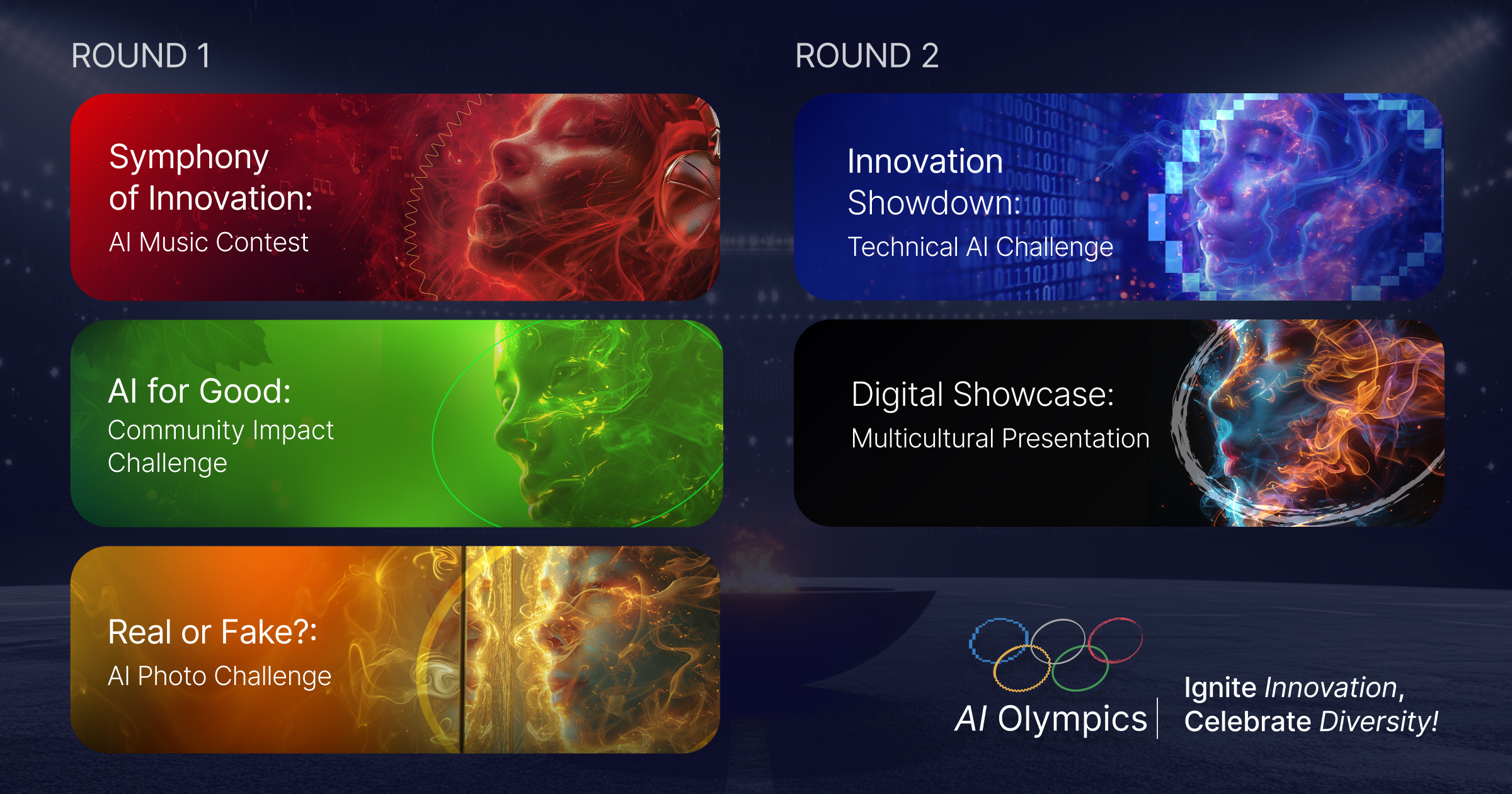
    global-fights-analytics

    In this article, we’ll dive into how aviation automation works and what the future might hold. Keep reading to discover more. 

    What is Automation in Aviation? 

    In the aviation industry, automation refers to the application of technology to execute various operational tasks with minimal human involvement. The journey began in the 1950s when automation was first applied to basic functions such as flight scheduling and aircraft maintenance tracking.  

    Today, automation in aviation has reached new heights with the integration of artificial intelligence and machine learning, enabling predictive maintenance, autonomous drone operations, and advanced air traffic management systems. These innovations not only enhance safety and efficiency but also support the industry’s push towards more sustainable and cost-effective operations, responding to both market demands and rapid technological advancements. 

    Let’s take a closer look at these applications and more. 

    Key Applications of Automation in Aviation 

    key-applications-of-automation-in-aviation

    Here’s a closer look at how automation in aviation is transforming day-to-day business operations. 

    Ground operations: 

    Ticketing & Baggage Handling 

    Automation is revolutionizing the way airports handle ticketing and baggage, ensuring smoother operations and a better passenger experience. Here’s how: 

    • Smoother Reservations: Gone are the days of endless lines and slow check-ins. With systems like Self-Service Kiosks and Automated Check-In, along with a host of other advanced technologies, today, the booking process has become incredibly fast and efficient.. 
    • Instant Updates: Real-time information is now the norm, thanks to automation. Systems that provide instant updates on seat availability and booking status ensure that passengers are never left guessing. 
    • Baggage Tracking: We’ve all been there—waiting anxiously at the baggage carousel, hoping our luggage shows up. Thanks to innovations like RFID tagging and Automated Baggage Handling Systems (ABHS), the odds are now in your favor. These technologies have revolutionized baggage handling, drastically reducing lost luggage cases and making the entire process smoother and more reliable. 
    • Fewer Errors: The more humans are involved, the higher the risk of errors. Automation steps in to minimize those risks. With systems like ABHS and barcode scanning in place, the chances of mistakes in baggage handling have significantly reduced over the years, keeping things on track and on time. 

    Maintenance Scheduling 

    Automated maintenance scheduling keeps aircraft inspections and repairs on track. Here’s how it works: 

    • Predictive Maintenance: Predictive analytics software and IoT sensors are helping airlines anticipate and address maintenance needs before they cause operational disruptions.  
    • Scheduling Efficiency: Automated systems streamline maintenance schedules, preventing conflicts and ensuring timely inspections. Maintenance Management Software (MMS), among others optimize schedules, allowing airlines to streamline inspections without disrupting operations. 
    • Compliance: Automation ensures all maintenance meets strict regulatory standards, keeping aircraft safe and airworthy. 

    Flight Operations 

    Aviation automation flight operations simplifies flight operations. Here’s what it covers: 

    • Flight Planning: Today’s flights are planned with unparalleled precision, thanks to automated Flight Management Systems (FMS) and other advanced tools. These systems calculate the most efficient routes, optimize fuel usage, and even consider environmental factors, making flights not just faster, but also greener and more cost-effective. 
    • Crew Scheduling: Crew Management Software (CMS) and rostering tools efficiently manage crew schedules, ensuring compliance with regulations and reducing fatigue. 
    • Flight Monitoring: Real-time monitoring systems like ACARS and radar tracking improve on-time performance by providing accurate, up-to-the-minute information. 

    Internal Business Processes 

    Revenue Management 

    The aviation industry is very competitive, and revenue management is a critical function that can make or break the success of an airline. Automation plays a pivotal role in this area by enabling airlines to implement more dynamic and responsive strategies. 

    • Dynamic Pricing: Automatically adjusts prices based on demand, competition, and other market factors, ensuring the best possible rates. 
    • Cost Control: Keeps an eye on operational costs, helping to improve efficiency and cut unnecessary expenses. Ryanair is known for its stringent cost-control measures, and automation plays a key role in this strategy. The airline uses automated systems to monitor and manage operational expenses, such as fuel consumption and aircraft maintenance. 
    • Expense Tracking: Automates the tracking of financial performance, making it easier to stay on top of the numbers. 

    Invoice Processing and Approval 

    Automating invoice processing speeds up approvals and payments, making financial management smoother and more accurate. Here’s what it brings to the table: 

    • Automated Data Entry: Automatically extracts and inputs invoice data, ensuring quicker payments to suppliers and more accurate financial records. 
    • Approval Workflow: Automated approval workflows streamline the invoice process by routing documents to the appropriate managers based on predefined criteria. 
    • Error Reduction: Advanced automated invoice processing systems often include error-checking features that cross-reference invoices with purchase orders and contract terms. This reduces the risk of financial discrepancies and ensures more reliable financial management 

    Regulatory Compliance 

    In the highly regulated aviation industry, compliance with government and industry standards is non-negotiable. Airlines must adhere to a myriad of regulations set forth by entities such as the Federal Aviation Administration (FAA), European Union Aviation Safety Agency (EASA), and the International Air Transport Association (IATA). The complexity of these regulations, coupled with the operational demands of running an airline, makes automation an essential tool in keeping up with compliance. With automation, airlines can: 

    • Generate and Submit Reports: Automatically create and submit compliance reports, saving time and reducing the risk of errors. 
    • Support Audits: Provide detailed records for audits, making it easy to demonstrate compliance and stay in line with regulations. 

    Supply Chain Management 

    The aviation supply chain is complex, involving numerous suppliers, stringent quality controls, and tight timelines. Any delays or mismanagement can lead to grounded aircraft and significant operational losses. Automation is a game-changer in supply chain management for airlines, ensuring that procurement, inventory control, and logistics run smoothly and on time. Here’s how it helps: 

    • Inventory Management: Automatically tracks and manages inventory levels so everything’s in stock when needed. 
    • Procurement Automation: Streamlines ordering and manages suppliers efficiently, keeping the process hassle-free. 
    • Logistics Coordination: Automates the scheduling and tracking of deliveries, ensuring everything arrives right on time. 

    Customer Support 

    Modern customer support operations can be made more effective by using automation tools. Some possible applications in the aviation industry include: 

    • Complaint Management. Automated systems categorize, prioritize, and route customer complaints to appropriate departments, ensuring timely resolution. 
    • Chatbots. AI-powered chatbots provide instant answers to frequently asked questions, reducing response times and improving customer satisfaction. This tech could power 95% of customer interactions by 2025. 

    The aviation sector can increase safety, efficiency, and customer satisfaction by automating these essential areas. 

    How Automation Can Be Applied in the Aviation Industry 

    Here’s an in-depth look at the various ways automation can be incorporated into aviation: 

    Application Development 

    Application development is a good place to start when planning to implement automation in your aviation operations. This can mean building applications to automate invoice processing, approvals, and payment workflows. Custom applications can also automate check-in and boarding processes, inventory, crew assignments, shift rotations, passenger notifications (for flight updates), and more.  

    This is also a good way to implement New Distribution Capability (NDC) in airline operations. For example, airlines may need to develop new booking engines, pricing tools, and customer relationship management systems to support NDC, as it relies on the capability to quickly and efficiently create, modify, and distribute personalized offers. 

    It mustn’t be a build-from-scratch, though. Existing software can be modified to deliver these features. 

    At Symphony Solutions, we’ve helped numerous clients in the aviation industry develop cutting-edge applications. We can upgrade the frontend and backend, create a module, or even rebuild the whole application if needed. One of our recent projects was with Datalex, a leader in travel retail software. We collaborated with their team to enhance their Digital Commerce Platform, addressing complex challenges such as third-party integration, insurance and payment systems integration, security updates, and compliance with IATA’s New Distribution Capability (NDC). The result was a more scalable and efficient platform that significantly improved airline service delivery worldwide. 

    The Symphony team continues to integrate more features as DCP evolves. Discover the full case study here to see how we made this transformation possible. 

    Application Modernization 

    Many aviation companies still rely on legacy systems that are cumbersome to maintain and outdated to handle the demands of modern air travel. Application modernization is all about upgrading these systems to modern, automated solutions that boost performance and work smoothly with newer technologies. A big part of this transition is moving applications to the cloud, which brings benefits like improved scalability, flexibility, and real-time data processing — all essential for effective process automation.  

    A recent project with one of our clients, a technology provider in the airline & transportation industry, illustrates this transformation. Their legacy system, based on outdated assembler language, was hindering their operational efficiency. Symphony Solutions stepped in to modernize their technology stack by re-implementing it in Java and migrating the entire system to the cloud. Utilizing tools like Google Cloud’s Kubernetes Engine, we ensured the new system was not only scalable and easy to maintain but also capable of adjusting to seasonal demands, leading to significant cost reductions and enhanced operational effectiveness. For more details on how we achieved these results, check out the full case study here 

    Data Engineering and Data Analytics 

    Data analytics is critical for implementing automation in the airline industry. Airlines generate huge amounts of data every day, from flight logs and passenger details to maintenance records and weather forecasts. By tapping into data analytics, airlines can sift through this data to find patterns and insights that help them make smarter decisions. 

    For example, analyzing flight data can help airlines better optimize crew scheduling, maintenance, and even loading food and beverages for passengers. On the technical side, insights from flight analytics can lead to improved safety while identifying loopholes that can help with crew training. Passenger data can be used to offer personalized services. Leveraging real-time data analytics tools can automate these insights, guiding decisions on critical operational choices. 

    AI Services 

    AI services offer significant potential for automating various functions in aviation. Examples include: 

    • AI in Data Analytics.  

    By digging deep into data, AI can monitor aircraft performance in real-time to detect operational issues, ensuring prompt responses to potential disruptions. This can potentially address the issue of canceled flights, which was 1.67% in the first half of 2024. It predicts, reminds, and notifies the relevant department of the need for parts and supplies, streamlining inventory and managing the supply chain to reduce waste. AI can even personalize food and drink options based on passengers’ past preferences, making the in-flight experience better. 

    • AI-Based Maintenance.  

    AI algorithms can analyze aircraft maintenance data to predict when problems might arise and suggest ways to prevent them. This proactive approach makes planes more reliable and can lower maintenance costs by 25% while cutting down on breakdowns by 70%

    • AI Customer Support.  

    AI assistants can offer personalized support by learning about passengers’ preferences and giving them helpful information. This boosts customer satisfaction and cuts support costs by 30%. 

    • AI in Business Processes  

    Imagine freeing up time by letting AI handle those repetitive tasks like processing invoices and managing payroll. This way, airlines can focus on what really matters. Plus, AI can tailor training and planning to each individual, making these processes more relevant and effective. 

    • AI in Passenger Experience 

    AI makes travel more enjoyable by offering personalized recommendations, customizing in-flight services, and delivering targeted marketing. It also boosts sales through dynamic pricing, tailored offers, and loyalty programs, making passengers feel valued and more likely to return. 

    Advantages and Disadvantages of Automation in Aviation 

    advantaged and disadvantages of automation in aviation

    Advantages of Aviation Automation 

    Aircraft automation has become an integral part of the aviation industry, delivering many benefits. Let’s take a closer look at some of the key advantages it offers: 

    Time and Cost Efficiency 

    One of the biggest perks of automation, no matter the industry, is how much it can save both time and money. In aviation, automation streamlines workflows and optimizes resources, making tasks like flight planning faster and more cost-effective. It also supports predictive maintenance, which helps avoid unexpected downtime and cuts down on costs. Plus, automating financial processes can slash operational expenses by up to 90%, giving you significant savings and efficiency. 

    Reduces Workload 

    Automation significantly lightens the load for aviation professionals by handling routine tasks, allowing crew, operational, and back-office staff to focus on more complex responsibilities. This shift not only balances workloads but also improves job satisfaction and reduces burnout. On a typical commercial flight, autopilot is engaged 90% of the time, freeing pilots to concentrate on situational awareness. While autopilot can be engaged just seconds after takeoff, the International Civil Aviation Organization (ICAO) mandates its use only after the plane reaches 29,000 feet. This system enables pilots to quickly regain control during emergencies, enhancing safety and efficiency. 

    Reduces Error 

    Automated systems are designed to execute tasks with precision and consistency, which is crucial in safety-sensitive environments like aviation where even minor errors can have serious consequences. The advancement of autopilot systems, particularly with the integration of AI, has further enhanced automation in the cockpit. AI-driven technology offers real-time data analysis and predictive analytics, detecting weather changes, adjusting navigation for safety, and identifying obstacles or nearby aircraft to prevent collisions, thus improving overall flight safety.  

    Beyond the cockpit, automation improves accuracy in back-office tasks like data entry, documentation, and invoicing. Automated systems can automatically input data, check for errors, and flag inconsistencies. This reduces human error and allows staff to focus on more important work. 

    Enhanced Response Quality and Emergency Assistance 

    In aviation, the speed and quality of response can mean the difference between a safe flight and a disaster. This is another area where automation shines. With automated systems, emergency responses become faster and more efficient, especially in critical moments. These systems can analyze real-time data, spot any abnormalities or potential risks, and suggest ways to avoid or lessen dangers. This improved response quality and emergency support contribute to a more secure flight experience for passengers and crew. 

    Competitive Advantage 

    Automation in aviation gives airlines a natural edge in today’s competitive market. By implementing sophisticated technology and automation systems, airlines can simplify their operations, boost productivity, and provide better customer service. These improvements can lead to increased market share and long-term profitability. 

    Integration of Emerging Techs 

    Integration of Emerging Technologies 
    Introducing new technologies like machine learning, data analytics, and artificial intelligence in aviation becomes much easier with automation. It sets the stage by providing a strong data foundation, standardizing formats, and seamlessly integrating workflows, creating an ideal environment for leveraging these technologies. These innovations help airlines make smarter decisions, anticipate maintenance needs, and connect with passengers more meaningfully. 

    Improved Decision-Making 
    Airlines can use advanced data analytics tools to quickly process huge amounts of information, leveraging automation. This means they can make better decisions about airline operations based on real-time insights. It turns data into actionable plans that help keep everything running smoothly. 

    Better Customer Experience 
    Streamlining operations with automation also makes a noticeable difference for passengers. It speeds up check-ins, improves baggage handling, and personalizes services. This helps reduce wait times and increases overall satisfaction, leading to a 37% boost in repeat customers. 

    Regulatory Compliance 

    In the highly regulated aviation industry, automation is key to staying compliant with safety and operational standards. Automated systems handle reporting, keep documentation accurate and up-to-date, and conduct regular compliance checks. This proactive approach helps prevent issues and reduces the risk of penalties. 

    Disadvantages of Aviation Automation 

    Operational Disadvantages 

    When systems fail, it can cause severe disruptions, leading to delays and safety concerns. Moreover, automated systems don’t handle unexpected situations well—things like mechanical issues or sudden changes in air traffic can slow down responses and require human intervention. On top of that, maintaining and updating these systems can be costly, especially for smaller operators who might struggle with the added expenses. 

    Back Office Disadvantages 

    In the back office, automation can lead to fewer jobs, hurting morale and affecting the overall work environment. Also, there’s the challenge of managing the huge amount of data these systems produce. If it’s not handled properly, it can bog down efficiency.  

    Cybersecurity is another big concern, as automated systems can be more vulnerable to attacks, putting sensitive information at risk. Plus, setting up these systems often comes with a hefty price tag, which can be tough for smaller organizations to manage. And without enough human oversight, small errors can slip through the cracks, potentially turning into bigger issues over time. 

    Risk of Overreliance 

    A significant disadvantage of automation is the risk of overreliance, which can reduce pilot alertness and situational awareness. When pilots become too dependent on automated systems, their ability to manage unexpected events or emergencies that require manual intervention may diminish, posing a serious safety concern. While systems like the Electronic Centralized Aircraft Monitor (ECAM) and Engine Indicating and Crew Alerting System (EICAS) provide valuable diagnostic support, they can overwhelm the crew during complex failures. This was evident in the 2010 Airbus A380 engine failure after takeoff from Singapore, where the flood of information risked distracting the crew from their primary duty—flying the aircraft. 

    Loss of Skills 

    Another significant impact of automation in aviation is the potential loss of skill among pilots. As automation handles more tasks, pilots may have fewer chances to hone their manual flying abilities, which are crucial during specific flight phases or emergencies. While automation reduces the burden of repetitive tasks, it shifts pilots’ roles to monitoring, a task that humans are generally less effective at, especially over extended periods. For instance, pilots who frequently rely on Autothrottle (AT) may lose the habit of regularly checking speed indicators. This was highlighted in the 2009 Amsterdam B737-800 incident, where pilots failed to notice significant speed deviations after the AT disengaged, leading to a critical situation. 

    Complex Cockpit Environment 

    The increasing number of automated systems, especially in-flight, can complicate the cockpit environment, potentially overwhelming pilots with excessive information. While effective automation is designed to reduce workload and free up attention for critical tasks, managing these systems—such as data entry or retrieval via keypads—can ironically increase pilot workload. This added layer of complexity may detract from decision-making time. 

    Automation Dependency 

    Excessive reliance on automated systems can create vulnerabilities. If these systems fail or malfunction, pilots may not have the necessary skills or experience to safely operate the aircraft manually. This can increase the risk of accidents. 

    Potential for Human Error 

    While automation is intended to eliminate human error, humans design, maintain, and operate these systems. Errors in programming, system design, and human-machine interaction can have unexpected effects. 

    Issues and Challenges of Automation in Aviation 

    While automation brings many exciting benefits to aviation, it also has its fair share of challenges. 

    System Reliability: Aviation needs top-notch reliability. A failure in an automated system can have serious consequences, so strong automation safety measures to prevent mishaps are essential. 

    Cybersecurity: Automated systems can be vulnerable to cyberattacks, which could threaten aircraft safety and overall operations. Keeping these systems secure is crucial. 

    Data Privacy: Handling large volumes of passenger data can be tricky and raises privacy concerns. Operators must put strong protections in place to safeguard this sensitive information. 

    Integration Complexity: Bringing new systems into existing setups isn’t always straightforward. It can be a complex process that requires specialized knowledge, and the current shortage of skilled professionals, at 76%, in transportation and logistics only adds to the challenge. 

    Ongoing Automation Management: Managing and maintaining complex automation systems needs specialized skills to ensure everything stays on track. For example, short-notice changes by Air Traffic Control (ATC), such as reprogramming a departure or landing runway, can be hazardous due to the risk of incorrect data entry and cross-checking under time pressure. 

    Regulatory Compliance: Staying up to date with evolving regulations while integrating new automation technologies can be challenging, as the rules keep changing. 

    Initial Investment: The upfront costs of automation can be significant, so careful financial planning and convincing stakeholders of the benefits are essential. 

    Ethical Implications: Automation also raises important ethical questions, like who’s responsible if something goes wrong with an automated system. 

    Addressing these challenges requires collaborating with a reputable IT partner who is an expert in digital transformation in the airline industry

    The Future of Aviation Automation  

    • Aviation automation has come a long way, transforming the industry by streamlining processes, boosting efficiency, and enhancing safety. As technology keeps evolving, we can look forward to even more exciting innovations in the future. Some of the key trends in this area include: 
    • Autonomous Aircraft Systems. We’re seeing a growing trend in the use of unmanned aerial vehicles (UAVs) for both cargo and passenger transport. By the 2040s, we might find ourselves in a world where aviation is almost entirely autonomous or at least highly automated. 
    • Enhanced Flight Automation. In the future, commercial and cargo aircraft will be equipped with advanced automation systems. These will not only lighten the workload for pilots but could also make single-pilot operations a reality in many cases. 
    • Addressing Pilot Shortages. Automation will be crucial in addressing the global pilot shortage—which could reach 80,000 pilots by 2032—by optimizing flight crew configurations. 
    • Advanced Air Mobility (AAM). The rise of electric vertical takeoff and landing (eVTOL) aircraft will bring about new challenges and opportunities. These aircraft will rely on sophisticated automation to ensure safe and efficient urban air mobility. 

    • New Business Models. Automation is set to pave the way for innovative business models like drone delivery services and air taxi operations, transforming the way we think about transportation. 

    Automation is poised to transform aviation, improving efficiency, safety, and accessibility while addressing issues like pilot shortages and environmental concerns. Symphony Solutions is set to play a huge role in this transformation. As experts in airline IT solutions, we create specialized software that works flawlessly with existing technology and systems. With over 15 years of expertise in digital transformation, we can help you realize the full potential of automation in aviation.  

    FAQs 

  • Strategic Moves: How Consulting Services Can Shape the Future of Online Gambling 

    Strategic Moves: How Consulting Services Can Shape the Future of Online Gambling 

    The online sportsbook industry is full of potential, with the global market expected to grow from $56.65 billion in 2023 to $147.27 billion by 2032, according to Straits Research. However, this growth also means more competition and tougher challenges. Online sportsbooks need to handle strict regulations, adapt to changing customer needs, and stay ahead of their competitors, which can be difficult without expert help. 

    This is where consulting services make a difference. With specialized sports betting marketing strategies, data-driven insights, and customized solutions, consultants can help sportsbooks improve their performance, enhance customer experiences, and increase revenue. 

    In this essential guide, you’ll learn how to grow your online sportsbook using consulting services and stand out in today’s dynamic and fiercely competitive gambling market. 

    Read on. 

    statistic of the online sports betting market
    • The Online Sports Betting market is expected to reach 182.5 million users by 2029, reflecting the growing popularity of digital betting platforms. (Statista) 
    • 75% of sports bettors now prefer placing their wagers online or through mobile apps, indicating a clear shift towards digital convenience. (DriveResearch) 
    • On average, an online sports bettor spends approximately $1,000 annually, highlighting the profitability of this sector. (Zipdo) 
    • Blockchain technology is emerging as a high-growth area likely to reshape and enhance the global sports betting landscape in the near future. (Total Football Analysis) 
    • The gaming industry is increasingly focused on mobile users, with 75% of online gamblers aged 18-34 using smartphones for their betting activities. (nSoft) 

    Understanding the Role of Consulting Services 

    Sports betting consulting is specialized advisory offerings that help online sportsbooks navigate complex challenges and capitalize on growth opportunities. These services typically fall into a few key areas: 

    • Strategic. Focuses on long-term planning to spot growth opportunities, market trends, and competitive strategies. 
    • Operational. Aims to improve internal processes, including customer experience, platform performance, branding and sports betting marketing strategies, and overall efficiency. 
    • Regulatory. Guides sportsbooks through legal regulations, ensuring compliance with both local and international laws. 
    • Technology. Assists in adopting cutting-edge technologies like AI, blockchain, and data analytics to enhance user experiences and operational efficiency. 
    the role of consulting services in igaming

    Consultants offer valuable industry knowledge, analytical skills, and strategic insight. For instance, a strategic consultant might find new markets for expansion, while a technology consultant could suggest tools to boost user engagement or must-have features to implement in sports betting app development. Their expertise typically includes: 

    • Deep understanding of the online gambling industry 
    • Regulatory knowledge 
    • Technological proficiency 
    • Data analysis and interpretation 
    • Strategic planning and execution 

    By tapping into this expertise, online sportsbooks can sharpen their strategies, improve operations, and gain a competitive edge in the evolving gambling market. 

    Strategic Growth for Online Sportsbooks

    Consultants offer easy steps to grow sportsbook operations strategically. They bring expertise in spotting opportunities, crafting detailed growth plans, and delivering crucial market insights. 

    Identifying Growth Opportunities 

    Consultants help sportsbooks discover new market potentials. They use their industry knowledge and data access to identify which areas are ripe for expansion and how to enter them effectively. For example, a consultant might notice a growing interest in esports betting in Ghana and guide a sportsbook on creating and promoting an esports betting platform for that market. 

    Developing a Comprehensive Growth Strategy 

    Once opportunities are identified, consultants develop a customized growth strategy covering: 

    • Market Penetration. Boosting market share in existing regions with better promotions or partnerships and entering new regions with compliance and localization strategies. 
    • Product Development. Expanding offerings with new betting options or tech innovations. 
    • Competitive Positioning. Differentiating the sportsbook with unique value propositions or superior customer experiences. 
    • Risk Assessment. Identifying challenges and creating contingency plans. 

    A good consultancy partner doesn’t just make guesses. They conduct in-depth analyses to offer insights into market trends, customer behavior, and competitive landscape. 

    Enhancing User Experience and Engagement  

    In the highly competitive online gambling industry, delivering top-notch user experience is essential for success. Consultants play a key role in enhancing user interfaces (UI) and user experiences (UX), which drive player engagement and retention. 

    Here’s how they do it: 

    Improving User Interface (UI) and User Experience (UX) 

    Consultants work with game operators and tech teams to design attractive, intuitive interfaces that facilitate navigation. They focus on visual elements like layout, color schemes, and typography to create a user-friendly and appealing platform. 

    For UX, they analyze the entire user journey—from account setup to placing bets—identifying and fixing pain points. This experience design consulting will help boost overall user satisfaction. 

    Recommending Strategies for Increasing Player Engagement and Retention 

    Consultants also work with sportsbook operators to make the iGaming experience they provide engaging and rewarding. They recommend and implement personalized features, such as tailored promotions and custom betting options, and add gamification elements like leaderboards and rewards to keep players interested.  

    Case Studies of Successful User Experience Improvements 

    Ladbrokes Coral Application:

    Ladbrokes’s onboarding process was lengthy and frustrating, with 36 steps from downloading the app to placing a bet. Users struggled with confusing registration, physical loyalty cards, and manual data entry, leading to high drop-off rates. 

    Symphony Solutions transformed this by applying service design principles. The Symphony team replaced physical cards with QR codes, automated data entry, and streamlined the process into 13 steps. This redesign cut onboarding time by 60%, improved user experience, and boosted online engagement by creating a seamless, omnichannel experience. 

    BetWinner:

    BetWinner faced challenges in adapting its popular desktop card games to mobile platforms. Due to design and integration issues, maintaining a high-quality experience on smaller screens was difficult. 

    Partnering with Symphony Solutions, BetWinner addressed these challenges by redesigning the games for mobile. Symphony created a custom game engine that supported modern features like multi-currency and multi-language options. The result? BetWinner’s card games, including Blackjack, now deliver a smooth, engaging experience on both iPhone and Android, making gaming on-the-go easier and more enjoyable. 

    Regulatory Compliance and Risk Management  

    Navigating the complex world of online sports betting regulations can be a tough challenge for operators. According to a Wisebet.Media: In the U.S., for example, Nevada, Delaware, New Jersey, New Jersey, Pennsylvania, West Virginia are the states that have legalized sportbetting, and California, New York, Illinois are among are among those considering legislation, each with its own set of rules. In Europe, countries like the UK, Germany, and France also have their own unique regulations. Understanding and managing these diverse requirements is crucial for compliance and maintaining trust with users. 

    Importance of Compliance and Risk Management 

    Staying compliant is not just about following the law but also protecting your sportsbook from financial and reputational damage. Violating regulations can lead to hefty fines and legal troubles. For example, according to Comply Advantage, fines can reach up to €30,000 in France and over $1 million in some parts of the U.S., depending on the violation.  

    Compliance and risk management is important because it helps to: 

    • Ensure that all operations adhere to local laws and regulations. 
    • Maintain trust with users and stakeholders through transparent and compliant practices. 
    • Minimize the risk of costly fines and sanctions. 

    How Consultants Can Help with Legal and Regulatory Issues 

    Consultants play a vital role in helping sportsbooks navigate the complex regulatory landscape by providing: 

    • Regulatory Expertise. They offer deep knowledge of both local and international laws, helping sportsbooks stay compliant with evolving regulations. 
    • Risk Assessment. They conduct thorough assessments to identify potential compliance issues and develop strategies to address them. 
    • Audit and Monitoring. They provide ongoing monitoring and audits to ensure continuous compliance and catch issues early. 
    • Licensing Assistance. They assist with obtaining licenses, handling paperwork, and meeting jurisdictional requirements. 

    Leveraging Technology for Competitive Advantage  

    Technology has turned online sports betting from a niche market into a global powerhouse, making it more accessible, efficient, and engaging. Mobile apps, live streaming, and real-time gambling data analytics have significantly enhanced user experiences and expanded the reach of sportsbooks. 

    Several emerging technologies are set to transform online sports betting further: 

    • Artificial Intelligence (AI). AI-driven algorithms analyze large amounts of data to provide personalized betting options and real-time insights. This increases player retention by 15% in the iGaming sector, according to Gitnux. 
      Sportsbook can also leverage AI for enhanced customer support in online gambling. BetHarmony, an AI-powered assistant from Symphony Solutions, is an excellent example of this technology. It helps onboard new players and guides them to the sports matches or casino games that suit them best. 
    • Blockchain Technology. Blockchain enhances security and transparency, crucial for online gambling. It ensures secure transactions, and fairness through smart contracts, and provides an immutable ledger of all bets, fostering trust among users. 
    • VR and AR. VR and AR are emerging as tools for creating immersive betting experiences, simulating real-world environments that bring users closer to the action. 

    Adopting cutting-edge technologies can set sportsbooks apart as the market grows more competitive. Consultants play a key role in this process by: 

    • Evaluating current systems and identifying technologies that align with the sportsbook’s goals and customer needs. 
    • Crafting a detailed plan for technology integration, including timelines, resource allocation, and risk management. 
    • Providing training and ongoing support to ensure smooth technology adoption and effective use by staff. 

    Working with consultants helps online sportsbooks stay ahead of technological trends, ensure seamless integration of new tools, and secure a competitive edge in the rapidly evolving online gambling industry. 

    Marketing and Branding Strategies  

    Effective marketing is crucial for online sportsbooks to stand out in a crowded market. To succeed, sportsbooks must understand their audience and use digital channels strategically. Here’s how: 

    • Targeted Advertising. Leverage gambling data analytics to create personalized ads that align with user preferences and behavior. 
    • Content Marketing. Engage users by offering valuable content like betting tips, insights, and sports news, which also builds credibility. 

    • Influencer Partnerships. Collaborate with sports personalities and influencers to expand reach and enhance brand visibility. 
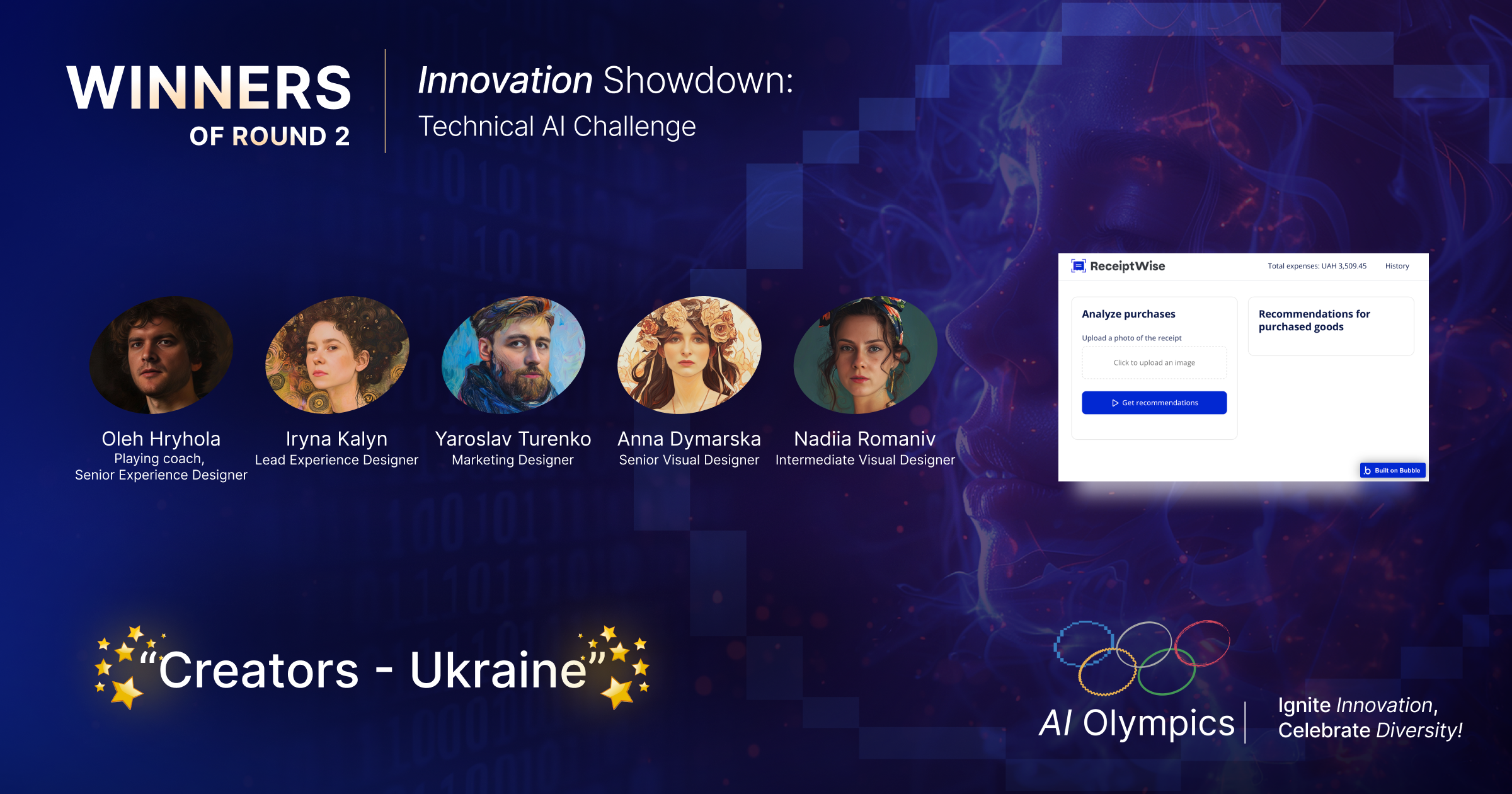
    Building a strong brand presence is just as important. A recognizable and trusted brand sets a sportsbook apart from the competition. This involves consistent branding across all platforms, from the website to social media. Trust is key — users must see the brand as reliable, secure, and fair. Partnerships, sponsorships, and influencer collaborations can further boost visibility and credibility. 

    How Consulting Services Enhance Marketing Efforts 

    Sports betting consulting is invaluable in these areas. Experts in marketing auditing and consultancy can help sportsbooks identify the best channels and strategies for their audience, ensuring marketing budgets are spent wisely on high-ROI activities.  

    They also monitor campaigns to keep them on track. For branding, consultants help craft a cohesive strategy that reflects the sportsbook’s values and market position. Their insights into consumer behavior allow messaging that resonates and builds lasting loyalty. 

    Data Analytics and Business Intelligence  

    Making decisions based on data is key to staying ahead in any industry, and online gambling is no exception. By using data analytics, sportsbooks can make smarter choices, run operations more efficiently, and offer better experiences to their users. 

    Data-driven decision-making enables sportsbooks to: 

    • Optimize Operations. Analyze user behavior and betting patterns to fine-tune odds and streamline processes. 
    • Enhance Customer Experience. Tailor promotions and offers based on what users want and how they engage. 
    • Boost Profitability. Spot profitable trends and markets, allowing for targeted strategies that maximize revenue. 

    Sportsbooks use various tools and techniques to harness the power of data: 

    • Advanced Analytics Platforms. Tools like Tableau, Power BI, and SAS for visualizing data and generating insights. 
    • Predictive Analytics. Machine learning models that forecast outcomes and user behavior. 
    • Real-Time Data Processing. Technologies like Apache Kafka and Spark for instant analysis and decision-making. 

    Role of Consultants in Implementing and Optimizing Data Analytics 

    Consultants are key to maximizing the benefits of data analytics. They help sportsbooks: 

    • Select and integrate the best analytics platforms for their needs. 
    • Develop strategies to ensure data is accurate, timely, and actionable. 
    • Equip staff with the knowledge to use data tools effectively and keep optimizing them. 

    With proper consultancy support, sportsbooks can fully leverage data analytics services and solutions to make better decisions, enhance user experiences, and stay competitive in the online gambling industry. 

    Conclusion  

    The iGaming industry offers huge opportunities, but it also comes with its fair share of challenges, like dealing with complex regulations and keeping up with changing customer preferences. If you’re wondering how to grow your online sportsbook and overcome these obstacles, sports betting consulting can be invaluable. 

    With expert advice on strategy, operations, regulations, and technology, sportsbooks can craft effective sports betting marketing strategies, boost their competitive edge, improve customer experiences, and drive long-term growth.  

    At Symphony Solutions, we offer a comprehensive suite of consulting services covering sportsbook software development, data and analytics, digital, marketing, experience design, and AI services, and we are well-equipped to help sportsbooks chart a course for long-term success. 

    Tap into our expert support and set your sportsbook on a path to future success. 

    FAQs

  • Guide to Cloud Managed Services for Businesses 

    Guide to Cloud Managed Services for Businesses 

    Cloud computing has become increasingly popular as businesses and organizations seek its benefits, such as enhanced data security, flexibility, and easy scalability. To fully leverage these advantages without the associated hassles, many companies are now turning to business cloud managed IT services. 

    According to a Global Forecast report by MarketsandMarkets Research, the market for cloud-managed services is expected to grow significantly, reaching USD 139.4 billion by 2026, up from USD 86.1 billion in 2021. 

    This trend highlights the importance of managed service providers in helping businesses optimize their cloud operations. Continue reading to learn what you can also gain from these partnerships. 

    managed-services-analytics
    By 2026 cloud managed services market is forecasted to reach 139.4B USD from 86.1B USD as of 2021. 
    Source: MarketsandMarkets Research 

    What are Cloud Managed Services? 

    Cloud-managed services involve partnering with a provider offering comprehensive cloud infrastructure support when a business wants to migrate to the cloud. This includes setting up, maintaining, updating, and troubleshooting your cloud environment. Unlike basic cloud infrastructure providers, managed service providers (MCSPs) offer ongoing management and support beyond the initial setup, covering services like cloud storage, cloud transformation, and cloud-native development. 

    When and Why Do Businesses Need Them? 

    Businesses need cloud-managed services to manage the complexities of cloud infrastructure effectively. Managing cloud environments requires continuous monitoring, regular updates, and quick troubleshooting, which can be challenging and resource-intensive for internal teams. 

    Opting for cloud-managed services helps businesses avoid the difficulties of in-house cloud management, such as unplanned expenses, the need for additional hires, and technical debt. For instance, Symphony Solutions can develop and manage a comprehensive cloud solution, ensuring efficient communication within the cloud infrastructure. 

    By choosing cloud-managed services, businesses can depend on these expert providers to maintain and optimize their cloud environments. This ensures that the cloud infrastructure remains secure, up-to-date, and efficient, allowing businesses to concentrate on their core operations and strategic objectives. 

    Benefits of working with a managed cloud services provider (MCSP) 

    1. Predictable spending. Cloud service providers usually offer a subscription plan that may be tailored to your organizational IT needs for the best service-to-price ratio. You may scale your managed cloud team at any time as the need arises. Sometimes, your provider may offer you a credit plan for when your cloud needs change throughout the year. However, this is more applicable to organizations that experience an excessively heavy load at certain times of the year (e.g., Black Friday and Christmas).  
    2. Resource optimization. Your MCSP will provide services that best suit your workloads and planned budget and optimize performance for desired business value outcomes. A good MCSP will keep you clear with regular performance metrics reports, help you configure your managed cloud infrastructure, and constantly improve your solution.  
    3. Robust infrastructure. As part of cloud infrastructure managed services, your MCSP sets up your cloud infrastructure. The service provider helps align your cloud network operations to your business needs, regularly updates and monitors the state of your cloud environment and reports back to you.  
    4. Maintenance. By opting for maintenance with your cloud services provider, you have more options for saving costs on IT expenses. Your MCSP alleviates the technical and financial burden of maintaining your own cloud environment. 
    5. Service level agreements. When you start working with an MCSP, your provider commits to delivering the agreed-upon service levels and ensuring service continuity for your business.  
    6. Quick response time. You can expect 24/7 cloud support and a quick response to any issues with your cloud infrastructure, thus ensuring that your managed cloud applications operate uninterrupted.  
    7. Data safety and recovery. Data loss is a security risk you want to avoid at all costs. With cloud-based managed services, you get regular data backups, quick recovery, and data source reservations.  
    8. Interfacing. Your MCSP handles any issue related to your cloud vendor so that you can focus on your business growth. As certified partners with AWS and GCP, we can ensure the fastest problem resolution, cost control, and automation of critical processes.  
    9. Timely updates. Your MCSP maintains its software and hardware always up to standard, with regular upgrades, personnel training and upskilling, expanding resources, and keeping up with the pace of the cloud market and industry.  
    10. Integrated services. Create your custom cloud environment seamlessly connected to your existing systems. With an MCSP you can be flexible in what cloud solution exactly matches your business objectives, allowing yourself more freedom in prioritizing spending and focusing on growth.  

    Benefits of working with a managed cloud services provider 

    managed cloud services benefits

    When you opt to work with an MSP, you can benefit from having access to a reliable team of cloud experts that handle your cloud environment and help optimize your business operations. Here are just some of the perks of your provider’s team managing cloud infrastructure for your business: 

    • Predictable spending. Your managed services provider usually offers a subscription plan that may be tailored to your organizational IT needs for the best service to price ratio. You may scale your managed cloud team at any time as the need arises. In some cases, your provider may offer you a credit plan for when your cloud needs change throughout the year. However, this is more applicable to organizations that experience an excessively heavy load at certain times in the year (e.g., Black Friday, Christmas). 
    • Resource optimization. Your MSP will set you up with services that fit you best in terms of workloads and planned budget, as well as optimize performance for desired business value outcomes. A good managed services provider will keep you in the clear with regular performance metrics reports and help you configure your managed cloud infrastructure and constantly improve your solution. 
    • Robust infrastructure. As a part of cloud infrastructure managed services your MCSP sets up your cloud infrastructure The service provider helps align your cloud network operations to your business needs, regularly updates and monitors the state of your cloud environment, and reports back to you. 
    • Maintenance. Opting for maintenance with your cloud services provider, you have more options for saving costs on IT expenses. Your MCSP alleviates you from the burden, technical and financial, of having to maintain your own cloud environment.
    • Service level agreements. When you start working with an MCSP, your provider commits to delivering the agreed-upon levels of service and ensuring service continuity for your business. 
    • Quick response time. You can expect 24/7 cloud support and a quick response to any occurring issues with your cloud infrastructure, thus ensuring that your managed cloud applications operate uninterrupted. 
    • Data safety and recovery. Data loss is the security risk that you want to avoid at all costs. With cloud-based managed services, you get first of all regular data backups and quick recovery, but also data sources reservation. 
    • Interfacing. Any issue relating to your cloud vendor is handled by your MCSP, so that you can only focus on your business growth. Being certified partners with AWS and GCP, we can ensure the fastest problem resolution, cost control and automation of any critical processes. 
    • Timely updates. Your MCSP maintains their software and hardware always up to standard, with regular upgrades, personnel training and upskilling, expanding resources and keeping up with the stride of the cloud market and industry. 
    • Integrated services. Create your custom cloud environment seamlessly connected to your existing systems. With an MSP you can be flexible in what cloud solution exactly matches your business objectives, allowing yourself more freedom in how to prioritize spending and focus on growth. 

    Managed cloud services provider vs. Cloud services provider 

    Cloud service providers offer the tools to create and manage your cloud ecosystem, depending on the individual solution you require. Cloud service providers, such as AWS, Google, and Azure, offer different types of cloud computing for your business needs and support your solution. When you work with an MCSP, you can make use of the actual value of your cloud solution with a long-term perspective.  

    Your managed cloud services provider offers a higher level of IT support, your MCSP will see to it that all your cloud-related needs are met and you are getting the best service for your money. Your managed cloud provider is going to stay with you for a while, so you should want to know what to expect from this cooperation long-term.  

    Managed cloud services: What to expect  

    When you secure yourself a reliable MCSP, you can request any of the following from their range of services:  

    • Proactive communication and 24/7 cloud support  
    • System administration and operations  
    • System monitoring, alerting, and reporting  
    • Single point of contact for client-facing support  
    • Backup and disaster recovery  
    • Database administration  
    • Developer support and training  
    • Knowledge database for application for faster issue-solving  
    • Fast issue solving  
    • SLA management  

    This is the baseline of what to expect when choosing to go with managed IT cloud services.  

    baseline-cloud-managed-services

    What to consider when choosing your Cloud Managed Services Provider  

    Are you ready to start your cloud journey with an MCSP? Here are some tips on how to make sure that you find the right match.  

    • Expertise and certification. When setting up your in-house team, you look for people with the right experience and expertise. It’s the same with cloud service providers, maybe even more so if, with your own team, you may put in buffer time for training and skilling up. With an MCSP, you want to get the solution out of the box. You rely on your provider with every step of the process, leaving little leeway for bad takes. Look for a certified MCSP with solid proof of expertise and credibility, as you want your cloud environment to be managed by a tech team with proper training and experience.  
    • Tooling and workflows. You want to trust your managed IT cloud services provider that they have the right tools and workflows instated to give you the cloud solution that is the right fit. However, you can also have a say in what and how they do it when choosing your provider. You want a provider that is familiar with the prevalent tooling and workflows in your industry and knows how to work with them to achieve the results you strive for.  
    • Transparency and control. As already stated, you trust your cloud service provider a lot, as they have full access to your cloud data and are responsible for how it is handled. Achieve transparency in your cooperation with your MCSP and maintain control over the process. Reliable cloud service providers should always alert you of any changes, report issues, show performance metrics, etc.  

    Our Cloud Managed Services: Benefits of working with Symphony Solutions  

    Symphony Solutions can help you implement your long-term strategic plans by managing your Cloud ecosystem from deployment to maintenance. Our managed teams comprise experienced Cloud engineers, handpicked to suit your specific needs and vision for the project. Your managed team is a single point of responsibility that maintains a stable cloud environment and controls any possible security or compliance issues before they arise.  

    What to expect when working with us? The cloud infrastructure managed services that we offer fall under the main categories:  

    • Incident management for providing SLA-based technical support and initial issue resolution, monitoring status and executing escalated requests.  
    • Request fulfillment for system configuration, report generation, functional sanity check, etc.  
    • System monitoring for monitoring system health and business metrics, preventing negative impact on service operation.  
    • Knowledge management for continuously creating a knowledge base with scenarios for the support team on initial incident management.  
        

    These are the managed services that Symphony Solutions offers as your trusted Cloud services provider. Moreover, by bringing the clients together with established teams of experts to provide DevOps services, we fully accommodate the client, whether they are setting out on their cloud transformation journey, require a solid solution for building data warehouses or data lakes, or need an expert team for cloud-native application development. The client benefits from the fast-track delivery of applications as the development team can solely focus on the business objectives while the cloud-managed services team takes care of the system’s health and metrics. This was the case with Goat Interactive when our cloud-managed services team took over managing system monitoring and resolving any and all issues 24/7 without the immediate involvement of the development team.  

    Summing up 

    With cloud management services, you can benefit from a secure and flexible solution and know that your MCSP’s team has all hands on board making sure that it’s running smoothly ready to jump in at any sight of trouble. Anything from bug fixes, incident statistics analysis, periodical backups, and other important maintenance operations are covered by your vendor while you can focus on strategic business growth.  

    FAQs

  • Data Engineering Concepts, Approaches, Data Pipeline, Data Warehouse

    Data Engineering Concepts, Approaches, Data Pipeline, Data Warehouse

    Data-centric insights and capabilities are the drivers of digital transformation and automation in any organization. But still, only 30% of organizations have a meticulous data strategy, and only 29% of businesses achieve full digital transformation with data engineering concepts.

    Nonetheless, the data engineering discipline cannot be overlooked, thanks to its various business benefits. This guide highlights the basics of data engineering concepts, and approaches, as well as the flow process and nuances of data pipeline and data warehouse infrastructures. Keep reading to learn more.

    What is Data Engineering Concepts? 

    Basic concepts in data engineering entail leveraging manual and automated operations to build systems and protocols that support a seamless flow and access to information in an organization. Businesses usually employ specialized talents known as data engineers to perform this duty. A critical aspect of this process is data governance, which ensures data availability, usability, integrity, and security. 

    Key concepts in data engineering include: 

    • Data Cleansing: Removing inaccuracies and inconsistencies from data to improve its quality. 
    • Data Modeling: Designing data structures representing business processes and supporting data analytics. 
    • Data Pipeline: Automated workflows that move data from one system to another for processing and storage. 
    • Data Security: Implementing measures to protect data from unauthorized access and breaches. 
    • Data Warehouse: Centralized repositories for storing large volumes of structured data, optimized for querying and analysis. 
    • Data Lake: A storage repository that holds vast amounts of raw data in its native format until needed. 
    • Data Accessibility: Ensuring data is easily accessible to authorized users when needed. 
    • Big Data: Handling and analyzing extremely large datasets that traditional data processing software cannot manage efficiently. 
    • Cloud Engineering: Designing and managing scalable, reliable cloud-based data systems. 
    • Machine Learning: Utilizing algorithms and statistical models enables systems to learn from data and make predictions or decisions. 
    • Programming Languages: Languages like Python, SQL, and Java are used for building and managing data systems. 

    What are the 5 Vs of Data Engineering? 

    The 5 Vs of data engineering represent key dimensions that describe the challenges and opportunities associated with big data. These are: 

    1. Volume: Refers to the vast amounts of data generated every second. Data engineers must design systems that can efficiently store and process these large datasets.
    2. Velocity: Describes the speed at which data is generated, collected, and processed. Effective data engineering ensures that data flows swiftly through the system for real-time analytics and decision-making. 
    3. Variety: Involves the different types of data sources and formats, such as structured, unstructured, and semi-structured data. Data engineers need to integrate these diverse data types into a cohesive system. 
    4. Veracity: Pertains to the accuracy and reliability of data. Ensuring high data quality and integrity is crucial for making informed business decisions. 
    5. Value: Represents the potential insights and benefits derived from data. The ultimate goal of data engineering processes is to extract meaningful and actionable insights that drive business value. 

    Data Engineering vs. Data Science

    Although some people might unknowingly use data engineering and data science interchangeably, the two are different. Data engineering tech stack is a component of data science technology but often exists alongside the latter alongside modern business operations.

    Here is a tabular representation of data engineering vs. data science

    Data Engineering Data Science 
    Takes a technical approach Takes a business-oriented approach 
    ETL approach Machine learning and deep learning approach 
    Algorithm-Based Statistical-Based 
    Focuses on processing large data sets Focuses on driving predictive analytics 
    Focuses on data extraction Focuses on data analysis 

    What is Data Engineering Process?

    A typical data engineering process includes:

    • Data Flow: This process enhances a standard data flow through a data pipeline to streamline data-driven models, such as ML models for real-time analysis.
    • Data Normalization and Modeling: This process entails transforming data into easily accessible and usable formats to drive business decisions.
    • Data Cleaning: Data cleaning elminiates incorrectly formated, incomplete, or corrupted data from a data set when merging multiple data sources.
    • Data Accessibility: This includes enhancing the experience of data access, as well as visualization using custom tools, charts, and illustrations.

    Skills and Roles of a Data Engineer 

    You already know the meaning of what is data engineering, but what are the skills and roles of a data engineer? A data engineer is responsible for designing, building, and maintaining data pipelines that enable an organization’s flow and access to data. Key skills include proficiency in programming languages such as Python, SQL, and Java; knowledge of data warehousing solutions like AWS Redshift or Google BigQuery; and expertise in ETL (Extract, Transform, Load) processes. They also need strong problem-solving abilities and a deep understanding of data governance to ensure quality and compliance. 

    skills of a engineer

    What is a Data Pipeline? 

    As the name suggests, this includes big data tools and protocols that move data from one storage system to another, usually for further storage or handling. The technology combines data from multiple sources by capturing and transferring it into another tool, app, or database for seamless access by collaborating teams. 

    Also, a data pipeline is one of the fundamentals of data engineering basic concepts. An experienced data engineer, well-versed in programming skills and technologies, must build one that can power around-the-clock data exchange. 

    Other business applications include: 

    • Data migration to the cloud and data warehouse 
    • Data integration from IoT systems or interconnected devices 
    • Data centralization to drive business decisions 
    • Data wrangling, especially in machine learning projects 

    What is the ETL process in data engineering?

    ETL is the most prevalent and sought-after data pipeline architecture by businesses with a custom-built enterprise data warehouse or data mart. A typical data architecture provides a detailed and exact description of the component’s arrangement, enabling real-time raw data extraction, processing, and information delivery. 

    That said, here are the steps of the ETL data pipeline: 

    Extracting Data 

    This is the first step, where raw data is retrieved from multiple incoming channels, such as social media and business websites. Data engineers usually program codes to run scheduled data extraction cycles for specific periods. 

    Transforming Data 

    This step involves modifying raw and inconsistent data extracted at the first stage of the ETL data pipeline. Data engineers usually transform and segregate the data in different formats, sizes, or colors for optimal querying and analysis. Typically, this stage ensures the collected data is easily usable and discoverable. 

    Loading Data 

    Data extraction and transformation are followed by loading the usable data into various destinations. Some data engineers prefer using Hadoop or a relational database management system (RDBMS). 

    A complete ETL data pipeline process can be followed by storage in another system, where key organization leaders can access the same for business intelligence analysis, report generation, and visual creation. 

    Data Pipeline Challenges 

    Data pipelines are beneficial to businesses in many ways, especially when it comes to real-time and predictive analytics. However, building a custom or standard one can be daunting, especially for first-time organizations. Here are the five prevalent challenges: 

    Data Placement 

    Businesses need to store their data in the right format and in the right location to enhance seamless access and usability. Making the right decision can be challenging, given that businesses must use multiple tools and connect them to numerous data stores and formats, especially if they harness big data’s full power. 

    Data Hosting 

    Data hosting can be done in the cloud or on-premise. Choosing the right hosting service can be challenging, especially if you have to modify the data into a specific format. That’s why some organizations choose to self-host their servers, but this option also comes with operating systems, latency requirements, and memory and disk challenges. 

    Data Scaling 

    Data scaling can be challenging, given that modern businesses handle up to 2.5 quintillion bytes of data generated by consumers every day. At the same time, the number of data sources, whether sensors or IoT devices, may increase unexpectedly. With this in mind, organizations should have data storage options that are automatically scalable. 

    However, data scaling issues are more challenging among organizations that use on-premise storage solutions. For instance, overwhelming data velocity and volume sharding and replication create more space for incoming data. In the long haul, these processes can prove costly in terms of operations because a single technical hitch can mean hours of troubleshooting the whole system. 

    Data Flexibility 

    The system relies on the entire ETL (Extract-Transform-Load) process. Although this process is often meticulous, a single hitch in one step can cause hours of downtime, which can affect data quality. The situation even gets trickier if a business deals with dynamic data sources and events, which might mean setting up schemas for real-time data analytics. At the same time, an ETL data pipeline used for data analytics must be optimally elastic for compatibility with various data types and schemas. 

    Data Migration 

    Data migration techniques depend on how an organization uses its data. However, most businesses migrate their data during off-peak periods, such as at night, to minimize unnecessary downtime. Although this might sound convenient, it gets challenging when it comes to real-time analytics, as the migrated data will be from the previous day. 

    Data Warehouse Definition 

    A data warehouse is a central repository, usually a relational database, modified and optimized to support data reading, aggregation, and querying. Although traditional databases only support structured data formatted in tables, modern applications can support structured and unstructured data formats. Unstructured data, in this case, includes information formatted and presented as images, PDF files, or even audio files. 

    These data banks act as a single point of truth and information in an organization. Unlike retrieving data from multiple storage, data warehousing allows business analysts to report similar results and create near-accurate metrics for predictive analytics. 

    Understanding Data Warehouse Architecture 

    A typical architecture includes three basic components: 

    Data Warehouse Storage 

    A central repository or database is the bloodline of a custom or standard data warehouse architect, as all business data is stored there. Business leaders and other employees can access the data storage to draw valuable insights from its contents. They also have the option of either on-premise or cloud-based data storage. 

    The former option is ideal for organizations that want to process data at high querying speeds and uncompromised security. On the other hand, cloud-based data banks support automatic scalability and any data structure. They are also relatively affordable than their on-premise counterparts. 

    Some data architects might also help you build collective storage options that run parallel as a centralized warehouse. This approach is usually ideal when enhancing scalability. 

    Metadata 

    Metadata contains the information and guidelines for changing and processing data when loading it into a warehouse environment. 

    Access Tools 

    These are tools integrated into the warehouse architecture to facilitate access to and interactions of the stored data with end-users. Based on the model, these tools might include querying, reporting, or data mining tools. 

    Management Tools 

    Data warehouse tools help businesses perform automated administrative duties. 

    Data Marts 

    Data marts are smaller warehouses usually employed by big organizations using enterprise-scale warehouses. They come in handy when an organization wants to segment its data. For instance, marketing and sales data can be stored in different data marts to facilitate easy access by the relevant departments. 

    Data marts exist in three prevalent types including: 

    • Hybrid data marts 
    • Independent data marts 
    • Dependent data marts 

    OLAP and OLAP Cubes 

    OLAP is a simple abbreviation for Online Analytical Processing. This computational program allows business analysts and data engineers to take a multidimensional approach to data analysis. In other words, this tech helps organizations vast data from different angles, unlike OLTP. 

    OLAP cubes are multidimensional structures that represent data. Unlike traditional database representation (usually in rows and columns), which can be generated automatically, OLAP cubes must be custom-built for individual reporting and analytical querying. 

    Big Data Concepts 

    Big data engineering concepts are built around the four Vs: volume, velocity, variety, and veracity. The architecture used in big data applications varies with the amount of data involved. Organizations that employ big data technology usually use a data lake instead of a traditional database to power the infrastructure. 

    Prevalent big data concepts include: 

    • Data Lake 
    • Hadoop 
    • Enterprise Data Hub 

    Data Architecture as a Service 

    Data architecture-as-a-service is an approach business data users take to circumvent data bottlenecks by building local repositories. Typically, the process doesn’t sacrifice enterprise data integrity or consistency. This service can be an extension data model or a self-service data engineering approach. 

    The Takeaway 

    In today’s data-driven world, we are all surrounded by data in every aspect of life. To keep up and stay ahead of the curve, you must be able to manage your data. Take advantage of the insights provided in this article in your business. 

    FAQs

  • 19 Common Cloud Migration Risks and Solutions to Mitigate  

    19 Common Cloud Migration Risks and Solutions to Mitigate  

    Over the past decade, businesses have boosted their investments in IT infrastructure, leading to a notable increase in cloud migration. Projections indicate that the cloud migration services market will expand from $12.54 billion in 2024 to $69.73 billion by 2032, growing at an annual rate of 23.9%.   

    Cloud-Migration-scaled

    This growth shows that more companies are leveraging the cloud for its flexibility, scalability, resilience, agility, and enhanced security, making cloud migration a pivotal strategy for many. However, despite these advantages, it’s important to recognize that migrating to the cloud involves certain risks.  But, these challenges can be effectively managed and overcome with careful planning and strategy. 

    Here are some of the most common cloud migration risks and mitigation in cloud computing: 

    Data governance regulations   

    Data governance regulations are a major concern for companies, particularly in sensitive sectors like healthcare. These regulations require companies to establish clear frameworks that define data ownership, outline responses to breaches, and ensure proper coordination. A pressing issue for many businesses is understanding how cloud computing services comply with these stringent data protection and privacy rules to safeguard sensitive information effectively. 

    How to solve this: Many cloud providers are, by default, HIPAA, GDPR, etc. compliant. This makes them a more convenient and sensible option, as it means that a cloud provider worries about compliance, and the company that uses their services is just given a guide on how to maintain this compliance.   

    You need to have a very clear understanding of your non-functional requirements before the move. Compliance is a part of these requirements and you need to understand what standards the solution must meet. If you’re dealing with an old legacy solution, it could be a good time to consider application modernization, as regulations might have changed since your application was developed. For instance, GDPR was introduced only in 2018, and solutions that have been designed without strong capabilities for personal data management can be non-compliant by design, and now could be the best time to improve it.  

    Incompatibility of existing architecture    

    Your existing architecture is one of the most serious concerns that can stall your move. Legacy architecture tends to be complex and oftentimes incompatible with the cloud as it might rely on programming languages, system libraries, or execution environments that are not supported or available in the cloud.     

    There are cases when a business wants to migrate a legacy system that is going out of support soon but it is tied to, say, integration to hardware in 1000+ restaurants. Moving it to the cloud would automatically mean reinstalling all of this hardware. This would make it not just a move to the cloud, but a global renovation which is not as easy as it may seem.    

    How to solve it: The solution here is to audit your infrastructure thoroughly and assess which parts of the architecture are interdependent and which make no sense to move to the cloud economically. If the latter is the case, consider building a hybrid cloud model. In this case, the part of the legacy system that is impossible or economically impractical to migrate will remain as it is while everything that can be taken to the cloud is moved. The business logic is to move everything that can be easily transferred.   

    Loss of data    

    Another risk of cloud migration that might worry every executive when moving to a new location is the possibility of data being lost, incomplete, or corrupt. Various factors might cause it, such as technical issues, power outages, or human error.    

    How to solve it: It is always a good practice to create a backup of your files. This should be done regularly, whether you are going through cloud migration. By creating a backup, if you lose all or some part of the data, you will have no problem restoring it. You might even go further with your precautions and have your data stored by multiple cloud providers. In this scenario, you won’t have to worry about unexpected downtime of your provider.   

    However, it is important to note that data loss, if it occurred, would cause a great calamity. However, it is quite hard to lose data if experts manage your migration risks and mitigation processes.    

    So the solutions to this problem come down to two actions: create a backup and choose wisely who you trust to perform your cloud migration.    

    Wasted Cloud Migration Expenses   

    Cloud migration should consider logical steps, business continuity, and costs. If, for instance, test environments are suspended for several months or even longer and the client keeps paying for them, it’s a serious cost impact. If the move is not planned thoroughly, there are bound to be expenses, the size of which will depend on the scale of the project.   

    How to solve it: To ensure that you are paying for the services your business needs and uses, employ professionals who will control your spending so you don’t overspend. Another sensible move is to have a cloud readiness assessment checklist with a detailed budget estimation.    

    Security   

    Security is at the top of every company’s list regarding cloud migration risks. The main issue is that not all companies (and only a few) are lucky enough to have skilled security experts on their teams.    

    How to solve it: In the past, it was believed that the cloud was not the most reliable option for security. On the contrary, today, with infrastructure-managed services, industry leaders such as AWS or Microsoft Azure offer greater security if configured correctly. On top of that, cloud services are more stable than your in-house team, which is probably constantly understaffed and limited in its abilities, can achieve. With a cloud, provider security won’t be such a problem that requires reading security releases each month or ensuring all systems are patched. Amazon or any cloud security provider can take on this responsibility much more efficiently than any in-house team.    

    Regarding cyber-attacks, the cloud has on-demand services like DDoS protection that can be switched on demand when under attack. If the infrastructure under attack is on-premise, you must look for and buy actual hardware, set it up, and install it. This usually takes up to a couple of months, and you will be hacked within hours. So, with all the safety worries around the cloud, it is a more secure option.    

    Lack of internal IT resources  

    The complexity of cloud migration often stalls the move despite its numerous advantages and the organization’s willingness. One of the main reasons is the lack of a skillset. Cloud migration risk and mitigation processes can strain your in-house IT staff, especially if it’s missing the right talent or knowledge. This might lead to human error and costly mistakes.    

    One tricky cloud migration risk is finding the right staff to lead the move effectively.    

    How to solve this: You can either grow your internal team or turn to third-party vendors in two ways out of this conundrum.    

    Cultivating your cloud talent internally is a good long-term solution. However, it comes with numerous obstacles. Leading specialists are hard to come by, as the demand for such talent exceeds the supply. Another challenge would be retaining top talent through regular training and continuous learning. But even if these conditions are met, there is always a risk that a leading cloud expert will look for a more challenging or interesting project.    

    Another option is looking for a trusted vendor to provide dedicated resources for successful cloud migration. They could enhance your IT team with their vast experience and track record of successful cases.    

    Time and cost of migration   

    Time and cost spent on cloud migration are another risk factor that has to be considered. Without a detailed audit before the move, any numbers or figures you are promised are a shot in the dark. This means that you can either receive an inflated budget as a precaution or a promise of a moderate cost of migration that can exceed several times.     

    How to solve this: The migration of legacy systems should start with a detailed audit and inventory and continue with the architecture of the new solution. The migration procedure solution should be the following: You must have a clear migration plan linking your current and target models. This plan should detail what should be migrated, what is considered a success and what is not, the criteria for the next step, etc.   

    The correct cloud migration service is the following:    

    • Audit the system’s existing functional and non-functional requirements in its current state.   
    • Development of the target model – how it should be in the future.  
    • Detailed transition plan. 

    Cloud migration is not always about saving money. It’s more about flexibility and elasticity. Companies want to migrate to the cloud mainly because it is better but not cheaper. Any system can be optimized for both costs and other parameters. It is possible to optimize the system cost-efficiently but simultaneously lose elasticity (for instance, if we have significantly more users, then we can process efficiently) or redundancy (if we have requirements for system reliability). It’s all a matter of optimization, but the main value of the cloud is that it gives far more flexibility compared to on-premises. 

    Ransomware Threats 

    Cloud environments are particularly attractive to ransomware attackers due to their widespread use and the valuable data they hold. When data is migrated to the cloud, it can become a target for attackers who exploit vulnerabilities to encrypt data and hijack systems, demanding ransom for data release. 

    How to solve this: To effectively reduce the risk of ransomware attacks, it’s crucial to use strong encryption for data in transit and at rest. Additionally, maintaining regular backups allows you to restore your data without paying a ransom. Advanced intrusion detection systems can alert you to threats early on, and educating your workforce about phishing and other attacks is vital for prevention. 

    It’s also important to have a detailed incident response plan ready. This plan should outline quick and efficient actions to minimize downtime and manage disruptions, including isolating affected systems, communicating with stakeholders, and restoring operations using clean backups. 

    Added Latency Issues 

    The physical distance between client devices and cloud servers can introduce latency, which is the delay before a data transfer begins following an instruction for its transfer. This latency can be particularly problematic for performance-sensitive applications, such as real-time data analytics or online gaming, where minimal delays can degrade user experience and functionality. 

    How to solve this: Choose cloud data centers close to your main user base, which can significantly cut down data travel time and improve application responsiveness. For applications where latency is particularly critical, consider using hybrid cloud setups. In these setups, latency-sensitive components are kept on-premise while other parts are moved to the cloud, balancing control with scalability.  

    Another method is edge computing, where data is processed on local devices or nearby nodes instead of distant data centers. This approach cuts down latency and reduces the bandwidth needed, boosting performance and enhancing user satisfaction. By carefully choosing data center locations and combining different cloud and edge computing technologies, businesses can customize their infrastructure to meet specific performance needs and enhance overall efficiency. 

    Regulatory Compliance Challenges 

    Navigating regulatory compliance in the cloud is complex due to varied and strict regulations across different industries and regions. These rules dictate how data should be handled, stored, and protected, and failing to comply can lead to heavy penalties. Though broadly capable, many cloud services may not automatically align with specific industry standards or regional laws, presenting a major challenge for organizations. 

    How to solve this: Organizations must choose cloud providers that offer compliance guarantees or certifications specific to their industry needs. For example, healthcare organizations should select HIPAA-compliant providers to ensure they meet the requirements for protecting patient data. EU businesses should opt for GDPR-compliant providers to protect personal data in line with European regulations.  

    These providers have invested in obtaining these certifications and maintaining infrastructures and processes that adhere to or exceed the required regulations. By partnering with the right cloud provider, businesses can lessen compliance risks, streamline regulatory management, and focus more on their core operations.  

    Data Corruption During Transfer 

    Data corruption during cloud migration is a significant risk, especially during large-scale transfers. Errors in transfer protocols or data conversion processes can compromise data integrity, leading to loss of crucial information, operational disruptions, and substantial recovery costs. The likelihood of these errors increases with the migration’s scale, potentially altering or damaging the data. 

    How to solve this: To safeguard against data corruption, it’s crucial to implement thorough data integrity checks before, during, and after migration. Employing tools like checksums or cryptographic hashes helps ensure that data remains unchanged and intact throughout the transfer.  

    These tools create a unique digital fingerprint of the data at its origin, which is then verified upon its arrival at the destination to ensure no changes have occurred during transit. Additionally, robust error-handling procedures should be established to quickly identify, log, and address any issues as they arise. These measures help maintain data integrity, reduce downtime, and expedite the migration process.  

    Long Migration Process 

    Migrating to the cloud can be lengthy and disruptive, especially for large enterprises with extensive data and complex systems. If critical services are interrupted, the extended timeframe can lead to inefficiencies, prolonged downtime, and potential business loss. The complexity and volume of data further complicate the transition, challenging smooth operations. 

    How to solve this: To minimize disruptions during a lengthy cloud migration, it is recommended that a phased migration approach be adopted. This strategy involves categorizing data and applications by their importance to business operations and migrating them in stages, starting with the least critical. This phased approach keeps essential services running without interruption and allows any issues that arise in the early stages to be resolved before more critical systems are migrated.  

    Additionally, using advanced migration tools can greatly enhance the efficiency of the process. These tools are designed to automate and streamline data transfers, synchronize data across different environments for consistency, and provide real-time monitoring of the migration progress.  

    Skills Gap 

    Migrating to cloud-based systems requires specialized knowledge that many organizations lack. This skills gap can cause errors, inefficiencies, longer deployment times, higher costs, and underutilized cloud capabilities. Configuring, securing, and maintaining cloud environments can be daunting without the necessary expertise. 

    How to solve this: Organizations should consider investing in comprehensive training programs for their current IT staff to overcome this challenge. These programs should cover essential cloud technologies and best practices, equipping employees with the skills to manage cloud migration effectively. Alternatively, hiring external cloud experts or consultants who specialize in cloud migrations can temporarily or continuously bring in the needed expertise.  

    These professionals can provide valuable guidance, help mitigate risks during the transition, and optimize cloud configurations to suit the organization’s specific needs. Another strategic option is to partner with a managed cloud service provider. Such providers can augment the existing IT team by contributing their specialized cloud knowledge and management services, filling skill gaps, and ensuring an efficient migration process. 

    API Vulnerabilities 

    APIs (Application Programming Interfaces) enable integration between software applications and cloud services but pose significant security risks. If not properly secured, APIs can become entry points for attackers to access sensitive data and systems. Vulnerabilities can lead to unauthorized data exposure, manipulation, and other security breaches, potentially causing severe organizational damage. 

    How to solve: Organizations must implement rigorous API security practices to mitigate the risk of API vulnerabilities effectively. This includes regularly conducting security audits to identify and remediate API architecture and implementation vulnerabilities. Encrypting data in transit is crucial, ensuring data cannot be intercepted during transmission between servers and clients.  

    Additionally, strict authentication and authorization controls are essential for all API access. This involves deploying robust authentication mechanisms like OAuth or API keys and setting up authorization protocols to control which data and services can be accessed by different users and applications.  

    Cost Containment Difficulties 

    While cloud migration often promises cost savings, it can lead to increased expenses without careful planning and management. Inefficiencies such as over-provisioning resources, underutilization, or failing to scale down services when they’re no longer needed can quickly cause costs to spiral. These issues can negate the financial benefits expected from transitioning to the cloud. 

    How to solve this: To manage and contain costs effectively during and after cloud migration, it is essential to utilize the cost-management tools provided by many cloud platforms. These tools offer real-time resource usage monitoring, giving organizations clear visibility into which resources are used and how much they cost. This information allows companies to make informed decisions about scaling resources up or down based on actual needs rather than estimations.  

    Additionally, establishing clear policies for resource allocation and de-allocation can help prevent unnecessary expenditures. These policies should specify who is authorized to deploy new resources, under what circumstances resources should be expanded or contracted, and when they should be decommissioned.  

    Insider Threats 

    Insider threats pose a significant security risk, especially during cloud transitions. Employees or contractors accessing cloud platforms can cause intentional or accidental data breaches. Malicious actions, like selling sensitive data or simple errors, such as misconfiguring security settings, can compromise data integrity, result in financial losses, and damage an organization’s reputation.. 

    How to solve this: To effectively mitigate the risks associated with insider threats, it’s crucial to implement robust security measures. One of the most effective strategies is enforcing least-privilege access controls. This ensures that individuals only have the access necessary to perform their designated job functions, minimizing the potential damage from compromised or misused accounts.  

    Regular audits of access logs are also essential, as they help review who accessed what data and when identifying any unusual access patterns or unauthorized attempts to access data. Additionally, employing user behavior analytics can further enhance security. These systems use advanced algorithms to detect anomalous activities that deviate from normal usage patterns, signaling potential insider threats. Such tools can alert security teams in real-time, enabling prompt responses to emerging threats. 

    Reduced Visibility and Control 

    Migrating to the cloud can reduce visibility and control over network operations and data systems. Cloud environments abstract many hardware and software layers, making it harder for IT teams to monitor and control resources than on-premise systems. This reduced visibility can complicate security monitoring, compliance auditing, and performance management, increasing the risk of security breaches and inefficiencies. 

    Solution: Organizations should adopt cloud management platforms to combat the challenges of diminished visibility and control in cloud environments. These platforms are tailored to provide comprehensive monitoring and management capabilities across all cloud services, helping IT teams maintain a centralized overview of their cloud infrastructure. They typically feature tools for real-time monitoring of network traffic, system performance, security alerts, and options for automating routine management tasks. By utilizing these platforms, businesses can regain the necessary oversight to manage security risks effectively, comply with regulatory requirements, and optimize the performance of their cloud operations.  

    Data Dependencies 

    Cloud migration can be complicated by the interdependencies between different data sets and applications. The functionality of certain systems may rely on the sequential and accurate migration of interconnected data and applications. If these dependencies are not properly managed, systems may fail to operate as expected in the cloud, leading to significant operational disruptions and delays in achieving full functionality. 

    How to solve this: To ensure a smooth transition and minimize the risk of operational disruptions during cloud migration, thoroughly map out all data and application dependencies beforehand. This process should involve a detailed analysis of how applications interact with each other and with various data sets, pinpointing any critical sequences needed for migration. This crucial step allows for creating a strategic migration plan that sequences the migration of data and applications to maintain the functionality of dependent systems throughout the process. 

    Secure Deletion Issues 

    During cloud migration, it’s crucial to securely delete data from old systems, hardware, and backups to prevent unauthorized access and data breaches. Simply deleting files doesn’t remove the data from storage devices — it just marks the space as available. If not managed correctly, sensitive data could remain accessible and recoverable with specialized software, creating a significant security risk. 

    How to solve this: To effectively address secure deletion issues, organizations should use professional data-wiping software that meets industry standards for secure data destruction. This software is designed to overwrite data on storage devices multiple times, rendering it irretrievable. It’s also crucial to ensure that all copies of the data, including those stored on backups and temporary storage locations, are permanently removed. This can be achieved through comprehensive audits and by maintaining detailed logs of the deletion process. These steps help ensure compliance with data protection regulations and reduce the risk of data leakage. 

    Conclusion 

    Cloud migration offers significant benefits like flexibility and enhanced security, but it comes with risks outlined in this article. Proper planning and implementing strategic measures is essential to minimize any challenges. By doing so, businesses can ensure a smooth transition, maintain data integrity, and optimize operations, ultimately leveraging the full potential of cloud technology for growth and efficiency. 

  • Taking Flight with Data: The Power of Aviation Analytics 

    Taking Flight with Data: The Power of Aviation Analytics 

    The aviation industry, known for its complexity and need for precision, generates billions of data points daily — from flight schedules to passenger preferences. This vast amount of data holds significant potential for insights, driving the growth of the global aviation analytics market. According to studies, this sector is on track to reach over US$ 7.45 billion by 2032.  

    aviation analytics

    But how exactly is this revolutionizing aviation operations? In this article, we’ll explore how data and analytics transform the industry. From predicting maintenance needs to optimizing flight routes, we’ll uncover how digital aviation and analytics pave the way for smoother, safer, and more efficient operations. Continue reading. 

    What are Aviation Analytics? 

    Aviation analytics is the process of collecting, analyzing, and interpreting vast amounts of data related to the aviation industry. This data can encompass everything from flight operations and maintenance to passenger behavior and air traffic control. By uncovering hidden patterns and trends, aviation analytics empowers stakeholders to make data-driven decisions that enhance efficiency, safety, and profitability. 

    Why is Aviation Analytics Important? 

    benefits-of-aviation-analytics

    Aviation digital data enhances both routine and advanced operations. This results in numerous benefits. Let’s explore these applications and their advantages. 

    Operational Efficiency 

    Aviation is a complex system with countless moving parts. Data analytics provides the lens to optimize these operations: 

    • Fuel Efficiency. Every kilogram of fuel saved is money in the bank. Let’s do the math. A typical airline with 50 aircraft consumes roughly 600,000 tons of fuel annually, costing nearly $600 million. Even a modest 2% reduction in fuel consumption can yield $12 million in savings—sufficient to lease an aircraft for several years. This is where aviation analytics come into play. By analyzing factors such as flight paths, weather conditions, air traffic, and aircraft performance, analytics can identify and suggest opportunities for optimization, particularly in-flight paths, ultimately minimizing fuel consumption. 
    • Ground Operations. From check-in and passenger handling to aircraft preparation, ground operations are vital. Data analytics can analyze data and suggest areas for improvement. For example, airports can analyze passenger flow data to optimize gate assignments and staff scheduling. Airlines, on their part, can use data to identify bottlenecks in their processes and train their flight and ground operations crews, accordingly, ensuring a smoother turnaround process and improved efficiency. 
    • Aircraft Planning. Effective aircraft planning is crucial for maximizing fleet utilization and minimizing downtime. Data analytics plays a key role in this process. By analyzing flight schedules, maintenance requirements, and passenger demand, airlines can optimize aircraft utilization, ensuring that aircraft are available where and when they are needed. This reduces delays and enhances operational efficiency. 
    • Crew Planning & Rotation. Efficient crew planning and rotation are essential for maintaining smooth operations. Data analytics can help create optimized crew schedules by considering factors such as flight duration, duty hours, and rest periods. This not only boosts operational efficiency but also improves work-life balance, reduces fatigue, and enhances productivity and safety. 

    Cost Management 

    Effective cost management is essential for the profitability of airlines, and aviation analytics provides valuable insights for this purpose. By analyzing cost-related data, airlines can identify areas where expenses can be reduced. Some key areas where aviation analytics can be used are: 

    • Inventory Management. Airlines can predict future demand and maintain optimal inventory levels by analyzing historical data on parts usage. This approach reduces stockouts by 25% and holding costs by 15%. It also minimizes the risk of obsolete parts. 
    • Human Resources. As mentioned earlier, analyzing historical data on flight schedules, passenger numbers, and employee productivity can help optimize staffing levels, reducing labor costs without compromising service quality. 

    Enhanced Customer Experience 

    The airline industry is highly competitive, and customer satisfaction is key. This is another area where aviation analytics can help. By digging deep into data, airlines can extract valuable insights that can be used for: 

    • Upselling and Personalized Offers. By analyzing passenger data—preferences and past behaviors—airlines can identify opportunities for upselling, such as offering seat upgrades or priority boarding. These types of personalized offers can increase customer lifetime value by 20 to 30%
    • NDC and Dynamic Pricing. New Distribution Capability (NDC) is a data standard that lets airlines offer more flexible and customized products to customers. Aviation analytics is vital here, too, providing insights into passenger behavior, market trends, and competitor pricing. This data helps airlines implement dynamic pricing, optimizing fares based on demand, inventory levels, and customer segments. 
    • Identifying High-Value Customers. Aviation analytics helps airlines identify high-value customers by analyzing purchase history, loyalty program participation, and fare preferences. By understanding these valuable customers’ preferences and spending habits, airlines can tailor their services and offers to retain them. 

    Predictive Maintenance 

    AI-powered predictive analytics is revolutionizing maintenance practices in the aviation industry. By analyzing sensor data from aircraft components and maintenance logbooks, airlines can predict equipment failures before they occur, preventing costly breakdowns and facility downtime by up to 15%.  

    This approach also optimizes maintenance schedules, reducing downtime and maintenance costs. Predictive maintenance contributes to increased aircraft availability, which is crucial for maintaining on-time performance and customer satisfaction. 

    Enhancing Crew Training 

    Data-driven training (DDT) can enhance crew performance and training effectiveness. Here’s how: 

    • Identifying Training Needs. Airlines can pinpoint specific areas for improvement by analyzing crew performance data and aligning it with upcoming operational changes, new safety protocols, evolving industry regulations, and more. This approach ensures that training programs are targeted and address real skill gaps, fostering career growth and enhancing overall safety and efficiency. 
    • Developing Effective Training Programs. Analytics helps identify the most effective training types for different crew members. Airlines can tailor programs to be more engaging and impactful by reviewing past training success and employee learning preferences, increasing successful outcomes. 
    • Measuring Training Effectiveness. Airlines can compare crew performance before and after training to assess its impact. This helps us understand the return on investment and make necessary adjustments for future training sessions. DDT can improve technical skills as much as 80%

    Financial Prediction 

    Accurate financial forecasting is essential for the sustainable growth of any business, and aviation is no exception. Aviation analytics puts all the available data in one place to easily access, analyze, and understand it for robust financial prediction and planning. This helps airlines to identify revenue trends and patterns, enabling better decisions.  

    Additionally, analytics can be used to assess financial performance, identifying areas of profitability and cost overruns. This information empowers airlines to make data-driven decisions to improve their financial health. By 2030, around 70% of financial planning and analysis (FP&A) will involve advanced analytics techniques. 

    Optimizing Route Planning 

    Network optimization is a cornerstone of airline profitability. It involves crafting a route network that maximizes revenue while minimizing costs. To achieve this, airlines rely heavily on data analytics for: 

    • Demand Forecasting. By analyzing past booking patterns to identify trends, seasonality, and peak travel periods, airlines can predict passenger demand for different routes, enabling them to adjust capacity accordingly. Airlines can also use advanced statistical techniques to forecast future demand accurately. 
    • Competition Analysis. Understanding the competitive landscape is crucial for successful route planning. Data analytics helps airlines identify competitors’ strengths and weaknesses, including route networks, pricing strategies, and market share so that they can differentiate their offerings through unique routes, pricing, or services. 

    Unified Data Management 

    To fully realize the potential of aviation analytics, a robust data management infrastructure is essential. When data is siloed, it can result in an incomplete picture of the state of affairs, leading to poor decision-making. However, a unified data system ensures: 

    • Improved Data Quality. Ensuring data accuracy and consistency is crucial for reliable insights. 
    • Aggregated and Manageable Data. Consolidating data from various sources into a centralized repository makes it easier to analyze and extract value. Furthermore, a centralized platform facilitates data sharing and collaboration across departments, fostering a data-driven culture within the organization. This process also makes it easy to implement role-based access controls, ensuring that users only see data relevant to their roles. Providing access to role-specific information enhances security and efficiency. 

    Data-Driven Decision Making 

    Data-driven decision-making is the cornerstone of successful businesses in today’s data-rich environment. Analytics provides the foundation for informed decision-making by revealing trends, patterns, and insights hidden within data.  

    Key performance indicators (KPIs) can be tracked and analyzed to assess performance and identify areas for improvement. Moreover, data-driven insights can foster innovation by uncovering new opportunities and challenges. In fact, data-driven organizations are three times (3x) more likely to make better decisions, increasing operational efficiency. 

    Implementing Analytics in Your Airline Operations (Roadmap) 

    So, how can you use analytics in your airline operations? The following steps can help. 

    Define Business Goals and Objectives 

    Start by aligning analytics with your airline’s overall strategy. 

    • Clarify Business Goals. Determine if your main objectives are to increase revenue, improve operational efficiency, enhance customer satisfaction, or a combination of all. 
    • Identify Key Performance Indicators (KPIs). To measure success, select metrics such as on-time performance, customer satisfaction scores, fuel efficiency, and load factor. 
    • Stakeholder Alignment. Ensure all stakeholders, from executives to frontline employees, understand the analytics goals and their roles. 

    Assess Current Data Infrastructure 

    Build a solid foundation for your analytics. 

    • Data Inventory. Catalog all data sources, including operational, financial, customer, and external. 
    • Data Quality Assessment. Check data for accuracy, completeness, consistency, and timeliness. 
    • Data Gaps Identification. Identify missing data needed to meet your business goals. 

    Determine the Analytics Needs of the Organization 

    Tailor analytics solutions to your specific needs. 

    • Business Process Analysis. Find areas where analytics can boost efficiency, decision-making, or customer experience. 
    • Technical Capabilities Assessment. Review your IT infrastructure and identify necessary upgrades. 
    • Readiness Analysis. Assess readiness for data-driven decision-making and identify potential challenges. 

    Establish a Unified Data Management System 

    Centralize your data for effective analytics. 

    • Data Integration. Combine data from various sources into one platform. 
    • Data Governance. Implement policies to ensure data quality, security, and accessibility. 

    Invest in Advanced Analytics Tools 

    Equip your team with the right tools. 

    • Business Intelligence Tools. For data visualization and reporting. 
    • Cloud-based Solutions. Consider these for scalability and cost-efficiency. 

    Implement Data Governance Policies 

    Ensure data quality, security, and compliance. 

    • Data Ownership. Assign responsibility for each data asset. 
    • Data Access Controls. Protect sensitive data. 
    • Data Quality Standards. Set guidelines for accuracy and consistency. 
    • Data Retention Policies. Decide how long to store data. 

    Monitor and Evaluate 

    Continuously improve your analytics efforts. 

    • Performance Measurement. Track the impact of analytics on business outcomes. 
    • Feedback Loop. Collect user feedback to refine analytics solutions. 
    • Iterative Process. Continuously enhance analytics based on new insights and business needs. 

    Airlines can establish a strong foundation for data-driven decision-making and achieve sustainable competitive advantage by following this roadmap. 

    How Symphony Solutions Can Help with Aviation Analytics 

    Harnessing the power of aviation analytics requires collaborating with a qualified data IT partner to ensure that you unlock the full potential of your data. This is where Symphony Solutions comes in. Drawing from over 15 years of experience in providing digital transformation services across various industries, we are your trusted partner in unlocking the full potential of aviation analytics. 

    We build robust data pipelines, cleanse and transform data, and extract valuable insights for strategic decision-making. Our AI solutions development can also help with predictive maintenance, customer segmentation, and fraud detection.  

    Want deeper insights into your data? We connect data analytics and Power BI to help you visualize complex data and empower business decisions. We also integrate analytics solutions with your existing systems, creating a connected, efficient ecosystem. 

    By aligning our expertise with your unique needs, we deliver tailored data analytics services that drive tangible results. 

    Conclusion 

    The future of aviation lies in the strategic leveraging of data analytics to drive decision-making, optimize operations, and enhance the overall passenger experience. By harnessing the power of aviation analytics, airlines and air traffic management authorities can reduce delays, streamline processes, and improve safety. If you run an airline, adopting data-driven insights will help you cement your position as a leader in innovation and excellence. 

    FAQs

  • Managed IT Services for Healthcare – Everything That Your Healthcare Organization Needs to Know

    Managed IT Services for Healthcare – Everything That Your Healthcare Organization Needs to Know

    Today, 84% of hospitals and healthcare centers use cloud services for backup, analytics, and disaster recovery. Additionally, over 76% of them are migrating their IT infrastructure to the cloud. They are turning to managed IT services to ensure a smooth transition and reduce the challenges of self-managing cloud IT infrastructure. This approach helps streamline operations, lower costs, and ensure compliance with industry regulations. 

    But what exactly do healthcare managed IT services entail? Here is a quick guide to give you a better perspective. 

    healtchcare_cloud_comptuing_market

    What is Managed IT Services in Healthcare?

    Managed IT services for medical practices involves outsourcing a facility’s IT functions and operations to a third party, usually at a lower cost than running an internal department. Third-party service providers for medical managed services are mostly referred to as managed service providers (MSPs). 

    Healthcare MSPs are responsible for: 

    System Monitoring

    One of the critical IT functions performed by cloud managed services providers is ongoing system monitoring, which includes testing and security checks. For instance, they can manage and monitor your medical application and facilitate the necessary upgrades on a need basis. 

    Technical Support

    MSPs provide 24/7 healthcare it support to ensure that your medical IT infrastructure is up and running year in and year out. The support may extend to regulating identity and access to the platform, checking incidences, and reporting for real-time resolution before they prove costly. 

    Issue Resolution

    Healthcare managed services come with an all-around service desk to facilitate prompt issue resolution. This function can include a general IT help desk, a clinical service desk, and a patient service desk. Both employees and patients can resort to these help desks to have their issues resolved in real time, 24/7. 

    optimaze_learn_resolve

    Top 5 Cloud Managed Services Used in the Healthcare Industry

    Some of the most sought-after infrastructure-managed services in the health industry include: 

    Healthcare & Patient’s Data Backup and Recover

    This service is sometimes referred to as operational recovery, which entails building and storing copies of patient information to mitigate losses in anticipation or in the event of a breach. Although healthcare professionals can do this on their own, seeking the services of an MSP is always the prudent solution because third parties have the technical know-how and expertise to do this effectively. 

    An MSP will build a security-proof strategy that guarantees full data recovery in the event of a breach. Even better, they do this autonomously so that you can focus on other core practice functions, such as following up on patients to enhance their experience and promote quality care. The benefits of a proactive data recovery plan are many, including cost reduction, minimized downtime, and enhanced cybersecurity. 

    EMR Consulting & Support

    Electronic medical records, popularly abbreviated as EMR are critical in running a modern practice. EMR consulting offered by MSPs comes with full-time technical support to minimize downtime in case hitches arise. An MSP gives you access to trained and authorized professionals who can be stationed at your facility and operate as an extended team of your internal department. Alternatively, these professionals might travel to your location from time to time to ensure that the installed EMR hardware works optimally, as designed and intended.

    Besides installing innovative hardware to streamline workflows when capturing medical records EMR consulting & support services can extend to configuring:

    • Tablet PCs
    • Printer, scanners, and fax machines
    • A signature pad for electronic signing

    Healthcare IT Security

    Cloud security in healthcare can be challenging, given that medical practices are regulated by varying rules and provisions that differ from one jurisdiction to another. For instance, the laws guiding the access and storage of medical data in the US are definitely different from the UK’s provisions. With this in mind, healthcare professionals often opt for on-premise data storage solutions to comply with the local laws and regulations.

    However, building a custom on-premise IT infrastructure that is fully regulatory compliant when accessing and storing patient information can be pretty daunting. MSPs can help you do that effectively while keeping up with regulatory obligations. At the same time, MSPs can help you build applications that require higher availability than their regular counterparts to guarantee a secure, continuous workflow.

    24/7 Network Monitoring

    Often designated as 24x7x365, this is a network monitoring service that keeps tabs on your IT infrastructure around the clock, throughout the year. The service, usually offered by a resourceful MSP, extends to server monitoring and real-time desktop support so that issues can be resolved as they arise to ensure business continuity.

    Healthcare practices are investing in this service to cushion themselves against unforeseen, but usually targeted and coordinated cyberattacks, ransomware threats, and data breaches. Typically, network practitioners need 24/7 network monitoring to facilitate:

    • Patient care quality and continuity
    • Centralized medical information for seamless access and management
    • Real-time collaboration on multiple, secure devices
    • Ongoing medical research and development
    • Improved patient experience in online bookings and appointments

    Data Migration & Managed Cloud Infrastructure

    Businesses understand that cloud computing is the latest tech powering innovation and service delivery in the healthcare industry. However, operating or migrating to the cloud is totally different from what medical practitioners are used to when deploying patient information to legacy systems. It takes an experienced MSP with necessary data migration & cloud infrastructure skills, as well as understanding to do this effectively.

    A reputable MSP will perform various functions when shifting your IT functions to cloud infrastructure, including:

    • Patient data transfer from legacy systems to the cloud
    • Data restructuring for PHI encryption and separation
    • Systems and apps restructuring to ensure that they are cloud-native
    • Security beef-up through network isolation controls

    Data migration to the cloud is an iterative cycle that involves moving data of every application from a primary origin to a centralized cloud destination. Your MSP will leverage machine learning tools to minimize any error or data discrepancies during the entire process.

    The Benefits of Managed Services for Healthcare Providers

    Managed services for healthcare providers come with a ton of business benefits, including:

    Improved Patient Healthcare

    Outdated technologies and computer systems are a pain point for any business that wants to streamline its operations and enhance customer experience, healthcare facilities notwithstanding. Moreover, using outdated technologies to manage patient journeys can compromise the quality of healthcare, given that they are unreliable, and in most cases, insecure.

    Healthcare managed IT services ensure that your practice leverages up-to-date systems and technology to optimize internal processes and improve patient healthcare in the process. For example, real-time collaborative tools offered by MSPs can increase engagement between staff and patients, even in the instances of remote healthcare provision.

    At the same time, managed services can help you increase staff mobility, which in turn offers greater employee satisfaction. A happy staff means optimal service delivery throughout all patient touchpoints.

    Security

    Security is paramount in healthcare facilities because they often deal with sensitive patient data. Healthcare businesses are typically required to comply with certain rules and regulations to guarantee the privacy, as well as security of patient health data. For instance, practitioners in the US must comply with various federal regulations, such as the Health Insurance Portability and Accountability Act (HIPAA), and the Privacy Rule.

    The latter regulation requires healthcare practitioners to safeguard patient data, whether stored in physical or electronic formats. There is also the security law that applies to patient data stored in digital formats. MSPs will help you create unique data encryption processes, as well as implement innovative IT security measures to enhance compliance in these areas.

    At the same time, an MSP will offer secure collaboration systems to ensure that hospital staff works together in real-time without jeopardizing the security of patient data. For instance, they can encrypt communication between devices, as well as cloud access to ensure that all patient records are safe.

    Cost-Optimization

    Any business must always keep its operation costs lower to sustain itself, healthcare centers not being an exemption. With that in mind, it is always the goal of any healthcare service provider to accomplish more on a reasonable budget. But again, doctors and nurses are expected to offer the highest quality of healthcare services as provided by codes of conduct and various regulatory requirements.

    MSPs take over IT management and monitoring functions to help you save costs. They can do this at a relatively affordable budget, thanks to economies of scale, since they serve many clients at the same time. Even better, they offer all-around services, such as compliance and security predetermined overhead costs, so that you can plan the budget ahead.

    Managed IT services also means you don’t have to hire specialized talents or train the existing internal department on an ongoing basis, saving you from unnecessary costs.

    Scalable Infrastructure

    Probably the biggest challenge that healthcare businesses face is scalability. For instance, you might have to deal with outdated on-premise data centers, not to mention limited physical space if you are still using legacy systems for data storage. There is also the issue of limited budgets when it comes to technologies that offer limited to zero scalable options. All these obstacles might hinder business growth and impede patient care improvement.

    Partnering with an innovative MSP can help you scale rapidly at relatively affordable costs. Your service provider can help you acquire or build custom software to extend your healthcare operations to a cloud-hosted infrastructure. This means that you can hire and train more staff, as well as accommodate a high number of patients on your system.

    Business Agility

    Business agility entails rapid, ongoing, and systematic adaption to the prevailing industry trends in a bid to maintain a competitive edge over other players. This extends to streamlining strategies that touch on complex and ambiguous, yet critical functions, such as IT operations.

    Working with an MSP ensures that your medical practice adopts strategies geared towards business continuity. For example, proactive data recovery plans can ensure that you don’t lose vital patient information in the event of a disaster. There are also proactive security measures that ensure 24/7 compliance so that you don’t get bogged down with unnecessary fines or long-term penalties that might include withdrawal of your practice certificate.

    Another MSP function that can help streamline business agility is staffing. An experienced MSP should offer a single point of contact for all your staffing functions, including real-time customer support, account management, or any other role that you want to outsource.

    IT Risks for Healthcare Providers and How to Overcome Them

    Prevalent risks faced by healthcare providers due to poorly manages IT functions and infrastructure include cyberattacks. A recent survey shows that 83% of physician practices have already experienced some form of cyberattack. These attacks have led to a loss of vital data, including private patient information, lab results, diagnoses, and critical medication lists. The survey also points out that phishing and computer viruses are the most prevalent types of targeted cyberattacks meted out on physician practices.

    The healthcare industry still remains one of the most sought-after targets by cybercriminals, given that most practices around this sector still operate on outdated technologies and legacy systems. Most practices are often driven out of business if they can’t honor demands from the cyber attackers, such as paying ransom to recover their lost data.

    Fortunately, partnering with an MSP can help you leverage the latest technologies that auto-update to safeguard vital patient data. An experienced service provider can also implement monitoring systems that detect and counteract cybersecurity risks before they result in actual breaches.

    How to Choose a Managed Services Provider 

    Choosing the right managed services provider (MSP) is essential for optimizing cloud operations. Look for an experienced MSP with AWS, Azure, or Google Cloud certifications. They should offer comprehensive services like monitoring, security, data backup, and disaster recovery.  

    Additionally, ensure they can scale with your business, provide 24/7 support, and follow industry standards for security. Also, the MSP should customize its services to fit your needs and offer transparent, cost-effective pricing. 

    Best Practices for Managed Services Success 

    To maximize the benefits of managed services, follow these best practices: 

    1. Define Clear Objectives: Establish what you want to achieve with managed services. Clear goals will guide the selection process and help measure success. 
    2. Maintain Open Communication: Regular communication with your MSP ensures alignment with your business goals. Schedule regular meetings to discuss performance, issues, and future plans. 
    3. Monitor Performance Metrics: Track key performance indicators (KPIs) to assess the effectiveness of the managed services. Metrics like uptime, response time, and issue resolution rates are vital. 
    4. Embrace Collaboration: Treat your MSP as a strategic partner rather than just a service provider. Collaborative relationships foster better results and innovation. 
    5. Continuous Improvement: Encourage your MSP to adopt a proactive approach to improvement. Regularly review and optimize processes and strategies to enhance efficiency. 
    6. Prioritize Security: Ensure that security protocols are robust and up-to-date. Regular security audits and updates are crucial for protecting your data. 
    7. Invest in Training: Educate your internal team about the managed services and how to interact effectively with the MSP. This understanding facilitates smoother collaboration. 
    8. Flexibility and Adaptability: Be open to changes and new technologies. A flexible approach allows you to adapt to evolving business needs and technological advancements. 
    9. Risk Management: Develop a comprehensive risk management strategy. Identify potential risks and work with your MSP to implement mitigation measures. 
    10. Feedback Loop: Establish a feedback loop to continuously gather insights from stakeholders. Use this feedback to make informed decisions and improvements. 

    Wrapping It Up

    Managed IT services are a game-changer for many practices. They take over the tiresome, redundant, yet critical IT functions to let professionals focus on what they do better—providing optimal healthcare while keeping risks at bay. Consult an experienced infrastructure management provider today to find your IT outsourcing options and streamline the workflow in your practice.