Author: Ivana

  • AI Predictive Analytics in Healthcare: Strategy, Use Cases, and Implementation 

    AI Predictive Analytics in Healthcare: Strategy, Use Cases, and Implementation 

    AI predictive analytics in healthcare is no longer an emerging trend — it’s a strategic necessity. From predicting disease progression to optimizing hospital operations, these tools are helping healthcare organizations transition from reactive care to proactive decision-making. This article explores what predictive analytics means in healthcare, how AI enhances its impact, and how real-world systems are built, deployed, and improved. Use cases, technical steps, and implementation insights are included to help leaders evaluate where and how to start. 

    What Is Predictive Analytics in Healthcare? 

    Understanding the Shift from Reactive to Proactive Care 

    Predictive analytics in healthcare uses data science and machine learning to anticipate clinical and operational outcomes. This allows care providers to act before adverse events occur — preventing readmissions, identifying disease onset early, and optimizing treatments on a patient-specific level. 

    AI enhances this process by scaling what humans can’t manually do: analyzing millions of data points from EHRs, imaging, wearables, genomics, or population records. When applied effectively, AI analytics in healthcare supports faster decisions, reduced costs, and improved outcomes — all while aligning with evolving care models based on value, not just volume. 

    Core Capabilities of AI Predictive Analytics 

    Unlike traditional statistical tools, artificial intelligence predictive analytics can learn, adapt, and evolve. The core differentiators include: 

    • Automated pattern recognition across high-dimensional datasets 
    • Risk scoring and classification tailored to patient-specific histories 
    • Real-time alerting embedded into clinical workflows (e.g., within EHR systems) 
    • Outcome prediction such as readmissions, complications, or treatment response 

    With these capabilities, predictive healthcare shifts from a theoretical concept into a critical operational asset — helping clinicians, hospital managers, and even policymakers make informed choices faster. 

    Use Cases of AI Predictive Analytics in Healthcare 
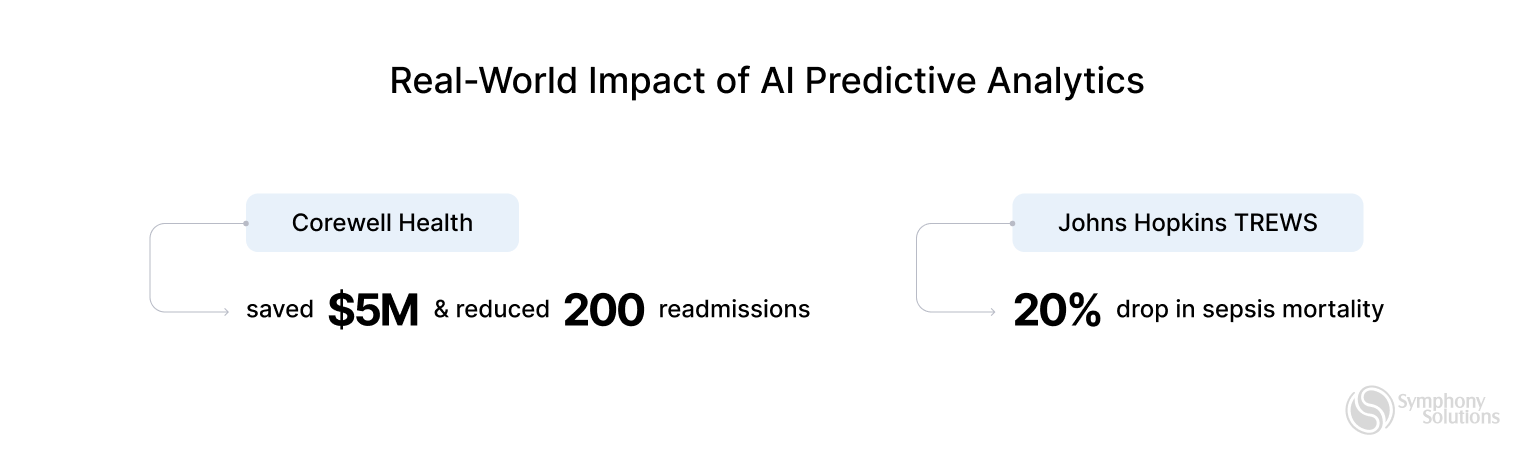
    real-world-impact-of-ai-analytics

    Predictive Readmission Reduction at Corewell Health 

    Corewell Health implemented an AI-driven model that helped reduce hospital readmissions by identifying patients at the highest risk. According to the hospital’s newsroom, the program saved more than $5 million and prevented 200 unnecessary readmissions over 20 months. The solution combined social, behavioral, and clinical data into a single risk score used at discharge planning. 

    Heart Failure Readmission Forecasting at Mount Sinai 

    Mount Sinai developed a machine learning model trained on electronic health record (EHR) data to predict 30-day readmission risk for patients with heart failure. As published in eGEMs, the system achieved reliable accuracy and was designed to support personalized post-discharge interventions, helping to reduce avoidable hospitalizations in high-risk cardiac patients. 

    ICU Demand Forecasting During COVID-19 at Mayo Clinic 

    The Mayo Clinic built a real-time COVID-19 data mart and applied Bayesian forecasting models to predict ICU demand weeks in advance. This enabled better staffing and equipment planning during the pandemic, supporting operational decisions that reduced resource shortages. 

    Early Sepsis Detection via Johns Hopkins TREWS 

    Johns Hopkins TREWS developed the Targeted Real-time Early Warning System (TREWS), which analyzes EHR data continuously to detect sepsis hours before symptoms appear. Clinical studies report that TREWS deployment contributed to a 20% reduction in sepsis mortality and shorter ICU stays by enabling earlier interventions. 

    Population Health Monitoring with Mayo Clinic’s Bayesian SIR Model 

    Population health monitoring uses predictive analytics to anticipate outbreaks and manage resources. For example, Mayo Clinic’s Bayesian SIR model accurately forecasted COVID-19 trends and hospitalization peaks, guiding regional policy decisions and healthcare readiness. 

    Personalized Treatment Planning Supported by Generative AI 

    AI models can predict how individual patients respond to treatments by synthesizing genomics, diagnostics, and historical data. These insights inform tailored care strategies and align with emerging approaches in generative AI in healthcare

    How AI Predictive Analytics in Healthcare Works: A Technical Perspective 
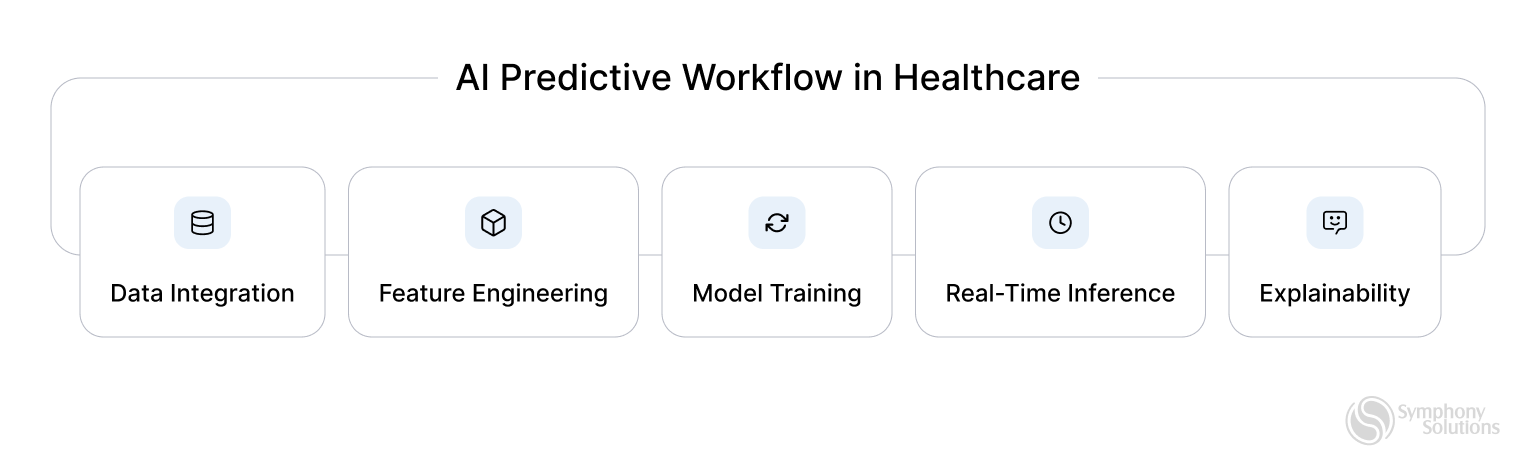
    ai-predictive-flow

    AI predictive analytics in healthcare analyzes historical and real-time data to identify patterns that indicate likely future outcomes. This process combines technologies like machine learning, big data infrastructure, natural language processing (NLP), and real-time sensors to build predictive models that support clinical or operational decisions. 

    These systems help detect risks early, automate triage, and improve resource planning — but behind every real-time prediction is a carefully structured pipeline. 

    Data Collection and Integration 

    Healthcare data is vast and fragmented. Common sources include: 

    • Electronic health records (EHRs) 
    • Imaging data (CT scans, X-rays, MRIs) 
    • Laboratory results 
    • Insurance claims 
    • Wearable device metrics 
    • Free-text physician notes 

    Before any modeling can begin, AI platforms must unify these siloed datasets into a consistent, structured format. Data engineering teams apply ETL (extract-transform-load) pipelines and use health-specific ontologies (e.g., SNOMED CT, HL7 FHIR) to ensure semantic interoperability. Cloud infrastructure often enables secure, scalable access across multiple institutions or departments. 

    Feature Engineering and Labeling 

    To prepare data for machine learning, systems extract and refine key variables or “features” from raw input. For example: 

    • Patient demographics (age, sex, weight) 
    • Vital sign trends 
    • Medication history 
    • Comorbidities (e.g., diabetes, hypertension) 
    • Length of hospital stay 
    • Timing and frequency of prior admissions 

    Labeling defines the outcome that models should learn to predict — such as readmission within 30 days or likelihood of sepsis onset. Accurate labeling ensures supervised learning models can train on clean, relevant examples. 

    Model Training and Validation 

    With features and labels prepared, machine learning algorithms are trained on historical datasets. Commonly used models include: 

    • Logistic regression (for binary outcomes) 
    • Decision trees and random forests (for explainability) 
    • Deep neural networks (for high-dimensional data like imaging or time-series) 

    Validation is typically performed using a test set that wasn’t part of training. Cross-validation and A/B testing help assess generalizability and prevent overfitting. Many models are retrained periodically to reflect updated clinical practices or changing patient populations. 

    Real-Time Inference and Alerting 

    Once deployed, predictive models run in real-time or near-real time. As new data flows in — like vital signs or lab results — the model generates risk scores or alerts. These can be integrated directly into clinical interfaces (e.g., EHR dashboards) or operational systems (e.g., ER triage boards). 

    Alerts are used to flag high-risk patients, trigger escalation protocols, or inform resource allocation. For example, predicting a spike in ER admissions can help with proactive staff scheduling. 

    Explainability and Clinical Trust 

    For AI to be accepted in clinical environments, predictions must be explainable. Black-box models face resistance unless paired with interpretability tools such as: 

    • SHAP (SHapley Additive exPlanations): Identifies which features contributed to a prediction 
    • LIME (Local Interpretable Model-Agnostic Explanations): Creates understandable surrogate models around individual predictions 

    Clinicians require clear insight into why a system flagged a patient, especially when decisions involve life-critical actions. Transparency also supports compliance with medical regulations. 

    Summary Table: AI Predictive Workflow in Healthcare 

    Step Description Technologies Involved 
    Data Integration Aggregating siloed datasets into one schema ETL, cloud storage, FHIR APIs 
    Feature Engineering Extracting and preparing key clinical variables NLP, time-series analysis 
    Model Training Learning from labeled historical outcomes ML algorithms, validation sets 
    Real-Time Inference Predicting outcomes from live data streams API integration, live dashboards 
    Explainability Making model decisions transparent to clinicians SHAP, LIME, XAI tools 

    Symphony Solutions works with healthcare clients to architect these systems end-to-end — from integrating fragmented datasets to deploying clinically trusted models. Our teams focus on model explainability, regulatory compliance, and alignment with real-world healthcare workflows, ensuring each solution performs reliably in practice. 

    Benefits and Challenges of Predictive Analytics in Healthcare 
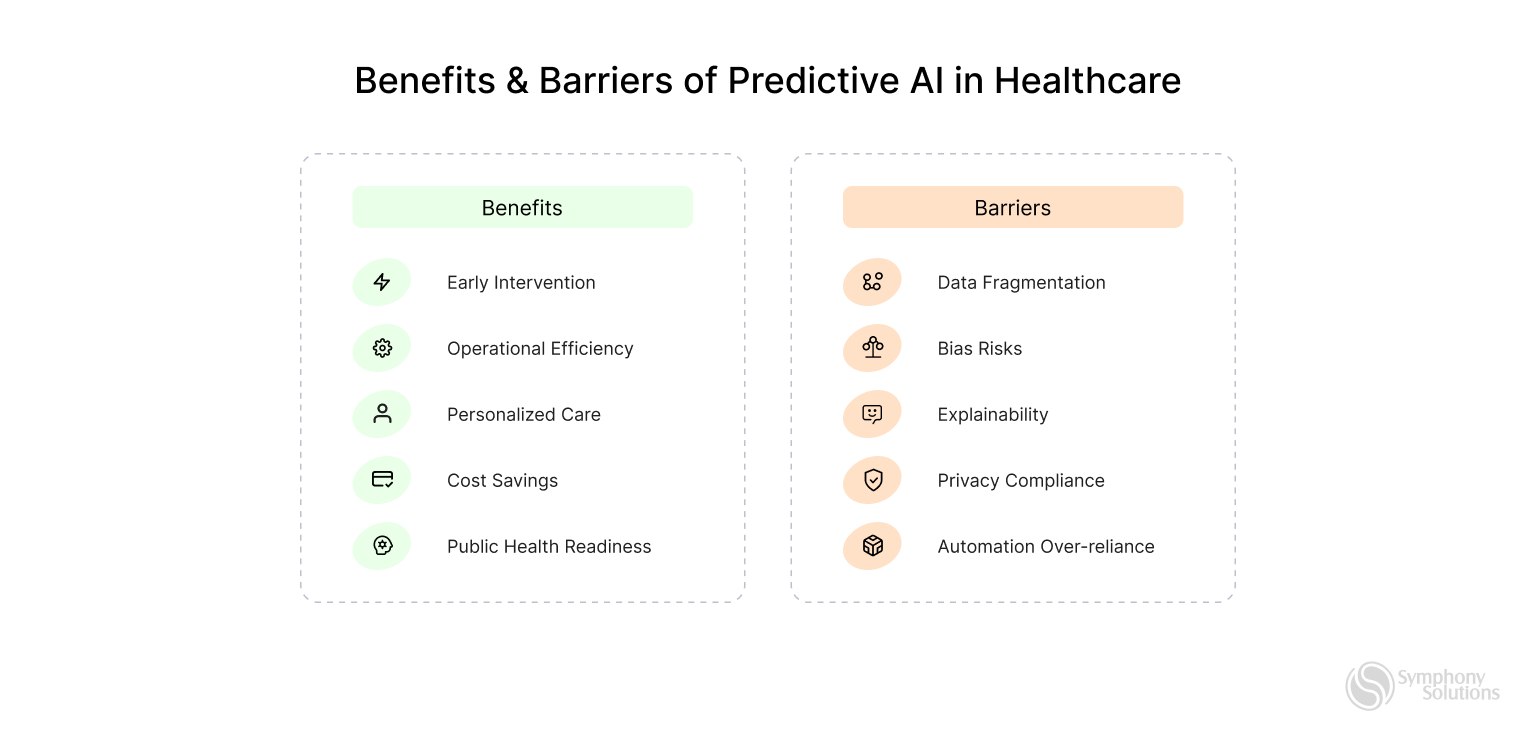
    benefits-of-ai-in-healthcare

    AI predictive analytics in healthcare holds transformative potential — but its implementation also requires careful oversight. While many providers adopt these tools to improve outcomes and efficiency, issues like data bias and explainability remain critical factors for success. 

    Benefits of AI Predictive Analytics in Healthcare 

    Early Intervention Improves Outcomes 

    Predictive models can flag high-risk patients before complications escalate. This allows healthcare teams to take preventive action, which improves recovery rates and reduces readmissions. As seen in Corewell Health’s risk scoring model and Johns Hopkins’ TREWS system, early alerts can directly support life-saving decisions. 

    Operational Efficiency and Resource Optimization 

    AI analytics enables hospitals to forecast demand in emergency rooms, ICUs, and other critical units. By anticipating patient surges and equipment needs, healthcare organizations can optimize staffing, improve triage, and reduce bottlenecks. These improvements are a cornerstone of effective data and analytics strategies. 

    Personalized Care Delivery 

    AI models can predict how individual patients will respond to specific treatments. This reduces the trial-and-error typically seen in chronic or complex conditions and supports customized therapy plans — increasing both effectiveness and patient satisfaction. 

    Cost Reduction Across the System 

    When providers intervene earlier and avoid unnecessary procedures, they not only improve care but also reduce spending. Predictive analytics supports a shift from reactive to proactive care, improving long-term financial sustainability for both public and private systems. 

    Stronger Public Health Preparedness 

    On a macro level, predictive modeling allows governments and health organizations to forecast disease outbreaks and allocate resources accordingly. This capability has proven essential in managing pandemic responses and seasonal flu planning. 

    Challenges and Limitations of Predictive Analytics in Healthcare 

    Data Quality and Completeness 

    Accurate predictions depend on clean, comprehensive data. Many healthcare systems still struggle with fragmented records, missing data points, or inconsistencies across providers. These gaps can lead to false positives or overlooked risks. 

    Bias and Fairness Risks 

    AI systems learn from historical data — and if that data reflects disparities (e.g., underdiagnosis in certain populations), models may reinforce those biases. Addressing these risks is essential for ensuring fairness and equity in healthcare access and treatment. 

    Model Interpretability in Clinical Settings 

    Clinicians need to understand how and why a model reached a certain conclusion. Black-box algorithms without transparency can lead to mistrust, especially in regulated environments where decision-making accountability is critical. 

    Privacy, Security, and Legal Compliance 

    Handling sensitive patient data requires strict adherence to standards like HIPAA, GDPR, and local data protection laws. Predictive systems must implement robust encryption, access controls, and audit logs to ensure privacy and maintain trust. 

    Risk of Over-Reliance on Automation 

    AI tools should assist — not replace — human clinical judgment. When decision-makers over-trust model outputs without verifying context, they risk automation bias. Balancing algorithmic guidance with expert oversight is key to safe implementation. 

    How We Support Predictive AI in Healthcare 

    Implementing AI predictive analytics in healthcare is not about simply deploying a machine learning model. It requires deep contextual understanding of medical workflows, compliance with healthcare regulations, robust data engineering, and seamless integration into existing clinical systems. This is where our role at Symphony Solutions begins. 

    Structured Implementation — From Goals to Deployment 

    We don’t deliver off-the-shelf models. Instead, we collaborate with healthcare clients to define measurable goals — whether that’s reducing readmission risk, optimizing emergency triage, or improving claim forecasting. From there, we architect full-stack solutions that align stakeholders, unify siloed data sources, and comply with both medical and legal standards. 
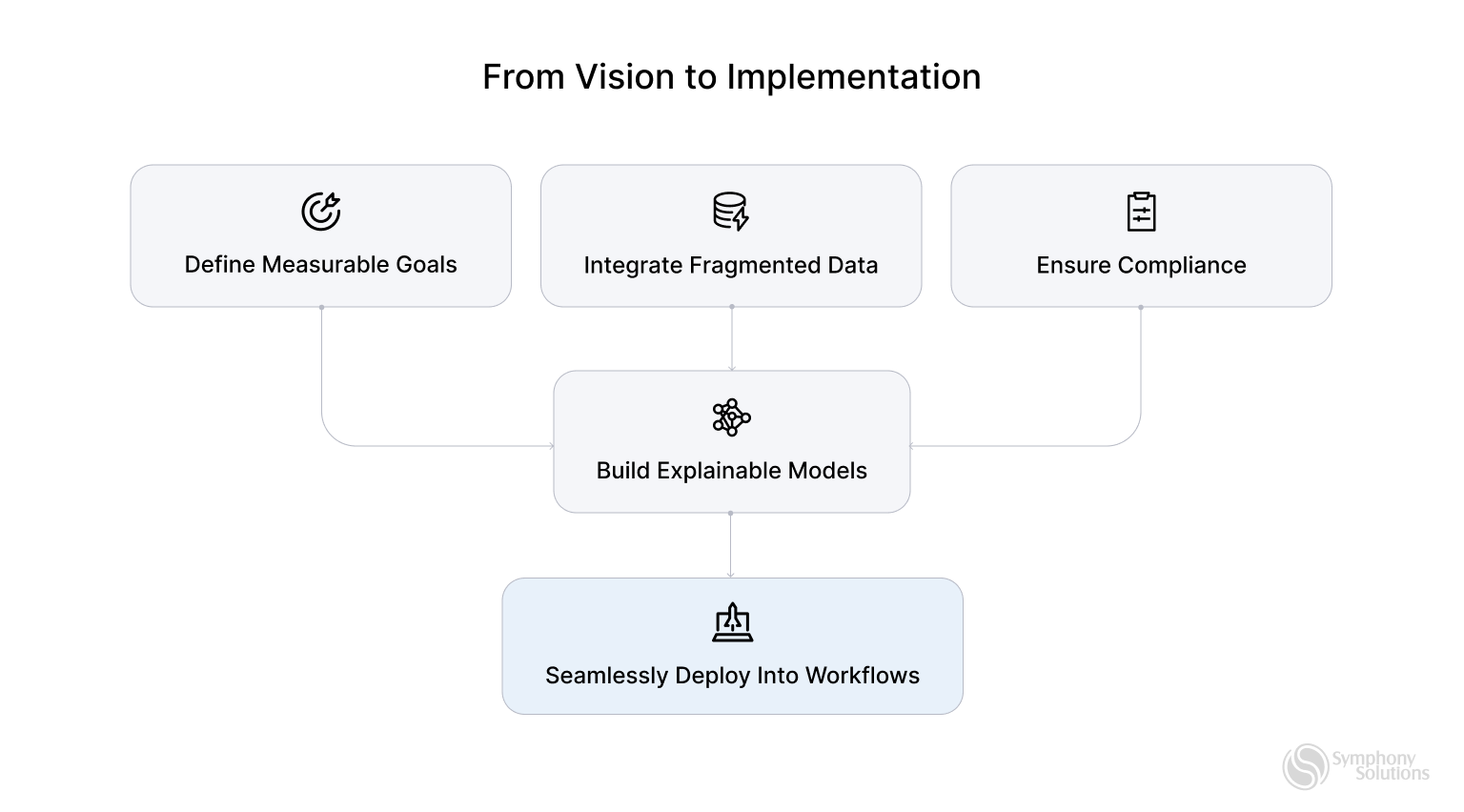
    from-vision-to-implementation

    Beyond the Model: Real-World Usability and Compliance 

    Our support spans every stage: from selecting and validating predictive models to deployment, monitoring, and retraining. But equally important are the layers we build around the model — such as user education, model explainability, and ethical review. This ensures that AI systems work effectively within clinical workflows and decision-making chains. 

    We design solutions that integrate directly into environments like EHR platforms or custom provider dashboards, helping reduce adoption friction and operational overhead. This capability is backed by our healthcare software development expertise, which focuses on usability, performance, and regulatory readiness. 

    Solving Data Fragmentation at Scale 

    Many healthcare providers already collect valuable data — but struggle to make it usable. Our team specializes in transforming disjointed records and legacy systems into reliable, AI-ready datasets. We apply data harmonization, anonymization, and access controls that comply with GDPR, HIPAA, and other regional standards, enabling secure AI software development without compromising privacy. 

    From Vision to Operation — Proven Results 

    We’ve applied this methodology across hospital logistics, public health analytics, and patient care prediction. Our work in improving patient care through data analytics and advancing healthcare with data science demonstrates our ability to turn ideas into functioning, compliant, and measurable systems. 

    We work closely with your teams to design solutions that align with your goals, integrate seamlessly with existing workflows, and prioritize usability and compliance. This holistic approach delivers solutions tailored to healthcare operations and clinical realities.  

    Learn more about how we help healthcare organizations bring AI into everyday operations through our healthcare software development services. 

    Summary 

    AI analytics in healthcare has moved beyond theory. From risk scoring at discharge to ICU surge forecasting and early-warning systems for sepsis, predictive models are reshaping how healthcare systems respond — faster, earlier, and more intelligently. 

    These tools bring tangible value when implemented with precision: 

    • Earlier intervention leads to fewer complications and hospitalizations 
    • Operational efficiency improves through smarter resource allocation 
    • Personalized care becomes achievable with outcome-based treatment insights 
    • System-wide preparedness strengthens with proactive public health responses 

    But predictive success is never guaranteed by algorithms alone. What defines value in healthcare AI is the implementation: 

    • High-quality, structured data feeds reliable predictions 
    • Transparent, explainable models build trust among clinicians 
    • Compliance and ethics aren’t afterthoughts — they’re foundations 
    • Seamless integration ensures these tools support workflows, not disrupt them 

    At Symphony Solutions, this is the lens we apply to every AI project. Whether it’s working with fragmented hospital systems or enabling faster decision-making in triage, our job is to turn insight into infrastructure. 

    We build systems that don’t just work in theory — they work in real-time care environments. 

    If your healthcare organization is ready to leverage data but struggling to connect insight with action, the gap often lies in infrastructure, workflow integration, or model explainability. Partner with our healthcare software development experts to design and deploy AI systems that are secure, compliant, and built to perform in real-world clinical settings. 

  • Sportsbook BetSymphony Exibits at SiGMA Euro-Med 2025, Booth 1002 

    Sportsbook BetSymphony Exibits at SiGMA Euro-Med 2025, Booth 1002 

    Markets are shifting, technology is rewriting the rules, and in September, all eyes turn to Malta. From September 1st to 3rd, BetSymphony will be at SiGMA Euro-Med 2025 in Marsa, Malta. We’ll be connecting with operators, tech disruptors, and regulators from across Europe, North Africa, and the Middle East. Held at the Mediterranean Maritime Hub, the event offers a front-row view into how intelligent infrastructure is rewriting the playbook for iGaming. 

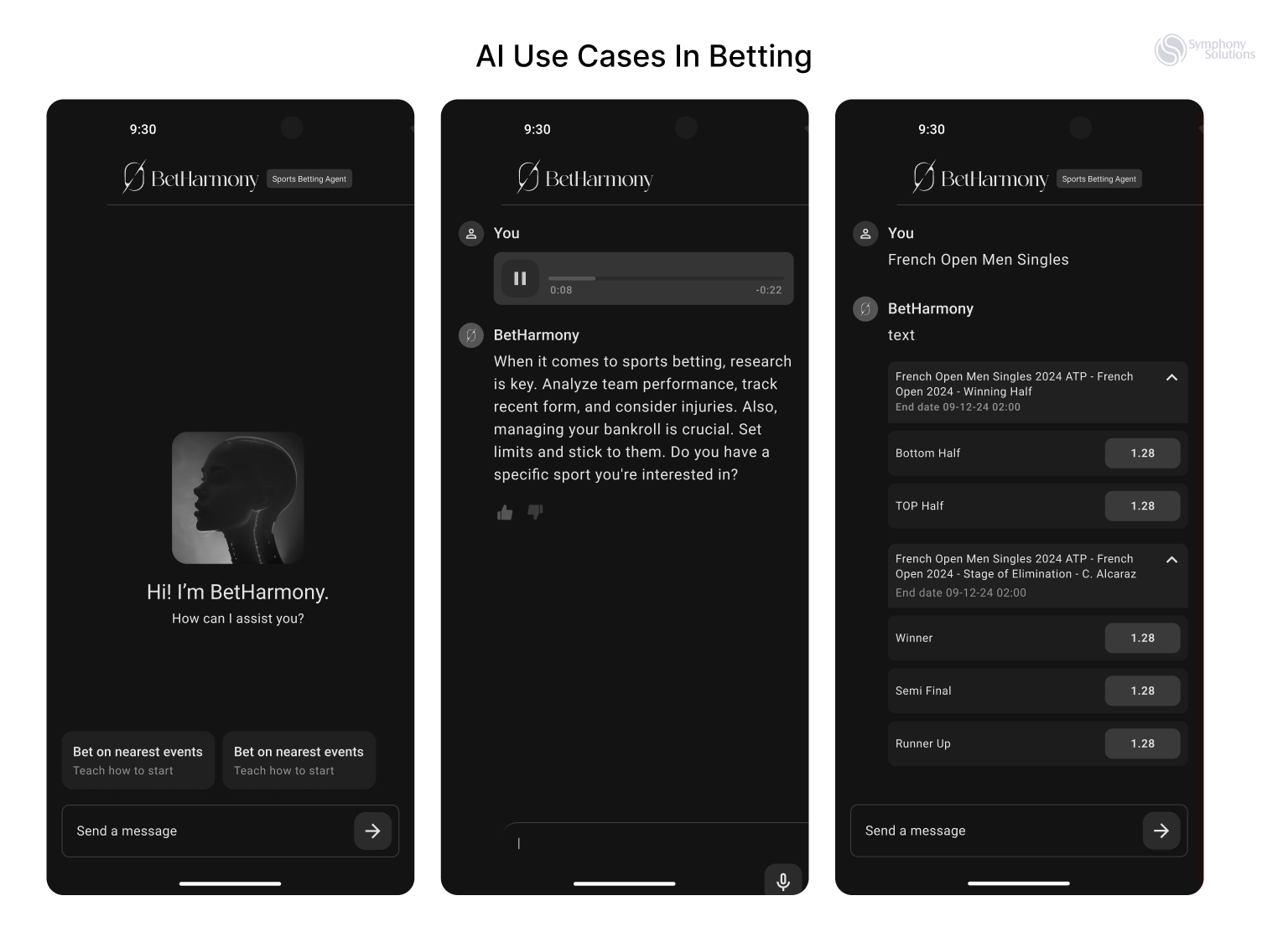
    Visit us at Booth #1002, to see BetSymphony in action, come check out our modular, no-revenue-share sportsbook and casino platform — built for speed, control, and scale. You’ll also meet BetHarmony, our AI assistant designed to boost player retention. Both solutions are built for operators who want flexibility, full ownership, and real business results. 

    The timing couldn’t be more urgent. As the industry evolves, so do expectations: real-time personalization, unified data access, market-ready scalability. We’re not just responding to these shifts; we’re building for them. 

    Curious to see what’s new in BetSymphony? Book a meeting with our team here.

    Don’t Miss Our Speaker Session 

    The same forward-thinking mindset behind our platforms will shape the conversation on stage. On September 3 at 11:00 AM, CEO of BetSymphony, Valentina Synenka will speak on the panel “Women in Gaming: Unlocking the Potential”—a conversation long overdue.  

    This discussion will cut to the heart of today’s talent challenges, from the absence of female leadership to Gen Z’s shifting values, and explore how inclusive culture, smarter hiring, and internal evolution can give iGaming the edge it needs. 

    It’s a must-attend for anyone serious about building the teams that will define the future of the industry.  

    Meet Our Experts  

    Theo sigma

    Theo Schnitfink

    Board Member & Founder, Symphony Solutions

    Theo brings 35+ years of executive leadership in global tech and product delivery. As Founder of Symphony Solutions, he’s built a 600+ person organization powering some of the world’s major platforms across iGaming, healthcare, and aviation. With a background in enterprise leadership, including roles at Cognizant and Cambridge Technology Partners, Theo has helped shape industry-defining solutions like BetSymphony and BetHarmony — giving operators the speed, control, and flexibility to lead in an AI-driven world.

    Valentina sigma

    Valentina Synenka  

    CEO, BetSymphony & Board Member, Symphony Solutions

    Valentina brings over a decade of digital marketing expertise to the iGaming space. As a Board Member and brand strategist, she’s helped position Symphony Solutions and products like BetHarmony and BetSymphony as trusted solutions for forward-thinking operators. Her sharp focus on visibility, engagement, and innovation continues to shape our approach to AI-driven personalization and growth.

    Sofiya Savka 

    Vice President of iGaming, Symphony Solutions 

    Sofiya leads the iGaming division at Symphony Solutions, bringing over a decade of delivery leadership experience to the industry. With deep expertise in agile frameworks, she works closely with operators to scale intelligently and build long-term value. Her focus on intelligence, personalization, and performance continues to shape the next generation of platform-driven solutions. 

    Marian Melnychuk

    iGaming Delivery Director, Symphony Solutions 

    With a background that spans software testing, development, and technical leadership, Marian is known for delivering complex, enterprise-grade sportsbook solutions. His experience across gambling, entertainment, and tech sectors ensures projects stay on track, and ahead of the curve. 

    Bredo Johansen 

    Business Development Director, Symphony Solutions

    Bredo brings a sharp business lens to sportsbook development and iGaming growth strategy. With deep domain expertise and a focus on client success, he helps operators gain a competitive edge through tailored cloud, AI, and analytics-driven solutions.

    Oksana Konoval 

    Client Partner & Engagement Manager, Symphony Solutions  

    Oksana leads client engagement at Symphony Solutions, guiding partners through every stage of the product development cycle, from concept to delivery. She ensures that each project upholds the highest standards of innovation and impact. Through her leadership, the team consistently delivers meaningful, measurable results that strengthen Symphony Solutions’ presence in the iGaming and tech industries. 

    Let’s make this event one to remember. See you in Malta. Booth 1002. 

    When

    November 3-6, 2025

    Where

    Rome, Italy

  • Why iGaming Platforms Need to Get Smarter—Fast! 

    Why iGaming Platforms Need to Get Smarter—Fast! 

    By Sofiya Savka, VP of iGaming at Symphony Solutions 

    For years, iGaming was about execution. Build the sportsbook. Launch the mobile app. Plug in the games. Go live fast. But the industry has matured—and the playbook has changed. 

    Today, success isn’t about being first to market. It’s about being first to unlock the power of data. 

    We’re in the middle of a platform reckoning. Operators are no longer just asking, “Can it scale?” They’re asking, “Can it learn?” Can it tell me why my retention is dipping in Ontario? Can it adapt my bonus flows in Nigeria without a dev sprint? Can it show me my real ROI, now—not next week? 

    If the answer is no, you’re building for yesterday. 

    The Real Shift Isn’t Mobile. It’s Mental 

    At Symphony Solutions, we’ve built what you’d expect from a seasoned iGaming tech team: 

    • Sportsbook and casino platforms that scale. 
    • Mobile apps designed for real betting behaviour. 
    • Lean, low-data platforms that thrive in bandwidth-tight markets like Africa. 
    • And yes—plenty of deep integrations with wallets, PAMs, feed providers, CRMs and other third-party providers. 

    But here’s the truth: those are just the basics now. Over the past two years, something shifted. The questions changed. It used to be: “Can you plug us into this system?” 
    Now it’s: “Can you help us figure out which players are going to disappear after day two?” 

    That’s not a feature request. That’s a survival question. Because the biggest change in iGaming today isn’t about mobile, or UX, or adding more games. It’s mindset. Operators don’t just want platforms that work—they want platforms that work smarter. 

    That’s exactly where we’ve leaned in. Now we’re building real-time dashboards that show what’s happening with your revenue as it happens. We’ve built predictive tools that flag when player engagement starts to slip—before it’s too late. We’ve made it possible to test offers on the fly, without needing weeks of dev time. 

    It’s not about adding bells and whistles. It’s about turning your platform into a growth engine—one that thinks, learns, and adapts with you. That’s the real shift. And it’s not just exciting—it’s essential. 

    What the Industry Numbers Don’t Tell You 

    Yes, the market is booming. 

    • $103B in global iGaming revenue in 2025 
    • Projected to hit $169B by 2030 
    • Mobile-first markets dominating across the US, UK, Nordics, and Africa 

    But here’s what those stats don’t say: The gap is widening between operators who are data-smart and those who aren’t. 

    We’re seeing it in KPIs: one operator with intelligent retention flows keeps LTV growing quarter over quarter. Another with the same games and promos? Flatline. 

    Data’s not optional anymore—it’s the real differentiator. 

    Flashback: A Big Brand with a Silent Problem 

    A major European operator came to us in 2023. Everything looked fine on the outside—decent growth, stable platform, minimal downtime. 

    But behind the scenes, player retention was quietly slipping. VIPs were ghosting. Campaigns weren’t landing. Marketing blamed product. Product blamed CRM. CRM blamed tools. 

    What they didn’t have? Visibility. 

    We rolled out real-time dashboards, behavioural segmentation, and a basic predictive churn model. Within weeks, the team could see what was happening—and why. LTV started climbing. Bonus burn dropped. CRM finally had a seat at the table. 

    That’s not innovation. That’s catching up to where the industry should already be. 

    Why BetSymphony and BetHarmony Exist 

    The challenges above inspired us to build smarter solutions. 

    BetSymphony is our modular iGaming platform designed to give operators full control—not just over UI, but over the levers that drive ROI. Analytics is built-in, not bolted on. 

    BetHarmony is our AI-powered engagement layer. It nudges the right players at the right time, with behaviour-based personalization that’s proven to increase retention. No spammy promos. No guesswork. 

    These tools weren’t built in isolation—they were shaped by real client challenges: low retention, scattered reporting, no single source of truth, delayed decision-making. We built to solve those. And the results show. 

    What Operators Are Actually Asking Now 

    Here’s what comes up in nearly every strategy call I have: 

    • “How can I segment players more intelligently without adding headcount?” 
    • “Can I track promo ROI without waiting for my BI team?” 
    • “How do I reduce churn before it happens?” 

    Operators aren’t looking for more vendors. They want strategic partners—people who understand the business side as well as the tech stack. 

    That’s where we play best. 

    The Road Ahead: Platform Agility + Predictive Power 

    We’re heading into a new chapter of iGaming—one where platforms are judged not just by uptime or features, but by how well they help you move: 

    • Faster to market 
    • Faster to insight 
    • Faster to growth 

    That’s the challenge. And we’re building for it—head-on. 

    If you’re building your iGaming business for the next five years, not just the next release, let’s talk. 

    This isn’t just evolution. It’s game-time strategy. 

  • Slot Game Development Guide 2025: How to Build Profitable Casino Games 

    Slot Game Development Guide 2025: How to Build Profitable Casino Games 

    The global online gambling market reached USD 78.66 billion in 2024 and is projected to grow to USD 153.6 billion by 2030, according to the Grand View Research report. As interest in online casino game development grows, slot game development stands at the center of this digital evolution. Much of this growth is driven by mobile internet usage, especially in regions with high smartphone penetration like the U.S. (~94% as of 2024). 

    Sports Betting Leads Online—But Slots Rule Casinos 

    who-leads-in-gambling-revenue

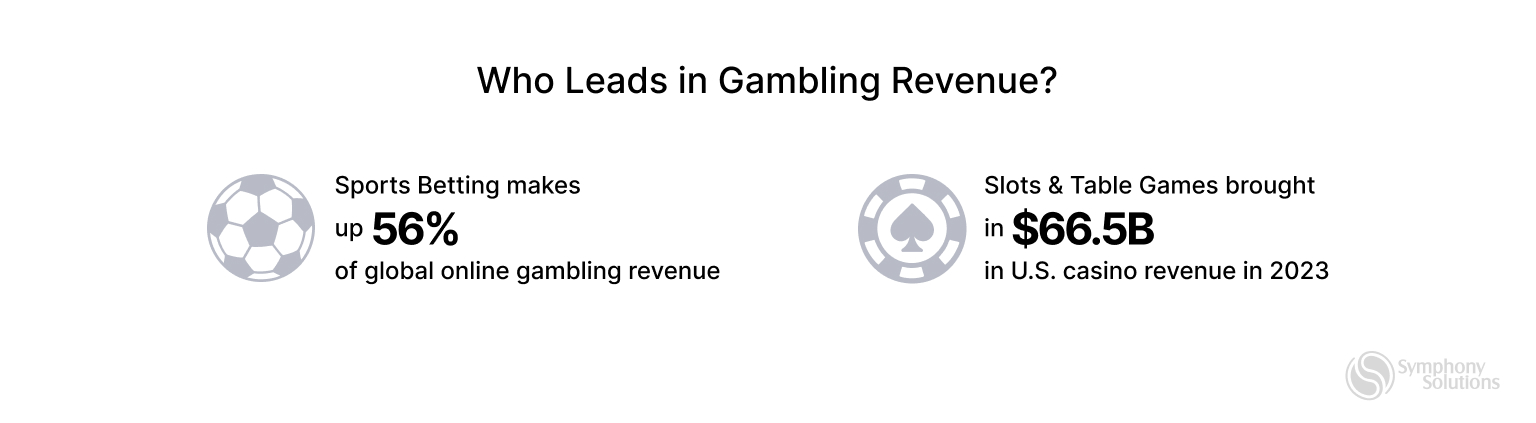
    While sports betting grabs around 56% of global online gambling revenue, it’s slot games that consistently dominate casino earnings—both online and offline. In the U.S., for example, commercial casino revenue hit $66.5 billion in 2023, with the majority driven by slot and table games. In Europe, gaming machines like slots account for a major slice of both land-based and online gambling activity. 

    The numbers speak for themselves—slots remain the economic engine of the casino industry. Their ability to generate sustained, scalable revenue makes them an ideal focus for operators and developers alike. In this guide, we explore what it takes to build modern slot games that meet both business and player expectations in 2025. 

    Slots Are the Economic Backbone 

    For anyone looking into developing a successful slot game in 2025, these figures confirm what decades of data already suggest: slots consistently outperform other game formats in both land-based and online environments. They offer high time-on-device, low barrier to entry, and adaptable monetization models that translate into steady, scalable returns.  

    Mobile-First Is the New Standard 

    Mobile gaming now defines the user experience in the online gambling industry. As more players shift toward smartphones as their primary device, slot games are being designed and optimized specifically for mobile—from interface layout to performance across varying connection speeds. 

    This transition has also prompted broader adoption of technologies like AI for personalized user flows and AR/VR for niche engagement formats. The trend is visible across markets: even regions with smaller player bases prioritize mobile-first strategies due to rising device penetration and usage patterns. 

    For developers and operators, the implication is clear: mobile functionality is no longer an enhancement—it’s the foundation. Game design, architecture, and delivery models must prioritize seamless performance across mobile platforms to meet current user expectations and sustain long-term engagement. 

    Why This Matters for Developers and Operators 

    Slot-machine games are not just a category—they are the engine of profitability in casino ecosystems. Their revenue dominance, combined with evolving player behavior on mobile, makes them the smartest investment focus for 2025 and beyond.  

    What Is Slot Game Development? 

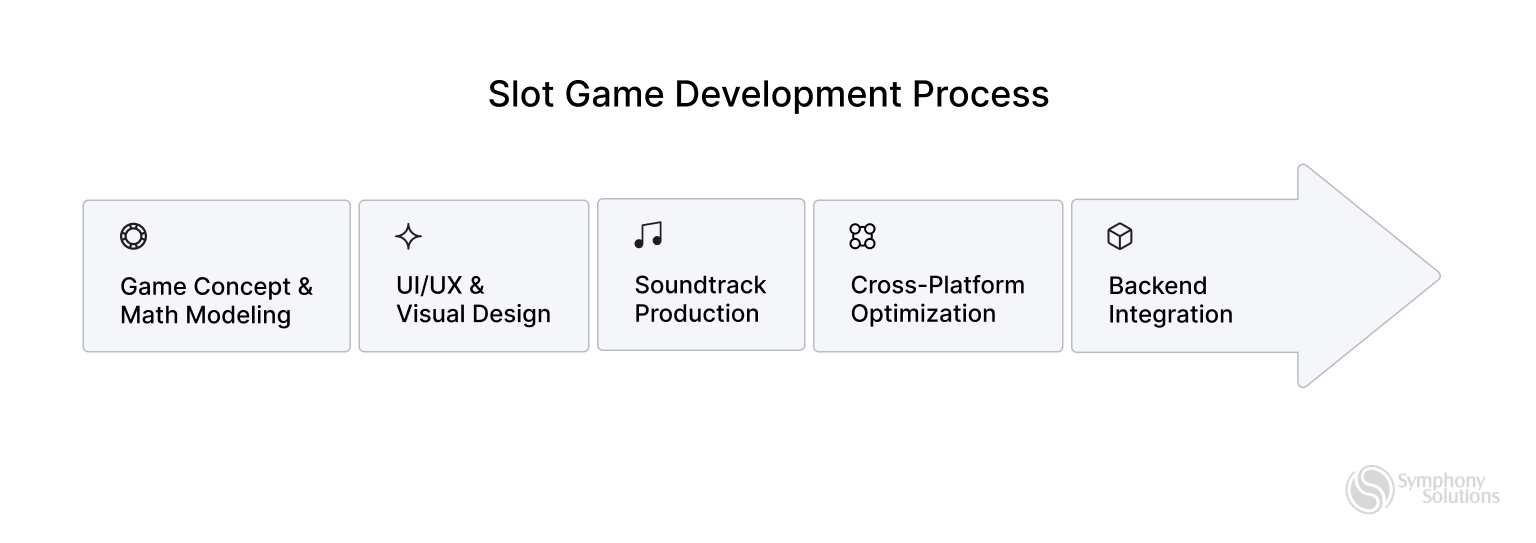
    Online slot game development refers to the process of designing, programming, and deploying digital versions of slot machines for online and mobile platforms. It combines game mechanics, mathematical models, visual design, sound engineering, and platform integration to produce games that are both fun and financially viable. 

    Originally, slot machines were mechanical devices with spinning reels, simple paylines, and physical levers. Today’s slot games are fully digital, powered by sophisticated algorithms like RNG (Random Number Generator), and playable across desktop and mobile devices. 

    Modern slot machine development covers a wide range of gameplay experiences—video slots with cinematic intros, branded slots using licensed IP, jackpot networks shared across platforms, and even VR-enabled games for immersive engagement. Developers must also meet strict regulatory standards depending on jurisdiction, which affects how RTP (Return to Player), volatility, and fairness are handled. 

    slot-game-development process

    The process of slot game development isn’t just about coding. It includes: 

    As user expectations rise, slot development increasingly involves narrative structures, progressive gamification elements, and personalization engines—making it a hybrid of entertainment design and data-driven engineering. 

    Why Should You Invest in Slot Game Development? 

    Slot games aren’t just popular—they’re engineered for profitability. For iGaming operators, studios, and investors, slot game development represents one of the most scalable, revenue-generating opportunities in digital gaming today. 

    Here’s why: 

    High ROI Potential 

    Slots generate the highest share of revenue in both online and land-based casinos. They’re low-cost to operate once developed and can reach global audiences through licensing or white-label partnerships. Operators can monetize them through RTP variance, bonus systems, in-game purchases (in social casino contexts), and jackpots. 

    Broad Player Appeal & Retention 

    Slot games appeal to a wide demographic—from casual gamers looking for short bursts of entertainment to high-stakes players chasing big wins. Bonus rounds, free spins, and loyalty rewards help extend session duration and repeat visits. 

    Mobile-First Scalability 

    With the majority of online gambling happening on mobile, slots are ideal for small screens and on-the-go engagement. Modern mobile optimization enables you to launch once and scale across devices and platforms. 

    Easier Lifecycle Management 

    Compared to complex live dealer games or multiplayer poker, slot games require less live maintenance. Updates, reskins, or new features can be rolled out without disrupting gameplay, making slots ideal for long-term portfolio growth

    Market Expansion & White-Labeling 

    Slots can be easily localized for different markets—languages, currencies, regulations, and themes—helping you expand across jurisdictions like Malta, the UK, the Philippines, and regulated U.S. states. 

    Slot Game Types 

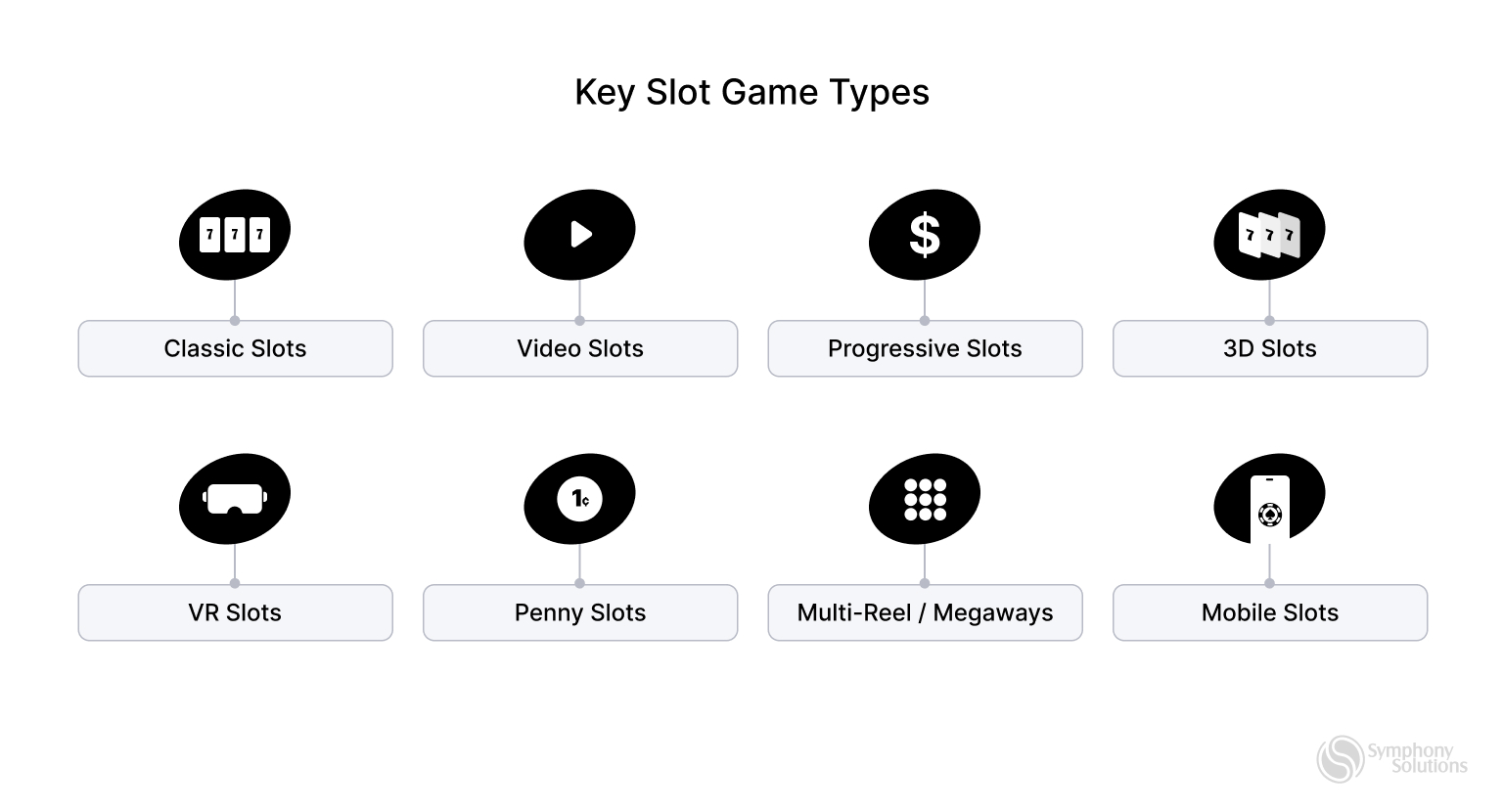
    Slot games are far from one-size-fits-all. Today’s portfolio of slot offerings spans dozens of mechanics, formats, and visual styles. Below is a breakdown of the most prominent types of slot games used in both casual and high-stakes iGaming environments. 

    Key Slot Game Types 

    key-slots-types
    Type Description Use Case 
    Classic Slots 3-reel layouts with traditional symbols (bars, sevens, fruits). Inspired by mechanical slot machines. Appeals to nostalgic or casual players 
    Video Slots 5+ reels with high-definition graphics, multiple paylines, bonus rounds, and animated storylines. Most popular online format; suited for branded content 
    Progressive Slots Jackpot increases with every spin across a shared network. One player wins the total accumulated prize. Drives excitement and long-term retention 
    3D Slots Feature immersive 3D graphics and often gamified features like boss battles, quests, or unlockable rewards. High-engagement entertainment experiences 
    VR Slots Developed for virtual reality platforms. Offers immersive environments with motion controls and lifelike animations. Emerging niche; experimental engagement 
    Penny Slots Extremely low denomination betting. Allows for long sessions with minimal risk. Ideal for retention-focused freemium models 
    Multi-Reel Slots Games that feature non-standard reel structures like 6 or 7 reels, cluster pays, or megaways systems with thousands of winning combinations. Used for innovation-driven game launches 
    Mobile Slots Optimized specifically for smartphone screens, often with portrait-mode gameplay and touch-friendly UI. Dominant format in markets like Europe and Asia 

    This variety allows studios and operators to diversify portfolios based on audience preference, device behavior, and regional market conditions. A strong slot game strategy typically includes a mix of formats, rotating themes, and a few “flagship” titles with branded IP or large jackpots. Gamification in casino slots—including quests, point systems, and unlockable levels—drives long-term engagement and differentiates titles in crowded markets. 

    Features That Make or Break a Slot Game 

    Beyond format, it’s the features that determine a slot’s long-term performance. Whether your goal is short-term monetization or player retention, feature design must balance entertainment, usability, and game logic. 

    Core Gameplay Features 

    Feature Impact on Engagement 
    RTP & Volatility Defines win frequency and payout size. Directly influences player satisfaction. 
    Paylines Number and type (fixed, variable, megaways) affect betting strategy and win patterns. 
    Wilds & Scatters Add variety to gameplay. Scatters usually trigger bonus rounds or free spins. 
    Multipliers Enhance win value during spins or bonus games. Popular for increasing session length. 
    Free Spins Key player retention mechanic; often tied to loyalty or promotional campaigns. 
    Bonus Rounds Adds interactive mini-games or jackpots; improves session depth. 

    Advanced Features for 2025 

    • Adaptive Difficulty Mechanics – Slots that adjust symbol distributions or volatility based on player behavior (within regulated limits). 
    • Narrative Progression Systems – Unlock new “chapters” or character paths through repeated play. 
    • Dynamic RTP Slots – Adjustable RTPs that align with operator goals (within legal boundaries). 
    • Multi-level Jackpots – Progressive jackpots split into tiers: Mini, Major, Mega, etc. 
    • Social/Leaderboard Integration – Non-monetary competitions for engagement and retention in social casino formats. 

    Narrative Tip: When structuring your slot game design pitch, anchor every feature choice in terms of user value (excitement, rewards, immersion) and business value (session length, repeat rate, monetization points). This aligns product vision with revenue outcomes. 

    Emerging Technologies in Slot Game Development (2025) 

    As player expectations evolve and platforms grow more sophisticated, slot game development is increasingly shaped by new technologies that influence design, gameplay, and monetization. In 2025, these innovations are not optional—they’re competitive necessities. 

    Key Technological Drivers 

    Technology Impact on Slot Development 
    AI & Machine Learning Used for personalized game recommendations, adaptive difficulty tuning, and fraud detection. 
    Blockchain Enables provably fair gameplay, transparent jackpot systems, and tokenized in-game economies. 
    AR/VR Facilitates immersive experiences in 3D and VR slots—still niche, but growing in gamified apps. 
    Cloud Gaming Reduces device dependency and allows instant play across platforms with no download required. 
    HTML5 & WebGL Ensure seamless cross-platform delivery, improved performance, and lighter frontends. 
    5G & Edge Computing Power real-time features like dynamic tournaments and time-sensitive jackpots in mobile slots. 

    While not every game must include bleeding-edge tech, top-performing studios are increasingly weaving innovation into gameplay loops, backend infrastructure, and user experience layers

    Strategic Advice 

    • Start with ROI-driven innovation: For most operators, AI-based personalization and HTML5 optimization offer immediate value and require modest investment. 
    • Use blockchain cautiously: Ensure you match blockchain use with your audience and legal environment—especially in regulated markets. 
    • Experiment in verticals: Consider releasing VR or AR slots under limited test campaigns or social casino pilots before scaling. 

    This tech stack doesn’t just shape the game—it defines distribution reach, compliance adaptability, and player lifecycle strategies

    Clear Step-by-Step Slot Game Development Process 

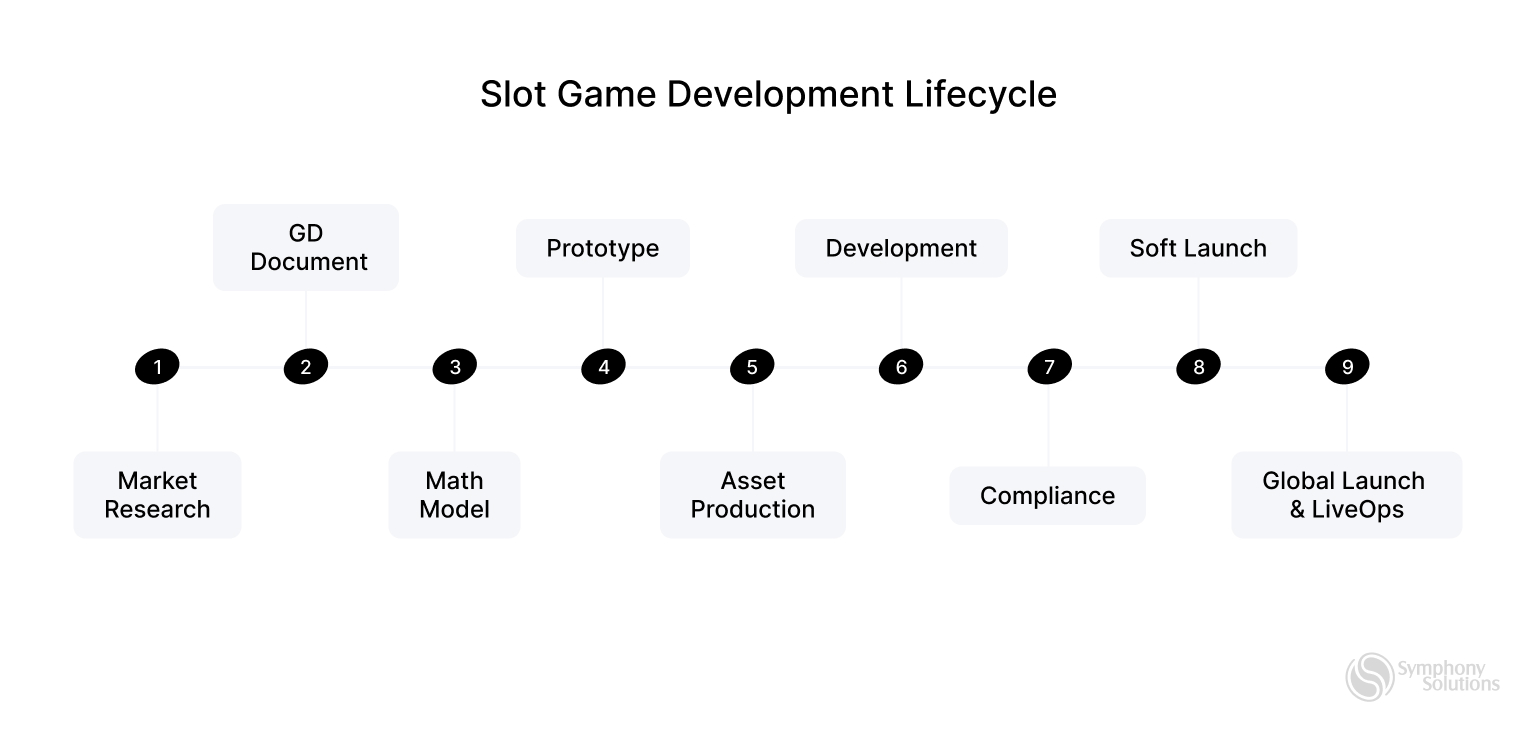
    Building a successful slot game in 2025 means following a development process that is both agile and aligned with player expectations, platform compatibility, and regional compliance standards. For many studios and operators, collaborating with an experienced iGaming software development partner can help streamline this process across disciplines. 

    slot-game-development-lifecycle
    1. Market & Concept Research 
      Analyze current trends, target demographics, and competitive games. Define your game’s unique value—theme, mechanics, or monetization. 
    2. Game Design Documentation (GDD) 
      Outline all elements: reel structure, paylines, RTP, volatility, bonus logic, and visual/audio mood boards. Think beyond graphics—this is your blueprint for engineering and compliance. 
    3. Math Model Design 
      The core of any slot game. Developers design probability logic, simulate payout distributions, and define variance models for engagement pacing. 
    4. Prototype Development 
      Build a working early version using dummy graphics. Validate the math model, game loops, and reward logic with internal QA. 
    5. Asset Production 
      Design characters, symbols, animations, and sound effects. All assets must align with performance standards across mobile and desktop. 
    6. Full Development 
      Code the game logic, integrate real graphics/audio, and connect backend features such as leaderboards, wallets, and jackpots. HTML5 is standard for cross-platform delivery. 
    7. Compliance & Certification 
      Submit to relevant licensing bodies (e.g., MGA, UKGC) or third-party auditors. Ensure RNG certification and compliance with payout transparency laws. 
    8. QA & Soft Launch 
      Conduct full-scale testing across devices. Launch in a limited region or platform to gather analytics on player behavior, bugs, and monetization flow. 
    9. Global Launch & LiveOps 
      Roll out to broader markets, monitor KPIs like RTP effectiveness, session duration, and churn. Plan regular content drops and promotional events. 

    Narrative Advice
    Even smaller studios benefit from formalizing this process. It helps align teams across game design, development, legal, and marketing—and reduces delays when scaling or porting to other jurisdictions. 

    Slot Game Development Costs: What to Expect in 2025 

    Developing a slot game encompasses various technical and creative disciplines, from math engine design to back-office customization. Depending on scope, quality, and team location, costs can range from $10,000 to over $200,000 per game

    Cost Breakdown by Development Phase 

    A typical cost distribution across development components is as follows: 

    Development Area Estimated Cost Range (USD) 
    UI/UX Design $5,000 – $20,000 
    Art & Animation $10,000 – $50,000 
    Game Programming $20,000 – $100,000 
    Backend & Server Setup $10,000 – $30,000 
    Licensing & Compliance $5,000 – $25,000 
    QA & Testing $5,000 – $15,000 
    Marketing & App Launch $10,000 – $50,000+ 
    Post-Launch Maintenance $5,000 – $20,000 (annual) 

    These figures cover the full development lifecycle—from prototyping and visual design to server-side logic, compliance, and quality assurance. 

    Geographical Impact on Budget 

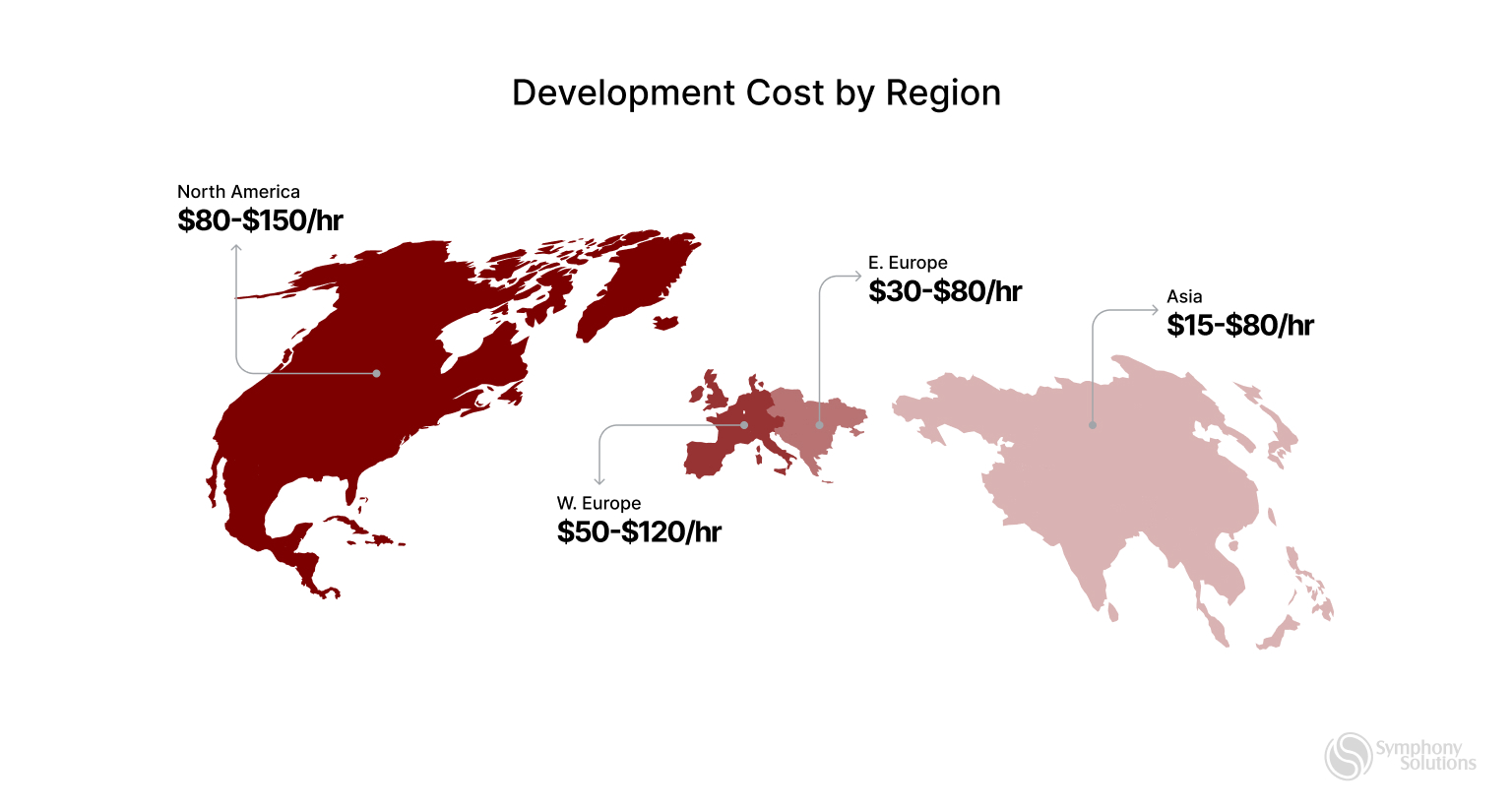
    Hourly rates vary significantly by geography due to differences in labor costs, industry maturity, and infrastructure. Development teams in North America and Western Europe typically charge higher rates, while Eastern Europe and Asia offer more cost-effective options with increasingly competitive quality. 

    cost by region

    Efficient Migration: The BetWinner Case 

    Our game design for BetWinner’s mobile card games illustrates principles—like scalable architecture and user-first interaction design—that equally apply to slot game development. Facing challenges in transitioning their desktop-based card games to mobile platforms, they sought our expertise. We conducted competitor analysis and stakeholder sessions to deliver optimized game designs and flows tailored for mobile platforms. Our development team engineered a custom game engine supporting modern architecture and industry best practices, featuring component models for reusing standard components across multiple games, support for spine animation and sprites, a secured network communication layer, custom fonts and bitmap support, multi-currency and multi-language support with automated text resizing, and application minification and obfuscation using WebPack. This collaboration led to the successful migration of BetWinner’s card games to mobile platforms, enhancing accessibility and player satisfaction.

    Is Slot Game Development Right for Your Business?

    Slot game development can be a strategic investment for operators, studios, and platform providers aiming to capture a larger share of the booming iGaming market. With slots consistently generating over 50% of total casino revenue, they remain the most dominant and profitable game format in digital casinos. But deciding to develop your own slot product requires a careful alignment of business objectives, technical capacity, and market positioning. At Symphony Solutions, our expertise in custom casino game development supports businesses in navigating this complexity—delivering games that not only meet compliance and performance standards, but also engage players across markets.

    Who Should Invest?

    You should consider investing in slot game development if you: 

    • Operate a casino or gaming platform looking to reduce third-party dependency and increase profit margins. 
    • Want to differentiate your brand through unique gameplay, storytelling, or mobile-first UX. 
    • Plan to enter new markets and need localized, regulated content tailored for specific jurisdictions. 
    • Already have strong tech infrastructure or access to slot development services providers who deliver end-to-end support. 

    Weighing Risks and Rewards

    While the potential for high ROI and brand control is significant, development does come with upfront costs and time commitments. That’s why many game development companies choose to collaborate with experienced partners. For instance, in our collaboration with BetWinner, we helped optimize the migration of card games to mobile platforms—addressing UX, architecture, and performance scalability. The result was a seamless mobile gaming experience that extended reach and engagement across devices. 

    What It Takes to Succeed

    Slot machine development isn’t just about spinning reels—it’s about building systems that perform under pressure. A successful product depends on infrastructure that can scale, backend architecture that integrates smoothly with platforms and regulations, and the ability to adapt to evolving player expectations. It begins with identifying your goals, continues through choosing the right technical foundation, and succeeds with careful implementation across the full development cycle. 

    Reaching that point takes more than creativity—it demands hands-on experience with regulatory complexities, performance optimization, and infrastructure that scales under real-world pressure. If you’re exploring how to approach slot game development with the right mix of technical depth and market insight, reach out for a free consultation.  

  • Top 7 AI Writing Tools for Content Marketing in 2025 

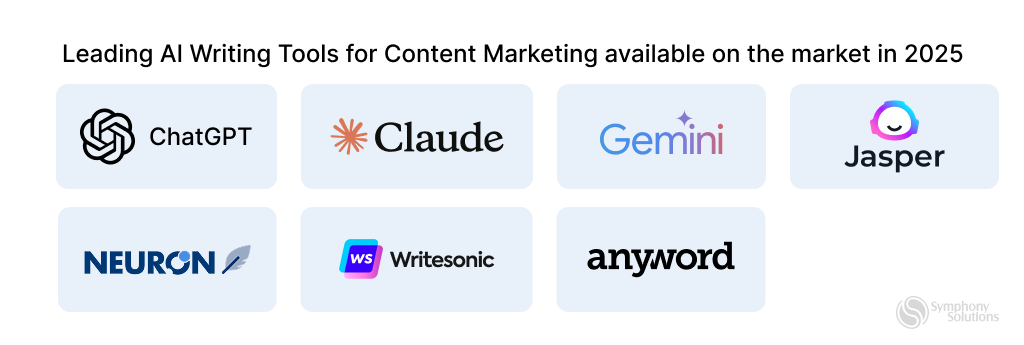
    Top 7 AI Writing Tools for Content Marketing in 2025 

    Recent studies show that over 80% of businesses have adopted AI technologies for content creation, marking a sharp rise from just 45% in 2022. What was once a fringe experiment has become a core part of how B2B teams plan, produce, and scale content. 

    However, no single tool fits every need. Some excel at flexibility and depth (like ChatGPT and Claude), while others specialize in SEO, predictive performance, or campaign orchestration. At Symphony Solutions, we’ve helped clients integrate these tools into content workflows, building strategies that play to their strengths and address their limitations. 

    In this guide, we profile the best AI writing tools for B2B marketing in 2025, with a focus on real-world use: SEO-driven content, LinkedIn posts, technical copy, email campaigns, and scalable content operations. 

    Let’s dive in! 

    How We Evaluated These Tools 

    This evaluation was shaped by the realities of in-house B2B content operations, where content needs to scale, meet SEO targets, and pass through multiple layers of approval without losing speed or quality. While many AI writing tools claim to serve “marketers,” we looked specifically at how well they align with structured, cross-functional teams like ours at Symphony Solutions. 

    Rather than testing tools in live campaigns, we assessed them based on: 

    • Platform capabilities 
    • Demonstrated performance across key content types 
    • Relevance to common B2B use cases 
    • Industry comparisons and observed strengths/limitations 
    • The working experience of our marketing team using select tools 

    With these benchmarks in place, the following section offers descriptions of how the selected AI content tools for marketers perform across these dimensions. 

    Top AI Tools for B2B Content Teams 

    Here is a deep dive into the leading AI writing platforms shaping B2B content in 2025. 

    1. ChatGPT (OpenAI) 

    • Company: OpenAI 
    • Price: $20/month (ChatGPT Plus); enterprise plans available 
    • Access Method: Web app, API, Microsoft Copilot, custom GPTs 

    ChatGPT, based on GPT-4, offers industry-leading language generation for both short and long-form B2B content. It performs best when used by experienced marketers who can structure detailed prompts. The platform supports up to 32k tokens in ChatGPT Plus and 128k via API, making it suitable for document-heavy tasks like whitepapers, strategy reports, and structured campaign messaging. Custom GPTs allow teams to embed brand tone and editorial preferences into repeatable workflows. 

    Key Strengths: 

    • Best-in-class language quality, especially for technical or long-form work 
    • Adapts across formats; blogs, emails, summaries, social posts 
    • Custom GPTs embed tone, instructions, and brand context 
    • Plug-in ecosystem adds data access, formatting, and SEO-focused AI tools 

    Key Limitations: 

    • No built-in SEO or content analytics—external tools required 
    • Prompting skill is essential for accuracy and structure 
    • Lacks project folders, collaboration tools, or content workflow features 
    • The free version is limited in context size and access to the latest model 

    According to HubSpot 74% of marketers now use AI at work, with 47% relying on generative tools like ChatGPT to write content, more than any other department.

    2. Claude (Anthropic) 

    • Company: Anthropic 
    • Price: $20/month (Claude Pro via Poe); API access available 
    • Access Method: Poe, API, integrations in beta (Slack, Notion) 

    Claude is one of the most capable AI tools for technical content, offering an industry-leading 100,000-token context window. With this capacity, it excels at summarizing full reports, synthesizing research documents, and supporting teams in regulated industries where clarity and precision are critical. With a neutral default tone, it’s well-suited for regulated industries that require precision and clarity. 

    Key Strengths: 

    • Processes up to ~75k words—ideal for full-document synthesis 
    • Strong coherence and logical flow in long-form outputs 
    • Safe, neutral tone by default—suitable for compliance-sensitive content 
    • Works well for technical summaries, RFPs, and internal documentation 

    Key Limitations: 

    • No templates, SEO features, or performance analytics 
    • Less effective for short-form marketing copy 
    • The interface and access are less intuitive than ChatGPT 
    • Limited collaboration or project management capabilities 

    About 57% of Claude interactions are collaborative, used for refining and enhancing content, not full automation. This highlights its role as an assistant in handling complex tasks .

    3. Google Gemini (Bard / Duet AI) 

    • Company: Google 
    • Price: Bard is free; Duet AI for Workspace starts at $30/month per user 
    • Access Method: Google Workspace (Docs, Gmail), Bard web app, API (Gemini 1.5) 

    Gemini is optimized for speed and convenience within Google’s productivity suite. It generates emails, content drafts, and summaries inside Docs or Gmail, using up-to-date web information to add factual relevance. Outputs are well-structured and often include CTAs, bullet points, and lists with minimal prompting. While it lacks SEO tools and advanced formatting control, its Workspace-native approach streamlines quick content tasks for marketing, sales, and internal communication. 

    Key Strengths: 

    • Natively embedded in Docs, Sheets, and Gmail for seamless drafting 
    • Real-time data access improves relevance for trend-based content 
    • Produces clean, structured output with minimal input 
    • Gemini 1.5 Pro (API) supports advanced use cases with long context 

    Key Limitations: 

    • No SEO scoring, keyword planning, or performance analytics 
    • Output can be generic without additional context 
    • Free tier offers limited length and depth 
    • Not built for collaboration or brand voice governance 

    According to usage data, around 30% of Bard users use it to create content, such as scripts, blog posts, and social media copy.

    4. Jasper AI 

    • Company: Jasper, Inc. 
    • Price: Starts at $49/month; Business and Enterprise tiers available 
    • Access Method: Web app, Chrome extension, API, Surfer SEO integration 

    Jasper is a robust AI writing assistant for marketing teams and agencies. It combines over 50 content templates, a long-form editor (“Boss Mode”), and campaign workflows. Teams can upload brand guidelines and product knowledge via the Brand Voice feature, enabling consistent messaging across blogs, ads, and social posts. Integration with Surfer SEO helps ensure ranking potential, while multi-user support and project folders make Jasper viable for structured teams handling large content pipelines. 

    Key Strengths: 

    • Brand Voice ensures tone and factual alignment at scale 
    • 50+ templates cover blog posts, landing pages, emails, and more 
    • Surfer SEO integration supports keyword optimization 
    • Campaign builder organizes multi-asset content flows 

    Key Limitations: 

    • No built-in analytics or performance scoring 
    • Steeper learning curve for advanced workflows 
    • Higher cost when scaling across teams and integrations 
    • Templates may limit flexibility for unconventional content needs 

    Jasper AI powers over 70,000 paying customers and supports roughly 40% of B2B firms in generating complex content like whitepapers and reports.

    5. Writesonic 

    • Company: Writesonic, Inc. 
    • Price: Starts at $45/month (Unlimited plan); custom pricing for teams 
    • Access Method: Web app, API, WordPress, Zapier, Chrome extension 

    Writesonic offers 70+ templates for marketing copy, including blog posts, product descriptions, social ads, and emails. Its AI Article Writer uses keyword input and SERP data to build SEO-friendly content, while the SEO Optimizer checks for structure, readability, and keyword usage. The interface is intuitive and beginner-friendly, making it ideal for smaller teams or startups producing high-volume content without custom workflows. 

    Key Strengths: 

    • Built-in SEO checker highlights gaps, structure, and readability 
    • Templates cover most marketing formats: ads, blogs, and landing pages 
    • Sonic Editor supports freeform prompting for more control 
    • Affordable pricing for unlimited content at the entry level 

    Key Limitations: 

    • Long-form outputs often require manual editing to avoid a generic tone 
    • No performance analytics or predictive scoring 
    • Not designed for technical or deeply customized content 
    • Collaboration and content governance features are minimal 

    Writesonic helped a digital agency reduce its content creation queue by 65% while generating 5,000+ scientific product descriptions weekly.

    6. Anyword 

    • Company: Anyword Ltd. 
    • Price: Starts at ~$79–$99/month; custom pricing for Business plans 
    • Access Method: Web app, API, integrations with HubSpot, WordPress, & Meta Ads 

    Anyword specializes in data-driven content generation. Its standout feature, Predictive Performance Scores, forecasts engagement levels for each variant based on channel and audience. Marketers can generate tailored copy for LinkedIn, Facebook, Google Ads, or email subject lines, then test versions by persona, tone, or demographic intent. The Data-Driven Editor enhances existing content using past performance trends, making the tool a strong fit for growth and demand-gen teams. 

    Key Strengths: 

    • Predictive scores guide copy decisions before publishing 
    • Persona-based targeting improves conversion precision 
    • Ideal for A/B testing across paid and lifecycle channels 
    • Substantial control over tone and CTA structure 

    Key Limitations: 

    • Not suitable for long-form content or editorial workflows 
    • Higher cost may not justify ROI for smaller teams 
    • The interface is complex—requires onboarding to navigate effectively 
    • Collaboration features and campaign planning are limited 

    Over 1,000,000 marketers rely on Anyword for data-driven copy optimization across ad, email, and social platforms.

    7. NeuronWriter 

    • Company: Contadu (Poland) 
    • Price: €19–€57/month based on tier 
    • Access Method: Web app, WordPress plugin, Chrome extension 

    NeuronWriter is an NLP-powered solution built for SERP dominance, making it one of the most practical SEO content automation tools for teams focused on structured outlines, semantic coverage, and real-time optimization guidance. 

    It analyzes top-performing pages for a keyword and provides actionable recommendations: content outlines, related terms, structure, and semantic gaps. The editor includes a real-time Content Score to guide keyword usage and topical depth. AI-assisted writing is available but secondary to its core strength: helping content teams build high-performing, research-driven articles faster. 

    Key Strengths: 

    • SERP analysis generates content structure and NLP keyword recommendations 
    • Content Score tracks optimization live during writing 
    • Helpful in creating SEO briefs, pillar pages, and topic clusters 
    • Supports multilingual optimization and competitor gap analysis 

    Key Limitations: 

    • AI text quality requires manual editing for tone and voice 
    • Not suitable for ad copy, branding, or non-SEO content types 
    • Interface is geared toward SEO pros—less intuitive for casual users 
    • No native collaboration, approval, or project tracking features 

    Over 25,000 users have completed more than 300,000 content assessments with NeuronWriter—showing strong adoption by marketers and SEO teams focused on optimization.

    Tool Comparison Matrix: Quick Snapshot 

    The table below provides an overview of the leading platforms across five decision-making factors: use cases, writing quality, SEO support, pricing, and ease of use. Use it to quickly rule in or out tools based on what your team needs to get done. 

    Tool Best For Writing Quality SEO Support Pricing (Base) 
    ChatGPT Flexible prompting, ideation Excellent Manual-only $20/month (Plus) 
    Claude Long-form, document-rich content Coherent None $20/month 
    Gemini Google-integrated copy drafting Structured Implicit Free / $30 (Duet) 
    Writesonic Fast marketing copy, SEO blogging Good Built-in $45/month (Unlimited) 
    Anyword Conversion-focused short-form Strong (No SEO tools) $79–99/month 
    Jasper AI Team content production at scale High quality via Surfer SEO $49+/month 
    NeuronWriter SEO content optimization (Not for writing) Advanced SEO €19–57/month 

    Usability & Learning Curve 

    Here’s how the tools compare with regard to ease-of-use. 

    Tool Interface Simplicity Learning Curve Collaboration Features 
    ChatGPT Very simple Prompt skills needed Not built-in 
    Claude Simple UI Needs thoughtful prompting Basic 
    Google Gemini Seamless in Docs Beginner-friendly Google Docs native 
    Writesonic Template-driven Easy to learn Basic sharing 
    Anyword Busy dashboard Higher Medium 
    Jasper AI Moderate Some training needed Yes (Business tier) 
    NeuronWriter Complex at first SEO experts preferred Not collaborative 

    ChatGPT vs Jasper AI for LinkedIn Content 

    When it comes to writing high-quality LinkedIn posts, both ChatGPT and Jasper AI bring unique strengths, but they serve different user types. 

    ChatGPT offers unmatched flexibility and depth for thought leadership and technical storytelling. It’s ideal for experienced marketers who want full control over voice, nuance, and structure. With the right prompts, it can generate multi-layered posts that educate, challenge, and engage. 

    Jasper, on the other hand, is built for speed, consistency, and workflow. Its Brand Voice feature ensures that all posts reflect your company’s tone, while templates and campaign flows help marketing teams produce social-ready content quickly, without needing expert prompt engineering. 

    Here’s how they stack up: 

    Feature ChatGPT Jasper AI 
    Best For Thought leadership, technical storytelling Social campaigns, brand-aligned messaging 
    Tone Control Customizable via prompts and GPTs Brand Voice upload ensures consistency 
    Post Structure Requires manual setup (or saved prompts) Templates include hooks, CTAs, listicles, and more 
    Speed of Execution Slower without prompt library Fast—built-in workflows for repeatable formats 
    Team Collaboration Not built-in Built-in for Business tier 
    SEO or Performance Insights Requires external tools Lacks SEO, but includes campaign asset management 
    AI Writing Assistant Fit Great for solo marketers or SMEs Ideal AI writing assistant for marketing teams 
    • For lean teams prioritizing originality and depth, choose ChatGPT. 
    • For larger teams needing consistent, on-brand output, Jasper is purpose-built. 

    Tool Recommendations by Team Use Case 

    The right AI writing tool depends on your team’s content goals. For example, a technical team producing airline industry content may benefit from Claude’s depth, while SEO teams often turn to NeuronWriter for its optimization features. Let’s explore these use cases. 

    Team / Use Case Best Tool(s) Why It Fits 
    Content Strategy & Ideation ChatGPT Prompt-based flexibility supports brainstorming, tone testing, and structural planning 
    SEO-Driven Teams NeuronWriter Designed for SERP analysis, NLP coverage, and content scoring at scale 
    Technical/Documentation Teams Claude Processes full documents (up to 100k tokens) with coherent summarization 
    Performance Marketing Anyword Predictive scoring and variant generation optimized for conversion-focused copy 
    Campaign Management Jasper AI Centralizes brand voice, workflows, and multi-channel campaign delivery 
    Startups / Lean Teams Writesonic Affordable, fast, and template-rich—ideal for teams producing content at pace 
    Enterprise Content Ops Jasper, Claude Jasper scales across teams with structure; Claude handles long-form and compliance-sensitive content 

    Conclusion 

    The AI writing landscape in 2025 offers more than convenience, it provides strategic infrastructure for content-driven growth. From refining SEO workflows to scaling campaign output and summarizing technical documents, the best AI tools for content creation in 2025 bring targeted value based on your team’s goals.  

    Symphony Solutions works directly with many of these tools across digital marketing and AI service projects. If you’re building a scalable AI content writing operation, explore how our AI services or content marketing solutions can support your strategy. 

    Ready to build an AI-supported content engine? Let’s start a conversation and explore how Symphony Solutions can help. 

  • Data Analytics in the Airline Industry: Use Cases, Benefits & the Future 

    Data Analytics in the Airline Industry: Use Cases, Benefits & the Future 

    Airline data analytics has become a competitive edge in one of the world’s most complex industries. With aircraft like the Boeing 787 generating over a terabyte of data per flight, this surge in airline big data offers a powerful opportunity. Airlines that act on it improve safety, efficiency, and the passenger experience. 

    However, achieving those outcomes demands far more than just access to data. Airlines must integrate real-time inputs across fragmented systems, apply intelligent models, and align insights with operational and commercial goals. Building this capability, however, begins with robust, aviation software development that allows data to flow freely and securely across the enterprise. 

    This article explores how airline data analytics services and solutions transform the industry, highlighting top use cases, key benefits, implementation challenges, and the future. 

    Let’s dive in! 

    Understanding the Impact of Data Analytics in the Airline Industry 

    Data analytics is changing how airlines operate by transforming decisions across the organization. 

    Traditionally, airlines relied on static planning cycles and fragmented systems. Decisions about routes, pricing, maintenance, or staffing were often made in silos, based on lagging indicators. Big data analytics in the airline industry replaces that model with connected, real-time intelligence, enabling faster responses to disruptions, more accurate forecasts, and more agile commercial strategies. 

    More importantly, it changes how the entire organization thinks and plans. With analytics, planning becomes continuous, forecasts evolve with market signals, and operations shift from reactive to predictive. Airlines that embed analytics into daily workflows move faster, adapt sooner, and scale more intelligently in a volatile industry. 

    So, where does this impact show up in practice? Let’s explore. 

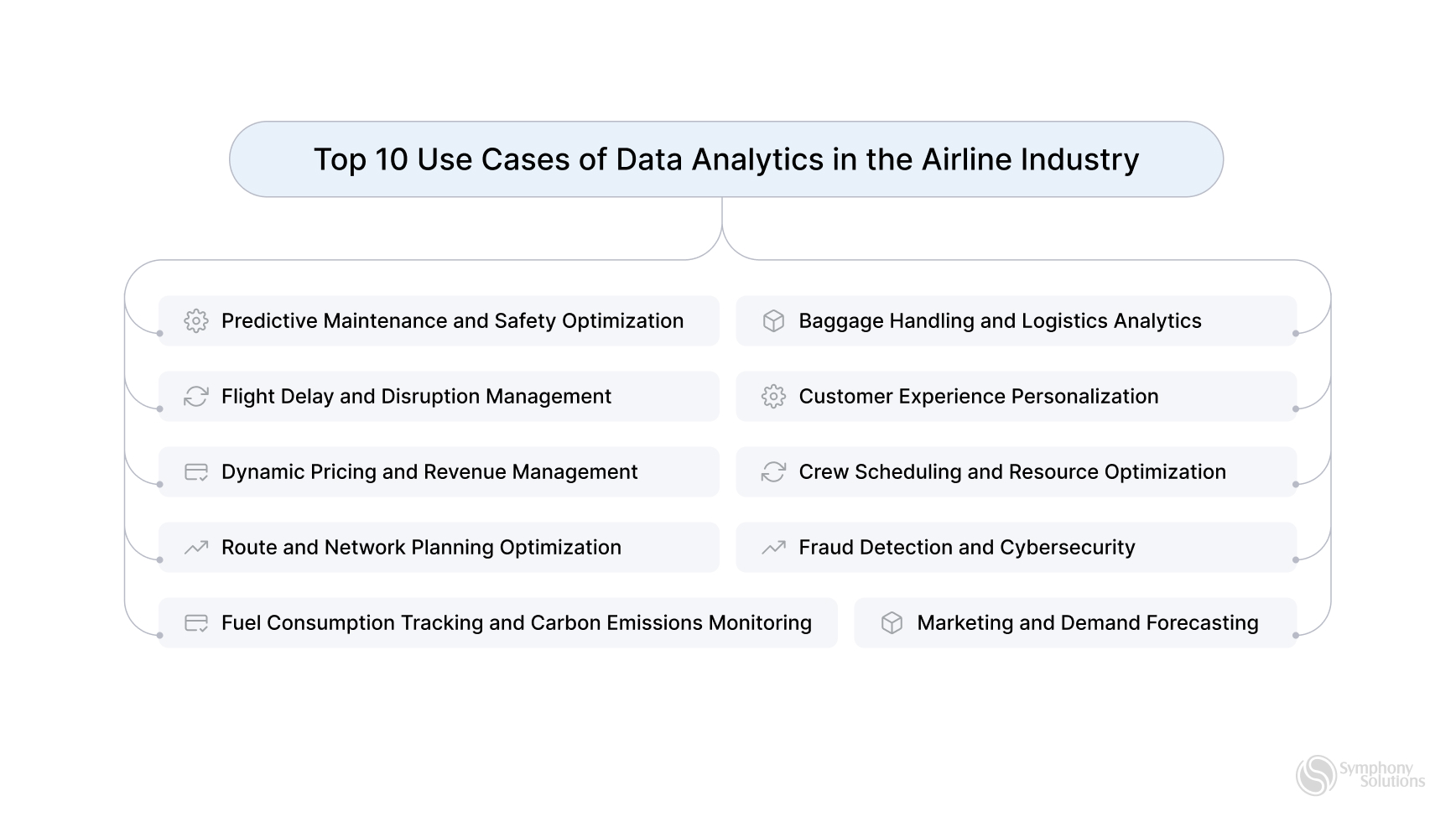
    Top 10 Use Cases of Data Analytics in the Airline Industry 

    Top 10 Use Cases of Data Analytics in the Airline Industry

    Here are ten strategic use cases where airline data analytics drives real operational impact. 

    1. Predictive Maintenance and Safety Optimization 

    Aviation predictive analytics uses sensor data, performance logs, and AI to detect component failures before they happen, shifting airlines from reactive repair cycles to proactive fleet reliability. It improves safety, reduces downtime, and lowers maintenance spend. 

    Take Delta Air Lines, by integrating Airbus Skywise and IBM analytics, Delta reduced maintenance-related cancellations from 5,600 annually to under 100, drastically improving aircraft availability. These data-driven approaches turned maintenance into a measurable performance lever, not just a compliance task. 

    2. Flight Delay and Disruption Management 

    Disruption management is one of the most visible places where data analytics delivers impact. Airlines use real-time insights, weather, aircraft rotation, and crew readiness to model delays and preempt operational breakdowns before they cascade. 

    Case in point: Japan Airlines uses dotData’s predictive platform to run 40+ models that optimize departure timing and turnaround, contributing to nearly 100% on-time performance. On the other hand, JetBlue tracks booking and search trends to anticipate capacity shifts and avoid schedule strain.  

    3. Dynamic Pricing and Revenue Management 

    Dynamic pricing blends historical data and real-time signals, including demand, competition, seat availability, and loyalty, to adjust fares on the fly. It has become essential in maximizing revenue per seat, especially as ancillary sales grow in importance. 

    For instance, EasyJet’s AI-based pricing engine dynamically recalibrates fares based on device type, loyalty status, and booking window, contributing 22% of total revenue from ancillaries. In an industry with razor-thin margins, this is a sound revenue strategy. 

    Symphony Solutions has also supported Datalex, a leading digital commerce provider for airlines, with building and scaling their pricing and retail platforms, helping carriers achieve greater revenue optimization and customer engagement. 

    4. Route and Network Planning Optimization 

    Route planning has evolved from intuition-based decisions to precision modeling powered by aviation data analytics. Airlines simulate new routes and optimize networks using demand forecasting, historical load factors, slot availability, and operational constraints, ensuring capacity matches profitability. 

    A perfect example is JetBlue’s expansion into the Caribbean in 2023. By analyzing search trends and booking intent, the airline launched new routes that exceeded performance expectations, achieving 15% higher load factors than its system average. Similarly, British Airways applies AI-driven planning to optimize route combinations and flight frequencies, saving millions annually through improved aircraft utilization. 

    5. Baggage Handling and Logistics Analytics 

    Baggage systems are increasingly driven by predictive analytics that identify handling bottlenecks, reduce transfer errors, and improve traceability. Real-time tracking and pattern recognition allow airlines to mitigate mishandled luggage’s operational and reputational costs.  

    Companies like Delta Air Lines have already implemented RFID tagging and predictive baggage flow analytics across their U.S. operations, resulting in a 25% drop in mishandled bags. This strengthens IATA’s finding that when RFID is paired with analytics, global mishandling rates can decrease by over 20%, translating into millions in savings and stronger customer trust. 

    6. Customer Experience Personalization 

    Personalization now extends far beyond loyalty tiers. Airlines utilize mobile behavior, booking history, and demographic data to deliver tailored offers, in-flight content, and targeted communications at every journey step. 

    For instance, Air France-KLM’s partnership with Google Cloud allows them to analyze over 93 million passenger records, optimizing messaging and services with AI in real time. These systems build deeper engagement while increasing ancillary revenue, proving that improving customer experience isn’t just a nice touch, it’s a business driver. 

    7. Crew Scheduling and Resource Optimization 

    Crew scheduling now operates as a dynamic, analytics-powered activity balancing qualifications, labor rules, and disruptions in real time. Airlines are applying AI across crew operations to reduce delays, fatigue, and unnecessary costs. 

    For example, airlines using AI-integrated crew management systems, like Sabre’s Crew Manager and Lufthansa’s OPSD AI tools, have reported up to 15% lower operational costs, a 12% boost in scheduling efficiency, and up to 30% fewer crew-related delays. 

    8. Fuel Consumption Tracking and Carbon Emissions Monitoring 

    Fuel analytics now drives both cost optimization and environmental compliance. Airlines analyze real-time telemetry, weather, and performance data to optimize routing and minimize emissions. 

    Qantas’s Constellation system, a cloud-based flight-planning algorithm, consistently delivers 2% fuel savings, translating to over $90 million annually. These savings come from identifying optimal altitudes, tailwinds, and deviations not observable in traditional planning. 

    9. Fraud Detection and Cybersecurity 

    With rising digital transactions, airlines now rely on machine learning to detect real-time fraud, flagging anomalies like unusual locations, rapid-fire bookings, or credential abuse. 

    According to BlueVoyant, airlines account for 46% of all travel-related online fraud, with losses averaging 1.2% of annual revenue. Data-backed fraud prevention has become a financial necessity for the aviation industry, not just a security measure. 

    10. Marketing and Demand Forecasting 

    From ad spend to route launches, predictive models now guide marketing decisions. Airlines use booking trends, search data, competitor pricing, and macro signals to forecast demand weeks or even months in advance. 

    American Airlines reported a 10% increase in ancillary revenue after shifting to targeted, AI-powered marketing campaigns. In a volatile market, these insights drive smarter promotions, reduce overcapacity, and ensure every seat sold supports the bottom line. 

    Benefits of Harnessing Data Analytics in the Airlines Industry 

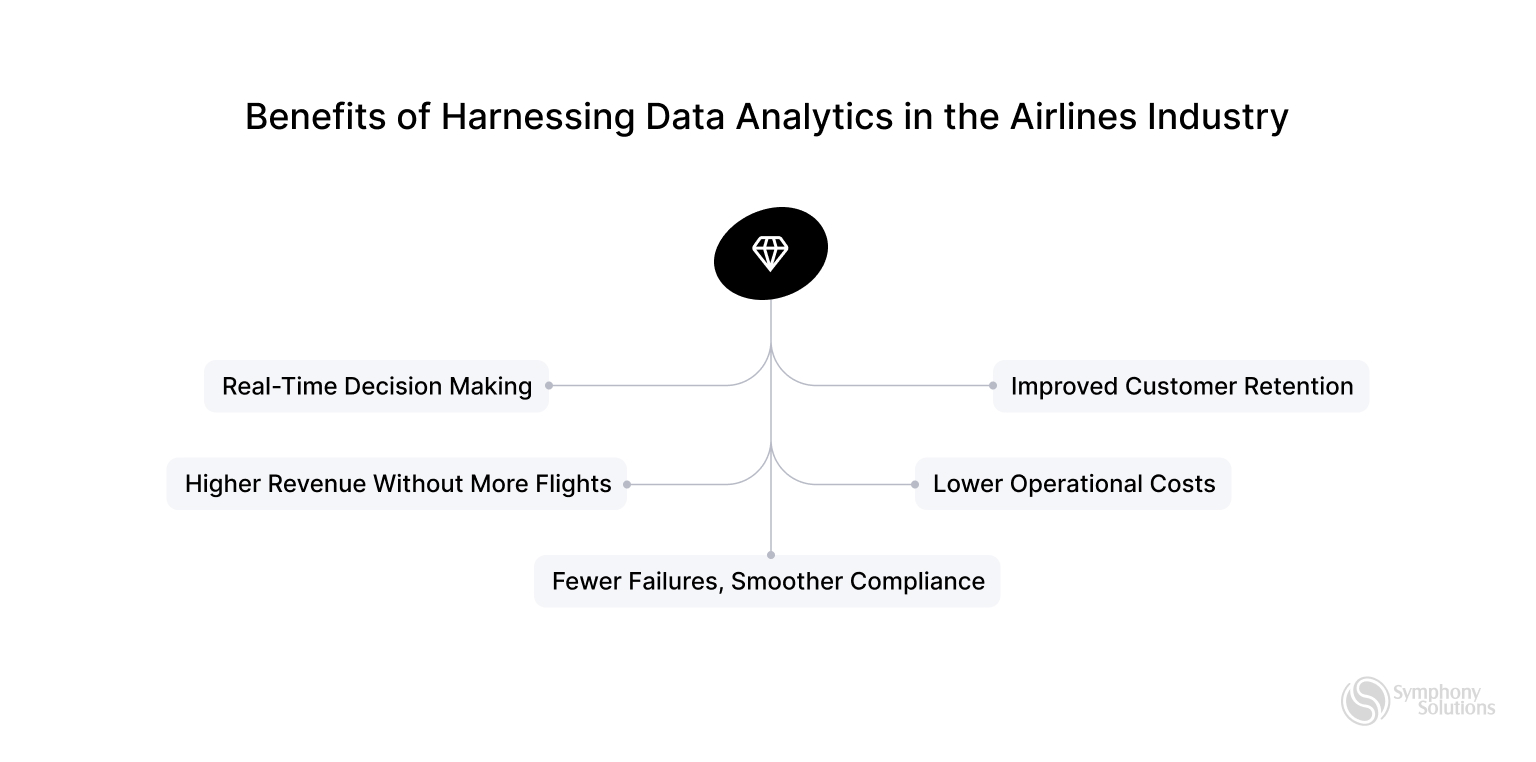
    Data analytics in the airline industry is a strategic asset, but its potential depends on a modern, scalable architecture. Replacing legacy systems with flexible, cloud-based environments allows airlines to unlock real-time insights and integrate analytics into daily operations. Those that embed such capabilities at their core gain measurable advantages in speed, cost efficiency, safety, and customer retention. Let’s go deeper. 

    Benefits of Harnessing Data Analytics in the Airlines Industry

    Real-Time Decision Making  

    Flight delays, crew reassignments, and weather disruptions can cascade within minutes. Real-time analytics turn data into action, rerouting aircraft, reallocating gates, and avoiding downstream chaos. McKinsey reports that data-driven companies are 23x more likely to outperform in customer acquisition and agility. 

    Higher Revenue Without More Flights 

    Precision is everything in a margin-constrained industry. Airlines using analytics-driven pricing, demand forecasting, and ancillary strategies typically increase unit revenues by 3–7%, an uplift that translates to millions in incremental earnings. Yield management remains one of airline big data’s most powerful use cases. 

    Fewer Failures, Smoother Compliance 

    Predictive analytics sharply improve operational safety. Studies show predictive maintenance can reduce unscheduled maintenance events by up to 20% and boost aircraft availability by 1–4%. That means fewer grounded aircraft, fewer safety issues, and smoother compliance with FAA/EASA regulations. 

    Lower Operational Costs 

    Analytics-driven optimization of fuel, crew scheduling, and turnaround processes offer measurable savings. Fuel accounts for 20–30% of operating costs; a 1% savings equals millions. According to McKinsey, Airlines can cut total operating expenses by 5–10% through data-based process improvements, an essential competitive lever. 

    Improved Customer Retention 

    Data-driven engagement delivers real results. Harvard Business Review analysis reveals that boosting retention by just 5% can increase profits by 25–95%. Airlines applying analytics for segmentation, predictive churn, and personalized offers significantly increase customer lifetime value and brand loyalty. 

    Challenges of Employing Data Analytics in the Airline Industry 

    While the benefits of airline data analytics are well documented, realizing them at scale is far from straightforward. Airlines face unique structural, technical, and operational challenges that can stall even well-funded initiatives. Let’s explore. 

    1. Data Silos and Fragmented Legacy Systems 

    Airlines have historically been built on a patchwork of disconnected systems, reservation platforms, maintenance logs, loyalty databases, and crew management tools, each storing data in its own format. These silos create blind spots that undermine data-driven decision-making. Without a unified data architecture, analytics efforts remain superficial and reactive. 

    2. Real-Time Data Integration Across Touchpoints 

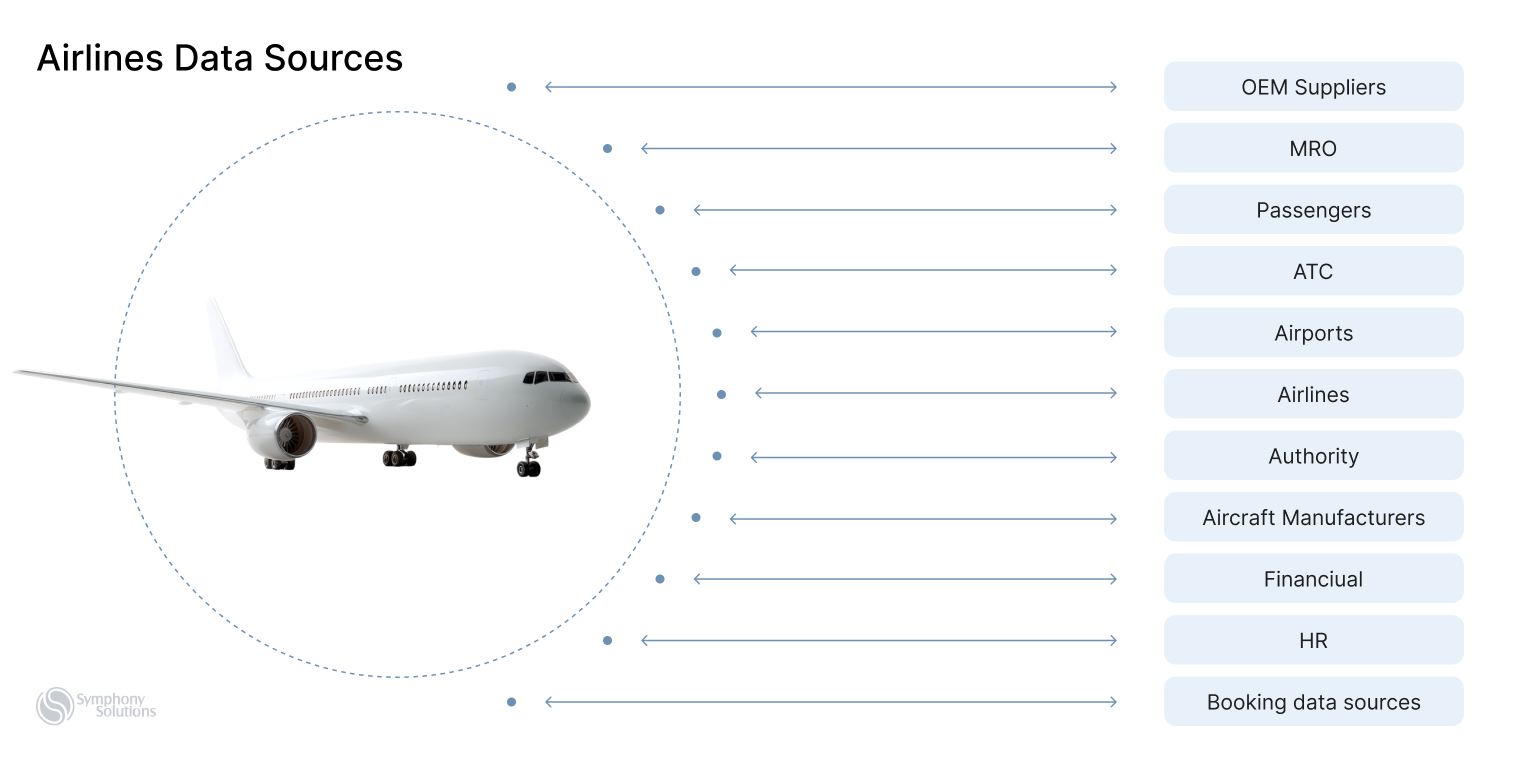
    Integrating data from dozens of live touchpoints, such as aircraft sensors, ATC feeds, booking engines, and mobile apps, requires a modern infrastructure that many airlines lack. Legacy APIs and batch processing are insufficient for operational decisions that must be made in seconds. Achieving accurate real-time visibility is not a tech upgrade; it’s an architectural overhaul. 

    3. Regulatory and Privacy Compliance 

    Airlines handle enormous volumes of personal and operational data, all under tight regulatory scrutiny. GDPR, CCPA, and regional aviation authorities impose strict data storage, usage, and transfer rules. Balancing personalization with privacy isn’t optional; it’s legally and reputationally critical. Noncompliance can mean millions in fines and lost customer trust. 

    4. Talent Gap: Data Science vs. Domain Expertise 

    Even with the right tools, talent remains a bottleneck. Data scientists often lack aviation context, while airline teams lack deep analytics expertise. Bridging this gap requires hybrid teams, cross-functional training, and leadership understanding of data and the flight business. Without it, insights sit unused, or worse, misunderstood. 

    5. Cost of Implementation and ROI Measurement 

    Advanced analytics requires a serious investment in platforms, integration, cloud infrastructure, and skilled personnel. Yet ROI is often delayed and difficult to isolate. Without clear KPIs and phased rollout strategies, leadership may struggle to justify continued funding, especially during financial pressure or market volatility. 

    Future Outlook: Where Airline Data Analytics Is Headed 

    The next phase of airline data analytics is not about more data but smarter decisions, faster execution, and measurable impact. Here’s where the industry is going: 

    • Autonomous AI and ML-Driven Actions: With 97% of airlines piloting generative AI (SITA), the shift from insights to automated decision-making is underway, driving demand for specialized AI services that integrate smoothly with airline workflows. 
    • Edge Analytics and Onboard IoT: Aviation IoT is forecast to grow to $ 81 billion by 2034. Edge computing allows aircraft to instantly process and act on in-flight data, enhancing fuel efficiency, system alerts, and passenger services mid-air. 
    • Digital Twins for Operations and Maintenance: Airports and airlines are using digital twins to simulate maintenance, optimize passenger flow, and train staff. Heathrow is already testing airport-wide virtual replicas to improve capacity and reduce delays. 
    • Travel Ecosystem Integrations: Airlines are connecting data with hotels, rideshares, and airports to enable end-to-end journey optimization. BCG calls this modular collaboration essential for post-COVID resilience. 
    • Sustainability Analytics at the Core: Environmental impact is now a data priority. The FAA projects 2.8 billion gallons in fuel savings through data-driven airspace optimization. Airlines are also applying aviation data analysis to avoid contrails, reducing climate impact by over 50%.  
       

    Final Thoughts 

    Data is no longer a support function in aviation; it’s a strategic asset. As shown throughout this article, analytics now drive core domains: predictive maintenance, disruption recovery, pricing, route planning, loyalty, and sustainability. 

    However, value comes not from data alone but from applying the right models to the correct problems at speed and scale. Most airlines struggle here: systems are fragmented, visibility is delayed, and insights remain disconnected from outcomes. 

    At Symphony Solutions, we help close that gap. We specialize in airline industry solutions, including aviation software development tailored to complex operations and data analytics services built for real-time intelligence, measurable ROI, and competitive growth. 

    The future belongs to carriers who turn data into action, and action into advantage. If you’re ready to lead, we’re prepared to help. 

  • Rethinking Agile for the AI Era: What Modern Leaders Need to Know 

    Rethinking Agile for the AI Era: What Modern Leaders Need to Know 

    For years, Agile has been our compass through complexity, helping teams adapt with short cycles, rapid feedback, and fast pivots. It still is, but AI is challenging the status quo. The pace is faster, the stakes are higher, and uncertainty is constant. AI now flags blockers before standups, shifts priorities mid-sprint, and highlights delivery risks before retros. Even the rituals we’ve relied on, like standups, planning, and retros, are up for debate. 

    Join industry leaders Bradley Foster and Kseniya Kobryn for a candid conversation that tackles these issues head-on. With hands-on experience leading Agile transformations at Cisco, Deloitte, Ladbrokes coral, and Symphony Solutions, they will share their observations, struggles, and lessons learned as Agile meets AI. 

    Watch the recording on YouTube

    Whether you design, build, test, support, or lead—this session is your crash course in simplifying Agile, embracing AI where it makes sense, and driving real results in the modern workplace. 

    Why Join

    • Find out what Agile leaders keep, cut, and change to thrive with AI 
    • Discover where AI supports Agile—and where it breaks old patterns 
    • Uncover lessons from coaching teams that overcame real challenges 

    Who Should Join

    • Developers, Testers, Analysts, and anyone in IT shaping how work gets done 
    • Tech & Product Leaders tired of “agile theater” and looking for real results 
    • Startup Founders building lean teams that move fast and scale smart 
    • Agile Coaches and Delivery Managers navigating AI adoption 
    • CTOs and Engineering Heads leading multi-team orgs 

    This isn’t theory. It’s what actually works. 

    If you’re tired of agile theater, AI hype, and bloated frameworks — this conversation is for you. 

    Meet the Speakers 

    Bradley Foster

    Bradley Foster

    Founder of Worth Agility

    Experienced Agile Coach and Product Leader with 13+ years of real-world experience across defense, banking, healthcare, government, and retail. 

    Founder of Worth Agility and PMI mentor. Known for driving results in complex environments, from optimizing CMMi at Boeing to leading AI transformation for Hawaii DOT’s Safe Travels program. 

    Key wins: 

    • Boosted aerospace/defense efficiency by 20% (AOA, YF-22, AWACS) 
    • Improved IT delivery by 30% in healthcare 
    • Scaled AI ops 10x while cutting response time by 30%
    kseniya

    Kseniya Kobryn

    CEO at Symphony Solutions 

    Agile Transformation Leader and CEO of Symphony Solutions, with 15+ years of hands-on experience across iGaming, healthcare, airlines, and enterprise tech. 

    Founder of Agile Space and former COO. Known for scaling global teams and simplifying Agile delivery across Europe and beyond. 

    Key wins: 

    • Expanded Symphony to a global, remote-first org with clients like Betway & Vivino 
    • Led Agile transformations for Fortune 500s, including Deloitte and Cisco 
    • Built Agile Space into a top training platform with SAFe, Scrum, and Kanban programs

    When & Where

    July 31, 2025
    6 PM CET
    Online

    Register now

    Watch here!

    Price

    Free

  • SHE Talks: SHE Moves from Challenges to Triumphs 

    SHE Talks: SHE Moves from Challenges to Triumphs 

    In a world full of challenges, stories like these remind us of the power of perseverance and purpose. Join us for an engaging online session featuring two remarkable women, Valentina Synenka and Olena Moroz, as they share their journeys of turning challenges into triumphs. 

    Watch the event record on YouTube!

    This talk continues the spirit of our recent SHE Moves: Run, Connect, and Be Inspired event—an unforgettable gathering where over 50 participants came together to move their bodies, open their hearts, and start the year with purpose.

    Held on January 12th in the serene surroundings of Stryisky Park in Lviv, this 5 km run brought together runners, joggers, walkers, and even a few furry friends. Led by passionate amateur triathletes Valentina Synenka and Olena Moroz, who had just completed races across five exotic countries in 2024—including Rwanda and New Zealand—the event was as much about sharing stories as it was about moving forward together.

    After the run, the energy didn’t stop. Over breakfast at Kilinskyy Restaurant, participants laughed, reflected, and exchanged personal goals for the year ahead. It wasn’t just a fitness event—it was a spark of empowerment, a celebration of community, and a reminder of how strong and connected we are when we come together with intention.

    What to Expect 

    • Stories from Valentina and Olena’s triathlon adventures across five countries: Oman, Italy, Luxembourg, Rwanda, and New Zealand 
    • How traveling and racing pushed them to grow mentally and physically 
    • The importance of community support on their journey 
    • Insights into the mindset and discipline required to compete at an elite level 
    • Practical lessons on resilience and perseverance anyone can apply 

    Meet the Speakers 

    valentina

    Valentina Synenka

    Founder of the SHE Community, and Board Member at Symphony Solutions

    From completing five Ironman 70.3 races to competing at the World Championship, Valentina’s journey is a testament to strength, vision, and determination. She inspires others not only through sport but by creating spaces where women can grow, connect, and thrive.

    olena moroz

    Olena Moroz

    Traveler, Triathlete, and Runner

    Olena has embraced running and traveling as powerful, life-changing tools for personal growth. Her story proves that persistence and passion can transform how we see ourselves and the world—one race, one journey at a time.

    Making a Real Difference 

    This event also highlights the powerful charity initiative behind SHE Moves: Charity Run, which raised 250,000 UAH in support of the We Are Free initiative by With an Angel on a Shoulder Foundation.  

    Thanks to this generous donation—driven by the efforts of participants and a key contribution from Symphony Solutions—15 people across four families, including Viktoriia Ostroushko, a mother recently released from captivity after 1.5 years of separation from her children, are now receiving vital care and support. 

    This is a powerful reminder that when communities come together, real healing becomes possible. 

    Watch the full event on YouTube and be inspired to move forward, no matter the challenge! 

    When & Where

    January 29, 2025
    6 PM CET
    Online

    Register Now

    Watch here!

    Price

    Free

  • Mastering Business Process Automation: A Winning Strategy for Growth 

    Mastering Business Process Automation: A Winning Strategy for Growth 

    Manual data entry, swivel-chair copying, and approval bottlenecks cost organizations an estimated $1 trillion in productivity worldwide each year. To address this, companies across various industries are increasingly implementing business process automation (BPA).  

    A comprehensive business process automation strategy can wire sales, finance, HR, and customer service into one friction-free flow, so tasks move at the speed of software instead of human hand-offs. According to Deloitte’s 2024 Global Automation Survey, companies that scale automation across 20 or more processes cut operating costs by 21% and grow revenue 8% faster than peers. Those gains aren’t theory; they’re showing up on real P&Ls today. 

    In this article, we’ll explain business process automation, explore its different types, dive into robotic process automation (RPA), and map out proven methodologies, trends, and AI’s growing role in workflow optimization. You’ll see hard-dollar benefits, future outlooks, and practical examples you can borrow today, ending with a roadmap to start automating for growth. 

    What is BPA? 

    Manual approvals, double-keying, and email ping-pong cost teams hours they can’t spare. BPA swaps those brittle hand-offs for rule-based workflows that run 24/7 without coffee breaks or copy-paste errors. Before we get into tools and trends, let’s pin down exactly what BPA covers – and what it doesn’t. 

    BPA is the use of software bots, low-code workflows, and integration tools to handle repetitive, rules-based tasks like invoice matching, onboarding, and service ticket routing, so people can focus on higher-value work. IBM defines it as “technology that streamlines routine processes and workflows end-to-end, often pairing rules engines with AI and data analytics.” 

    The global BPA market is racing from $13 billion in 2024 toward $23.9 billion by 2029, a 12% CAGR that shows how quickly firms are swapping spreadsheets for straight-through processing.

    market growth of BPA

    A typical business operations automation cycle generally unfolds through several distinct, yet interconnected, phases, each critical to the successful implementation and continuous improvement of the workflows. 

    Workflow Mapping 

    The journey begins with workflow mapping, an exhaustive exercise in understanding the current state of a business process. This is about meticulously sketching out every single action, decision point, and data movement within a process, from its initiation to its conclusion. For each step, it’s crucial to identify the owner – the individual or department responsible for that action – and every system touchpoint, meaning every application, database, or tool that interacts with the process. This phase often involves creating detailed flowcharts, swimlane diagrams, or other visual representations that provide a crystal-clear picture of how work progresses, who does what, and which technologies are involved. The goal here is to establish a comprehensive baseline, making all dependencies and interactions transparent. 

    Bottleneck Identification 

    Once the workflow is thoroughly mapped, the next critical step is to spot the drags, which are the bottlenecks, inefficiencies, and pain points within the existing process. This involves a deep dive into the mapped workflow to identify areas where human intervention is repetitive, prone to errors, or causes significant delays. Common drags often manifest as tasks requiring manual data entry, where information is tediously re-keyed from one system to another, increasing the risk of mistakes and wasting valuable time. Other culprits include email approvals, which can create significant communication lags, or instances of duplicate keystrokes, where the same information is entered multiple times across different systems. Identifying these areas is crucial because they represent the most promising opportunities for automation to deliver tangible benefits, freeing up human resources for more strategic tasks. 

    Tool Selection 

    With the inefficiencies clearly identified, the subsequent phase involves picking the right tools for the job. The landscape of automation technologies is diverse, and the selection depends heavily on the nature of the “drags” pinpointed. For processes involving significant data input, low-code platforms are often an ideal choice, enabling rapid development and deployment. When the automation needs to mimic human interaction with computer systems, such as navigating applications, clicking buttons, or copying and pasting data across different screens, Robotic Process Automation (RPA) bots are highly effective. For situations demanding seamless, direct data exchange between disparate systems, Application Programming Interfaces (APIs) are the go-to solution, facilitating robust and efficient system-to-system hand-offs. The strategic choice of technology ensures that the automation solution is both effective and scalable. 

    Trigger Configuration 

    Once the appropriate tools are selected, the next step is to configure triggers. This is where the “if-then” logic of the automation is defined. Triggers are the specific conditions or events that, when met, will initiate an automated action. For example, in an invoice processing scenario, a trigger might be configured to state: “when invoice status = approved, then automatically post the transaction to the ERP (Enterprise Resource Planning) system.” These rules are fundamental to the automation’s functionality, ensuring that tasks are executed precisely when the predefined criteria are satisfied, thereby providing a controlled and accurate execution of the automated process. Careful configuration of triggers is essential for the reliability and predictability of the automation. 

    Monitoring and Refinement 

    The final phase of the automation cycle is monitoring and refinement. Automation is not a one-time deployment but an ongoing process of optimization. After implementation, it’s crucial to continuously track key performance indicators (KPIs) to assess the effectiveness and efficiency of the automated process. Critical metrics to monitor include cycle-time – how long it takes for a process to complete – and error-rate, which measures the frequency of mistakes made by the automation. If these KPIs begin to deviate from their target benchmarks or indicate a decline in performance, it signals the need for intervention. This involves analyzing the root cause of the performance dip and making necessary tweaks or adjustments. This iterative refinement, driven by data and continuous feedback, ensures that the processes remain robust, efficient, and continuously improve over time, maximizing their long-term value to the business. 

    Let’s take an example: automating accounts payable. A bot reads emailed PDFs, extracts amounts with OCR, routes them for e-signature, and posts to the ledger, cutting invoice touchpoints from six to one while slashing late-payment fees.  

    Strip BPA to its essence and you get a simple pattern: trigger → action → verification, executed in milliseconds instead of minutes. With that definition in place, let’s now explore the layers of automation companies deploy, from quick task macros to full AI-driven orchestration

    Types of Business Process Automation 

    No single tool fixes every workflow headache. Successful programs blend several types of business process automation, starting with easy wins (auto-emails, status updates) and climbing to AI-guided decision engines. Knowing these levels helps you match the right approach to each pain point. 

    types of business process automation

    #1. Task Automation, Quick Wins 

    Automating single, high-volume actions – such as sending reminders, updating records, or filing receipts – can dramatically reduce the time teams spend on mundane work and help eliminate manual errors. These automations are ideal for straightforward, repeatable processes that occur frequently across departments. 

    Everything begins with the identification of the trigger. This could be something like a form submission, a status change in a system, or the receipt of a new file. Once the trigger is defined, a low-code or no-code automation platform is typically used to create a rule that performs the required action. This might be sending a templated email, updating a CRM field, filing a document into the correct folder, or adding a record to a shared spreadsheet. 

    For example, a marketing team can use Zapier to copy webinar sign-up data from a landing page application directly into the CRM. This ensures that new leads are available to the sales team in real time, without anyone needing to manually download and upload lists or retype information. These kinds of automations not only speed things up but also ensure that critical data is captured and used promptly and consistently. 

    #2. Workflow Automation, Multi-Step Approvals 

    This is about automating sequential hand-offs within a single department, which can streamline internal workflows, reduce delays, and ensure accountability across each step. These are the processes where one task must be completed before the next can begin – anything from approvals, to reviews, to internal requests. 

    Here, things are set in motion with the creation of a digital form that captures all necessary information upfront. This reduces back-and-forth clarification and ensures the workflow starts with complete data. Next comes the configuration of a flow that can automatically route the request to the appropriate person based on their role or function. Each action – whether it’s an approval, update, or rejection – should trigger the next step without manual intervention. Additionally, the system should automatically log timestamps at each stage to provide a clear audit trail and improve visibility into bottlenecks. 

    For instance, an HR team managing equipment requests for new hires might implement a form-based workflow where a recruiter initiates the request, IT approves and fulfills it, and operations tracks delivery. With automation in place, the hand-offs happen instantly, and each team is notified when it’s their turn to act.  

    #3. RPA, Screen-Level Bots 

    Automating actions in legacy systems often means working around the lack of APIs or integrations. In these cases, RPA is a pretty common technology to use. What it does is mimic mouse clicks and keystrokes to complete tasks in the way a human would. 

    The first phase in RPA implementation is the capturing of the exact keystrokes and mouse actions needed to complete the task. Logic is then added to handle common exceptions – such as missing files, login errors, or unexpected pop-ups – to make the automation more reliable. Once built, the bot can be scheduled to run at set times or triggered by specific events, like the arrival of a file or the completion of a prior task. 

    In finance, RPA is often used to reconcile bank statements overnight by logging into multiple portals, downloading files, and matching transactions against internal records. What used to take hours of repetitive work now happens in the background, leaving analysts free to focus on higher-value activities like investigating anomalies and identifying trends. 

    Type #4. Intelligent Process Automation (IPA), AI-Driven Decisions 

    Blending RPA with machine-learning models allows the automation tools to go beyond routine tasks and start making informed decisions – reading documents, flagging anomalies, and predicting outcomes. These workflows combine the precision of rule-based automation with the adaptability of AI, making them ideal for complex, data-heavy processes. Even those requiring some degree of interpretation. 

    It typically begins with training a model on historical data – past claims, transactions, documents – so it can learn to recognize patterns and outcomes. Once trained, the model is embedded directly into the workflow to analyze incoming information and either take action or recommend the next step. Over time, the system continues learning from new data, improving accuracy with every cycle. 

    In insurance, for example, NLP algorithms are utilized to scan and classify incoming e-mail claims. The AI identifies intent, extracts relevant details, and assigns a risk score for potential fraud. RPA handles the rest – logging the claim, routing it to the appropriate team, or flagging it for investigation. The result is a faster, smarter triage process that scales with volume while improving decision quality. 

    Type #5. Automation Business Process Management Suites 

    End-to-end automation through BPM connects activities across departments, systems, and roles, creating unified workflows that are fully visible, traceable, and adaptable. Unlike isolated task automation, this approach treats processes as strategic assets, coordinating everything from human approvals to bot executions to API integrations. 

    It starts by mapping the entire process using BPMN (Business Process Model and Notation) diagrams, which serve as both documentation and a foundation for automation. These models are then used to generate execution engines that drive the actual workflow. A centralized dashboard orchestrates every component – assigning tasks to people, triggering RPA bots, calling APIs – ensuring each step happens in the right sequence, with the right context. 

    These tiers aren’t siloed. High-performing organizations don’t choose between RPA, low-code, and BPM; they layer them to create a responsive digital fabric that can be adapted as the business evolves. 

    With the landscape mapped, let’s zoom in on robotic process automation strategy, why it matters, the details of why it differs from BPA, and where it sits in your overall automation strategy. 

    Why RPA is a Crucial Element in Any Process Automation Strategy 

    RPA bots, as we’ve covered, can log in, click, copy, and paste just like a human, but they work 24/7, never make typos, and scale on demand. That speed is reshaping workflows: Grand View Research pegs the RPA market at $3.79 billion in 2024 and forecasts a 43.9% CAGR to 2030. Finance, insurance, and healthcare are the early winners, with 52% of financial-services firms already saving at least $100,000 a year by letting bots handle reconciliations and claims checks. 

    RPA sits at the front line of a modern automation strategy for two reasons: 

    • Speed to value. Drag-and-drop studios let teams ship a bot in days. 
    • Non-invasive tech. Bots overlay legacy screens, so IT risks stay low. 

    When that quick win is fed with live data, analytics, and governance, the bot army becomes an engine for continuous improvement, pushing organizations toward “straight-through” processing. 

    What Is the Difference Between Robotic Process Automation and Business Process Automation? 

    Think of RPA as a smart screwdriver, and BPA as the whole factory line. RPA fixes a single repetitive task, say, copying invoice data from email to ERP. BPA wires every step of “invoice-to-pay”: capture, three-way match, approvals, posting, and KPI reporting. 

    Where RPA excels at task-level execution, BPA designs and governs the full workflow. It connects systems, orchestrates roles across departments, and ensures compliance and performance tracking are built into the process from the start. 

    Aspect RPA BPA 
    Scope Single task End-to-end workflow 
    Tech Screen-level bots Low-code apps, APIs, bots 
    Speed Days to launch Weeks to blueprint, months to scale 
    Payoff Rapid FTE savings Cross-department cost, speed, insights gain 

    But the key to squeezing benefits is not treating these approaches as mutually exclusive – the most high-performing teams usually stack different methodologies and automation tools. RPA bots execute keystroke-level tasks inside a broader BPA framework that manages the full process, tracks SLAs and exceptions, and generates the metrics needed to improve continuously. The result is automation with both speed and depth: quick wins on the ground, supported by a strategic foundation for long-term value. 

    Examples of Business Process Automation 

    Concrete business process automation examples turn theory into action. By spotlighting wins in support, HR, and sales, you’ll see how a few well-placed bots can shrink hours into seconds and lift data quality. 

    • Customer support triage. NLP classifies tickets by sentiment; urgent cases hit Level 2 in seconds. 
    • HR onboarding. A workflow creates email, payroll, and badge access the moment a hire signs, day-one productivity, and zero paperwork. 
    • Sales quote generation. Low-code rules pull price, inventory, and discount data to build a proposal in under a minute. 

    These tools help slash cycle time, eliminate human error, raise data quality, and free staff for work that needs judgment. 

    Implementing Business Process Automation 

    key steps of implementing process automation

    Great results come from a repeatable methodology, not one-off hacks. The seven-step playbook below shows how to move from messy flowcharts to governed, KPI-driven automated processes. Here are the seven key steps: 

    1. Map the flow. Visualize each actor, input, and system. 
    2. Set hard KPIs. Pick cycle-time, error-rate, and cost targets. 
    3. Prioritize wins. Tackle the steps with the biggest gap between effort and payout. 
    4. Choose the tool. RPA for UI clicks, low-code for forms, APIs for data hubs.
    5. Pilot fast. Limit scope to one site or region; prove value in 90 days. 
    6. Scale and govern. Add bots and workflows, but enforce standards and security. 
    7. Monitor, learn, refine. Dashboards surface drifts, so you tweak before it could ever become an issue. 

    Tie each phase to a clear strategy owner and budget, and momentum stays high.  

    The business automation landscape changes monthly; miss a trend and you lose ground. Here are the live-wire shifts – GenAI, process mining, citizen dev, and more – reshaping business process automation right now. 

    • GenAI. Forrester expects LLM-powered “digital coworkers” to run 10% of operational processes by the end of 2025. 
    • Process and data mining at scale. Always-on data capture spots bottlenecks no human can see, which enables companies to drastically elevate their analytics capabilities. 
    • End-to-end orchestration. Growth of the intelligent automation market (CAGR 22.6% to 2030) shows firms merging AI, RPA, and BPM into one fabric. 
    • Governance first. ESG reporting and data-privacy rules make traceability a must-have, not a nice-to-have. 

    Trends are only useful if you act on them. So, the main point for organizations is this: pick one or two that solve your unique pain point, pilot quickly, identify what works and what doesn’t, capitalize on the optimization, and ride the momentum, gradually expanding automation further. 

    How AI Enables Companies to Automate Business Processes 

    There’s no discussing automation efforts without mentioning AI. It not only transforms business intelligence but also acts as the rocket fuel for process optimization, turning static scripts into self-learning workflows. From OCR to next-best action predictions, it elevates BPA from rule-following to insight-driven. To this end, here’s how AI is being utilized: 

    1. It reads documents with OCR and language models. 
    2. It predicts the next best action from historical data. 
    3. It writes or fixes bot scripts. 

    McKinsey’s 2025 survey finds 78% of companies now use AI in at least one function, and leaders see both revenue bumps and cost drops where AI supports automation. Deloitte adds that organizations with mature AI governance grow revenue 5% faster than their peers. 

    The Turbocharged Automation Market 

    By 2030, RPA, BPA, and IPA together could approach a $100 billion market as autonomous workflows design, execute, and heal themselves. Bots will call GenAI copilots when rules break, while process twins will simulate fixes before code ships. Analysts expect hyper-automation platforms to blur the line between strategy and execution, with orchestration spanning suppliers, partners, and customers. 

    The Benefits of Business Process Automation 

    Talk is cheap; numbers win budgets. The benefits below – cost, speed, accuracy, scale – show clearly why BPA is becoming a board-level priority. 

    • Hard savings. 52% of finance firms save $100k+ yearly from RPA bots. 
    • Speed. Cycle times drop up to 70% once manual approvals disappear. 
    • Accuracy. Error rates fall below 1% thanks to straight-through data handling. 
    • Scalability. Workloads spike without overtime costs. 
    • Compliance & audit. Timestamped logs satisfy regulators with zero paper chase. 
    • Employee morale. Staff pivot from copy-paste drudgery to creative tasks, boosting retention. 

    Add the soft wins, happier staff, cleaner audits, and the case becomes bullet-proof. When both P&L and morale rise together, automation isn’t so much an IT project as it is a growth engine. 

    Conclusion 

    The automation race is on. A layered mix of RPA, low-code workflows, AI, and automation business process management now decides which firms grow and which lag. Start with one pain point, measure the gain, then scale across the enterprise, using a clear business process automation strategy to keep tech, people, and governance in sync. 

    Symphony Solution leverages a comprehensive suite of tools – from RPA and AI-driven analytics to low-code platforms and intelligent workflow orchestration – to create seamless, end-to-end automation ecosystems. Our approach is not just about technology but about understanding your business processes at a granular level and designing automation that aligns perfectly with your strategic goals. 

    So, are you ready to build a future-proof automation stack? Contact Symphony Solutions right now and let’s turn bottlenecks into breakthroughs! 

  • BetSymphony Sportsbook Frontend Puts Operators in Control of Growth and Innovation 

    BetSymphony Sportsbook Frontend Puts Operators in Control of Growth and Innovation 

    Symphony Solutions is proud to introduce the BetSymphony Sportsbook Frontend, the latest expansion of the BetSymphony ecosystem. It gives sportsbook and casino operators full ownership and control of their player-facing platforms, ending reliance on third-party roadmaps and revenue-sharing models. 

    For years, white-label and turnkey solutions have promised speed to market but left operators with rigid roadmaps, long customization delays and limited flexibility, often restricting what can be customized at all. BetSymphony Sportsbook Frontend eliminates these constraints by giving operators full source code ownership and complete control over their product roadmap, immediately or after a lease period. They can design, customize, and scale on their schedule, not their vendor’s. 

    Key Features of BetSymphony 

    Key Features of BetSymphony 
    • Full source code ownership: Unlocks complete control over customization, innovation, and long-term product strategy. 
    • Complete roadmap autonomy: Enables operators to prioritize features that drive revenue and competitive advantage, without vendor-imposed delays. 
    • Rapid customization: Accelerates the time to market for new features and user experience improvements, keeping operators ahead of shifting player expectations. 
    • Scalable, high-performance architecture: Ensures consistent, reliable user experiences across devices and market conditions, including low-spec devices and poor networks. 
    • Mobile-first design: Maximizes engagement and market reach in mobile-dominant regions, including Africa and other emerging economies. 
    • No revenue-sharing model: Protects profit margins and ensures that scaling operations increase revenue, not costs. 

    These business advantages are supported by a robust technical foundation that accelerates development, simplifies maintenance, and ensures long-term scalability. 

    Technical Features of BetSymphony Frontend 

    BetSymphony Frontend is built on a robust architecture that reduces development time, accelerates deployment, and delivers consistent, scalable user experiences. 

    • NX Monorepo Architecture: Simplifies code management and sharing, reducing development time and simplifying long-term maintenance. 
    • Lightweight, scalable codebase: Optimized for high performance across both mobile and desktop, minimizing latency and maximizing user retention. 
    • Angular CMS with custom core framework: Enables rapid content updates and consistent user experiences, reducing reliance on technical teams for day-to-day changes. 
    • Custom artifact distribution system: Allows seamless deployment across multiple environments, accelerating rollouts and minimizing downtime. 
    • Tenant-aware CSS variable theming: Supports effortless brand differentiation across markets without impacting core functionality. 
    • Middle-layer logic architecture: Balances workload between the front and back end, ensuring stability and speed even under high user demand. 

    Frontend Benefits 

    The frontend is no longer just a user interface for sportsbook and casino operators. It has become a key driver of growth, profitability, and brand differentiation. BetSymphony Frontend delivers that advantage. 

    The platform’s SEO-optimized architecture expands organic reach and lowers the cost of acquiring new players. Its performance is built for today’s markets, offering speed and stability even on low-end devices and poor network connections. This is essential for regions, where user expectations are high, but infrastructure often lags, such as in parts of Africa, where mobile internet is dominant and users rely on older devices. BetSymphony Frontend has already proven its reliability in these conditions, ensuring fast, stable performance. 

    BetSymphony Frontend also simplifies operations. Its well-documented, scalable codebase shortens onboarding and accelerates development. An integrated CMS allows business teams to manage content directly, reducing delays and costs. 

    However, performance and efficiency are only part of the equation. As operators grow, flexibility becomes critical. BetSymphony’s microservices framework makes adding new features easy, responding to market changes, and managing multiple brands efficiently. Just as important, complete source code ownership gives operators control over the look of their frontend and how it evolves. This turns technology into a growth engine, not a limitation. 

    What’s Next for BetSymphony – Conversational Frontend, Casino Expansions, and Advanced Tools 

    BetSymphony Frontend continues to evolve. Symphony Solutions is expanding the platform’s capabilities based on operator feedback and market trends. We’re working on the following: 

    • An innovative conversational interface designed to enhance player interaction through chat-based navigation, personalized prompts, and real-time support. This UI creates a more engaging and intuitive user experience, especially on mobile devices.  
    • Broader casino features and integrations to boost player engagement. 
    • Advanced bonus engine with richer logic, segmentation, and automation. 
    • Enhanced analytics tools for deeper player insights. 
    • New operational tools to simplify platform management. 

    Symphony Solutions will continue working closely with operators to align platform customization and roadmap priorities with their business goals. This partnership ensures that technology supports long-term growth. 

    About BetSymphony 

    The BetSymphony igaming platform developed by Symphony Solutions, gives sportsbook and casino operators complete control of their technology and business strategy. It replaces rigid, revenue-sharing models with full source code ownership and flexible architecture. Operators can customize, scale, and innovate without third-party constraints, reducing complexity, improving engagement, and accelerating growth. 

    About Symphony Solutions 

    Founded in 2008, Symphony Solutions delivers AI, Cloud, and Agile transformation services with deep expertise in iGaming. The company partners with leading operators worldwide, providing technology that drives profitability, operational efficiency, and market leadership. 

    For more information or to schedule a demo, contact our team and discover how BetSymphony Frontend can transform your brand’s performance. 

  • Symphony Solutions Ranked #7 in 2025 Inspiring Workplaces Europe 

    Symphony Solutions Ranked #7 in 2025 Inspiring Workplaces Europe 

    We’re thrilled that Symphony Solutions has been ranked #7 in the 2025 Inspiring Workplaces Awards Europe, securing a spot among the Top 10 most inspiring workplaces across the continent. This recognition is gratifying for our entire team, especially in a year that saw hundreds of outstanding organizations apply from all over Europe. 

    From day one, we’ve believed that building a great company starts with creating a great culture; and this award is proof that our people-first approach is making a real impact. Even more exciting, we also earned special recognition in two categories: 

    • Inspiring Wellbeing, for our holistic approach to employee health—mental, emotional, and physical—and for embedding wellbeing into how we work, not just offering it as a benefit. 
    • Inspiring Employee Experience, for creating a workplace where every touchpoint—from onboarding to daily collaboration—reflects care, trust, and intentional design. 

    These honors reflect the trust we place in our people, the care we put into everyday experiences, and the intention behind how we lead, collaborate, and grow together. 

    The 2025 winners were announced at a celebratory gala on May 15 at London’s Troxy venue, following an independent review across six core pillars: Culture & Purpose, Leadership, Wellbeing, Inclusion, Employee Voice, and Employee Experience. Submissions were evaluated not by surveys, but by real-world evidence, setting a high bar for authenticity and impact. 

    As we look ahead, this award reinforces our belief that investing in people isn’t just the right thing to do, it’s the smartest thing to do. From thoughtful AI adoption to flexible, distributed teams, we’re continuing to shape a workplace where people can thrive. 

    About Inspiring Workplaces 

    The Inspiring Workplaces Group is headquartered in the UK and operates across North America, Europe, the Middle East, Africa, Latin America, Asia, and Australasia. Now, in its tenth year, the organization exists to spotlight and support forward-thinking companies actively reshaping the world of work.  

    By recognizing those who put people first—not just in principle but in practice—Inspiring Workplaces provides a global platform for progress. Its mission is simple: to elevate workplace standards everywhere by showcasing what’s possible when companies lead with trust, purpose, and humanity.  

  • Building a Secure Backend for Sports Betting & iGaming in 2025

    Building a Secure Backend for Sports Betting & iGaming in 2025

    In the fast-moving iGaming and sports betting space, backend systems have become core drivers of real-time performance, security, and compliance. As platforms scale across markets and devices, cloud-native, modular infrastructure is critical. 

    According to Technavio, the global gambling market is projected to grow by USD 339.9 billion from 2024 to 2029, fueled by e-sports betting, mobile-first platforms, and AI-driven features. 

    To keep up, operators must enable secure payments, meet strict regulations, and deliver seamless, low-latency experiences. Legacy stacks are being replaced by flexible backends powering everything from odds engines and fraud detection to KYC and live betting—built for scale, speed, and innovation. 

    What the Backend Really Powers in Sports Betting Apps 

    The backend of a sports betting app or online casino platform is the operational engine driving scalable, real-time gameplay and secure payment processing. Unlike the frontend, which users see and interact with, the backend is responsible for: 

    • Odds engines that generate, update, and distribute dynamic betting lines 
    • Transaction processing for deposits, withdrawals, and payouts 
    • User authentication and session management 
    • Integrations with external systems like identity verification, payment gateways, and content providers. 

    Importantly, the backend also includes administrative tools for operators, allowing them to manage risk, monitor traffic, run promotions, and maintain platform stability. 

    This layer determines how well a platform performs under pressure, how it scales during traffic spikes, and how effectively it integrates with third-party services. Operators increasingly rely on specialized iGaming software to build modular backend platforms for sports betting apps that are scalable and regulation-ready. 

    Modern Backend Architecture for Scalable Betting Platforms 

    A future-proof backend isn’t built as a monolith—it’s composed of flexible, interoperable parts that can evolve with changing demands. Today’s leading platforms prioritize cloud-native sportsbook backend architecture and componentized systems that evolve with business and regulatory needs: 

    Component Description Benefits 
    Modular Architecture Microservices enabling independent deployment Faster updates, fault isolation 
    Scalable Database NoSQL/hybrid DB for high concurrency Performance, speed 
    Robust API Layers Secure, high concurrency APIs Integration flexibility 
    Security Frameworks KYC/AML compliance, MFA, DDoS protection Regulatory adherence, security 
    Real-Time Processing Engines Sub-100ms latency for live betting Instant odds, fast settlements 

    ​​​One example of this approach is BetSymphony. It provides full source code ownership, a microservices-based backend, and real-time data processing with optimized latency. Its integration-ready APIs support payment gateways and trading systems, while built-in player account management ensures compliance, all deployable on proprietary infrastructure. 

    Real-Time Backend Systems: A Must for Sportsbook Apps 

    In-play betting has become the norm, and backend systems must meet the moment. Users expect seamless interactions, up-to-the-second odds, and instant bet resolution. Backend systems that falter under latency or concurrency limitations lose both money and trust. 

    To stay competitive, operators must build infrastructure capable of real-time responsiveness using: 

    • Event-streaming platforms such as Apache Kafka or RabbitMQ to manage high-throughput data pipelines. These systems enable continuous processing of live events like odds updates, bet placements, or in-play statistics without delay. 
    • In-memory caching and distributed storage solutions that ensure rapid data retrieval. By reducing latency between data input and response—whether it’s fetching user session data or game state—these tools are essential for seamless betting experiences. 
    • Load-balancing and autoscaling tools that distribute traffic across multiple backend nodes and automatically scale resources during peak usage. This ensures consistent performance during events like major sports finals or betting surges. 
       

    A demonstration of backend resilience under pressure comes from our collaboration with Ladbrokes Coral. Ahead of the Grand National—an event known for peak concurrency—our team implemented backend optimizations, including AWS-based load distribution, real-time monitoring, and rigorous performance testing. These enhancements enabled the platform to handle over 25,000 key transactions per minute with zero downtime, validating the critical role of real-time backend architecture in high-stakes sportsbook operations. 

    Ultimately, backend responsiveness is no longer a technical luxury—it’s a business requirement. As user expectations evolve, so must backend systems. And this evolution increasingly centers on intelligent decision-making, predictive risk models, and personalized user journeys—powered by artificial intelligence. 

    Essential Infrastructure for Scalable Sports Betting App Backends 

    A modern sportsbook or casino backend rests on a tightly orchestrated infrastructure stack. This includes not just servers or hosting but the full ecosystem of services that enable secure, compliant, and high-performance betting at scale. 

    infrastructure-monitoring-and-management

    Gaming Infrastructure Essentials 

    At the core is a modular server architecture—often based on microservices—that separates betting logic, session management, and player account systems. This modularity supports faster updates and easier integration of new features across sportsbook, casino, and virtual games. 

    Payment & Transaction Layer 

    Fast, secure, and multi-currency payment processing is a make-or-break factor. Backend infrastructures increasingly support crypto payments and instant payout rails to enhance user experience and retention. 

    Security Infrastructure 

    Backend systems must support end-to-end encryption, DDoS protection, fraud monitoring, and secure identity verification. Compliance with standards like ISO 27001, PCI-DSS, and GDPR is no longer optional—it’s expected by regulators and players alike. 

    Regulatory Technologies (RegTech) 

    As operators expand across borders, RegTech solutions are essential for automating KYC, AML checks, and jurisdiction-specific reporting. These tools allow real-time screening and reduce the overhead of manual compliance processes. 

    Monitoring and Resilience 

    Infrastructure monitoring tools like Prometheus, Grafana, or DataDog ensure uptime and real-time alerting. Coupled with auto-healing clusters and disaster recovery protocols, these tools protect against both performance dips and security incidents. 

    One notable example is GOAT Interactive which consolidated its distributed backend across African markets using Istio Service Mesh and GCP Anthos to reduce infrastructure complexity, lower SSL-related costs. Symphony Solutions further strengthened GOAT Interactive’s backend infrastructure by implementing managed cloud services that streamlined multi-environment deployments and automated key processes. This optimized architecture enhanced uptime, ensured compliance, and reinforced disaster recovery while keeping operational overhead in check. 

    This layered infrastructure approach allows platforms to manage explosive traffic during high-stakes events, expand across regulated markets, and deliver seamless user experiences—all while staying compliant and secure. 

    Once this infrastructure is in place, the question becomes how well it scales. DevOps methodologies, cloud-native design, and real-time observability are now critical to sustaining uptime and performance at a global scale. 

    Cloud, DevOps, and Scalability in Sports Betting Backend  

    Cloud-native technologies and DevOps practices have become the cornerstone of scalable backend sports betting platforms. Legacy systems tied to on-premise hardware or siloed codebases simply can’t keep up with the demand for rapid deployments and zero downtime. 

    features-of-sport betting-app

    Cloud Architecture 

    Public cloud providers like AWS, Google Cloud, and Azure now host many sportsbook platforms. They offer elastic computing resources, regional redundancy, and managed services (e.g., Kubernetes, load balancers, object storage) that support real-time performance without the overhead of physical infrastructure. 

    DevOps Integration 

    Modern DevOps pipelines allow betting platforms to deploy updates, fix bugs, and scale features continuously without downtime.  

    ​​CI/CD Pipeline​​​ 

    During high-stakes live events, zero-downtime deployments become mission-critical. By using blue-green deployment models, feature toggles, and canary releases within CI/CD pipelines (e.g., with Jenkins or GitLab CI), operators can roll out backend updates incrementally and safely—minimizing disruption to the user experience even in real time. 

    A leading iGaming operator with markets in the UK and South Africa achieved this kind of deployment resilience by rebuilding their Azure DevOps CI/CD pipelines and stabilizing communications between Dynamics 365 and Azure Service Bus—resolving persistent failures and supporting real-time rollouts during user peak periods. 

    Auto-Scaling and Load Balancing

    With event-driven traffic spikes during major tournaments or game days, auto-scaling groups and load balancers are essential. These systems dynamically adjust compute capacity and evenly distribute user sessions to prevent crashes or lag. 

    Infrastructure as Code (IaC) 

    Using tools like Terraform or AWS CloudFormation, operators now build and manage infrastructure programmatically. This allows fast rollbacks, environment cloning, and version control for even the most complex backend environments. 

    Disaster Recovery and Redundancy 

    High availability is no longer optional. Multi-region deployments with automated failover and backup systems ensure regulatory uptime requirements and protect operators from catastrophic failures. 

    Incorporating DevOps and cloud-native infrastructure doesn’t just improve system resilience—it enables faster innovation, better user experiences, and scalable growth without increasing technical debt. 

    Analytics & Real-Time Data: The Operational Brain of Betting Apps 

    At the heart of every modern sports betting backend lies a robust data and analytics layer—the system’s operational brain. This is where raw inputs from bets, markets, user sessions, and transactions are transformed into actionable insights, fueling real-time decisions across the platform. 

    Key backend functions powered by analytics include: 

    Real-Time Market Monitoring: 

    Odds modeling engines ingest live sports feeds and player activity to instantly adjust lines, prices, or bet availability. These adjustments must occur within milliseconds to keep betting fair and dynamic. 

    Player Segmentation and Personalization: 

    Data platforms build behavioral profiles from every interaction—deposit history, bet preferences, win/loss ratios—and trigger personalized offers, limits, or alerts. This enables smarter engagement and more efficient retention strategies. 

    Fraud and Anomaly Detection: 

    Analytics engines constantly scan for outliers, such as suspicious multi-account activity, bet collusion, or money laundering patterns. Combined with behavioral biometrics and AI pattern recognition, operators can identify threats early and act swiftly.

    Operational KPIs and Reporting: 

    Beyond user behavior, operators rely on dashboards to monitor system health, conversion rates, churn, payment latency, and ROI per segment. These analytics also feed into compliance reports and licensing audits. 

    Revenue Forecasting and Risk Exposure: 

    Data warehouses aggregate outcomes across thousands of markets to model revenue risk and predict exposure to specific events, player types, or geographic markets. This enables proactive limit setting and margin management. 

    Technical Backbone:

    These analytics systems typically use scalable storage (e.g., AWS Redshift, Snowflake, or BigQuery), real-time processing frameworks like Apache Kafka or Flink, and orchestration tools to transform data into usable intelligence. 

    As we approach the final layer, it’s worth examining how operators are transforming all these backend capabilities—from DevOps to AI to analytics—into a flexible, modular architecture that can adapt to a fast-changing regulatory and business landscape. 

    Mobile-First Sports Betting Backends with Cross-Platform Support 

    With mobile as the primary channel for user engagement, backend infrastructure must ensure seamless experiences across devices. This shift goes beyond frontend design—it’s about engineering systems that support real-time, responsive performance regardless of network conditions or device type. 

    Modern backends must maintain feature parity across mobile apps, web, smart TVs, and retail terminals, handling asynchronous data, real-time sync, and varied session behaviors.  

    Cross-platform consistency is achieved through API-first architectures and modular, cloud-native deployments that support push notifications, mobile payments, and live data feeds. 

    By abstracting device-specific logic and focusing on experience-aware backend design, operators can deliver uninterrupted, personalized journeys across platforms—future-proofing their systems as user demands evolve. 

    The Role of AI and Machine Learning in Sports Betting Backend Development 

    Modern backend betting systems increasingly rely on artificial intelligence to make data-driven decisions in real time. From personalizing user interfaces to optimizing odds and detecting suspicious activity, AI reshapes how operators manage scale, risk, and profitability. 

    Key Applications of AI in Backend Sportsbook Operations 

    AI Function Description Business Impact 
    Predictive Analytics Forecast betting behaviors Risk management 
    Fraud Detection Behavioral biometrics/anomaly detection Reduces fraud, protects revenue 
    UX Optimization Dynamic personalization Increases retention 
    Churn Prediction Detects at-risk users Improves customer lifetime value 

    A clear example of AI-backed innovation is BetHarmony, an intelligent assistant developed by Symphony Solution. It offers AI-driven support that spans sportsbook, casino features, and 24/7 multilingual assistance. By handling onboarding, personalized betting suggestions, and real-time chat interactions, it improves the customer experience while reducing operational workload. 

    These intelligent layers not only personalize user journeys but also fuel a continuous data loop—capturing behavior, generating predictions, and responding in real time with minimal latency. 

    Still, none of this is possible without a solid foundation. Scalable, secure, and compliant infrastructure remains essential to support AI-powered backend performance. 

    The Future of Backend Infrastructure in Gaming & Conclusion 

    The backend of tomorrow is already under construction today. Betting and iGaming platforms are investing in predictive systems, adaptive infrastructures, and scalable intelligence to stay competitive. This evolution will define not only platform performance but also regulatory compliance, financial agility, and user trust. 

    The future sports betting backend will be defined by: 

    • Autonomous monitoring and self-healing systems 
    • Regionally adaptive architecture that shifts based on legal requirements 
    • Seamless onboarding flows with biometric KYC integrations 
    • Distributed data models that support instant analytics at a global scale 
    • Increased adoption of low-code/no-code backend tools for rapid feature deployment. 

    For gaming operators aiming to future-proof their platforms, now is the time to reimagine the backend—not just as infrastructure, but as a strategic asset. Investing in robust, scalable, and AI-ready systems today can secure a competitive edge for tomorrow. 

    Explore how Symphony Solutions can assist in building resilient and scalable backends tailored to your sportsbook and casino needs by visiting their iGaming & Casino Games Integration Services page. 


  • Revolutionize Airline and Flight Operations Management with Custom Aviation Software Solutions 

    Revolutionize Airline and Flight Operations Management with Custom Aviation Software Solutions 

    Airline delays wipe out $30 billion in direct costs every year. Whenever an aircraft sits idle – the technical term is Aircraft on Ground (AoG) – the airline bleeds money. Time, fuel, crew, cargo – when frozen in place – are costing them more by the minute. The fastest way to plug that leak is with an integrated airline operations software stack.  If picked correctly, software tools can help keep aircraft, processes, and funds moving efficiently, even when sudden disruptions appear.  

    Airline operations are extremely complex. Imagine a 500‑mph relay race where the baton is a fully loaded jet:  

    • pilots;
    • cabin crew; 
    • dispatchers;
    • caterers;  
    • accountants.

    All have to grab it in perfect rhythm, and the baton never rests. It moves from pilots to crews, from dispatch to maintenance, from ramp handlers to flight ops – each depending on the other to keep the flow alive.  
     
    This article explores how an integrated airline operations software stack keeps that relay running with precision. We’ll lay out the financial stakes, trace the core operational flow, and dig into the toughest challenges airlines face every day.  

    The High Stakes of Airline Operations in 2025 

    Aviation’s digital arms race is heating up. The aviation software market hit  $10.6  billion and is growing 7.2 % a year.  At the same time, airlines alone pumped a record $37 billion into IT in 2024.  

    aviation software market size

    Why the splurge?  

    Every minute saved on the ramp multiplies across congested hubs, and every extra ancillary sold in an order‑management system lifts yield without adding seats. 

    In other words, airline software solutions are becoming the control surface for the entire airline. 

    What Is Airline Operations Management? 

    Envision a dynamic three-dimensional operational space where numerous interconnected elements – aircraft, crew, cargo, fuel, and data – are in constant motion. Airline operations are the control center orchestrating these components to maintain seamless flow. 

    The objective of airline operations management is to prevent disruptions in this intricate system. Contemporary airline software solutions often work as an advanced navigational tool for operations teams, enabling them to identify potential challenges and providing optimal alternative pathways to help drive efficiency. 

    Besides the aircraft and airport process management, there are numerous workflows related to advertising, accounting, marketing, and sales operations that are being transformed and optimized with software systems

    Case in point:  Symphony Solutions partnered with a UK airline to enhance its air search and merchandising engines by implementing dynamic, persona-based air bundles and refactoring legacy code. The results were as follows: response times improved by 20%, optimized memory usage, and increased personalization, boosting customer satisfaction and ancillary sales.  

    Seven Core Processes and the Aviation Operations Software Behind Them 

    effective airline operations stack

    Let’s break down the types of tools airlines use the most frequently. 

    First up, it’s the Transportation Management System (TMS). These platforms provide real-time visibility and coordination of ground-based operational assets. They help keep track of catering vehicles, crew transportation, and fuel trucks. Their role is to optimize asset deployment and reduce operational delays. 
     
    Then there’s Fleet & Staff Management software. Integrating aircraft health monitoring with crew rostering enables proactive maintenance scheduling and efficient crew allocation. These systems enable airlines to cut standby costs and maximize resource utilization. 
     
    Next, we have Routing & Scheduling tools. Think of them as the brain that chews through a mountain of info – weather patterns, airport slots, passenger demand – and spits out a revised operational plan. More specifically, they run sophisticated algorithms that analyze dynamic factors and then generate and revise operational schedules to guarantee minimal disruptions. 
     
    Next on the list are tools for Dispatch and Shipment Management. For the cargo side, they automate the calculations of weight and balance, electronic freight documents, customs declarations, and more. They aid airlines in speeding up operations in a compliant way.  
     
    There’s also the Aviation Accounting Software. This is the financial backbone, handling everything from interline billing between airlines to fuel tax calculations and maintenance, repair, and overhaul (MRO) invoices, all in IATA-compliant formats. 

    Then, there are Scheduling & Planning Tools. These are like the sandbox for the planning teams, allowing them to play out different ‘what-if’ situations without actually impacting the live, day-to-day schedule. They enable impactful and informed risk management. 

    Finally, we have the Airline Order Management Systems (OOMS). These are advanced software tools designed to modernize legacy passenger service systems (PSS). Their goal, basically, is to enable airlines to push New Distribution Capability (NDC) offers out through all sales channels effectively. And their utility can’t be understated. 

    One of our clients – an Irish airline with over 100 routes – was facing challenges with its outdated PSS, which lacked support for modern business logic and wasn’t compatible with IATA’s NDC standards.

    Once we supported them in launching and implementing a modern OOMS, they achieved enhanced performance and drastically more efficient workflows for travel agents; the company is now operating a scalable, customer-focused solution. 
     
    Each of these systems (or modules within a system) is crucially valuable. But the real efficiency gains happen when they are all seamlessly interconnected, sharing their data in real time.  

    Top Challenges and How Modern Airline Operations Software Solves Them 

    Without integrated aircraft fleet management software and other real‑time tools, small hiccups, weather alerts, crew swaps, and a late catering truck can occur. These can snowball into costly disruptions. Here are some of the challenges airlines face and how bespoke software helps to address them. 

    #1. Irregular Operations (IROPs) & Disruption Cascades 

    Weather, strikes, or air‑traffic flow restrictions can unravel a day’s flying in minutes. Globally, disruption now vaporizes about  $60 billion, 8 % of airline revenue, each year.  Missed connections ripple into crew legality breaks, slot losses, and compensation payouts.  

    AI‑driven disruption‑management modules ingest live weather, NOTAMs, crew legality, and gate availability, then automatically rebuild the day‑of‑ops plan in minutes, re‑crewing flights, swapping aircraft, and re‑routing passengers before delays snowball. 

    # 2. Crew Fatigue Compliance & Mispairings 

    Regulators and unions enforce thousands of rule permutations on duty time and rest windows, and circadian rhythms. Studies during long‑haul pandemic schedules found significant sleep‑index drops and elevated fatigue risks among crews crossing time zones. Violations trigger grounded flights, costly dead‑heading, and safety concerns. 

    Advanced aviation management software engines embed every contractual and regulatory rule set, crunch millions of pairing permutations with cloud GPUs, and flag illegal rosters hours before they break, cutting dead‑heading and boosting staff well‑being. 

    #3. AOG & Unplanned Maintenance 

    Boeing pegs AOG cost between $10 000 and $150 000 per hour, depending on aircraft type and route. Groundings cascade into missed slots, stranded crews, and chartered recovery flights. 

    Digital‑twin MRO platforms stream sensor data from engines and airframes, predict part failures weeks in advance, and auto‑order rotables to the next maintenance station, preventing costly AOG events and smoothing hangar workloads. 

    # 4. Fuel Overburn & Route Inefficiency 

    Fuel consumed about 32 % of airline operating costs in 2024, up from 25 % five years ago. Sub‑optimal flight paths and step‑climbs add tons of unnecessary burn and CO₂. 

    Real‑time flight‑path optimization tools tap high‑resolution wind grids and ATM slot data to suggest fuel‑saving speed and altitude changes en route, while post‑flight analytics benchmark crews and fleets against fuel KPIs. 

    #5. Cybersecurity Threats & Data Silos 

    Aging tech stacks and new APIs expose a fresh attack surface. 2024 alone saw multiple ransomware and software‑update incidents that grounded flights and canceled thousands of tickets. Beyond the operational hit, breaches risk passenger data and regulatory fines. 

    Zero‑trust API gateways encrypt data end‑to‑end, enforce least‑privilege access, and provide unified observability dashboards; meanwhile, open data schemas (NDC, ONE Order, AIDX) let disparate modules share information securely, turning silos into a single operational picture. 

    With challenges neutralized by the right airline operations software stack, ops teams shift from fire‑fighting to fine‑tuning, keeping flights on time, costs in check, and passengers smiling. 

    Measurable Benefits of Integrated Aviation Software

    Moving from siloed spreadsheets to connected platforms is not only about future-proofing; it’s highly profitable. Here are some concrete stats: 

    • +36 % industry‑wide EBITDA by 2030 if carriers pull off a full tech transformation.  
    • 5 % drop in aircraft operating costs when AI schedule optimizers boost utilization. 
    • Tens of thousands are saved per hour when digital‑twin alerts prevent an AOG event.  
    • Higher ancillary attach rates as order‑management systems personalize every offer. 
    • Real‑time ESG dashboards that win prized “green‑departure” slots. 

    Airlines that digitize deeply outperform rivals on both cost per ASK and Net Promoter Score. It is proof that software drives efficiency and customer loyalty, as well as optimizes spending. 

    How to Choose or Build the Right Airline Operations Software Stack 

    Software systems can massively elevate airlines’ workflows and performance. Without an integrated plan, implementing an advanced system could be more trouble than it’s worth. Think of your technology stack as an A‑check schedule: each piece must fit a wider maintenance program, or the aircraft never leaves the hangar.  

    The proper use of air transport technology platforms can go both ways. However, with the right steps, there is a higher chance it will bring real, tangible results. The roadmap below can help ensure your tools bring precise, value‑driven airline operations management. 

    Step 1. Baseline the Pain 

    Delay minutes, crew mis-pairings, fuel overburn, missed cargo connects – log them all for at least one season. Track every disruption and its downstream cost, from gate congestion to maintenance spillover. The aim is to build a heat map that shows exactly where dollars leak and where operations software could plug the gaps. Use flight-tracking feeds, ACARS dumps, crew scheduling data, and finance records. Involve frontline dispatchers, gate agents, and line mechanics early; they surface friction points no dashboard ever shows. This is the groundwork, and to do it right, airlines often turn to technology partners that understand both airline data flows and operational pains. 

    Step 2. Prioritize Quick Wins 

    Not all problems need solving at once. Rank them by business impact and implementation ease. If nearly half of knock-on delays trace back to crew legality violations, then a smart pairing engine should come before predictive maintenance. Small, early wins – delivered fast – buy you trust, prove the model works, and unlock budget for longer plays. Each initiative should move a hard number, like a 15% cut in crew-related delays within four months. Working with the right software vendor can help identify the best areas for digitization, i.e., targeting the low-hanging fruit. 

    Step 3. Decide Buy vs. Build 

    As a general rule, buy when stakes are low and you only need specific workflows optimized – premade solutions can carry out certain tasks quite adequately –  but build when you need speed, agility, and differentiation. Areas like dynamic disruption recovery, real-time pricing, or ops forecasting particularly benefit from tailored software tools. 

    Moreover, there are also hybrid setups. Some companies utilize prepackaged solutions for particular flows and then develop and implement custom systems to optimize and elevate core processes, thus enforcing security and efficiency. Decisions here need more than instinct. A technology partner can help you weigh cost, time-to-value, integration load, and long-term control. 

    Step 4. Utilize APIs 

    Innovation dies in silos. As we’ve outlined in our recent article, your stack should communicate via APIs -seamlessly, securely, and in real time. It’s important to choose the right APIs for this – the ones with clear documentation, REST or GraphQL endpoints, webhook support, and adherence to data standards like IATA’s Airline Retailing Maturity model. So, to be safe, test integrations early.  

    Step 5. Design for the Ramp 

    Build for offline functionality with automatic sync once connectivity returns. Also, prioritize intuitive, single-interaction access to essential functions, thereby optimizing crew efficiency. It’s extremely important to validate designs early and iteratively with actual ramp agents and mechanics in their working environment to ensure practicality. Engaging user experience teams with specific expertise in the aviation domain is vital for creating user-friendly interfaces that facilitate quick adoption and integration into daily workflows. 

    Step 6. Secure from Day One 

    Each new integration or expansion of app functionality can widen your attack surface. That surface grows faster than most realize. Therefore, apply zero-trust security across the stack. This includes end-to-end encryption, rigorously enforced access controls, and continuous, real-time anomaly detection. The potential financial penalties from regulatory bodies and the disruption to operations after a security breach far outweigh any perceived cost savings in neglecting security. Airlines must ensure they build a secure and resilient system from the outset. 

    Step 7. Measure Relentlessly 

    Good software earns its place every day. It should be easy to assess how each system and module is performing at a glance. Monitor On-Time Performance, cost per disruption minute, crew and passenger satisfaction, and even attach rates for ancillaries. Feed all of it into live dashboards that let you course-correct weekly. Summarize the insights you get with a single “Ops Health Score” to keep leadership focused.  

    When tech choices match business goals, airlines flip IROPs from chaos into controlled exceptions. By baselining pain, tackling quick wins, and using secure, user‑friendly tools, you create an ecosystem where data and workflows flow smoothly. With the right software (aimed at the right task) margins climb even when weather, strikes, or pandemics test the schedule. 

    Conclusion 

    There are many moving parts to airline operations, and each needs precision. Schedules hinge on dozens of elements across air, ground, crew, cargo, and customer. Any disruption – whether sparked by weather, strikes, or a single mistimed decision – can ripple across the entire network. But those same moving parts also hold massive optimization potential. When automated and connected by the right technology, the workflows become resilient and adaptable. 

    Software implementation boils down to aligning the tools with how your airline runs, from the tarmac to the tower. It starts by identifying bottlenecks, continues with choosing the right use case, and making smart decisions regarding implementation. 

    Getting there takes more than vision. It takes experience with the edge cases, the integrations, and the edge-of-runway chaos that most vendors never see. The kind of experience that comes from solving problems in the real world, not just drawing systems on whiteboards. That’s where Symphony Solutions can help. 

    We partner with airline teams to modernize their operations from the inside out. Not just by writing clean code, but by helping shape a stack that reflects your business logic, your constraints, and your ambitions. Whether you’re replatforming legacy tools or building net-new solutions, we bring the expertise to deliver fast, the judgment to build what lasts, and the humility to work like part of your crew. Contact us, and let’s discuss how we can use technology to start optimizing your airline operations. 


  • Turnkey vs White Label Sportsbook: Key Differences for Casino & Betting Operators

    Turnkey vs White Label Sportsbook: Key Differences for Casino & Betting Operators

    In 2025, the global sportsbook market continues to expand rapidly, driven by mobile-first engagement, regulatory shifts, and rising demand for integrated iGaming platforms. As operators seek to launch or scale their offerings, one critical decision stands out: choosing between a turnkey sportsbook platform and a white-label sportsbook solution.

    Each model presents unique advantages. Turnkey software gives operators full control over branding, functionality, and player data—ideal for long-term scalability. White-label platforms, on the other hand, offer a fast, cost-effective way to enter the market using prebuilt infrastructure, licensing, and support from a third-party provider.

    This decision is increasingly important as the industry grows. According to the IMARC Group, the global sports betting market was valued at USD 103.08 billion in 2024 and is projected to reach USD 224.12 billion by 2033, growing at a CAGR of 8.56%. Meanwhile, the broader online gambling industry—including casino and sportsbook platforms—is expected to grow at 11.9% CAGR, reaching USD 153.57 billion by 2030, per Grand View Research.

    As operators navigate compliance requirements, mobile integration, and the rise of AI personalization, selecting the right platform model—white-label or turnkey—is a foundational step toward long-term success in both sportsbook and casino operations.

    Turnkey Sportsbook Key Features

    A turnkey sportsbook is a ready-to-launch platform offering both frontend and backend solutions. It enables operators to focus on branding and marketing while delivering a seamless betting experience. Many modern turnkey offerings also include casino modules, supporting integration of online slots and live dealer games. Key features typically include:

    • Comprehensive Betting Coverage 
      Turnkey platforms support an extensive array of markets—football, basketball, tennis, MMA, and emerging sectors like esports. These include both pre-match and in-play betting, with dynamic odds powered by real-time data feeds. 
    • Customizable User Experience 
      Operators can fully tailor the user interface (UI), adjust layouts, localize content for different regions, and incorporate brand-specific design. This allows differentiation in highly saturated sports betting markets. 
    • Mobile Optimization & App Integration 
      Modern turnkey systems are built mobile-first, with responsive design and support for native apps on iOS and Android. This is crucial in mobile-driven markets like Africa and Southeast Asia. 
    • Advanced Risk & Odds Management 
      Turnkey sportsbooks include risk tools to monitor betting patterns, adjust exposure automatically, and prevent suspicious activity. Operators often have full control over odds configuration, which is vital for profitability. 
    • Global Payment Support 
      These platforms handle multi-currency transactions, including support for e-wallets, credit cards, bank transfers, and crypto. This enables access to international markets and enhances user convenience. 
    • Regulatory Readiness 
      Most turnkey sportsbook platforms are developed in alignment with international gambling regulations (e.g., GLI, MGA, Curacao) and data protection laws such as GDPR. However, final compliance responsibility lies with the operator, based on the target jurisdiction and local licensing conditions. 
    • Flexible Integrations & APIs 
      Turnkey systems are built for extensibility, supporting third-party CRM tools, bonus engines, and loyalty programs. APIs allow operators to add or remove features based on business needs. 
    • Affiliate & Marketing Modules 
      Integrated tools allow operators to run affiliate programs, set up tracking, offer bonuses, and automate promotional campaigns. These features are essential for customer acquisition and retention. 
    • Dedicated Technical Support 
      Vendors provide 24/7 technical maintenance and operational support, ensuring stability and continuous platform performance, especially during high-traffic events. 
    sportsbook features

    In summary, turnkey sportsbooks offer a fast, customizable path to market, backed by scalable technology and often bundled with online casino software for a comprehensive iGaming experience.A notable example is BetSymphony, a proprietary iGaming platform by Symphony Solutions. It provides full source code access for complete control and customization. The platform is built to support rapid deployment and seamless integration of sports betting and online casino games.

    White-Label Sportsbook Key Features

    A white-label sportsbook is a pre-built, fully managed solution that enables rapid market entry under an operator’s brand. While it limits backend control and customization, it offers a fast, cost-effective way to launch and operate a sportsbook, often bundled with online casino modules.

    Key Features of a White-Label Sportsbook

    • Quick Deployment: Go live within weeks using pre-configured systems and hosted infrastructure. 
    • Licensing & Compliance Included: Most white-label providers hold master licenses in major jurisdictions (e.g., Malta, Curacao), covering legal compliance, KYC, and AML requirements for the operator. 
    • Pre-Built Sportsbook Engine: Includes real-time odds feeds, in-play betting, and betting market coverage. 
    • Casino Game Integration: Bundled with slots, live casino games, and table games from leading providers. 
    • Managed Backend: Technical maintenance, payment processing, and user account management are handled by the provider. 
    • Limited Customization: Operators can brand the frontend UI and adjust basic configurations, but deeper customization is restricted. 
    • Revenue Share Model: Lower upfront costs, with the provider typically taking a share of monthly revenue. 
    • Affiliate & Marketing Tools: Includes tracking systems, referral features, and promotional campaign tools. 
    • Ongoing Support: Provider handles customer service and tech support, ensuring operational stability. 

    White-label sportsbook platforms are especially useful for first-time operators, influencers, or affiliates looking to test a market without investing heavily in development or licensing. 

    Sportsbook Software: Core Features for Both Turnkey and White-Label Solutions

    At the heart of every iGaming operation—whether turnkey or white-label—is robust sportsbook and casino software. This technology powers the entire user experience, from placing bets to managing real-time odds, integrating casino games, and ensuring secure transactions. While the level of control over this software differs between the two models, its foundational capabilities remain critical for success across both.

    • Real-Time Odds & Updates: Enables seamless live betting and live casino functionality with accurate, low-latency data feeds. 
    • Omnichannel Game Integration: Supports sportsbook markets as well as popular online slots, table games, and live dealer options—ensuring a unified gaming experience. 
    • Customizable UI Components: While white-label platforms may offer limited front-end configuration, turnkey systems allow full interface customization to reflect brand identity. 
    • Cross-Platform Compatibility: Responsive design ensures smooth performance on desktop, mobile browsers, and dedicated apps. 
    • Multi-Currency Payment Gateway Support: Facilitates global transactions with credit cards, e-wallets, bank transfers, and cryptocurrencies. 
    • Risk & Security Controls: Includes anti-fraud mechanisms, secure data encryption, and player protection features like self-exclusion and deposit limits. 
    • Regulatory Compliance Tools: Built-in systems to support licensing requirements, KYC/AML checks, and regional data privacy laws (e.g., GDPR, South Africa’s POPIA). 
    • CRM & Promotion Engine: Drives player engagement with automated marketing campaigns, segmentation, bonus triggers, and loyalty features. 
    • Analytics & Reporting: Provides operators with actionable insights through dashboards, KPIs, and detailed reporting modules. 
    • Scalable Architecture: Designed to support growing volumes of traffic, games, and features without downtime or performance issues.
    turnkey sportsbook

    These software capabilities are essential for both turnkey and white-label sportsbook models. The key distinction lies in the level of access and customization: turnkey clients typically gain greater flexibility over features, branding, and integrations, while white-label operators work within a standardized, provider-managed infrastructure. However, in both cases, the core software and source code generally remain the intellectual property of the platform provider.

    Turnkey vs. White-Label iGaming Solutions: Business Considerations 

    Turnkey and white-label solutions both offer fast entry into the online sportsbook and casino markets, but they differ significantly in terms of ownership, scalability, and long-term business value. Choosing the right model depends on your objectives, resources, and operational maturity. 

    1. Business Objectives and Vision 
      Turnkey solutions suit businesses aiming for long-term growth, full control, and the ability to differentiate in the online casino or sportsbook space. White-label models work best for testing new markets or launching quickly without extensive investment. 
    2. Budget and Investment Horizon 
      White-label solutions involve lower upfront costs, ideal for small operators or startups. Turnkey platforms cost more initially but reduce long-term expenses by eliminating revenue share and granting full profit retention. 
    3. Technical Capabilities 
      If you lack technical resources, white-label systems simplify operations. If you have in-house developers or a tech partner, turnkey gives you the flexibility to build custom features and control backend logic. 
    4. Compliance and Licensing Needs 
      White-label casino software providers usually handle licensing, which helps in heavily regulated markets. Turnkey operators manage their own licensing, offering greater independence and jurisdictional flexibility. 
    5. Data, Security, and Ownership 
      With turnkey platforms, operators own player data and manage key security functions like KYC, AML, and fraud prevention. White-label platforms operate on shared infrastructure, limiting visibility and control. 
    6. Note on Legal and Regional Variations: 
      Regulatory frameworks differ significantly across jurisdictions. For instance, U.S. operators must comply with state-specific licensing and data laws, while the EU operates under region-wide authorities like the MGA. In Latin America, countries like Colombia and Brazil have emerging but highly localized requirements. These differences impact how you approach compliance, payment integration, and platform customization, especially when operating under a turnkey model. 

    Turnkey vs. White-Label Sportsbook Solutions: Comparison

    The following table highlights the most critical differences between turnkey and white-label solutions, helping operators make informed decisions based on their technical capabilities, growth plans, and regulatory needs:

    Criteria White Label Turnkey 
    Branding Control Limited—preset themes and templates Full—custom UI/UX, content, and features 
    Time to Market Fast—weeks Longer—depends on customization and licensing 
    Technical Ownership None—managed by provider Full—own codebase, integrations, and logic 
    CRM & API Integration Minimal—limited flexibility Full—custom CRM, third-party APIs, etc. 
    Compliance & Licensing Handled by the provider Managed by an operator 
    Revenue Share High ongoing % and reserves None or low—depends on the deal 
    Upfront Costs Low Higher—license, dev, integration 
    Customization Limited—fixed modules Broad—game expansion, features, UI 
    Scalability Limited—depends on vendor roadmap High—add markets, games, and tools freely 
    Data Ownership Provider-controlled Operator-controlled 
    Security/Fraud Controls Standardized Fully customizable (e.g., KYC, AML, encryption) 

    For operators with limited resources or short-term market goals, white-label solutions minimize barriers to entry. However, businesses focused on long-term growth, brand autonomy, and operational scalability typically benefit more from the flexibility and control offered by turnkey platforms.

    Case Studies in Sportsbook Software Development

    A relevant example is Symphony Solutions’ transformation of raw source code into a fully operational sportsbook platform. The team modernized outdated infrastructure, automated deployments, and stabilized over 90 repositories, ensuring critical features like wallet, cashout, and settlement worked reliably. This demonstrates how turnkey solutions provide the freedom and control to optimize platforms for long-term performance.

    Another example from our collaboration with Ladbrokes Coral (GVC Holdings) involved delivering a fully customized sportsbook front-end under a unified technology framework. Over 9 months, Symphony Solutions helped develop a scalable, cloud-native platform featuring improved speed, load resilience, and an intuitive user interface across mobile, tablet, and desktop. These enhancements enabled GVC to consolidate its multi-brand sportsbook operations while reducing licensing dependencies and improving overall platform performance.

    A third example illustrates how operators can evolve beyond their initial platform setup—whether launched via turnkey or white-label. In this case, Symphony Solutions partnered with a global iGaming brand to modernize its multi-vertical platform, including sportsbook, esports, and online casino. The team reengineered backend scalability, streamlined user flows, and automated testing pipelines—achieving 3× faster test cycles, a 40% reduction in user drop-offs, and zero downtime during migration. This type of transformation highlights the long-term value of investing in modular architecture and continuous optimization—especially as business needs grow more complex.

    Summary

    In conclusion, the decision between a turnkey sportsbook and a white-label sportsbook solution ultimately depends on your business objectives, technical capabilities, scalability requirements, and the level of control you desire over the platform. Each option has its unique advantages in terms of flexibility, customization, and cost-effectiveness. However, it’s critical to evaluate factors like integration, compliance, and security to ensure the solution supports your long-term success.Ready to launch or scale your sportsbook platform? Explore our iGaming development services to discover how we can help you build a secure, scalable, and fully customized solution, from turnkey development to AI-powered enhancements.

  • How Artificial Intelligence Is Redefining the Future of Sports Betting 

    How Artificial Intelligence Is Redefining the Future of Sports Betting 

    The global sports betting industry is rapidly evolving, with artificial intelligence (AI) at the forefront of innovation. AI sports betting apps and predictive algorithms are transforming betting strategies, odds calculation, fraud detection, and customer engagement, shifting the industry from intuition-based decision-making to data-driven models. In this post, we explore the latest AI-driven trends, statistics, and emerging technologies shaping the sports betting industry. 

    ai use cases in betting

    AI in Sports Betting: Trends, Market Growth, and Accurate Sports Predictions 

    Market Growth & AI Adoption 

    AI is rapidly changing the sports betting industry, making sports predictions more accurate, automating betting strategies, and personalizing user experiences through AI-powered sports betting apps and services. 

    According to Grand View Research, the sports analytics market—a major driver of AI in betting—was valued at $854.5 million in 2023 and is projected to grow at a 27.7% CAGR, reaching $4.74 billion by 2030. 

    Key areas where AI is making an impact: 

    • Advanced Predictive Analytics – AI analyzes team history, player performance, and external factors like weather to improve accuracy. 
    • Real-Time Odds Adjustments – Algorithms instantly recalculate odds based on live events, such as player injuries or momentum shifts. 
    • Automated Betting Bots – AI-driven bots execute betting strategies with precision, reducing human error in arbitrage or value betting. 
    • Personalized Betting Experiences – AI customizes promotions and recommendations by analyzing user behavior. 

    AI in the World of Sports Betting: Use Cases 

    AI is reshaping sports betting models, enabling smarter predictions, automated strategies, and personalized user experiences. From AI-powered betting bots to fraud detection and risk management, its impact is evident across the industry. 

    AI Sports Betting Agents: How AI Can Offer the Best Betting Experience 

    AI-powered betting assistants are redefining user experience by streamlining onboarding, customer support, and real-time betting assistance. One notable example is BetHarmony, an AI-driven assistant developed by Symphony Solutions. Built on advanced natural language processing (NLP), BetHarmony helps bettors navigate sportsbook interfaces, answer account-related questions, and even suggest betting opportunities based on real-time data. 

    BetHarmony provides interactive, dialogue-based support. Instead of offering simple responses, it actively engages with users, clarifies ambiguous queries, and recommends bets based on their preferences. This not only enhances user engagement but also helps sportsbook operators reduce support costs and increase bettor retention rates. 

    AI Sports Betting Predictions: How AI Algorithms Help You Make Smarter Bets 

    AI-driven predictive models are revolutionizing sports betting picks by analyzing vast datasets – including historical data, real-time sports events, player stats, and external conditions – to provide more accurate sports predictions. These models don’t just forecast outcomes; they power dynamic odds adjustments that respond instantly to game developments. 

    Platforms like dfsPro.ai leverage machine learning to refine their models over time, increasing prediction accuracy while simultaneously recalculating odds based on live inputs. Beyond historical data, AI now factors in real-time elements like injury reports, player substitutions, referee decisions, penalty trends, and momentum shifts during live games, enabling a continuous optimization cycle where predictions inform odds adjustments which then refine subsequent predictions. 

    This dual capability allows bettors to make more informed decisions, particularly in live betting, where odds change dynamically. The most advanced systems can now process in-game events and adjust odds within milliseconds – a quarterback’s injury immediately affects point spreads, a basketball star fouling out triggers total adjustments, and sudden weather changes modify baseball prop odds. The integration of AI sports betting software into platforms is creating a feedback loop where predictive models improve odds accuracy while betting patterns themselves become valuable data for further model refinement, enabling increasingly tailored wagering recommendations. 

    AI Sports Betting Picks & Wagering 

    AI-powered tools assist bettors in sports betting picks, helping them identify the best-value bets by comparing odds across multiple sportsbooks. These AI sports picks help users make data-driven picks with precision. 

    DraftKings, for example, has integrated AI-driven insights into its platform, recommending wagers based on historical betting trends and user behavior. 

    AI for Personalized Betting Strategies & Notifications 

    AI isn’t just optimizing betting odds—it’s also transforming how sportsbooks engage users through AI sports betting software, delivering personalized betting strategies and notifications for upcoming sports events. 

    Through iGaming software development, operators can offer: 

    • Personalized betting suggestions based on past behavior
    • Customized promotional offers tailored to individual betting patterns
    • Automated notifications for relevant sports events or odds changes

    For example, we specialize in AI-powered sports betting software development, helping sportsbooks integrate personalized content and real-time analytics to enhance user retention. 

    AI in Fraud Detection 

    AI extends beyond user engagement and predictions into more complex operational areas: 

    Fraud Detection & Risk Management 

    AI is instrumental in detecting fraudulent betting activity, helping sportsbooks maintain fair play and regulatory compliance. Sportradar’s Fraud Detection System monitors approximately 850,000 sporting events across 70 sports per year, identifying over 1,000 suspicious matches annually. Their AI-powered risk management tools analyze vast amounts of betting data, flagging anomalies that may indicate match-fixing, money laundering, or coordinated betting patterns. 

    By integrating AI sports betting software, operators can implement fraud detection measures that analyze bettor behavior, flag unusual transactions, and ensure compliance with gambling regulations. 

    Automated Arbitrage Betting 

    AI-powered systems can scan multiple sportsbooks to detect price discrepancies, executing arbitrage bets automatically. This automation allows bettors to capitalize on differences in odds across platforms efficiently, maximizing potential returns with minimal manual intervention. 

    ai driven sports betting cycle

    AI Sports Betting Risks: The Ethical Challenges of AI Algorithms in Betting 

    While AI brings major advantages—faster odds adjustments, predictive analytics, and automated betting—it also raises concerns about fairness, transparency, and responsible gambling. Sportsbooks and regulators must find a balance between innovation and ethical considerations, ensuring AI-driven tools enhance the experience without manipulating markets or encouraging excessive gambling. 

    One area of concern is AI-powered real-time odds recalculations. While these ensure sportsbooks stay competitive, they can also lead to aggressive odds shifting, making it harder for bettors to lock in favorable bets. Additionally, AI’s ability to track bettor behavior raises data privacy concerns, as sportsbooks use machine learning to predict and influence betting habits. Let’s take a closer look at the comparison of AI’s advantages and potential risks. 

    ? AI-Powered Innovation ⚡ How It Enhances Sports Betting ⚠️ Challenges & Risks 
    ? AI-Powered Predictive Analytics ? Uses historical performance data, team statistics, and external factors to improve betting accuracy. ❗ Overreliance on AI may cause bettors to neglect unpredictable elements (e.g., coaching decisions, injuries). 
    ⚡ Real-Time Odds Adjustments ⏳ Instantly recalculates odds based on in-game events, optimizing live betting strategies. ⚠️ AI-driven odds shifts could be seen as market manipulation if transparency is lacking. 
    ?️ Fraud Detection & Responsible Gambling ? AI flags suspicious activity (e.g., match-fixing, money laundering) and identifies risky bettor behavior for intervention. ?️ Ethical concerns arise over AI surveillance, personal data privacy, and potential biases in intervention mechanisms. 
    ? AI-Powered Mobile Betting ? Personalized recommendations and real-time insights enhance bettor engagement. ? AI collects extensive user data, raising privacy and cybersecurity concerns. 
    ? Sentiment Analysis for Betting ? AI scans news & social media to assess betting sentiment, adjusting odds accordingly. ? Misinformation or manipulated sentiment data could lead to unfair betting trends. 
    ? AI in Esports Betting ⚡Machine learning models analyze in-game player behavior for more accurate odds setting. ⚖️ Esports betting regulations are still evolving, creating legal uncertainty. 
    ? Blockchain & AI Integration ? Smart contracts and AI-powered audits improve odds transparency and fair play. ❌ AI-driven smart contract decisions may create disputes over liability and compliance. 
    ? Adaptive AI Betting Strategies ? AI continuously adjusts betting models to maximize profit in changing market conditions. ? Bookmakers may deploy countermeasures, leading to an AI vs. AI betting landscape. 
    ? AI + AR/VR in Betting ? Creates immersive virtual betting environments with AI-driven odds integration. ⚠️ Regulatory uncertainty surrounds AI-enhanced virtual betting experiences. 

    AI is increasingly integral to the sports betting industry, offering advancements in predictive analytics, personalized user experiences, and operational efficiency. However, its integration introduces significant challenges, particularly in regulatory compliance and fraud prevention. 

    The integration of cutting-edge AI technologies into sports betting introduces several legal and ethical considerations: 

    • Regulatory Compliance: Different jurisdictions have varying regulations concerning online gambling and the use of AI. AI-driven regulatory compliance tools are emerging, helping operators automate identity verification, detect fraudulent activity, and ensure responsible gambling practices. Operators must ensure that their AI-driven practices comply with local laws to avoid legal repercussions. 
    • Data Privacy: AI systems rely on vast amounts of user data to function effectively. Ensuring the privacy and security of this data is paramount to maintain user trust and comply with data protection regulations. 
    • Problem Gambling: While AI can enhance user engagement, there is a risk of promoting excessive gambling behavior. Implementing AI-driven customer support systems can help identify and assist at-risk individuals, promoting responsible gambling practices. However, the use of AI in tracking gambler behaviors also raises ethical concerns regarding surveillance and personal data privacy.  

    The Future of Sports Betting Technology 

    As AI continues to reshape sports betting, the future will see increased transparency, personalized user experiences, and operational efficiency. Blockchain integration is driving decentralized sportsbooks, enhancing trust through smart contracts, while AI-powered analytics process real-time data for better predictions and personalized recommendations. Virtual assistants like BetHarmony are evolving to offer seamless support for bettors, improving engagement. 

    However, these advancements also bring greater regulatory scrutiny. AI’s potential to manipulate markets or contribute to problem gambling underscores the need for balanced regulation that ensures fairness and responsible betting practices. 

    At Symphony Solutions, we are helping navigate this evolving landscape. Our iGaming software development and AI engineering expertise are designed to enhance your operations, promote ethical gaming, and deliver superior user experiences — all while maintaining transparency and accountability. 

  • How AI Agents Are Transforming the Future of Sports Betting  

    How AI Agents Are Transforming the Future of Sports Betting  

    The global sports betting market is projected to expand by USD 221.1 billion between 2025 and 2029, driven largely by the digital revolution and the integration of AI technologies. This explosive growth is not simply the result of market enthusiasm—it reflects a fundamental shift in how platforms engage players, optimize operations, and manage risk.  

    global casino market size

    At the heart of this transformation are AI agents: intelligent systems capable of learning from behavior, automating complex decisions, and boosting customer experience. Leading betting platforms are already integrating these tools to create smoother, intelligent interfaces between players and systems. This is setting new standards for interaction and operational excellence. 

    In this article, we explore AI agent architecture, their role in iGaming, and the technologies shaping the future of sports betting. Read on! 

    How AI Agents Work – Stages of Operation 

    AI agents operate through a structured four-stage process that distinguishes them from traditional software or basic chatbots. These stages enable them to interact intelligently with dynamic environments like sports betting platforms. 

    ai agents lifecycle
    • Perception: AI agents first perceive their environment by collecting data from multiple sources. In sports betting, this includes user behavior, betting history, market conditions, platform interactions, and vast streams of data and analytics that must be processed in real time. 
    • Reasoning: Once the data is gathered, agents apply advanced algorithms, predictive models, and contextual analysis to make informed decisions based on real-time conditions. 
    • Action: Based on their reasoning, AI agents act independently to assist players, adjust odds, personalize interfaces, or flag anomalies—without requiring constant human intervention. 
    • Learning: After acting, agents continuously assess the outcomes of their actions. Using reinforcement learning and data feedback loops, they refine their decision-making to improve future performance. 

    This cycle of perceiving, reasoning, acting, and learning allows AI agents to evolve over time. Unlike rule-based systems that follow pre-written scripts, these agents adapt dynamically to new data and user behaviors. In fact, they can process market data up to 1,000 times faster than human analysts, enabling real-time insights and decision-making on a scale traditional system cannot match. 

    Technical Foundations of Effective AI Agents 

    The most effective sports betting AI agents utilize the following key technologies: 

    • Natural Language Processing (NLP): Enables agents to understand and respond to player queries, comments, and voice inputs with contextual accuracy. 
    • Predictive Analytics: Anticipates player needs, betting patterns, and potential risks based on historical and real-time data. 
    • Computer Vision: Processes visual data streams, such as live match feeds, to enhance in-play betting decisions and experiences. 
    • Reinforcement Learning: Continuously improves agent decision-making by learning from outcomes and adjusting strategies over time. 
    • Knowledge Graphs: Maintain contextual memory across player interactions, ensuring coherent conversations and personalized recommendations. 

    These technologies work in concert to create agents that can assist players, support operations, and enhance the overall betting experience. For example, a voice AI agent might help a player place a complex bet while simultaneously analyzing the player’s betting patterns to ensure responsible gambling practices. 

    AI Agents in iGaming – Roles and Benefits 

    AI agents elevate the sports betting experience by creating highly personalized interactions. They analyze player behavior patterns to suggest relevant bets based on past preferences and current market conditions. For example, an AI agent might notice that a player typically bets on underdog teams in basketball games and proactively highlights upcoming matches with favorable odds for similar bets. 

    Beyond betting suggestions, these agents can customize the entire sportsbook UX based on individual preferences. A player who focuses on in-play betting might see more prominent live statistics, while someone who prefers pre-game analysis would receive enhanced analytical tools. This level of personalization creates a more engaging experience that keeps players returning to the platform. 

    Scaling Operations with Multilingual Support 

    One of the most significant operational challenges in global iGaming is language support. AI agents address this by providing real-time translation services for both written content and live dealer interactions. This capability allows operators to scale across markets without the extensive costs of hiring multilingual staff for every language. 

    In live dealer settings AI voice agents can translate dealer instructions and player questions seamlessly and create an inclusive environment for international players. This technology extends beyond simple translation to include cultural nuances and betting terminology specific to different regions. 

    Optimizing Business Operations Through Advanced Data Processing 

    Behind the scenes, AI agents transform business operations by handling complex data tasks that would otherwise require significant human resources. These agents can: 

    • Analyze massive datasets to identify market trends and player preferences 
    • Generate comprehensive reports on platform performance 
    • Monitor regulatory compliance across multiple jurisdictions 
    • Optimize promotional offers based on player behavior and ROI analysis 

    The operational efficiency gained through these capabilities allows iGaming companies to focus human resources on strategic initiatives rather than routine data processing tasks. For example, AI agents can continuously monitor thousands of betting markets and adjust those odds in real-time based on incoming data, something like that would be impossible for human traders to manage efficiently. 

    Enhancing Data Integration and Accuracy 

    The iGaming industry deals with vast amounts of data from multiple sources including sports events, player accounts, payment systems and other regulatory requirements. AI agents excel at integrating these different data streams while maintaining accuracy and consistency.  

    They can identify potential errors or inconsistencies in data before they affect players or operations. For instance, if there’s a discrepancy between a reported sports result and the settled bets an AI agent can flag this issue for review before it creates customer service problems. This proactive approach to data quality improves both operational efficiency and player trust. 

    Automating Third-Party Integrations 

    Modern iGaming platforms increasingly depend on a wide range of third-party services, from payment processors and identity verification systems to specialized game providers. To support this ecosystem, effective sports betting API integration is now a foundational requirement, enabling real-time data exchange, operational stability, and faster time-to-market for new services. AI agents simplify this process by: 

    • Automating API connectivity and data mapping 
    • Monitoring integration performance in real-time 
    • Troubleshooting connection issues without human intervention 
    • Adapting to API changes from third-party providers 

    This automation reduces development overhead and ensures more reliable connections between systems. When a payment provider updates their API, an AI agent can identify the changes and adjust the integration accordingly and minimize disruption to the betting experience. 

    Promoting Responsible Gambling Through Pattern Recognition 

    Perhaps the most socially valuable application of AI agents in sports betting is their role in responsible gambling initiatives. These agents can analyze betting patterns to identify potential problem gambling behaviors before they develop into serious issues. When concerning patterns emerge the agent can take graduated steps to promote healthier betting. 

    • Providing gentle reminders about time or money spent 
    • Suggesting setting or adjusting betting limits 
    • Offering resources for gambling awareness 
    • Alerting human support staff when intervention may be needed 

    This proactive approach benefits both players and operators by encouraging sustainable betting habits and fulfilling regulatory requirements for player protection. It also enhances customer support in online gambling by enabling early, targeted interventions, allowing human teams to focus where they are most needed. 

    BetHarmony: Symphony Solutions AI Agents  

    BetHarmony is Symphony Solutions’ flagship AI-driven platform designed specifically for the sports betting industry. Built on a foundation of generative AI, machine learning, and advanced automation, BetHarmony empowers operators to deliver personalized experiences, streamline backend operations, and meet evolving regulatory demands—at scale. 

    What sets BetHarmony apart is its ability to dynamically adapt to player behavior and operational needs in real time. The platform integrates: 

    • Natural Language Processing for intuitive player interactions 
    • Predictive analytics to tailor bet suggestions and content 
    • Reinforcement learning to improve accuracy with every action 
    • Multilingual and voice support for global audience reach 
    • Real-time compliance monitoring across jurisdictions 

    From customizing player journeys to automating complex data workflows, BetHarmony transforms how iGaming platforms operate, combining innovation with practical outcomes. 

    As AI agents become core business drivers in sports betting, success will increasingly depend not just on advanced platforms, but also on the quality of underlying AI services—spanning integration, optimization, and continuous adaptation to evolving player behaviors. BetHarmony positions operators to lead this shift with confidence, speed, and measurable ROI. 

    The Future of AI Agents in Sports Betting 

    The evolution of AI agents in iGaming continues at a rapid pace, with several emerging technologies poised to further transform the industry. These include: 

    • Emotional intelligence capabilities that recognize player frustration or excitement 
    • Augmented reality integration for immersive betting experiences 
    • Blockchain integration for transparent bet settlement and verification 
    • Advanced predictive models for more accurate odds calculation 
    • Cross-platform agents that maintain context across devices and sessions 

    These technologies will enable even more sophisticated agent behaviors and capabilities creating increasingly seamless and intuitive betting experiences. 

    Regulatory Considerations and Ethical Implementation 

    As AI agents become more powerful, the industry must address important regulatory and ethical considerations. One major priority is transparency, particularly around how AI agents personalize offers, calculate odds, and influence player behavior. Without clear explanations, platforms risk losing player trust and facing regulatory scrutiny. 

    In addition to transparency, responsible implementation is critical. Operators must carefully balance the business advantages of AI-driven personalization with the ethical obligation to protect vulnerable players. Over-personalization without safeguards could lead to exploitation rather than engagement. 

    Looking ahead, platforms must treat AI agents not merely as profit drivers but as tools for building sustainable, healthy betting environments. This starts with choosing the right iGaming software development partner—one that embeds ethical practices into AI design from the outset. By doing so, operators can strengthen player loyalty, maintain regulatory compliance, and future-proof their growth in an increasingly competitive and regulated market. 

    Conclusion 

    The value of AI agents now extends across the entire betting ecosystem. 
    By personalizing player journeys, promoting responsible gambling, optimizing multilingual support, and simplifying backend processes, intelligent agents have become critical drivers of sustainable growth. 

    Platforms that successfully implement and evolve these technologies will be better equipped to meet rising player expectations, comply with complex regulations, and outperform competitors in an increasingly dynamic market. 

    At Symphony Solutions, we help operators unlock the full potential of AI-driven technologies like BetHarmony—creating smarter, more resilient betting platforms built for the future. The future of sports betting belongs to those who act boldly today. 

  • Airline API Integration for Seamless Flight Operations and Beyond 

    Airline API Integration for Seamless Flight Operations and Beyond 

    When people talk about industries changed by data, they usually mean finance, insurance, and healthcare. But this list is incomplete. In today’s post, we’ll discuss a sector bloggers often overlook: air travel. We’ll focus on how airlines use data to improve performance and UX, and how API enable them to do so. 

    What Data Do Airlines Use? 

    Modern airline operations rely on constant streams of data. Aircraft talk through systems like ACARS, reporting airspeed, altitude, and finer things like engine power shifts, control surface movements, and turbine temperature changes. 

    This enables unprecedented levels of analytical precision. Airlines no longer wait for failure. They predict it. 

    Algorithms, trained on years of flight history and fed real-time telemetry, can forecast wear long before it becomes critical. So, a valve is swapped before it fails, and a drifting sensor is recalibrated before it corrupts data integrity. Disruption is stopped before it begins. 

    Location tracking has become more nuanced and data-based as well. Traditional radar is now paired with multilateration, giving precise positions even in blind spots. This allows for trajectory-based operations and 4D flight path optimization in crowded corridors. 

    Financial operations have also been transformed. Real-time decision engines are now at the heart of airline revenue management. They pull from past demand trends, fare data (scraped in milliseconds), detailed demographic profiles, no-show odds, and more to deliver dynamic pricing. 

    airlines data sources

    Finally, data is infused into HR activities, too. Every phase of the employee lifecycle is tracked – hiring, training, fatigue management, and retention.  

    • Airlines use performance history, training records, and behavioral assessments to judge qualifications and determine organizational fit. 
    • Simulator scores, evaluations, and test scores are taken into account to measure progress and flag weak areas.  
    • For retention, airlines analyze patterns in absenteeism, engagement, and feedback. This lets them act with role changes, support, and training – to keep people engaged and motivated. 
    • Finally, sentiment analysis of surveys and internal communication helps HR read morale and adjust the course. 

    There are just a few examples. 

    The Sources of Data Airlines Use 

    Let’s name the main ones. 

    As mentioned, ACARS is a biggie. Air traffic control networks also give continuous positional updates. And then there are airports, which run huge operational databases that handle baggage info, gate assignments, ticketing platforms, etc. 

    The sources and data are abundant, but the hard part is uniting them all, as that requires stitching together disparate systems. 

    This is where APIs come in – the unsung heroes of data-driven innovation. 

    What are Airline APIs? 

    Think of them as digital translators that define the rules for data exchange. They allow software systems to talk in real time. 

    A flight tracker app pulls data from air traffic control via an API. Revenue management tools use them to get real-time booking stats or competitor pricing. And for predictive maintenance platforms, APIs bring aircraft health data from ACARS. 

    Together, APIs form an intricate network of controlled portals, each accessing a specific dataset or function – but only if the rules are followed and the caller is trusted. They ease integration complexity and provide safety; they’re especially relevant when airlines need to bridge legacy systems. 

    APIs are why airlines can maintain a unified view of their complex operations, turning floods of raw data into insights that drive safer flights, better pricing, and smoother logistics.  

    A Deeper Look Into What APIs Do 

    APIs power many core functions. 

    They let airlines share flight schedules and seat availability with global travel platforms in milliseconds. This keeps inventory visible everywhere, all the time. They plug into global distribution systems (GDSs), so travel agents and booking engines worldwide can pull real-time data from the airline’s system. 

    They connect airline systems to airport systems, which is needed for gate assignments, baggage tracking, and passenger flow management. Without them, airlines wouldn’t be able to react to delays, reroutes, and congestion as effectively.  

    APIs are also elevating the passenger experience. The mobile app a passenger uses to check in, choose a seat, or track a bag runs on APIs. One for flight status. One for check-in. One for booking. Each call – the request from the user – draws live data and presents it cleanly. It feels simple, but only because APIs conceal the complexity. 

    APIs also unlock innovation. As airlines increasingly enhance their software systems and open slices of their datasets to third-party developers, new services emerge – travel recommendations tuned to people’s habits, loyalty programs that integrate with their digital life, in-flight perks tailored to their preferences, and so on. 

    Take something as simple as a flight-tracking app. When you check a flight, it sends a request to the airline’s API. The system returns a small packet: position, altitude, arrival estimate, delays. That response doesn’t come from radar, but from a structured, secure API. The app never reaches the airline’s core database – it only sees what the API is allowed to share. Security and convenience are combined. 

    what apis do

    APIs are also needed for modernization. Here’s a real-world example: One of our clients, an Irish airline operating 100+ routes, was struggling with its legacy Passenger Service System (PSS), which couldn’t handle modern business logic or align with IATA’s New Distribution Capability (NDC) standards. 

    We helped them launch a new, advanced Offer and Order Management System (OOMS). Our experts migrated the business logic and integrated NDC APIs. As a result, the client got enhanced performance and streamlined travel agent workflows.  

    Examples of API integration 

    APIs are changing every aspect of airline operations, from booking and baggage handling to crew scheduling and revenue management. Here’s how: 

    Airline booking APIs 

    Let’s talk about booking first. NDC has ushered in an industry-wide shift from static, inflexible fare filing systems to dynamic, personalized offers. Previously, airlines mainly relied on GDSs. These were massive distribution systems where prices, inventory, and offers were stripped of nuance, packaged generically, and sent to booking agents with little context or flexibility. With NDC, airlines’ core intelligence systems became linked to the transaction process, enabling them to respond in real-time and make informed decisions.  

    By deploying NDC APIs, airlines reshape how offers are built and sold. The implications go far beyond ticket sales. Ancillaries, bundles, and exclusive perks – all of this is now being pushed dynamically, based on data.  

    Operations APIs 

    APIs power critical operational touchpoints. Ground handling systems – siloed by default – can now plug into central operations dashboards. This way, a delay in baggage offload triggers a real-time update to the flight departure algorithm. The system calculates knock-on effects. New gate assignments are issued. Connecting flights are held or rerouted. The crew scheduling module is pinged as well. It’s a cascade of small systems, which APIs stitch into one. 

    Fuel management APIs 

    Take another example – fuel management. An API integration between the fuel provider’s dispatch system and the airline’s aircraft turnaround software means refueling data flows without delay. No more clipboard checks and miscommunication. The flight crew sees a green light the moment the tanks are full. Dispatch gets a timestamp. Analytics logs the exact burn rates and variations against the forecast. All of this happens in real-time. 

    HR and crew scheduling APIs  

    Or HR. API integrations sync the training management system with crew rostering and fatigue tracking platforms. When a pilot finishes simulator training, the certification is logged, and the scheduling engine sees it. They’re cleared for a new aircraft type or a new route automatically. Meanwhile, the fatigue API flags when that same pilot has been on a heavy rotation – two red-eyes in three days – and so the roster shifts.  

    Financial APIs 

    Financial operations become much more efficient with APIs as well. Revenue accounting platforms ingest data from every edge of the airline – ticketing, ancillaries, refunds, upgrades, even partner programs. The result is real-time revenue calculation. APIs connect the front line to the ledger. And when a loyalty member uses miles across partners – hotel, rental, ride-share – it’s an API that translates the transaction, reconciles the value, and settles the books. 

    Consumer and travel tech APIs 

    Then there’s the travel tech – internal and consumer-facing. Booking platforms like Amadeus, Sabre, and Skyscanner use APIs to request live fares, seat maps, baggage rules, and upgrade paths. Every time a customer clicks a button, an API call is fired off to the airline’s system. The response – personalized and immediate – is what powers the seamless booking experience. And it’s not just sales. APIs let weather platforms alert operations centers, let catering systems adjust for special meals based on last-minute booking changes, and let airport systems share real-time security wait times with the mobile app. 

    In every example – whether it’s a travel app, a fuel truck, a flight attendant’s scheduling dashboard, or an offer engine building a dynamic fare – the API acts as the switchboard and the bridge. It translates needs into calls, and systems into responses.  

    Another relevant case: a subsidiary of a major European airline, specializing in leisure routes to Europe, the Mediterranean, and the Americas, was looking for ways to enhance customer service and scale operations. It also relied on an outdated Passenger Service System (PSS), which hindered their performance. The legacy solution was an obstacle to meeting current industry demands for personalization and flexibility. 

    We assisted the client in moving to a sophisticated OOMS. We also integrated NDC APIs and established connections with multiple third-party services and payment providers.  This new, interconnected, and flexible solution enabled the airline to elevate capabilities and operations across insurance, booking, and payment functions. The new approach, with APIs playing a major role, enabled them to deliver a more versatile and seamless customer experience. 

    Challenges of API Integration 

    The journey to an API-driven airline ecosystem can be challenging, especially for organizaitons lacking in-house engineering expertise. Every such initiative needs expertise and a plan. 

    Integrating disparate systems is one of the toughest issues. Airlines, often the result of decades of mergers, acquisitions, and organic growth, often operate multiple legacy platforms. Their data is completely siloed. These systems were built in different eras with varying architectures and proprietary data formats. No one intended for them to communicate.  

    Bridging them through APIs requires complex mapping, transformation, unwrapping, and re-packaging data. Ensuring unity in how they talk, while avoiding latency and preserving data integrity, requires specialists. 

    Handling the volume and velocity of exchanged data presents another challenge. Millions of requests and responses flow through APIs each second, carrying info about bookings, flight status, passenger preferences, operational updates, and financial transactions. This necessitates a robust and scalable infrastructure. 

    Airlines must invest in sophisticated monitoring and analytics tools as well to track API performance, identify bottlenecks, and address potential issues before they impact operations or CX. Think of it as managing traffic in a major city. Without monitoring and control, the traffic congestion in Tokyo would plunge the roads into chaos within hours. 

    Data privacy regulations add another layer of complexity. Airlines that utilize APIs to collect granular customer data for personalization must be able to navigate complex local and international regulations such as GDPR and CCPA. They need robust security protocols and transparent data governance policies. Responsible data practices are crucial for long-term sustainability. 

    There is also the industry-wide adoption of NDC. IATA provides the foundational framework, but implementation still requires organizations to align on technical specifications, data exchange protocols, and business processes.  The lack of standardization can lead to inconsistencies and complexities in API integrations, and that, in turn, could disrupt the flow of information across the ecosystem. 

    Finally, the initial costs of upgrading legacy systems and developing new API capabilities can be high. More so, if the company lacks in-house skills or an experienced technology partner. 

    A lot goes into it. Replacing outdated infrastructure, building API-enabled platforms, establishing reliable integrations, and enforcing security as per laws – all this is impossible to accomplish without specialized talent and resources. So, before committing to such a project, make sure you have a strong business case and then create a clear and detailed roadmap and apply a phased approach, recalibrating, testing, and debugging systems along the way. 

    When done right, it’s worth it, though. As another of our cases demonstrates, modernizing core systems and implementing APIs is advantageous in numerous ways. Increased market reach, faster responsiveness to market changes, elevated user experience, and more revenue are just a few of the benefits. 

    APIs and the Future of Airline Operations 

    The rise of APIs is reshaping the airline industry from the ground up. Airlines are no longer bound by rigid legacy systems. Instead, they operate as open networks, where data moves freely and decisions happen faster and closer to the customer. 

    APIs work from the first search for a trip to the arrival. They link systems to help deliver cohesive, smooth experiences. They also enable airlines to future-proof. With modular, composable architectures, organizations can reach the level of agility needed to adapt to changing market needs and rising passenger expectations. APIs significantly contribute to innovation across commercial, operational, and administrative systems. 
     
    The challenging task is implementing them correctly. And Symphony Solutions has mastered that. Having worked with various clients within the industry, we understand their specific pain points and the challenges airlines face. We specialize in building and integrating APIs that drive real digital transformation. 

    Our teams bring deep industry knowledge and technical skill. We help airlines unlock data and connect all critical systems: passenger service, inventory, flight operations, loyalty, and more. We build secure, scalable solutions tailored to your unique requirements.  

    If you want to adopt NDC and APIs to create dynamic offers, enable real-time operational control, and deliver truly personalized passenger experiences, we can help you achieve that cost-efficiently. Contact us now to get the technical depth and practical experience needed to propel your business forward. 

  • Why Airline Marketing Needs a Digital Altitude Boost 

    Why Airline Marketing Needs a Digital Altitude Boost 

    In 2025, the aviation industry is experiencing unprecedented growth, with global revenues projected to surpass $1 trillion and passenger traffic expected to exceed 5.2 billion, IATA reports. Despite this surge, airlines face challenges such as geopolitical tensions, fluctuating demand, and evolving consumer behaviors. These factors necessitate a reevaluation of traditional airline marketing strategies. 

    To navigate this complex landscape, airlines must adopt innovative marketing approaches that leverage digital technologies, data analytics, and personalized customer experiences. This article explores effective airline marketing strategies for growth, focusing on digital transformation, personalization, and the integration of advanced technologies. 

    Challenges and Specifics in Airline Marketing Strategies 

    The air travel industry in 2025 is marked by both opportunities and challenges. While passenger demand continues to rise, airlines grapple with operational constraints and shifting consumer expectations. 

    challenges in airline marketing strategies

    Geopolitical Tensions 

    Trade policies and geopolitical developments have introduced uncertainties, affecting international travel demand. For instance, Air France-KLM has reduced economy-class fares to sustain passenger volume on transatlantic flights amidst a drop in demand. 

    Operational Constraints 

    Airlines face capacity limitations due to aircraft delivery delays and labor shortages. These challenges impact route planning and service offerings, necessitating agile marketing strategies to manage customer expectations. 

    Evolving Target Audience Behaviors 

    Modern travelers seek personalized experiences, seamless digital interactions, and transparency in services. Meeting these expectations requires airlines to invest in digital platforms and data-driven marketing initiatives. 

    What Modern Airline Marketing Looks Like 

    Contemporary travel market advertising has evolved beyond traditional advertising, focusing on creating holistic and personalized travel experiences. Key effective strategies include: 

    1. Personalized Marketing Based on Traveler Data 

    Airline companies are leveraging artificial intelligence (AI) and machine learning (ML) to analyze customer data, enabling them to offer tailored services and promotions. This approach attracts more new customers and enhances loyal customer satisfaction and allegiance. 

    • In December 2024, Air France-KLM partnered with Google Cloud to implement generative AI for analyzing passenger preferences, predicting maintenance needs, and optimizing operations. The technology reduces predictive maintenance analysis time from hours to minutes. 

    2. Omnichannel Experiences 

    Providing consistent and integrated experiences across various platforms—such as mobile apps, websites, social media, and in-flight services—is crucial. 

    • Delta’s omnichannel strategy integrates website, app, social media marketing, kiosks and service channels to deliver seamless travel experiences. Passengers receive consistent updates and personalized offers from booking through arrival at their destination. 
    • Singapore Airlines has perfected the customer experience through its mobile app that addresses every facet of travel, from ticket purchasing to in-flight meal management. Whether the customer contacts via the app, online, or in-person service, their omnichannel approach guarantees consistency. 

    3. Rise of Content and Storytelling 

    Airlines are increasingly utilizing storytelling and lifestyle content in their marketing tactic to inspire travel and build brand affinity. Engaging narratives and visually appealing content across digital channels can influence travelers’ decisions and foster emotional connections. 

    • British Airways launched a minimalist marketing campaign titled “Windows” in 2024, featuring images of passengers gazing out of airplane windows. The campaign focused on curiosity and wonder, capturing the emotions of passengers and accentuating the brand’s devotion to creating memorable experiences. 
    • Emirates introduced a virtual reality (VR) experience allowing passengers to preview its new A380 cabins from the comfort of their homes. By enabling users to tour first-class suites and check out onboard lounges, Emirates is building excitement around its products and strengthening its premium brand image. 

    4. Strategic Billboard Campaigns 

    In April 2025, United Airlines have launched a billboard campaign at Chicago’s O’Hare International Airport to reaffirm its commitment to the city amidst speculation about relocating its headquarters. The billboards, strategically placed across the airport, guide travelers to United’s terminal while subtly undermining competitors by labeling their terminals as “the rest.” 

    5. Alliance-Wide Branding Initiatives 

    In November 2024, oneworld® launched its first campaign in five years – Cleared for Take-off‘ – celebrating its 25th anniversary. Targeting 40M travelers, it featured digital ads at major airports (Heathrow, LAX, Sydney) and introduced aviation’s first alliance sound logo. 

    6. Purpose-Driven Digital Marketing Campaigns 

    Jetstar Airways’ 2023 “Make It Count” advertising campaign promoted meaningful travel through digital/social/OOH content, inspired by survey data showing 85% valued holidays but 60% hadn’t planned 2024 trips. 

    7. Augmented Reality In-Flight Entertainment 

    Hainan Airlines’ July 2024 AR system (with Rokid) offers 3D movies on virtual screens and interactive shopping via smart glasses, plus translated safety demos to attract and retain customers – driving 15% higher ancillary revenue. 

    These contemporary examples illustrate the diverse and innovative approaches airlines are adopting to enhance customer engagement and brand loyalty. As we explore these marketing strategies, it’s also essential to consider the technological advancements that support these initiatives, particularly in the realm of API development and integration. 

    Powering Marketing for Airlines with IT Services 

    At Symphony Solutions, we understand that in today’s fast-moving aviation market, marketing can no longer rely on traditional promotions alone. Real growth comes from deeply personalized, data-driven campaigns—supported by seamless IT systems that integrate customer behavior, automate offer creation, and adapt in real-time. Our expertise lies in exactly that intersection between digital transformation and industry marketing enablement. 

    Data Analytics: Turning Customer Data into Strategy 

    Customer-centric marketing starts with understanding the traveler. Customer Data Platforms (CDPs) and Customer Relationship Management (CRM) integrations enable organizations to consolidate data from across the customer journey, building unified profiles that support personalized offers and timely engagement. These services are part of Symphony Solutions’ broader data architecture and analytics capabilities—helping marketing teams activate insights in real time and drive revenue through smarter segmentation and targeting. 

    AI/ML and NLP for Sentiment-Driven Strategy 

    Airlines are increasingly using AI and Machine Learning (ML) not just to optimize operations but to understand passengers on an emotional level. Through Natural Language Processing (NLP), vast amounts of unstructured data—reviews, surveys, social posts—are analyzed across languages to detect sentiment and emerging trends. These AI-driven insights help fine-tune marketing tone, adapt customer service strategies, and identify recurring issues before they escalate. The result is smarter, more emotionally aware engagement—built on real-time data and powered by intelligent systems. 

    Internet of Things (IoT) for Operational and Experience Optimization 

    We implement IoT-based solutions that capture real-time traveler movement across airports, boarding gates, and aircraft cabins. This data helps optimize queue management, boarding times, and gate notifications—crucial for marketing teams looking to personalize in-airport offers or trigger last-minute upgrades based on passenger proximity or dwell times. 

    IoT also powers predictive maintenance and minimizes delays, enhancing brand reliability—an essential factor in campaign effectiveness. 

    Digital Marketing Strategies with Harmony: Our AI Agent 

    bet harmony

    Harmony, our AI-powered virtual assistant, transforms airline communication. Whether embedded in booking flows, apps, or chatbots, Harmony personalizes content, automates responses, and creates consistent multi-channel engagement. Airlines using Harmony can streamline bookings, boost loyalty engagement, and guide passengers toward high-converting actions without human intervention. 

    Case-in-Point: Airline Agility with Dynamic Offers and Strategic Partnerships 

    Symphony Solutions partnered with a European low-cost carrier, part of a major airline group, to launch a dynamic offer engine. The project enabled real-time personalized pricing, seamless integration with partner networks, and UX improvements. As a result, the airline saw increased ancillary revenue, broader market reach, and higher booking conversions. 

    Key Technologies in Airline Marketing – Use Cases & Business Impact 

    To visualize how various technologies like these create measurable marketing impact, here’s a quick breakdown of modern airline tech use cases — and the results they’re delivering industry-wide: 

    Technology Airline Use Case Business Impact 
    Customer Data Platforms (CDP) Unified traveler profiles for dynamic offers Higher conversion rates, better targeting 
    CRM + AI Assistants Personalized chat, automated service Boosted loyalty engagement, reduced support cost 
    NLP Sentiment Analysis Analyzing customer feedback from surveys/social Improved service quality, adaptive messaging 
    IoT Passenger flow tracking, gate-based notifications Reduced congestion, increased in-airport sales 
    Predictive Analytics (ML) Dynamic pricing, demand forecasting Optimized load factor, higher ancillary revenue 

    These tools don’t just support marketing — they shape how airlines connect, convert, and retain travelers in a world where every second and signal matters. 

    Benefits of Integrating Technology in Airline Marketing 

    benefits of integrating technology in airline marketing

    Beyond the specific implementations detailed above, integrating advanced technologies into airline marketing strategies yields several broader benefits: 

    • Enhanced Customer Experience: Personalized offers, seamless check-ins, and real-time updates lead to increased customer satisfaction and loyalty. Airlines focusing on personalization have observed significant revenue increases. 
    • Improved Operational Efficiency: Data-driven decision-making and automation streamline various aspects of airline operations. Implementing centralized data repositories ensures consistency and accuracy in decision-making. 
    • Increased Revenue Opportunities: Leveraging advanced analytics and AI enables airlines to unlock new revenue streams. Tailored ancillary services, such as seat upgrades and in-flight purchases, have been linked to notable increases in ancillary revenue. 
    • Regulatory Compliance and Safety: Advanced monitoring and reporting tools help airlines stay compliant with evolving regulations and safety standards, reducing the risk of penalties. 
    • Agility and Scalability: Digital transformation initiatives enhance agility and scalability, allowing airlines to respond swiftly to market dynamics, competitor actions, and regulatory requirements. 

    By integrating these technological advancements, airlines can not only enhance operational efficiency but also deliver personalized, seamless experiences that drive customer loyalty and revenue growth. 

    Conclusion: The Future of Airline Marketing Is Adaptive and Data-Driven 

    Airline marketing in 2025 is no longer about one-size-fits-all traditional marketing campaigns. It’s about real-time personalization, seamless omnichannel experiences, and data-driven strategies that align with evolving traveler expectations. 

    As digital transformation accelerates, marketing teams must evolve alongside it — integrating advanced technologies, adapting quickly to change, and focusing on long-term engagement rather than short-term promotions. 

    Ready to elevate your airline marketing with cutting-edge technology and data solutions? Explore Symphony Solutions’ aviation software development services and take the next step toward transforming your airline’s digital strategy. 

  • AI for Decision-Making: Make Better Decisions and Transform Business Strategy 

    AI for Decision-Making: Make Better Decisions and Transform Business Strategy 

    Risking sounding like a broken record, we won’t tire of stressing, again and again, that AI’s impact on analytics can change the game for any business. The models can handle the whole process, simplifying or automating everything from data collection to preparation, implementation, extracting insights, breaking them down, and incorporating them to improve KPIs. The market data is staggering, too. FedEx uses AI to cut logistics costs by 15% and improve delivery times by 20%. Amazon’s AI recommendations drive 35% of its sales. That’s billions generated annually. Countless examples, across every industry. Goldman Sachs estimates that global businesses will invest nearly $1 trillion in AI infrastructure in the next few years. 

    We’ll discuss decision intelligence and AI’s broader role in it. We’ll explain how AI-driven analytics differ from traditional tools and why it’s crucial to have seasoned expertise on your side to empower LoB users and businesses with AI-supported capabilities. Strap in. 

    AI in Decision Making: Key Principles 

    First off, when we say AI, we’re being general. There’s a range of models – supervised, unsupervised, reinforced, Bayesian, and more – that can be applied to different analytical contexts based on the setting’s dynamics, data dimensions, and other factors. The key is picking the right algorithm for the exact use case, where the company has – or can acquire – the necessary data.  

    Secondly, it’s also important to distinguish between terms often thrown out interchangeably but actually meaning different things: decision intelligence (DI) and AI-enabled support.  

    DI is about using technology – mainly AI, but also other tools and techniques – to improve decision-making at all levels. It focuses on a holistic approach, where modeling, design, automation, and continuous monitoring are all part of the decision process. It also incorporates feedback loops for ongoing refinement.  

    Take pricing optimization as an example. A company leveraging DI would likely use a whole stack of tools to predict demand (time-series analysis), assess supply chain constraints (optimization, simulation, and inventory platforms), analyze competitors’ pricing dynamics (agent-based and competitive analysis platforms), and measure the impact of marketing campaigns (A/B testing and attribution solutions). All of these systems would generate outputs that, pieced together, would serve as a basis for an AI recommendation engine suggesting optimal pricing strategies. And the accuracy of the latter will also be tracked to refine predictions over time.  

    That’s DI in a nutshell. As you can see, to truly benefit from it, companies need expertise not only in AI/ML, but also in engineering, data visualization, statistics, and even decision theory. Or they can just partner with a vendor that does. 

    AI-enabled support, on the other hand, is a part of the broader DI framework. It refers to enhancing human capabilities by providing AI insights and action suggestions within specific workflows. For example, an AI trained on medical data might help a healthcare professional by flagging potential abnormalities. The scope is limited, but the effect on how fast the professional works could be immense. 

    AI-powered analytics is another key element of DI. It is distinct from traditional analytics in that it uses ML and neural networks to extract meaning from data. And that, due to AI’s inherent properties, leads to differences in scope, mechanics, assumptions, adaptability, and application. Here’s what we mean: 

    Traditional analytics relies on established statistical methods – like linear regression – and operates on structured data, such as spreadsheets and databases. Rules and hypotheses are defined upfront and tested against historical data. It always assumes that past patterns predict the future and relies on human input to frame problems.  

    It’s rigid. When new variables appear – like a market shift or unexpected customer behavior – the models must be updated manually. This limits traditional analytics to variables and timeframes that were manually encoded, unless specific forecasting tools are added. But even then, it operates on the assumption of static conditions – steady demand, consistent seasonality, etc. 

    AI analytics, by contrast, bypass predefined rules. The models can learn patterns from datasets on their own, which allows them to handle messier, less-predictable problems (like customer churn or client feedback sentiment). They can also process unstructured data directly – CNNs classify images, and NLP models parse social media comments or tweets.  

    These algorithms can shift from historical to real-time data when needed, providing prescriptive and predictive insights. This makes the AI analytics tool vastly better suited for volatile environments. Of course, this depends on whether the training data is relevant to possible future states. 

    The Impact of AI on Business Decision-Making 

    Now that we’ve outlined the distinctions, let’s focus on how AI-empowered decision-making adds value. It would take a book to cover every benefit, so for brevity, we’ll focus on four key areas. 

    Accelerating Decisions 

    Models can process millions of data points – sales reports, client interactions, market signals, feedback – within seconds, comprehensively. A human analyst would spend hours combing through spreadsheets to find a single trend. And humans get tired. When faced with large amounts of data – reports, metrics, emails – it becomes extremely hard for them to separate actionable insights from noise. AI fights this information overload by filtering and prioritizing data, turning raw inputs into valuable insights. 

    Testing the What-Ifs 

    Models simulate possibilities, letting organizations experiment without risk. Tools like Monte Carlo or generative adversarial networks can, for example, measure the impact of a supply chain disruption or a new marketing campaign with various inputs – cost, timing, consumer response, and more. A financial institution might use AI to assess portfolio risks under different economic conditions, detecting vulnerabilities and blind spots. They can run thousands of scenarios without real stakes, quantify uncertainty, and mitigate vulnerabilities. The key is ensuring the training data isn’t too optimistic and that no important variables are left out. Done right, this lets companies plan proactively, with more nuance and precision than traditional tools could ever allow. 

    Increased Productivity 

    AI handles routine tasks, like flagging anomalies and parsing logs, freeing up human bandwidth and boosting operational responsiveness. Imagine running a warehouse. AI tools optimize picking routes and restocking schedules in real time, adapting to order spikes, while manual planning with static rules falls short. AI also allows for quick pivots – rerouting deliveries when a vital highway is blocked, for example. It’s easier to adapt when you aren’t relying on rigid processes. 

    Furthermore, the models prevent inconsistencies and delays caused by siloed teams and manual work and reduce burnout. When analytical experts make the same choices over and over, focus slips. AI takes over the routine decisions, giving staff more mental energy for high-stakes, complex issues. 

    Democratization 

    As we’ve covered in detail in our article on GenBI, AI models – especially generative ones – bring the analytical power to the Line-of-Business. With these tools, a clerk can forecast daily stock needs without knowing regression equations. All that’s required is to specify the insights and visualizations they want in a natural-language prompt. Afterward, AI can be prompted to explain how it reached a conclusion, and it will guide the LoB user through the entire process in understandable terms. This eliminates the “black-box” problem of traditional methods. 

    The Main Elements of Decision Intelligence 

    elements of decision intelligence

    DI encompasses layered processes with many moving parts. Algorithms, data streams from DWHs and other sources, analytical techniques, and automation – all must align for a company to get valuable insights and, subsequently, high-impact outcomes. Let’s break down the main pieces: 

    • AI Models 
      Everything from decision trees to transformers. AI models are the engine of decision intelligence and companies typically use many at once, for different data and situations. Through their ability to learn and adapt, they are the core computational components that process data and generate insights. 
    • Data Inputs 
      As we’ve discussed, ML models can handle any data – from spreadsheets to unstructured sensor readings or customer emails. A retailer, for instance, can feed web clicks, transaction logs, and weather data into AI to predict product demand. Data inputs are the raw material that fuels the AI models, providing the necessary context and information for analysis. But this only works when data is plentiful and the architecture is selected properly. 
    • Feedback Loops 
      Sticking with the retailer example, after predictions are made, the model loops back real-world sales data, adjusting its parameters to improve the next round of predictions. Feedback loops are what power continuous improvement. It allows the AI to fix its mistakes and learn from them. 
    • Data Warehouses 
      These are the central stores from which models draw data. They hold terabytes of historical and real-time data, keeping models fresh and well-rounded. Without an up-to-date dataset, the model, even a highly advanced one, will become useless over time. That’s why DWS and data lakes, are often crucial for AI-powered analytics. This is often glossed over, but setting up, integrating, and migrating data to a sophisticated data storage system, like Symphony did for GOAT, is the central element of any data management or data science initiative. Without it, organizations will struggle with basic counting, let alone predictive analysis. 
    • Cloud Computing 
      Cloud platforms provide the infrastructure and resources to run, update, and scale AI analytics. 
    • Workflow Automation and Orchestration Tools 
      These solutions help embed automation into analytics processes – from data ingestion to model deployment to incorporating insights. When the workflows leading up to insights generation are uniform, streamlined, and optimized, there’s consistency and efficiency in the decision-making process. 
    • A/B Testing 
      Model outputs should be tested in a live environment. A/B testing tools help companies identify the best-performing algorithms for each case, making them essential to the DI projects as well. 

    The specific types of tools that will be selected for DI will vary for each organization, based on industry regulations, requirements, current level of data literacy, budget, and more. 

    In terms of popular approaches, though, in predictive analytics – statistical and ML methods are the go-tos. These methods find trends in data and project them forward. They’re typically used for tasks such as risk estimation (think patient readmissions based on medical history and vitals). 

    Prescriptive analytics will typically go a step further and throw in optimization, simulation, and decision modeling algorithms. These not only find trends but also determine the best actions to take. 

    We should also give a special mention to reinforcement learning. This is a technique of teaching the algorithm through trial and error, i.e., giving rewards for getting closer to the goal and penalizing it when it slips. Picture a tool that learns to balance energy use in a smart grid and a person, or another algorithm, guiding it with a carrot and a stick. 

    RL is typically deployed in dynamic analytics applications. While predictive and prescriptive analytics mine existing data to forecast and recommend, RL is about the AI getting better through continuous interaction with the issue and receiving feedback. It’s an ideal ML technique for situations needing real-time adaptation and optimization. 

    Use Cases and Common Applications 

    We’re seeing AI analytics being used in both broad and very industry-specific, niche applications, with equal success. The range of uses is truly large, and it will keep expanding as the models grow more powerful and accessible. However, here are a few common examples for reference. 

    General  

    Fraud Detection 

    The PayPals and Stripes of this world, as well as large banks, have long relied on AI to spot and flag suspicious transactions. Their anomaly detection models, exceptionally advanced at this point, can sniff out anything unusual within milliseconds. And then, they also cross-reference the questionable transactions with user norms and fraud patterns in real-time. 

    Content Recommendation 

    Even non-tech-savvy people are well aware that the recommendation engines on Netflix, Spotify, TikTok, and others are completely powered by AI. These models use collaborative filtering, and their neural networks determine exactly what features each user prefers, so they can provide compelling suggestions for what users should check out next. Currently, entertainment use cases are the most talked-about, but companies actively apply these algorithms to enhance upselling, support, and other functions and services across industries. 

    Industry-Specific  

    Healthcare 

    At the world-renowned Mayo Clinic, AI assists medical professionals with both diagnostic and treatment tasks. Namely, the tools analyze patient records, symptoms, and imaging data, also taking into account genetics and the latest research data to help doctors prioritize options. 

    Manufacturing 

    If you look at any forward-looking big-name manufacturer, they use AI-powered analytics in some form. General Electric, for instance, uses the models to run through machinery sensor data, historical data, and live metrics and help predict failures. This enables GE to schedule repairs proactively, which, in turn, leads to substantially reduced downtime. 

    Retail 

    As is the case with Netflix, Amazon’s inventive and slick use of AI has amazed people for years now. In every corner of the globe, marketplaces are trying to emulate their dynamic pricing. The company uses predictive algorithms to adjust prices on millions of items daily. While we can’t know all the parameters, the models certainly factor in competitor prices, inventory levels, and demand elasticity. According to reports, AI suggestions drive about 35% of Amazon’s sales, which amounts to billions of dollars a year. 

    Transportation 

    In the transportation world, notable uses include the AI implementation of UPS. It has a proprietary AI system – On-road Integrated Optimization and Navigation (ORION) – which mines data from customers, vehicles, drivers, as well as traffic, package priorities, and fuel costs to optimize each trip, shaving off miles and saving the company money. In UPS’s case, AI-enabled predictive analytics results in millions saved annually.  

    Energy 

    Grid management is exactly the type of dynamic setting where AI algorithms thrive. National Grid ESO uses AI to balance electricity loads. Specifically, the company applies an ML model to effectively forecast solar power generation, which is notoriously hard to predict. 

    Ins and Outs of AI Implementation

    Incorporating AI into processes isn’t easy. In fact, that’s where most companies fail. The integration requires both a phased, thought-out approach and proficiency in specialized tools. While different companies may approach it in their unique ways, we, at Symphony, have refined a meticulous procedure and rules that we adhere to. We’ve built it over years of delivering AI solutions. Here’s a condensed description of what’s involved. 

    ins and outs of ai implementation

    Tools

    Custom platforms. Tailored solutions, which we craft using languages like Python and frameworks like LangChain or PySpark, could offer analytical precision even for complex, industry-specific tasks. The end system could be designed to help retailers predict demand, or a tailored recommendation platform built specifically for iGaming, like our Opti X. Building the tool from scratch could be a winning strategic approach, but it requires expertise and data.

    No-code/low-code tools for decision modeling. These systems, as the name suggests, enable the average person to create and design decision support systems without any coding or analytical skills, just by using drag and drop. They might be a viable option when a small marketing team, for example, is looking for a basic solution to get a general idea of potential churn rates. But their accuracy will not be high. The accessibility comes at the cost of the absence of depth.

    Continuous learning systems. There is a range of solutions like Google Cloud AutoML or Azure Machine Learning, which can adapt and adjust as new data comes in. These tools improve their outputs over time. In dynamic environments (customer support, pricing, grid management), they could be of extreme value.

    Picking or building the tools is just the beginning, though. To help with analytics, they must also be properly integrated with a company’s ERPs, CRMs, and BPMs. This means AI must be able to access data from profiles, campaigns, inventory, etc., freely to then also send insights back. To achieve this, APIs or other integration methods can be leveraged, depending on the exact requirements.

    Our Process

    We kick things off with discovery. This is where consultations and thorough analysis happen to determine the explicit pain points and scope the project. We will determine the issue (accelerating approvals, reducing stock, etc.) and map the available data (sales logs, feedback, etc.) to define the next steps. Gaps, silos or incomplete data, if found, will be addressed too.

    Next is the model building. We will first craft a prototype solution or fine-tune a third-party model (e.g., OpenAI) on your data. For a custom platform, we may train a neural network; for a no-code solution, we can cleanse and augment data and set up a pre-built template. Then, we’ll test it with historical data to ensure the model outputs predictions with the needed degree of accuracy.

    Then, it’s time to deploy. We will roll out the AI solution and test it in production end-to-end. This is the step where AI gets embedded into your workflows, and we monitor its performance. We may incorporate automation logic here, too.

    Iteration. At the next – final stage – we will compare the predictions vs. actual results and loop the real data back into the model so it refines its weights and biases for subsequent inferences. Continuous learning systems can pretty much do this automatically, but classical models will require manual updates.

    Scalability and Flexibility

    Unlike static and rigid tools, AI decision platforms are adjustable; they can grow and change as your business needs evolve.

    • Scalability. A scalable AI-decision system can be initially used by and then gradually become an enterprise-wide system. An AI utilized at a single warehouse, for instance, can gradually expand to dozens of facilities – handling increasingly more data and users – and then migrate to other functions.
    • Flexibility. This implies that models can be adaptable by design, i.e., you can modify them to serve new needs without a substantial rebuild. Continuous learning systems can do it themselves as the market changes and new data comes in, while rigid tools may need some recoding/retraining.

    Challenges

    Finally, after we’ve discussed all the perks, let’s talk about challenges.

    Data quality. With AI, the main principle is garbage in garbage out. If your data is spotty, biased, unstructured, spanning multiple systems and formats, the model performance will be subpar at best. Or it will just spit out nonsense. This is why at Symphony Solutions we not only help clients with building models, but also augment and cleanse their datasets as well as set up collection infrastructure to avoid similar issues in the future.

    Expertise. You need experienced data science and AI development experts. No way around this. Even the no-code tools, whose features are already limited, won’t be of use without basic data literacy. So, if you’re looking to partner with a vendor, choose one that offers end-to-end assistance throughout the ML model-building and analytics embedding lifecycle.

    Integration. This is even more delicate. You want to be able to plug in your new model into existing solutions, which likely handle sensitive data, without interrupting or compromising any processes. Issues like mismatched formats and slow APIs should all be handled without risks, and that, again, calls for significant expertise.

    Cost overruns. If your in-house team isn’t experienced enough to accurately evaluate the scope, or you’re collaborating with inexperienced developers, miscalculations and incomplete prognoses are bound to happen. And they often result in ballooning costs, especially if the pilot or prototype stage doesn’t go as intended.

    Overcomplexity. Lastly, the tendency of some companies to chase after the latest, untested, and only theoretically beneficial architectures typically ends with them throwing huge amounts of money into an overengineered mess of a system that doesn’t bring any tangible value.

    A forecasting tool or an analytics engine doesn’t necessarily require a thousand-layered neural network architecture. It takes experience to know which type of model will fit the specific use case.

    Summing Up 

    AI models, if implemented and integrated properly, can automate a large chunk of work pertaining to discovering what’s meaningful in data. They can mine structured and unstructured data streams – public, proprietary, third-party, etc. – and turn them into comprehensible visualizations or simple and actionable responses. Thus, they can empower line-of-business users and elevate companies’ analytical capabilities overall. 

    The success of such projects depends on the experience of the team, however. There’s quite a bit of nuance in how to prepare the data, build or customize the architecture, train and test the model, integrate it with the existing stack, and refine it, so its inputs get better over time and change as the business evolves. Symphony Solutions’ AI and analytics services encompass all of these phases. 

    If you’d like to get more sophisticated, AI-enabled analytical capabilities for your organization, contact us right now for a free consultation. 

  • Forbes Insights by Theo Schnitfink: How AI Agents Are Transforming Business In 2025 And Beyond 

    Forbes Insights by Theo Schnitfink: How AI Agents Are Transforming Business In 2025 And Beyond 

    In a recent contribution to Forbes Technology Council, Theo Schnitfink, Founder and Chairman of Symphony Solutions, has delivered a clear message to executives: AI agents are no longer experimental. They’re operational—and driving business outcomes. 

    Drawing from direct experience working with enterprise AI initiatives, Theo describes a shift that goes well beyond the scripted automation of chatbots. AI agents are autonomous operators that reason, plan, and act without human intervention. They also function across systems, integrate via APIs, and collaborate in real time—replacing slow workflows with continuous execution.  

    Here’s what stands out from the article: 

    • End-to-end execution: AI agents now manage customer disputes, financial processes, and research tasks independently—reducing delays and freeing up human teams. 
    • Smooth cross-functional collaboration: Modular, API-integrated agents operate across departments in real time, eliminating silos and streamlining coordination. 
    • Faster, smarter interactions: With multimodal capabilities, agents respond to voice, text, images, and live data—making both customer and internal experiences more dynamic. 
    • Broader accessibility: As foundation models become cheaper and easier to deploy, advanced AI is now within reach for businesses beyond the tech elite. 
    • Governance is non-negotiable: Greater autonomy demands greater accountability—transparent, explainable, and auditable systems are essential for responsible AI adoption. 

    With billions invested in AI agent startups and enterprise adoption accelerating, Theo emphasizes that the companies winning in 2025 are those deploying AI not at the edges—but at the core of their operations. 

    Read the full article on Forbes to understand why companies that embrace AI agents today will define the competitive landscape tomorrow.

  • Airline Trends to Watch: What’s Next in 2025? 

    Airline Trends to Watch: What’s Next in 2025? 

    The era of cosmetic digitization is over. In 2025, airlines face a deeper reckoning: one where operational speed, system integration, and data-driven decisions are now baseline expectations. What was once peripheral is now existential. 

    This isn’t speculation. According to Amadeus, airlines are increasing tech investment by an average of 13% year-over-year—channeling spend into core modernization, not just customer-facing upgrades. This article unpacks the less obvious—but more consequential—shifts behind that transformation.  

    Read on to stay ahead of the curve. 

    airline industry challenges

    For years, many of the technologies now shaping aviation were stuck in pilot mode—AI, automation, data integration, even internal platforms. They were promising, but optional. That’s no longer the case. Here’s why: 

    • Disruption is constant. From weather events to workforce shortages, airlines now need systems that respond in real time—not hours later. For instance, the 2024 CrowdStrike IT outage led to widespread delays and operational challenges worldwide, underscoring the need for resilient, responsive systems.  
    • Customer expectations have leveled up. Passengers are expecting rebooking, refunds, and personalization to work like consumer apps—not legacy systems. Over 86% of airlines are partnering with innovators to integrate advanced technologies like AI and IoT to enhance customer experience and maintain a competitive edge. 
    • Margins are tight. In 2025, the airline industry is expected to cross $1 trillion in revenue for the first time. But with expenses reaching $940 billion and net profit margins holding at just 3.6%, inefficiency is no longer a line item—it’s a risk. 
    • Complexity is rising. Airlines are managing more routes, systems, and partnerships than ever before. The pressure from passenger demand, consumer expectations, and regulatory requirements necessitates modern infrastructure capable of handling increased complexity. 
    • Tech is no longer siloed. AI, data, automation, and architecture don’t sit in separate boxes—they now power each other. The integration of these technologies is now a necessity for more efficient and responsive systems. 

    This is no longer about staying ahead. It’s about staying functional. Now, let’s take a closer look at what’s powering the next phase of airline operations. 

    In 2025, the real transformation is happening deeper in the stack—where operations, data, and tech converge. Let’s explore. 

    AI-Driven Digitalization 

    AI is no longer a future play or an isolated pilot. In 2025, it’s becoming the connective tissue behind how airlines operate, decide, and adapt. 

    It’s showing up not in one breakthrough, but across everyday workflows. HR is forecasting crew constraints months ahead. Finance is flagging cost anomalies in real time. Compliance is scanning policy changes and surfacing what matters before it becomes risk. 

    But the deeper shift is in how decisions are made. Teams aren’t waiting for dashboards—they’re querying copilots. Ask “Which routes are bleeding margin this month?” and get not just raw data, but an answer in context. The interface may look like a chat box, but behind it is an integrated view of live operations. 

    JetBlue exemplifies this operational shift. In a single quarter, its use of generative AI in contact centers saved over 73,000 hours. But that’s not the headline. The real value came in how AI expanded agent bandwidth during disruptions, preserved customer retention, and elevated service without increasing headcount. 

    Beyond customer support, airlines are now using generative AI for data analytics—spotting margin bleed, forecasting crew constraints, and modeling operational scenarios in real time. 

    End-to-End Process Automation at Scale 

    AI may generate insights, but without automation, those insights sit idle. In 2025, leading carriers aren’t just automating tasks—they’re redesigning processes to act without delay. Automation is becoming the execution layer for AI-led decisions. 

    Disruption recovery clearly shows the shift. In the past, a single aircraft delay triggered a scramble—manual crew adjustments, passenger alerts, contract escalations. Today, those steps are linked. When a delay hits, systems execute rules in real time. No handoffs, no waiting. Recovery begins before ops teams even step in. 

    Air Canada’s rollout of an AI-driven recovery platform reflects this orchestration. What once took 12 hours—manual rebooking—now takes 10 minutes. The system handles 90% of disrupted itineraries autonomously, freeing staff to focus on the few cases where judgment, not speed, matters most. 

    The goal isn’t just to save time. It’s to remove latency from the business. And for that, systems need more than just automation—they need live interfaces that surface the right decisions in the right context. 

    UI/UX Rebuilds Anchored to Core Systems 

    For years, airlines focused on what passengers see—but not how those interfaces function under pressure. In 2025, that’s no longer sustainable. 

    Automation in aviation can execute decisions in milliseconds—but only if systems can surface accurate, real-time data. The bottleneck hasn’t been poor design—it’s been disconnection. Passenger apps looked sleek but pulled from outdated systems. Internal dashboards had clean UI but stale data underneath. The result: delays in action, not just in flights. 

    That’s now changing. Leading carriers are rebuilding UIs around live infrastructure. Staff dashboards are wired directly into ERP, PSS, and crew systems. Passenger apps offer dynamic rebooking, delay-aware upgrades, and live seat maps—because they’re connected to real operations, not mirrored snapshots. 

    This rebuild isn’t just cosmetic. It’s foundational—and it’s unlocking the next shift: custom-built, internal tools designed for how airlines really operate. 

    Internal Platforms for Operational Control 

    Once airlines rebuild interfaces around live systems, the next logical step is owning the systems themselves. 

    In 2025, the most agile carriers aren’t waiting for off-the-shelf vendors to catch up. They’re designing internal platforms that reflect their own logic—how their crews move, how they plan rotations, how disruptions ripple across the network. Commercial software may offer features. Internal platforms deliver fit. 

    These systems now power everything from crew logistics to real-time fleet tracking. Built in-house, they eliminate the delay and rigidity of generic enterprise software. More importantly, they’re adaptable. Need to reroute aircraft mid-rotation? Push updated SOPs across hubs? Recalculate turnaround staffing within minutes? Internal tools make it native—not patched in later. 

    And because they’re grounded in real operational data, they don’t just function better—they support faster, smarter decisions. 

    But building tools is only part of the equation. The real challenge comes next: connecting them. Without tight integration across the ecosystem, even the best internal platform becomes another isolated node. 

    System Integration as a Strategic Imperative 

    Most airlines don’t suffer from a lack of tools—they suffer from too many that don’t talk to each other. 

    Over the past decade, departments layered on specialized systems for reservations, loyalty, crew management, maintenance, ops, and passenger services. Each solved a problem. Together, they created new ones: duplication, delay, and decisions made with partial visibility. 

    That fragmentation is now a structural risk. In 2025, the shift is toward connected ecosystems where data flows across platforms—not through manual exports or one-off APIs, but through orchestration layers that unify how the airline operates. 

    Symphony Solutions supported one such transformation for an Irish airline, helping the transition from a legacy PSS to a modern Offer & Order Management System. By integrating third-party services and enabling IATA’s New Distribution Capability (NDC), the airline consolidated fragmented workflows into a single, extensible platform—improving personalization, speeding time-to-offer, and eliminating integration dead zones between customer systems and back-office logic. 

    But these wins only stick if the foundation is sound. Integration isn’t just about linking tools. It’s about aligning them to a shared architecture. And that’s where the next wave of change is happening. 

    Enterprise Data Architecture for Cross-Functional Intelligence 

    As data volume grows, so does operational friction. Airlines are shifting from siloed systems to enterprise-wide architectures for governance, real-time intelligence, and resilience. 

    That means rethinking where data lives and how it’s structured to deliver continuous insight. More carriers are adopting data fabric and mesh models—architectures that support localized control while maintaining global coherence. This is critical for multinationals managing privacy regulations, regional ops, and distributed partner ecosystems. 

    Lufthansa Technik reflects this shift. In partnership with Google Cloud, they rebuilt their AVIATAR analytics platform on a modern, event-driven architecture that unifies flight, customer, and operational data. The result: predictive maintenance, real-time fleet intelligence, and a 50% reduction in infrastructure costs. But the real impact was this—data became usable across teams without friction, unlocking decisions that previously got stuck in silos. 

    Still, even the best architecture depends on one often overlooked layer: storage. Where data lives—and how it moves—can make or break performance at scale. 

    Cloud Optimization for Scalable Airline Infrastructure 

    transitioning from static to dynamic storage

    Storage has moved from being a passive utility to an active lever in how airlines operate. 

    In 2025, the real question isn’t whether data is in the cloud—it’s how well storage aligns with the rhythm of the business. Real-time personalization, predictive ops, and scalable analytics all demand fast, flexible access to structured data. And that means the old model—static storage provisioned for peak load—is no longer viable. 

    Leading carriers are shifting to elastic, policy-driven models. Cloud-native platforms allow them to scale up during traffic spikes and scale down during quiet cycles. AI is being used to automate data tiering, archive what’s idle, and route high-priority workloads to low-latency environments. To support this shift, many are relying on managed IT cloud service providers to ensure performance, cost control, and round-the-clock availability. 

    One European airline made this shift with support from Symphony Solutions. By migrating from on-prem systems to a cloud-first architecture, they moved from fixed capacity to demand-based storage. That meant lower costs, yes—but more importantly, the infrastructure now flexes with flight volume, not against it. 

    Storage isn’t a backend decision anymore. It’s foundational to agility. And as systems evolve, airlines are asking a bigger question: can their architecture keep pace? 

    Modular Architecture for Agility and Speed 

    Modernization efforts—AI deployment, real-time personalization, integrated platforms—only succeed if the underlying architecture can support them. And that’s where many legacy systems fall apart. 

    Traditional airline IT was built for stability, not speed. Monolithic systems made coordination possible, but at the cost of flexibility. In 2025, that tradeoff is no longer sustainable. 

    The shift is toward modular, event-driven architectures built on microservices and containers. These systems separate core functions so that pricing engines, booking flows, maintenance tools, and crew ops can evolve independently—without full-stack redeployment or cross-system outages. 

    The benefits are operational. Updates roll out faster. Failure domains shrink. Systems scale in pieces, not all at once. And when disruptions happen—weather delays, demand surges, staffing changes—the architecture flexes rather than buckling under load. 

    However, these airline industry trends aren’t standalone plays. They only deliver value when they’re designed to work together. 

    How Symphony Solutions Can Help with Airline Industry Innovation  

    Airlines today need more than tools—they need tailored technology that fits the speed and complexity of modern operations. That’s where our team comes in.  

    We design and build custom software for the airline industry—whether it’s for passenger services, crew logistics, or internal operations. From AI-powered automation to cloud-ready infrastructure, our solutions are built for scale and performance. 

    We also enable intelligent automation through AI agents like Harmony, our conversational assistant that helps automate customer queries, assist in scheduling, and streamline documentation workflows—giving teams more time for strategic decision-making. 

    Already running legacy systems? We help integrate them with modern platforms, implement standards like IATA’s NDC, and ensure data flows smoothly across departments. With more than 15 years of experience in digital transformation and software development for the airline industry, Symphony Solutions helps airlines turn technology into a competitive advantage. 

    Conclusion 

    In 2025, the leading airlines are not defined by the number of tools they deploy, but by how well those tools align. The edge goes to carriers that build unified systems, drive real-time decisions, and operate with agility at scale. This is no longer a digital enhancement—it is a full-scale shift toward running aviation as a digital-first business. 

    Looking to future-proof your airline operations? Contact us to build the systems that will carry you forward. 

  • Sports Betting API Integration: Leveraging Real-Time Odds and Advanced Features Using APIs 

    Sports Betting API Integration: Leveraging Real-Time Odds and Advanced Features Using APIs 

    After the U.S. Supreme Court struck down the federal ban on sports betting in 2018, the industry’s rise has been out of control. In 2024, Americans wagered nearly $150 billion, with 95% of bets placed online. In Europe, where the practice is an age-old tradition, estimates for the year range from $250 billion to $300 billion. Combined, that’s $400 to $450 billion – roughly the GDP of Norway. As the market continues to explode, more companies pile in. To be competitive, they need to offer advanced online features and real-time, actionable info. This is where sports betting APIs come in. 

    What Are Sports Betting APIs? 

    APIs are gradually becoming the backbone of real-time data access in the world of online betting. Having access to them enables companies – even small ones – to integrate live stats, odds, and other key information into their platforms and websites. In this regard, APIs effectively level the playing field for sportsbook startups and big dogs. 

    api-data-retrieval-process

    To keep it simple, let’s think of them as digital waiters. They get an order (this is your app requesting data), go to the kitchen (this is the database or data provider platform), and then come back with the dish – scores, player stats, match schedules, and whatever else your platform asked for. All of this happens instantly, and it’s not just limited to information. APIs can bring in gaming and security features, interactive elements, and a whole lot more. 

    The reason APIs are taking over? Bettors crave real-time info. The more relevant data a sportsbook provides, especially for in-play betting, the more likely players are to stay. Conversely, If users have to check multiple sites for updates, they won’t be coming back. 

    Before APIs went mainstream, sportsbooks scraped data manually from multiple sources. Now, all it takes is a connection to a solid aggregator like Sportradar or a partnership with DraftKings or Bet365 to serve structured, instant info. Well, that’s how it is in principle. 

    And APIs aren’t just growing in importance – they’re expanding in scope. The variety of data they can handle has never been greater. A vendor offering proprietary odds or advanced analysis – say, factoring in weather conditions for outdoor matches – can help a sportsbook quickly carve out a niche in an increasingly crowded space.  

    How Do APIs in Sports Betting Work? 

    The mechanics of how information moves through an API to betting platforms aren’t complex, but there are nuances. 

    Not all APIs are created equal. Some pull data from aggregators. Some tap directly into sports league feeds. Others do both and layer on extra sources. These sources pull from stadium sensors, referee inputs, betting market shifts, and more. To get data fast – nearly instantaneously, as betting demands – sportsbooks use special low-latency networks. 

    The process starts when an app or website sends a request to a sportsbook API through an HTTP call. The latter, after interpreting the request, makes a query to its database, live feed, etc. The info is then packaged in a lightweight format – like JSON or XML – and sent back to the application. 

    API providers have rate limits. Some allow 100 requests per hour, while others – typically the premium ones – offer thousands. 

    We must also discuss speed. For in-play betting – say, Will Barcelona’s next attack end in a goal? – updates must come in seconds. Therefore, a constant connection must be established, for which WebSocket, Server-Sent Events (SSE), or similar technology must be used. When all is set up correctly, however, the odds in the book are updated in real-time without the player refreshing the page. 

    How a betting platform chooses to utilize API data also matters. Some show raw odds: Barcelona scoring – 1.95. Some calculate arbitrage chances. Others feed the data into AI models and offer custom predictions. The data is just the foundation. The way it’s capitalized on is what sets a sportsbook apart in the market. 

    Other important elements are live sync and data gaps. To stream changing odds – e.g., 1.8 to 2.0 – APIs rely on event-driven systems. But not all games have live feeds. In smaller leagues, they almost certainly don’t.  And when data is missing, the API returns an error. To prevent this, fallbacks such as cached data must also be implemented. 

    Let’s hammer all this in with a simplified, step-by-step example of a player using an app to bet on a soccer match. Here’s what happens: 

    • They log in and select the game Real Madrid vs. Barcelona
    • The app pings the API for the relevant odds. 
    • The data is retrieved from the live feed; it may look something like this: Barcelona: 2.10, Real Madrid: 1.75. 
    • Then, something unexpected happens – Lewandowski gets a red card. The API immediately pushes new odds: Barcelona 3.00, Real Madrid: 1.50
    • Seeing all this, the wagerer places a bet on Real to reduce risks.

    Why Do You Need a Sportsbook API? 

    Currently, APIs are an essential piece of infrastructure for any online sports betting provider looking to become or stay competitive. Apart from real-time data, these tools offer other important benefits like scalability, competitive edge, regulatory compliance, and cost efficiency. Let’s look at the key advantages: 

    Real-Time Odds and Updates 

    With an API, your app can deliver updates and change odds within milliseconds. That means you can offer advanced functionalities like in-play betting, which, in some markets, drives about 60-70% of betting revenue. Additionally, a good API can help prevent unethical bettors from doing what’s known as latency arbitrage – this is where a player with access to an ultra-low-latency feed places bets while your platform hasn’t updated the odds, thereby getting an unfair advantage.  

    A noteworthy example of a synchronized use of API data this way was during the 2022 FIFA World Cup when Argentina was playing France. After Messi scored, millions of people across the globe started wagering that Argentina would win, and operators had to instantly adjust their odds to protect themselves from heavy financial losses. Thanks to the law frequency APIs, though, they were able to react to the changes swiftly and kept their books balanced. 

    Better Market Coverage 

    With the right and properly integrated API, you get access to data from hundreds of sports events, leagues, and bookmakers. That means that even if you’re a startup sportsbook, you can massively expand betting options and cover niche markets, which even large companies might have missed. Apart from local favorites (NFL in the U.S.), you can, for instance, cover Australian rugby, the Indian cricket league, and Korean baseball. That way, your platform will not only attract diverse bettors but also offer interesting possibilities to the pros who view betting as a revenue stream. The only concern here is that the integration must be flawless, and you, especially as a smaller vendor, must have the infrastructure in place to handle a large influx of bettors should they suddenly flock to the app. 

    Efficiency 

    Connecting to APIs eliminates a ton of manual work for digital sportsbook operators. These tools can be integrated into systems so deeply that they can auto-update odds, settle bets, and track results without manual data entry or any human intervention whatsoever. Odds fluctuate – the system receives the notification and adjusts automatically within milliseconds, and the user sees the latest price. 

    manual process vs api automation

    When the event concludes, the platform also automatically processes the winning bets, and all payments are taken care of. This helps you save on staff and eliminates the chance of human error, such as mispriced odds that could cost you thousands. 

    UX 

    This is a no-brainer. An API provides a constant real-time stream of data, which empowers the user with instantaneous updates and helps digital sportsbooks prevent any type of app unresponsiveness. Studies consistently show that platform lag is extremely detrimental to the overall user experience. Even a 2-second delay in loading time can double the bounce rates. 

    But that’s not all. API data can also underpin visually engaging interface elements – live scoreboards, interactive charts, etc. – and facilitate the tailoring of content to each individual. Personalization, as everyone knows, is key to boosting user engagement.  

    Furthermore, APIs can facilitate cross-platform integration. For sportsbooks offering several tools across mobile and desktop, APIs help deliver a consistent experience where data is displayed and formatted correctly on every device. With the rise of mobile betting, this has become extremely important. 

    Risk Control and Profit Optimization 

    With APIs, sportsbooks get a strategic edge over the competition. The data helps them clearly see emerging market patterns – all the live betting trends – and quickly figure out the teams and outcomes people favor at the given moment. Are casual wagerers piling on a favorite while the pros see value in the underdog? Using data from APIs, sportsbooks can get granular, valuable insights into bettors’ preferences, identify the key market cues early, and analyze the odds their rivals are offering to adjust accordingly and maximize profits. 

    Moreover, there is also an element of protection to sportsbook API integration. When there’s a sudden influx of bets on one side – like when everyone was wagering on Argentina in our previous example – there’s a potential the book will take a major hit if the favorite does end up winning. With APIs, however, these trends can be spotted early, giving the operator time to make the opposing team more attractive by changing the odds.  

    If we’re talking about the newest sophisticated APIs, they can also offer predictive analytics features that can be incorporated into automatic line management. This automation is ultra-important since odds change quickly, and no human can react as efficiently as an intelligent system can. 

    Innovation Without Overspending 

    Finally, APIs can be viewed as platforms for innovation. By providing access to continuous streams of real-time data and insights, they enable sportsbooks to experiment with functionalities and quickly roll out features – bet-building, AI-driven predictive tools, cash-out options, etc. – that appeal to players and drive revenue.  

    Without API support, setting up and maintaining custom data infrastructure is a monumental effort that requires sizeable upfront investments as well as continuous operational expenses. On the other hand, even a mid-tier API can handle a huge number of data requests at a price that’s a fraction of a typical data analyst’s salary. These tools abstract many of the operational and maintenance challenges away, giving sportsbooks the insights they need to innovate. However, to realize this potential, technical expertise on the part of the sportsbook is still required. To make APIs work as intended, sportsbooks either build in-house teams of integration experts or hire established ones, with a refined Agile structure and processes

    API Types and Examples 

    Up until now, we’ve been talking about the API’s ability to deliver valuable and timely information to sportsbook operators – their key selling point. But APIs, as a technology, go far beyond that. To demonstrate just how valuable they can be for digital sportsbooks, let’s break down the types that exist: 

    • Sports odds APIs deliver real-time or pre-match betting odds. Notable examples: The Odds API, OpticOdds, and OddsMatrix. 
    • Sports data APIs provide scores, stats, and schedules – without odds. Big names: Sportradar, SportsDataIO, GoalServe. 
    • Betting management APIs let sportsbooks place bets and manage accounts programmatically. Examples: Betfair, Pinnacle, Bet365. 
    • Live score/in-play APIs offer sub-second updates for live games and odds. Providers: 365 Odds, Sportsmonks. 
    • Fantasy sports APIs supply player stats and fantasy points. Examples: FantasyData, BR Softech, SportsDataIO. 
    • Game provider APIs integrate various games – slots, live dealers – into sportsbooks. Top names: Evolution Gaming, Pragmatic Play. 
    • Payment gateway APIs handle secure deposits and withdrawals. PayPal and Stripe lead the market. The added bonus? Their reputation boosts player trust. 
    • User management APIs simplify logins, profiles, and compliance. Some specialize in KYC, MFA, RBAC, GDPR, or CCPA compliance. Notable providers: Auth0, Okta, Gigya. 
    • Affiliate tracking APIs let sportsbooks track referrals and commissions. Top providers: Impact, Affist, Post Affiliate Pro. 
    • Geolocation APIs verify user locations for legal compliance. Examples: GeoComply, MaxMind, IPinfo. 
    • Risk management APIs monitor bets and adjust odds to manage financial risk. Key players: Sportradar Integrity, Betgenius, Kambi. 

    How to Choose the Best Sports Betting API Provider 

    Selecting the right API for sports betting is a big decision. It can make or break a sportsbook. There are plenty of options available, and here are the main tips on how to choose the best one for your needs. 

    Define the Requirements 

    Are you building a live odds platform? A fantasy sports app? A casino-sportsbook mix? Whatever the goal, the book operator needs to do thorough due diligence and ensure that the API type – odds, payment options, data – matches the project’s requirements. 

    Check Data Quality 

    Look for depth and reach. Assess how fitting the provider is, given the sports and regions you want to target. A U.S.-focused API, like SportsDataIO, for instance, won’t be of much use if your platform is meant to cover South Korean Taekwondo tournaments. 

    It’s also extremely important to evaluate the accuracy and speed at which the data is delivered, especially for in-play betting. As a general rule, it’s best to aim for providers offering subsecond updates (you can test their capabilities with free trials during major events).  

    Integration Support 

    Aside from timely info, APIs can massively extend the functionality and usability of a digital sportsbook. For that to be possible, though, operators must possess solid engineering and integration expertise, while the provider should offer comprehensive integration features and support. This means clear API documentation, well-structured JSON/XML outputs, no downtime, and extensive security and backup technologies. 

    Compliance 

    Continuing on the security theme, it is, of course, crucial that the API you choose meets every global and regional industry regulation. You should only really only partner with providers who have sophisticated features around data encryption, advanced geolocation tools, and RNG certification. 

    Reliability 

    It goes without saying that untested vendors should be out of the question. In online betting, even a single outage can lead to disastrous financial losses, so checking the provider’s track record is as important as assessing the features. There is an argument to be made for partnering with up-and-coming vendors who offer strong tech and more affordable rates, but in that case, the testing should be even more rigorous and meticulous. 

    API Integration Challenges and How We Can Help 

    Integrating APIs is a highly nuanced procedure requiring specialized expertise. Each sportsbook has its own infrastructure, requirements, and resources, and they also face unique regional regulatory pressures. Therefore, if the analysis, selection, or integration of API tools isn’t done properly, an API could cause more problems than it solves. Symphony Solutions has over 15 years of experience helping iGaming companies bring advanced functionalities and experiences to the user. These are the types of integration challenges we help companies solve: 

    Data Inconsistency 

    To avoid being reliant on a single tool, which is risky, companies create data redundancy by diversifying. It’s a sound strategy overall, but not without challenges. The difficult part is ensuring consistency between all this data, especially given that different APIs speak different languages- JSON, XML, custom, standard endpoints, etc. Additionally, a wrong setup can lead to latency in data delivery. To battle this, Symphony implements robust adapter configurations and establishes highly efficient data pipelines. This involves rigorous performance testing and refinement until there’s complete API synchronization and the latency is reduced to the absolute minimum. 

    Performance Under Peak Load 

    Another issue is that sportsbooks are often overwhelmed with API data during major sporting events. A sluggish platform – even with just a one-second delay – will drive users away in droves. Reliable performance under all circumstances is crucial for sports betting, where every millisecond matters and odds change constantly. For that reason, API integration projects must also include infrastructure optimization. Symphony excels at setting up robust, secure, and scalable infrastructures using sophisticated tools like Terraform. We help sportsbooks handle massive spikes in traffic without downtime or performance hiccups.  

    Security and Compliance 

    Betting laws vary widely from one jurisdiction to another, and any security breach can lead to hefty penalties. Last year, for instance, Bet365 was fined almost a million dollars – the UK Gambling Commission found its customer risk assessments ineffective, its anti-money laundering checks inadequate, and its procedure documentation too vague. 

    To prevent scenarios like this and help companies navigate regulatory complexities, Symphony embeds compliance into every phase of our platform engineering and integration services. We also have experts specializing in secure wallet and payment system integration for the iGaming market. 

    Process Orchestration and User Experience 

    To stay competitive, a sportsbook must be feature-rich. However, integrating multiple APIs – handling data, security, and interactive features – can be a technical nightmare. Symphony Solutions helps sportsbooks and online casinos by expertly orchestrating the complex interplay of API tools, seamlessly unifying disparate systems into a cohesive operation. 

    Beyond ensuring that all processes run smoothly, we implement robust error resolution and failover mechanisms. Our solutions guarantee a seamless, uninterrupted user experience across different geographies. 

    Summing Up 

    Sports betting is growing exponentially each year, and the rise of API technologies is a key factor behind this boom. When implemented correctly, APIs can open up vast betting opportunities and untapped markets. But neglect them, and you risk losing bettors for good. 

    While sportsbooks can integrate nearly every crucial functionality into their platforms via APIs, they must have (I) the infrastructure to handle traffic spikes, (II) the expertise to orchestrate seamless data delivery and user experience, and (III) robust security and compliance procedures in place. 

    As seen with Bet365, security and compliance demand special attention. Laws vary, and operating in specific markets requires both the right APIs and understanding regional regulations to the T.

    Symphony Solutions knows by heart the importance of local knowledge in iGaming. When we worked with KTO to help expand their market presence, we tapped into a regional pool of talent, specifically Nigerian experts, to ensure a perfect match in culture, language, and technical fit.  

    Just as we helped KTO extend its reach, we assist sports betting platforms worldwide in achieving seamless API integration. So, whether you’re looking to enhance your betting  application, expand into new markets, or offer cutting-edge betting experiences, we have the expertise to get you there. Contact us today, and let’s leverage the power of APIs to transform your platform! 

  • Is Development Team Extension Still Relevant in the Age of AI? 

    Is Development Team Extension Still Relevant in the Age of AI? 

    In 2025, the rise of generative AI and large language models (LLMs) is reshaping how businesses operate, with companies increasingly integrating AI into hybrid teams of humans and machines. As AI systems mature, capable of planning and executing complex tasks, the demand for specialized skills like AI governance, quantum computing, and cybersecurity continues to grow. Enter development team extension—a proven strategy to bridge the gap between innovation and execution. This model isn’t just surviving; it’s thriving, offering businesses the agility to scale, innovate, and compete in fast-changing markets.

    In this article, we’ll explore: 

    • Why team extension remains essential in 2025. 
    • How it continues to outperform AI and low-code tools. 
    • Real-world examples of successful implementations. 
    • How  our Managed Team Augmentation is leading the way. 

    What is Development Team Extension? 

    Development team extension (or IT team augmentation) involves integrating external professionals—developers, data scientists, cybersecurity experts—into your existing workforce. These specialists work remotely but align with your workflows, goals, and culture, acting as an extension of your team. Unlike traditional outsourcing, this model emphasizes collaboration, flexibility, and long-term partnerships. 

    development team extension

    The concept dates back to the early 2000s when companies began outsourcing to reduce costs. Today, it has evolved into a strategic tool for accessing niche skills like AI ethics, machine learning, and quantum computing. According to the Pluralsight AI Skills Report 2024, 81% of executives had either deployed or planned to deploy AI tools, yet 90% of leaders lacked a clear understanding of their team’s AI skills. Fast forward to 2025, and this gap has only widened, with businesses increasingly relying on team extension to fill critical expertise gaps in AI governance, cybersecurity, and cloud development. 

    Key Trends of Development Team Extension in 2025  

    • Hybrid-first: Combines on-site leadership with global talent pools, enabling seamless collaboration across time zones. 
    • AI-ready roles: Focuses on advanced skills like MLOps, AI auditing, and blockchain development, which are now essential for staying competitive. 
    • Cost efficiency: Pays only for the expertise you need, avoiding long-term commitments while scaling teams dynamically. 

    For example, some companies use team augmentation to address skill shortages by integrating external specialists who provide daily time reporting, team member replacement when needed, and flexibility in scaling up and down. These features, as highlighted in our approach to engagement models, help businesses adapt quickly to changing requirements without the overhead of traditional hiring. 

    types of team extension

    Why Team Extension Outperforms AI and Low-Code Tools 

    1. AI Requires Human Architects 

    While AI automates tasks like code generation and data analysis, it lacks strategic judgment. Research shows that a significant percentage of AI projects fail due to inadequate human involvement. According to a 2022 report by Robovision, only about 10% of AI projects progress beyond the conceptual phase, with poor data quality and insufficient collaboration being major obstacles. Similarly, a 2024 study by Robert G. Cooper found that 87% of AI projects never reach production, often due to weak business practices and a lack of human oversight. Team extension bridges this gap by providing experts who translate AI outputs into actionable strategies. The following table outlines where AI automation excels and where human expertise remains essential. 

    Task AI Automation Human Developers 
    ? Code Generation ✅ High Efficiency ⚠️ Requires Review 
    ?️ Debugging ✅ Automated Fixes ✅ Manual Oversight 
    ? Strategic Planning ❌ Lacks Decision-Making ✅ Critical Thinking 
    ? Cybersecurity Compliance ❌ Cannot Ensure Compliance ✅ Expert Judgment 
    ? AI Model Training ⚠️ Partial Automation ✅ Requires Human Expertise 

    A 2022 report by the Association of Certified Fraud Examiners (ACFE) revealed that organizations lose approximately 5% of their annual revenue to fraud, with a median loss of $117,000 per case. Fraud detection is undergoing a seismic shift with the rise of machine learning (ML). From financial services to e-commerce, AI-driven tools are transforming security measures. Visa, for example, has leveraged AI and automation to detect and prevent over $350 million in fraudulent transactions in 2024. However, the complexity of AI models and potential risks highlight the necessity of human oversight. While AI enhances detection capabilities, integrating AI specialists ensures that insights translate into actionable fraud prevention strategies. 

    2. Hybrid Work is Here to Stay 

    Hybrid work models are no longer a trend—they’re the new normal. By 2023, about 28.2% of full-time employees were working in a hybrid setup, while another 12.7% were fully remote according to a Forbes article. With teams spread across different time zones, companies are increasingly relying on collaboration tools like Jira and Slack to keep projects on track. At the same time, Agile methodologies help ensure clear communication and accountability. 

    3. Low-Code Tools Need Technical Depth 

    Low-code platforms like Microsoft Power Apps have made it easier than ever to build applications quickly. They’re great for rapid prototyping, but when it comes to scaling up for enterprise use, things get tricky. Many businesses find that they need experienced developers to refine these low-code solutions, optimize performance, and integrate them seamlessly with other systems. 

    And demand for low-code isn’t slowing down. The market, currently worth $10.46 billion, is expected to skyrocket to $82.37 billion by 2034, growing at a 22.92% annual rate according to Low-Code Development Platform Market Size and Forecast 2024 to 2034 by Precedence Research. This growth makes it clear—while low-code tools simplify development, skilled professionals are still essential for making them work at scale. 

    4. Talent Shortages Demand Agility 

    The technology sector is facing a severe talent shortage. The demand for tech professionals in the U.S. alone is expected to grow from 6 million jobs in 2023 to 7.1 million by 2034, highlighting the increasing need for skilled workers. To stay competitive, companies are looking beyond traditional hiring cycles and leveraging team extension strategies to fill critical skill gaps quickly. 

    One example is Symphony Solutions’ long-term partnership with OMP, a leader in supply chain planning. OMP needed a technical upgrade of its current solution and a team to research and implement this change. By augmenting its workforce with specialized software engineers from Symphony Solutions, OMP accelerated the implementation of its hyper-scalable supply chain product, enhancing its ability to process complex supply chains.  

    5. Adaptability in Fast-Changing Markets 

    As industries evolve, sectors like fintech and cybersecurity face increasing pressure to adapt quickly. Team extension has become a vital strategy for scaling talent without traditional hiring delays, especially in addressing fast-evolving threats. 

    For example, European banks like AXA and Banco Santander have integrated AI tools for fraud detection and threat mitigation. According to a 2023 Global Finance report, these institutions also leverage external talent through team extension to strengthen their teams, and stay ahead of complex attacks. 

    By augmenting teams with cybersecurity experts, these banks have: 

    • Enhanced threat detection with AI and human expertise. 
    • Scaled quickly to respond to emerging threats. 
    • Maintained flexibility by adjusting team sizes as needed. 

    This hybrid approach—combining in-house leadership with external talent—ensures agility and compliance. For fintech, this is crucial in navigating regulatory demands and customer trust. 

    Team Extension vs. Dedicated Teams: Choosing the Right Model 

    Team extension and dedicated teams serve different purposes. The table below highlights the key differences between these models to help businesses determine the best approach based on their needs. 

    Factor Development Team Extension Dedicated Development Team 
    Team Structure Integrates into in-house team Operates independently 
    Management Control Managed by the client Managed by the provider 
    Flexibility Can scale up or down easily Requires a long-term commitment 
    Cost Efficiency Lower cost for short-term needs Higher but more efficient for large-scale projects 
    Best Use Case Businesses needing specialists for ongoing projects Companies outsourcing entire software development 

    For instance, a healthcare provider developed an AI-powered NLP system to streamline patient care during the pandemic. By integrating NLP capabilities, the provider reduced administrative workload and enhanced patient communication, ensuring more efficient service delivery. The team worked in close collaboration, with AI specialists providing the expertise needed for NLP integration. This approach allowed them to significantly speed up development and improve patient engagement. 

    Understanding these differences is key to deciding when team extension is the right choice.  

    When to Choose the Extended Team Model: Pros, Cons, and Industry Insights 

    Let’s explore the pros, cons, and industry-specific insights to help you make an informed decision. 

    Advantages: 

    • Speed: Reduces time-to-market by 30-50% (based on Symphony client data). 
    • Specialization: Accesses rare skills like AI auditing or IoT security. 
    • Cost savings: Saves up to 60% compared to in-house hires. 

    Challenges: 

    • Onboarding: Aligning external talent with company culture takes 2-4 weeks. 
    • Compliance: Data governance varies by region (opt for GDPR-compliant partners). 

    Industry Snapshots: 

    1. Healthcare: Augment teams with HIPAA-certified developers for telemedicine apps. 
    2. E-commerce: Hire AI specialists to optimize dynamic pricing algorithms. 
    3. Cybersecurity: Address zero-day threats with ethical hackers and incident responders. 
    4. Manufacturing: Integrate IoT engineers to monitor smart factories. 
    5. Education: Develop EdTech platforms with remote UX designers and AI tutors. 

    Emerging Industries: 

    • Green Tech: Startups in renewable energy use team extension to hire sustainability data analysts. 
    • Metaverse Development: Companies building virtual worlds augment teams with 3D modeling experts. 

    The Rise of AI Staff Augmentation in Team Extension Model 

    the rise of ai staff augmentation

    In 2025, AI staff augmentation has become a pivotal strategy for businesses aiming to seamlessly integrate artificial intelligence into their operations. This approach supplements existing teams with specialized expertise, accelerating AI adoption across various sectors. Below is an overview of key roles and trends shaping this landscape: 

    1. AI Trainers: Enhancing Model Precision 

    AI trainers are essential for refining models to ensure accuracy in specialized domains. Their expertise is particularly sought after in sectors like healthcare, finance, and retail. 

    • Industry Insight: The demand for AI-related skills has surged, with approximately 25% of U.S. tech job listings in 2025 requiring AI expertise, reflecting the increasing need for professionals to train and optimize models.  

    2. Automation Architects: Designing Synergistic Workflows 

    Automation architects play a crucial role in designing workflows that facilitate effective collaboration between humans and AI systems. This role is particularly vital in customer service, where AI-powered chatbots handle routine inquiries, and human agents address complex issues. AI-driven automation is projected to increase enterprise productivity by up to 50% in 2025, enabling businesses to reallocate resources to higher-value tasks. 

    3. AI Compliance Officers: Upholding Ethical Standards 

    As AI adoption accelerates, ensuring ethical standards and regulatory compliance becomes paramount. AI compliance officers are responsible for auditing AI systems to prevent biases and ensure fairness. By mid-2025, at least 60% of large European companies are expected to proactively invest in AI compliance, driven by upcoming regulations like the EU AI Act.  

    4. AI Tools Facilitating Integration 

    Several tools have emerged to support AI collaboration and integration: 

    1. GitHub Copilot: Assists developers by generating code snippets, reducing development time by up to 30%. 
    2. AWS SageMaker: Simplifies the process of building, training, and deploying AI models. 
    3. Microsoft Azure AI: Offers pre-built AI solutions tailored for various industries, including healthcare and retail.

    Team Extension Success Stories: Team Augmentation in the iGaming Industry 

    To support KTO Group’s expansion in the iGaming sector, Symphony Solutions leveraged team augmentation in Nigeria, benefiting from a short hiring time (2–4 weeks) and high-quality talent at competitive rates. By building dedicated ring-fenced teams, they assisted in selecting an optimal tech stack (JAVA/Hibernate/Postgres, ReactJS, WordPress) and provided pre-screened remote-ready professionals. This initiative enabled KTO to accelerate product development for sports betting, virtuals, and live casino offerings, ensuring a strong market presence. 

    How to Choose a Team Extension Partner 

    Selecting the right team extension partner is critical to the success of your project. Here’s a detailed framework to guide your decision-making process: 

    1. Industry Expertise 

    Verify the provider’s experience in your industry. For example, if you’re in healthcare, ensure they have worked on HIPAA-compliant projects. 

    2. Transparency  

    Demand clear breakdowns of fees, timelines, and deliverables. Avoid providers with vague contracts or hidden costs. Red Flag: A provider that refuses to provide detailed project estimates or timelines. 

    3. Communication 

    Ensure the provider uses tools like Slack, Zoom, or Microsoft Teams for seamless communication. Daily updates and regular progress reports are essential. 

    4. Talent Vetting 

    Ask about the provider’s talent vetting process. A rigorous screening process ensures you get top-tier professionals. 

    5. Cultural Fit 

    Assess the provider’s ability to align with your company’s culture and work ethic. Cultural misalignment can lead to friction and inefficiencies. 

    6. Compliance 

    Confirm the provider’s adherence to industry-specific regulations like GDPR, HIPAA, or PCI DSS. 

    7. Scalability 

    Test the provider’s ability to scale up or down quickly. This is particularly important for businesses in fast-changing markets. 

    Conclusion: Build Smarter, Not Harder 

    Development team extension isn’t just relevant—it’s revolutionary. By blending human creativity with AI’s efficiency, businesses achieve agility without sacrificing quality. Whether you’re a startup racing to launch or an enterprise modernizing legacy systems, the key lies in choosing a partner who aligns with your vision. 

    At Symphony Solutions, our Managed Engagement Models are tailored for the AI era. From AI engineers to cloud experts, we help you build teams that innovate faster, cost less, and scale effortlessly. 

  • AI Agents: Use Cases & Deeper Insights for iGaming 

    AI Agents: Use Cases & Deeper Insights for iGaming 

    Join us online on April 1, 2025, at 5 PM CET for a high-impact discussion on how Agentic AI is transforming iGaming. 

    AI is no longer an experiment—it’s a competitive necessity. While industries like finance and eCommerce have embraced AI-driven decision-making, iGaming still treats AI as a tool, not a strategic driver. That’s why many operators struggle to scale engagement, optimize operations, and maximize profitability. 

    This 45-minute expert-led session will cut through the AI hype and dive into real-world use cases of Agentic AI in player engagement, marketing, security, and platform optimization. Learn from industry leaders how AI Agents aren’t just automating tasks but making smarter, real-time decisions that impact revenue. 

    Watch the event record on YouTube!

    Who Will Benefit? 

    • CPOs, Product Owners, Heads of Casino & Sportsbook 
    • CTOs, CEOs, and Technology Leaders 
    • CFOs looking for cost-saving AI strategies 
    • Software Architects and Engineers 
    • AI Enthusiasts and Innovators 

    This event is for you if you want to turn AI into a revenue-driving strategy rather than just another feature. 

    Agenda 

    1.AI Agents & Player Experience

    Discover how AI is reshaping player engagement. From real-time voice commands to AI-driven betting assistants, the next wave of gaming is more interactive, personalized, and built for retention.  

    2. The Rise of Multimodal AI 

    Learn how next-generation agents combine text, visuals, and other data sources to interpret complex scenarios, delivering richer interactions and better decision-making. 

    3. Collaborative AI Agents in Action 

    Learn how collaborative agent systems work together across domains to tackle multifaceted tasks, increasing efficiency in processes like player management, automated support, and marketing personalization. 

    4. What’s Next for AI Agents in 2025 

    Gain insights into upcoming trends, from generalist AI systems to advancements in automation that will transform workflows and customer interactions across industries. Our solutions, BetHarmony and Harmony are designed with built-in flexibility, that allows us to handle a wide range of use cases, extending beyond iGaming to industries such as eCommerce, healthcare, airlines, supply chain, and beyond.  

    Meet the Experts 

    Eduardo event

    Eduardo dos Remedios 

    VP of Products, Symphony Solutions 

    A driving force in iGaming innovation, Eduardo dos Remedios has led global operators in AI-powered engagement, product strategy, and market expansion. With decades of experience at the intersection of technology and business, he specializes in turning AI into a competitive advantage that fuels growth and retention.

    Stanislav event

    Stanislav Krakovskyi 

    Solutions Architect, Symphony Solutions 

    A Google-certified engineer and expert in scalable AI architectures, Stanislav Krakovskyi builds high-performance, AI-driven systems that keep operators ahead of industry shifts. With deep expertise in PHP, Node.js, and Python, he transforms AI from a concept into a revenue-driving technology for iGaming leaders.

    What You Will Gain from the Event: 

    AI That Boosts Profits – AI is reshaping iGaming, increasing bets, extending player sessions, and driving higher revenue. The top operators are already using it—can you afford to wait? 

    Scalable AI Without the Complexity – The most competent operators aren’t adding overhead—they’re using AI to scale effortlessly. Automate fraud detection, cut costs, and optimize operations in ways manual systems never could. 

    Inside Knowledge from Industry Leaders – No generic AI talk—just practical strategies from those using AI in iGaming. What’s working? What’s next? And how can you stay ahead before the market shifts? 

    A Competitive Edge That Lasts – AI is already separating the winners from the ones playing catch-up. The question isn’t whether AI will dominate iGaming—it’s whether you’ll lead the way or scramble to keep up. 

    When & Where

    April 1, 2025
    5 PM CET
    Online

    Register Now

    Watch here!

    Price

    Free

  • BetHarmony AI Agent Raises the Bar: Advanced RAG, Voice Recognition, and Multilingual Improvements 

    BetHarmony AI Agent Raises the Bar: Advanced RAG, Voice Recognition, and Multilingual Improvements 

    Symphony Solutions is delighted to announce the latest evolution of BetHarmony, an AI-powered agent now equipped with advanced RAG, voice recognition, and extended multilingual support. Designed to sharpen decision-making, elevate user engagement, and break language barriers, this release pushes the boundaries of what’s possible in AI-driven gaming. 

    Valentina Synenka, board member of Symphony Solutions, expressed her excitement about this release, highlighting it as a major step forward. 

    Key Enhancements in BetHarmony’s Latest Release 

    Here’s what to expect in the new release: 

    Smarter, Faster Betting with Enhanced RAG 

    Winning in iGaming is all about timing, and BetHarmony’s upgraded Retrieval-Augmented Generation (RAG) system with pre- and post- retrieval optimization puts players ahead of the game. Building on its previous version, this enhanced AI refines data retrieval, reduces latency, and delivers real-time insights with unmatched accuracy. With BetHarmony, players can make informed bets faster than ever—staying one step ahead of shifting odds. 

    Voice Recognition: From Text to Talk  

    As demand for voice-driven interactions grows, BetHarmony introduces advanced voice recognition, making betting faster and more intuitive than ever. Placing bets, checking odds, and navigating the platform is as simple as speaking a command. Inspired by the rapid adoption of voice AI in platforms, this feature delivers a smooth, natural, and frictionless betting experience. 

    Multilingual – Extending Our Reach via Voice 

    We have added more languages via voice, enhancing the accuracy and responsiveness of multilingual interactions. This ensures a smoother, more natural experience for players worldwide. It creates a more inclusive and accessible gaming environment. 

    Performance Upgrades: Faster, Smoother, More Reliable 

    BetHarmony’s latest update brings significant speed enhancements, improved stability, smarter error handling, and other general improvements, ensuring a smooth gaming experience—no lag, no delays, just pure performance. 

    Smooth Integrations: Flexible, Efficient, Uninterrupted 

    Integrations should work in the background, not slow you down. BetHarmony’s latest update streamlines workflows and enhances automation, making it easier than ever for operators to expand without delays. With fewer obstacles and smarter processes, everything runs smoothly and without interruption. 

    About BetHarmony 

    BetHarmony, is a pioneering AI betting agent for casino and sportsbook players, developed by Symphony Solutions. It takes the hassle out of onboarding, simplifies transactions, and keeps players engaged with 24/7 multilingual support.  

    This latest update with enhanced advanced RAG, advanced voice recognition, and expanded multilingual capabilities makes everything faster, smarter, and more intuitive. Players get instant data and can navigate easily with simple voice commands—no lag, no friction, just smooth, intelligent gaming. With these cutting-edge features, BetHarmony is leading the future of iGaming. 

  • How about Supercharge Business Growth with AI-Powered Dedicated Development Team

    How about Supercharge Business Growth with AI-Powered Dedicated Development Team

    Working with a dedicated development team is becoming a trend among both large and small businesses. Especially after Covid, they suddenly and urgently saw the need to diversify and speed up digital transformation, so they increasingly began engaging with wth seasoned tech partners.  Global revenue in the IT outsourcing segment of the IT services market is set to rise to 812.71 billion U.S. dollars by 2029.

    Nowadays, hiring teams from established, seasoned vendors is more of a long-term strategic move, not just a cost-cutting tactic. It’s about securing talent and skills that are scarce locally. 

    What Is The Dedicated Development Team Model and How Does AI Affect It?

    The tasks these crews perform go beyond code production and testing. They take a proactive problem-solving approach, meaning they come up with innovative and cost-effective solutions to the issues arising on the project. The level of ownership dedicated teams assume is almost unattainable with less integrated development models.

    But how does AI, which is being actively enhanced and refined to handle an increasing number of coding workflows autonomously, change outsourcing? Can this technology make dedicated teams redundant?

    Well, in short, no – the opposite, in fact. While AI streamlines certain parts of the development process, it also increases the demand for higher-level strategic thinking – and, consequently, for highly skilled people that orchestrate processes and integrate AI technologies.

    AI proliferation effectively shifts dedicated teams’ responsibilities; they are now more focused on architecting complex systems, leveraging AI-powered components, and integrating low-code solutions into existing enterprise architectures. So, beyond conventional development expertise, software companies must now also possess proficiency in AI algorithms, API integration, and low-code platform capabilities.

    How AI is Used by a Dedicated Software Development Team

    Code Generation

    AI capabilities far exceed the generation of basic code. These tools can vastly simplify the creation of complex algorithm implementations, domain-specific code patterns, and API integrations. The human specialists, of course, have to oversee the architectural integrity and, overall, ensure that the resulting solution’s code is contextually appropriate.

    ai integration in software development

    However, overreliance on AI can lead to “code homogenization,” meaning everyone will use the same tools and end up with code that’s potentially easy to exploit and not aligned – without a specific style – with the project’s requirements. To address this, the engineering staff must know how to critically evaluate and customize AI-generated code to meet specific needs and standards.

    Automated Testing

    AI can generate comprehensive test suites on its own. It’s quite effective and may cover a wide range of vulnerabilities, bottlenecks, and edge cases. That being said, there’s always a chance the algorithms will miss some details, complex UX issues and subtle bugs. So, when using it, human-driven exploratory testing will also be required.

    Code Review

    AI tools can analyze code too. They can spot, with decent accuracy, complex security flaws and any deviations from coding practices, and then provide actionable and highly context-aware suggestions. Yet, these proposals must be vetted by a human expert. It’s best when AI suggestions are discussed and approved by the team at each stage.

    AI Staff Augmentation

    AI can carry out a lot of mundane tasks on its own – those not requiring much in terms of interpretation. If teams delegate, at least partially, tasks like data preprocessing and environment setup to AI, it will free them up to focus on higher-level problem-solving and design issues. But AI-driven automation, in any shape or form, must align with project goals, and it’s the humans who must plan out and monitor AI’s activities on delegated tasks.

    Dedicated Development Team vs Fixed Price vs Other Engagement Models

    While outsourcing in general can be extremely beneficial, it can also backfire if the approach is wrong. Therefore, organizations must put a lot of effort not only into investigating candidate vendors but also into analyzing in detail the specifics of the engagement models they offer. This will absolutely play a critical role in the project’s success.

    Let’s run through the most common models.

    The fixed price model is where you have an upfront agreement on a total project cost. The main benefit of a fixed price is the predictable budgeting. The model may work well when projects are small and well-understood from the get-go, where changes are unlikely to occur.

    However, if there’s any element of uncertainty or the project evolves over time, the rigidity of this model – the set-in-stone scope, timelines, and deliverables – quickly becomes a burden rather than an advantage. Deviations from a predefined scope, which more flexible models would account for, will disrupt the process and likely result in costly and time-consuming change requests.

    Conversely, the dedicated development team model is more about adapting and making the project’s processes and workflows resilient to changing needs. It’s about partnership and long-term, strategic collaboration.

    This model implies the integration of a team into the client’s organization. Cost predictability may be less precise, but this is outweighed by the more valuable benefits of ongoing support, maintenance, and the ability to scale resources as needed. Any complex project is better suited for this model, and here are the key reasons:

    • Faster time-to-market. Acting as a strategic extension of a company, a dedicated development team becomes increasingly familiar with the client’s infrastructure and the systems used within the project. As a result, they can refine processes effectively, speed up development cycles, and react quickly should any changes arise. Unlike outside contractors, a development team is integrated and deeply accustomed to the client’s workflows, allowing them to start producing tangible progress from the start. 
    • Higher quality. As the team has complete knowledge of the product’s inner workings, they produce higher-quality code, and bugs occur less frequently. Feedback loops and continuous testing are always more streamlined within such integrated teams. 
    • Increased cost-efficiency. Continuing from the previous point, when the team completely understands the ins and outs of both the project and the client’s company, rework, errors, and bugs occur much less frequently. The team is also better equipped to conduct development analysis and gradually optimize processes, coming up with innovative solutions. Besides that, overhead costs are also reduced. Dedicated development teams can handle a large portion of day-to-day development tasks, freeing up the client’s internal resources to focus on strategic initiatives. 
    • Flexibility. With a dedicated development team from a reputable vendor, companies are prepared for any turn of events. They can scale up resources if the workload or demands grow, or if the project expands with new elements. Likewise, they can scale down when optimization is needed. 

    The third big model is time and materials (T&M). It offers total flexibility because clients are billed for the time and resources utilized on the project. However, it also comes with a high degree of cost unpredictability.

    This model is generally good for projects with undefined scopes and unclear direction – where pivots might happen often. If the goal is not a long-term commitment to a predefined objective but rather an opportunity to experiment and explore – potentially involving frequent changes in requirements and, consequently, resources and budgets – T&M could be a viable, pragmatic option. Typically, companies choose it for short-term engagements like proof-of-concept development and not when they’re seeking to build sustained capability with a consistent, embedded resource.

    A dedicated team, on the other hand, is a superior choice when the direction and goals are clear, but the tasks and challenges along the way may evolve.

    While these three models are the main ones, there are other notable configurations. For example, staff augmentation is when companies seek specific skills and want to fill gaps in existing projects with top-tier professionals. A good example of this is our work with KTO Group, a global gambling operator. They’re a client who urgently needed to build a ring-fenced team of experts to accelerate product development. For them, we meticulously pre-screened and tested candidates in Nigeria and quickly found specialists who met both the technological and cultural requirements of the positions. The result? Our engagement model is working seamlessly, and key roles are being sourced and filled without hiccups.

    And there are also various hybrid models, which can help businesses operating in unique circumstances – such as phased development requirements, compliance challenges, or the need for test markets – strike a deal tailored to their unique requirements.

    FeatureFixed PriceDedicated TeamT&M
    Cost PredictabilityHigh (fixed budget)Medium (usually comes down to monthly rate per team member)Low (always based on time and resources consumed)
    Flexibility (Scope)Low (rigid scope)High (the processes and workflows can be adapted to changes)High (the model is adaptable not only to process changes but to shifts in objectives as well)
    Time-to-MarketQuick for very simple projects; can be extremely slow if change requests occur.Fast (integrated team means streamlined processes, continuous innovation, and optimization)Variable depending on scope changes
    QualityVariable depending on initial specificationsHigh due to the team’s deep product knowledge, streamlined feedback loops, etc.Variable depending on the project’s resource management
    Cost-EffectivenessPotentially lower if scope changes are frequentHigh (reduced rework, optimized processes, freed internal resources)Potentially higher for short, well-managed projects; lower for long projects with many iterations.
    ControlLimited after initial agreementHigh (companies manage the dedicated team as their own integrated unit)High (granular control over task execution)
    PartnershipLimited level, focused on deliveryHigh because the model focuses on collaboration and integrationVariable, the nature of the partnership is transactional, meaning the level of partnership can be either deep or shallow
    RiskIf the scope changes, there’s usually a high risk of cost overrunsLow (there could be cost variations, but this is mitigated due to integrated partnership)High risk of cost unpredictability; proper management is paramount.
    Change ManagementDifficult, costly change requestsAgile, adapts to changesVery agile, adapts to changes
    Hybrid/AugmentationNot well-suitedVery well-suited for augmentation and hybrid modelsCan be part of hybrid models
    Best ForSimple, short-term projects with clear, unchanging requirementsLong-term product development, complex projects, strategic partnershipsExploratory projects, proof-of-concepts, short-term engagements

    Why Hire a Dedicated Development Team for Your Business?

    Now, let’s discuss in a more concrete manner what businesses can gain by working with a dedicated development team and point out some potential drawbacks.

    The pros:

    • You get tailored expertise because the teams are always hand-picked to match project requirements and needs. This translates into much faster development of industry-specific features, with risks -such as compliance errors – close to zero. This can significantly impact market entry, customer satisfaction, and trust. 
    • You get the option to ramp up resources when needed, such as for a product launch, and scale them down after a milestone has been achieved. And this is not just about changing the project’s headcount but rather about strategic asset allocation. If you’re launching, you may consider bringing in a few more QA and AQA engineers or performance specialists. After an engineering goal has been reached, your organization might need extra capabilities in UI/UX design or data analytics expertise. The nature of this type of partnership allows businesses to continuously optimize their resources based on changing business priorities or feedback, while reducing, as much as possible, any waste in efforts or spending. This helps maximize ROI. Case in point: when one of Symphony Solutions iGaming clients needed to quickly ramp up their resources, we went as far as opening a new delivery center, extended market presence, and quickly filled the project’s critical roles with top-notch local talent. 
    • The next is the fluidity benefit. Given that the team is integrated into workflows and, after a while, becomes an extension of your business, changes are adopted fluidly and efficiently. This means that issue resolution will be fast, collaboration and communication will be transparent and effective, and friction will be reduced. As a result, the project timelines will be quicker and operational costs will be significantly reduced. 
    • Finally, since the experts don’t overstretch and are solely focused on your project, they can innovate better – suggesting new features, AI-driven enhancements, and so on. This, in turn, can result in the company quickly achieving product differentiation and building a strong competitive edge, even in populated or heavily regulated sectors. 

    And now let’s talk about the cons:

    Number one would probably be the higher upfront investment, which could be a huge issue for startups and smaller companies operating on tight budgets. When businesses face lots of constraints with cash flow, T&M and staff augmentation are generally more feasible models.

    The next concern is the management overhead. Yes, dedicated teams take on a higher level of project ownership, but they cannot be fully autonomous. So, if a company lacks an internal management structure in the first place, it won’t be able to oversee this external team effectively, and the model’s benefits could be negated. Delays, misalignments, and overhead costs could ensue.

    Finally, a whole team of experts can just be overkill for simple projects. For small entertainment websites or e-commerce stores, companies might consider one-off fixed-price deals. Or, if they want minor ad hoc updates in the future, T&M could be more practical.

    Dedicated Team Model: Roles and Responsibilities

    As we’ve mentioned, the activities dedicated teams are responsible for vary from project to project. Usually, they include, to varying degrees, design, engineering, testing, deploying, analyzing, updating, and other activities. The classic roles are:

    Full-cycle development. Everything from architecture design and implementation to UI/UX. The experts build the product from scratch and ensure every layer is completely aligned with the client’s vision.

    Problem-solving. On any project, bottlenecks are bound to occur. On large projects, this will happen frequently. So, beyond coding and deploying, the team will be tasked with troubleshooting, continuous optimization, improvement, and searching for the most cost-efficient solutions.

    Collaboration and product maintenance. The ultimate goal of the team is to apply industry-specific expertise to bridge the stakeholders on the client side with the technical execution of the project. This includes refining requirements through feedback loops. Additionally, after a piece of software is launched, the team will keep it running smoothly, effectively addressing any bugs and implementing updates.

    With the advancement of AI, there are new responsibilietes emerging. These include:

    • AI supervisors. The team will monitor and guide tools like Copilot that generate code, ensuring everything the models produce aligns with the project’s architecture. 
    • AI engineers. In many cases, a dedicated team will also need to include experts who can design, train, and customize models for specific tasks like analytics, diagnostics, etc., as well as professionals who know how to integrate AI-driven insights into the company’s broader systems. 
    • Automation specialists. Besides designing and overseeing the work of AI models, teams need specialists who can identify the best candidate tasks for AI-driven automation and apply it effectively to streamline workflows, whether in testing and coding pipelines or environmental setup. 

    Dedicated Development Team Structure 

    To explain how versatile this model can be, we’ll describe how a dedicated team can function in both a large project setting and when working with a startup.

    dedicated development team structure

    Enterprise ERP Overhaul

    Suppose a large multinational retailer needs to upgrade its ERP system and hires a dedicated team from a reputable vendor. In this example, the team can comprise:

    • A solution architect responsible for designing the platform’s backbone.
    • A few (or many) backend developers integrating inventory and supply chain modules into the system.
    • Machine learning engineers building and training models for demand forecasting and integrating these features into the existing system.
      QA engineers ensuring the upgraded platform’s compliance with industry-specific standards.
    • An automation expert enhancing the existing ERP workflows.
    • A project manager overseeing the team’s efforts and ensuring the project stays aligned with the client’s vision.

    Startup Budgeting App

    Now, let’s look at how this model could work for a startup seeking to launch a simple budgeting app. The team they would need could consist of:

    • A full-stack developer handling both front-end and back-end development.
    • A UI/UX designer responsible for creating an intuitive interface and user experiences.
    • An AI specialist integrating a recommendation engine, perhaps using a pre-trained model, for a spending advice feature.

    How to Hire a Dedicated Software Development Team Correctly

    Know What You Need

    Are you building from scratch, revamping old systems, or integrating AI? Get clear on your goals – if you haven’t figured out the specifics in detail, finding the right match will be difficult.

    Test Their Skills

    The vendor you’re considering must offer more than dedicated developers with general coding expertise. Make sure they’re proficient in your tech stack and assess their capabilities in emerging areas like AI, cloud, and low-code platforms. Review their case studies and track record.

    Find a Cultural Fit

    A team that shares your values integrates faster. Also, always look for partners with established and refined communication procedures. Being in the same time zone helps to make collaboration way more efficient.

    Check for Flexibility

    Can they scale up when you need extra hands? Can they pivot if your roadmap shifts? Make sure they have the resources to keep up.

    Think Value, Not Just Cost

    Bargain rates usually mean junior talent, hidden delays, and inefficiencies. Focus on ROI. When you’re working with a team of experienced specialists,  things like rework will be reduced to a minimum while the delivery will be quick. This will offset the potentially higher upfront costs.

    Start Small, Then Commit

    Test them with a pilot project. It could be anything from a feature to a module. It’s a very low-risk way to assess their performance, the quality of the code they produce, their communication practices, and alignment. Then, you can commit for a long-term project.

    Do Your Homework

    Check reviews, talk to past clients, and scan their team’s LinkedIn for anything suspicious. Are they a stable company? Do they put efforts into retaining talent and clients? How high is their turnover?

    Pro Tip

    If you operate in a niche market – iGaming, fintech, etc. – look for a partner with domain-specific experience that fits your specific project. And last but not least – lock down the contract: make sure it covers IP, scalability, and exit terms.

    Summing up

    A dedicated development team can be an extremely valuable asset to large and small businesses operating in almost any industry. AI proliferation not only hasn’t lessened the demand for skilled experts but, on the contrary, it has made vendors with deep data science expertise to be vastly more sought after.

    Dedicated team is not the only option – T&M and fixed price can work too when projects are small and predictable – but it remains the most effective and cost-efficient model for companies with complex, evolving projects, who require a long-term reliable tech partner.

    Symphony Solutions has a long track record of assembling tailored and high-caliber teams. We always focus on providing expertise that completely aligns with our clients’ goals – whether it’s a smaller organization rushing to launch a new innovative tool or a large enterprise seeking to reshape its entire digital core. And if you want to get your vision implemented with precision and inventiveness, contact us right now. With Symphony Solutions, you’re not just outsourcing – we create partnerships to build the future together.

  • Featured in SBC Leaders: BetHarmony Challenges AI Hype in iGaming 

    Featured in SBC Leaders: BetHarmony Challenges AI Hype in iGaming 

    For years, operators have branded their platforms as “AI-powered,” yet a closer look often reveals little more than glorified chatbots and basic automation. True AI—the kind that adapts, learns, and enhances user experiences—remains largely absent. 

    Symphony Solutions, an IT and cloud transformation firm, believes it’s time to cut through the hype. The company’s latest innovation, BetHarmony—recently highlighted in SBC Leaders—positions itself as a true AI agent for the iGaming sector, delivering non-scripted interactions, deterministic decision-making, and real-time player analysis. Instead of questioning whether AI will reshape the industry, the focus now shifts to identifying real innovations versus empty AI claims. 

    At the recent SBC Summit, Valentina Synenka, board member at Symphony Solutions, called out the widespread misuse of AI in iGaming—where marketing claims often outpace technological reality: 

    SBC-image-news

    This AI-washing phenomenon isn’t unique to gaming. Across industries, companies are slapping “AI-powered” onto products with little more than rule-based automation and pre-set workflows. However, in iGaming, regulators, players, and industry leaders are starting to notice. 

    Additionally, Synenka argues that most iGaming operators are dangerously behind in implementation and understanding what real AI actually means. 

    “I remember being at the SBC Summit last year, and I sat in on a panel where people debated, ‘Should we allow AI in iGaming?’ I thought, wow, this is inevitable. And it dawned on me that some are so behind they don’t even know where the whole market is moving.” 

    This raises serious concerns about whether operators are prepared for the evolving regulatory landscape and the growing demands for AI accountability.  

    BetHarmony: The AI Agent That Doesn’t Hallucinate 

    Most iGaming AI solutions today fall into one of two flawed categories: scripted automation, which relies on pre-programmed responses that fail to adapt, or hallucinating AI, which fabricates information and creates compliance risks. BetHarmony is neither. Designed as a deterministic AI agent, it delivers real intelligence—adapting dynamically to player behavior, identifying frustration points that require human intervention, and ensuring every response is accurate, compliant, and free from guesswork. 

    SBC News image

    Alongside BetHarmony, Symphony Solutions is tackling another critical iGaming challenge: platform ownership. Most sportsbook solutions lock operators into revenue-sharing models, reducing long-term profitability. BetSymphony, by contrast, is a fully open-source sportsbook platform, giving operators complete control over their technology stack—without revenue-share obligations. 

    This means operators can: 

    • Customize their sportsbook experience 
    • Scale without third-party restrictions 
    • Eliminate unnecessary revenue splits 

    Together, BetHarmony and BetSymphony present a new AI-driven model for iGaming—one that prioritizes transparency, control, and real intelligence over scripted automation. 

    The Future of AI in iGaming: Adapt or Fall Behind 

    AI is no longer just an upgrade in iGaming—it’s the industry’s next battleground. The next wave of AI agents will go beyond scripted chatbots. They will detect fraud in real-time, personalize player engagement, and optimize loyalty programs—all while ensuring compliance through transparent decision-making. These systems won’t just improve operations; they will define the next generation of iGaming. Valentina Synenka sees the shift happening fast: 

    “In the next few months, more AI agents will appear. They could be in the fraud detection space or on the front end, handling bonuses and loyalty programs. These systems will be more intelligent, deeply integrated, and capable of managing complex player interactions.” 

    As AI continues to evolve, embracing these advancements will be key to working smarter, moving faster, and staying ahead in an increasingly dynamic iGaming landscape.  

  • Sportsbook UX: Create Immersive Sports Betting App Experiences 

    Sportsbook UX: Create Immersive Sports Betting App Experiences 

    Less than a decade ago, sports betting was mostly illegal in the US. Now, it generates over 100 billion USD a year. In Europe, it has always been a crucial part of the sporting culture, and it’s expected to grow at 9.6% CARG during 2025-2033. Companies are flocking to this exploding market. And one of the things that could help them distinguish themselves is smooth and memorable sportsbook UX.  

    In this post, we’ll go through some of the key UX design rules that can help make a sports betting platform engaging and memorable, and also discuss the latest trend in the space – the proliferation of agentic AI – and how iGaming companies can get ready for it.  

    First, let’s say a few words about the importance of smooth UX. 

    Why UX Matters So Much in Sports Betting 

    Good UX isn’t just about standing out in a crowded market. It drives business gains. It’s been established that each dollar invested in UX improvement brings back a return of $100. 

    image-1-Sportsbook UX-article

    Why is that? Well, because satisfied users don’t leave. 

    When people describe great UX, they typically talk about companies that put extra effort into personalization, ensuring smooth navigation, and providing seamless flows on their platforms. All of these things have proven to keep user engagement high. 

    In the specific context of sportsbooks, this means 

    • The easier it is to find odds, place wagers, and track bets, the more players will do it. 
    • The simpler the sign-ups and the clearer the value proposition, the higher the conversion rates will be. 
    • The more frictionless and well-designed the betting experience, the longer bettors will stay on the platform. 

    Besides that, by making online sports betting as intuitive and easy as possible, the operators will likely reduce the number of received support tickets. And that results in lower operational costs and, again, more engagement. 

    In the next sections of this article, we’ll discuss how to use UX and UI design to make a sportsbook or any iGaming platform feel effortless.  

    The Basis of Great Sports Betting App User Experience: Personalization 

    While you don’t want to create a strange, overly atypical user experience, you don’t want to offer a basic one either. The rule of thumb – one that applies to nearly any industry, always – is that UX design is much more effective when it’s hyper-personalized. This is doubly true in a field to which hundreds of companies are now flocking. 

    image-2-Sportsbook UX-article

    So, how to go about establishing personalization? First and foremost, sportsbooks should tailor and expand the content they provide to cover the interests of as wide a variety of bettors as possible (and as is feasible). Let’s break this down. 

    Bettors are anything but a homogeneous group. Some are passionate about football, others love tennis, hockey, basketball, baseball – or, increasingly, esports. Some enjoy the simplicity of moneyline bets. Others prefer spreads, props, over/unders, or parlays. 

    There are risk-takers, chasing long-shot odds, hoping to score big. And there are careful wagerers, the scalpers of the betting world, placing small, safe bets for steady returns. 

    Some gamblers act on gut feeling alone. Others are ‘scientists,’ making moves only after crunching numbers, analyzing team performance, and calculating odds down to the decimal. 

    There are casual bettors, for whom this is just an occasional pastime. And there are professionals – those who see betting as a serious income stream.  

    Some players are novices, looking for fun without diving deep into strategy. Others are experts with a sharp understanding of betting markets. 

    We could go on. The point is, for a digital sportsbook to succeed, operators should determine exactly what kinds of bettors they want to target and strive to cater to all of them. 

    Some quick suggestions on what a good UX design can include: 

    Specific content for enthusiasts. This is a no-brainer. A wagerer who loves soccer should mostly get updates, news, stats, promotions, and betting recommendations that are related to soccer. 

    Bet type suggestions. If a user prefers prop betting, they should be shown prop bets for upcoming games. If they favor parlays, their suggestions should include parlay options and specific parlay bonuses. And so on. 

    Risk limits. Players who don’t like high risk should be presented with safer bet options with shorter odds. Conversely, adventurous gamblers should see more long-shot bets. An advanced AI-enabled platform could analyze betting history to determine the level of risk tolerance automatically. 

    Tailored info. When we’re talking about notifications and information access, analysts who like to delve in and interpret raw data should get plain stats, while casual bettors might just enjoy expert picks or concise summaries. The same goes for educational materials – players must receive information that fits their experience levels. Basic tutorials on different bet types for novices, and explanations of complex strategies, backed by statistical analysis, for the pros. 

    Customizability. The flexibility of the user interface could mean that players are allowed to personalize widgets, and layouts, and filter incoming information based on their preferences, changing sport, league, bet type, and other settings. The more control they’ve got over their experience, the more likely they are to keep coming back and engaging with the platform. 
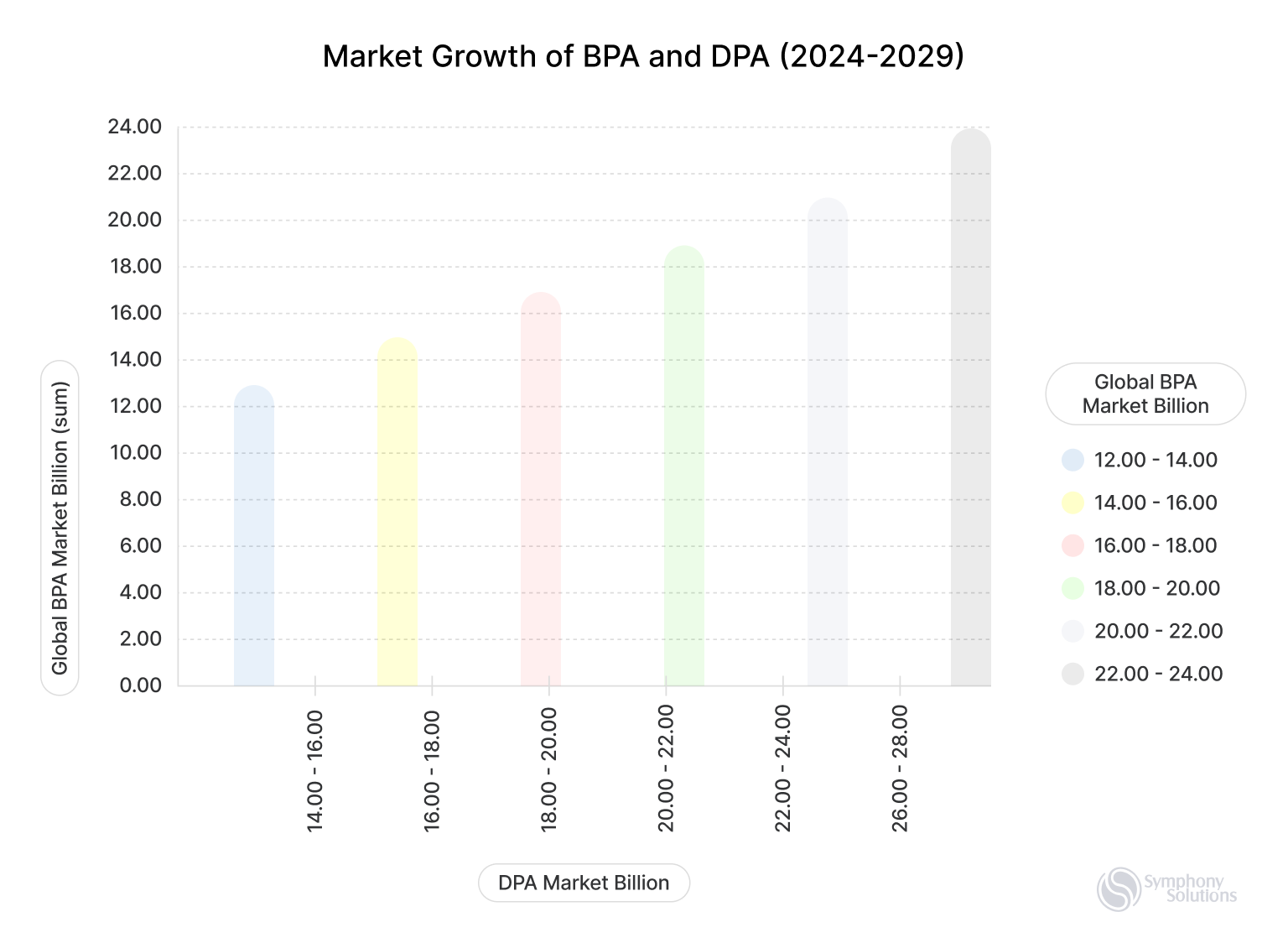
    Personalized promotions. While this might be challenging to pull off, it’s a good idea for sportsbook operators to try and implement personalized and dynamic promotions – taking into account user betting history and preferences. For example, a bettor who likes to wager on a particular team and does so often could be given occasional enhanced odds or special promotions, such as payout bonuses, for that team’s games. 

    While personalization alone can yield massive returns in terms of reduced churn, more conversion, and engagement, it’s not the only tool of the trade. Here are some other things sportsbooks use to boost their UX strategies. 

    image-3-Sportsbook UX-article

    Omnichannel experience 

    Once we have an intuitive experience to offer, we must ensure it is equally effective everywhere –  on every device and every platform.  

    Firstly, branding and design must stay consistent. The same visual language, tone, and interface elements -device-adapted, of course – should appear across every touchpoint. A seamless look and feel on every device will create familiarity, and familiarity builds trust.  

    Next, every platform must sync. A user who starts building a bet slip on mobile, for instance, should be able to finish it on a desktop app – or even at a physical kiosk if the sportsbook has one. Whatever the flow, it must be fluid and uninterrupted. 

    The same goes for notifications. If the odds shift on a bet placed on a desktop app, users should be able to get the update on the mobile platform, and vice versa. And if the sportsbook has a physical location, it should be integrated, too. That means things like enabling users to check in and claim exclusive promotions for visiting, tying their online and offline play together, etc. 

    Finally, consistency doesn’t mean uniformity. The sportsbook should always feel like the same brand, but the experience must fit the device. As a general suggestion, a mobile app should focus on speed – quick bets, live updates, and instant action. And a desktop platform should lean into depth – detailed analysis, research tools, and broader insights.  

    Same quality, and tailored execution. 

    User Journey Simplification 

    A smooth, frictionless betting process keeps users engaged.  

    Firstly, registration and verification should be fast and hassle-free. Balancing speed with security is an art, but it is crucial, considering that 67% of users abandon forms forever if they encounter any complications. 

    KYC and AML compliance can’t be skipped, but it’s important that the number of required fields on the sign-up form is reduced to the essential minimum. If manual verification can’t be avoided (uploading an ID, for example), there should be clear instructions within the upload section of the registration flow on how to complete it fast. Also, ensure your platform supports multiple file formats. Additionally, look into applying automation (OCR, AI-powered document analysis) and streamlined biometric verification (facial recognition, fingerprint scanning) in areas where they could accelerate the registration and subsequent verification processes. 

    Navigation within the apps must be clear and intuitive. A logical structure, easy-to-reach menus, and a strong search function are essential.  

    The betting process itself should be seamless as well. That’s why many sportsbooks have one-tap betting and pre-filled slips features, and simplified bet confirmation. 

    Next is payment simplicity and flexibility. If a sportsbook doesn’t provide options in terms of payments and withdrawals, users will find one that does. To accommodate the bettors, ensure your platforms support credit and debit cards, e-wallets, and maybe even crypto payments. Again, try to strip the associated processes of any unnecessary steps.  

    The information you give the bettors must be crystal clear. Odds, stats, bet details, withdrawal times, tax info – it’s best to present it all in a natural language format that even newbies can understand. However, if experienced users want to read policies in full or get access to more granular analysis, they should have the option to do so.  

    Live Betting 

    Pay special attention to live betting features. Incorporate various graphical elements to simplify this dynamic and intense experience as much as possible. Here are some of the tools you can use: 

    • Real-time odds change. Flashing odds or other visual cues help display odd changes quickly, helping bettors react fast. 
    • In-play stats. Live scores, stats, and entire games can be represented with simplified graphics. Features like ball tracking and real-time player performance data can give bettors better insights on how to bet, making the experience even more immersive. 
    • Live streaming integration. Live betting can be massively improved when a sportsbook integrates live game streaming so that people can watch and place wagers at the same time. 

    Consider putting all these features in a separate section – the live-betting area of the app, through which in-play markets and all the relevant data are easily accessible. 

    Community and Competition 

    Another crucial part of UX design is adding elements of competition and social integration. They can deepen user involvement and give players a sense of belonging. These features turn betting into a form of group entertainment. Here’s what we mean: 

    • Challenges and missions. Give players personalized betting challenges and reward them with badges and bonuses. This makes betting more gaming-like. The tasks could be varied: wagering on specific markets, building winning streaks, taking part in tournaments, etc. 
    • Social betting features. This borrows from social media engagement principles. If a user can share bets with friends, make new acquaintances and talk about upcoming events on the platform, this makes the sportsbook experience that much more enjoyable for them. Furthermore, you can add the option to follow and copy-bet top players, so that users can learn and perfect their betting strategies.  
    • Competitions. Leaderboards, tournaments, and betting contests all contribute to improving user experience. Seeing their name moving up in the leaderboard, on top of taking profit, adds a whole entire dopamine rush for the bettor. On the other hand, if a wager doesn’t pan out, players can find consolation in knowing they’re still on a list of successful players.  

    Weaving Seamless Agent and Voice Betting Features into UX Design 

    We’ve been covering the transformational powers of AI agents for quite some time. And we speak from experience: Symphony Solutions’ BetHarmony is a perfect example of how sportsbook and online casino workflows can be completely reshaped and optimized by AI – to the point where traditional processes and operations that normally take hours to complete can be reduced to mere seconds. 

    traditional chatbot vs voice-first navigation

    As companies across industries prepare for AI agents becoming omnipresent and, subsequently, users becoming more demanding of UX simplicity, sportsbook operators should start working to make their platforms agent-optimized. One particular area we recommend they focus on is voice optimization. Here are some high-level suggestions. 

    Voice-First Navigation 

    This is the foundation of a good voice-controlled sportsbook experience. It’s about making betting as natural as talking to a friend. 

    • Implement the most advanced NLP tools to enable intuitive bet placements. The system needs to understand variations in how people phrase bets. Instead of requiring rigid syntax, it should recognize that “Bet fifty bucks on the Lakers,” “Put 50 dollars on the Lakers to win,” or “I want to bet $50 on the Lakers winning” all have exactly the same intent. The models or tools you use for this – custom or ready-made – should be advanced in NLP in general, as well as extensively trained on betting terminology. 
    • Enable quick voice commands. Users should be able to quickly and easily place common bets or request frequently needed info without navigating menus. Allow them to set voice-activated “speed dials,” such as “Place $50 on the Lakers to win” or “Show me NBA odds,” which would function as shortcuts to the most common actions triggered when the agent hears certain keywords. 
    • Support conversational bet modifications and confirmations. If a bettor suddenly changes their mind or wants to adjust stakes, they should be able to do that with simple voice commands like “Change that to $75” or “Hold on, I want to bet on the spread instead.” Additionally, the platform should provide confirmations to avoid accidental bets: “Okay, you’re placing $75 on the Lakers to win. Is that correct?” 
    • Provide fallback options like “Did you mean X or Y?” This is to prevent misinterpretation. If the agent is unsure of what the user said, it should offer suggestions. “Did you mean the Lakers or the Clippers?” This can prevent a lot of frustration. 

    Personalized AI Recommendations 

    AI agents can help bettors be more informed and hone their skills. Here’s how you facilitate this: 

    • Enable AI bet suggestions based on player habits and preferences. Analyzing past bets, favorite teams, and betting styles allows the AI to offer relevant suggestions, like this: “Based on your past wagers, you might be interested in the over/under for tonight’s game.” This adds value and can introduce users to new betting opportunities. 
    • Provide real-time odds updates via voice notifications. Odds fluctuate constantly. AI agents can proactively alert users about changes in odds for their favorite teams or upcoming events. “The odds on the Cowboys just shifted to -7.5.” 
    • Offer dynamic betting insights and AI-driven predictions. The platform can provide insights that might not be immediately obvious. “Our model suggests the highest probability bet for tonight’s game is…” These can be extremely valuable, as they enable even newbie bettors to apply detailed analysis and place bets more thoughtfully. 

    Hands-Free Multi-Tasking 

    One of the biggest advantages of voice interaction is the ability to do other things simultaneously. Sportsbooks should capitalize on this; supported voice commands should extend far beyond the betting process. 

    • Allow live updates and scores via voice responses. Users should be able to stay updated on games while cooking, driving, or doing other tasks. “What’s the score of the Lakers game?” should give back a quick and accurate response. 
    • Integrate with smart devices (Alexa, Google Assistant, Siri). This is how you expand the reach of voice betting and allow users to manage their bets from anywhere with a smart device. 
    • Support voice-activated bankroll tracking and bet history access. Bettors should also be able to easily check their account balance and review past bets using voice commands. “What’s my current balance?” or “Go through all my bets from last week” should be readily available. 

    Summing Up 

    As iGaming popularity continues to soar – the overall market value is projected to reach $125.6 billion by 2027 – the competition in the space also intensifies. Online casinos and sportsbooks should, therefore, focus on differentiating themselves and leveraging next-gen functionalities brought about by the latest tech. 

    Smooth UX design is one of the ways to stand out. If sportsbook operators implement the suggestions discussed in this article, they can already form the basis for a strong competitive edge. If they also optimize their platforms for broad AI adoption, their market position could become untouchable. 

    Symphony Solutions has vast expertise in both iGaming development and AI agent implementation, exemplified by our sophisticated Harmony and BetHarmony platforms, along with a plethora of other successful iGaming projects. 

    If you want your sportsbook UX to be irresistible, we’d gladly apply all our vast experience to help you. Contact us right now, and let’s create something memorable.

  • How Symphony Built an AI Culture That Employees Love 

    How Symphony Built an AI Culture That Employees Love 

    With artificial intelligence (AI) taking center stage and reshaping how we work, every company is asking: how do we implement AI tools in our processes? At Symphony Solutions, our approach is different. AI isn’t just a tool—it’s a fundamental part of who we are.  

    While others are still experimenting with AI, we’ve built a robust framework for harnessing its full potential across every facet of our business. For nearly a decade, AI has been the secret sauce behind our exponential growth, shaping how we approach everything from operational efficiency to customer experience. We’ve applied this technology not only to optimize internal workflows and reduce costs but also to create cutting-edge solutions, for instance BetHarmony and Harmony; AI Agents that significantly improve our clients’ success.  

    This year, we took our commitment a step further by hosting the AI Olympics, a company-wide event designed to showcase the true potential of AI through creativity, collaboration, and technical brilliance. The AI Olympics united Symphians from around the world, giving them the platform to explore new AI tools, solve complex challenges, and showcase their talents. Building on the success of previous AI initiatives like the AI Challenge 1.0 and 2.0, the AI Olympics was by far our most ambitious, impactful, and inspiring AI event to date. 

    This commitment to AI starts at the very top. Theo, our founder, has long championed the use of AI in employee engagement, creating initiatives like the AI Olympics to spark creativity, collaboration, and excitement among employees. He shared these challenges on the AI Band in Viva Engage, sparking excitement and healthy competition across the company. By offering significant prizes, Theo showed just how serious we are about AI—not as a passing trend, but as something that’s part of who we are. This focus has helped us create an AI-driven culture that sets Symphony apart and keeps us ahead of the curve. 

    While earlier events, such as AI Challenge, focused on integrating and experimenting with AI tools to improve workflows, the AI Olympics took this to a whole new level by combining competition, innovation, and global collaboration. As our COO, Kseniya Kobryn, highlighted, “The AI Olympics showed us that when we bring together diverse perspectives and harness the power of AI, we can achieve extraordinary results. AI is embedded in our culture and drives our innovation. It’s transforming the way we collaborate, solve problems, and shape our future at Symphony.” 

    AI Olympics Recap: Challenges, Teams, and Big Wins 

    With 10 dynamic teams, 5 expert judges, and 5 thrilling challenges, the stage was set for a true test of AI-driven problem-solving.  

    Teams from all across the globe— representing a mix of countries (and a few fictional ones!) like Harmony Japan, Tigers of Anatolia, and Team Macedonia.—competed for a €2,500 prize pool, all while pushing their creativity and teamwork to new heights. Together, they tackled five unique challenges, split into two rounds. 

    AI Olympics-article

    ROUND 1 
    The first round kicked off with excitement, bringing a mix of creativity, technical skill, and real-world problem-solving. Our Symphians were ready to tackle the challenges head-on, each showing their unique strengths across three events: 

    1. Symphony of Innovation: AI Music Contest 
      Our teams used AI to compose original music, blending technology and creativity to explore new possibilities in sound and composition. 
    2. AI for Good: Community Impact Challenge 
      Teams put AI to work solving real-world issues, crafting solutions designed to make a meaningful difference and create a lasting impact on society. 
    3. Real or Fake?: AI Photo Challenge 
      This challenge tested how far AI can go in generating lifelike images. Our teams created AI-driven photos so realistic, you’d have to look twice to tell the difference. 

    ROUND 2 
    As the competition moved into the second and final round, the challenges got tougher, but our Symphians didn’t back down. This round was all about pushing the limits of innovation, showcasing the depth of our talent and collaboration: 

    1. Innovation Showdown: Technical AI Challenge 
      Our teams took on advanced AI problems, using their technical expertise to develop cutting-edge solutions that went beyond what’s possible today. 
    2. Digital Showcase: Multicultural Presentation 
      In this final challenge, our teams highlighted their ideas through multicultural digital presentations, demonstrating how diverse perspectives fuel innovation and lead to game-changing solutions. 

    Winners of the AI Olympics 

    Harmony – Japan: Round 1 Winners of Digital Showcase 

    harmony-Japan

    In Round 1, Team Harmony Japan took home the victory for the Digital Showcase challenge. Their presentation highlighted the multicultural aspect of their idea, seamlessly blending technology with a global perspective. The team’s ability to communicate their innovative ideas with a multicultural touch demonstrated the true spirit of collaboration and creativity that Symphony champions. 

    Creators – Ukraine: Round 2 Winners of Innovation Showdown 

    Creators-Ukraine

    Team Creators Ukraine’s victory in the Symphony of Innovation AI Music Contest was nothing short of impressive, especially considering their team consisted mostly of designers rather than technical experts. Despite this, their creativity and ability to leverage AI for music composition set them apart, delivering a unique piece that captured the essence of both art and technology. Their win showcased the power of diverse skill sets working together, proving that innovation can come from unexpected places. You can check out the playlist here

    Macedonia – Round 1 Winner: Real or Fake? AI Photo Challenge 

    Macedonia

    Team Macedonia took home the win with their ability to create AI-generated images so lifelike, it was hard to tell them apart from real photographs. The team, composed of talented Symphians from various backgrounds, showcased their impressive skills in AI image manipulation. Their victory highlighted the power of AI to blur the lines between reality and virtual creation, proving that even non-technical teams could push the boundaries of AI-driven design and creativity. 

    Macedonia – Round 2 Winner: AI for Good: Community Impact Challenge 

    Macedonia 2

    Macedonia’s remarkable second win was a true testament to the team’s innovative thinking and dedication to using AI for positive change. In this round, the team focused on crafting AI solutions that not only pushed the boundaries of technology but also addressed real-world challenges. Their work was not just technical; it demonstrated how AI can be harnessed to make a meaningful impact in society, amplifying the culture of social responsibility that defines Symphony.  

    Creators – Ukraine: Round 2 Winner – Innovation Showdown: Technical AI Challenge 

    Ukraine 2

    Creators – Ukraine pulled off an impressive second win in the AI Olympics, and what’s even more remarkable is that they didn’t have any technical experts on the team. Made up mostly of designers and marketers, they showed just how much creativity and collaboration can push the limits of AI. Their ability to tackle a technical challenge and deliver strong solutions was a real standout, proving that you don’t always need a tech background to succeed in this space. This win highlighted the power of diverse skills and teamwork at Symphony, reinforcing how we bring out the best in each other. 

    Final AI Olympics Winners 

    Gold: Team Macedonia & Creators Ukraine

    gold-team-winners

    The Gold Medal was a well-deserved tie between Team Macedonia and Creators Ukraine, who both impressed with their outstanding creativity and innovation. Team Macedonia’s victory came from their exceptional skills in the AI Photo Challenge and their continued excellence in AI for Good, where they created impactful solutions for social causes. Meanwhile, Creators Ukraine stood out in the Technical AI Challenge, impressing judges with their ability to tackle complex AI problems and develop cutting-edge solutions. This shared victory not only highlighted their technical prowess but also their ability to collaborate across disciplines to produce exceptional results. 

    Silver: Harmony Japan

    Taking home the Silver Medal, Harmony Japan delivered an impressive performance across multiple challenges, including a standout win in the Digital Showcase: Multicultural Presentation. Their blend of technical skill and cultural creativity helped them create engaging, visually stunning presentations that celebrated diversity and innovation. Harmony Japan’s approach to integrating cultural perspectives into their solutions demonstrated the power of collaboration, making them a formidable team and a well-deserved silver medalist. 

    Bronze: ACWEEWDSBHT – A Country Where Everyone Wants To Do Something, But Doesn’t Have The Time For It 

    bronze-team-winner

    The Bronze Medal went to ACWEEWDSBHT, a team known for their humor and creativity. Despite the playful nature of their team name, they approached each challenge with a serious commitment to excellence, particularly excelling in the AI Photo Challenge. Their ability to create lifelike AI-generated images that left even the judges guessing between real and fake was a major highlight. The team’s blend of creativity, humor, and technical skill earned them a well-deserved place on the podium, proving that innovation can come from anywhere, even from a fictional country! 

    Voices from the Frontlines: Participant Perspectives 

    The heart of the AI Olympics was the participants—Symphonians who brought unique perspectives, creativity, and energy to every challenge. Here are some of their reflections: 

    Marta quote
    oleksandr-quote
    kateryna quote
    oleh-quote

    These voices capture what made the AI Olympics truly special—a mix of collaboration, creativity, and personal growth that left a lasting impact on everyone involved. 

    Behind the Scenes with the Judges of the AI Olympics 

    Our five judges weren’t just there to hand out awards; they were in the trenches, diving deep into each submission, unearthing brilliance (and occasionally scratching their heads over some truly wild ideas). 

    Iryna Gavryliuk, our Delivery Center Director, summed it up best when she said, “Some of the solutions weren’t just techy—they were downright transformative. The depth and relevance of what we saw showed how AI is tackling real-world problems in ways we never imagined.” Clearly, this was more than just an opportunity to show off some cool AI tricks—it was a moment for Symphonians to prove that creativity and AI could work together to solve some of the world’s trickiest challenges. 

    Meanwhile, Vitali Tymashkov, our resident tech genius and Head of QA, had this to say: “A few of these ideas were skating on the cutting edge of AI. Sure, they were prototypes, but some of the concepts were close enough to the real thing that I’d want to start using them tomorrow.” We’re not just talking about tinkering around with AI tools; these submissions were pushing the limits of what AI can do today—and maybe even tomorrow. 

    The judges weren’t just critiquing how “cool” the AI was—they were looking for solutions that could stand up in the real world. It wasn’t about showing off for the sake of showing off; it was about building something that could move the needle—whether that meant improving operational efficiency or solving social challenges. 

    Voices from Symphony’s Leaders 

    Symphony’s leadership was instrumental in driving the hackathon’s success. 

    Why We Host AI Events at Symphony 

    The AI Olympics highlighted what’s possible when innovation meets collaboration: 

    At our organization, we have an AI culture that’s deeply ingrained in our identity. Our commitment to integrating this technology into everything we do goes far beyond just implementation; it’s about encouraging continuous learning, experimentation, and collaboration. Here’s why hosting AI events like the AI Olympics is integral to our success: 

    Drive Innovation Through Collaboration 

    At Symphony Solutions, using AI for the culture means embedding it into every aspect of our work environment—encouraging creativity and collaboration. Events like the AI Olympics break down silos and bring together diverse perspectives to solve complex challenges, helping us generate groundbreaking ideas and solutions. 

    Foster a Culture of Continuous Learning 

    AI in the workplace is constantly evolving, and so are we. By hosting AI events, we create opportunities for Symphonians to explore new tools, stay on top of the latest trends, and continuously enhance their skills. This fosters a growth mindset and keeps us at the cutting edge of technology. 

    Improve Diversity and Inclusion 

    The AI Olympics proved that innovation thrives in diverse teams. With people from different backgrounds, skill sets, and locations coming together, we see firsthand how the mix of creativity and technical expertise leads to impressive results. Diversity isn’t just a value; it’s a catalyst for innovation. 

    Inspire Creativity and Experimentation 

    AI events give our teams the freedom to experiment and take risks, fostering a sense of adventure. It’s about creating a space where Symphonians feel encouraged to think outside the box, fail fast, and come up with ideas that challenge the status quo. 

    Strengthen AI Culture and Identity 

    Hosting these events reinforces AI as a core part of our DNA. It’s not just about solving problems; it’s about shaping who we are as a company. AI employee engagement events bring our people together, unify us around a common goal, and demonstrate how AI can drive both personal and professional growth at Symphony Solutions. 

    How Symphony Solutions Built an AI-Driven Culture 

    The AI Olympics was a huge step in embedding AI into Symphony’s culture, but it’s just one piece of a larger puzzle. We’re making sure AI is not just a one-time focus, but a core part of our daily operations. Here’s how we’re ensuring AI’s ongoing presence: 

    • Ongoing Learning: We’re building communities within Symphony where Symphonians can share AI tips, explore new tools, and collaborate across teams. By encouraging continuous learning, we’re helping everyone stay up-to-date with the latest AI developments and apply them in their work. 
    • Encouraging Experimentation: Events like the AI Olympics showcased the power of creative thinking. We want that same spirit of experimentation to be part of our everyday work. By giving teams the freedom to explore new ideas, we foster a culture of innovation that drives us forward. 
    • Fostering Inclusion: The diversity in our teams during the AI Olympics showed us just how powerful different perspectives can be. We’re committed to maintaining this inclusive spirit in all our AI initiatives, ensuring that diverse voices and ideas are integral to our success. 

    With these efforts, we’re embedding AI into Symphony’s DNA, ensuring it fuels innovation, collaboration, and continuous growth. 

    Looking Ahead: The Future of AI at Symphony Solutions 

    The AI Olympics marked a defining milestone in Symphony’s eight-year journey with AI. . It demonstrated that AI is not a side project or a passing trend here; it’s part of who we are and how we operate. From groundbreaking solutions to the way we work together, the event proved that when Symphonians come together, there’s no limit to what we can achieve.  

    Looking ahead, we’re building on the momentum from the AI Olympics. As we continue to expand AI training and foster innovation across every team, the future of Symphony Solutions is becoming clearer. AI will keep pushing us to new heights, and we’re not just following the wave—we’re leading it.  

    Theo Schnitfink, our Founder, put it perfectly: “The AI Olympics marked a turning point for us. It showed that we’re not just adopting AI—we’re using it to reshape the future of Symphony. It’s embedded in everything we do and drives us forward.” And that’s what we’re committed to—pushing the boundaries of what’s possible with AI, continuing to innovate, and setting the pace for what’s next. The future is ours to shape, and Symphony is leading the charge. 

    Stay tuned for what’s next in the AI journey at Symphony Solutions. The future is already here, and we’re ready to lead the way. 

    Curious about what’s next or want to be part of it? Explore our projects, connect with us, or join our growing team. 

  • Generative BI: Or How Generative AI Changes Business Intelligence

    Generative BI: Or How Generative AI Changes Business Intelligence

    GenAI democratizes tech and access to information. New open-source models, like DeepSeek R1, could democratize GenAI itself. What does this mean for companies? Their data science teams will finally run models locally. Even small firms will be able to afford it since there’s no longer a need to spend gazillions on GPUs. The impact on analytical functions – BI in particular – could be huge.

    Ai protentional impact in Global economy

    This article covers GenBI: the new, rapidly growing practice of using generative AI tools in business intelligence. We’ll also look at where AI tech is heading, the biggest trends to watch, and how it all plays into changing the work of analytics experts across industries.

    Let’s start with the sector overview.

    The Promise of Generative Artificial Intelligence

    The U.S.-China LLM drama has once again spiked global interest in generative AI. But it’s not like people were forgetting about it. Way before DeepSeek flooded the headlines, GenAI’s economic potential was pegged at 2.6 to 4.4 trillion annually. That’s a staggering 15-40% boost to AI and analytics value. Once companies operationalize the algorithms into their workflows, they’re expected to see 60-70% productivity gains.

    GenAI was and remains the key trend in the AI space. However, there are also quite a few emergent developments within the subsector that might become more or less mainstream in 2025. Here are some of them:

    Agentic AI, which we’ve covered in detail, keeps rising. People are on board with agents’ utility, and big names continue to throw their hats into the ring. Interest, advertising, and adoption continue to grow.

    Inference-time compute models are also gaining traction and showing promise. What are they? Inference-time compute just means giving the trained AI more time and energy to think before responding. It’s a shift in how models are made smarter.

    While the bulk of compute resources were traditionally allocated to the training phase, algorithms can now also be enhanced during inference – the stage when an LLM actually interacts with people. The logic is simple: giving the model the possibility to mull over problems and try different outputs before replying will make its predictions more accurate. Combined with traditional methods, this new approach could lead to significantly smarter models.

    Another logical trend: even bigger LLMs. This is a safe bet, given the history of transformer evolution. After the Stargate announcement, we’re waiting to see even crazier sums thrown into AI model training and expansion. If current frontier algorithms like GPT-4 have about 1-2 trillion parameters, we expect the next generation to have upwards of 50 or even 100 trillion – especially since the precedent has already been set.

    On the flip side, smaller, distilled algorithms are also likely to receive recognition. As seen with R1, they can quite consistently rival the big dogs in specialized tasks.

    The takeaway: generative AI models are getting better, and adoption will rise. For use cases like BI, this means even small companies that had little to no analytical capabilities will now have the chance to utilize data to the max and unlock AI-enabled, data-driven insights at a fraction of the cost and without substantial effort.

    Here’s where we come to something called GenBI.

    What is Generative Business Intelligence?

    While traditional BI focuses on analyzing existing data to understand the past and predict the future, GenBI uses LLMs’ power to create new content, insights, and even solutions. It goes beyond reporting and forecasting to actively produce things like:

    • Synthetic data. GenBI can create realistic artificial data objects and datasets that can be used for testing, training, and exploring “what-if” scenarios – without compromising sensitive real-world information.
    • Automated narratives and explanations. Instead of just presenting charts and graphs, GenBI can generate natural language explanations of the data, summarizing key findings and trends in an easy-to-understand way.
    • Personalized dashboards and reports. GenBI can tailor how information is presented to individual LOB users, emphasizing parts most relevant to their specific roles and needs.
    • Code generation for data analysis. While this use case still requires caution and careful supervision, GenBI can already help automate parts of the data analysis process by generating code (e.g., SQL queries, Python scripts) to perform specific tasks.

    GenBI Types

    Now, let’s discuss how, in general, these capabilities help elevate the descriptive, predictive, and prescriptive business intelligence processes.

    Gen-Bi-Types

    Descriptive BI

    This BI summarizes past and present data to show what happened and what’s currently happening. Reports, dashboards, and visualizations that track KPIs, identify trends, and compare performance. It answers “What happened?” and informs immediate actions. Here, generative AI can automatically create narratives and explanations of the data. So, instead of just seeing a chart showing, say, a sales dip, the LOB user gets a written summary explaining the details and likely reasons for the dip, all based on data.

    Predictive BI

    This is where statistical and ML models are used to forecast future outcomes. By analyzing patterns in historical data, the algorithms can predict potential events like customer churn or sales. They try to answer “What might happen?” and enable proactive decisions. In this case, GenBI can help by creating synthetic data (when the existing datasets aren’t sufficient to train an effective predictive model) and generating code (for preprocessing, training, or evaluations, etc.), significantly expediting the entire ML development lifecycle. 

    Prescriptive BI

    This is the most advanced type of BI, where tools are used to determine optimal actions to achieve desired outcomes. Using various types of simulations, models analyze scenarios and suggest the best course of action. They try to answer the question, “What should we do?” and GenBI can help by generating suggestions. For example, after a predictive model forecasts a sales drop, GenBI could produce several potential solutions, such as launching limited-time discounts or bundling several products together, along with explanations of their likely impact. It could even generate marketing copy for a new promotion designed to counteract the predicted sales decline.

    Most Common GenBI Use Cases

    Let’s now look at how GenBI is used across BI and analytics. We won’t try to cover every possible application – that would take an entire book – but we’ll talk about the main ones that can make the biggest impact.

    Data analysis and mining

    Data analysis and mining are definitely among the top use cases. According to research from Slalom, 52% of GenBI-using organizations implement these capabilities. Analysts can now use casual language to create queries, explore datasets, automate pattern detection, and generate insights. Then, in the same tone, they can ask follow-up questions based on initial findings until they get to the exact specific solutions they’re after.

    Suppose you’re running a retail company, and your BI experts use a model to understand why online sales of a product dropped last month. Instead of writing complex SQL queries for hours, they can simply ask the GenAI system, “Why were the sales of the ‘Red Funky Sweater’ so low last month?” The AI then scans sales data, traffic, social media sentiment, and competitor pricing and replies, “Sales dropped due to a competitor’s discount, negative reviews on sizing, and less website traffic from social media campaigns.” 

    Forecasting

    With GenBI, complex predictive models can be turned into plain language. This democratizes predictive analytics and allows LOB users to get insights without technical expertise.

    Imagine a restaurant that wants to predict demand for a new menu item. They turn to GenAI, which looks at historical sales, weather forecasts, and local events, then gives a plain-language forecast: “Demand for the ‘Supa-Dupa Spicy Sandwich’ could be very high this football weekend, especially Saturday afternoon. Afterward, it recommends increasing the typical stock by 20% and scheduling more staff.

    Automated reporting and visualization

    LOB users can now generate full dashboards with natural language prompts. And once the generative model gets to know them, it can even automatically recommend relevant reports based on their role.

    For instance, a sales manager needs a weekly report on regional performance. They type, “Generate a sales report for the Northeast region for the past week, showing sales by category and top-performing reps.” GenBI quickly creates a professional, slick-looking dashboard with charts, graphs, and key metrics.

    So, all in all, research suggests that generative AI is transforming BI through:

    • Accelerated insight generation
    • Increased accessibility for non-technical users
    • Automation of routine analytical tasks
    • Enhanced depth of analysis
    • Better integration of diverse data sources

    How Exactly Does Generative BI Work?

    Now that we understand the uses, at least on a high level, let’s talk about the inner workings of these tools and go through the entire process. It all starts with user input. Let’s say you ask a question or ask for a data visualization of some sort. No need to write SQL queries, of course, everything is in plain language. So, you go, “Show me a bar chart showing ROI for each of our recent campaigns, segmented by region.” 

    Then, the GenBI system activates its NLP capabilities to derive your intent from this sentence. It breaks the request down to identify its key components, such as entities and conditions. To be more precise, it applies something known as tokenization and entity recognition – tech speak for splitting the text into individual words and identifying named entities. And this enables the AI to understand your request in the context of available data.

    Then, the tool translates your prompt into a structured search or database query, depending on where the needed data is stored and its format. For structured environments, it might create an SQL query. If the data is unstructured, it may use vector search or NoSQL techniques. The tool can also pull and combine data from multiple sources, including custom internal reporting tools and enterprise platforms like SAP or Salesforce if that’s what the task requires.

    When that’s done, an AI-powered analytics engine has to process the retrieved data. This might include various calculations and statistical operations such as pattern recognition, predictive modeling, and causal inference. In the end, if the model is advanced enough, it can extract highly valuable insights from the dataset, including trends, anomalies, and even factor correlations that could significantly enhance a company’s business decisions.

    Finally, the data is visualized. Given the initial request, you’ll get a slick-looking bar chart showing ROI for each campaign, segmented by region. Besides that, some additional visualizations could be added, like a map showing performance by region, as well as natural language summaries: “ROI increased by 15% in Q3 compared to Q2.”

    But that’s not all. Beyond reporting, GenBI offers recommendations and decision support based on the visualized data. For instance, if the chart reveals low ROI in a specific region, it could suggest targeted marketing campaigns to enhance performance or even point out how to fix potential issues with local distribution. Furthermore, it enables scenario planning, allowing you to explore questions like, “How would ROI be affected if we doubled the marketing budget in region Z?

    So, in broad terms, a GenBI system could be comprised of large language models that do the NLP, knowledge graphs that enable business context understanding, and AutoML that facilitates the fast creation of forecasting and anomaly detection algorithms. In addition, there could be elements like semantic search and vector databases, which enhance retrieval from unstructured data. Finally, cloud technologies can be incorporated, too, as they simplify the integration with enterprise systems.

    The Challenges of Generative BI Implementation

    The adoption of the technology is nascent. So, despite all the promise, there are challenges as well. Data quality is one of the biggest. 

    As we’ve stressed before, AI models are only as good as the data they’ve been fed, and GenBI is no exception. Fragmented, inconsistent, or incomplete datasets can lead the tool to inaccurate, vague, and sometimes plain wrong conclusions. However, proper data governance is hard and requires specific skills, which many companies still lack.

    Another hurdle is integrating GenBI with existing systems. Many organizations still rely on a mix of legacy databases, cloud platforms, and third-party applications, which could severely complicate data extraction and synchronization for a generative BI tool. To fix this, extensive customization, API development, and ongoing infrastructure maintenance may be required.

    Security and compliance are also major concerns. If a GenBI system is entrusted with large amounts of sensitive information, the company must ensure strict access controls, encryption mechanisms, and audit trails are in place. Furthermore, output verification procedures need to be implemented so that potential misinformation – GenAI is notoriously prone to hallucinating – doesn’t lead to costly fines or damage to trust.

    Last but not least, scalability and performance bottlenecks could render GenBI tools ineffective if the infrastructure isn’t optimized. This is particularly true for enterprises handling massive datasets. Processing complex queries across distributed systems requires significant computational power. And, even if a company has the resources, the response times could be too long for the system to be useful. To be valuable, GenBI must evolve and be able to handle growing volumes of data without sacrificing speed.

    Final words

    GenBI tools open many possibilities but should be approached with caution, especially by organizations operating in heavily regulated industries. To fully realize their benefits – empowering every link of the analytics chain – organizations must establish robust data infrastructures, caching mechanisms, effective indexing strategies, and more.

    The preparation is thorough, but it is essential for both security and smooth performance as usage scales. At Symphony Solutions, we cover every facet of the AI/ML development lifecycle and have extensive experience building GenAI-based tools. If you’re looking to enhance your business intelligence with a more efficient, data-driven approach, contact us now – we’ll help you get there fast.

  • Generative AI for Data Analytics: Let’s Gauge the Impact

    Generative AI for Data Analytics: Let’s Gauge the Impact

    AI runs the gamut of practicality: utterly useless in some areas, bordering on magic in others. As a prominent software company, it’s our job to distinguish between the two. We also like to inform our audience – clients, prospects, readers, and those who’ve stumbled here looking for actual symphony concerts – about the latest, genuinely promising AI trends. One of these is using generative AI for data analytics (DA). These pre-trained models can finally make DA accessible to regular people, something organizations have grappled with for years. 

    gen ai usage in data analytics

    Before we explain how GenAI can give you better data insights, let’s rehash some general definitions. 

    What Even Is Data Analytics and BI? 

    In short, both terms refer to the processes companies use to collect, prepare, analyze, and transform data to enable information-driven decision-making. BI focuses on studying what is going on now, while DA explores why certain things are happening and uses stats from the past to predict what can happen next. 

    There are multiple personas involved in these proceses, but for simplicity’s sake, we’ll narrow them down to three here. 

    Data stewards and data engineers. These professionals take the first lap in this relay race. They collect, clean, transform, structure, and augment datasets, preparing them for analysis down the line. 

    Analysts. Next, the baton is handed to the analytics experts. On the DA side, their role mainly revolves around querying and interpreting datasets. Contextualizing the data at hand. In BI, the focus is on turning data into graphs and dashboards and answering specific ad hoc questions from line-of-business (LOB) users. Good DA and BI experts deeply understand the needs of the LOB users they work with and give them highly detailed yet comprehensible reports. 

    LOB users. Finally, we come to the line-of-business users, the consumers. They’re the ones for whom all the data work was done. They review reports and dashboards, figuring out how to apply new insights to improve operations. Sometimes, they may tinker with the data, adjust visualizations, tweak dashboards, add filters, slice and dice it, and so on. But mostly, they just interpret the insights that came pre-chewed for them. 

    Here’s the key point: despite years of vendors offering no-code, self-serve analytics tools, only 25–30% of business users actually use data analytics to improve decision-making, according to different estimations. This is true across industries. And this figure hasn’t changed in 7 years. 

    Why Has the Adoption of Data Analytics Tools Been So Slow? 

    One big barrier has always been the complexity of data prep. It’s tedious, manual, and demands skills many companies lack – and often don’t care enough to acquire. 

    Another challenge lies in the tools themselves, their unintuitiveness. While there are typically some solid features offered to simplify data analysis, users can’t really leverage them fully unless they have an intricate understanding of business logic, metric and KPI definitions, and other technical details of the task. Which kind of defeats the purpose. 

    Most users aren’t particularly interested in these things. What they want are clear recommendations or actionable insights – without needing to tweak dashboards or reshape data to draw conclusions. 

    Finally, there’s the gap. The space between raw data and real insights is just too wide. By the time data makes it to LOB users, its relevance is often gone. 

    The good news is that AI and GenAI have the potential to simplify and optimize analytics experiences for each of those roles. And that can happen fast. 

    Generative AI for Data Analytics 

    Let’s first cover how generative models specifically can streamline what is being done in each phase of the analytics process, role by role. 

    Engineering Phase 

    GenAI can massively simplify data preparation. It generates code – snippets or full scripts – for routine tasks like cleaning, transforming, and loading data. It optimizes pipelines by spotting bottlenecks and recommending fixes – advising where applying parallel processing, caching, or partitioning would make the most sense. 

    It also enables automated data profiling. Models can analyze datasets at lightning speed, and they can identify key data object characteristics like no human could.  As far as dataset augmentation goes, GenAI can pick up patterns in your data and generate as many realistic, tailored data variants as needed. 

    Analysis Phase 

    At the analysis stage, GenAI enhances report authoring. It creates SQL queries, dashboards, visualizations, and, again, code. Data analysts can, therefore, use it to automate hypothesis generation, for feature engineering, and even to get suggestions on the right statistical or ML models for the task. 

    BI engineers and those involved in descriptive and diagnostic analytics can gain from GenAI’s ability to automate report customization. Models can suggest narratives to improve data storytelling and uncover non-obvious, predictive insights that might otherwise go unnoticed. 

    Consumption Phase 

    End-users – the consumers of analysis – are arguably the biggest winners here. GenAI can empower them, finally, to interact with data in plain language. 

    Here’s how: 

    • With a simple prompt, GenAI can determine which data sources should be visited, which queries to perform, and even what type of statistical analysis fits the specific problem. It can do all that and then return a plain-language answer. 
    • If the output isn’t perfect on the first try, the user can refine it on the spot. And they can keep changing the answer till it’s completely tailored to their particular requirements and business role.  
       

    So, while there is going to be an impact on each part of the process, GenAI will likely change the game the most for LOB users. It is democratizing data analytics. 

    Types of AI Analytics 

    types of ai analytics

    Let’s zoom out from GenAI and talk about what AI does for different types of analytics in general. 

    Descriptive 

    This is about understanding past performance. Let’s suppose we run a manufacturing plant. We can feed many types of data to the AI: production data, sensor readings, employee feedback, client purchase records, and market trends. The AI will then help us figure out which production lines are the most effective during specific seasons. Then, we’ll be able to use the insights to effectively adjust inventory management, optimize schedules, and more. 

    Diagnostic 

    This type of analysis digs into causes. Why did a specific event occur? In our example, AI models can analyze sensor data – temperature, vibrations, pressure readings, etc. – and help us pinpoint the causes of machine failure: wear and tear, misalignment, overheating, or other issues. It does this way faster than traditional analytics methods. 

    Predictive 

    AI excels at spotting patterns and anomalies, and when fed with the right data, it can give us accurate predictions. 
    For instance, it can help us anticipate equipment failure before it happens by picking up subtle changes in vibration that typically precede a problem. That means downtime will be avoided, and repairs will happen proactively. AI also learns from historical trends. It might forecast long-term issues, like cyclical operational slowdowns, helping our plant prepare and adjust. 

    Prescriptive 

    This is where AI provides actionable advice. It can recommend the best course of action when there’s an increased likelihood of a machine performance issue. It might suggest when to schedule maintenance, which parts to order, and even which maintenance approach to take. The suggestions will be based on urgency, staff availability, and the impact on production schedules. 

    What Platforms Do We Use for AI in Analytics? 

    When it comes to platforms for AI analytics, organizations nowadays are spoiled for choice. Let’s take a quick look at the most popular options. 

    Microsoft Azure 

    Known for its strong hybrid cloud capabilities, Azure is versatile and connects seamlessly to your existing infrastructure. If your organization already relies on Microsoft services, this is a no-brainer. Notable tools include Azure Synapse Analytics for robust data warehousing and analytics capabilities and Azure OpenAI Service and Copilot in Power BI, which offer cutting-edge AI-powered data analysis and data visualization. 

    Google Cloud Platform (GCP) 

    Google excels in Big Data and machine learning. If your business already uses Google’s ecosystem, sticking with GCP for analytics and AI is probably the easiest choice. Standout tools include AutoML, which simplifies creating custom models, and BigQuery ML, which enables the creation of machine learning systems with basic SQL tools. There’s also the Generative AI App Builder, which makes chatbot and search application development straightforward.  

    Amazon Web Services (AWS) 

    AWS is the oldest and most established cloud provider and also holds the largest market share. In the area of advanced analytics, its notable tools include Amazon SageMaker and AWS Bedrock, which simplify building and deploying advanced generative AI models. Additionally, DA experts use Amazon Forecast, which uses machine learning and generative AI to enhance forecasting accuracy. 

    IBM Cloud 

    IBM is also a key player. IBM Watson Studio offers a collaborative environment for developing AI-driven applications. It combines rich data analysis, visualization, and machine learning capabilities. The properties of IBM analytics tools are particularly valuable in heavily regulated industries like healthcare.  

    So, what platform to choose? 

    While “it depends” might sound like a cop-out, that is the answer we’d give. And we’re really not trying to be fence-sitters here. It’s just that, when working with clients on AI and analytics projects, we’ve learned that we must always account for the company’s unique circumstances when determining the technology stack. You see, most cloud and AI analytics platform providers offer similar storage and processing capabilities. Yet the performance of their proprietary AI models can vary a lot depending on which type of data is used and the ecosystem they run in. And that’s what we have to evaluate before making a choice. 

    What Skills Are Needed to Use AI and Genai for Analytics? 

    On an organizational level, the main prerequisite for using AI in any capacity – and especially analytics – is data maturity. This means your data collection processes must be seamless. Data flow should be consistent, with reliable streams and efficient ETL. 

    While the platforms we discussed above can help abstract away many of the difficulties associated with enabling AI analytics, they still require clean, well-structured data to produce valuable insights. 

    On the level of individuals, being familiar with the basics of data science and having a general understanding of data visualization would, of course, be helpful. Therefore, even businesses that are currently using generative AI tools to make analytics more accessible should not neglect to upskill business users with training sessions, workshops, etc. This will help to truly shift the analytical power within organizations from DA experts to LOB users. 

    To Conclude 

    Data analytics and BI processes may start looking very different in the coming years. Simpler, more effective, more nuanced, and finally accessible without specialized knowledge. For this to happen, though, companies must know how to integrate their legacy systems with advanced AI and GenAI platforms.  

    At Symphony Solutions, we’ve worked extensively with organizations across various sectors, helping them incorporate AI and GenAI capabilities into complex systems and infrastructures – even when they still relied on outdated tech stacks and proprietary legacy tools that didn’t fit well with modern AI frameworks. 

    Beyond that, implementing AI brings a set of unique risks, particularly around security and compliance. This is especially relevant for organizations in healthcare, finance, and other highly regulated industries where firms handle sensitive data. 

    We help companies address all these challenges. We build custom platforms with sophisticated predictive capabilities and modernize existing ones. If you’d like to level up your analytics and BI with cutting-edge AI and GenAI capabilities, contact us today. Let’s turn your data into a key asset for business growth! 

  • CSR Report 2024: Sharing to Make a Difference 

    CSR Report 2024: Sharing to Make a Difference 

    At Symphony Solutions, 2024 reminded us that the true measure of success is not only in hitting business goals, but the impact we have on the world around us. From continuing to stand with Ukraine during its hardest moments to empowering women, and helping vulnerable communities around the world, every effort this year reflected our commitment to making a meaningful difference. 

    One of the defining moments of 2024 was the drone-building workshop, where Symphonians came together with urgency and purpose, assembling nearly 10 drones in a single day for defenders on the frontlines. It wasn’t just about building drones—it was about giving hope, strength, and tangible support to those protecting their homeland.  

    Our dedication to Ukraine didn’t stop there. Through the UNBROKEN National Rehabilitation Center, we supported advanced bionic prosthetics for soldiers like Vasyl Marchyshyn, whose resilience and recovery remind us of the strength of the human spirit. Visiting the center was humbling—seeing firsthand the dedication of the professionals and the courage of the patients was unforgettable. With over 64,000 surgeries and half a million patients treated this year, the center is a true pillar of hope. Symphony Solutions is proud to stand with them, lending our support to their extraordinary mission. 

    Furthermore, we also raised money through efforts like the Generous Thursday Charity Fair and Easter Egg Workshop, providing essential resources to psychiatric hospitals and recovery programs. These weren’t just events, they were moments of unity, where Symphonians came together to prove that creativity and compassion can save lives. 

    In 2024, Distance for a Difference 3.0 reminded us of the power of collective effort. Symphonians from around the world came together to walk, run, and cycle, transforming every kilometer into hope for children with chronic illnesses. The result? A €10,000 donation to the With an Angel on a Shoulder Charity Foundation, bringing essential resources to Lviv’s Children’s Mobile Hospice. A true reflection of our commitment to making a difference. 

    Meanwhile, the SHE. Community, now in its sixth year, continued its mission of empowering women. By providing tools for leadership, financial independence, and confidence, it reinforced our belief that when individuals thrive, communities flourish. 

    Innovation was also a key theme in 2024. The AI Olympics brought together Symphonians from around the world to tackle real-world challenges using cutting-edge tools. More than just a competition, it became a celebration of creativity, collaboration, and forward-thinking—a true reflection of our culture of progress and learning. 

    These are just a few highlights of what we’ve accomplished together, and they remind us that when we act with purpose, the impact can be extraordinary. Together, we showed how small steps can lead to profound outcomes. As Valentina beautifully put it: “It’s me who says thank you. Thank you to the organizations and initiatives we were privileged to support, for the meaningful work you do and for allowing us to play a small part in causes that truly matter.” 

    Read more about the lives touched and the initiatives that defined this year in the CSR Report 2024

  • LLMs Going Beyond the Chat Window: AI Agent Examples

    LLMs Going Beyond the Chat Window: AI Agent Examples

    More often than not, articles on AI trends are just noise. The same goes for discussions about AI’s supposed growing consciousness. But now and then, AI tech comes out with a bang, forever changing how we do things. LLMs and ChatGPT are prime examples. The next technology poised to do the same is agentic AI – also called AI agents, intelligent agents, or whatever name you’ve heard for them. They are the next stage in AI’s evolution. They don’t just sound good on paper but have massive, real-world utility. They’re the first predictive tools capable of genuine reasoning, able to handle a complex task on their own. 
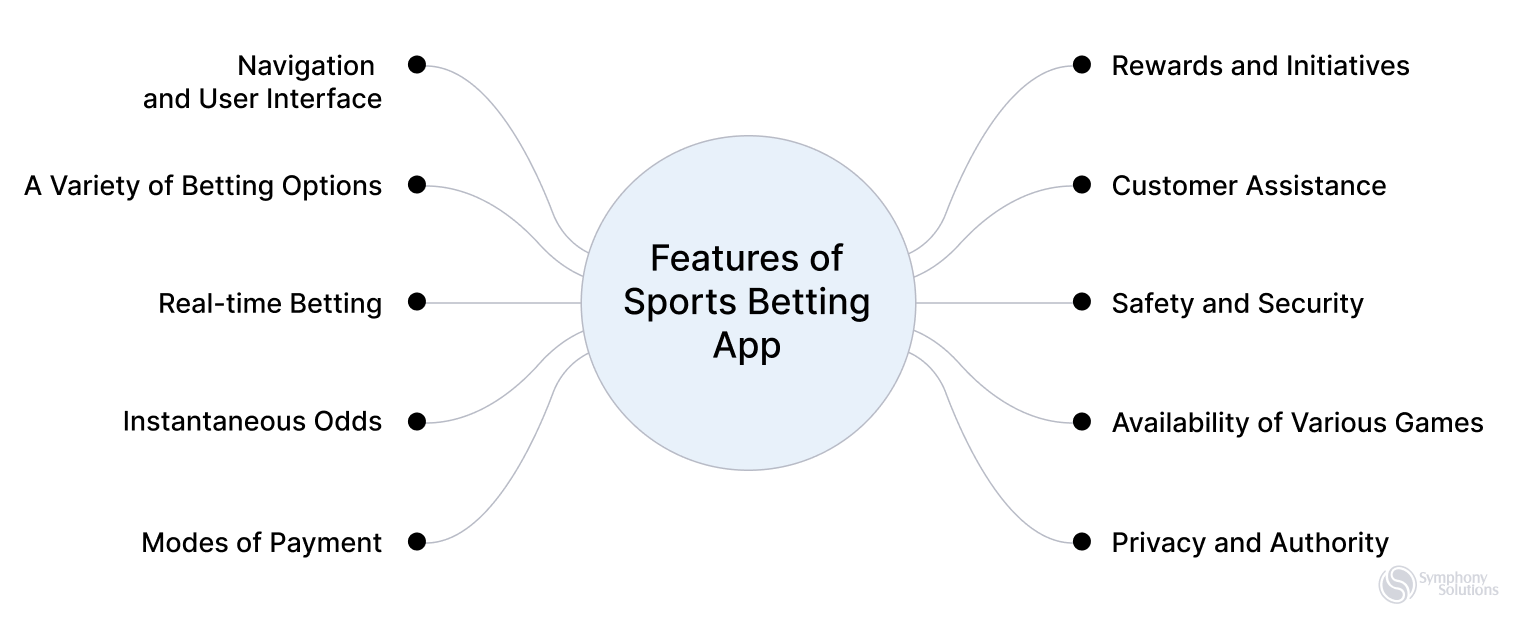
    This post explores why AI agents will dominate the tech landscape in 2025. It also explains the shift in the AI space that brought them about. 

    Generative AI Shifts That Preceded AI Agents 

    Monolithic models have been giving way to compound AI systems. Why? Because the former – no matter how advanced (think ChatGPT) – are limited by their training data. This data defines what the model “knows” and what it can do. 


    Adapting these algorithms to your needs is a colossal challenge. While you can tune them with specific data, it’s costly and takes way too much time and resources. If you try explaining new contexts or familiarizing the AI with relevant details for each task –  you’ll get shoddy results most of the time. The model always defaults to its training and will frequently merge its core knowledge with new information, resulting in odd, inaccurate responses. Worse still, it won’t remember your explanations the next time you ask. It’s simply impractical. 

    Take this example: You want to bet on your favorite team but aren’t sure how much to stake. If you just ask a bot like Gemini for advice, its answer will be off—it doesn’t know you or how much you can afford to lose. 

    So, what can we do? 

    Well, we can add some good old programming to the mix. Let’s say you give the LLM access to a database with your balance details and instruct it to create a search query. Next time, after receiving the prompt, it will fetch the needed data, process it, and provide a useful, actionable answer. 

    This approach can be called using a system design. It aims to combine the powers of different elements – a modular architecture – to achieve the desired output. In our case, the modules are a pre-trained LLM with a database search as an auxiliary tool. This method is faster, cheaper, and more efficient than fine-tuning.  

    What tools can be used in such a compound system use besides an LLM? 

    • Other LLMs (fine-tuned or not) 
    • image generation models 
    • programmatic elements like output verifiers 
    • database searches 
    • APIs 
    • simple calculators 

    Or, basically, anything else. Whatever the issue calls for can be added to assist the LLM. 

    But there’s a catch. 

    If we prompt our LLM-search system with a different task – like asking whether it’s a good idea to bet on the team at all – it will return nonsense. This AI follows a pre-defined path. Its control logic can’t deviate from the rules we set. So, it will query the database again, won’t find relevant data this time, and, as a result, produce a useless response. 

    These are the limitations of programming the control logic in compound systems. The system can’t help but adhere to rigid instructions. It will act fast but will only be usable in narrow contexts. 

    What Is an AI Agent? 

    AI agents change the game by introducing varying degrees of AI reasoning to control logic. We know that when we ask ChatGPT a complex question, it breaks down the answer into steps. It creates a plan. This exact capability is what we want to harness in agentic AI – we want to leverage an LLM’s analytical powers and put it in charge of the process orchestration. 

    To reiterate: unlike programmed systems that simply follow instructions, this type of agent evaluates each problem to determine what needs to be done. It charts a path to resolution, handles each step or subtask independently, and calls on external tools when necessary. AI becomes both the brain and the executor of the entire process. 

    How Does an AI Agent Work and What Makes It Unique? 

    ai-agents-have-three-core-properties

    Let’s revisit the betting example. Suppose we ask an advanced AI agent: “Should I bet on Real Madrid’s next match given how they’ve been playing, and if so, how much?” This time, the system won’t provide a surface answer. Instead, it will plan its steps (reasoning), use tools to fetch and analyze data (action), and consider past interactions and expressed preferences (memory). Only then will it return a response. 

    To make it concrete, imagine this sequence of actions taking place after your prompt: 

    1. The LLM concludes it needs to Google whether Real Madrid has been on a winning streak and review analysts’ predictions for the upcoming match. 
    2. Next, it determines it needs to know your balance. It queries an appropriate database and then uses a calculator to figure out the percentage you can afford to lose. 
    3. Finally, it references your previous conversations to see how much you’ve bet in the past and delivers a reply with a reasonable suggestion aligned with your habits. 

    This is a simplistic example, but it clearly shows how these modular systems, unlike monolithic AI models, can be highly versatile and helpful across a wide range of tasks. 

    What Do We Mean When We Say a Type of AI Agent? 

    Now that we understand the principles, let’s explore the types of agents that exist. These systems vary in their degree of autonomy, the amount of knowledge they utilize, their decision-making paradigms, and how strictly they adhere to pre-programmed rules. Let’s go from simple to complex. 

    a-type-of-ai-agent

    Simple Reflex Agent 

    These are the most basic forms of AI agents. Their decisions are informed only by the current perception. They have no memory and don’t consider the future. They perceive their environment and react to it – on reflex, so to speak – without creating a model of the world or interacting with other systems. 

    For them to be effective, the current state of the environment must provide all the information needed to complete the task. Otherwise, they’ll fail. Unfamiliar situations leave them helpless. 

    How they work: 

    • Gather information about the current moment. 
    • Compare it against pre-programmed criteria. 
    • If a rule fits, act. 

    These agents are the easiest to configure and implement. They’re also the fastest. However, since they can’t learn or adapt, they can’t do much more than power simple systems like thermostats, traffic lights, etc. 

    Model-Based Reflex Agent 

    These systems can preserve memories and improve over time. They create a model of the world (hence the name) and update it as new data comes in. While they can perform reasonably well in partially observable and changing environments, they’re still limited by their adherence to predefined rules. 

    How they work: 

    • Collect info about the current state of the environment. 
    • Update the internal model based on perceived information and the effects of previous actions. 
    • Use the internal model to simulate potential actions and predict their likely outcomes. 
    • Select the action most likely to align with the pre-programmed objective. 

    Model-oriented agents are more sophisticated than the first type, but they also require more computational resources. 

    Goal-Based Agent 

    In addition to maintaining a model of the world, these agents are driven by specific goals. They create plans and search for sequences of actions that bring them closer to achieving those goals. 

    How they work: 

    • Explore action sequences that can lead to a predefined goal. 
    • Evaluate each path based on its likelihood of achieving the desired goal. 
    • Choose the sequence most likely to succeed. 

    The computational requirements for these agents depend heavily on the complexity of the search space and the chosen search algorithm. They can be modest or extremely compute hungry. 

    Utility-Based Agent 

    Utility-oriented agents not only aim to achieve goals but also maximize the utility of their actions. This means they evaluate sequences of actions based on additional criteria like speed, cost-efficiency, or risk reduction. These criteria are, of course, defined by humans beforehand. 

    How they work: 

    • Based on a utility function, assign numerical values to different states or outcomes, where higher values represent more desirable results. 
    • Select actions expected to maximize utility. 
    • Employ optimization techniques to learn the best actions for maximizing utility over time.

    Learning Agent 

    These are the most advanced. Learning agents combine the capabilities of all the previous types with a sophisticated mechanism for learning. They start with a foundational understanding of the world and autonomously gather new data to expand their knowledge base. This enables them to improve their effectiveness in unfamiliar environments over time. 

    What sets learning agents apart is that they’re comprised of four specialized components, each playing a unique role: 

    • Learning. Accumulate knowledge by interacting with the environment. 
    • Critic. Use predefined performance metrics to evaluate actions and provide feedback. 
    • Performance. Select actions based on what’s been learned. 
    • Problem Generator. Propose new sequences of actions, enabling exploration beyond standard behaviors. 

    Unlike lower-level agents, learning agents’ ability to adapt and improve makes them the most versatile and effective in complex, dynamic, and unobservable environments. 

    Real-World Examples of AI Agents’ Capabilities 

    E-commerce 

    AI agents can track customer browsing, purchases, and social media to learn preferences. Then, they’ll suggest products, personalize offers, optimize carts, and find discounts and complementary items.  

    Logistics 

    In logistics, companies can use AI agents to optimize routes, predict delivery times, and address disruptions like traffic or weather delays.  

    iGaming 

    In iGaming, AI agents offer personalized betting recommendations, quick onboarding, 24/7 support, and much more. They can suggest games, help adjust betting limits, and provide tailored predictions. Additionally, they help casino and sportsbook providers significantly simplify tasks like account setup and bet placement for their players. 

    Healthcare 

    In short, AI agents can make healthcare more accessible. They deliver information and perform services – drug recommendations, symptom analysis, lifestyle guidance, and more. They understand patient needs deeply. For customer service, the agent handles routine tasks like appointment scheduling with speed. 

    Airline 

    In the airline industry, AI can give real-time flight updates, manage frequent flyer programs, help passengers with travel documentation, and take many customer inquiries off carriers’ support staff. 

    As you can see, they can be useful across numerous industries and real-world scenarios. For more detailed examples, explore Harmony, our personalized assistant for healthcare, retail, airline, supply chain, finance, analytics, benchmarking, and BetHarmony—a tailored AI solution with integrated casino, sportsbook, and 24/7 customer support features, specifically for iGaming. 

    How Do We Build an AI Agent? 

    Building and training AI agents is tough. As we said, the tools included can range from deep learning models to something like a calculator. So, here at Symphony Solutions, the process always starts with defining the agent’s purpose and scope (use cases, tasks, target audience, etc.) 

    Data is key. The agent’s effectiveness depends on the quality of the data used to train it. This is true for any AI model. Therefore, we must gather everything -text, voice recordings, interaction logs, and so on – and ensure they are clean and well-structured. Data cleansing, transformation, and augmentation usually play a big role, too. 

    Though less exciting than AI training, data preparation largely determines the project’s success. 

    During training, we optimize the model’s parameters. We adjust them until the agent’s performance satisfies us. The model undergoes unit, user, and A/B testing. If we discover that the AI is only prepared for scenarios seen in training and too brittle for the unforeseen – this is called overfitting – we may need to revisit the training. Through thorough testing and validation, we get the AI agent to the desired level of accuracy. 

    Finally, we deploy the agent on platforms of the client’s choice – websites, apps, or voice systems – and monitor performance. We may use tools that provide real-time insights into response times, success rates, and user satisfaction to get a clearer picture. 

    Our proven approach ensures the agent does well from the outset and stays effective (and improves) over time. 

    Wrapping Everything Up  

    An agent is a program that combines artificial intelligence with other tools to perform a task. Its interface makes communication simple and clear. It operates with a degree of autonomy, deciding which tools to use and when, instead of relying on fixed human-set rules. This has vast implications across industries. The value of agentic AI for enterprises is clear and undeniable, something that’s rare in AI research. 

    Symphony Solutions offers full AI agent development services – training, engineering, monitoring, and refinement. If you want to harness the power of agentic solutions in your workflows, contact us here. Let’s start propelling your business to new heights today.