The Model-View-ViewModel (MVVM) pattern is a software design pattern used to separate the presentation layer from the business logic in a WPF (Windows Presentation Foundation) application. This pattern was designed specifically for WPF, but it can be applied to any .NET platform, including C#.
The MVVM is a variation of the Model-View-Controller (MVC) pattern and is used to separate the user interface logic from the business logic. In MVVM, the Model represents the data and the business logic, the View is the user interface, and the ViewModel is a mediator between the Model and the View.
The ViewModel is responsible for exposing the data from the Model to the View, and it also takes care of any UI-related logic, such as handling user input and displaying data to the user. This allows the View to be completely unaware of the underlying Model and business logic, making it easier to maintain and test the application.
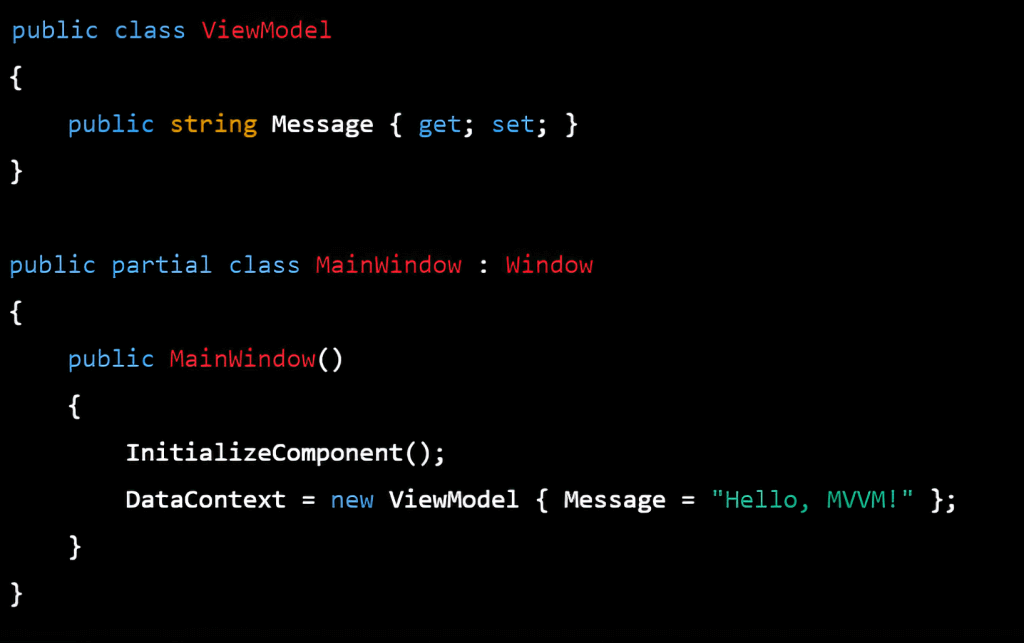
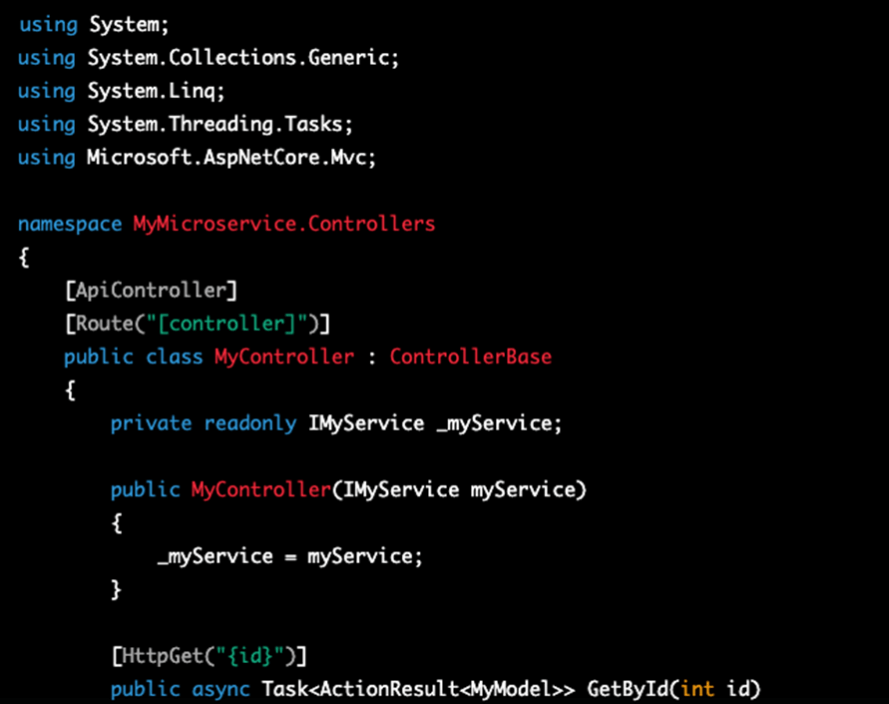
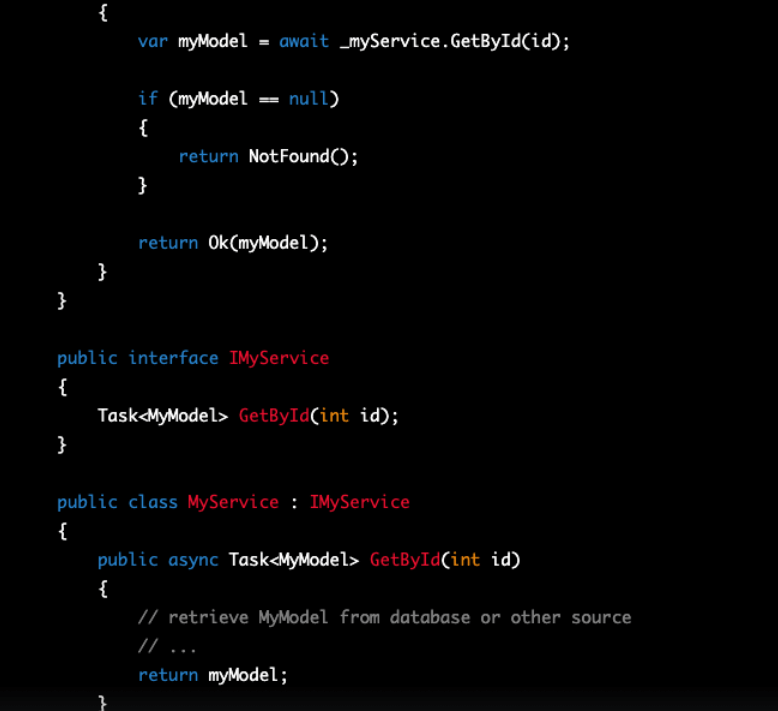
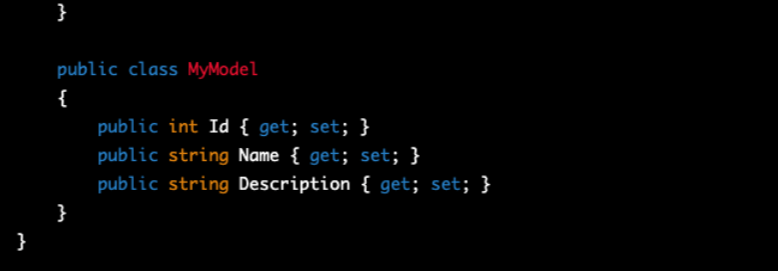
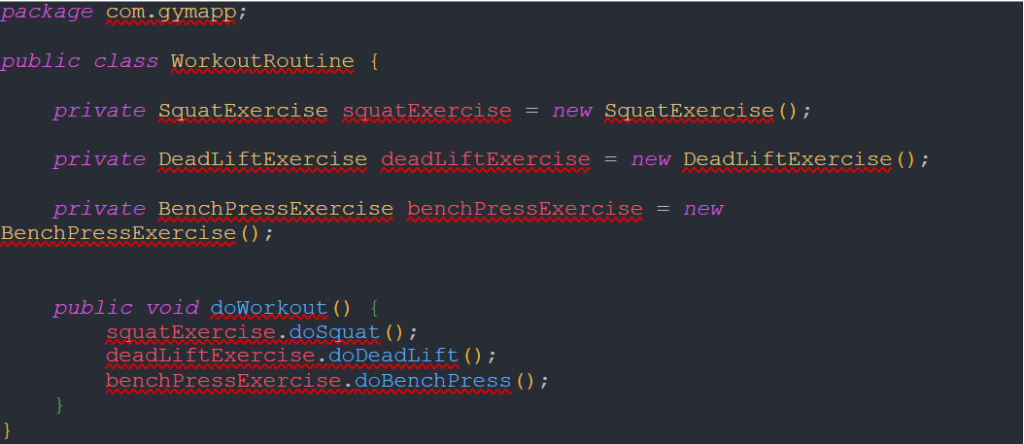
To implement MVVM in C#, you will need to create a ViewModel class and a View class, and then bind the View to the ViewModel using data binding. Here is an example of a simple MVVM implementation in C#:
Figure 1. Code Snippet on View, and View Model
In the above example, the ViewModel class exposes a single property called “Message”, which will be displayed in the View. The View is a WPF Window and sets its DataContext to an instance of the ViewModel. The DataContext is used to bind the View to the ViewModel.
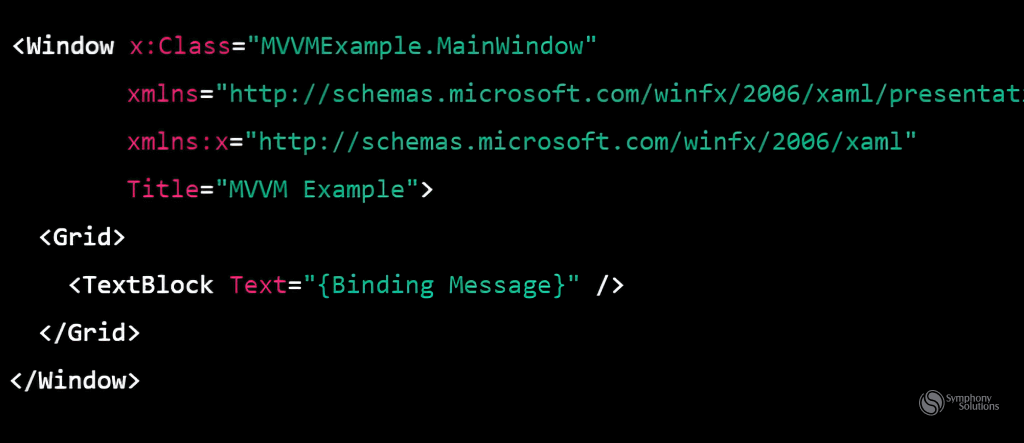
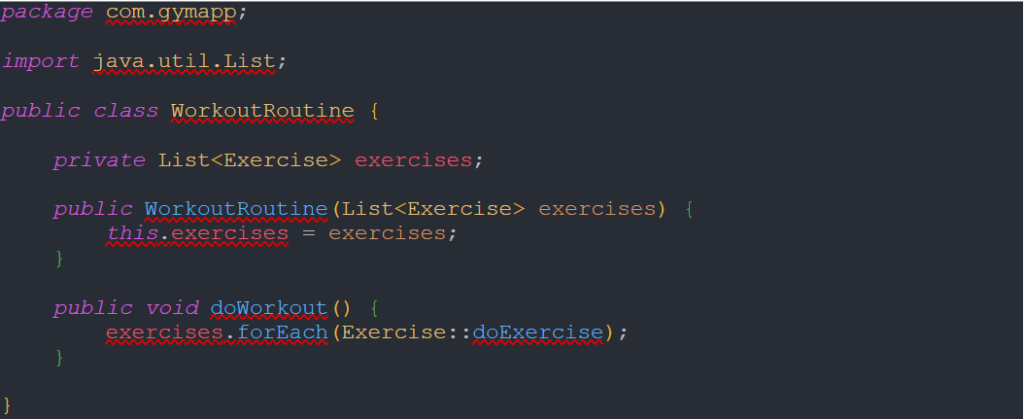
In the XAML code for the View, you can bind the ViewModel’s “Message” property to a TextBlock control:
Figure 2. Property Binding on View and View Model
In this example, the TextBlock’s Text property is bound to the ViewModel’s “Message” property. When the ViewModel’s “Message” property changes, the TextBlock’s Text will automatically update to reflect the change.
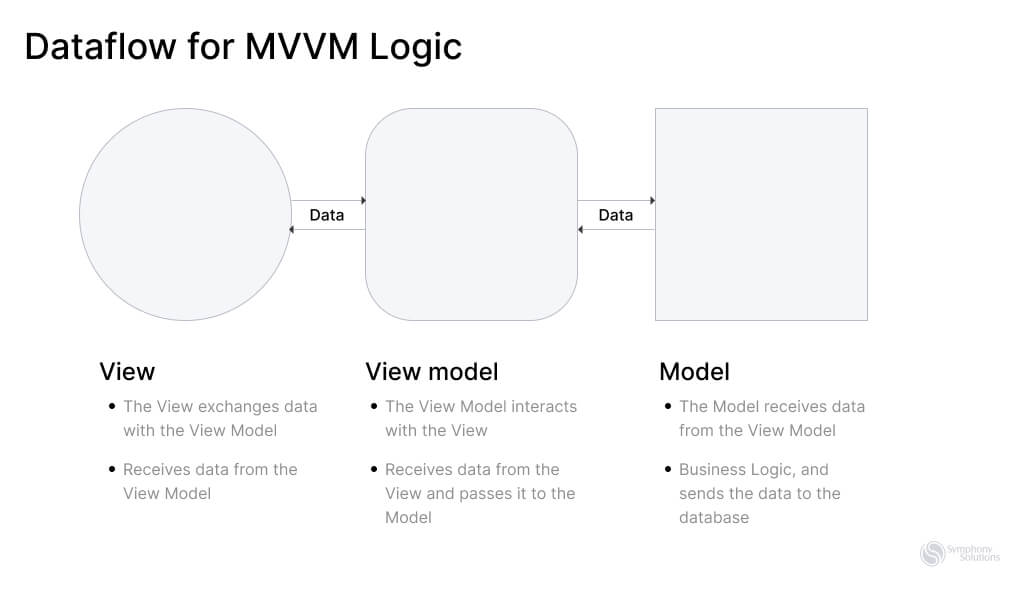
Figure 1. The function of the Separate Divisions
In figure 1 above, each of the MVVM Sections are detailed below:
Model: This component represents the data and the business logic of an application. It is the source of truth for the state of an application, and it is responsible for storing and managing the data used by the application.
View: This component represents the user interface of an application, and it is responsible for rendering the data provided by the model to the user. The view is only concerned with the presentation of the data and should not contain any business logic.
ViewModel: This component acts as a bridge between the model and the view. It is responsible for exposing the data from the model to the view in a format that is easily consumable, and for handling any actions initiated by the view. The ViewModel should not contain any information about the view, but it should provide the data and behavior that the view needs to display and manipulate the model.
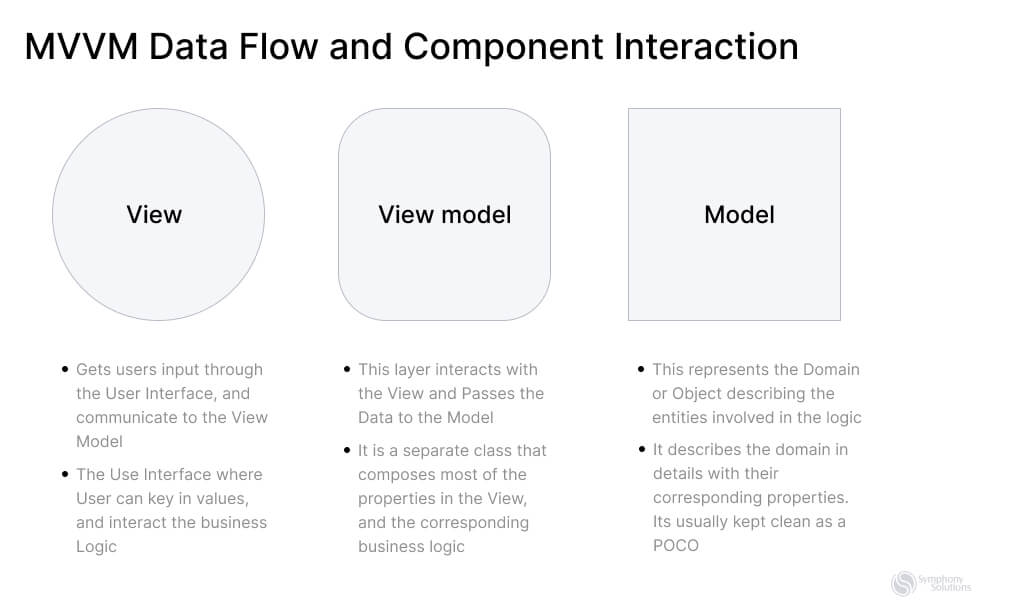
Figure 2. Data flow from View-to-View Model and Model
In this diagram, the arrows indicate the flow of data and updates between the components. The Model contains the data and business logic of the application, and the ViewModel acts as an intermediary between the Model and View. The View displays the data from the ViewModel, and the ViewModel updates the View when the data changes.
The key advantage of the MVVM pattern is that it provides a clean separation of concerns between the Model, View, and ViewModel. This makes it easier to manage and maintain complex user interfaces, particularly as the application grows in size and complexity. Additionally, it makes it easier to test the application, as the Model and ViewModel can be tested independently of the View.
In summary, the MVVM pattern is a powerful architectural pattern for building user interfaces and is well-suited for modern UI frameworks. By following the MVVM pattern, developers can enjoy the benefits of a clean, maintainable codebase, and can more easily test and debug their applications
The Stepwise creation of the Model-View-ViewModel Pattern
Step 1: Create a ViewModel class. The ViewModel is the core of the MVVM pattern and acts as the intermediary between the Model and the View. It holds the data that needs to be displayed in the View and provides methods for updating the Model.
Step 2: Define the Model. The Model represents the data and the business logic of your application. It should contain the data that needs to be displayed in the View, and any methods or operations that manipulate that data.
Step 3: Connect the View and ViewModel Once the ViewModel and Model are defined, the next step is to connect the View and ViewModel. This can be done using data binding, which is a mechanism that automatically updates the View when the data in the ViewModel changes.
Step 4: Implement the View The View is responsible for displaying the data in the ViewModel. It should be designed to be as simple as possible, and should only contain the necessary UI elements for displaying the data.
Summary
Model-View-ViewModel (MVVM) is a design pattern used in software development that separates an application into three distinct components: model, view, and view model. The purpose of this separation is to make the code more maintainable and testable, and to separate concerns.
In 2020, we collectively created a mind-boggling 64.2 zettabytes of data, and by 2025, we’re looking at a number close to 180 zettabytes. That’s a lot of selfies, spreadsheets, and sensor readings! As you can imagine, sifting through this data mountain is a huge task for businesses today. Thankfully, we’ve got two trusty tools by our side: databases and data warehouses, which help keep our digital world organized and insightful.
Databases support daily operations, orchestrating nearly every business function. In contrast, data warehouses offer analytical capabilities to discern trends, forecast future developments, and extract valuable insights. Both are indispensable, but they serve different purposes and possess distinct features.
So, how is a data warehouse different from a database? How are they similar? Where do they diverge?
In this review of a data warehouse vs. database, we will delve into the intricacies of these two technologies, exploring their functions, structures, uses, and how they drive efficiency, innovation, and strategic growth. Let’s begin by looking at the importance of using these technologies.
Why Use a Database System?
A database system enables organizations to store, retrieve, and manipulate data in real-time, leading to enhanced business outcomes. Consider this storage solution for the following reasons:
Ensures data security through regulated access.
Supports concurrent data access by multiple users.
Offers diverse techniques for data storage and retrieval based on business needs.
Provides robust protection against unauthorized access.
Why Use a Data Warehouse?
When comparing data mart vs data warehouse, the latter offers a more robust centralized repository for storing, managing, and analyzing voluminous historical data sets, as well as present business information to drive BI activities. Here’s why you should use a data warehouse:
Centralizes critical business information from various sources.
Separates transactional databases from analytics and reporting tools, enhancing the performance of both.
Saves time when integrated with the cloud, granting business teams remote access to information.
Stores vast historical data for detailed analysis and future predictions.
Reduces turnaround time for BI analysis and reporting, allowing teams to focus on high-value tasks.
Functions of a Database vs Data Warehouse
If you’re new to data management, you might wonder, “Is a data warehouse a database?” Well, while both systems are essential in overall business information management, a subtle difference between DBMS and data warehouse lies in their primary functions and purposes:
Database
Data Warehouse
Concurrency: databases facilitate real-time transaction processing, allowing multiple users to access and modify business information at the same time.
Historical Analysis: stores historical events to aid in future trends analysis and period comparison.
Security: databases come with robust access control features to guarantee data safety and integrity.
Complex Queries: specifically designed for complex queries that extend to aggregating information from multiple dimensions.
Data Storage: a database can store and organize structured business information efficiently.
Data Integration: gathers and consolidates information from multiple sources into a centralized repository for future analysis.
Quick Retrieval: users can easily access and retrieve specific records using swift query languages, such as SQL.
Aggregated Summaries: breaks down voluminous data sets into operational transactions for BI reporting and analytic applications.
Differences Between a Database and Data Warehouse
While both databases and data warehouses offer centralized storage, they differ in terms of data sources, structure, usage, processing, performance, and maintenance.
Data Sources
Databases are mainly involved in gathering structured and unstructured information from the operational systems that power an organization’s day-to-day processes. This can be real-time transactional data from sources like financial transaction logs, customer relationship management software (CRM), sales records, or incoming inventory.
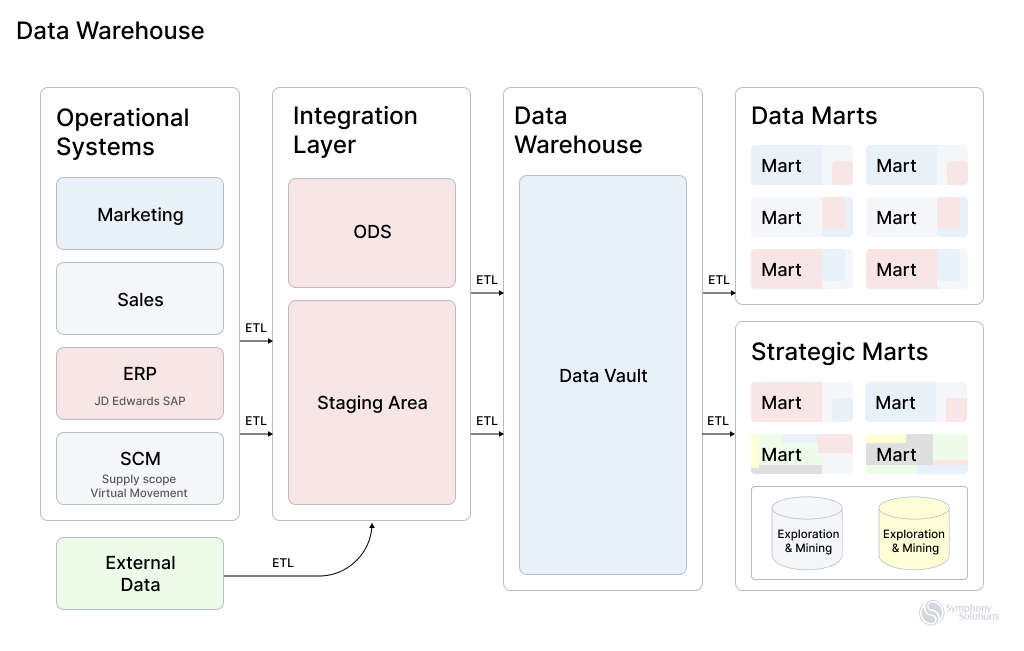
Conversely, data warehouses focus on integrating structured historical information from disparate sources, including flat files or databases used by different departments across the organization. The goal of virtual data warehousing is to harmonize and consolidate business information over time for future reporting and analysis.
Data Structure
Information structure in a database follows a predefined schema that enforces rules based on the relationships between tables and entities. To maintain integrity and normalized structures, databases use foreign keys. The foreign keys are also necessary in order to facilitate efficient querying during online transaction processing (OLTP).
On the other hand, data warehouses leverage denormalized schema, such as online analytical processing (OLAP), to aid analytical functions rather than transactional efficiency. Prevalent schema designs for data warehouses include a star or snowflake descriptive attributes surrounding fact tables with aggregated metrics. This schema allows quick and seamless complex queries over vast data sets.
Data Usage
Databases are designed to facilitate real-time access to operational data. This means that they allow businesses to access instant updates upon every interaction with the system. Whether it’s a customer making a purchase, an employee updating inventory, or a manager tracking sales, databases provide immediate access to the information as it changes. This real-time functionality is essential for managing day-to-day operations and ensuring that all parts of the business have access to the most current data.
In contrast, data warehouses are geared more toward decision-making and strategic analysis. Rather than focusing on real-time updates, they facilitate extensive analysis of past data or patterns. This can include information spanning years or even decades, consolidated from various sources across the company. Data warehouse users can access this information via dashboards or summarize it in aggregated reports. These reports can be generated through advanced analytics techniques, such as machine learning or data mining, allowing for in-depth insights into trends, forecasts, and opportunities. The focus here is on understanding the bigger picture and making informed decisions that align with long-term goals and strategies.
Data Processing
Databases support transactional processing, allowing multiple users to execute recurrent read and write operations simultaneously. For this reason, databases operate on the basis of fast response time while maintaining atomicity, consistency, isolation, and durability (ACID) to preserve data integrity as transactions run concurrently in the background.
On the other hand, data warehouses process transactions in batches, following an Extract-Transform-Load (ETL) process. This mechanism allows the storage system to extract operational data from multiple sources and transform it into the desired format based on predefined business rules before loading it into the warehouse. The data warehouse, in this case, features a dimensional model that facilitates querying of voluminous data sets on non-real-time occasions.
Performance
Databases leverage indexes and caching mechanisms to facilitate high-performance access to select subcategories of live operational data. This feature makes the systems ideal for executing transactional workloads that require swift and near-instant responses, say within seconds.
In opposition, data warehouses rely on custom indexing strategies to optimize query performance on aggregated data. This is often achieved in tandem with parallel execution plans that run on distributed computing power to guarantee acceptable results, regardless of the time taken, whether minutes or hours. Ultimately, the time taken will depend on the complexity of the historical aggregated data instead of sub-second expectations.
Maintenance
Databases are associated with routine maintenance tasks to guarantee continuous reliability and availability. This may include ongoing restorations, SQL statements tuning, schema upgrades, index optimizations, and multi-level security implementations. Additionally, thanks to their mission-critical posture, and the need for real-time applications, databases often require around-the-clock monitoring regimes under the supervision of professional database administrators.
On the other hand, data warehouses come with fewer maintenance needs, given that periodic updates are implemented alongside scheduled ETL jobs. This allows the administrator to implement iterative tweaks without interfering with the existing data partitions. Moreover, organizations that use data warehouses may not need to retain professional database administrators on a full-time basis unless during infrastructure scaling, which happens occasionally.
Comparison Between Database and Data Warehouse
While the difference between database system and data warehouse is evident in objectives, performance, and maintenance needs, both systems share a number of similarities, as well as unique features like service level agreements (SLAs). Here is an elaborate comparison between the analytics database vs data warehouse:
Database
Data Warehouse
Types
While the term database generally applies to OLTP storage applications, systems in this category can be classified into: –Relational databases: traditional transactional systems that enable random read and write operations, e.g., Excel spreadsheets and CSV files. –NoSQL databases: focus on providing flexible schema designs that can query both structured and semi-structured with greater efficiency.
Like databases, data warehouses also exist in two main categories, including: Operational Data Store (ODS): integrates present business transactions for real-time operational applications or instant access. Enterprise Data Warehouse (EDW): geared toward comprehensive analysis by harmonizing business data from multiple sources into a centralized repository.
Service Level Agreement (SLA)
SLAs for databases are stringent, given that the systems must meet 99.99% uptime to ensure that data is available in the front-end application in real time.
SLAs are relatively scalable since occasional downtime is inevitable when voluminous data sets are involved. Moreover, data warehouses are separated from the front-end applications, allowing more room for scalability.
Optimization
Optimized with indexing techniques to facilitate single-point read and write operations.
Optimized with partitioning techniques to break bigger data sets into smaller chunks and subsequently improve data retrieval speed.
Data Organization
Data is organized in highly complex tables and joins with meticulous structuring that eliminates duplication. With this relational setting, the system delivers optimal storage and greater processing efficiencies to facilitate sub-second response times.
A denormalized organization that focuses on reporting and analysis rather than quick-hitting transactional applications. This organization also leverages fewer tables and a simpler structure for more user-friendliness.
Reporting / Analysis
While databases can support minimal reporting capabilities, they are inherently designed for transactional processing.
Data warehouses feature advanced analytical features alongside built-in dedicated reporting tools to facilitate complex querying, ad-hoc analysis, and multi-dimensional reporting.
Similarities
Both solutions offer scalable storage capacity to accommodate a growing volume of data over time.
Both systems allow for the implementation of backup and recovery techniques to ensure the reliable availability of critical business digital assets.
Both systems use SQL to query the data.
Both solutions can store and manage data in the form of tables, columns, views, keys, and indexes.
Conclusion: The Importance of Choosing the Right Data Management Solution
Understanding the difference between data warehouse and data warehousing is critical for business owners who want to implement effective and future-proof data management solutions that will catapult their companies to unprecedented heights. While databases are geared toward facilitating real-time transactional processing with structured schemas, multiple sources, ongoing maintenance needs, and swift performance requirements, data warehousing enables in-depth analysis of historical aggregated data from multiple sources. The concept utilizes denormalized structures alongside prolonged batch-oriented ETL processes and optimal query performance. By taking all these factors into consideration, you can weigh the pros and cons of data warehouse vs relational database to determine the storage strategy that complements your overarching business goals, needs, or use cases.
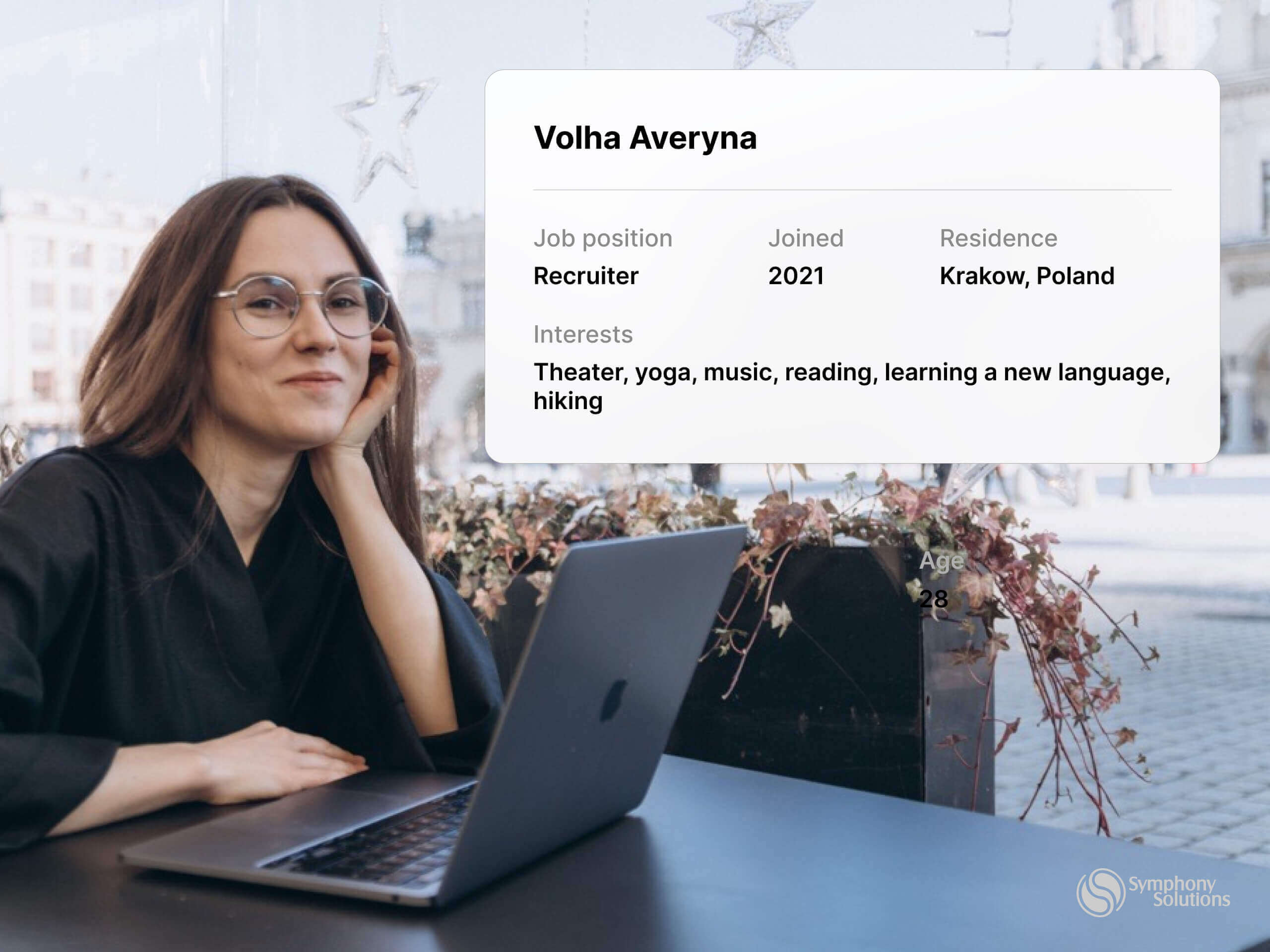
It’s been a while, but we’re back with another Symphony Persona Interview! This time we’ve talked to Volha Averyna, a Senior Recruiter at Symphony Solutions. Volha shared with us her insightful journey from managing a school of creative thinking to being a passionate recruiter who thrives in matching talents with companies and seeing them succeed. And that’s not all there is to Volha! Be it traveling, sports, or book recommendations – this fascinating interview has got a lot to offer. So, dive right in!
1. You have been a Symphonian for more than 2 years. What are the things you enjoy about working at Symphony Solutions?
One of the things I cherish the most about working at Symphony Solutions is my amazing team. Each team member is a wonderful individual, characterized by a strong sense of empathy and curiosity. Their compassionate nature and inquisitive minds create a supportive and collaborative work environment, making every day enjoyable and fulfilling.
At Symphony Solutions, I also appreciate the chance to explore new things and contribute innovative ideas. I highly value the company’s focus on employee well-being and continuous improvement of benefits based on our feedback. This approach fosters a healthy work-life balance.
Being an active person, I find great enjoyment in the flexibility of working from any location and the opportunity to travel while working.
2. What values and cultural bases are important to you in Symphony Solutions?
The inspiring aspect of working at Symphony Solutions is the passion and dedication we have for our work. As Symphonians, we love what we do, and this enthusiasm drives us to go above and beyond to deliver exceptional results that surpass our customers’ expectations and those of our colleagues. Also at Symphony Solutions, I deeply cherish the values of diversity and teamwork. The company’s commitment to fostering a diverse team is something I truly love. It creates an inclusive and collaborative culture, allowing us to leverage different perspectives and strengths to achieve our goals collectively.
3. What makes Symphony Solutions different from other companies?
What sets us apart from other companies are our people, our fresh ideas, and our open-minded attitude. Our team is passionate and skilled, driving our success. We thrive on innovative thinking and encourage creativity. We’re open to change, which keeps us ahead in a dynamic business world.
4. What do you enjoy about your job as a recruiter the most?
As a recruiter, the most enjoyable aspect of my job is the meaningful connections I build with people. Working with diverse individuals may present challenges, but it’s also incredibly rewarding. I take great pleasure in helping candidates find their dream jobs and enabling organizations to thrive by bringing in the right talent. Witnessing their growth and success keeps me motivated and inspired.
Moreover, the fact that I stay in touch with many candidates even after placement brings me immense fulfillment. We can discuss life topics, and they know they can rely on my advice and help. It’s a gratifying feeling to know that I’m doing a good job and have earned their trust. Building these enduring relationships is a true highlight of my role as a recruiter.
5. How do you follow trends in your profession and industry?
Staying current with industry trends is of utmost importance in our profession. To ensure I stay well-informed, I have developed a weekly habit of dedicating a minimum of 2 hours to learning and self-education about the latest trends and technologies in HR and IT.
To keep abreast of developments, I follow various HR leaders on LinkedIn, actively engaging with their insights and updates. Additionally, I make it a point to read articles about emerging technologies, as they are relevant to our field.
Furthermore, I believe in the value of networking and learning from peers. That’s why I actively participate in meetups and events happening in Krakow and other cities online and offline, which serves as an excellent platform for knowledge sharing and professional growth. This year I had a chance to participate in European Women in Technology event in Amsterdam and hear about the latest trends there.
6. Can you tell us more details about your work background in project management and team building? What motivated you to shift your focus to recruiting?
My work background includes managing a school of creative thinking with a team of 10+ individuals. I coordinated training sessions for specialists from various industries, focusing on creativity, strategy, and media while working on real client briefs. Additionally, I excelled in communication management, organizing events for renowned companies like Coca-Cola, Huawei, Samsung, and Wargaming.
As for my shift towards recruiting, there were a few motivating factors. Firstly, I found immense satisfaction in building and managing teams in my previous roles. I enjoyed nurturing talent, fostering a positive work culture, and witnessing the collective growth of the team. Recruiting seemed like a natural progression, as it allowed me to focus on finding and bringing onboard individuals who could contribute their skills and expertise to the organization. Moreover, I recognized the critical role that hiring the right people plays in the success of any project or organization. By being involved in the recruiting process, I could ensure that we attract and select the best-fit candidates who align with the company’s values and goals.
7. Did your previous experience in human resources assist you in your current position as a recruiter? If yes, then how.
My diverse background in human resources has enriched my abilities as a recruiter. Having worked with various companies and multinational teams, I can see risks and offer advice from a comprehensive perspective. This empowers me to make informed decisions and create successful matches that benefit both candidates and organizations. It’s all about bringing a well-rounded approach to fueling lasting success in the professional world.
8. You pay a lot of attention to your mental health. Tell us more about how you keep your life balanced (e.g., meditation, yoga, sport).
Absolutely, I’m all about taking care of my mental well-being, and I’ve got some awesome tricks to keep things balanced.
Back in 2015, I got into yoga through a retreat and regular classes. These days, I’m trying different classes in Krakow and doing exercises at home. Meditation is my go-to move, guided by my friend who’s a Vipassana pro. Twice daily, I meditate for 20 minutes in each session. It’s a bit challenging, but it brings me a sense of calmness and new ideas.
Biking is a big part of my life too right now. I explore Krakow on two wheels, just going wherever. It’s simple and makes me feel great.
I’m also into squash – a fun way to stay active. You see, I’m an active person, but motivating myself can be tough sometimes. Still, knowing how much my body and mental health will thank me, I push myself to make the effort.
This winter, I gave snowboarding a shot for the first time. Loved it! I’m all set to do more this winter, aiming to get even better. It’s super fun, and I’m excited to see where it takes me.
These changes are making a real difference. Finding balance isn’t always easy, but the good vibes and peace of mind are totally worth it.
9. What sparked your interest in traveling? Could you share a memorable experience or adventure from one of your trips that significantly impacted you? We’d love to learn more about your passion for mountains and nature!
My love for travel began with a simple idea: exploring beyond what I know. I’ve always believed that understanding people and cultures requires stepping out of your comfort zone. Seeing how different lives and habits are worldwide keeps me curious and excited about the world. Also, it’s helping me better understand people and be tolerant. One particularly memorable experience that encapsulates my passion for adventure took place when I organized a sunrise trip with a group of close friends. The idea was simple yet enthralling – to witness the sun’s first rays painting the mountain landscape in brilliant hues (Babia Góra in Poland). We set our alarms for the early hours, rising at 2 a.m. to embark on our ascent at 4 a.m., aiming to reach the peak just as the sun began to grace the horizon. My friends and even friends of friends rallied behind the concept, despite the chill of November. Their unwavering support bolstered my resolve, turning an idea into a shared ambition. When we reached the summit, a breathtaking panorama unfolded before us. Nature stirred to life. Even the brisk wind couldn’t deter our spirits.
Completing our hike at 2 p.m., a sense of accomplishment mingled with the surreal feeling that evening had already descended. This adventure remains etched in my memory as proof to the bonds of friendship and the profound impact that a shared journey can have on one’s perspective.
10. What destinations are at the top of your bucket list for future travels? What draws you to these particular places?
I adore Disney, and my dreams include Disneyland’s enchantment, Paris’s romance, and Mexico’s vibrant culture. These desires drive my passions.
11. With your love for theater, books, and music, how would you say these different art forms complement each other in enriching your life? Tell us more about each of these hobbies.
So, starting with theater – I’ve been part of an amateur theater group for over four years. When I moved to Poland with a friend, I took on the awesome task of setting up a children’s theater. It’s not just about helping kids embrace their creativity and talent, it’s also a two-way street where I grow alongside them. Their curiosity and the fun they have seeking help create an incredible experience. Plus, I’m all about theater beyond the stage – watching performances and having lively discussions with friends afterward is pure joy!
Now, onto books – they hold a special place in my heart, especially with my philology background. I’ve explored books from different eras, which is pretty amazing. Even though finding time for reading can be a bit tricky these days, I’ve come up with a solution – a book club. This way, I get to read new books regularly and chat about them with fellow book enthusiasts. Sharing thoughts and opinions has become a wonderful way to make time for reading and connect with others who share my love for books.
Last but not least, music. It’s quite a transformation story for me. Back in school, I wasn’t exactly thrilled about playing musical instruments. I finished musical school. And now music is a big part of my life. I’m all about concerts and music festivals – they fill my heart with happiness. Whenever I need an extra dose of confidence before an important meeting or a speech, I simply turn on my favorite tunes. It’s like an instant mood booster and confidence amplifier!
So, you see, theater sparks creativity and growth, books provide a space for shared intellectual adventures, and music? Well, music is my emotional powerhouse. Together, they create a wonderful blend that adds so much vibrancy and happiness to my life every single day.
12. Name top-5 books you would recommend to our readers.
“Lighter” by Yung Pueblo
“Tomorrow, and Tomorrow, and Tomorrow” by Gabrielle Zevin
“Atomic Habits” by James Clear
“Jonathan Livingston Seagull” by Richard Bach, Russell Munson
“Leading at a Higher Level” by Ken Blanchard
13. What strategies or techniques do you employ to enhance your productivity?
When it comes to getting things done, I’ve got a special trick: “Reflect and Revive.”
I take a moment at the end of the day or the start of a new one to give myself a high-five for even the smallest wins. This little pause boosts my motivation and helps me figure out what really needs my attention. I check my to-do list, see what’s important for today, and adjust as needed. Sometimes, I realize that certain tasks don’t need as much effort as I thought. This approach keeps me on track, celebrates progress, and makes each day count.
14. What is something you have never experienced but would like to try?
I can’t wait to try paragliding – the idea of flying and taking in amazing views excites me. I’m also eager to experience surfing, feeling the ocean’s energy.
15. What 3 pieces of advice would you give yourself when you started your career?
Reflecting on my career journey, there are three pieces of advice I’d offer to my younger self:
Embrace Self-Belief: While it may seem like a straightforward concept, believing in yourself is the foundation of your path.
Embrace Mistakes as Lessons: Don’t shy away from mistakes; instead, welcome them as opportunities for growth and learning.
Do Not Be Afraid to Ask Questions: Don’t hesitate to seek clarification or guidance. Asking questions shows your commitment to understanding and improving, and it can lead to deeper insights and better solutions
Since last year, Symphony Solutions has been collaborating with our client, Covizmo, on a unique project dedicated to laying out the groundwork for the forthcoming restoration of Ukraine’s infrastructure after the war.
The Rebuild Ukraine project has steadily gained visibility and recognition over the past year, which is crucial in gaining international support. However, what’s most remarkable is the technological advancement the team has achieved on the project, preparing a solid foundation of verified and consolidated data required to achieve project objectives.
“We will take on a very special responsibility in this reconstruction. The time for reconstruction is coming, but we are getting ready now.”
Jeppe Koffod, Danish Foreign Minister
Throughout the year, the Symphony Solutions team has worked on adjusting and improving the software platform, as well as developing algorithms that streamline the accumulation and analysis of data collected from drone flights and annotators. These advancements have made data analysis five times faster than in the beginning, accelerated the annotation process, and helped create one of the most detailed and up-to-date maps of Ukrainian settlements.
The next course of action for the Symphony Solutions team is completing the development and integration of the system component which would allow the client to use the platform to its fullest potential.
Symphony Solutions continues to work with Covizmo on this important mission that will help address the pressing issues that Ukraine is facing due to the ongoing attack of russian tyrannical forces, providing insights that will aid in the recovery and reconstruction of the infrastructure, address ecological damages, and ensure sustainability in the future.
You’ve been searching for a job for a while now and just got your invitation to an interview. Congrats! What are you supposed to do next? Don’t take your first touchpoint with the recruiter lightly. It may be just the first stepping stone in your potential career at the company, but an important one at that.
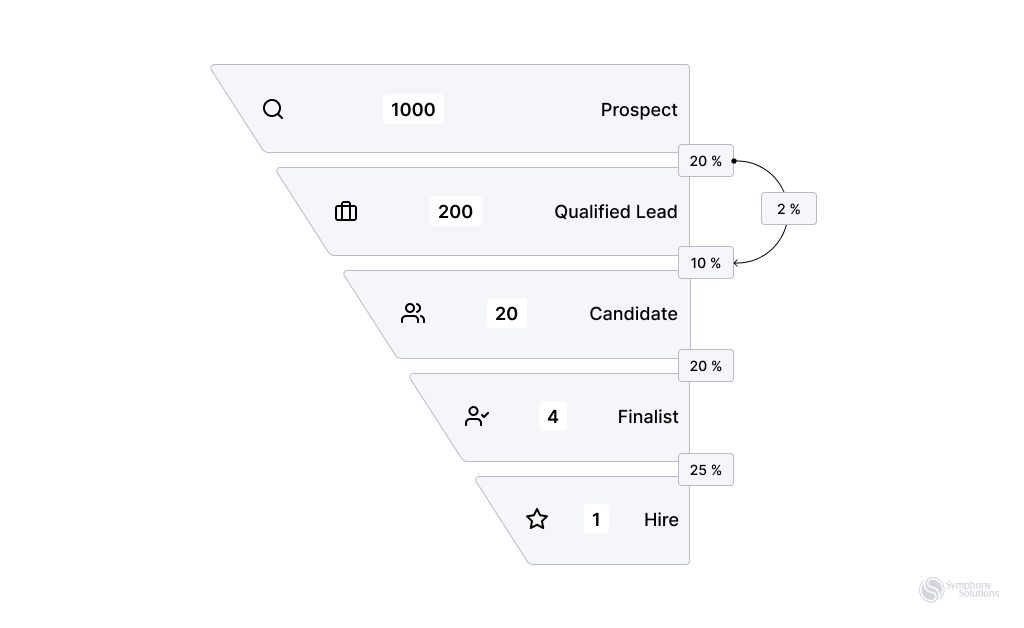
In the first round of the interviewing process, you will most likely be competing with a large pool of equally experienced professionals – according to Zippia research, up to 20% depending on the number of applicants and their qualifications – that will be condensed into a shortlist of candidates for the second round. That’s why you should start asking yourself how to best present yourself to your interviewer, what are some common first interview questions, and start preparing right now.
The first interview with a recruiter, also known as a screening interview, is a meaningful conversation that helps identify the best candidates for further consideration. It allows candidates to demonstrate their qualifications and suitability for the job. Being well-prepared for this interview is crucial because the recruiter’s decision determines if you will move forward in the hiring process. Here’s where this preparation guide might be useful! Continue reading to get the insights, tips and tricks to pass the interview with flying colors.
How to Prepare for Your First Interview
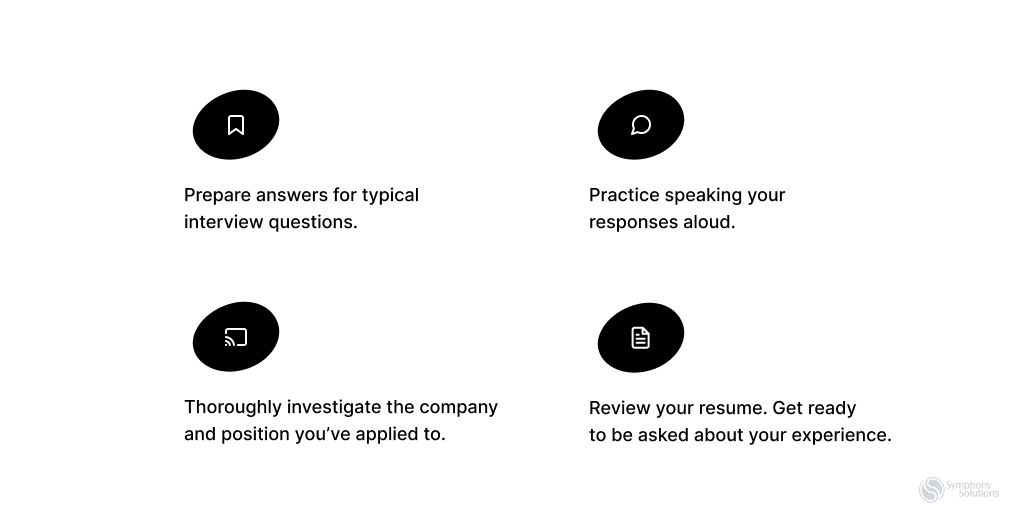
Before heading out to your first interview, here are a few things you might want to do to come prepared:
Prepare answers for typical interview questions. It’s easy to find online lists of typical interview questions to get a peek at what you may expect once you meet up with the recruiter for the first time. Look for resources created by recruiters themselves, as who else is the best candidate to give you all the insight and relevant information on the topic? In fact, this is the exact reason why this article has come into being.
Practice speaking your responses aloud. Confidence is a trait that you want to express during the interview. If you are second-guessing yourself and don’t want to trip over your answers, practice them ahead of time.
Thoroughly investigate the company and position you’ve applied to. Have a clear understanding of why you have chosen to apply for the position, what made the company stand out, how you see yourself fit into the team, etc. This shows your enthusiasm and makes the time you spend with the recruiter during the interview worthwhile for both parties.
Review your resume. Get ready to be asked about your experience. This is the information that you should know off the top of your head. However, it’s a good idea to go over it before the interview and look at your work experience with the eyes of a recruiter. Does your resume showcase your expertise? Is your experience consistent and industry relevant? You may want to customize your resume to fit the job you are applying to so that it is a good representation of yourself as a professional.
Common First Interview Questions
To help you in your preparation, here is a list of 14 common interview questions frequently asked by recruiters in the initial screening process. By knowing these questions and preparing answers to them, you could improve your chances of getting the job you want.
1. Can you tell me about yourself?
This common question helps the interviewer evaluate your communication abilities and get an overview of your background and experiences.
2. What do you know about our company?
Don’t hesitate to do your research before showing up at the interview. This shows your sincere interest in the company and its mission and helps you present yourself as a good fit for the role.
3. What interests you the most in our position?
By answering this question, show your enthusiasm and understanding of the position, highlighting how your goals and values align with specific aspects of the job.
4. What motivates you professionally?
Highlight what motivates and engages you, whether it’s the challenges, personal growth, making a meaningful impact, or working in a collaborative environment.
5. What made you decide to switch to another company?
It’s important to maintain a positive tone throughout your response and avoid speaking negatively about your previous company or colleagues. Focus on the opportunities and growth the new company offers.
6. What are your professional goals for the next 1 or 2 years?
When answering the question, it’s important to demonstrate your commitment and dedication to the role, as well as your ambition and alignment with the company’s needs.
7. Could you provide more information about your experience with …?
Share details about your specific experience, expertise, or any relevant accomplishments related to this question. To prepare for this question, think about your expertise and align it with the job description of the company.
8. Could you describe a project in which you were involved?
Please provide a small description of a specific project you have previously been involved in. Include information about the project’s purpose, your role, responsibilities, and key challenges you faced. Take this question as your chance to showcase how you can bring value to the company, deliver valuable results, and problem-solve.
9. Could you please provide more details about the team composition of your most recent project?
This should include information about the team hierarchy, roles, responsibilities, and the number of team members involved. Kindly highlight your understanding of the team dynamics and structure within the project.
10. What is your level of proficiency in English?
This question is commonly asked when applying for international or English-speaking business opportunities. It’s important to accurately evaluate your skills and provide an honest response. You may mention relevant language proficiency certification, experience working in an English-speaking environment, communicating with international clients, etc.
11. What are your salary expectations for this position?
Before the interview investigate the market, evaluate your value as a specialist, and consider the total compensation package, including benefits, bonuses, vacation period, and professional development opportunities. A good idea would be to provide some specific number or a range, however, still be flexible.
12. What type of employment contract are you able to sign?
It’s important to research and understand different types of contracts available based on the country and context. Think about your preferences in advance while being open to alternative options.
13. How soon can you start a new job after accepting a Cooperation Offer?
Think about your existing commitments and any practical factors that might influence your start date. At the same time, it’s good to show your flexibility in meeting the organization’s needs if necessary.
14. Do you have any questions for me about the company or the role?
Before the interview, make sure to research the company. Look into their mission, values, recent news, and job description. This will help you come up with relevant questions.
By preparing well for the interview with the recruiter, you will be able to make a positive impression and stand out among other candidates for this position.
Questions to Ask Your Potential Employer During Your First Interview
The interview isn’t over with you answering all the tricky questions and logic puzzles. After all, it is a conversation. So, once the recruiter asks if you have any questions, take the chance to show just how seriously you are considering this position. Show your sincere interest and investment in the job. Here are some examples to ask a recruiter at the end of your first job interview:
Can you provide more details about the responsibilities and day-to-day tasks of the role?
What are the key skills and qualities you are looking for in the ideal candidate?
How does the company support professional development and career growth for employees?
Can you tell me more about the company culture and values?
How does the company measure success and performance for this position?
What are the biggest challenges someone in this role may face?
How do you support work-life balance for your employees?
Can you describe the typical career path for someone in this position?
How does the company handle remote work or flexible work arrangements?
Can you tell me more about the company’s mission and long-term goals?
Remember to make this a conversation, practice active listening and ask relevant questions.
Conclusion
While you are still in the recruitment stage for a new job, your first task is to prepare for the first interview and cover all your bases. You need to be well-informed about the company and position you’ve applied for, and just as well you need to know how to present yourself as the best candidate for the job. Review common first interview questions and take your time to prepare for that first meeting with the recruiter you’ve been waiting for. Luckily, recruiters are just as interested in talking to qualified professionals, so you can engage in a conversation and derive a lot of value at each stage of the interviewing process if you take your time to prepare and treat it as part of the job.
After the interview, a good idea would be to send a thank you email to the recruiter, express your appreciation for the interviewer’s time and consideration, reiterate your interest in the position, reiterate key qualifications that make you a strong fit for the position, and address any concerns that popped up during the interview by providing clarifications and extra information in a positive and concise manner.
Good luck with your job search! If you fancy learning more about opportunities at Symphony Solutions, check out our open vacancies.
Quality assurance in software development is moving forward to autonomous testing with the use of AI tools
AI integrations and tools eliminate the risk of mental fatigue or human error in the QA process
AI helps simplify and streamline the QA process, reduces costs, and empowers quality engineers to work on more complex tasks
The use of available and emerging AI technologies does not completely take the human out of the process
With the emergence of generative AI, innovative technologies have come to transform industries globally. The best course of action right now is to embrace it and find ways to empower yourself as a professional, level up your productivity and give yourself space to do the creative work that remains the prerogative of a human mind. AI tools are already transforming the way we work and live, so let’s anticipate the good things to come from AI integration and innovation.
We offer innovative solutions to set up your QA/QC processes, whether as part of full-cycle software development, QA consulting, or a full-service QA outsourcing project. Symphony Solutions’ expertise spans across healthcare, gaming and betting, Life Science, e-learning, Consumer Digital Experience and retail industries.
Since 2022, we are harnessing the latest advancements in artificial intelligence and delivering innovative solutions tailored to your business needs, seamlessly integrating powerful AI tools, enabling a transformative journey for your business.
Download the ebook now and discover how you can benefit from introducing AI tools into your QA processes and what is next to come for the QA community. Do you still have questions left on Quality Assurance and want to get in on our expertise? Our QA Engineering experts are there to help you on your journey!
In today’s fast-paced and data-driven business landscape, keeping up with technological evolution is a must. One significant shift we’re seeing is the integration of machine learning with cloud computing. In fact, the fear of missing out on these technologies is so high that some organizations are reporting a record-breaking timeline of less than a week for ML deployment.
Machine learning, a branch of artificial intelligence, enables computers to learn from past data and make predictions, all without specific programming. Cloud computing, on the other hand, lets businesses access a wide range of shared computing resources online. These resources can be used for everything from hosting business applications to developing cloud-native software and deploying machine learning. This includes servers, databases, and storage for cloud-native development, ML deployment, or hosting business applications.
The use of machine learning in cloud has given rise to a new era of unparalleled innovation and efficiency. And with the realization of this, alongside the increasing demand for cloud-based ML models, cloud service providers are customizing their offerings to match the needs of organizations of all sizes—from small startups and mid-sized businesses to enterprise corporations.
So, what is the role of cloud computing in machine learning? And what business benefits does the symbiotic relationship of these two technologies bring to your organization? Let’s find out more in this elaborate guide.
Role of Cloud Computing in Machine Learning
Businesses are increasingly seeking efficient and cost-effective intelligent technologies that can help them unlock new opportunities and ascend to unprecedented heights. The impact of cloud on machine learning demonstrates a seamless way of achieving this goal. While both technologies play an integral role in driving overall business success, they become more powerful when leveraged together.
The power of cloud computing enables organizations to overcome the limitations of on-premise IT infrastructures when adopting or scaling machine learning models. Here is the broader role of cloud computing in ML:
Resource Demand in Machine Learning
Among the primary connections between cloud computing and ML is the resource demand required by the latter’s algorithms. Typically, prevalent machine learning algorithms, such as K-Means, Linear Regression, Decision Tree, Random Forest, and Logistic Regression, thrive in environments that support complex computations and vast amounts of data.
This means the ideal environment for deploying these algorithms should feature extensive data storage, enormous processing power, and multi-server computation capabilities—a unique combination that’s hard to achieve with on-premises resources.
In a bid to meet these requirements, organizations are adopting a cloud-first strategy as part of machine learning deployment. With the cloud’s infrastructure, businesses can tap into a virtually unlimited pool of computational resources on demand. Cloud computing scalability implies greater flexibility for storage, processing power, and server capacity to match the needs of varying ML algorithms.
Storage and Accessibility
Another primary connection between ML and cloud computing lies in storage and accessibility. Data scientists require large datasets to train, validate, and test machine learning algorithms. And to ensure greater efficiency and smooth operation during these processes, the underlying data storage system should be highly secure and reliable.
Cloud computing solutions offer secure and robust storage solutions that can handle enormous data volumes with ease. With a cloud-first strategy, organizations can handle voluminous datasets in distributed storage systems, such as a data lake or data warehouse. Distributed storage systems are synonymous with high-security standards, durability, redundancy, and scalability, ensuring around-the-clock data availability and untampered integrity.
When it comes to accessibility, cloud-based storage solutions allow cross-functional teams to access and leverage business information from any location, anytime, and on any device. Additionally, data science teams can also leverage the capabilities of cloud computing to cleanse, transform, and pre-process voluminous data sets. This saves time and effort, freeing employees to focus on high-value tasks, such as researching new machine learning models.
Top Machine Learning Cloud Platforms
As the adoption of machine learning continues to surge, given that experts are projecting a $31.36 billion global market share by 2028, cloud computing platforms have proven to be indispensable tools for harnessing the power of AI and predictive analytics. With these platforms, organizations can easily access the resources, services, and infrastructure required for building, deploying, and scaling ML models efficiently.
Leading service providers for cloud managed services such as Amazon Web Services (AWS), Google Cloud Platform (GCP), and IBM Cloud are all key players in the tech world, each with their own strengths. The lineup below doesn’t denote any rank but is rather a random order, highlighting each platform’s unique advantages.
IBM Cloud
IBM Cloud has a solid reputation, and for good reason. It’s packed with services and tools designed for advanced machine learning and artificial intelligence operations. Take IBM Watson, for example. This platform provides users with cutting-edge tools and APIs, making the development and deployment of machine learning models a much smoother process.
Watson Studio is another highlight of IBM Cloud. It offers an intuitive environment for data scientists to create and train machine learning models. Then there’s Watson Machine Learning, which simplifies and automates the process of managing and deploying these models.
But that’s not all. IBM Cloud Pak for Data is another impressive feature. It provides a robust platform for data and AI that can help businesses uncover valuable insights and drive innovation. So, if you’re an organization looking for an extensive cloud computing environment that goes beyond just basic machine learning, IBM Cloud might be a good fit.
Google Cloud
Google Cloud is another platform with cutting-edge machine-learning capabilities. With a robust infrastructure backed by advanced AI research and development, Google Cloud offers one of the most user-friendly services that address a wide range of ML needs, regardless of how intricate they are. Whether your organization is in need of high-level deep learning frameworks or novice tools, the platform offers an ideal service to specifically meet that need.
For example, the platform’s AutoML service allows users with a beginner’s level of machine learning expertise to execute advanced commands with ease. This includes building custom models to fulfill a specific function, such as text or image recognition, without the need for extensive coding.
Similarly, highly experienced machine learning professionals on Google Cloud can leverage advanced frameworks, such as PyTorch, TensorFlow, and pre-trained models for high-level ML training and deployment.
Amazon Web Services
Amazon Web Services (AWS) is one of the pioneering platforms that ushered in the era of mainstream cloud computing, attracting over 1 million active users across 94 countries. In fact, it is believed that the platform arguably has five times more cloud infrastructure than its 14 competitors combined!
As a revolutionary cloud platform, AWS’s offerings include an end-to-end suite of services that support both basic and advanced machine learning workflows. This includes a range of user-friendly tools, frameworks, and plug-and-play managed services.
For instance, developers and data scientists can leverage Amazon SageMaker to build, train, and deploy ML models in a more simplified way. The comprehensive ML platform offers built-in algorithms, as well as automatic model tuning and distributed training functionalities to accelerate the development cycle of ML models and significantly reduce the time-to-market.
Other pre-trained ML & AI services that users can access on the AWS Cloud include Amazon Comprehend for natural language processing (NLP) and Amazon Rekognition for video and image analysis. With these capabilities, organizations can easily integrate AI & ML capabilities with their existing business applications.
Microsoft Azure
Microsoft Azure has gained an industry reputation as a leading cloud solution for cloud software development and deployment of machine learning models at scale. The platform offers a dedicated Azure Machine Learning Studio with a simple drag-and-drop interface. This feature allows junior data scientists and ML experts to build and deploy basic ML pipelines.
For more advanced applications, the service provider behind the platform offers Azure Machine Learning Service, which includes a developer-centric computing environment for building and training ML models using popular frameworks like PyTorch and TensorFlow.
In addition to that, users can access Azure Cognitive Services and leveraged APIs and pre-trained models to deploy algorithms that perform specific AI tasks, such as speech, vision, and language detection. And with a strong Microsoft enterprise ecosystem, the Azure Cloud platform is ideal for organizations that want to integrate ML with existing Microsoft business tools and services.
The Benefits of Machine Learning with Cloud Computing
Machine learning capabilities have revolutionized the modern business landscape in many ways. With ML-enabled models and processes, businesses can draw actionable insights from vast data sets and automate manual processes, ultimately driving business growth and innovation. And when combined with cloud computing, machine learning becomes more powerful.
So, what are the benefits of machine learning in the cloud?
Cost Effectiveness: Pay-for-What You Need Model
One of the benefits of machine learning application in cloud computing is the cost-effectiveness that mainstream cloud-first strategies offer. Typically, organizations of all sizes can access advanced ML capabilities on the basis of “pay-for-what you need,” allowing businesses to tap into next-gen technologies without significant upfront investments.
Also known as the pay-per-use model, this pricing model allows you to only pay for the resources and services that your business utilizes. Void of large capital expenditures and associated financial risks, the pricing model democratizes access to predictive modeling and advanced analytics. This allows small and mid-sized businesses to optimize operational efficiency and compete favorably in their respective domains.
Greater Flexibility
ML in cloud gives businesses the flexibility to work around ML models and functionalities without the need to hire on-demand data science experts. A majority of cloud service providers, including IBM, Google Cloud, AWS, and Microsoft Azure offer pre-built models and user-friendly drag-and-drop interfaces.
These features don’t only mean greater flexibility but also simplified development and deployment processes for ML models. Additionally, this means that a range of professionals in the company, including business analysts and cross-functional teams, can tap into the power of machine learning for their specific use cases.
High Scalability and Experimentation
Cloud-based computing platforms offer greater flexibility and agility, features that become more vital when experimenting with multiple ML models or scaling projects from design into production. With machine learning in cloud computing, businesses can easily scale up resources and infrastructure to test and iterate on machine learning models simultaneously.
This allows development and data science teams to explore multiple approaches, algorithms, and parameters without being limited by infrastructure constraints. Cloud environments are inherently elastic and seamlessly provide additional computing power, storage, and data processing capabilities, allowing ML models to scale and evolve as much as needed.
High Accessibility and Ease of Use
All mainstream cloud computing environments, including AWS, Google Cloud, IBM, and Microsoft Azure, are highly accessible and offer a myriad of ML services that don’t require in-depth skills and expertise in data science. With these platforms, businesses can access ready-made ML services, including custom APIs and pre-trained models and simplify the overall approach toward integrating ML technology.
Application of Machine Learning Algorithms Using the Cloud
Since becoming popular, machine learning has established itself as a powerful technology for analyzing voluminous data sets and drawing meaningful insights from them. But with the cloud ML convergence, machine learning models have evolved into transformative technologies across many industries. Today, advanced machine learning algorithms in cloud computing frameworks power a range of use cases, including:
Cognitive Computing
ML algorithms that are deployed in the cloud allow organizations to harness the power of cognitive computing and build intelligent systems that can perform sentiment analysis or understand natural language from unstructured data sets, such as text or images, and videos. Cognitive systems are synonymous in the healthcare and customer service sectors.
Business Intelligence
Machine learning algorithms in cloud computing revolutionize Business Intelligence (BI), allowing organizations to build and deploy advanced models for complex use cases, such as fraud detection or cloud security.. If you’re wondering how machine learning can improve security in cloud computing, trained models can quickly learn and adapt to new business models. Moreover, when combined with AI, ML models can automate access control and authorization to the cloud infrastructure.
Internet-of-Things (IoT)
With approximately 16.7 billion devices connected in the global IoT network, businesses that embrace this technology are dealing with massive amounts of data that are churned daily. ML algorithms can be deployed in the cloud to analyze this data in real-time as it streams in and extract actionable insights from it. Besides enhancing real-time monitoring, this approach also enables anomaly detection and predictive maintenance.
AI-as-a-Service
AI-as-a-service offering is synonymous with leading cloud providers, such as IBM and Google. The service allows businesses to leverage big data and machine learning in cloud for a competitive edge. For instance, you can integrate ML models with image recognition, sentiment analysis, and language processing capabilities to get a more in-depth insight into customer behavior, ultimately delivering a superior customer experience and customized services.
Personal Virtual Assistants
Cloud-based ML algorithms can power advanced virtual assistants, such as Siri and Alexa. Personalized virtual assistants can not only recognize speech but also perform complex natural language processing tasks, as well as context-aware decision-making. These applications can be deployed for customer service, virtual healthcare, and smart home use.
Wrapping It Up
The convergence of machine learning with cloud computing presents a pivotal turning point in the business tech landscape. Machine learning in cloud computing enables the building, deployment, and management of more advanced, efficient, and scalable models. In return, high-performing ML models support intelligent decision-making processes, automation, and predictive analytics.
Symphony Solutions together with SHE. community recently hosted a talk inviting our company experts to share their experience of using generative Artificial Intelligence that’s become accessible to the global public ever since the launch of ChatGPT. Our panelists discussed how AI is changing the landscape of work and shared their own experiences using AI for everyday work tasks.
Event experts:
Yulia Nosal, Chief People Officer at Symphony Solutions (Ukraine)
Oleg Chekan, Technical Director at Symphony Solutions (Poland)
Tania Soroka, Director of Virtual Communities at Symphony Solutions (Ukraine)
Watch the video recording on YouTube or continue reading to get all the highlights from the event in this article. Here’s what we’ll talk about during the panel discussion:
How is AI currently transforming the workplace, and what potential further advancements are coming in the future?
AI itself is not a new concept, but what’s truly groundbreaking is the emergence of generative AI, which has made it accessible to the masses. This democratization has allowed anyone to use AI tools, whereas previously, they were limited to engineers or data scientists working on complex projects over extended periods.
AI is becoming an integral tool for our everyday work and productivity, helping with brainstorming, content creation, presentation, development, etc.
AI tools empower us to explore new ideas and implement them with their guidance.
You can achieve more without being distracted by the need to coordinate meetings or find someone else’s availability for feedback. Tasks can be accomplished faster and more efficiently.
If AI tools increase our sense of satisfaction, it’s already a good achievement. And if clients are getting more value that’s a win-win situation.
What are the opportunities and challenges of integrating AI technologies into various industries and job roles?
There are three main categories of AI users: those who create and write AI algorithms; those who constantly search, explore, and implement AI in their business domain; and those who still resist the adoption of AI.
Lately, there has been a significant rush to understand the latest developments in the market, how to apply AI, measure its efficiency, and bring that efficiency to the workplace.
AI is a tool that should bring benefits. However, we must also be responsible in how we implement it. Being responsible means understanding all aspects of AI, including its challenges, opportunities, data boundaries, and reliability. We need to be knowledgeable to ensure responsible usage of AI.
Understanding the limitations of the tools, you always have to revise what’s been generated, make sure you understand it, and it’s in line with your expectations. You can always iterate with those tools, point out mistakes, provide your feedback, and improve their results.
One of the key challenges is how confidently ChatGPT can be wrong.
You have to be careful with what AI tools you select. Many of the new tools being released to the public are not quite ready or their quality is not meeting expectations.
Beware of scam projects which may be used to steal data.
Not all AI tools are ready for scaling yet.
Open-source AI is not yet properly available for commercial use. You have to be really careful not to violate licenses. The open-source community is trying to address this issue and make something available for commercialization with the legal aspects covered.
Another issue in the education area is having ready-to-use high quality training materials. How to use these tools. How to understand the limitations. What are the best practices. Educational materials are few and far between and they lack structure.
What skills and competencies will be most valuable to thrive in an AI-driven work environment?
AI is a tool. The critical thing is to maintain your domain expertise and improve every day as the expert. AI cannot think instead of us at this point in time.
Digital literacy is your number one competency. Follow the trends, apply and test, and make your critical conclusions.
Companies should establish appropriate standards and make sure that people are educated to the kind of most useful sources of information.
Mastering AI tools should be integrated into our personal development or onboarding processes.
Make it a skill that is evolving and adjusted to the roles and seniorities of people.
New tools and technologies appear every month produced by giants like Microsoft, Open AI, and Google and they are adopting quite quickly and making things possible which were not possible before.
The better higher quality input you will make the prompt the better quality you will get on the output.
It is crucial to have the ability to clearly formulate instructions in written form. Your fluency in English is very important.
What are some ethical considerations when implementing AI systems? Can AI be leveraged to enhance diversity and inclusion in the workplace?
GDPR data leakage is a real risk with utilizing AI tools which are trained on scraped data.
The question arises if AI will be able to show empathy and have an understanding of the subtle context around the situation. and the major question and we can all reflect it from our personal experiences.
Is a rational data-driven decision always the best one in the long-term perspective? If we always rely on data analysis and let the data drive decisions, it might not work out in the long run.
AI brings certain risks that stem from it being trained on the data that it can scrape from the sources available. This can create bias (racial, gender, etc.), which has already happened in recruitment, financial institutions, and healthcare.
How can AI and human collaboration create a symbiotic relationship for achieving optimal results?
With the emergence of tools like ChatGPT, Midjourney, and others, you are enabled to implement your own small projects using a simple chat interface and benefit from it in real time.
As people learn together and experiment, they find innovative applications that the original authors might not have anticipated. The learning process extends to incorporating AI into everyday work, where it plays a significant role. This widespread accessibility marks a crucial turning point in the AI landscape.
By introducing AI to certain roles functions, we can take away fatigue that people sometimes have from routine mundane tasks that can be delegated to AI.
With AI becoming an integral part of day-to-day work, we should expect new job roles to emerge, such as prompt engineer, Chief AI Officer, bias remover, etc.
Watch the full recording of the event to learn the answers to some fascinating questions from the audience:
If you could create an AI-powered gadget or device or program to improve your daily life, what would it be?
If you could design an AI assistant to have a unique personality trait, what would it be and how would it manifest in its behavior?
More of our inspiring tech talks are available on our YouTube channel. Keep an eye on upcoming event announcements on our social media. Follow and subscribe!
With the increased pace of technological advancement in the digital world, businesses must keep up, or risk falling behind. The stakes are high, and so is the pressure to deliver innovative software development services. To meet this challenge, savvy companies are turning to more practical methods, such as DevOps, to stay ahead of the curve. DevOps makes scaling development teams workable among other perks.
Did you know that enterprises that embrace DevOps witness a 200-fold increase in deployment frequency and a 24-fold improvement in recovery time from failures? This article aims to provide valuable insights and strategies to help enterprises successfully scale their DevOps practices and reap the numerous benefits, including enhanced software quality, reliability, and security.
What is DevOps?
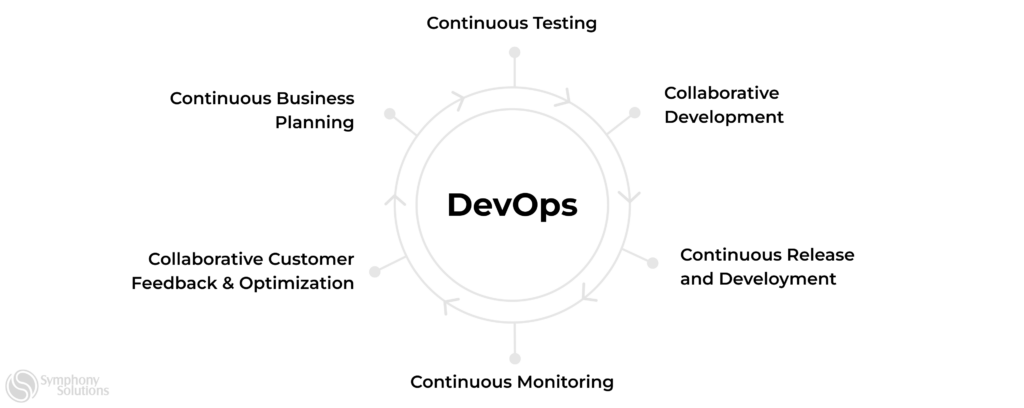
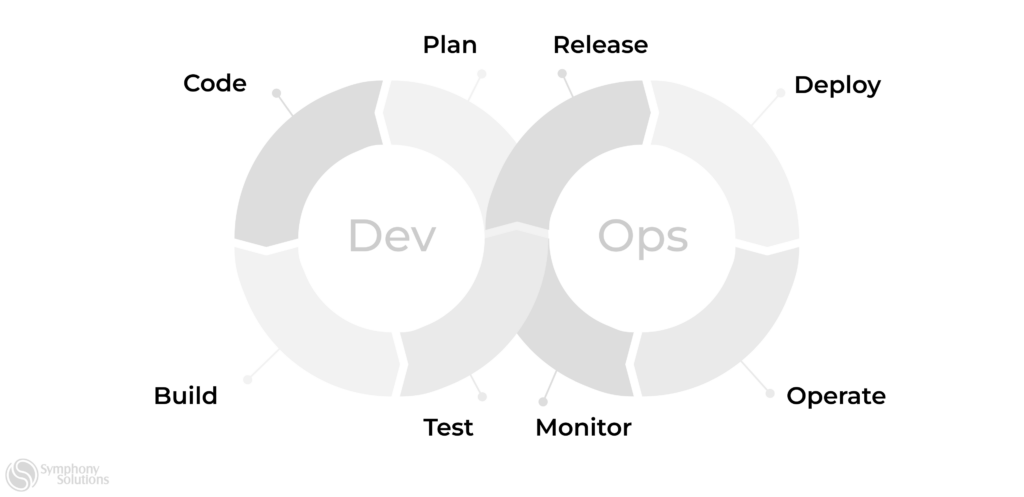
DevOps is a methodology that fosters efficient collaboration between development and operations teams. It encourages a holistic view of the IT process, with teams continuously refining their roles and responsibilities to meet the needs of the business.
DevOps is all about bringing development and operations teams together. It’s about breaking down the walls and getting everyone on the same page. Developers get involved in infrastructure decisions and deployment, and operations teams get a seat at the table from the early stages of development. The result? More reliable software, faster delivery times, and a better ability to respond to market changes.
But DevOps isn’t just about collaboration. It’s also about automation and continuous improvement. Tools for continuous integration and continuous delivery (CI/CD) are key here, automating the testing and deployment of code. This cuts down on human error and speeds up the development cycle. And with regular feedback and performance metrics, teams can keep improving their processes and tools.
What does scaling in DevOps mean for an enterprise?
Scaling in DevOps is the ability of enterprises to create strategies that allow flexibility to adjust for different demand seasons. So, when there is high demand, your teams can grow to meet the pressure and then scale back when demand reduces, thanks to DevOps automation-driven background.
With its specific methods, DevOps is the ideal environment for scalability, as it lets team members interact, focus, and create innovative alternatives for faster software deployment.
Use cases for DevOps in enterprise
Here are some typical use cases for DevOps explained
Speed up new releases with DevOps
Software Company Accelerates Product Launches
Problem
The client was struggling with slow release cycles due to a traditional development approach. The lack of integration between the development and operations teams often led to last-minute issues, causing delays in product releases.
Solution
Recognizing their need for a more efficient process, the client approached us at Symphony Solutions with a challenge. We proposed the adoption of DevOps practices. Our team implemented continuous integration and continuous delivery (CI/CD) pipelines, automating the testing and deployment of their code. This not only reduced the risk of errors but also significantly sped up their development cycle.
The adoption of DevOps practices led to a 50% reduction in the client’s time-to-market. They were able to launch new products much faster, improving their competitive position in the market. The smoother and more reliable releases also enhanced their customer satisfaction. This case study demonstrates how Symphony Solutions can help companies speed up software releases using DevOps practices.
Optimize your processes with DevOps
Creating Secure AWS VPN Connection with Complex Hybrid Cloud Authentication for SAP Solution
Problem
SAP required a custom solution to run cloud services with all cloud-native benefits, like pay-as-you-go for cost efficiency, high scalability and flexibility, on the client’s on-premises infrastructure for maximum data confidentiality and security.
They needed an Agile and reliable partner to work closely, efficiently, and intuitively with their in-house engineering team and subcontractors. The aim was to allow the client to focus more on their business initiatives and less on IT infrastructure management.
Solution
Symphony Solutions offered remarkable DevOps models to implement a solution to set up the AWS infrastructure and issue custom HP certificates required to establish an AWS VPN connection between the customer’s on-premises infrastructure and an external managerial system in AWS public cloud.
Symphony Solutions’ team implemented private keys infrastructure (PKI) inside of AWS to issue HP-affiliated certificates. This ensured secure and reliable connectivity between on-premises infrastructure running SAP HANA services and VMware-hosted applications.
Get to the bottom of incidents with DevOps
Cloud Solution Extends Portfolio
Problem
The client had already been in production (Compliance 1.0), developed by another vendor and relied on third-party libraries for most of its features. The unavoidable dependency was cost-intensive for the client, plus the original solution had significant issues with maintainability and scalability. Eventually, the client decided to implement version 2.0 of this product to replace the third-party service with their modern, scalable, secure, easy-to-maintain implementation.
Solution
Although the client first came to Symphony Solutions seeking help with Version 1.0 Continuous Compliance tool maintenance, the team’s excellent performance and contribution convinced the client that they actually needed a new solution to start and scale DevOps in the enterprise.
So, they decided to eliminate dependence on the 3rd party vendor and work exclusively with Symphony Solutions on developing an entirely new Version 2.0 architecture.
The teams at Symphony Solutions worked with the client to determine a staged process to:
Conduct a set of automated tests to assess the current state of the product.
Develop a new solution for cost-effective, timely and secure development.
Plan and develop Version 2.0 architecture.
Research to determine the best ways to implement necessary functionality.
In 2020 Symphony Solutions was chosen to substitute another vendor in delivering one more service to HPE GreenLake: Continuous Cost Control. Having shown great diligence and high delivery quality, they were again chosen to take over the project replacing the other vendor’s team.
Cloud Engineering Powers Business
Problem
Vivino was a small online wine marketplace start-up with an original idea from Danish founders Heini Zachariassen and Theis Sondergaard in 2010. Unfortunately, they did not have the technical expertise to build a prototype for their product. They needed quick turn-around from engineers to cover the entire product development cycle.
Solution
Vivino came to Symphony Solutions in 2013. The Symphony Solutions extended team provided Vivino with Cloud engineers who developed a process to go from idea to product and then created services for the new wine app. They:
Designed the architecture and infrastructure to accommodate the growing database of wines, users, ratings, and prices
Migrated the codebase from PHP to GoLang
Developed new backend and UI features
Worked on database modelling and integration with new services
Supported and maintained data pipelines and processes
Once developed, the solutions need to be tested to minimize risks of broken software, and Symphony Solutions managed the QA process of manual and automation testing.
Retail Banking Powered by Salesforce
Problem
The client needed to modernize the outdated version of the client portal to keep up with the ever-growing demand and high industry standards. As one of the largest commercial banks on the market, they needed a fast and steady solution, maintaining high security and providing customers with a full spectrum of services while implementing new features and functionality.
Solution
Symphony Solutions opted for building an entirely new portal from the ground up after thorough examination. Here’s what they did:
Designed a highly configurable portal that’s easy to maintain from an Admin perspective.
Lightning, Aura and Web components were used to implement UI in Salesforce, creating a custom theme and content layouts for easy navigation and enhanced functionality.
Single Sign-on configurations for 3rd-parties via Onegini Identity Provider.
Implemented High Assurance functionality and features that require multi-factor authentication, enabling the user to perform high-security financial transactions.
As an Agile company, Symphony Solutions simultaneously conducted different stages of the development process, maintaining good cooperation with other teams and bringing the project to completion in record time.
Steps to Scaling DevOps in the Enterprise
You can follow these steps for scaling development teams in your business
Define what DevOps means for your enterprise
Companies view DevOps differently on what they need from the agile practice. So it would be best to determine the benefits the system can offer your enterprise.
Do you want to:
Improve your app code’s quality?
Create a self-sufficient work culture?
Encourage seamless communication and streamline collaboration?
Your answer will guide you on what metrics to track as you scale DevOps.
Acquire top talent
The increase in demand for DevOps teams has resulted in high demand for jobs in the field, and most top talent want to work with flexible and innovative companies.
So, consider hiring a DevOps enthusiast to incorporate DevOps processes in your organization. The evangelists collaborate with architects and industry experts to change new technologies, and business needs to company-specific software designs.
Perform an initial stock-take
Identify the existing features in your company that support a DevOps culture, like DevOps-trained staff. Then, document, highlight, and improve these existing deployment channels to serve as launch pads for your team to find efficiencies and deliver more substantial business results.
Track Dev-Ops metrics
As you scale your business process, there should be metrics that you monitor to track your DevOps performance. Select the relevant metrics that align with your definition of DevOps in the enterprise. These are some of the standard metrics to look out for:
Deployment frequency
Deployment time
Lead time
Customer tickets
Automated test pass %
Defect escape rate
Error rates
Application usage and traffic
Application performance
Mean time to detection (MTTD)
Mean time to recovery (MTTR), etc.
Pre-empt the culture shift
Growing enterprises often boast large, independently structured teams. So the business department may need help understanding the intricacies of DevOps practices. Anticipating and preparing for a culture shift will help business leaders understand the emphasis on collaboration across teams to develop and support innovative software.
Best Practices for Scaling DevOps in enterprise specifically
DevOps can pose a challenge, especially for larger companies, due to the complex siloes that should be simplified between different IT departments. But regardless of your enterprise’s status in DevOps implementation, these best practices for scaling will come in handy.
Develop Standardized Project Templates and Policies
DevOps teams should emphasize standardization for all DevOps projects, as that is the most integral practice for creating long-term efficiencies in development.
You can achieve enterprise DevOps standardization by building and sticking to project templates and policies. Most DevOps tools offer these built-in templates that automate the seamless accessibility of process data and promote ease of interpretation so successful projects can be repeated and scaled.
Policy standardization is also essential as it guides projects and associated tools, ensuring they adhere to appropriate security and regulatory requirements throughout development.
Create Interdepartmental Goals to Bust Silos
Most enterprises that can afford to have dedicated tech-driven teams like IT, security, or operations often notice these teams have unique roles and different workflows. This also means that they work independently even if they receive shared projects.
Even though the siloed approach may be practical for specific projects, there may be underlying expenses, mistakes, and time lost. So, for efficient DevOps implementation, you can create interdepartmental goals with tasks and metrics that encourage them to collaborate for better, holistic results.
Use DevOps Tools to Support Team Goals
You can employ dedicated tools like the DevOps tools to automate, collect, document, and highlight individual DevOps projects. Consider getting these additional tools and resources for solutions in these categories to support your objectives:
Application performance monitoring
Container management
Configuration management
Data cleansing and data quality management
Project management
CI/CD and workflow automation
Collaboration and communication
Version control
Rely on Continuous Integration and Continuous Delivery (CI/CD)
The most fundamental principles of DevOps for enterprises are reducing the delivery lifecycle and releasing iterations of a product regularly to improve agility. This continuous integration and continuous delivery (CI/CD) approach ensures quick processes and instant feedback to improve existing features and streamline processes for a pivot or change in a project plan.
You do not have to release the “perfect product” with a truckload of features at a go. It could cause issues for your development team and users like:
Users will not get updates quickly and may have to wait for batch releases.
Users can’t test and give feedback on new features due to the prolonged launch.
Having a ton of features at once increases the project’s scope, so it may be more challenging if developers need to fix any bugs or issues after launch.
Pay Attention to User Experience (UX)
User experience (UX) is essential in any DevOps project development, especially since UX feedback informs the project iteration plans. You can get genuine UX needs from non-technical team members (third eyes) that could also be a part of the team.
You can try surveys, ticketing systems, user experience discussion forums, or interdepartmental meetings to get the relevant feedback you need to proceed with the perfect user design.
Incorporate Change Management into All DevOps Projects
Integrate the best practices of change management into new development and release cycles so the teams utilize the tools properly and efficiently, especially for security and regulatory compliance needs.
A solid change management support strategy can ensure successful DevOps releases, like offering a Q&A forum or ticketing system for new users, creating documentation and extra training, and retaining a DevOps task force to can assess the tool integration.
End Note
DevOps implementation will continue to evolve, even as your enterprise grows. However, to keep enjoying the maximum value for your business, you must continuously experiment with new processes, skills, and tools to identify those that can produce the highest potential integration across the whole DevOps toolchain.
Now, that level of flexibility for DevOps can pose a challenge for any enterprise scaling development teams with other business tasks to juggle. That’s where Symphony comes in!
We provide top-notch DevOps services to enterprises worldwide. So contact us today and let our professional DevOps teams build, test, and launch reliable products in record time.
The world of sports betting and online casinos is evolving rapidly, driven by technological advancements and the increasing demand for personalized user experiences. Recognizing the need for a groundbreaking solution, Symphony Solutions, a prominent player in the iGaming industry, has introduced a revolutionary iGaming AI assistant to elevate the experience on sports betting websites. It enhances the entire flow from customer onboarding, through to bet placement, gameplay and customer support.
Recognizing the opportunity
The sports betting and casino landscape can often seem a maze of similar websites, each featuring complex hierarchies of betting opportunities and a huge amount of curated game inventory. Many sites offer a user experience that could be intimidating and hard to navigate. Identifying the need for a revolution in user engagement that would transform this landscape, Symphony Solutions leveraged artificial intelligence to build an AI assistant that takes traditional chat bots to a whole new level. One that addressees the main pain points of both customers and operators.
Introducing BetHarmony
BetHarmony, an innovative product by Symphony Solutions, is designed to cater to the evolving demands of sports betting and casino enthusiasts by functioning as an AI-driven assistant powered by OpenAI’s ChatGPT and Opti-X technologies. It offers swift and tailored personalized betting assistance to users, simultaneously providing operators with a powerful solution that elevates user engagement, boosts betting revenues, and ensures scalable customer support, all while delivering exceptional user experiences.
Key Benefits of AI-powered Assistance for Sports Betting Customers:
BetHarmony, offers several advantages to operators:
Enhancing Customer Acquisition, Engagement, and Retention
With BetHarmony, you can provide your customers with fast, personalized assistance. This means they can effortlessly navigate your services, find answers to their account queries, and explore and choose and place desirable betting options—all of which translates to fewer abandoned bets placed and stronger customer loyalty.
Provide support anytime, and keep it simple
Treat all your players like a VIP with the utmost in customer service 24/7 with a simple and intuitive interface and resolve urgent issues quickly.
Enable self service and drive customer satisfaction
Make it incredibly simple for customers to be onboarded, to take make enquiries, to facilitate everything from account access to deposits and even bet placement.
Driving User Engagement
Build a loyal customer base by providing them with an automated betting assistance that offers an interactive and intuitive interface to keep your users engaged and excited about their betting experience.
Automating Common Tasks
BetHarmony takes care of routine tasks, freeing up your time and resources for more strategic initiatives. Streamline and optimize your customer service operations and ensure seamless interactions with every user.
Boosting Betting Rates and Revenue
Expand your revenue streams by introducing users to new and alternative betting markets. Your users will appreciate the fresh opportunities AI sports betting assistant brings to the table.
Reducing Operational Costs
Improve cost-effectiveness in scaling your customer support. BetHarmony offers an efficient solution that not only automates common tasks but also reduces helpdesk operational costs, allowing you to maximize your resources.
Some of the unique features BetHarmony is capable of assisting the customers include:
Account Information: BetHarmony can provide users with information about their current account balance.
Winnings Confirmation: It can confirm whether a user’s winnings from previous bets have been credited to their account.
Betting Options: BetHarmony offers users the option to place bets on upcoming sports events, based on their past bets and interests.
Odds Information: It provides users with information about the odds for different outcomes in a sports event.
Bet Placement: Users can place bets through BetHarmony, specifying the type of bet they want to make (e.g., betting on a specific team to win) and the amount they want to wager.
Payout Calculation: BetHarmony calculates potential winnings based on the user’s chosen bet amount and the provided odds. It also calculates the total payout, including the initial stake.
Additional Assistance: It offers further assistance by asking if the user would like to bet on anything else or if they need additional help.
Behind the Scenes: How BetHarmony Works
Symphony Solutions adopted a multi-faceted approach to bring the product to life. At the heart of the strategy was a language chain, seamlessly integrating with the OpenAI SDK, which brought the sophisticated capabilities of GPT models into the system. The user interface was built around Gradio, a toolkit known for facilitating smooth user interactions with Machine Learning models.
Here is how the process works: When a user inputs a request, it is passed to OpenAI for pre-processing. Utilizing a technique known as “prompting,” key phrases and words are extracted from the request and sent to the semantic search engine with vector database. The API’s response is then transformed and sent back to OpenAI, which generates a summary. This summary is relayed back to the user via the ChatGPT alike interface with the great help of Gradio framework.
If the response is ambiguous or unavailable, OpenAI GPT model formulates specific clarifying questions to gather more information from the user, ensuring the accuracy of understanding.
Symphony Solutions approached this challenge with a combination of cutting-edge technologies and expertise in AI.
To design the AI-powered assistant the Symphony team broke down the process into identifiable stages:
Defining requirements and key interaction points
Designing the solution
Setting up the infrastructure
Quick prototyping thanks to Prompt-based AI: Prompt Engineering and Evaluation
OpenAI integration with Search Engine through Chain of Thought and Prompt Chaining techniques
Frontend development using Gradio for a user-friendly interface
Integration with client web and mobile applications and CRM (Customer Relationship Management) system
A Glimpse into the Future
BetHarmony’s upcoming release is just the beginning of Symphony Solutions’ mission to transform the sports betting and casino industry. With a commitment to continuous innovation, the company is dedicated to advancing the capabilities of their AI-driven assistant and introducing further enhancements. BetHarmony is set to redefine the standards of user engagement, operator efficiency, and overall user satisfaction in the iGaming landscape.
Once integrated with operator sportsbook website, the solution is capable of:
Driving user engagement thanks to the interactive and intuitive interface.
Improving the conversion rate for new users as the betting process became more straightforward.
Decreasing support and helpdesk operational costs due to automation of common tasks.
Growing revenue from alternative betting markets as the AI assistant introduced users to new opportunities.
Symphony Solutions’ expertise in AI chatbot development
Developing the AI-powered assistant involved a meticulous process, from defining requirements and key interaction points to infrastructure setup and quick prototyping. In building this product Symphony Solutions showcased its expertise in harnessing the latest advancements in AI assistant development and applying them to the iGaming business. The solution’s success stands as a testament to Symphony Solutions’ ability to deliver transformative ideas in the iGaming industry. Discover further Symphony’s AI development services.
Can you guess how Symphony Solutions is spending this summer? We are preparing to attend iGB L!VE, the hottest networking event taking place this July 11-14, 2023, at RAI Amsterdam.
iGB L!VE offers an immersive environment that fosters innovation and cultivates valuable relationships, bringing together over 200 exhibitors and 5000 attendees for full two days of extensive learning and networking. It’s your chance to accelerate and take your iGaming business to another level. Connect, innovate, and celebrate with industry leaders, discover strategies for success and excellence in new markets, and surpass your competition.
Symphony Solutions has garnered years of industry expertise in the iGaming domain. We are working with top-tier Sports and Betting providers on creating unique product lineups that deliver immersive and engaging online experiences for customers worldwide. Symphony Solutions offers an extensive service portfolio to cover all your needs, from Experience Design and Application Development to Digital Marketing Orchestration and AI services, providing unmatched service quality in custom iGaming and Agile transformation solutions.
Are you going to be there? Meet us at iGB L!VE and connect with Symphony Solutions team to learn about our latest advancements and achievements in the industry.
Meet our team
Ewelina Antonakos
Business Development Executive at Symphony Solutions
An experienced professional in the iGaming industry, she specializes in connecting opportunities and finding value in networking. With a solid background in working with an international testing lab and for various games/platform providers, she currently offers a range of technological services related to i-gaming. Her goal is to contribute to the success of iGaming ventures and create captivating and bulletproof solutions.
Mona Juneja
Associate Director of Sales at Symphony Solutions
Having worked with prominent tech industry leaders worldwide, Mona brings over 20 years of technology sales experience, with a current focus on Software Development and Testing/QA services in Europe.
Full-stack developers are one of the most sought-after professions in the IT industry. They are typically proficient in the front and back end of engineering and development of web process applications, with some experience and knowledge in UX design and in database architecture. For the flexibility and extensive skill set, full-stack developers are one of the most high-paying jobs in the IT industry. The estimated number of open roles in the US alone as of March 2023 concluded to around 4,452 according to Glassdoor, with the annual income ranging from $63,000 to $190,000.
Who is a Full-Stack Developer?
A web developer or engineer proficient in both the front-end and back-end of web development is known as a full-stack developer. In this way, they offer a service from start to finish and can work on projects that involve databases and creating websites that are visible to users. On the front end, they are responsible for the user interface, meaning the visual elements of the website or what the end user sees, and browser compatibility. On the back end, they are responsible for the maintenance of the underlying components, such as servers, APIs, and databases. Full-stack developers might also collaborate with clients during the project planning phase.
In general, full-stack developers have a broad range of skills and are responsible for the entire development process of a website or application, from design to deployment.
What Does a Full-Stack Developer Do?
The role of a full-stack developer on a project calls for a hefty list of tasks and responsibilities on the part of the developer. When working full-stack, one might be involved in developing different app components and functionality, creating the visual part of the website and optimizing these websites so they work both in web browsers, on desktops, and on other devices like smartphones and tablets.
Let’s explore what skills and the learning path an upcoming Full-Stack Developer might need to pursue.
Front End:
HTML
The term HTML or Hypertext Markup Language refers to the markup language which is used to create the structure of a webpage. It is one of the strongest languages for building websites and is easy to learn. Tags are used to represent the HTML elements. On the website, those tags create the structure and act as placeholders for the page content such as text, images, and other media.
CSS
CSS or Cascading Style Sheets is a declarative styling language that is used to establish what the website is going to look like. Selectors in CSS are patterns used to select the elements on an HTML page and rules that specify the styles to be applied to the selected elements. This way you can go through the website elements previously determined by the HTML tags, and give them a certain look in terms of layout, color scheme, style, etc. Note that CSS is a styling language, and it doesn’t change the structure of the website, that’s the job of HTML. Additionally, while CSS is used to enhance the visual representation of a webpage, it doesn’t add any functionality.
jQuery
jQuery is a JavaScript open-source library which is a collection of JavaScript functions. It can be used to create code that is easy to read, concise, and reusable. jQuery functions can be used to make the navigation and manipulation of the Document Object Model (DOM) easier, which is the structure of a website represented as a tree-like structure, and to perform common tasks such as event handling, animation, and making AJAX requests.
AJAX
Ajax is a full-stack web programming concept that lets web applications send and receive information from servers without requiring a full-page refresh. Which allows web applications to retrieve data from the server in the background, without interrupting the user’s interaction with the page. It utilizes XML, JSON, HTML, and JavaScript to assist in the creation of web applications that are better, faster, and more interactive.
ReactJS
ReactJS is a JavaScript library that is used for creating user interfaces. It is particularly useful for full-stack developers because it enables them to reuse UI components and manage the state of those components. As well as create large and complex web applications that allow changing the data without reloading the page. React is a component-based library, which means that the developer can break down the UI into small, reusable pieces, making it easier to manage and maintain.
Back End:
SQL
One of the primary tools developers use to communicate with a site database is SQL or Structured Query Language. It is an essential part of any full-stack developer’s skill set. Any system that stores data in row-and-column table formats uses SQL as its default programming language.
Flask
The Python web framework Flask gives developers the resources, libraries, and technologies they need to create a web application.
Node.js
Developers can test their JavaScript code on Node.js before deploying it to the environment. Node.js is so widely used that it has an established community where developers can go for support, and they organize conferences and events every year.
Python
Python is a popular computer programming language used to create software and websites, automate tasks, and analyze data.
Ruby on Rails
Ruby on Rails is primarily used to build web platforms. It is generally a good choice if you are looking for high performance, reliability, and fast results.
Other Essential Skills:
Git and Github
What distinguishes the two? To put it simply, Git is a version control system that enables you to manage and monitor the history of your source code. You can manage Git repositories with the cloud-based hosting service GitHub. GitHub is made to help you manage open-source projects that use Git in a better way.
GitHub tracks the various modifications made to each iteration and hosts your source code projects in various programming languages. Therefore, “Git” refers to the version control system; a tool that lets developers keep track of how often their code is changed.
Through command-line features, issues or threaded discussions, pull requests, code review, or the use of a collection of free and paid apps in the GitHub Marketplace, developers have all the tools they need to deliver better code.
Database Storage
You can automatically back up and protect important data with electronic data storage. Full-stack developers should have proficient knowledge of database management and understand how to work with database storage efficiently.
Design Fundamentals
Basic design skills are necessary to create products that give users experiences that are meaningful and relevant. That is known as user experience (UX) design. This includes the design of the entire acquisition and integration process of the product, including branding, design, usability, and function.
Generally knowing the basics helps the full-stack developer to better understand what the end user needs and do both front and backend of a website without external help from designers.
NPM
For the Node JavaScript platform, the package manager NPM is used. It intelligently manages dependency conflicts and places modules where Node can find them. It can be set up to support a wide range of applications. It is typically employed for publishing, discovering, installing, and developing Node programs.
HTTP and REST
Web interactions like loading webpages, streaming video, and other forms of communication between web browsers and web servers are powered by HTTP, which stands for HyperText Transfer Protocol. The translator between the frontend and backend is REST, which stands for “Representational State Transfer.”
Web Architecture
The process of designing, developing, and putting an internet-based computer program into operation is known as web architecture. Frequently, web engineers plan these projects for a specific reason, organization or brand, as these websites contain valuable data and functionality for the client. It’s important to create a proper web architecture that would meet client requirements.
Essential Soft Skills for a Full-Stack Web Developer
“Likability is a soft skill that leads to hard results.”
Mo Bunnell.
Interactions and cohesiveness of a team are just as important as writing the code. Soft skills like patience, empathy, communication, and time management are essential for developers to increase their job market value and be a good addition to any team. Full-stack web developers can also use their positive attitude to build great relationships with the clients they meet throughout their careers and expand their professional network.
Time Management
As a soft skill, time management is a must. The ability to properly manage your time includes meeting deadlines, prioritizing tasks, and knowing how to set goals. As an IT specialist how you manage your time with your tasks may reflect on the work of the entire team and the success of the project.
Communication
In the industry, effectively communicating with your teammates is the key to your success. If everybody is on par with what to do, the project will go smoothly without major blocks or setbacks. Of all the soft skills, this is probably the most important one and hardest to master. Full-Stack Developers are involved in every part of project development so it is important to be able to communicate with different team members and departments so that everyone is on the same page.
Problem-Solving
A set of soft skills for dealing with difficult, unexpected, or complicated workplace issues is known as problem-solving. The mastery of this skill will make you an attractive asset to any employer, even if you are applying to an entry-level position. This means that you should not only be able to recognize the problem and come up with a plan of action, but also predict any issues before they arise and act accordingly.
Accountability
Workplace development experts and corporate leaders alike encourage employees to “take accountability” for their role and strive for excellent performance. Therefore, accountability is one of the most widely promoted soft skills in business. When you work in a team, it is extremely important to take responsibility not only for your own tasks but the project as a whole.
Creativity
Creativity relates to many of the other soft skills mentioned above, such as coming up with a creative solution to communicate with your team or finding your way out of a problem. This skill can be useful in every field and industry, not only in IT. Creativity can help you work your way out of issues that you encounter every day in your work, resolve any workplace conflicts, propose ideas for the project, communicate efficiently with the client, etc.
Where can I learn?
In our day and age, learning to code is as simple as ever. A lot of websites offer free training from professionals, certification courses, webinars, insightful articles, and practical advice from established experts in the industry. Then there are books, podcasts, YouTube tutorials, at-home practice projects, and other traditional learning methods that can help you get closer to your professional goal. Although there are always exceptions, many full-stack developer internships are made available to students who are actively pursuing a Computer Science degree. This provides up-and-coming developers with the opportunity to earn money while learning on the job.
If you’re just starting out in your journey to Full-Stack Development, you may want to take a look at some of the websites that offer a general overview or professional courses, like Udemy, Skillshare, freeCodeCamp, OdinProject, Simplilearn. Many of the courses are available for free but you may also want to pursue certifications from reliable companies that will get you a job easier in the future.
Summing up
Pursuing the path of the Full-Stack developer is not an easy task. It’s very challenging but also rewarding at the same time. The demand for professionals is increasing every year, which is one of the reasons why it is so worth it. There are many important skills that you need to acquire to get started, and you should remember that you will never really stop learning to build a successful career as a Full-stack Web Developer.
SHE. community invites you to dive into the latest tech trends and discuss how Artificial Intelligence is changing the way we live and work. Join us on June 22, 6 PM CET, online for Women in the Future of Work: Embracing AI for Growth and Adaptation.
AI is already here, and it changes the way we apply for jobs, accomplish our daily tasks, advance our careers, and so much more. We have invited a panel of experts to discuss real cases of implementing AI in everyday work and talk about the perspectives and how the new technology is about to change our work environment.
Or take your time and listen to the event in podcast mode 😉
We will talk about:
How is AI currently transforming the workplace, and what potential further advancements are coming in the future?
How has AI been specifically applied within Symphony Solutions to drive growth, efficiency, or innovation, and what measurable impact has it had on the organization?
What are the main opportunities and challenges of integrating AI technologies into various industries and job roles?
What skills and competencies do you believe will be most valuable for professionals to thrive in an AI-driven work environment?
What steps can organizations take to upskill and reskill their workforce to embrace AI technologies and adapt to the changing demands of the future of work?
SHE. Talks Moderator: Raymond Akinfolarin, Symphony Academy Head at Symphony Solutions.
Meet our speakers
Yulia Nosal
Chief People Officer at Symphony Solutions
Ukraine
Oleg Chekan
Technical Director at Symphony Solutions
Poland
Tetiana Soroka
Director of virtual communities at Symphony Solutions
Are you curious about the digital nomad lifestyle? Do you dream of living on a beautiful island while working remotely? Tune in to Symphony Persona Live.
This time we’re chatting with our exceptional guest Eduardo Remedios, VP of iGaming at Symphony Solutions, about What it is like to be a digital nomad. Here’s a sneak peek into Eduardo’s world:
Digital nomad
iGaming expert
Made in Hong Kong
Cycling and swimming addict
A photographer capturing the beauty of his travels
Vegan food lover
I wrote a book and lost it
He lives on the island of Gran Canaria with his lovely Dutch wife and a permanently hungry Labrador
Join us on YouTube for a warm and engaging conversation with Eduardo:
Or listen to it in Podcast mode on our Spotify account:
React has taken the world of frontend web development by storm, skyrocketing in popularity in record time. Some say it’s because Facebook is behind it, while others attribute its success to its reactive nature and deliberate decision not to include everything, forcing users to include 3rd libraries, unlike, say, Angular. Regardless of the reasons, one thing is for certain: React isn’t going anywhere anytime soon.
Now, don’t get me wrong – React isn’t perfect. It’s not a one-size-fits-all solution and can come with some compromises (good luck with SEO if you’re using client-side rendered React apps). But for the majority of modern front-end needs, it does a darn good job. That’s why it’s important to make sure that such a widely used technology is being used in accordance with React security best practices.
If you would like to create React app content security policy or simply need to learn more about React security, you are in the right place. In this article, I’ll be diving into the most common vulnerabilities in web applications built with React and covering some key security concepts related to JavaScript code in general. So, buckle up and get ready to beef up your React security game!
Common Vulnerabilities in Web Applications
If you would like to understand how to handle the security in react applications, you need to understand some of the common vulnerabilities to watch out for and know who can prevent and react to security breaches. Here are some of the vulnerabilities you should know:
XSS Injections
One of the most common vulnerabilities, XSS, is basically the injection of malicious JS code in the user’s browser via a web application. There are several types of XSS attacks, but to put it simply, malicious code can come from anywhere our frontend reads some data from:
Reflected XSS – The user clicks on a URL crafted by the attacker containing some encoded JS statements, which are then read & executed by our frontend
Stored XSS – Attacked has injected the DB of our app with some malicious code, and when this data is returned by the backend, our frontend tries to display it and accidentally executes it
Normally, XSS is protected against by strict escaping of all potentially malicious inputs. In React, this escaping is done automatically when using JSX binding syntax, but still, the developer has the ability to disable this behavior and make the application vulnerable to XSS injection.
Example:
HTML & DOM Injections
There are some valid scenarios where we want to manipulate the underlying DOM structure directly, although, in the majority of cases, this is a signal that we are misusing React framework. Architectural concerns aside, this also introduces some potential security risks, just as in the case of usual XSS vulnerabilities.
Example:
Server-Side Render Injections
Similar to server-side SQL injections and similar, when using server-side rendered approach for React application, one may accidentally concatenate unsanitized strings to the output of ReactDOMServer.renderToString() and ReactDOMServer.renderToStaticMarkup() methods before sending it to the client for hydration.
Vulnerable Dependencies
This is something related not exclusively to securing React apps but any application in general. Developers should be careful about what libraries he includes in the project, as these libraries may have vulnerabilities on their own. Usually, this translates to some remote code execution exploits in the case of backend code (Log4j vulnerability as an example) or to XSS vulnerabilities on the frontend side. I’m not even talking about some malicious packages in public NPM that were harvesting sensitive data of applications that were using them
Lazy Loading Modules
When an attacker starts analyzing web applications for vulnerabilities, generally, his first step is to try to use the application as it is supposed to be used and understand what components it has. Even though it is not something directly related to technical security measures, it is a good practice to limit the amount of code that is sent to the user’s browser. Although this is mainly done to speed up the loading of applications and to improve performance, one more positive side effect of this lazy loading approach is to limit attacker knowledge & understanding of, for instance, whether the app has some admin console or other private modules inside. This, again, is not a definitive mechanism (for example, when using a translation library like i18next attacker can manually inspect translation strings which are usually transferred as one big JSON file, and gain an understanding from there), but it can make attackers’ life a bit harder.
Conclusion
Many developers are not aware of common React security vulnerabilities, but it may be an eye-opening experience to see them being exploited in action. Usually, keeping in mind that all inputs not controlled by the developer himself may be potentially malicious and sanitizing it before usage should solve the majority of potential React native security issues. This, again, is related to all development in general, not only front-end development with React. It may appear that vulnerabilities on the client side of web apps may not be as critical as, let’s say, backend-side SQL injection allowing attackers to steal all the data from the database, or access role misconfiguration, allowing a malicious user to gain admin-like permissions, but even these JS & HTML injections may result in a disastrous reputational and financial loss for the business.
In case you have already been attacked, you may need to learn how did people react to the Equifax security breach. The case provides useful insights into how to handle security issues as they happen.
When you design software, your code generates and uses objects, variables, and other data structures that need memory. But if you don’t manage that memory correctly, you could be in for a world of trouble. Memory leaks can cause your system to crash, deplete precious resources, and bring your performance to a screeching halt – leaving you feeling like you’re stuck in quicksand.
To handle memory optimally, many programming languages and platforms use a process called garbage collection, an automated memory management process that identifies and frees up memory no longer used by a program. Garbage collection erases unneeded objects from a program’s memory to create room for new ones. Garbage collection has become an indispensable tool for many programming languages, such as Java, Python, C#, and JavaScript, among others. Therefore, knowing how garbage collection works and how to make the most of it is essential for any developer.
In this guide, we’ll explore how garbage collection works and some of the most common ways it’s implemented in popular programming languages.
What is Garbage Collection in Programming?
Garbage collection is a process of automatic memory management in programming. This task is handled by a special Java Virtual Machine (JVM) component called the garbage collector (GC), allowing developers to focus on other parts of their code.
The Mark & Sweep algorithm is the backbone of garbage collection. It has three main stages:
Mark – The garbage collector looks over the entire program’s memory area to figure out which objects are being used and which aren’t. It does this by marking every object that is currently in use.
Sweep – After the marking process is finished, the garbage collector removes any marked objects, showing that they are no longer being used.
Compact – The objects that made it through the cleanup process are moved into one continuous memory block. This helps optimize memory usage.
Using the Mark & Sweep algorithm, Python garbage collection, for instance, helps ensure that memory is used efficiently and effectively, improving your software’s overall stability and reliability.
GC Implementations
There are five types of GC implementations in the JVM:
Serial Garbage Collector
Parallel Garbage Collector
CMS Garbage Collector
G1 Garbage Collector
Z Garbage Collector
Let’s take a look at each one.
Serial GC
The Serial GC employs a single thread to handle all garbage collection tasks, which makes it relatively efficient due to the absence of inter-thread communication overhead.
In Java garbage collection, for example, the garbage collector uses a single thread to identify all live objects in the heap and then moves them to one end of the heap. This process is done while halting all application threads, known as a stop-the-world pause. Once the garbage collection Java process is complete, the application threads resume their execution.
This GC execution type is best suited for machines with a single processor since it cannot take advantage of multiprocessor hardware. However, it can still be useful for applications with small data sets, even on multiprocessor machines.
The Serial GC is the default GC on certain hardware and operating system configurations, and it can be explicitly enabled using the option:
-XX:+UseSerialGC.
Parallel GC
The Parallel Garbage Collector (GC) is similar to the Serial GC but uses multiple threads to speed up the garbage collection process. This GC implementation is called a generational collector since it works on certain generations of objects in the memory heap. To activate the Parallel GC in the JVM, you can use the command-line option:
-XX:+UseParallelGC.
By default, this option will run both minor and major collections in parallel, which helps reduce garbage collection overhead. The Parallel GC is best used on multi-processor systems, so you can use the extra processing power to achieve faster and more effective garbage collection.
CMS GC
The Concurrent Mark Sweep (CMS) Garbage Collection (GC) is an efficient process that runs concurrently with your application and utilizes multiple threads for both minor and major GC tasks.
As it does not compact live objects after deleting unused objects, your application experiences minimal pauses – making it a great choice for applications that require low pause times. However, running the CMS GC concurrently with an application may slow down the application’s response time.
It’s worth noting that this GC implementation was deprecated in Java 8u and completely removed in version 14u onwards. Nevertheless, if you’re still using an older version of the program that supports it, you can enable garbage collection in Java using CMS GC using the option:
-XX:+UseConcMarkSweepGC
In the case of the CMS GC, the application is paused twice. The first pause occurs during the initial mark phase, where the GC marks a live object that’s directly reachable. The second pause occurs at the end of the CMS GC phase to account for objects missed during the concurrent cycle when application threads updated the objects after CMS GC had completed. This is known as the remark phase.
G1 GC
The Garbage First (G1) GC was designed to replace CMS GC and provide a concurrent, parallel, and incrementally compacting garbage collector with low pauses. It has a different memory layout, dividing the heap into equal-sized regions to enable multiple threads to trigger a global mark phase. It then identifies the mostly empty region and marks it as sweep/delete first.
If an object is greater than half a region’s size, it classifies as a “humongous object” and is placed in the Old generation in a dedicated region called the humongous region. To enable G1 GC, use the option below in the command line:
$ java -XX:+UseG1GC
Overall, G1 GC is ideal for large heap applications with strict latency requirements, offering low pauses and high throughput, as it offers low pause times while still boasting high throughput.
Z GC
ZGC (Z Garbage Collector) is a low-latency, scalable garbage collector that was introduced as an experimental option in Java 11 for Linux. It was later made available for Windows and macOS operating systems in JDK 14 and has been promoted to production status from Java 15 onwards.
One of the primary benefits of ZGC is that it performs all expensive operations concurrently, with pause times of no more than 10 ms. This makes it well-suited for applications that require low latency. ZGC uses load barriers with colored pointers to perform concurrent operations while threads are running, which helps keep track of heap usage.
The core concept of ZGC is reference coloring, which means that ZGC uses metadata bits in reference to mark the state of an object. It can handle heaps ranging from 8MB to 16TB in size, and pause times do not increase with the heap, live-set, or root-set size. Like G1, ZGC partitions the heap but with the added flexibility of using regions of different sizes.
To enable ZGC, the following argument can be used in JDK versions lower than 15:
From version 15 on, the experimental mode is not required:
java -XX:+UseZGC Application.java
It’s important to note that ZGC is not the default garbage collector.
Conclusion
If your program doesn’t necessitate rigid pause times, it’s recommended to take advantage of the default garbage collection programming that the JVM offers. In the majority of cases, this should work well for you. But, if you want to boost performance, you can modify the heap size accordingly. If you still need to attain the desired performance, you can customize the garbage collector depending on your application’s requirements.
C++ and C, for example, are more primitive languages, so they don’t come with a garbage collector like Python or other languages. Memory management in these languages has to be managed manually by the programmer, using new and delete operators to allocate and deallocate memory on the heap. Although this gives the programmer greater control, it also requires more attention to programming to avoid memory leaks or dangling pointers. Some third-party libraries and tools offer C++ garbage collection features, though they are not included in the regular language.
Overall, while many simple applications may not require you to think about garbage collection too much, it is essential for programmers who want to advance their Java skills to understand how garbage collection works. This knowledge can help you optimize your code and improve your software performance.
In his Forbes Technology Council column, Theo Schnitfink, Founder and chairman at Symphony Solutions, evaluates the strengths and weaknesses of RedShift and BigQuery in the race to unify enterprise data using cloud DWHs. Find out which comes out on top!
The growing need for data-driven insights in every business process will boost the global data warehousing market to $51.18 billion by 2028. With cloud-based data warehouse solutions, organizations can tap into transformative business benefits that extend to enhanced customer segmentation, increased collaboration, and efficiency between departments, informed decision-making processes, and streamlined HR management.
To mitigate security concerns, which hinder 57% of organizations from adopting cloud-based data warehouses, business leaders often turn to robust and proven platforms like RedShift and BigQuery. These powerhouses boast robust data encryption, access controls, and auditing functionalities, as well as incident response and recovery measures and comprehensive compliance.
But don’t think that these cloud-based platforms are all the same. Far from it. RedShift and BigQuery both offer unique and specific competitive advantages. BigQuery is the king of real-time and interactive queries, while RedShift’s user-friendly interface is second to none when it comes to seamless adoption. Both platforms require a solid investment in training and support, and establishing stringent data governance is essential for comprehensive data security.
Want to stay ahead of the curve and learn more about the RedShift vs. BigQuery comparison? Dive into Theo Schnitfink’s article for expert insights and best practices. Here is a short article recap:
BigQuery leads in real-time and interactive queries
RedShift offers a more user-friendly interface for seamless adoption
Investing in training and support is necessary for both RedShift and BigQuery
Establishing data governance is key to guaranteeing all-around data security
This year’s World Economic Forum in Davos discussed how the cost-of-living crisis, rampant inflation, and rising unemployment, are affecting the current job market. While competition is expected to be intense, positive trends are emerging with 1 billion jobs predicted to be transformed by technology in the next decade. This underlines the importance for job seekers of knowing how to properly highlight their technical experience on a resume and increase their professional value in the job market.
Importance of a Resume When Pursuing a Tech Job
A resume is important for a lot of reasons, but the ultimate purpose is to get you an interview. It shows the potential employer that you are a good match for their company and for the role available. Your resume communicates your qualifications and your brand—who you are and what makes you different—to employers and recruiters. As a basic requirement for every job application, including referrals, resumes play an important role in the job search process. A well-written resume optimized to fit the role you are applying to helps you stand out and improves your chances of catching the interest of a recruiter. In a nutshell, a resume introduces you to potential employers, presents your qualifications, and secures an interview for you. It showcases your experiences, education, and skills in a standardized format which is easy for recruiters to read.
Optimize Your Resume to Fit a Tech Role
A skillfully written resume will help you present your years of experience in a distilled format, bringing attention to the value that a potential employee can derive from you. This is why it’s crucial to be mindful of what information you are putting on a resume, how you format it, and what message it is sending to the recruiter.
What do recruiters look for in a resume, you ask? It depends. Different clients have different demands but in general, the areas of high interest for most recruiters are the work experience and skillset section.
I look at the hard skills section, soft skills (sometimes inferred from the body of the resume), education (not always needed), certifications, when necessary, description of work done and the role you played in various projects contained in the resume.
Okechukwu Sunday Ogayi, Recruitment Lead at Symphony Solutions
Below are some tips for optimizing a resume:
Keep it concise: As the popular saying goes, “Less is more”. Some researchers claim that the average recruiter spends less than 10 seconds looking at a resume. To make an impression at first glance, highlight only relevant information about experience, skills and education history. No more than two pages is advised.
Compare with vacancies: Tailor the resume to the job by comparing it to the information in the vacancy or advert and using the relevant keywords. This step is important because most organizations now use applicant tracking systems (ATS) to screen resumes. In some cases, qualified candidates may fall through because the system does not consider their resume a match for the role.
Write to Fit the Role: You may wear many hats and be qualified for more than one position. This is why it is important to tweak and polish up your resume for every job posting instead of using a general resume to apply for different positions.
Highlight Achievements: Using the task + result format ensures that only relevant information is shared. The task + result format is a breakout from the STAR method where the Situation, Task, Action, and Result are highlighted. Focusing on only the tasks and results helps to summarize the achievement on the resume.
Visual Appeal: The most basic resume templates are the easiest to read. Use a simple layout and legible font.
Proofread: Check for spelling and grammatical errors. Wait a while and then take another look.
‘Red flags’ or what to avoid in a resume:
Poor formatting;
Employment history without dates;
Multiple job changes in a short time;
Obvious spelling errors;
Listing a lot of hard skills without describing where they were used in work experiences;
Using fonts that are difficult to read;
etc.
How to Show Your Technical Experience on a Resume
We’ve established that tech skills and experience are what makes your resume attractive to a potential employer. What are technical skills? Why are they so important for a job seeker?
Technical experience is the kind of skills and knowledge that you acquire when working in technology and engineering and using a complex toolset, either software or hardware, to accomplish your work tasks.
When writing your resume or CV, make sure you add a Skills section where you mention all the tech skills. Indicate the ones you are proficient in and the ones you are just familiar with. Mention where you used the listed skills in the description of work done in the Work history section. Your CV should be about things you accomplished in various job roles rather than the responsibilities you were meant to carry out.
Tips on Making Your Resume Stand Out
Describe and if possible, quantify your accomplishments and not just list your job responsibilities.
Highlight important information and relevant skillsets in the summary section.
Include Tech stacks used in each role, especially IT roles.
Use good fonts and format the resume properly. And finally, check for spelling errors.
When applying for a job, you are aiming to fit into a well-tuned mechanism of an established team. Be mindful of the information that you are putting on your resume and how you are choosing to present it. This is a way to build up your professional persona before your potential employer even gets a chance to meet you. Show the value that you can bring to the company and the project. Showcase your industry expertise and highlight your accomplishments.
Writing a Cover Letter for a Tech-Heavy Resume
In addition to a resume, cover letters are increasingly growing their importance in the process of applying for a job. They are essentially a gateway to your resume. A cover letter is a one-page document that better expresses why you are a good fit for a position. Write it in a persuasive tone and focus on highlighting or providing more context to the information on your resume. Recruiters spend more time reading cover letters than resumes – 1 minute vs. 10 seconds. Considering this fact, it’s a safe bet to invest a few extra minutes into polishing up your cover letter and making it appealing.
Your cover letter should take this format:
Introduction – write a captivating introduction and express your interest in the job. The introduction is the first thing that the recruiter reads and often determines if they will read the whole letter or send it to the bin.
Body – In the body of your letter, emphasize the relevant skills and achievements. You may either adopt a storytelling format or use bullet points.
Conclusion – Always close the cover letter with a short appreciation note and a summary of why you are a good fit.
Also, don’t forget to indicate how you can be contacted and refer the recruiter to your resume for more information. When sending a cover letter, you are starting a conversation for potential future collaboration. Make it polite and inviting.
Properly composed, a resume becomes your entry pass to a job interview where you will be able to showcase all your skill and expertise in real time. Preparation is just as important as performance. If you have what it takes to succeed in a job position, you need to translate the same knowledge and confidence to the recruiter who first encounters you through a standard-size sheet of paper, putting you into a confined space that you need to use wisely.
Microservices have become the go-to architectural style for many developers and businesses. And for good reason! Microservices allow developers to create smaller, independent units that work together seamlessly to form a larger application.
The result? Greater scalability, flexibility, and resilience compared to traditional, monolithic architectures. In this article, we’ll dive into the world of .NET microservices and show you how to take advantage of this powerful approach. So, buckle up, and let’s explore how to build microservices on .NET together!
Building Microservices with .NET
Before explaining this process, here is a microservices using .NET core code example:
The microservices using .NET core code sample above have a single endpoint for retrieving a MyModel object by ID. The controller relies on an interface IMyService to retrieve the MyModel object, and this interface is executed by a separate class MyService. the separation enables the easy swapping of the implementation of the service if there is a need to change the underlying data source or modify the behavior of the source.
.NET provides several tools and frameworks to build microservices. One of the most popular is ASP.NET Core, which is a cross-platform, open-source framework for building modern, scalable web applications. It provides a powerful set of features and tools for building highly scalable and performant microservices. Here are some key steps for building microservices with ASP.NET Core:
1. Choose an architecture: Microservices can be built using a variety of architectural patterns. It’s important to choose the right architecture for your needs, considering factors such as scalability, security, and manageability.
2. Design your API: A microservice’s API is its interface to the rest of the world, so it’s important to design it carefully. ASP.NET Core provides a flexible set of tools for building RESTful APIs, including support for JSON, XML, and other data formats.
3. Define data models: Microservices often require the storage and retrieval of data. ASP.NET Core provides support for a variety of data stores, including relational databases, NoSQL databases, and in-memory data stores. You’ll need to define the data models that your microservices will use, taking into account factors such as scalability and performance.
4. Write the code: Once you’ve defined your API and data models, you’re ready to start writing code. ASP.NET Core provides a rich set of libraries and tools for building microservices, including support for dependency injection, logging, and configuration.
Another important aspect of building microservices is communication between services. To facilitate communication, you can use a variety of technologies, including HTTP, gRPC, or messaging queues. You can also use libraries such as the .NET HttpClient to make HTTP calls to other services or the .NET gRPC Client to make gRPC calls.
Finally, it’s important to consider testing your microservices to ensure they work as expected. You can use tools such as xUnit or NUnit to write unit tests for your services, and you can also use integration tests to test communication between services. In a microservices architecture, integration tests are especially important because they allow you to test the communication between services. For example, you might write an integration test to verify that a service can successfully call another service and receive a response. This can help you catch problems with the API design or with the data being passed between services.
Deploying Microservices with .NET
After creating microservices using .NET core, you’ll need to deploy them to a production environment. There are several options for deploying microservices, including on-premises, in the cloud, or using a combination of both.
For cloud deployment, you can use services such as Microsoft Azure or Amazon Web Services (AWS). These services provide a variety of options for deploying and scaling microservices, including virtual machines, containers, and serverless functions. You can use tools such as Docker or Kubernetes to package and deploy your services as containers, which can simplify the deployment process and provide greater flexibility and scalability.
Deploying microservices using .NET Coreinvolves several steps that must be performed to ensure successful deployment and smooth running of microservices in a production environment.
5. Package and containerize the microservices: This step involves building microservices using ASP.NET core 5.0 and docker. This allows the microservices to run consistently across different environments and helps with easy deployment.
6. Publish the container images: After the microservices have been containerized, the next step is to publish the container images to a container registry like Docker Hub or Amazon Elastic Container Registry (ECR). This makes the container images available for deployment.
7. Deploy the microservices to a cluster: The microservices can be deployed to a cluster of servers running a container orchestration platform like Kubernetes. This allows for easy scaling, management, and monitoring of the microservices.
8. Configure and manage the microservices: Once the microservices have been deployed, they need to be configured and managed. This includes setting up environment variables, secrets, and configuration files, as well as monitoring the health and performance of the microservices.
9. Continuous Integration and Continuous Deployment (CI/CD): To automate the deployment process and ensure that the microservices are always up to date, a CI/CD pipeline can be set up. This allows for the automatic building, testing, and deployment of the microservices whenever code changes are made.
It’s important to note that deploying microservices or scoping and organizing .NET microservices using event storming or other means, can be complex and requires careful planning and consideration of factors such as scalability, security, and reliability. However, by following best practices and utilizing the right tools, it’s possible to deploy microservices with .NET effectively and efficiently.
Another option for building microservices using .NET is to use a platform-as-a-service (PaaS) provider. Platform as a Service (PaaS) is a cloud computing model that provides a platform for deploying and running applications without the need for managing infrastructure. PaaS providers offer a complete solution for deploying and managing applications, from the operating system and middleware to the application itself. This makes PaaS a convenient option for deploying microservices, as it takes care of many of the operational and management tasks, freeing developers to focus on writing code.
Conclusion
As established in the article, the benefits of using interfaces microservices .NET core include the provision of a flexible, scalable, and resilient approach to application development and deployment. By using .NET and its associated tools and frameworks, you can easily build and deploy microservices to meet the demands of your business. Whether you’re deploying on-premises, in the cloud, or using a combination of both, there are several options available to help you achieve your goals. With the right tools and approach, you can create microservices using .NET that deliver the performance and reliability your customers’ demand.
Symphony Solutions has been nominated for the EGR B2B Awards for the third consecutive time. We are excited to compete alongside industry leaders in the IT supplier category.
As a premier provider of custom iGaming, Cloud and Agile transformation solutions, Symphony Solutions has a consistent track record of successful cooperation with leading industry providers. Our commitment to delivering the best iGaming experience in the market has earned us this well-deserved nomination, and we are honored to have been an EGR nominee for three years in a row, from 2021 to 2023.
The prestigious EGR B2B Awards are renowned for recognizing the leading companies in the online gaming industry and celebrating their remarkable achievements across major iGaming disciplines, including betting and gaming software, networks, mobile, payments, IT, and infrastructure. EGR Global has noted the extremely high caliber of entries received this year.
The winners of the EGR B2B Awards 2023 will be announced on June 8, 2023, at The Roundhouse in London.
About EGR
EGR Global is a leading information and membership networking group in the online gaming industry that covers business-critical news and analysis with a range of prestigious events. Each year, EGR Global hosts the most prestigious Awards for B2B companies that power the iGaming industry, celebrating the best of the service providers across 39 categories. A team of independent judges is assigned to specific market sectors aligned to their expertise, ensuring a selection process that is objective and unbiased.
This year Symphony Solutions is celebrating a decade of partnership with Vivino, the world’s largest online wine marketplace and most downloaded wine app, with 63,3 million users.
We invited Birkir A. Barkarson, ex-CTO of Vivino, to explore Vivino’s unique wine culture, their partnership with Symphony Solutions, and the challenges and opportunities they faced while scaling the Vivino project. Birkir shared how they built high-performance teams, the impact of COVID-19, and business insights.
12+ years of experience as a Technical Leader and Manager;
20+ years as a Software Developer, using languages such as Go, Ruby, Java, C#/C++;
Managed 80+ people across multiple groups and teams.
Vivino Origins and 10 Years of Partnership With Symphony Solutions
Vivino is like an on-hand worldwide encyclopedia of wine, that can give you comprehensive information about a particular wine – from composition to manufacturer. What’s more, it’s like a gateway to an online community of wine aficionados who engage with one another, rate and review wines, which is later aggregated into data points on any given wine, the most popular feature being the label scan that helps recognize any wine from a picture. It’s an online marketplace where you can find personalized recommendations to buy wine online through the app or website. Vivino promotes wine culture by providing a personalized experience and an online space for a large user base that makes up a happy and positive community, which in turn helps build a positive vibe in the company as the teams can see their impact.
Vivino’s partnership with Symphony Solutions started a few months before Birkir started 10 years ago in 2013.In many ways, it was a way to bring in existing talent into an outsourced company structure, a company that could be a trusted partner with access to a good pool of talented software engineers at competitive rates. Through Symphony Solutions, they were able to quickly establish a QA system. As time went on, the partnership changed and became all about finding the right people and talent no matter the location.
Vivino Project Scaling: Challenges and Success Story
A crucial part of the project development was scaling in the beginning. The Vivino team would set the foundations for better systems, put in logging and monitoring, and hire full-time DevOps and infrastructure people to help set up robust continuous integration and deployment pipelines. Stability and security issues were addressed by adopting the Go language for the backend and leveraging that to build for scale. Things needed to be restructured and reinvented purely for the scale at which they were starting to operate.
QA was added to help address the issues with mobile apps and help deliver faster with fewer regression bugs. Vivino was focused on increasing quality and building in-house teams since getting the right quality from some of the outsourced teams was a challenge in the first few years. Later, Vivino started building a Marketplace for selling wine, which was a whole new adventure in itself, with a lot of different complexities in different markets.
The journey of this decade at Vivino has been one of coming in as a lead engineer and being focused on putting out fires and getting things working. Becoming VP of Engineering the focus was really on building for quality and scale as well as hiring and expanding the teams. Then in the role of a CTO, it started to be more about structuring and organizing teams and setting up processes and policies to guide large groups of people. Although those were hectic times, it was a lot of fun.
Vivino Management Approach for Building High-Performing Teams
Management of Vivino for Birkir at first was more of a leadership role, that shifted into technical leadership, where he determined the steps to his management approach as follows:
Coaching developers, helping them grow and explore different and unfamiliar ways to building the application;
Working with design and other teams on finding the right direction for further growth;
Building teams and hiring people;
Helping your team become independent and trusting the process;
Focusing on server leadership model. Remove obstacles for your teams, set them in the right direction and empower to set their own milestones and find solutions.
Metrics That Matter: How CTOs Can Measure and Enhance Team Performance
Motivation through Purpose: Connecting Your Team with the Company Mission
Motivation often comes from a sense of purpose, so it’s important to connect your team with the company mission. They should have a clear understanding of how their work contributes to the larger goals of the organization.
Cultivating Motivating Behaviors: Establishing Ground Rules and Providing Context
To cultivate motivating behaviors, you must establish ground rules and provide context to your team. This includes giving them trust and autonomy, explaining the company vision and goals, and encouraging collaboration.
Avoiding Demotivating Behaviors: Micromanagement and Blame Culture
Demotivating behaviors can harm team morale and productivity. To avoid this, it’s important to avoid micromanagement and blame culture, instead promoting collaboration and trust.
Keeping Your Team on Track: Providing Space to Focus and Collaborate
To keep your team on track, it’s important to provide space for them to focus and work on the right things. Collaboration is also key, and pair programming can be an effective way to ensure everyone is working on the same problem in unison.
Using Metrics to Track Progress: Measuring Success and Identifying Areas for Improvement
Metrics can help you understand if your strategies are working or hindering progress. Use them to measure success and identify areas for improvement.
Interviewing for the Role: Demonstrating Interest in the Company and the App
Candidates should research the company and the app to demonstrate their interest and suitability for the role. This includes understanding the company mission, goals, and the role of the app.
Summary: Motivating Your Team Requires Purpose, Behaviors, and Tracking Progress
In summary, motivating your team requires connecting them to the company mission, establishing ground rules, avoiding demotivating behaviors, providing space for focus and collaboration, using metrics to track progress, and demonstrating interest in the company and the app. By following these guidelines, you can cultivate a motivated and high-performing team.
Vivino in the Time of Covid-19
At the start of the Covid crisis, Vivino withheld recruiting and other efforts until they could understand the situation better. Once the commercial impact became clear, it kicked them into gear – sales were going up and they were getting a lot of traction. This led to some operational issues before Vivino could adjust to the massive jump in sales and make the delivery process smooth. So Vivino tried to catch up and improve things as much as possible to capitalize on all the new traffic coming in. The commercial success triggered interest from investors and eventually new funding. Vivino invested in its own growth, although it proved to be not entirely sustainable since Vivino was riding a high that, like many companies found out, unfortunately flattened out once the pandemic was over.
Transitioning to remote work was quite challenging. Vivino’s product development has always been quite local and focused on key decision-makers. While still being a very open environment, the teams were able to be very flexible as long as they got the work done. However, for those people working at home, it was at times very hard to understand what was happening in those rooms where the decisions were being made, they wouldn’t have the context, or it wasn’t always communicated. This was also true for distributed teams where communication was separated by many hours of time zones. Going full remote solved some of those issues, since no one was contained to a room and so the decisions had to be documented and clearly communicated. Even after the pandemic, as people are going back to the office, you enter hybrid mode. Now, you have to expect remote, and you have to build for it and be set up for it.
The Future of the Tech Industry as Seen by Birkir A. Barkarson
Advice from Birkir A. Barkarson for aspiring entrepreneurs and leaders looking to build successful companies in the tech industry:
Get experienced technical people in as early as possible.
If you’re a founder and you’re building a technology-focused product, then getting those people in early will save you years of work in the future. You’re not going to be fighting legacy. You’re fighting poor decisions made by inexperienced developers earlier. At the same time, those experienced people need to understand that the goal is to make a successful business, not to build a beautiful code Cathedral. You’re looking for a good foundation rather than perhaps making it look or work perfectly but the experience of a good developer or technical person can put that Foundation that structure in at an earlier point.
Beware of the latest technology trends.
It’s so popular for developers to want to be on The Cutting Edge of the latest technology or framework. Those are always worth consideration but it’s very important to use the right tool for the right job. Don’t just try them for the sake of trying them out but make sure it’s really solving a particular problem that you have.
Focus on collaboration in your teams.
Understand how product design and engineering work together at a scale. This tends to come naturally in the beginning for startup companies who already have some of their talents in place, but it gets lost when things grow. It could be that the mindset doesn’t carry to scaling your teams or the particular talents are locked in certain individuals that are in those roles and get carried on into the teams or scales with the teams.
Don’t make anyone on the team subservient to each other.
You need to interplay between product engineering and even design to get to the right solution. It’s very important that they can work together on that level.
The Future of Tech Leadership: Key Trends and Challenges Leaders Should Prepare For
AI as a Major Trend in the Tech Industry
Artificial intelligence (AI) is becoming an increasingly significant trend that everyone is talking about. Its potential for disruption is vast, but the impact and applications are still being explored. As a leader in the tech industry, it’s essential to keep an eye on AI’s development and its potential implications for your business.
Leveraging AI Internally for Efficiency
Companies can harness the power of AI by creating their own internal versions of chat GPT to ingest corporate documentation. This enables employees to ask complex, company-specific questions and receive accurate answers, effectively increasing the speed and efficiency of teams across various aspects of the company’s operations.
Determining the Best Applications for AI
The challenge now is to determine how best to leverage AI for new technologies or services, which is still not entirely clear. As a tech industry leader, it’s crucial to continuously evaluate AI’s potential applications and assess whether they align with your company’s strategic goals and objectives.
Convincing Non-Technical Board Members to Support Lesser-Known Technologies
It can be difficult to convince non-technical board members to support lesser-known technologies, as they may be more inclined to follow popular trends. Communicating the reasons behind adopting or not adopting certain technologies, and weighing the pros and cons based on the company’s unique needs, is essential for gaining their support.
Educating Stakeholders on Practical Implications and Potential Benefits
In some cases, the opposite problem occurs, with board members pushing for popular technologies without understanding their purpose or relevance to the company. In these situations, it’s essential to communicate the reasons behind adopting or not adopting certain technologies, weighing the pros and cons based on the company’s unique needs and goals.
Ultimately, whether it’s AI or another emerging technology, the key is to educate stakeholders on the practical implications and potential benefits while considering the company’s specific circumstances and objectives.
Becoming a CTO: Expert Tips and the Hard-Earned Tuths of the Corporate World
The journey to becoming a CTO can be challenging, but there are various paths you can take to get there. Birkir’s personal path involved working as a software developer, focusing mainly on back-end development. Other equally valid routes include being a technically-minded product manager. It’s essential to understand that throughout your career, you’ll need to reinvent yourself and adapt to new roles and responsibilities.
Transitioning from a programmer to a manager requires a shift in mindset. While programming involves solving problems and building solutions, managing is about providing direction, supporting others, and building strong teams. This learning experience is a crucial part of your growth as a CTO.
As a CTO, you’ll need to collaborate not only with your team members but also with your peers on the executive level. It’s important to understand the broader business context and actively engage in discussions about the company’s direction. Balancing your technical expertise with a solid understanding of other business aspects will enable you to challenge and guide the organization in leveraging technology effectively.
One of the significant decisions Birkir made as a CTO was to change coding languages to improve our legacy system. Our PHP codebase was massive and had been patched together by various developers, resulting in a poorly structured and insecure system. To address these issues, Birkir decided to transition to a typed language that offered a simpler syntax and procedural approach, making it easier for our existing developers to adapt quickly. This decision allowed us to build a more robust and secure platform for our business, ultimately contributing to the company’s overall success.
The Power of the 20/80 Rule: How 20% Effort Generated 80% of our Company’s Growth
There might not be a single factor that led to the company’s success, but if we had to identify the most crucial contributor – the 20% effort that resulted in nearly 80% of the triumph – it’s undoubtedly the solid foundation. The founding team’s ingenuity in building the wine database from scratch played a pivotal role. They employed creative strategies, such as hosting label photo competitions with enticing prizes like corkscrews, to gather a vast number of images. Bootstrapping the business was indeed challenging, but constructing a robust database and crafting a remarkable experience around it became the cornerstone from which everything else blossomed.
Overcoming Decision-Making Hurdles as Vivino’s CTO: Birkir’s Method and Takeaways
For Birkir, one of the notably challenging decisions was whether to re-platform, as it demanded a thorough understanding of its objectives. Birkir was certain that he had compelling reasons for this change, and their approach ensured that the business remained uninterrupted. They didn’t rewrite just for the sake of it; they initially adopted the new language as a proof of concept for an innovative feature. Gradually, they moved simple components and assessed their implementation and functionality. Eventually, Birkir and his team addressed larger-scale elements that required improvement. Over nine years, they balanced the migration with delivering new features for our users and the business, always seizing opportunities to adopt the new language and updated methodologies.
In case you missed the live event or don’t have time to read the entire text, we’ve got you! Tune in to the Symphony YouTube channel.
The Journey Continues: Together, Creating a Legacy of Innovation and Excellence
Collaboration is at the heart of everything we do at Symphony, and we are thrilled to have Vivino as a partner on this journey. Our shared commitment to excellence has enabled us to achieve remarkable success together, and we are excited about what the future holds. As we continue to work together, we remain focused on driving innovation and creating transformative solutions for the wine industry.
We are grateful for the trust and support that Vivino has shown us, and we look forward to building upon our successes. Together, we can create a better future for the wine industry and beyond!
To learn more about our expertise, check out our services portfolio or contact us to discuss how we can help you with your solution.
DevOps is no longer just another IT buzzword. For more than a decade, leading businesses, including major companies like Amazon, Netflix and Adobe and many others have been adopting the methodology to become more agile in their software development projects. In fact, 83% of IT decision-makers are already implementing the DevOps approach to unlock higher business value. And for upcoming tech businesses, DevOps for startups can be a game-changer. Over 10% of successful ones attribute their triumph to this powerful methodology. But what is DevOps for startups?
DevOps is an approach that shortens the life cycle of your software development process by integrating and deploying code changes automatically — without affecting code quality. It is a vital ingredient for success which also helps to save money, time, and resources. If you are keen on learning how this methodology can help your startup business, continue reading. In this blog, we’ll provide insights on how to scale your operations using DevOps for small teams!
Let’s get started!
The Role of DevOps in a Startup
DevOps for startups enhances business efficiency of startups. For example, it ensures that new products are developed in a timely manner and that these new products and features can get out of the door into the market quickly and efficiently. It also encourages improved collaboration between development and operations teams. All new products/ features will be of high quality, meeting the needs of users.
Benefits of Adopting the DevOps Approach in Startup
The DevOps approach can offer several benefits to startups. The primary benefits of DevOps adoption in projects include:
Accelerated Innovation
The traditional approach to software development can be very slow and cumbersome, especially for small ventures who are trying to move as quickly as possible. However, DevOps, enables small teams to work collaboratively. It also automates cumbersome tasks, and speeds up the production process, resulting in faster time to market and competitive advantage.
Saves Time
DevOps adoption can help organizations save time by eliminating bottlenecks in the flow of information between developers, testers, and operations engineers. This streamlined process can significantly shorten development times.
Improve Collaboration
DevOps for startups can also improve collaboration between teams – developers (DEV) and operations (OPs). By breaking down silos and improving communication, it’s easier for these teams to work together effectively. This can lead to better products and improved delivery.
Better Product Understanding
Another vital benefit of DevOps for business is that it helps to create a better understanding of the product. This is because this approach takes a more holistic view of the product development process, and everyone involved is encouraged to collaborate and share knowledge, which means fewer problems with the finished product.
Employee Satisfaction
The collaborative work style in a DevOps environment can also translate into better interactions between team members. As a result, team members tend to be happier, which can translate into job satisfaction and better productivity.
Improved Customer Satisfaction
Apart from automation and collaboration, scaling your development team using DevOps for startups also involves bringing the customer into the loop. Getting and implementing customer feedback can do a lot for your customer engagement program.
Reduced Failure
In a traditional development setting, code failures are only found during testing, which happens late in the process. But in a DevOps startup environment, continuous iteration means that issues can be detected and fixed quickly before it has a chance to cause major issues.
Team Flexibility
DevOps adoption gives startup teams the flexibility to quickly adapt to changes. This means that they can quickly adapt to changes in the market or feedback from customers and easily make changes that can be implemented faster and with fewer errors.
Automation
Another important benefit of DevOps is automation. This can be a huge benefit for startups, who often don’t have the manpower to do everything manually. By automating the software development process, startups can not only save time and money but also reduce the chances of human error, which can be costly in the startup world.
Continuous Integration
With DevOps for startups, there’s no need to wait for large, infrequent releases. Instead, new code/ code changes can be integrated into the main codebase on a continuous basis – where automated builds and tests run – boosting the pace of production.
Continuous Monitoring
This helps in identifying issues as they occur so that they can be fixed on time, ensuring that the applications are always up and running.
Continuous Deployment
DevOps culture encourages continuous deployment. Startup teams can automatically deploy code changes to the production environment once it has passed the test stage. This way, they can get new features and fixes to users as quickly as possible.
Continuous Improvement
The DevOps culture also encourages the system of feedback so that teams can continually improve their process and practices. By constantly trying to improve things, you can ensure that your startup is always moving in the right direction.
Automated Backup
Finally, at the core of DevOps for startups is the ease of setting up automated backups of your code and data, so you can rest assured that your valuable information is always safe.
DevOps vs. IT Ops or Traditional Software Development Method
The DevOps approach differs greatly from a traditional approach IT ops in many ways. Some of the differences between these two methods are.
DevOps
IT Ops / Traditional Software Development
1
Places emphasis on continuous delivery and deployment based on iterative, incremental, and evolutionary development.
Follows the sequential development approach, e.g, Waterfall model.
2
All departments are responsible for the final release.
Separate departments are individually responsible for developing, testing, and delivering.
3
Engenders a collaborative environment between developers, operations, and other stakeholders.
Teams may work in silos with limited interaction.
4
Changes are automatically submitted, tested, and deployed.
Tests and deployment processes are mostly manual.
5
Values customer feedback and incorporates it into the development process.
Customer feedback may be gathered less frequently or not at all.
6
Results in better products and faster time to market.
It takes a longer time to release a final product, with fewer updates and features.
Challenges DevOps Solves for Startups
Every business has challenges, and startups, with their small teams and large expectations, are not left out. This is where DevOps for startups can help. Some of the solutions this model can deliver to startups include:
Providing Value to Customers with Faster Production
Delivering products on time without compromising quality is a problem many tech firms face. DevOps helps with this by bridging the gap between two formerly separate teams and automating many of the tasks that are involved in the software development process. This results in a faster production cycle, improved efficiency, and better value to end-users.
Improved Quality by Automating Tests
Startups are typically made up of small teams, with a lot of people wearing multiple hats. In this kind of environment, mistakes can happen, and bugs fall through the crack. But with DevOps automating many of the tasks involved in testing, mistakes are minimized, and testing improved.
Higher Customer Satisfaction
DevOps adoption by startups can also lead to higher customer satisfaction. Remember, DevOps also encourage collaboration with customers. This culture of collecting and implementing customer feedback can boost the production process, leading to products that meet user expectations.
Cost Savings
About 44% of startups fail because they run out of money, but the DevOps for startups approach can help here too. By automating repetitive tasks and streamlining the software delivery process, startups can simultaneously reduce operations costs and development times. This can be a huge advantage in the startup world, where every dollar counts.
Improved Problem Resolution
Organizational friction is one of the challenges small teams face because everyone is in everyone’s space. But DevOps for startups can be the solution to this. By collaborating more closely, developers and IT professionals can identify and fix problems more quickly.
How to Implement DevOps Strategy in Startups?
Implementing DevOps for startups requires a strategic approach tailored to the specific needs and challenges of these young and dynamic businesses. Here are key considerations for devising a successful DevOps strategy:
Assessment of Current Processes: Start by assessing the existing development, operations, and deployment processes within the startup. Identify bottlenecks, inefficiencies, and areas for improvement.
Cultural Transformation: DevOps isn’t just about tools and processes; it’s a cultural shift. Foster a culture of collaboration, transparency, and continuous improvement across development and operations teams. Encourage open communication and shared responsibilities.
Tool Selection: Choose DevOps tools that align with the startup’s goals, size, and technical requirements. These may include version control systems, continuous integration/continuous deployment (CI/CD) pipelines, automated testing frameworks, infrastructure as code (IaC) tools, and monitoring solutions.
Automation: Automation is at the heart of DevOps for startups. Automate repetitive tasks such as code builds, testing, deployment, and infrastructure provisioning to streamline the development lifecycle and reduce manual errors.
Scalability: Startups often experience rapid growth, making scalability a crucial aspect of DevOps implementation. Design your DevOps processes and infrastructure to scale seamlessly as the startup expands, ensuring agility and efficiency at every stage.
Security Integration: Security should be integrated into every stage of the DevOps pipeline. Implement security best practices such as code scanning, vulnerability assessments, access controls, and encryption to safeguard sensitive data and applications.
Continuous Integration and Continuous Deployment (CI/CD): Embrace CI/CD practices to enable frequent and automated code deployments. Establish automated testing suites to ensure the reliability and quality of code changes before they are deployed into production environments.
Monitoring and Feedback: Implement robust monitoring and logging mechanisms to track application performance, infrastructure health, and user experience in real-time. Use feedback from monitoring tools to drive continuous improvement and address issues proactively.
Cross-Functional Teams: Encourage collaboration and knowledge-sharing among cross-functional teams comprising developers, operations engineers, QA testers, and other stakeholders. Break down silos to foster a cohesive and agile working environment.
Continuous Learning: DevOps for startups is an evolving field with new tools and practices emerging regularly. Encourage a culture of continuous learning and skill development among team members to stay abreast of industry trends and innovations.
DevOps Tips to Help Your Startup Succeed
Running a startup can be difficult; however, there are a few ways to use DevOps to increase the chances of success.
Embrace Cloud Technology
Cloud-based infrastructure delivers the latency and scalability DevOps processes need. It is also easier to set up and manage, and it’s often more cost-effective than on-premises infrastructure.
Use DevOps as a Service
For startups, using a 3rd party DevOps as a Service (DaaS) provider will mean faster time to market and reduced costs. This is because DaaS can deliver the comprehensive set of DevOps services startups need to get up and running quickly and efficiently.
Use CoE Methodology
The Center of Excellence (CoE) methodology is a great way for scaling DevOps by startups. CoE can help you define your DevOps goals, build the necessary infrastructure, and establish best practices. You can use it to develop a framework for your startup to use DevOps in a more structured and coordinated way.
Invest in Security
Security is a critical part of any DevOps implementation. Startups should Invest in security from the very beginning to help ensure their applications and data are safe and secure.
Have Strong Back-End Operations
Strong back-end operations are essential for any startup that wants to succeed with DevOps for startups. Without strong back-end operations, your startup will likely struggle to keep up with the pace of change that DevOps requires.
Drivers for DevOps Adoption
These days, more and more tech firms are adopting the DevOps methodology, and with good reason too. Some of the factors that drive this trend include:
Enhanced Collaboration Between DEV and OPs Teams
The collaborative nature of the DevOps model can help to improve relations between development and ops teams. This will help accelerate application development and delivery.
Meet Quality Software Requirements
Customers have certain expectations for the software product they buy and use. This puts pressure on startups to be able to continuously deliver software that is of the highest quality, and adopting the DevOps for startups. model is one of the best ways to deliver.
Multi-Platform Software Deployment
According to Statista, mobile devices are expected to hit 18.2 billion by 2025. Startups need to be able to deploy their software across a variety of platforms, including iOS, Android, and Windows, to take advantage of this increase in mobile technology. The DevOps approach can help them achieve this.
Meet the Demand for Faster Product Release
In today’s fast-paced world; startups need to be able to quickly adapt to new market trends and release software that meets the demands of their customers. This pressure to release products and leverage new markets quickly is another of the drivers of DevOps adoption.
Developing and Deploying Cloud Applications
DevOps makes it easy for startup teams to automate the entire software delivery pipeline, from building and testing to deployment and monitoring. This can help them meet the increasing need ensuring of cloud-based applications that are reliable and scalable.
Faster Time to Market and Shorter Release Cycles
Running a startup can be very competitive. It is all about who delivers first. DevOps reduces the time between development and deployment so that teams can hold a competitive advantage by delivering software updates and features more frequently,
Cutting IT Costs
One common denominator of all startups is limited resources; thankfully, DevOps for startups. can help them reduce operating costs by automating manual tasks and improving collaboration between the DEV and OPs team.
Outsourcing DevOps Services to Save Cost
One of the quickest ways startups can get started with DevOps adoption is by outsourcing. There are several benefits to outsourcing DevOps tasks, including.
Reducing Training and Hiring Costs
Finding and training DevOps staff can be difficult and expensive. By outsourcing DevOps tasks, you can save the money you will use to manage an in-house team full-time and channel it into other parts of your project.
Access to a Global Talent Pool
When startups outsource DevOps tasks, they can pick and choose team members from a global pool of qualified talents instead of struggling to work with the limited local talents.
Finding Consultants with Hard-To-Find Skills
Sometimes, the specifics of your project will require programmers with a specialized skill set. Unfortunately, these individuals are not always available locally. Outsourcing makes it easy to find someone with experience in the specific technology or toolset you need for your project.
Over to You
There’s no question that for startups whose success depends on how quickly they can iterate and release new features, DevOps has become a game changer.
DevOps for startups practices have become a cornerstone for enhancing organizational efficiency and accelerating product delivery. Symphony Solutions stands at the forefront of this transformative journey, boasting years of expertise in offering top-notch DevOps development services.
At Symphony Solutions we strive to create an inclusive environment with opportunities for professional and personal growth. We stand firmly by our commitment to gender parity in the workplace and do what it takes to discover and encourage tech talent. Symphonian Josephneke Etieno, Test Engineer at Symphony Solutions, celebrated her first workiversary and shared her personal experience working as a woman in tech, talked about her favorite part of the job and what interesting challenges she gets to tackle in projects, and pondered on the topic of inspiring girls from a young age to consider careers in IT.
1.You recently celebrated your one-year anniversary at Symphony Solutions. What has been your experience ?
I have worked at Symphony for a year now and I am proud of the progress I have made in my job, both in terms of personal growth and professional development. During this time, I have gained new skills and knowledge, fostered strong relationships with the company’s client and my colleagues, and also had opportunities for career advancement within the company. I feel supported and appreciated by the company culture and have maintained a healthy work-life balance throughout my stay. As a QA Engineer, I have felt motivated and fulfilled in my role, knowing that my contributions have made a positive impact on the company’s success.
2.Who or what inspired you to become a Software Tester?
I love to tackle challenges and figure out why certain things do not work correctly. Also, knowing that my work directly affects the lives of countless individuals, even if they are unaware of it, is immensely inspiring to me. I appreciate the opportunities for creative and innovative problem-solving, as I enjoy exploring unconventional solutions to challenges. Ultimately, the thrill of the process of breaking things and the satisfaction of overcoming those challenges is what draws me to this field.
3.What does your typical day at work look like?
My day usually starts with a quick check of my emails and messages to ensure that I am aware of any issues that may require my immediate attention. Next, I attend a team meeting to discuss ongoing projects, prioritize tasks, and establish goals for the day.
Once I have a clear idea of what needs to be accomplished, I begin testing software applications and writing detailed reports on any issues I encounter. This often involves running automated tests, reviewing code, and manually testing features and functionality to identify any bugs or defects.
In addition to testing, I also collaborate with developers, product managers, and other team members to identify potential areas for improvement in our software development processes.
4.What is the most interesting part of your job?
The most interesting part of my job is the problem-solving aspect. The process of identifying, analysing, and resolving issues and bugs in software applications is both challenging and rewarding. It requires a combination of technical knowledge, critical thinking, and creativity, as well as the ability to work collaboratively with other members of my team. A very interesting thing about my job is that it is never the same day twice, never boring. I have the opportunity to work on a variety of projects and applications. This keeps the work fresh and exciting, as each application presents unique challenges and opportunities for learning and growth which broadens my perspective and helps me to develop a more well-rounded skill set.
5.In the last one year at Symphony Solutions, what is the most challenging project you have worked on?
In the last year at Symphony Solutions, one of the most challenging projects I have worked on was a website migration for an iGaming technology client. The client had a complex and highly customized website, with multiple pages, features, and integrations. The goal of the migration was to transfer the website to a new platform while ensuring that all the existing functionalities were working correctly. One of the biggest challenges we faced was ensuring that user data was migrated securely without any loss of information.
6.How has working at Symphony Solutions helped you grow professionally and personally?
Working at Symphony solutions has had a significant impact on my professional and personal growth. Professionally, I have gained a wealth of experience and knowledge in my field as a QA Engineer, which has allowed me to take on new and more challenging projects, and to become a more effective and efficient member of my team. Symphony Solutions has a strong culture of diversity and inclusivity, which has helped me grow in my understanding and appreciation of different cultures, perspectives, and ways of thinking.
Personally, working at Symphony Solutions has also helped me grow in many ways. For instance, I have learned how to balance my work and personal life effectively, by setting clear boundaries and managing my time more efficiently.
7.What has been your experience working in a male-dominated industry?
Working in a male-dominated industry has provided me with a unique opportunity to be a trailblazer and a role model for other women in the field. It has challenged me to be more assertive, confident, and vocal about my ideas and opinions. Over time, I have learned to navigate the challenges of working in a male-dominated industry by focusing on my strengths and skills.
It has also been a source of personal growth, empowerment, and pride for me as a female engineer. I am hopeful that my experiences, along with those of other women in the industry, will continue to pave the way for greater gender diversity and equality in the tech world.
8.The diversity in your experience suggests that you read a lot. What do you most enjoy and recommend?
I don’t read as much as I would like to, but I do enjoy reading when I have the time. I find that I tend to read more when I’m interested in a particular topic or genre.
9.Which of your successes are you most proud of?
One of the successes I am most proud of is my ability to help and support others in their personal and professional growth. As a person who is passionate about helping others grow and succeed, I take great pride in seeing the impact of my efforts on the people around me. Investing in people and helping them to achieve their potentials has been immensely fulfilling for me.
10.What’s the biggest factor that has helped you be a successful woman in technology?
As a woman working in technology, I have found that the biggest factor that has helped me to be successful is being surrounded by people who support and encourage me in my career. Throughout my career, I have been fortunate to work with colleagues and mentors who have been instrumental in my growth and development as a professional. Also, seeing other successful women in technology has shown me that it is possible to succeed in a field that is traditionally male dominated.
11.What do you do in your free time, to unwind after work?
I enjoy spending my free time relaxing and unwinding in solitude. One of my favourite ways to do this is by surfing the internet. I find it a great way to escape from the pressures of work and to explore my interests in a low-pressure environment.
12.How do you motivate yourself?
One of the most important ways that I motivate myself is by setting clear goals and benchmarks for my work. I find that having specific targets to work towards helps me stay focused and motivated, as I can see the progress that I am making towards achieving those goals. I also make sure to celebrate my successes and milestones along the way.
13.Tell us a fun fact about yourself. Perhaps a secret talent you have?
Well, I’m not sure if this is a “fun” fact, but I like to tell people that I swim like a fish… or at least, I thought I did until I entered my first swimming competition and realized I was more of a fish out of water!
14.You are also a Test Coach. What is that like?
As a Test Coach, I have the opportunity to work with a wide range of individuals and teams, helping them to improve their testing skills and knowledge. My role as a coach is to provide guidance, support, and feedback to help testers become more effective and efficient in their work.
15.If you could, how would you promote a career in technology to young girls?
As a woman who has pursued a career in technology, I believe that it is important to encourage and inspire young girls to consider careers in this field. If I have the opportunity to promote a career in technology to young girls, I would focus on breaking down some of the common misconceptions and stereotypes that may deter girls from pursuing technology career, provide positive role models and mentors, provide access to education, resources and training, and encourage girls to explore their passions and interests in order to make a positive impact in the world.
We continue developing the Quality Assurance community at Symphony Solutions by inviting expert guests to share their knowledge with Symphonians. Are you a Quality Assurance professional looking to enhance your skills and knowledge in testing? Then join Symphony Solutions for an insightful workshop on “How to create Contract Tests from your End-to-End Tests with Cypress”with expert guest speaker Lewis Prescott, QA Lead at Cera Care, and Contract Testing podcast host.
We will talk about:
Benefits of using contracts in testing.
How to save time by reusing your existing end-to-end tests.
Scale your tests faster with contract testing.
Learn contract testing through your existing tools.
Testing integrations without costly and difficult-to-maintain environments.
Check out the workshop
Lewis Prescott
QA Lead at Cera Care
9+ years in Quality Assurance;
QA Lead at Cera Care – one of Europe’s fastest-growing startups;
Course author at Test Automation University;
Has a podcast talking about Contract Testing;
Volunteer within the local community at Code Club, mentor, and occasional conference speaker;
Enjoys teaching the younger generation how to code.
For The Event You Need
The session will have a GitHub repository which Lewis will share at the beginning of the session so that you can follow along. The prerequisites are Nodejs and an IDE (We’ll use VS Code).
Who Will Benefit
The event will benefit Quality Assurance professionals who are interested in learning about contract testing and its benefits in testing integrations without costly and difficult-to-maintain environments. Participants who have prior knowledge of Nodejs and an IDE, will be able to follow along and learn about bi-directional contract testing, its differences from consumer-driven contract testing, and how it can save time and scale tests faster. Additionally, attendees will have the opportunity to learn from Lewis Prescott, a QA Lead at Cera Care with 9+ years of experience in Quality Assurance and a course author at Test Automation University.
In 2022, Symphony Solutions faced a brutal reality alongside the rest of the world, when on February 24, 2022, an unprovoked attack unfolded and trampled the borders of sovereign Ukraine. Understanding the severity and urgency of the situation, Symphony Solutions directed all our corporate social responsibility (CSR) activities to where it was most needed, defining our focus areas of support.
In the early weeks of war, Stand by Ukraine foundation was created to raise funds and provide humanitarian and emergency aid to Ukraine. Theo Schnitfink, Founder of Symphony Solutions, made a decision in good faith to donate all the profits generated in Ukraine back to the needs of Ukrainians. Alongside continuous fundraising and charity auctions inside the company, we managed to donate almost 1 million euros in support of Ukraine’s fight for peace.
War came into our lives when many Symphonians and their families found themselves in dire danger and had to flee their homes. We provided help to refugees from the most affected areas, having transformed Symphony Solutions offices into shelters. We supported Symphonians who joined the fight on the frontlines, providing necessary equipment and supplies. We celebrated our soldiers, and mourned the loss of our hero, who will never be forgotten. We paved the way in a fight on the information front with Dattalion ‘data battalion’ initiative.
One of the very first IT companies in Ukraine, Symphony Solutions joined in supporting the UNBROKEN National Rehabilitation Center in Lviv, Ukraine. We raised and donated funds for the purchase of essential medical and rehabilitations equipment, as well as funded two Easther Bionics hand prostheses for wounded Ukrainian soldiers.
Symphony Solutions continues supporting the country and its people in their fight for peace. We are laying out the first bricks in the new foundations with RebuildUA project and look forward to the future when Ukraine regains its full independence and territorial integrity, flourishing as it rebuilds.
Watch the video overview of Symphony Solutions’ essential charity initiatives in 2022:
What are the SOLID principles, why do we need them, and how to approach them correctly?
In software engineering, if you want to have understandable, flexible, and maintainable object-oriented design SOLID principles is the direction to look at. SOLID is an acronym for five design principles which are actually a subset of many principles promoted by American software engineer and instructor Robert C. Martin (also known as Uncle Bob). They were first introduced in his paper Design Principles and Design Patterns in 2000. But the actual acronym was introduced later, in 2004, by Michael Feathers.
Let’s look at each principle one by one. Following the SOLID acronym, they are:
The Single Responsibility Principle
The Open-Closed Principle
The Liskov Substitution Principle
The Interface Segregation Principle
The Dependency Inversion Principle
The Single Responsibility Principle
This principle states that “a class should have only one reason to change” which means every class should have a single responsibility or single job or single purpose.
For instance, if we have a data model class, like let’s say Athlete, with the list of fields related to that entity, the class should change only when we change the entity.
Following Single Responsibility Principle benefits us in:
Testing – less job for a class – less test cases;
Merge conflicts – less job for a class – less reasons to change a class – less merge conflicts
Lower coupling – less job for a class – less dependencies
And just in general, it’s easier to deal with small, well-organized classes, where it’s pretty obvious what job the class does.
But let’s have a look what happens when we omit Single Responsibility Principle. Let’s imagine that we have an app for GYM goers where a user can fill in his body parameters, like height and weight. They also can choose exercises, save their progress of adding weights in exercises, and also they can track their diet.
Imagine there is a class AthleteService which handles athlete’s progress in the GYM, keeps track of the diet, and creates the progress graph.
In this case our class has several reasons to be changed whether our athlete is working out in the GYM and adding some weights to the barbell or he/she is calculating the calories of their dinner, or they want to see the progress over period in the graph. We always go to the same class which is not a very good approach. But not only we are mixing up our gym and diet stuff in one class we are also mixing up our business and persistence logic which also violates Single Responsibility Principle.
To achieve the goal of the single responsibility principle, we should implement separate classes that perform a single functionality only.
For instance, for the GYM related stuff we will have BarbellWeightService…
and separately BarbellWeightPersistence.
And the same goes for the diet – NetCaloriesService…
and separately NetCaloriesPersistence.
And, of course, the separate class for creating the graphs – GraphService.
Now, as you can see, each class has its separate job to do which exactly what the first SOLID principle states.
The Open-Closed Principle
This principle states that “software entities (classes, modules, functions, etc.) should be open for extension, but closed for modification” which means you should be able to extend a class behavior, without modifying it.
To understand this principle let’s take a look at our last class which was the GraphService. I deliberately wrote it in a way that violates The Open-Closed Principle. The class has a method which creates a graph depending of its type – weights or calories in our example. But imagine that we want to add to our app a graph that shows changes in body weight over period of time. In this case we would have to change our GraphService.
To avoid this we should redesign a bit our GraphService. Instead of putting in the createProgressGraph method some business logic we should make an abstraction.
And now the GraphService instead of being a class becomes an interface.
And we will have separate classes for creating the graphs of different types which will implement the GraphSrvice.
BarbellWeightGraph
CaloriesGraph
And now when we want to add the body weight graph we simply add one more implementation of GraphService – BodyWeightGraph.
The Liskov Substitution Principle
This principle states that “Derived or child classes must be substitutable for their base or parent classes”. In other words, if class A is a subtype of class B, then we should be able to replace B with A without interrupting the behavior of the program.
This principle is a bit trickier than others, so let’s go directly to some code examples.
Here we have an abstract class SmartWatch and the list of methods which represent what a smart watch can do. And let’s imagine that we have two smartwatches – Apple Watch and Garmin. Let’s start with an Apple Watch.
An Apple Watch can do all the things that are represented by the methods in the abstract SmartWatch class, so we can say that both classes can replace each other without any issue for our program.
And now let’s have a look at a Garmin Watch. A Garmin Watch can receive a notification, but can’t send a notification (at least mine can’t). So having this type of a program design violates The Liskov Substitution Principle. What is the solution here? The solution lies in having instead of one abstract class with a list of all possible features several interfaces with separate features.
And now our Apple Watch can simply implement all the interfaces and our Garmin watch can take only those interfaces which have feature available for it.
The Interface Segregation Principle
This principle is fairly simple and it says that instead of having big interfaces with a list of different methods you should divide them into smaller ones, just with the specific behavior. In doing so we will avoid situations when we will be forced to implement features that we don’t need. Let’s get back to our GYM example and imagine having such interface.
In this case our GYM goer will be forced to do all these activities every time he enters the gym. Pretty sure he/she won’t be happy about this. To avoid this overtraining and violation of the Interface Segregation Principle we should split our GymGoer interface into four separate ones.
And now our athlete will be a lot happier to have the choice what to do in the gym and let’s say he/she decides that weight lifting and some cardio will be enough for today.
The Dependency Inversion Principle
The last SOLID principle is also a bit harder to understand at the beginning and it states:
We should depend on abstractions (interfaces and abstract classes) instead of concrete implementations (classes).
The abstractions should not depend on details; instead, the details should depend on abstractions.
To understand what all this means let’s again look at some code examples and let’s stick with our GYM app.
First start with an example that violates The Dependency Inversion Principle.
We have three basic GYM exercises:
And now we can construct our workout routine using these exercises.
This simple class will work and our workout routine will definitely will make us stronger, but what if after some time we want to change the exercises or add some new ones. In this case we will be forced to change our WorkoutRoutine class which will violate The Open-Closed Principle.
Also, the WorkoutRoutine class is a high-level module, and it depends on low-level modules such as SquatExercise, DeadLiftExercise, and BenchPressExercise. We are actually violating the first part of the Dependency Inversion Principle.
Also, by inspecting the doWorkout method of WorkoutRoutine class, we realize that the methods doSquat, doDeadLift, and doBenchPress are methods bound to the corresponding classes. Regarding the workout routine scope, those are details since they are types of exercises. Thus, the second part of the Dependency Inversion Principle is violated.
To fix these issues we need to add an abstraction, and in our case it will be an interface Exercise.
And now we will change our classes that represent exercises.
And the final refactoring is in our WorkoutRoutine class.
What we achieved by all those changes is that the WorkoutRoutine class does not depend on lower level modules, but rather abstractions. Also, low-level modules and their details depend on abstractions.
Conclusion
In this article we covered SOLID principles, we started with a bit of history and then one by one we went through all five principles with the code examples of cases that violate the principle and the solutions how to fix the issues. Hope you enjoyed the reading.
It’s no secret that the world of Information Technology (IT) is always evolving, and at Symphony Solutions, we strive to stay on top of the latest trends in IT. As we enter 2023, there are some hot skills that many companies are looking for to keep up with the constantly changing technology landscape. According to LinkedIn, out of the 10 most in demand hard skills in 2023, 7 of the 10 are IT related. Whether you’re already in the IT industry or considering a career in the field, it’s essential to stay current with the latest trends and demands. So, in this article, we’ll be exploring the top 10 in-demand IT skills for the coming year. Are you ready? Let’s dive right in!
Most In-Demand Tech Skills
The tech industry is booming and there are lots of exciting and lucrative skills to learn. Software engineering, SQL, Python, Java, data analysis, JavaScript, cloud computing, IT operations, AI and machine learning, and cybersecurity are all in high demand. By learning these skills, you can open up a world of opportunities and be at the forefront of innovation. So why not explore these fields and see where they can take you? Let me introduce you to some of the hottest skills in the tech industry right now!
Software Engineering
Have you ever considered a career in software engineering? It’s a fascinating field that allows you to design and create software applications that can be used in almost every industry. Not only is it incredibly satisfying to use your creativity to solve complex problems, but it’s also a field with plenty of opportunities for growth and career development. In fact, it’s estimated that the number of software engineering jobs will increase by 22% between 2020 and 2030, so the future looks bright!
SQL
Do you know about SQL? It’s an awesome skill that can lead to many opportunities in the tech industry. SQL (Structured Query Language) is used to manage and organize data in databases. It’s a crucial skill for any organization that deals with data, and there’s a huge demand for SQL experts! With the vast amount of data generated every day, companies need SQL experts to analyze and manage this data to make informed decisions. Check out this free course on Codecademy to get started.
Python
Python is a popular and versatile programming language used for a wide range of applications, including data analysis, web development, and artificial intelligence. The popularity of Python continues to grow, with the TIOBE index ranking it as the third most popular programming language as of February 2023.
Java
Java is one of the most in-demand programming languages in the job market. It’s a lucrative skill in 2023 because it is used by many companies and organizations to create robust and scalable software applications.
Data analysis
In 2023, data analysis will continue to be a critical skill in many industries due to the increasing reliance on data-driven decision-making. There are various resources available online where one can learn data analysis, including online courses, video tutorials, and documentation. Some popular resources include: DataCamp’s Data Analysis Courses.
JavaScript
JavaScript allows developers to add functionality to their websites, such as pop-ups, animations, and interactive forms. One of the reasons why JavaScript is a lucrative skill is because of its widespread use in the industry. Many companies, from small startups to large corporations, rely heavily on JavaScript to power their websites and applications. By learning JavaScript, you can uncover a range of career opportunities in web development, front-end development, and full-stack development. Mozilla Developer Network provides comprehensive documentation and tutorials on JavaScript and web development.
Cloud computing
Cloud computing allows companies to reduce their IT infrastructure costs, increase scalability, and access new technologies quickly. Many companies are looking for skilled professionals who can help them migrate to the cloud, manage their cloud infrastructure, and develop cloud-based applications. Amazon Web Services (AWS) offer a range of training and certification programs for cloud computing professionals (https://aws.amazon.com/training/). Their courses cover topics such as cloud architecture, security, and migration.
IT Operations and Governance
IT Operations and Governanceinvolves managing and controlling the IT infrastructure, processes, and policies of an organization to ensure that they are aligned with the organization’s goals and objectives. This includes areas such as IT service management, IT risk management, IT compliance, and IT security. By managing IT operations and governance effectively, organizations can reduce costs, increase efficiency, and improve their overall performance.
AI and Machine Learning
Artificial Intelligence (AI) and Machine Learning (ML) are rapidly growing fields that are transforming the way we live and work. Overall, AI and Machine Learning are becoming increasingly important in our lives and in the business world.
Cybersecurity
Cybersecurity is like a shield that protects computer systems, networks, and sensitive information from sneaky hackers and cyber criminals. By using different security measures, like firewalls, antivirus software, and encryption, cybersecurity professionals help prevent cyber-attacks and ensure that important data stays safe and secure. Cybersecurity is an essential skill because it’s important for keeping businesses and individuals safe in an increasingly digital world. Plus, with the rising number of cyber threats, there’s a growing demand for cybersecurity professionals.
2023 IT Salaries Overview
And what about the salary for all the roles? It’s important to consider these various factors when evaluating salary ranges for a particular job or profession. Salary ranges can vary widely depending on education, certifications, additional skills, experience (the number of years you have spent in your profession), and location.
Soft Skills You Need to Succeed at Tech Jobs
While technical skills are important for success in tech jobs, soft skills are equally important for enhancing job performance, career advancement opportunities, and overall job satisfaction.
Communication
Effective communication involves active listening, clear and concise messaging, collaboration, empathy, conflict resolution, emotional intelligence, and persuasion. These skills are crucial in building relationships, sharing ideas, and working with cross-functional teams.
Critical Thinking
Skills include problem-solving, decision-making, creativity, logical reasoning, and analysis. Developing these skills is vital for success in the tech industry.
Organization
Being organized is key to tech job success. Manage your time well, prioritize tasks, pay attention to details, and plan ahead to tackle any challenge!
Empathy
Empathy is a game-changer in tech jobs. By understanding others’ feelings, you can build better relationships, design better solutions, and make a bigger impact. So, don’t forget to be empathetic in your tech career!
Time Management
Time management is a must-have in tech jobs. By managing time well, you can get more done, reduce stress, and impress your team. So, make sure to prioritize tasks, set deadlines, and stay focused to succeed in your tech career!
Resourcefulness
Resourcefulness is an awesome skill to have in tech jobs. It allows you to think outside the box, come up with creative solutions, and adapt to new situations. So, don’t be afraid to explore new ideas and use all available resources to succeed in your tech career!
Ways You Can Acquire and Master Relevant IT Skills
So, you’re wondering how to learn the most in-demand tech skills? Acquiring relevant IT skills takes time, effort, and dedication. But with the right mindset and resources, anyone can learn and master new IT skills. Before you can begin acquiring IT skills, it’s important to identify what you want to achieve. You can get on-the-job training, take courses, watch YouTube videos, and read blogs. Keep learning and exploring!
A great way to familiarize with the basics and get started in your professional path is online learning. Adding on to the resources mentioned previously, here are some of the best online learning platforms to acquire IT skills:
Coursera is an online learning platform that offers courses in a wide range of topics, including IT. They offer both free and paid courses from top universities and institutions around the world.
edX is another online learning platform that offers courses in IT and other subjects. They offer courses from top universities and institutions, as well as self-paced courses that you can take at your own time and convenience.
Codecademy is a popular online learning platform that offers courses in coding and IT. They offer interactive courses that are designed to help you learn by doing.
Udemy is an online learning platform that offers a wide range of courses in IT and other subjects. They offer both free and paid courses from expert instructors.
Khan Academy is a non-profit organization that offers free online courses in a variety of subjects, including IT. Their courses are designed to be accessible to anyone, regardless of their background or experience.
MIT OpenCourseWareis a free online resource that offers courses from the Massachusetts Institute of Technology. They offer courses in IT and other subjects, and their courses are accessible to anyone, regardless of background or experience.
These are just a few examples of the many resources available for learning IT online. Depending on your goals and interests, you can begin your exploration and build yourself up as a professional.
And, what’s most important, Practice, Practice, Practice! Acquiring IT skills requires practice and application.
In Conclusion
Overall, developing relevant technical skills can help you discover many opportunities for your career and personal growth. It can lead to job security, high pay, flexibility, and an interesting and fulfilling career. So, if you’re interested in pursuing a career in tech, start developing your technical skills today and take your time to check our open vacancies.
Knowing that teams are the most integral part of software development, companies need them to be high-performing and functional.
Building high-performing teams may become critical and challenging for many companies, especially with the changes in the working mode, where the majority of the companies work a hybrid or fully remote setting or have teams consisting of employees from both working modes.
Let’s go over the key characteristics of high-performing teams overall, and from there, delve deeper into the principles that contribute to building high-performing teams for the working mode mentioned above.
General Key Characteristics of a High-Performing Team
Here is a short overview of what makes employees perform consistently well:
Clear communication of values and ensuring that employees embody the company values.
Defined expectations and regular feedback.
An environment of trust and commitment.
Engagement activities.
Enabling and supporting team members for continuous professional development.
Once the company makes its policies easily accessible and understandable and regularly reinforces their importance, employees will start to consider them as a trusted source whenever they experience doubt in their day-to-day work.
It’s important to transform company values into team values and ensure that they are truly accepted at an individual level.
However, experiences, whether positive or negative, tend to happen in the opposite way when individuals are first impacted by action or behavior.
Now, there comes the challenge of keeping the team committed to the tasks and the project. It’s not only about having the best resources with the right skills because you may be lucky enough to attract and hire them. But for them to perform at their maximum, it takes additional and continuous effort.
It’s more about how to make them work together and maintain good work while embodying the company values and benefits.
Key principles for teams that have been formed/are working in the workplace (brick and mortar mode)
These teams can bond more quickly and overcome communication constraints by providing support in real-time. The possibility to quickly allocate some time and meet with relevant stakeholders helps team members build relationships that create a foundation for future commitment.
Efficiency improves over time by observing similar examples of behavior that empower the team members to take responsibility and become accountable for results. Communication improves over time as it is nurtured on an hourly, not just daily or weekly, basis. Best practices are quickly developed and easily accepted. Going the extra mile is a common behavior due to the supportive environment.
When faced with challenges, team members have the chance to show their personalities, which may trigger some of them to communicate and rely more on similar to them.
These teams embody company values and are very aware of the discrepancy between what they’ve been told/promised and what they are experiencing.
The main challenge for this team when moving to a remote mode is maintaining discipline and conducting work more independently, avoiding compensating the office communication over communication tools. Becoming aware of the importance of being responsive in official communication is more than welcome.
Teams that have been formed in remote mode
Teams that have started working remotely from day one, more often than not, need to be written policies as their personal guideline. The company needs more time to reach out to every team member when it comes to values. It’s also not that easy to make them contribute to the company’s remote events or engagement activities for various reasons.
The question is how to ensure they perform at a high level while also transforming into loyal and reliable employees who have recognized the company’s efforts to engage, recognize, and support them.
The company should establish checkpoints and track the progress of engagement and the level of acceptance and relevance of the efforts made.
A bigger picture and the project goals should be reinforced so that everybody can understand how they contribute over time (per month/quarter/year). This team’s behavior should rely on system reports and tools that can measure and support their efficiency.
On the other hand, performance feedback should be more frequent, and coaching action plans with written and agreed action points should be tracked and followed up.
The more team members are aware of their contribution and performance, the better and quicker corrective action can be set in place.
Teams that consist of members who have worked in both ways
These team members are more likely to perform at a different pace and may need time to align priorities. Leading by example is one of the key aspects. Think of ways to provide equal opportunities to work and cooperate. It’s worth mentioning that every high-performing team tends to share certain values:
They are highly skilled and respect the skill sets of their colleagues;
They are result-oriented and ready to go the extra mile to complete work;
Team success is more important than individual goals;
Readiness for continuous learning.
Despite the differences between the company and project needs, the big question is how to make the team perform well over time. Therefore, work with them on developing strong work ethics by providing a clear Code of Conduct and social conduct of the company, as well as a clear definition of expected behavior supported by examples such as appearance, participating in meetings, attitude, respecting diversity in the team; introduce a zero-tolerance policy.
On the team level, explain how dedication, accountability, and collaboration contribute to achieving team goals. Encourage trusted work and a spirit of reliability among team members:
Help the team understand and respond to the goals and accept leadership;
Recognize and support the team every time they show good teamwork and collaborate on tasks together;
Set a clear vision when there is a need to go beyond what is expected (increased workload) and support each other;
Encourage open communication that allows sharing concerns like lack of skill set, time bounds, and personal mindset, especially regarding remote teams.
Make sure team members are challenged frequently or assigned to a specific task so that they reach and exceed their potential by:
a strong delegation of tasks;
creating an atmosphere of learning from mistakes;
being open to hearing the employee’s concerns or suggestions;
implementing non-financial and financial bonuses by giving team members tasks outside of their regular scope of work;
letting employees contribute to developing a curriculum or innovative approaches.
Provide regular feedback and support the team’s needs by providing:
resources, tools, and training;
group training webinars;
tuition reimbursement;
attendance of relevant industry conferences;
continuous improvement of tech and soft skills.
Top 3 exercises to introduce for boosting team performance
Create an example of a high-performing team every quarter; follow up on how the perception is changing and how the team is becoming more mature.
Rotate team members across teams. Give them the opportunity to explore different projects and work with other team members. Encourage them to be flexible and adaptive.
Discuss the top three strongest and weakest professional traits in the monthly meetings with the team and ask them to suggest a list of how they would like to be supported by others.
Conclusion
As Agile is all about communication, the methods of keeping the teams high-performing should be a matter of constantly exploring what works best given the circumstances and resources available.
Therefore, the better you know your team members, the quicker you’ll find the best way to reach out to them, encourage them to respond, and make the most out of them by bringing the bigger picture of the project to the forefront.
Create an inclusive environment by using different techniques tailored to different personalities and team dynamics that will help ensure that everyone feels as comfortable as possible to engage.
Calling all wine lovers! You won’t want to miss the upcoming Symphony TechTalk featuring Birkir A. Barkarson, the ex-CTO of Vivino, the world’s #1 wine app.Birkir has over 12 years of experience as a technical leader and manager, managing over 80 people across multiple groups and teamsWhether you’re a seasoned tech enthusiast or just starting out in the industry, this TechTalk is an opportunity you don’t want to miss. Learn from one of the best in the business and gain valuable insights to take your career to the next level. Register now and join us for an evening of wine and tech talk!
WE’LL TALK ABOUT
Introducing Vivino: The Wine culture.
Partnership with Symphony Solutions.
Scaling the Vivino Project.
Management and Building High-performance teams.
The Impact of COVID-19 on Vivino and the Hybrid Working Model.
12+ years experience as a technical leader and manager;
20+ years as a software developer, using languages such as Go, Ruby, Java, C#/C++;
Managed 80+ people across multiple groups and teams;
Focused on building metric-driven product lead teams that make highly distributed and resilient applications and platforms.
WHO WILL BENEFIT
This event is an excellent opportunity for anyone looking to take the lead in today’s fast-paced business world and learn from one of the industry’s top tech leaders.
Tech enthusiasts;
Software developers;
Technical leaders;
Managers looking to gain insights into leading through change, scaling rapidly growing startups, and building high-performance teams in the tech industry;
Entrepreneurs and startup founders;
Professionals in the fields of product management, data analytics, and digital marketing who work with or are interested in the wine industry;
Wine lovers and those interested in the wine culture.
Do you feel stranded in the desert of a volatile tech market? Here’s your invitation to an oasis of fresh insights and industry expertise from Birkir A. Barkarson, former CTO of Vivino, the world’s biggest online wine marketplace and most popular wine app with 63.3 million users.
When: April 5, 6:30 PM EET Where: Online, Zoom Duration: 1 h Language: English
Join us for an empowering event that will explore the importance of living a life with purpose and how to find your passion as a woman. Our panel of experts will discuss ways to identify your values and passions, overcome common obstacles that may hold you back, and use your strengths to impact your community beyond positively.
“SHE.” is a series of discussions, already successful in Ukraine, Poland, and Macedonia, celebrating the inspirational stories of women who have achieved real success and recognition in varied fields.
The speakers for this event are women in IT, which is thought to be a man’s world unless one works at Symphony Solutions, a digital transformation company that places gender balance at the core of its success.
If you seek inspiration and guidance to help you find your purpose and make a meaningful difference in the world, this SHE. online event is for you!
Watch the event and dive into an inspiring and powerful atmosphere!
Or listen to it in podcast mode on Spotify!
Meet our Speakers:
Kseniya Kobryn, Chief Operating Officer at Symphony Solutions (Ukraine), founder of the Agile Space educational platform, and mother of three children.
Ewelina Antonakos, Business Development Executive at Symphony Solutions (Poland), a creative soul, sunshine mixed with a little hurricane.
Mona Juneja, Associate Director of Sales at Symphony Solutions (Netherlands), founder of Mona Frey Art and Toast To Thailand, professional watercolor artist, and a traveler.
Olesia Prots, Delivery Center Director at Symphony Solutions Macedonia (Ukraine), mother of three children.
SHE. Talks Moderator: Raymond Akinfolarin, Symphony Academy Head at Symphony Solutions
Here’s what we’ll talk about:
What does it mean to live a life with purpose, and why is it important for women to find their passion?
How can women identify their passions and values and use these to guide their career and life choices?
What are some strategies for balancing the pursuit of personal passions with the demands of work and family life?
How can women develop a strong self-awareness and cultivate a deeper understanding of their strengths and weaknesses?
What role do mentors and role models play in helping women find their passions and pursue their dreams?
How can women use self-reflection and introspection to discover new passions and interests and stay motivated over the long term?
Last year, Symphony Solutions launched DevOps School, a new exciting training course that welcomed undergrad students from Ukraine, interested in exploring new opportunities and getting started on their career path. The intense 8-week course became a launch pad for some bright and talented minds who have now joined the company as Junior DevOps Engineers.
Why is DevOps so attractive to Computer Science majors? What are the perks and benefits of DevOps for professionals? What challenges did the students encounter when the war in Ukraine coincided with their studies? Is formal education a must-have to pursue a career in IT? Let’s hear from our DevOps School Graduates of 2022 and learn from them about this one-of-a-kind experience.
1. What do you like about working at Symphony Solutions?
Pavlo Pavlichenko
Most of all, I like the people who work here. They are always ready to help no matter what. There’s a friendly atmosphere, no concept of “all are equal, but some are more equal than others”, and this makes the work more comfortable. But the main thing is that no matter what team you are working with, the principles remain intact.
Anton Didenko
I like the loyalty of the company and that it really values its people. We came together at a difficult time, and it really showed what it stands for. I’m grateful to the company for the opportunity to learn and work at this time, for the support, and that they hire these amazing people that are so cool to work with. And, of course, they are really worthy of respect for all their support of the UAF.
Artem Stankov
There’s no excessive time tracking and micromanagement.
Bohdan Karashchuk
There are quite a few cool things about the company that I like. But the best part is probably the professionalism of the people that I get to work with. I can say that about my project colleagues, people partners, DevOps leads, managers, etc. I also like how the company tries to help in different complicated situations. Can’t forget about team building, of course, especially at times like these, the company still tries to make a place for live communication. Then there are timely compensation reviews which are also important and not often mentioned.
Oryna Otkalenko
What I like most of all at Symphony Solutions are the people who work here. Each one is ready to help out with an issue, either professional or personal. It’s impressive how experienced engineers are so eager to share their knowledge and insights with the younger generation. At the start of the war, when my family and I left Mariupol, at least seven people from the company contacted me personally and offered help.
2. What was it like to study during the war? Do you have any stories from your time attending the DevOps school?
Anton Didenko
February 24. The entire country woke up from explosions, I immediately went to my parent’s place. No one knew what to do or where to run. In school chats, everyone was asking to post status updates. We had an urgent call with the professor, no one knew what to do, and I was the only one who got the idea to ask if we’re gonna have classes that day. At least we had a bit of a laugh out of it.
What were you doing when the war started? How did you get through this time while attending DevOps school? Did Symphony Solutions provide help? That morning I went to see my parents. This was in Kharkiv and we lived in different districts. I had an emergency backpack ready with all the necessities. I spent a few days at their place until the air raids began and the enemy forces started to enter the city center. We’ve decided that it’s time to leave. It took some time and effort to convince my mother, and my father stayed behind (they’re alright now). So, we went to Lviv, and one of my coursemates offered to stay at his place for a while. Symphony Solutions also offered shelter at their office, and that’s where I helped get settled some of my friends and volunteers from Kharkiv. Continuing studies after that was quite difficult due to exhaustion and mental distress. Thanks to Symphony Solutions, all the students from the DevOps school found projects, which I really appreciate. It’s understandable, that the times were complicated and they had all the legal right to terminate the contract due to unforeseeable circumstances. However, that was out of the question. They kept in touch and supported us throughout.
Pavlo Pavlichenko
Sadly, I don’t have any stories – there wasn’t enough time for something memorable to really happen, and then the war is now everyone’s reality.
Bohdan Karashchuk
The full-scale invasion coincided with the studies, so the plans went awry. In the end, everyone managed to get on a project, thanks to management. I spent some time at the office, while they were taking in people for temporary shelter, and I was very grateful for this opportunity.
3. What was the most challenging part of the course?
Artem Stankov
Get up every morning earlier than usual ?
Bohdan Karashchuk
The most difficult part was probably learning Kubernetes.
Oryna Otkalenko
I’d say the sheer amount of information and how fast we were presented with it. It wasn’t always possible to keep pace with the mentors and lecturers, so some topics were more challenging than others. Of course, the speed of consuming information is a personal matter, so I tried to compensate it by dedicating more of my time to studying.
4. Did you make friends with any of the guys that attended the school alongside you? Do you meet up outside of the coursework (online or offline)?
Pavlo Pavlichenko
Most of the people studying with me on the team were already my good acquaintances. After school, these relations became even stronger, and now we had this professional side to our conversations and many new interests.
Anton Didenko
Yes, there was a time when we would meet in the office or outside of work. One guy even offered me to stay at his place while we were looking for accommodations in Lviv. I’m very grateful for that. Although, we aren’t interacting all that much lately.
Bohdan Karashchuk
The teambuilding was a great activity. I really enjoyed the team building with all our guys from the DevOps school. We had a great time, and got to know better the people from our projects.
Pavlo Pavlichenko
Most of the time on the Ukrainian teambuilding I spent with my friends from DevOps school. One positive thing was to see how big and friendly is the company where I work. However, my team is relatively small, so I didn’t know all that many people at the teambuilding, so it was awkward in a way.
5. Why did you decide to pursue DevOps?
Bohdan Karashchuk I started my professional journey with programming. It’s difficult to say what I like more. DevOps also often requires programming skills; it’s growing rapidly, and this tendency is going to continue into the future. I like what I’m doing right now, and in my free time, I sometimes go back to programming.
Oryna Otkalenko
While attending the university, I realized that programming and full-cycle software and application development is probably not for me. However, I’ve always found the IT sphere impressive and wanted to be a part of it. DevOps turned out the perfect solution for me. I like all the different technologies that DevOps works with. There’s a lot to learn and explore, so there’s not a boring minute at work.
Artem Stankov
It’s one of the youngest professions that is expected to grow exponentially.
Pavlo Pavlichenko
I’m impressed by the opportunity for multi-faceted development in DevOps. Sure, you can pursue life-long learning in any domain and still not have the full grasp of it. DevOps covers such a vast spectrum of technologies, that if you realize that something isn’t working for you, you can pick something else with no fuss and almost completely change your work process.
Anton Didenko
I worked as a system administrator for a few years and started approaching this topic. I found it very interesting – more complicated cases, challenging tasks, and automation. I would go to conferences with a colleague from my previous job where we would learn more about it, what are DevOps, and what they do. At the end of 2021, I tried going to interviews. And now I’m here at Symphony Solutions.
6. In recent years, there has been a lot of concern raised regarding university education for IT majors becoming obsolete. Companies are competing with universities as they are launching their own internships and training schools. Would you agree with this? What would you say is the role of universities in the educational system of today? Do IT professionals need formal education?
Anton Didenko
I don’t really have a formal IT education. I studied at the IT STEP academy back when it was still a state university. So, I don’t know what it’s usually like. From my side, I can say that it can give you a good foundation and make it easier to acquire professional knowledge. I don’t think that formal education is all that necessary to be a successful IT specialist.
Oryna Otkalenko
I think that higher education is certainly necessary for someone who wants to achieve something remarkable in their life. At the same time, the diploma on its own doesn’t guarantee you success by default. Formal education is more like a resource than the end goal. You can use it to access all the different opportunities for the future. Educational institutions teach you discipline, all the different subjects expand your mind and make it possible to decide on what career you are most passionate about. In my case, the university gave me a lot of useful connections in IT and many good friends.
Bohdan Karashchuk
In short, I think that education is not necessary to succeed in IT. But there’s always a ‘but’. University education, at least in my case, gives a broader outlook on the domain in general, which is quite useful. I’ve met developers with a lot of experience, who couldn’t even understand the basics of SDLC if they weren’t directly related to their line of work. I think this isn’t cool because in this case the person may not be considered a professional. Again, it depends on the person and there’s nothing stopping you from expanding your knowledge. One thing worth mentioning is that IT professions have a lot to do with fundamental sciences, such as probability theory, discrete mathematics, etc. It’s more complicated to obtain such knowledge on your own and here’s where universities can help, although, without giving any guarantees.
Pavlo Pavlichenko
As a 3-rd year student, I completely agree with this notion. I wouldn’t go through the root cause of the problem, but the most obvious issue is the outdated syllabus. In order to teach modern technologies, you need modern specialists with practical experience not from 40 years ago but those who are working with these technologies right now. Or, at the very least, the syllabus should be updated once a year. That’s why, unfortunately, you think that it’s pure luck to get relevant information and universities are not the place where you come to learn but meet new people. For the time being, formal education doesn’t have a lot of weight in the IT field. Hopefully, this will change in the near future.
Artem Stankov
I agree that most universities have an outdated syllabus, and for the most part, it’s too broad and all-encompassing. That’s why we constantly compare it to all these courses and internships that are offered by different companies, which can afford to invest more resources and make it more relevant. I think that formal education has its place in modern society, but we need to update both the syllabus and the teaching approach.
7. More and more young people are interested in entering the IT field. What would you advise those getting started or thinking about IT?
Pavlo Pavlichenko
First of all, you shouldn’t expect to have everything handed to you. There’s a lot of false information being shared online. They tell you that you’re gonna be earning millions working ten minutes a day, and all you have to do is pay a hefty sum for some unique, never-before-seen one-month course. IT is just like any other area of specialty. If you want to become a specialist, just coming up with this decision is not enough. And here’s where the second fact comes in – you need to study continuously. And, of course, believe in yourself, be more confident, and be aware of the ever-growing competition.
Bohdan Karashchuk
I’d advise learning the fundamentals and a broad spectrum of knowledge. I think that is going to distinguish you in the job market from the typical “someone who finished a training course”.
Artem Stankov
I’d recommend reading up on all the different professions, picking one, and studying it systematically.
Anton Didenko
You shouldn’t pursue this career only for the high salary rates. If you like what you’re doing, then go for it. Otherwise, it’s better to look for something that you really find enjoyable. If it’s IT – welcome and be prepared to always learn something new. There’s a lot of work ahead of you.
Oryna Otkalenko
I’m not that far ahead of these ‘young people’ but I’d advise not to waste any time and start deciding on what direction they want to take in their IT career and follow that path. First of all, the current job market requires you to be competitive. Second, the IT sphere never stops evolving, and the entry-level requirements keep shifting further. It’s easier to stand out in a crowd of candidates for a position if you start your professional development early.
8. After graduating from DevOps school, you were hired on a commercial project. What was or still is the biggest challenge in this regard?
Bohdan Karashchuk
We have quite a big project, so I’m still occasionally facing challenges when I need to work with something new. That’s always interesting.
Oryna Otkalenko
I guess, the biggest challenge for me right now is keeping up with all the information that I keep getting from working with new technologies. After the DevOps school, I haven’t stopped learning for a minute, quite the contrary.
Anton Didenko
Lack of some basic understanding of the development process. I hadn’t worked with it before, so it was all very new to me, which led to some unfortunate mistakes. Then there was the sprint review with the client. But it’s much better now.
Artem Stankov
The biggest challenge was to get into the workflow. I started getting tasks assigned to me in my first week on the project, pretty much right after a short onboarding.
Pavlo Pavlichenko
Obviously, the most complicated part of the job is to understand the processes, from first approaching the task to reporting on task completion. Then there are moments when you can’t just ‘google’ and have to come up with your own solutions. However, I think all this is due to the specifics of DevOps and not so much the fact that this is my first job.
9. What do you do in your free time? Do you have any hobbies? How do you unwind?
Pavlo Pavlichenko
Right now, it just so happened that I spend most of my time at home. And if you account for the fact that you learn while doing something, I spend my free time working and thus learning what I like. On weekends, I like to either bake or cook something savory.
Oryna Otkalenko
At home, my main hobby was baking pastry. It’s my big passion. Right now, I can’t really do that, so I’m finding other things to do, like drawing. But what helps me unwind most of all are cats. It’s always been like that. I love cats, but right now, the only cats in my vicinity are those who live near our apartment block. We have our daily routine where we come out to feed them, give lots of head scratches and hang out. That’s a really good distraction from everything around.
Anton Didenko
Before the war, I would do social dancing. After coming to Lviv, I met a lot of my friends from Kharkiv and also attended dance classes for some time. Then I took an acting class, which I found very interesting and beneficial for my self-improvement. I like to be active – go snowboarding, diving, biking, and hiking. I like playing board games and gathering company for a game night. I used to play electric guitar and plan on continuing lessons once the situation in the country is more stable.
Artem Stankov
I watch movies and TV shows and play video games with friends.
Bohdan Karashchuk
Since I’m still studying, a lot of my time free from work I need to dedicate to schoolwork. Otherwise, I can meet up with friends, play video games, watch movies, or play football when it’s warm outside.
10. Do you have any role models (family members, acquaintances, or public figures)? Who are they, and why?
Oryna Otkalenko
I admire the unbreakable spirit of our military and what they are doing for our country.
Artem Stankov
I can’t say any specific names, but I admire people who, no matter the circumstance, nurture their skills and share their experiences with others.
Anton Didenko
I admire my girlfriend Olya. She is a bright example of what I’ve mentioned before. A great level of self-awareness when it comes to studies, work, and rest, so that’s basically all areas of life. I can learn a lot from her. Also, I get inspired by people who really like what they do, and whose eyes light up when they talk about it. It’s interesting to interact with such people, they motivate you to make your life better.
Bohdan Karashchuk
I admire all the people I know from DevOps school and the projects. They motivate me to stay disciplined and not slack off. They don’t say for anything that the environment builds the person.
Pavlo Pavlichenko
I wouldn’t say that I have such people. Having any achievements is already motivating enough to keep going. An opportunity to have a happy life in the future is what affects my life decisions. That’s why I don’t pursue an existing ideal but create my own.
11. What do you consider necessary (skills, principles, actions) to become an expert?
Bohdan Karashchuk
Definitely discipline. The ability to set and achieve goals.
Anton Didenko
It all starts with you expressing a desire to learn and staying curious. Then you need to be disciplined and not rely on motivation, which is very fleeting and not all that helpful. Discipline, time management and a desire to get better in your area of specialty – all that can turn anyone into a strong professional.
Oryna Otkalenko
You need to have a clear understanding of what your goal is, be determined, and disregard irrelevant advice from those who have no idea what they are talking about.
Artem Stankov
I think that in order to become an expert, first of all, you need to study your area of work continuously. However, aside from ‘passive’ learning, i.e., reading articles and taking classes, you need to be an ‘active’ learner, which means applying your knowledge in practice.
Pavlo Pavlichenko
As I’ve already said, self-confidence, constant learning, and personal development. Sometimes people stop after having achieved something because of laziness. However, each open door is followed by ten more, meaning more opportunities are to follow. Also, I’ve noticed that teaching others really helps digest the learning material, so you shouldn’t be afraid to talk to your colleagues and help them whenever you can.
DevOps opens up many opportunities for professional development, whether you are a seasoned programmer looking to switch directions or a recent graduate just starting out. Symphony Solutions has garnered some fantastic results from the DevOps School, and the next season is already hovering over the horizon.
Follow Symphony Solutions on our social media channels to not miss the call for the next enrollment period.
Read more from Symphony Personas and their professional insights and experiences working at Symphony Solutions.
Symphony Solutions invites QA professionals to the Talkathon featuring guest experts who’ll be sharing their experience and insights. We are actively involved in growing our company tech communities and the Quality Assurance Band in particular. So, meet our experts.
Guest expert: Sergey Pirogov, QA Manager.
10+ years of experience working in Quality Assurance
Experience working as QA Manager for international companies
Contributed to open source by development of Python library for Selenium WebDriver binaries management
Developed a Python version for the Test containers project that became accepted to the official Testcontainers GitHub organization
Helps to grow professional QA by contributing to the community as an active speaker and program committee member of QA conferences
Winner of the Ukraine IT Award 2018 “Quality Assurance”
A multi-skilled IT professional with extensive experience in Architecture, Design, Software Development, Quality Assurance and IT skills in Hospitality, Travel, Fintech, Automotive, and Industrial Processes Automation domains
20+ years of experience in industrial processes automation domain
5+ years of experience in QA automation domain
5+ years of experience in software development and delivery
10+ years of experience in project management
Main focus areas: Solutions Architecture, Quality architecture, Cloud technologies, IT security, Cryptography, Mentoring
Awards: Winner OPZ, 2016 – the best innovator in industrial automation branch, QA band of Symphonians technical advisor.
Here’s what we’ll talk about: 1. What are must-have skills/knowledge/techs to start as AQA? 2. Is there any significant difference we must bear in mind between python/js/java for automation? Which one is more perspective? 3. How to find inspiration and topics for QA podcast? And how to make it entertaining? 4. When ChatGPT will be able to do manual testing or implement and run automated tests better than QA team?
Cloud data warehouse solutions are a must-have for businesses that want to save costs and stay ahead in 2023.
The global data warehousing market will reach $51.18 billion by 2028.
Amazon Redshift and Google BigQuery are the most sought-after cloud data warehouse solutions in 2023 and beyond.
Google BigQuery offers 27% lower three-year TCO than the competition.
Amazon Redshift can handle big data by allowing businesses to scale their capacity from a few hundred GB of data to a petabyte or more.
Real life data warehouse comparison with use cases
Running a business in 2023 requires access to real-time data-driven insights and preparedness for continuity in the event of a disaster. Amid many technological innovations, cloud data warehousing solutions have risen as potent tools for driving these overarching goals. With a reliable data solution, businesses can reduce ownership costs, enhance performance, improve speed, and access complementary third-party integrations to stay up-to-date with technology.
However, cloud data warehouse solutions are not one-size-fits-all. Even the most experienced business leaders might have a challenge picking the right one among the two most loved options—Amazon Redshift and Google BigQuery. From types of data sets and user experience to scalability, speed, and pricing structures, factors that entail the criteria for choosing a cloud data warehouse solution are numerous and differ from one business to another, depending on the foregoing needs.
Nonetheless, the benefits of getting started with a cloud data warehouse outweigh the risk of getting it wrong, especially if you’re a first-timer. In this eBook, we take an in-depth one-on-one comparison of Amazon Redshift and BigQuery in terms of data warehouse use cases, performance, pricing model, speed, and scalability. On top of that, we share expert tips on key factors to consider when choosing a cloud data warehouse solution.
We also did a thorough data warehouse cost comparison for the two solutions. And last but not least we stacked the two solutions against other service providers like Snowflake and Azure Synapses to give you a better perspective of why they stack up better.
Download the eBook now to settle the debate on Amazon Redshift vs BigQuery and decide which one is ideal for your business by comparing your needs with the featured use cases. Got more question on data warehouse or thinking building your own? Our data engineering experts can help you begin your cloud data warehouse transformation journey today!