Author: slawomir

  • Taking Flight with Data: The Power of Aviation Analytics 

    Taking Flight with Data: The Power of Aviation Analytics 

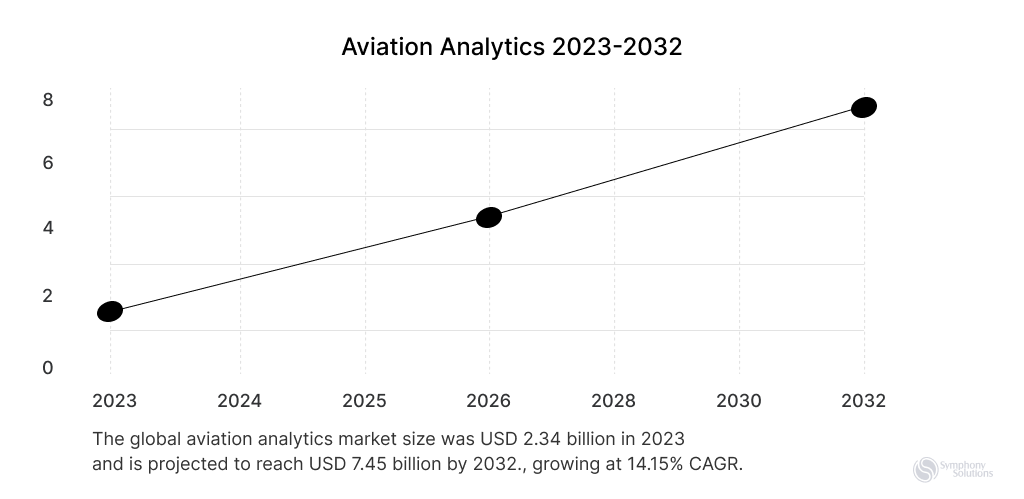
    The aviation industry, known for its complexity and need for precision, generates billions of data points daily — from flight schedules to passenger preferences. This vast amount of data holds significant potential for insights, driving the growth of the global aviation analytics market. According to studies, this sector is on track to reach over US$ 7.45 billion by 2032.  
    aviation analytics

    But how exactly is this revolutionizing aviation operations? In this article, we’ll explore how data and analytics transform the industry. From predicting maintenance needs to optimizing flight routes, we’ll uncover how digital aviation and analytics pave the way for smoother, safer, and more efficient operations. Continue reading. 

    What are Aviation Analytics? 

    Aviation analytics is the process of collecting, analyzing, and interpreting vast amounts of data related to the aviation industry. This data can encompass everything from flight operations and maintenance to passenger behavior and air traffic control. By uncovering hidden patterns and trends, aviation analytics empowers stakeholders to make data-driven decisions that enhance efficiency, safety, and profitability. 

    Why is Aviation Analytics Important? 
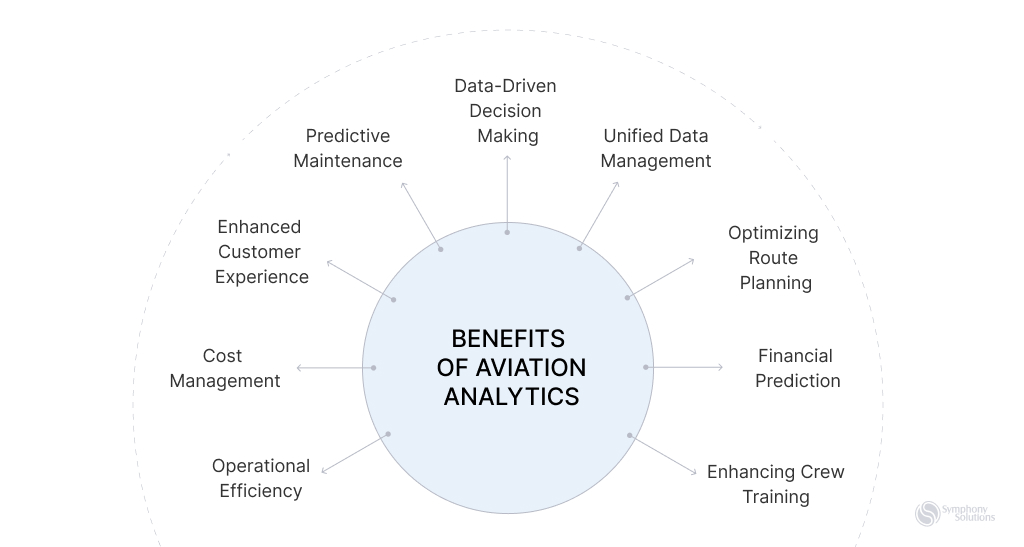
    benefits-of-aviation-analytics

    Aviation digital data enhances both routine and advanced operations. This results in numerous benefits. Let’s explore these applications and their advantages. 

    Operational Efficiency 

    Aviation is a complex system with countless moving parts. Data analytics provides the lens to optimize these operations: 

    • Fuel Efficiency. Every kilogram of fuel saved is money in the bank. Let’s do the math. A typical airline with 50 aircraft consumes roughly 600,000 tons of fuel annually, costing nearly $600 million. Even a modest 2% reduction in fuel consumption can yield $12 million in savings—sufficient to lease an aircraft for several years. This is where aviation analytics come into play. By analyzing factors such as flight paths, weather conditions, air traffic, and aircraft performance, analytics can identify and suggest opportunities for optimization, particularly in-flight paths, ultimately minimizing fuel consumption. 
    • Ground Operations. From check-in and passenger handling to aircraft preparation, ground operations are vital. Data analytics can analyze data and suggest areas for improvement. For example, airports can analyze passenger flow data to optimize gate assignments and staff scheduling. Airlines, on their part, can use data to identify bottlenecks in their processes and train their flight and ground operations crews, accordingly, ensuring a smoother turnaround process and improved efficiency. 
    • Aircraft Planning. Effective aircraft planning is crucial for maximizing fleet utilization and minimizing downtime. Data analytics plays a key role in this process. By analyzing flight schedules, maintenance requirements, and passenger demand, airlines can optimize aircraft utilization, ensuring that aircraft are available where and when they are needed. This reduces delays and enhances operational efficiency. 
    • Crew Planning & Rotation. Efficient crew planning and rotation are essential for maintaining smooth operations. Data analytics can help create optimized crew schedules by considering factors such as flight duration, duty hours, and rest periods. This not only boosts operational efficiency but also improves work-life balance, reduces fatigue, and enhances productivity and safety. 

    Cost Management 

    Effective cost management is essential for the profitability of airlines, and aviation analytics provides valuable insights for this purpose. By analyzing cost-related data, airlines can identify areas where expenses can be reduced. Some key areas where aviation analytics can be used are: 

    • Inventory Management. Airlines can predict future demand and maintain optimal inventory levels by analyzing historical data on parts usage. This approach reduces stockouts by 25% and holding costs by 15%. It also minimizes the risk of obsolete parts. 
    • Human Resources. As mentioned earlier, analyzing historical data on flight schedules, passenger numbers, and employee productivity can help optimize staffing levels, reducing labor costs without compromising service quality. 

    Enhanced Customer Experience 

    The airline industry is highly competitive, and customer satisfaction is key. This is another area where aviation analytics can help. By digging deep into data, airlines can extract valuable insights that can be used for: 

    • Upselling and Personalized Offers. By analyzing passenger data—preferences and past behaviors—airlines can identify opportunities for upselling, such as offering seat upgrades or priority boarding. These types of personalized offers can increase customer lifetime value by 20 to 30%
    • NDC and Dynamic Pricing. New Distribution Capability (NDC) is a data standard that lets airlines offer more flexible and customized products to customers. Aviation analytics is vital here, too, providing insights into passenger behavior, market trends, and competitor pricing. This data helps airlines implement dynamic pricing, optimizing fares based on demand, inventory levels, and customer segments. 
    • Identifying High-Value Customers. Aviation analytics helps airlines identify high-value customers by analyzing purchase history, loyalty program participation, and fare preferences. By understanding these valuable customers’ preferences and spending habits, airlines can tailor their services and offers to retain them. 

    Predictive Maintenance 

    AI-powered predictive analytics is revolutionizing maintenance practices in the aviation industry. By analyzing sensor data from aircraft components and maintenance logbooks, airlines can predict equipment failures before they occur, preventing costly breakdowns and facility downtime by up to 15%.  

    This approach also optimizes maintenance schedules, reducing downtime and maintenance costs. Predictive maintenance contributes to increased aircraft availability, which is crucial for maintaining on-time performance and customer satisfaction. 

    Enhancing Crew Training 

    Data-driven training (DDT) can enhance crew performance and training effectiveness. Here’s how: 

    • Identifying Training Needs. Airlines can pinpoint specific areas for improvement by analyzing crew performance data and aligning it with upcoming operational changes, new safety protocols, evolving industry regulations, and more. This approach ensures that training programs are targeted and address real skill gaps, fostering career growth and enhancing overall safety and efficiency. 
    • Developing Effective Training Programs. Analytics helps identify the most effective training types for different crew members. Airlines can tailor programs to be more engaging and impactful by reviewing past training success and employee learning preferences, increasing successful outcomes. 
    • Measuring Training Effectiveness. Airlines can compare crew performance before and after training to assess its impact. This helps us understand the return on investment and make necessary adjustments for future training sessions. DDT can improve technical skills as much as 80%

    Financial Prediction 

    Accurate financial forecasting is essential for the sustainable growth of any business, and aviation is no exception. Aviation analytics puts all the available data in one place to easily access, analyze, and understand it for robust financial prediction and planning. This helps airlines to identify revenue trends and patterns, enabling better decisions.  

    Additionally, analytics can be used to assess financial performance, identifying areas of profitability and cost overruns. This information empowers airlines to make data-driven decisions to improve their financial health. By 2030, around 70% of financial planning and analysis (FP&A) will involve advanced analytics techniques. 

    Optimizing Route Planning 

    Network optimization is a cornerstone of airline profitability. It involves crafting a route network that maximizes revenue while minimizing costs. To achieve this, airlines rely heavily on data analytics for: 

    • Demand Forecasting. By analyzing past booking patterns to identify trends, seasonality, and peak travel periods, airlines can predict passenger demand for different routes, enabling them to adjust capacity accordingly. Airlines can also use advanced statistical techniques to forecast future demand accurately. 
    • Competition Analysis. Understanding the competitive landscape is crucial for successful route planning. Data analytics helps airlines identify competitors’ strengths and weaknesses, including route networks, pricing strategies, and market share so that they can differentiate their offerings through unique routes, pricing, or services. 

    Unified Data Management 

    To fully realize the potential of aviation analytics, a robust data management infrastructure is essential. When data is siloed, it can result in an incomplete picture of the state of affairs, leading to poor decision-making. However, a unified data system ensures: 

    • Improved Data Quality. Ensuring data accuracy and consistency is crucial for reliable insights. 
    • Aggregated and Manageable Data. Consolidating data from various sources into a centralized repository makes it easier to analyze and extract value. Furthermore, a centralized platform facilitates data sharing and collaboration across departments, fostering a data-driven culture within the organization. This process also makes it easy to implement role-based access controls, ensuring that users only see data relevant to their roles. Providing access to role-specific information enhances security and efficiency. 

    Data-Driven Decision Making 

    Data-driven decision-making is the cornerstone of successful businesses in today’s data-rich environment. Analytics provides the foundation for informed decision-making by revealing trends, patterns, and insights hidden within data.  

    Key performance indicators (KPIs) can be tracked and analyzed to assess performance and identify areas for improvement. Moreover, data-driven insights can foster innovation by uncovering new opportunities and challenges. In fact, data-driven organizations are three times (3x) more likely to make better decisions, increasing operational efficiency. 

    Implementing Analytics in Your Airline Operations (Roadmap) 

    So, how can you use analytics in your airline operations? The following steps can help. 

    Define Business Goals and Objectives 

    Start by aligning analytics with your airline’s overall strategy. 

    • Clarify Business Goals. Determine if your main objectives are to increase revenue, improve operational efficiency, enhance customer satisfaction, or a combination of all. 
    • Identify Key Performance Indicators (KPIs). To measure success, select metrics such as on-time performance, customer satisfaction scores, fuel efficiency, and load factor. 
    • Stakeholder Alignment. Ensure all stakeholders, from executives to frontline employees, understand the analytics goals and their roles. 

    Assess Current Data Infrastructure 

    Build a solid foundation for your analytics. 

    • Data Inventory. Catalog all data sources, including operational, financial, customer, and external. 
    • Data Quality Assessment. Check data for accuracy, completeness, consistency, and timeliness. 
    • Data Gaps Identification. Identify missing data needed to meet your business goals. 

    Determine the Analytics Needs of the Organization 

    Tailor analytics solutions to your specific needs. 

    • Business Process Analysis. Find areas where analytics can boost efficiency, decision-making, or customer experience. 
    • Technical Capabilities Assessment. Review your IT infrastructure and identify necessary upgrades. 
    • Readiness Analysis. Assess readiness for data-driven decision-making and identify potential challenges. 

    Establish a Unified Data Management System 

    Centralize your data for effective analytics. 

    • Data Integration. Combine data from various sources into one platform. 
    • Data Governance. Implement policies to ensure data quality, security, and accessibility. 

    Invest in Advanced Analytics Tools 

    Equip your team with the right tools. 

    • Business Intelligence Tools. For data visualization and reporting. 
    • Cloud-based Solutions. Consider these for scalability and cost-efficiency. 

    Implement Data Governance Policies 

    Ensure data quality, security, and compliance. 

    • Data Ownership. Assign responsibility for each data asset. 
    • Data Access Controls. Protect sensitive data. 
    • Data Quality Standards. Set guidelines for accuracy and consistency. 
    • Data Retention Policies. Decide how long to store data. 

    Monitor and Evaluate 

    Continuously improve your analytics efforts. 

    • Performance Measurement. Track the impact of analytics on business outcomes. 
    • Feedback Loop. Collect user feedback to refine analytics solutions. 
    • Iterative Process. Continuously enhance analytics based on new insights and business needs. 

    Airlines can establish a strong foundation for data-driven decision-making and achieve sustainable competitive advantage by following this roadmap. 

    How Symphony Solutions Can Help with Aviation Analytics 

    Harnessing the power of aviation analytics requires collaborating with a qualified data IT partner to ensure that you unlock the full potential of your data. This is where Symphony Solutions comes in. Drawing from over 15 years of experience in providing digital transformation services across various industries, we are your trusted partner in unlocking the full potential of aviation analytics. 

    We build robust data pipelines, cleanse and transform data, and extract valuable insights for strategic decision-making. Our AI solutions development can also help with predictive maintenance, customer segmentation, and fraud detection.  

    Want deeper insights into your data? We connect data analytics and Power BI to help you visualize complex data and empower business decisions. We also integrate analytics solutions with your existing systems, creating a connected, efficient ecosystem. 

    By aligning our expertise with your unique needs, we deliver tailored data analytics services that drive tangible results. 

    Conclusion 

    The future of aviation lies in the strategic leveraging of data analytics to drive decision-making, optimize operations, and enhance the overall passenger experience. By harnessing the power of aviation analytics, airlines and air traffic management authorities can reduce delays, streamline processes, and improve safety. If you run an airline, adopting data-driven insights will help you cement your position as a leader in innovation and excellence. 

    FAQs

  • How Digital Transformation is Changing the Airline Industry 

    How Digital Transformation is Changing the Airline Industry 

    The airline industry is deeply integrated with technology. In 2023, airports and airlines invested heavily in IT, spending an estimated $10.8 billion and $34.5 billion, respectively. This investment highlights the sector’s dedication to digital transformation.  

    airports spending on it in 2023

    Key technologies driving this shift include Machine Learning and Artificial Intelligence, Biometric systems, Internet of Things (IoT), AR/VR, and big data analytics for decision making. These tools not only streamline operations but also enhance customer interactions. Embracing these technologies is important for airlines to remain competitive in the industry. 

    In this article, we’ll discuss more of these trends and technologies and how they are impacting the airline industry. 

    Read on! 

    What Is Digital Transformation? 

    Digital transformation is the process of integrating digital technology into every aspect of a business, fundamentally changing operations and customer value delivery. It demands a cultural change where organizations continuously experiment with new technologies and adapt to evolving market conditions. According to IATA, digital transformation signifies the industry’s move away from outdated processes and technologies. 

    Why Is Digital Transformation Important for Airlines? 

    Digital transformation is vital for airlines because it helps streamline tasks, automate processes, and optimize costs throughout their operations. By making operations more efficient, airlines can cut costs significantly, which is crucial in an industry with narrow profit margins. 

    In addition, digital transformation overcomes airlines’ limitations in offering more personalized and customer-centric products and experiences. This is increasingly important as passengers expect tailored services and seamless travel experiences from booking to arrival. According to Muhammad Albakri, IATA’s senior vice president for financial settlement and distribution services, this is being achieved by modernizing outdated processes and technology. 

    Digital transformation is also vital for business continuity. Outdated legacy systems can lead to security risks and operational disruptions. Modern digital solutions enhance resilience and ensure consistent, reliable operations. 

    Also, for large airline groups, digital transformation supports better consolidation and enables more effective centralized control and governance. This centralization streamlines operations and enhances decision-making processes across the entire group. 

    Ultimately, it offers airlines, airports, and other operators in the aviation industry opportunities to improve their services and operations. 

    digital-technologies-trends-in airline-industry

    Now that we understand digital transformation and its importance for the aviation sector, let’s examine key trends in this niche. 

    Artificial Intelligence (AI) and Machine Learning (ML) 

    AI and ML are gaining traction in aviation. They help operators enhance operational efficiency and safety by enabling predictive maintenance (PdM), which also minimizes new equipment costs by about 3% to 5%. For example, Delta Air Line uses AI-driven PdM to analyze data from aircraft sensors, predicting potential mechanical issues before they become serious problems. This approach reduces unplanned downtime and maintenance costs. 

    In addition to PdM, AI in aviation can power chatbots and virtual assistants. These tools can streamline customer service, handling up to 70% of passenger inquiries. The results are improved customer satisfaction and reduced operational costs. 

    AI-Powered Virtual Assistants in Internal Processes 

    Chatbots and virtual assistants also enhance: 

    Operational Efficiency 

    They optimize internal processes across various departments, including Flight Operations (FlightOps), Training, Maintenance Control Center (MCC), Operations Control Center (OCC), and Ground Operations (GroundOPS). For example: 

    • In FlightOps, staff can inquire about and quickly access information on flight planning, scheduling, and weather conditions, which helps streamline pre-flight preparations. 
    • For training and the MCC, engineers and technicians can inquire about maintenance procedures and checklists, learn new procedures, and ensure compliance with safety regulations. This complements traditional training methods. 
    • Operations Control Center managers can use chatbots to gather operational data, facilitating quick decision-making during critical operations to ensure smooth and safe processes. 
    • Ground crew members can inquire about operational procedures and receive immediate, accurate responses, boosting efficiency, minimizing mistakes, and improving the passenger experience. 

    Commercial Optimization 

    Integrating generative AI with CRM and financial systems can enhance sales and customer service in commercial departments. This integration allows chatbots to personalize responses based on customers’ past interactions, providing quicker responses to queries and improving customer relationships. 

    Finance Automation 

    AI-powered chatbots also streamline internal financial processes for airlines. 

    • They verify contractor payments against contracts and completed work, ensuring accuracy and reducing errors. 
    • Once verified, chatbots automatically generate invoices and send them via email, accelerating payments and enhancing cash flow management. 

    Automation 

    Automation in aviation is transforming airline and airport operations, boosting efficiency and minimizing human error. Automated check-in kiosks, baggage handling systems, and biometric security checks streamline passenger flow and cut wait times. By combining Robotic Process Automation (RPA) with AI and ML, airlines can optimize internal processes, reducing employee workloads and increasing job satisfaction. Furthermore, RPA in back-office operations automates and simplifies administrative tasks, allowing staff to concentrate on more complex issues. 

    NDC (New Distribution Capability) 

    NDC is another trend gaining traction in the aviation industry. It facilitates direct, API-based connections between airlines and travel agencies, offering customized product features, such as seat selection and baggage preferences, tailored to each traveler’s needs. This direct connection allows for instant updates, dynamic pricing (based on market conditions), and personalized deals. Currently, over 60 airlines are NDC certified, a testament to its rapid adoption in the industry. 

    Internet of Things (IoT) Connectivity 

    IoT connectivity in aviation is projected to reach $1.941bn by 2025, revolutionizing operational efficiency and passenger experience through interconnected devices that gather and exchange data. For airlines, IoT-enabled sensors provide real-time aircraft health monitoring, leading to more efficient maintenance and reduced downtime. 

    In airports, IoT adoption addresses common issues like lost baggage, flight delays, and customer service problems. Virgin Atlantic, for example, uses IoT technology in its Boeing and cargo planes, reducing delays by 20% and cutting working hours by two hours. 

    Predictive maintenance powered by IoT and AI can foresee potential aircraft issues before they occur, resulting in improved operational efficiency and cost management

    Augmented Reality (AR) And Virtual Reality (VR) 

    AR and VR are two airline industry digital transformation trends making things better in the aviation sector. VR offers immersive pilot and crew training simulations that enhance skill acquisition and retention. In maintenance, AR overlays technical information on equipment, speeding up repairs and reducing errors. VR also enhances the passenger experience by offering virtual tours of aircraft cabins and destinations. This technology is integral to aviation’s future, with the market expected to reach $1,372 million by 2025. 

    Qatar Airways and British Airways offer VR to select passengers—first and business class—as part of their in-flight entertainment experience. 

    Quantum Computing 

    Quantum computing, while still in its early stages, shows great promise for tackling complex aerospace challenges. These advanced computers can handle vast amounts of data, offering potential benefits, including optimized route planning, accurate weather forecasting, and better air traffic management. 

    Airbus is currently studying quantum computing and how it can optimize flight trajectories in real-time. By integrating data from weather conditions, airspace restrictions, cargo weights, fuel simulations, and fluid dynamics, this technology aims to reduce fuel consumption and enhance overall air traffic efficiency. 

    Blockchain Technology 

    Blockchain tech is poised to revolutionize the aerospace industry. It enhances data security in passenger systems and streamlines ticketing processes by reducing fraud and enabling secure transactions. Blockchain also enables efficient tracking of high-frequency asset custody changes, such as passenger bags, cargo, spare parts, and aircraft, particularly useful in scenarios involving trust issues among parties.  

    Heathrow Airport’s adoption of blockchain saw productivity rise by 7%, loading times drop by 28%, and human errors decrease by up to 90%. Thanks to blockchain adoption, airports worldwide could see similar results. 

    Big Data and Analytics 

    Big data and analytics is another of the positive disruptors in the aviation sector. These techs play a crucial role in aviation by guiding smart decisions and boosting efficiency. Airlines gather vast data from flights, passenger behavior, and maintenance logs. Analyzing this data can help operators optimize flight schedules, fuel use, and customer service. For instance, according to ResearchGate,  using big data improves on-time flights by pinpointing and resolving operational issues. 

    Insights from data and analytics services also help in dynamic pricing strategies. Airlines deploy AI-driven systems to adjust fares based on demand, season, and competition. This ensures optimal revenue and competitive pricing, benefiting both airlines and passengers. 

    Airlines can also leverage data analytics and artificial intelligence to influence customer journey upgrades and offer personalized services, from tailored travel recommendations to targeted upselling opportunities. 

    Mobile and Cloud Technology 

    Mobile and cloud technology have completely changed how airlines operate and connect with passengers. Mobile apps make booking, check-in, and boarding seamless for travelers. Meanwhile, cloud-based systems help airlines expand their IT capabilities efficiently. Cloud technology facilitates instant data sharing and teamwork across airline departments, making operations more flexible and responsive.  

    It’s fair to say that cloud computing forms the backbone of digital advancement in aviation, powering modern technologies. Little wonder that the adoption of cloud services in the aviation industry is expected to reach $12.9bn by 2029, highlighting its pivotal role in transforming the sector. 

    Challenges in Aviation Solved by Digital Transformation 

    challenges solved by digital transformation

    Like every industry, aviation faces numerous challenges that digital transformation is uniquely positioned to address. Let’s explore these challenges and how digital solutions reshape the aviation landscape. 

    Operational Inefficiencies 

    One of the biggest challenges in aviation that digital transformation addresses is operational inefficiencies. This challenge typically stems from paper-based communications, manual processes and fragmented systems (isolated software solutions). This leads to delayed information flow, human errors in data processing, and a lack of real-time visibility into operations. 

    Implementing an integrated digital ecosystem will address these challenges. This system enables automated workflows, centralized data management, and proactive decision-making via real-time data and automatic notifications. It improves operational efficiency by reducing mistakes, accelerating operations, and providing stakeholders with timely access to reliable information. 

    Flight Scheduling and Fleet Management 

    Coordination of flight schedules and fleet management can be challenging. It can result in underutilized aircraft and increased expenses if not done efficiently. Again, digital transformation can help here. AI and machine learning can create adaptive flight schedules, while advanced fleet management software optimizes aircraft usage, maintenance schedules, and route planning for more streamlined operations. 

    Maintenance 

    Unforeseen maintenance issues that ground aircraft can lead to delays and cancellations. Predictive maintenance tools driven by AI can help anticipate potential issues before they escalate. Data analytics can be used to stay on top of aircraft health and streamline maintenance schedules, decreasing downtime and costs while ensuring more dependable operations. 

    Logistics & Ground Operations 

    Inefficient logistics practices like baggage handling can trigger delays, lost baggage incidents, and higher operational costs. Thanks to investment in digital transformation, IoT-enabled baggage handling systems alone or paired with automated RFID tagging can efficiently sort and track baggage movements. Real-time tracking systems enhance coordination in ground operations, cutting down delays for overall operational efficiency. 

    Customer Experience 

    Meeting diverse customer demands is crucial for providing top-notch services tailored to their needs. AI improves customer service by offering personalized services such as custom travel recommendations and exclusive offers. Chatbots and AI-driven virtual assistants deliver round-the-clock customer support by handling inquiries efficiently and managing bookings, leading to enhanced customer satisfaction. 

    Safety & Security 

    Maintaining high safety standards is a priority in the aviation industry. However, this requires substantial resources. The good news is that Blockchain technology can be leveraged in this area to enhance data security, ensure transparency, and prevent fraud. Advanced surveillance powered by AI can detect security threats instantly, with real-time responses that effectively uphold safety protocols. 

    Cost and Revenue Management 

    Effective cost control is pivotal for profitability. However, the aviation sector is highly competitive, so extra help is needed. Again, investing in digital aviation transformation can help here. For example, data analytics can pinpoint areas of inefficiencies so that expenses can be optimized. Additionally, AI services can refine flight paths, boosting fuel efficiency, while predictive maintenance strategies curb maintenance expenses, contributing to better cost control measures. On the revenue side, operators can leverage the benefits of machine learning in the cloud to analyze market trends and demand patterns, optimizing pricing strategies for effective revenue maximization. 

    Environmental Responsibility 

    The aviation sector is one of the biggest culprits concerning carbon footprint. Addressing this significant greenhouse gas emission requires innovative solutions. Again, AI-powered analytics can be used to optimize flight paths, enhancing fuel efficiency and significantly reducing emissions. This tech can also monitor environmental performance and benchmarks, helping airlines meet regulatory obligations and align business goals responsibly. 

    Airline Digital Transformation Roadmap 

    Wondering how to kickstart digital transformation in aviation? This roadmap guides you through the process effectively. 

    Initial Assessment and Vision Setting 

    • Evaluate current tech capabilities, operational inefficiencies, and customer pain points. 
    • Define clear digital goals aligned with business strategy. Craft a vision statement for the airline’s future digital capabilities. 

    Strategic Planning for Digital Initiatives 

    1. Prioritize initiatives based on impact and alignment with strategy. 
    2. Allocate budget and resources, considering tech needs and ROI. 
    3. Collaborate with tech providers or consultants for solution implementation. 

    Implementation Steps and Pilot Projects 

    • Roll out solutions in phases, starting with pilot projects. For example, utilize cloud technology to enhance collaboration, or integrate AI and ML for analyzing and processing regulatory documents, safety reports, and compliance paperwork. 
    • Monitor pilot outcomes, gather data, and adjust strategies before implementing other techs. 

    Change Management and Training 

    • Secure buy-in from stakeholders to drive cultural shifts and foster innovation. 
    • Develop a strategy to inform stakeholders about benefits and impacts. 
    • Train employees for tech changes through workshops. 

    Continuous Improvement and Adapting to Trends 

    • Establish feedback loops for ongoing improvement. 
    • Stay flexible to adopt new tech trends and industry changes. 
    • Foster a culture of innovation to sustain transformation efforts. 

    Following this roadmap, you can systematically implement digital initiatives and stay competitive in a fast-changing industry. 

    How Symphony Solutions Can Help with Digital Transformation for Airlines 

    In any digital transformation journey, partnering with the right tech team is crucial for successful solution implementation. At Symphony Solutions, we excel in supporting airlines through robust digital transformation. 

    As experts in aviation digital transformation, we can help you harness digital tools and technologies to optimize your airline operations. Whether your goal is to improve customer experiences with AI-driven assistants, enhance order management, provide personalized offers, increase upselling, or leverage cloud technology, we can partner with you on your journey toward digital excellence.  

    Furthermore, we ensure compliance with IATA regulations and provide data and analytics services to help improve your decision-making process. 

    Our Case Studies  

    1. Boosting Travel Retail Leader’s Platform Development & Customer Service 

    In one of our recent projects, Datalex, a travel retail software company, partnered with us for travel retail platform development and customer service. Facing challenges like integrating complex systems, the Symphony Solutions team applied their expertise in agile methodologies and aviation regulations to sort things out. We revitalized the platform, moving the business logic from older systems to the advanced DLX platform.  

    The project also included implementing New Distribution Capability (NDC) technology to improve how the airline delivers products and services, emphasizing personalized options and flexibility. This collaboration empowered Datalex to deliver personalized customer experiences, leveraging secure systems and efficient operations. 

    2. Reimagining Air Travel Booking with Redesign & Rebranding 

    In another project, a leader in all-in-one booking solutions for multimodal travel partnered with Symphony Solutions for the redesign and rebranding of a multimodal travel booking platform. Faced with the challenge of seamlessly integrating diverse travel services, we initiated a comprehensive rebranding and UI/UX redesign.  

    Leveraging Agile methodologies and stakeholder insights, we transformed their booking system into a unified, intuitive platform. The result? Enhanced user experience across web and mobile, effortlessly connecting travelers with flights, ground transport, and accommodations. 

    Improve decision-making with data-backed insights. Request our data analytics as a service. 

    Conclusion 

    Digital transformation is revolutionizing the aviation industry. Technologies like AI, IoT, and big data analytics boost efficiency, safety, and customer satisfaction. But there’s more to it. These technologies are actually shaping a future of smarter, more efficient, and sustainable air travel. As an operator in the industry, it’s important to embrace these changes and consider aviation software development to stay competitive. 

    FAQs 

  • The Rise of Artificial Intelligence in Aviation: Transforming the Skies 

    The Rise of Artificial Intelligence in Aviation: Transforming the Skies 

    The aviation industry is witnessing major technological changes, thanks in large part to the integration of artificial intelligence. AI is now widely integrated into various aspects of airline industry solutions, from flight planning, crew management, and maintenance to customer service. This increasing adoption is reflected clearly in its market growth. The global artificial intelligence in aviation market size, which was valued at USD 728.05 million in 2022, is estimated to reach USD 23 billion by 2031.  

    As AI services continue to make inroads in the aviation industry, its impact extends beyond current operations. This article will highlight emerging trends and potential future developments in AI within the industry. 

    Read on. 

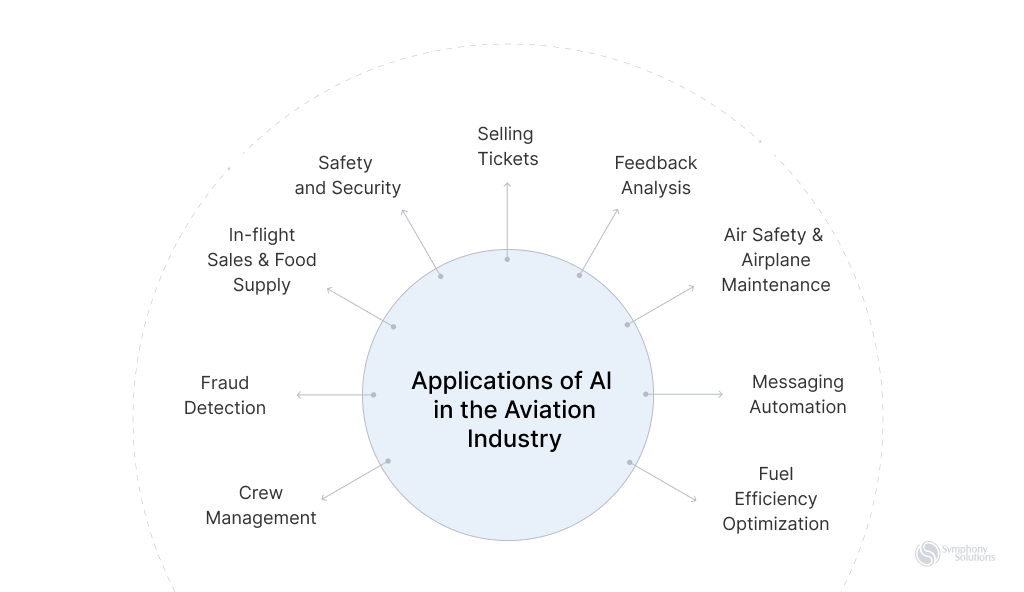
    The Main Applications of AI in the Airline Industry 

    application-of-ai-in-aviation-industry

    Let’s explore the many applications of AI in aviation, using real examples to understand its impact. 

    Revenue Management 

    AI algorithms analyze data, predict demand, and adjust ticket prices, boosting overall revenue. This technology considers historical data, booking patterns, and customer preferences to set optimal seat prices based on factors like day, season, and weather. Delta Airlines employs AI-powered revenue management systems to dynamically set fares.  

    Delta’s President Glen Hauenstein emphasizes AI’s role in determining consumer willingness to pay for premium products, describing a collaborative process where machines suggest actions and analysts refine recommendations. 

    Air Safety and Airplane Maintenance 

    Artificial intelligence is tackling the challenge of unplanned maintenance, which accounted for more than 7% of flight delays in 2023. Using AI capabilities, the aviation industry can enhance air safety through data analysis from diverse sources like aircraft sensors, flight data recorders, and weather inputs. This helps to identify potential safety concerns, raising overall safety standards. 

    AI-powered predictive maintenance solutions enable airlines to track aircraft components in real-time, forecast faults, and plan repairs before they become crucial. This proactiveness reduces downtime, cuts repair costs, and improves operational efficiency. General Electric’s AI system, “Predix,” is a real-world example of this. Predix empowers GE Aviation Fleet Support to handle a higher volume of engine data more swiftly and accurately, significantly boosting diagnostic capabilities. 

    Feedback Analysis 

    Customer feedback is crucial for airlines and now artificial intelligence can help the industry to understand it better. For example, AI-driven sentiment analysis tools, like PureStrategy leveraging Automated Neural Intelligence Engine (ANIE) can be used to sift through various feedback channels like social media, blog posts, comments, customer review sites, and surveys to detect patterns, sentiments, and recurring themes.  

    This proactive approach empowers airlines to gain valuable insights into customer experiences, allowing them to address issues promptly and continually enhance their services. 

    Messaging Automation 

    Messaging automation is becoming a key tool in the aviation industry, improving customer service. Airlines are using it to quickly answer questions and streamline their operations. Passengers now receive automatic updates about flight times, gate changes, and other important information, saving time and keeping them well-informed. 

    AI-powered solutions like chatbots are a good way to get started with messaging automation. AI chatbots adeptly handle diverse queries — flight bookings, baggage concerns, and real-time flight updates. A real-world example of this is KLM Royal Dutch Airlines’ “BlueBot” which was launched in 2017. This AI-powered chatbot has been assisting customers with flight bookings, reservation management, and travel information to date. 

    Crew Management 

    For airline passengers, the use of AI in crew scheduling means more reliable and efficient flights. AI helps airlines ensure that the right crew members, with the right skills and experience, are available for each flight. This reduces delays, improves safety, and enhances the overall travel experience. Malaysia Airlines Berhad (MAB) recently inked a five-year deal to transition its crew management systems to IBS Software’s iFlight Crew. According to their website, iFlight Crew is a modern cloud platform designed to optimize airline operations and crew management, leveraging AI and machine learning. 

    Fuel Efficiency Optimization 

    AI plays a key role in boosting fuel efficiency in the airline industry, given the substantial impact of fuel costs on overall expenses. By analyzing factors like weather, flight routes, aircraft performance, and passenger load, AI algorithms optimize fuel consumption. AirAsia, for example, uses OptiClimb, a fuel efficiency solution. This tool uses machine learning algorithms and advanced weather forecasts to predict fuel consumption. It suggests optimal climb speeds during takeoff, saving up to 3% of fuel per flight. 

    Selling Tickets 

    For travelers, AI-driven recommendation engines in ticketing mean a more personalized and convenient booking experience. These systems suggest tickets based on your past travel choices, preferences, and budget, making it easier to find flights that suit your needs. This technology not only helps with finding better deals but also simplifies the booking process.  

    A great example is the collaboration between Elemental Cognition and Oneworld Alliance, which developed an AI tool for planning and booking “Round the World” (RTW) tickets. This tool makes it simpler and more efficient for travelers to book complex trips with multiple destinations across Oneworld Alliance’s member airlines. 

    In-Flight Sales and Food Supply 

    Airlines can also use AI to personalize in-flight meals based on customers’ preferences and dietary restrictions, thanks to innovative algorithms predicting demand. AI is also applicable in reducing catering waste.  

    Airbus is developing such a program called Food Scanner. This AI-powered tool is equipped with a downward-looking camera and barcode scanner. It tracks and manages in-flight catering, capturing meal tray contents and monitoring beverage inventory before and after serving. The data processed through a cloud-hosted dashboard generates key performance indicators, enabling accurate catering planning and preflight meal ordering for passengers, ultimately reducing waste. 

    Fraud Detection 

    AI plays a crucial role in aviation fraud detection, minimizing risks associated with fraudulent activities. By analyzing extensive transaction data, AI algorithms swiftly pinpoint suspicious patterns and highlight potential fraud. A good example is the Airlines Reporting Corporation’s (ARC) Risk Check, which employs AI algorithms to scrutinize over 3 billion data elements, uncovering instances of fraudulent activity in travel bookings. 

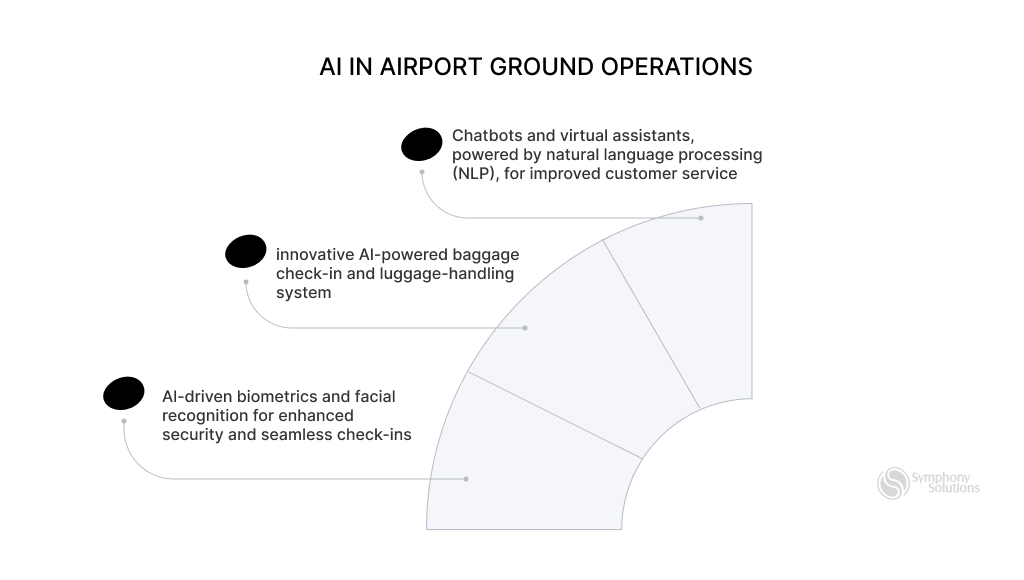
    AI at the Airport: Innovation on the Ground 

    ai-in-airport

    Artificial intelligence in aviation is not just revolutionizing the skies but also making a big impact on the ground for airlines. Let’s dive into how it transforms the airport experience. 

    Enhanced Security 

    For passengers, using AI-driven biometrics and facial recognition in airlines means a smoother and more secure travel experience. These technologies speed up the identification process while enhancing security measures. AI accurately matches fingerprints or facial features with identities, minimizing the chances of fraud and enhancing safety. The expected 78% increase in biometric self-boarding gates by 2030 highlights the efficiency and security benefits of this technology. 

    Furthermore, AI’s real-time analysis of security footage helps in quickly identifying any suspicious activities, leading to faster responses to potential threats.  

    Logistics and Operations 

    The adoption of AI technologies in airports translates to a smoother and more efficient journey. Automated check-in systems speed up the process, reducing wait times while virtual assistants powered by AI provide passengers with flight updates and navigate them through the airport. 

    AI is also employed to track and manage baggage, minimizing errors and improving the accuracy of baggage delivery. Eindhoven Airport, for example, uses an innovative AI-powered luggage-handling system called “BagsID” — no tags are needed. Passengers snap a picture of their luggage, drop it off, and retrieve it hassle-free at their destination. This innovative AI system tracks bags using photo recognition. It’s a game-changer for efficient and error-free airport experiences. 

    Customer Service 

    Curious about how AI improves customer experience at airports? AI is integrated in Chatbots and virtual assistants, powered by natural language processing (which is a part of ML). They enable passengers to interact effortlessly with airport staff using voice or text commands, reducing wait times, and making the customer experience smoother. AI algorithms also enhance the travel experience by leveraging individual passenger preferences. Analyzing data like past travel patterns, preferences, and frequent flyer status allows these algorithms to offer personalized recommendations.  

    The Future of AI in Aviation 

    ai-in-aviation

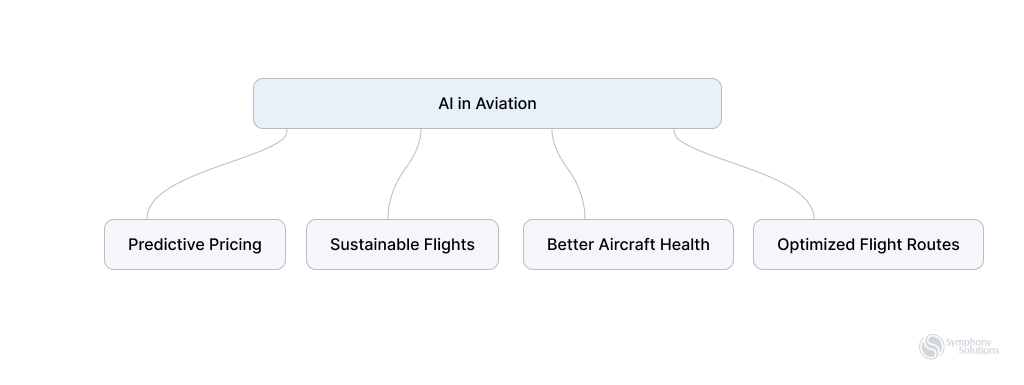
    While AI will not be replacing pilots just yet, it will play a key role in the future of the aviation industry. Key aspects include: 

    Predictive Pricing 

    AI-powered predictive pricing is on the rise and will continue to grow. By crunching extensive data, including personal preferences and real-time market trends, AI algorithms enable airlines to provide personalized travel experiences and competitive fares for each passenger. Virgin Atlantic, in collaboration with Fetcherr, is already using this technology to dynamically adjust pricing based on predicted market variables, optimizing operations and revenue. Expect more airlines to embrace this “generative pricing engine” to maximize their revenue systems. 

    Sustainable Flights 

    Aviation contributes 2% to global energy-related CO2 emissions. The International Air Transport Association, however, is aiming for net-zero emissions by 2050, and artificial intelligence will make that possible. By leveraging advanced analytics and machine learning, airlines can make smart decisions on flight routes, fuel use, and operations. This data-driven approach minimizes carbon footprint, aligning with sustainability goals and fast-tracking the industry’s shift to a greener future. 

    Better Aircraft Health Systems 

    Smart aircraft health systems, powered by AI, will become increasingly popular. These systems analyze data from the onboard sensors of aircraft, spotting potential issues early on for proactive maintenance. This predictive approach will cut down on unscheduled maintenance, reduce aircraft downtime, and boost safety. According to Deloitte, this type of predictive maintenance could cut aircraft operational costs by as much as 25%, as well as prevent disruptions that could lead to fatal losses. 

    Optimized Flight Routes 

    According to Investopedia, fuel is the second biggest expenditure by airlines, accounting for 22% of operational expenses. This huge spending on aviation fuel can be attributed to route planning influenced by air traffic, and weather changes. In the coming months and years, airlines will increasingly leverage AI platforms and tools to change this narrative. 

    These platforms use historical data and predictions to provide quick insights, analyzing vast amounts of information like weather patterns, air traffic, and past flight data. The result? Optimized routes that not only save fuel but also cut down on delays. AI-based route planning adapts in real-time, dynamically adjusting to enhance efficiency and cut overall flight time. 

    As can be seen, artificial intelligence in the airline industry holds great promise. As technology continues to advance, this industry is likely to witness further transformative changes driven by AI applications. 

    Challenges and Risks of AI in Aviation 

    Adopting AI in aviation brings numerous benefits, but it also poses challenges. Here are a few of these risks and challenges. 

    1. Technical Hurdles: Integrating AI into aviation systems is not straightforward, there are technical challenges to be overcome. Ensuring it works well with different hardware and software across various aircraft models and manufacturers can be difficult.  
    2. Ethical Considerations: Determining the extent of autonomy for AI decision-making, especially in critical situations, triggers ethical questions that need careful consideration. 
    3. Workforce Challenges: AI needs a skilled team for development, maintenance, and operation. Bridging the skills gap by training aviation professionals is a big task. And the shift to AI might worry some about job security. Handling these concerns and offering retraining options is crucial for a smooth transition. 
    4. Regulatory Challenges: The aviation industry has strict rules and introducing AI means playing by those rules. Adapting regulations to tackle the new challenges posed by AI in the aviation industry can be demanding. 

    Case Studies of AI in Aircraft Maintenance 

    Airlines are leveraging AI and ML to enjoy a wide range of benefits. Here are two real-life use cases as examples.  

    Delta Airline 

    In 2021, Delta introduced facial recognition technology at airport touchpoints, optimizing the travel experience for passengers. Using just a passport number, the Fly Delta app, and TSA PreCheck membership, passengers can enjoy a seamless, touchless process—scanning their faces instead of presenting physical IDs and boarding passes. In October of the same year, Delta further expanded its AI adoption by introducing biometric-powered bag-drop technologies. 

    Southwest Airlines 

    Southwest Airlines, a major US carrier, leverages AI in key aspects of its operations. In sentiment analysis, advanced software tracks keywords on the web, allowing the airline to monitor social media mentions and analyze user sentiment. This insight aids in staying updated on trends and tailoring personalized offers for customers. 

    Additionally, Southwest uses a flight analytics system by GE Aviation to enhance fuel efficiency for its extensive Boeing 737 fleet. The platform helps them analyze flight data and optimize fuel consumption during each journey. 

    Future of AI in Aircraft Maintenance 

    Artificial intelligence aviation not only improves air service and ground operations but also shows great potential in aircraft maintenance. 

    As we have already discussed, a key future trend is predictive maintenance. But beyond that, AI will also transform inventory management by accurately predicting spare part demand through data analysis. This optimizes inventory, lowers costs, and prevents stockouts. Additionally, AI helps detect counterfeit parts, ensuring the safety and reliability of aircraft components. 

    Integration of sensors, IoT devices, and AI-equipped robotics will further enhance maintenance operations, providing accurate real-time data and performing complex tasks in challenging areas. 

    Conclusion 

    AI has revolutionized aviation, transforming operations, elevating passenger experiences, and enhancing safety. One can safely say that integrating artificial intelligence in aviation is now no longer a choice but a necessity. The key, however, is choosing the right technical partner for a seamless adoption. This is where we excel at Symphony Solutions. 

    Whether you want to improve customer experience, streamline booking, sell tickets, or analyze sentiments, our proven expertise in airline software development, advanced analytics, and machine learning is what your business needs to leverage the potential of artificial intelligence. 

    FAQs